


Blue-gray paint colors are a beautiful way to add color to your home without committing to a bright or highly saturated blue.
They combine the calming quality of blue with enough gray to soften the color, creating shades that can feel sophisticated, relaxed, coastal, traditional, or modern depending on the room.
But finding the best blue gray paint color isn’t always easy.
Some blue-grays look almost neutral on a paint chip but turn noticeably blue once they’re covering four walls. Others have green undertones that become much more apparent beside certain flooring or furniture. A color that looks like a soft gray in bright daylight may become a deeper, moodier blue after sunset.
That’s why the best blue-gray isn’t one specific color.
It’s the one whose depth and undertones work with your home’s lighting, flooring, trim, cabinetry, countertops, and furnishings.
If you’re looking for a place to start, these popular blue-gray paint colors from Sherwin-Williams and Benjamin Moore offer options ranging from light and airy to rich and dramatic.

What Is a Blue-Gray Paint Color?
Blue-gray is exactly what it sounds like: a paint color that combines blue and gray.
The gray component reduces the intensity of the blue.
Instead of looking like a bright primary color, blue-gray can feel:
- Soft
- Muted
- Smoky
- Relaxed
- Sophisticated
Some blue-gray paint colors are predominantly gray with a subtle blue undertone.
Others are clearly blue but have enough gray to make them more subdued.
You’ll also encounter blue-grays with green or violet undertones.
Those subtle differences can completely change how a color looks in your home.
Why Are Blue-Gray Paint Colors So Tricky?
Blue is one of those colors that can become much more noticeable once it’s on the walls.
A paint chip that looks gray in your hand may look distinctly blue across an entire room.
Lighting also matters.
Blue-gray can shift depending on:
- Direction of natural light
- Time of day
- Artificial lighting
- Flooring
- Trim color
- Furniture
- Nearby wall colors
That’s why large-scale sampling is essential.
1. Sherwin-Williams Misty SW 6232
Sherwin-Williams Misty is a light, soft blue-gray worth considering if you want gentle color rather than a strong blue statement.
It can work beautifully in:
- Bedrooms
- Bathrooms
- Laundry rooms
- Guest rooms
- Coastal-inspired interiors
Pair it with warm white, cream, and natural wood to prevent the room from feeling too cool.
If you’re searching for a pale blue-gray, Misty is a useful place to start.
2. Sherwin-Williams Silver Strand SW 7057
Silver Strand is a complex color that can move between gray, blue, and green.
That shifting quality is part of its appeal.
In some rooms, it can look like a soft blue-gray.
In others, the green becomes more noticeable.
Silver Strand works particularly well if you like atmospheric colors that aren’t easily categorized.
Consider it for:
- Bedrooms
- Bathrooms
- Living rooms
- Home offices
If you absolutely don’t want green, sample this one carefully.
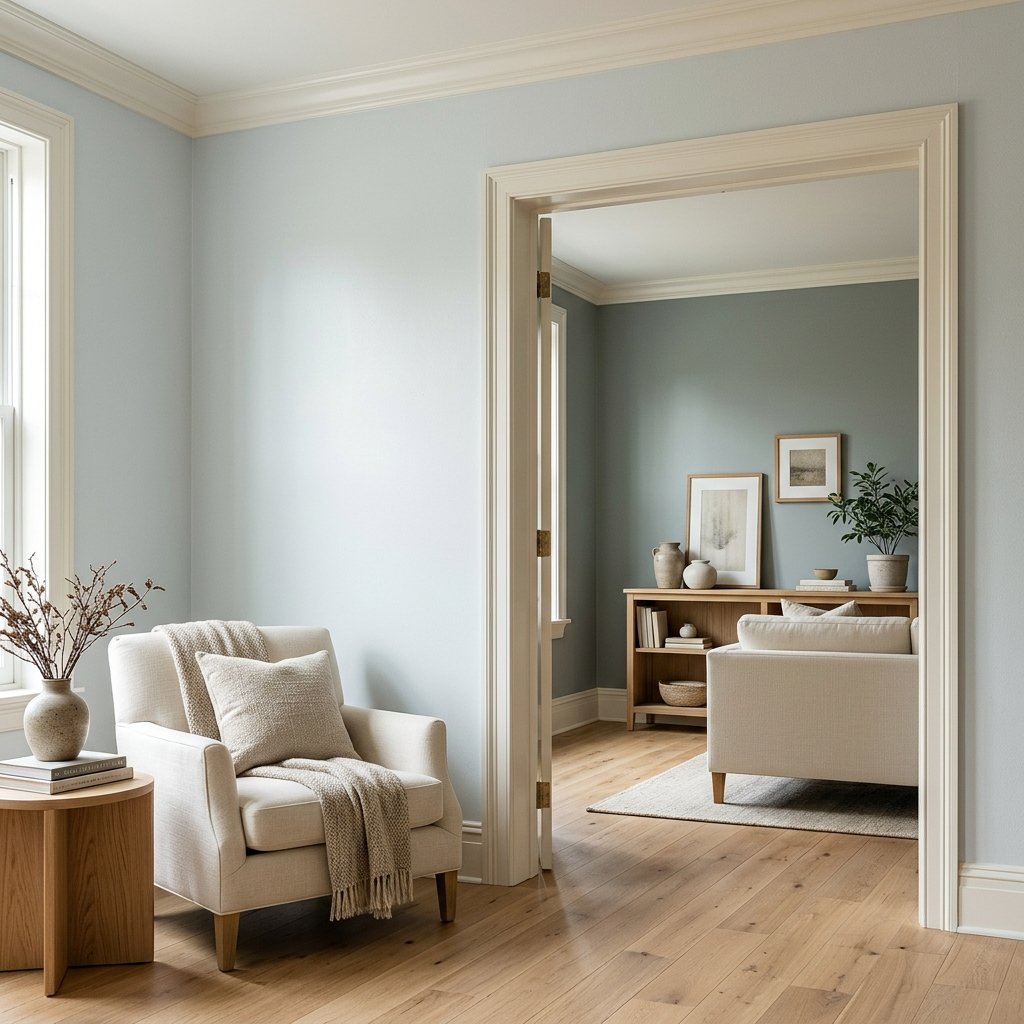
3. Sherwin-Williams Krypton SW 6247
Krypton is another popular option for someone looking for a recognizable blue-gray.
It tends to feel cooler and more clearly blue than a neutral gray with a barely noticeable undertone.
Try it with:
- Crisp or soft white
- Natural wood
- Navy
- Cream
- Black accents
It can create a calm bedroom or bathroom without becoming overly colorful.
4. Sherwin-Williams North Star SW 6246
North Star is a soft, light blue-gray that can create an airy feeling.
It’s worth comparing directly with Krypton if you’re looking at this part of the blue-gray spectrum.
North Star can work well in:
- Bedroom
- Bathroom
- Laundry room
- Home office
Because pale blue-gray colors are highly responsive to light, don’t choose one solely from an online photograph.
5. Sherwin-Williams Tradewind SW 6218
Tradewind moves farther toward blue.
If the previous colors feel too gray and you actually want the walls to look blue, Tradewind may be a better direction.
It can create a relaxed, watery effect that works particularly well in:
- Bathrooms
- Bedrooms
- Coastal interiors
- Laundry rooms
Warm wood and woven materials can keep it from feeling overly cool.
6. Sherwin-Williams Stardew SW 9138
Stardew is a beautiful option when you want a blue-gray with more presence.
It can feel more substantial than very pale blue-grays while still maintaining a muted quality.
Consider Stardew for:
- Bedroom walls
- Home office
- Bathroom vanity
- Built-ins
- Cabinetry
It can pair beautifully with warm white, wood, brass, and deeper blue accents.
7. Benjamin Moore Smoke 2122-40
Benjamin Moore Smoke is a sophisticated blue-gray that can bring noticeable color to a room without feeling like a bright blue.
Its muted character can work beautifully in spaces where you want a calm but more substantial wall color.
Try it in:
- Bedroom
- Office
- Dining room
- Bathroom
Pairing it with cream and wood can soften its cooler side.
8. Benjamin Moore Boothbay Gray HC-165
Despite the word “Gray” in its name, Boothbay Gray can show a noticeable blue quality.
It’s deeper and more colorful than many pale blue-gray options.
This makes it useful when you want the paint to have some presence.
Consider Boothbay Gray for:
- Dining rooms
- Bedrooms
- Offices
- Cabinetry
- Bathroom vanities
It can look especially sophisticated with warm white trim, natural wood, and aged brass.
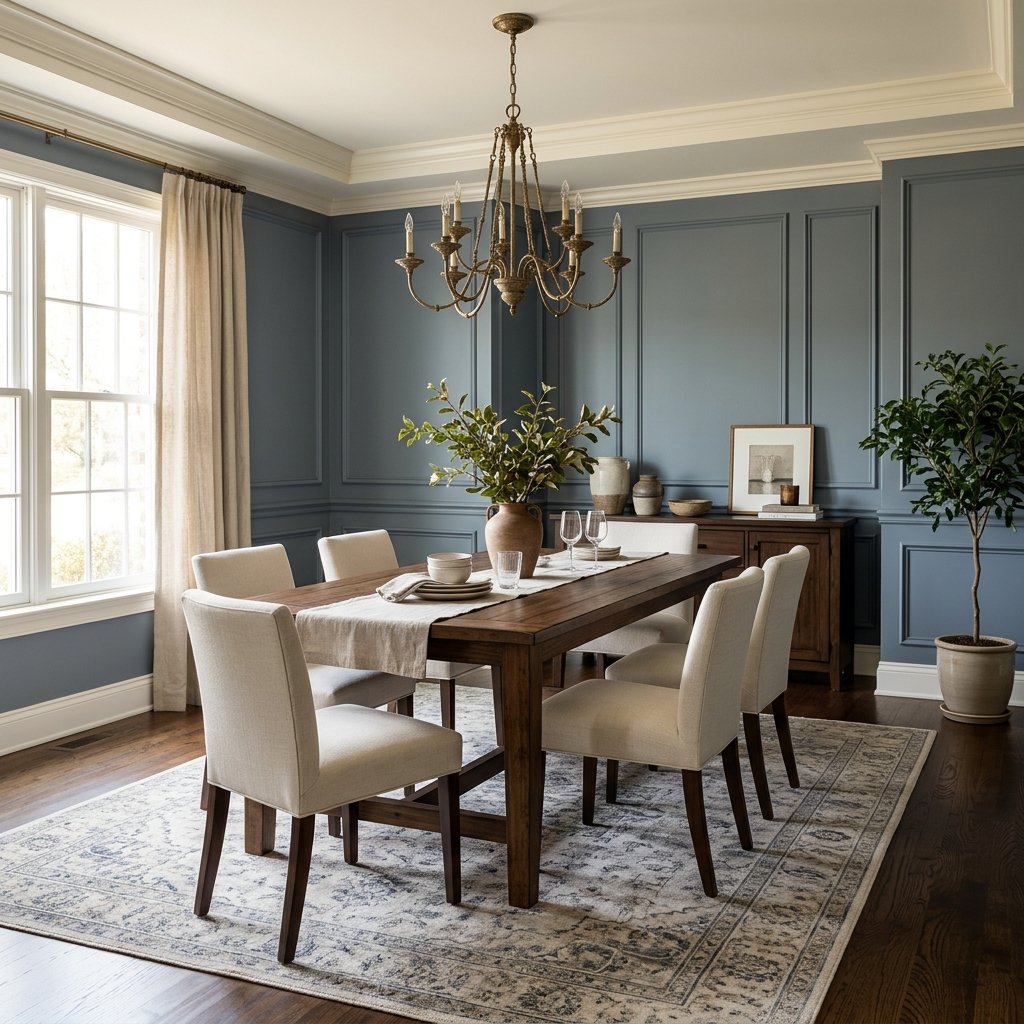
9. Benjamin Moore Smoke Embers 1466
Smoke Embers is useful if you’re looking for a more restrained gray with a cool, smoky character.
Compared with colors that read clearly blue, it can feel more neutral.
This makes it worth considering if you like the idea of blue-gray but don’t want a room that immediately looks blue.
Compare it with your flooring and trim because subtle cool undertones can become more noticeable beside warm materials.
10. Benjamin Moore Nimbus Gray 2131-50
Nimbus Gray is another sophisticated gray that can reveal cool blue characteristics depending on the environment.
It’s a useful option if you’re searching for something between a straightforward gray and a more obvious blue-gray.
Try it in:
- Living rooms
- Bedrooms
- Home offices
- Bathrooms
As with all subtle grays, nearby colors can change what you see.
11. Benjamin Moore Van Courtland Blue HC-145
Van Courtland Blue is for someone who wants to move decisively toward blue.
It’s more saturated than a barely-there blue-gray but remains muted enough to feel sophisticated.
Consider it for:
- Dining room
- Bedroom
- Built-ins
- Cabinets
- Bathroom vanity
It can create a beautiful traditional or transitional palette with warm white, medium wood, and brass.
12. Benjamin Moore Knoxville Gray HC-160
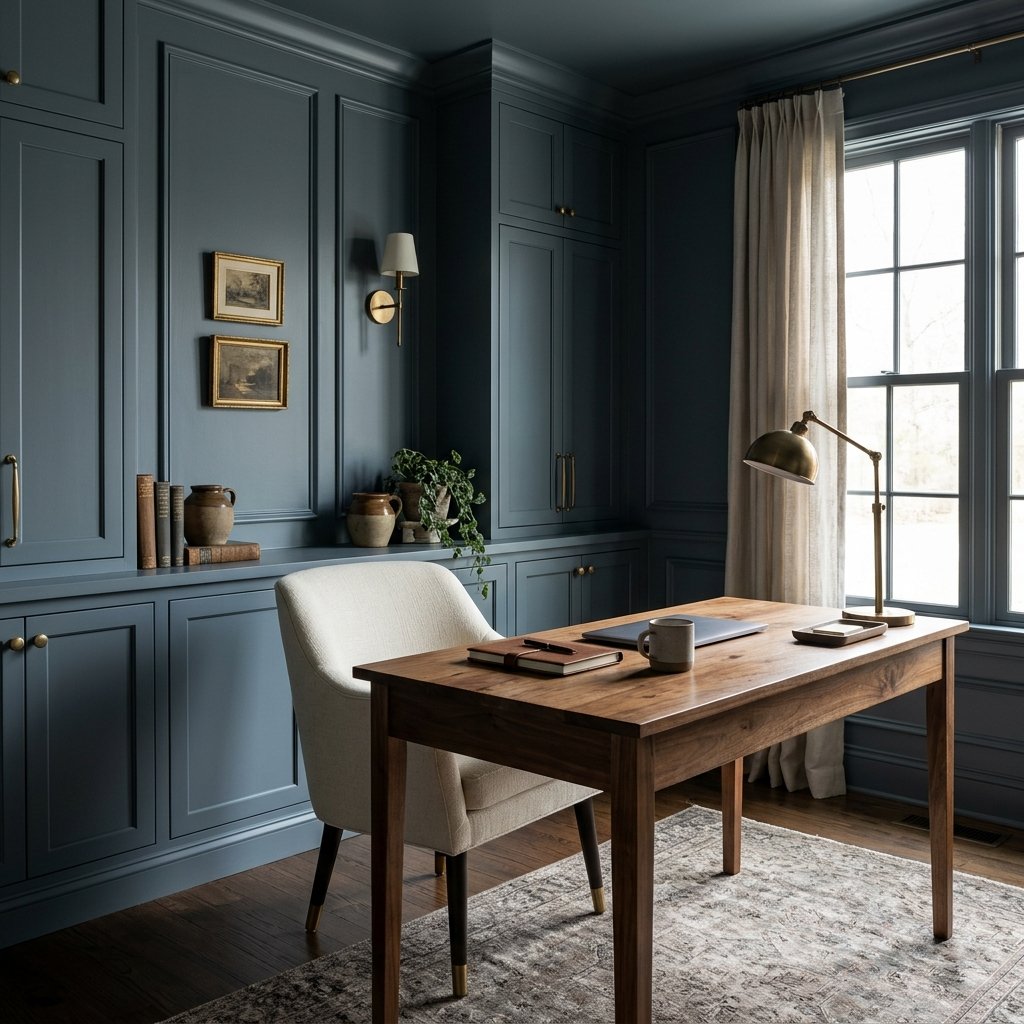
If you’re looking for a deep, moody interpretation of blue-gray, Knoxville Gray is worth considering.
This isn’t a pale wall color.
It has substantial depth and can create a dramatic effect on:
- Built-ins
- Cabinets
- Accent walls
- Dining rooms
- Offices
Depending on the room, its blue-green characteristics may become noticeable.
Use lighter furnishings and warm materials if you want to balance its depth.
Best Light Blue-Gray Paint Colors
If you want something light and airy, start by sampling colors such as:
- Sherwin-Williams Misty
- Sherwin-Williams North Star
- Sherwin-Williams Krypton
Light blue-gray can work particularly well in rooms where you want color without much visual weight.
But remember that “light” doesn’t necessarily mean neutral.
Even a pale blue can become quite noticeable across four walls.
Best Medium Blue-Gray Paint Colors
Medium blue-grays provide more depth.
Consider:
- Sherwin-Williams Stardew
- Benjamin Moore Smoke
- Benjamin Moore Boothbay Gray
These can work beautifully when a very pale color feels washed out.
They’re also useful for cabinetry and vanities.
Best Dark Blue-Gray Paint Colors
For a moodier look, consider moving toward deeper colors such as Benjamin Moore Knoxville Gray.
Dark blue-gray can create a sophisticated backdrop for:
- Warm wood
- Cream upholstery
- Brass
- White
- Natural stone
Use large samples because deep colors can change dramatically depending on the amount of natural light.
Best Blue-Gray Paint for a Living Room
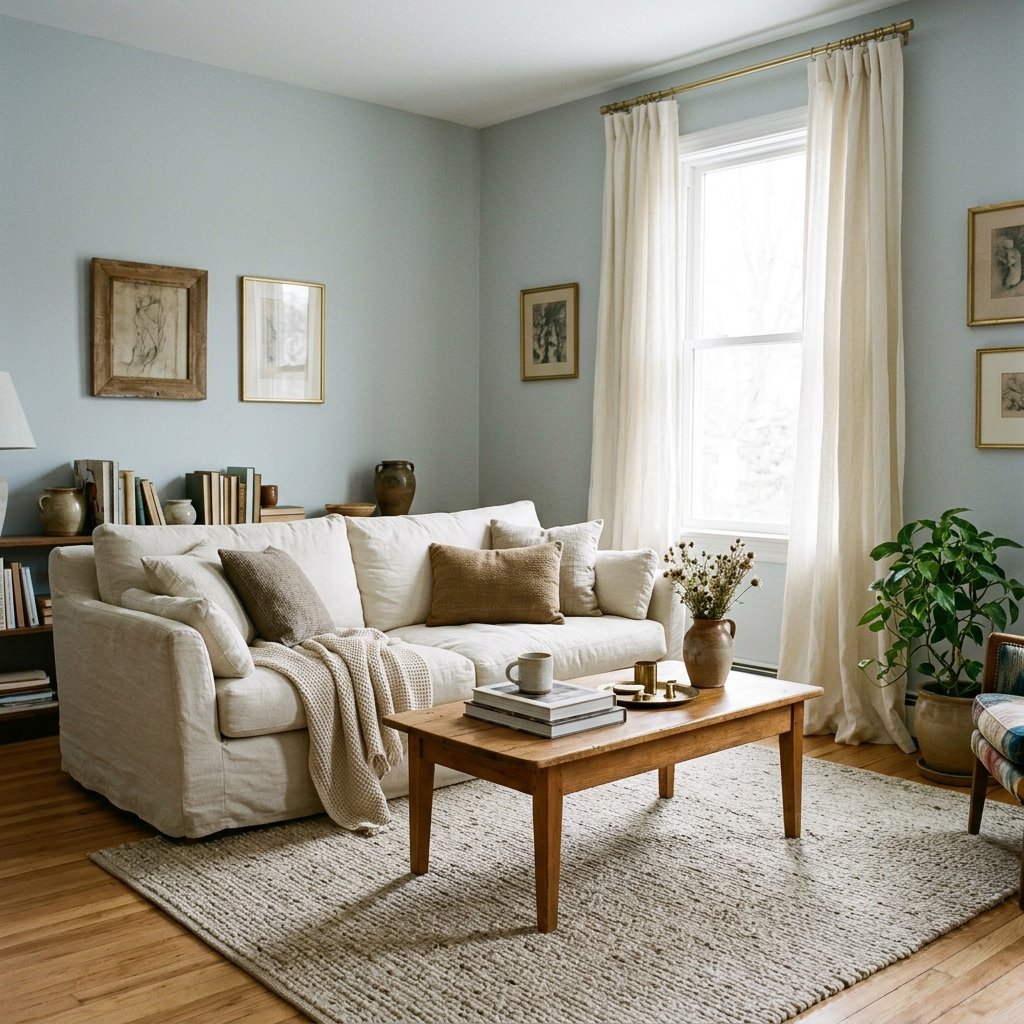
Blue-gray can create a calm living room, but balance is important.
If the wall color is cool, introduce warmth through:
- Natural wood
- Cream upholstery
- Woven materials
- Warm metals
- Brown
For a lighter living room, consider starting with Misty, North Star, or Silver Strand.
If you want more color, compare Smoke or Boothbay Gray.
Best Blue-Gray Paint for a Bedroom
Blue-gray is a natural bedroom color because it can create a quiet, relaxed atmosphere.
Try it with:
- White bedding
- Cream linen
- Natural oak
- Walnut
- Brass
- Soft brown
Colors worth sampling include:
- Misty
- Krypton
- North Star
- Stardew
- Smoke
If you want a darker, cocooning bedroom, move toward a deeper blue-gray.
Best Blue-Gray Paint for a Bathroom
Bathrooms are another natural place to use blue-gray.
Pair it with:
- White tile
- Pale stone
- Natural wood
- Polished nickel
- Brass
Silver Strand, Misty, Krypton, and Smoke can all be worth sampling depending on the amount of color you want.
Always compare the paint directly with the tile and countertop.
Stone and tile undertones can change the way blue-gray appears.
For humid spaces, use a suitable coating and follow manufacturer instructions for surface preparation, ventilation, drying, and curing.
Best Blue-Gray Paint for Kitchen Cabinets
Blue-gray cabinets can introduce color while remaining softer than bright blue.
Consider deeper colors with enough presence to hold their own against countertops and backsplashes.
Depending on your desired depth, look at options such as:
- Stardew
- Boothbay Gray
- Van Courtland Blue
- Knoxville Gray
Cabinet colors should always be tested directly against:
- Countertops
- Backsplash
- Flooring
- Wall color
- Appliances
For painted cabinetry, use products suitable for cabinets and follow manufacturer instructions for cleaning, preparation, priming where required, application, drying, and curing.
Best Blue-Gray Paint for a Bathroom Vanity
A vanity is an easy place to experiment with a color you might not want across an entire room.
Try a medium or deeper blue-gray.
Pair it with:
- Light stone
- White
- Warm white
- Brass
- Polished nickel
A blue-gray vanity can provide enough color to become a focal point while still feeling relatively restrained.
Best Blue-Gray Paint for a Home Office
A home office can handle more depth than many open living spaces.
Try:
- Smoke
- Boothbay Gray
- Stardew
- Knoxville Gray
Dark blue-gray built-ins can create a particularly sophisticated effect.
Balance deeper colors with lighter rugs, window treatments, and upholstery if the room begins to feel heavy.
Best Blue-Gray Paint for an Exterior
Blue-gray can also work beautifully outside.
But exterior daylight is dramatically stronger than interior lighting, so colors can look much lighter outdoors.
Compare large samples against:
- Roof
- Brick
- Stone
- Windows
- Driveway
- Trim
Don’t choose an exterior blue-gray based on an indoor photograph.
Use an exterior coating appropriate for your surface and follow manufacturer instructions regarding weather conditions, preparation, application, drying, and curing.
Best Blue-Gray Paint With White Trim
White trim can make blue-gray appear cleaner and more colorful.
A very crisp white may emphasize the blue.
A softer warm white may make the transition gentler.
Neither is automatically correct.
Choose the white that works with:
- Flooring
- Countertops
- Cabinets
- Furnishings
- Other fixed finishes
Then compare it directly with the blue-gray.
Blue-Gray Paint With Cream
Cream is one of my favorite directions for balancing blue-gray because it introduces warmth.
Try:
Blue-gray walls + cream sofa + natural oak + brass
This keeps the room from becoming too cool.
Avoid assuming every cream will work.
Very yellow cream can create a much stronger contrast against blue.
Blue-Gray Paint With Wood
Wood can make blue-gray feel warmer and more natural.
Try:
- White oak
- Medium oak
- Walnut
- Dark wood
Blue-gray and wood are especially useful together when you want a nature-inspired palette without using green walls.
Blue-Gray Paint With Brass
Brass introduces warmth against blue-gray.
Use it through:
- Cabinet hardware
- Lighting
- Mirror frames
- Furniture details
A small amount is usually enough.
Blue-Gray Paint With Black
Black can sharpen a soft blue-gray palette.
Try black through:
- Picture frames
- Lighting
- Furniture
- Hardware
Don’t overdo it.
A few repeated dark accents can provide definition without overwhelming the softness of the wall color.
Blue-Gray Paint With Navy
Navy and blue-gray can create a layered tonal palette.
Use the lighter blue-gray on the walls and navy through:
- Pillows
- Artwork
- Furniture
- Cabinetry
Then add cream and wood for warmth.
Blue-Gray Paint in North-Facing Rooms
North-facing rooms generally receive cooler natural light.
Blue-gray may look:
- Bluer
- Cooler
- Deeper
- More muted
If you want the room to remain warm and inviting, add cream, wood, and warm artificial lighting.
A color that already leans strongly blue may become significantly bluer in northern light.
Blue-Gray Paint in South-Facing Rooms
Warm southern light can soften cool paint colors.
A blue-gray may look:
- Lighter
- Softer
- Slightly warmer
This can be a beautiful exposure for blue-gray because the warm natural light provides balance.
Blue-Gray Paint in East-Facing Rooms
East-facing rooms receive warmer morning light.
Your blue-gray may feel softer early in the day and cooler later.
Evaluate samples during the time you use the room most.
Blue-Gray Paint in West-Facing Rooms
West-facing rooms receive warmer light later in the day.
Blue-gray may appear cooler in the morning and warmer or softer in the afternoon.
Always check the color after sunset under artificial lighting as well.
Blue-Gray vs. Blue-Green Paint
These categories overlap.
Many blue-gray colors contain some green.
The important question is whether you like that green influence.
A blue-gray with green undertones can feel:
- Organic
- Coastal
- Spa-like
A blue-gray without much green may feel:
- Cleaner
- Cooler
- More traditional
Compare samples side by side.
Green becomes much easier to recognize when you’re looking at several colors together.
Blue-Gray vs. Gray With Blue Undertones
These aren’t necessarily the same thing.
A blue-gray usually has enough blue that you can clearly perceive color.
A gray with blue undertones may still look predominantly gray.
If you’re nervous about blue, start with a grayer option.
If you want the walls to actually look blue, choose a more colorful blue-gray.
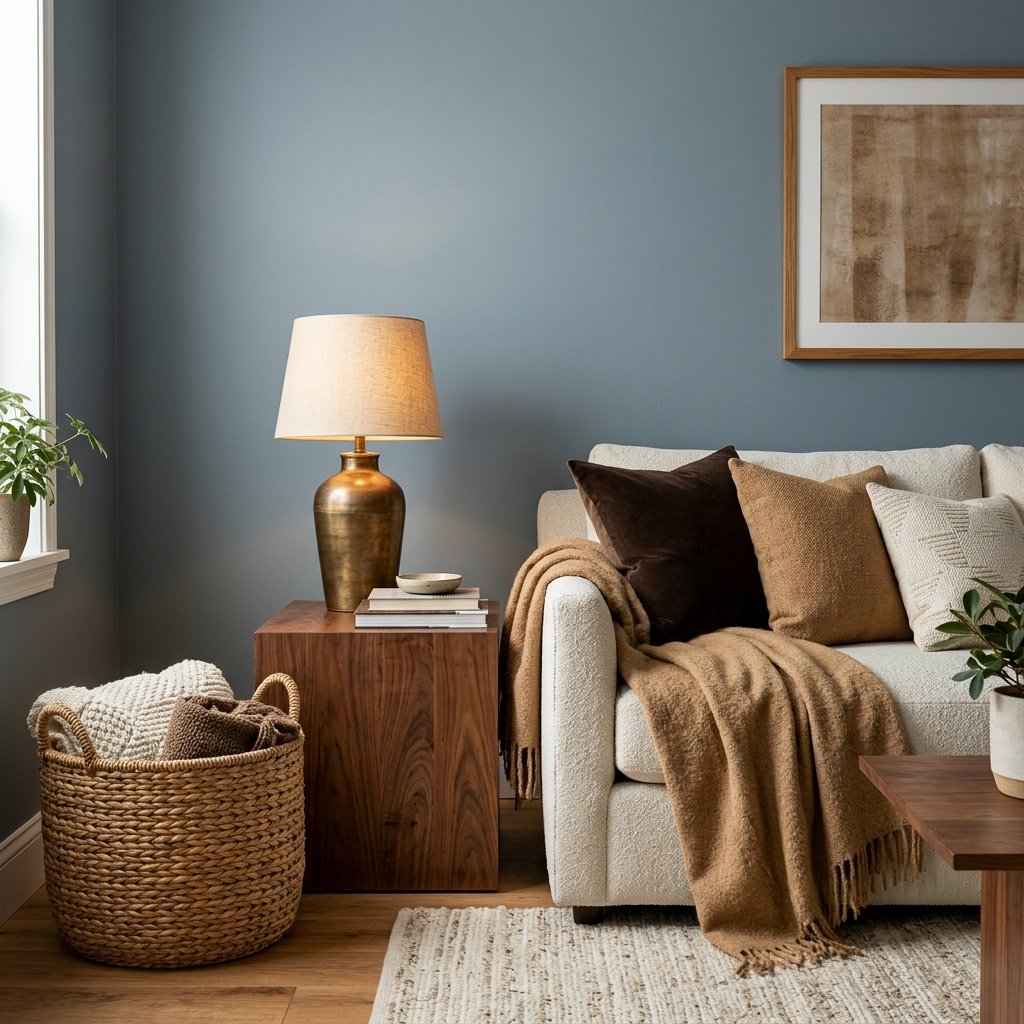
How to Keep Blue-Gray Walls From Feeling Too Cold
The easiest solution is warmth.
Add:
- Wood
- Cream
- Brown
- Woven textures
- Warm metals
- Warm lighting
You don’t need to change the paint itself.
Often, the surrounding materials determine whether a cool wall color feels inviting.
How to Sample Blue-Gray Paint Correctly
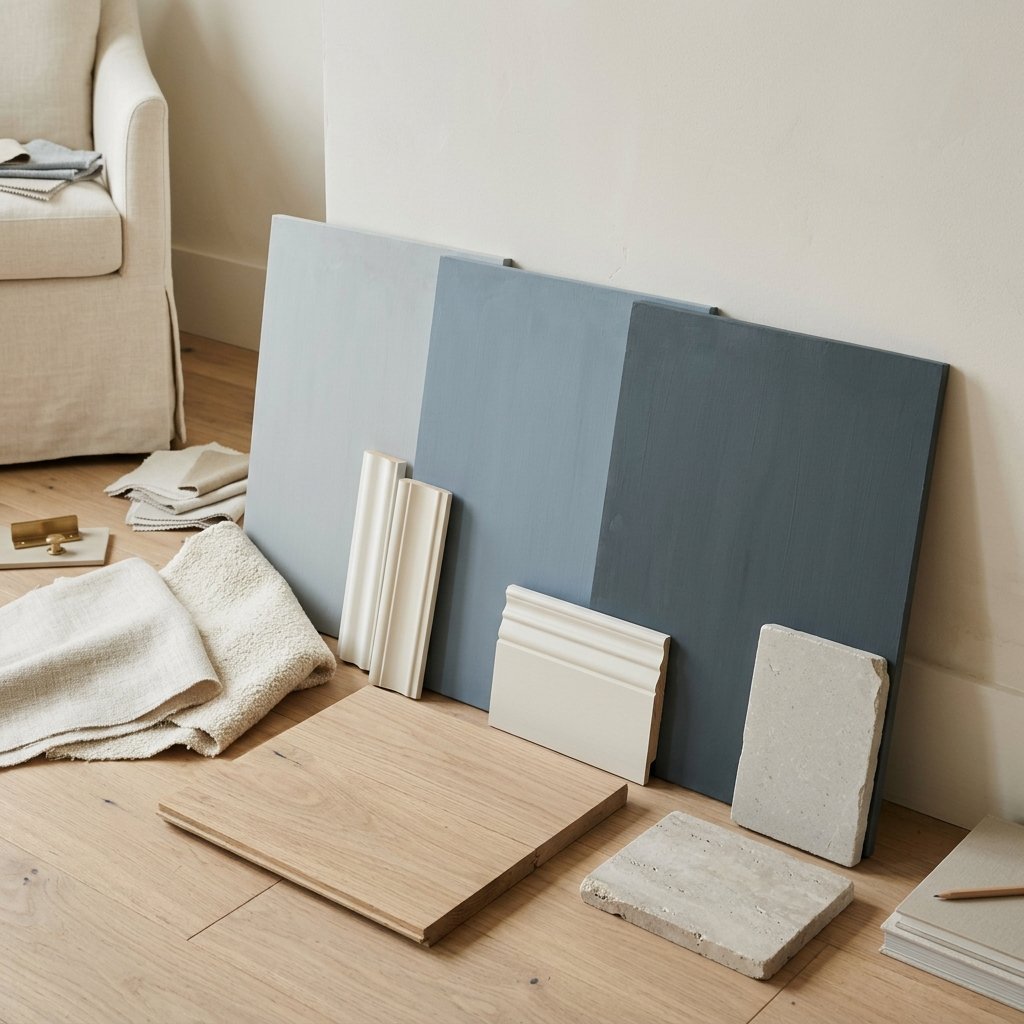
Sampling is essential with blue-gray.
Start by narrowing your choices to three or four colors.
Then use large movable samples or sufficiently large painted test areas.
Place the samples near:
- Flooring
- Trim
- Cabinets
- Countertops
- Tile
- Upholstery
Check them throughout the day.
Look in:
- Morning light
- Midday light
- Afternoon light
- Evening artificial light
Move the samples around the room.
A color beside a window can look completely different on the opposite wall.
Most importantly, don’t judge a blue-gray from your phone or computer screen.
Photography, editing, screen calibration, and surrounding colors can all change how paint appears.
Common Mistakes When Choosing Blue-Gray Paint
Choosing From a Tiny Paint Chip
You need to see the color at a larger scale.
Ignoring Green Undertones
Some blue-grays can shift noticeably green.
Assuming Gray Means Neutral
Blue-gray is still color.
Forgetting About Natural Light
Cool light can make blue much stronger.
Ignoring Artificial Lighting
Always evaluate the paint at night.
Choosing the Trim White Separately
Compare your white and blue-gray together.
Ignoring Flooring
Large expanses of warm or cool flooring influence how the wall color appears.
Choosing From Online Photos
Use photographs for inspiration, not final color selection.
Which Blue-Gray Paint Color Should You Choose?
Start by deciding how much blue you want.
If You Want a Very Soft Blue-Gray
Start with colors such as Misty or North Star.
If You Want Blue-Gray With Some Green
Compare Silver Strand.
If You Want a Clearer Blue-Gray
Look at Krypton or Tradewind.
If You Want More Depth
Consider Stardew, Smoke, or Boothbay Gray.
If You Want a Dramatic Blue-Gray
Explore deeper colors such as Knoxville Gray.
Then sample your favorites in the actual room.
FAQ About the Best Blue-Gray Paint Colors
What is the best blue-gray paint color?
There isn’t one blue-gray that’s best for every room. Popular options worth sampling include Sherwin-Williams Misty, Silver Strand, Krypton, North Star, Tradewind, and Stardew, along with Benjamin Moore Smoke, Boothbay Gray, Smoke Embers, Nimbus Gray, Van Courtland Blue, and Knoxville Gray.
What is a good light blue-gray paint color?
Sherwin-Williams Misty, North Star, and Krypton are useful starting points if you’re looking for a lighter blue-gray.
What is a good blue-gray for a bedroom?
Misty, Krypton, Stardew, Smoke, and Boothbay Gray can all be worth sampling depending on how light or moody you want the room.
What blue-gray works in a bathroom?
Soft blue-gray can work beautifully in bathrooms. Compare colors such as Misty, Silver Strand, Krypton, and Smoke directly with your tile, countertop, and fixtures.
What blue-gray works on kitchen cabinets?
For cabinetry, consider blue-grays with enough depth to create definition, such as Stardew, Boothbay Gray, Van Courtland Blue, or Knoxville Gray.
Does blue-gray paint look blue on the wall?
It can. Blue often becomes more noticeable when a color is used across a large wall area. Cool natural light can intensify that effect.
Does blue-gray work with warm wood?
Yes. Warm wood can provide beautiful contrast and help prevent a blue-gray room from feeling too cool.
Does blue-gray work with cream?
Yes. Cream can soften blue-gray and create a warm, layered palette.
What color trim goes with blue-gray walls?
Both crisp and warm whites can work. Choose the white that coordinates with your room’s fixed finishes and compare it directly with the blue-gray before painting.
Final Thoughts
Finding the best blue gray paint color comes down to understanding two things: how much blue you want and how your home’s lighting affects it.
If you want something barely there, begin with a pale blue-gray such as Misty or North Star.
If you want a little more color, compare Krypton, Silver Strand, or Tradewind.
For greater depth, look at Stardew, Smoke, or Boothbay Gray.
And if you want a darker, moodier room, deeper colors such as Knoxville Gray may be closer to what you have in mind.
But don’t make the final decision from a list.
Blue-gray paint is highly responsive to its surroundings.
A color that looks soft and gray in one room can become noticeably blue—or even blue-green—in another.
Sample several options beside your actual flooring, trim, countertops, tile, cabinetry, and furnishings.
Check them throughout the day and after sunset.
Once you find a blue-gray whose undertones work with your home, it can provide the perfect balance: more personality than a neutral gray, but softer and easier to decorate around than a bright blue.