

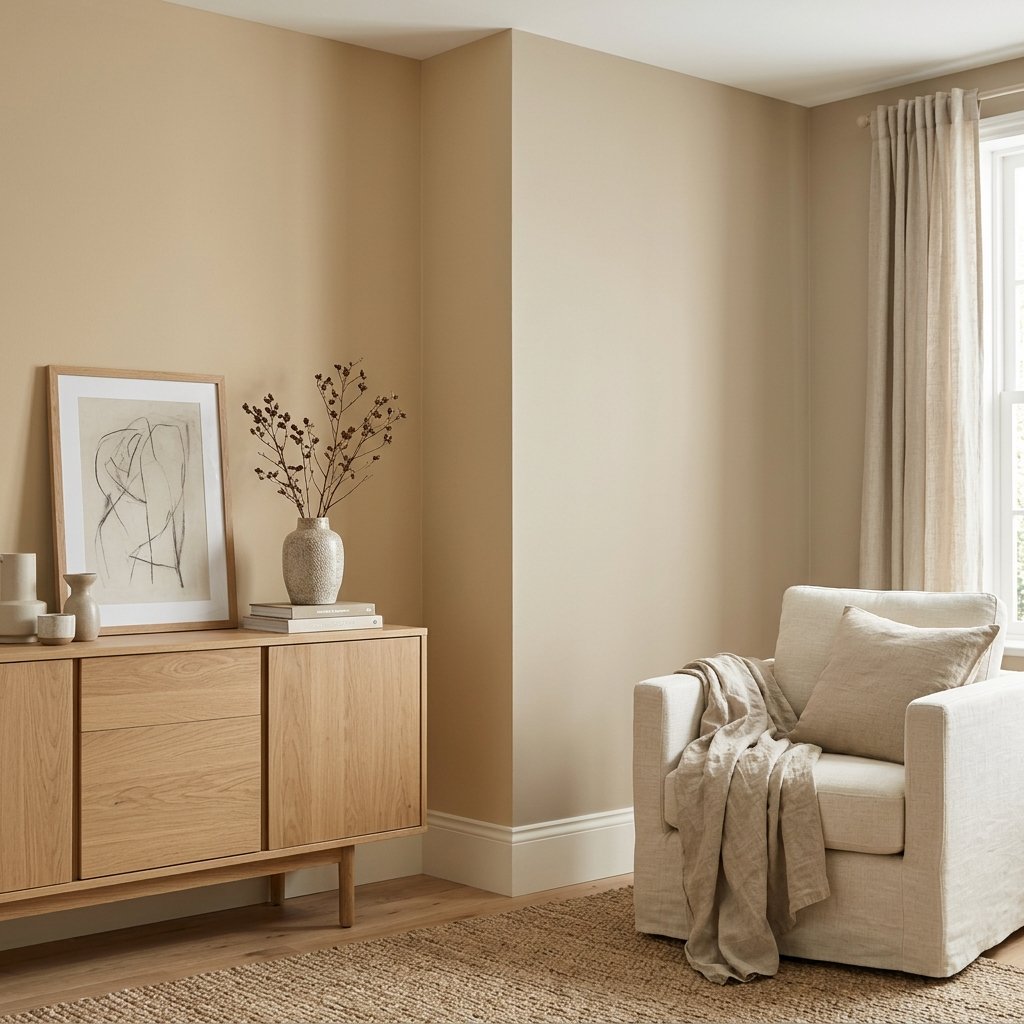
After years of cool gray and pale greige dominating interiors, warmer neutrals are an appealing way to make a home feel softer, more comfortable, and more connected to natural materials.
That’s where tan paint colors can work beautifully.
Tan sits somewhere between beige and brown. Depending on the shade, it can feel light and sandy, earthy and organic, or deep and cozy. Some tans lean golden, while others have muted gray, green, or taupe characteristics.
And that’s exactly why choosing one can be tricky.
The wrong tan can become much more yellow, orange, pink, or muddy than expected once it’s on the wall. The right tan, however, can provide a warm backdrop that works beautifully with wood, stone, cream, black, green, brown, and other earthy colors.
If you’re looking for a warm neutral for your living room, bedroom, kitchen, cabinetry, or exterior, these popular tan paint colors from Sherwin-Williams and Benjamin Moore are excellent places to begin your sampling process.

What Is a Tan Paint Color?
Tan is a warm neutral generally created from a combination of brown, beige, and other subtle undertones.
It can range from very light and sandy to much deeper brown-beige.
Compared with many greiges, tan usually has more obvious warmth.
Compared with brown, tan is typically lighter.
Depending on the specific color, tan can have undertones of:
- Yellow
- Gold
- Green
- Gray
- Pink
- Peach
- Taupe
That’s why it’s important to evaluate the individual color rather than choosing something simply because it’s labeled “tan.”
Are Tan Paint Colors Coming Back?
Warm, earthy interiors have brought renewed attention to tan, camel, brown, beige, and other natural neutrals.
But you don’t need to treat tan as a short-term trend.
Warm neutral walls have been used for decades.
What tends to date a tan room isn’t necessarily the wall color itself. It’s often the complete palette surrounding it.
Instead of combining tan walls with multiple yellow-beige surfaces, try introducing contrast through:
- Cream
- Natural wood
- Black
- Dark brown
- Muted green
- Brass
- Natural stone
That can make tan feel much more current.
1. Sherwin-Williams Natural Tan SW 7567
The name makes this one an obvious place to start.
Sherwin-Williams Natural Tan is a light warm neutral that can provide a soft beige-tan backdrop without the visual weight of deeper brown-based colors.
It may work well in:
- Living rooms
- Bedrooms
- Hallways
- Open spaces
Natural Tan is worth comparing if you want warmth but don’t want the walls to feel dark.
Pair it with cream, warm white, natural wood, and deeper brown accents for a soft tonal palette.
2. Sherwin-Williams Accessible Beige SW 7036
Accessible Beige is often categorized as a beige or greige rather than a traditional tan, but it’s useful to include when you’re comparing warm neutrals.
It can provide the warmth associated with tan while feeling more muted than many golden beige colors.
Accessible Beige can work in:
- Living rooms
- Bedrooms
- Hallways
- Kitchens
- Open-plan spaces
If traditional tan colors look too golden in your house, compare them with a more subdued neutral such as Accessible Beige.
3. Sherwin-Williams Balanced Beige SW 7037
Balanced Beige provides more depth than many light beige and greige paint colors.
It can feel warm, grounded, and earthy.
This makes it worth considering when you want walls with more presence but aren’t ready for a medium brown.
Try it in:
- Dining rooms
- Living rooms
- Bedrooms
- Home offices
It can be especially attractive with cream upholstery and darker wood.
4. Sherwin-Williams Tony Taupe SW 7038
Tony Taupe moves deeper into the warm neutral family.
Despite the name, it’s worth sampling alongside tan colors if you want something earthy and substantial.
A deeper warm neutral can work beautifully in:
- Dining rooms
- Bedrooms
- Offices
- Built-ins
- Cabinetry
Tony Taupe may be particularly useful when pale beige colors look washed out in a bright room.
5. Sherwin-Williams Nomadic Desert SW 6107
Nomadic Desert is a warmer beige-tan option for someone who wants a noticeably cozy neutral.
It can work beautifully with:
- Cream
- Dark wood
- Natural fibers
- Muted green
- Black accents
Because warmer tan colors can respond strongly to lighting, sample this one beside your flooring before committing.
Wood flooring with orange or red undertones can amplify warmth.

6. Sherwin-Williams Kilim Beige SW 6106
Kilim Beige is another warm beige worth comparing when you’re searching for tan paint.
It has more traditional warmth than many modern gray-beige colors.
That can be an advantage in a home with:
- Warm wood
- Cream stone
- Brown furniture
- Earthy finishes
But it also means you should test carefully if your room contains very cool gray flooring or stark blue-white surfaces.
7. Benjamin Moore Muslin OC-12
Benjamin Moore Muslin is a warm neutral that can create a soft, comfortable backdrop.
It’s worth considering if you want something warmer than an off-white but lighter than many medium tan colors.
Try it with:
- Cream
- Warm white
- Wood
- Brown
- Muted green
This type of warm neutral can work especially well when you want the room to feel cozy without making the walls a major focal point.
8. Benjamin Moore Shaker Beige HC-45
Shaker Beige is a classic warm beige-tan that can provide more noticeable color than many pale neutrals.
It works naturally with traditional and transitional interiors, particularly those containing warm wood.
Consider it for:
- Living rooms
- Dining rooms
- Bedrooms
- Hallways
If you’re trying to move away from gray without going dramatically darker, Shaker Beige is a useful color to compare.
9. Benjamin Moore Manchester Tan HC-81
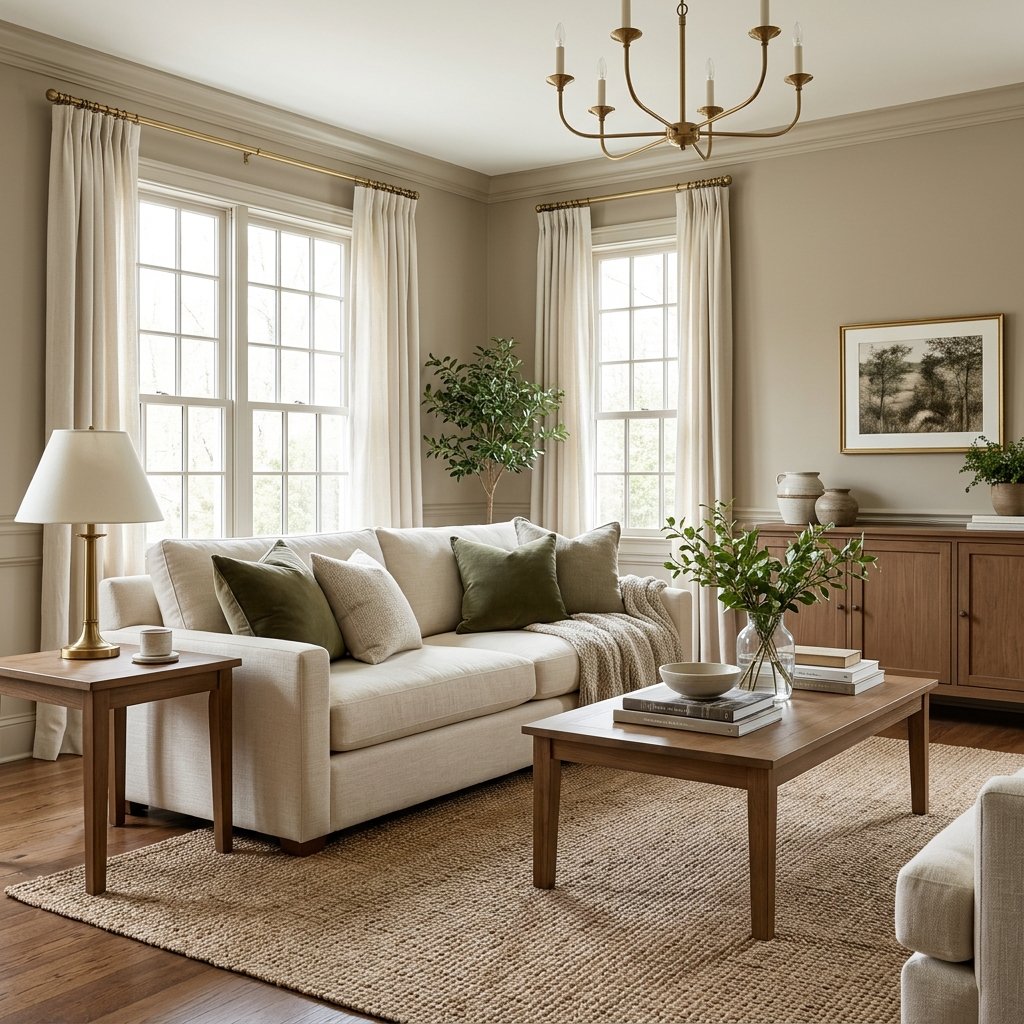
Manchester Tan is one of the most recognizable Benjamin Moore warm neutrals.
It can provide a lighter tan-beige appearance that works well as a flexible backdrop.
Consider it if you want a neutral that feels warmer than gray but isn’t especially dark.
It can be useful in:
- Living rooms
- Bedrooms
- Hallways
- Open spaces
Like all warm neutrals, it should be compared directly with flooring and trim.
10. Benjamin Moore Grant Beige HC-83
Grant Beige is a more complex neutral worth sampling if straightforward golden beige colors feel too warm.
It can show an earthier, more muted character that works well with natural materials.
Consider Grant Beige with:
- Wood
- Cream
- Natural stone
- Muted green
- Black
Complex neutrals can shift considerably between rooms, so large samples are important.
11. Benjamin Moore Lenox Tan HC-44
Lenox Tan provides more depth and warmth than pale beige colors.
It can create a cozy, grounded room and may work especially well in spaces where you want the walls to have noticeable presence.
Try it in:
- Dining rooms
- Bedrooms
- Offices
- Living rooms
Balance deeper tan walls with cream upholstery, light curtains, and warm white trim if you want to keep the room feeling bright.
12. Benjamin Moore Alexandria Beige HC-77
Alexandria Beige moves into a deeper, more substantial warm neutral.
It’s a good option to sample when you want an earthy tan-taupe effect rather than a light sandy beige.
It can work beautifully with:
- Cream
- Dark brown
- Black
- Natural wood
- Aged brass
- Muted green
A deeper tan can make a room feel cozy and sophisticated, particularly when you layer in lighter textiles.
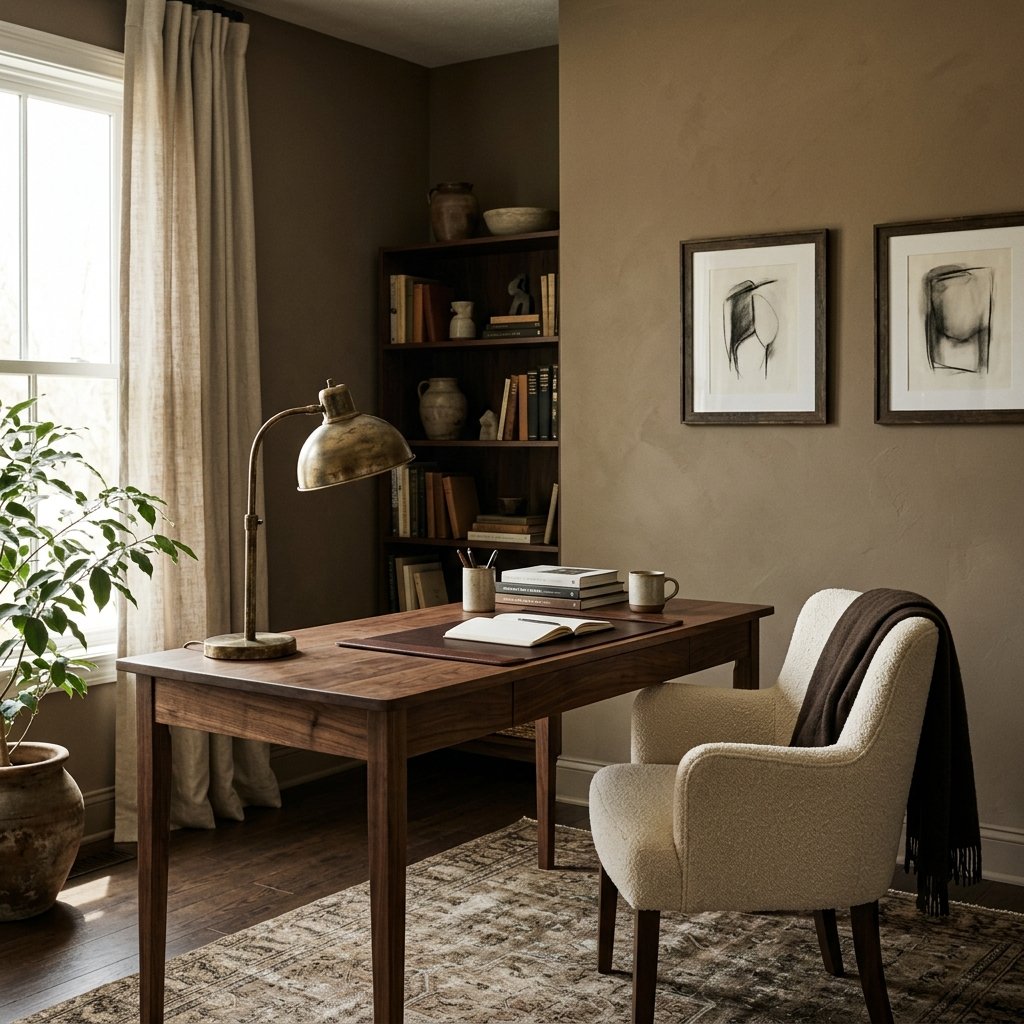
Best Light Tan Paint Colors
If you want tan without making your room feel heavy, start with lighter options.
Consider sampling:
- Sherwin-Williams Natural Tan
- Sherwin-Williams Accessible Beige
- Benjamin Moore Muslin
- Benjamin Moore Manchester Tan
These colors can introduce warmth while maintaining a relatively light overall appearance.
They’re particularly useful for larger wall areas and open-plan spaces.
Best Medium Tan Paint Colors
If you want the walls to have more presence, compare:
- Sherwin-Williams Balanced Beige
- Sherwin-Williams Nomadic Desert
- Benjamin Moore Shaker Beige
- Benjamin Moore Lenox Tan
Medium tan can create a warmer, more enveloping feeling than pale beige.
Best Dark Tan Paint Colors
For a moodier room, look at deeper earthy neutrals such as:
- Sherwin-Williams Tony Taupe
- Benjamin Moore Alexandria Beige
Depending on your lighting, these colors can feel closer to taupe or light brown than classic sandy tan.
That depth can be particularly effective in dining rooms, offices, bedrooms, built-ins, and cabinetry.
Best Tan Paint Color for a Living Room
Tan can create a warm, inviting living room.
For a lighter effect, consider starting with:
- Natural Tan
- Accessible Beige
- Manchester Tan
- Muslin
For more depth:
- Balanced Beige
- Shaker Beige
- Lenox Tan
Then add contrast.
A tan living room can become flat if every piece is another similar shade of beige.
Try introducing:
- Cream
- Dark brown
- Black
- Green
- Natural wood
- Brass

Best Tan Paint Color for a Bedroom
Tan can create a cozy bedroom without requiring a dark wall color.
Pair it with:
- Cream bedding
- White bedding
- Natural linen
- Brown
- Olive
- Warm wood
A tonal palette can be especially beautiful.
For example:
Tan walls + cream bedding + walnut furniture + camel throw
This creates warmth through subtle shifts rather than strong color contrast.
Best Tan Paint Color for a Dining Room
Dining rooms can often handle a little more depth.
Try a richer tan or taupe-tan with:
- Dark wood table
- Cream upholstery
- Brass chandelier
- Warm white trim
Balanced Beige, Tony Taupe, Lenox Tan, and Alexandria Beige are worth comparing if you want a more substantial wall color.
Best Tan Paint Color for a Kitchen
Tan can work in a kitchen when it relates to the cabinetry and countertops.
Before choosing a color, compare it directly with:
- Cabinet finish
- Countertop
- Backsplash
- Flooring
- Appliances
Warm beige-tan walls can look beautiful with wood cabinetry and cream stone, but the undertones need to align.
Tan Kitchen Cabinets
Tan cabinetry can create a warmer alternative to white, gray, or greige.
Depending on the shade, tan cabinets can feel:
- Organic
- Traditional
- Transitional
- Mediterranean-inspired
- Modern
Try them with light stone and warm metals for a tonal effect.
If you’re painting existing cabinets, use a coating system appropriate for cabinetry and follow manufacturer instructions for cleaning, preparation, priming where required, application, drying, and curing.
Tan Bathroom Vanity
A tan or taupe-tan vanity can provide warmth without becoming a strong color.
Pair it with:
- Warm white
- Cream
- Pale stone
- Brass
- Polished nickel
- Natural wood
Always compare the paint directly with the countertop and tile.
Bathroom surfaces often have strong undertones that aren’t obvious until another color is placed beside them.
Tan Paint Colors With White Trim
White trim can create crisp definition around tan walls.
But the specific white matters.
A very cool blue-white may make a warm tan appear more yellow.
A softer white can create a gentler transition.
Compare your trim white directly with the tan before painting the entire room.
Tan Paint With Cream
Tan and cream create a naturally warm palette.
The key is contrast.
If the tan and cream are nearly identical in value, the room can look flat.
Try:
Medium tan walls + light cream upholstery
or:
Light tan walls + deeper camel and brown accents
Tan Paint With Natural Wood
Wood and tan are natural partners.
But because both are warm, you need to pay attention to undertones.
Light oak can work beautifully with muted tan.
Walnut adds deeper brown contrast.
Orange or red woods may intensify the warmth of golden tan colors.
Sample directly against the floor or furniture.
Tan Paint With Dark Wood
Dark wood can make tan feel sophisticated rather than overly beige.
Try:
Tan walls + dark walnut + cream + brass
This combination works particularly well in traditional and transitional interiors.
Tan Paint With Black
Black is one of the easiest ways to modernize a tan palette.
Use it through:
- Picture frames
- Lighting
- Hardware
- Furniture legs
- Interior doors
You don’t need much.
A few dark accents can give a warm neutral room definition.
Tan Paint With Green
Green works naturally with earthy tan.
Consider:
- Olive
- Sage
- Forest green
A palette of tan, cream, wood, and muted green can create a relaxed nature-inspired interior.
Tan Paint With Blue
Blue provides cooler contrast.
Muted navy or dusty blue can work beautifully with tan because the cool blue balances the warmth of the beige-brown base.
Try:
Tan + navy + cream + walnut
for a classic palette.
Tan Paint With Brass
Brass reinforces the warmth of tan.
Use it sparingly through:
- Lighting
- Hardware
- Mirrors
- Furniture details
Aged brass can be particularly effective when you want a softer, less polished look.
Tan Paint in North-Facing Rooms
North-facing rooms generally receive cooler natural light.
That cooler light can reduce some of a tan color’s warmth.
A muted tan may appear:
- Grayer
- More subdued
- Slightly deeper
A strongly golden tan may become more balanced.
This can sometimes be helpful, but always sample first.
Tan Paint in South-Facing Rooms
South-facing rooms receive warmer natural light.
That warmth can intensify the yellow, gold, or beige characteristics in tan.
If you’re trying to avoid golden walls, sample more muted tan colors in strong southern light.
Tan Paint in East-Facing Rooms
East-facing rooms receive warm morning sunlight.
Tan may look warmer early in the day and more subdued later.
Evaluate the paint at the time you use the room most.
Tan Paint in West-Facing Rooms
West-facing rooms receive warmer afternoon light.
A tan color may become noticeably warmer later in the day.
Check the sample in both morning and evening light before making your decision.
Tan vs. Beige Paint
Tan and beige overlap considerably.
Generally, tan tends to feel slightly deeper and browner, while beige can range from very pale cream-beige to deeper warm neutrals.
But paint names aren’t standardized.
One manufacturer’s “tan” may look similar to another manufacturer’s “beige.”
Focus on the actual color rather than the label.
Tan vs. Greige Paint
Greige combines gray and beige.
Compared with many tans, greige usually has more gray influence.
Tan generally feels:
- Warmer
- Browner
- Earthier
Greige often feels:
- More muted
- Grayer
- Less golden
If your home contains warm wood and earthy stone, tan may feel more natural.
If you have cooler finishes, greige may be easier to coordinate.
Tan vs. Taupe Paint
Taupe usually contains a more complex gray-brown quality and can sometimes reveal violet or pink characteristics.
Tan typically feels warmer and more golden or beige-brown.
Again, there is plenty of overlap.
The easiest way to see the difference is to place large samples beside each other.
How to Make Tan Walls Look Modern
Tan can feel very current when the room has enough contrast and texture.
Try:
- Tan walls
- Cream upholstery
- Natural oak
- Dark brown
- Small black accents
- Aged brass
- Linen
- Woven materials
Avoid making everything the exact same shade of beige.
Variation is what gives a neutral room depth.
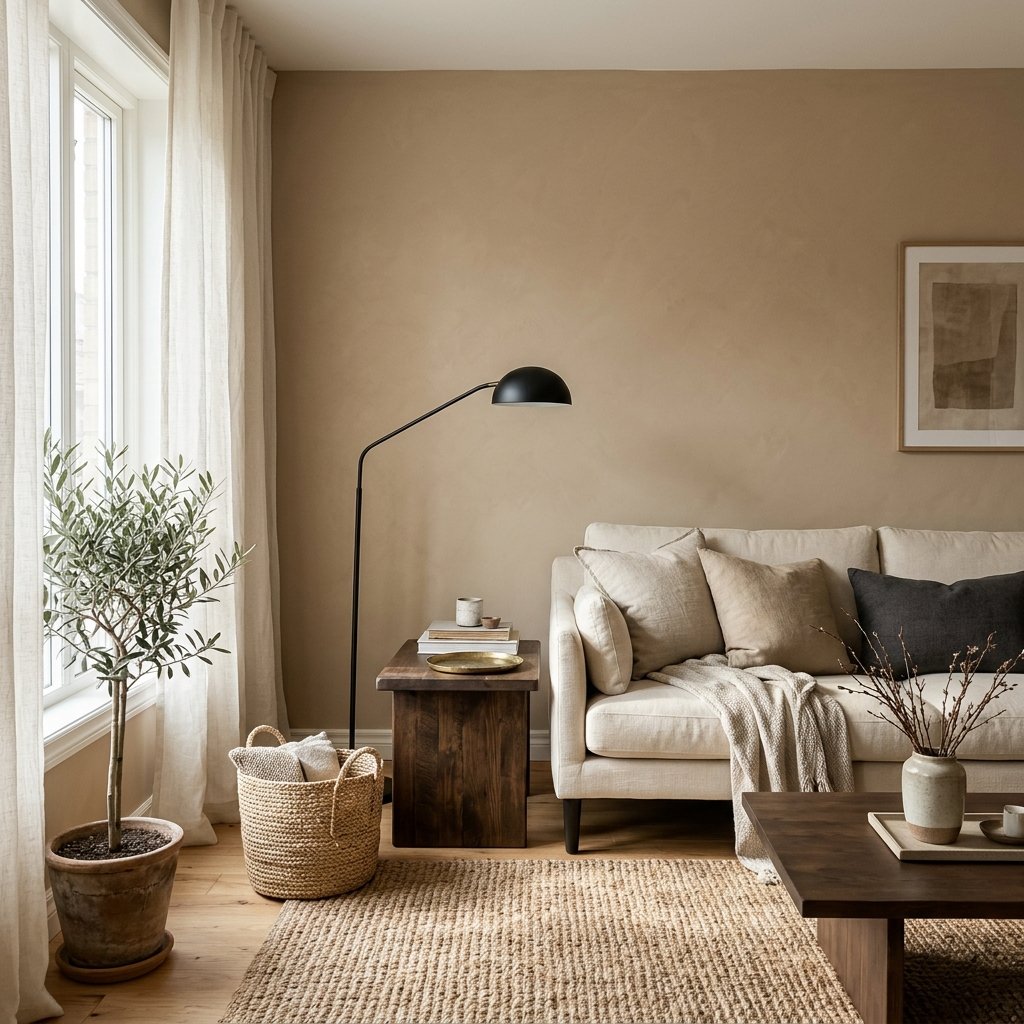
How to Keep Tan Paint From Looking Yellow
If your tan is turning too yellow, consider what is causing it.
Possible influences include:
- Warm southern light
- Warm light bulbs
- Orange wood flooring
- Cream trim
- Yellow-beige stone
Compare your sample with more muted beige, greige, or taupe options.
Sometimes moving slightly grayer is enough to balance the room.
How to Sample Tan Paint Colors
Warm neutrals need to be sampled just as carefully as colorful paint.
Use large movable samples or sufficiently large painted test areas.
Compare each color directly with:
- Flooring
- Trim
- Cabinets
- Countertops
- Stone
- Upholstery
Then check the samples:
- Morning
- Midday
- Afternoon
- Evening
- Under artificial lighting
Move them around the room.
A tan beside a sunny window may look completely different on a shadowed wall.
And don’t choose your final color from an online image.
Screens, photography, editing, and surrounding colors can all distort paint.

Common Mistakes When Choosing Tan Paint
Assuming All Tan Is the Same
Tan colors can have very different undertones.
Ignoring Yellow Undertones
Warm light can amplify golden tones.
Choosing From a Tiny Chip
Evaluate the color at a much larger scale.
Ignoring Flooring
Wood and tile can dramatically affect tan.
Using Too Much Beige
Introduce contrast with cream, dark brown, black, green, or wood.
Choosing Trim Separately
Evaluate the tan and trim white together.
Forgetting Artificial Lighting
Warm bulbs can make tan appear considerably more golden.
Choosing From Online Photos
Use online images for inspiration rather than final color selection.
Which Tan Paint Color Should You Choose?
Start by deciding how warm and how deep you want the room to feel.
For a Light Tan
Consider Natural Tan, Muslin, or Manchester Tan.
For a Muted Tan-Beige
Compare Accessible Beige or Grant Beige.
For a Warmer Traditional Tan
Look at Kilim Beige, Nomadic Desert, or Shaker Beige.
For More Depth
Compare Balanced Beige or Lenox Tan.
For a Deeper Earthy Neutral
Look at Tony Taupe or Alexandria Beige.
Then sample your favorites in your actual home.
FAQ About Tan Paint Colors
What are some popular tan paint colors?
Popular options worth sampling include Sherwin-Williams Natural Tan, Accessible Beige, Balanced Beige, Tony Taupe, Nomadic Desert, and Kilim Beige, along with Benjamin Moore Muslin, Shaker Beige, Manchester Tan, Grant Beige, Lenox Tan, and Alexandria Beige.
What is a good light tan paint color?
Sherwin-Williams Natural Tan and Benjamin Moore Manchester Tan are useful starting points if you want a lighter warm neutral. Muslin is another option worth comparing.
What colors go with tan walls?
Tan can work beautifully with cream, warm white, brown, natural wood, black, olive green, navy, and warm metals such as brass.
Is tan paint outdated?
Not inherently. Tan can feel very current when paired with natural materials, cream, dark brown, black accents, and layered textures rather than an entirely beige room.
Is tan warmer than greige?
Generally, yes. Tan typically has more beige or brown warmth, while greige contains more noticeable gray.
What is the difference between tan and beige?
Tan often feels slightly deeper and browner, while beige can be lighter and creamier. However, the categories overlap considerably.
Does tan work with white trim?
Yes. Both crisp and soft whites can work, but the specific white should be tested with the tan and the room’s fixed finishes.
Does tan work with gray?
It can, but the undertones need to coordinate. Warm gray or greige may transition more naturally into tan than a very icy blue-gray.
Does tan work with wood floors?
Yes. Tan and wood can create a beautiful warm palette. Compare the paint directly with the floor, especially if the wood has strong red or orange undertones.
Final Thoughts
The best tan paint colors can make a home feel warmer, softer, and more inviting without requiring a dramatic color choice.
For a light, airy effect, start with colors such as Natural Tan, Muslin, or Manchester Tan.
If you want something more muted, compare Accessible Beige and Grant Beige.
For a classic warmer look, consider Kilim Beige, Nomadic Desert, or Shaker Beige.
And if you’re ready for more depth, Balanced Beige, Lenox Tan, Tony Taupe, and Alexandria Beige can create a richer, more grounded room.
Whichever direction you choose, don’t think of tan as a color that has to be paired with more beige.
Some of the most interesting tan rooms combine warm neutral walls with cream, natural wood, dark brown, black, muted green, brass, and plenty of texture.
That contrast is what keeps the palette from feeling flat.
Most importantly, sample your favorites in the actual room.
Tan can change dramatically depending on natural light, artificial lighting, flooring, wood tones, stone, and trim.
Once you find a tan whose undertones work with those permanent elements, it can become an incredibly versatile backdrop—warm enough to make your home feel inviting but neutral enough to live with for years.