


Choosing paint colors for bedrooms can be surprisingly difficult. A color that looks beautiful on a small paint chip can feel completely different once it covers four walls and is surrounded by flooring, furniture, bedding, and changing natural light.
Bedrooms also have a different job than many other rooms.
While a kitchen may need to feel bright and energetic and a living room may need to work for entertaining, a bedroom usually benefits from feeling comfortable, restful, and personal.
That doesn’t mean every bedroom needs to be white or pale blue.
Warm whites, mushroom neutrals, taupes, muted greens, blue-grays, earthy colors, and even deep moody shades can all create beautiful bedrooms when they work with the room’s existing finishes.
The key is choosing a color based on your actual room—not simply picking a popular shade from a photograph.
Here are 15 beautiful bedroom paint color directions, plus tips for choosing the right undertone, testing samples, coordinating paint with bedding and furniture, and creating a bedroom that feels calm and finished.
How to Choose a Bedroom Paint Color
Before looking at individual colors, pay attention to what’s already in the room.
Your paint needs to coordinate with relatively fixed elements such as:
- Flooring
- Carpet
- Bed
- Headboard
- Large furniture
- Window treatments
- Existing trim
- Stone or tile if present
Then consider the elements that are easier to change:
- Bedding
- Pillows
- Artwork
- Lamps
- Rugs
- Accessories
If you have warm wood floors and a cream upholstered bed, for example, a warm neutral or muted earthy color may coordinate more naturally than an icy gray.
Pay Attention to Undertones
Undertones are one of the biggest reasons a paint color looks different than expected.
A neutral may lean:
- Yellow
- Pink
- Green
- Violet
- Blue
- Gray
Those undertones become more noticeable when the paint is placed beside other materials.
That’s why a beige that looks perfect in one bedroom can look unexpectedly pink or yellow in another.
Compare paint samples directly with your:
- Flooring
- Bedding
- Furniture
- Trim
The relationships matter more than the color name.
1. Warm White
Warm white is one of the easiest bedroom colors to live with.
It can make a room feel:
- Light
- Calm
- Soft
- Flexible
The key is choosing a white that relates well to the other finishes.
A warm white often works beautifully with:
- Natural oak
- Walnut
- Cream
- Beige
- Taupe
- Brass
- Linen
If your room receives limited natural light, don’t assume bright white will automatically make it look sunnier. Some whites can appear flat or gray when the light doesn’t support them.
Sample several options in the actual bedroom.
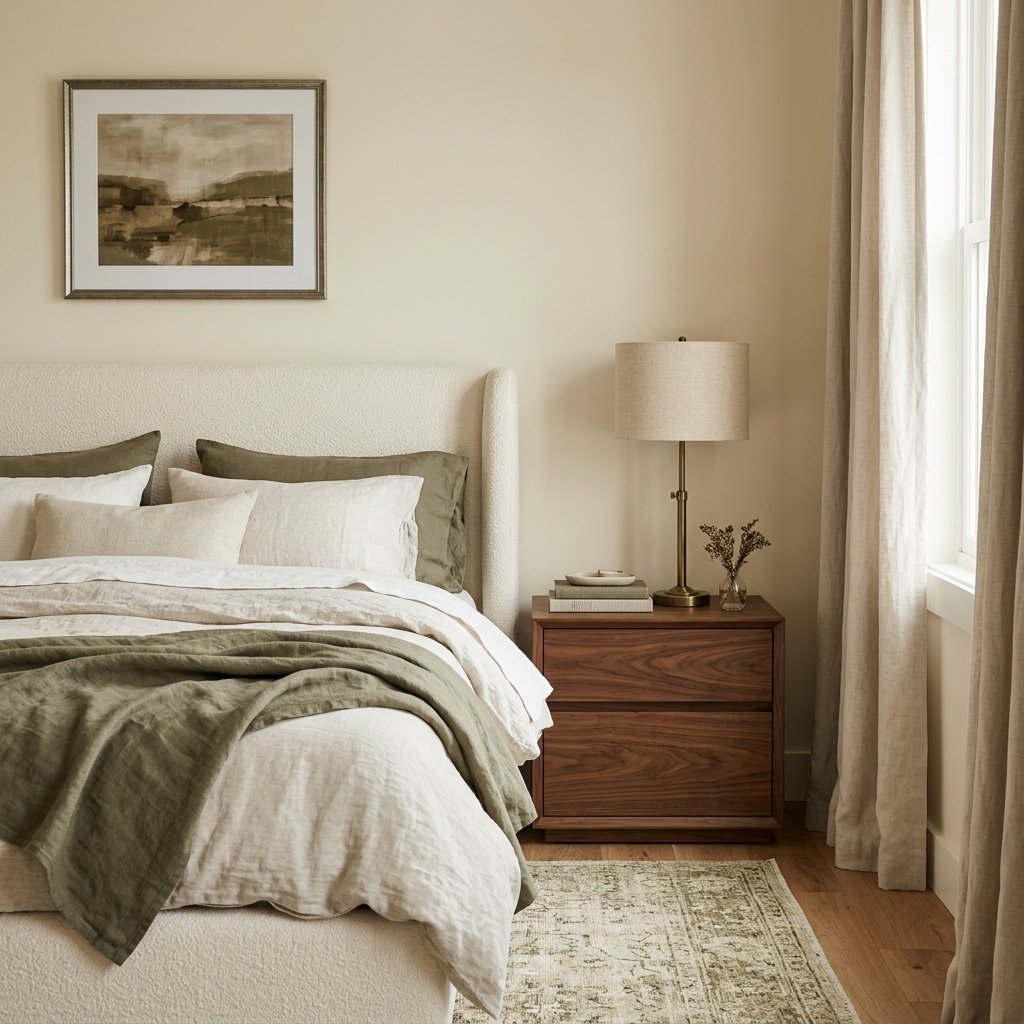
2. Soft Cream
Cream gives you the brightness of a light neutral with more visible warmth.
It works especially well in bedrooms with:
- Traditional furniture
- Warm wood
- Brass
- Floral textiles
- Natural fibers
Cream can also soften a room with a lot of hard architectural lines.
Keep the overall palette updated by combining cream with richer contrast such as dark wood, olive, brown, or black.
3. Light Greige
Greige sits somewhere between gray and beige.
A good bedroom greige can create a quiet background without feeling as warm as traditional beige or as cool as many grays.
It can work with:
- Light oak
- Medium wood
- Black
- Cream
- Warm white
- Muted colors
But greige is especially sensitive to undertones.
Some lean noticeably green, violet, or beige.
Always sample them.
4. Mushroom
Mushroom is a wonderful option if you want something warmer and earthier than greige.
Think of it as a muted combination of:
- Taupe
- Beige
- Gray
- Soft brown
Depending on the specific paint, it may lean more brown or more gray.
Mushroom walls look particularly beautiful with:
- Cream bedding
- Dark wood
- Natural linen
- Olive
- Black
- Aged brass
This is an excellent direction for a warm, sophisticated bedroom that still feels neutral.
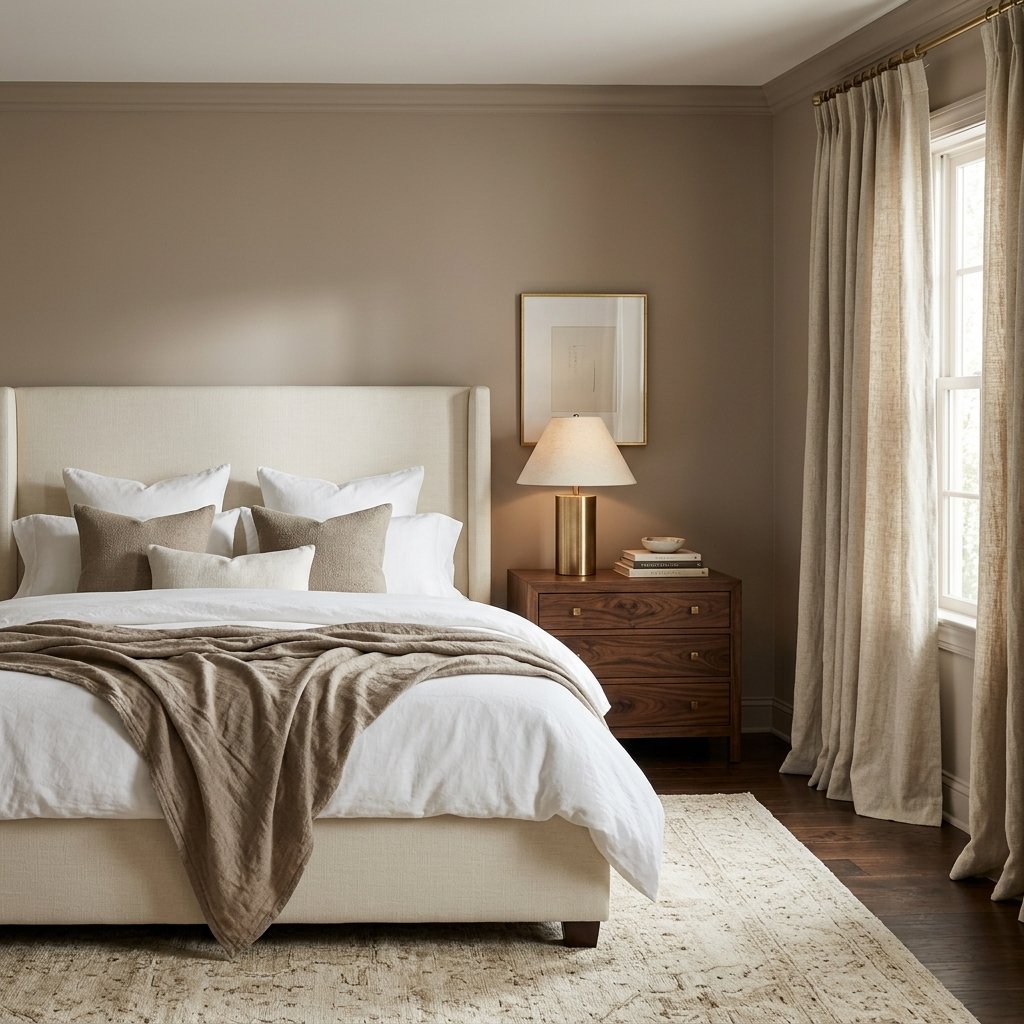
5. Soft Taupe
Taupe can make a bedroom feel cozy without requiring a dark wall color.
It works beautifully with layered neutrals.
Try:
Taupe walls + cream bed + white bedding + walnut furniture + brass lighting
Taupe can have pink, violet, gray, or brown undertones, so careful sampling is important.
If you have strongly yellow flooring or furniture, compare the two closely before committing.
6. Sage Green
Sage is popular for bedrooms because it brings in color without necessarily feeling loud.
Muted sage can pair naturally with:
- Warm white
- Cream
- Oak
- Walnut
- Brass
- Black
- Brown
- Terracotta
The key is choosing a green with the right amount of gray or warmth for your room.
Some sage colors look soft and earthy in warm daylight but significantly grayer under cooler artificial lighting.
Test the color throughout the day.
7. Muted Olive Green
If sage feels too pale, consider olive.
Olive can create a richer, more enveloping bedroom while still connecting strongly with natural materials.
Pair it with:
- Cream
- Camel
- Dark wood
- Brass
- Linen
- Warm white
Olive is particularly effective when you want a bedroom to feel cozy and collected rather than light and airy.
For a dramatic look, consider using it across more than just the walls.
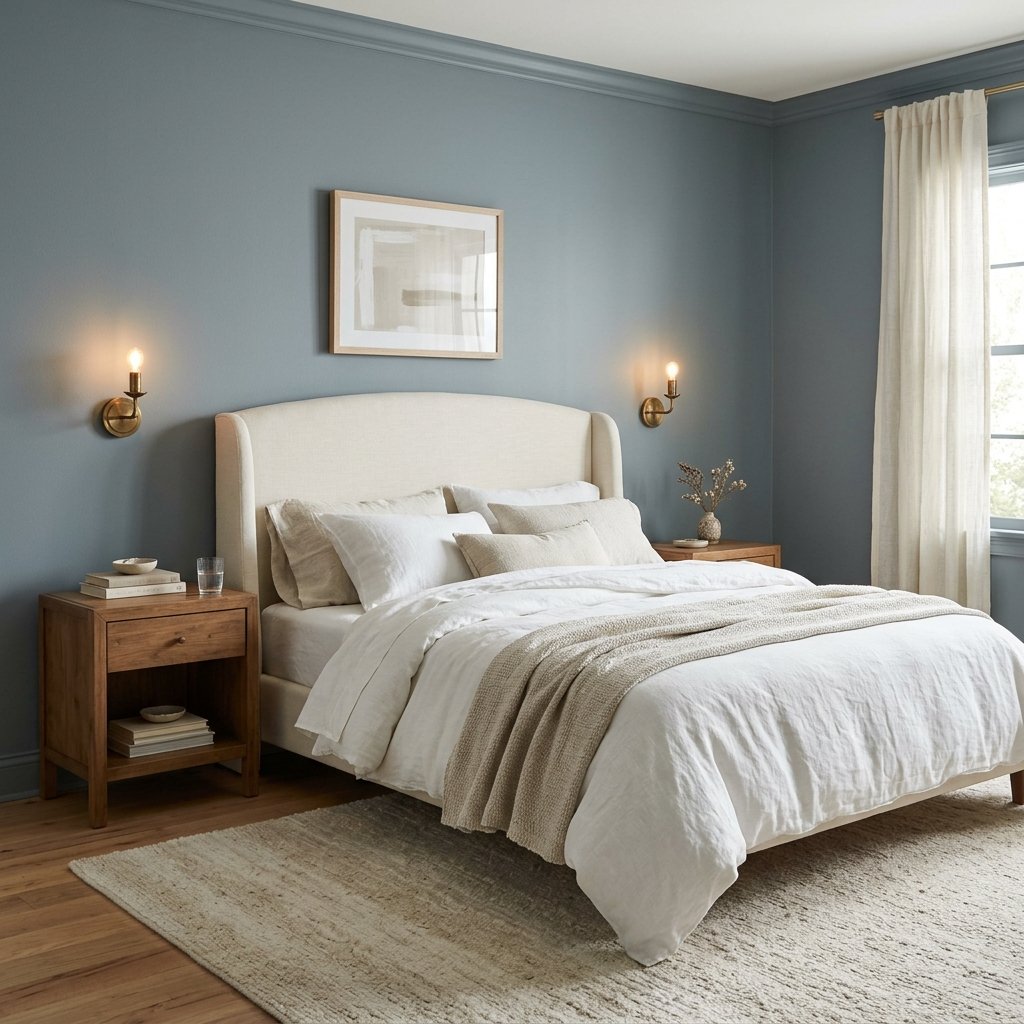
8. Blue-Gray
Blue-gray can create a restful bedroom, but choosing the right version is important.
Cool light can make blue-gray appear much bluer.
Warm evening lighting can soften it.
A muted blue-gray can work with:
- White
- Cream
- Medium wood
- Navy
- Brown
- Black
If you want a calm bedroom without using beige, this can be a beautiful direction.
9. Dusty Blue
Dusty blue is softer than a bright or highly saturated blue.
It can create a bedroom that feels relaxed without becoming overly themed.
Try dusty blue with:
- Warm white
- Linen
- Brown
- Natural oak
- Cognac leather
- Muted green
Adding warm wood is especially helpful if you’re concerned about blue making the bedroom feel too cool.
10. Muted Blue-Green
Can’t decide between blue and green?
A muted blue-green can offer the best of both.
Depending on the lighting, the same color may appear:
- Greener in one part of the day
- Bluer at another
- Grayer in lower light
This complexity can make blue-green particularly interesting in a bedroom.
Pair it with warm neutrals and wood to balance the cooler color.
11. Dusty Rose
Pink doesn’t have to make a bedroom feel childish.
A muted dusty rose with brown, beige, or gray influence can feel surprisingly sophisticated.
Pair it with:
- Cream
- Mushroom
- Walnut
- Brown
- Brass
- Deep green
Avoid pairing it with too many sweet pastel colors if you want a more grown-up look.
Ground it with darker contrast.
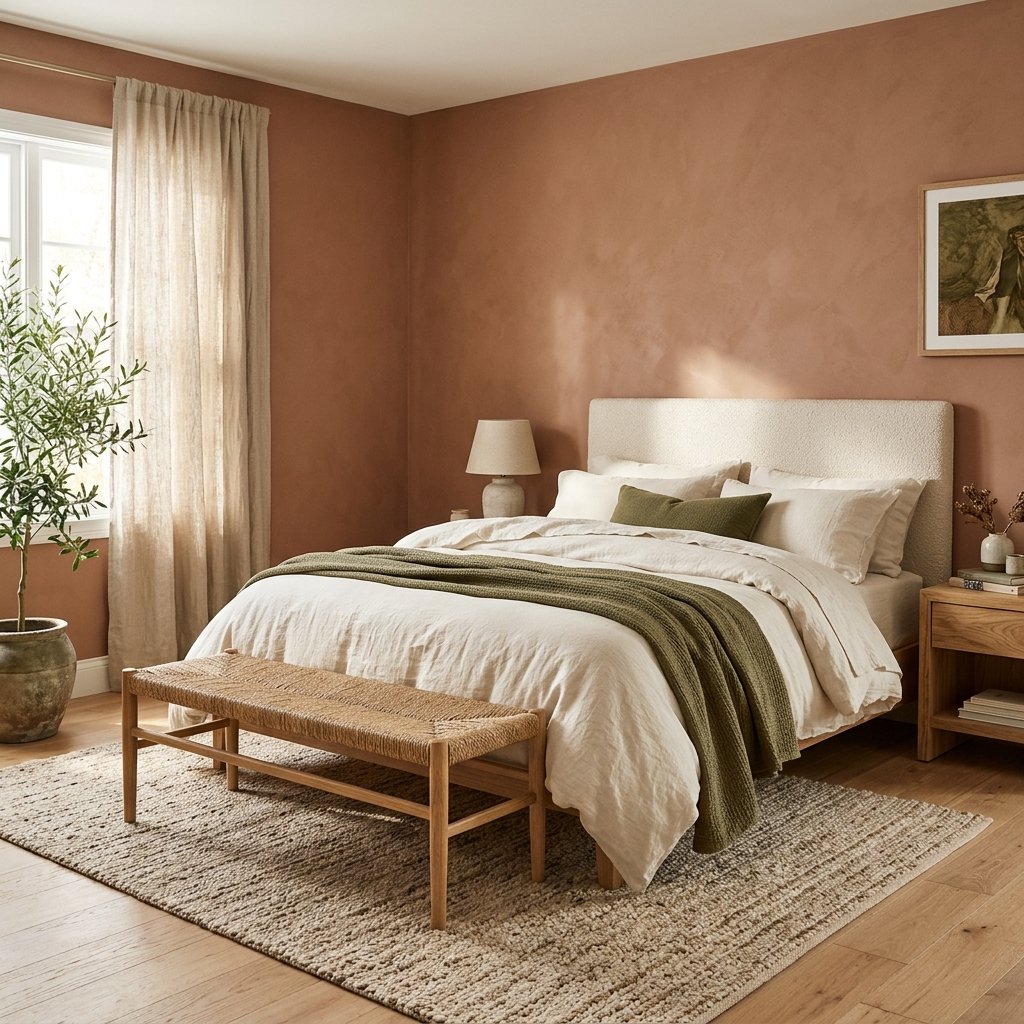
12. Muted Terracotta
Terracotta is a beautiful choice for a bedroom that needs warmth.
Instead of a bright orange, look for a softened earthy version.
It can work especially well with:
- Cream bedding
- Natural wood
- Woven textures
- Olive green
- Brown
- Aged brass
Because terracotta has a strong presence, it can also work as an accent wall if you’re not ready to use it throughout the room.
13. Warm Brown
Brown can make a bedroom feel incredibly cozy.
Rather than thinking of brown as dated, look at rich earthy variations such as:
- Cocoa
- Mocha
- Chocolate
- Tobacco
- Coffee
A brown bedroom can feel especially sophisticated with:
- Cream
- White
- Camel
- Brass
- Natural linen
- Light upholstery
If you’re worried about the room feeling dark, use lighter bedding and curtains to create contrast.
14. Deep Green
A dark green bedroom can feel intimate and dramatic.
Consider shades inspired by:
- Forest
- Olive
- Moss
- Evergreen
Deep green works beautifully with natural wood and warm metal.
For a moody room, use the color on all the walls.
For a lighter effect, keep the ceiling and bedding pale.
Dark paint isn’t only for large rooms. A small bedroom can look wonderful in a deep color when you intentionally embrace the cozy effect.
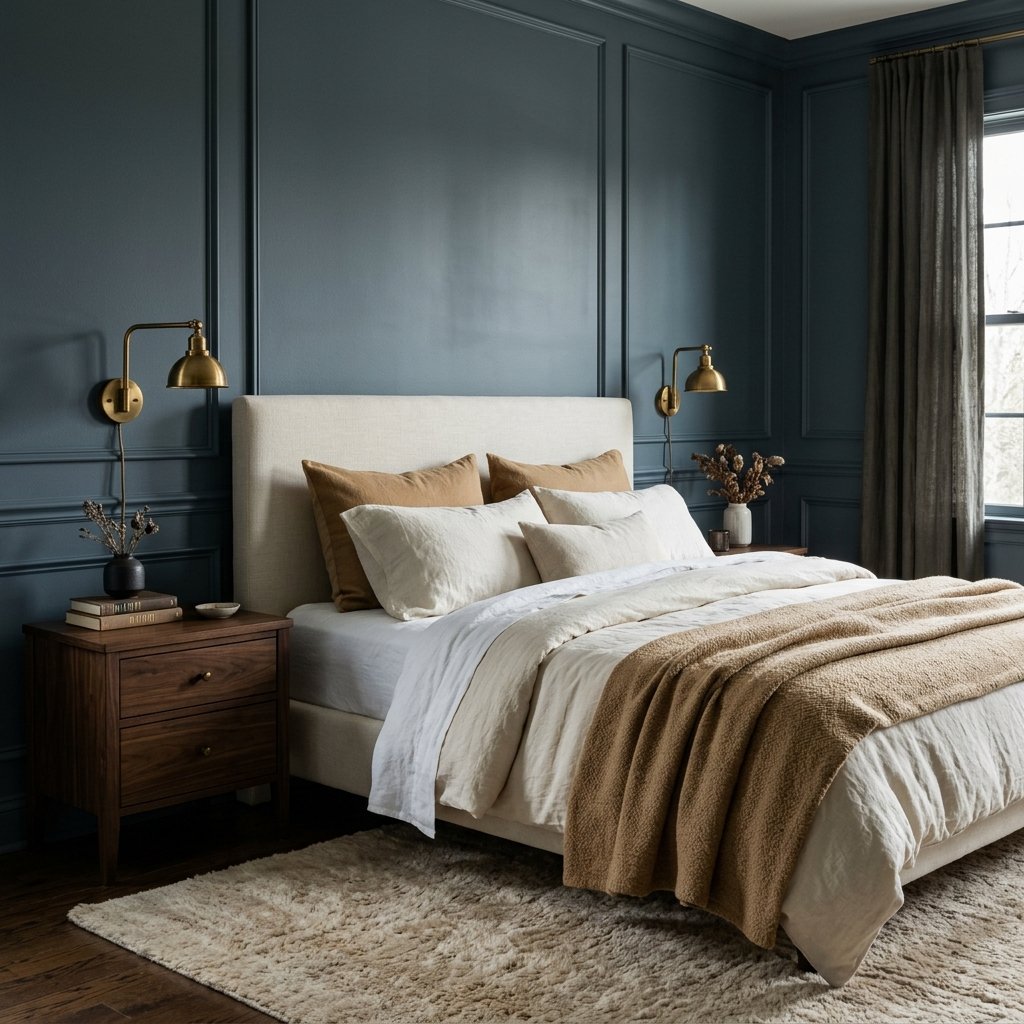
15. Deep Blue
Deep blue can create a classic, cocooning bedroom.
Look beyond extremely bright navy and consider slightly muted versions with gray or green influence.
Pair deep blue with:
- Warm white
- Cream
- Walnut
- Camel
- Brass
- Medium oak
Use lighter textiles if you want contrast, or layer similarly deep colors for a moodier effect.
Best Paint Colors for a Small Bedroom
There’s a common belief that small bedrooms must be painted white.
They don’t.
Light colors can certainly create an airy look, but darker colors can make a small bedroom feel intentionally cozy.
For a brighter small bedroom, consider:
- Warm white
- Cream
- Light greige
- Pale mushroom
- Soft sage
For a cozy small bedroom, consider:
- Olive
- Deep green
- Brown
- Deep blue
The better question is:
Do you want the room to feel airy or enveloping?
Choose accordingly.
Best Paint Colors for a Dark Bedroom
If a bedroom receives limited natural light, be careful about trying to “fix” it with the brightest white you can find.
White reflects available light. It doesn’t create sunlight.
In a naturally dim room, some whites may look gray or flat.
You have two directions.
Make It Lighter
Try a warm white, cream, light greige, or pale warm neutral that works with the limited light.
Embrace the Mood
Use olive, brown, deep green, or another richer color and intentionally create a cozy bedroom.
Both can work.
Best Paint Colors for a Bright Bedroom
Rooms with abundant natural light can often handle more color.
Consider:
- Mushroom
- Taupe
- Sage
- Blue-gray
- Dusty blue
- Terracotta
Bright sunlight can wash out very pale colors, so a slightly deeper shade may create more presence.
Bedroom Paint Colors for North-Facing Rooms
North-facing rooms often receive cooler, less direct light.
Cool colors may therefore look even cooler.
If you want to counteract that effect, test:
- Warm white
- Cream
- Warm greige
- Mushroom
- Taupe
That doesn’t mean blue or green is prohibited.
It simply means you should expect the room’s light to influence them.
Bedroom Paint Colors for South-Facing Rooms
South-facing rooms often receive abundant warm light.
This can make warm colors appear even warmer.
Cooler or more balanced neutrals may feel softer here.
You can also take advantage of the strong light and use:
- Rich green
- Blue
- Taupe
- Deeper earthy shades
Always check the paint throughout the day.
East-Facing Bedrooms
East-facing bedrooms usually receive stronger warm light in the morning and cooler light later.
A paint color can therefore change considerably from breakfast to bedtime.
If the bedroom is mainly used in the evening, make sure you like the color under afternoon and artificial light—not only during a beautiful sunny morning.
West-Facing Bedrooms
West-facing rooms often have cooler morning light and much warmer late-afternoon light.
Warm paint colors may become noticeably richer toward evening.
Again, test the color at the times you actually use the room.
What Paint Color Goes With White Bedding?
White bedding gives you a lot of flexibility.
Try:
- Mushroom
- Taupe
- Sage
- Blue-gray
- Olive
- Brown
- Deep green
- Deep blue
The white provides contrast, especially against deeper walls.
Add wood and textiles to keep the room from feeling too stark.
What Paint Color Goes With Cream Bedding?
Cream bedding generally looks most natural with warmer colors.
Consider:
- Warm white
- Mushroom
- Taupe
- Sage
- Olive
- Brown
- Terracotta
- Muted blue-green
Compare the wall color directly with the bedding.
A very cool gray beside a yellow-leaning cream can make both undertones more noticeable.
Bedroom Paint Colors With Dark Wood Furniture
Dark wood can look beautiful against both light and dark walls.
For contrast, try:
- Warm white
- Cream
- Pale mushroom
- Light greige
For a richer room, try:
- Olive
- Deep green
- Blue-gray
- Deep blue
- Taupe
Don’t assume dark furniture requires pale walls.
A dark-on-dark combination can feel sophisticated when you add enough contrast through bedding, lighting, and textiles.
Bedroom Paint Colors With Light Wood Furniture
Light oak and similar woods work well with:
- Warm white
- Cream
- Greige
- Mushroom
- Sage
- Blue-gray
- Dusty blue
- Muted terracotta
Pay attention to how yellow, pink, or gray the wood looks beside your paint samples.
Should the Bedroom Ceiling Be White?
It can be, but it doesn’t have to be.
A white or off-white ceiling creates contrast and can keep the room feeling lighter.
Another option is to paint the ceiling the same color as the walls.
This can create a more enveloping effect, particularly with:
- Mushroom
- Taupe
- Sage
- Olive
- Deep blue
- Deep green
You can also use a lighter or darker variation of the wall color.
Should the Trim Match the Walls?
Matching the trim to the wall can create a quiet, modern look.
This works especially well in bedrooms because there are fewer contrasting lines around:
- Doors
- Windows
- Baseboards
You can use the same color in a different sheen where appropriate, or follow your chosen paint system’s recommendations.
Traditional contrasting trim is still beautiful too.
Choose based on the style of the room.
Should You Paint an Accent Wall in a Bedroom?
You can, but it isn’t required.
An accent wall works particularly well behind the bed because the bed naturally anchors the wall.
Possible accent treatments include:
- Paint
- Wallpaper
- Wood paneling
- Molding
But sometimes painting the entire room creates a more cohesive result than leaving three walls light and one dramatically dark.
Consider both options before committing.
How to Make a Bedroom Feel Cozy With Paint
Paint is only one layer.
Combine it with:
- Warm bedside lighting
- Curtains
- Rug
- Upholstered headboard
- Layered bedding
- Natural wood
- Textured pillows
A medium or dark wall color can increase the cozy feeling, but even a warm white bedroom can feel inviting when the textiles and lighting are right.
How to Make a Bedroom Feel Calm
Limit the number of competing colors.
Try a palette like:
Mushroom + cream + walnut + muted green
or:
Blue-gray + warm white + medium oak + brown
or:
Sage + cream + natural wood + brass
Repeat a few colors rather than introducing something new with every accessory.
This creates visual consistency.
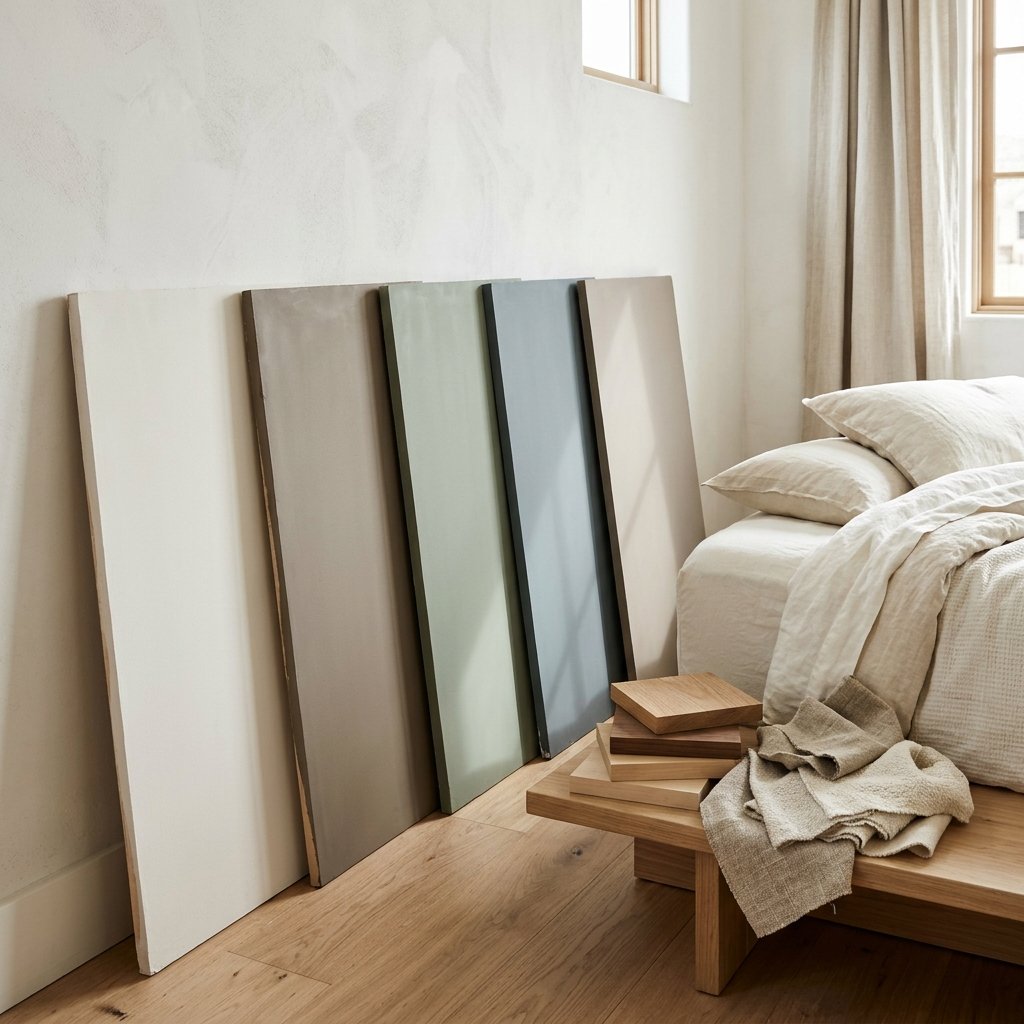
Don’t Choose Paint From a Tiny Chip
A tiny paint chip is useful for narrowing choices.
It isn’t enough for making the final decision.
Once you’ve narrowed your options, create larger samples using an appropriate sampling method.
Place them near:
- Bed
- Flooring
- Curtains
- Furniture
- Trim
Look at them in both natural and artificial light.
Test Bedroom Paint Throughout the Day
Check your finalists:
- Morning
- Midday
- Afternoon
- Evening
- With lamps on
A color you love at noon may look completely different at night.
Bedrooms are often used most under artificial light, so don’t ignore evening conditions.
Test the Paint With Your Actual Bedding
This simple step prevents a lot of mistakes.
Place the sample behind or next to the bed.
Then put your:
- Duvet
- Sheets
- Pillows
- Throw
near it.
Does everything still coordinate?
If not, determine whether changing the bedding or changing the paint makes more sense.
Don’t Forget Paint Sheen
Color isn’t the only decision.
Paint sheen affects:
- Appearance
- Light reflection
- Washability
- How visible wall imperfections become
Manufacturers define and formulate sheens differently, so check the recommendations for the specific paint product you’re considering.
For walls, many homeowners choose a lower-sheen finish, while trim and doors may use a different finish.
Follow the paint manufacturer’s recommendations for the room and surface.
Bedroom Paint Preparation Matters
Even beautiful paint won’t hide poor preparation.
Before painting:
- Remove or protect furniture.
- Clean the walls as appropriate.
- Repair nail holes and damage.
- Allow repairs to dry.
- Smooth repaired areas.
- Remove dust.
- Prime where required.
- Protect flooring and trim.
- Apply paint according to product instructions.
If you’re painting over a very dark color or dealing with stains, repairs, or challenging surfaces, the appropriate primer can make a significant difference.
Painting Safety
Follow the paint and primer manufacturers’ safety instructions.
Provide appropriate ventilation.
Use:
- Eye protection when necessary
- Appropriate gloves
- Safe ladder practices
- Suitable respiratory protection when sanding or otherwise required
Keep wet paint, tools, and open containers away from children and pets.
If you’re disturbing older painted surfaces, additional precautions may be necessary because legacy coatings can contain hazardous materials. Check applicable guidance before sanding or scraping unknown old paint.
Common Bedroom Paint Color Mistakes
Choosing a Color From an Online Photo Alone
Your lighting and finishes are different.
Ignoring Undertones
Compare paint with permanent materials.
Assuming White Makes Every Dark Room Brighter
The room’s available light still matters.
Testing Too Many Colors at Once
Narrow the options before sampling.
Looking at Samples Only During the Day
Check them under your bedroom lighting.
Choosing Paint Before Bedding or Major Furniture
Start with the harder-to-change elements.
Following Trends Instead of the Room
A popular color can still be wrong for your space.
Forgetting About the Ceiling and Trim
They affect how the wall color appears.
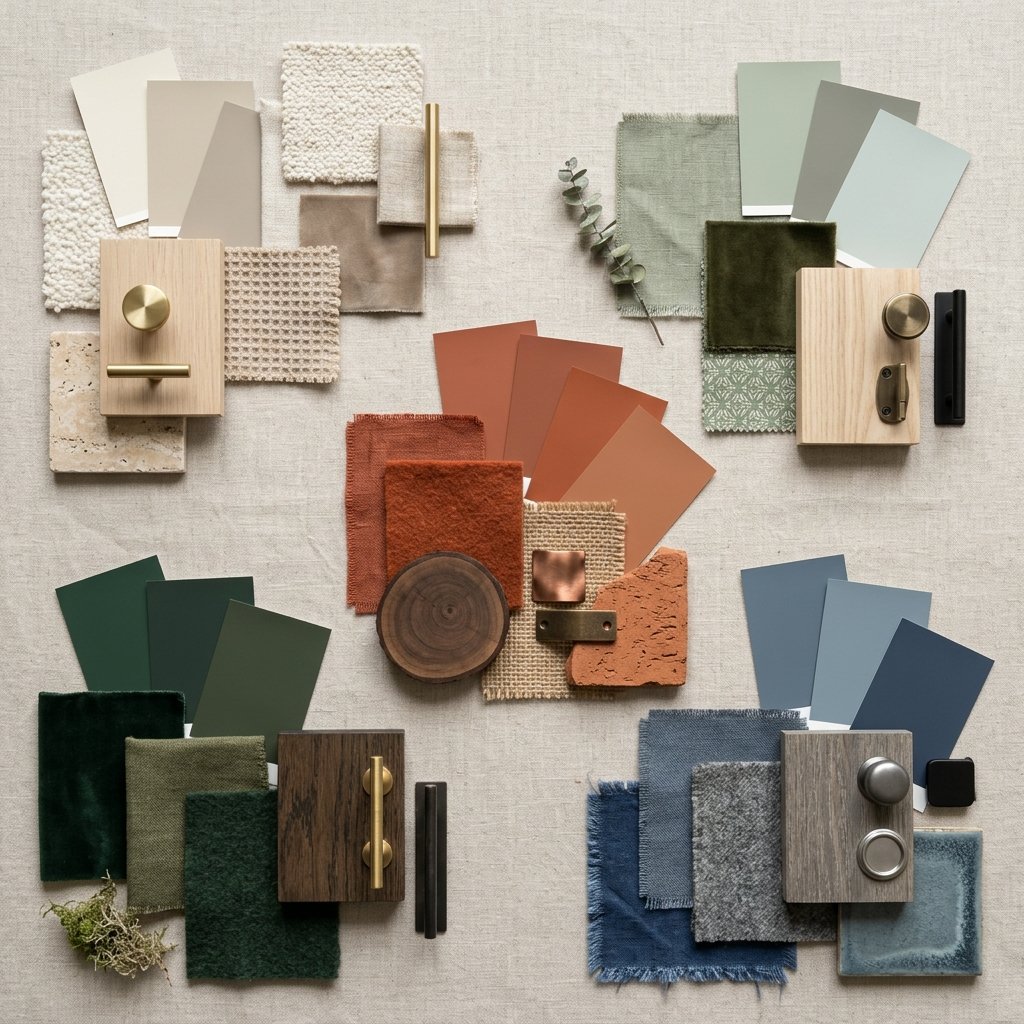
5 Easy Bedroom Color Palettes
Warm Neutral Bedroom
- Warm white
- Mushroom
- Cream
- Walnut
- Brass
Calm Green Bedroom
- Sage
- Warm white
- Natural oak
- Taupe
- Black
Cozy Earth-Tone Bedroom
- Terracotta
- Cream
- Olive
- Medium wood
- Brown
Moody Bedroom
- Deep green
- Cream
- Walnut
- Brass
- Black
Soft Blue Bedroom
- Blue-gray
- Warm white
- Brown
- Medium oak
- Cream
FAQ About Paint Colors for Bedrooms
What is the best paint color for a bedroom?
There isn’t one best color. Warm whites, creams, greiges, mushroom neutrals, sage greens, muted blues, taupes, and deeper earthy colors can all work depending on the room’s lighting and finishes.
What bedroom colors are most relaxing?
Many people find muted, lower-saturation colors such as warm neutrals, soft greens, and muted blues visually restful. The best choice is one that feels comfortable to you and works with the room.
Should a bedroom be light or dark?
Either can work. Light colors can create an airy feeling, while darker colors can make a bedroom feel cozy and enveloping.
What paint colors make a small bedroom look bigger?
Light warm neutrals can create an open feeling, but don’t assume dark paint is off-limits. Consistent color and low visual clutter can also make a small bedroom feel cohesive.
What is a good neutral bedroom paint color?
Warm white, cream, greige, mushroom, and taupe are all useful neutral directions.
Is gray still a good bedroom color?
Yes, but pay attention to undertones. If you want a warmer result, consider greige, mushroom, taupe, or a gray with enough warmth to coordinate with the room.
Is green a good bedroom color?
Muted greens such as sage, olive, and gray-green can work beautifully in bedrooms, particularly with natural wood and warm neutrals.
Should bedroom paint match the bedding?
It doesn’t need to match exactly. The colors should coordinate. Use bedding, paint, flooring, and furniture together to build a cohesive palette.
Should all bedrooms be the same color?
No. Bedrooms can have individual personalities while still relating to the overall house through repeated undertones, trim colors, or a broader whole-house palette.
Should I paint the bedroom before buying bedding?
If you’re starting completely from scratch, choosing major furnishings and textiles first can make selecting paint easier because paint is available in far more colors than most furniture and bedding.
Final Thoughts
Choosing the right paint colors for bedrooms isn’t about finding one universally perfect shade.
It’s about finding the color that works with your room.
Start with the elements that aren’t changing.
Look at the flooring.
Consider the bed and furniture.
Pay attention to your bedding.
Then evaluate the natural and artificial light.
From there, decide what feeling you want.
For something light and flexible, consider warm white, cream, greige, or pale mushroom.
For a little more color, try sage, blue-gray, dusty blue, or muted blue-green.
For warmth, consider taupe, terracotta, or brown.
And if you want a bedroom that feels cozy and dramatic, don’t be afraid of deep green or deep blue.
Most importantly, sample your finalists before painting the entire room.
Check them morning and night.
Compare them with your actual furniture and fabrics.
And choose the color that makes your bedroom feel like somewhere you genuinely want to end the day.