

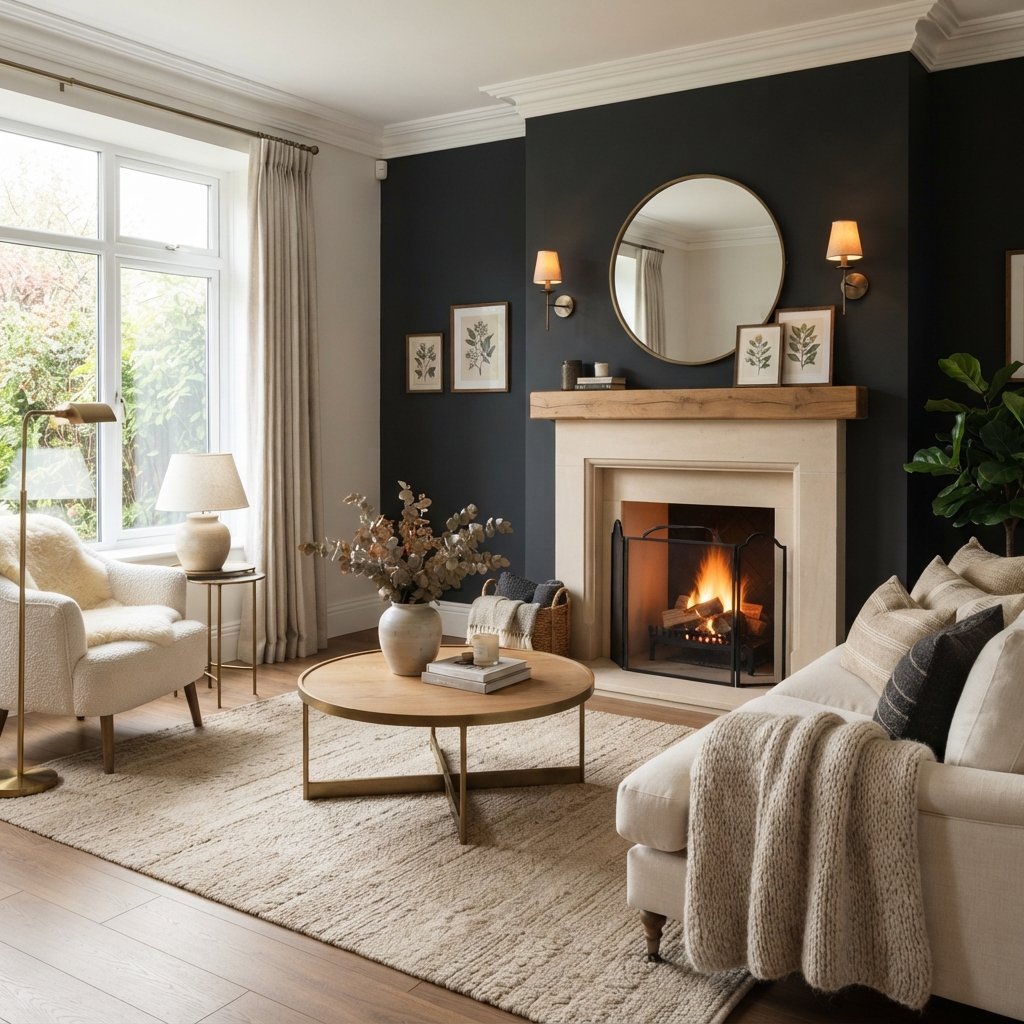
Black paint can be surprisingly versatile.
Depending on the shade, lighting, surrounding finishes, and sheen, black can look crisp and modern, soft and sophisticated, warm and cozy, or dramatic and moody. It can make a fireplace stand out, turn basic interior doors into architectural features, give kitchen cabinets more depth, or transform an entire room.
The tricky part is that black paint colors are not all the same.
Some lean warm and slightly brown. Others have blue, green, charcoal, or softer gray influences. A black that looks rich and balanced in one room can look much cooler or heavier somewhere else.
That is why sampling is especially important.
Below are 15 popular black and near-black paint colors from Sherwin-Williams and Benjamin Moore, along with ideas for using black on walls, cabinets, doors, fireplaces, exteriors, and accent walls.
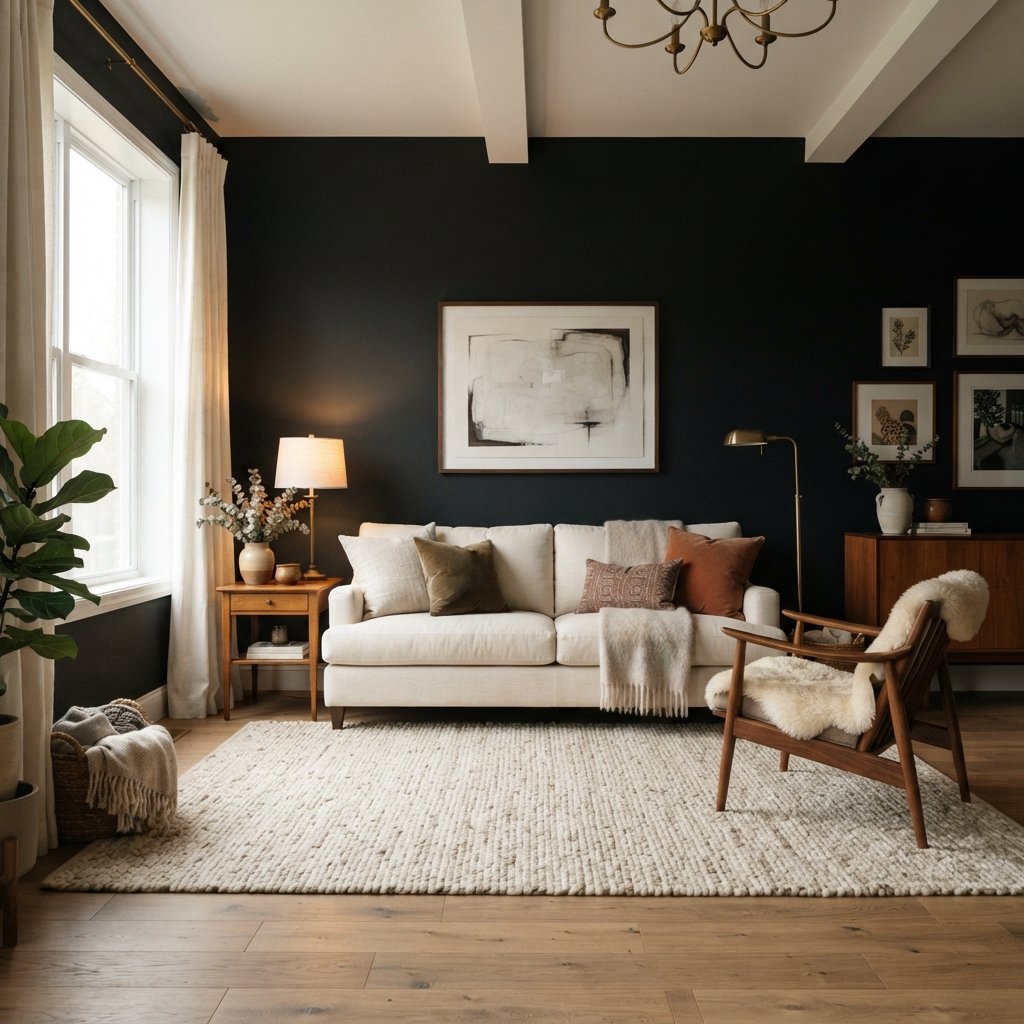
1. Sherwin-Williams Tricorn Black SW 6258
Tricorn Black is one of Sherwin-Williams’ most recognizable black paint colors.
It creates a strong, clean black appearance and works particularly well when you want obvious contrast rather than a softened charcoal effect.
Consider it for:
- Interior doors
- Cabinets
- Fireplace walls
- Exterior accents
- Built-ins
- Furniture
Against warm white walls and natural wood, Tricorn Black can create a crisp architectural contrast.
If you are considering it for an entire room, sample it on multiple walls first. The amount and direction of light can significantly affect how much visual weight a black wall carries.
2. Sherwin-Williams Iron Ore SW 7069
Iron Ore is an excellent choice if you like the drama of black but want something softer.
It reads as a very deep charcoal rather than the crispest possible black.
That makes it useful for larger surfaces such as:
- Accent walls
- Exteriors
- Cabinets
- Fireplace walls
- Built-ins
Iron Ore looks especially attractive with warm wood, cream, stone, and lighter neutral walls.
3. Sherwin-Williams Black Magic SW 6991
Black Magic offers another rich black option.
It can create a dramatic backdrop for lighter furnishings and natural materials.
Try it on:
- Dining room walls
- Cabinetry
- Interior doors
- Built-ins
- Fireplace features
A black this deep can make brass, warm wood, cream textiles, and pale stone particularly noticeable.
If you want a room to feel layered rather than stark, bring in plenty of texture.
4. Sherwin-Williams Caviar SW 6990
Caviar is a sophisticated dark color for spaces where you want a strong, luxurious effect.
It can work beautifully with:
- Warm whites
- Wood
- Brown
- Brass
- Cream
- Rich textiles
Consider Caviar for a moody dining room, bathroom vanity, cabinets, or a statement accent wall.
Before committing, compare it with other black samples in the actual room. Subtle differences become much easier to see when black shades are placed side by side.
5. Sherwin-Williams Greenblack SW 6994
Greenblack is worth considering if you want a black with more character than a straightforward neutral black.
Its subtle green influence can work beautifully around natural materials.
Pair it with:
- Oak
- Walnut
- Cream
- Olive
- Stone
- Brass
It can be especially attractive on cabinets, built-ins, or a small powder-room vanity where the deeper color can become a focal point.
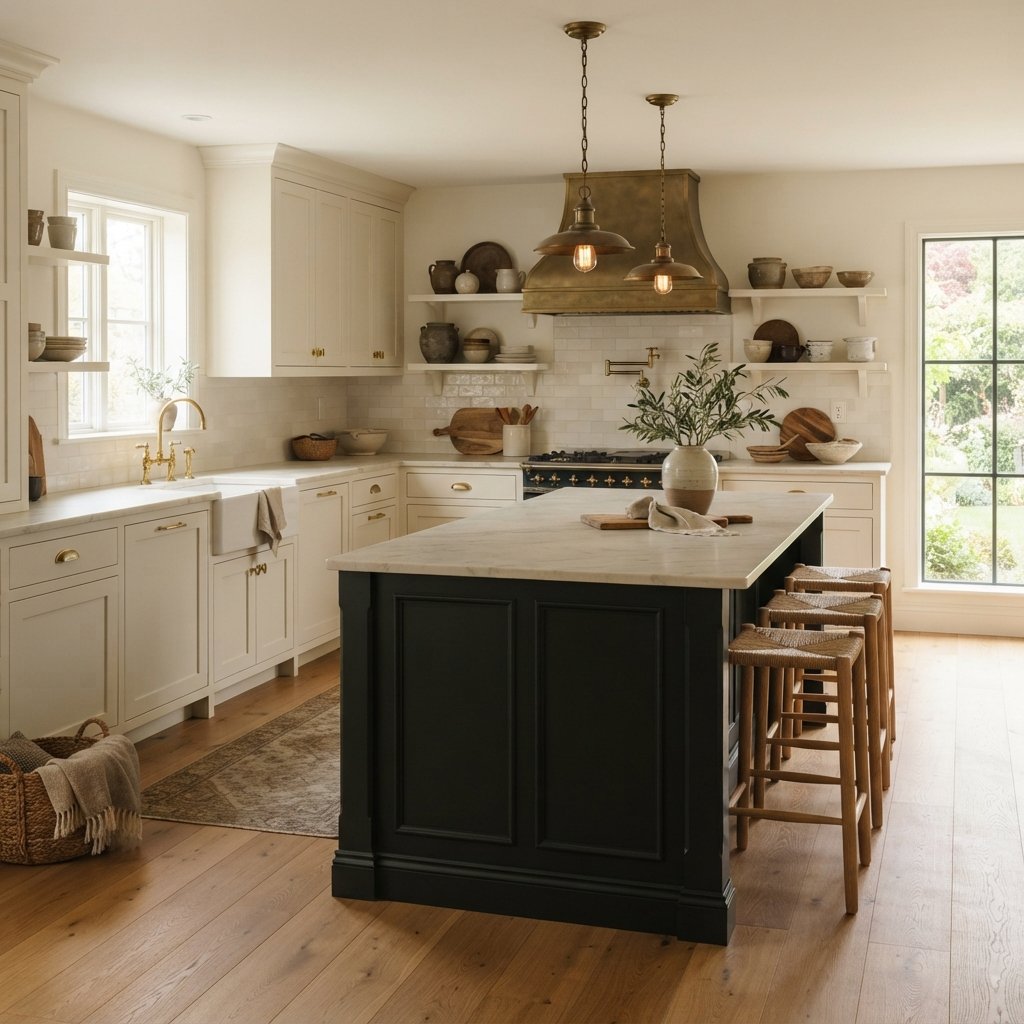
6. Sherwin-Williams Inkwell SW 6992
Inkwell is another deep color that can offer a slightly different character from a neutral black.
It is useful when you like the drama of black but want a color that may reveal more nuance depending on the light and surrounding finishes.
Consider sampling it for:
- Office walls
- Built-ins
- Cabinets
- Doors
- Accent walls
Compare it directly with your flooring and wood furniture before making the final decision.
7. Sherwin-Williams Black of Night SW 6993
Black of Night is a deep, dramatic option that can create a strong focal point.
It works well when paired with lighter surfaces that prevent the overall palette from becoming visually heavy.
Think:
Black walls + cream upholstery + natural oak.
Or:
Black cabinetry + light countertop + warm metal hardware.
As with any dark paint, pay attention to sheen because reflected light can noticeably change the finished appearance.
8. Benjamin Moore Black HC-190
Benjamin Moore Black HC-190 is a classic choice for strong contrast.
It can work on architectural details as well as larger surfaces.
Try it on:
- Doors
- Trim
- Cabinets
- Furniture
- Fireplace features
A straightforward black can be especially useful when the room already contains multiple colors and you want the paint to act as an anchor.
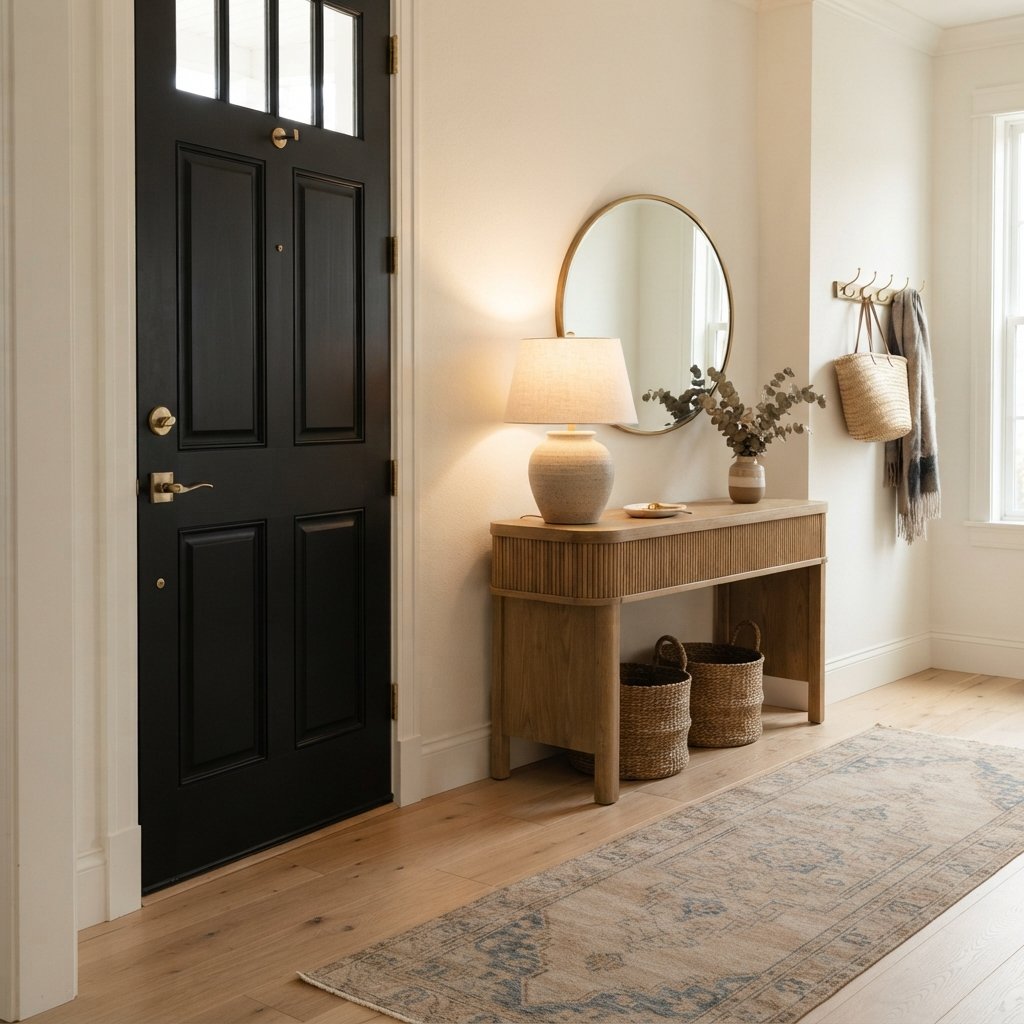
9. Benjamin Moore Black Beauty 2128-10
Black Beauty provides a rich dark option for creating a more enveloping room.
It can look especially elegant in:
- Dining rooms
- Offices
- Bedrooms
- Powder rooms
- Built-ins
Pair deep walls with layered lighting.
Black rooms rely heavily on lighting, so consider the entire lighting plan rather than judging the color only in daylight.
10. Benjamin Moore Black Satin 2131-10
Black Satin can work beautifully when you want a sophisticated near-black presence.
Use it with warm neutrals to soften the contrast.
For example:
Black Satin + warm white + camel + walnut.
Or:
Black Satin + cream + oak + brass.
This type of palette can feel rich without requiring lots of additional color.
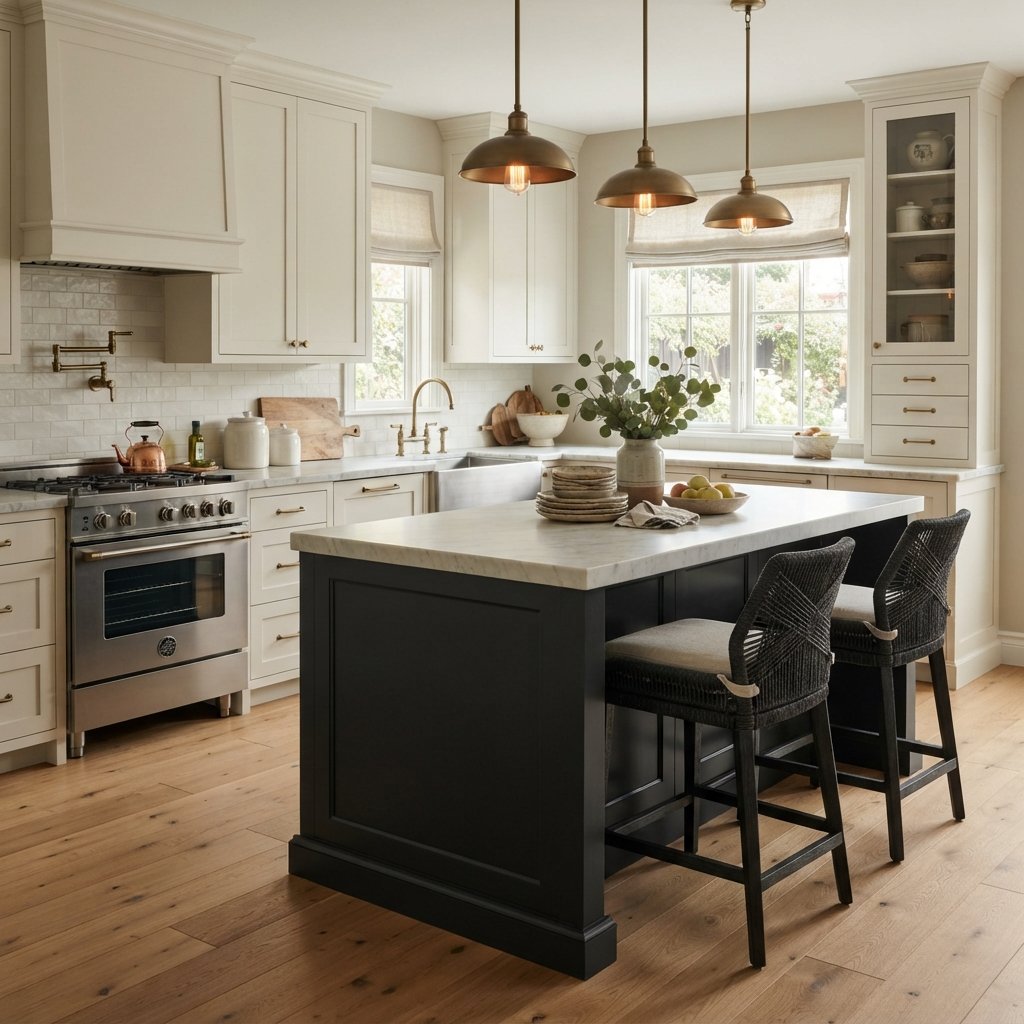
11. Benjamin Moore Wrought Iron 2124-10
Wrought Iron is a popular choice for homeowners who want something that feels softer than a true black.
It sits in that useful territory between charcoal and black.
That makes it particularly versatile for:
- Interior doors
- Kitchen islands
- Cabinets
- Built-ins
- Accent walls
- Exteriors
If a full black feels too harsh beside your existing finishes, Wrought Iron is worth comparing.
12. Benjamin Moore Soot 2129-20
Soot is another deep, complex shade that can provide a softer alternative to a straightforward black.
It works beautifully in rooms where you want depth.
Consider it for:
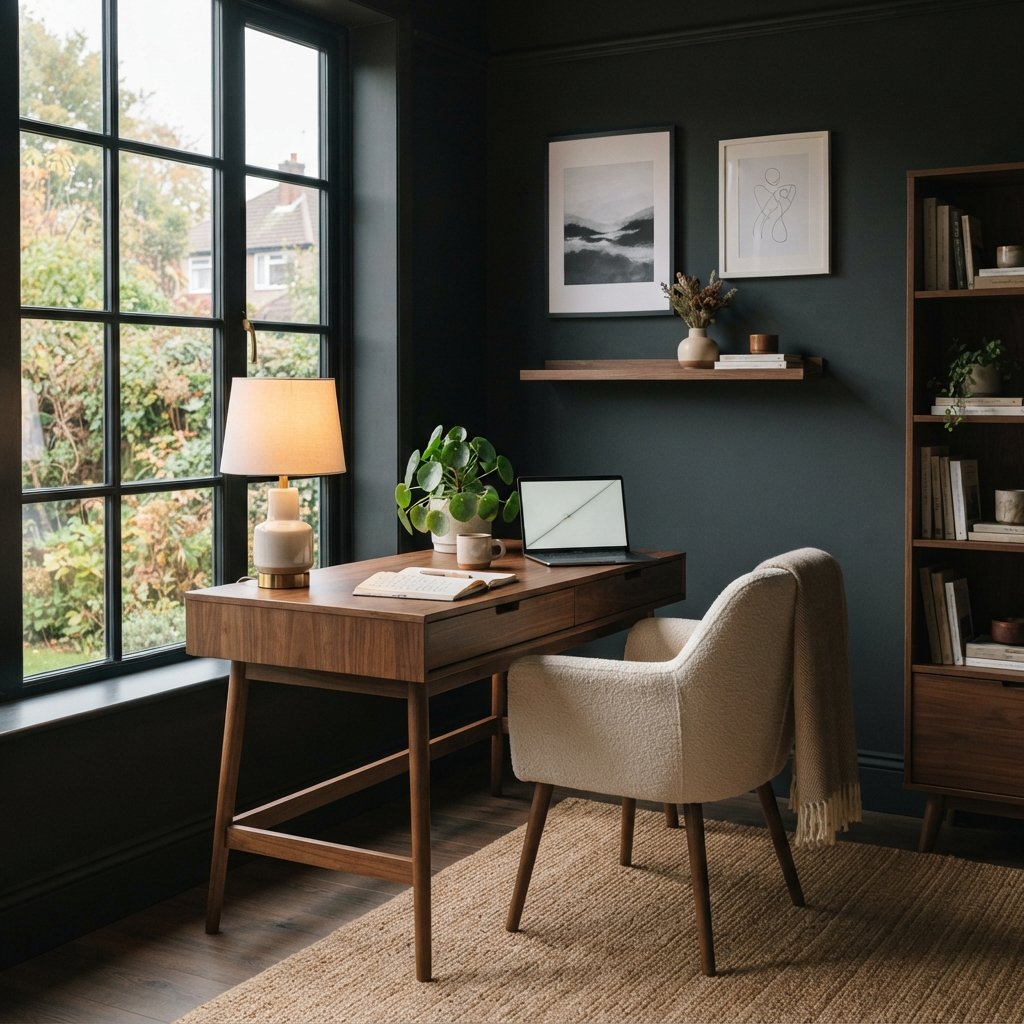
- Office walls
- Bedrooms
- Cabinetry
- Built-ins
- Fireplace walls
Deep colors like Soot can look especially sophisticated with medium and dark woods.
13. Benjamin Moore Midnight Oil 1631
Midnight Oil is a dark, dramatic color worth sampling when you want something more nuanced than a basic black.
It can work particularly well in rooms with cooler elements or where a subtle color influence complements the existing palette.
Try it beside:
- Cool stone
- Gray flooring
- Blue textiles
- Crisp whites
Then compare it with a more neutral black before choosing.
14. Benjamin Moore Baby Seal Black 2119-30
Despite the memorable name, Baby Seal Black offers a softer dark option.
If the deepest blacks feel too severe, this type of softened black can provide contrast while maintaining a slightly gentler appearance.
Consider it for:
- Bedrooms
- Accent walls
- Bathroom vanities
- Cabinets
- Built-ins
A softer black can also be easier to combine with mid-tone furniture.
15. Benjamin Moore Kendall Charcoal HC-166
Kendall Charcoal is not a true black, but it belongs on the shortlist if what you really want is a dark, dramatic neutral.
It provides depth without going all the way to black.
That can make it particularly useful for:
- Exterior siding
- Accent walls
- Cabinets
- Fireplace walls
- Offices
- Bedrooms
If you are deciding between charcoal and black, sample Kendall Charcoal next to one of the deeper colors on this list.
The comparison can quickly reveal which direction suits the room better.
True Black vs. Soft Black vs. Charcoal
Choosing a black becomes much easier when you decide how much contrast you actually want.
True or Cleaner Black
Best when you want:
- Crisp contrast
- Defined architecture
- Dramatic doors
- Strong cabinet color
- Bold exterior accents
Tricorn Black is a good example to sample in this category.
Soft or Complex Black
Best when you want:
- Slightly less contrast
- More nuance
- A softer transition into surrounding finishes
- A dark color across a larger area
Charcoal
Best when:
- True black feels too harsh
- You want more visible softness
- The room already contains gray
- You are painting an entire wall or room
Iron Ore, Wrought Iron, and Kendall Charcoal are useful colors to compare when exploring this direction.
Best Black Paint Colors for Interior Doors
Painting interior doors black can make a home feel more architectural.
A few colors worth sampling include:
- Sherwin-Williams Tricorn Black
- Sherwin-Williams Iron Ore
- Benjamin Moore Black
- Benjamin Moore Wrought Iron
You do not necessarily have to paint the trim black too.
A black door surrounded by warm white trim creates a crisp framed effect.
If you want something more dramatic, dark trim can create a more enveloping look.
Best Black Paint Colors for Kitchen Cabinets
Black cabinetry works best when balanced with the other large surfaces in the kitchen.
Consider pairing black cabinets with:
- Light stone countertops
- Warm wood floors
- Cream backsplash
- Brass hardware
- Natural wood accents
For a strong black, sample Tricorn Black or Black.
For a softer look, compare Iron Ore and Wrought Iron.
For something with more color influence, consider Greenblack or another complex near-black.
Black Paint Colors for a Kitchen Island
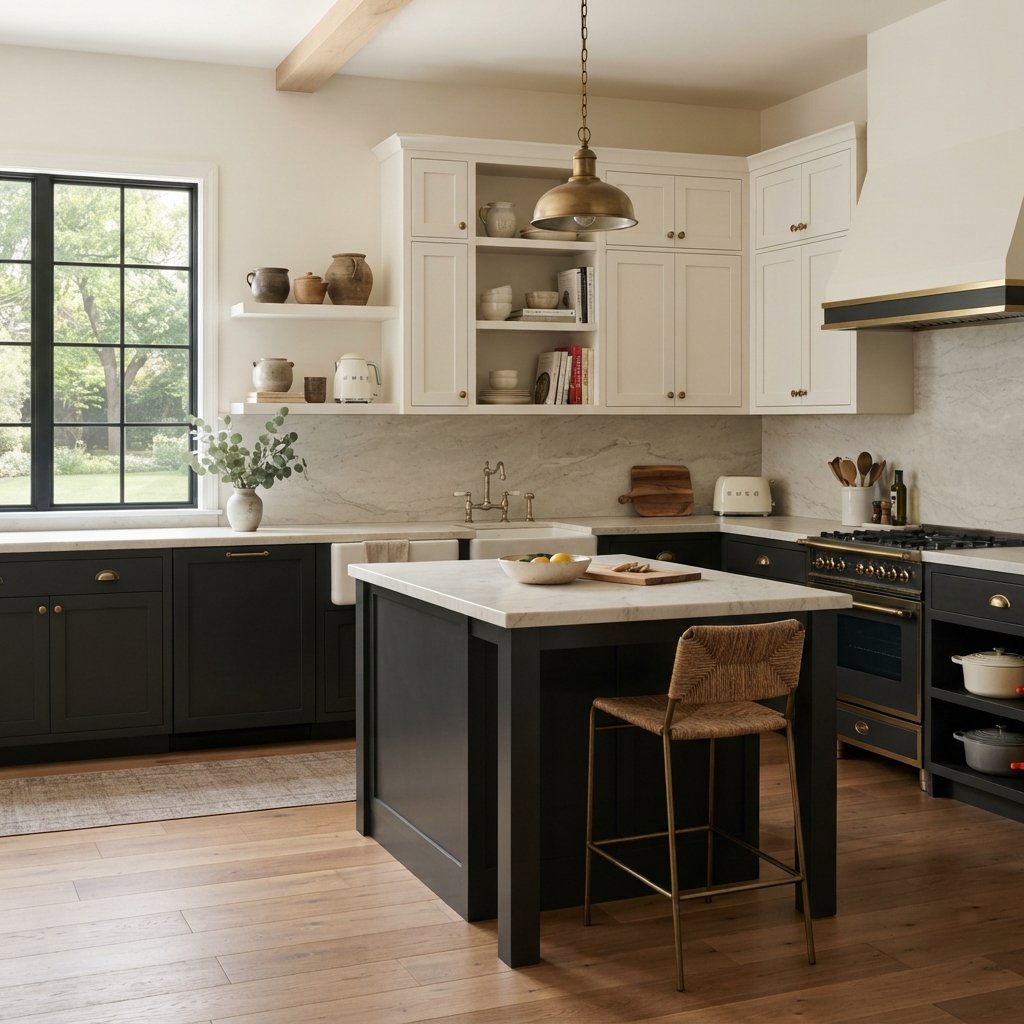
A black island can add contrast without committing to an entire kitchen of dark cabinetry.
This is especially effective with:
- White cabinets
- Cream cabinets
- Light wood cabinets
Repeat the black somewhere else through a light fixture, window frame, stool frame, or small accessory.
The repetition helps the island feel connected to the room.
Black Paint Colors for a Fireplace
A black fireplace can become a strong focal point.
You could paint:
- The surrounding wall
- Appropriate painted masonry
- Built-ins
- Mantel where suitable
However, fireplace surfaces require additional consideration.
Ordinary wall or cabinet paint should not automatically be used on fireboxes, metal components, or surfaces exposed to significant heat.
Identify the fireplace type and follow manufacturer instructions for clearances, materials, coatings, and heat exposure. Use products specifically appropriate for the surface and conditions.
Black Paint Colors for an Accent Wall
A black accent wall can work beautifully behind:
- Fireplace
- Bed
- Console table
- Built-ins
- Dining table
The easiest way to keep it from feeling disconnected is to repeat black elsewhere in the room.
A black wall might connect to:
- Picture frames
- Lighting
- Furniture legs
- Window frames
- Patterned rug
Keep some lighter elements in the room for balance.
Black Paint Colors for a Bedroom
Black can make a bedroom feel cozy rather than gloomy when used thoughtfully.
Try a black or charcoal wall behind the bed.
Then layer:
- Cream bedding
- Warm wood
- Tan or camel
- Soft white curtains
- Natural texture
For an especially dramatic bedroom, paint all four walls a dark shade and use layered lighting.
Do not forget the ceiling when planning a very dark room. Its color will influence the overall effect.
Black Paint Colors for a Bathroom
Bathrooms are a great place to experiment with dark color.
Try black on:
- Vanity
- Accent wall
- Interior door
- Built-in cabinet
A black vanity with a white or pale stone countertop creates particularly strong contrast.
In a small powder room, you could go further and use black or charcoal across multiple walls.
Good lighting becomes especially important in rooms where tasks such as grooming require clear visibility.
Black Paint Colors for Built-Ins
Dark built-ins can make basic shelving look more substantial.
Painting the shelving, cabinet doors, and wall behind them one color creates a unified feature.
Black built-ins look beautiful with:
- Books
- Cream ceramics
- Wood
- Brass
- Greenery
Avoid filling every shelf. Negative space helps the dark cabinetry feel sophisticated rather than cluttered.
Black Paint Colors for Exterior Homes
Black and charcoal can create striking exteriors.
They can be used for:
- Siding
- Front doors
- Shutters
- Trim
- Garage doors
- Architectural details
Exterior light is much stronger than interior light, so the same color may appear different outdoors.
Always sample the paint on the actual exterior and view it at different times of day.
Also use an exterior coating appropriate for the specific substrate and climate, following manufacturer instructions.
Black Paint With White Walls
This is one of the easiest combinations.
Black introduces contrast while white keeps the room bright.
However, pay attention to the type of white.
A warm black or charcoal may look more natural beside a creamy white.
A cleaner black may create sharper contrast with a clearer white.
Sample the two colors beside each other rather than choosing them independently.
Black Paint With Wood
Black and wood are natural partners.
Light oak keeps black feeling fresh and modern.
Medium wood adds warmth.
Walnut creates a richer, moodier effect.
Instead of worrying about whether black is too dark, consider how much warmth the room has.
Wood, woven materials, linen, leather-look textures, and warm metals can prevent black from feeling flat.
Black Paint With Brass
Black and brass create strong contrast.
Use brass sparingly through:
- Cabinet hardware
- Lighting
- Frames
- Faucets where appropriate
You do not need every metal finish in the room to be brass.
Black can also work with nickel, chrome, bronze, and mixed-metal palettes.
How Lighting Changes Black Paint
Lighting can dramatically affect dark paint.
North-Facing Rooms
Light may emphasize cooler characteristics in a black or charcoal.
South-Facing Rooms
Warmer daylight may make the color feel softer.
Low-Light Rooms
Subtle undertones may be harder to identify, and the color may appear deeper.
Artificial Lighting
Bulb characteristics can alter how the walls and surrounding finishes appear at night.
This is why online photographs should be inspiration—not your final color test.
How to Test Black Paint Colors
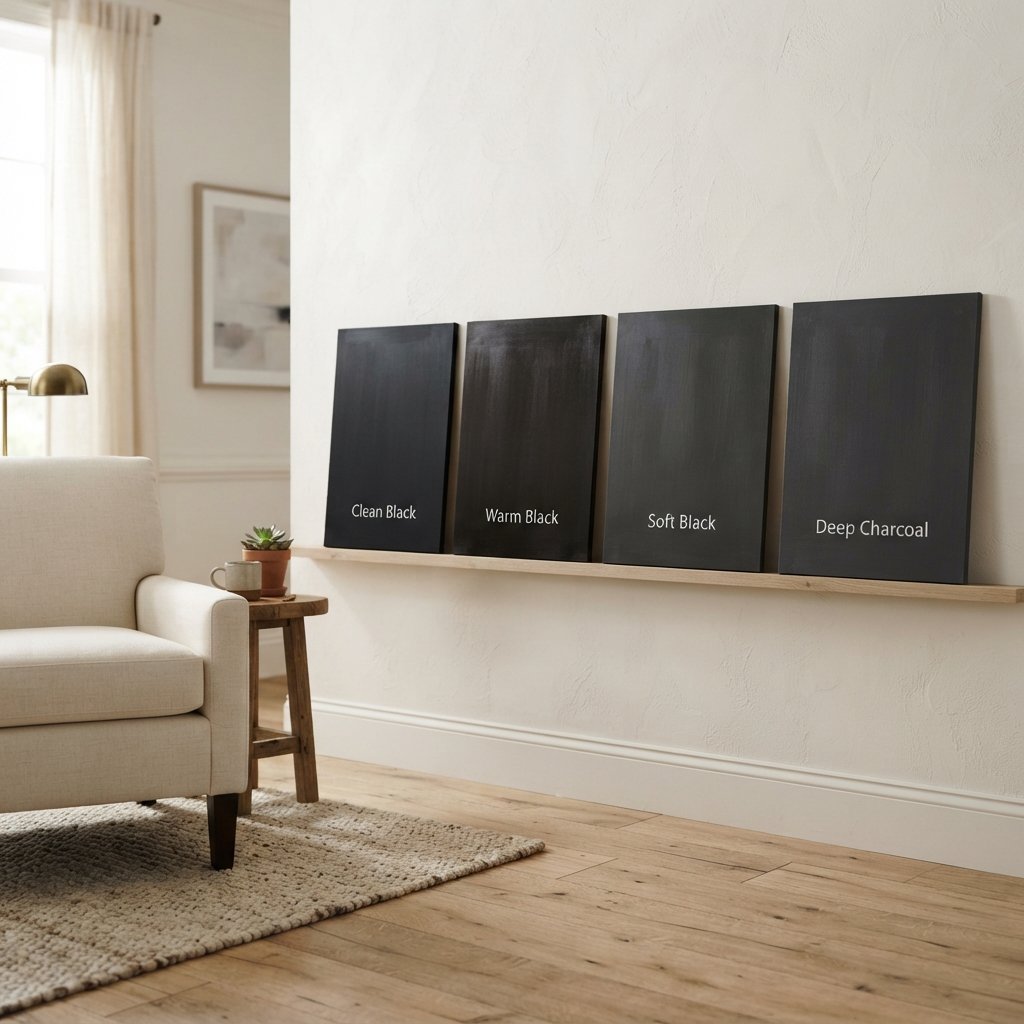
Black shades can look nearly identical on tiny chips.
Compare larger samples.
Place several candidates beside each other and view them against:
- Flooring
- Cabinets
- Countertops
- Upholstery
- Wood furniture
- Trim
Then check them in morning, afternoon, and evening light.
If you are painting several walls, test the color in more than one location.
What Paint Sheen Should You Use With Black?
Sheen affects black paint noticeably.
Flatter finishes generally reflect less light and can create a softer wall appearance.
Higher-sheen finishes reflect more light and may emphasize surface imperfections.
The appropriate sheen depends on:
- Surface
- Room
- Desired appearance
- Cleaning requirements
- Specific paint product
Walls, trim, doors, cabinets, and exteriors may require different products and finishes.
Follow the paint manufacturer’s recommendations for the intended surface and application.
How to Make Black Paint Look Expensive
Add Warm Wood
It keeps the room from feeling flat.
Use Cream Instead of Only Stark White
Cream can soften the contrast.
Layer Lighting
Dark rooms benefit from more than one light source.
Limit the Palette
Let the black be the strong element.
Use Texture
Linen, wool, wood, stone, and woven materials add depth.
Choose the Right Sheen
The finish should suit both the surface and desired appearance.
Keep Styling Intentional
Dark rooms can become visually busy quickly.
Common Mistakes When Choosing Black Paint
Picking From a Tiny Paint Chip
Dark shades need larger samples.
Assuming All Blacks Are Neutral
Compare undertones and surrounding finishes.
Ignoring Nighttime Lighting
View samples after sunset too.
Choosing the Paint Before Looking at Fixed Finishes
Flooring, stone, tile, and countertops should guide the decision.
Forgetting About Sheen
The same color can look noticeably different in another finish.
Using Too Many Competing Dark Colors
Create a deliberate palette.
Assuming Black Makes Every Small Room Feel Smaller
Dark colors can sometimes make room boundaries visually recede, but the result depends on lighting, furnishings, contrast, and how much of the room is painted.
Painting With Black: Practical Tips
Dark paint tends to reveal preparation and application quality.
Before painting:
- Clean the surface.
- Repair imperfections.
- Sand or prepare as required.
- Prime where recommended.
- Use appropriate application tools.
- Follow the manufacturer’s coverage and recoat directions.
- Maintain a consistent application technique.
- Allow adequate drying and curing.
Do not assume every dark paint requires the same number of coats.
Coverage depends on the starting color, product, substrate, application, and chosen black.
Black Paint Safety
Use paint products appropriate for the surface and environment.
Ventilate interior spaces as directed and use appropriate protective equipment during sanding, preparation, priming, and painting.
If an older painted surface may contain hazardous material, do not aggressively sand or disturb it without following appropriate testing and safety procedures.
For fireplaces and other heat-exposed surfaces, use only coatings appropriate for those conditions and follow fireplace manufacturer requirements.
For exterior work at height, use appropriate ladder and fall-safety practices or hire a professional when necessary.
FAQ About Black Paint Colors
What is a good true black paint color?
Sherwin-Williams Tricorn Black and Benjamin Moore Black are two strong options worth sampling when you want a cleaner black appearance.
What is a softer black paint color?
Sherwin-Williams Iron Ore and Benjamin Moore Wrought Iron are useful colors to compare if you want something softer than a crisp black.
What black paint works well on interior doors?
Tricorn Black, Iron Ore, Benjamin Moore Black, and Wrought Iron are all worth sampling for interior doors.
What black paint works for kitchen cabinets?
The right color depends on the countertops, flooring, backsplash, and lighting. Compare a cleaner black such as Tricorn Black with softer options such as Iron Ore or Wrought Iron.
Does black paint make a room look smaller?
Not automatically. Dark walls can create depth and blur boundaries, but the result depends on the room, lighting, furniture, contrast, and amount of dark color used.
Does black paint have undertones?
Many black and near-black paints do. Depending on the shade and lighting, you may notice blue, green, brown, gray, or other subtle influences.
Should black walls have white trim?
They can, but they do not have to. White trim creates strong contrast. Dark trim creates a more enveloping effect.
Should I paint my ceiling black too?
That depends on the room and desired effect. A black ceiling can create drama, while a light ceiling provides contrast. Test the concept carefully, particularly in rooms with limited light.
Final Thoughts
Choosing between black paint colors is less about finding the single perfect black and more about finding the right black for your particular room.
If you want strong, crisp contrast, start by sampling colors such as Sherwin-Williams Tricorn Black or Benjamin Moore Black.
If you prefer something softer, compare Iron Ore, Wrought Iron, and deeper charcoal options.
Then look at the paint beside the finishes that cannot easily change.
Compare it with your flooring, stone, tile, countertops, wood furniture, and trim. Check it in daylight and after dark. And consider how the sheen will affect the finished appearance.
Black can be dramatic, but it does not have to feel harsh.
Combined with cream, natural wood, stone, woven texture, and thoughtful lighting, it can create some of the warmest and most sophisticated rooms in a home.
The sample on your actual wall will always tell you more than the tiny paint chip—so narrow down your favorites, test them in the space, and let the room help you make the final decision.