

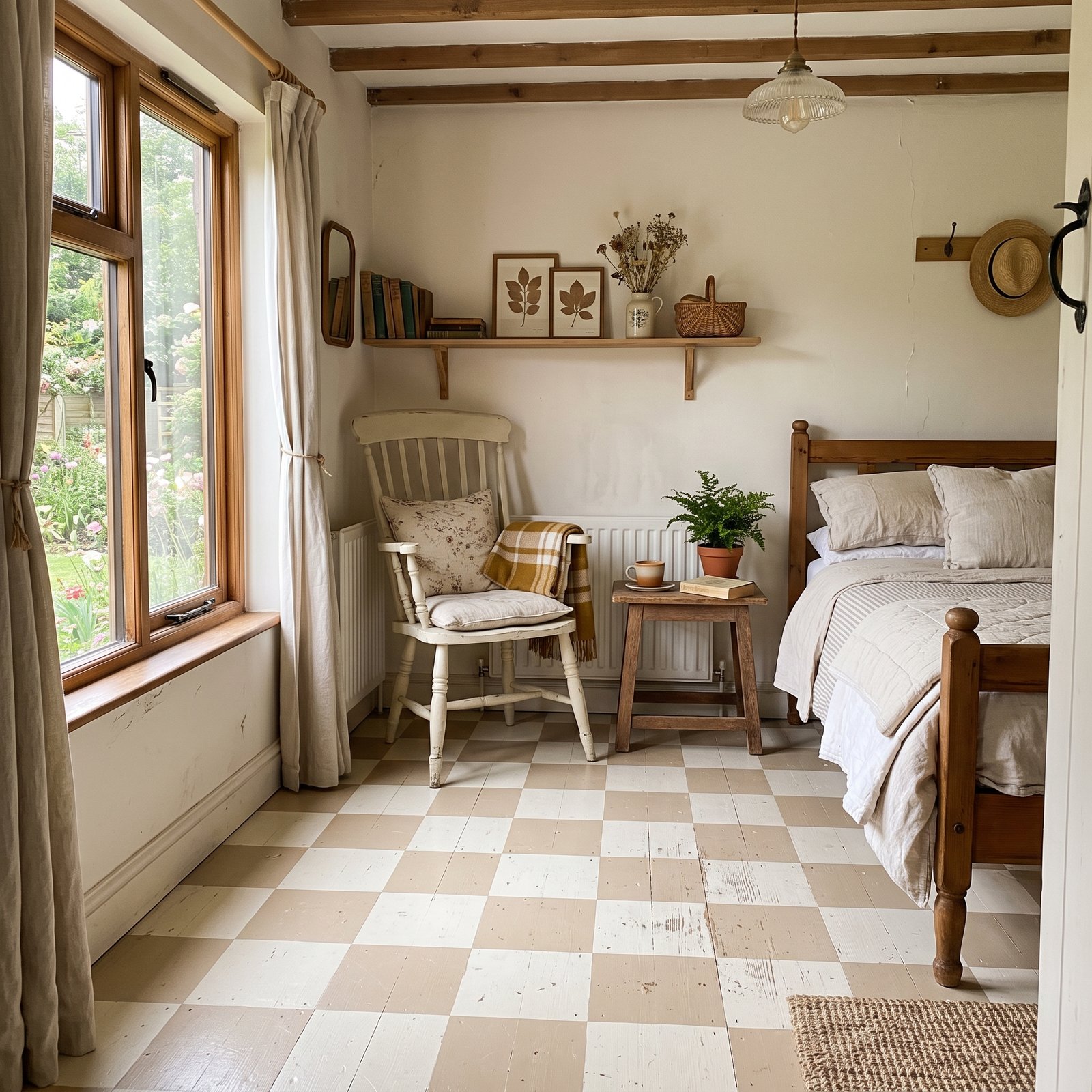
Replacing flooring can completely change how a room looks, but it can also become one of the more expensive parts of a home update. The good news is that attractive floors do not automatically require expensive hardwood, stone, or high-end tile.
There are plenty of cheap flooring ideas that can make a room feel cleaner, warmer, brighter, and more finished without stretching your renovation budget. Some options are designed as permanent flooring, while others work particularly well for rentals, quick makeovers, basements, laundry rooms, or spaces you plan to upgrade more extensively later.
The right choice depends on more than the price per square foot. You also need to consider durability, moisture, installation difficulty, the condition of your existing floor, and how much traffic the room receives.
Below are practical budget flooring options to consider, along with tips for making inexpensive flooring look more polished and intentional.
1. Peel-and-Stick Vinyl Tile
Peel-and-stick vinyl is one of the easiest ways to update an unattractive floor without tackling a complicated installation.
These tiles come in a huge variety of looks, including stone, marble, terrazzo, geometric patterns, and traditional tile designs. Because the adhesive is already applied to the back, installation is generally more approachable for beginners than laying ceramic or porcelain tile.
The biggest factor in getting a good result is preparation.
The floor underneath needs to be clean, dry, smooth, and compatible with the product. Dust, grease, loose material, deep grout lines, or an uneven surface can prevent proper adhesion or eventually become visible through thinner vinyl.
Before installing, check the manufacturer’s instructions for approved substrates and preparation requirements.
For the most convincing result, choose a relatively simple pattern and carefully plan your layout before removing any backing.
Best for: Laundry rooms, powder rooms, kitchens, entryways, closets, and quick makeovers.
2. Luxury Vinyl Plank on a Budget
Luxury vinyl plank, often called LVP, can provide the appearance of wood without the price or maintenance requirements of many real wood floors.
Although premium vinyl plank can become expensive, there are budget ranges that make it worth comparing when you’re shopping for inexpensive flooring.
One advantage is versatility. Many vinyl plank products are designed to handle everyday spills and moisture better than traditional wood, although water-resistance and waterproof claims vary by product.
Wood-look flooring tends to appear more realistic when the planks have varied grain patterns rather than an obviously repeating print.
When comparing products, look beyond appearance. Check the manufacturer’s information regarding installation method, subfloor requirements, wear layer, warranties, and suitability for the room where you intend to use it.
3. Sheet Vinyl Flooring
Sheet vinyl may not get as much attention as trendy plank flooring, but it remains a practical choice when keeping costs down is the priority.
Because the flooring comes in large rolls, it can cover substantial areas with relatively few seams. Designs range from simple neutral patterns to convincing interpretations of wood, stone, and tile.
Sheet vinyl can be particularly useful in spaces where you want an easy-to-clean floor without spending heavily on individual tiles or planks.
Installation requirements vary considerably. Small, straightforward rooms may be manageable for experienced DIYers, while complicated layouts can be harder because large sheets must be measured and cut accurately.
Always follow the specific installation instructions for the product you purchase.
4. Painted Plywood Floors
Sometimes the cheapest flooring solution is already underneath your feet.
If a room has a suitable plywood subfloor, painting it can create an intentionally simple finished surface without immediately installing another flooring material.
The condition of the plywood matters. Damaged, uneven, contaminated, or unsuitable subfloor material should not simply be covered with paint.
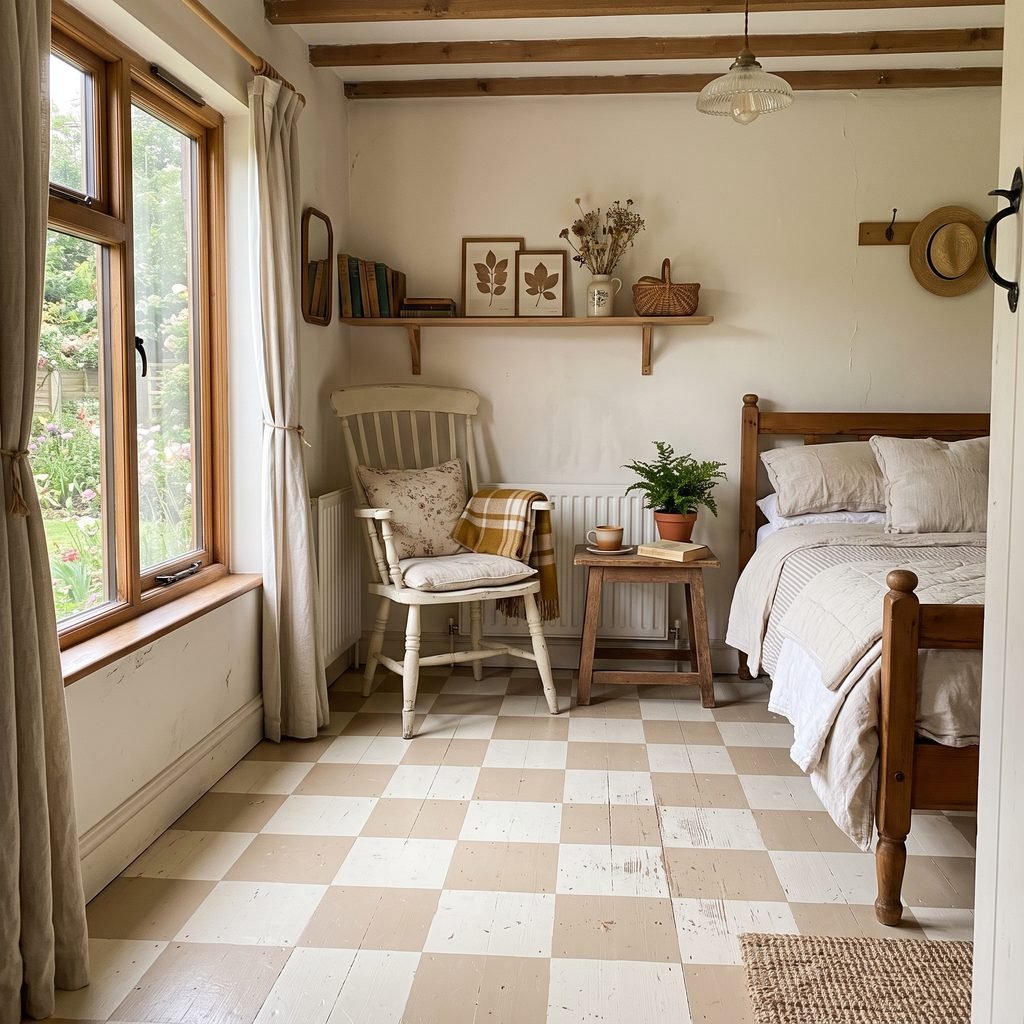
A painted plywood floor can work especially well with farmhouse, cottage, rustic, industrial, or casual decorating styles. Solid colors create a clean look, while carefully painted patterns can mimic checkerboard floors or other designs.
Proper preparation is essential. Depending on the surface and coating system, this may involve cleaning, filling appropriate imperfections, sanding, priming, and applying a floor-rated coating.
Follow the coating manufacturer’s directions for preparation, ventilation, drying, recoating, and curing.
5. Laminate Flooring
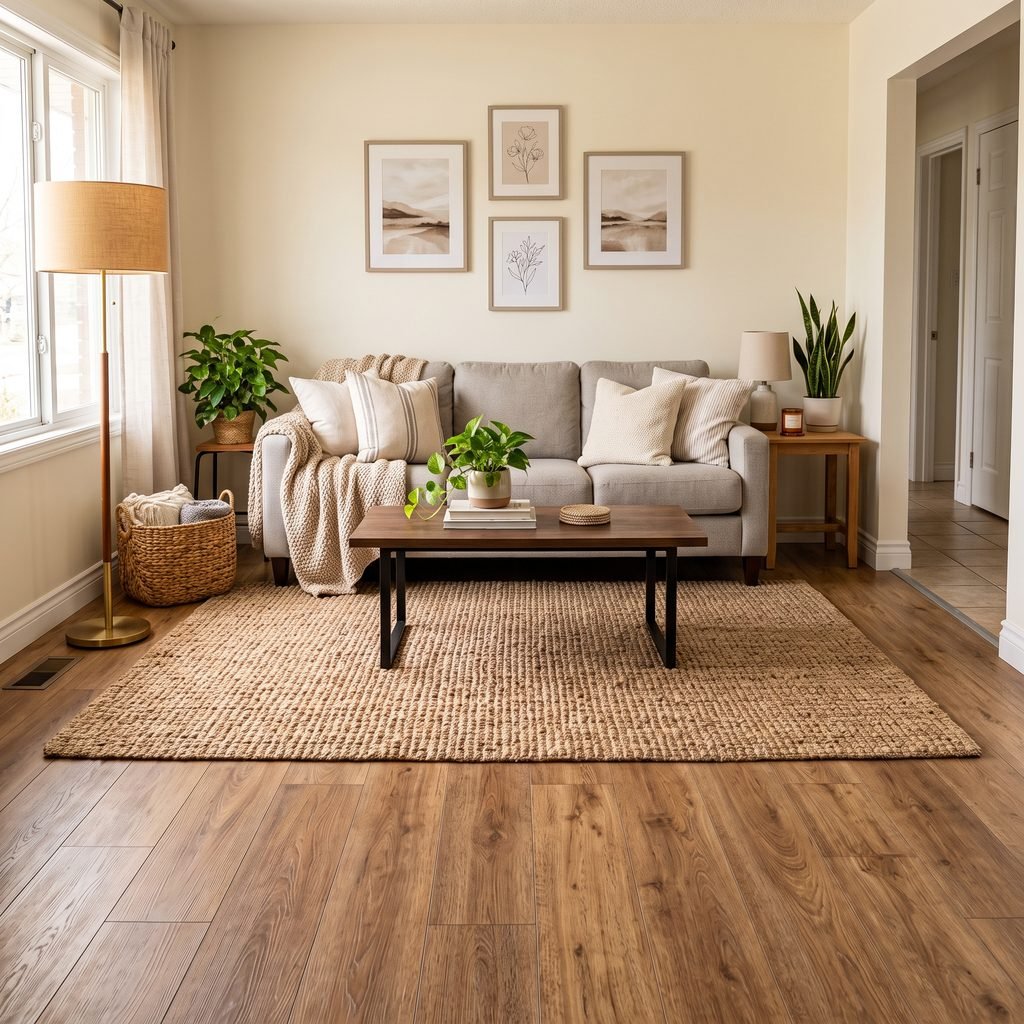
Laminate is another popular option when you want the visual warmth of wood without purchasing solid hardwood.
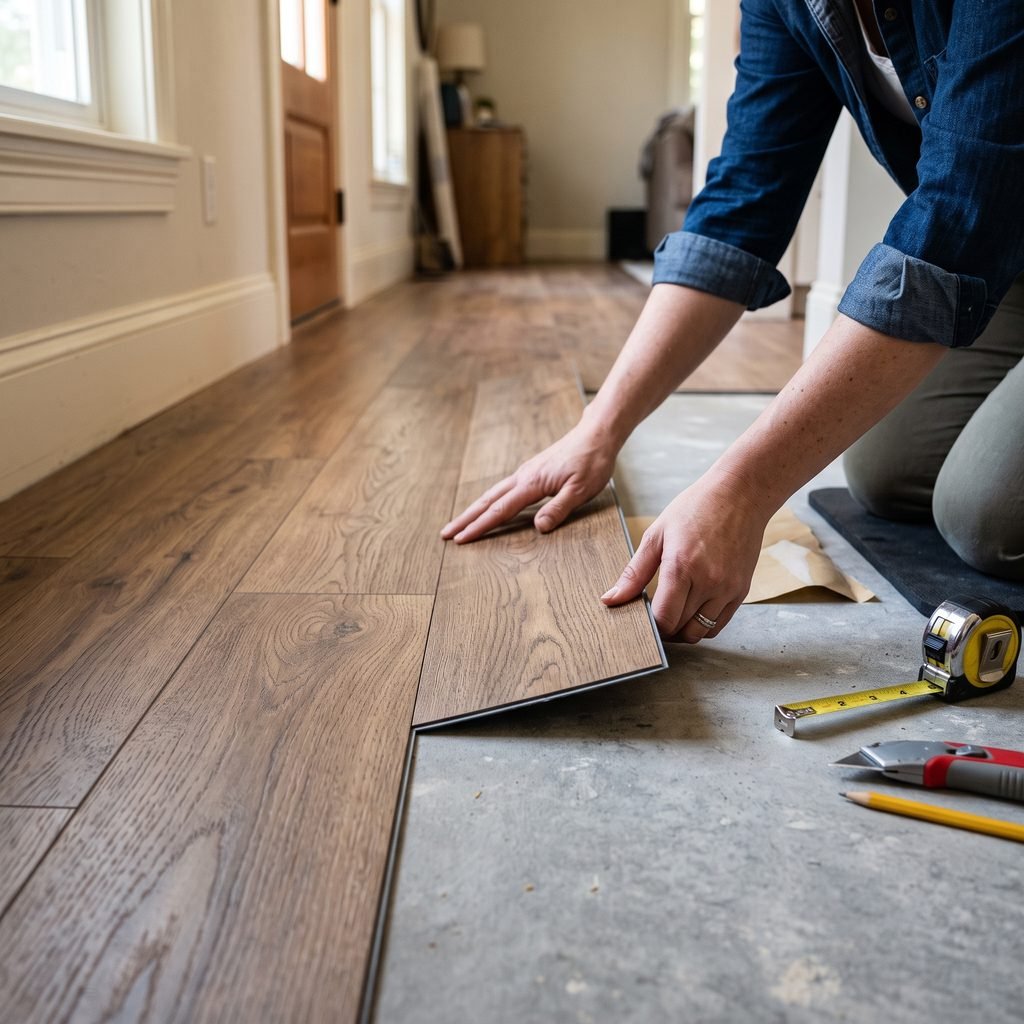
Modern laminate is available in many colors and styles, from pale oak looks to deeper traditional finishes. Click-lock products can also make installation accessible to homeowners comfortable with basic DIY projects.
However, inexpensive laminate should be selected according to the room rather than price alone.
Check the manufacturer’s specifications for moisture resistance, installation location, underlayment requirements, subfloor flatness, expansion gaps, and expected durability.
Laminate can be especially effective when you want one consistent flooring style across a living room, hallway, or bedroom.
6. Peel-and-Stick Wood-Look Planks
If you like the appearance of planks but want a relatively simple installation, adhesive-backed vinyl planks are another possibility.
Unlike floating click-lock flooring, these pieces adhere directly to an approved surface.
They can create a dramatic visual improvement over old flooring, particularly in a small space. However, inexpensive adhesive flooring will expose poor preparation quickly.
Measure carefully, establish a straight starting line, and dry-plan several rows before installation. Avoid automatically following a crooked wall as your reference line because the finished rows can gradually drift out of alignment.
7. Painted Concrete Floors
A concrete slab does not necessarily need to be hidden.
In basements, utility spaces, workshops, sunrooms, or casual interiors, a properly prepared painted concrete floor can become part of the room’s design.
The finished style can range from industrial gray to warm neutrals or even a decorative painted pattern.
Concrete needs careful evaluation before coating. Moisture problems, cracks, contamination, previous coatings, or surface deterioration can affect the result.
Use coatings intended for floors and compatible with the specific concrete surface. Follow manufacturer directions for preparation, ventilation, application, drying, and curing.
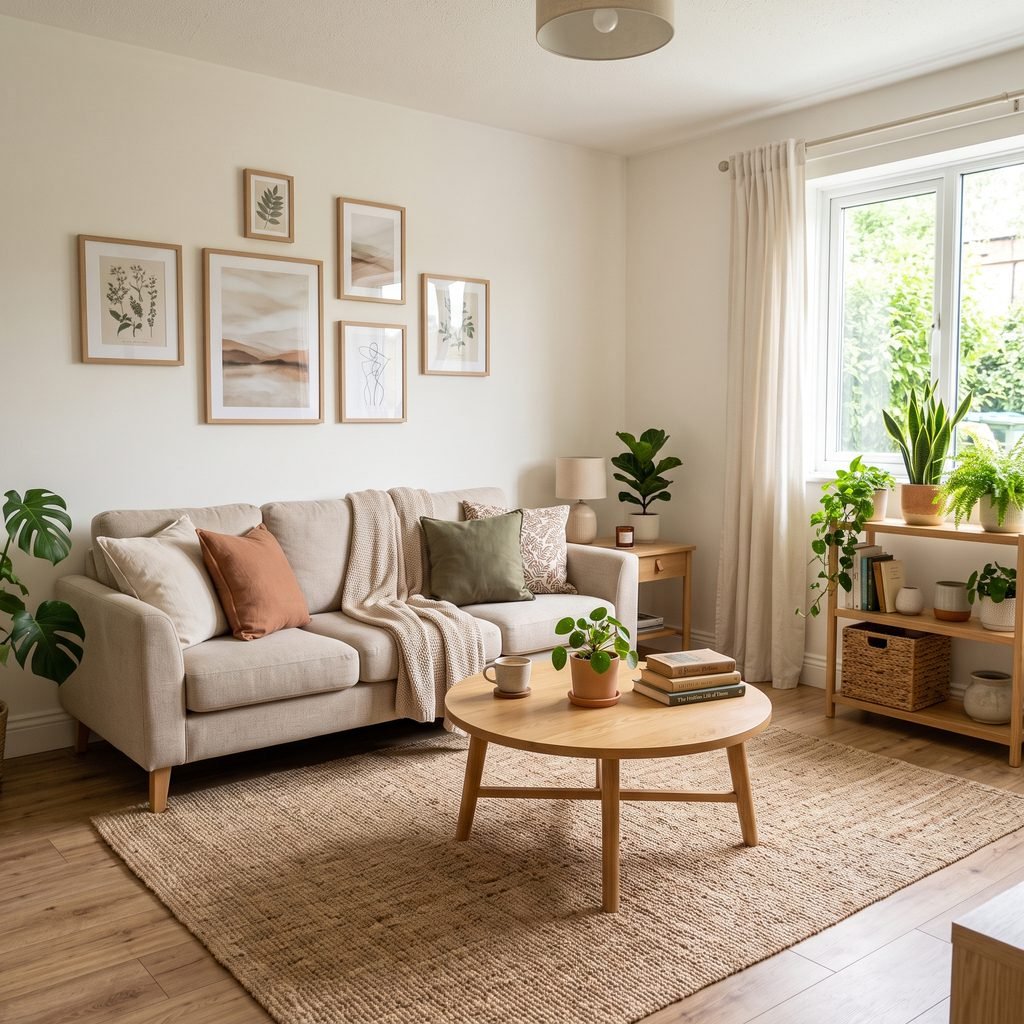
A painted floor can look especially polished when paired with a large area rug and coordinated furnishings.
8. Budget-Friendly Carpet Tiles
Carpet tiles offer a clever alternative to wall-to-wall carpet, particularly in bedrooms, home offices, playrooms, and basements where the conditions are suitable.
Instead of installing one large piece of carpet, individual squares or planks create the finished floor.
One practical advantage is repairability. Depending on the installation system, a damaged tile may be easier to replace than an entire carpet.
For a sophisticated look, choose tiles with subtle color variation or texture rather than trying to create a complicated pattern in a small room.
Always verify that the product and installation method are suitable for your subfloor and environment, especially in areas where moisture may be present.
9. Use Large Area Rugs Instead of Replacing the Floor
Not every ugly floor needs to be replaced immediately.
If the existing flooring is structurally sound but unattractive, a strategically sized area rug can transform much of the room for considerably less effort.
This works particularly well in rentals or when you’re saving for a larger renovation.
The trick is choosing a rug large enough for the space. A tiny rug floating in the middle of a living room can make the room feel disconnected.
In a living room, aim for a layout where the rug visually anchors the main furniture grouping. In a bedroom, position it so there is a comfortable amount of rug visible around the bed.
Use an appropriate rug pad or non-slip solution where needed to reduce movement and tripping hazards.
10. Create a Painted Floor Pattern
Paint can do more than turn an old floor one solid color.
Checkerboards, simple stripes, and stencil-inspired geometric designs can turn a basic paintable surface into a decorative feature.
A checkerboard is particularly effective because the pattern feels intentional without requiring an overly complicated design.
Muted combinations—such as cream and beige, warm white and taupe, or two softened neutral tones—can make the floor feel more timeless.
Before painting, make sure the existing flooring is a suitable surface for the coating system you’re considering. Preparation and compatibility are more important than the decorative pattern.
For high-traffic areas, use products specifically intended for floors and respect the full cure time before returning furniture and rugs.
11. Consider Cork Flooring
Cork can be worth investigating when you want something different from standard wood-look flooring.
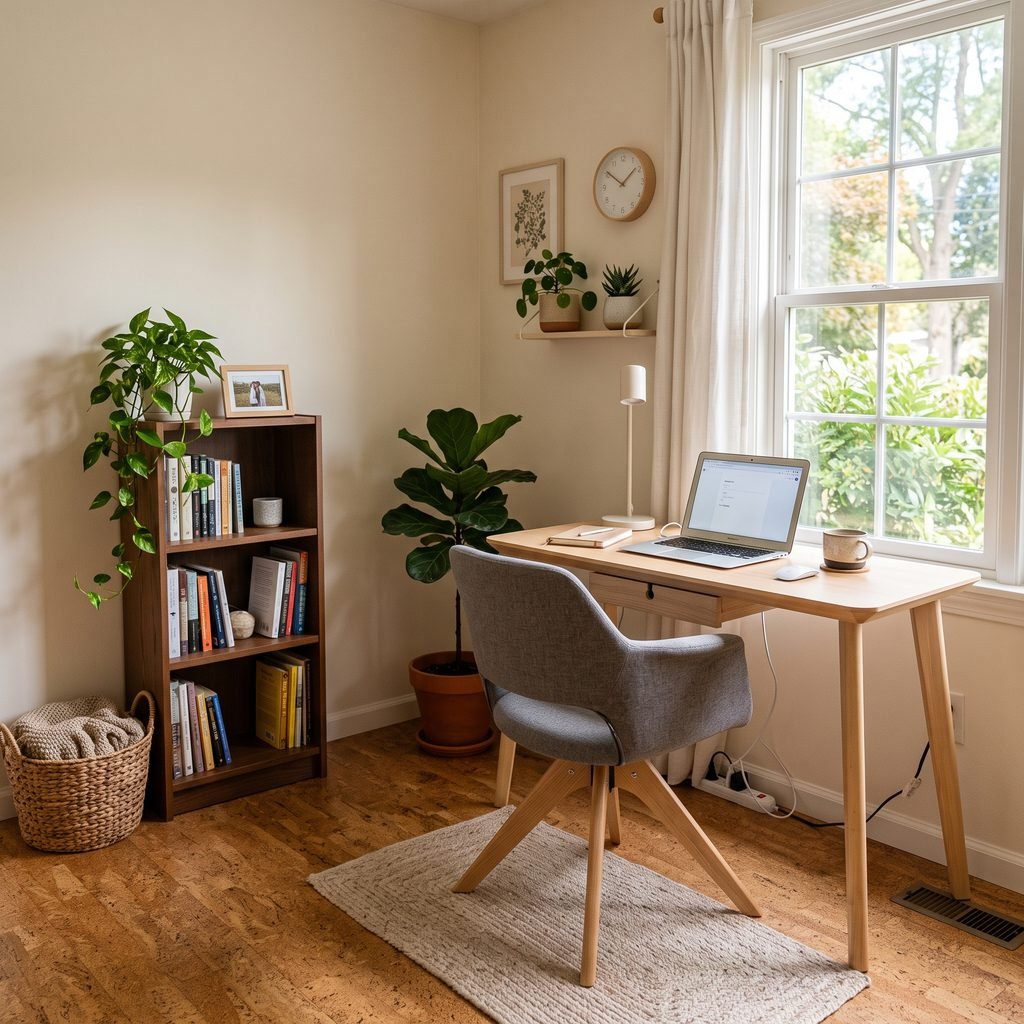
Its natural texture adds warmth, and it can work particularly well in bedrooms, offices, and other comfortable living spaces.
Pricing varies substantially, so cork will not always be the cheapest option available. However, discounted lines, simple designs, or smaller-room installations may bring it within a modest renovation budget.
Before choosing cork, investigate its requirements for moisture, subfloor preparation, sealing if applicable, and ongoing care. Different products can have different installation systems and limitations.
12. Look for Flooring Clearance and Discontinued Styles
One of the best cheap flooring ideas has nothing to do with choosing a specific material: shop differently.
Flooring retailers often have discontinued colors, clearance products, leftover inventory, or small quantities from previous collections.
These can be especially useful for small rooms.
A leftover quantity that is nowhere near enough for an entire house might be perfect for a powder room, laundry room, office, or compact bedroom.
Before buying clearance flooring, calculate the amount required—including an appropriate allowance for cuts, waste, mistakes, and potential future repairs. The amount of extra material needed varies with the product, room shape, and installation pattern.
Also inspect boxes carefully and confirm that compatible pieces, accessories, or additional material will be available if you need them.
13. Use Simple Ceramic Tile Strategically
Ceramic tile isn’t automatically a budget option once installation materials and labor are included. However, basic tile styles can sometimes be surprisingly economical.
Instead of selecting elaborate patterns or premium finishes, consider simple square or rectangular tiles and let the layout create the visual interest.
A basic tile installed neatly can look far more expensive than a trendy product installed poorly.
Tile installation requires a properly prepared substrate, suitable setting materials, accurate layout, correct spacing, cutting tools, and careful grouting. Wet areas may require additional waterproofing systems depending on the application.
If you are unfamiliar with these requirements, research the complete installation system before treating tile as a simple weekend DIY.
14. Refresh Existing Hardwood Instead of Replacing It
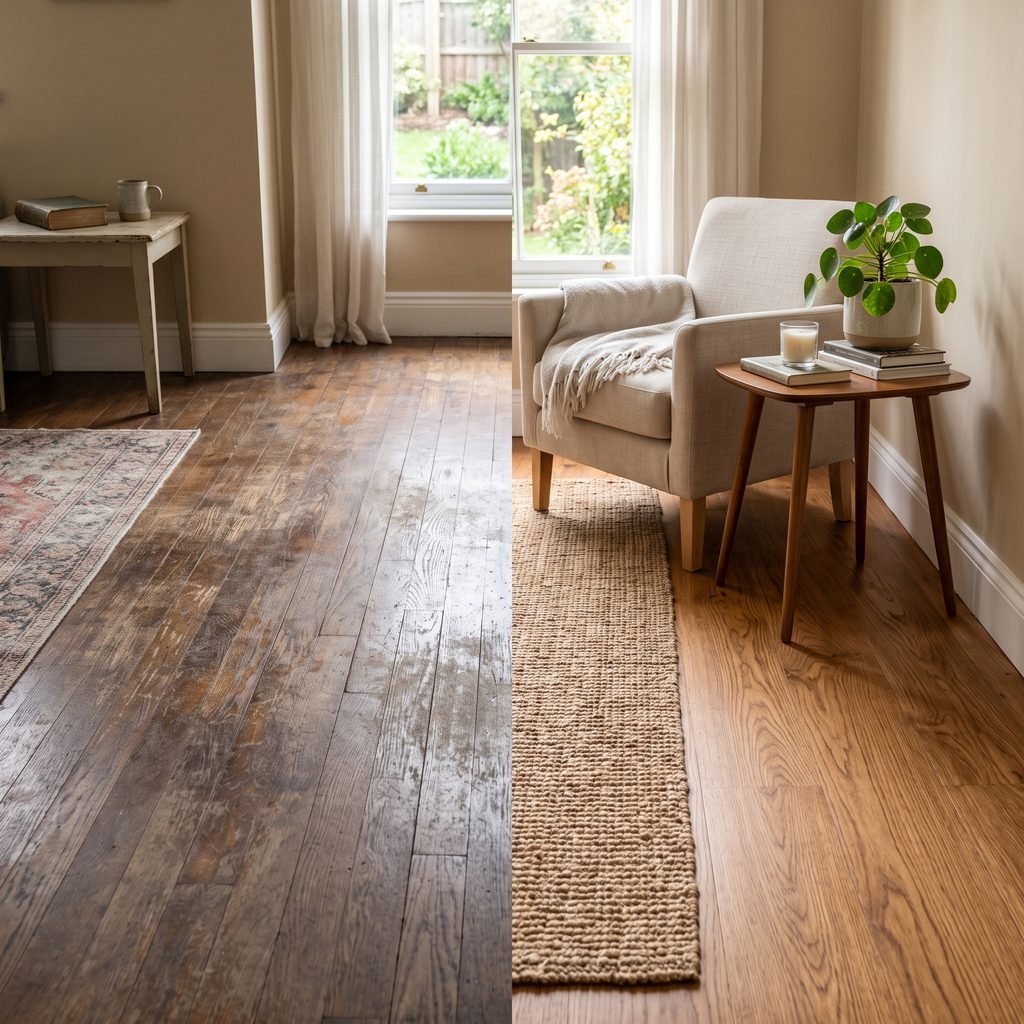
Old hardwood that looks scratched or dull may still have plenty of potential.
Depending on the type, construction, thickness, finish, and condition of the flooring, refinishing or another appropriate restoration method may cost less than removing it and installing something new.
Not every wood floor can be sanded repeatedly, however. Engineered products can have limited wear layers, and severely damaged flooring may need repair.
If you don’t know what type of flooring you have, identify it before sanding or applying a new finish.
Sometimes cleaning with an appropriate product and making targeted repairs can improve the appearance without a complete replacement.
15. Combine an Inexpensive Floor With Better Styling
The flooring itself is only part of what makes a room look finished.
Even relatively inexpensive flooring can look much more polished when the rest of the details are handled carefully.
Consider adding:
- Clean, coordinated baseboards or trim
- Appropriate transition strips between rooms
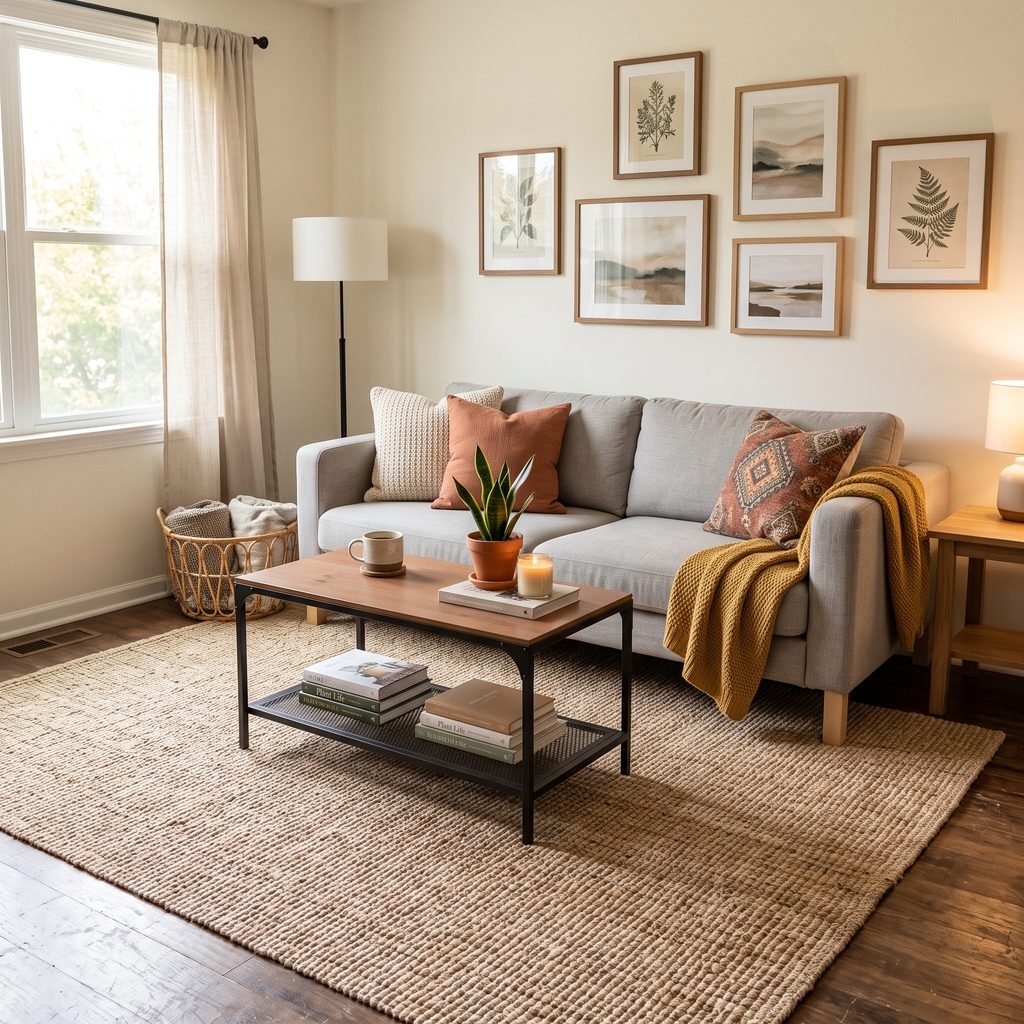
- A well-sized area rug
- Consistent flooring direction
- Simple window treatments
- Warm layered lighting
- Furniture that complements the floor undertone
- Thoughtful caulking or finishing where appropriate
Small unfinished details can make even costly flooring look like a rushed project. Conversely, careful installation and styling can make affordable materials feel intentional.
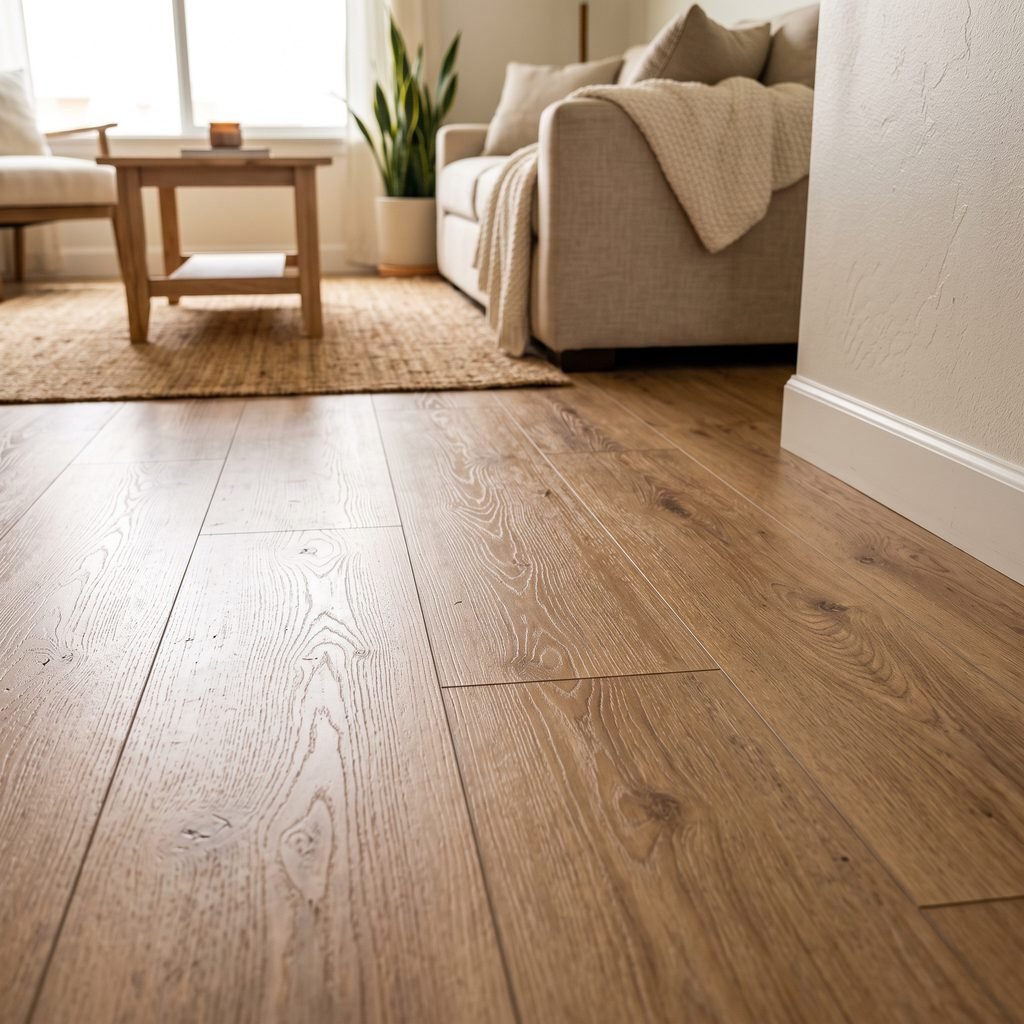
How to Choose the Best Cheap Flooring for Your Room
The lowest sticker price is not always the least expensive option overall.
Before buying, compare the total project cost, including flooring, underlayment if required, adhesives, preparation materials, trim, transitions, tools, delivery, waste, and professional labor where necessary.
Then think about how the room functions.
For Kitchens and Laundry Rooms
Prioritize flooring designed for the expected moisture and cleaning demands. Vinyl products are commonly considered for these spaces, but always check the individual product’s installation and water-resistance requirements.
For Bedrooms
Comfort and appearance may matter more than extreme moisture resistance. Laminate, vinyl plank, carpet tiles, cork, and large rugs can all be possibilities depending on the room.
For Living Rooms
Wood-look laminate or vinyl can provide a cohesive foundation, while an area rug adds softness and helps define the seating area.
For Basements
Moisture conditions should be evaluated before choosing flooring. A persistent dampness or water-intrusion problem needs to be addressed rather than hidden underneath a new surface.
Depending on conditions and product specifications, options may include appropriate vinyl flooring, carpet tiles, or a properly prepared concrete coating.
For Rentals
Avoid permanent changes without permission from the property owner or manager. A large area rug is often the simplest low-commitment option. Even products marketed as removable can affect certain surfaces, so test and follow manufacturer guidance.
How to Make Cheap Flooring Look More Expensive
Budget flooring usually looks its best when the design around it stays relatively simple.
Start by paying close attention to undertones. If your flooring has a strong warm orange tone, for example, pairing it randomly with very cool gray furnishings may make the mismatch more obvious.
You can also improve the finished appearance by:
- Choosing realistic patterns. Subtle grain and stone patterns tend to be easier to decorate around.
- Preparing the subfloor carefully. Uneven flooring can make inexpensive materials look worse and may affect performance.
- Planning the layout first. Avoid awkward slivers and poorly positioned patterns where possible.
- Finishing transitions neatly. Doorways and edges deserve just as much attention as the center of the room.
- Keeping spare material. A few matching pieces can be valuable if repairs are needed later.
- Adding texture elsewhere. Rugs, curtains, baskets, upholstery, and natural materials keep a budget room from feeling flat.
Common Budget Flooring Mistakes to Avoid
A cheap flooring makeover can become expensive when installation problems mean you have to redo it.
One common mistake is focusing only on the flooring price. A product that seems inexpensive may require substantial subfloor work, special tools, underlayment, adhesives, or professional installation.
Another is installing new flooring directly over an unsuitable surface. Existing floors may need cleaning, leveling, repair, removal, or other preparation depending on the new flooring system.
Also avoid assuming every product in a flooring category performs the same way. One vinyl plank product may have different installation and moisture requirements from another. Always use the instructions for the exact product you’re installing.
Finally, don’t rush preparation. Straight layout lines, accurate measurements, a suitable subfloor, clean cuts, and carefully finished edges can have as much impact on the final appearance as the flooring itself.
FAQ About Cheap Flooring Ideas
What is one of the easiest inexpensive floors to install yourself?
Peel-and-stick vinyl can be approachable for beginners when the existing surface is suitable, smooth, clean, and properly prepared. Click-lock laminate and vinyl products can also be DIY-friendly, but installation requirements vary.
How can I cover an ugly floor without replacing it?
A large area rug is one of the simplest solutions when the existing floor is safe and sound. Depending on the surface and your circumstances, suitable removable or temporary flooring products may also be worth considering.
Can inexpensive flooring still look good?
Absolutely. Material choice matters, but careful preparation, installation, transitions, trim, furniture placement, rugs, and lighting all affect how expensive a floor appears.
Should I install new flooring over old flooring?
Sometimes, but not automatically. Whether an existing floor can remain depends on its material, condition, height, flatness, moisture conditions, and the requirements of the new flooring. Follow the flooring manufacturer’s installation instructions.
Is DIY flooring always cheaper?
Not necessarily. DIY can reduce labor costs, but mistakes can increase the total expense. Projects involving significant subfloor damage, moisture problems, asbestos concerns, complex tile work, structural issues, or unfamiliar electrical/plumbing work nearby may require professional evaluation or assistance.
Final Thoughts
You don’t have to install premium hardwood or expensive stone to make a room feel dramatically better.
Some of the most practical cheap flooring ideas include vinyl plank, peel-and-stick tile, laminate, sheet vinyl, painted plywood or concrete, carpet tiles, clearance flooring, and simply covering a sound but dated floor with a properly sized rug.
Whatever option you choose, put part of your budget—and plenty of your attention—into preparation and finishing details. A modest flooring material installed carefully can look far more polished than an expensive product installed in a hurry.
For a budget makeover, start with the room that bothers you most, determine exactly what kind of surface you’re working with, and compare the complete cost of two or three suitable flooring options before buying.