

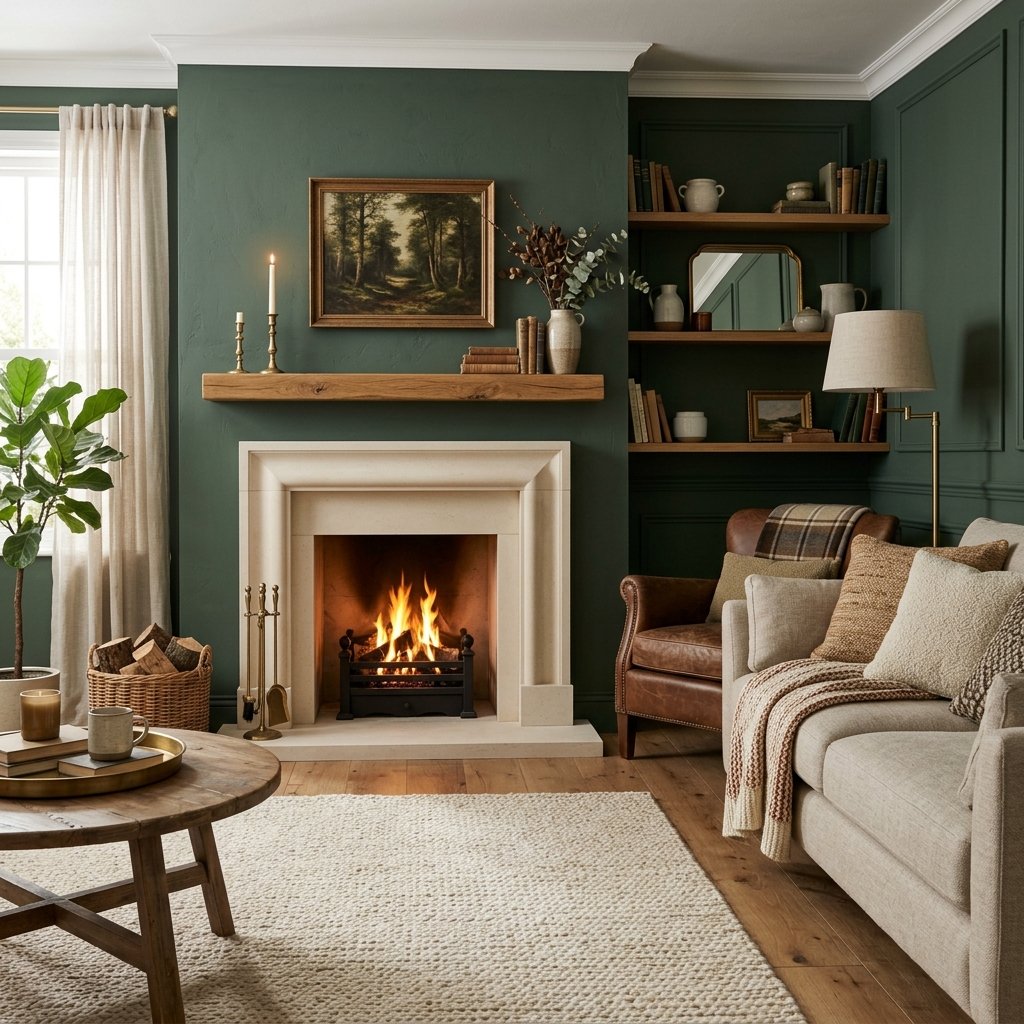
A fireplace already gives a room a natural focal point, so turning the wall around it into an accent wall can make the entire space feel more intentional.
The challenge is knowing how much to do.
Should you paint the whole fireplace wall a dark color? Add wood paneling? Continue stone all the way to the ceiling? Install vertical paneling behind the mantel? And what happens when a TV also needs to fit into the design?
The most successful accent walls with fireplaces usually treat the fireplace, wall treatment, mantel, television, and surrounding furniture as one composition.
You do not necessarily need an expensive renovation, either. Paint can create dramatic contrast on its own, while molding, paneling, tile, brick, stone, or wood can introduce architectural character.
These 17 fireplace accent wall ideas range from simple painted updates to larger remodeling projects, with options for modern, traditional, farmhouse, neutral, and cozy living rooms.
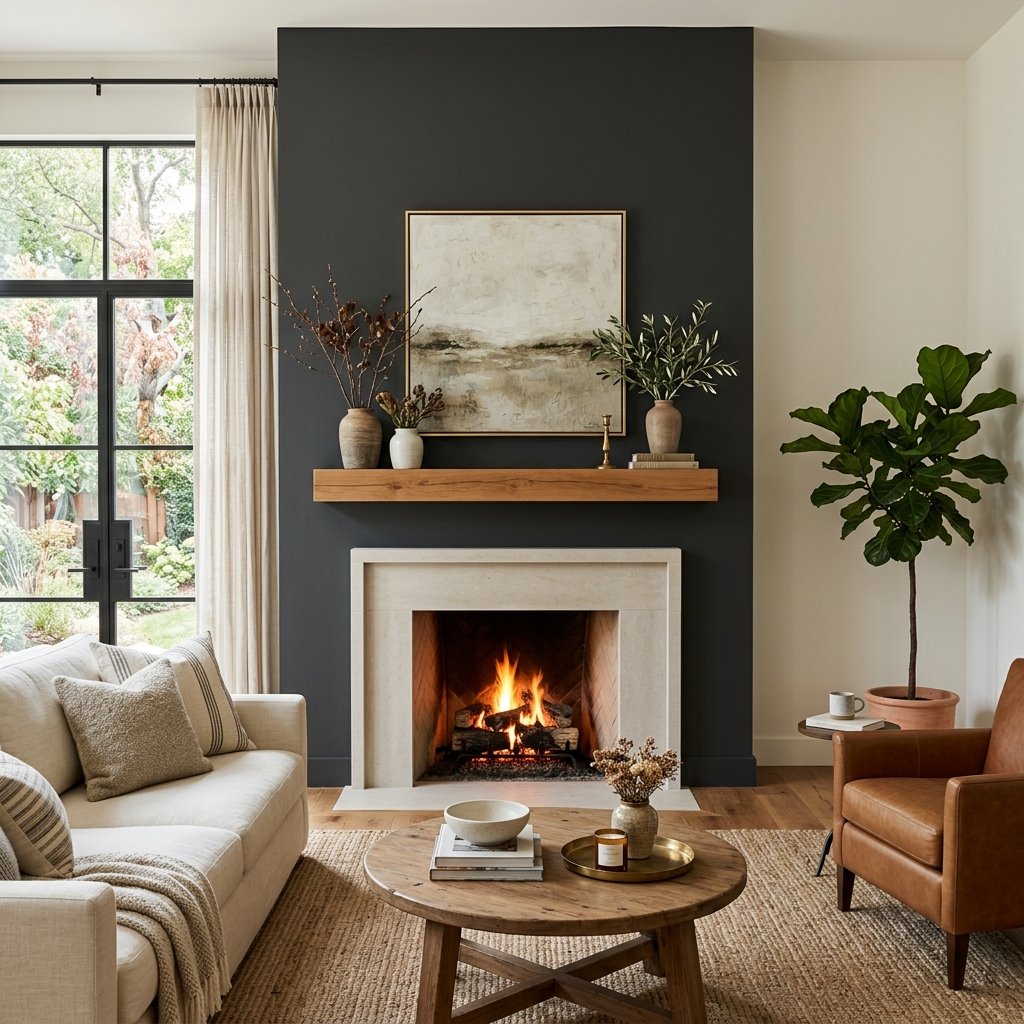
1. Paint the Fireplace Wall a Dark Color
Paint is one of the simplest ways to make the fireplace wall stand out.
Instead of changing the fireplace itself, paint the entire wall behind it a deeper color.
Consider:
- Charcoal
- Deep green
- Navy
- Warm brown
- Soft black
A dark wall can visually anchor a light-colored fireplace and make white or pale stone stand out.
This works especially well in rooms with lighter surrounding walls.
Repeat the accent color somewhere else—perhaps through a pillow, artwork, rug, or chair—so the fireplace wall feels connected to the rest of the room.
2. Try a Deep Green Fireplace Accent Wall
Green is particularly attractive around fireplaces because it pairs naturally with wood, stone, and warm metal.
For a subtle look, try muted olive or deep sage.
For something moodier, consider forest or evergreen tones.
Deep green looks beautiful with:
- Warm white
- Cream
- Oak
- Walnut
- Brass
- Black
If your fireplace has warm stone or brick, sample the green directly beside it before committing.
3. Create a Black Fireplace Accent Wall
Black can turn a basic fireplace into a dramatic architectural feature.
You do not have to use a harsh jet black.
A softer black or very dark charcoal can create plenty of contrast.
This approach works especially well with:
- Light wood floors
- White or cream walls
- Natural wood mantel
- Neutral furniture
Keep the rest of the room relatively light if you want the fireplace to remain the focal point without making the entire space feel dark.
4. Add Vertical Wood Paneling
Vertical paneling can make a fireplace wall appear taller.
Depending on the style of your home, you could use:
- Painted tongue-and-groove-style paneling
- Simple vertical boards
- Wood slats
- Other code-appropriate decorative paneling
A floor-to-ceiling treatment draws the eye upward and gives the fireplace more architectural presence.
However, fireplace walls require special attention to combustible-material clearances. Before installing wood or another combustible finish near a fireplace, follow the fireplace manufacturer’s installation instructions and applicable local requirements.
Do not assume that a paneling detail seen in a photograph is safe for your specific fireplace.
5. Use Natural Wood as the Accent
Instead of painting the fireplace wall, let wood become the feature.
Natural wood can soften a room filled with painted surfaces.
Light wood feels relaxed and modern.
Medium or dark wood can create a richer, more traditional look.
You might use wood:
- Above the mantel
- On adjacent built-ins
- As vertical slats where permitted
- As part of the mantel design
Again, combustible materials must remain within the clearances allowed for the specific fireplace installation.
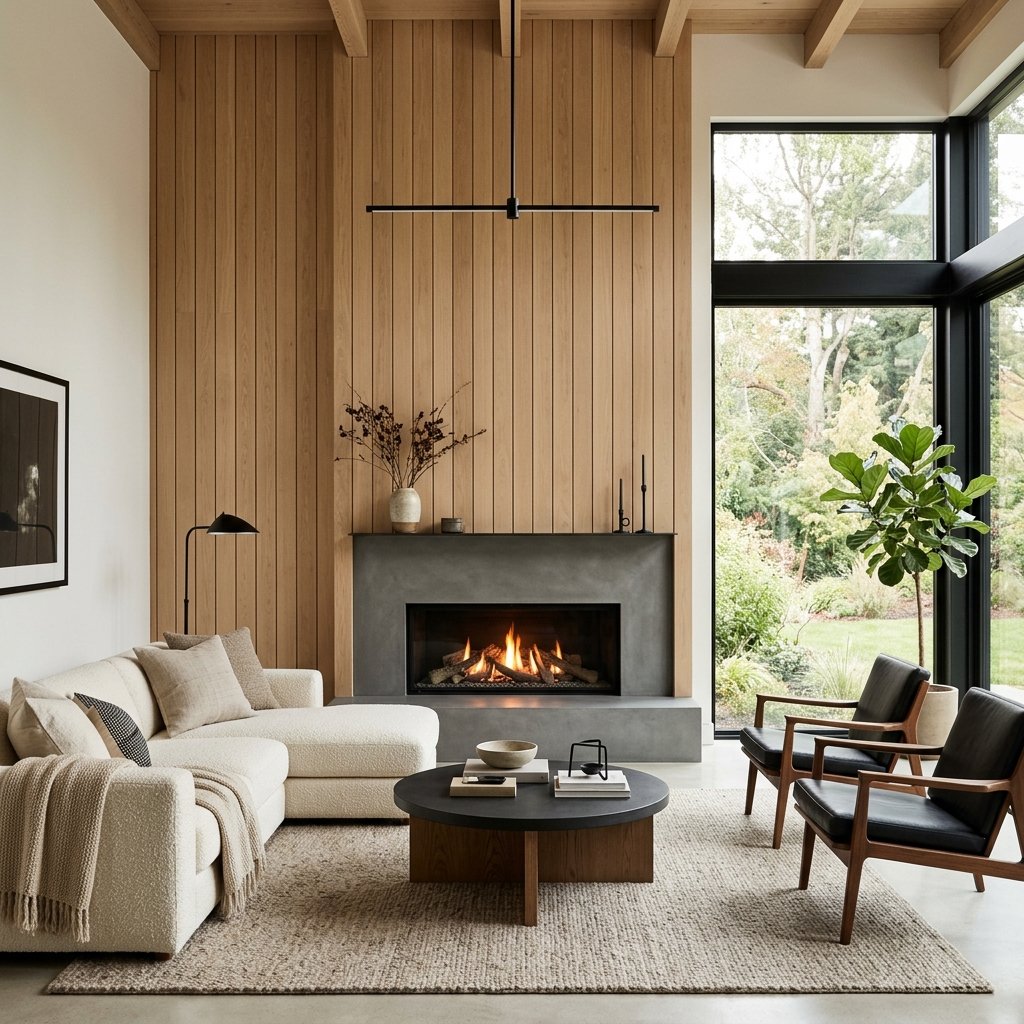
6. Take Stone All the Way to the Ceiling
A floor-to-ceiling stone fireplace can become the accent wall without requiring a contrasting paint color.
This works particularly well in rooms with:
- Vaulted ceilings
- Tall walls
- Open floor plans
- Large windows
Choose stone that relates to the other permanent finishes in the house.
A warm stone can pair beautifully with creamy walls and natural wood.
A cooler gray stone may suit a more contemporary palette.
The scale and weight of masonry or stone assemblies require appropriate construction and support, so this is a project where professional design or installation may be appropriate.
7. Create a Floor-to-Ceiling Tile Fireplace Wall
Tile provides another way to make the fireplace wall architectural.
Depending on the room, consider:
- Large-format tile
- Textured tile
- Handmade-look tile
- Stone-look tile
- Simple neutral tile
A quieter tile allows the architecture to do the work.
A strongly patterned tile creates a much more prominent focal point.
Before choosing materials or installation methods, verify that the tile, substrate, setting materials, and assembly are suitable for the fireplace type and location.
8. Highlight Original Brick
Brick already provides color and texture.
Sometimes the best accent wall idea is simply letting it remain the focal point.
You can build the room palette around the brick instead of covering it.
Traditional red or brown brick works beautifully with:
- Cream
- Warm white
- Olive
- Brown
- Navy
- Warm wood
If the brick feels visually heavy, lighten the surrounding walls and furnishings rather than automatically painting it.
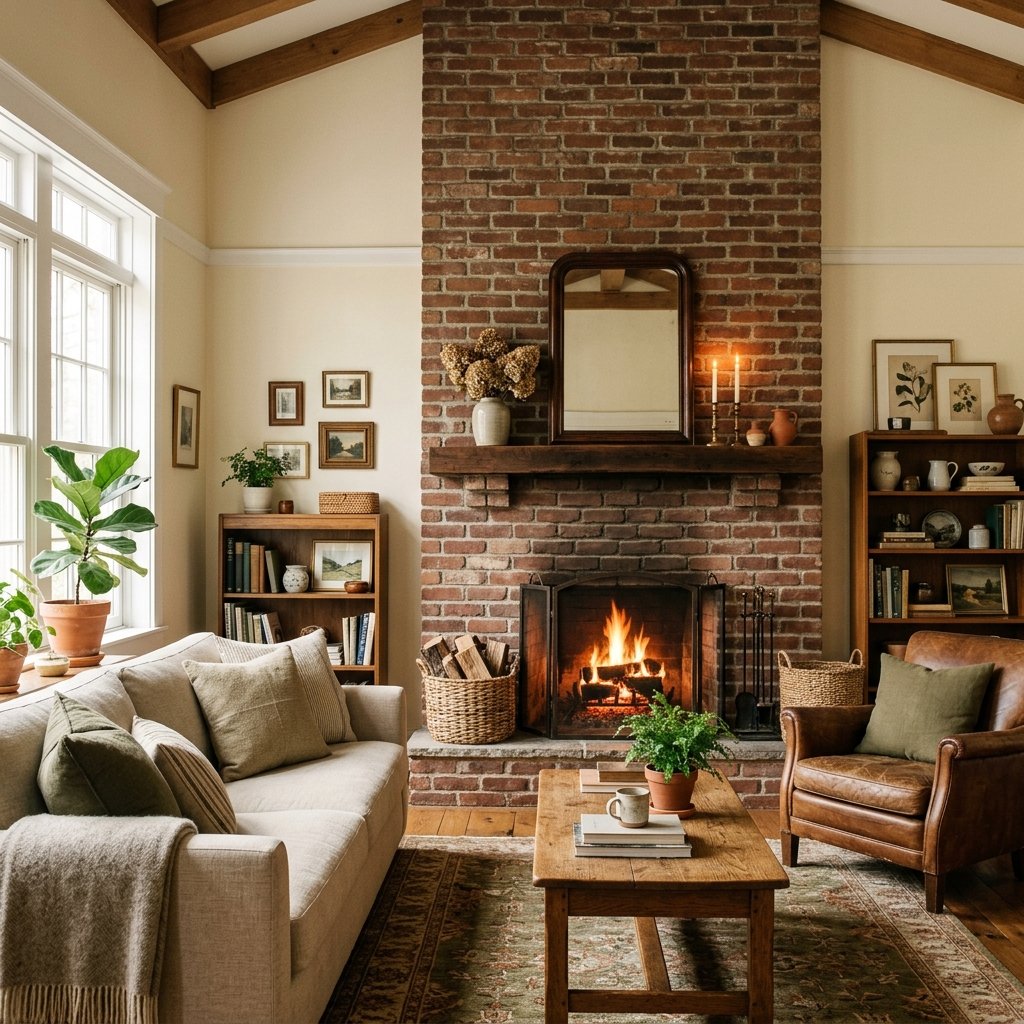
9. Paint Brick for a More Unified Look
If existing brick overwhelms the room or does not work with the desired palette, a painted finish can create a quieter backdrop.
Warm white can make the fireplace feel softer.
Dark charcoal can create drama.
A wall-color treatment can make the fireplace blend into the room.
Before painting masonry, determine whether the brick is appropriate to paint and address moisture or deterioration first. Fireplace interiors, fireboxes, and surfaces exposed to significant heat require products and procedures appropriate for those conditions; ordinary wall paint should not be assumed suitable.
10. Add Picture-Frame Molding Around the Fireplace
Wall molding can make a plain fireplace wall feel much more architectural.
Picture-frame molding works especially well in:
- Traditional rooms
- Transitional rooms
- Formal living rooms
- Bedrooms with fireplaces
Paint the molding and wall the same color for a sophisticated tone-on-tone effect.
For example:
Deep green wall + deep green molding.
Or:
Warm white wall + warm white molding.
The shadows created by the trim add interest without requiring another color.
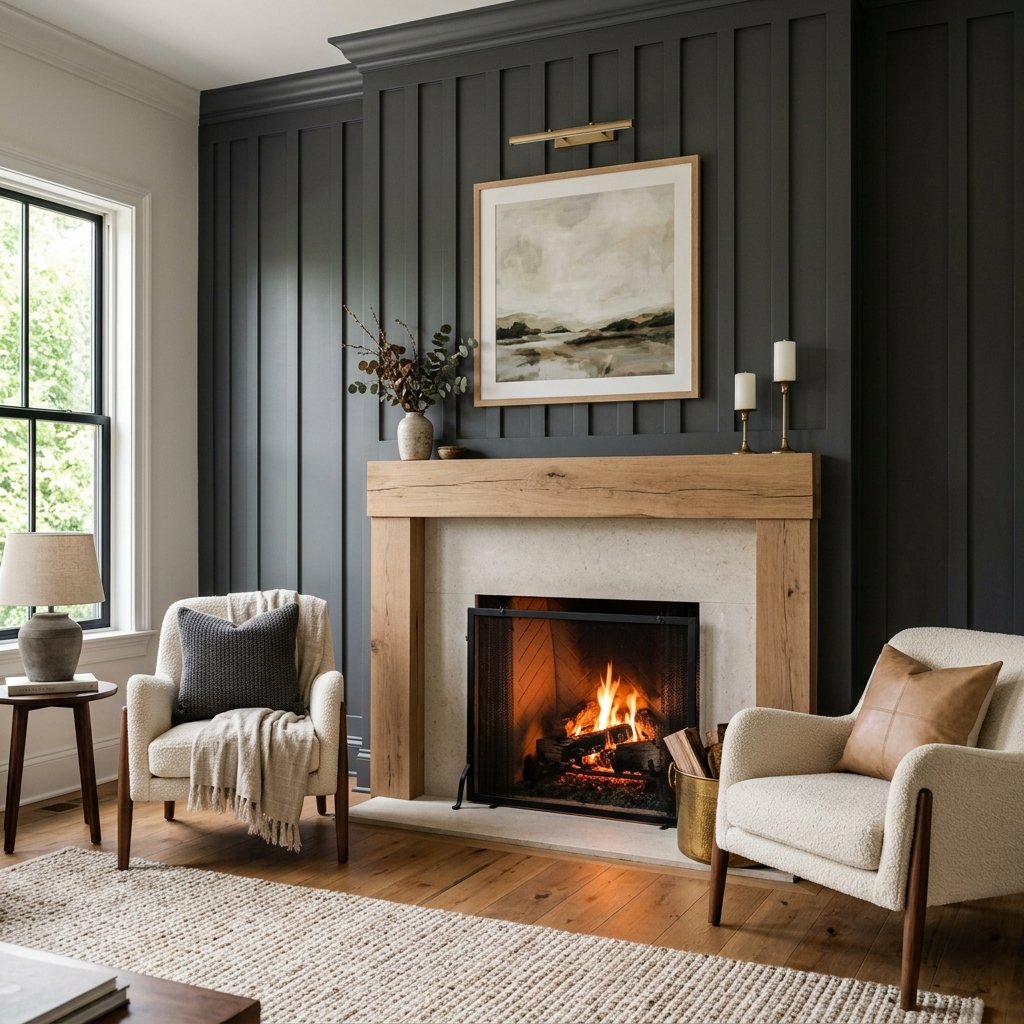
11. Try Board-and-Batten-Inspired Detailing
A grid or board-and-batten-inspired wall treatment can give the fireplace more visual weight.
Paint everything one color to keep the design cohesive.
This works particularly well with a simple fireplace surround that needs more presence.
Keep the dimensions proportional to the fireplace and room.
Do not let decorative wall treatment interfere with required fireplace clearances, vents, controls, access panels, or other functional components.
12. Create a Plaster-Look Fireplace Wall
A smooth plaster or plaster-look finish can create a softer alternative to brick, stone, or paneling.
This style works especially well in:
- Organic modern rooms
- Minimal interiors
- Mediterranean-inspired spaces
- Warm contemporary homes
Colors such as warm white, sand, mushroom, or taupe can emphasize the subtle texture.
If the finish will be used directly on or close to the fireplace assembly, make sure the complete material system is suitable for that location and complies with the fireplace manufacturer’s requirements.
13. Add Built-Ins Around the Fireplace
Built-ins can transform the entire fireplace wall.
Instead of treating the fireplace as a small object in the middle of a large blank wall, cabinetry and shelving can create one complete composition.
Possible layouts include:
- Lower cabinets with open shelves
- Full-height bookcases
- Closed cabinets
- Combination of open and closed storage
Painting the built-ins the same color as the fireplace wall creates a dramatic, integrated look.
A contrasting color can make the fireplace itself stand out more.
Keep combustible shelving and cabinetry within allowed clearances and preserve access to fireplace components where required.
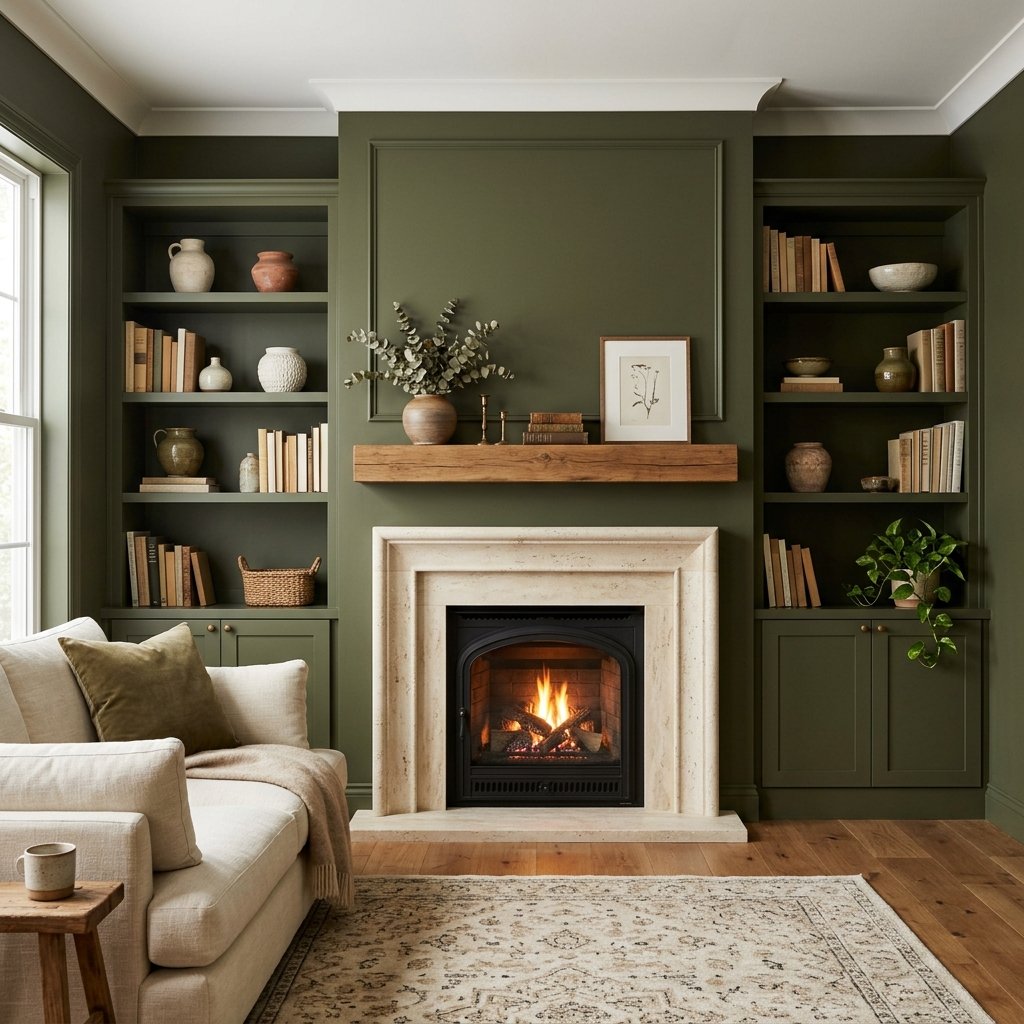
14. Paint the Fireplace and Built-Ins the Same Color
This is an especially effective idea when you want the fireplace wall to feel custom.
Imagine:
Deep olive walls + deep olive built-ins + warm wood mantel.
Or:
Charcoal wall + charcoal cabinetry + pale stone fireplace.
Using one color across the entire feature wall reduces visual clutter and emphasizes the architecture.
15. Use a Warm Neutral Accent Color
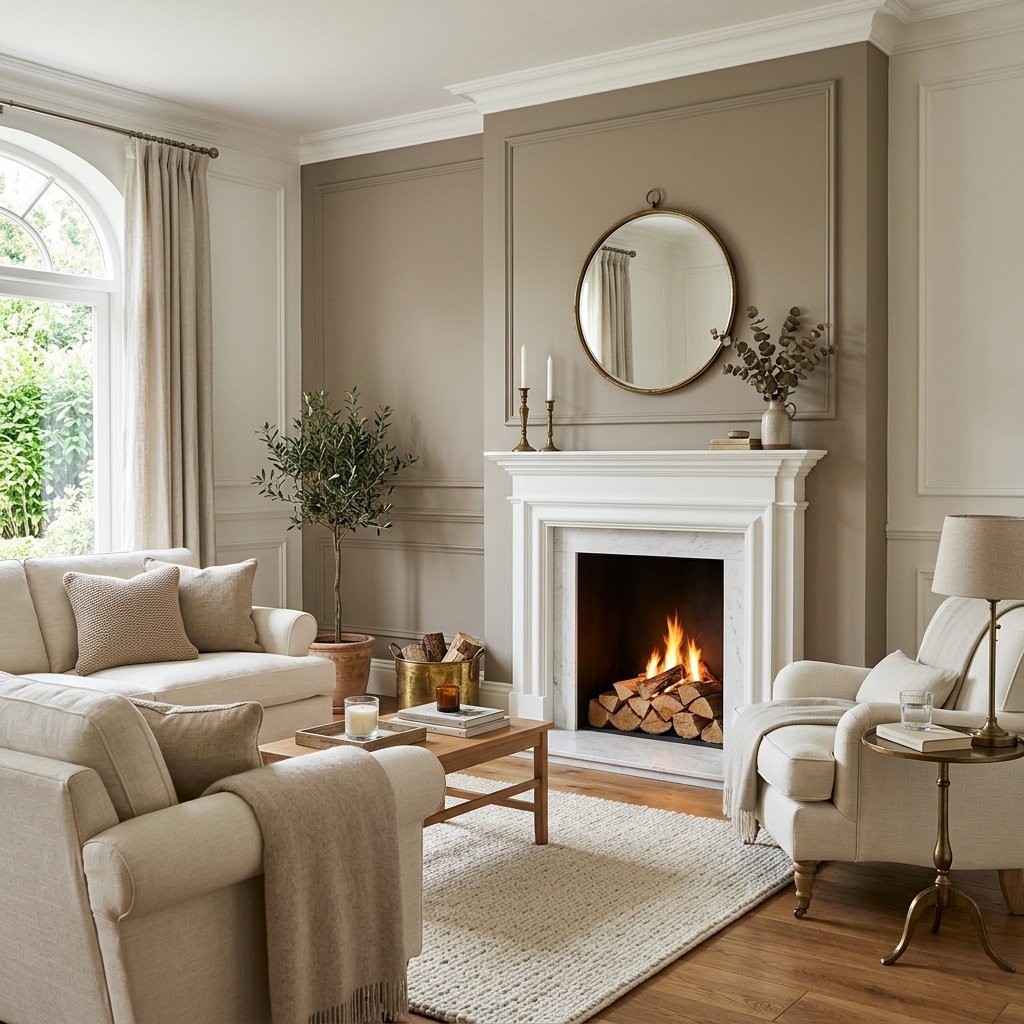
Accent walls do not have to be dark.
A fireplace wall painted mushroom, taupe, warm greige, or muted beige can provide subtle definition.
This is a useful approach when:
- The room is mostly white
- You prefer low contrast
- The fireplace already has strong texture
- You want a calm, layered interior
Warm neutrals work particularly well with natural stone and wood.
The accent comes from a gentle color shift rather than a dramatic statement.
16. Extend the Fireplace Feature to the Ceiling
Even if you do not cover the entire wall, extending the main fireplace material upward can make the fireplace look more substantial.
For example, you might visually continue:
- Stone
- Tile
- Plaster-look finish
- Noncombustible surround material
from the firebox area toward the ceiling.
This creates a strong vertical focal point and can make a room feel taller.
It can also help visually connect a TV mounted above the fireplace when the layout requires one.
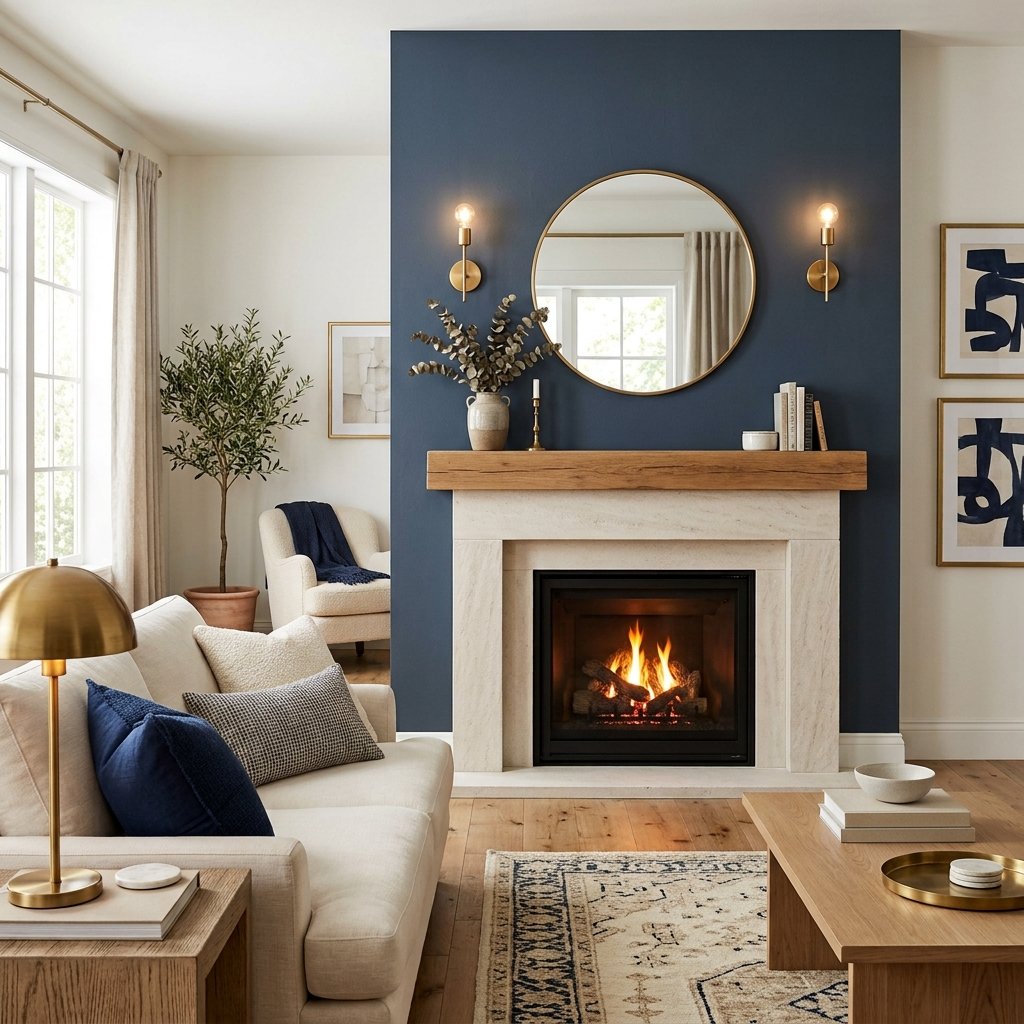
17. Make the Fireplace Wall the Room’s Main Color Moment
If the rest of the room is neutral, the fireplace wall can carry most of the color.
A cream living room could use:
- Deep blue fireplace wall
- Olive fireplace wall
- Burgundy fireplace wall
- Charcoal fireplace wall
Then repeat that color sparingly in textiles or artwork.
This creates a strong focal point without painting the entire room a saturated color.
Fireplace Accent Wall With a TV
A television can complicate fireplace-wall design because both the fireplace and TV compete for attention.
If the TV must go above the fireplace, one option is using a darker wall treatment behind both.
A black or charcoal wall can reduce the visual contrast around a dark TV screen.
Another option is creating a floor-to-ceiling material treatment that visually connects both elements.
However, design should come after safety and equipment requirements.
Before mounting a TV above a fireplace, check the fireplace manufacturer’s required clearances and installation instructions, the TV manufacturer’s requirements, expected heat exposure, mounting requirements, and cable routing.
Not every fireplace and TV combination is suitable for this layout.
Fireplace Accent Wall Without a TV
Without a television, you have more freedom to make the fireplace itself the visual centerpiece.
Above the mantel, try:
- Large artwork
- Mirror
- Architectural wall treatment
- Simple empty space
- Small collection of appropriately secured artwork
Avoid automatically filling every inch.
A beautiful stone, tile, brick, or paneled wall may need very little additional decoration.
Accent Wall Ideas for a Fireplace With Built-Ins
Built-ins make the entire fireplace wall wider, so think about the complete composition.
You have several options.
Paint Everything the Same Color
This makes the feature wall feel unified.
Keep the Fireplace Light and Built-Ins Dark
This creates strong contrast.
Use Natural Wood Built-Ins
Wood can introduce warmth beside stone or painted masonry.
Paint the Back of Shelves
A darker backing can add subtle depth without changing the cabinetry itself.
Keep shelf styling simple so it does not compete with the fireplace.
Accent Wall Ideas for a Stone Fireplace
Stone already contains multiple colors.
Look closely before choosing paint.
You may find:
- Cream
- Beige
- Gray
- Brown
- Taupe
- Charcoal
Pulling a color from the stone can create a cohesive palette.
You can also intentionally contrast it.
For example, warm beige stone may look beautiful against deep olive or charcoal.
Always sample the paint directly beside the actual stone.
Accent Wall Ideas for a Brick Fireplace
With traditional brick, decide whether you want harmony or contrast.
For a warm, earthy palette, try:
- Cream
- Olive
- Warm beige
- Brown
For stronger contrast, consider:
- Deep navy
- Charcoal
- Muted green
If you love the brick, let it lead.
There is no requirement that every brick fireplace needs to be painted.
Accent Wall Ideas for a White Fireplace
White fireplaces provide plenty of flexibility.
For high contrast, try:
- Charcoal
- Black
- Deep green
- Navy
For something softer:
- Mushroom
- Greige
- Taupe
- Muted sage
The contrast between the fireplace and wall will help define the architectural shape.
Modern Fireplace Accent Wall Ideas
For a modern look, simplify the materials.
Consider:
- Large-format tile
- Smooth plaster-look finish
- Dark paint
- Vertical wood detailing
- Minimal mantel
- Simple stone
Limit small decorative accessories.
Let the scale, material, and shape of the fireplace create the visual interest.
Farmhouse Fireplace Accent Wall Ideas
A farmhouse-inspired fireplace wall can use:
- Brick
- Warm white
- Muted green
- Natural wood mantel
- Simple vertical paneling where appropriate
- Vintage-inspired artwork
Avoid adding every farmhouse element at once.
A warm white fireplace with a wood mantel and understated paneling can provide plenty of character.
Traditional Fireplace Accent Wall Ideas
Traditional rooms are ideal for:
- Picture-frame molding
- Detailed mantel
- Brick
- Stone
- Rich paint colors
- Built-in bookcases
Deep green, navy, mushroom, and warm white can all work beautifully depending on the existing finishes.
Fireplace Accent Walls in Small Living Rooms
A small room can still have an accent wall.
In fact, emphasizing the fireplace can make the layout easier to understand because it creates a clear focal point.
You could use:
- Dark paint
- Warm neutral paint
- Simple molding
- Vertical treatment
- Subtle tile
Keep the surrounding decor restrained so the feature wall does not become visually crowded.
Fireplace Accent Walls With High Ceilings
Tall rooms often benefit from vertical emphasis.
Extending stone, tile, or another appropriate architectural treatment upward helps fill the wall and visually connect the fireplace to the ceiling.
If the fireplace occupies only the lower portion of a very tall wall, artwork or architectural detailing can also help balance the empty space.
The exact solution depends on the proportions of the room.
How to Choose a Fireplace Accent Wall Color
Start with the permanent finishes.
Look at:
- Fireplace stone
- Brick
- Tile
- Flooring
- Built-ins
- Wood mantel
Then look at the room’s furniture.
The fireplace color should belong to the whole room.
A simple strategy is to choose a color already present in a rug, artwork, or textile and use a deeper or more muted version on the fireplace wall.
Always test paint in the actual room.
Natural and artificial light can change how a dark or muted color appears.
Should a Fireplace Wall Be Darker Than the Other Walls?
It can be, but it does not have to be.
A darker fireplace wall creates contrast and makes the focal point obvious.
A slightly warmer or deeper neutral creates a softer effect.
You can even use the same paint color and create an accent through molding, tile, stone, or texture.
“Accent wall” does not automatically mean dark wall.
Should the Fireplace and Accent Wall Be the Same Color?
That depends on the effect you want.
Painting everything the same color can make the fireplace blend into the architecture.
Using contrasting colors makes the fireplace itself stand out.
For example:
White fireplace + charcoal wall = strong contrast.
Charcoal fireplace + charcoal wall = dramatic, unified feature.
Both approaches can work.
How to Make a Fireplace Accent Wall Look Expensive
Take the Design to the Ceiling
Vertical scale creates impact.
Use Fewer Materials
Too many finishes can make the wall feel fragmented.
Keep the Color Palette Limited
Let the fireplace be the focal point.
Repeat Materials Elsewhere
A wood mantel might relate to the flooring or coffee table.
Use Appropriate Scale
Tiny artwork above a large fireplace can feel disconnected.
Hide Visual Clutter
Plan cords, electronics, storage, and accessories carefully.
Keep Styling Simple
A strong architectural wall does not need dozens of decorations.
Common Fireplace Accent Wall Mistakes
Choosing the Wall Color Without Considering the Fireplace
Stone, brick, and tile should be part of the color decision.
Using Too Many Materials
Brick + tile + wood + molding + bold paint can become visually busy.
Stopping the Design at an Awkward Height
Think about the proportions of the whole wall.
Ignoring the TV
If a television is part of the layout, include it in the design from the beginning.
Overdecorating the Mantel
Let architectural details breathe.
Copying a Fireplace Photo Without Checking Safety Requirements
Different fireplace types have different requirements.
Covering Vents or Controls
Decorative finishes should not interfere with operation or required access.
Assuming Wood Can Go Anywhere
Combustible materials require appropriate clearance from fireplace openings and heat sources.
Fireplace Accent Wall Safety
Fireplace design is one area where appearance cannot come before installation requirements.
Before adding paneling, a mantel, shelving, built-ins, a television, decorative trim, or other materials around a fireplace:
- Identify the exact fireplace type.
- Find the manufacturer’s installation manual.
- Follow required clearances to combustible materials.
- Use materials suitable for the location and expected temperatures.
- Do not cover vents, controls, louvers, access panels, or required openings.
- Follow appropriate requirements for mantel projections and placement.
- Verify suitable substrates and installation systems for stone or tile.
- Use proper mounting methods for heavy materials.
- Check local requirements and permit rules where applicable.
- Consult a qualified professional when structural, gas, electrical, venting, or fireplace modifications are involved.
Never assume a fireplace design is safe simply because a similar-looking installation appears in a decorating photo.
FAQ About Accent Walls With Fireplaces
What is a good accent wall color for a fireplace?
Charcoal, soft black, deep green, navy, mushroom, taupe, warm greige, and muted sage can all work beautifully. Choose based on the fireplace material and the rest of the room.
Should the fireplace wall be the accent wall?
It is often a natural choice because the fireplace already creates a focal point. Emphasizing a different wall can sometimes create competing focal points.
Can you put an accent wall behind a fireplace?
Yes, but any materials installed around the fireplace need to comply with the fireplace manufacturer’s requirements and applicable local rules.
What can I put on a fireplace accent wall?
Depending on the fireplace and installation requirements, possibilities include paint, molding, appropriate paneling, stone, brick, tile, plaster-look finishes, or built-ins.
Are dark fireplace accent walls a good idea?
They can create beautiful contrast and visually anchor a room, particularly when surrounding walls and furniture are lighter.
What color accent wall looks good with a white fireplace?
Charcoal, deep green, navy, black, mushroom, taupe, and muted sage are all options worth sampling.
Can I put wood paneling around a fireplace?
Potentially, but wood is combustible. Its placement must comply with the specific fireplace manufacturer’s clearance requirements and applicable local requirements.
Can I put a TV above my fireplace?
Sometimes, but not every fireplace-TV combination is appropriate. Check both manufacturers’ requirements, required clearances, heat exposure, mounting instructions, and cable routing before proceeding.
Final Thoughts
The best accent walls with fireplaces do more than add a different paint color.
They make the fireplace feel like an intentional part of the room’s architecture.
For an easy update, paint the fireplace wall charcoal, deep green, navy, mushroom, or another color that coordinates with the existing stone, brick, flooring, and furniture.
For more architectural impact, consider molding, built-ins, tile, stone, plaster-look finishes, or appropriate paneling.
And do not assume bigger is always better.
Sometimes a dark paint color and simple wood mantel are enough. In another room, extending stone to a vaulted ceiling may create exactly the scale the space needs.
Treat the fireplace, accent wall, mantel, television, built-ins, and furniture as one composition.
Most importantly, treat fireplace clearances and installation requirements as part of the design from the beginning—not something to figure out after the decorative plan is finished.
When the materials, color, proportions, and safety requirements all work together, the fireplace wall can become the feature that makes the entire room feel finished.