

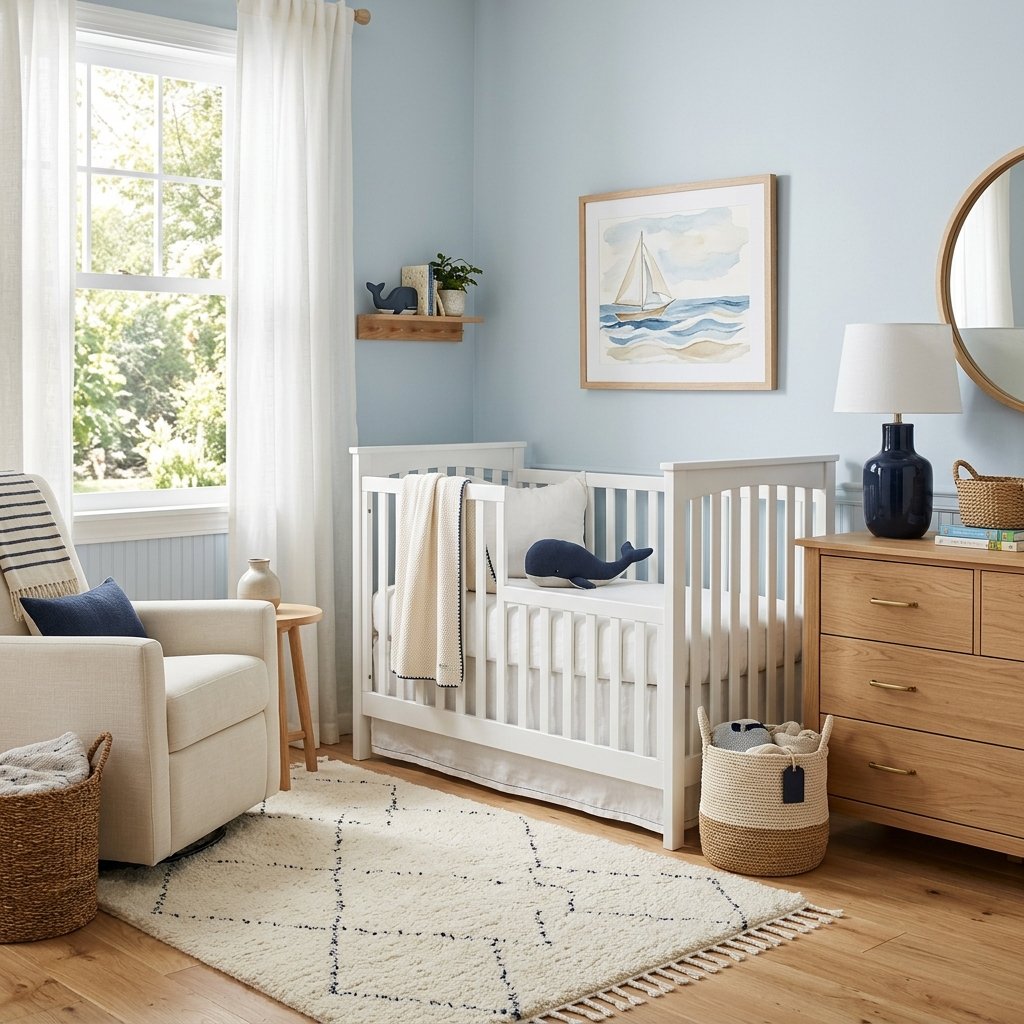
A baby boy coastal nursery can feel peaceful, fresh, and beautifully put together without looking overly themed.
The key is to think beyond obvious beach decor.
Instead of filling the room with anchors, boats, and seashells, start with a soft coastal color palette, natural textures, simple furniture, and a few subtle ocean-inspired details.
That approach creates a nursery that feels calm enough for a baby while still being stylish enough to grow with him.
Soft blue, warm white, pale oak, woven baskets, linen-look curtains, striped textiles, and understated artwork can all work together to create a coastal room that feels relaxed rather than kitschy.
Here are 17 baby boy coastal nursery ideas to help you create a bright, comfortable, and timeless space.
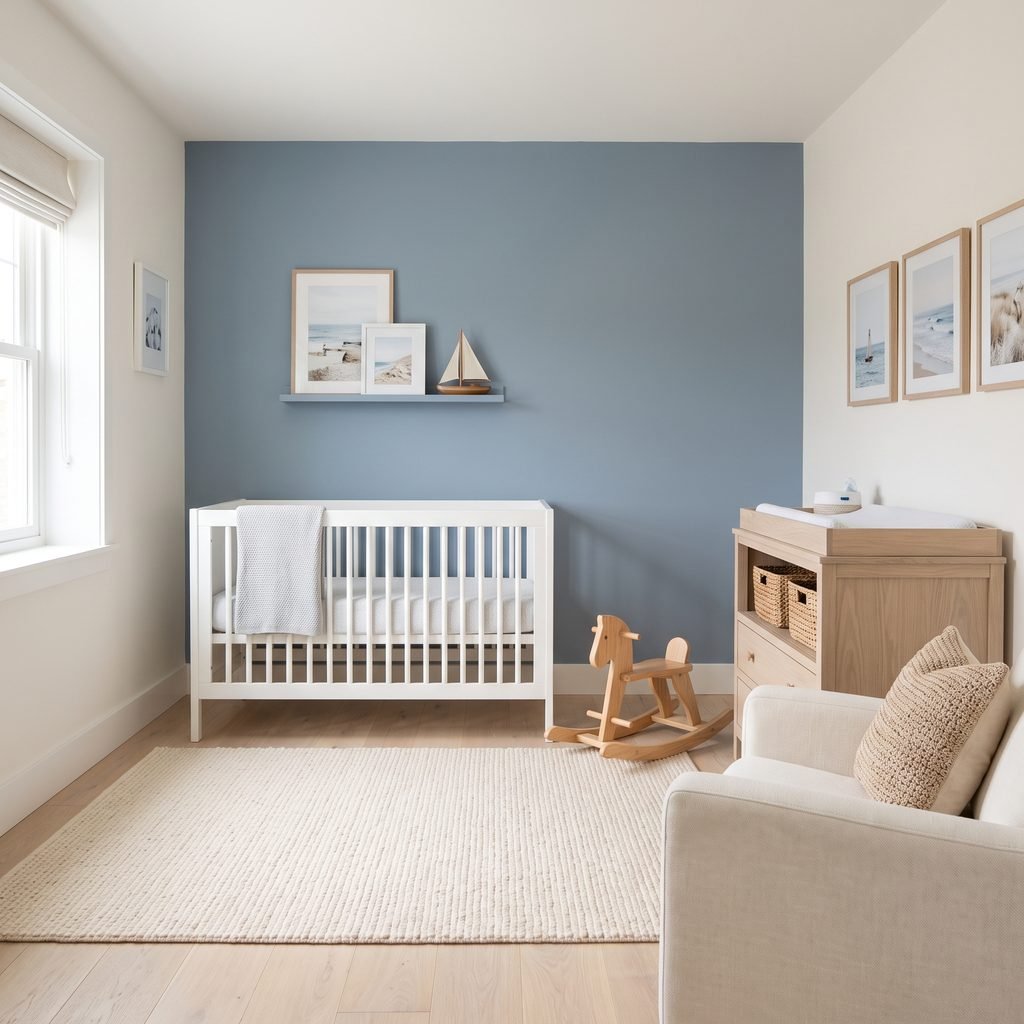
1. Start With a Soft Coastal Color Palette
The easiest place to begin is color.
A baby boy coastal nursery does not need to be bright blue.
Softer shades usually create a calmer, more timeless look.
Try combinations such as:
- Soft blue + warm white + natural wood
- Dusty blue + cream + sandy beige
- Blue-gray + white + pale oak
- Navy accents + warm white + tan
- Sea-glass blue + cream + woven texture
Choose one main blue, then keep the rest of the room fairly neutral.
This prevents the space from feeling too themed.
2. Use Warm White Instead of Stark White
Warm white helps soften blue and keeps the nursery from feeling cold.
Use it on:
- Crib
- Trim
- Ceiling
- Curtains
- Bedding
- Shelving
A slightly creamy white pairs especially well with pale blue, natural wood, and woven materials.
It also helps create that relaxed coastal look without making the nursery feel overly crisp.
3. Add a Pale Blue Accent Wall
A soft blue accent wall can create a beautiful backdrop for the crib.
Choose a muted shade rather than a saturated baby blue.
Blue-gray, dusty blue, and pale coastal blue often feel more sophisticated.
Keep the surrounding walls warm white if you want the room to stay light.
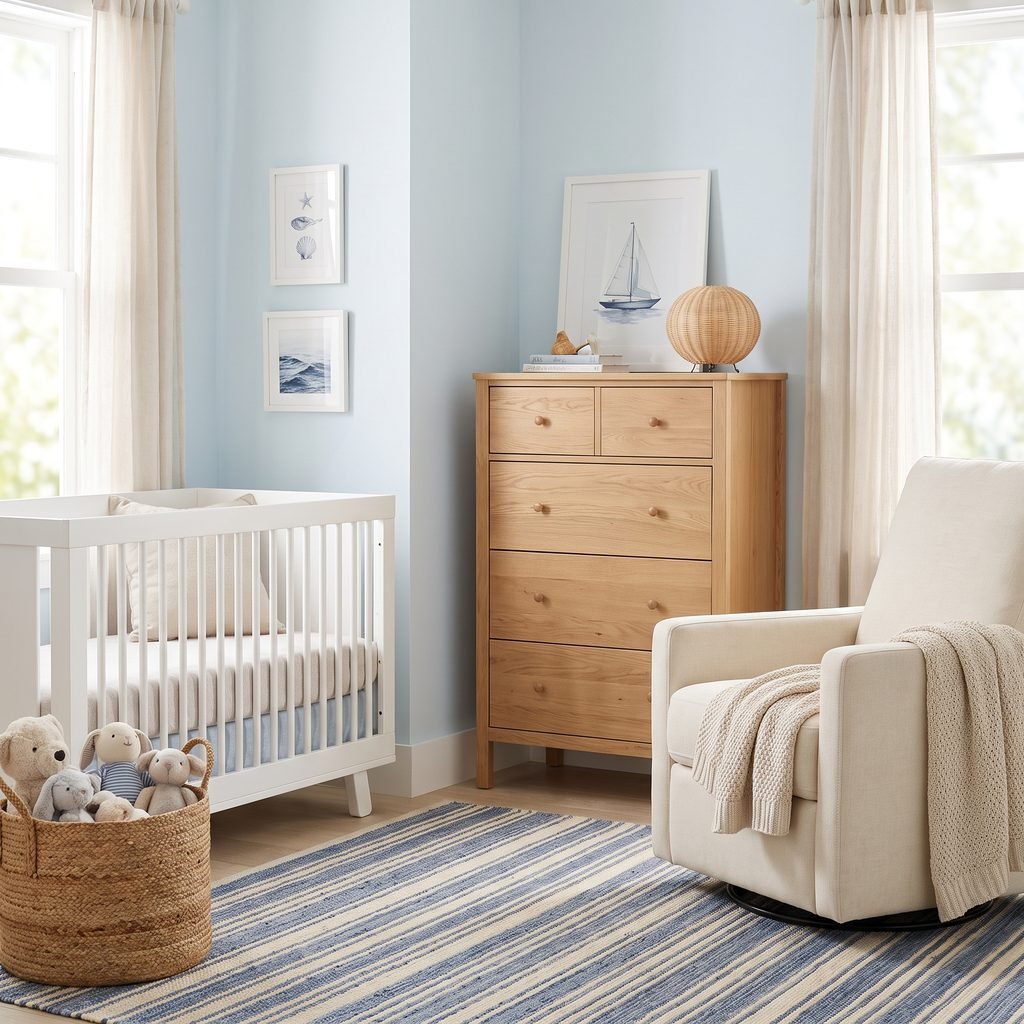
4. Bring in Natural Wood
Natural wood is one of the most effective ways to warm up a coastal nursery.
Try:
- Oak dresser
- Wood picture frames
- Light wood shelves
- Natural wood lamp base
- Small stool
- Wood crib if that fits your style
The wood does not need to match perfectly.
A coordinated mix of light and medium tones often feels more relaxed.
Avoid too many dark finishes if you want the nursery to remain airy.
5. Choose a Simple White or Natural Wood Crib
The crib is one of the largest furniture pieces in the nursery, so keeping it simple helps the room feel calm.
A white crib creates a light, classic look.
A natural wood crib adds warmth and works beautifully in organic or modern coastal nurseries.
Whichever style you choose, prioritize current applicable crib safety guidance and the manufacturer’s assembly instructions.
Keep the sleep space free from decorative pillows, loose blankets, bumpers, and plush toys when the crib is being used for sleep.
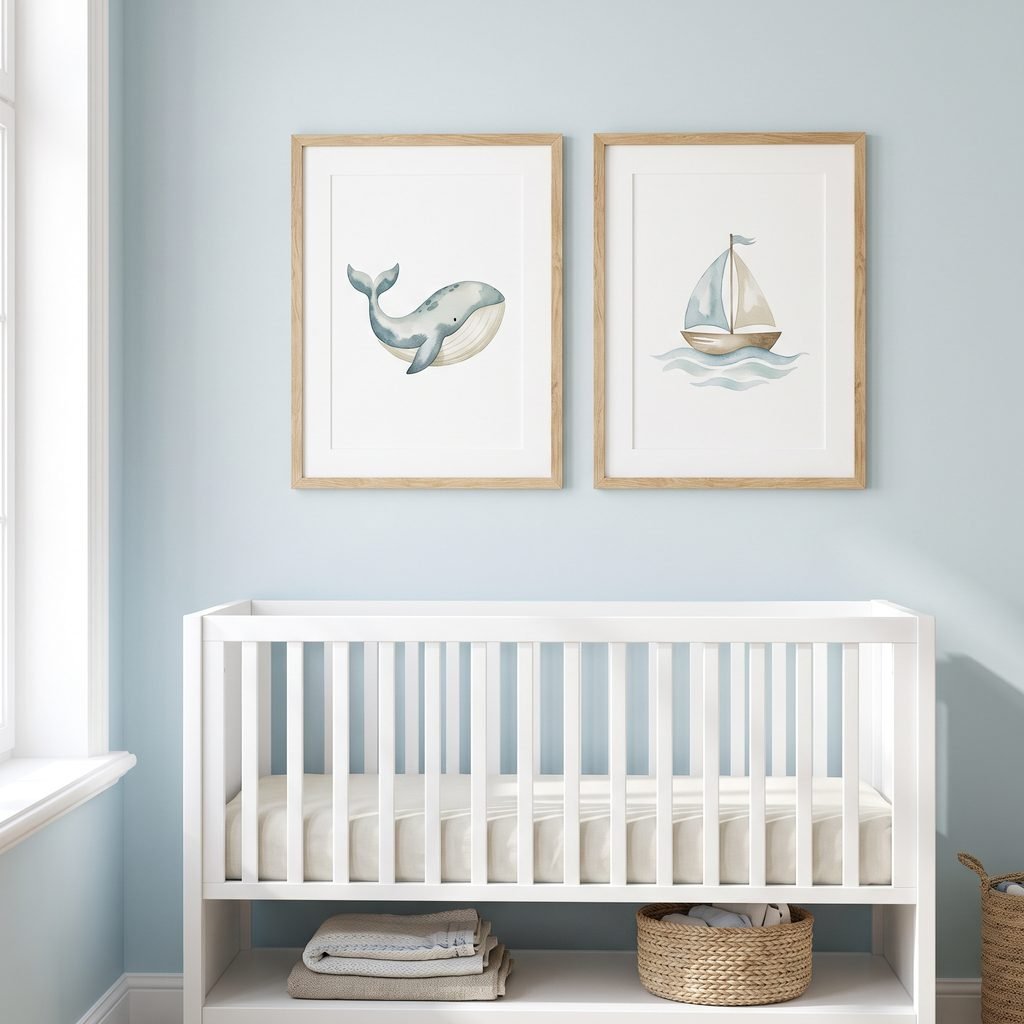
6. Use Coastal-Inspired Artwork Sparingly
You do not need a wall covered in nautical signs.
Instead, choose one or two understated pieces.
Ideas include:
- Soft watercolor ocean print
- Minimal sailboat illustration
- Coastal landscape
- Abstract blue art
- Seagull or shorebird illustration
- Simple wave print
Keep heavy artwork and shelves securely mounted and positioned where they cannot fall into the crib.
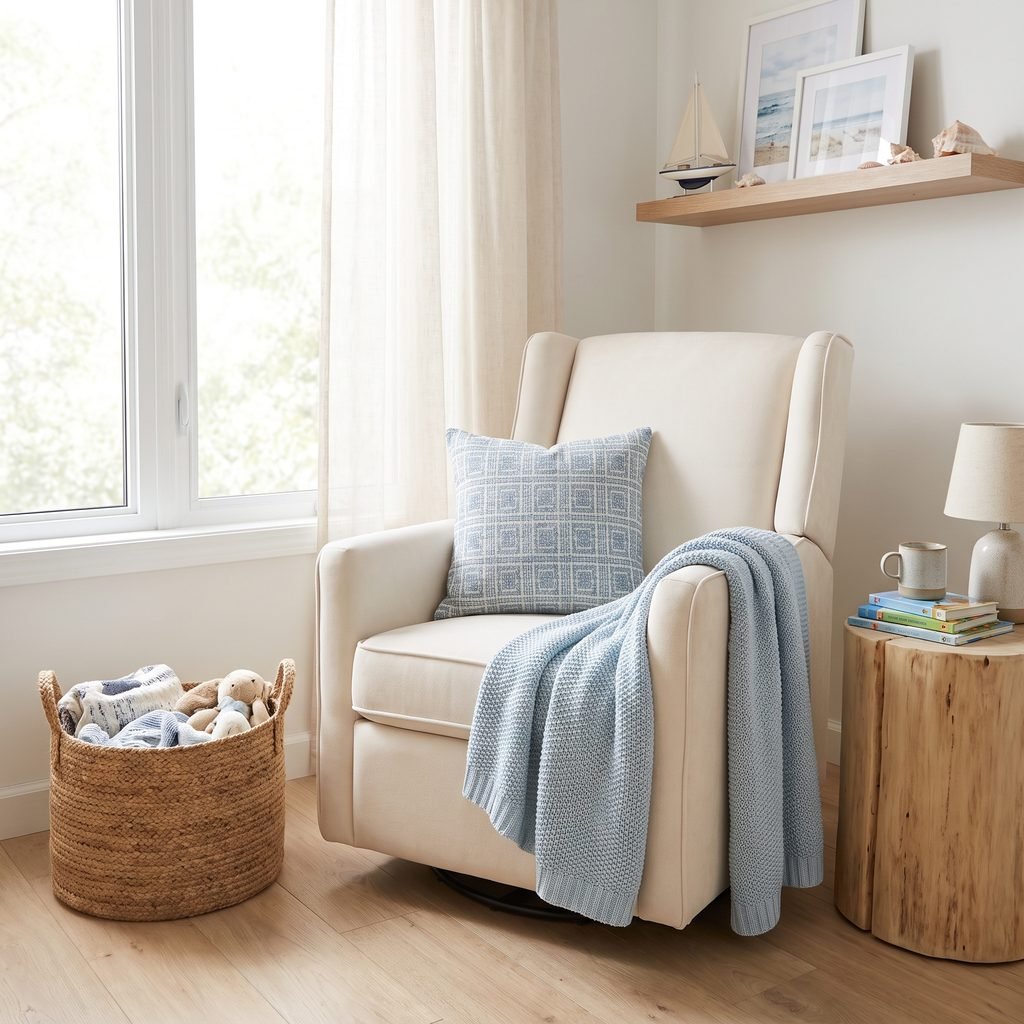
7. Add a Striped Rug
Stripes naturally feel coastal without being too literal.
A rug with soft blue, cream, or beige stripes can anchor the room while keeping the palette simple.
You could also use:
- Faded vintage-style blue rug
- Cream-and-tan woven rug
- Soft blue patterned rug
- Natural fiber-look rug suitable for a nursery
Use a rug pad or non-slip solution appropriate for the rug and flooring.
Make sure rug edges lie flat to reduce tripping hazards.
8. Include Woven Baskets
Woven baskets add both texture and practical storage.
Use them for:
- Extra blankets
- Books
- Toys
- Laundry
- Diaper supplies
Natural fibers such as seagrass-look or rattan-style materials fit coastal rooms especially well.
Keep heavier storage low and make sure baskets placed near the crib do not create climbing or entanglement concerns as the baby grows.
9. Add Soft Blue-and-White Textiles
Textiles are an easy way to introduce coastal color without painting the entire room blue.
Try:
- Blue-striped changing pad cover
- White curtains with subtle blue detail
- Blue-and-cream rug
- Soft blue glider pillow used away from the crib
- Blue throw blanket for the chair
Use decorative pillows and throws on adult seating, not inside the crib sleep space.
10. Create a Comfortable Feeding Corner
A cozy chair can make the nursery much more functional.
Choose:
- Upholstered glider
- Rocking chair
- Comfortable armchair
Add a small side table for items you need while feeding.
A nearby basket can hold:
- Burp cloths
- Extra nursing supplies
- Books
- Small blanket
Keep cords, hot drinks, lamps, and other hazards out of the baby’s reach as mobility increases.
11. Use Linen-Look Curtains
Soft curtains help create the breezy feeling associated with coastal interiors.
Warm white, oatmeal, pale blue, or subtle stripe all work well.
For a light and airy effect, hang the curtain rod above the window and let the panels fall close to the floor.
Make sure window coverings and cords follow current child-safety recommendations.
Cordless options are worth considering for nursery spaces.
12. Add a Subtle Nautical Detail
If you want a more obvious coastal theme, keep the nautical elements limited.
One small detail may be enough.
Try:
- Wooden sailboat on a high secure shelf
- Small framed boat print
- Navy stripe
- Rope-look basket detail
- Simple lighthouse illustration
Avoid turning every item into a nautical reference.
A few subtle touches usually look more polished.
13. Use Blue-and-White Wallpaper
Wallpaper can create a beautiful focal wall.
Consider:
- Tiny blue botanical print
- Soft wave pattern
- Delicate stripe
- Small sailboat motif
- Watercolor-inspired pattern
Choose a design that feels soft enough to grow with the room.
Very bold novelty wallpaper can make future decorating more limiting.
Install it according to the manufacturer’s instructions and ensure the wall surface is suitable.
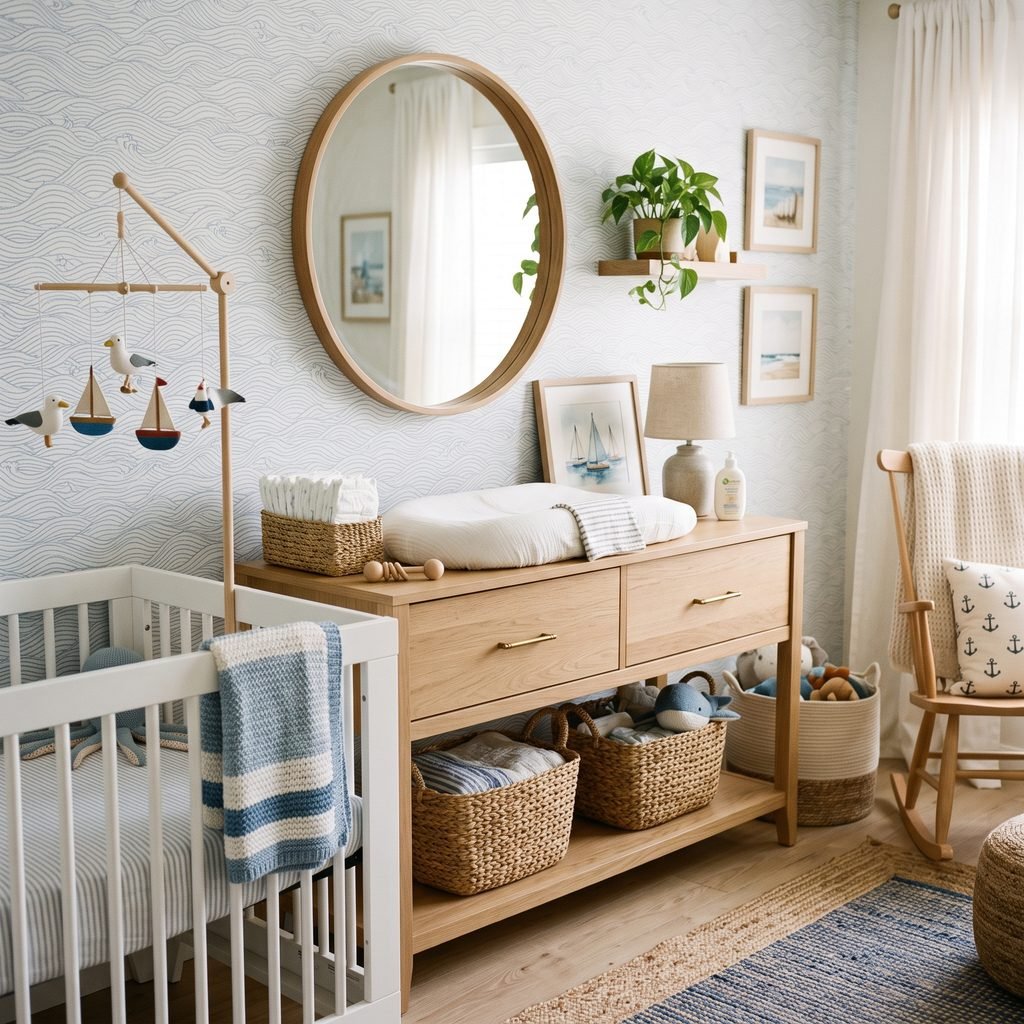
14. Add a Natural Wood Dresser
A dresser can double as a changing station while the baby is small and remain useful later.
Natural oak or another warm wood tone looks especially good with white and blue.
Keep styling simple.
A changing area might include:
- Secure changing pad used according to manufacturer instructions
- Small basket
- Lamp placed safely
- Diaper essentials
Anchor the dresser to the wall where appropriate, especially as the child becomes mobile.
Keep small objects, cords, creams, medicines, and other unsafe items out of reach.
15. Create a Small Nursery Library
Books add color and personality without cluttering the room.
Use:
- Low book ledges
- Small bookcase
- Basket of board books
A few ocean-themed books can reinforce the coastal feel without turning the room into a theme park.
Secure shelving properly and keep heavy books lower.
As with other furniture, anchoring may be appropriate depending on the design.
16. Add Navy in Small Doses
Navy can add depth to a room filled with pale colors.
Use it sparingly.
Try navy in:
- Rug detail
- Picture frame
- Lamp
- Curtain stripe
- Drawer pulls
- Small upholstered accent
A little navy helps ground the room while still allowing pale blue and white to dominate.
17. Keep the Final Styling Simple
A peaceful nursery usually benefits from less decor rather than more.
Instead of covering every surface, choose a few intentional elements.
For example:
- One basket
- One lamp
- One framed picture
- Small stack of books
- Simple greenery placed safely out of reach
Leave some visual breathing room.
That keeps the nursery calm, makes cleaning easier, and allows the furniture and color palette to do most of the decorating.
Baby Boy Coastal Nursery Color Ideas
If you are not sure which palette to choose, start with one of these simple combinations.
Soft Coastal
- Pale blue
- Warm white
- Light oak
- Sandy beige
Classic Coastal
- Navy
- White
- Medium wood
- Soft tan
Organic Coastal
- Blue-gray
- Cream
- Natural oak
- Woven brown
- Soft green
Modern Coastal
- Muted blue
- Crisp-but-soft white
- Black accents
- Pale wood
Traditional Coastal
- Dusty blue
- Warm white
- Navy
- Medium brown wood
Choose the palette based on the room’s flooring, natural light, and furniture you already own.
Baby Boy Coastal Nursery With White Furniture
White furniture gives you plenty of flexibility.
Pair it with:
- Pale blue walls
- Blue-and-cream rug
- Natural baskets
- Warm wood frames
- Navy accents
The natural textures are important.
Without them, an all-white-and-blue room can start to feel a little cold.
Add wood, woven materials, and warm neutrals to create balance.
Coastal Nursery With Natural Wood Furniture
Natural wood furniture creates a warmer, more organic look.
Pair it with:
- Warm white walls
- Dusty blue
- Cream textiles
- Pale blue rug
- Woven baskets
This works especially well if you prefer a modern coastal or organic style.
Small Coastal Nursery Ideas
In a small nursery, avoid using too many themed accessories.
Keep the larger elements simple.
Try:
- Pale blue or warm white walls
- One compact crib
- Dresser that doubles as changing station
- Wall-mounted book storage
- One comfortable chair if space allows
- One rug
- A few baskets
Use vertical storage carefully, and secure wall-mounted items appropriately.
A small room often feels larger when the color palette stays consistent.
Coastal Nursery Ideas Without Painting the Walls Blue
You can create a coastal nursery even with white or cream walls.
Add blue through:
- Rug
- Curtains
- Artwork
- Changing pad cover
- Upholstered chair
- Baskets
- Books
This approach is especially useful for renters or anyone who wants the nursery to transition easily later.
How to Make a Coastal Nursery Feel Warm
Too much pale blue and white can make the room feel cool.
Add warmth with:
- Natural wood
- Woven baskets
- Cream textiles
- Warm brass accents
- Tan
- Oatmeal
- Soft brown
These warmer materials keep the room relaxed and inviting.
How to Make a Coastal Nursery Look More Expensive
You do not need custom furniture to create a polished room.
Use a Limited Color Palette
Stick to a few coordinated colors.
Choose Larger, Simpler Artwork
One or two substantial pieces often look better than many tiny decorations.
Repeat Natural Materials
Use the same wood tone or woven texture in several places.
Keep the Theme Subtle
Ocean-inspired color usually looks more sophisticated than obvious nautical accessories.
Use Full-Length Curtains
They can make the room feel taller and more finished.
Hide Everyday Clutter
Baskets and drawers make the nursery feel calmer.
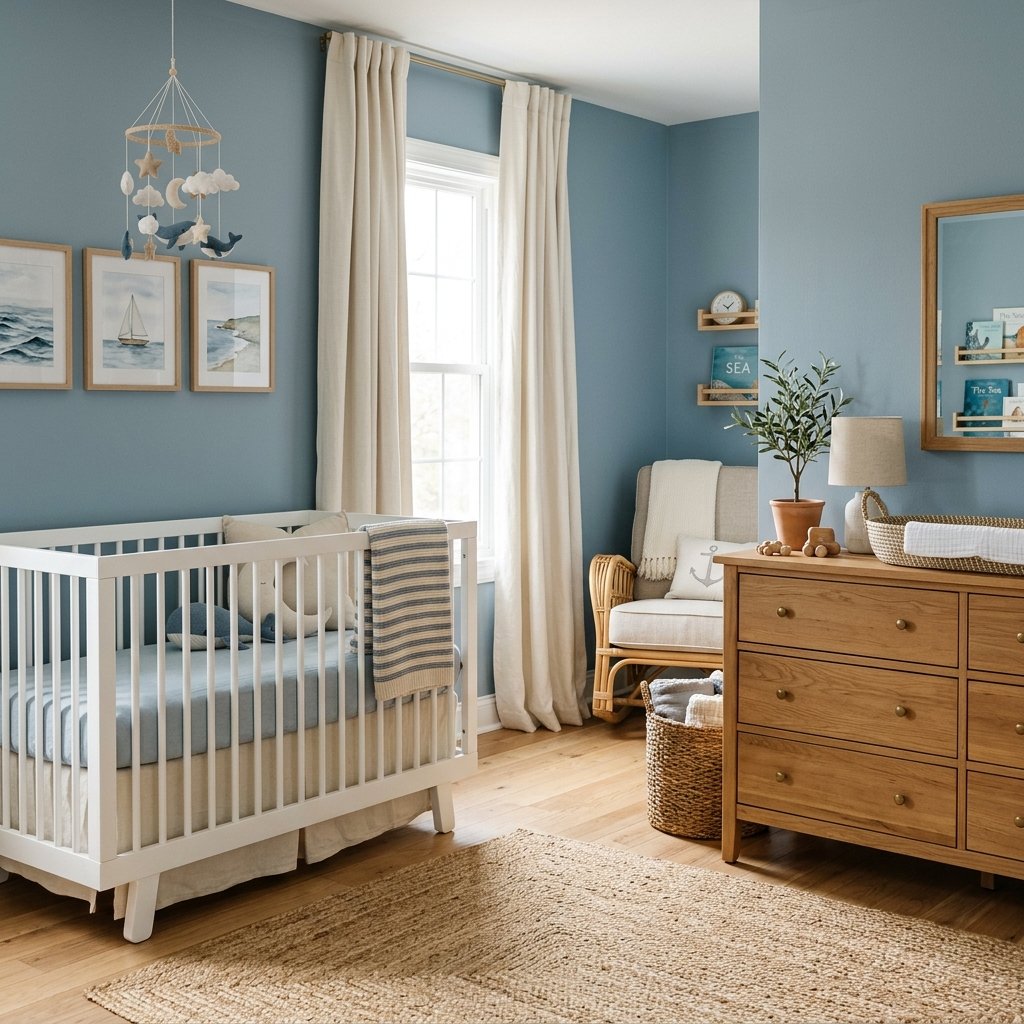
Budget-Friendly Coastal Nursery Ideas
You can create the look without replacing everything.
Try:
- Paint one accent wall
- Swap drawer hardware
- Add one striped rug
- Use woven baskets you already own
- Frame inexpensive coastal prints
- Add blue curtains or textiles
- Repurpose a dresser
- Use a simple white crib
Focus the budget on the pieces that matter most for safety and function.
Decorative details can stay simple.
Modern Coastal Baby Boy Nursery
For a more contemporary look, avoid overt beach symbols.
Use:
- Blue-gray wall color
- Natural oak
- White crib
- Black or dark bronze detail
- Clean-lined furniture
- Simple abstract ocean artwork
Keep baskets and textiles natural.
This creates a coastal feeling without looking themed.
Traditional Coastal Baby Boy Nursery
For a more classic look, combine:
- Dusty blue
- White furniture
- Navy accents
- Medium wood
- Simple stripes
- Traditional framed art
A subtle sailboat or coastal landscape can work beautifully here.
Baby Boy Coastal Nursery Decor Ideas
Small decor details can help complete the room.
Consider:
- Ceramic lamp
- Woven storage basket
- Wooden picture frame
- Blue-striped textile
- Simple ocean print
- Small decorative sailboat placed safely out of reach
- Soft coastal landscape artwork
Avoid placing decorative objects inside the crib or where they could fall into the sleep area.
Common Coastal Nursery Decorating Mistakes
Using Too Many Nautical Decorations
A few coastal details are enough.
Choosing Every Item in Blue
Blue needs warm neutrals and natural materials for balance.
Ignoring Furniture Safety
Secure furniture and shelving appropriately.
Hanging Heavy Decor Over the Crib
Choose safer placement for substantial objects.
Overfilling the Room
A nursery needs functional space for feeding, changing, storage, and movement.
Choosing Decor That Will Quickly Feel Babyish
Subtle coastal colors transition more easily into a toddler or child’s room.
Forgetting Window-Covering Safety
Pay attention to accessible cords and loops.
Baby Nursery Safety Considerations
Decorating should always support a safe, functional nursery.
Keep these general points in mind:
- Follow current applicable safe-sleep guidance and crib manufacturer instructions.
- Keep loose bedding, pillows, bumpers, and plush items out of the crib during sleep.
- Secure dressers, bookcases, shelving, and other furniture where appropriate.
- Keep cords and loops from window treatments out of reach.
- Secure wall decor properly and avoid heavy items positioned where they could fall into the crib.
- Keep medications, creams, batteries, small objects, and electrical cords inaccessible.
- Use changing products and pads according to their instructions.
- Check furniture and hardware regularly as the baby grows and becomes mobile.
- Keep floor rugs flat and secure to reduce trip hazards.
FAQ About Baby Boy Coastal Nurseries
What colors work best for a baby boy coastal nursery?
Soft blue, dusty blue, blue-gray, navy, warm white, cream, natural wood, and sandy beige all work well.
How do I make a coastal nursery without making it look nautical?
Focus on coastal colors, natural textures, soft stripes, and understated artwork rather than anchors, ropes, and boats everywhere.
What furniture works best in a coastal nursery?
White and natural wood furniture both work beautifully. Simple shapes usually create the most timeless look.
Can I create a coastal nursery with white walls?
Yes. Add coastal color through rugs, curtains, artwork, baskets, and textiles.
What color rug works in a coastal nursery?
Cream-and-blue, beige, faded blue, subtle stripe, and soft vintage-style rugs all work well.
Is navy too dark for a nursery?
Not when used in small amounts. Navy can add depth through artwork, rug details, lamps, or other accents.
How can I make the nursery grow with my child?
Use timeless furniture, understated wall colors, natural materials, and removable coastal decor rather than a very specific baby theme.
Final Thoughts
A baby boy coastal nursery can feel fresh, peaceful, and timeless when you focus on color and texture rather than an obvious beach theme.
Start with a calm palette of soft blue, warm white, cream, and natural wood.
Then layer in woven baskets, subtle stripes, comfortable textiles, and one or two coastal-inspired pieces of artwork.
A little navy can add depth, while natural wood and sandy neutrals help keep the room warm.
Most importantly, keep the space practical.
Leave room for feeding, changing, storage, and everyday movement, and make safety part of every decorating decision.
With a restrained palette and a few thoughtful coastal details, you can create a baby boy nursery that feels calm now and can easily grow with him later.