

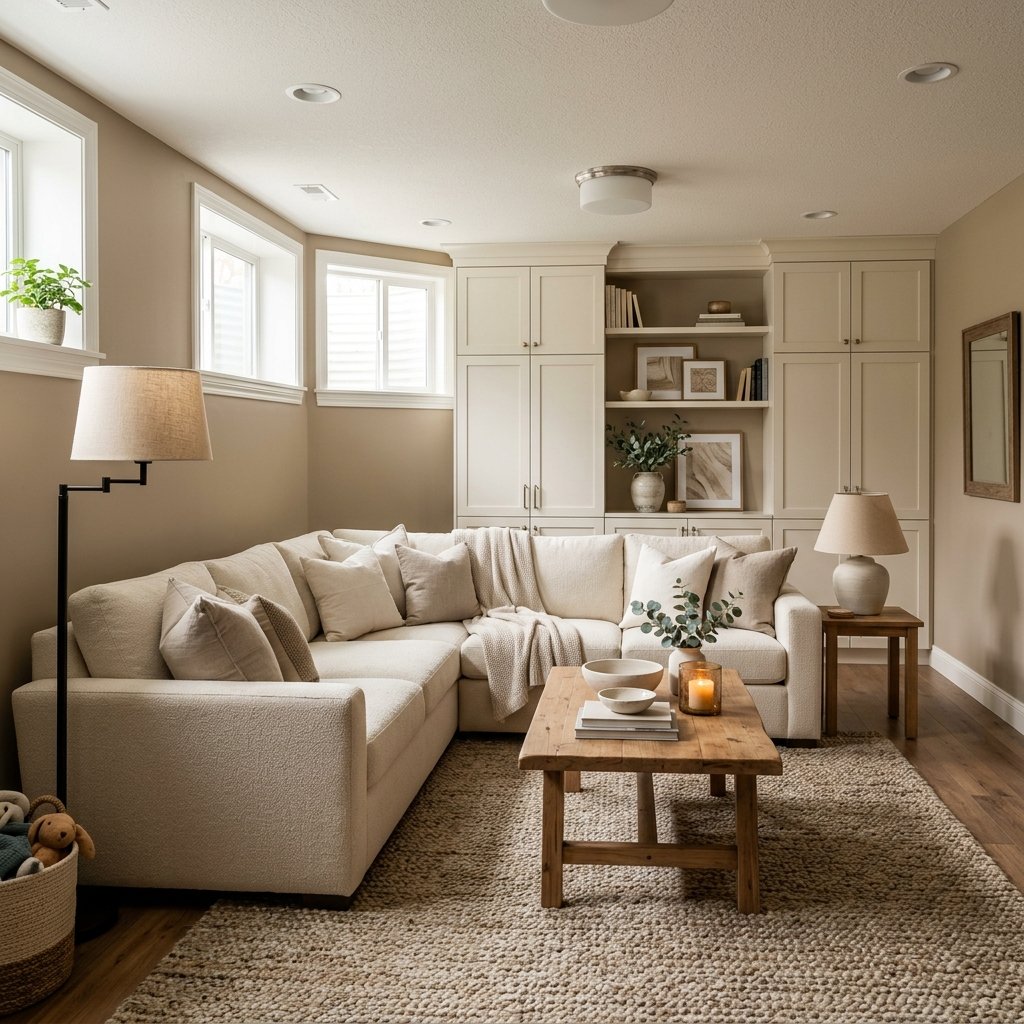
A basement makeover can turn an underused lower level into one of the most practical and comfortable areas in the house.
Whether your basement is currently dark, unfinished, cluttered, or simply dated, the right updates can make it feel much more connected to the rest of your home.
The best basement makeovers usually focus on a few key goals:
- Better lighting
- Warmer materials
- Smarter storage
- Clear room zones
- Comfortable furniture
- Durable finishes
- Moisture control
- A layout that works for everyday life
You do not necessarily need to create a luxury entertainment space or complete a full renovation.
Paint, flooring, furniture placement, lighting, storage, and a few carefully chosen finishes can make a dramatic difference.
Here are 17 basement makeover ideas to help you create a space that feels brighter, cozier, more organized, and much more usable.
1. Decide How You Want to Use the Basement
Before choosing paint or furniture, decide what the basement needs to do.
Possible uses include:
- Family room
- TV room
- Playroom
- Home office
- Guest space
- Workout area
- Game room
- Craft room
A large basement may support several functions at once.
For example, you might create:
- TV zone
- Kids’ play area
- Small desk
- Storage wall
Giving each area a purpose makes decorating easier and prevents the basement from becoming a collection of leftover furniture.
2. Address Moisture Before Cosmetic Updates
This is one of the most important steps.
Do not cover a moisture problem with new flooring, drywall, or paint.
Look for:
- Damp spots
- Musty smells
- Water stains
- Efflorescence
- Peeling paint
- Cracks
- Condensation
- Recurring leaks
The source could involve drainage, foundation issues, plumbing, humidity, or exterior water management.
Solve the underlying problem before investing in finishes.
If there is significant water intrusion, structural cracking, mold, or an issue you cannot identify, professional assessment may be appropriate.
3. Use a Warm, Light Wall Color
Basements often receive limited natural light.
A warm light wall color can help keep the space from feeling cold.
Good directions include:
- Warm white
- Soft greige
- Light taupe
- Creamy neutral
- Pale beige
Very cool gray can become even cooler under basement lighting.
Test samples in the actual room before deciding.
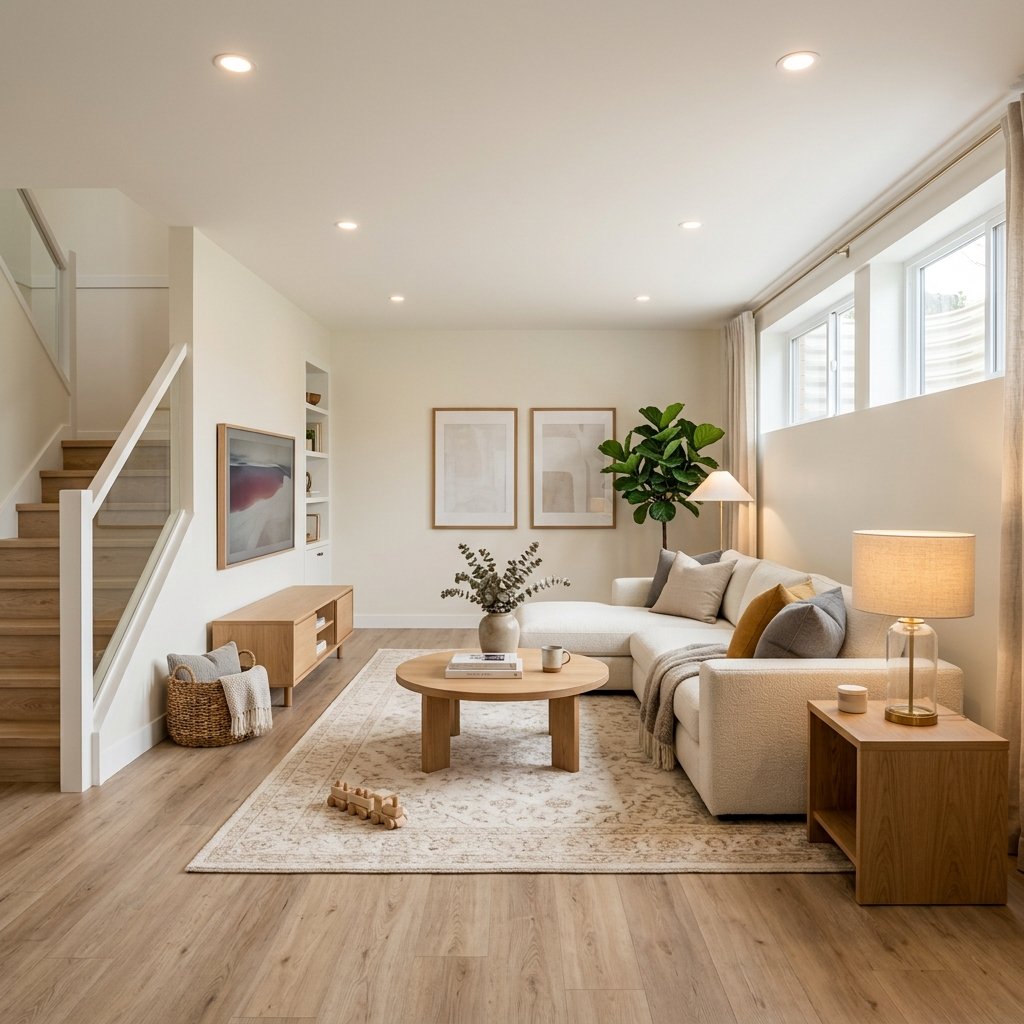
4. Improve the Lighting
Lighting is one of the biggest factors in how finished a basement feels.
Avoid relying on one harsh ceiling fixture.
Layer different types of light:
- Ceiling lighting
- Floor lamps
- Table lamps
- Wall lights
- Task lighting
Using several light sources creates warmth and makes the room feel more like an upstairs living space.
If new electrical work is required, follow applicable local requirements and use a qualified electrician where appropriate.
5. Choose Durable Flooring
Basement floors may need to handle:
- Moisture
- Kids
- Pets
- Heavy furniture
- High traffic
Your flooring choice should be appropriate for the basement conditions and substrate.
Possible options include:
- Luxury vinyl
- Tile
- Engineered products rated for the application
- Sealed concrete
- Carpet systems designed for basement conditions
Do not assume every flooring material is suitable for below-grade installation.
Check manufacturer requirements for moisture, underlayment, subfloor, and installation.
6. Add a Large Area Rug
Even with durable flooring, a basement can feel hard and echoey.
A large rug helps soften the room.
Use one to anchor:
- Sectional
- Sofa and chairs
- Game table
- Reading zone
Choose a rug large enough to connect the furniture.
A tiny rug floating in the middle of a large basement can make the room feel less finished.
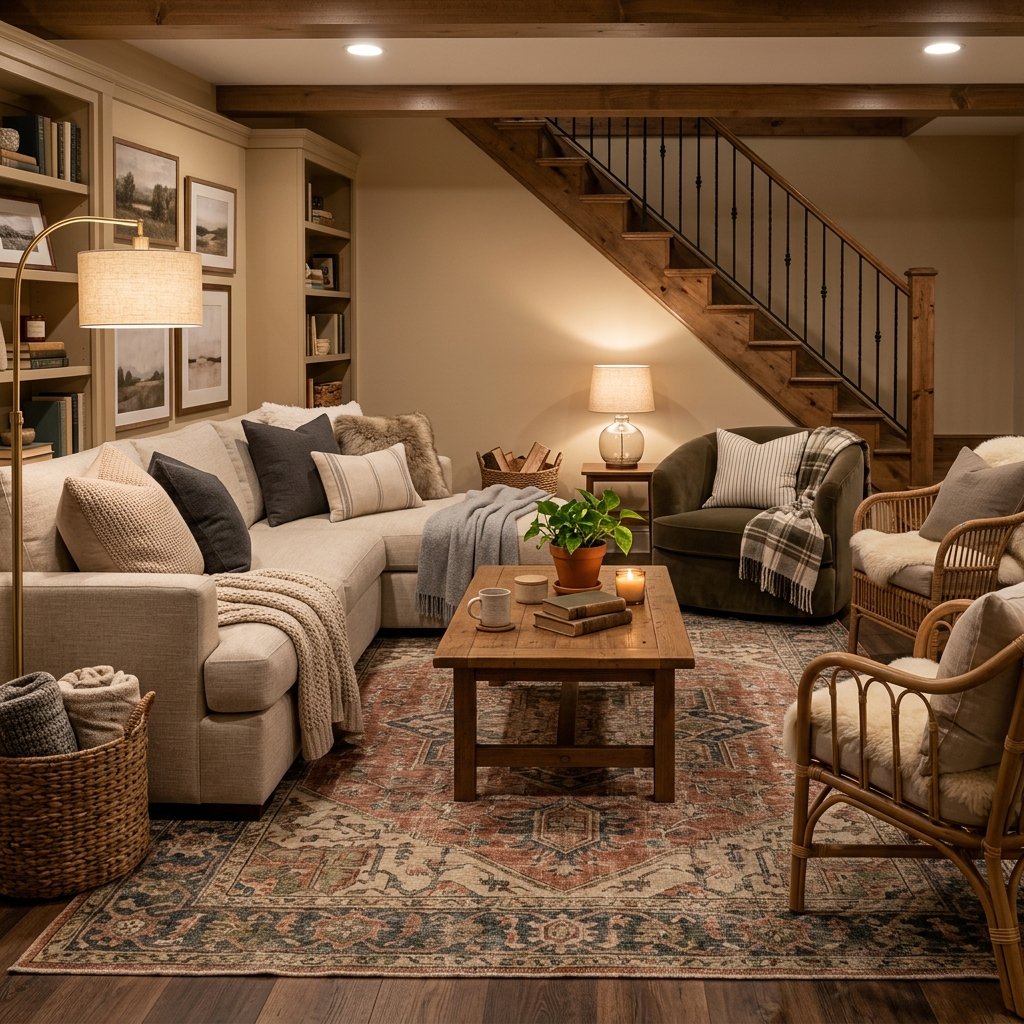
7. Create a Comfortable TV Zone
A basement is a natural place for movie nights.
Build the room around comfortable seating rather than decorating around the television alone.
Consider:
- Sectional
- Sofa and chairs
- Ottomans
- Side tables
- Soft lighting
Make sure the screen placement is comfortable from the main seats.
Keep walkways clear and avoid placing cords where they become trip hazards.
If wall-mounting a television, use hardware appropriate for the wall structure and television weight.
8. Add Closed Storage
Basements often become storage zones by default.
Closed storage can help them feel much more intentional.
Try:
- Cabinets
- Credenzas
- Built-ins
- Storage benches
- Drawers
- Lidded bins
Use open shelving only for things you actually want to see.
Everyday clutter usually looks better behind doors.
9. Create Built-In-Looking Storage
You do not necessarily need fully custom cabinetry.
A wall of coordinating cabinets and shelves can create a built-in appearance.
Use it for:
- Games
- Toys
- Books
- Electronics
- Craft supplies
- Extra linens
Paint or finish the units in a color that relates to the walls so they feel integrated.
Make sure tall storage is securely anchored when needed.
10. Add a Game or Activity Area
If the basement is large enough, dedicate one section to games.
Options might include:
- Board game table
- Puzzle table
- Foosball
- Ping-pong
- Kids’ activity table
Leave enough clearance around the furniture to use it comfortably.
You do not need to fill every corner.
A little open floor area makes the basement more flexible.
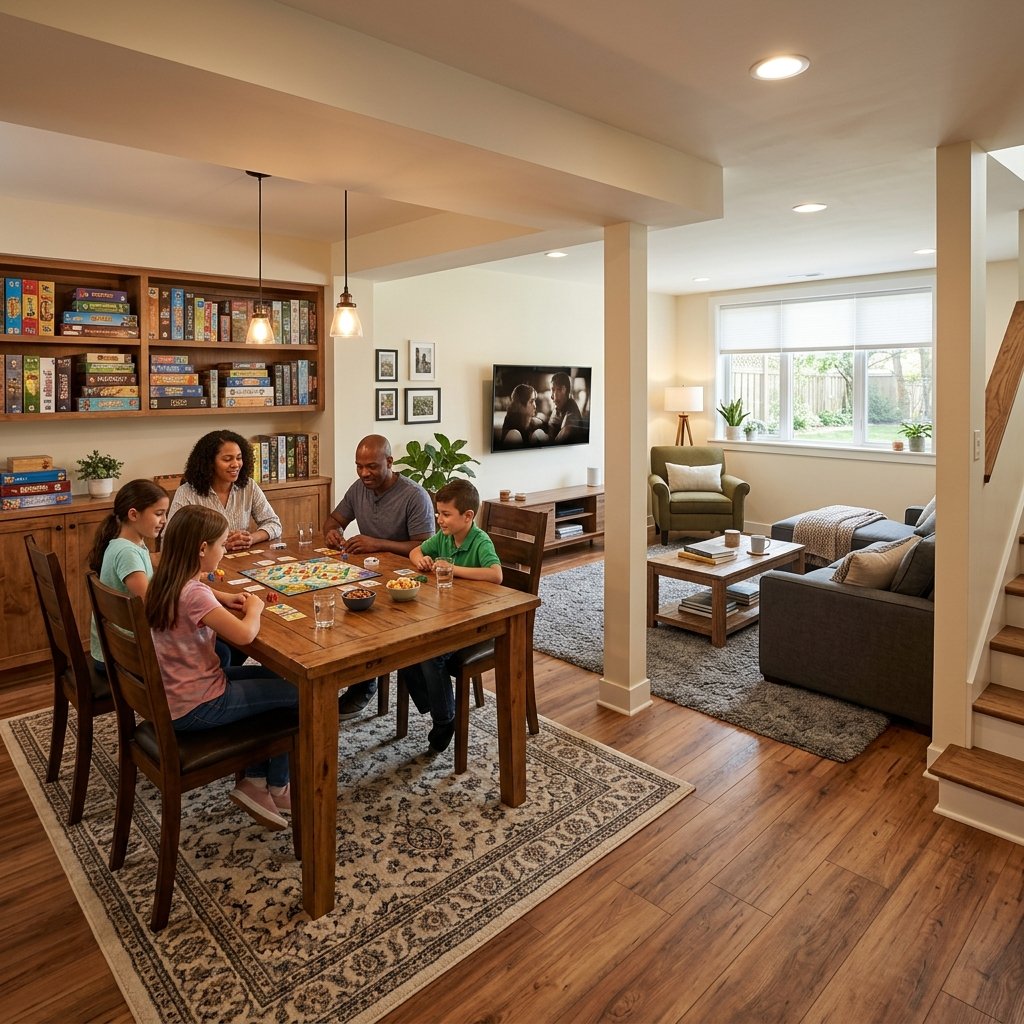
11. Create a Small Home Office
A basement can be a good location for a quiet work area.
Use:
- Compact desk
- Comfortable chair
- Task lamp
- Wall shelf
- Closed storage
If possible, place the desk near the best available natural light.
Avoid putting the office directly in the middle of a high-traffic walkway.
Use a rug, shelving unit, or furniture placement to define it as its own zone.
12. Make Space for Guests
A finished basement can sometimes double as a guest area.
Depending on the layout, you might add:
- Sleeper sofa
- Daybed
- Murphy-style bed
- Dedicated bedroom
If you are creating an actual sleeping room, building and fire-safety requirements may apply, including requirements related to egress, ventilation, smoke alarms, and room configuration.
Check applicable local codes before converting basement space into a bedroom.
13. Add Warm Wood Tones
Basements can feel cold when every surface is gray, white, or black.
Wood helps.
Add it through:
- Coffee table
- Media cabinet
- Shelves
- Side tables
- Picture frames
- Ceiling details
You do not need matching wood throughout.
A few repeated warm wood tones can make the basement feel much more comfortable.
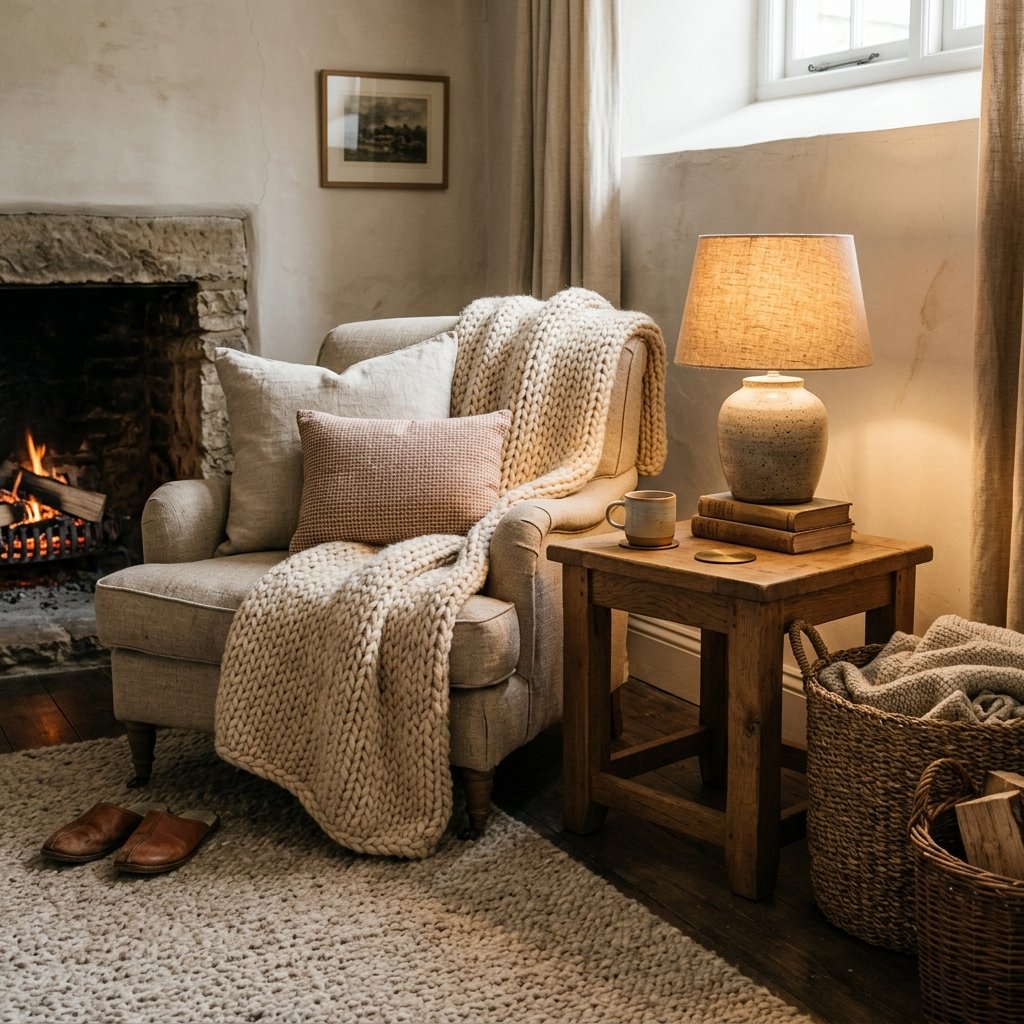
14. Use Texture to Make the Room Cozy
Texture is especially important downstairs.
Try:
- Chunky throws
- Linen-look curtains
- Woven baskets
- Upholstered furniture
- Textured rugs
- Soft pillows
These layers help offset hard basement surfaces like concrete, drywall, and tile.
15. Make Low Ceilings Feel Intentional
Many basements have lower ceilings.
Instead of trying to hide the proportions, work with them.
Try:
- Low-profile furniture
- Simple ceiling fixtures
- Curtains hung as high as practical
- Vertical artwork
- Consistent wall color
Avoid oversized hanging lights where head clearance is limited.
If ceilings contain pipes, ducts, or access points, make sure your makeover does not interfere with service access or required clearances.
16. Add a Beverage or Snack Station
A small beverage station can make a basement more practical for entertaining.
It might include:
- Counter
- Small refrigerator
- Shelving
- Storage cabinet
If you add plumbing, appliances, or dedicated circuits, make sure the work follows manufacturer instructions and applicable electrical and plumbing requirements.
Even without plumbing, a simple cabinet with drinks and snacks can be useful.
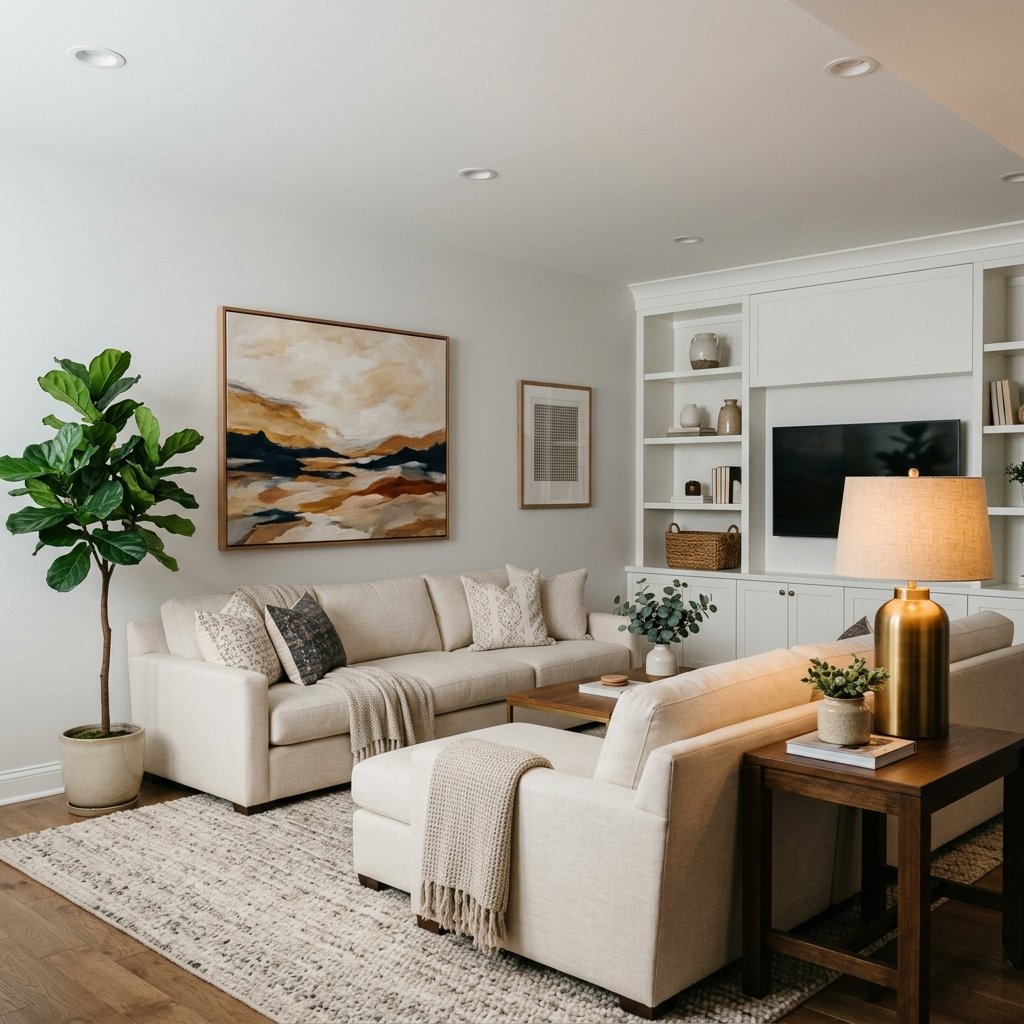
17. Keep the Decor Simple
Basements can become visually cluttered quickly because they often serve multiple purposes.
Choose a few larger decorative elements rather than many tiny accessories.
Try:
- Large artwork
- One or two plants
- Oversized mirror
- Large floor lamp
- Simple pillows
This creates a calmer, more finished look.
Basement Makeover Ideas on a Budget
A basement makeover does not have to begin with a full renovation.
Start with the biggest visual improvements.
Paint the Walls
Fresh paint can make an older basement feel cleaner immediately.
Rearrange Existing Furniture
A better layout may cost nothing.
Add Lamps
Warm layered lighting often makes a bigger difference than decorative accessories.
Use One Large Rug
This can define the main seating area.
Add Simple Storage
Baskets, cabinets, or shelving can reduce clutter.
Reuse Furniture
Basements can be a good place to repurpose dressers, tables, or bookcases from other rooms.
Try to coordinate them through color and styling rather than replacing everything.
Small Basement Makeover Ideas
A small basement benefits from restraint.
Use:
- Compact furniture
- Closed storage
- Light-to-medium wall colors
- One defined seating zone
- Wall-mounted storage where appropriate
Avoid filling the room with furniture simply because you have it.
Leave enough open floor space for circulation.
A smaller basement often feels larger when every piece has a clear purpose.
Large Basement Makeover Ideas
Large basements can feel empty and disconnected if furniture is pushed against every wall.
Create zones instead.
For example:
Zone 1
TV and sectional.
Zone 2
Game table.
Zone 3
Desk.
Zone 4
Storage.
Use area rugs, lighting, and furniture placement to visually separate each zone.
The room will feel more intentional than one giant open area.
Basement Family Room Ideas
For a comfortable family room, focus on seating and storage.
Include:
- Durable sofa
- Large rug
- Coffee table
- Side tables
- Lamps
- Closed toy or game storage
Keep fragile decor to a minimum if children use the room often.
Washable or easy-care textiles can make maintenance easier.
Basement Playroom Makeover
A basement can be a great play space if safety and storage are handled well.
Use:
- Low bins
- Clearly defined toy zones
- Open floor space
- Washable rug
- Secure shelving
Keep heavy items low.
Anchor tall furniture and avoid storing heavy objects above children’s play areas.
As children grow, the same zone can later become a game or homework area.
Basement Bedroom Makeover
If you already have a legal, appropriate basement bedroom, make it feel less basement-like with:
- Warm wall color
- Good bedside lighting
- Large rug
- Upholstered headboard
- Comfortable bedding
- Simple window treatments
Before creating a new basement bedroom, verify local safety, egress, ventilation, alarm, and permit requirements.
Do not rely on decorating changes alone to make an unsuitable space safe for sleeping.
Basement Ceiling Ideas
Ceilings have a big impact on the finished look.
Depending on the existing structure and access requirements, options may include:
- Drywall
- Suspended ceiling systems
- Painted exposed ceiling
Each has pros and cons.
Drywall can look more integrated but may reduce access.
Suspended systems can simplify access to utilities.
Exposed ceilings can preserve height but may require careful preparation and appropriate coatings.
Always consider mechanical access, electrical work, fire separation, and local requirements before enclosing a ceiling.
Basement Wall Ideas
Paint is not the only option.
You might add:
- Simple wall molding
- Wood accent wall
- Wallpaper on one wall
- Built-ins
- Large art
Avoid installing decorative wall treatments over active moisture problems.
If the basement has foundation walls or unusual wall assemblies, materials should be appropriate for the location and moisture conditions.
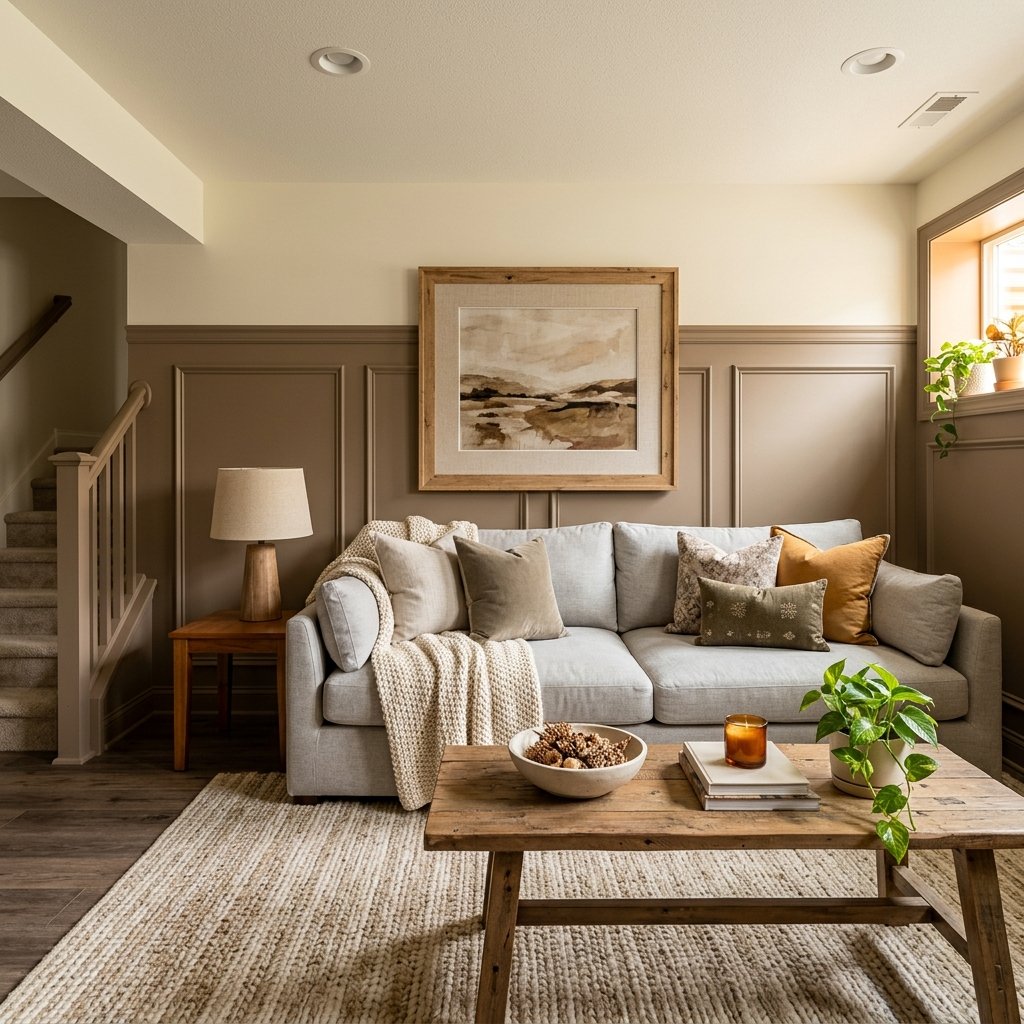
How to Make a Basement Look Less Like a Basement
The goal is to repeat design elements you would use upstairs.
Think about:
- Proper lamps
- Curtains
- Artwork
- Rugs
- Upholstered furniture
- Side tables
- Warm wood
Avoid treating the basement as a storage room with a sofa added to it.
Finishing the visual details makes a major difference.
Best Basement Color Palettes
Warm White + Oak + Black
Clean and flexible.
Greige + Cream + Walnut
Cozy and sophisticated.
Taupe + Olive + Natural Wood
Warm and organic.
Soft Blue + Warm White + Tan
Relaxed and family-friendly.
Charcoal + Cream + Medium Wood
Dramatic but balanced.
Keep the palette relatively simple so the basement does not feel busy.
How to Make a Basement Feel Brighter
If daylight is limited, focus on reflection and layered illumination.
Try:
- Lighter walls
- Larger mirrors
- Multiple lamps
- Pale rugs
- Warm white ceilings
- Reflective surfaces in moderation
Avoid relying only on one overhead light.
Also keep windows unobstructed where possible.
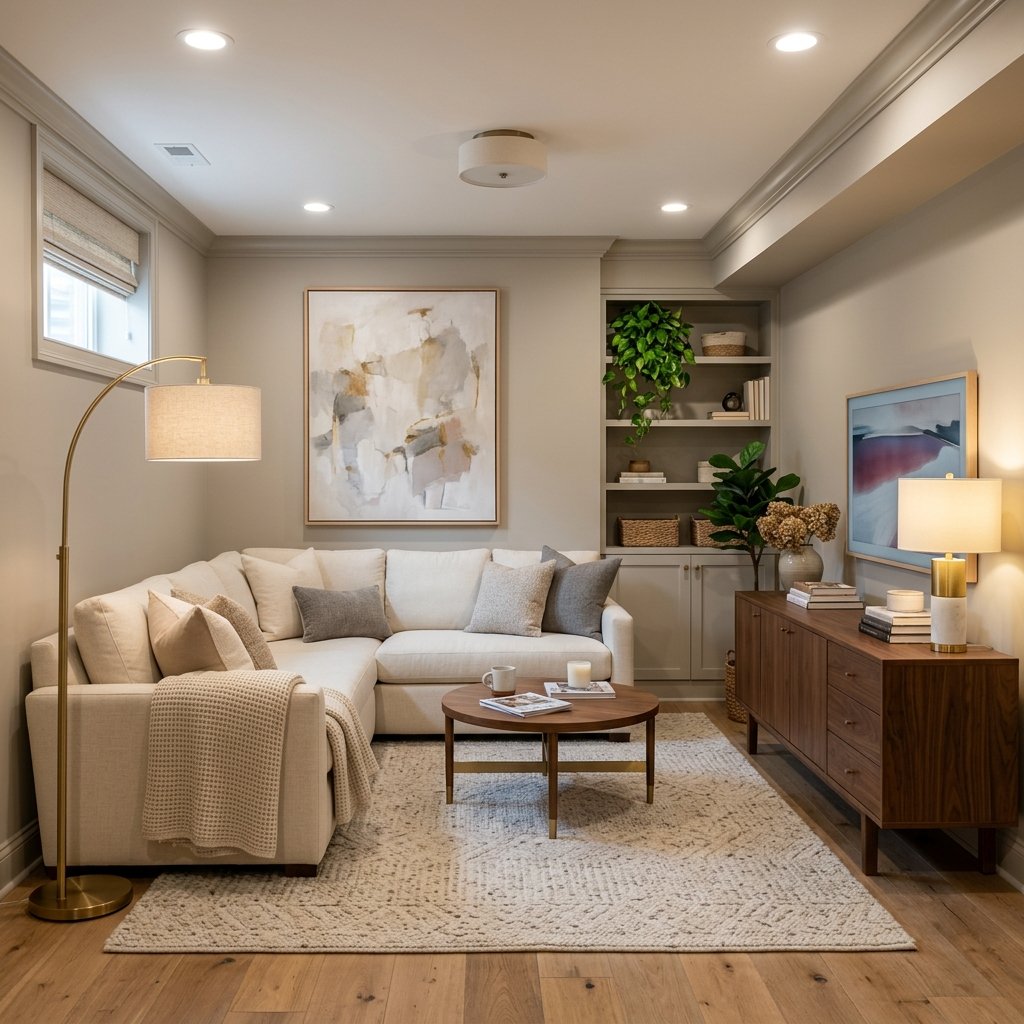
How to Make a Basement Feel More Expensive
A polished basement often comes down to consistency.
Use Larger Rugs
A correctly scaled rug helps anchor the room.
Repeat Materials
Use the same wood or metal tone several times.
Improve Lighting
Layered lamps create a finished feeling.
Hide Clutter
Closed storage always helps.
Use Larger Art
One substantial piece often looks better than many small ones.
Keep Furniture Proportional
Oversized or undersized furniture can make the room feel awkward.
Common Basement Makeover Mistakes
Decorating Before Fixing Moisture
This can damage new finishes.
Using Only Cool Gray
In a naturally dim room, cool gray can feel flat.
Depending on Overhead Lighting
Layered light makes the basement feel more comfortable.
Keeping Too Much Furniture
Basements often collect pieces that no longer fit upstairs.
Only keep what serves the layout.
Ignoring Storage
Clutter can quickly take over a multifunction room.
Using the Wrong Flooring
Make sure materials are appropriate for basement conditions.
Blocking Utility Access
Mechanical equipment, shutoffs, electrical panels, and service areas must remain appropriately accessible.
Creating a Bedroom Without Checking Requirements
Basement sleeping areas may have specific safety and egress requirements.
Basement Makeover Safety Tips
Basement projects can involve more than decorating.
Keep these considerations in mind:
- Resolve moisture before covering walls or floors.
- Investigate mold, recurring leaks, or structural cracks.
- Keep electrical panels, shutoffs, and mechanical equipment accessible.
- Follow manufacturer instructions for flooring, paint, insulation, and adhesives.
- Use appropriate ventilation during painting and finishing.
- Secure tall furniture and heavy wall-mounted items.
- Follow local requirements for electrical, plumbing, framing, and structural work.
- Maintain required clearances around furnaces, water heaters, fireplaces, and other equipment.
- Check egress and fire-safety requirements before adding sleeping rooms.
- Have major structural, drainage, gas, or electrical changes handled by qualified professionals where appropriate.
- Consider radon testing where it is relevant to your location and building.
FAQ About Basement Makeovers
How can I make my basement look better without renovating?
Start with paint, better lighting, a large rug, furniture placement, and closed storage.
What colors work best in a basement?
Warm whites, greige, beige, taupe, and other warm neutrals can work especially well in spaces with limited natural light.
How can I make an unfinished basement feel cozy?
Use clean lighting, rugs, comfortable furniture, organized storage, and clearly defined zones while keeping all materials appropriate for the basement conditions.
What should I do first in a basement makeover?
Check for moisture, drainage, structural issues, and needed repairs before doing cosmetic work.
How do you make a low-ceiling basement look better?
Use low-profile furniture, simple lighting, vertical artwork, and a consistent palette.
What flooring works best in a basement?
The right flooring depends on the moisture conditions, slab or subfloor, and manufacturer requirements. Choose a system rated for the specific application.
Can I make a basement bedroom?
Possibly, but sleeping rooms may need to meet requirements for egress, ventilation, alarms, and other building-safety rules. Check local regulations first.
How can I make a basement feel less dark?
Use warm light wall colors, multiple light sources, mirrors, lighter rugs, and uncluttered layouts.
Final Thoughts
A successful basement makeover is about more than decorating.
The first step is making sure the space is dry, safe, and appropriate for how you plan to use it.
Once those fundamentals are handled, focus on comfort.
Warm wall colors, layered lighting, durable flooring, a large rug, comfortable furniture, and smart storage can make a lower level feel much more like a true extension of the home.
You do not need to fill every corner or create an elaborate theme.
Define a few useful zones, choose a simple color palette, repeat warm materials, and hide everyday clutter where possible.
With the right combination of practical improvements and comfortable decorating, a basement can become a family room, play space, office, guest area, or all of those things at once.