

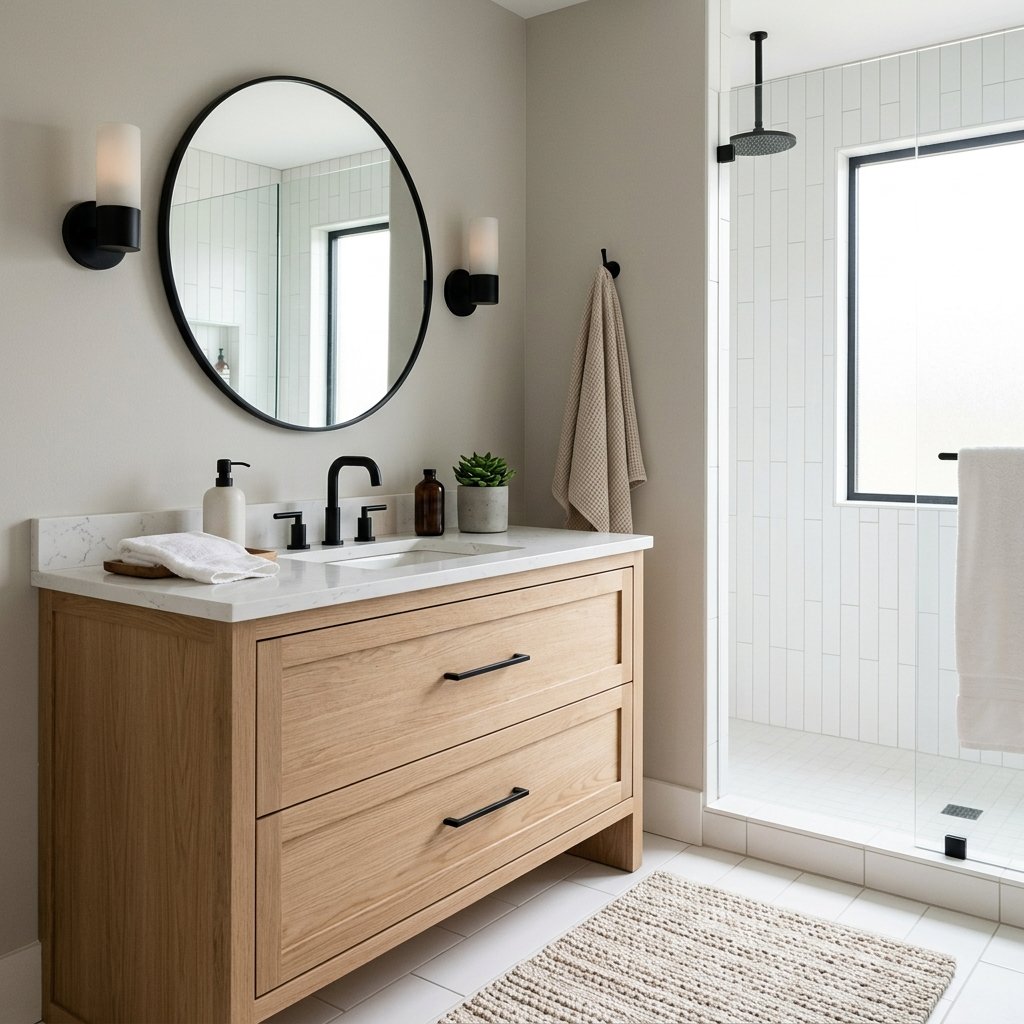
Choosing the right bathroom paint colors can make a small room feel brighter, a large bathroom feel more relaxing, and an outdated space feel noticeably more current.
Bathrooms are a little different from other rooms because paint has to work with several fixed elements at once.
You may be coordinating with:
- Tile
- Vanity color
- Countertops
- Flooring
- Shower surround
- Fixtures
- Mirrors
- Hardware
Lighting matters too.
A bathroom with strong natural light can handle color differently than a windowless powder room or a bathroom lit mostly by overhead fixtures.
The easiest approach is to start with the finishes you cannot easily change, then choose a wall color that supports them.
Here are 17 bathroom paint color ideas, from warm whites and soft greens to moody blues and deep charcoal, plus practical tips for choosing a shade that works in your space.
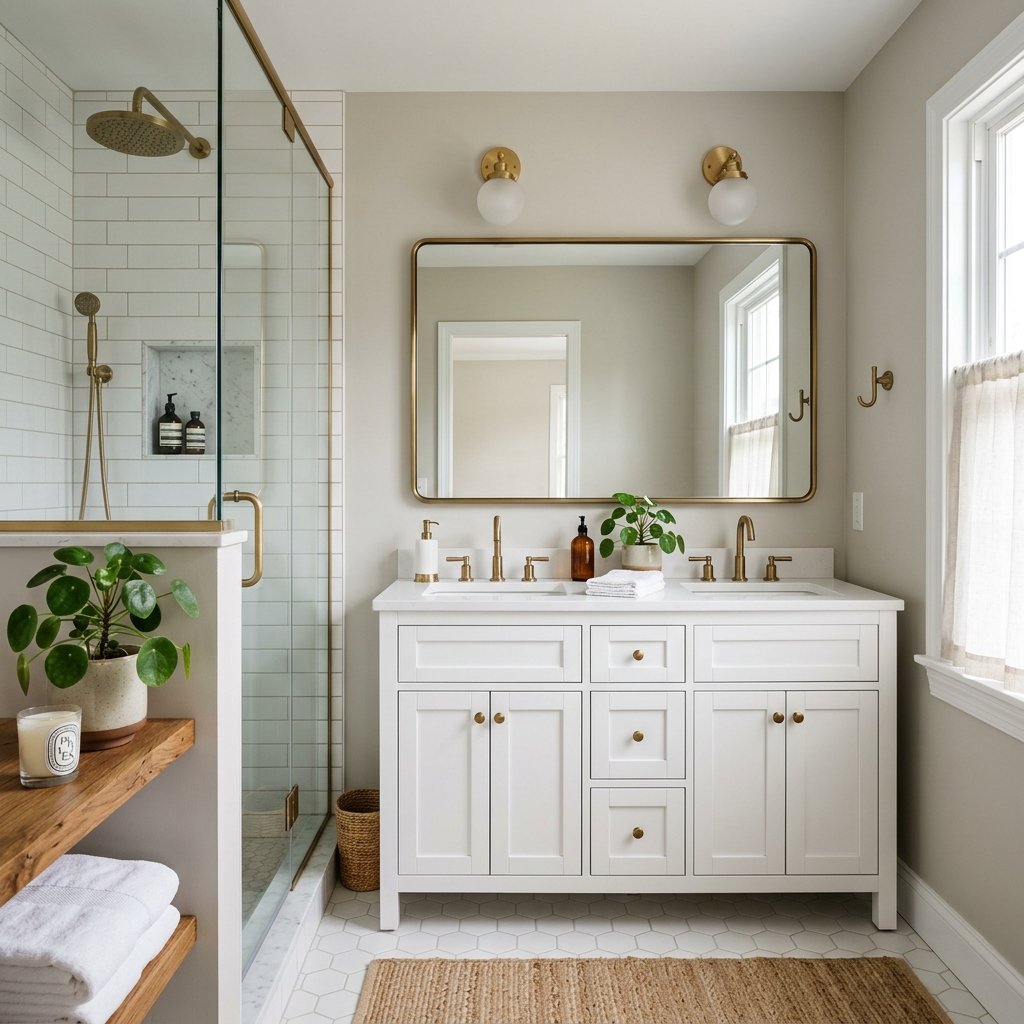
1. Warm White
Warm white is one of the most versatile bathroom paint colors.
It works especially well when you want the room to feel:
- Bright
- Clean
- Soft
- Timeless
A warm white usually feels more inviting than a very stark cool white.
It pairs beautifully with:
- Warm wood
- Brass
- Beige tile
- Cream countertops
- Natural stone
If your bathroom already has a lot of crisp white tile, compare several whites before choosing one. Two whites with different undertones can make each other look unexpectedly yellow, gray, blue, or pink.
2. Soft Greige
Greige blends gray and beige, making it useful in bathrooms with mixed warm and cool finishes.
It can connect:
- White tile
- Warm wood
- Gray flooring
- Black fixtures
- Beige stone
A lighter greige creates a calm neutral backdrop without making the room feel flat.
This is especially helpful if you want a neutral bathroom but find plain gray too cool.
3. Pale Blue
Pale blue can give a bathroom a fresh, airy feeling.
It works well in:
- Coastal bathrooms
- Traditional bathrooms
- Small bathrooms
- Guest bathrooms
Pair it with white trim and natural wood for a relaxed look.
A blue with too much gray can appear dull in a dim room, while a very clear blue may feel brighter than expected.
Test the color in the actual bathroom before committing.
4. Dusty Blue
If pale blue feels too light, dusty blue provides more depth.
It looks especially good with:
- White vanity
- Warm brass
- Natural wood
- Soft gray tile
- Cream textiles
Dusty blues can feel sophisticated rather than overly themed.
They work well in both traditional and modern bathrooms.
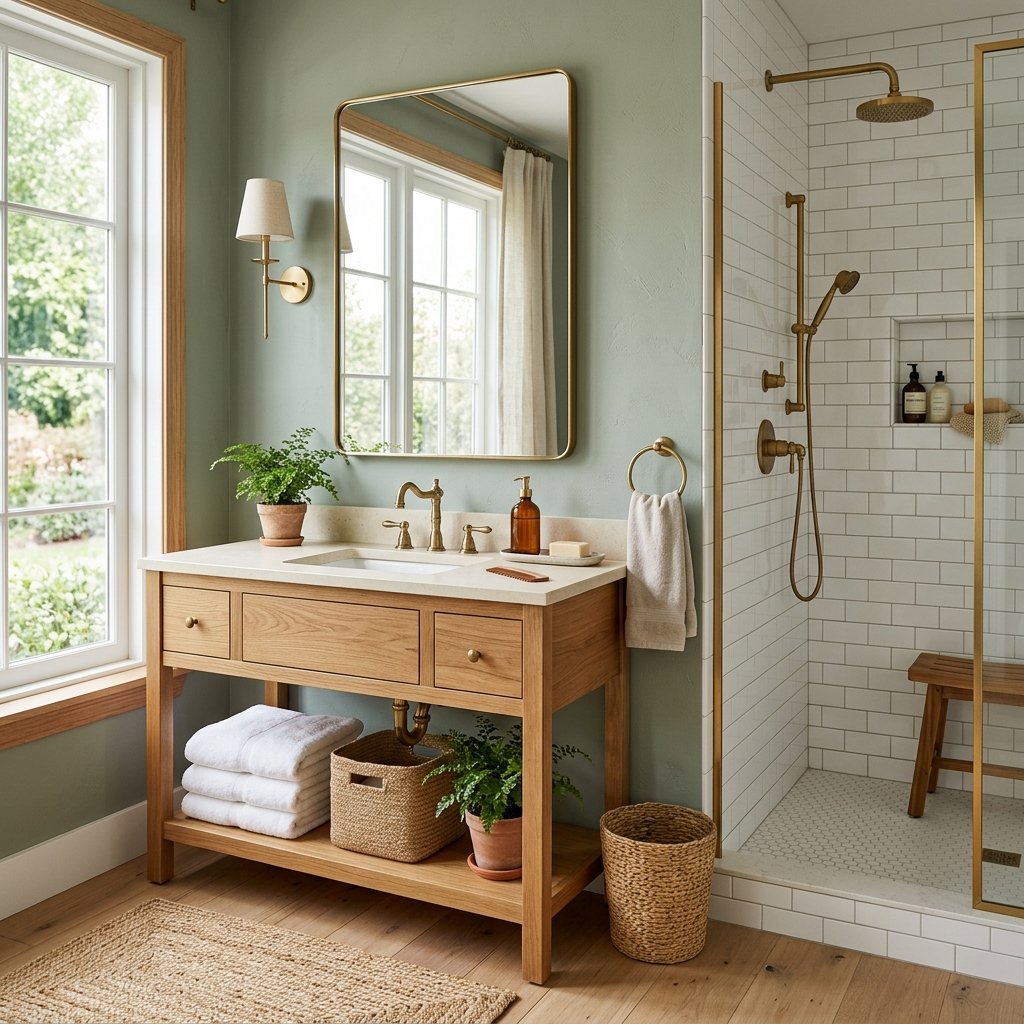
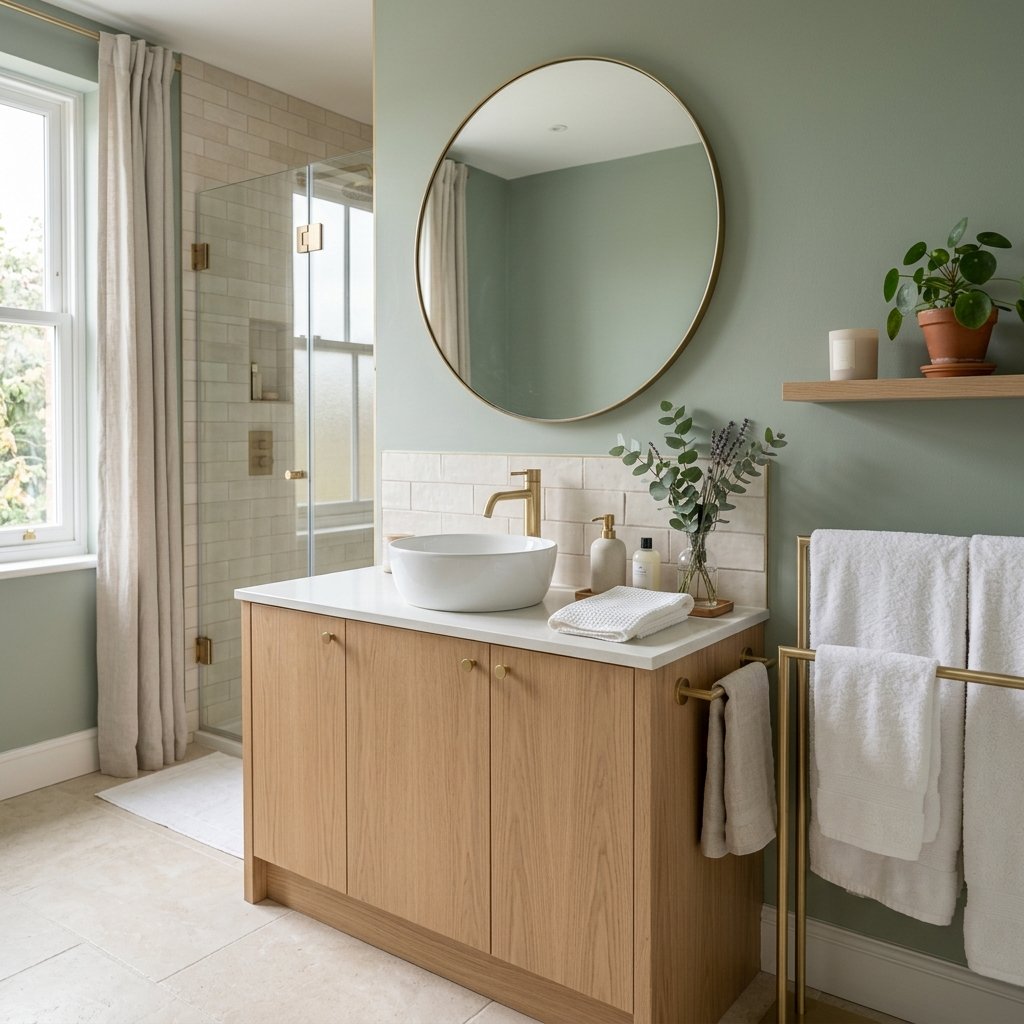
5. Sage Green
Sage is one of the easiest greens to use in a bathroom.
Its muted quality works beautifully with natural materials.
Pair sage with:
- White tile
- Wood vanity
- Cream stone
- Brass
- Matte black fixtures
The result can feel calm and organic.
A softer sage is also a nice choice if you want color without making the bathroom feel dark.
6. Olive Green
Olive is richer and warmer than sage.
It can give a bathroom more character, particularly when paired with:
- Walnut wood
- Aged brass
- Warm white
- Terracotta
- Cream stone
Use it in a larger bathroom or a powder room where a deeper color feels intentional.
In a small bathroom, balance it with lighter surfaces so the room does not become visually heavy.
7. Soft Taupe
Taupe is a great choice for bathrooms with warm stone or beige tile.
It works particularly well with:
- Travertine-style finishes
- Warm marble
- Cream cabinetry
- Brown flooring
- Bronze hardware
Unlike cool gray, taupe has enough warmth to make natural materials feel cohesive.
It can also create a spa-like atmosphere without relying on white.
8. Mushroom
Mushroom sits somewhere between beige, taupe, and gray.
It is subtle but has enough depth to feel more interesting than a basic neutral.
Try it with:
- Off-white vanity
- Black hardware
- Natural oak
- Marble-look surfaces
Mushroom can work especially well in bathrooms where pure white walls feel too stark.
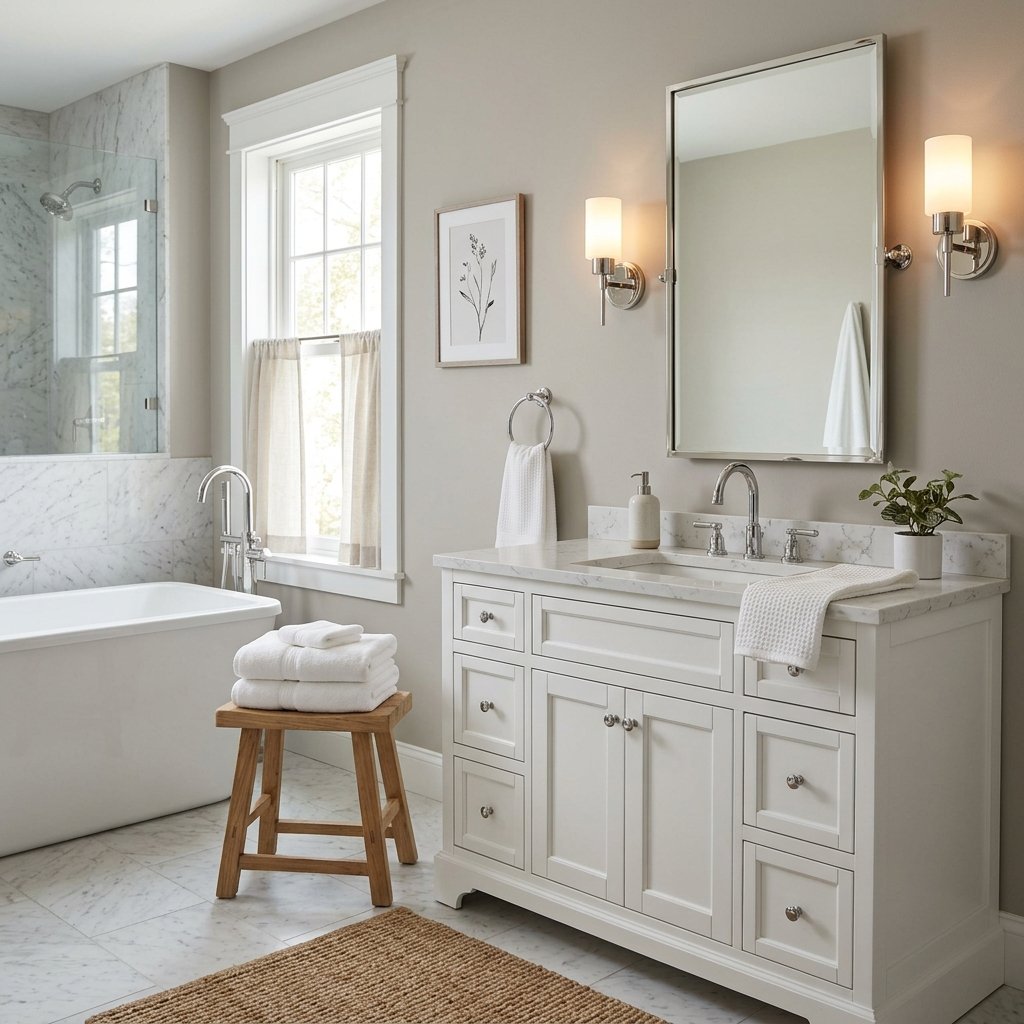
9. Soft Gray
Soft gray can still be a beautiful bathroom color when the undertones are right.
Look at your existing tile first.
A blue-gray wall next to warm beige tile may clash.
A warmer gray may work better with mixed finishes.
Gray looks especially polished with:
- White cabinets
- Chrome
- Marble
- Black accents
Use texture and wood to prevent the bathroom from feeling too cold.
10. Blue-Gray
Blue-gray gives you more color than traditional gray while remaining calm.
It can work well with:
- White subway tile
- Carrara-style marble
- Silver-tone fixtures
- Navy accents
This shade is particularly appealing in bathrooms with cool finishes.
If your tile and countertops are warm, test carefully before choosing a blue-gray.
11. Navy
Navy can make a bathroom feel dramatic and polished.
It is especially effective in:
- Powder rooms
- Bathrooms with white wainscoting
- Bathrooms with bright white tile
- Rooms with brass or chrome fixtures
Use navy when you want strong contrast.
A dark color can make the walls visually recede, creating a cozy, enveloping effect rather than necessarily making the room feel smaller.
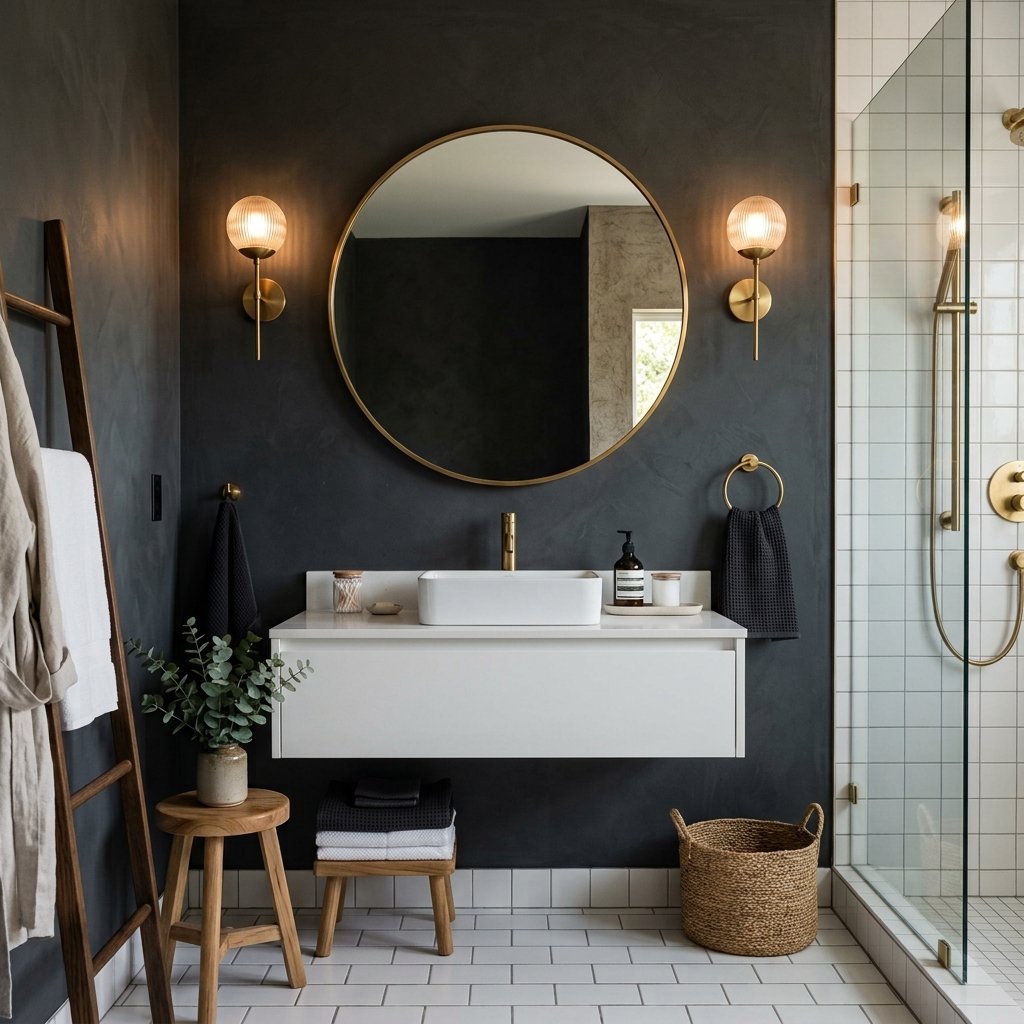
12. Charcoal
Charcoal creates a modern, sophisticated look.
Pair it with:
- White tile
- Light wood
- Brass
- Black fixtures
- Pale stone
Because charcoal absorbs more light, thoughtful lighting becomes important.
Use mirrors, layered fixtures, and lighter surfaces to create balance.
13. Soft Black
A soft black can be surprisingly beautiful in a small powder room.
Instead of trying to make the room feel bigger, lean into the intimacy.
Pair black walls with:
- Warm brass
- White sink
- Marble
- Natural wood
- Framed art
This combination can make a simple powder room feel much more intentional.
Keep the lighting flattering rather than overly harsh.
14. Blush Beige
A muted blush-beige can bring warmth without making the bathroom look overly pink.
It works well with:
- Cream
- Brass
- Light oak
- Warm white tile
Look for a subdued, earthy version.
This type of color can soften a bathroom with lots of hard surfaces.
15. Muted Clay
Clay-inspired tones add warmth and character.
Think softened terracotta rather than bright orange.
This palette pairs well with:
- Warm wood
- Cream tile
- Natural stone
- Woven accents
It can create a Mediterranean or organic-modern feeling without needing themed decor.
16. Deep Teal
Deep teal is a strong choice for a bathroom that needs personality.
It can bridge blue and green finishes and looks especially good with:
- Brass
- Warm wood
- White ceramic
- Dark stone
Consider it for a vanity wall, powder room, or bathroom with plenty of contrasting light finishes.
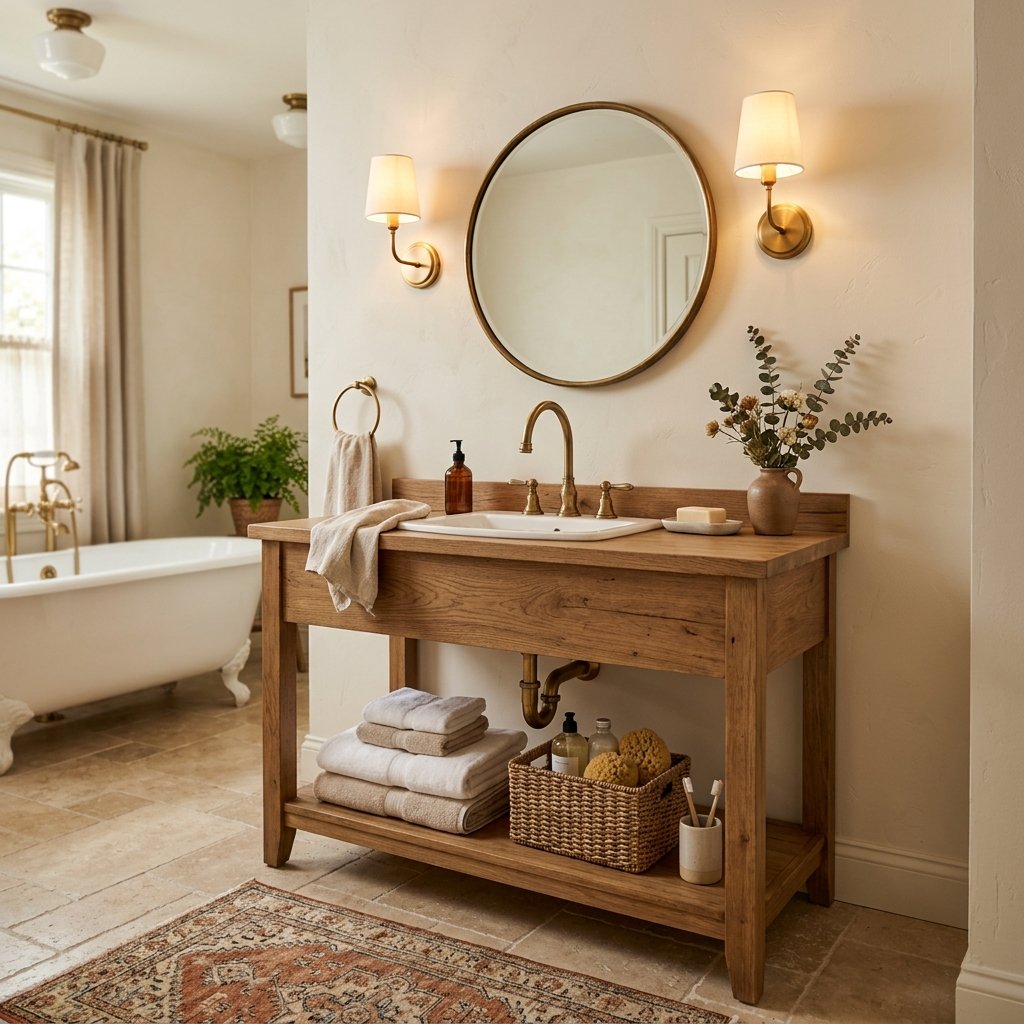
17. Cream
Cream is softer than white and can make a bathroom feel warm and comfortable.
It is particularly useful with:
- Beige flooring
- Warm stone
- Traditional cabinetry
- Antique brass
- Wood accents
Choose cream carefully around bright white fixtures.
A cream that is too yellow may make white tile or porcelain look unusually cool by comparison.
How to Choose the Right Bathroom Paint Color
The prettiest color on a sample card is not always the best color for your bathroom.
Start with the room itself.
Look at the Fixed Finishes
Identify the undertones in your:
- Tile
- Vanity
- Countertop
- Floor
- Shower
- Tub
If those finishes are warm, a very cool wall color may fight with them.
If they are cool and crisp, a yellow-based beige may feel out of place.
Consider the Lighting
Look at the room during:
- Morning
- Afternoon
- Evening
Artificial light can significantly change paint color.
Bathrooms without windows require extra care because the wall color will always be seen under artificial lighting.
Test a Large Sample
Tiny swatches are difficult to judge.
Test a larger area or use a removable sample board.
Place it near:
- Tile
- Vanity
- Mirror
- Countertop
Look at it over several times of day.
Best Bathroom Paint Colors for Small Bathrooms
Small bathrooms do not have to be painted white.
Light colors can make them feel open, but deeper shades can make them feel cozy and polished.
Good light options include:
- Warm white
- Pale blue
- Soft greige
- Sage
- Cream
For a bolder small bathroom, try:
- Navy
- Charcoal
- Deep teal
- Olive
The key is choosing intentionally and supporting the wall color with appropriate lighting and finishes.
Best Bathroom Paint Colors With White Cabinets
White cabinets give you a lot of flexibility.
Try:
- Sage green
- Dusty blue
- Greige
- Navy
- Taupe
- Charcoal
Before choosing, compare the wall color with the actual cabinet white.
A warm white vanity can behave very differently from a crisp blue-white vanity.
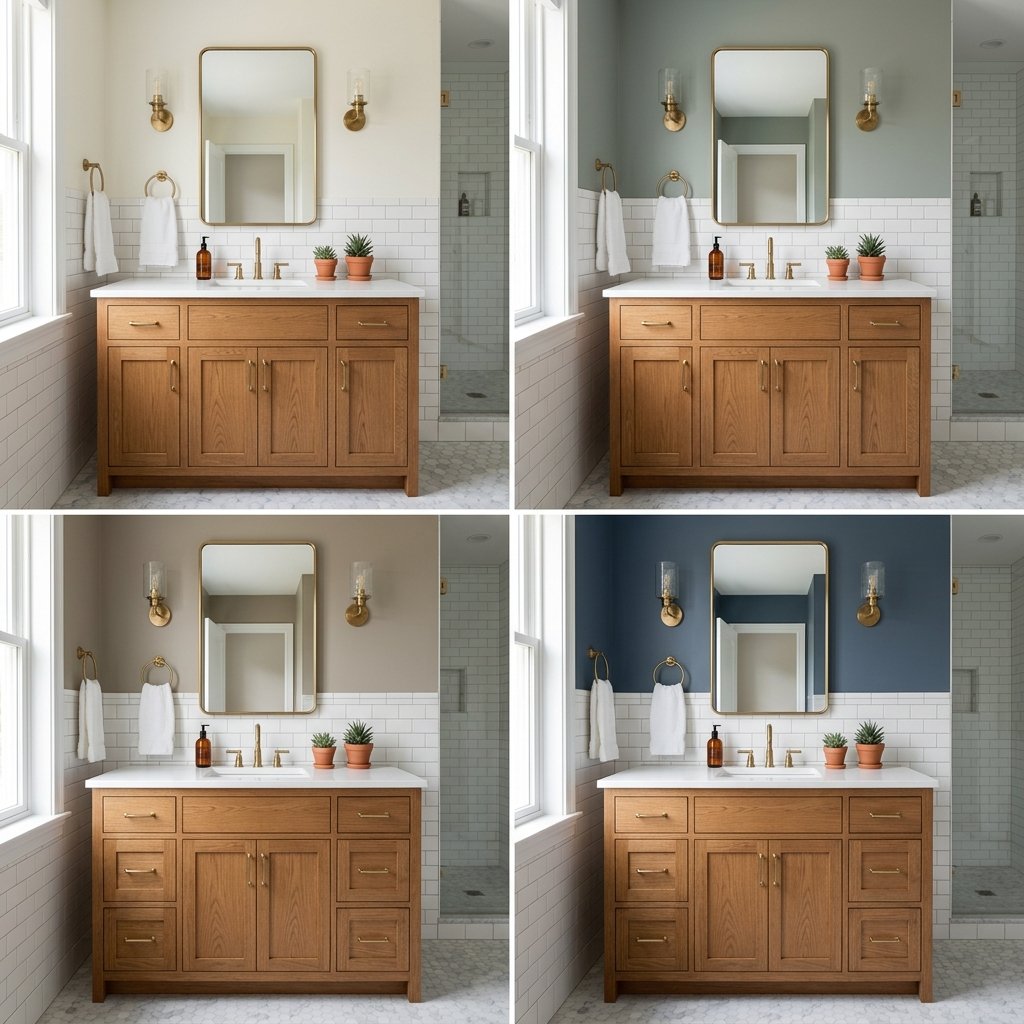
Best Bathroom Paint Colors With Wood Vanities
Wood already adds warmth, so you can either complement it or create contrast.
Try:
- Warm white
- Sage
- Blue-gray
- Mushroom
- Cream
- Charcoal
For lighter oak, muted green and greige are especially versatile.
For darker walnut, cream, warm white, olive, and deep blue can create beautiful contrast.
Bathroom Paint Colors With Beige Tile
Beige tile often looks best with colors that acknowledge its warmth.
Consider:
- Cream
- Warm white
- Taupe
- Mushroom
- Soft greige
- Muted green
Very icy blues and cool grays may exaggerate yellow or pink undertones in some beige tiles.
Always test first.
Bathroom Paint Colors With Gray Tile
First determine whether the gray tile is warm or cool.
With cool gray tile, consider:
- Blue-gray
- Soft white
- Dusty blue
- Charcoal
With warmer gray tile, try:
- Greige
- Taupe
- Sage
- Warm white
Avoid assuming all gray finishes coordinate with the same paint colors.
Bathroom Paint Colors With Black Fixtures
Black fixtures create strong contrast and can work with many palettes.
Try:
- Warm white
- Sage
- Greige
- Cream
- Dusty blue
- Taupe
You do not need to repeat black everywhere.
A little repetition through a mirror frame, light fixture, or small accessory can be enough.
Bathroom Paint Colors With Brass Fixtures
Brass naturally adds warmth.
It pairs beautifully with:
- Sage
- Navy
- Cream
- Taupe
- Olive
- Blush beige
- Deep teal
The combination of brass and rich color works especially well in powder rooms.
Best Paint Colors for a Windowless Bathroom
A windowless bathroom does not automatically need white paint.
Focus on how the color reacts under your actual fixtures.
Good possibilities include:
- Warm white
- Cream
- Greige
- Soft taupe
- Muted sage
Or choose a deeper shade intentionally for a more dramatic look.
In a room without daylight, testing paint under the final light bulbs is especially important.
Bathroom Paint Finish: What Should You Use?
Bathrooms experience more humidity and splashing than many rooms.
Choose a coating the manufacturer recommends for bathroom walls or similarly humid interior conditions.
Consider:
- Washability
- Moisture resistance
- Surface condition
- Desired sheen
More reflective finishes can be easier to clean in some products, but they may also make wall imperfections more visible.
Follow the paint manufacturer’s recommendations rather than relying on a universal sheen rule.
Good ventilation also matters.
Paint is not a substitute for properly managing bathroom moisture.
How to Make Bathroom Paint Colors Look More Expensive
You do not need a trendy or complicated palette.
Keep the Palette Limited
Use one main wall color and let tile, wood, or hardware provide contrast.
Repeat the Undertones
Connect the paint to the vanity, stone, or flooring.
Upgrade the Lighting
Poor lighting can make a beautiful color look flat.
Use Larger Mirrors
Mirrors reflect light and help show the paint color around the room.
Avoid Too Many Competing Finishes
A restrained palette often feels more polished.
Paint the Trim Thoughtfully
Trim can match the walls, stay white, or provide contrast depending on the look you want.
Should Bathroom Walls and Trim Be the Same Color?
They can be.
Painting the trim and walls the same color creates a streamlined look.
You can use:
- Same color, same sheen
- Same color, different sheen
A difference in sheen can subtly define the trim without introducing another color.
This approach works particularly well with:
- Soft green
- Taupe
- Navy
- Cream
- Moody colors
White trim remains a classic option if you want more contrast.
Dark vs. Light Bathroom Paint Colors
Both can work beautifully.
Light Colors
They tend to feel:
- Airy
- Fresh
- Soft
- Bright
Dark Colors
They tend to feel:
- Cozy
- Dramatic
- Sophisticated
- Intimate
Choose based on the mood you want rather than assuming every small bathroom must be light.
Common Bathroom Paint Color Mistakes
Choosing the Color Before Looking at Tile
Fixed finishes should help guide the palette.
Testing Only a Tiny Swatch
Larger samples reveal undertones more clearly.
Ignoring Artificial Lighting
Bathroom lighting can significantly shift color.
Choosing a Cool Gray for Warm Beige Tile
The undertones may clash.
Picking White Without Comparing Whites
White fixtures, trim, tile, and paint may all have different undertones.
Following Trends Without Considering the Room
A popular shade may not coordinate with your existing finishes.
Forgetting Moisture and Ventilation
Even a suitable bathroom coating performs best in a properly ventilated space.
Bathroom Painting Tips
Before painting:
- Clean the walls thoroughly.
- Repair damaged areas.
- Address peeling paint or moisture problems.
- Use a compatible primer where required.
- Protect fixtures and tile.
- Ventilate according to product instructions.
- Follow recoat and curing times.
If paint repeatedly peels or bubbles, investigate the moisture source instead of simply repainting again.
Bathroom Paint Safety and Practical Considerations
Bathrooms can be awkward spaces to paint because they contain water, electrical fixtures, slick surfaces, and tight corners.
Keep these points in mind:
- Provide ventilation according to coating instructions.
- Use a stable step stool or ladder.
- Protect tubs and floors from slippery paint spills.
- Keep water away from electrical equipment and tools.
- Do not remove or modify electrical fixtures unless you can do so safely and appropriately.
- Keep children and pets away from wet paint.
- Follow primer, cleaner, patching product, and paint safety instructions.
- Be cautious when disturbing old coatings in older homes.
- Address active mold, leaks, or recurring moisture before cosmetic painting.
FAQ About Bathroom Paint Colors
What is the most popular type of color for a bathroom?
Light neutrals, soft blues, greens, and warm whites remain versatile choices because they coordinate easily with common bathroom finishes.
What colors make a bathroom feel relaxing?
Soft green, dusty blue, warm white, taupe, greige, and cream can all create a calm atmosphere.
What color makes a small bathroom look bigger?
Light colors can create an airy effect, but scale, mirrors, lighting, and contrast also influence how spacious the bathroom feels.
Can you use dark paint in a small bathroom?
Yes. Navy, charcoal, teal, olive, and soft black can create a dramatic, intentional look in a small bathroom or powder room.
What paint color goes with a white bathroom vanity?
Almost any color can work, but sage, dusty blue, greige, taupe, navy, and charcoal are especially versatile.
What paint color goes with beige bathroom tile?
Warm white, cream, taupe, mushroom, greige, and muted greens are good starting points.
Should bathroom paint match the bedroom?
It does not need to match, but related undertones or repeated colors can help adjacent spaces flow together.
Do bathroom walls need special paint?
Use a coating the manufacturer recommends for the surface and bathroom conditions. Humidity, washability, and ventilation are important considerations.
Final Thoughts
The best bathroom paint colors are the ones that work with the finishes already in the room.
Start with the tile, vanity, countertop, flooring, and fixtures.
Then decide whether you want the bathroom to feel light and airy, warm and natural, or dark and dramatic.
Warm white, soft greige, sage, taupe, dusty blue, cream, navy, and charcoal can all work beautifully when their undertones coordinate with the surrounding materials.
Most importantly, test before painting the entire room.
Bathroom lighting can change a color dramatically, especially in windowless spaces.
A little time spent comparing samples beside the permanent finishes can help you choose a color that makes the bathroom feel more cohesive, comfortable, and intentionally designed.