

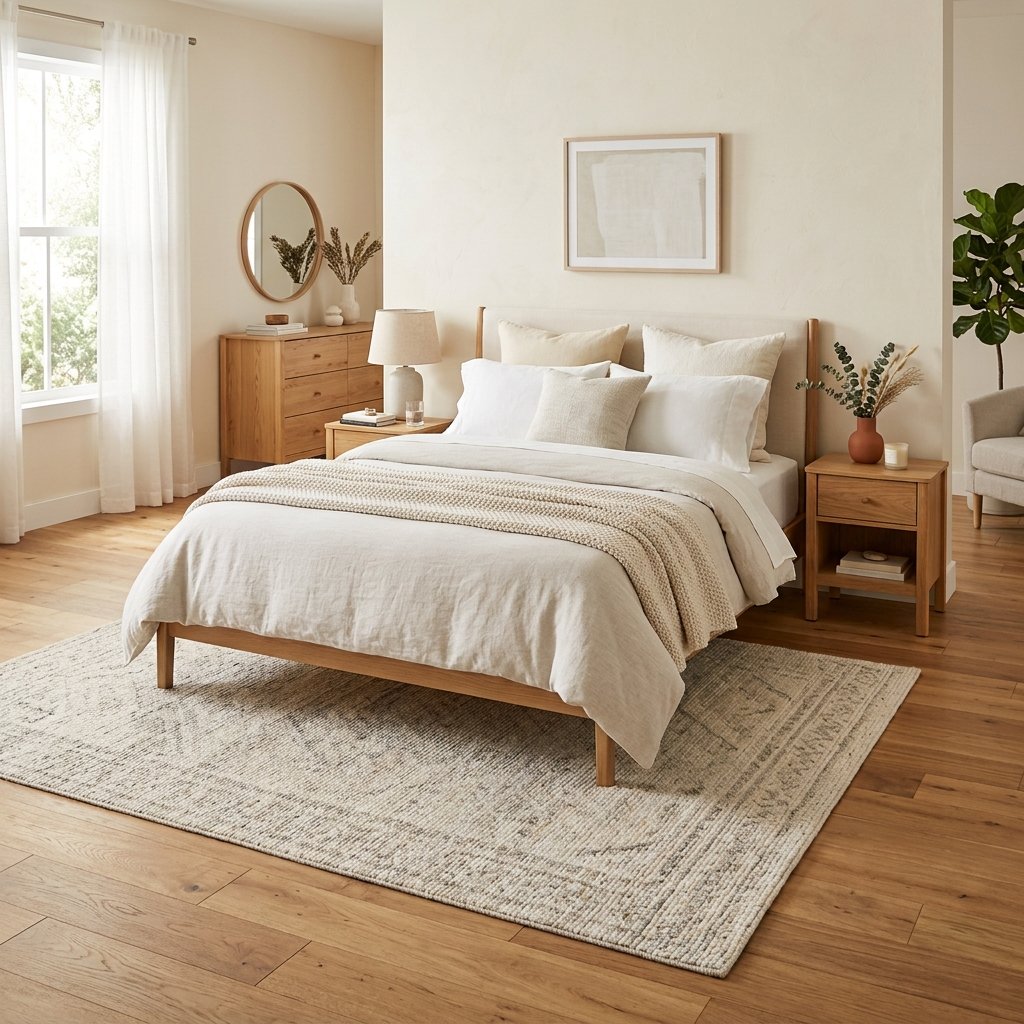
The right bedroom area rug can make a room feel warmer, softer, and much more finished.
Rugs are especially useful in bedrooms because they help anchor the bed, soften hard flooring, add texture, and introduce color or pattern without changing the entire room.
But bedroom rugs can be tricky.
A rug that is too small may look disconnected from the bed. One that is too large can overwhelm the room. And if the rug is placed awkwardly, even a beautiful design can make the layout feel off.
The good news is that you do not need to follow one rigid rule.
The best rug placement depends on:
- Bed size
- Room size
- Furniture layout
- Flooring
- Rug shape
- Whether you want the rug under the whole bed or only part of it
These bedroom area rug ideas will help you choose a rug that feels proportionate, comfortable, and intentional.
1. Use a Large Rug Under the Bed
A large area rug is one of the easiest ways to make a bedroom feel polished.
The rug can visually connect:
- Bed
- Nightstands
- Bench
- Bedding
- Flooring
Ideally, the rug should extend beyond the sides of the bed enough to provide a soft landing when getting up.
You do not always need the entire bed and every nightstand sitting on the rug.
The exact placement depends on the proportions of the room.
2. Place the Rug Under the Lower Two-Thirds of the Bed
This is a popular option when you want the look of a large rug without placing it all the way under the headboard.
Position the rug so it begins somewhere under the upper half of the bed and extends well beyond the foot.
This creates a balanced look while keeping more of the rug visible.
It works particularly well with:
- Queen beds
- King beds
- Bedrooms with nightstands
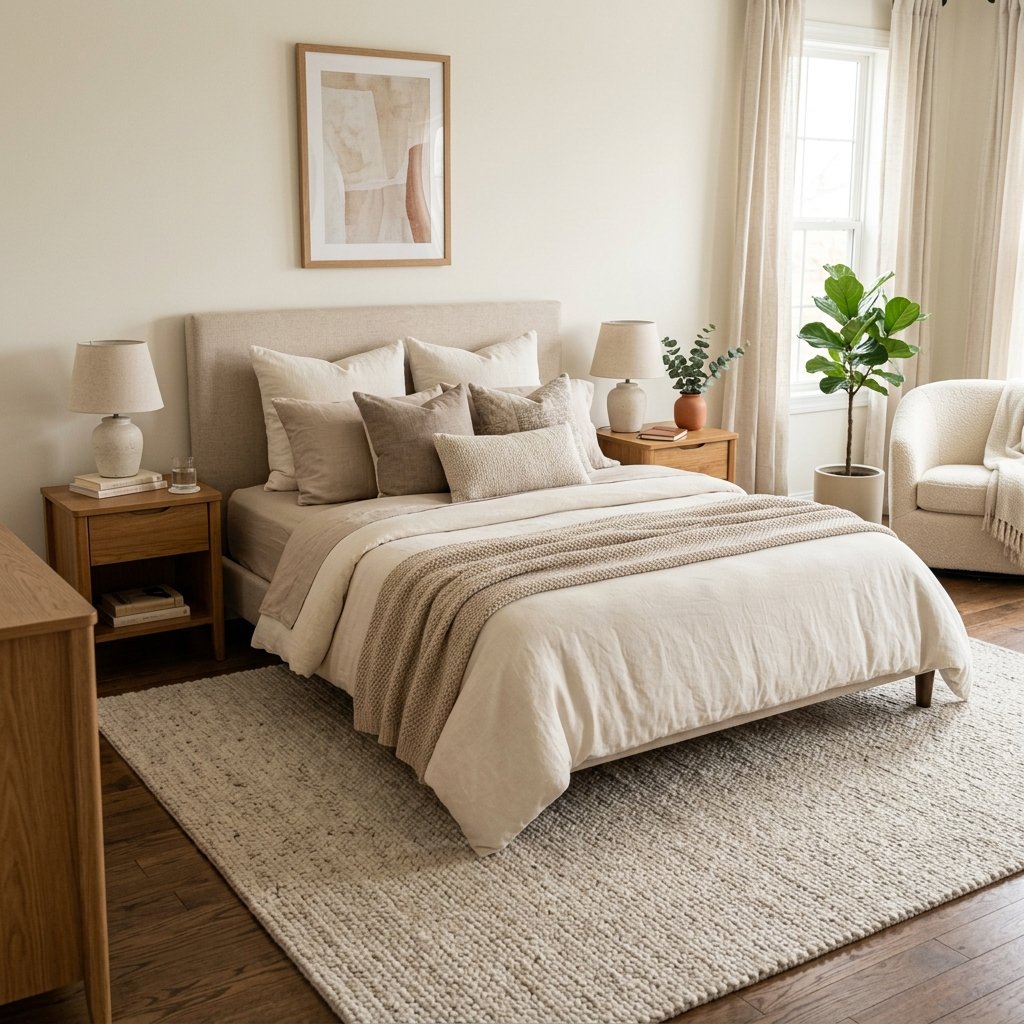
3. Let the Nightstands Stay Off the Rug
Nightstands do not have to sit on the area rug.
Keeping them directly on the flooring can simplify placement and allow you to use a slightly smaller rug.
This also works well when:
- The nightstands are heavy
- The rug is thick
- You want more of the flooring visible
The key is making sure the rug still extends far enough beyond the bed to look intentional.
4. Put the Entire Bed and Nightstands on the Rug
In a larger bedroom, a generously sized rug can sit underneath the entire bed and both nightstands.
This creates a luxurious, cohesive look.
It works especially well in:
- Large primary bedrooms
- Rooms with high ceilings
- Bedrooms with wide furniture layouts
Make sure the rug does not feel cramped against the walls.
Leaving some visible flooring around the perimeter usually creates better definition.
5. Use a Rug to Warm Up Hardwood Floors
Hardwood floors are beautiful, but a bedroom can feel visually hard without textiles.
A rug adds:
- Warmth
- Texture
- Softness
- Acoustic comfort
Neutral rugs work particularly well with wood flooring because they allow the grain to remain the star.
Try:
- Cream
- Beige
- Greige
- Taupe
- Muted vintage patterns
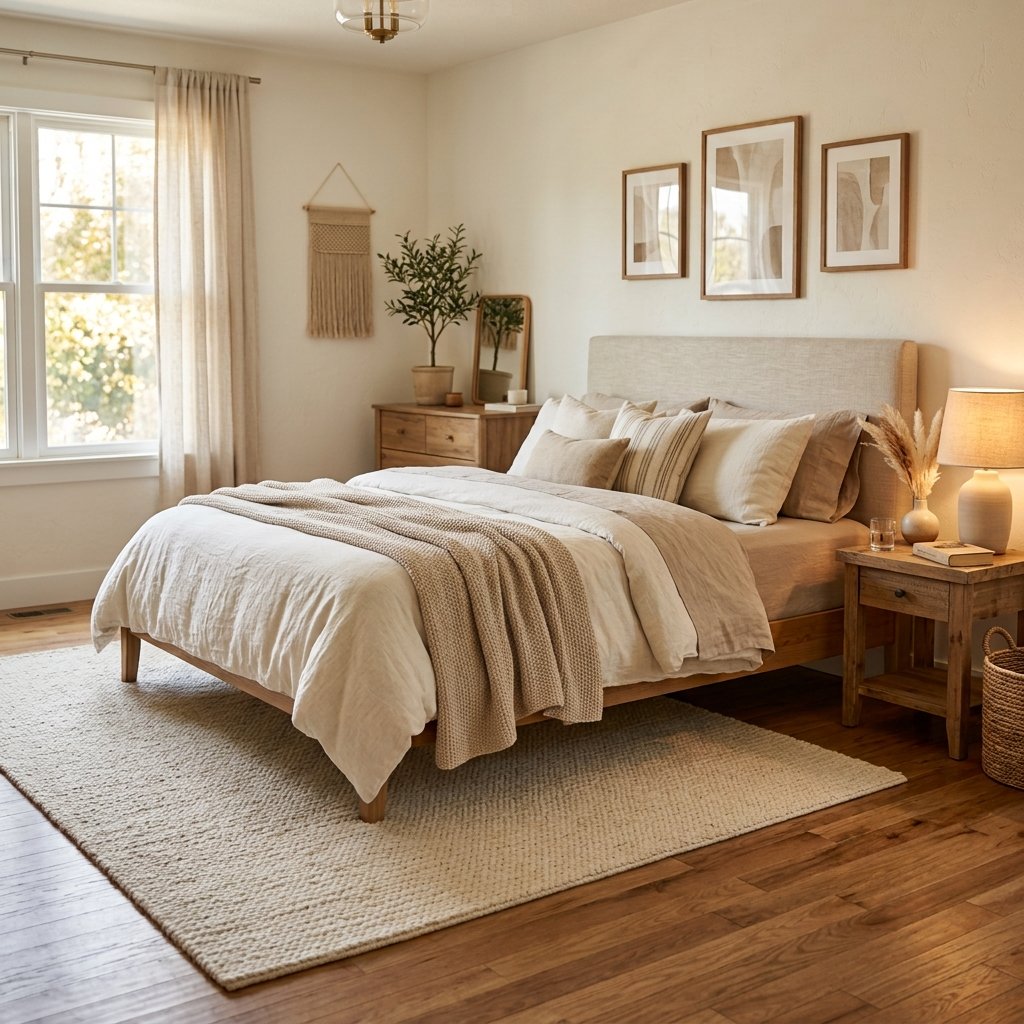
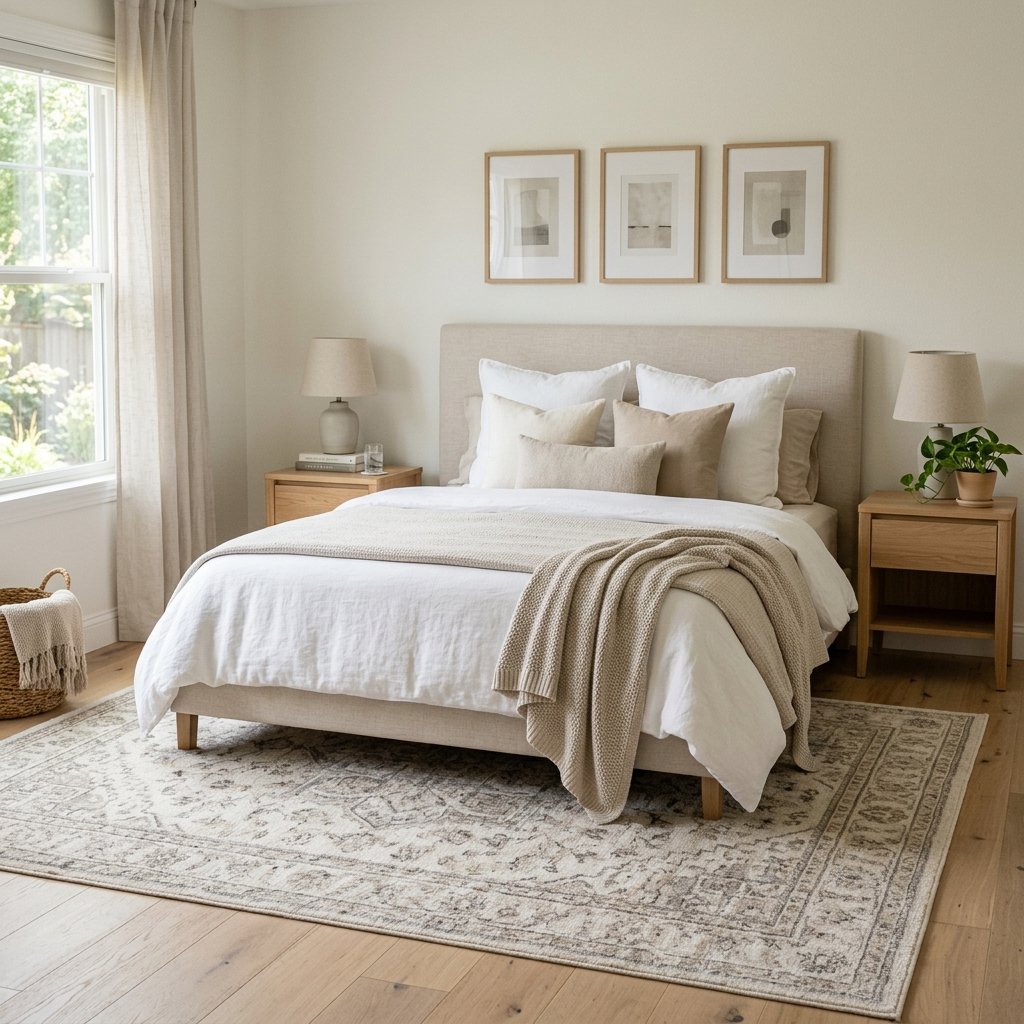
6. Choose a Neutral Bedroom Rug
Neutral rugs are flexible and easy to live with.
Good colors include:
- Cream
- Beige
- Taupe
- Greige
- Soft gray
- Brown
A neutral rug does not have to be plain.
Look for:
- Subtle pattern
- Woven texture
- Tonal variation
- Faded motifs
This keeps the room calm while still adding visual interest.
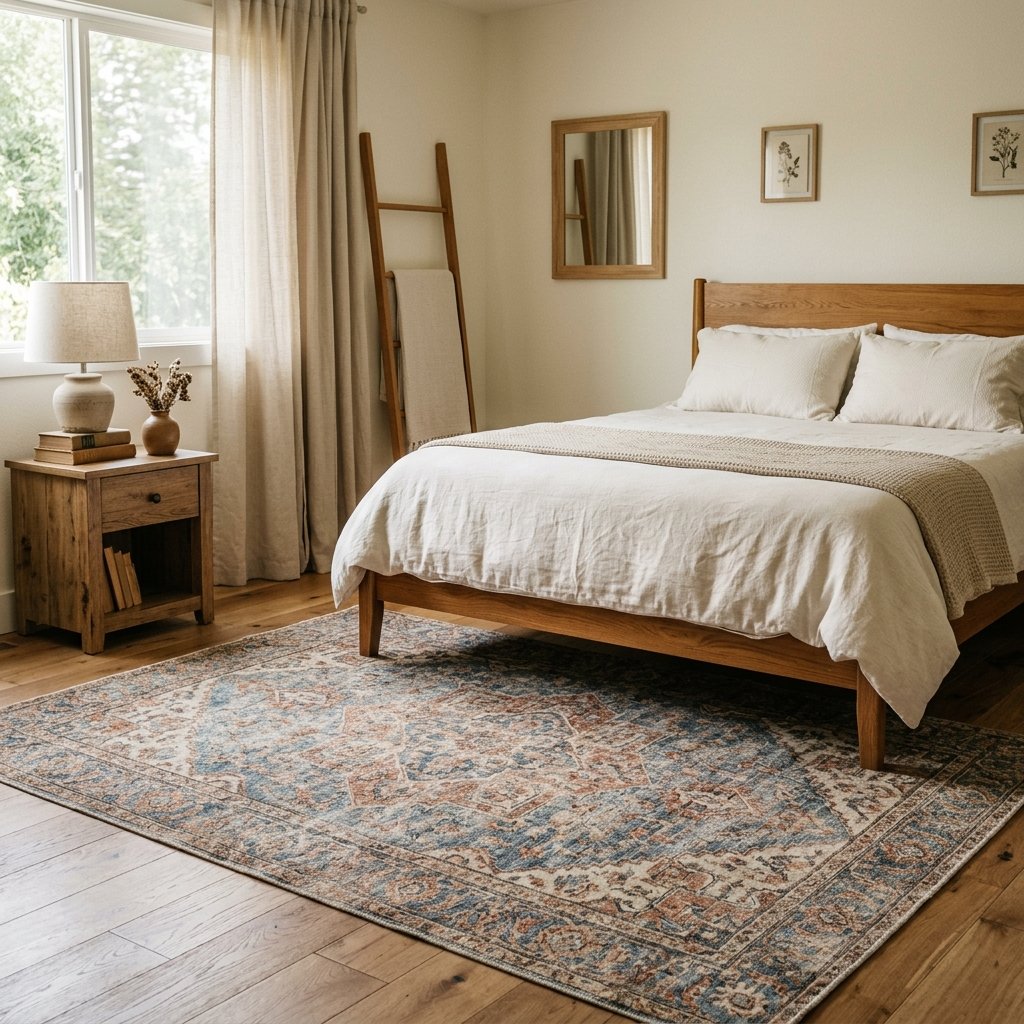
7. Add Pattern With a Vintage-Inspired Rug
Vintage-style rugs can bring character to a bedroom.
They work especially well in rooms with:
- Simple bedding
- White walls
- Wood furniture
- Minimal decor
Try patterns with muted shades of:
- Blue
- Rust
- Olive
- Rose
- Cream
A faded pattern can make the room feel collected instead of overly coordinated.
8. Choose a Blue Bedroom Rug
Blue is an easy color to use in bedrooms because it can feel calm and grounding.
Try:
- Dusty blue
- Navy
- Denim
- Blue-gray
- Muted teal
Pair a blue rug with:
- White bedding
- Warm wood
- Cream upholstery
- Brass accents
A patterned blue rug is especially useful if you want color without painting the walls.
9. Try a Warm Beige or Taupe Rug
Warm neutrals can make a bedroom feel more inviting.
A beige or taupe rug works well with:
- Cream bedding
- Olive accents
- Terracotta
- Warm wood
- Brass
This is a good choice for organic-modern, transitional, and traditional bedrooms.
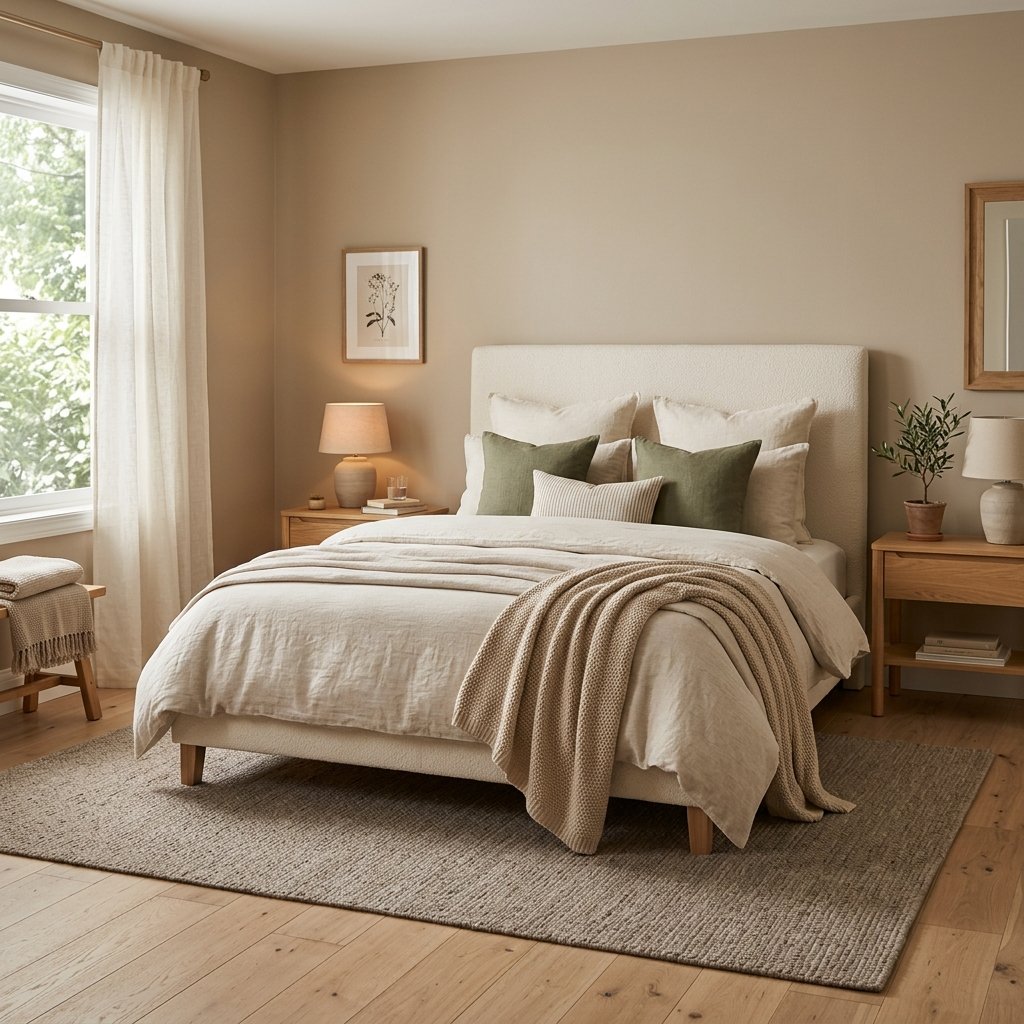
10. Use a Dark Rug to Ground a Light Bedroom
If the room has pale walls and light furniture, a darker rug can add needed contrast.
Try:
- Charcoal
- Deep navy
- Dark brown
- Forest green
A darker rug can make the bed area feel more anchored.
It may also disguise some everyday wear better than a very pale rug.
Balance the darker floor color with lighter bedding and walls so the room does not feel visually heavy.
11. Use a Light Rug in a Dark Bedroom
The reverse can work beautifully too.
A cream or pale beige rug can brighten a bedroom with:
- Dark walls
- Black furniture
- Walnut wood
- Moody bedding
The contrast keeps the space from feeling too dense.
12. Layer a Smaller Rug Over a Larger Neutral Rug
Layering rugs can add extra texture.
For example:
- Large jute-style rug underneath
- Smaller vintage-style rug on top
This works well in bedrooms with a relaxed, collected look.
Make sure the rugs lie flat and do not create uneven edges that could become tripping hazards.
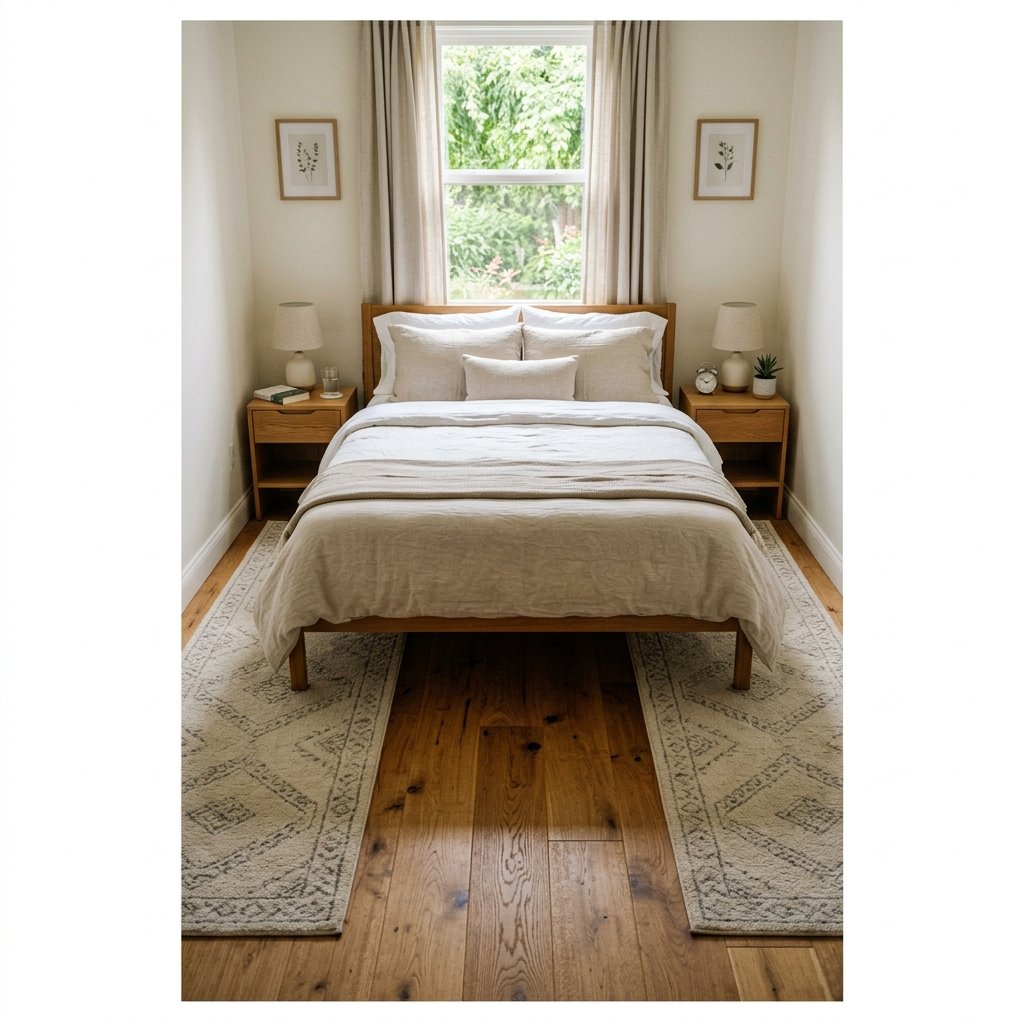
13. Use Runner Rugs Beside the Bed
If a large area rug is not practical, use runners instead.
Place one on each side of the bed.
This gives you softness underfoot without covering the whole floor.
Runners can work especially well in:
- Narrow bedrooms
- Rental homes
- Rooms with beautiful hardwood floors
For a more balanced look, choose matching or closely coordinating runners.
14. Place a Rug at the Foot of the Bed
A smaller rug at the foot of the bed can work in certain layouts.
This is most effective when the rug connects visually with:
- Bench
- Ottoman
- Seating area
The rug should feel like part of a defined zone rather than a random floating rectangle.
15. Use a Round Rug in a Bedroom Seating Area
A round rug can soften a room with many rectangular furniture pieces.
Try one under:
- Reading chair
- Small table
- Accent chair pair
This can create a separate mini-zone within a large bedroom.
It is usually better to use a round rug in a secondary seating area than directly beneath a standard rectangular bed.
16. Coordinate the Rug With the Bedding
Your rug does not need to match the bedding exactly.
Instead, repeat one or two colors.
For example:
- Blue rug + blue stripe in pillows
- Rust rug + warm brown blanket
- Green rug + olive cushion
- Cream rug + neutral linen bedding
This creates a cohesive room without making everything look overly matched.
17. Let the Rug Add the Main Pattern
If your bedding and walls are simple, the rug can provide the room’s strongest pattern.
Try:
- Vintage floral
- Faded geometric
- Subtle medallion
- Soft stripe
Keep surrounding textiles quieter so the room does not become visually busy.
How to Choose the Right Bedroom Rug Size
Rug size depends on more than the bed.
Measure:
- Bed width and length
- Room dimensions
- Nightstand width
- Bench or furniture at foot of bed
- Walkways
The rug should visually relate to the bed rather than looking like a small mat beneath it.
Before buying, use painter’s tape to mark the approximate rug dimensions on the floor.
This makes it much easier to judge scale.
Area Rug Placement for a Queen Bed
Common approaches include:
- Entire bed and nightstands on rug
- Rug under most of bed, nightstands off
- Rug under lower two-thirds of bed
In many bedrooms, the second or third option offers the best balance between coverage and rug visibility.
Make sure there is comfortable rug exposure on both sides.
Area Rug Placement for a King Bed
King beds need more visual support.
A rug that is too small can look especially noticeable.
Choose a rug large enough to extend beyond the sides and foot of the bed.
In larger rooms, placing the entire bed and nightstands on the rug can work beautifully.
Always measure the actual furniture arrangement rather than choosing based on bed size alone.
Area Rugs for Small Bedrooms
In a small room, avoid a rug that feels awkwardly squeezed against every wall.
Try:
- Rug under lower part of bed
- Narrow runners
- One medium rug that extends beyond the bed
A light or tonal rug can help keep the room visually calm.
You do not necessarily need the biggest rug possible.
Proportion matters more.
Area Rugs for Large Bedrooms
Large bedrooms can handle more generous rugs.
A bigger rug can connect:
- Bed
- Nightstands
- Bench
- Nearby chair
If the room has a separate sitting area, consider a second rug to define that zone.
The two rugs do not have to match exactly, but they should relate in color or style.
Bedroom Rugs for Hardwood Floors
Wood floors pair beautifully with area rugs.
Before adding a rug, check:
- Floor finish
- Rug backing
- Rug pad compatibility
Some backing materials may not be suitable for every flooring finish.
Choose a pad approved for the rug and flooring where appropriate.
Do not allow moisture to stay trapped underneath.
Bedroom Rugs Over Carpet
You can layer an area rug over wall-to-wall carpet.
This works well when you want:
- More color
- Better definition around the bed
- Added pattern
A lower-pile rug is often easier to stabilize than a very thick one.
Use a rug pad or anchoring method designed for rug-over-carpet applications if needed.
Best Bedroom Rug Colors
Cream
Soft and versatile.
Beige
Warm and easy to coordinate.
Taupe
Works well with modern and traditional rooms.
Blue
Calm and classic.
Green
Natural and grounding.
Rust
Warm and character-rich.
Charcoal
Strong contrast for light bedrooms.
Muted Multicolor
Useful for connecting several room colors at once.
How to Choose a Rug Color for Your Bedroom
Start with the biggest existing surfaces:
- Flooring
- Bed
- Bedding
- Curtains
- Walls
Then decide whether you want the rug to blend or contrast.
For a quiet room, choose a color close to the floor or bedding.
For more personality, choose a rug with deeper contrast or pattern.
Pay attention to undertones.
A cool gray rug may not work well with a very warm beige bedroom, while a warm taupe rug may feel better.
What Material Is Best for a Bedroom Area Rug?
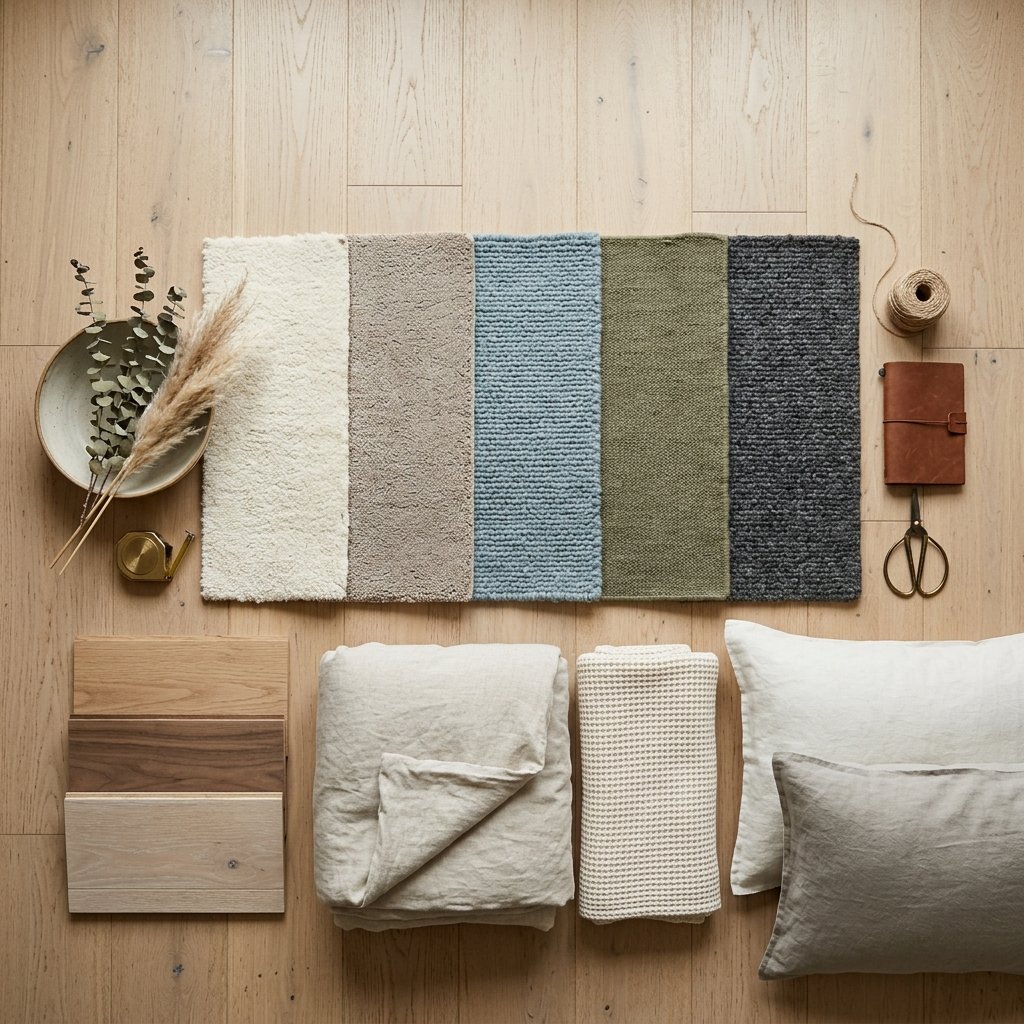
There is no single best choice.
Consider:
- Softness
- Durability
- Cleaning
- Allergies
- Pets
- Budget
- Rug placement
Bedroom rugs can usually be softer than kitchen or entry rugs because they experience less mess.
Still, choose something you can realistically clean and maintain.
Follow the manufacturer’s care instructions.
Should You Use a Rug Pad in the Bedroom?
A compatible rug pad can be useful.
It may help:
- Reduce slipping
- Keep edges flatter
- Protect flooring
- Add cushioning
Choose a pad suitable for both the rug and flooring.
It should remain hidden beneath the rug rather than extending beyond it.
How to Make a Bedroom Rug Look More Expensive
Choose a Generous Size
A slightly larger rug often looks more intentional than one that barely fits under the bed.
Keep the Palette Cohesive
Repeat a few rug colors elsewhere in the room.
Avoid Curling Corners
Flat edges instantly make the rug look more polished.
Use Good Proportions
The rug should support the bed visually.
Keep It Clean
Vacuum and care for it according to the manufacturer’s recommendations.
Pair It With Simple Bedding
If the rug has a detailed pattern, keep nearby textiles calmer.
Common Bedroom Area Rug Mistakes
Choosing a Rug That Is Too Small
This is one of the most common problems.
The rug should extend beyond the bed enough to feel intentional.
Pushing the Rug Too Far Under the Headboard
If most of the rug is hidden, it may not provide much visual impact.
Ignoring Nightstand Placement
Decide in advance whether the nightstands will sit on or off the rug.
Forgetting Door Clearance
A thick rug can interfere with doors.
Using a Rug That Slides
Secure it appropriately.
Choosing Color Without Considering Flooring
The floor and rug should work together.
Overdoing Pattern
If bedding, wallpaper, curtains, and rug are all bold, the room may feel too busy.
Bedroom Area Rug Safety Tips
Rugs should make the bedroom more comfortable, not less safe.
Keep these points in mind:
- Use an appropriate non-slip rug pad where needed.
- Keep corners flat.
- Avoid thick edges in major walking paths.
- Make sure doors can open fully.
- Keep rugs away from heating equipment and open flames.
- Check rug backing compatibility with your flooring.
- Clean spills promptly.
- Do not leave damp rugs on wood or other moisture-sensitive flooring.
- Keep walking paths clear, especially at night.
- Replace rugs with damaged backing or curled edges.
FAQ About Bedroom Area Rugs
How big should a rug be under a bed?
It depends on the bed and room, but the rug should generally extend noticeably beyond the sides and foot of the bed rather than disappearing underneath it.
Does the whole bed need to sit on the rug?
No. Many bedrooms look great with the rug under the lower two-thirds of the bed and the nightstands left on the flooring.
Can you use runners beside a bed?
Yes. Matching runners are a good alternative when a large area rug does not fit the budget or room layout.
Should a rug go under the nightstands?
It can, but it does not have to. Both approaches can look intentional.
What color rug is best for a bedroom?
Cream, beige, taupe, blue, muted green, charcoal, and vintage-inspired multicolor rugs are versatile choices.
Can you put an area rug over carpet?
Yes. Use an appropriate pad or stabilizing method if needed so the rug stays flat.
Should a bedroom rug match the bedding?
It does not need to match exactly. Repeating one or two colors usually creates a more natural look.
Are light rugs practical in bedrooms?
They can be, especially in lower-traffic bedrooms. Consider pets, children, footwear habits, and cleaning before choosing a very pale rug.
Final Thoughts
The best bedroom area rugs make the room feel softer, more balanced, and more connected.
Start with scale.
A rug should support the bed visually and extend far enough beyond it to feel intentional. From there, decide whether you want the rug to blend quietly with the room or add stronger color and pattern.
Neutral rugs create a calm backdrop. Vintage-inspired designs add character. Blue and green can bring a restful feel, while darker rugs can ground a light room.
Placement matters just as much as color.
Whether the rug sits under the entire bed, the lower two-thirds, or is replaced with runners along each side, the goal is the same: create a comfortable, practical layout that feels thoughtfully designed.