

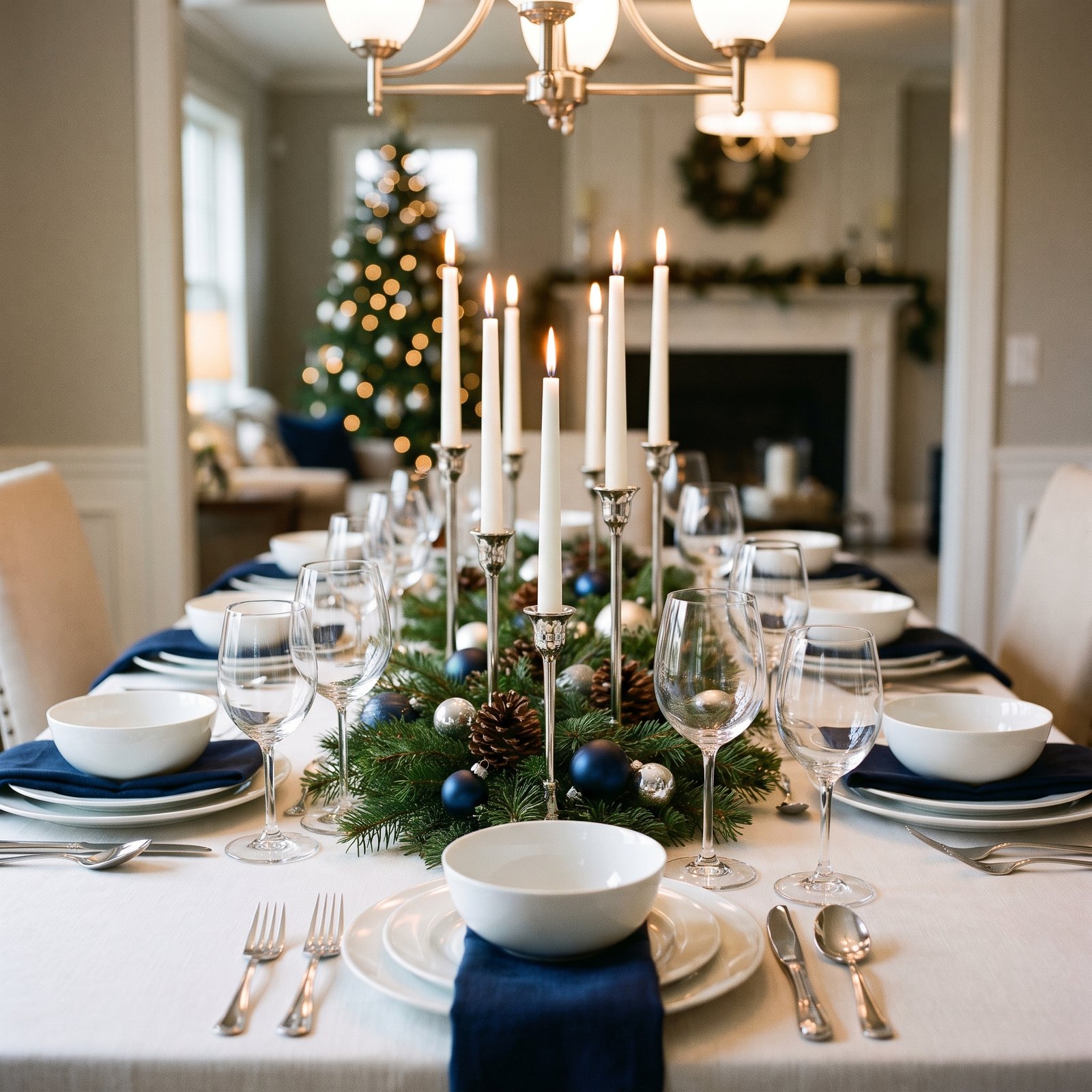
Blue and silver Christmas decor creates a holiday look that feels elegant, wintry, and a little different from the traditional red-and-green palette. Cool blue tones pair naturally with shimmering silver, white lights, glass ornaments, snowy greenery, and metallic accents, making this color combination especially beautiful in modern, glam, coastal, and winter-inspired homes.
The key to decorating with blue and silver is balance. Too much shiny silver can make a room feel cold, while too many different shades of blue can make the decor look disconnected. A more polished approach is to choose one main blue tone, repeat silver in a few finishes, and soften everything with white, greenery, natural textures, or warm lighting.
You can use this palette throughout an entire room or keep it concentrated on the Christmas tree, mantel, dining table, or entryway.
These ideas will help you create a cohesive blue and silver Christmas look that feels festive, sophisticated, and still welcoming.
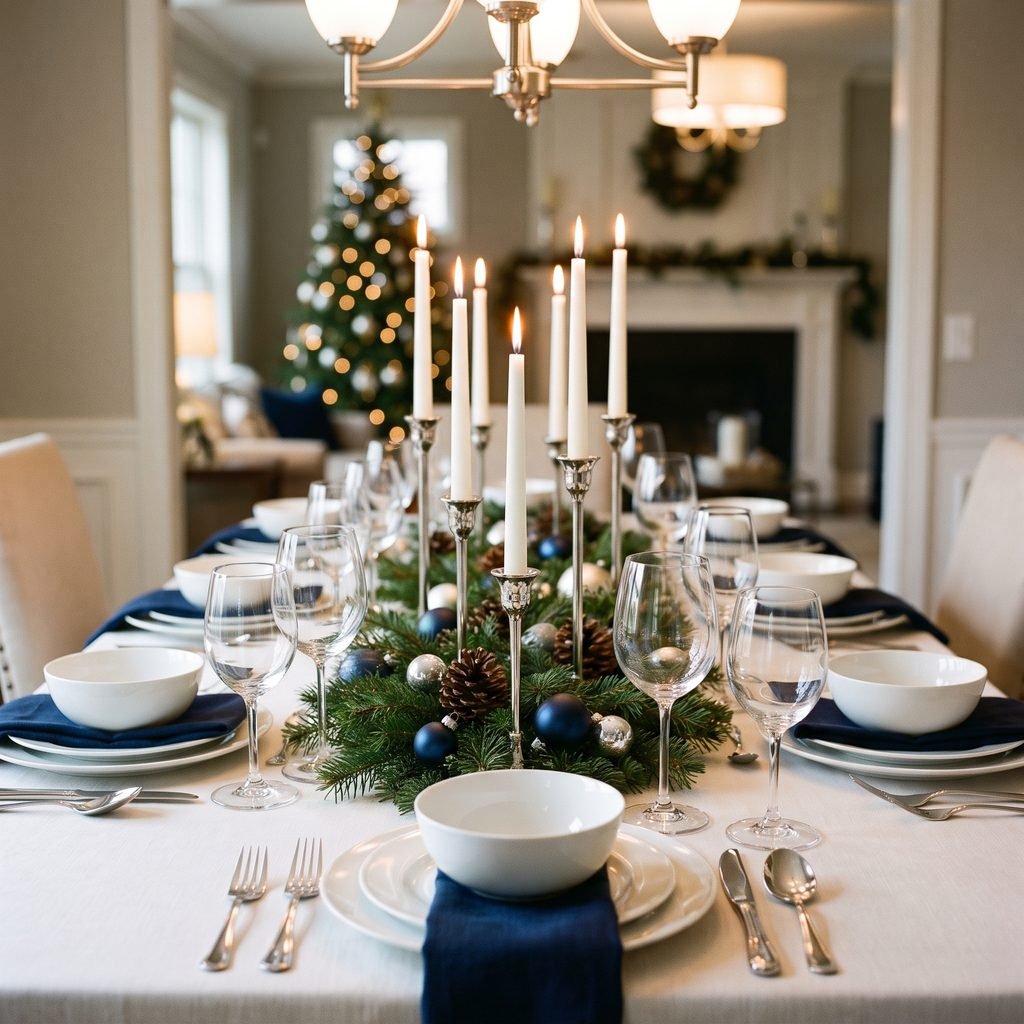
1. Start With One Main Shade of Blue
Blue is a broad color family, so choosing the right shade first makes the rest of the decorating process much easier.
Popular options include:
- Navy blue
- Royal blue
- Ice blue
- Dusty blue
- Slate blue
- Teal-blue
- Pale winter blue
For a dramatic, traditional look, navy or royal blue works beautifully with bright silver.
For something softer, pair pale blue with brushed silver, white, and frosted greenery.
If you prefer a modern palette, deep navy mixed with matte silver, charcoal, and warm white can feel especially sophisticated.
Try not to introduce too many unrelated blue tones at once. One main shade plus a lighter or darker variation is usually enough.
2. Mix Several Silver Finishes
Using only highly reflective silver ornaments can make the decorating feel flat or overly shiny.
Instead, combine several finishes.
Try mixing:
- Matte silver
- Brushed silver
- Mirrored silver
- Glittered silver
- Mercury-glass-style finishes
- Metallic fabric
- Frosted metallic accents
The variety creates depth even though everything belongs to the same color family.
For example, a Christmas tree might include matte silver balls, reflective ornaments, glittered picks, and silver ribbon.
Because the finishes catch light differently, the tree will look more layered.
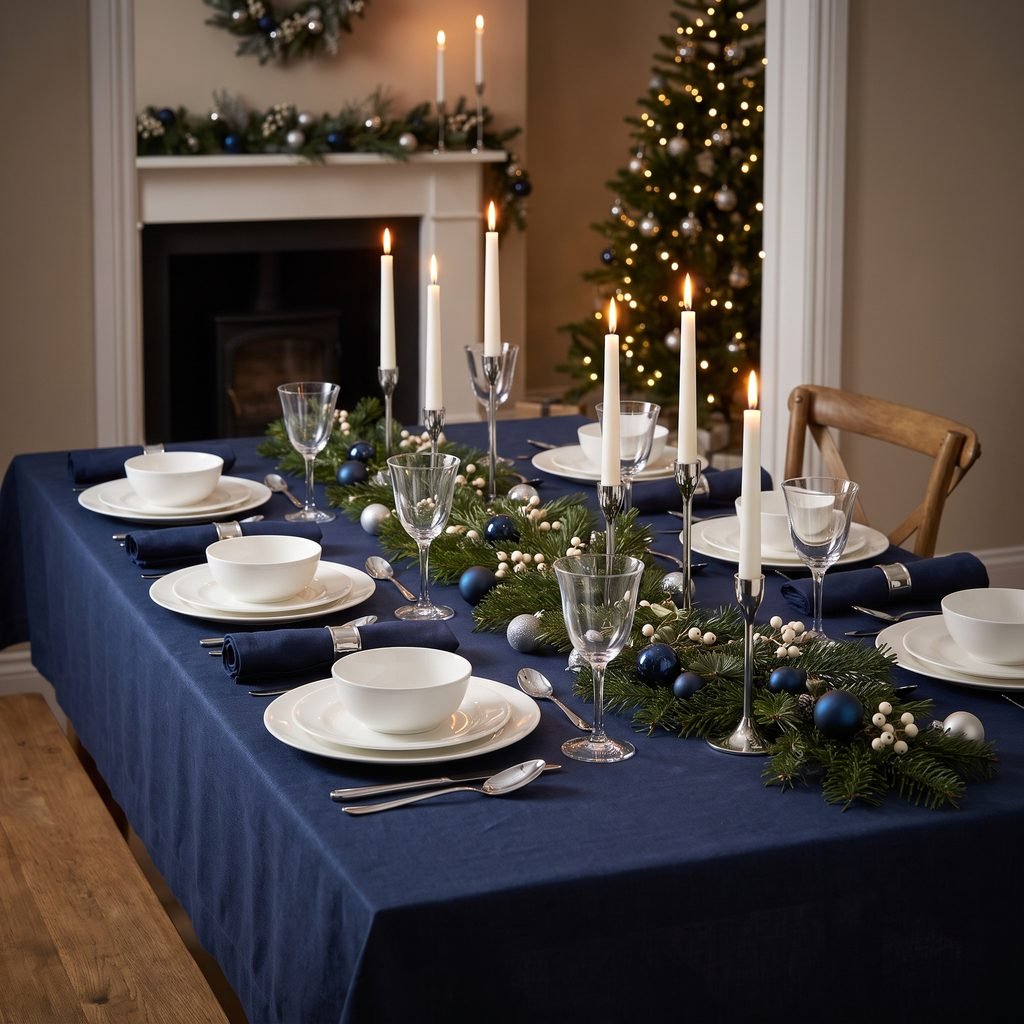
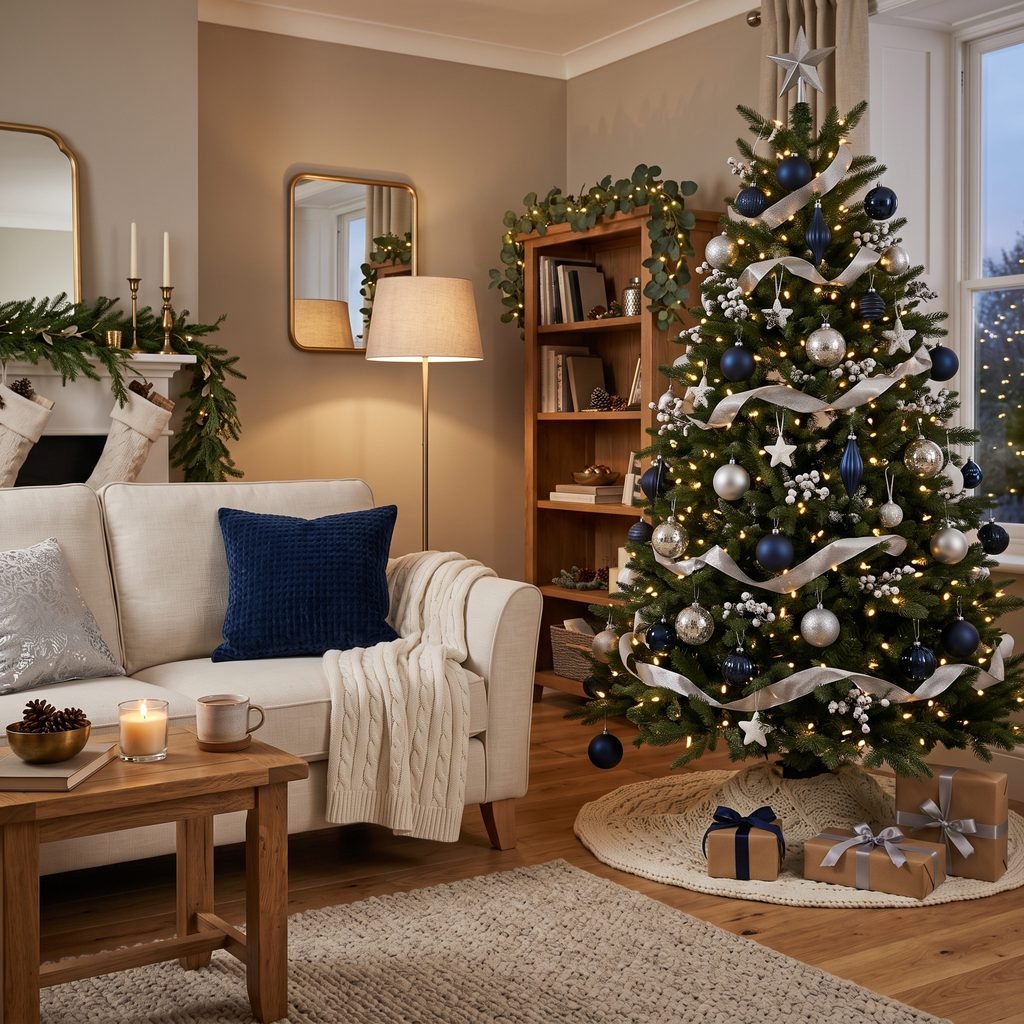
3. Build a Blue and Silver Christmas Tree
The Christmas tree is the easiest place to establish the entire color scheme.
Start with your lights.
Warm white lights will soften the cool palette, while cooler white lights can make the blue and silver combination feel icier.
Then add larger ornaments first.
Distribute blue and silver pieces around the tree rather than decorating one color at a time.
Next, fill the gaps with smaller ornaments, ribbon, picks, or decorative stems.
A simple decorating formula might include:
- Navy ornaments
- Silver ornaments
- White ornaments
- Silver ribbon
- Frosted branches
- White lights
If the tree starts to feel too metallic, introduce white or clear ornaments to give the eye a place to rest.
4. Add Silver Ribbon for Movement
Ribbon can help connect all the decorations on the tree.
Silver ribbon works especially well because it reflects nearby lights and creates movement among the branches.
You might use:
- Metallic mesh
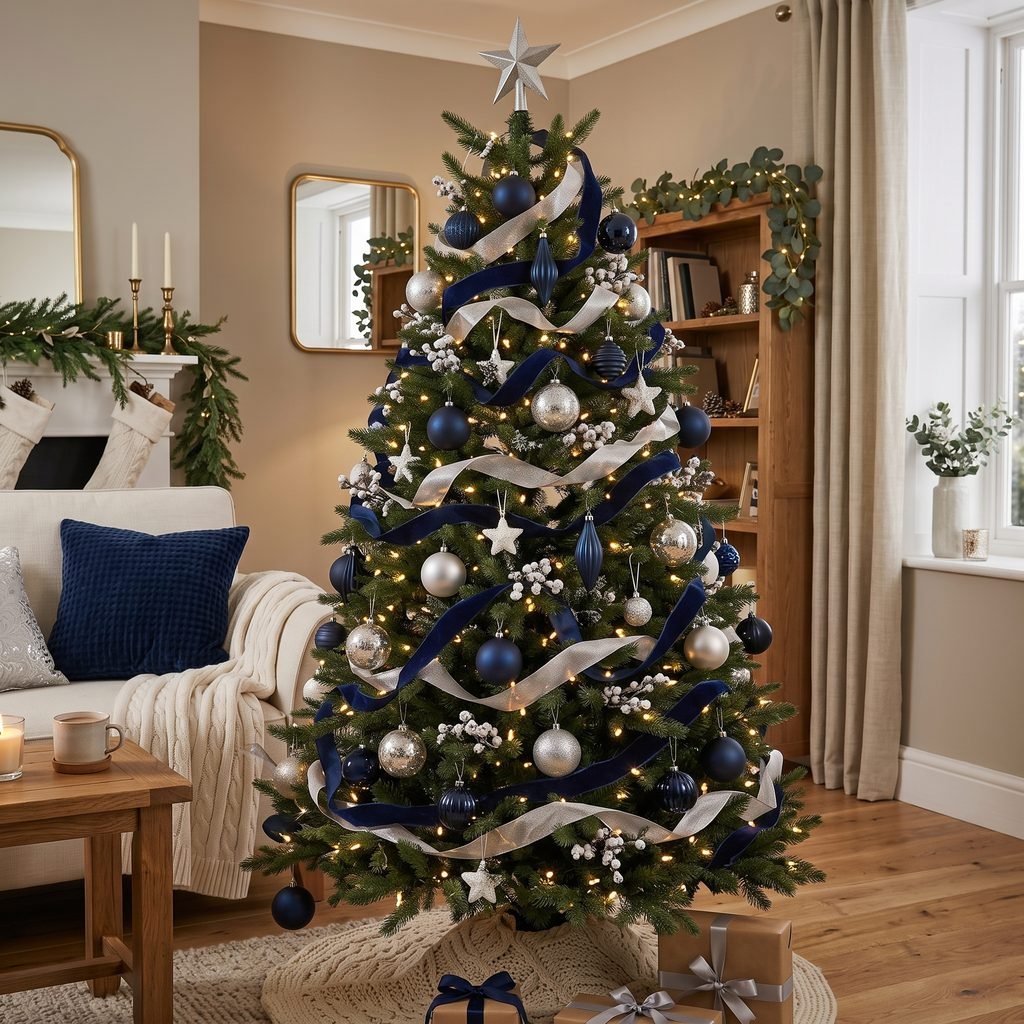
- Velvet ribbon with silver detail
- Satin ribbon
- Wired glitter ribbon
- Sheer silver ribbon
Rather than wrapping ribbon tightly around the tree like garland, try creating loose vertical sections or short tucked loops.
This gives the tree a softer, fuller look.
Wired ribbon is particularly helpful because you can shape it and tuck the ends securely into branches.
5. Layer in White to Soften the Palette
Blue and silver can become visually cold if there is nothing to soften them.
White is one of the easiest balancing colors.
Add it through:
- White ornaments
- Snowflake decorations
- Frosted picks
- White berries
- Faux snow
- Cream stockings
- White candles
- Pale textiles
White helps create separation between darker blue and reflective silver.
It also reinforces the winter theme without introducing another strong color.
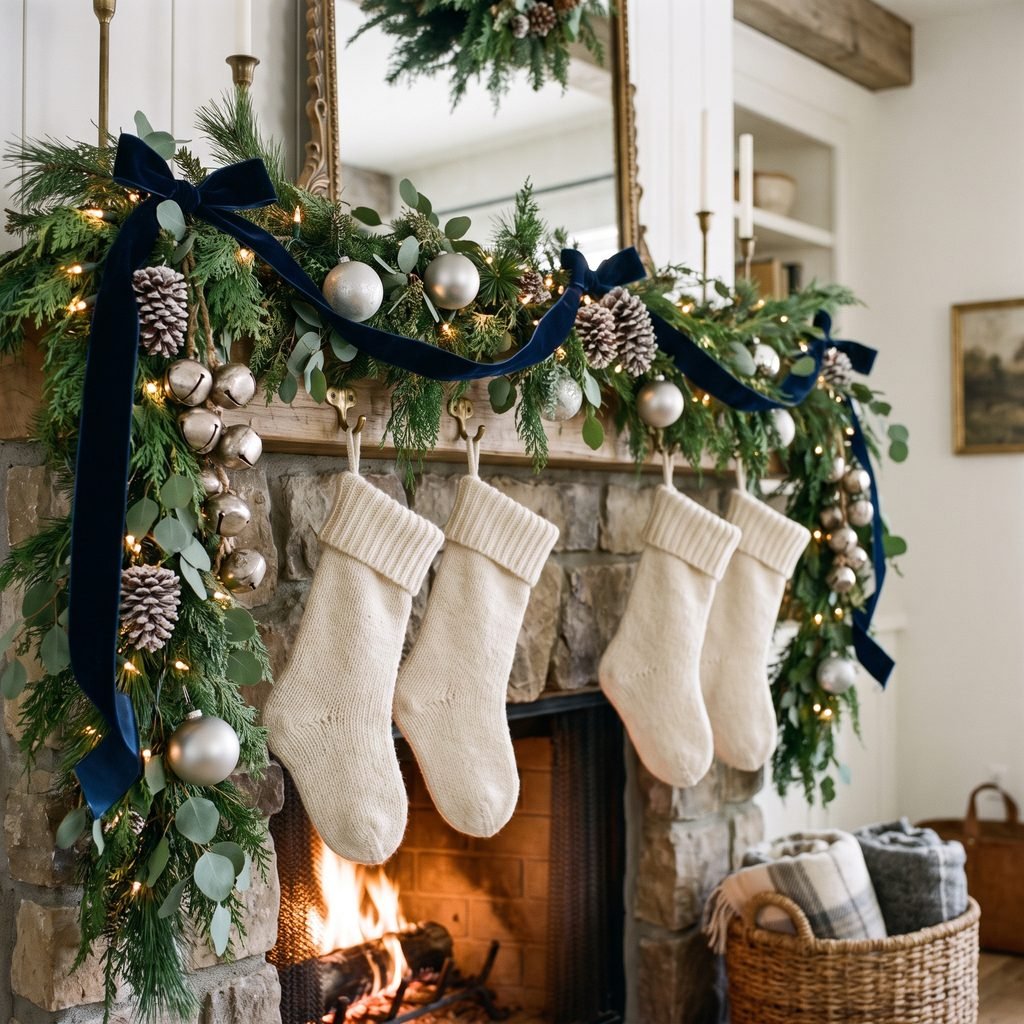
6. Use Frosted Greenery
Frosted greenery fits naturally with blue and silver Christmas decor because it creates a snowy winter appearance.
Use it in:
- Christmas trees
- Mantel garlands
- Wreaths
- Table centerpieces
- Stair garlands
- Entryway arrangements
You do not need every branch to be heavily flocked.
A few lightly frosted picks tucked into ordinary greenery can be enough to create the effect.
Mixing natural green with frosted elements often looks more dimensional than using only completely white flocked greenery.
7. Create an Elegant Blue and Silver Mantel
The mantel is a great place to repeat the Christmas tree palette.
Start with greenery.
Then weave in blue and silver details such as:
- Blue ornaments
- Silver bells
- Metallic candleholders
- Silver ribbon
- Frosted pinecones
- Blue velvet bows
Keep the color repetition consistent with the tree.
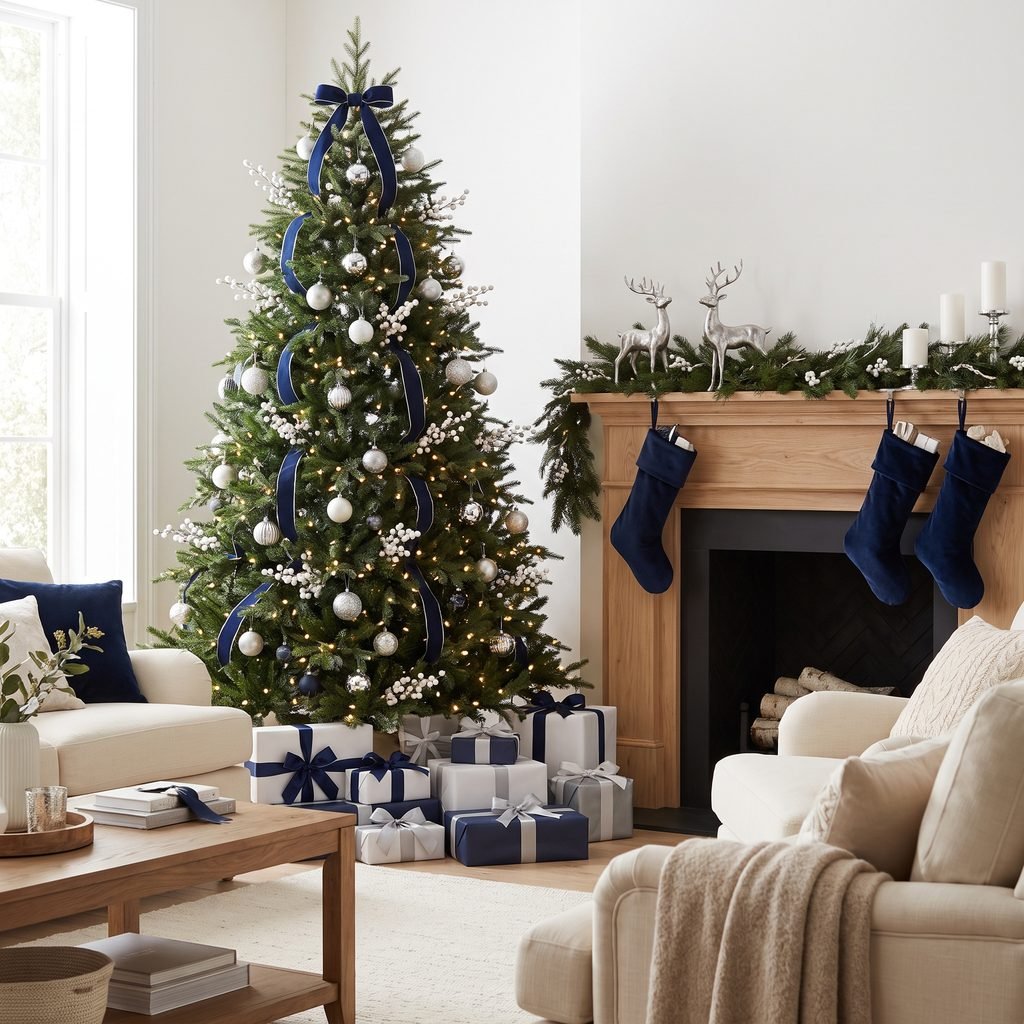
If your tree uses navy, silver, and white, carry those same three tones across the mantel rather than introducing turquoise, gold, and red.
Hang neutral or coordinating stockings below.
Cream, white, navy, or gray can all work depending on the rest of the room.
8. Decorate With Blue Velvet Ribbon
Velvet can make cool Christmas colors feel warmer and richer.
Navy velvet ribbon is particularly beautiful against evergreen.
Use it on:
- Trees
- Wreaths
- Garland
- Stair railings
- Gift wrap
- Dining chairs
Because velvet has a soft surface rather than a reflective one, it contrasts nicely with silver ornaments and metallic ribbon.
This mix of soft and shiny textures keeps the decor from feeling one-dimensional.

9. Add Silver Bells
Silver bells are a simple way to repeat the metallic element without relying entirely on ornaments.
Hang them:
- From a wreath
- At the end of garland
- From cabinet handles
- On a door
- In a mantel arrangement
Larger bells can make a stronger statement than many tiny pieces.
A cluster of two or three bells tied with navy velvet ribbon can look polished and festive without adding much visual clutter.
10. Create a Blue and Silver Christmas Wreath
A wreath is another easy place to continue your color scheme.
Start with an evergreen base and add a small number of blue and silver accents.
Try:
- Navy ribbon
- Silver ornaments
- White berries
- Frosted pinecones
- Silver bells
An asymmetrical design can feel more modern.
Place most of the decoration along the lower side or one edge of the wreath and leave part of the greenery exposed.
For a fuller traditional style, distribute ornaments and ribbon evenly around the entire wreath.
11. Style a Blue and Silver Christmas Table
You can carry the palette into the dining room without making the table feel overly themed.
Start with neutral basics.
Use:
- White dishes
- Clear glassware
- Silver flatware
- White or gray linens
Then layer in blue.
A navy runner, blue napkins, or blue glassware can create enough color.
For the centerpiece, combine evergreen, silver candleholders, white candles, and a few blue ornaments.
Keep centerpieces low enough that guests can comfortably see across the table.

12. Wrap Gifts to Match the Decor
Presents become part of the room once they are placed under the tree.
Coordinating gift wrap can make the entire display feel more intentional.
Try combinations such as:
- Navy paper + silver ribbon
- White paper + blue velvet ribbon
- Silver paper + white ribbon
- Kraft paper + navy ribbon
- Blue paper + silver cord
You do not need every gift to match exactly.
Choose two or three wrapping paper styles and repeat the same ribbon colors across them.
This creates variety while maintaining a cohesive look.
13. Add Blue and Silver Christmas Pillows
Holiday pillows can help connect the Christmas decorations with the rest of the living room.
Instead of buying pillows covered in obvious Christmas graphics, consider solid or subtly patterned options that fit the color palette.
For example:
- Navy velvet
- Blue plaid
- Silver-gray texture
- Cream knit
- Blue-and-white pattern
This approach makes the room feel seasonal without becoming overly themed.
You can then add one more obviously festive pillow if you want.
14. Use Candlelight to Warm Up the Colors
Blue and silver are naturally cool colors.
Warm candlelight helps balance them.
Use candles on:
- Mantels
- Dining tables
- Consoles
- Coffee tables
- Sideboards
If open flame is not appropriate for the location, flameless candles can create a similar visual effect.
Place candles away from greenery, fabric, paper decorations, and other combustible materials.
Never leave open flames unattended.
15. Add Snowflake Decorations
Snowflakes fit naturally into a blue and silver winter palette.
Use them selectively rather than covering every surface.
They can work as:
- Tree ornaments
- Window decorations
- Garland accents
- Table decor
- Gift toppers
Mixing a few different textures can add interest.
For example, combine silver metallic snowflakes with white wood or felt versions.
If you already have a heavily decorated tree, use snowflakes more sparingly in the rest of the room.
16. Bring the Colors Into the Entryway
A small amount of blue and silver Christmas decor near the entrance creates a coordinated first impression.
Try a simple console setup with:
- Small tabletop tree
- Blue ornaments
- Silver bowl
- Evergreen branches
- White candles
Or hang a blue-and-silver wreath on the door and repeat those colors in a nearby planter or garland.
You do not need to decorate the entire entry.
One strong focal point usually works better than lots of small accessories.
17. Keep Some Natural Greenery Visible
One of the easiest ways to keep blue and silver Christmas decor from feeling too artificial is to let green remain part of the palette.
Natural-looking evergreen provides depth and contrast.
Instead of covering every branch with ornaments, leave some sections visible.
The same applies to garland and wreaths.
Greenery helps connect cool metallic decorations to a more familiar Christmas look and gives the palette warmth without adding another strong color.
Blue and Silver Christmas Tree Decorating Formula
If you want an easy starting point, use a simple layered approach.
First, add lights.
Then decorate in this order:
- Large blue ornaments
- Large silver ornaments
- Smaller blue and silver pieces
- White ornaments
- Ribbon
- Frosted picks
- Special ornaments
- Tree topper
Step back after each layer.
The goal is to distribute color evenly rather than filling every gap.
If one area looks noticeably darker, add silver or white.
If an area feels too shiny, add navy or another matte texture.
This gradual approach is much easier than trying to correct an overcrowded tree later.
Navy Blue and Silver Christmas Decor
Navy is one of the easiest blues to decorate with because it behaves almost like a neutral.
It creates strong contrast against:
- Silver
- White
- Evergreen
- Cream
- Light wood
Navy also works particularly well in traditional and transitional homes because it feels rich without being overly bright.
Try navy velvet ribbon on the tree, silver ornaments, white snowflakes, and warm lights.
Then repeat navy through throw pillows or gift wrap.
The result feels cohesive without requiring blue decorations everywhere.
Ice Blue and Silver Christmas Decor
For a lighter winter look, use pale or icy blue.
Pair it with:
- Silver
- White
- Clear glass
- Frosted greenery
- Soft gray
This palette can feel delicate and snowy.
It works especially well in bright rooms with white walls or pale furniture.
Because icy blue and silver are both very cool, warm white lights and cream textiles can prevent the room from feeling stark.
Royal Blue and Silver Christmas Decor
Royal blue creates a bolder, more glamorous look.
Because the blue itself is strong, use silver as a supporting color rather than trying to make both equally dominant.
A royal blue Christmas tree palette might include:
- Royal blue ornaments
- Silver ribbon
- Clear ornaments
- White lights
- A few white accents
Keep other nearby decor relatively simple.
Too many competing jewel tones can quickly move the palette away from the blue-and-silver look.
Blue, Silver, and White Christmas Decor
Adding white is one of the easiest ways to make blue and silver feel balanced.
Think of the palette as:
- Blue = main color
- Silver = sparkle
- White = softness
- Green = natural background
This formula works almost anywhere.
You can use it on the tree, mantel, table, wreath, and wrapped gifts without making the house feel overly coordinated.
How to Make Blue and Silver Christmas Decor Feel Cozy
Because this palette is naturally cool, texture is important.
Add softness through:
- Velvet ribbon
- Knit blankets
- Faux fur
- Cream pillows
- Woven baskets
- Natural wood
- Warm lighting
You can also use metallic silver sparingly.
If every ornament, candleholder, ribbon, and accessory is highly reflective, the room can feel hard.
Mix shiny finishes with matte ornaments, fabric, greenery, and natural materials.
Warm white lighting is another simple way to soften the look.
How to Make Blue and Silver Christmas Decor Look Expensive
A more polished Christmas look usually comes from editing rather than adding more decorations.
Choose a clear palette first.
Then repeat the same materials in several places.
For example:
- Navy velvet ribbon
- Matte silver ornaments
- White glass ornaments
- Evergreen
Use those elements on the tree, mantel, wreath, and gifts.
Vary scale as well.
A few oversized ornaments, substantial ribbon loops, and larger branches usually look more intentional than dozens of tiny pieces.
Avoid crowding every surface.
Negative space helps the decorations stand out.
Blue and Silver Christmas Decor on a Budget
You can create this look without replacing all of your existing Christmas decorations.
Start with the neutral items you already own.
Greenery, white ornaments, clear ornaments, white lights, and natural pinecones can all fit into a blue-and-silver palette.
Then purchase or DIY a smaller number of blue and silver accents.
For example, you could add:
- One roll of navy ribbon
- A set of blue ornaments
- Several silver ornaments
- Blue gift wrap
Repeating those few items throughout the room can make the color scheme look intentional without requiring an entirely new holiday collection.
You can also repurpose everyday navy pillows, blue glassware, silver serving pieces, and neutral throws.
Common Blue and Silver Christmas Decorating Mistakes
Using Too Many Shades of Blue
Navy, turquoise, teal, royal blue, icy blue, and cobalt can compete if they all appear equally.
Choose one primary shade and use another only as a supporting accent.
Making Everything Shiny
Mix metallic ornaments with matte, fabric, frosted, and natural textures.
Forgetting Warmth
Warm lights, wood, velvet, cream textiles, and natural greenery can prevent the palette from feeling cold.
Overdecorating the Tree
Leave some greenery visible.
The tree itself is part of the color scheme.
Introducing Too Many Extra Colors
A small amount of another neutral is fine, but lots of red, gold, pink, and purple can weaken the blue-and-silver theme.
Ignoring the Existing Room
Consider your furniture, wall color, flooring, and fabrics.
Your Christmas decor should complement the room rather than look completely separate from it.
FAQ About Blue and Silver Christmas Decor
Do blue and silver look good together for Christmas?
Yes. Blue and silver create a cool, wintry combination that works especially well with white, evergreen, glass, and warm lighting.
What color goes with blue and silver Christmas decorations?
White is one of the easiest additions because it softens the palette. Evergreen, cream, gray, clear glass, and natural wood can also work beautifully.
What color lights look best with blue and silver Christmas decor?
Warm white lights create a softer, cozier effect, while cool white lights produce a crisper, icier look. Choose based on the mood you want.
Can I mix navy and light blue Christmas decorations?
Yes, but it usually looks best when one shade is dominant. For example, use navy as the main blue and pale blue only as a small accent.
What ribbon works with a blue and silver Christmas tree?
Navy velvet, metallic silver, white satin, sheer silver, or blue-and-silver patterned wired ribbon can all work. Limit yourself to one or two ribbon styles for a cohesive look.
How do I keep blue and silver Christmas decor from looking cold?
Add natural greenery, warm white lights, velvet, cream textiles, wood, candles, and other soft or warm textures.
Does blue and silver Christmas decor work with farmhouse style?
Yes. Use muted navy or dusty blue with brushed silver, natural wood, pinecones, cream ribbon, and plenty of greenery rather than highly reflective glam finishes.
Final Thoughts
Blue and silver Christmas decor can feel sophisticated, festive, and surprisingly versatile.
Start by choosing one main shade of blue.
Navy creates a rich and classic look, pale blue feels snowy and delicate, and royal blue brings more drama.
Then layer in silver through several finishes instead of using only shiny metallic ornaments.
Add white to soften the combination, keep some natural greenery visible, and bring in warmth with velvet, wood, cream textiles, candles, or warm white lights.
You do not need to replace every Christmas decoration you own to create the look.
A few repeated blue and silver elements—such as ribbon, ornaments, gift wrap, and mantel accents—can be enough to establish a cohesive color palette throughout the room.
The goal is not to cover every surface in blue and silver. It is to repeat those colors thoughtfully so your holiday home feels coordinated, welcoming, and beautifully wintery.