

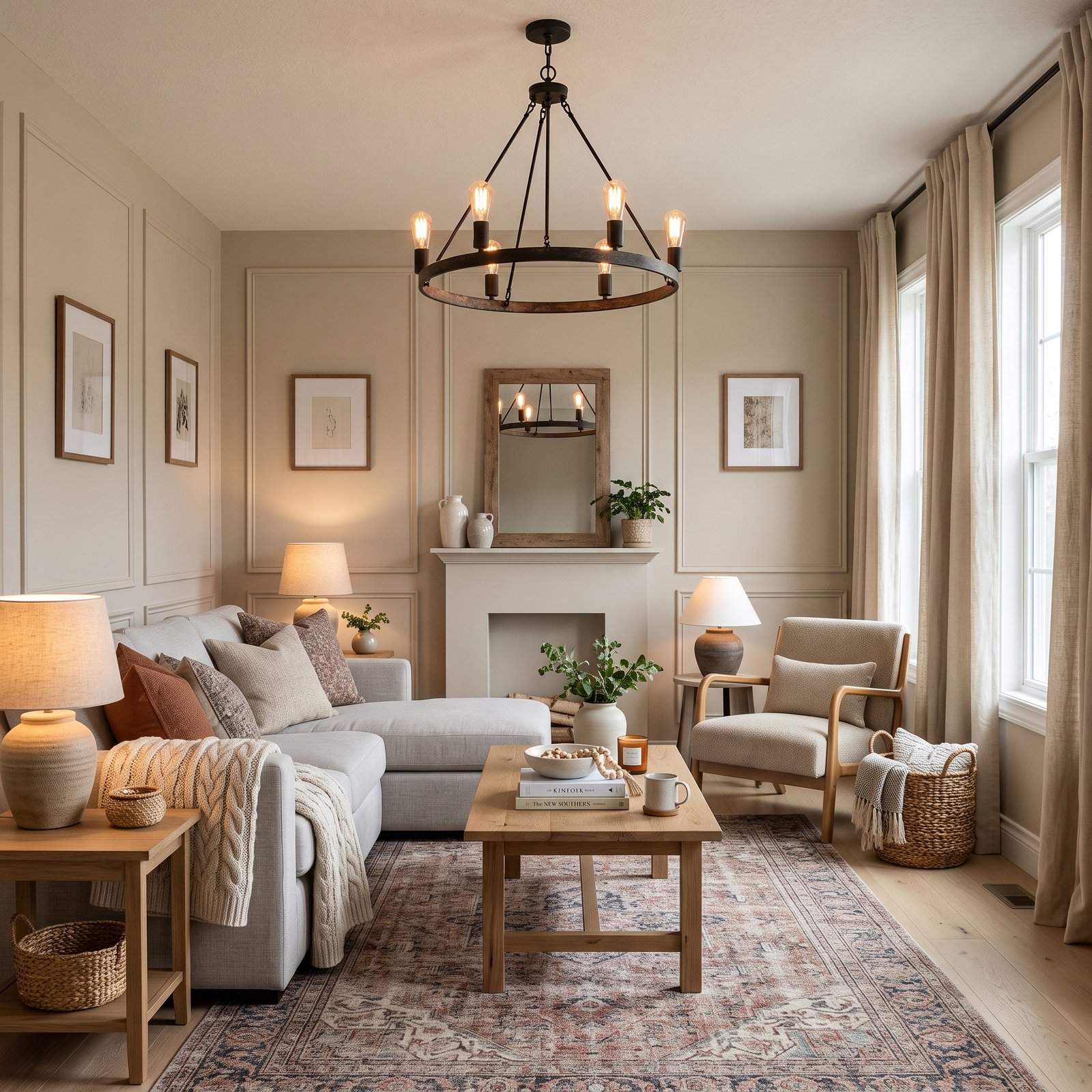
A builder grade home can be clean, functional, and move-in ready, but it may also feel a little plain. Basic trim, standard light fixtures, neutral walls, simple doors, and minimal architectural detail can make rooms feel finished without feeling especially personal.
The good news is that you do not need to gut the house to change that.
If you want to add character to a builder grade home, focus on the details that make a room feel layered: trim, molding, lighting, hardware, color, texture, built-ins, and thoughtful styling. Small updates can create a much more custom look without requiring a major renovation budget.
The best approach is to work one room at a time and choose improvements that suit the architecture you already have. A simple home can become warm, collected, and distinctive when the upgrades feel intentional rather than random.
Below are 17 practical ways to give a builder grade house more personality, charm, and visual interest.
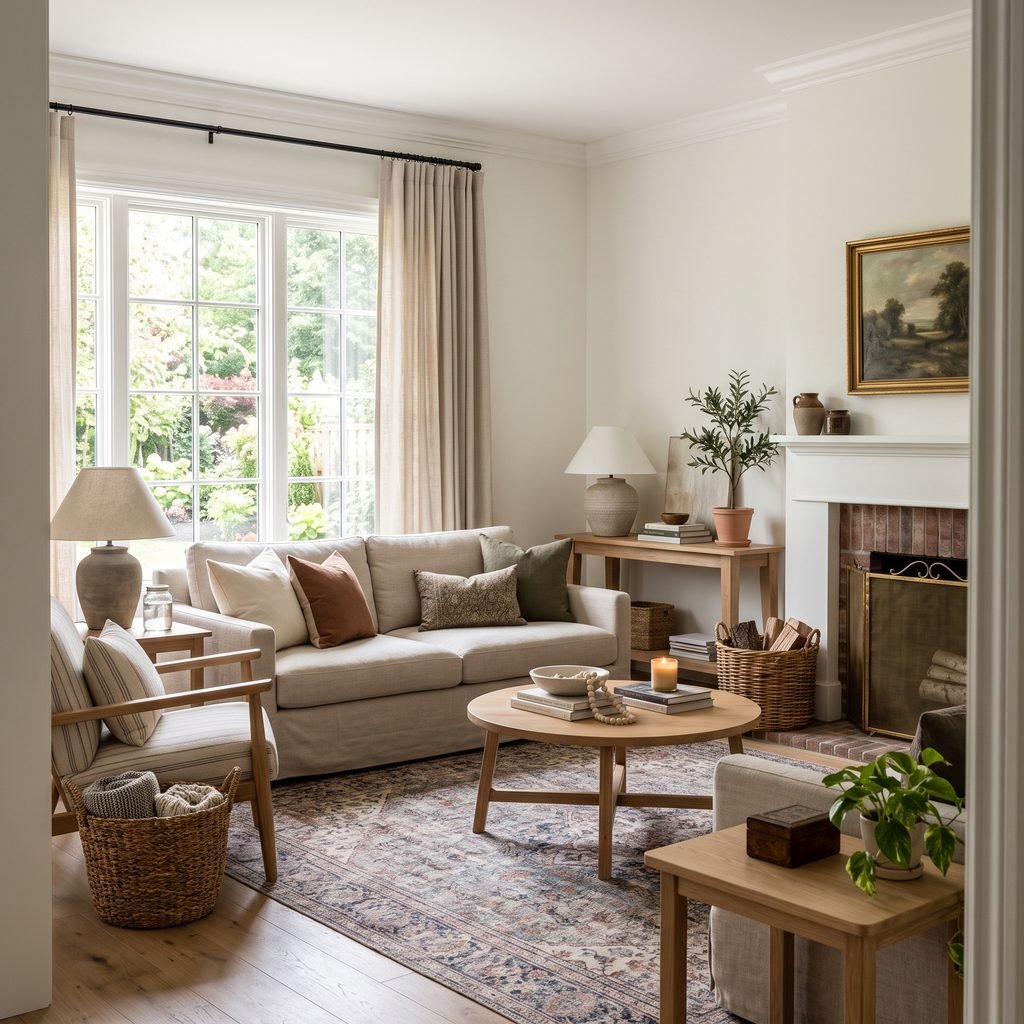
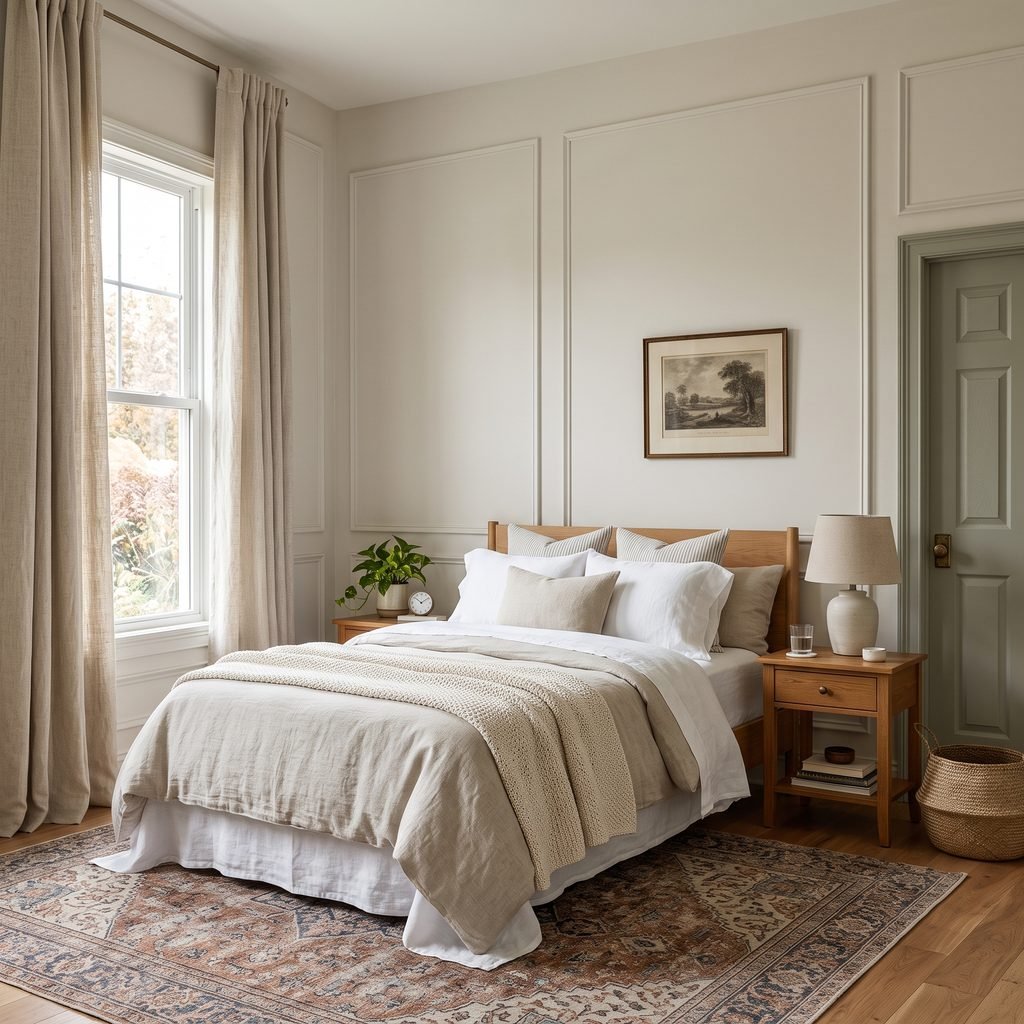
1. Add Wall Molding
Wall molding is one of the most effective ways to make plain rooms feel more architectural.
Depending on your style, consider:
- Picture frame molding
- Board and batten
- Applied wall trim
- Chair rail
- Box molding
Picture frame molding works especially well in living rooms, dining rooms, hallways, and bedrooms because it adds detail without taking up floor space.
Board and batten can create a slightly more casual or cottage-inspired look.
If you are installing trim yourself, carefully measure and plan the spacing before cutting. Locate wall studs where possible and use appropriate fasteners for your wall type.
Fill nail holes, caulk appropriate seams, sand smooth, and paint for a built-in appearance.
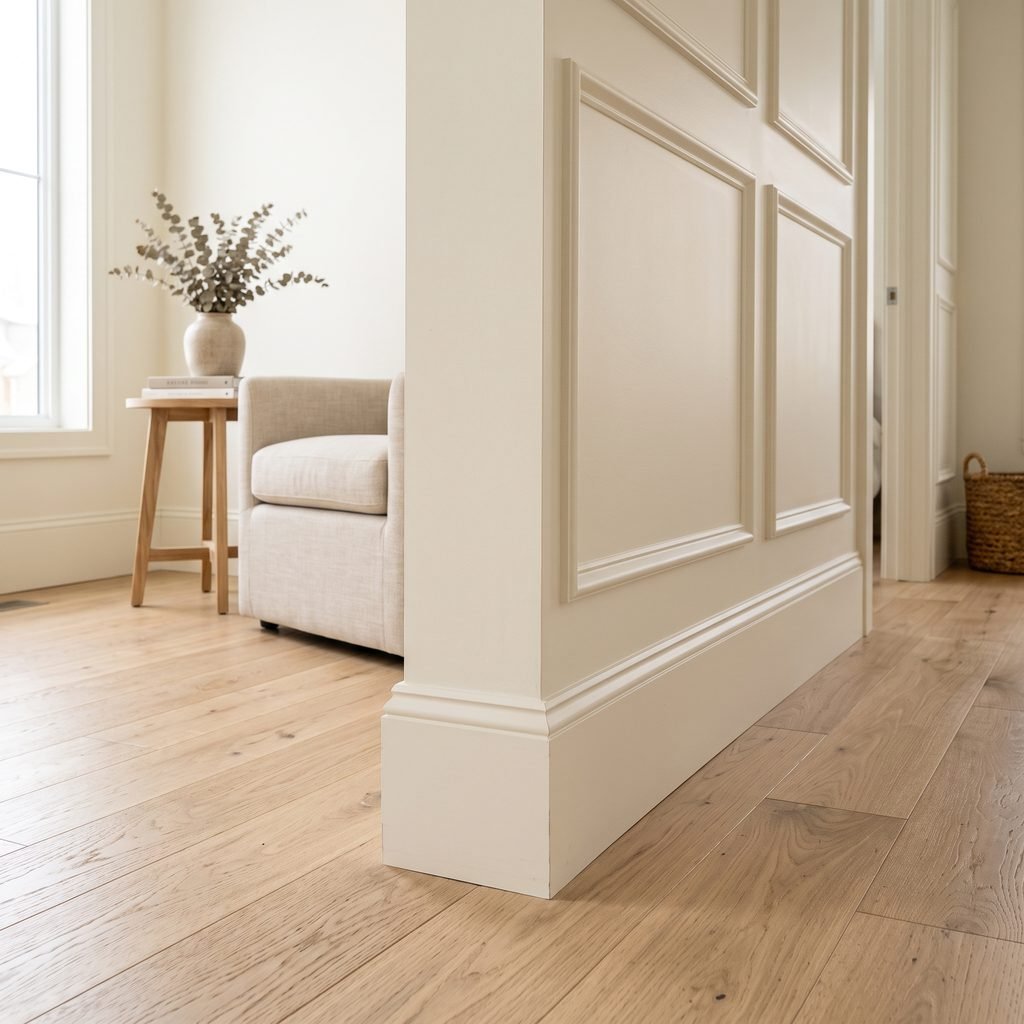
2. Upgrade the Baseboards
Basic builder grade baseboards are often narrow and visually easy to overlook.
Replacing them with taller, more substantial trim can change the entire room.
Larger baseboards can help walls feel more finished and create stronger visual definition between flooring and paint.
If replacing every baseboard is outside the budget, start with the most visible spaces:
- Entryway
- Living room
- Dining room
- Main hallway
Keep proportions in mind.
Very large trim can look out of scale in rooms with low ceilings, while extremely narrow trim can disappear in large spaces.
3. Add Crown Molding Strategically
Crown molding can make some builder grade spaces feel more traditional and complete.
It works particularly well in:
- Dining rooms
- Bedrooms
- Offices
- Living rooms
You do not have to use it throughout the entire house.
Adding crown molding to a few important rooms can provide plenty of character.
Choose a profile that matches the style of the home. Simple molding often looks better in a newer house than very elaborate ornate trim.
If walls or ceilings are uneven, installation may require careful measuring, coping, and finishing.
4. Replace Basic Light Fixtures
Lighting is one of the quickest ways to give a room personality.
Standard builder fixtures are usually selected to be inexpensive and neutral, which makes them easy to replace.
Consider upgrading:
- Dining chandelier
- Kitchen pendants
- Entry light
- Bathroom vanity lights
- Hallway flush mounts
- Bedroom fixtures
Look for fixtures that reinforce the style you want.
For example:
Traditional
Lanterns, aged brass, simple chandeliers.
Modern
Clean geometric shapes and streamlined finishes.
Cottage
Pleated shades, milk-glass-inspired fixtures, or simple painted metal.
Transitional
Classic silhouettes with simplified details.
Hardwired electrical work should be done safely and in accordance with local requirements. If you are not experienced with electrical work, use a qualified electrician.
5. Change the Interior Door Hardware
Door hardware is a small detail that can make a surprising difference.
Basic shiny knobs can be replaced with:
- Matte black levers
- Aged brass knobs
- Antique-inspired hardware
- Simple satin nickel levers
Choose one general finish or family of finishes for consistency.
You do not have to replace every handle in one weekend.
Start with the doors in the most visible rooms and update the rest gradually.
If the existing doors are still in good condition, new hardware can make them feel significantly more intentional.
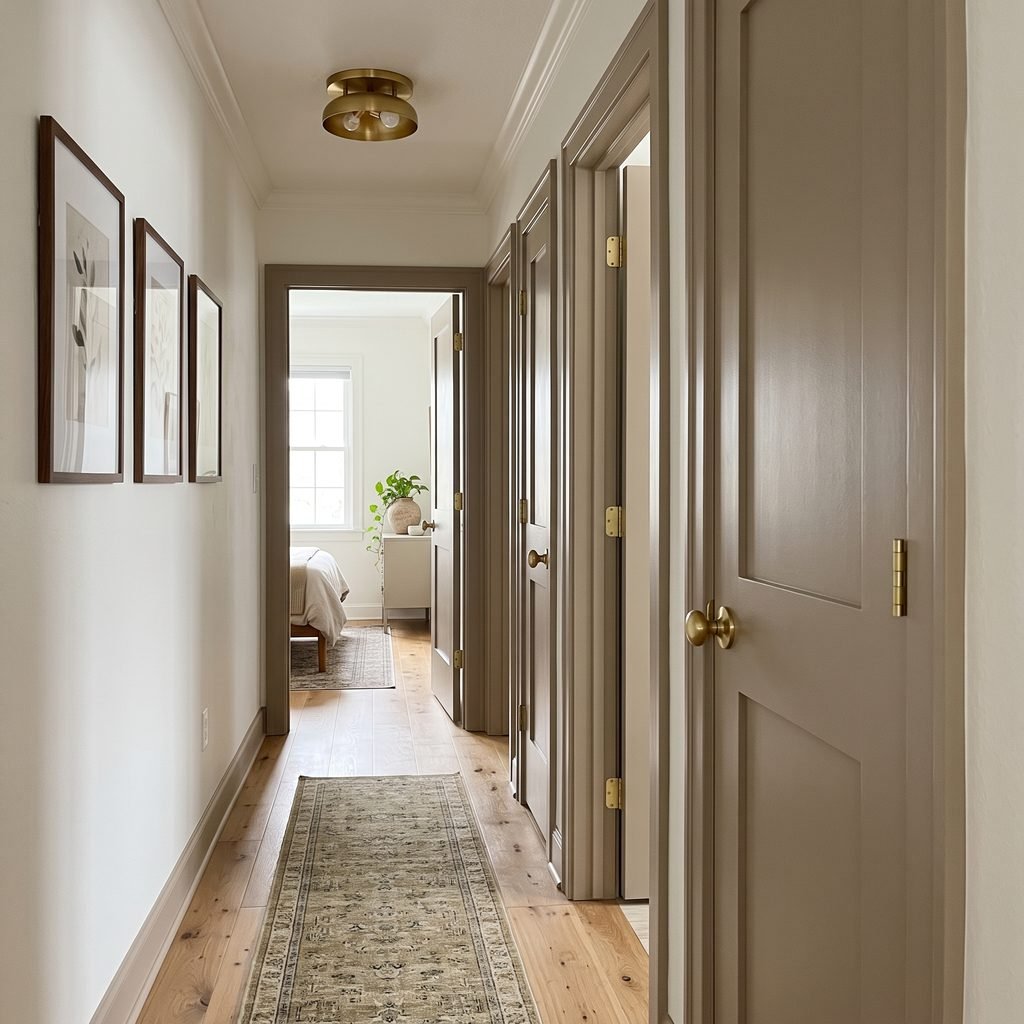
6. Paint the Interior Doors
White walls and white doors can look clean, but painting the interior doors is an easy way to add contrast.
Try:
- Warm taupe
- Soft gray
- Muted olive
- Charcoal
- Deep navy
- Warm beige
A darker door color can create depth without requiring a dramatic wall color.
You can paint all the doors in one area or just feature doors such as:
- Pantry
- Powder room
- Office
- Primary bedroom
Prepare glossy surfaces carefully and use a coating appropriate for doors and trim.
7. Upgrade Plain Hollow-Core Doors
If the doors themselves feel too basic, there are several ways to improve them without replacing every one.
You can add lightweight trim to create the look of paneled doors.
Another option is replacing only a few prominent doors with more architectural styles.
Good candidates include:
- Pantry door
- Office door
- Laundry room door
- Closet door
A single glass-panel door or traditional paneled door can create a focal point in a hallway.
Before adding trim to an existing door, make sure the added material does not interfere with hinges, latch clearance, or door swing.
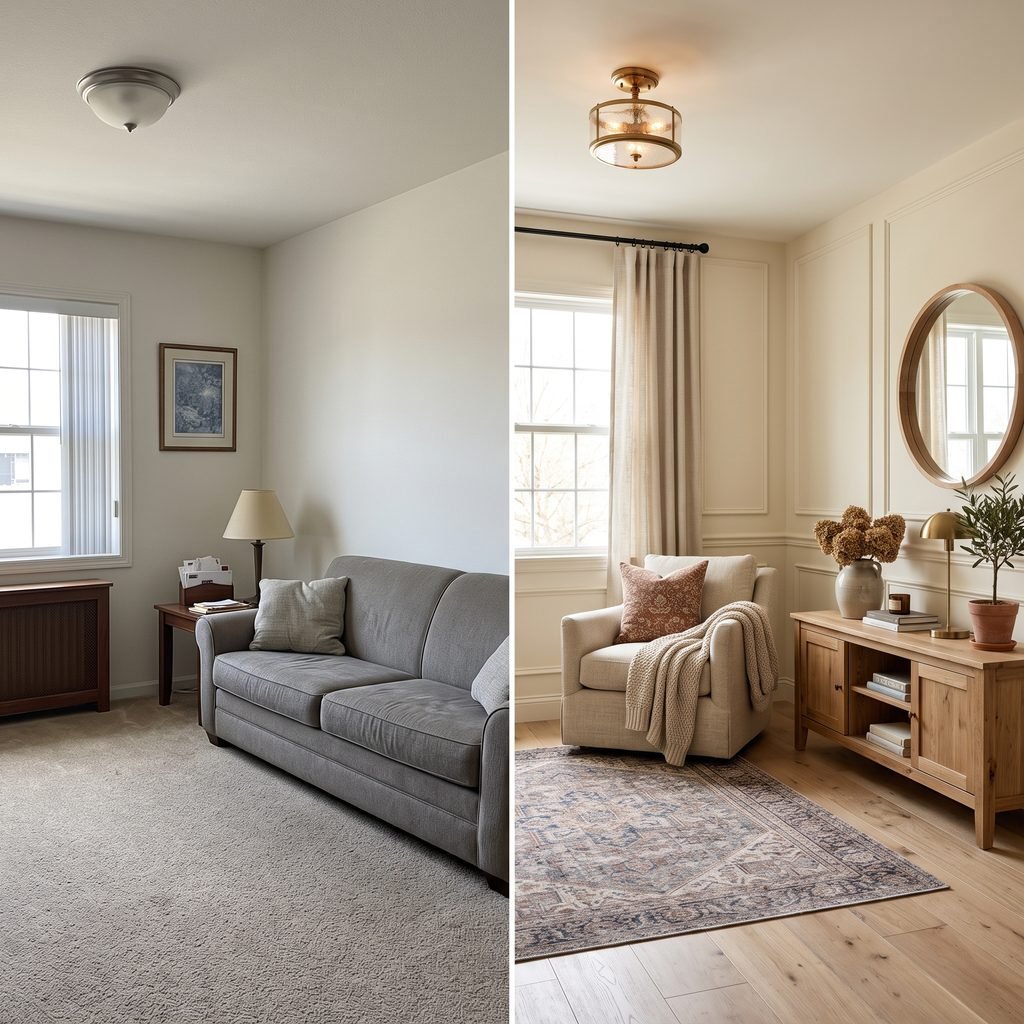
8. Add Built-In-Looking Bookcases
Built-ins instantly make a room feel more customized, but true custom cabinetry can be expensive.
A budget-friendly alternative is to use standard bookcases or cabinets and finish them so they look integrated with the room.
Ways to improve the look include:
- Adding trim around edges
- Filling gaps
- Extending units to the ceiling
- Adding baseboards
- Painting everything one color
Built-ins work particularly well around:
- Fireplace
- Television
- Window
- Desk area
Make sure tall furniture is anchored securely where appropriate, especially in homes with children.
9. Upgrade the Fireplace Surround
A simple builder fireplace can become a major focal point.
Depending on the existing fireplace and manufacturer requirements, cosmetic changes might include:
- New mantel
- Updated tile
- Painted surrounding wall
- Wall molding
- Built-in shelving nearby
Fireplace projects require extra care because combustible materials and required clearances vary by fireplace type.
Before adding wood trim, shelving, or a mantel, identify whether you have a masonry, gas, wood-burning, electric, or factory-built fireplace and follow the appliance manual and local requirements.
Do not cover vents, louvers, controls, or service access.
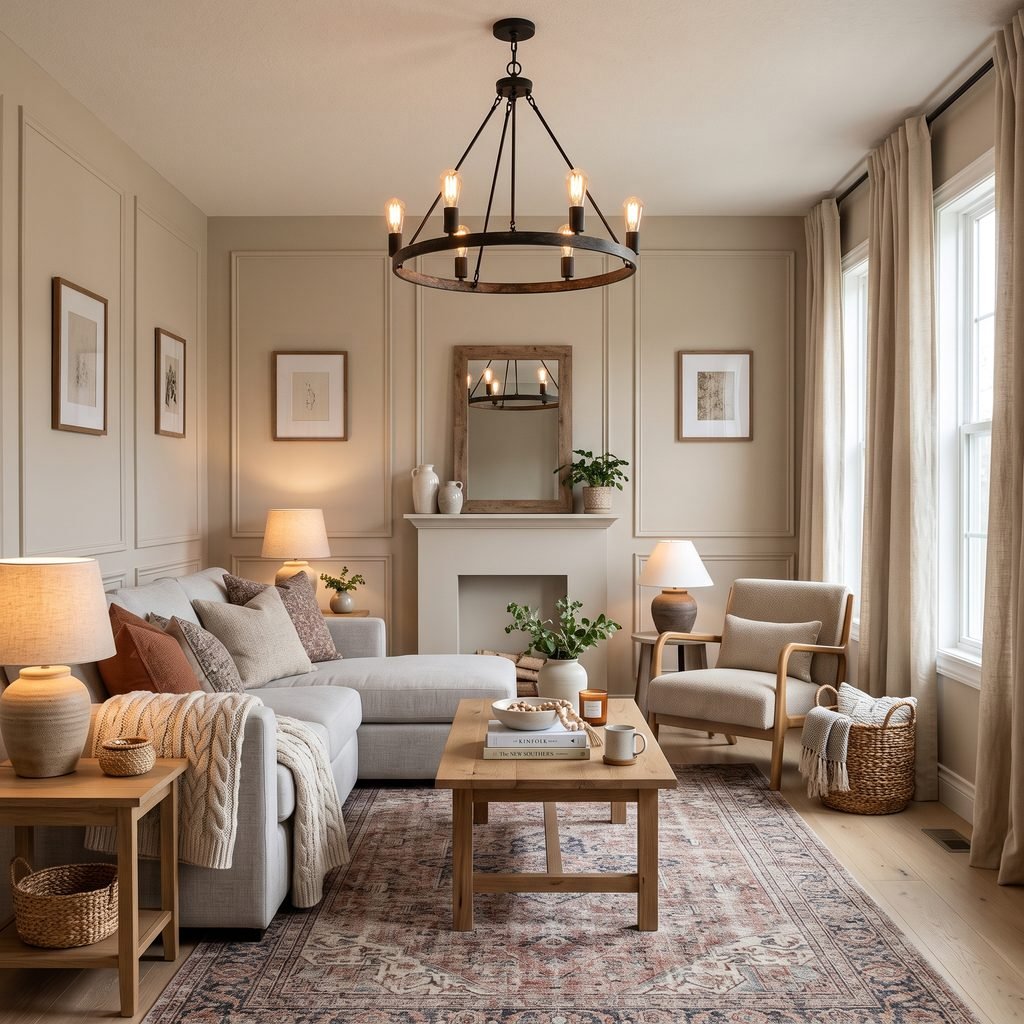
10. Add Wallpaper in a Small Area
Wallpaper adds pattern and personality quickly.
You do not have to wallpaper an entire room.
Try it in:
- Powder room
- Entryway
- Bedroom accent wall
- Laundry room
- Closet
- Back of built-in shelving
Smaller spaces are ideal for experimenting with pattern because you need less material.
For a timeless look, consider:
- Small floral
- Stripe
- Botanical
- Geometric
- Grasscloth-inspired texture
If you use peel-and-stick wallpaper, make sure it is suitable for your wall texture and paint finish.
11. Upgrade Bathroom Mirrors
Large frameless builder mirrors are practical but can feel unfinished.
You can replace them with framed mirrors or add an appropriate frame around the existing mirror.
Choose a shape that suits the room:
- Rectangle
- Arched
- Oval
- Round
Pair the mirror with updated lighting and hardware for a bigger transformation.
Make sure wall anchors and mounting hardware are suitable for the mirror’s weight.
Mirrors can be heavy, so secure installation matters.
12. Refresh Basic Cabinet Hardware
Kitchen and bathroom cabinets can feel more custom with new knobs and pulls.
Popular directions include:
- Warm brass
- Matte black
- Polished nickel
- Aged bronze
The easiest update is to select hardware that fits the existing hole spacing.
That can reduce drilling and filling.
If you change sizes, create a simple drilling template so the placement stays consistent across drawers and doors.
Hardware is also an easy way to connect separate rooms visually by repeating a finish.
13. Add a Kitchen Backsplash
A backsplash can give a basic kitchen more depth and personality.
Depending on your style, consider:
- Classic subway tile
- Handmade-look tile
- Small square tile
- Stone-look tile
- Neutral patterned tile
Keep the surrounding finishes in mind.
If the countertops and cabinets already contain strong pattern or color, a simpler backsplash may look better.
If the kitchen is very neutral, the backsplash can become the feature.
For DIY installation, surface preparation, adhesive, grout, spacing, and cure times depend on the selected product, so follow manufacturer guidance.
14. Use Curtains to Make Rooms Feel Finished
Bare windows often contribute to the unfinished feeling of builder grade interiors.
Curtains add:
- Softness
- Height
- Texture
- Color
- Pattern
Mounting curtains higher and wider than the window can make the opening appear larger.
Choose enough fabric so panels look full rather than stretched flat.
For a relaxed look, consider:
- Linen-look panels
- Cotton
- Subtle stripes
- Soft patterns
Keep curtain and blind cords safely out of children’s reach.
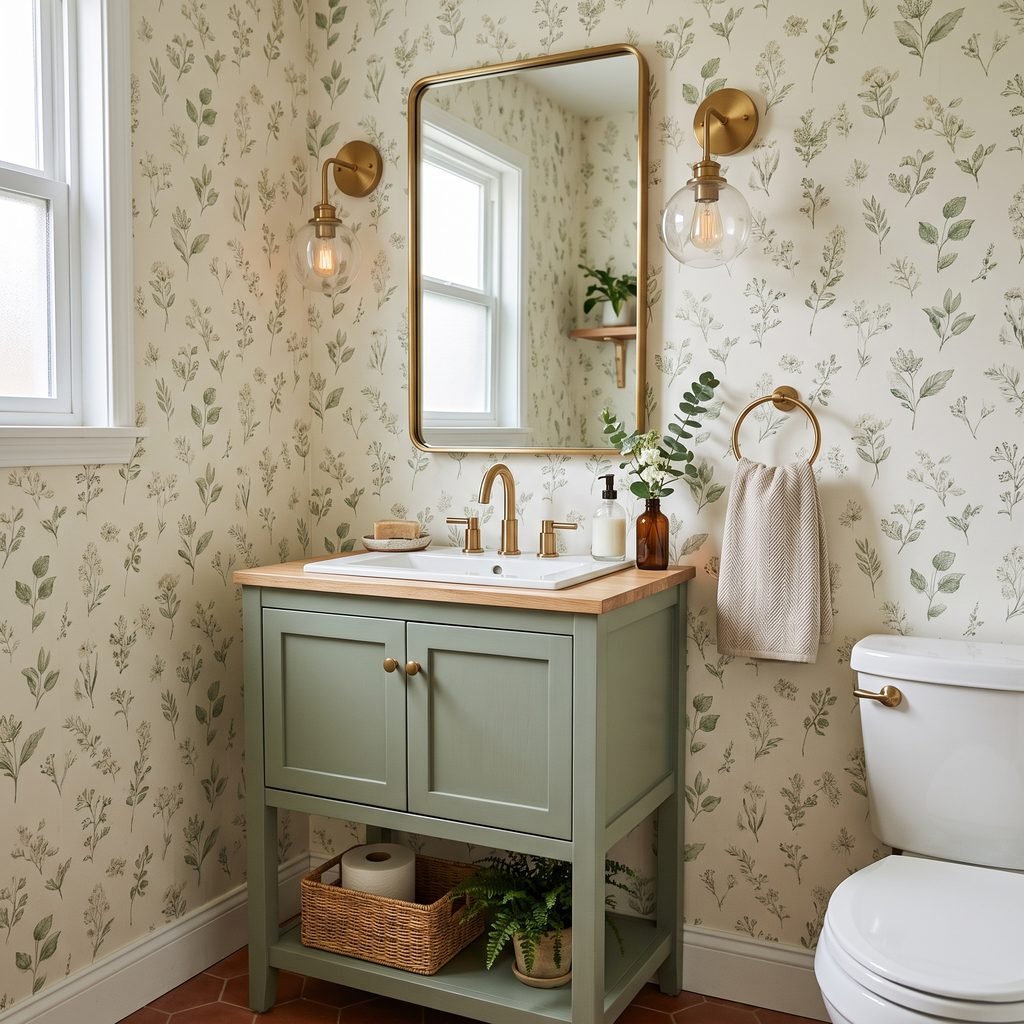
15. Bring in Natural Wood
Builder grade homes often contain many smooth painted surfaces.
Natural wood can immediately add warmth and age.
Bring it in through:
- Coffee table
- Dining table
- Floating shelves
- Picture frames
- Stool
- Bench
- Mantel
You do not need matching wood everywhere.
A mix of complementary wood tones often makes a home feel more collected.
Try repeating a medium wood tone in two or three places so the room feels connected.
16. Mix in Vintage or Vintage-Looking Pieces
One reason new homes can feel flat is that everything is new at the same time.
Adding a few older or vintage-inspired pieces creates contrast.
Consider:
- Antique-style mirror
- Vintage wood stool
- Traditional lamp
- Old framed art
- Worn ceramic vase
- Vintage-look rug
You do not need to turn the house into a period interior.
One or two pieces in a room can be enough to make the space feel less showroom-like.
17. Layer Texture Instead of Adding More Decor
When a room feels boring, the instinct is often to add more objects.
Texture can be more effective.
Layer materials such as:
- Linen
- Wool
- Wood
- Woven fibers
- Ceramics
- Aged metal
- Cotton
- Stone
For example, a neutral room can still feel rich when it includes linen curtains, a wool rug, a wood table, woven baskets, and ceramic lamps.
This approach adds character without creating visual clutter.
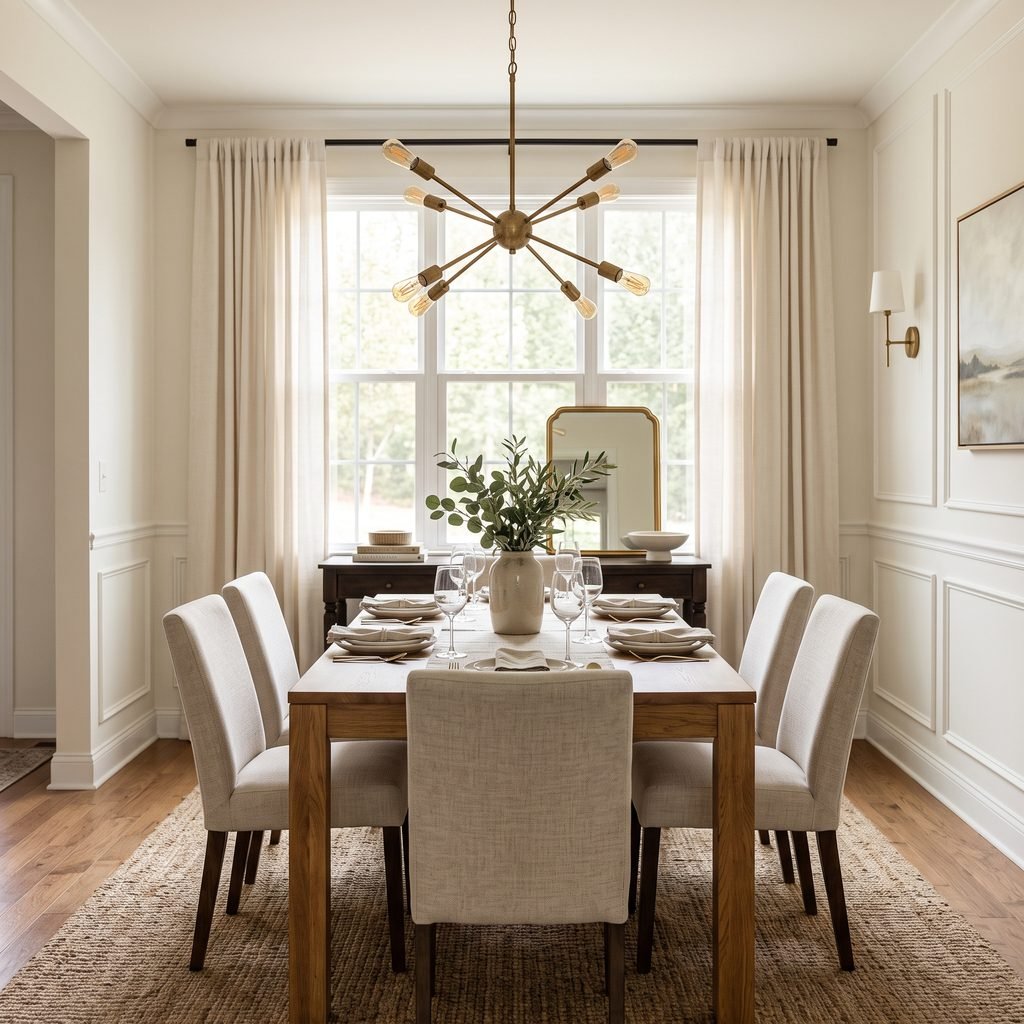
How to Add Character to a Builder Grade Kitchen
You do not need to replace every cabinet.
Start with visible details.
Try:
- New cabinet hardware
- New pendant lights
- Backsplash
- Roman shade
- Painted island
- Wood stools
- Decorative shelf
If your kitchen has a large blank wall, consider adding framed art, a shallow shelf, or trim.
Keep counters relatively clear.
A few intentional details will usually make the kitchen feel more custom than filling every surface with decor.
How to Add Character to a Builder Grade Bathroom
Bathrooms are great places to experiment because they are smaller.
Consider:
- Wallpaper
- Paint
- Framed mirror
- New vanity light
- Cabinet hardware
- Wall molding
- Towel hooks
- Simple shelves
You can make a plain vanity feel much more intentional by changing only the hardware, mirror, and lighting.
If any electrical or plumbing changes are required, work within local requirements and use qualified help when needed.
How to Add Character to a Builder Grade Living Room
Living rooms benefit from larger architectural changes.
Start with:
- Wall molding
- Built-ins
- Fireplace update
- Curtains
- Statement lighting
- Larger rug
Then layer in furniture and decor.
A builder grade living room often needs both architecture and softness.
Trim adds structure, while textiles and natural materials make the room feel comfortable.
How to Add Character Without Spending a Lot
If your budget is limited, prioritize projects with a high visual impact.
Start with:
- Paint.
- Curtains.
- Light fixtures.
- Hardware.
- Wall molding.
- Vintage or secondhand decor.
You can tackle one room at a time.
There is no need to make every builder grade feature disappear immediately.
A home often feels more interesting when improvements happen gradually and the rooms develop naturally.
How to Make Builder Grade Finishes Look More Expensive
Expensive-looking homes usually have consistency and proportion.
Focus on:
Better Scale
Use larger lighting, art, rugs, and curtains where the room needs them.
Repeated Materials
Repeat wood tones or metal finishes in several locations.
Architectural Detail
Trim and molding can make simple walls feel finished.
Fewer Small Accessories
Larger, purposeful decor usually looks calmer than many tiny pieces.
Better Lighting
Layer ceiling lights, lamps, and task lighting rather than relying on one harsh fixture.
Cohesive Color
Use a connected palette from room to room.
Common Mistakes When Updating a Builder Grade Home
Adding Every Trend at Once
Too many competing updates can make the house feel less cohesive.
Choose a direction and repeat it.
Ignoring the Existing Architecture
Work with the home’s proportions instead of forcing a completely unrelated style onto it.
Making Trim Too Ornate
Simple architectural details often suit newer homes better than overly decorative molding.
Buying Decor Before Fixing Scale
A room may need better curtains, lighting, or a larger rug rather than more decorative objects.
Using Too Many Finishes
One or two primary metal finishes are usually easier to coordinate.
Forgetting Function
Custom-looking upgrades should not make cabinets, doors, appliances, or walkways harder to use.
Beginner-Friendly DIY Projects That Add Character
If you are new to DIY, start with projects that are relatively forgiving.
Good options include:
- Paint an interior door
- Change cabinet knobs
- Hang curtains
- Add simple wall molding
- Install a shelf
- Frame a builder mirror
- Paint a small powder room
More advanced projects may involve:
- Built-ins
- Electrical changes
- Tile
- Fireplace work
- Extensive trim installation
Take measurements carefully, follow product instructions, and use appropriate protective equipment when cutting, sanding, drilling, or painting.
FAQ About Adding Character to a Builder Grade Home
How do I make a builder grade home look custom?
Add architectural detail through trim, molding, built-ins, upgraded doors, lighting, hardware, and carefully chosen finishes.
What is the cheapest way to add character to a house?
Paint, curtains, cabinet hardware, vintage decor, and simple wall molding can all create significant visual impact without a major renovation.
How can I make plain walls more interesting?
Try picture frame molding, board and batten, wallpaper, a deeper paint color, shelves, or larger-scale artwork.
How do I make a new house feel less sterile?
Add natural wood, layered textiles, vintage pieces, warm lighting, richer paint colors, and a mix of old and new furnishings.
Do all rooms need the same hardware finish?
No. Finishes can vary, but repeating one or two dominant metals usually creates a more cohesive look.
Is wall molding hard to DIY?
Simple applied molding can be approachable for beginners who are comfortable measuring, cutting, fastening, caulking, and painting. More complicated trim profiles require more skill.
What should I update first in a builder grade home?
Start with the spaces you use most. Lighting, paint, window treatments, and hardware often deliver the quickest noticeable improvement.
Final Thoughts
You do not need a major remodel to add character to a builder grade home.
Start by identifying what feels flat.
Maybe the rooms lack architectural detail. Maybe the lighting feels generic. Maybe every surface is the same white, gray, and smooth painted finish.
Then choose a few improvements that solve those specific problems.
Add molding to a plain wall. Replace a basic light fixture. Paint the doors. Upgrade the hardware. Hang proper curtains. Bring in wood, woven texture, and a few vintage pieces.
The most successful updates usually come from layering several subtle changes rather than forcing one dramatic feature into every room.
Over time, those details can turn a standard builder grade house into a home that feels warmer, more collected, and much more personal.