

A garage can quickly become the catch-all space for everything that does not have a clear home inside the house. Tools, sports gear, seasonal decorations, garden supplies, paint, cleaning products, bikes, and boxes all compete for the same limited floor space.
The best garage storage ideas make those items easier to find without turning the garage into a wall of random bins.
A functional garage usually combines several types of storage: sturdy shelving for bulky items, wall systems for frequently used tools, ceiling storage for seasonal belongings, and smaller organizers for hardware and supplies.
The goal is not to fill every inch. It is to create clear zones so you know where things belong and can still move, park, and work comfortably.
Whether you have a one-car garage, a two-car garage, or a compact storage area, these ideas can help you make better use of the space you already have.
1. Start With Garage Zones
Before buying shelves or installing hooks, divide the garage into functional zones.
Common categories include:
- Tools
- Lawn and garden supplies
- Sports equipment
- Automotive supplies
- Seasonal decor
- Cleaning products
- DIY materials
- Household overflow
Keep similar items together.
For example, place garden gloves, hand tools, fertilizer, and watering accessories in the same general area rather than scattering them throughout the garage.
Frequently used items should be easiest to reach.
Seasonal items can go higher or farther back.
This simple zoning step often makes a bigger difference than buying more storage.
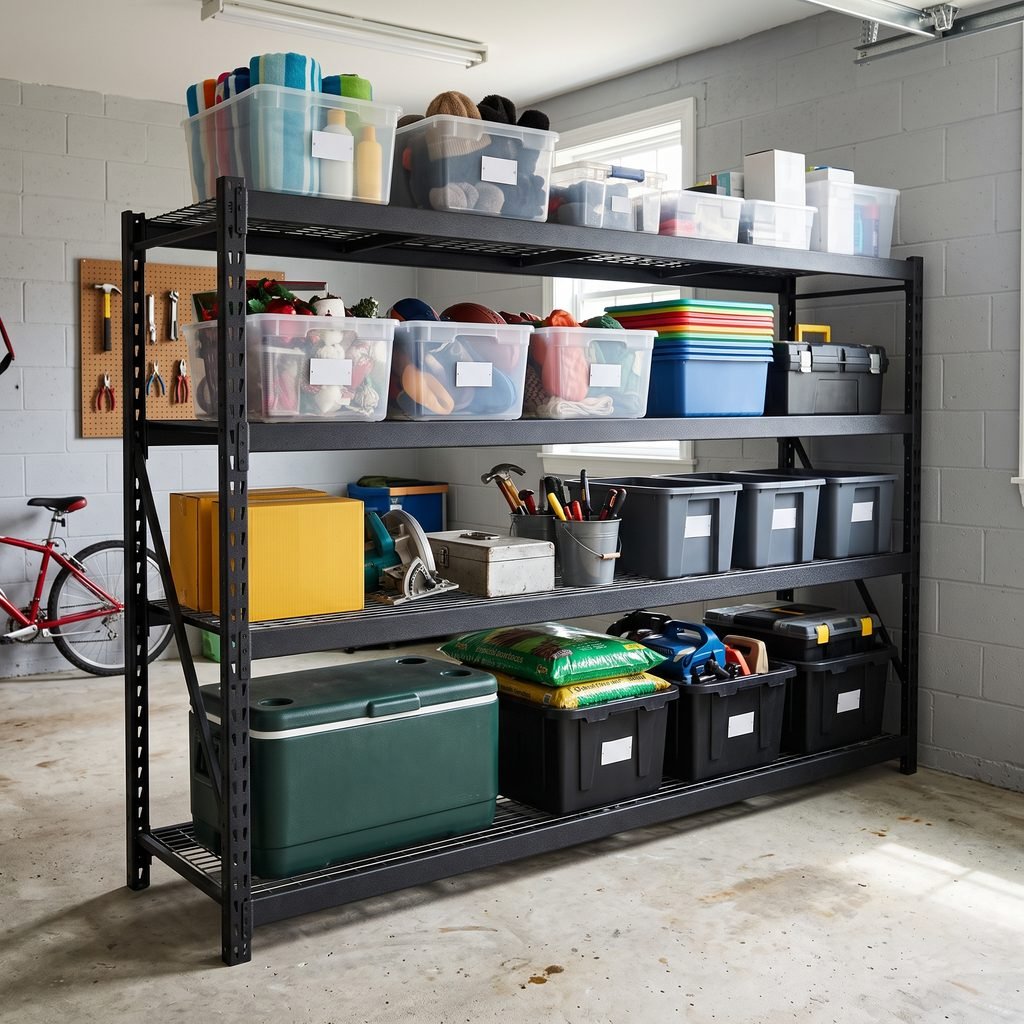
2. Install Heavy-Duty Shelving
Freestanding or wall-mounted shelving is one of the most practical garage storage solutions.
Use shelves for:
- Storage bins
- Coolers
- Power tools
- Garden supplies
- Automotive products
- Seasonal items
Choose shelving designed to support the loads you plan to store.
Do not assume that every shelf can safely hold heavy tools, paint cans, or bulk supplies.
Follow the manufacturer’s weight limits and assembly instructions.
Place heavier items lower and lighter items higher to help keep the shelving stable.
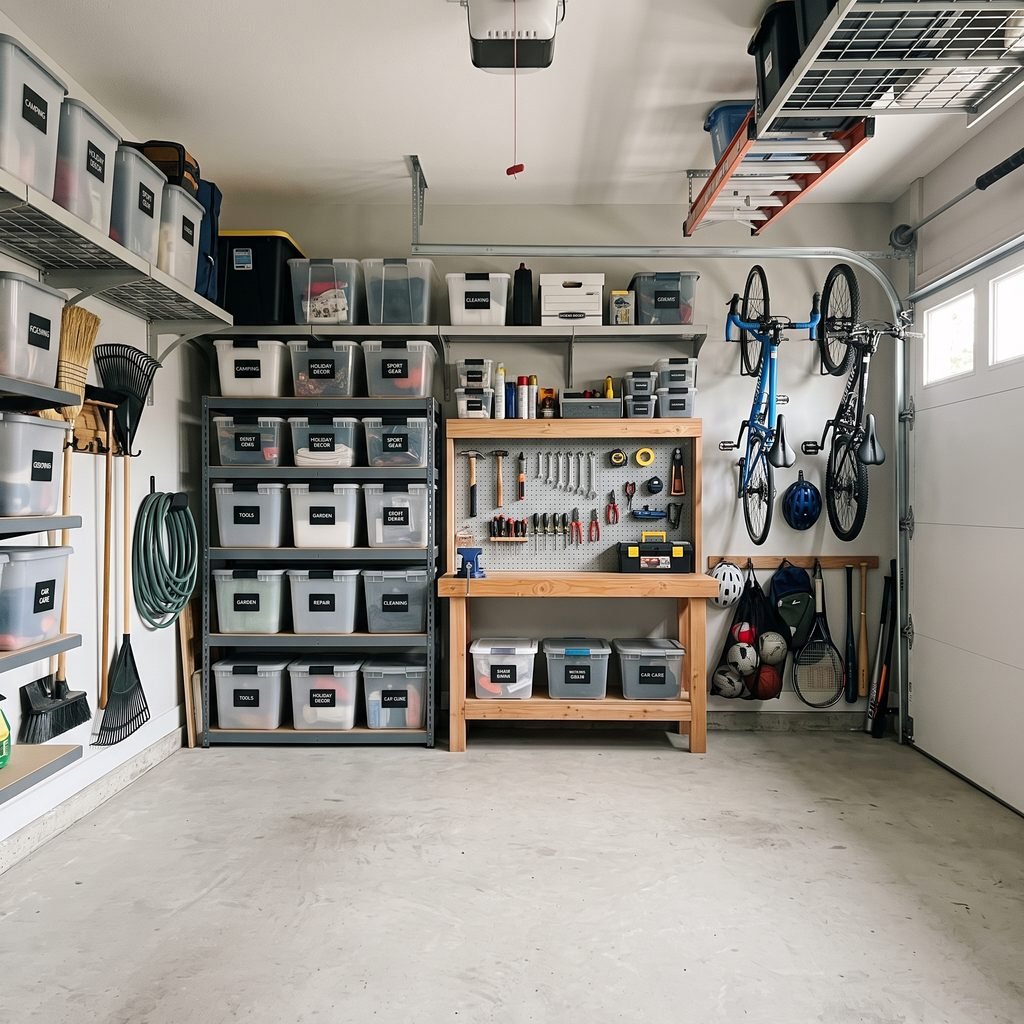
3. Use Clear Storage Bins
Clear bins make garage organization much easier because you can see what is inside without opening every container.
They work especially well for:
- Holiday decorations
- Camping supplies
- Sports equipment
- Car-cleaning products
- Craft supplies
- Extension cords
For items that need protection from dust or moisture, choose containers with secure lids.
Label them anyway.
Even clear bins can become confusing when several contain similar items.
Use broad labels such as:
- Christmas decor
- Camping
- Car care
- Kids’ sports
- Painting supplies
Avoid creating overly detailed categories that are difficult to maintain.
4. Use the Walls for Tools
Garage walls provide valuable storage without consuming floor space.
A wall-mounted system can hold:
- Hammers
- Pliers
- Hand saws
- Levels
- Tape measures
- Garden tools
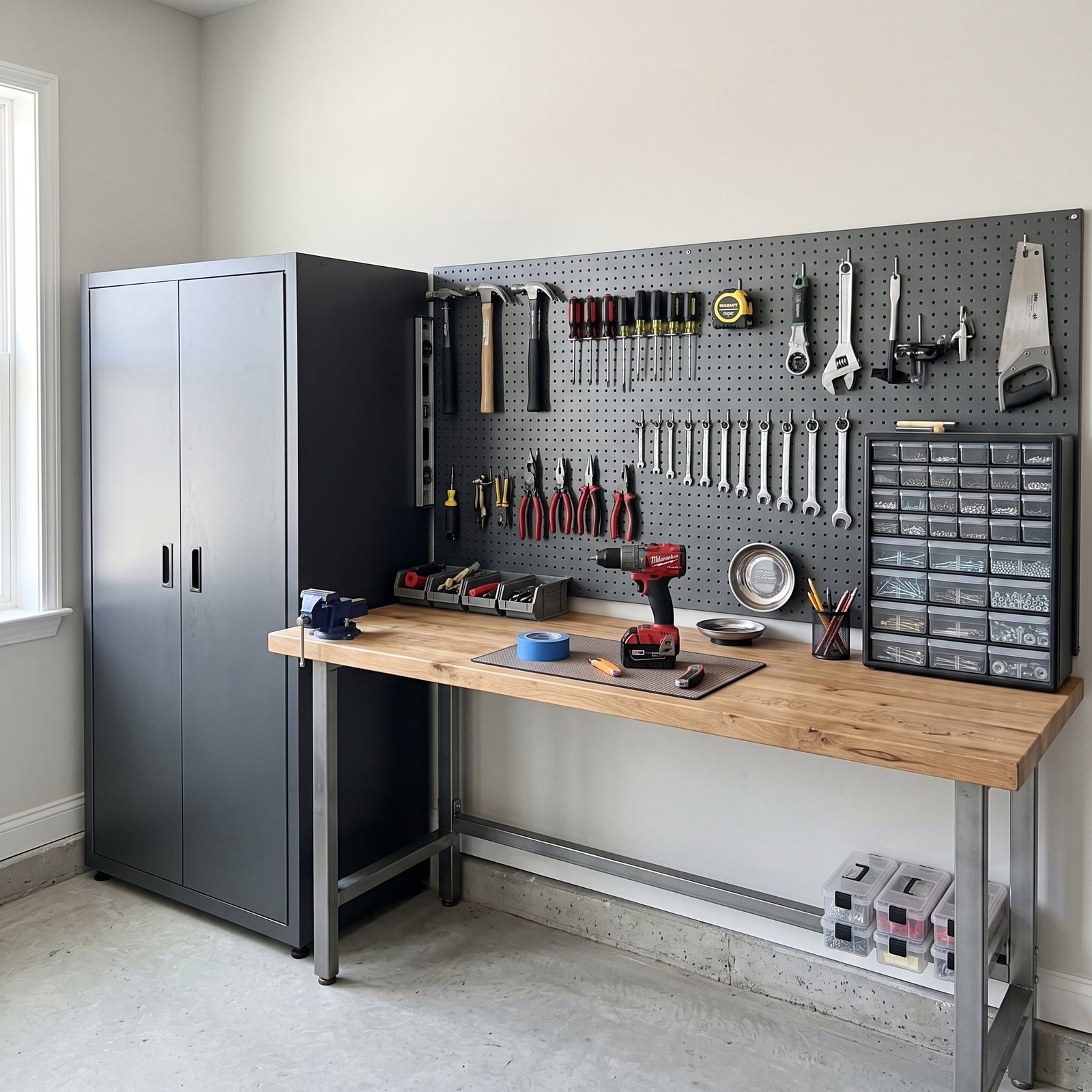
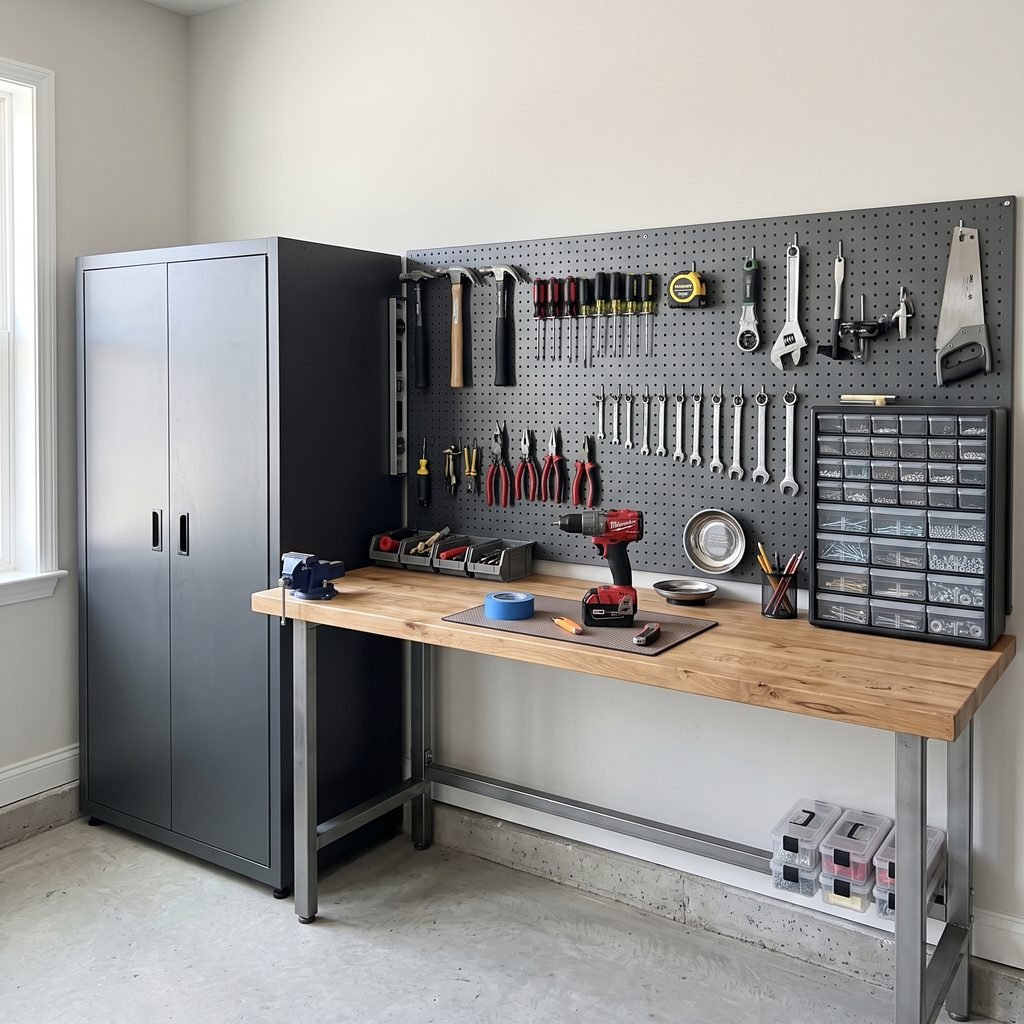
Pegboard is a classic option because hooks can be rearranged as your needs change.
Slatwall and track systems can also offer flexible storage.
Keep the tools you use most often between waist and shoulder height.
Place heavier tools on hardware rated for their weight.
5. Hang Long-Handled Garden Tools
Rakes, shovels, brooms, and hoes can take up a surprising amount of floor space when they are leaned into a corner.
Mount them vertically or horizontally on the wall instead.
A dedicated tool rack can keep them separated and easier to grab.
Before installing hooks or brackets, think about the direction each tool will hang.
Sharp or pointed ends should not extend into walkways where someone could bump into them.
Secure wall-mounted storage into appropriate framing or use suitable anchors for the wall construction and expected load.
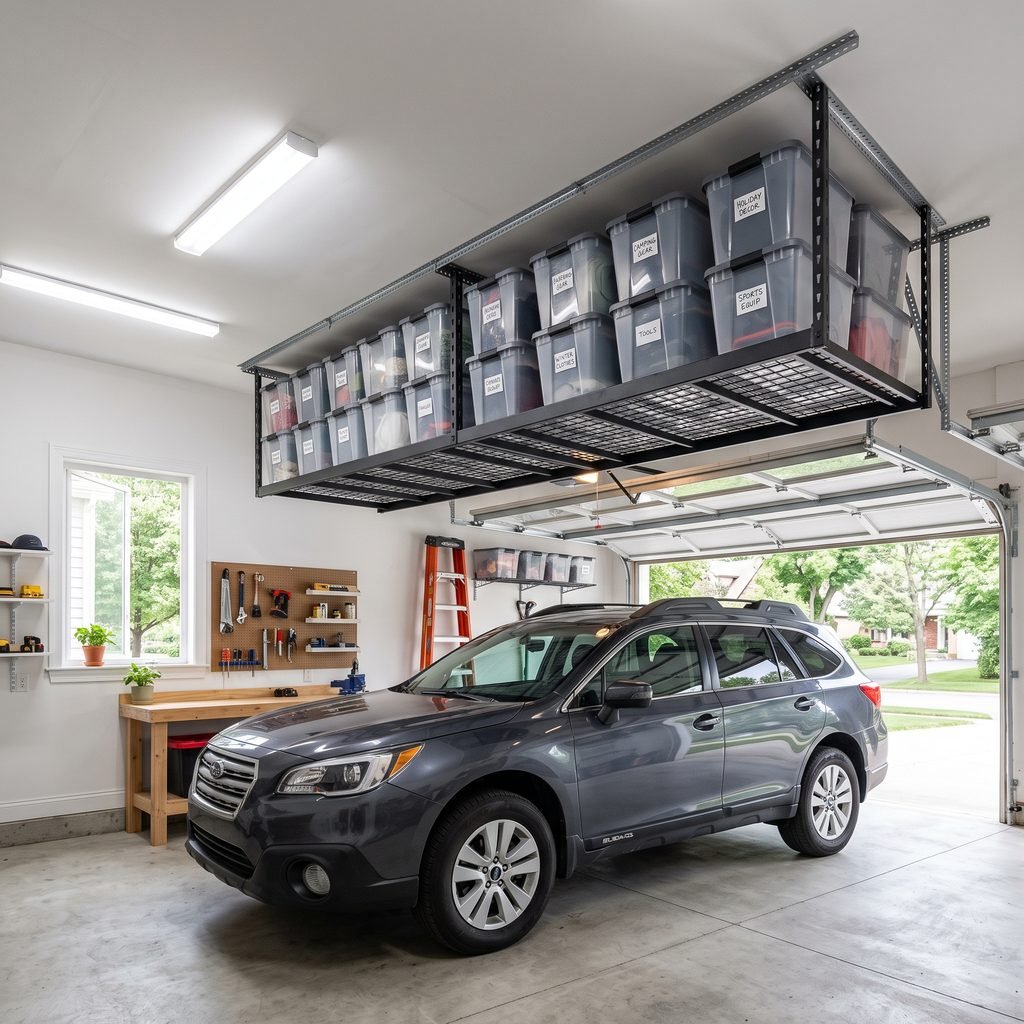
6. Add Overhead Garage Storage
The ceiling is one of the most underused storage areas in many garages.
Overhead racks can work well for lightweight or seasonal items such as:
- Holiday decorations
- Camping gear
- Empty coolers
- Seasonal sports equipment
- Lightweight storage bins
Do not place extremely heavy items overhead unless the system and structure are specifically designed for the load.
Installation matters.
Ceiling racks should be secured according to the manufacturer’s instructions and into appropriate structural framing.
Also check clearance for:
- Garage doors
- Door tracks
- Openers
- Vehicles
- Lighting
- People walking below
Overhead storage should never interfere with the safe operation of the garage door.
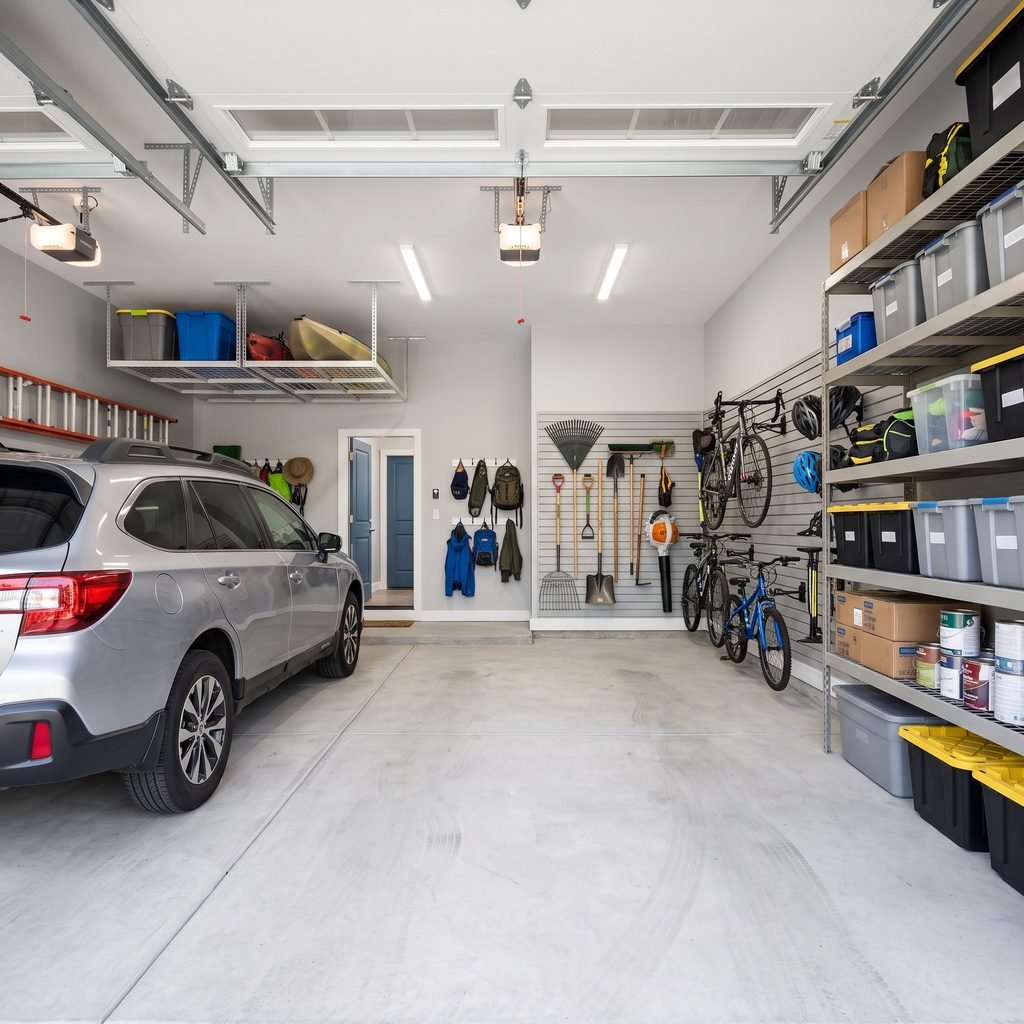
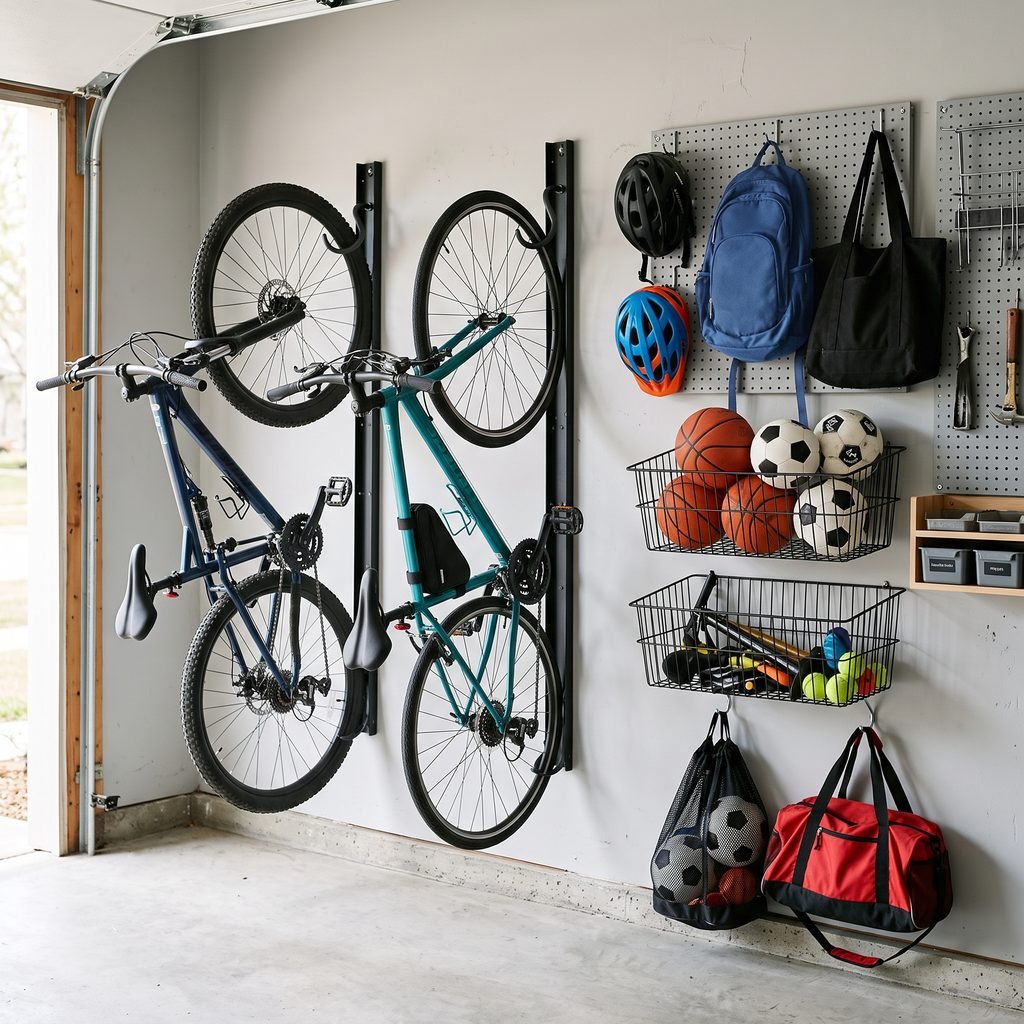
7. Create a Sports Equipment Station
Balls, helmets, bats, racquets, and pads can spread across a garage quickly.
Give sports equipment its own zone.
Try:
- Large open baskets
- Ball racks
- Hooks
- Mesh bins
- Tall narrow shelving
- Wall-mounted racks
Open storage is useful for items children use often because they can grab and return them easily.
A large basket can hold basketballs and soccer balls.
Hooks can hold helmets or bags.
Tall compartments can contain bats, sticks, or racquets.
The simpler the system, the more likely everyone is to use it.
8. Store Bikes on the Wall
Bikes consume valuable floor space.
Wall-mounted bike hooks or racks can help clear the floor.
Options include:
- Vertical bike hooks
- Horizontal racks
- Pivoting racks
- Wall-mounted rails
Choose a system appropriate for the bike’s size and weight.
Mounting hardware must be secured properly.
If children need to access their own bikes, avoid placing them too high.
A storage system is not useful if someone has to climb on unstable furniture to reach it.
9. Use Ceiling Space for Bikes Carefully
In garages with limited wall space, some homeowners store bikes overhead.
This can work, but accessibility and safety are important.
Use a purpose-built system rated for the bike’s weight.
Make sure bicycles cannot interfere with:
- Vehicles
- Garage door tracks
- Lighting
- Walkways
If lifting the bike overhead is difficult, a lower wall rack may be the better solution.
Convenience matters as much as maximum storage capacity.
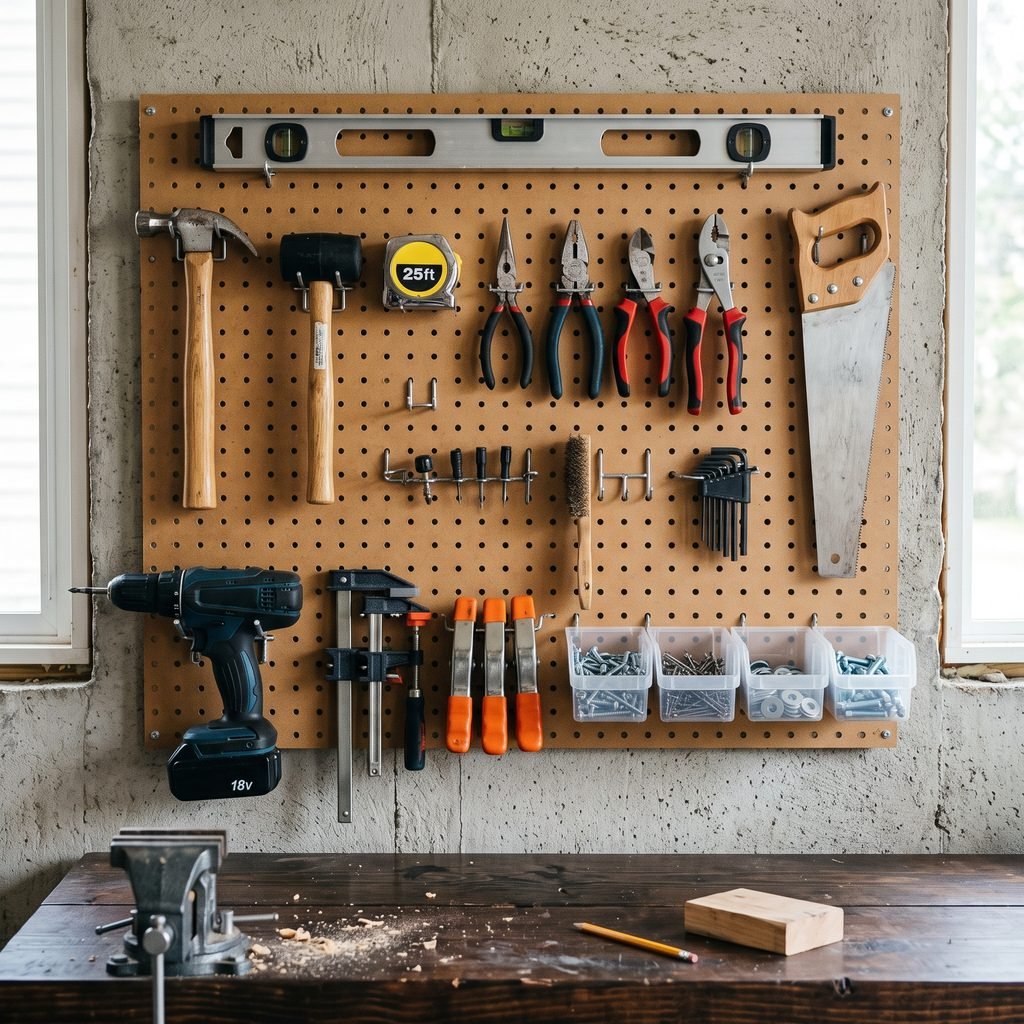
10. Build a Simple Garage Workbench
If you do DIY projects, a dedicated workbench can keep tools and materials from spreading across the garage.
A basic workbench can include:
- Durable work surface
- Drawers
- Lower shelf
- Pegboard
- Small parts storage
Keep frequently used tools nearby.
Store heavier power tools on lower shelves or sturdy surfaces.
If you use power tools, provide adequate lighting and keep cords organized so they do not become trip hazards.
Follow tool manufacturer instructions and wear appropriate protective equipment during projects.
11. Organize Screws, Nails, and Small Hardware
Small hardware easily becomes a garage clutter problem.
Use:
- Small drawer cabinets
- Divided organizers
- Clear jars
- Compartment boxes
Separate items by general type.
For example:
- Screws
- Nails
- Wall anchors
- Nuts and bolts
- Picture-hanging hardware
Labels save time.
Avoid storing small hardware loose in open containers where it can spill onto the floor.
If you have children, keep sharp items and small choking hazards securely out of reach.
12. Add Cabinets for Hidden Storage
Not everything needs to be visible.
Garage cabinets can hide items that create visual clutter.
They are useful for:
- Cleaning products
- Paint supplies
- Automotive products
- Small tools
- Household supplies
Lockable cabinets can be especially useful for products that need to be kept away from children or pets.
However, do not assume every chemical belongs in a garage.
Temperature-sensitive, flammable, or hazardous products may have specific storage requirements.
Always follow the product label.
13. Make a Gardening Station
If you garden regularly, create one dedicated area for outdoor supplies.
Include storage for:
- Gloves
- Hand tools
- Pots
- Watering accessories
- Pruners
- Plant ties
- Soil-related supplies
Use hooks for tools and shelves for containers.
Store fertilizers, pesticides, and other garden chemicals according to their labels and securely away from children and pets.
Do not transfer chemicals into unmarked household containers.
Keeping them in original labeled packaging reduces confusion and helps preserve safety information.
14. Use the Space Beside the Garage Door
Narrow sections of wall beside the garage door are often overlooked.
Depending on your garage layout, they may fit:
- Narrow shelves
- Hooks
- Sports racks
- Broom holders
- Slim cabinets
Measure carefully.
Make sure storage does not interfere with the garage door, tracks, sensors, or moving hardware.
Nothing should obstruct the photoelectric safety sensors near the bottom of an automatic garage door.
15. Create Seasonal Storage High Up
Items used once or twice a year do not need prime storage space.
Move seasonal belongings higher.
Examples include:
- Holiday decorations
- Beach gear
- Winter sports equipment
- Camping supplies
- Seasonal outdoor decor
Use labeled bins so you can identify the correct container from below.
Store the heaviest seasonal bins on sturdy shelving rather than difficult-to-access overhead locations.
Think about how safely you can retrieve something before choosing its storage location.
16. Use Rolling Storage
Rolling carts and cabinets add flexibility.
They work well for:
- Automotive supplies
- Gardening tools
- Craft supplies
- DIY tools
- Car-washing supplies
A rolling cart can live against a wall when not in use and move closer to your project when needed.
Choose locking casters when appropriate so the cart remains stable while you are working.
Do not overload a rolling cart beyond its rated capacity.
17. Leave Floor Space Open
One of the most important garage storage ideas is also the simplest: keep as much off the floor as practical.
A clear floor makes it easier to:
- Park
- Sweep
- Move equipment
- Notice leaks or spills
- Reach stored items
Use wall hooks, shelving, cabinets, and racks instead of creating stacks of boxes.
Avoid placing storage directly in walking paths.
If boxes have to be moved every time you need something behind them, the system is not working efficiently.
Garage Storage Ideas for Small Garages
A small garage needs compact storage that preserves parking and walking space.
Focus on vertical storage.
Use:
- Tall shelving
- Wall hooks
- Pegboard
- Narrow cabinets
- Overhead storage where safe
- Vertical bike racks
Avoid placing deep shelves along both sides if they make the parking space too narrow.
Measure your vehicle with the doors open before adding permanent storage.
Also keep access clear around:
- Electrical panels
- Water heaters
- Utility equipment
- Garage doors
Required working clearances and access can vary, so do not block equipment that needs inspection or servicing.
Garage Storage Ideas on a Budget
You do not need an expensive custom garage system to get organized.
Start with simple solutions:
- Basic wall hooks
- Freestanding shelving
- Reused sturdy bins
- Pegboard
- Repurposed cabinets
- Simple labels
Use leftover lumber only when it is structurally suitable for the job.
Do not improvise overhead racks or heavy shelving without understanding the loads and attachment points involved.
It is better to install a simple sturdy shelf correctly than create an elaborate system that is unsafe.
Garage Storage Ideas for Tools
Tools should be stored according to how often they are used.
Everyday Tools
Keep easy to reach.
Occasional Tools
Store on shelves or in drawers.
Heavy Power Tools
Place lower.
Small Hardware
Use divided organizers.
Long Tools
Mount on racks.
Avoid storing tools in damp areas where corrosion may become a problem.
Battery-powered tool batteries may also have recommended storage temperatures, so follow the manufacturer’s instructions rather than leaving them in extreme heat or cold.
Garage Storage Ideas for Sports Gear
Sports equipment benefits from open, accessible storage.
Create separate zones for each activity if possible.
For example:
Ball Sports
Large open basket or ball rack.
Cycling
Bike rack, helmet hooks, and pump.
Baseball
Vertical bat storage, glove bin, and helmet hooks.
Camping
Labeled bins on shelves.
Keeping related gear together makes it much easier to get out the door without searching the entire garage.
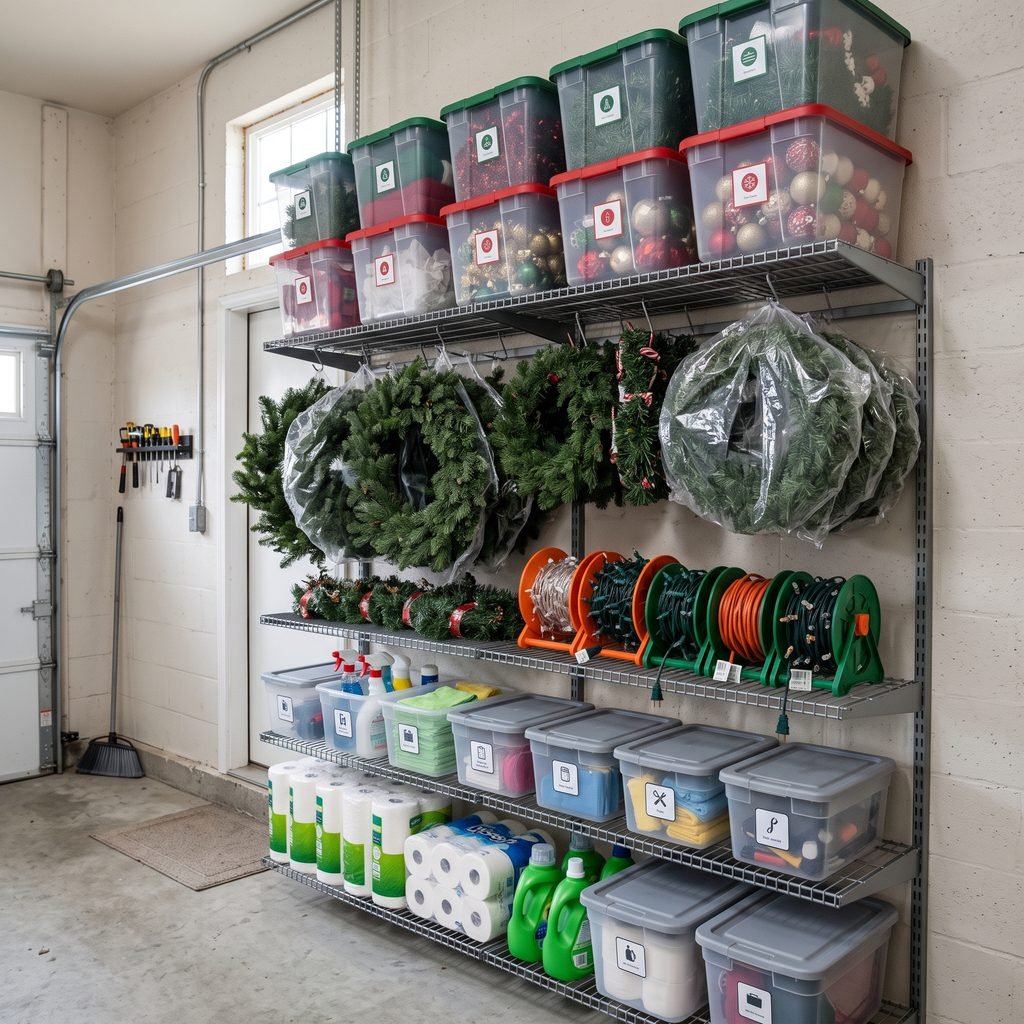
Garage Storage Ideas for Holiday Decor
Holiday decorations are ideal candidates for upper shelving because they are used infrequently.
Store decorations by holiday instead of mixing everything together.
For example:
- Christmas
- Halloween
- Easter
- Fall decor
Use sturdy containers that protect fragile items.
Avoid placing delicate ornaments under heavy objects.
For string lights, wrap each strand around a suitable holder before storing it to reduce tangling.
What Should Not Be Stored in a Garage?
Garages often experience larger temperature and humidity changes than conditioned indoor rooms.
Some items may not store well there.
Depending on your climate and garage conditions, be cautious with:
- Important documents
- Delicate photographs
- Temperature-sensitive electronics
- Certain medications
- Some paints and chemicals
- Food vulnerable to pests or temperature swings
Always follow manufacturer storage instructions for paints, chemicals, batteries, fuel-related products, and other potentially hazardous materials.
Do not store combustible materials close to ignition sources or heat-producing equipment.
Garage Organization Safety Tips
Garage storage needs to be safe as well as tidy.
Keep these principles in mind:
- Follow shelf and rack weight limits.
- Secure tall shelving if required by its design.
- Store heavy items lower.
- Keep hazardous products away from children and pets.
- Keep sharp tools securely stored.
- Maintain access to electrical and utility equipment.
- Do not block garage door sensors, tracks, or moving components.
- Avoid unstable stacks of boxes.
- Use proper ladders or step stools to reach high storage.
- Keep combustible products away from heat and ignition sources.
If you are installing heavy overhead storage, wall systems, or other structures and are unsure about framing or load capacity, professional installation may be the safer choice.
Common Garage Storage Mistakes
Buying Containers Before Sorting
You may end up storing items you no longer need.
Declutter first.
Stacking Boxes Too High
Unstable stacks can fall and make lower containers impossible to access.
Putting Heavy Items Overhead
Keep heavy items lower whenever possible.
Blocking Garage Door Hardware
Leave doors, tracks, sensors, and openers unobstructed.
Storing Everything in Opaque Bins
Without clear labels, you may forget what you own.
Creating Too Many Categories
Simple organizing systems are easier to maintain.
Filling Every Wall
A garage still needs room for vehicles, projects, movement, and safe access.
A Simple Garage Organizing Plan
If your garage currently feels overwhelming, organize it in stages.
Start with one category at a time.
A straightforward process is:
- Remove obvious trash.
- Set aside donations.
- Group similar items.
- Create functional zones.
- Measure available wall and shelf space.
- Install necessary storage.
- Put heavy items low.
- Put frequently used items within easy reach.
- Move seasonal items higher.
- Label storage bins.
Do not empty every box onto the floor at once unless you have enough time and space to finish sorting.
Completing one section is better than creating a larger temporary mess.
FAQ About Garage Storage Ideas
What is the best way to organize a garage?
Start by decluttering and grouping items into zones. Then use shelving, wall storage, cabinets, hooks, and bins based on how frequently each category is used.
How can I maximize storage in a small garage?
Use vertical wall space, tall shelving, narrow cabinets, wall-mounted bike racks, and carefully installed overhead storage where appropriate.
What should I store on garage shelves?
Shelves work well for bins, tools, garden supplies, automotive items, camping equipment, and other items that do not need to hang on the wall.
Is overhead garage storage safe?
It can be when the rack is designed for the load, correctly installed into appropriate structural framing, and positioned so it does not interfere with vehicles or garage-door equipment.
How do I organize a garage cheaply?
Begin with decluttering, basic shelving, simple hooks, pegboard, reused bins, and labels. Focus on function rather than matching containers.
How do I store bikes in a garage?
Wall-mounted vertical or horizontal racks can save floor space. Choose hardware rated for the bicycle’s weight and install it correctly.
How can I keep my garage organized long-term?
Give each category a permanent zone, return items after use, avoid stacking random boxes, and declutter periodically before storage becomes overcrowded.
Final Thoughts
The most useful garage storage ideas are not necessarily the most elaborate ones.
A few sturdy shelves, wall-mounted hooks, labeled bins, bike storage, and clearly defined zones can completely change how a garage functions.
Start by getting unnecessary items out of the space.
Then keep frequently used belongings easy to reach, seasonal items higher, and heavy items low.
Use walls and ceiling space carefully to preserve the floor, but never sacrifice safety simply to fit more into the garage.
The end goal is not a perfectly styled storage room.
It is a garage where you can find your tools, grab sports equipment, reach holiday decor, complete a project, and still move around comfortably.
When every category has a logical place, the garage becomes much easier to keep organized instead of slowly turning back into a pile of boxes.