

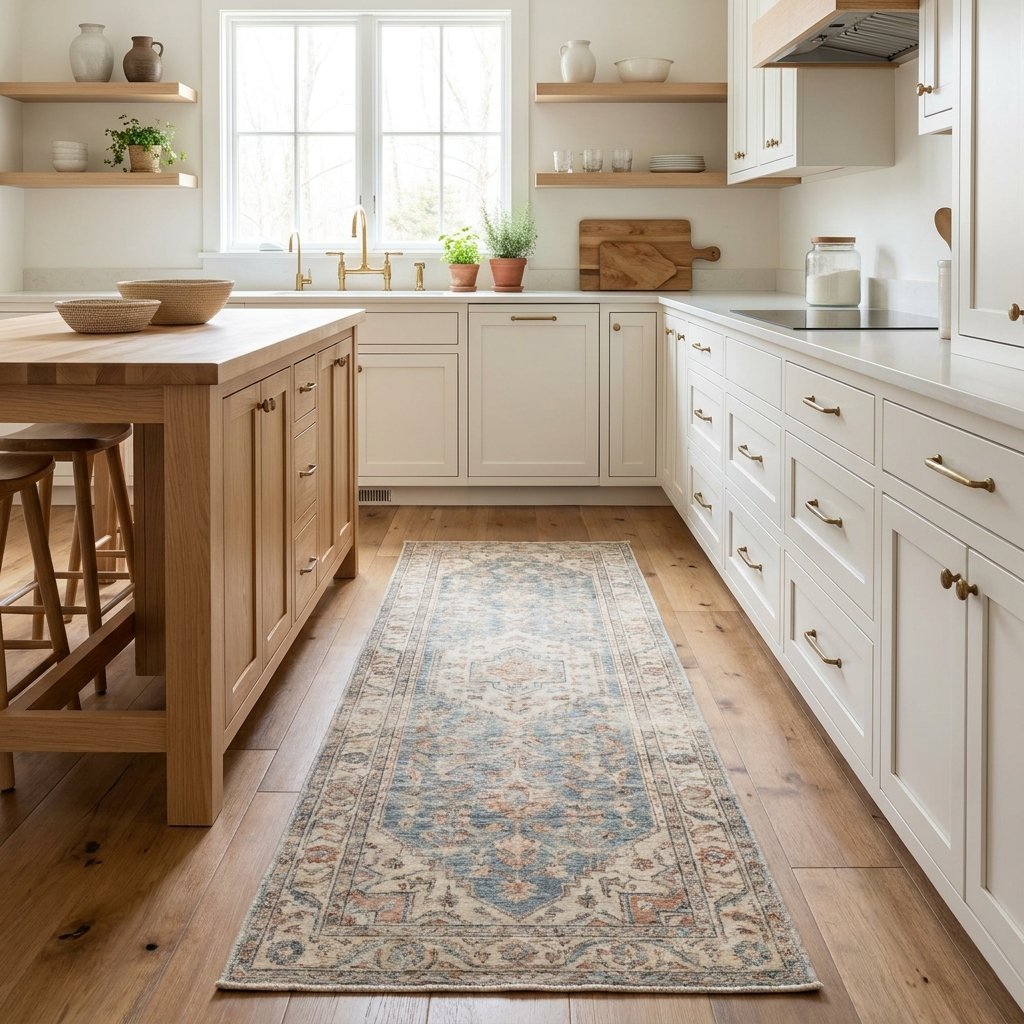
Kitchen runner rugs are an easy way to make a hard-working space feel warmer, softer, and more finished.
They can add color to a neutral kitchen, define a long walkway, soften tile or wood flooring, and bring a little personality into a room that is often filled with hard surfaces.
The right runner can also make a narrow galley kitchen, sink area, or space between an island and cabinets feel more intentional.
But kitchens are not the same as bedrooms or living rooms.
A kitchen rug has to work around:
- Spills
- Crumbs
- Foot traffic
- Cabinet doors
- Appliances
- Water near the sink
- Chairs and stools
- Cleaning routines
That means size, material, placement, and maintenance matter just as much as color and pattern.
If you are trying to choose the right kitchen runner rugs for your home, these ideas will help you find a style that looks beautiful and still makes sense for everyday use.
1. Use a Runner Between the Island and Cabinets
One of the most natural places for a kitchen runner is the walkway between an island and a cabinet wall.
A runner can visually connect the space and soften the long strip of flooring.
This works especially well in kitchens with:
- Wood floors
- Tile
- Stone-look flooring
- Neutral cabinetry
Choose a runner that leaves some flooring visible around the edges rather than filling the entire walkway.
That usually looks more balanced.
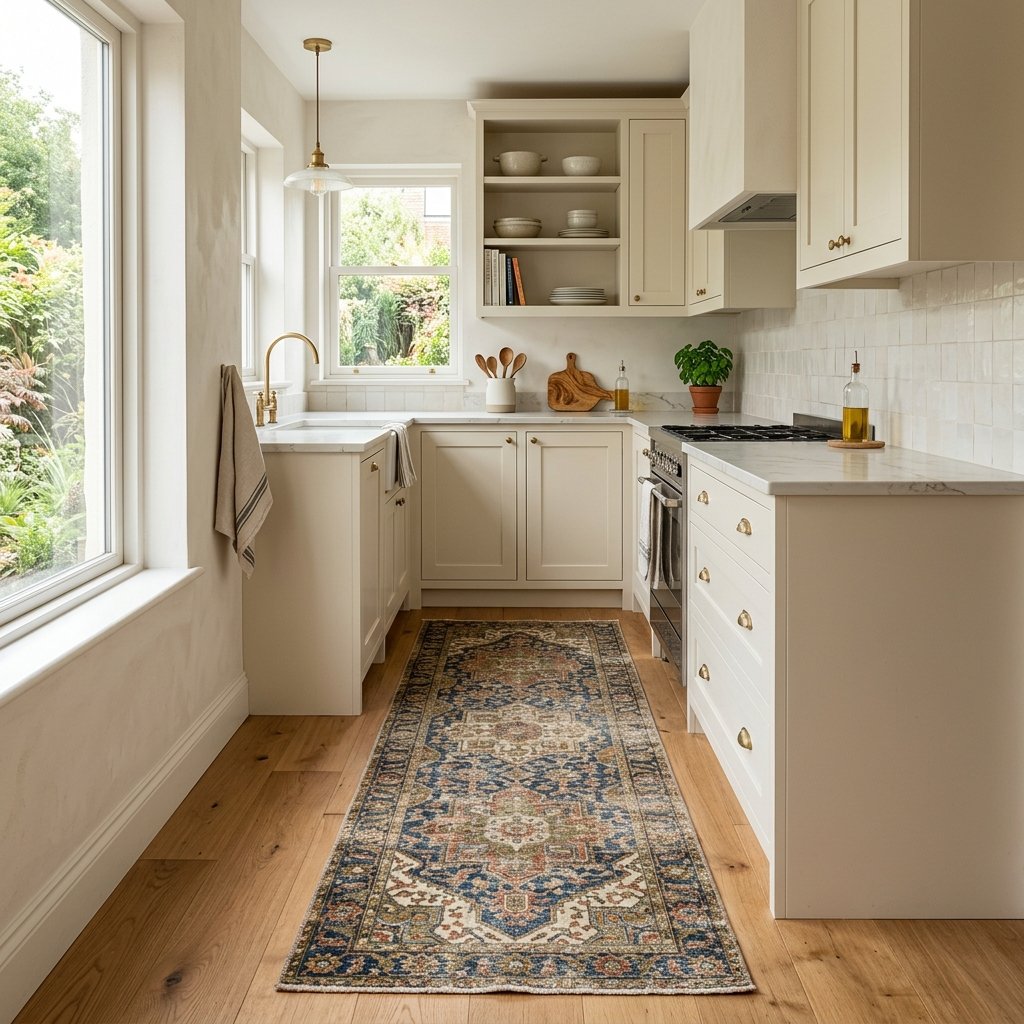
2. Place a Runner in Front of the Sink
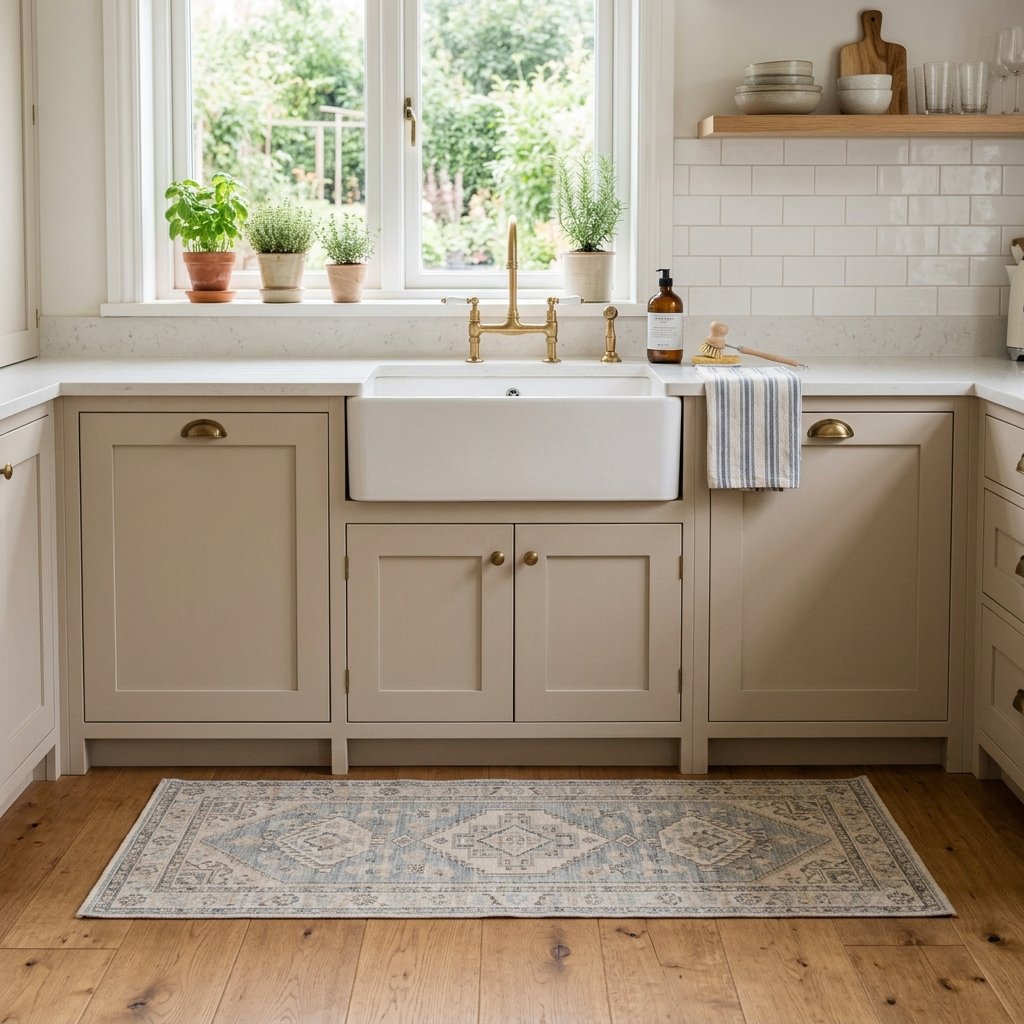
A runner near the sink can make standing more comfortable while also adding color to the room.
This placement is especially useful when the sink sits along a long cabinet run.
Choose a rug that is easy to clean and suitable for an area where small splashes may happen.
Avoid placing a rug where it stays consistently wet.
Good ventilation and prompt cleanup matter.
3. Choose a Vintage-Inspired Pattern
Vintage-style runner rugs work beautifully in kitchens because their patterns can disguise everyday wear better than very plain designs.
Try colors such as:
- Rust
- Navy
- Faded blue
- Olive
- Cream
- Muted red
- Taupe
A faded or distressed pattern can make the kitchen feel layered and collected.
This style works particularly well with warm wood, white cabinets, brass, and black accents.
4. Try a Washable Runner
For many households, a washable runner is one of the most practical choices.
It can be useful in kitchens with:
- Kids
- Pets
- Frequent cooking
- Heavy traffic
Always follow the rug manufacturer’s care instructions.
Some rugs may be machine washable while others need different cleaning methods.
Do not assume every thin rug is suitable for machine washing.
5. Keep the Pile Low
Low-pile rugs tend to work well in kitchens because they are easier to vacuum and less likely to interfere with cabinet or appliance doors.
A low profile can also reduce tripping compared with a very thick, plush rug.
This is especially important near:
- Dishwashers
- Refrigerators
- Pantry doors
Check door clearance before committing to a rug.
6. Add Warmth to an All-White Kitchen
An all-white kitchen can sometimes feel a little stark.
A runner is a simple way to add warmth without changing the cabinetry or countertops.
Try:
- Warm beige
- Faded rust
- Muted blue
- Olive
- Soft brown
A rug with several warm tones can make the space feel more inviting.
7. Use a Neutral Runner for a Calm Look
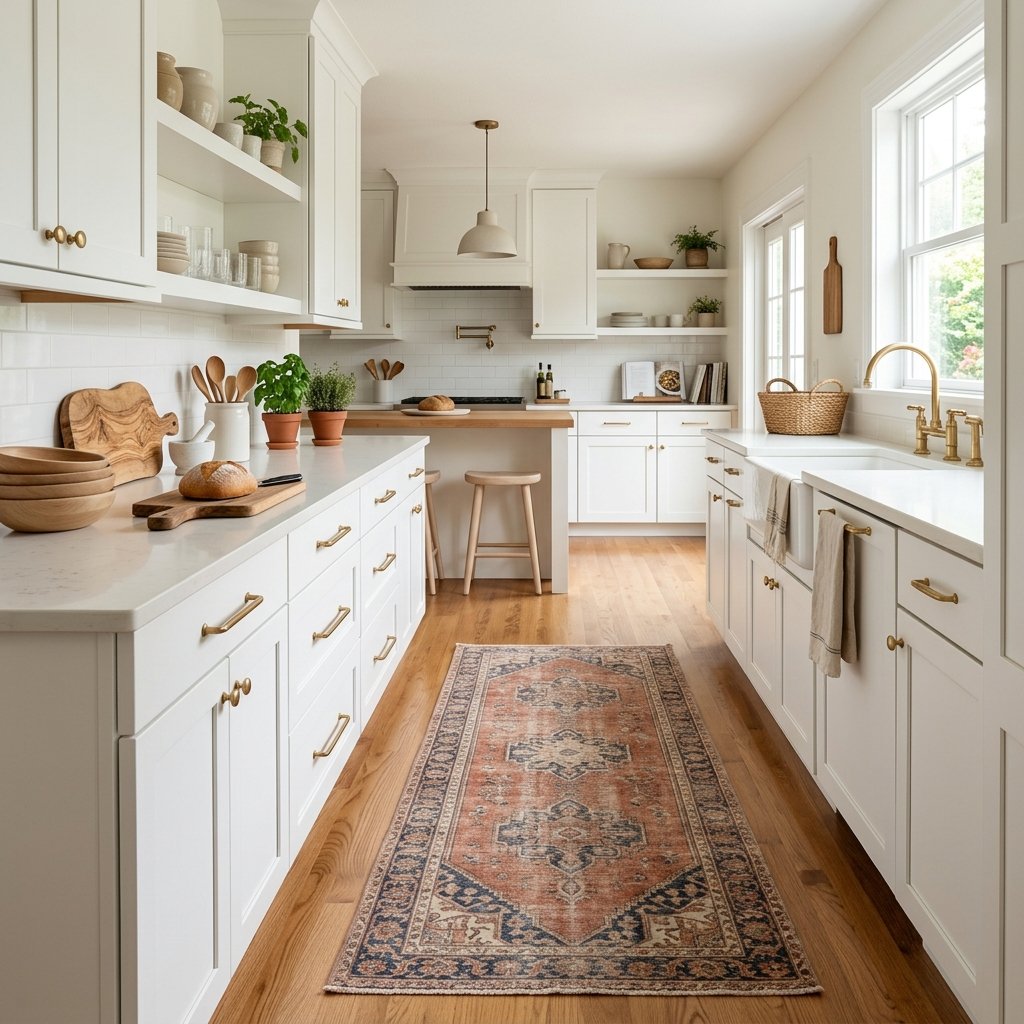
If you prefer a quiet kitchen, choose a runner with subtle texture or pattern.
Good neutral options include:
- Beige
- Greige
- Cream
- Taupe
- Soft gray
- Brown
A tonal pattern can still add interest without becoming the focal point.
This works especially well in minimalist, organic-modern, and transitional kitchens.
8. Try a Striped Kitchen Runner
Stripes are a good choice when you want something simple but not plain.
They can work in:
- Coastal kitchens
- Farmhouse kitchens
- Modern kitchens
- Casual family kitchens
Narrow stripes feel subtle.
Wider stripes create more graphic impact.
If your kitchen already has patterned tile or busy countertops, a simple stripe may be easier to coordinate than a detailed motif.
9. Choose a Runner That Connects Your Color Palette
A kitchen runner does not need to match every finish.
Instead, look for one or two colors already present in the room.
For example:
- Navy rug accents with blue island
- Rust tones with warm wood
- Black details with black hardware
- Cream accents with countertops
Repeating a few colors helps the rug look intentional.
10. Add Contrast to Dark Cabinets
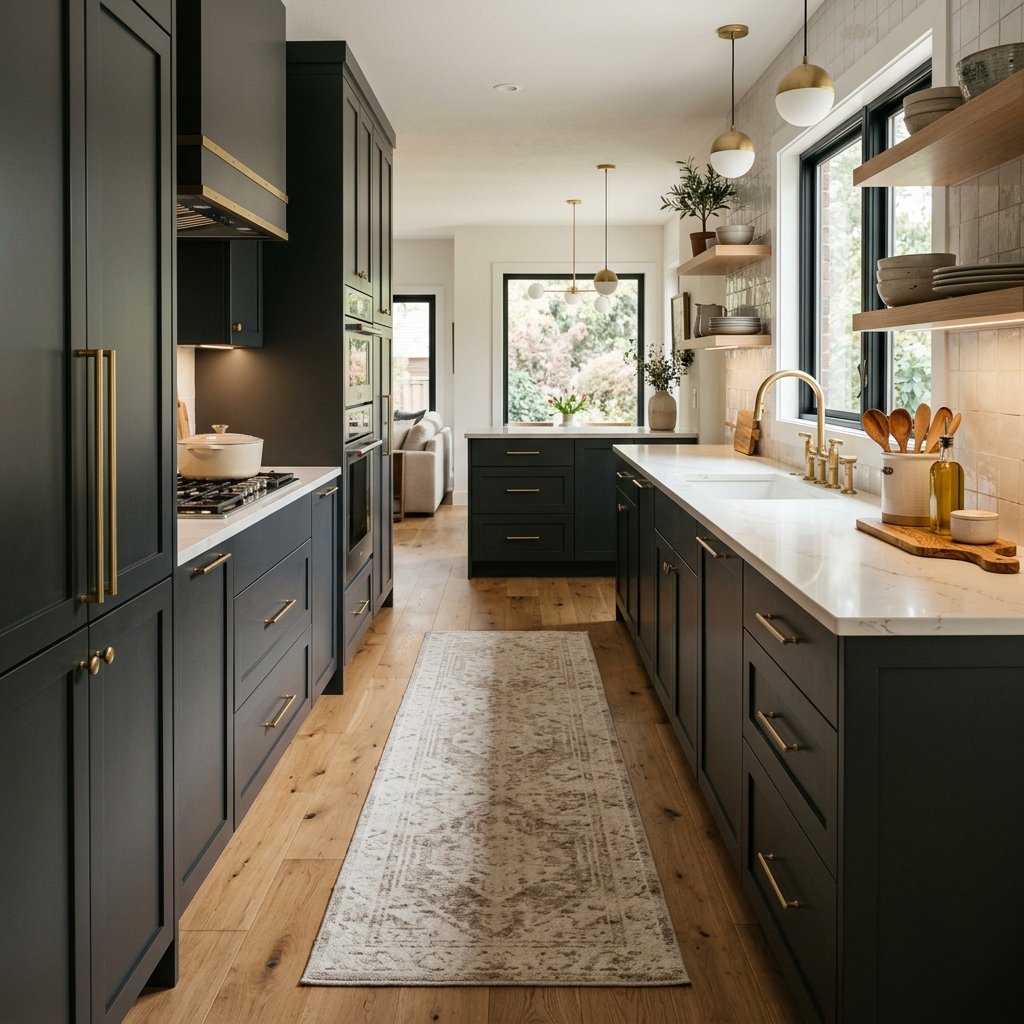
Dark cabinetry can look beautiful with a lighter runner.
Try:
- Cream and taupe
- Pale gray
- Soft blue
- Beige with subtle pattern
The lighter rug can break up a large area of dark flooring and cabinets.
If the floor is also dark, this contrast can be especially effective.
11. Pair a Runner With Natural Wood Cabinets
Wood cabinets already bring warmth, so the rug can either continue that feeling or provide contrast.
Good options include:
- Olive
- Faded blue
- Cream
- Rust
- Black and beige
Avoid selecting a rug based only on the cabinet color.
Also consider the flooring and countertop undertones.
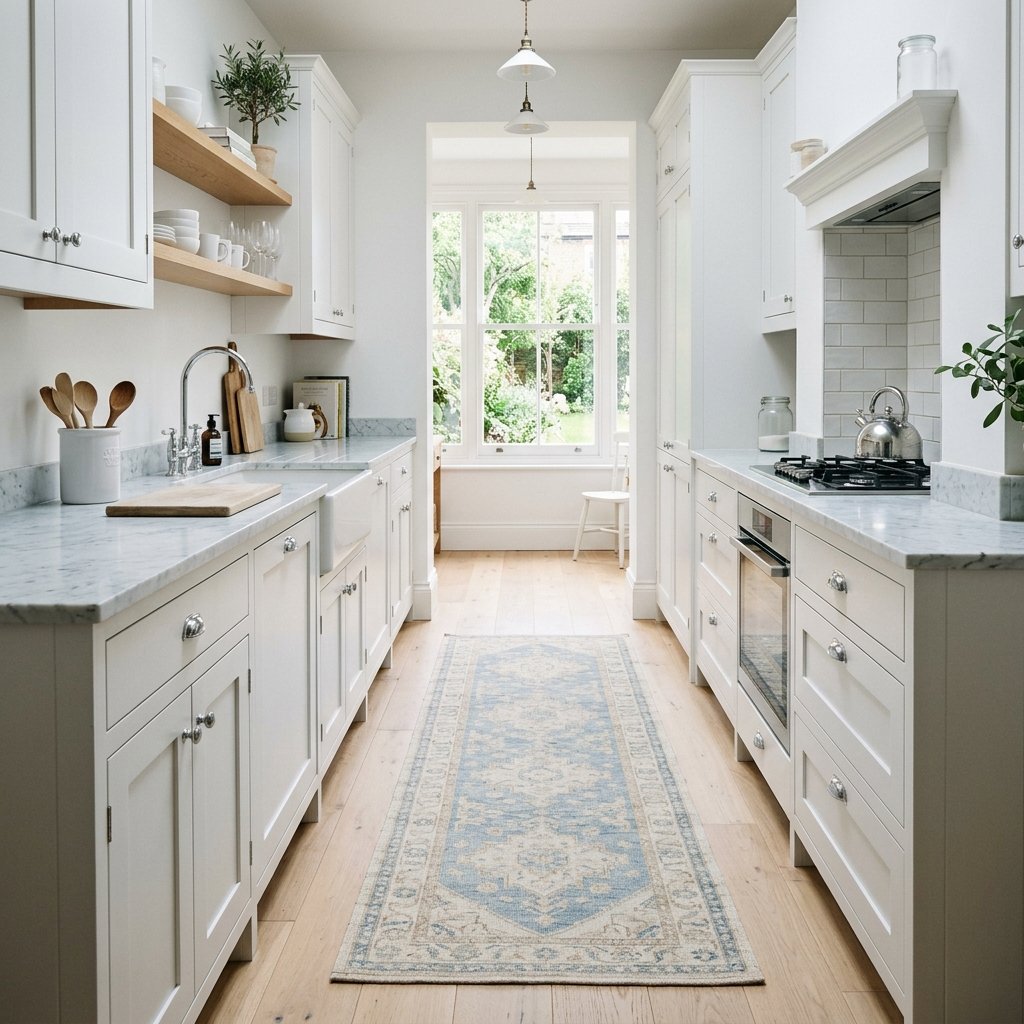
12. Use a Runner in a Galley Kitchen
Galley kitchens are almost made for runner rugs.
A long rug can emphasize the shape of the room and create a more welcoming central path.
Choose a runner that fits the length of the main walkway without bunching into doorways or appliance zones.
Leave enough exposed flooring at both ends to make the placement feel deliberate.
13. Try a Black-and-Cream Runner
Black and cream is a versatile combination.
It works with:
- White cabinets
- Black cabinets
- Natural wood
- Gray cabinets
- Modern kitchens
Choose a pattern that relates to the style of the room.
Simple geometric designs feel more modern, while faded motifs can feel more traditional.
14. Add Soft Color With Blue
Blue runner rugs are especially easy to decorate with.
Try:
- Dusty blue
- Navy
- Blue-gray
- Denim
- Muted aqua
Blue works particularly well with:
- White kitchens
- Light wood
- Brass
- Chrome
- Gray
For a softer look, choose a rug where blue is mixed with cream or beige.
15. Use a Rug to Soften Hard Tile
Tile kitchens can feel visually and physically hard.
A runner adds softness without covering too much of the floor.
Choose a rug with enough contrast that its edges are easy to see.
A runner that blends too closely with the flooring may be less visually obvious underfoot.
Use an appropriate non-slip rug pad or backing to help keep it stable.
16. Coordinate the Runner With the Island
If your kitchen island has a contrasting color, use the rug to tie it into the rest of the room.
For example:
- Navy island + muted blue runner
- Green island + olive-accented runner
- Black island + black-and-cream runner
You do not need an exact match.
A related color often looks more sophisticated than matching perfectly.
17. Let the Runner Be the Main Pattern
If the rest of your kitchen is simple, the rug can be the decorative focal point.
A patterned runner can add:
- Color
- Movement
- Texture
- Personality
Keep nearby textiles simpler if the rug has a strong design.
For example, pair a patterned rug with solid towels and understated window treatments.
How to Choose the Right Size Kitchen Runner
The rug should fit the actual walkway, not just the overall room.
Measure:
- Width of the aisle
- Length of the open flooring
- Door swing areas
- Appliance clearances
The runner should not prevent:
- Dishwasher door from opening
- Refrigerator access
- Cabinet doors from operating
- Pantry doors from moving freely
Leave visible flooring around the rug.
The exact amount will depend on the kitchen.
The most important thing is that the runner looks proportionate and stays out of functional door paths.
Where Should a Kitchen Runner Go?
Good locations include:
- Between island and cabinets
- In front of sink
- Down a galley kitchen
- Along a long cabinet wall
- In a kitchen walkway
Avoid putting a rug in places where it is likely to become a repeated safety issue.
For example, a runner may not make sense directly beside a frequently opened oven if it bunches, slides, or interferes with movement.
Kitchen Runner Rug Ideas for Small Kitchens
Small kitchens benefit from keeping the floor visually simple.
Try:
- One narrow runner
- Low-pile texture
- Soft pattern
- Limited color palette
Avoid using several small mats if one coordinated runner can do the job.
One longer rug often creates a cleaner look.
Kitchen Runner Rugs for Large Kitchens
Large kitchens may need more than one rug, but they should feel related.
You might use:
- One runner at the main sink
- One smaller rug at a secondary prep zone
Choose pieces with similar colors or patterns so they feel intentional together.
Do not cover every open floor area.
Leaving visible flooring keeps a large kitchen from feeling cluttered.
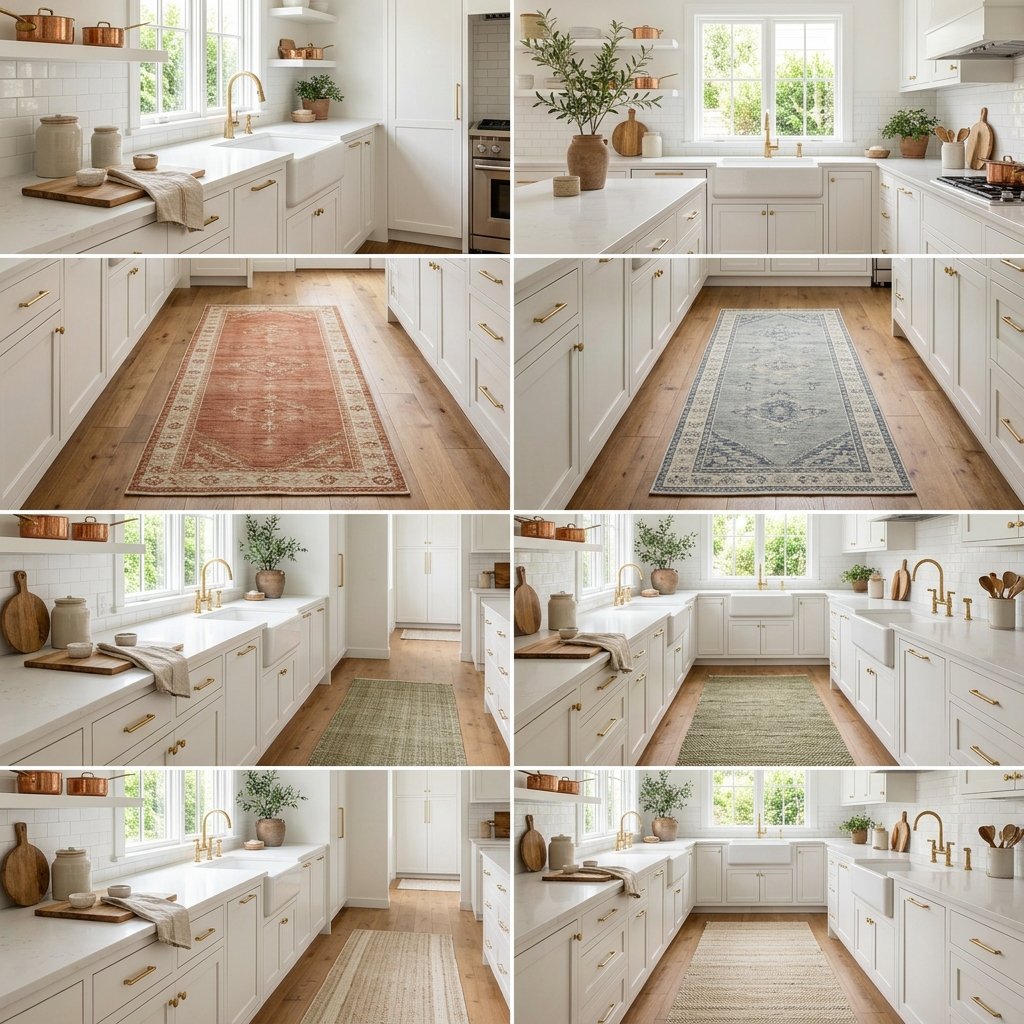
Best Kitchen Runner Rug Colors
Blue
Fresh and versatile.
Rust
Warm and great with wood tones.
Olive Green
Works well with neutral kitchens and natural finishes.
Black and Cream
Graphic and easy to coordinate.
Taupe
Quiet and understated.
Faded Red
Adds warmth to traditional and vintage-inspired kitchens.
Gray
Works best when it coordinates with the actual undertones in the room.
Kitchen Runner Rugs With White Cabinets
White cabinets are flexible.
Try:
- Vintage red
- Navy
- Olive
- Rust
- Beige
- Blue-gray
The flooring can help narrow your choice.
Warm wood flooring often looks beautiful with warm or muted colors.
Cool tile may work better with softer blue or gray-based patterns.
Kitchen Runner Rugs With Wood Cabinets
Natural wood cabinets already have a strong color and grain pattern.
Try runners in:
- Cream
- Blue
- Olive
- Muted rust
- Black and beige
If the wood has strong warm undertones, very icy colors may feel disconnected.
Kitchen Runner Rugs With Gray Cabinets
Gray cabinets can lean warm or cool.
With warm gray cabinets, try:
- Taupe
- Cream
- Olive
- Rust
With cooler gray cabinets, consider:
- Blue
- Charcoal
- Black and cream
- Soft gray
Again, flooring and countertop colors matter too.
What Material Works Well for a Kitchen Runner?
There is no single perfect material.
The right choice depends on:
- Cleaning needs
- Traffic
- Comfort
- Flooring
- Pets
- Children
Useful characteristics may include:
- Low pile
- Easy cleaning
- Secure backing or compatibility with rug pad
- Durable construction
Check the care instructions before buying.
A beautiful rug that is difficult to clean may not be practical for a busy cooking space.
Washable Kitchen Runner Rugs
Washable rugs can be convenient, but review the actual care requirements.
Check:
- Washing method
- Machine size requirements
- Drying instructions
- Whether the rug has a separate pad
- Whether repeated washing may change texture or shape
Clean spills promptly even if the rug is washable.
How to Keep a Kitchen Runner From Sliding
A sliding runner can be a serious nuisance and a safety concern.
Use a rug pad or non-slip solution that is:
- Suitable for the rug
- Compatible with the flooring
- Correctly sized
Do not assume every rubber-backed product is safe for every floor finish.
Some flooring manufacturers have specific requirements for rug pads and backing materials.
Should a Kitchen Runner Have a Rug Pad?
Often, yes.
A compatible rug pad can help:
- Reduce slipping
- Keep edges flatter
- Add a little cushioning
- Protect flooring from abrasion
Choose one suitable for both the rug and your flooring.
Trim the pad so it does not extend beyond the rug.
How to Make a Kitchen Runner Look More Expensive
You do not need an expensive rug to create a polished look.
Choose the Right Scale
A runner that looks too short or narrow can feel accidental.
Coordinate the Colors
Repeat one or two colors already in the kitchen.
Keep It Flat
Curling edges immediately make a rug look less finished.
Avoid Too Many Competing Patterns
Let either the rug or another major surface be the visual star.
Keep It Clean
A dirty runner can make the entire kitchen feel less polished.
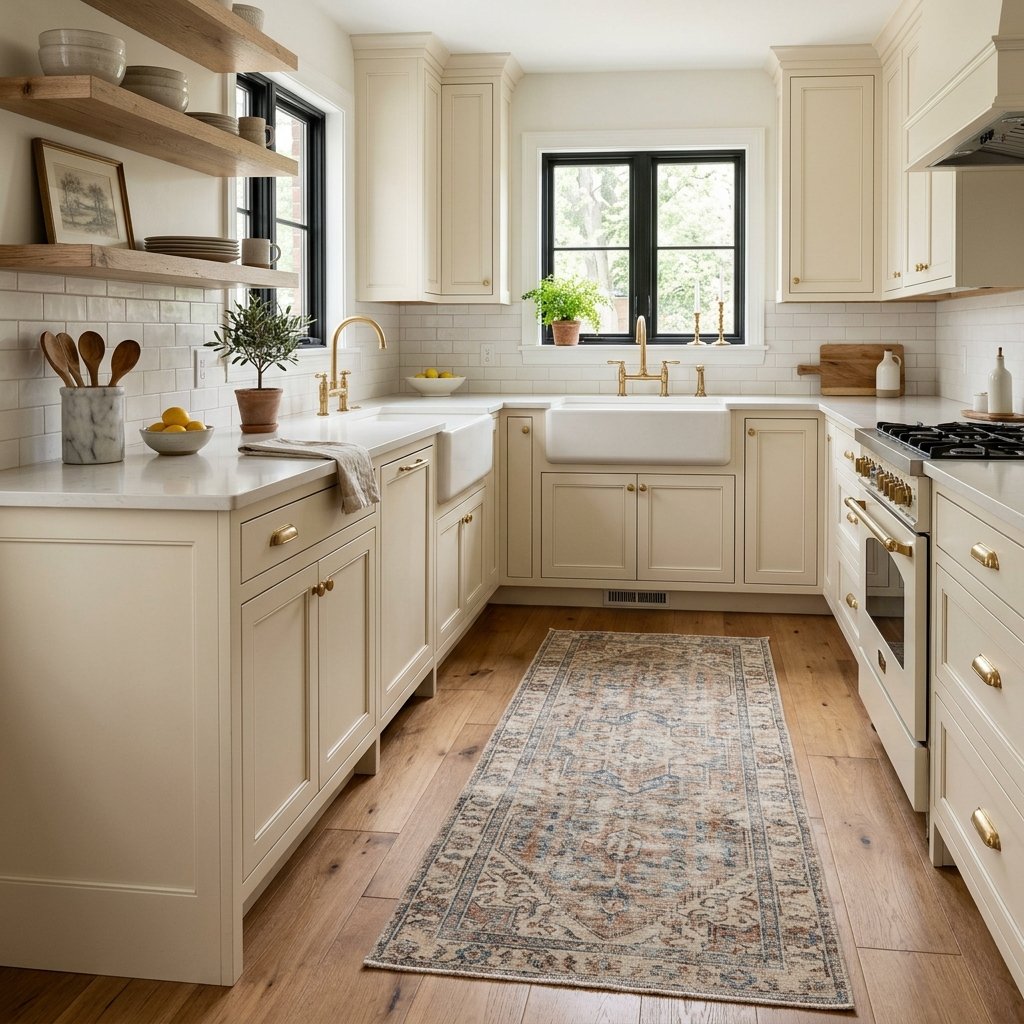
Choose a Subtle Vintage Pattern
Distressed designs often add depth without looking overly busy.
Common Kitchen Runner Rug Mistakes
Choosing a Rug That Is Too Short
The rug should relate to the full walkway.
Blocking Appliance Doors
Measure first.
Using a Rug That Slides
Secure it with an appropriate rug pad or backing.
Picking a Thick Rug Near Cabinets
A high pile may interfere with doors.
Ignoring Cleanability
Kitchens are messy.
Choose something you can realistically maintain.
Using Too Many Small Rugs
This can make the kitchen feel visually chopped up.
Matching Too Perfectly
A runner does not have to be the exact same color as the cabinets or island.
Related tones usually look more natural.
Ignoring Floor Compatibility
Check whether the backing and rug pad are appropriate for your flooring.
Kitchen Runner Rug Safety Tips
A runner should make the kitchen more comfortable, not harder to move through.
Keep these points in mind:
- Use a non-slip pad or appropriate backing.
- Keep rug edges flat.
- Make sure the runner does not block cabinet or appliance doors.
- Avoid placing it where it creates a repeated trip hazard.
- Clean spills promptly.
- Keep rugs away from open flames and extreme heat.
- Do not let a wet rug remain on moisture-sensitive flooring.
- Check rug-pad compatibility with the floor manufacturer where needed.
- Replace damaged rugs with curled edges or failing backing.
- Keep walking paths clear, especially in narrow kitchens.
FAQ About Kitchen Runner Rugs
Are runner rugs good for kitchens?
Yes. They can add softness, color, and comfort when they are appropriately sized, easy to clean, and securely placed.
Where should you put a runner rug in a kitchen?
Common placements include in front of the sink, between an island and cabinet wall, or along the main walkway of a galley kitchen.
How wide should a kitchen runner be?
There is no universal width. Measure the aisle and choose a rug that leaves visible flooring while still feeling proportionate.
What color kitchen runner should I choose?
Choose colors that relate to your cabinets, flooring, island, countertops, or nearby decor without trying to match everything exactly.
Are washable runners good for kitchens?
They can be very practical, especially in high-traffic homes, as long as their cleaning method works for your routine.
Should I put a rug pad under a kitchen runner?
A compatible rug pad can help prevent slipping and protect flooring. Make sure it is suitable for both surfaces.
Can you use a kitchen runner on wood floors?
Yes, but choose rug backing and pads that are compatible with the specific floor finish and avoid trapping moisture.
What style of rug works in a modern kitchen?
Simple stripes, subtle geometric patterns, tonal neutrals, and restrained vintage-inspired designs can all work well in modern kitchens.
Final Thoughts
Kitchen runner rugs can make a kitchen feel warmer and more thoughtfully decorated without changing any major finishes.
The key is choosing a rug that works for the room, not just one that looks pretty in a product photo.
Measure the walkway, check cabinet and appliance clearance, choose a practical pile height, and make sure the rug stays secure underfoot.
Then think about style.
A faded vintage pattern can add character to a white kitchen. A neutral runner can soften a modern space. Blue, olive, rust, or black-and-cream can help connect the rug to cabinets, islands, wood tones, or hardware.
When the scale, placement, and color are right, a kitchen runner can feel like a natural part of the room rather than an afterthought.