
Blank walls can make a room feel unfinished, but filling them with art does not have to mean buying expensive prints or investing in a large gallery wall.
Sometimes the most interesting wall decor is something you make yourself.
The best DIY art ideas do not require professional artistic skills. Simple shapes, interesting textures, beautiful colors, natural materials, and inexpensive frames can create artwork that feels intentional and personal.
DIY art is also useful when you need something in a particular size or color. Instead of searching endlessly for artwork that fits above your sofa, bed, console, or dresser, you can create something specifically for that space.
You can paint a simple abstract canvas, frame fabric or wallpaper, make textured art, display pressed botanicals, create oversized geometric shapes, or transform thrifted frames into a coordinated collection.
The secret is not making the project complicated.
Choose a limited color palette, pay attention to scale, and let the finished piece relate to the room around it.
Here are 21 approachable DIY art ideas to help fill those empty walls without spending a fortune.
1. Paint a Simple Abstract Canvas
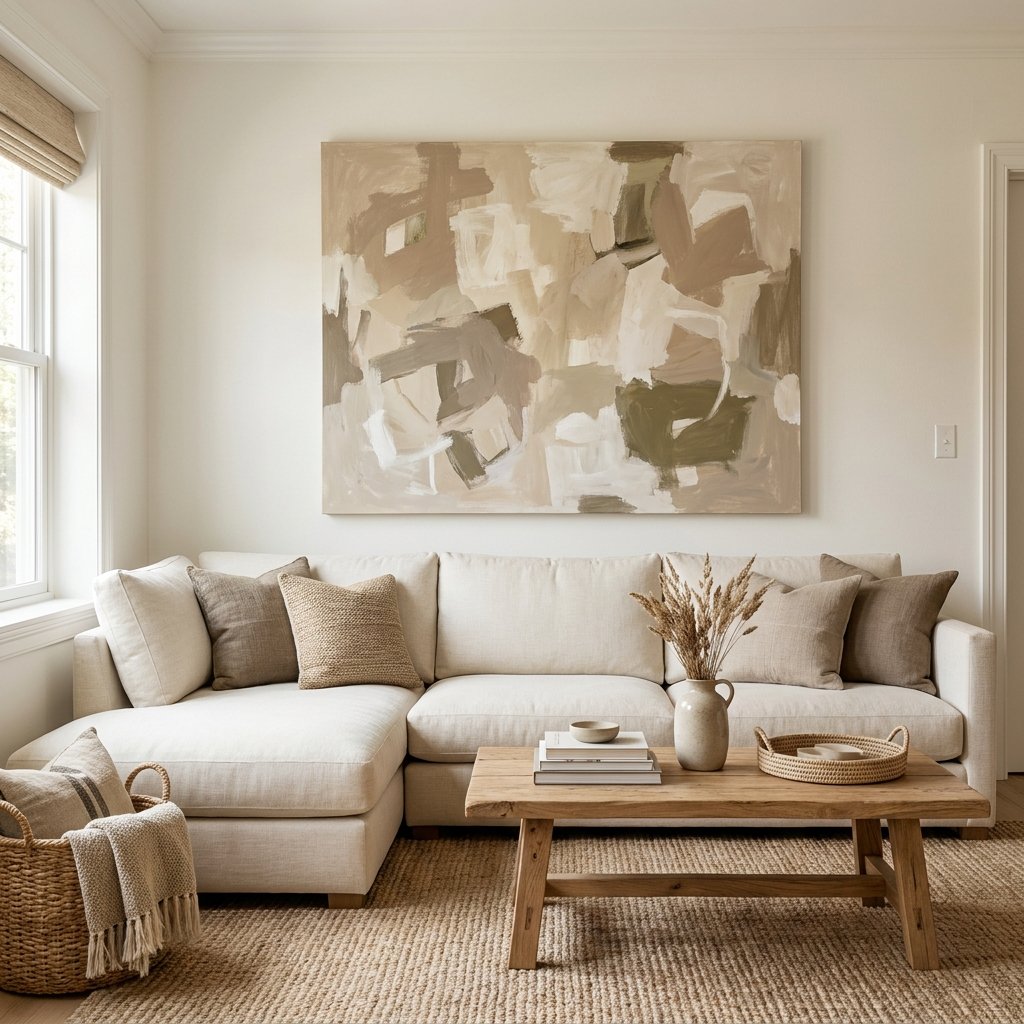
Abstract art is one of the easiest places to start because the piece does not need to represent a specific object.
Choose two or three colors already used in the room.
You might combine:
- Cream
- Taupe
- Soft brown
- Muted green
Paint large shapes instead of lots of tiny details.
The bigger forms usually look more intentional from across the room.
Before painting, experiment with the composition on paper or use removable pieces of colored paper to visualize the arrangement.
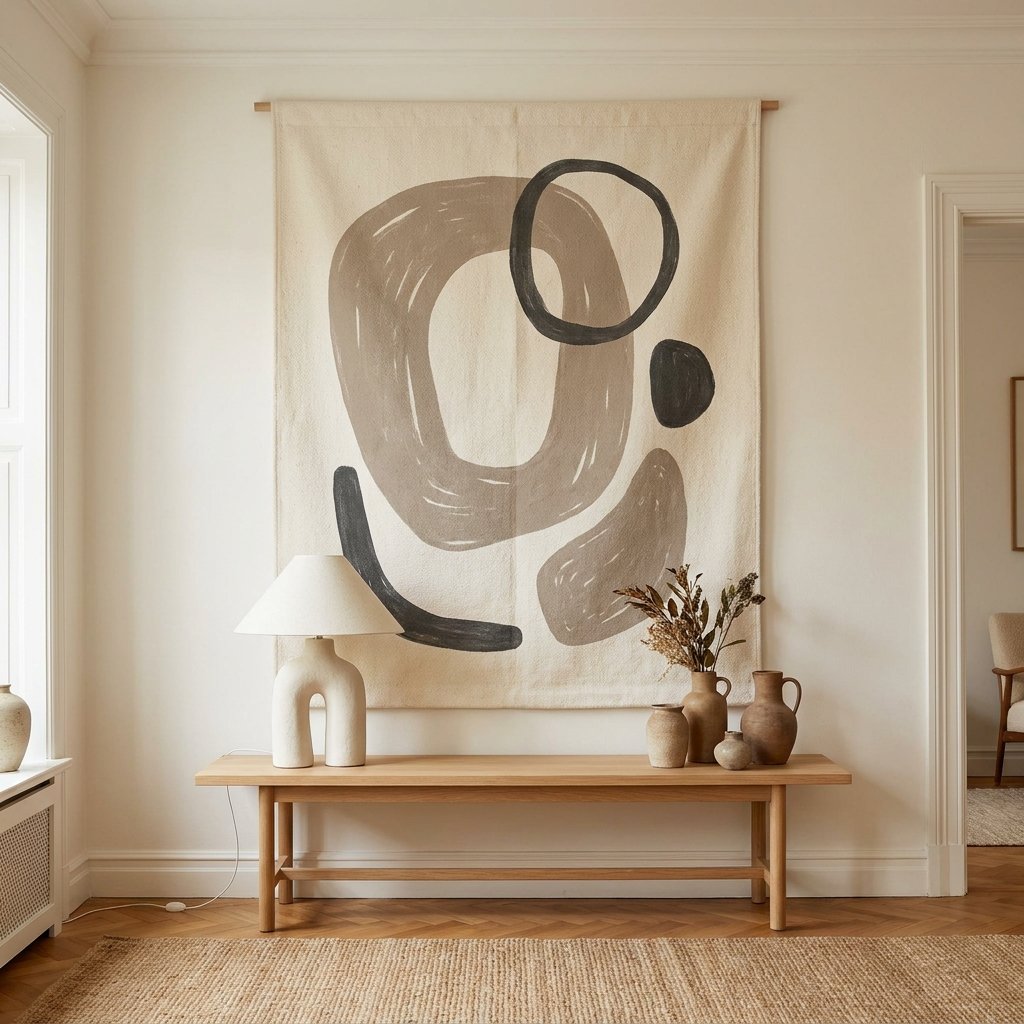
2. Make Oversized Minimalist Art
Large artwork can make a room feel more finished, especially above a sofa, bed, or console.
And large does not have to mean complicated.
Try a simple background with:
- One curved line
- Two overlapping shapes
- A large arch
- Organic blocks of color
A restrained design often works particularly well at a large scale.
Choose a sturdy surface appropriate for the medium you are using and make sure the finished piece can be safely mounted.
3. Create Textured Canvas Art
Texture can make a simple monochromatic piece much more interesting.
Use art materials intended for creating texture on your chosen surface rather than assuming household construction products are suitable for artwork.
You can create:
- Arches
- Waves
- Irregular lines
- Raised organic shapes
Once dry according to the product instructions, leave the piece neutral or paint it.
Cream, warm white, taupe, and earthy beige are especially effective when the texture itself is the main feature.
4. Paint Simple Geometric Shapes
Geometric artwork is beginner-friendly because the design can be planned before painting.
Try:
- Circles
- Semicircles
- Arches
- Rectangles
- Overlapping blocks
Use painter’s tape where appropriate for crisp lines.
For a modern look, combine warm neutrals with one deeper accent such as olive, navy, rust, or charcoal.
5. Frame Beautiful Fabric
Fabric can become instant artwork.
Look for an interesting:
- Floral
- Block print
- Stripe
- Botanical
- Vintage-inspired pattern
Stretch or position the fabric neatly inside a suitable frame.
This is a useful way to repeat a room’s colors without adding another painted canvas.
Fabric art can work particularly well in bedrooms, hallways, and living rooms.
6. Frame Leftover Wallpaper
Do you have wallpaper left from another project?
Turn a favorite section into art.
This works particularly well with wallpaper featuring:
- Botanical motifs
- Florals
- Landscapes
- Geometric patterns
- Vintage designs
One large framed piece can create a statement, or several coordinating sections can become a small gallery.
This is also an easy way to use a bold wallpaper you love without covering an entire wall.
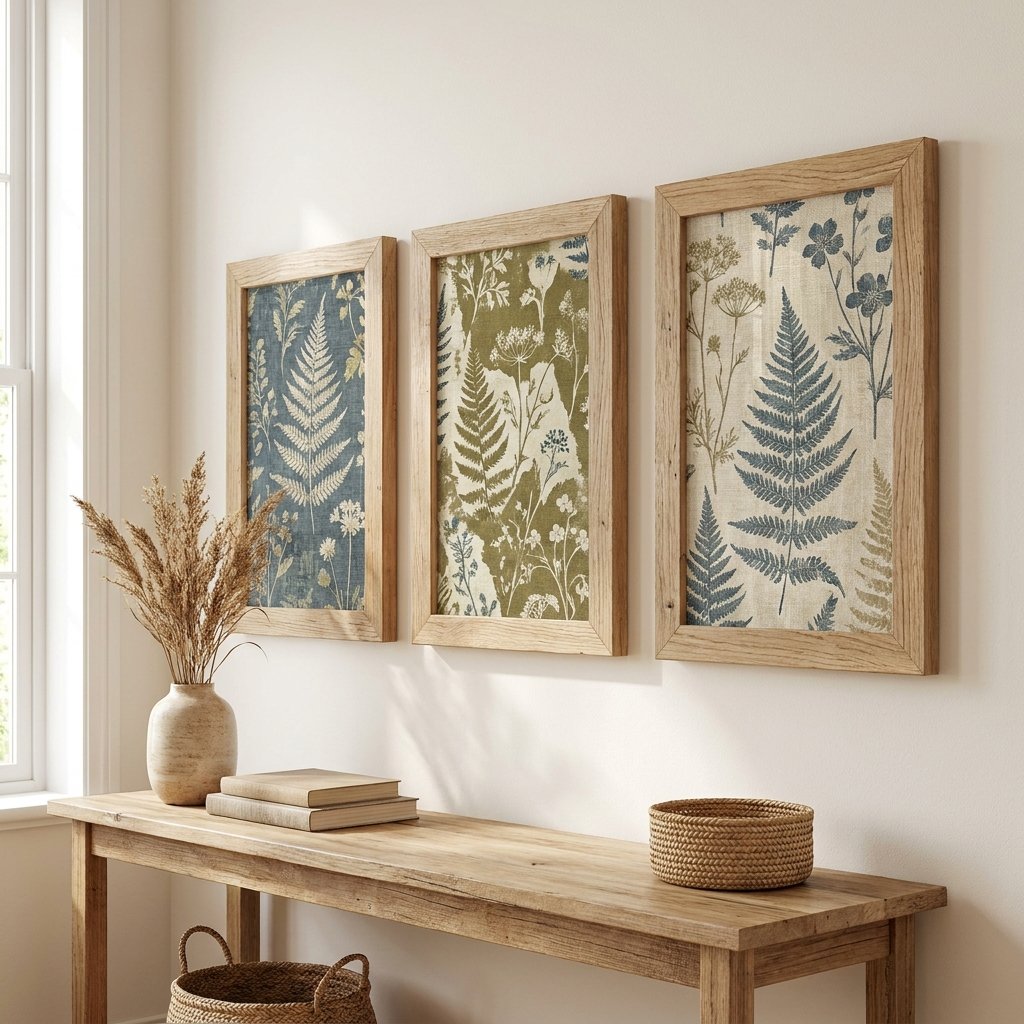
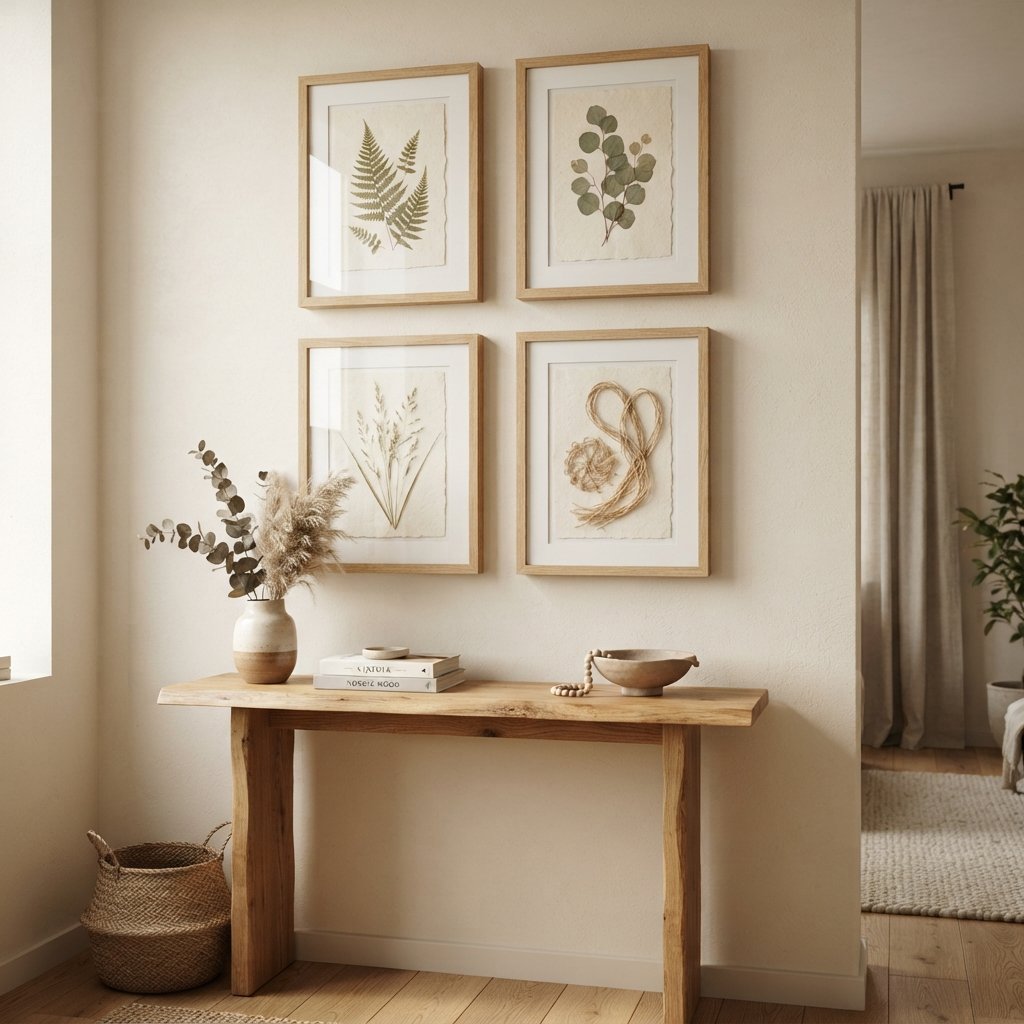
7. Make Pressed Botanical Art
Pressed leaves and flowers can create beautiful nature-inspired artwork.
Collect suitable plant material responsibly, press it thoroughly, and arrange it on archival or decorative paper.
Simple compositions often work best.
Try one botanical specimen per frame and hang several frames together.
Remember that natural materials may change color over time, especially with light exposure.
8. Create DIY Line Art
Line art can be extremely simple.
Use a pencil first to sketch:
- Face
- Flower
- Leaf
- Abstract figure
- Continuous organic line
Then trace the design with your chosen art medium.
A cream background with charcoal or black linework creates a classic minimalist look.
If drawing freehand feels intimidating, practice on inexpensive paper first.
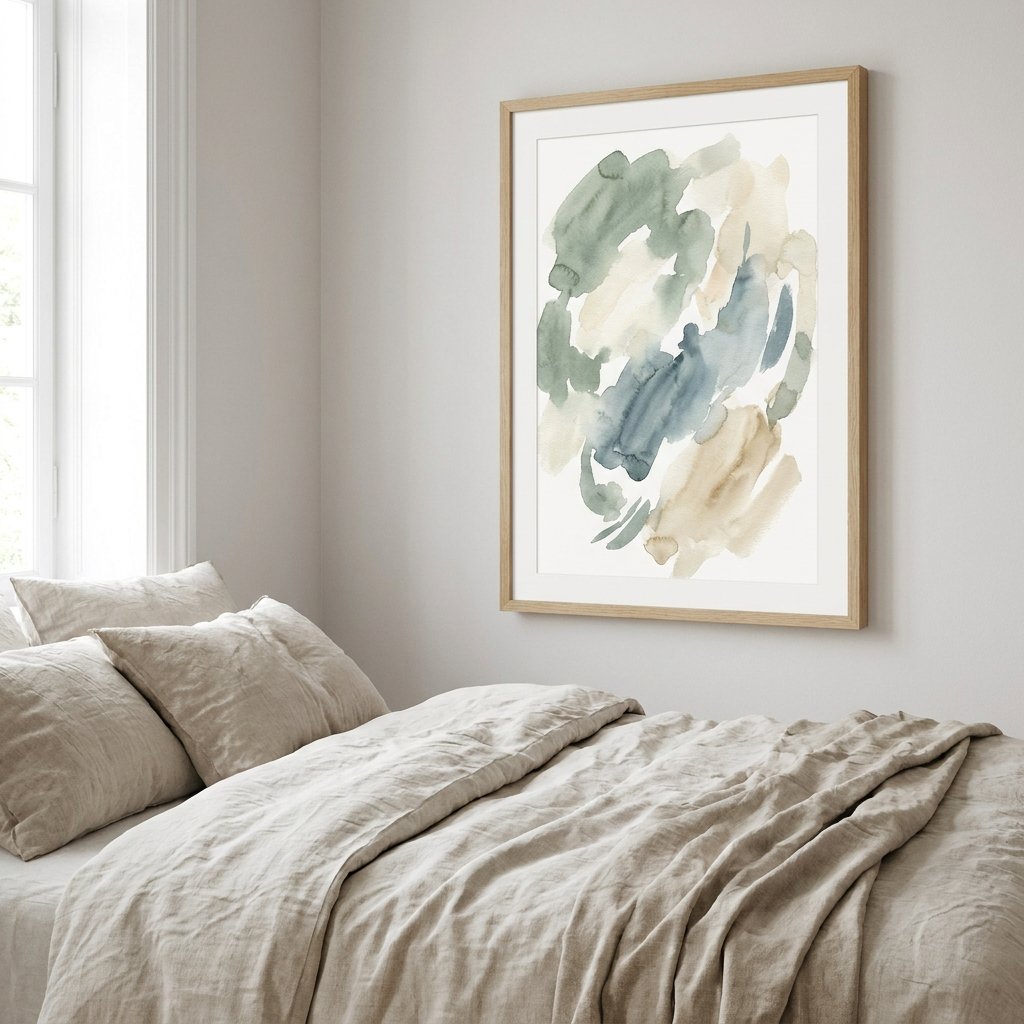
9. Paint Watercolor-Inspired Abstract Art
Soft, blended colors can create calm artwork for bedrooms and living rooms.
Choose a palette such as:
- Dusty blue + gray
- Sage + beige
- Terracotta + blush
- Taupe + cream
Use watercolor materials appropriate for the paper or surface.
Leave some negative space instead of filling every inch.
That breathing room often makes the artwork look more polished.
10. Make DIY Landscape Art
You do not have to paint a realistic landscape.
Simplify it into layers.
For example:
Top: pale sky.
Middle: distant hills.
Bottom: darker foreground.
Use muted colors and broad shapes.
A simplified landscape can feel surprisingly sophisticated and is forgiving for beginners because precise detail is unnecessary.
11. Create a Diptych
A diptych is artwork divided across two pieces.
Create two canvases that share:
- Colors
- Shapes
- Lines
- Texture
The design can continue from one canvas to the other, or the pieces can simply coordinate.
Hang them together with consistent spacing.
This is useful for filling a wide wall without making one enormous artwork.
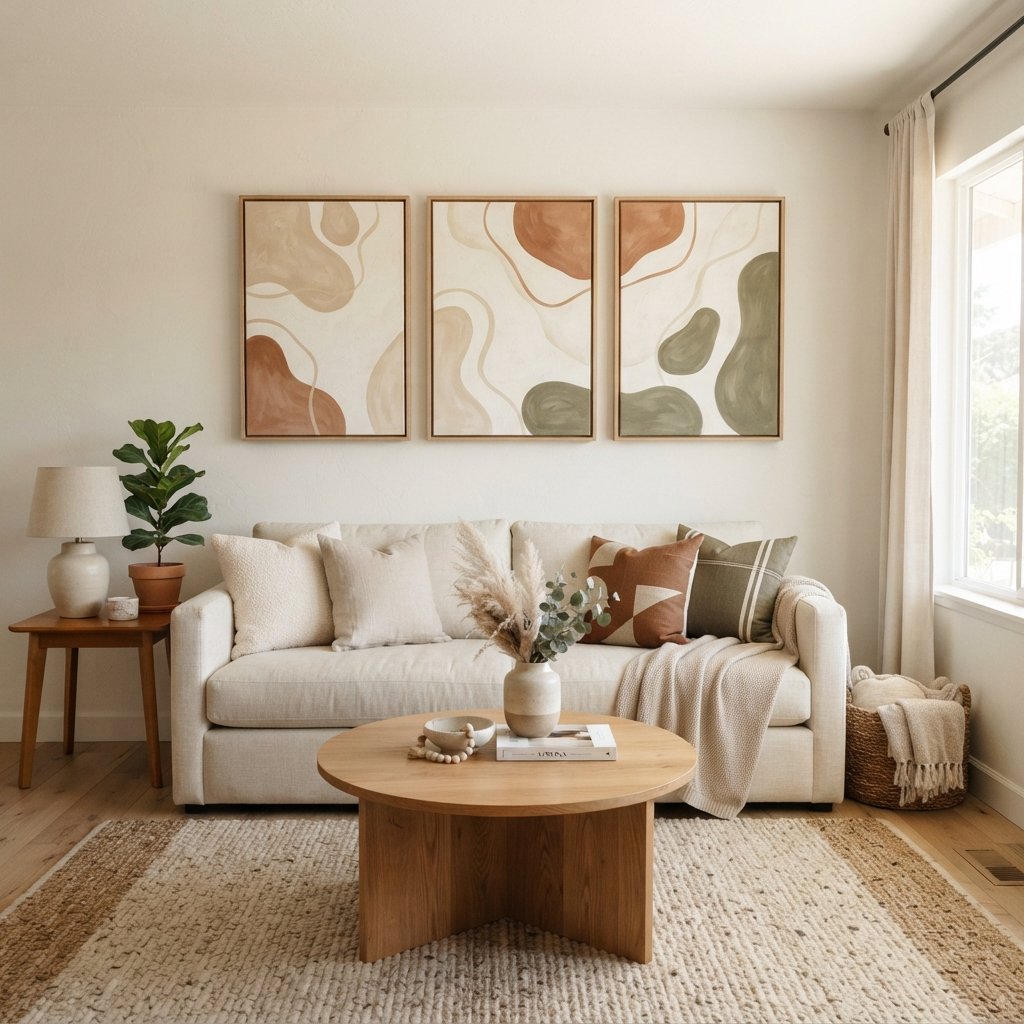
12. Create a Triptych
Use the same idea across three panels.
A triptych can work beautifully:
- Above a sofa
- Above a bed
- Along a dining room wall
- In a hallway
Keep at least one element consistent across all three pieces.
That might be the background color, shape language, or painting technique.
13. Make Art From Painted Paper
You can create interesting abstract artwork without painting directly onto the final background.
Paint sheets of heavy paper in different colors.
Once dry, cut them into shapes such as:
- Arches
- Circles
- Leaves
- Organic forms
Arrange them on a larger sheet before adhering them with an appropriate archival or craft adhesive.
This technique makes it easy to experiment with the layout before committing.
14. Create a Paper Collage
Collage is another beginner-friendly DIY art project.
Use:
- Handmade paper
- Textured paper
- Painted paper
- Neutral cardstock
- Appropriate recycled paper
Limit the color palette so the result feels cohesive.
A simple cream, brown, black, and muted green collage can work beautifully in a modern organic room.
15. Make DIY Block Print Art
Simple stamps or block-printing tools can create repeating patterns.
Try:
- Leaves
- Dots
- Stripes
- Small geometric shapes
Practice the pattern on scrap paper first.
Slight variations can add handmade charm, but planning the overall spacing helps the finished piece look intentional.
Use inks or paints appropriate for your chosen surface and follow product instructions.
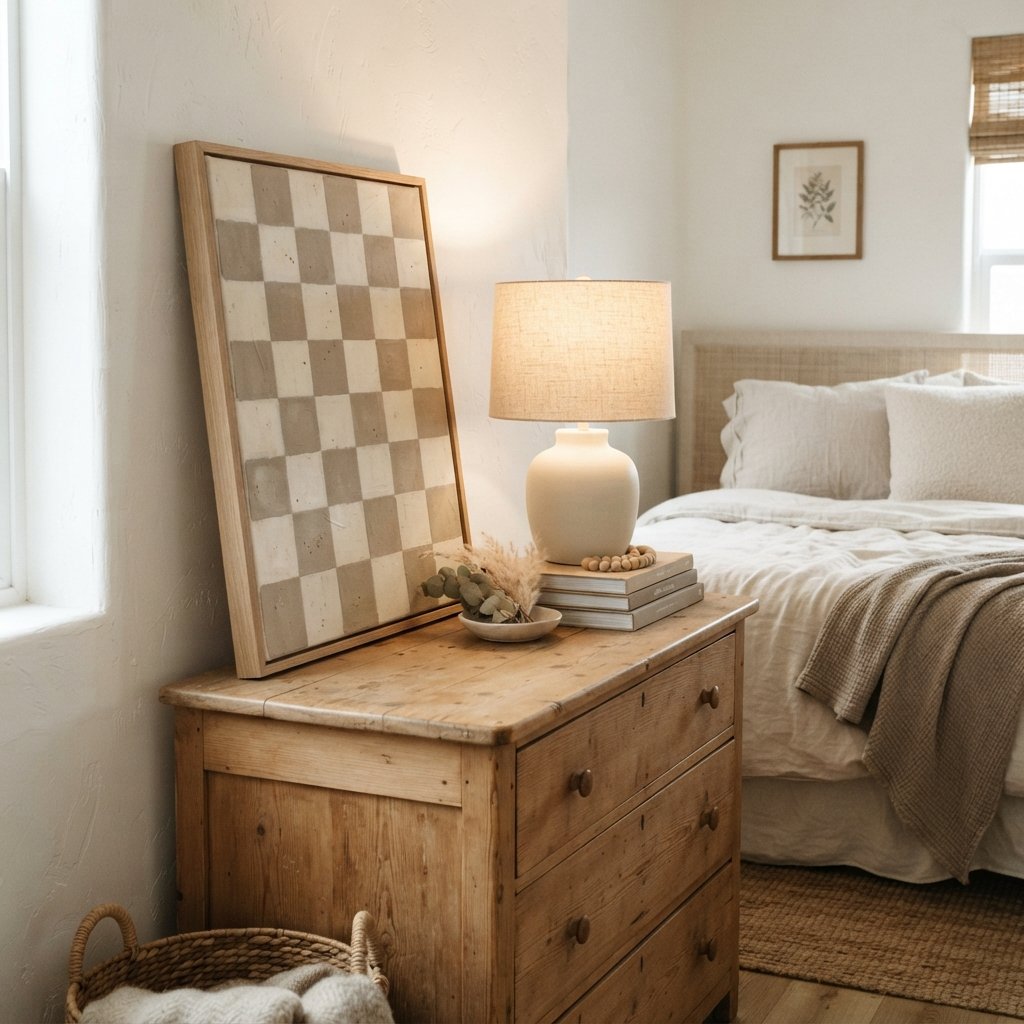
16. Paint a Checkerboard Canvas
Checkerboard patterns can be playful or sophisticated depending on the colors.
Instead of stark black and white, try:
- Cream + taupe
- Beige + rust
- Sage + cream
- Dusty blue + white
Use larger squares for a modern appearance.
Painter’s tape can help create cleaner edges when appropriate.
17. Turn Children’s Artwork Into a Gallery
DIY art does not have to be made by adults.
Choose several favorite pieces of children’s artwork and give them matching or coordinating frames.
The frames provide visual consistency even when every picture is different.
Try a grid arrangement in:
- Hallway
- Playroom
- Family room
- Stair landing
Rotate the artwork occasionally rather than trying to display every piece at once.
Use suitable glazing and hanging methods for the location.
18. Make a Vintage-Inspired Art Collection
Create the look of collected artwork using thrifted or existing frames.
The frames do not have to match perfectly.
A mixture of wood, aged-looking metal, black, and warm neutral finishes can create a collected feel.
Fill them with your own:
- Sketches
- Botanical studies
- Simple landscapes
- Painted paper
- Abstract art
Arrange everything on the floor before hanging it.
19. Create DIY Art From Book Pages or Sheet Music
Old paper can provide beautiful texture, but be thoughtful about what you use.
Avoid cutting up valuable, rare, borrowed, or sentimental books.
Instead, use inexpensive damaged books, public-domain material you have legally printed, or paper designed for crafts.
You can frame individual pages or use them as a background for another art technique.
A vintage paper background with a simple botanical silhouette can create an interesting layered piece.
20. Paint a Color-Block Canvas
Color blocking is an easy way to make artwork coordinate with a room.
Choose three or four colors from the existing decor.
For example:
- Warm white
- Camel
- Olive
- Charcoal
Divide the canvas into large sections.
The blocks do not need to be perfectly symmetrical.
Slightly irregular proportions often create a more interesting composition.
21. Make DIY Art From Natural Materials
Natural materials can add texture to a wall without traditional painting.
Depending on the design, you might use:
- Dried botanicals
- Pressed leaves
- Small pieces of natural fiber
- Lightweight woven material
Make sure materials are clean, thoroughly dry, and suitable for indoor display.
Avoid using materials that may attract pests, shed excessively, contain moisture, or create an unsafe hanging piece.
Easy DIY Art Ideas for Beginners
If you have never made artwork before, start with a technique that does not require realistic drawing.
Some of the easiest options are:
- Abstract shapes
- Color blocks
- Collage
- Framed fabric
- Framed wallpaper
- Checkerboard art
- Simple line art
The goal is not to prove you can paint.
It is to create something that looks good in your home.
Start with the colors and scale, then choose the simplest technique that achieves the look.
DIY Wall Art Ideas on a Budget
You may already own many of the materials you need.
Look for:
- Leftover wall paint
- Scrap fabric
- Wallpaper remnants
- Existing frames
- Heavy paper
- Thrifted frames
- Craft supplies
A new coat of appropriate paint can also help mismatched frames feel more cohesive.
Before buying new supplies, decide where the finished artwork will hang and what dimensions you actually need.
DIY Art Ideas for the Living Room
Living rooms often need larger artwork because the furniture is larger.
A tiny frame above a wide sofa can feel disconnected.
Consider:
- Oversized abstract canvas
- Diptych
- Triptych
- Large framed fabric
- Coordinated gallery wall
Look at the complete furniture arrangement rather than the wall alone.
Artwork should feel visually connected to the sofa, console, fireplace, or other furniture beneath it.
DIY Art Ideas for the Bedroom
Bedrooms are a natural place for softer artwork.
Try:
- Minimalist abstract painting
- Pressed botanicals
- Framed fabric
- Watercolor-inspired art
- Simple landscape
Choose colors already present in the bedding, rug, or curtains.
For art above a bed, use secure mounting appropriate for the artwork and wall construction. Consider the consequences if an item were to come loose; lighter artwork may be preferable in some locations.
DIY Art Ideas for the Bathroom
Bathroom art needs to account for humidity and splashes.
Paper, fabric, wood, adhesives, and some finishes can react poorly to damp conditions.
Choose materials and frames suitable for the location, provide adequate ventilation, and avoid placing moisture-sensitive artwork in direct splash zones.
Simple framed prints or appropriately protected DIY pieces may work better than delicate natural materials in a frequently steamy bathroom.
DIY Art Ideas for a Hallway
Hallways are ideal for collections.
Try a row of:
- Botanical art
- Line drawings
- Small abstracts
- Family-created art
Keep the frame style or color palette consistent to connect the pieces.
For a narrow hallway, avoid artwork or frames that project excessively into the walking path.
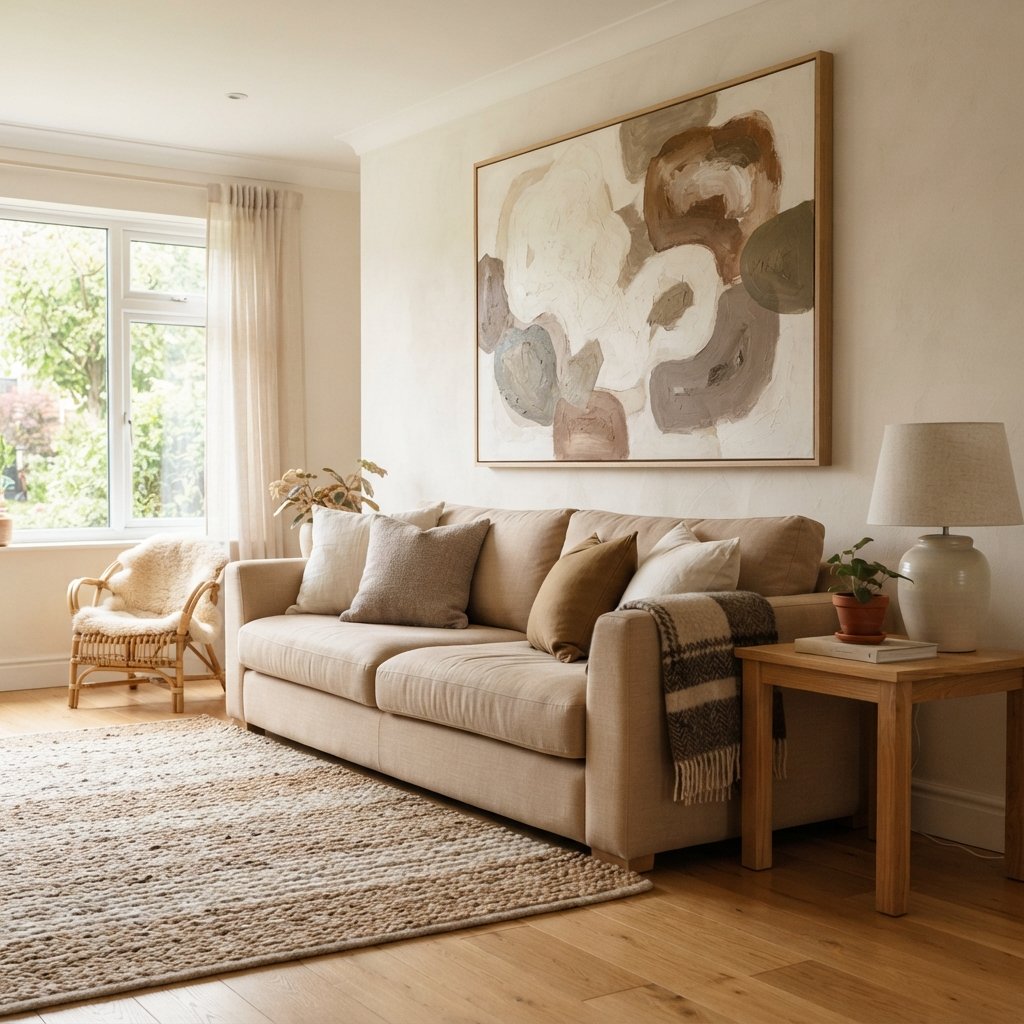
DIY Art Ideas for Above a Sofa
Scale matters here.
Instead of scattering several unrelated small frames across a wide wall, try one strong arrangement.
Options include:
- One oversized piece
- Two coordinating pieces
- Three-panel artwork
- Structured gallery wall
Mock up the dimensions with painter’s tape or paper templates before making the artwork.
DIY Art Ideas for Above the Bed
Artwork can help anchor the bed visually.
Consider:
- One horizontal piece
- Two coordinating vertical pieces
- Three smaller frames
- Textile-inspired artwork
Keep the arrangement related to the bed rather than the entire wall.
And prioritize secure mounting.
Heavy objects above sleeping areas deserve particular caution. Use hanging hardware appropriate for the wall and artwork, and consider alternative placement for especially heavy, glass-fronted, or fragile pieces.
How to Choose Colors for DIY Art
The easiest method is to look around the room first.
Choose:
One Main Neutral
Cream, beige, white, gray, or taupe.
One Supporting Color
Blue, green, rust, brown, or another room color.
One Dark Accent
Charcoal, black, navy, or deep brown.
You do not need to use every color in equal amounts.
Often one dominant neutral plus smaller amounts of two accents creates a balanced piece.
How to Make DIY Art Look Expensive
Go Bigger
One substantial piece can have more impact than many undersized ones.
Limit the Palette
Too many unrelated colors can make beginner artwork harder to coordinate.
Use Negative Space
You do not have to cover the entire surface.
Frame It
A frame can make simple paper artwork feel finished.
Repeat Colors From the Room
This helps the artwork look intentional.
Use Texture Carefully
One textured element can be enough.
Pay Attention to Placement
Beautiful art hung awkwardly can still feel wrong.
Keep the Composition Simple
Do not add another shape, color, or detail simply because there is empty space.
How to Create a Coordinated DIY Gallery Wall
A gallery wall does not require identical art.
Instead, repeat a few elements.
For example:
- Similar frame tones
- Consistent color palette
- Related subject matter
- Similar matting
Create the arrangement on the floor first.
You can also cut paper templates matching the frame dimensions and tape them temporarily to the wall.
This allows you to adjust the spacing without repeatedly making holes.
Common DIY Art Mistakes
Making the Artwork Too Small
Consider the furniture below it.
Using Too Many Colors
Start with a restrained palette.
Adding Detail Everywhere
Leave some quiet areas.
Trying to Make Every Piece Perfect
Handmade variation can be part of the appeal.
Skipping the Mockup
Test size and placement first.
Hanging Art Too Far From the Furniture
The artwork should generally feel connected to the furniture grouping rather than floating independently.
Ignoring the Frame
Frame style can change the entire look.
Copying Artwork Too Closely
Use inspiration to develop your own composition rather than reproducing another artist’s protected work.
DIY Art Safety Tips
Use art materials according to their labels and manufacturer instructions.
Provide appropriate ventilation when using paints, sprays, adhesives, sealers, or other products that require it.
Protect your eyes, hands, lungs, work surface, and clothing as appropriate for cutting, sanding, painting, or spraying.
Keep craft knives and other sharp tools away from children and use a suitable cutting surface.
Allow paints, adhesives, stains, and finishes to dry or cure according to manufacturer directions before bringing the artwork into regular use.
When hanging art, use hardware suitable for the wall construction and the weight of the finished piece.
Do not assume adhesive strips are suitable for every surface or weight.
Use extra care with heavy or glass-fronted artwork above beds, cribs, seating, or play areas. Consider lighter alternatives or another location when appropriate.
In children’s rooms, secure artwork appropriately and avoid small detachable decorative pieces where they could present a hazard.
FAQ About DIY Art Ideas
What is the easiest DIY wall art to make?
Simple abstract shapes, color-block canvases, framed fabric, wallpaper remnants, and paper collage are good beginner-friendly options because they do not require advanced drawing skills.
How can I make homemade art look professional?
Use a limited palette, choose an appropriate scale, keep the composition intentional, finish edges neatly, and consider adding a well-proportioned frame.
What can I use to make wall art cheaply?
Leftover paint, heavy paper, fabric scraps, wallpaper remnants, existing canvases, and thrifted frames can all be useful depending on the project.
What DIY art works above a sofa?
Oversized abstract art, a diptych, a triptych, or a coordinated gallery wall can work well because they can be scaled to relate to a larger sofa.
What DIY art works in a bedroom?
Simple landscapes, soft abstracts, framed fabric, botanical art, and minimalist line drawings can create a calm look.
Do DIY art frames have to match?
No. Frames can be mixed, but repeating wood tones, colors, matting, or another element helps the collection feel cohesive.
Can I use leftover wall paint on a canvas?
Compatibility depends on the paint and the surface. If using leftover household paint for an art project, test it first and follow relevant product guidance. Artist materials are generally formulated specifically for art applications.
How do I know what size art to make?
Start with the wall and furniture where it will hang. Mock up the proposed dimensions with painter’s tape or paper before creating the piece.
Final Thoughts
The best DIY art ideas are often the simplest ones.
You do not need to paint a realistic portrait or master a complicated craft technique to make something worth putting on the wall.
Start with your room.
Look at the colors, furniture, textures, and empty wall space. Decide how large the artwork should be and whether the room needs something quiet or something bold.
Then choose a technique you can actually enjoy making.
Paint a few oversized abstract shapes. Frame leftover fabric. Create a simple collage. Make a set of minimalist landscapes. Turn wallpaper remnants into art. Or paint several coordinating canvases to fill a large wall.
Keep the palette controlled, pay attention to scale, and do not be afraid of empty space.
DIY artwork does not have to look perfect.
It simply needs to feel intentional—and like it belongs in your home.