

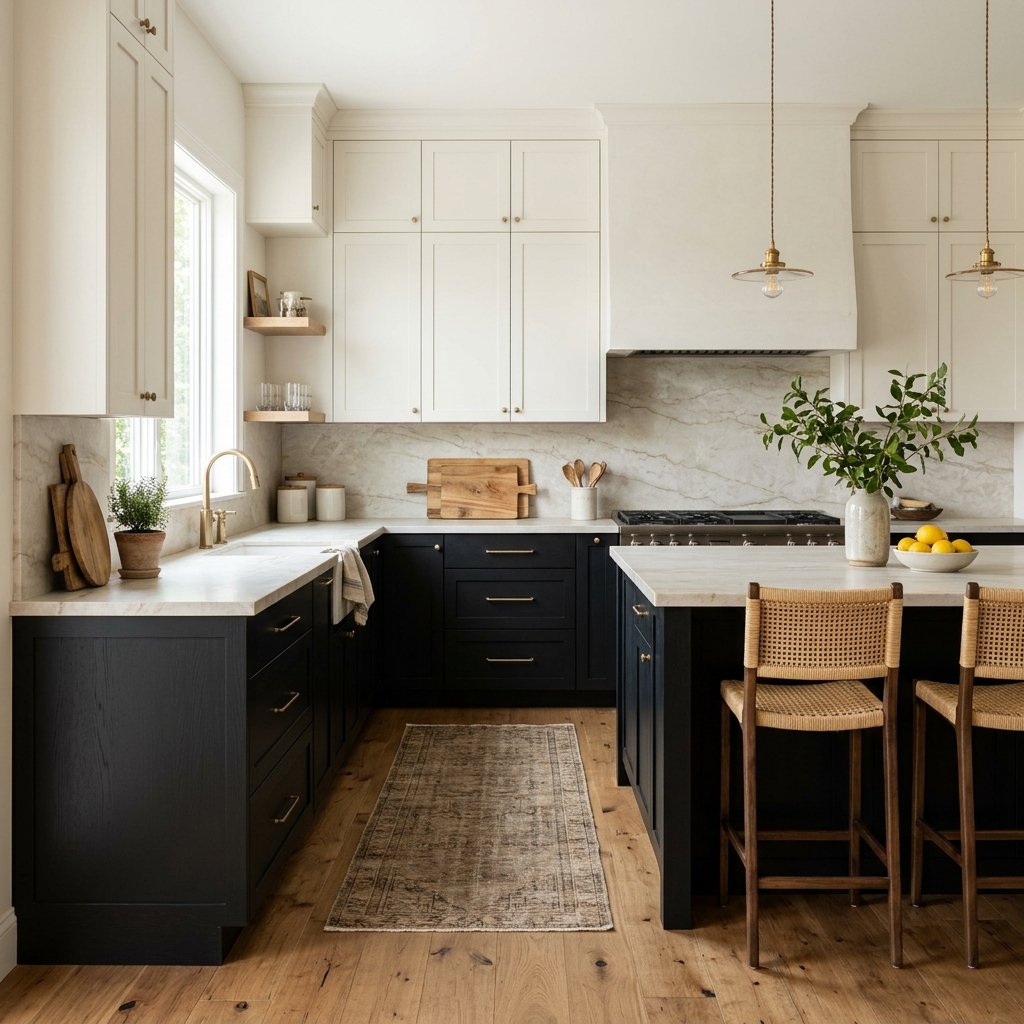
Choosing a kitchen cabinet color can feel surprisingly difficult.
Cabinets cover a large portion of the room, so their color affects almost everything around them—from the countertops and backsplash to the flooring, hardware, appliances, and even how bright the kitchen feels throughout the day.
The good news is that beautiful kitchen cabinet color ideas go far beyond basic white.
Warm cream can soften a kitchen. Greige creates an understated neutral backdrop. Mushroom and taupe bring warmth without feeling too dark. Sage and olive introduce earthy color, while navy, charcoal, and black can create striking contrast. And sometimes the best “color” isn’t paint at all—natural wood cabinetry can add warmth and texture that painted cabinets can’t quite replicate.
Before choosing a color, however, look at the finishes that aren’t changing.
Your countertop, flooring, backsplash, appliances, and adjoining rooms should help guide the decision.
Here are 21 kitchen cabinet color ideas, plus practical tips for choosing a shade that works with your countertops, backsplash, hardware, flooring, and home’s overall style.
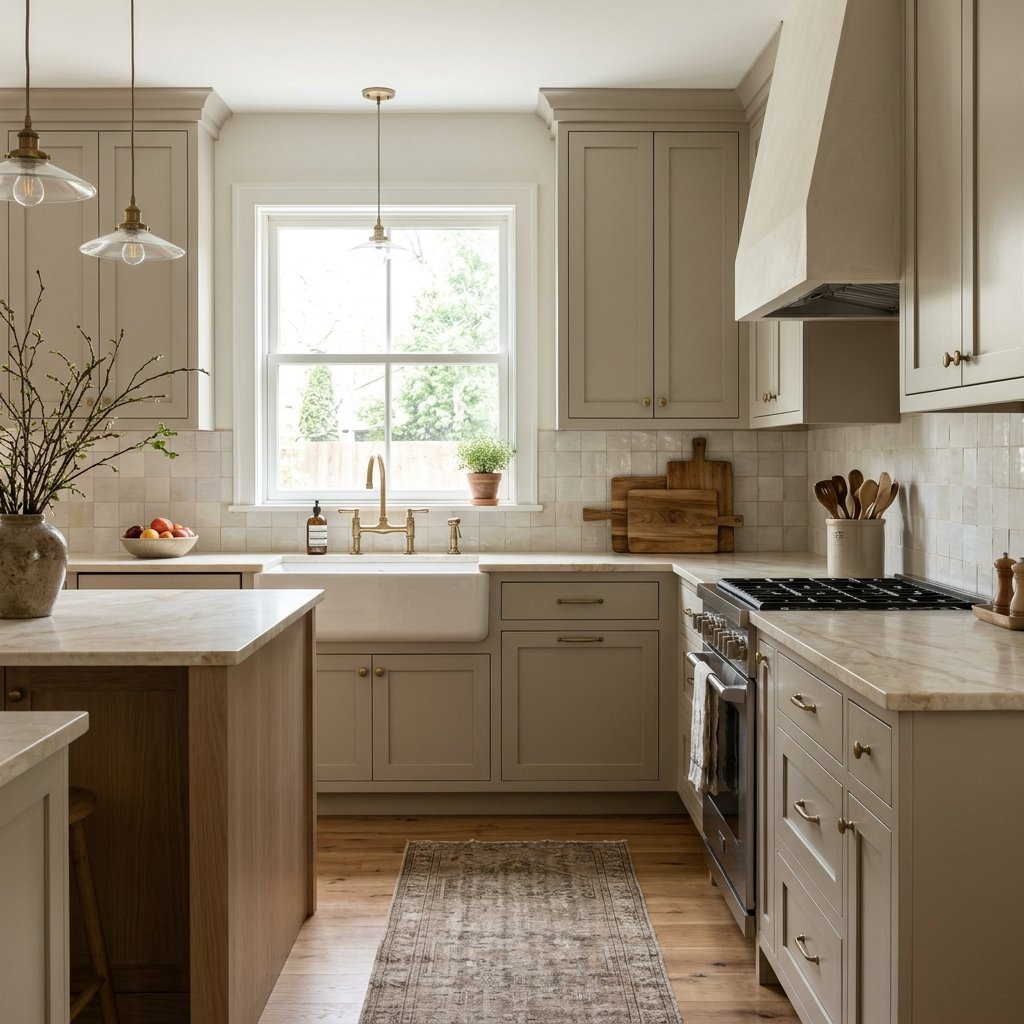
Start With the Fixed Elements in Your Kitchen
Before collecting paint swatches, identify what will remain.
Look at your:
- Countertops
- Backsplash
- Flooring
- Appliances
- Existing wood
- Adjacent rooms
These finishes have undertones.
Your countertop might contain cream and gold rather than bright white and gray. Your flooring may lean orange, red, yellow, or gray. Your backsplash may look white until you place it next to a cooler cabinet color.
Cabinet color should connect these elements rather than fight them.
1. Warm White Kitchen Cabinets
Warm white is one of the most versatile cabinet colors.
It gives you the brightness associated with a white kitchen without necessarily feeling stark.
Warm whites can work beautifully with:
- Wood floors
- Warm stone
- Brass-toned hardware
- Black hardware
- Stainless appliances
The key is comparing the white directly with your countertop and backsplash.
Two whites that look nearly identical on separate samples can clash when placed together.
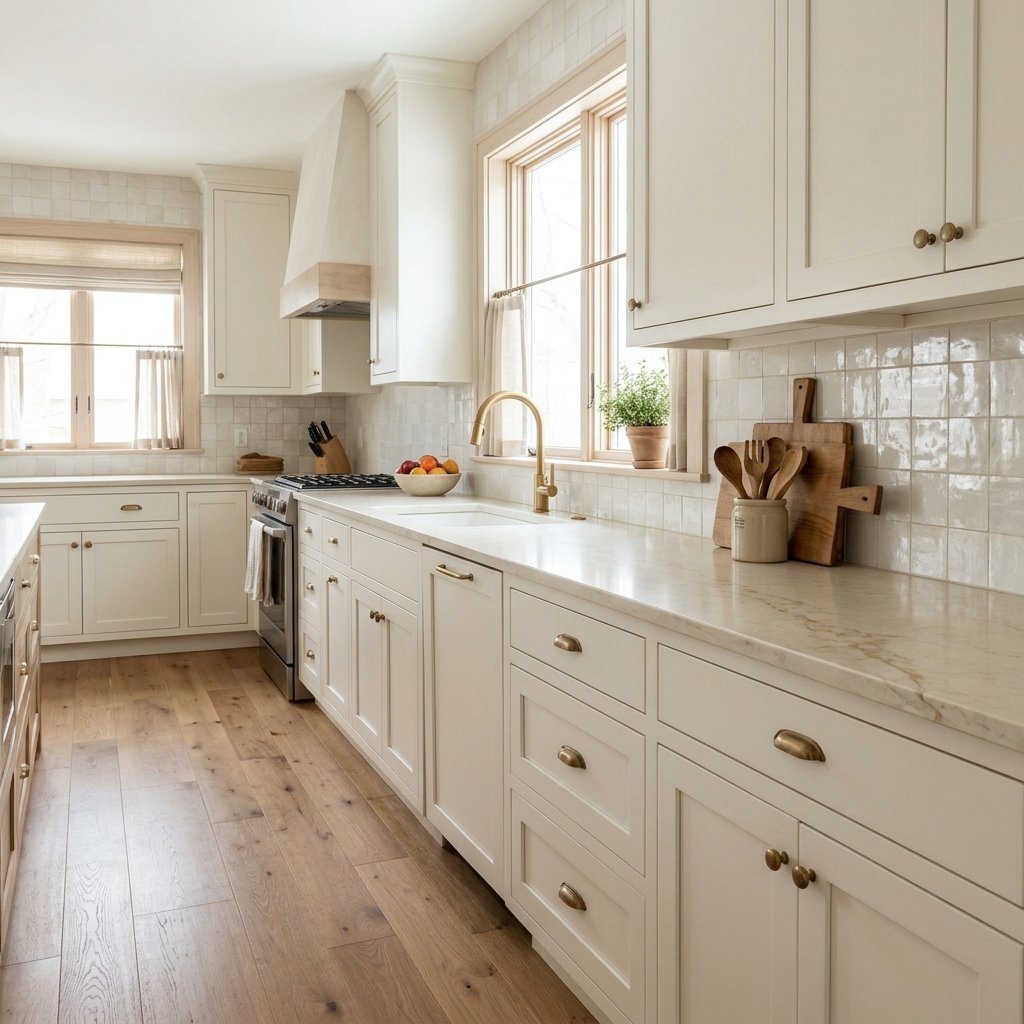
2. Cream Kitchen Cabinets
Cream cabinetry can create a softer, warmer kitchen.
It’s particularly useful when your fixed finishes already contain:
- Beige
- Ivory
- Brown
- Gold
- Warm stone
Cream cabinets pair naturally with medium and dark wood.
If you’re updating an older kitchen, cream may also coordinate more easily with existing warm countertops than a crisp white would.
3. Soft Greige Cabinets
Greige sits somewhere between gray and beige.
The exact balance varies dramatically from color to color.
A warmer greige can work with wood and cream, while a cooler version may coordinate better with gray stone and cooler finishes.
Greige is a useful option when pure white feels too bright but you still want a light neutral kitchen.
4. Mushroom Kitchen Cabinets
Mushroom is a warm, earthy neutral that can range from pale beige-gray to deeper taupe.
It works particularly well in kitchens with:
- Natural stone
- Warm white
- Oak
- Walnut
- Aged-looking metals
Mushroom cabinets can add noticeable color while still functioning like a neutral.
5. Taupe Kitchen Cabinets
Taupe provides more depth than cream or light greige.
It can be beautiful on:
- Lower cabinets
- Entire kitchen
- Large island
Pair it with a lighter countertop to keep the kitchen balanced.
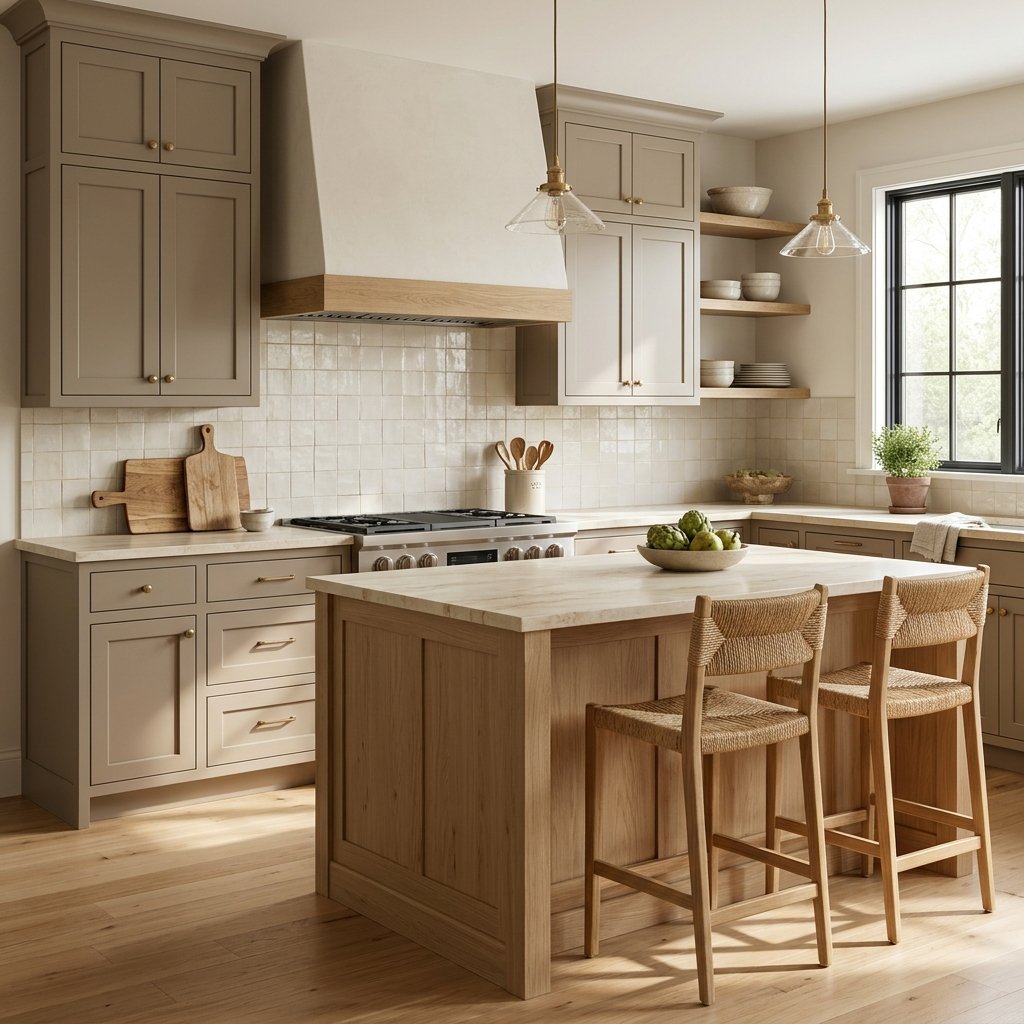
6. Beige Kitchen Cabinets
Beige is returning to kitchens in warmer, more natural forms.
Look for a beige that relates to your flooring and countertops.
A muted sandy beige can make a kitchen feel calm and relaxed.
Avoid choosing beige simply because it looks neutral on a paint chip. Its yellow, pink, green, or gray undertones may become much more noticeable across a full wall of cabinetry.
7. Light Gray Kitchen Cabinets
Light gray can still work beautifully when it suits the fixed finishes.
It’s especially effective with:
- Cooler stone
- White counters
- Stainless appliances
- Blue accents
Be cautious about combining cool gray cabinets with strongly warm floors or cream countertops.
The undertones need to relate.
8. Charcoal Kitchen Cabinets
Charcoal adds depth without the intensity of true black.
It can look especially striking on lower cabinets or an island.
Pair it with:
- Light counters
- Warm wood
- Cream walls
Good lighting is important when using darker cabinetry throughout an entire kitchen.
9. Black Kitchen Cabinets
Black cabinets can create a sophisticated focal point.
Use them throughout the room or limit black to:
- Island
- Lower cabinets
- Tall cabinet wall
Black works particularly well when the kitchen has enough visual relief through light counters, walls, backsplash, or natural wood.
10. Navy Blue Kitchen Cabinets
Navy is a classic way to introduce color.
It can feel traditional, coastal, transitional, or contemporary depending on the surrounding finishes.
Pair navy with:
- Warm white
- Cream
- Light wood
- Brass-toned hardware
- Polished nickel-toned hardware
For a lighter room, consider using navy only on the island.
11. Dusty Blue Kitchen Cabinets
If navy feels too dark, consider a muted blue.
Blue-gray and dusty blue can bring personality without dominating the room.
They work particularly well with:
- White
- Cream
- Oak
- Warm metal finishes
Sample carefully because some blues can appear significantly grayer or brighter depending on the lighting.
12. Sage Green Kitchen Cabinets
Sage green has enough color to feel interesting while remaining relatively easy to decorate around.
Pair it with:
- Warm white
- Cream
- Light oak
- Medium wood
- Warm metals
A muted sage can work beautifully in cottage, traditional, transitional, and casual kitchens.

13. Olive Green Kitchen Cabinets
Olive provides more depth and warmth than pale sage.
It can look particularly beautiful with:
- Walnut
- Cream
- Brown
- Warm stone
Because olive has a strong undertone, test it against the countertop and flooring rather than choosing it independently.
14. Deep Green Kitchen Cabinets
Dark green can create a dramatic kitchen without using black.
Consider forest-inspired or deep earthy greens.
Pair them with lighter counters and warm wood to prevent the room from feeling overly dark.
Layered lighting becomes particularly important.
15. Blue-Green Kitchen Cabinets
A muted blue-green can provide an unexpected cabinet color.
These shades work well when you want something more colorful than sage but softer than a saturated teal.
Use the countertop and backsplash to determine whether the color should lean warmer or cooler.
16. Brown Kitchen Cabinets
Brown doesn’t have to mean dated cabinetry.
A rich painted brown can feel warm and sophisticated.
Think:
- Chocolate
- Coffee
- Deep mushroom-brown
Pair it with cream, natural stone, and warm metal finishes.
17. Natural Oak Cabinets
Natural wood can be the cabinet color.
Oak adds grain, variation, and warmth.
Lighter oak works especially well with:
- Warm white
- Cream
- Soft green
- Black accents
Because wood naturally varies, evaluate actual samples rather than relying only on digital images.
18. Medium Wood Cabinets
Medium-tone cabinetry can make a kitchen feel warm and established.
Pair it with lighter countertops and backsplashes for contrast.
If the wood has strong orange or red undertones, choose surrounding colors that intentionally coordinate rather than trying to visually cancel them out.
19. Dark Wood Cabinets
Dark walnut and other deep wood tones can create a sophisticated kitchen.
Use lighter elements to balance them:
- Cream countertop
- Light backsplash
- Pale walls
- Good lighting
Dark wood can be particularly effective on an island or tall cabinet wall.
20. Two-Tone Kitchen Cabinets
You don’t have to choose only one cabinet color.
Try:
Warm white uppers + taupe lowers
or:
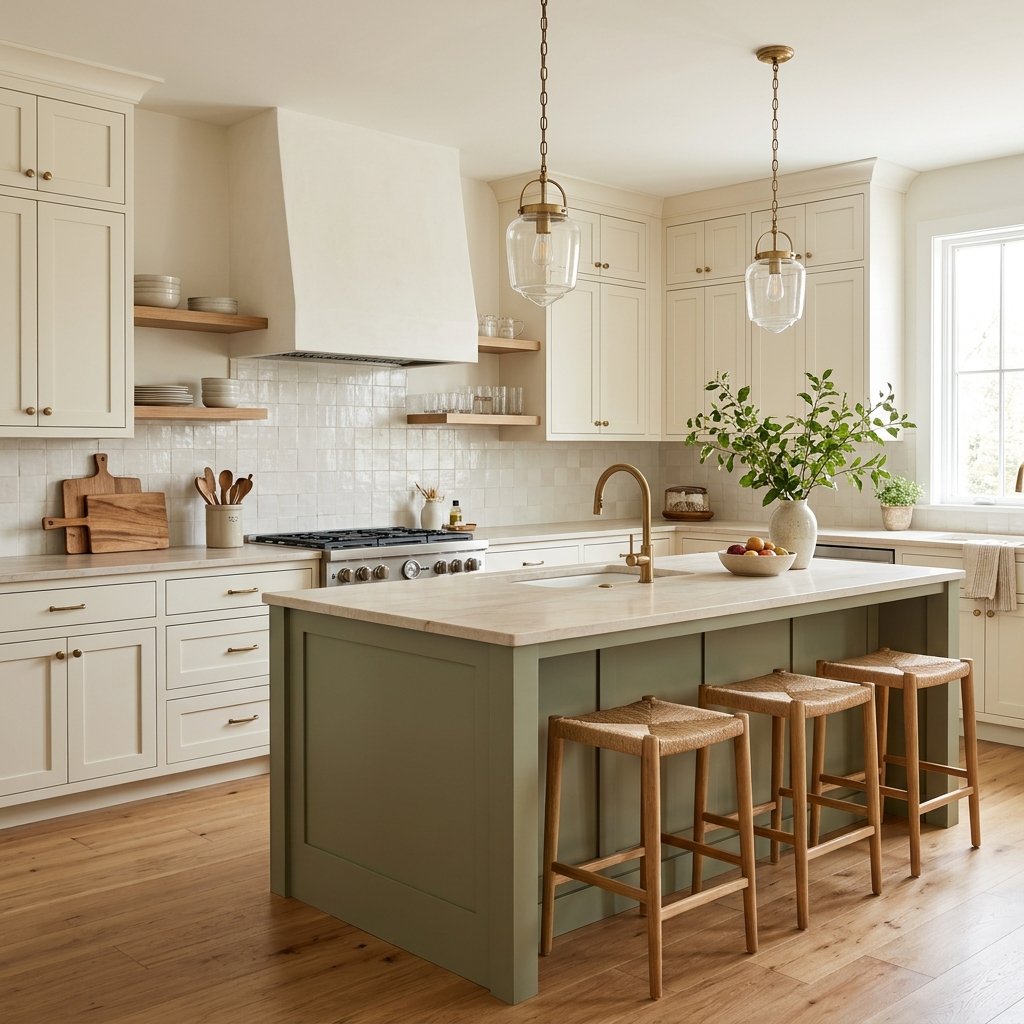
Cream perimeter + green island
or:
Warm white cabinets + natural wood island
Limit the palette so the room still feels cohesive.
21. Paint the Island a Different Color
The island is one of the easiest places to introduce contrast.
If your perimeter cabinets are neutral, consider:
- Navy
- Sage
- Deep green
- Charcoal
- Natural wood
Choose a color that connects to another element in the room rather than introducing an unrelated accent.

White Kitchen Cabinet Color Ideas
White cabinetry can range from bright and crisp to creamy and warm.
The right version depends largely on the countertop and backsplash.
If both are warm, a very cool white cabinet may make them appear yellow.
If your finishes are crisp and cool, a strongly creamy cabinet may look mismatched.
Compare physical samples directly against the existing materials.
Neutral Kitchen Cabinet Colors
Neutral doesn’t have to mean white.
Consider:
- Cream
- Greige
- Mushroom
- Taupe
- Beige
These colors can make a kitchen feel softer and warmer while remaining versatile.
Colorful Kitchen Cabinet Ideas
If you’re nervous about colorful cabinetry, choose a muted version.
Instead of bright green, try sage.
Instead of royal blue, try dusty blue.
Instead of intense teal, try a softened blue-green.
Muted colors tend to combine more easily with stone, wood, and metal.
Dark Kitchen Cabinet Color Ideas
Dark cabinetry can make a kitchen feel dramatic and intimate.
Good options include:
- Charcoal
- Black
- Navy
- Forest green
- Dark brown
The room doesn’t necessarily need enormous windows, but it does need thoughtful lighting and enough contrast to prevent the cabinetry from becoming visually heavy.
Kitchen Cabinet Colors With White Countertops
White countertops offer considerable flexibility.
Try:
- Warm white
- Greige
- Taupe
- Sage
- Navy
- Black
But identify the countertop’s undertone first.
Many countertops described as white actually contain gray, beige, gold, or other colors.
Kitchen Cabinet Colors With Cream Countertops
Warm countertops often work well with:
- Cream
- Warm white
- Mushroom
- Taupe
- Sage
- Natural wood
A very cool gray cabinet may make a cream countertop appear more yellow by comparison.
Kitchen Cabinet Colors With Granite Countertops
Granite often contains several colors.
Rather than choosing a cabinet color that matches the dominant color exactly, look for one of the quieter tones in the stone.
If the granite contains:
Cream + brown + black
you might test:
- Cream
- Mushroom
- Warm greige
This can make a visually busy countertop feel more intentional.
Kitchen Cabinet Colors With Black Countertops
Black countertops can create strong contrast.
For a lighter kitchen, pair them with:
- Cream
- Warm white
- Light greige
For a moodier look, consider:
- Green
- Taupe
- Natural wood
Use backsplash and wall colors to provide enough visual separation.
Kitchen Cabinet Colors With Oak Floors
Oak flooring can have strong undertones.
Look closely at whether yours leans:
- Golden
- Orange
- Brown
- Neutral
Warm white, cream, mushroom, green, and certain greiges can coordinate beautifully with oak.
Don’t choose cabinet paint without viewing it directly beside the flooring.
Kitchen Cabinet Colors With Dark Wood Floors
Dark floors already provide visual weight.
Lighter cabinets can create balance.
Try:
- Warm white
- Cream
- Greige
- Sage
Dark-on-dark can also work, but you’ll need enough contrast through countertops, backsplash, and lighting.
Kitchen Cabinet Colors With Stainless Steel Appliances
Stainless steel works with many cabinet colors.
Try:
- White
- Greige
- Green
- Navy
- Black
- Natural wood
Because stainless appliances can introduce a cooler metallic surface, warm wood or warm paint colors can keep the room from feeling overly cool.
Kitchen Cabinet Colors With Black Appliances
Black appliances can look intentional when black appears elsewhere.
Repeat it through:
- Lighting
- Hardware
- Window frames
- Small accents
Cabinet colors such as cream, greige, green, and natural wood can all work well.
Kitchen Cabinet Colors With White Appliances
White appliances can blend beautifully into light cabinetry.
Try:
- Warm white
- Cream
- Pale greige
- Light sage
Compare cabinet samples directly with the appliance finish because different whites can vary considerably.
Kitchen Cabinet Colors With Brass Hardware
Warm metal hardware pairs naturally with:
- Cream
- Mushroom
- Taupe
- Green
- Navy
- Black
The cabinet doesn’t need to be warm for brass-toned hardware to work, but repeating warm elements elsewhere can make the combination feel more intentional.
Kitchen Cabinet Colors With Black Hardware
Black hardware creates strong contrast against lighter cabinets.
It works especially well with:
- White
- Cream
- Greige
- Sage
On very dark cabinetry, black hardware may visually disappear, which can be desirable if you want a quieter look.
Kitchen Cabinet Colors for a Small Kitchen
Don’t automatically assume a small kitchen must have white cabinets.
Light cabinetry can help create an airy look, but color can also work.
Consider:
- Cream
- Pale sage
- Light greige
- Dusty blue
You can also use darker lower cabinets with lighter uppers.
Kitchen Cabinet Colors for a Dark Kitchen
If the room gets limited daylight, test colors carefully.
Warm whites and creams may help reflect available light.
However, you can also embrace the lack of natural light with deeper cabinetry and layered artificial lighting.
Avoid choosing a paint color based solely on how it appears in a bright showroom.
Kitchen Cabinet Colors for a Modern Kitchen
Modern kitchens often benefit from a restrained palette.
Try:
- Warm white
- Taupe
- Black
- Charcoal
- Natural oak
Keep the number of competing finishes limited.
Kitchen Cabinet Colors for a Traditional Kitchen
Traditional cabinetry works beautifully in:
- Cream
- Warm white
- Sage
- Navy
- Mushroom
Pair the color with classic hardware and a backsplash that supports rather than competes with the cabinets.
Kitchen Cabinet Colors for a Cottage Kitchen
For cottage style, consider:
- Cream
- Sage
- Dusty blue
- Warm white
Natural wood can add additional warmth.
A little variation often suits cottage kitchens better than perfectly matching every surface.
Kitchen Cabinet Colors for a Coastal Kitchen
Coastal kitchens don’t require bright blue cabinets.
Try:
- Warm white
- Pale blue
- Muted blue-gray
- Natural oak
Use woven texture and natural wood rather than obvious nautical decor.
Kitchen Cabinet Colors for a Farmhouse Kitchen
Farmhouse-inspired kitchens can work with:
- Cream
- Warm white
- Greige
- Muted green
- Natural wood
Avoid relying on high-contrast black-and-white everywhere.
Warmer materials can make the kitchen feel more relaxed.
How to Choose a Kitchen Cabinet Color
Start with the materials you can’t easily change.
Step 1: Look at the Countertop
Identify its undertones.
Step 2: Look at the Flooring
Determine whether it reads warm or cool.
Step 3: Look at the Backsplash
Make sure the cabinet doesn’t make its undertone look accidental.
Step 4: Consider the Light
View samples throughout the day.
Step 5: Compare Several Colors Together
You’ll see undertones more easily.
Step 6: Test a Large Sample
Tiny paint chips can be misleading.
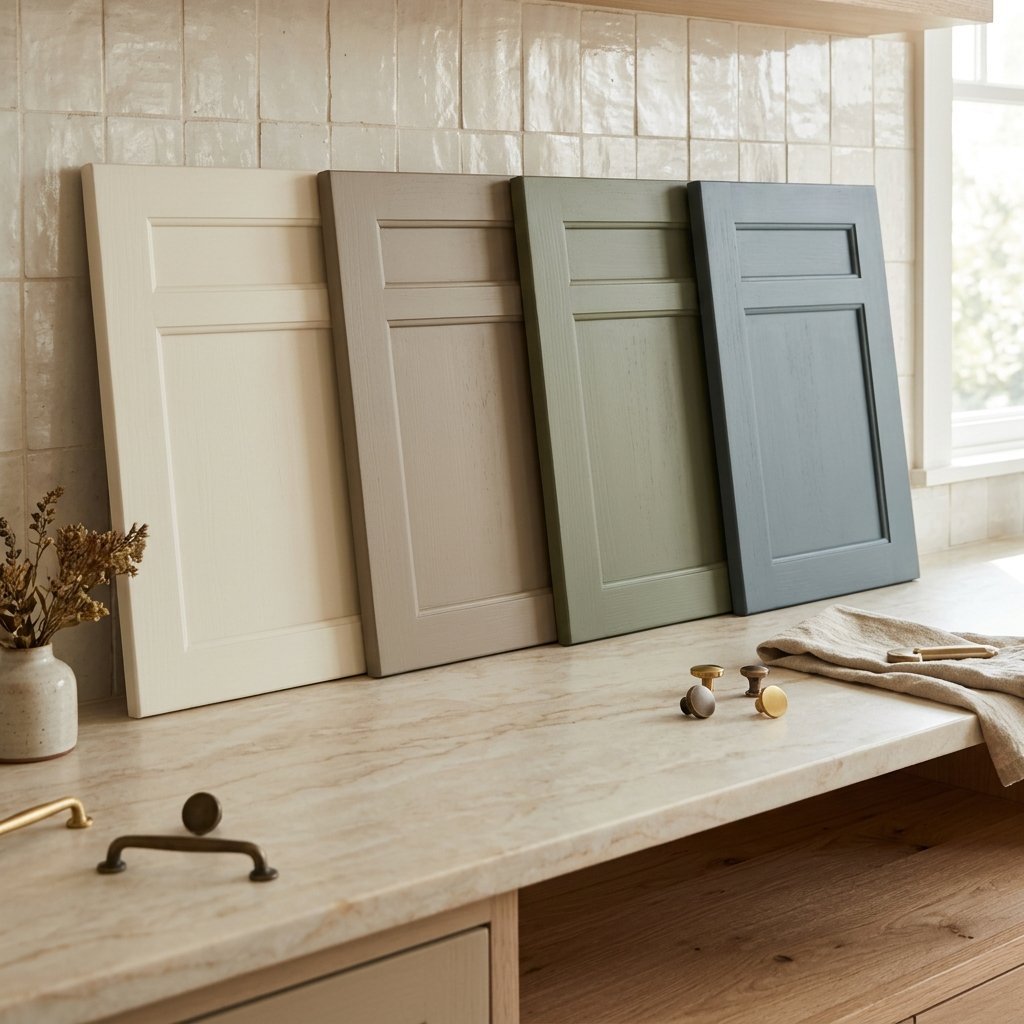
How to Test Kitchen Cabinet Paint Colors
Don’t choose cabinet paint from a phone screen.
Use physical samples.
Place them vertically so they receive light similarly to the cabinet doors.
Move them around the kitchen.
Check them:
- Morning
- Afternoon
- Evening
- Under artificial lighting
Most importantly, compare them directly with the countertop, backsplash, and floor.
Should Kitchen Cabinets Be Lighter or Darker Than the Walls?
There is no rule.
Light cabinets with slightly deeper walls can create subtle contrast.
Dark cabinets with light walls can create stronger contrast.
Cabinets and walls can also be similar in color for a tonal look.
Think about the room as a whole rather than following a formula.
Should Kitchen Cabinets Match the Trim?
They don’t have to.
However, if both are white, compare the two colors carefully.
Two slightly different whites can look intentional when there is enough contrast, but nearly matching whites with conflicting undertones can look accidental.
Should Kitchen Cabinets Match the Island?
No.
A contrasting island can add interest.
The island color should still connect to something else, such as:
- Backsplash
- Countertop veining
- Flooring
- Adjacent furniture
This keeps the contrast intentional.
How to Make Painted Kitchen Cabinets Look Expensive
The color matters, but the finish matters just as much.
A beautiful cabinet project requires careful preparation.
Depending on the existing cabinet material and coating, preparation may include:
- Cleaning
- Degreasing
- Sanding or deglossing where appropriate
- Repairs
- Compatible primer
- Suitable cabinet coating
Follow the coating manufacturer’s preparation, application, recoat, and curing instructions.
Avoid rushing the curing process.
Can You Paint Kitchen Cabinets Yourself?
Sometimes.
Cabinet painting is more demanding than ordinary wall painting because kitchen cabinets experience frequent touching, grease, moisture, and cleaning.
A DIY project requires careful preparation and enough space and time to allow doors and drawers to dry and cure properly.
Some cabinet materials or existing finishes may require specialized preparation.
When you’re uncertain about compatibility, consult the coating manufacturer or a qualified painter.
Kitchen Cabinet Painting Safety
Follow the product’s safety instructions.
Depending on the coatings and preparation method, considerations may include:
- Ventilation
- Eye protection
- Gloves
- Appropriate respiratory protection
- Dust control
- Safe storage of coatings and solvents
Keep products away from children, pets, food-preparation areas, flames, and ignition sources as appropriate.
Common Kitchen Cabinet Color Mistakes
Choosing Cabinets Before Considering the Countertop
Start with fixed finishes.
Selecting a White in Isolation
Compare it with the backsplash and counter.
Ignoring Undertones
Neutral colors still have them.
Choosing From a Phone Screen
Use physical samples.
Looking at Samples Only at Noon
Check them throughout the day.
Assuming Gray Works With Everything
Some grays clash with warm stone and wood.
Using Too Many Cabinet Colors
Keep the palette controlled.
Following Trends Without Considering the House
Choose a color that works with your actual kitchen.
Ignoring the Adjacent Rooms
Open-plan spaces need visual connection.
Rushing Cabinet Painting
Preparation and curing are essential to durability.
A Simple Kitchen Cabinet Color Formula
Step 1: Identify Fixed Finishes
Countertop, backsplash, floor, and appliances.
Step 2: Determine Their Undertones
Warm, cool, or mixed?
Step 3: Choose a Color Family
White, neutral, green, blue, dark, or wood.
Step 4: Compare Several Options
Don’t evaluate one shade alone.
Step 5: Test Large Samples
Place them vertically.
Step 6: Check Different Lighting
Natural and artificial.
Step 7: Choose Hardware
Use it to reinforce the overall style.
Step 8: Decide Whether the Island Should Contrast
Only if it improves the room.
Step 9: Coordinate With Nearby Rooms
Especially in open floor plans.
Step 10: Live With the Sample Before Committing
Cabinets are a major visual surface.
FAQ About Kitchen Cabinet Colors
What are timeless kitchen cabinet colors?
Warm white, cream, greige, mushroom, taupe, muted green, and natural wood can all create enduring looks when they coordinate with the home’s fixed finishes.
What cabinet colors make a kitchen look bigger?
Light colors such as warm white, cream, pale greige, and soft sage can create an airy appearance, but lighting, layout, contrast, and clutter also affect how spacious a kitchen feels.
What cabinet colors work with white countertops?
Many colors can work, including warm white, greige, taupe, sage, navy, charcoal, and black. Identify the countertop’s undertone first.
What kitchen cabinet colors work with oak floors?
Warm white, cream, mushroom, muted green, and compatible greiges can work beautifully. The exact choice depends on whether the oak leans golden, orange, brown, or more neutral.
Are gray kitchen cabinets outdated?
Gray can still work when it coordinates with the kitchen. Instead of choosing gray automatically, make sure its undertone relates to the countertop, flooring, and backsplash.
Are green kitchen cabinets a good idea?
Muted greens such as sage and olive can work beautifully with wood, cream, stone, and warm metal finishes.
Should upper and lower cabinets be the same color?
They can be, but they don’t have to be. Using a darker color on the lower cabinets and a lighter shade above can create contrast while keeping the room bright.
What color should I paint my kitchen island?
Consider a color that already appears elsewhere in the room. Navy, sage, deep green, charcoal, taupe, and natural wood can all work depending on the surrounding finishes.
How do I choose between white and cream cabinets?
Compare both directly with your countertops, backsplash, flooring, appliances, and trim. The correct choice is the one whose undertones relate most naturally to the fixed materials.
Should I choose the cabinet color before the backsplash?
If you’re renovating the entire kitchen, it’s helpful to consider cabinets, countertops, and backsplash together. If the countertop or backsplash is staying, let those existing materials guide the cabinet color.
Final Thoughts
The best kitchen cabinet color ideas aren’t necessarily the colors getting the most attention online.
They’re the colors that work with your kitchen.
Start with what isn’t changing.
Look carefully at the countertop.
Study the backsplash.
Notice whether the flooring feels warm or cool.
Consider your appliances, nearby rooms, and natural light.
Then start narrowing down cabinet colors.
If you want something light, consider warm white, cream, greige, or mushroom.
For color, sage, olive, dusty blue, navy, and deeper green can add personality while still feeling sophisticated.
If you want more drama, charcoal, black, or deep brown can create beautiful contrast.
And don’t overlook natural wood. Sometimes bringing visible grain and warmth into the kitchen is more effective than choosing another paint color.
Whatever direction you take, sample first.
A cabinet color covers a large visual area, and subtle undertones become much more obvious once that color is repeated across doors, drawers, panels, and an island.
Take the time to compare large samples with the actual finishes in your kitchen.
When the undertones, lighting, materials, and color all work together, the cabinetry won’t simply look like a beautiful paint color.
It will make the entire kitchen look more cohesive.