


You don’t need a dedicated room to create a functional mudroom.
A small wall near the front door, an awkward entryway corner, a narrow hallway, or even a few feet beside the garage entrance can become a hardworking mini mudroom entryway with the right setup.
The key is deciding what the space actually needs to hold.
For one household, that might be shoes, jackets, and keys. For another, it could be backpacks, dog leashes, umbrellas, sports gear, and bags.
Once you know what needs a home, you can create storage specifically for those things instead of filling a tiny entry with furniture that doesn’t solve the problem.
A bench can provide seating and shoe storage. Wall hooks can replace a closet. A shelf can take advantage of vertical space. And baskets can contain all the smaller items that tend to migrate across the house.
Whether you’re working with a tiny front entrance, apartment entry, garage doorway, or narrow hall, these 21 mini mudroom ideas will help you create an organized drop zone without needing a full-size mudroom.
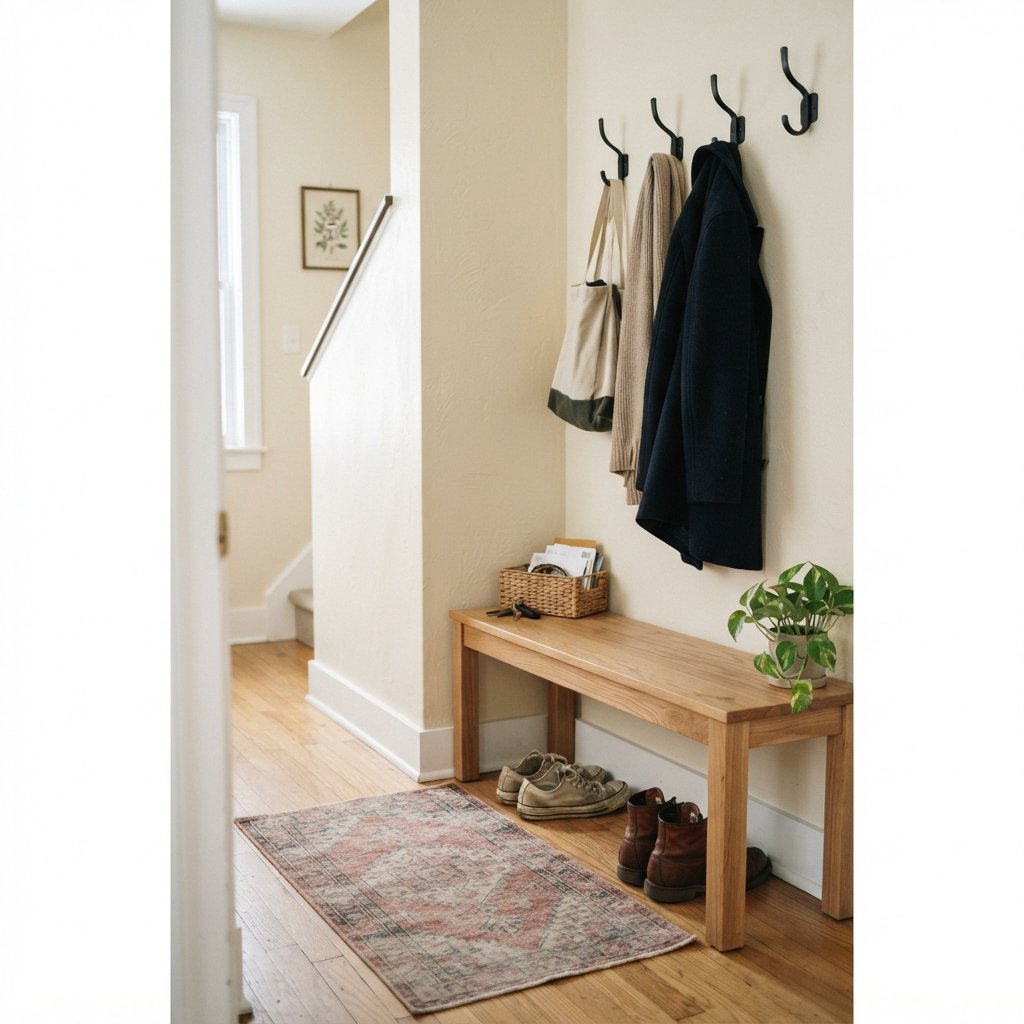
Start With What Your Entryway Actually Needs
Before buying anything, make a list of what usually gets dropped near the door.
That might include:
- Shoes
- Coats
- Backpacks
- Handbags
- Keys
- Umbrellas
- Hats
- Dog leashes
- Sports equipment
Then divide the list into three categories.
Things You Use Every Day
Keep these easy to reach.
Things You Use Occasionally
Store them higher or in baskets.
Things That Don’t Belong in the Entry
Move them somewhere else.
A mini mudroom works best when it isn’t expected to store everything your household owns.
1. Start With a Small Bench
A bench is one of the most useful pieces in a mini mudroom.
It gives you a place to sit while putting on shoes and creates an opportunity for storage underneath.
Choose a bench that fits comfortably without narrowing the walking path too much.
Before buying, measure:
- Wall width
- Bench depth
- Door swing
- Nearby closet doors
- Walking clearance
Use painter’s tape to outline the footprint on the floor first.
2. Add Shoe Storage Under the Bench
Don’t waste the space below a bench.
Use it for everyday shoes.
Depending on the design, try:
- Open cubbies
- Pull-out baskets
- Shoe shelves
- Open floor space
Open storage is convenient, but it can look messy quickly.
Limit it to the shoes currently in rotation and move rarely used pairs elsewhere.
3. Use a Storage Bench
If visual clutter bothers you, choose a bench with concealed storage.
A storage bench can hold:
- Seasonal accessories
- Sports gear
- Reusable shopping bags
- Extra shoes
Make sure the lid or doors can be used safely and conveniently in the available space.
For households with young children, consider potential pinch points and follow the furniture manufacturer’s safety instructions.
4. Add Wall Hooks
Hooks are one of the easiest ways to create mudroom function without using floor space.
Use them for:
- Coats
- Bags
- Backpacks
- Hats
- Dog leashes
Place hooks where they’re comfortable for the people using them.
If children need to hang their own backpacks, some hooks may need to be lower.
Install hooks into appropriate wall structure or use hardware rated for the intended load and wall type.
5. Create Two Rows of Hooks
If the wall is small but the household has lots of gear, use vertical space.
A higher row can hold:
- Adult coats
- Hats
- Less frequently used items
A lower row can hold:
- Kids’ jackets
- Backpacks
- Everyday bags
Leave enough vertical separation so items don’t pile on top of one another.
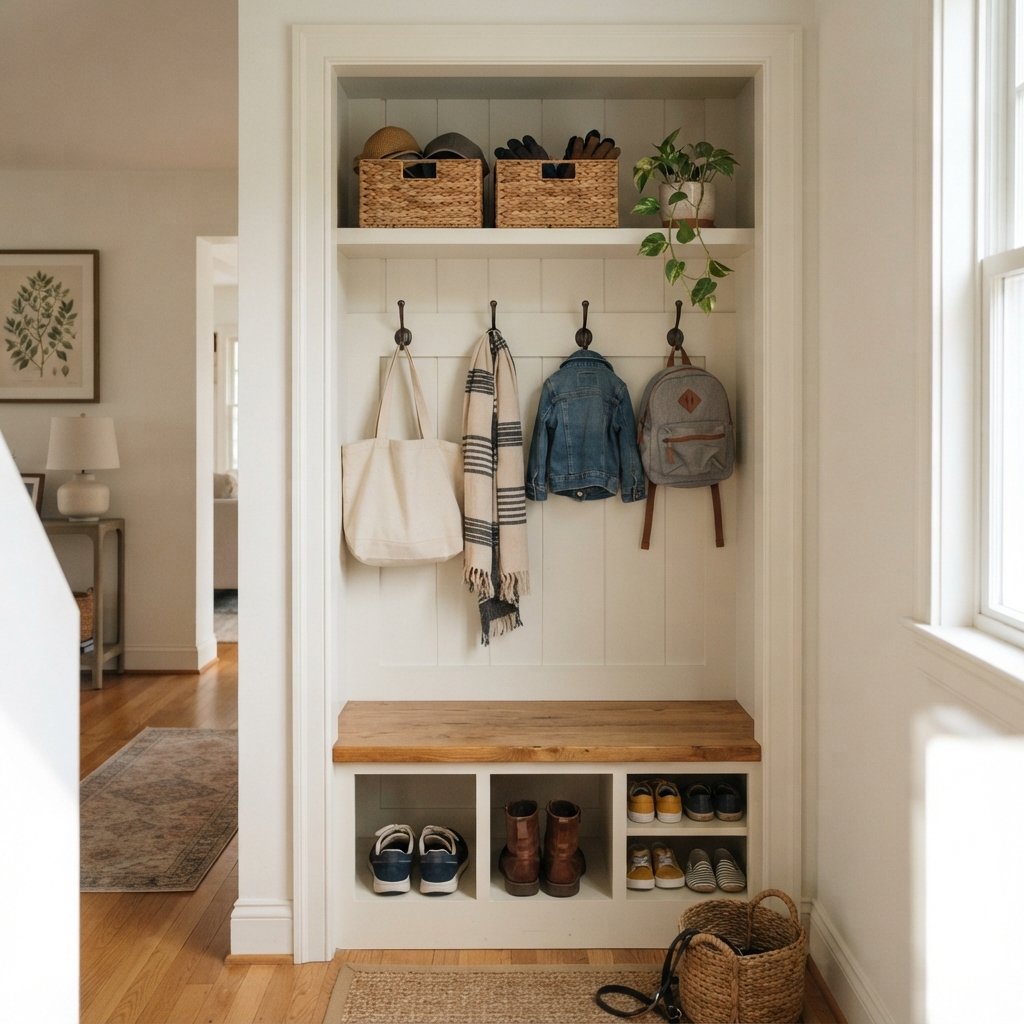
6. Add a Shelf Above the Hooks
A shelf can turn unused wall space into practical storage.
Use it for:
- Baskets
- Hats
- Seasonal accessories
- Decorative objects
Don’t overload it.
A mini mudroom should still feel visually open.
The shelf and its mounting hardware must be suitable for the wall construction and intended weight.
7. Use Matching Baskets
Baskets can hide small items that would otherwise make an open mudroom look cluttered.
Try one basket for each category:
- Gloves
- Hats
- Pet supplies
- Sports accessories
Or give each family member a basket.
Choose baskets that fit the shelf properly rather than squeezing in as many as possible.
8. Build a Simple Mudroom Wall
You don’t need full cabinetry.
A basic mudroom wall can consist of:
Bench + hooks + shelf
That’s often enough.
This setup works particularly well in:
- Narrow entryways
- Garage entrances
- Hallways
- Small foyers
Keeping the design simple also makes it easier to adapt later.
9. Create a Built-In Mini Mudroom
If you want a more permanent solution, create a built-in storage zone.
It might include:
- Bench
- Shoe cubbies
- Back panel
- Hooks
- Upper shelf
- Closed cabinets
A built-in can make an awkward alcove feel intentional.
If you’re modifying walls, electrical components, structural elements, or existing cabinetry, determine what’s behind the surfaces before cutting or fastening.

10. Use an Entryway Nook
An awkward recess can become an ideal mini mudroom.
Instead of trying to fit a freestanding console into it, use the full depth for storage.
Add:
- Bench
- Hooks
- Shelf
A nook naturally defines the drop zone without taking over the rest of the entryway.
11. Turn a Small Closet Into a Mini Mudroom
If you have an entry closet that isn’t working well, consider whether a more open organization system would serve you better.
Depending on the closet and your storage needs, you might use:
- Lower shoe shelves
- Hooks
- Upper shelf
- Baskets
However, think carefully before removing a useful closet.
Closed storage can be valuable in a small house.
Sometimes reorganizing the closet is a better solution than eliminating it.
12. Use a Hall Tree
A compact hall tree combines several mudroom functions in one piece.
Many include:
- Bench
- Hooks
- Shoe storage
- Upper shelf
This can be useful for renters or anyone who doesn’t want permanent built-ins.
Choose a model that fits the available wall without blocking the door or hallway.
Tall furniture should be anchored according to manufacturer instructions to reduce tip-over risk.
13. Add a Narrow Shoe Cabinet
A shallow shoe cabinet can work in an entryway where a deep bench won’t fit.
Use the top for a small landing zone.
For example:
- Key bowl
- Small lamp where appropriate
- Tray
Keep the surface simple.
A narrow piece of furniture can still become cluttered quickly.
14. Create a Tiny Drop Zone
Sometimes you don’t need a full mudroom setup.
A mini drop zone may be enough.
Try:
Small shelf + hooks + basket
Use it for:
- Keys
- Bag
- Dog leash
This is particularly useful beside a door where there isn’t enough space for furniture.
15. Add a Key Landing Spot
Give keys one consistent home.
Use:
- Small bowl
- Tray
- Wall-mounted key hooks
Place it close enough to the entrance that using it becomes automatic.
Avoid putting keys in a deep basket where they disappear underneath everything else.

16. Create Backpack Storage
Backpacks can quickly overwhelm an entryway.
Give each backpack its own hook.
If possible, leave enough room below for shoes.
For a household with several children, repeating the same storage setup can create visual order:
Hook + basket + shoe space
Keep the heaviest bags on appropriately installed hooks or lower storage rather than overloading lightweight hardware.
17. Make Room for Dog Gear
A mini mudroom is a great place to organize pet supplies.
Create a small zone for:
- Leash
- Waste bags
- Towel
- Walking accessories
Keep pet products that require secure storage out of reach of children and animals as appropriate.
A washable mat near the door can also help with muddy paws.
18. Add a Small Mirror
A mirror is practical for a last look before leaving and can help a small entryway feel brighter.
Try:
- Round mirror
- Arched mirror
- Simple rectangle
Place it beside the storage zone rather than directly behind bulky coats where it will always be covered.
Secure mirrors appropriately for their weight and wall construction.
19. Use a Runner
A runner helps define the mini mudroom area.
Choose something that can handle entryway traffic.
A muted pattern can also disguise everyday dirt better than a very pale solid rug.
Make sure the rug doesn’t interfere with the door swing.
Use an appropriate non-slip rug pad or backing where needed.
20. Add Wall Paneling for Character
Wall paneling can make a basic bench-and-hook setup feel more architectural.
Possible styles include:
- Simple vertical paneling
- Board-and-batten-inspired detailing
- Traditional wall molding
Keep the detailing appropriate for the style of the house.
You don’t need elaborate trim in a tiny space.
Before fastening into walls, account for electrical wiring, plumbing, and other hidden utilities.
21. Paint the Mudroom Zone a Different Color
Color can visually define a mini mudroom even when there are no walls around it.
Try:
- Olive
- Muted blue
- Taupe
- Mushroom
- Charcoal
- Warm beige
Paint the wall behind the bench and hooks while leaving the surrounding entryway lighter.
This can make a simple storage setup feel intentional.
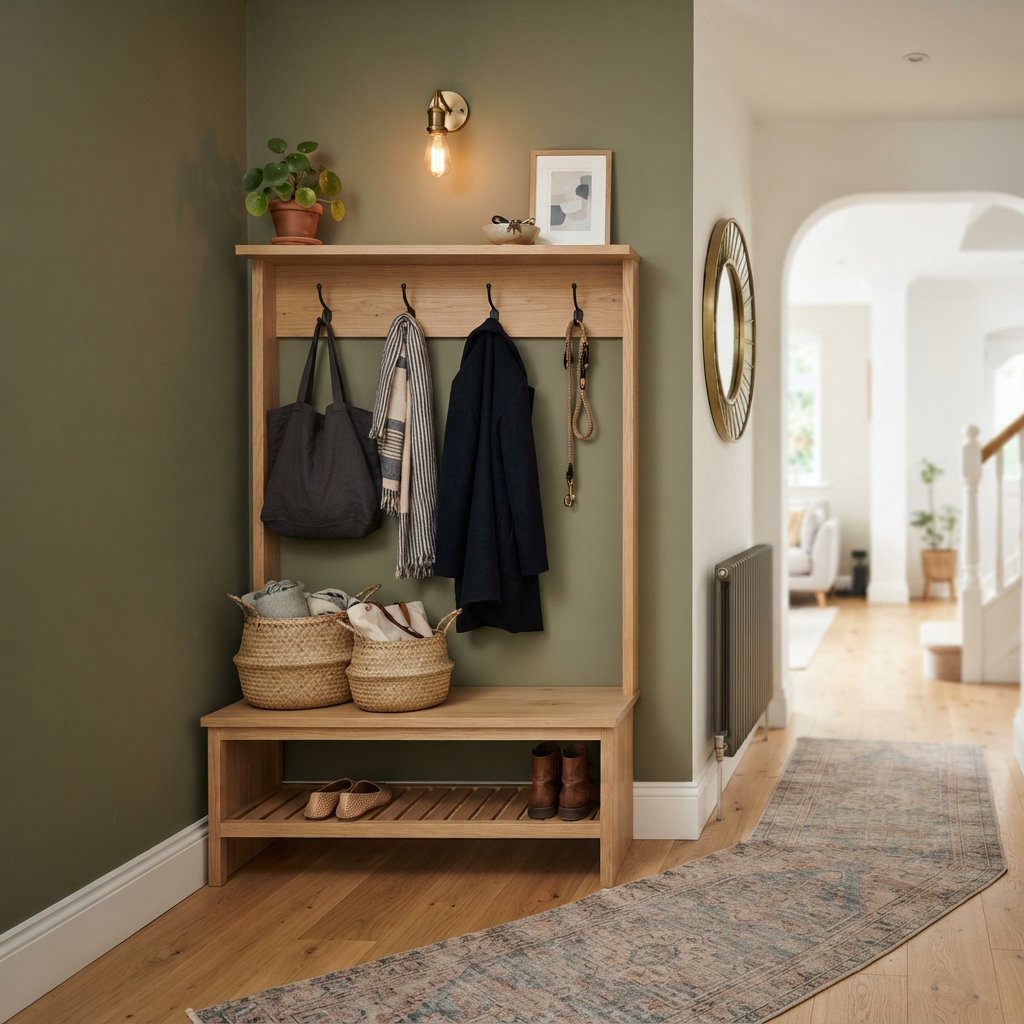
Mini Mudroom Ideas for a Small Entryway
When the entrance is tiny, prioritize vertical storage.
Use:
- Hooks
- Shelf
- Wall-mounted storage
- Narrow bench
Avoid deep furniture.
The goal is to gain storage without making the entrance feel narrower.
Mini Mudroom Ideas for a Narrow Hallway
In a narrow hall, you may not have enough depth for a bench.
Instead, try:
Hooks + narrow shoe cabinet + wall shelf
Keep most storage against one wall.
Make sure doors can open fully and the walking path remains comfortable and safe.
Mini Mudroom Ideas by the Front Door
A front-door mudroom needs to look relatively tidy because it’s one of the first things guests see.
Use more concealed storage.
Try:
- Storage bench
- Shoe cabinet
- Baskets
- Closed wall cabinet
Limit open hooks to everyday items.
Mini Mudroom Ideas by the Garage Door
A garage entrance can prioritize function.
Consider storage for:
- Shoes
- Coats
- Backpacks
- Sports equipment
- Reusable bags
If space allows, use a larger bench and more hooks than you would at the formal front entrance.
Keep access to doors, electrical panels, utility equipment, and other required areas unobstructed.
Mini Mudroom Ideas for an Apartment
Renters can create a mini mudroom without built-ins.
Try:
- Freestanding bench
- Hall tree
- Shoe cabinet
- Baskets
- Rug
Use wall-mounted items only where permitted by your rental agreement.
Choose pieces you can take with you when you move.
Mini Mudroom Ideas Without a Bench
A bench isn’t essential.
If the space is too narrow, use:
- Shoe cabinet
- Hooks
- Shelf
- Wall baskets
You can still create a useful drop zone without seating.
Mini Mudroom Ideas Without a Closet
When there’s no coat closet, wall storage becomes more important.
Try:
Upper shelf + hooks + shoe storage
But be realistic about how many coats can remain visible.
Keep only current-season outerwear at the entrance and store the rest elsewhere.
Mini Mudroom Ideas With a Closet
If you already have a closet, let it handle bulky items.
Then keep the visible mudroom simple.
For example:
Closet = coats and extra shoes
Mini mudroom = everyday shoes, backpack, keys
Dividing the jobs prevents either area from becoming overloaded.
Mini Mudroom Ideas for Kids
Make storage easy enough for children to use independently.
Consider:
- Lower hooks
- Open shoe spaces
- Individual baskets
Avoid complicated storage systems.
If putting something away takes five steps, it’s more likely to end up on the floor.

Mini Mudroom Ideas With Closed Storage
If you prefer a cleaner look, maximize concealed storage.
Use:
- Drawers
- Cabinet doors
- Storage bench
- Shoe cabinet
Then keep only one or two hooks visible.
This works particularly well when the mudroom is part of the main living area.
Mini Mudroom Ideas With Open Storage
Open storage is convenient but requires editing.
Use it for things you genuinely access every day.
Don’t fill shelves with decorative baskets that are difficult to reach.
The best open storage is simple enough that everyone knows where things belong.
How to Make a Mini Mudroom Look Bigger
Use the wall height.
A vertical arrangement draws the eye upward:
Bench → hooks → shelf
Keep the palette relatively consistent.
Too many contrasting baskets, hooks, bins, and furniture finishes can make a small area look busier.
A mirror can also help reflect light.
How to Make a Mini Mudroom Look Expensive
Focus on a few substantial details.
Try:
- Solid-looking bench
- Consistent hooks
- Good-size baskets
- Attractive runner
- Simple wall light
- Thoughtful paint color
You don’t need custom cabinetry.
Even a basic bench-and-hook setup can look polished when the proportions and finishes are coordinated.
Budget-Friendly Mini Mudroom Ideas
Start with the essentials.
You may need only:
- Bench
- Hooks
- Basket
Look around your home before buying new furniture.
A small bench from another room might work perfectly.
You can also consider secondhand:
- Benches
- Wood stools
- Baskets
- Mirrors
- Small cabinets
Paint can help unrelated pieces feel more cohesive.
Mini Mudroom Color Ideas
Color can make a small storage area feel intentional.
Try:
Warm Neutral
Cream + natural wood + black
Earthy
Olive + oak + cream
Traditional
Muted blue + dark wood + brass
Modern
Warm white + black + oak
Moody
Charcoal + walnut + cream
Soft and Light
Warm white + pale wood + woven texture
Keep the number of finishes limited.
Small spaces can become visually busy quickly.
Lighting a Mini Mudroom
Good lighting helps an entryway function during early mornings and evenings.
Depending on the space, consider:
- Ceiling fixture
- Wall sconce
- Small lamp in an appropriate location
Make sure lighting doesn’t interfere with cabinet doors, hooks, or tall items.
Hardwired electrical work should comply with applicable requirements and be handled by a qualified professional where appropriate.
Best Flooring for a Mini Mudroom
Entryway flooring needs to handle dirt and moisture.
If you’re selecting new flooring, consider factors such as:
- Water resistance
- Durability
- Slip resistance
- Ease of cleaning
- Compatibility with the existing subfloor and adjacent flooring
The right choice depends on the house, climate, entry location, and product.
If you’re not replacing the floor, a durable washable or easily maintained rug can help protect the existing surface.
How to Keep a Mini Mudroom Organized
The secret isn’t adding more storage.
It’s limiting what stays there.
Try a regular reset.
Remove:
- Out-of-season shoes
- Jackets nobody is wearing
- Old mail
- Empty bags
- Random household items
A small entryway can’t function like a storage room.
Give it responsibility only for things related to coming and going.
Mini Mudroom Safety
Small entryways can become safety hazards when storage starts taking over the walkway.
Keep these considerations in mind:
- Maintain a clear path through the entrance.
- Don’t obstruct doors or required exits.
- Keep stairs and landings clear.
- Anchor tip-prone furniture.
- Secure shelves and hooks for their intended loads.
- Keep rugs from sliding or curling.
- Avoid overloading upper shelves.
- Don’t block electrical panels, HVAC components, or utility access.
- Check for wiring and plumbing before drilling into walls.
- Keep heavy objects out of unstable overhead storage.
Function should always come before fitting in one more basket.
Common Mini Mudroom Mistakes
Buying Furniture Before Measuring
Tape out the footprint first.
Using a Bench That’s Too Deep
Preserve the walkway.
Installing Too Few Hooks
Give everyday items a real home.
Installing Too Many Hooks
More hooks can simply create more clutter.
Keeping Every Pair of Shoes at the Door
Rotate seasonally.
Ignoring Vertical Space
Use the wall above the bench.
Using Too Many Tiny Baskets
Choose fewer, larger containers.
Forgetting the Door Swing
Check every nearby door.
Creating Storage That’s Hard to Use
Simple systems usually work better.
Treating the Mini Mudroom Like a Storage Room
Keep only coming-and-going essentials there.
A Simple Mini Mudroom Entryway Formula
If you’re starting from an empty wall, use this formula.
Step 1: Measure the Area
Include doors and walkways.
Step 2: List What Needs Storage
Be realistic.
Step 3: Add a Bench If Space Allows
Use the smallest size that works comfortably.
Step 4: Create Shoe Storage
Use the area underneath.
Step 5: Install Hooks
Give everyday bags and coats a home.
Step 6: Add an Upper Shelf
Use vertical space.
Step 7: Add Baskets
Contain smaller items.
Step 8: Create a Key Drop Zone
Keep it close to the door.
Step 9: Add a Durable Runner
Define the area.
Step 10: Edit
Remove anything that doesn’t need to live near the entrance.

FAQ About Mini Mudroom Entryways
How do you make a mini mudroom in a small entryway?
Start with a narrow bench or shoe cabinet, add wall hooks, and use an upper shelf for baskets. Keep the design shallow enough to preserve the walkway.
How small can a mudroom be?
A mudroom doesn’t have to be a separate room. Even a small section of wall can function as a mini mudroom if it provides useful storage for shoes, coats, bags, and everyday essentials.
What should a mini mudroom include?
Most mini mudrooms benefit from shoe storage, hooks, and a landing spot for small items. A bench and upper shelf are useful if space allows.
What can I use instead of a mudroom?
Create a drop zone in an entryway, hallway, garage entrance, closet, or small nook using hooks, baskets, a shoe cabinet, or a bench.
Do I need a bench in a mini mudroom?
No. In a narrow space, hooks and a shallow shoe cabinet may be more practical.
How do I make a small mudroom look less cluttered?
Limit the number of items stored there, use matching or coordinated baskets, rotate seasonal gear, and incorporate some closed storage.
How do I organize shoes in a small entryway?
Use cubbies, a shallow shoe cabinet, baskets, or open space under a bench. Keep only frequently worn shoes near the door.
How do you create a mudroom without built-ins?
Use freestanding furniture such as a bench, hall tree, shoe cabinet, baskets, and a rug. This is also useful for renters.
What is the best color for a small mudroom?
Warm white, cream, muted blue, olive, taupe, and other restrained colors can all work. Coordinate the color with the adjoining rooms so the small entry feels connected to the rest of the house.
How can I make a mini mudroom look custom?
Use consistent hooks, a well-scaled bench, coordinated baskets, wall paneling or a distinct paint color, and a thoughtfully placed shelf. Simple details can create a built-in feeling without full custom cabinetry.
Final Thoughts
A functional mini mudroom entryway doesn’t require a large room or expensive custom cabinetry.
Start with one question:
What actually gets dropped by the door?
Then build your storage around the answer.
If shoes are the biggest problem, prioritize shoe storage.
If backpacks end up on the floor, install sturdy hooks.
If hats, gloves, and dog supplies create clutter, give them baskets.
And if the space is extremely small, skip the furniture entirely and use the walls.
A bench, a few hooks, an upper shelf, and some baskets can transform a forgotten corner into a hardworking entryway.
Just don’t try to make a tiny mudroom store everything.
Keep everyday essentials near the door and move seasonal or rarely used items elsewhere.
When every piece has a clear purpose, even the smallest entry can become organized, welcoming, and much easier to live with.

