

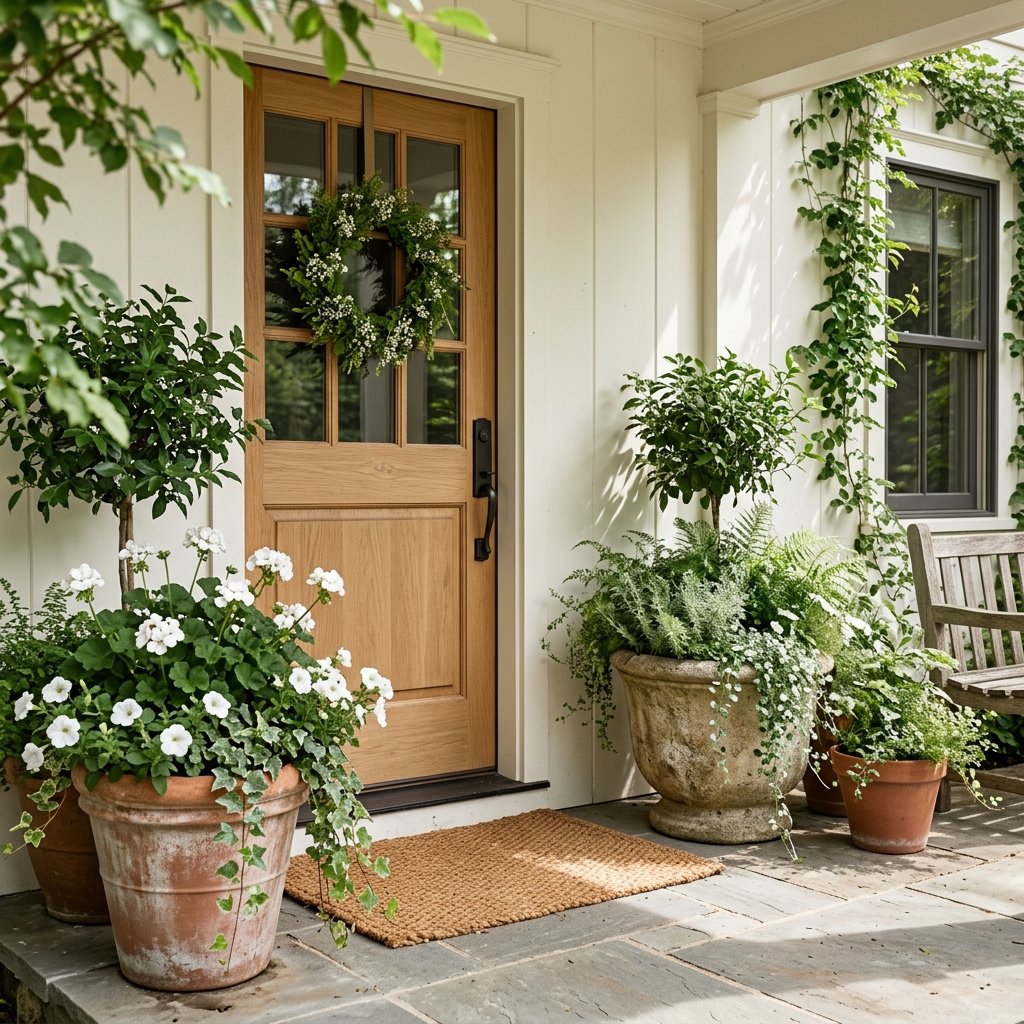
Summer planters are one of the easiest ways to bring color, texture, and life to your outdoor spaces.
A few well-designed containers can make a front porch feel more welcoming, soften a patio filled with hard surfaces, add privacy around an outdoor seating area, or bring flowers and greenery to a small balcony where there’s little room for a traditional garden.
And beautiful summer containers don’t need to contain a dozen different plants.
Some of the most striking arrangements are surprisingly simple: one large fern in an urn, a pot overflowing with white flowers, a dramatic tropical plant surrounded by trailing greenery, or several containers planted with different shades of green.
The key is choosing plants that suit the conditions where the container will actually sit.
A planter baking beside a sunny driveway needs a very different combination from one sitting on a shady covered porch.
These summer planter ideas include colorful flowers, foliage-focused combinations, shade planters, sunny containers, front porch arrangements, window boxes, herbs, and easy ideas for anyone who wants gorgeous outdoor pots without turning container gardening into a full-time job.
Before You Plant: Start With Sunlight
It’s tempting to choose plants based entirely on how they look at the garden center.
Instead, start with your location.
Observe where the planter will sit.
Does it receive:
- Strong direct sun for much of the day?
- Morning sun?
- Hot afternoon sun?
- Filtered light?
- Mostly shade?
Then choose plants suited to those conditions.
“Full sun” and “shade” requirements vary by plant, climate, and growing conditions, so check the plant tag or reliable local growing guidance.
A plant that thrives in summer sun in one region may struggle with extreme heat somewhere else.
Don’t Forget Drainage
Outdoor planters need a way for excess water to escape.
Containers without adequate drainage can leave roots sitting in water.
Before planting, check that the pot is appropriate for outdoor planting and has suitable drainage.
Use a potting mix intended for container plants rather than simply digging soil from the yard.
Different plants may have different soil requirements, so follow the recommendations for what you’re growing.
1. Create a Classic Thriller, Filler, and Spiller Planter
This is one of the easiest formulas for designing a full container.
Use:
Thriller: something tall or dramatic.
Filler: plants that create volume through the middle.
Spiller: trailing plants that soften the edge.
For example, you might combine a tall foliage plant with compact flowering plants and trailing greenery.
The formula is flexible.
You don’t need exactly three varieties, and a beautiful container doesn’t have to follow this method at all.
But it’s a useful starting point when you’re unsure how to combine plants.
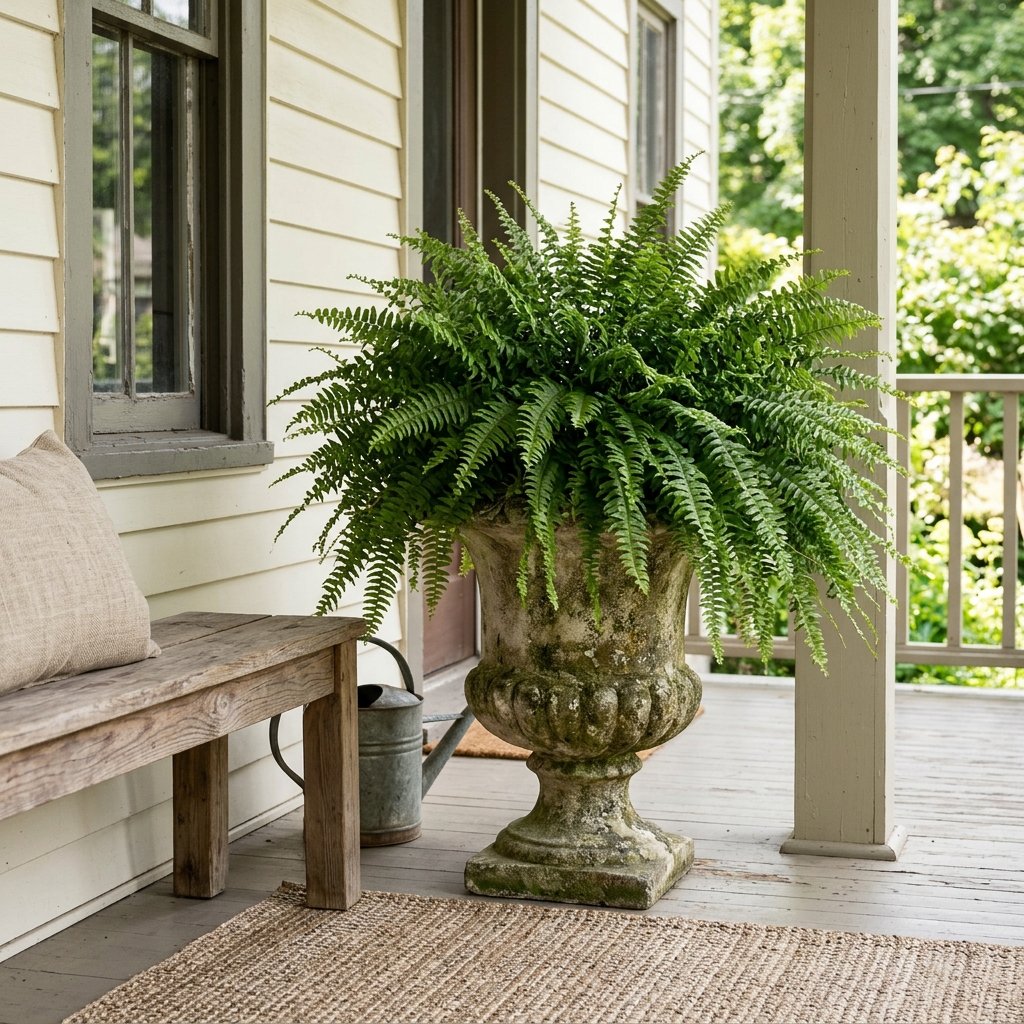
2. Plant One Oversized Fern
Sometimes one plant is enough.
A large fern in a substantial pot can create a beautiful, classic look on a covered or appropriately shaded porch.
Try matching ferns on either side of the front door for symmetry.
Or use one large fern beside a chair or bench.
Make sure the particular fern you choose is suited to your available light, temperature, and growing conditions.
3. Fill a Planter With White Flowers
An all-white flowering container can feel fresh and elegant.
Instead of mixing lots of colors, use different flower shapes and foliage textures.
White flowers are especially pretty against:
- Dark exterior paint
- Brick
- Natural wood
- Green foliage
You can also add silver or variegated foliage for more contrast.
Choose flower varieties suited to your sun exposure and climate.
4. Create a Green-and-White Summer Planter
If an all-flower arrangement feels too formal, mix white flowers with abundant green foliage.
Try combining:
- Upright greenery
- White blooms
- Trailing foliage
This palette works particularly well with neutral homes because it adds life without competing with the exterior colors.
5. Use a Monochromatic Flower Palette
Choose one color and repeat it in different shades.
For example:
- Pale pink
- Medium pink
- Deep rose
Or:
- Lavender
- Purple
- Plum
The limited palette makes a mixed planter feel more cohesive.
Repeat the same color in nearby containers to connect the entire porch or patio.
6. Plant a Bold Tropical Container
For a dramatic summer look, start with a tropical-style focal plant.
Large leaves can make a container look full even without many flowers.
Depending on your climate and growing conditions, you might explore tropical-looking plants such as:
- Elephant ear types
- Canna
- Ornamental banana
- Other large-leaf container plants
Check mature size and local suitability before planting.
Some plants can become invasive in certain regions, and some may be toxic or irritating if ingested or handled. Check local guidance and plant safety if children or pets use the area.

7. Create a Foliage-Only Planter
Flowers aren’t required for a beautiful summer container.
A foliage planter can provide color through leaves instead.
Mix:
- Deep green
- Lime green
- Variegated foliage
- Burgundy foliage
- Silver foliage
Vary leaf shape and size.
One plant might have broad leaves while another is fine and feathery.
That textural contrast keeps a green planter interesting.
8. Plant a Colorful Coleus Container
Coleus is popular for containers because the foliage itself can provide substantial color.
Depending on the variety, leaves may contain:
- Green
- Burgundy
- Pink
- Red
- Chartreuse
- Cream
Different varieties have different light requirements and tolerances, so check the specific plant rather than assuming all coleus needs identical conditions.
A single large coleus can also look beautiful on its own.
9. Use Trailing Plants to Soften Tall Pots
Tall containers can look stiff when all the plants stop at the rim.
Trailing foliage helps visually connect the planting to the pot.
Use spillers around some or all of the edge.
Let them grow naturally rather than forcing perfect symmetry.
This works particularly well with:
- Tall urns
- Pedestal planters
- Window boxes
- Hanging baskets
10. Create Matching Planters for the Front Door
Matching containers can instantly make an entry feel more intentional.
Place one on each side of the door and repeat the same planting.
This is a good place for a simple combination because the symmetry provides plenty of visual impact.
Try:
Tall green focal plant + white flowers + trailing foliage
or:
Large fern + substantial planter
or:
One flowering shrub suitable for container growing
Make sure the containers don’t obstruct the doorway, stairs, or walking path.

11. Mix Different Planter Sizes
Your containers don’t all need to match.
Group three pots in different sizes to create a layered arrangement.
For example:
- One tall planter
- One medium pot
- One low wide pot
Keep the materials or colors related.
Three terracotta pots in different shapes can look cohesive even when they aren’t identical.
This approach is especially useful on patios where one enormous container would feel too heavy.
12. Group Terracotta Pots
Terracotta brings instant warmth to outdoor spaces.
Create a collection with:
- Herbs
- Flowers
- Green foliage
Allow differences in size, shape, and aging to add character.
If you live in a climate with freeze-thaw cycles, check whether your pots are suitable for outdoor exposure and follow appropriate seasonal storage guidance.
13. Plant an Herb Container
Summer planters can be useful as well as decorative.
Create an herb container near the kitchen or outdoor dining area.
Possible herbs include:
- Basil
- Parsley
- Thyme
- Rosemary
- Chives
- Mint
But don’t automatically plant every herb in the same pot.
Their moisture, space, and growing requirements may differ.
Mint, for example, is often easier to manage in its own container because of its vigorous growth.
Choose edible plants from appropriate sources and follow safe growing and harvesting practices.
14. Create an Edible Patio Planter
If you have enough sun and a suitably sized container, consider growing edible plants.
Depending on your conditions and container size, options may include:
- Tomatoes
- Peppers
- Strawberries
- Lettuce
- Herbs
Container size matters.
So do watering, support, soil, and nutrition.
Follow recommendations for the specific crop rather than treating edible containers like decorative annual planters.
15. Use Lavender for a Relaxed Summer Look
Lavender can create a beautiful Mediterranean-inspired container where growing conditions are suitable.
Pair it visually with:
- Terracotta
- Warm stone
- Gravel
- Natural wood
Lavender generally needs conditions appropriate to the species and variety, particularly regarding light and drainage.
Check whether it suits your climate before planning an entire porch around it.

16. Plant Ornamental Grasses in Containers
Grasses can add movement and height.
A single ornamental grass in a simple container can look surprisingly modern.
Or use grass as the thriller in a mixed arrangement.
Check mature size before buying.
Some ornamental grasses become much larger than they appear at the garden center.
Also check local recommendations because some species may be invasive in particular regions.
17. Create a Pollinator-Friendly Planter
Containers can provide flowers for pollinators even when you don’t have a large garden.
Choose locally appropriate flowering plants that offer useful nectar or pollen resources.
Native plants can be excellent options when they’re suited to container growing.
Rather than relying on a generic national plant list, check recommendations for your region.
Avoid using pesticides in ways that could harm beneficial insects, and always follow product labels.
18. Make a Shade-Loving Summer Planter
A shaded porch doesn’t have to mean an empty porch.
Choose plants that tolerate the actual amount of light available.
You can create interest with foliage even when flowering options are limited.
Look for combinations of:
- Fern-like texture
- Broad leaves
- Variegation
- Deep green foliage
The result can feel lush and peaceful.
19. Make a Heat-Tolerant Sunny Planter
Hot patios and driveways can be challenging.
Containers can dry much faster than garden beds, particularly in intense sun and wind.
Choose plants suited to your heat and sunlight conditions.
Also consider the planter itself.
A small dark container in intense sun may behave differently from a large light-colored pot.
Check moisture regularly rather than following a rigid watering schedule.

20. Add a Small Tree to a Large Container
A small tree can make a dramatic focal point on a patio.
Depending on climate and conditions, container-grown trees can create:
- Height
- Structure
- Privacy
- Shade
- Architectural interest
The container needs to accommodate the plant appropriately and remain stable.
Research the mature size, root requirements, overwintering needs, and container suitability of the exact tree.
Large planted containers can become extremely heavy, so choose their location before filling them.
21. Keep It Simple With One Plant Per Pot
You don’t need complicated combinations.
One plant per pot can look incredibly sophisticated.
The secret is grouping.
Try three containers:
Tall grass + flowering plant + trailing plant
Each gets its own pot, but together they form one composition.
This approach has another advantage: plants with different watering or soil requirements don’t have to share the same container.

Summer Planter Ideas for the Front Porch
Front porch planters should relate to the scale of the entry.
A tiny pot beside a large front door may disappear.
Instead, use:
- Two substantial matching planters
- One large planter plus smaller grouped pots
- Large ferns
- Simple mixed containers
Leave enough clearance for people to move comfortably through the entrance.
The porch should look welcoming, not like visitors have to navigate an obstacle course.
Summer Planter Ideas for a Small Porch
When space is limited, use vertical opportunities.
Consider:
- Tall narrow planter
- Hanging basket where safely supported
- Window box
- One substantial pot
One larger planter often creates more impact than several tiny pots.
Just make sure its footprint doesn’t interfere with the walkway.
Summer Planter Ideas for a Patio
Patios can handle larger groups.
Use containers to define different zones.
For example, place planters:
- Beside seating
- Near dining area
- At patio entrance
- Along an empty wall
Repeating one plant or planter material across several areas creates continuity.
Summer Planter Ideas for a Deck
Before placing very large planters on a deck, remember that soil, plants, containers, and water can become extremely heavy.
Don’t assume a deck can safely support any container arrangement.
Consider structural capacity, particularly for very large pots or grouped planters.
Also use appropriate saucers or other methods where needed to manage water without trapping moisture against vulnerable surfaces.
Summer Planter Ideas for Full Sun
For a sunny location, choose plants specifically suited to the amount and intensity of sun you receive.
Possible directions include:
- Flowering annual combinations
- Ornamental grasses
- Mediterranean-style herbs
- Tropical-style containers where climate allows
- Drought-tolerant foliage
“Full sun” isn’t identical everywhere.
A plant that handles six hours of moderate summer sun may react differently to extreme afternoon heat.
Local growing guidance is valuable.
Summer Planter Ideas for Shade
In shade, focus more on foliage.
Try combining different:
- Leaf sizes
- Green tones
- Textures
- Variegation
A shade planter doesn’t need dozens of flowers to be interesting.
Ferns and foliage-focused plants can create a lush, layered look.
Low-Maintenance Summer Planter Ideas
No planter is completely maintenance-free.
Containers depend on you for water more than plants growing in the ground.
However, you can make them easier to manage.
Use Larger Containers
Larger volumes of potting mix may dry more slowly than tiny pots under the same conditions.
Don’t Overplant
Crowded plants compete for water and root space.
Choose Plants for the Location
A shade-loving plant struggling in full sun will require constant attention and may still fail.
Group Similar Water Needs
Plants sharing a container should have compatible growing requirements.
Keep Planters Accessible
If watering requires dragging a hose through the house, maintenance quickly becomes annoying.
How to Make Summer Planters Look Expensive
The secret isn’t necessarily using more plants.
Choose a Substantial Container
The pot is part of the design.
Limit the Color Palette
Two or three colors often look more intentional than every color available at the nursery.
Repeat Plants
Repetition creates cohesion.
Include Foliage
Leaves provide texture between blooms.
Let Plants Grow
A newly planted container may not look completely full on day one.
Give appropriately spaced plants time to mature.
Group Pots
Several simple containers can look more substantial together.

How Often Should You Water Summer Planters?
There isn’t one watering schedule that works for every container.
How quickly a planter dries depends on:
- Plant type
- Pot size
- Container material
- Soil
- Sun
- Wind
- Temperature
- Rainfall
Check the potting mix and the needs of the specific plants.
During very hot or windy weather, containers may need attention more frequently.
The goal isn’t to water automatically because a certain number of hours has passed.
It’s to keep moisture appropriate for the plants you’re growing without leaving roots unnecessarily waterlogged.
Should You Fertilize Summer Planters?
Container plants may need supplemental nutrients because they’re growing in a limited volume of potting mix.
However, fertilizer requirements vary by plant and potting mix.
Some commercial mixes already contain fertilizer.
Follow the plant, potting-mix, and fertilizer manufacturer’s guidance.
More fertilizer isn’t necessarily better and can damage plants or contribute to nutrient runoff.
How to Keep Summer Planters Looking Good
Check containers regularly.
Remove damaged or dead material when appropriate for the plant.
Watch for:
- Wilting
- Yellowing
- Pest damage
- Poor drainage
- Overcrowding
Some flowering plants benefit from deadheading, while others don’t require it.
Again, know what you’ve planted.
Common Summer Planter Mistakes
Choosing Plants Before Checking Sunlight
Location should come first.
Using Containers Without Adequate Drainage
Roots need appropriate moisture and air.
Mixing Plants With Incompatible Needs
A drought-tolerant plant and a moisture-loving plant may not be happy sharing the same pot.
Using Pots That Are Too Small
Plants need enough room for appropriate root growth.
Overcrowding on Planting Day
Consider mature size.
Watering on a Fixed Schedule Without Checking
Weather changes.
Ignoring Mature Plant Size
That tiny nursery plant may grow considerably.
Choosing Plants Without Considering Pets or Children
Some common ornamental plants can be toxic or irritating. Check plant safety when relevant.
Blocking Walkways
Keep stairs, doors, and circulation areas clear.
A Simple Summer Planter Formula
If you’re overwhelmed at the garden center, try one of these design directions.
Classic
Tall green focal plant + white flowers + trailing greenery
Colorful
Purple foliage + pink flowers + lime-green trailing plant
Shady
Large fern + textured green foliage + variegated trailing plant
Modern
One ornamental grass in a simple oversized pot
Mediterranean
Terracotta + lavender + herbs
Minimal
One plant per pot + three pots grouped together
You don’t need a complicated recipe to create a beautiful container.
FAQ About Summer Planter Ideas
What are good plants for summer planters?
The best plants depend on your climate, sunlight, container size, and watering conditions. Choose plants specifically suited to the location rather than relying on a universal list.
What can I put in a summer planter besides flowers?
Try foliage plants, ornamental grasses, herbs, edible plants, small container-suitable trees, or a combination of greenery and flowers.
How do I make my summer planters look full?
Use appropriately spaced plants with different growth habits, including upright, mounding, and trailing forms. Don’t overcrowd simply to make the planter look finished immediately.
What are good summer planter ideas for shade?
Focus on shade-tolerant foliage and flowers appropriate for your climate. Mix leaf shapes, textures, and green tones for interest.
What is the thriller, filler, spiller method?
It’s a container design approach that combines one taller focal plant, plants that fill the middle, and trailing plants that spill over the edge.
Do summer planters need drainage holes?
Most outdoor container plants benefit from containers that allow excess water to drain. Check the requirements of your plants and planter setup.
How can I make porch planters look expensive?
Use substantial containers, limit the color palette, repeat plants, incorporate foliage, and choose arrangements that relate to the scale of your porch.
Can I grow herbs and flowers together?
Sometimes, provided they have compatible light, soil, moisture, and space requirements. Research the specific plants before combining them.
How do I keep planters alive during hot summer weather?
Choose heat-appropriate plants, use appropriately sized containers, monitor soil moisture regularly, and adjust care as weather conditions change.
Final Thoughts
The best summer planter ideas aren’t necessarily the most complicated.
A single oversized fern can make a shaded porch beautiful.
Three terracotta pots filled with herbs can transform a small patio.
A pair of matching containers overflowing with white flowers and greenery can give a front entry instant curb appeal.
And one large tropical or foliage plant can provide more drama than a pot filled with ten competing varieties.
Start with the conditions rather than the flowers.
Check your sunlight.
Choose an appropriate container.
Make sure excess water can drain.
Select plants with compatible growing requirements.
Then think about color, height, texture, and how the planter relates to the rest of your outdoor space.
When the plants are suited to the location, the design becomes much easier to maintain—and your porch, patio, deck, or garden can stay beautiful throughout the summer instead of looking great for only the first week after planting.

