

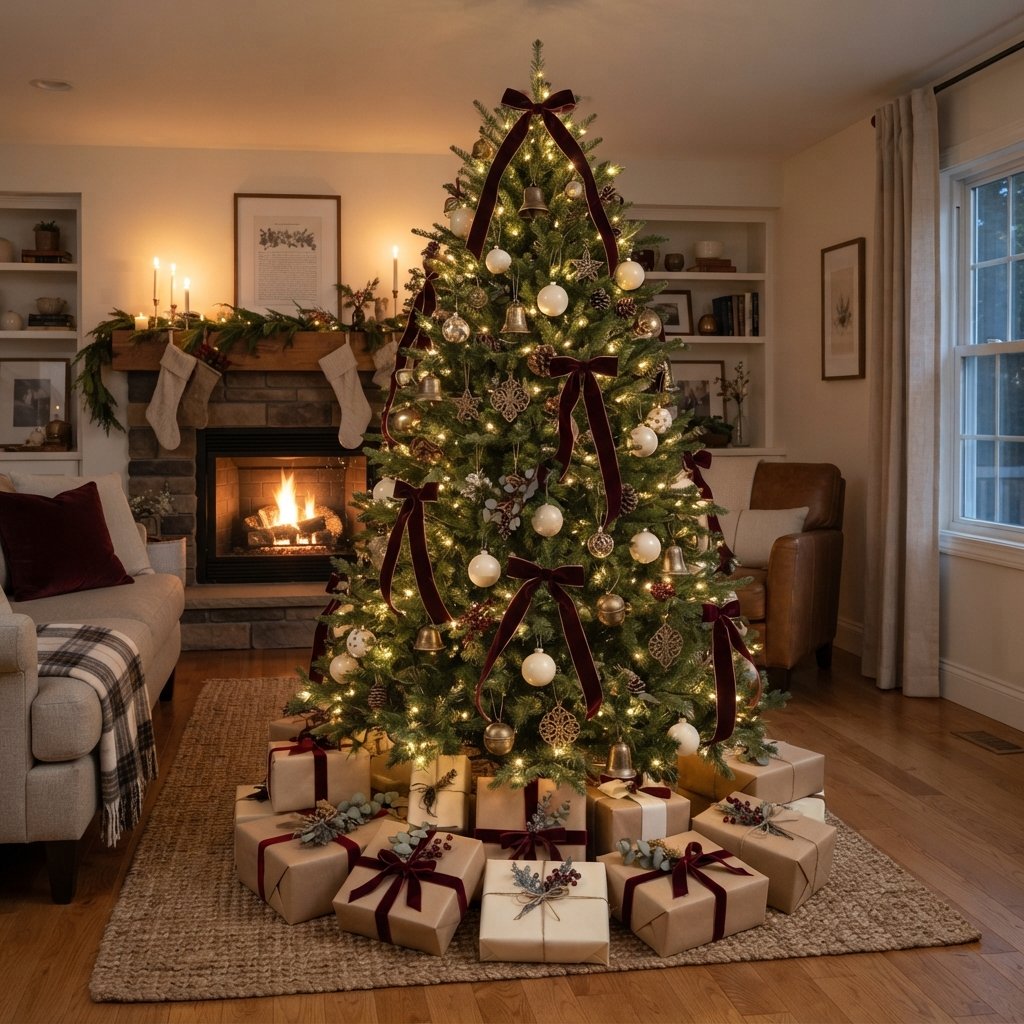
The Christmas tree is often the centerpiece of holiday decorating, but deciding exactly how to decorate it can be surprisingly difficult.
Do you go traditional with red and green? Keep things neutral with cream and gold? Add velvet ribbon? Mix metallics? Use oversized ornaments? And how do you make everything feel layered and full without turning the tree into a cluttered collection of decorations?
The best Christmas tree ideas usually start with a simple plan.
Choose a color palette, repeat a few key materials throughout the tree, vary the size and texture of the ornaments, and leave enough greenery visible so every decoration has room to stand out.
Whether you love classic Christmas decor, rich burgundy, natural wood, blue and white, Scandinavian simplicity, or an elegant neutral palette, there is a Christmas tree style that can work beautifully in your home.
Below are 25 Christmas tree decorating ideas, along with practical tips for ribbon, ornaments, tree toppers, tree skirts, and creating a cohesive look.
Before You Decorate: Choose a Christmas Tree Color Palette
Before putting ornaments on the tree, decide on two or three main colors.
You can always add a few supporting tones, but starting with a limited palette helps everything feel intentional.
Some beautiful combinations include:
- Red + green + gold
- Burgundy + cream + brass
- Forest green + brown + gold
- Blue + white + silver
- Cream + champagne + gold
- Brown + cream + green
- Black + gold + green
- Red + white + natural wood
Also look at the room around the tree.
Your Christmas tree does not need to perfectly match your living room, but repeating a few existing colors helps it feel like part of the space.
1. Burgundy and Brass Christmas Tree
If you want a tree that feels traditional but a little moodier than classic red, try burgundy.
Deep wine-colored ribbon looks beautiful against dark evergreen branches.
Add:
- Burgundy velvet ribbon
- Brass or antique-gold ornaments
- Cream ornaments
- Warm white lights
- Brown or natural accents
The cream keeps the darker colors from feeling too heavy.
This palette works especially well in rooms with warm woods, brown leather, cream upholstery, or brass lighting.
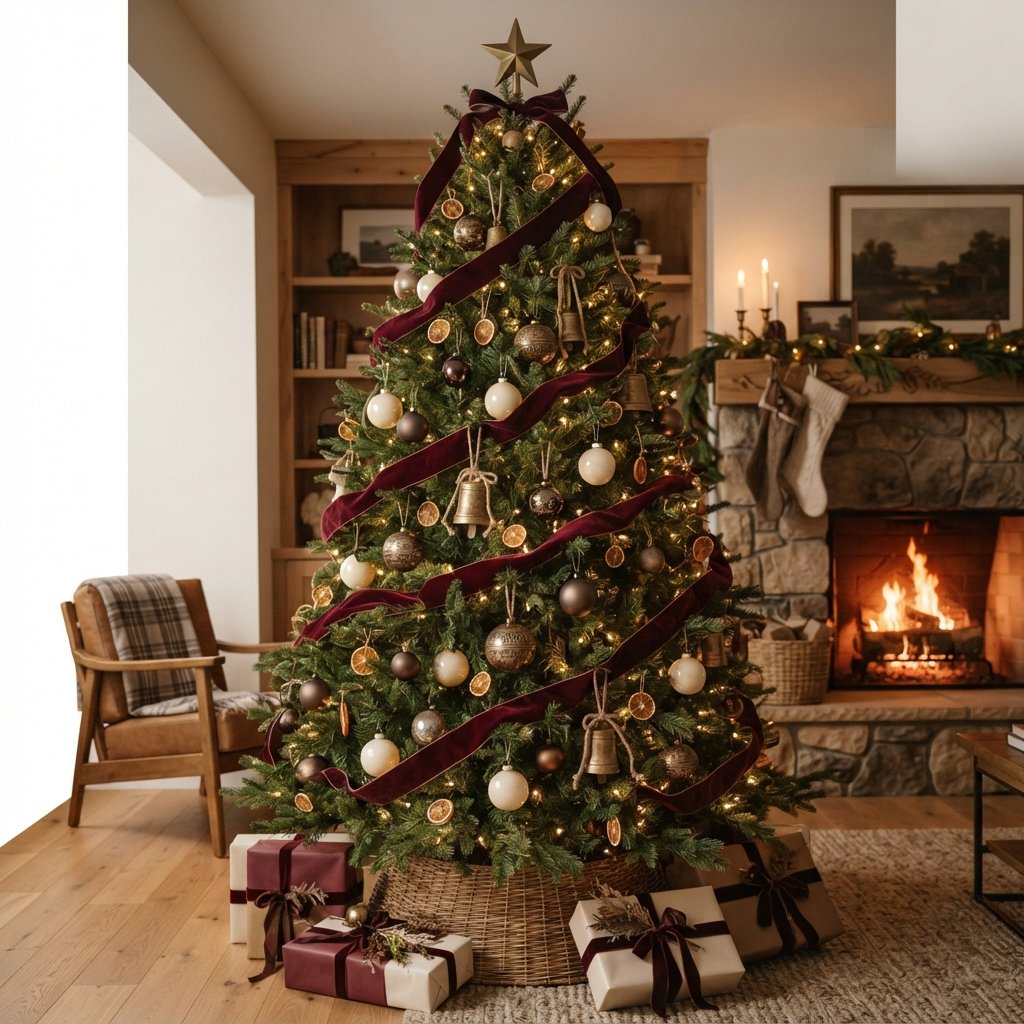
2. Classic Red and Green Christmas Tree
There is a reason red and green Christmas trees never really go out of style.
Start with evergreen branches and warm lights.
Then layer in:
- Red ornaments
- Red velvet ribbon
- Gold bells
- Plaid accents
- Natural pinecones
Use cream or gold as a third color to break up the red and green.
For a slightly more updated version, choose deeper reds rather than very bright cherry red.
3. Neutral Christmas Tree
A neutral Christmas tree can still feel incredibly warm.
Try a palette of:
- Cream
- Champagne
- Brown
- Soft gold
- Natural wood
Use texture to keep the tree interesting.
Mix smooth ornaments with velvet ribbon, wood ornaments, bells, and soft fabric details.
The lack of strong color means texture becomes especially important.
4. Green and Gold Christmas Tree
For an elegant tree that still feels traditional, use green and gold.
Choose green ornaments that are slightly different from the tree itself, such as:
- Olive
- Emerald
- Moss
- Forest green
Then introduce gold through bells, ornaments, ribbon, and small decorative picks.
Cream accents can lighten the overall look.
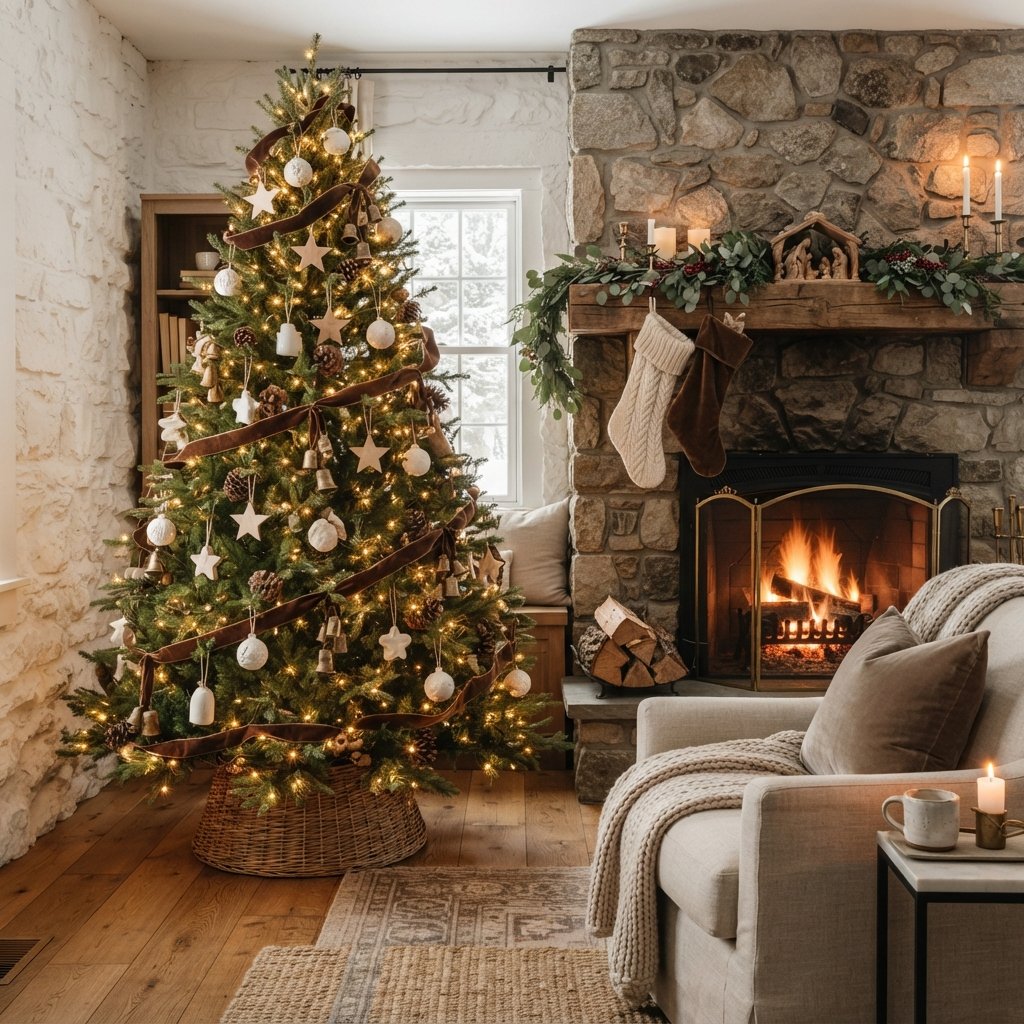
5. Brown and Cream Christmas Tree
Brown Christmas decor has a warm, organic quality that works beautifully with evergreen.
Try:
- Chocolate brown velvet ribbon
- Cream ornaments
- Wood ornaments
- Natural pinecones
- Aged brass bells
This combination is especially pretty in a neutral living room.
6. Blue and White Christmas Tree
Blue and white creates a crisp winter palette.
Depending on the shade of blue, it can feel:
- Coastal
- Traditional
- Elegant
- Playful
Try dusty blue or navy for a more sophisticated look.
Combine blue ornaments with creamy white rather than stark white if the rest of your home has warm finishes.
Silver creates a cooler look, while brass or gold warms the palette.
7. Scandinavian Christmas Tree
Keep things simple with a Scandinavian-inspired tree.
Use:
- Wood ornaments
- White ornaments
- Paper stars
- Simple garland
- Warm lights
Leave plenty of greenery visible.
The goal is not to cover every branch.
A woven basket-style tree collar or simple neutral tree skirt can complete the look.
8. Rustic Christmas Tree
A rustic tree is all about natural texture.
Decorate with:
- Pinecones
- Plaid ribbon
- Wood ornaments
- Bells
- Burlap-style ribbon
- Natural-looking greenery
Avoid using too many different rustic motifs at once.
Choose two or three materials and repeat them throughout the tree.
9. Traditional Plaid Christmas Tree
Plaid immediately gives a tree a cozy Christmas feel.
Use one plaid pattern as the main accent and combine it with solid ornaments.
For example:
Plaid ribbon + red ornaments + gold bells
or:
Green plaid ribbon + burgundy ornaments + cream accents
Keeping the remaining decorations simple prevents the plaid from becoming visually overwhelming.
10. Velvet Ribbon Christmas Tree
Sometimes ribbon can be the main decoration.
Velvet works especially well because it catches light differently depending on how it folds.
Try:
- Burgundy
- Brown
- Forest green
- Navy
- Red
- Cream
Use ribbon in loose vertical sections rather than wrapping it tightly around the tree like a spiral.
This helps the tree feel softer and more dimensional.
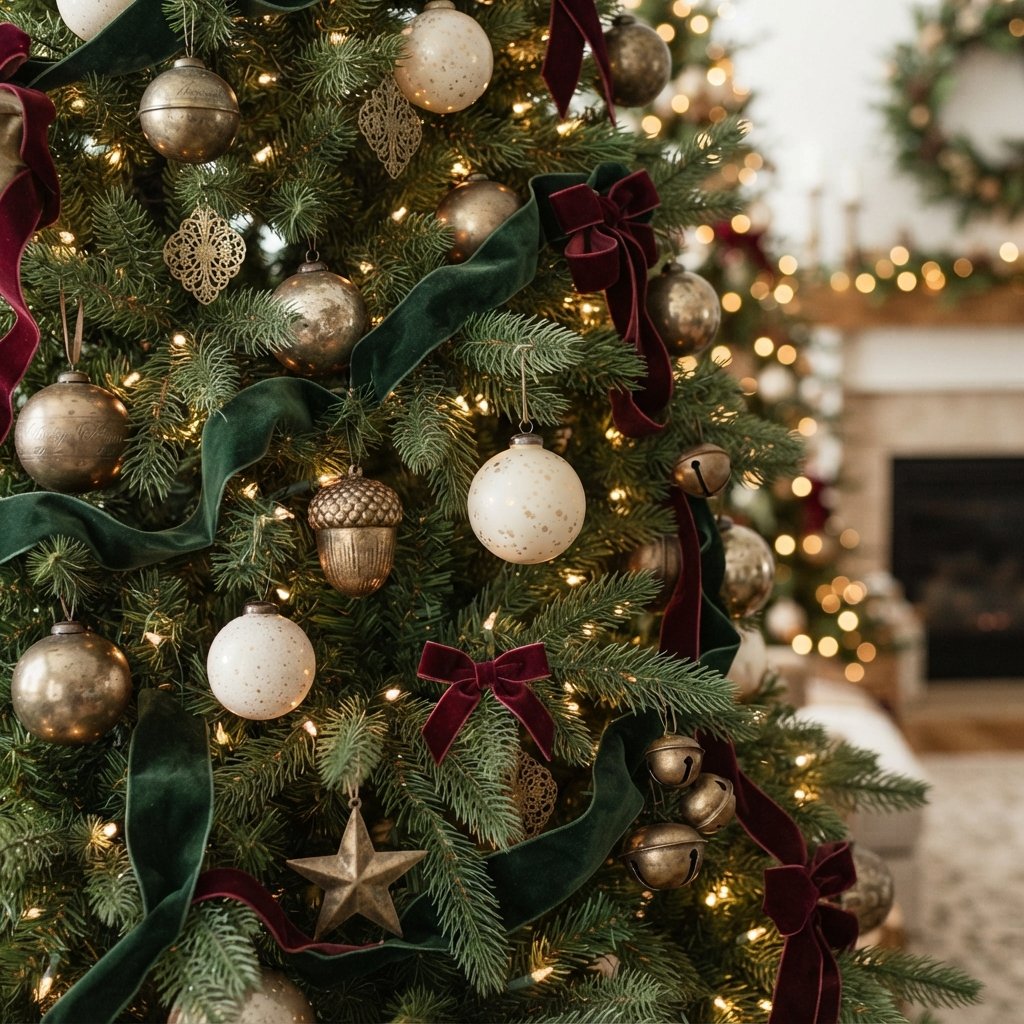
11. Red and Gold Christmas Tree
Red and gold is a classic Christmas combination.
For a more layered look, vary the finishes.
Instead of using only shiny gold, combine:
- Aged gold
- Matte gold
- Brass
- Champagne
Then use several shades of red, from medium red to deep burgundy.
The variation keeps the tree from looking overly coordinated.
12. Green and Cream Christmas Tree
For a quiet, sophisticated tree, let the greenery do most of the work.
Add:
- Cream velvet ribbon
- Ivory ornaments
- Soft gold bells
- White ceramic ornaments
Because the palette is subtle, choose ornaments with different textures and shapes.
This style works particularly well in a light, neutral living room.
13. Natural Wood Christmas Tree
Wood ornaments are perfect for creating a casual, organic look.
Try:
- Wooden stars
- Small wooden houses
- Wood bead garland
- Carved snowflakes
- Wooden bells
Combine them with cream ribbon and warm lights.
Avoid using too many wood tones if your room already contains a lot of visible wood. Mixing in cream or metallic accents can provide needed contrast.
14. Minimal Christmas Tree
You do not need hundreds of ornaments to create a beautiful tree.
For a minimalist look, use:
- Warm lights
- One type of ribbon
- A limited collection of ornaments
- Simple topper
Space the ornaments intentionally and allow branches to remain visible.
A minimal tree can be especially effective when the surrounding room already has plenty of Christmas decor.
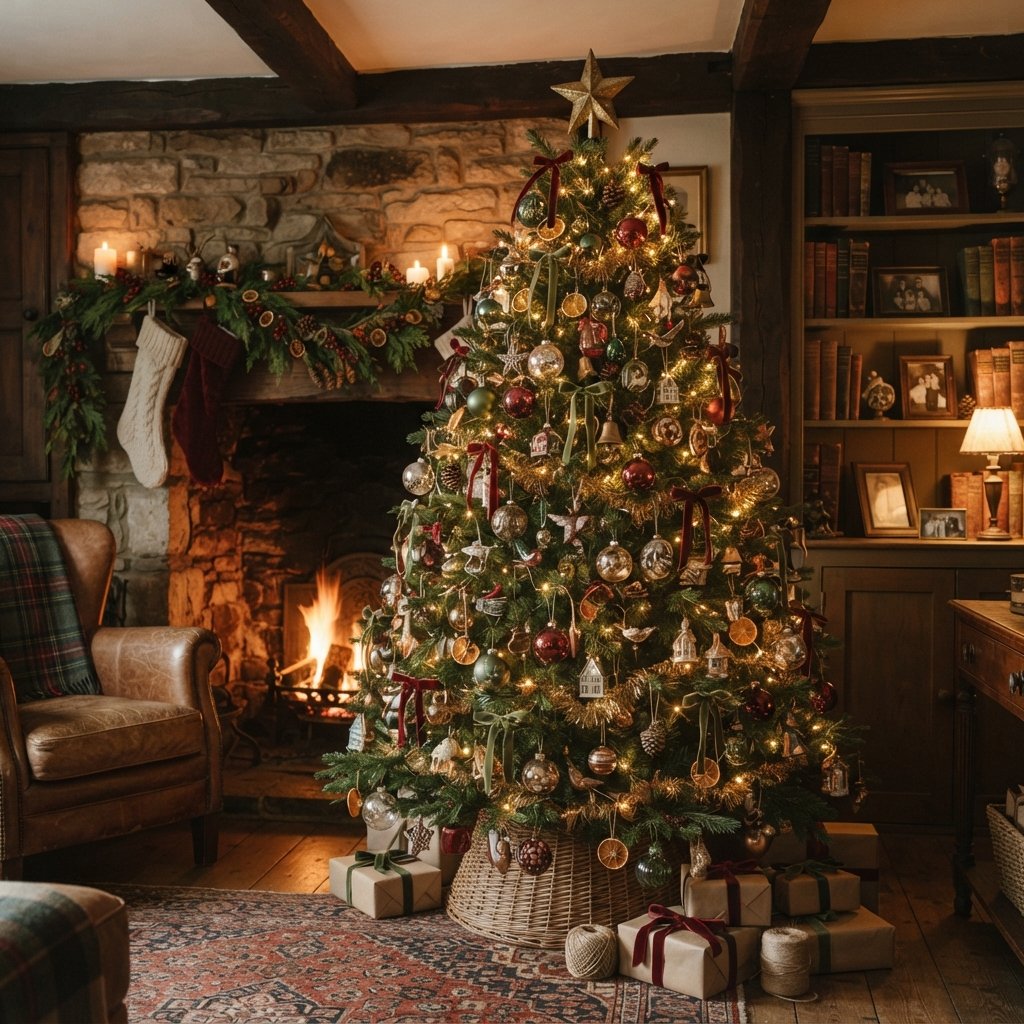
15. Vintage-Inspired Christmas Tree
A vintage-inspired tree can feel nostalgic without becoming themed.
Mix:
- Glass-style ornaments
- Bells
- Traditional red
- Muted green
- Gold
- Handmade-looking decorations
Add a few ornaments in different shapes rather than using only round baubles.
A slightly imperfect mix is part of the charm.
16. Metallic Christmas Tree
Metallics can create an elegant tree without relying on a lot of color.
Mixing metallic finishes often looks more interesting than using only one.
Try:
- Brass
- Champagne
- Antique gold
- Bronze
Use matte and shiny finishes together.
Pair them with cream ribbon and natural greenery to keep the tree warm rather than overly glamorous.
17. Black and Gold Christmas Tree
Black can look surprisingly beautiful on a Christmas tree.
Use it sparingly.
Try:
- Black velvet ribbon
- Matte black ornaments
- Antique gold ornaments
- Brass bells
- Cream accents
The evergreen branches soften the black, while the gold adds warmth.
This palette works particularly well in rooms that already contain black window frames, furniture, lighting, or fireplace details.
18. Candy-Inspired Christmas Tree
For a playful family tree, lean into color.
Use:
- Red
- Pink
- White
- Peppermint patterns
- Candy-shaped ornaments
Choose a limited palette even when the theme is whimsical.
Repeating the same few colors keeps the tree fun without making it chaotic.
19. Kids’ Christmas Tree
If you have room for a second tree, let kids have their own.
Use:
- Handmade ornaments
- Colorful decorations
- Family photos
- Felt ornaments
- Favorite characters
- Paper chains
This is a great place for sentimental ornaments that may not fit the main tree’s color palette.
It also creates a tree children can participate in decorating.
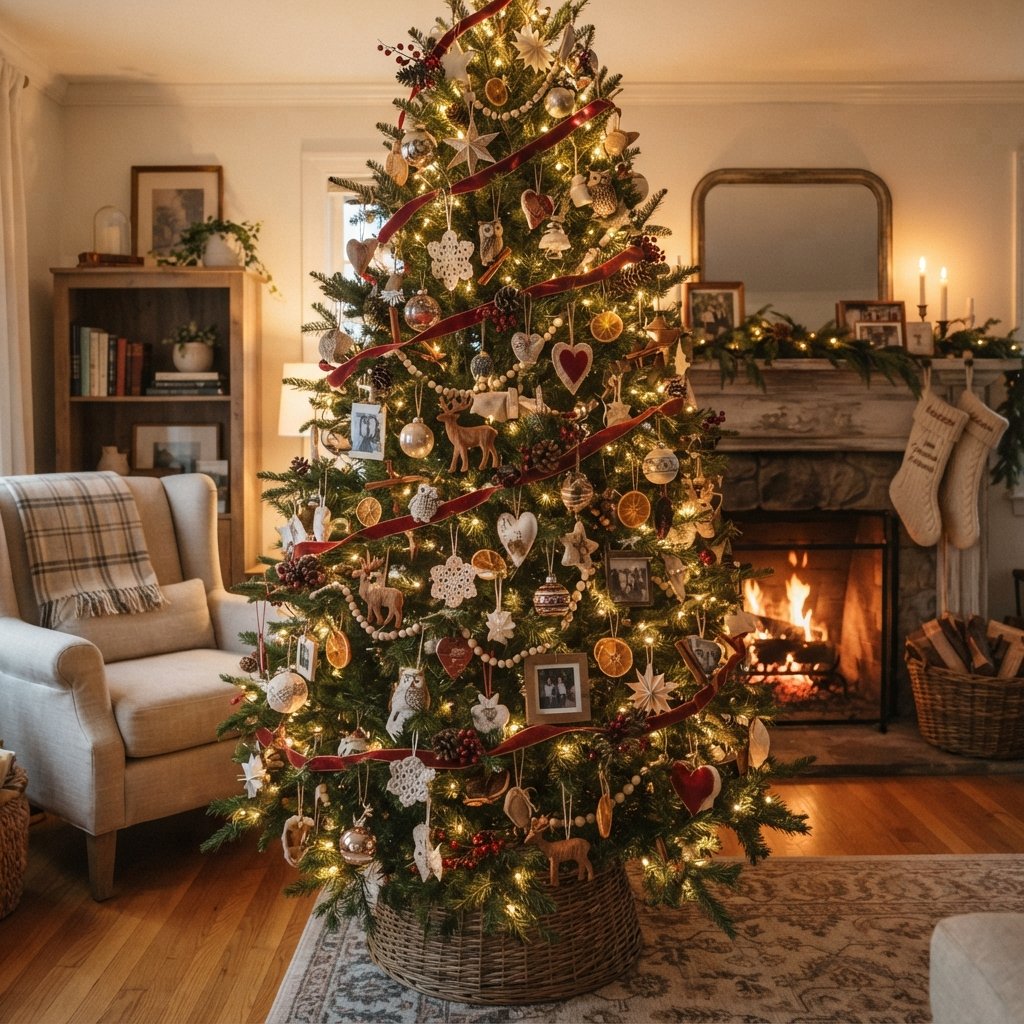
20. Sentimental Family Christmas Tree
Not every Christmas tree needs to look professionally styled.
A family tree filled with meaningful ornaments can be even more special.
Include:
- Children’s handmade ornaments
- Travel ornaments
- Family keepsakes
- Personalized ornaments
- Heirloom decorations
Use one consistent element—such as ribbon or lights—to visually tie the mixed ornaments together.
21. Christmas Tree With Oversized Ornaments
Large ornaments can help a big tree feel properly scaled.
Start with oversized ornaments and place them deeper into the branches.
Then add medium and smaller ornaments toward the outside.
This creates depth.
Avoid placing all large ornaments around the outer perimeter, where they can make the tree look heavy.
Use lightweight ornaments where possible, and make sure branches can safely support the decorations.
22. Christmas Tree With Bells
Bells add shape and warm metallic texture.
Use them:
- Near ribbon
- At branch tips
- In small clusters
- Near the top
- As part of the tree topper
Brass bells look especially beautiful with burgundy, brown, cream, and dark green.
Make sure heavier bells are securely supported.
23. Christmas Tree With Pinecones
Pinecones are an inexpensive way to fill visual gaps.
Tuck them deeper into the branches.
Use natural-looking brown pinecones for a rustic tree or lightly frosted versions for a winter look.
If using collected pinecones, make sure they are clean, completely dry, and pest-free before bringing them indoors.
24. Christmas Tree With Bows
Bows are having a strong decorative moment, but they can also be timeless when used thoughtfully.
Try small velvet bows in:
- Burgundy
- Red
- Forest green
- Brown
- Cream
Space them throughout the tree.
For a subtle look, use bows as accents rather than putting one on every branch.
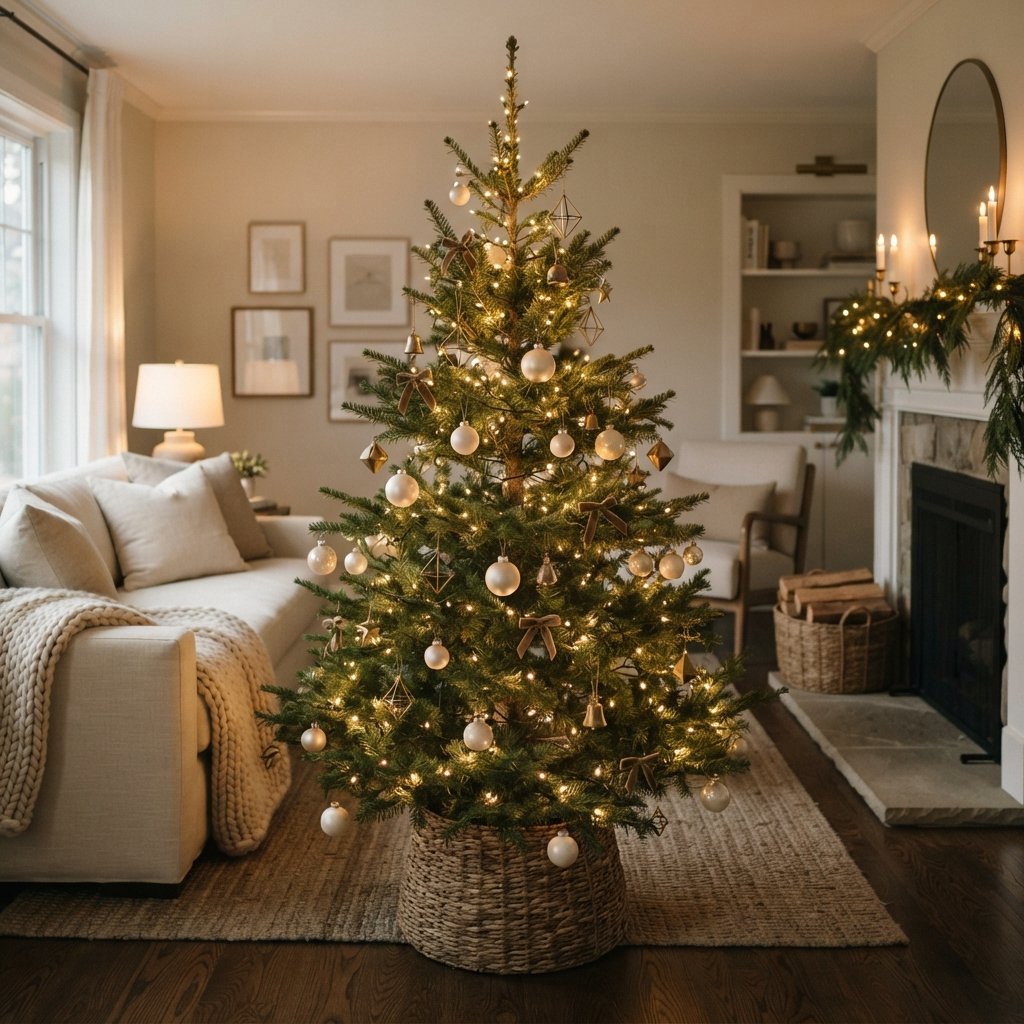
25. Simple Christmas Tree With Warm White Lights
Sometimes the simplest tree is the one that feels most magical.
Use warm white lights and only a few ornaments.
Add a little ribbon or a handful of meaningful decorations.
This approach works especially well with a realistic-looking artificial tree or a naturally beautiful fresh tree.
How to Decorate a Christmas Tree Step by Step
Once you choose your style, decorate in layers.
Step 1: Set Up and Shape the Tree
If you have an artificial tree, spend time fluffing it.
Separate individual branch tips and fill obvious holes.
This may take longer than decorating, but it makes an enormous difference.
Follow the tree manufacturer’s setup instructions.
Step 2: Add Lights
If your tree is not pre-lit, add the lights before ribbon and ornaments.
Use lights specifically rated for the intended application and follow the manufacturer’s instructions regarding maximum connected strands, electrical load, and indoor or outdoor use.
Inspect cords for visible damage before use.
Step 3: Add Ribbon
Ribbon generally works better before ornaments.
Tuck it into branches rather than simply laying it on top.
Create loose sections so it appears to weave naturally through the tree.
Step 4: Add Large Ornaments
Place your biggest ornaments first.
Distribute them around the tree.
Push some slightly deeper into the branches to create dimension.
Step 5: Add Medium Ornaments
Use these to establish your color palette across the entire tree.
Step back frequently to check the distribution.
Step 6: Add Small and Special Ornaments
Finish with smaller ornaments and sentimental pieces.
Place favorite ornaments where they can be seen.
Step 7: Fill Gaps
Use:
- Pinecones
- Picks
- Bells
- Small bows
You do not have to fill every gap.
Step 8: Add the Topper
The topper should feel proportional to the tree.
Options include:
- Star
- Bow
- Angel
- Branching picks
- Bells
Make sure it is securely supported.
Step 9: Finish the Base
Use a:
- Tree skirt
- Tree collar
- Basket-style collar
Then add wrapped gifts once you’re ready.
How to Put Ribbon on a Christmas Tree
Ribbon can be intimidating, but it does not need to be perfect.
Instead of using one enormous continuous piece, work with manageable sections.
Tuck one end securely into the branches.
Allow the ribbon to fall loosely.
Tuck it back into the tree.
Repeat.
You can run ribbon vertically or at a slight diagonal.
Avoid pulling it tightly.
Soft loops and folds create a more natural look.
How Many Ribbon Colors Should You Use?
One ribbon can be enough.
Two ribbons can add dimension.
More than that can quickly become busy unless the palette is very restrained.
For example:
Burgundy velvet + narrow antique-gold ribbon
works because the colors coordinate.
You could also use one solid ribbon and one subtle pattern.
How to Mix Christmas Ornaments
A beautifully layered tree uses more than one size and finish.
Try combining:
- Matte ornaments
- Shiny ornaments
- Textured ornaments
- Glass-look ornaments
- Wood ornaments
- Bells
- Sentimental ornaments
The key is repetition.
If you use a burgundy ornament once, it may look random.
Repeat burgundy around the entire tree and it becomes part of the design.
How to Make a Christmas Tree Look Fuller
If your artificial tree looks sparse, try these tricks.
Fluff More Than You Think You Need To
Separate every branch tip.
Add Greenery Picks
Choose picks that coordinate with the tree.
Place Large Ornaments Deeper Inside
They visually fill empty spaces.
Add Ribbon
Wide ribbon can disguise sparse sections.
Use Pinecones
They fill gaps naturally.
Turn the Best Side Forward
If the tree sits against a wall, prioritize the visible areas.
Do not overload weak branches simply to make the tree appear fuller.
How to Make a Christmas Tree Look Expensive
You do not necessarily need expensive ornaments.
Focus on these details:
Limit the Palette
Two or three main colors create cohesion.
Repeat Materials
Use the same ribbon, metal finish, or ornament style throughout.
Mix Sizes
All-small ornaments can make a large tree look busy.
Add Texture
Velvet, wood, glass, bells, and greenery create layers.
Use Ribbon Generously but Strategically
A beautiful ribbon can visually connect inexpensive ornaments.
Hide Empty Areas
Push larger decorations deeper into the branches.
Keep the Base Finished
A tree collar or substantial tree skirt makes the whole display feel complete.
Christmas Tree Ideas for Small Living Rooms
A small room does not mean you need to skip the tree.
Consider:
- Slim artificial tree
- Pencil tree
- Tabletop tree
- Small natural tree
Keep decorations proportional.
Large ornaments can overwhelm a very narrow tree, while tiny ornaments may disappear on a full-size tree.
Avoid blocking walkways, doors, vents, or frequently used furniture.
Christmas Tree Ideas for Neutral Living Rooms
A neutral room gives you plenty of options.
For warmth, try:
Burgundy + brass + cream
For an organic look:
Brown + cream + green
For understated elegance:
Champagne + cream + gold
For contrast:
Black + brass + cream
Repeat one or two tree colors elsewhere through throw pillows, mantel ribbon, or gift wrapping.
Christmas Tree Ideas for a Cozy Traditional Home
Choose rich colors and classic materials.
Try:
- Red velvet
- Burgundy
- Plaid
- Brass bells
- Gold ornaments
- Pinecones
Warm white lights help everything feel soft and inviting.
Coordinate the Christmas Tree With the Mantel
If your tree and fireplace are in the same room, they should relate visually.
They do not need to match exactly.
Repeat two or three elements.
For example:
Tree
Burgundy ribbon + brass ornaments + cream accents
Mantel
Burgundy ribbon + brass bells + cream stockings
That repetition makes the entire room feel intentional.
Coordinate Your Gift Wrapping With the Tree
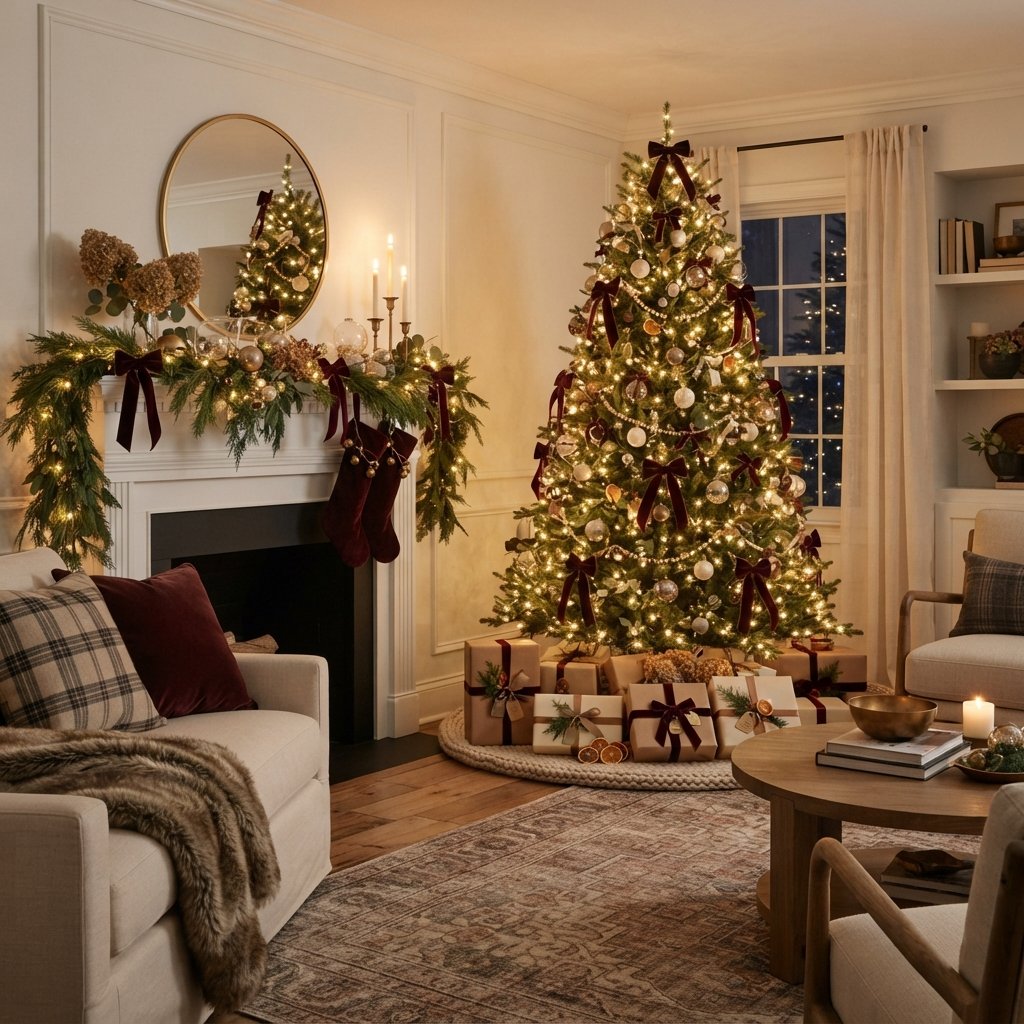
Wrapped presents become part of the Christmas decor once they’re placed beneath the tree.
Choose wrapping paper and ribbon that complement your tree.
For a burgundy and brass tree, try:
- Kraft paper
- Cream paper
- Burgundy ribbon
- Natural cardboard tags
For a Scandinavian tree:
- White paper
- Kraft paper
- Simple twine
- Wood or cardboard tags
You don’t need every present to match.
Using the same two or three colors is enough to create cohesion.
Christmas Tree Safety Tips
A beautiful Christmas tree should also be safely installed.
If using an artificial tree, follow the manufacturer’s assembly and electrical instructions.
If using a fresh tree, keep it appropriately watered and follow applicable fire-safety guidance.
For either type:
- Use lights rated for the intended location.
- Inspect cords and light strands for visible damage.
- Do not overload electrical outlets.
- Keep cords away from areas where they may create trip hazards.
- Keep the tree an appropriate distance from fireplaces, heaters, candles, and other heat or flame sources.
- Secure the tree so it is stable.
- Consider additional precautions around young children and pets.
- Keep fragile ornaments out of vulnerable locations when appropriate.
- Avoid placing heavy decorations on branches that cannot support them.
Never use real candles on a Christmas tree.
Common Christmas Tree Decorating Mistakes
Decorating Before Fluffing
A poorly shaped artificial tree is difficult to disguise with ornaments.
Buying Ornaments Without a Palette
Choose your main colors first.
Putting Ribbon on Last
It is usually easier to add ribbon before ornaments.
Using Only One Ornament Size
Mixing sizes creates depth.
Decorating Only the Branch Tips
Push some decorations deeper into the tree.
Using Too Many Themes
One cohesive direction usually looks stronger.
Forgetting the Bottom Third
Decorate all the way down.
Overcrowding the Tree
Leave some greenery visible.
Ignoring the Room
The tree should feel connected to its surroundings.
Forgetting the Base
Finish with a skirt or collar.
FAQ About Christmas Tree Ideas
What Christmas tree colors look good together?
Classic combinations include red, green, and gold; burgundy, cream, and brass; blue, white, and silver; brown, cream, and green; or champagne, cream, and gold.
How many colors should be on a Christmas tree?
Two or three main colors are usually enough to create a cohesive design. You can add supporting neutrals and metallics as accents.
How do you make a Christmas tree look professionally decorated?
Start with a clear palette, fluff the branches thoroughly, layer ribbon before ornaments, mix ornament sizes and textures, repeat colors throughout the tree, and finish the base with a skirt or collar.
Should ribbon go on a Christmas tree before ornaments?
Usually, yes. Adding ribbon first makes it easier to tuck and shape it without disturbing ornaments.
How do you decorate a Christmas tree without ribbon?
Use ornaments in varied sizes, bells, pinecones, bows, wood decorations, or decorative picks to create texture and movement.
How can I decorate a Christmas tree on a budget?
Reuse ornaments, choose inexpensive ribbon strategically, incorporate pinecones, make paper or cardboard decorations, and limit the palette so mismatched inexpensive pieces feel more cohesive.
How do you make a sparse Christmas tree look fuller?
Fluff every branch, add compatible greenery picks, place larger ornaments deeper inside, and use ribbon or pinecones to disguise noticeable gaps.
How do I coordinate my Christmas tree with my living room?
Repeat a few colors or materials already present in the room. You can also connect the tree to nearby holiday decor by repeating ribbon, metallic finishes, or ornament colors.
Final Thoughts
The best Christmas tree ideas are not necessarily the ones with the most ornaments.
A beautifully decorated tree usually comes down to a few simple decisions made before you start.
Choose a color palette.
Decide whether you want the tree to feel traditional, elegant, rustic, neutral, playful, or minimal.
Then repeat a few materials throughout the tree.
Velvet ribbon, brass bells, wood ornaments, pinecones, cream baubles, and warm white lights can create plenty of depth without requiring dozens of unrelated decorations.
Most importantly, let some of the tree show.
Evergreen branches are part of the design, not empty spaces that need to be covered.
Whether you choose classic red and green, moody burgundy and brass, soft cream and champagne, or a simple tree filled with sentimental ornaments, create something that feels right in your home.
A Christmas tree doesn’t need to look exactly like anyone else’s.
It just needs a little balance, repetition, texture, and plenty of warm Christmas glow.