


Have you ever decorated a room with things you genuinely love, only to step back and wonder why nothing seems to go together?
The sofa looks good. You like the rug. The pillows are pretty. The artwork seemed perfect when you bought it.
But somehow, the finished room still feels disconnected.
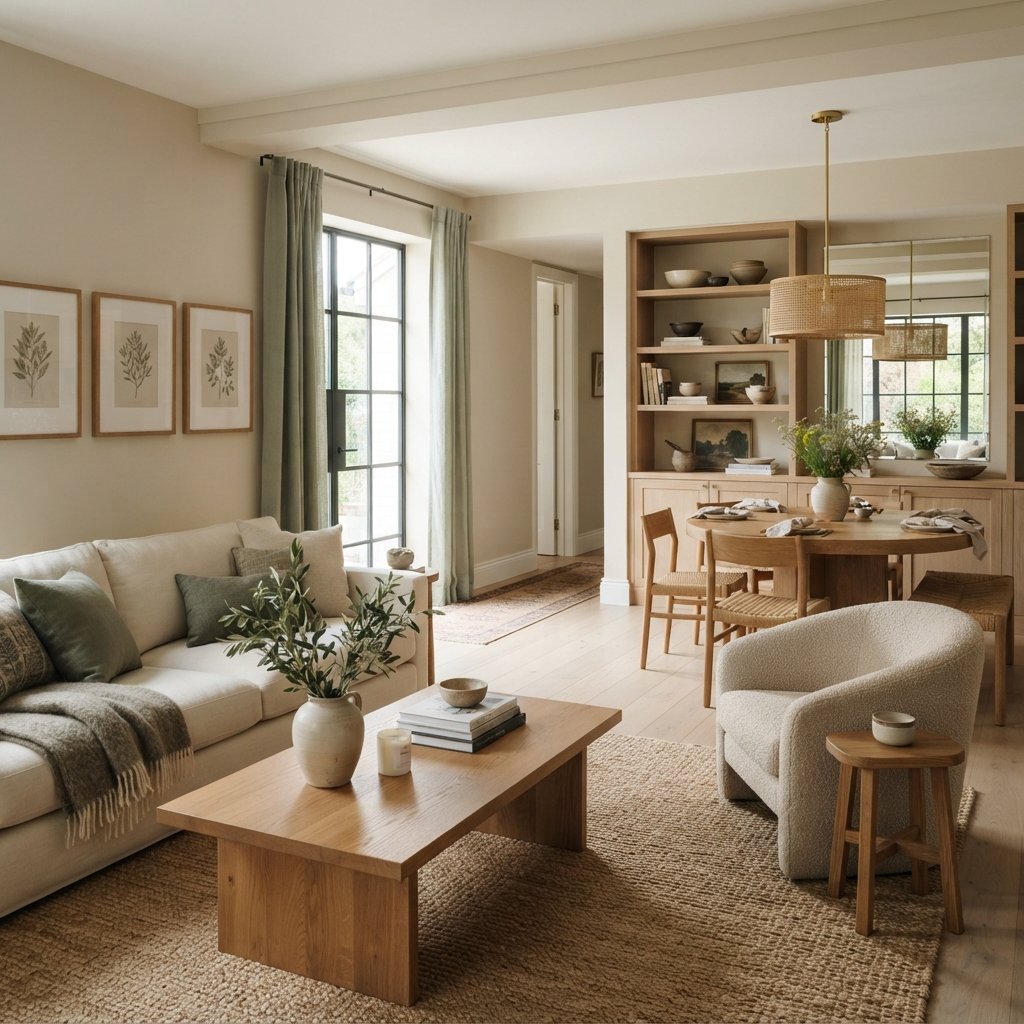
Creating a cohesive home isn’t about buying everything from the same furniture collection or choosing one decorating style and following it perfectly. In fact, rooms that match too closely can feel flat and impersonal.
Cohesion comes from creating visual relationships between the different pieces in your home.
Colors repeat. Wood tones relate to one another. Furniture feels appropriately scaled. Different decorating styles share common elements. And the rooms throughout the house feel connected without looking identical.
If you’ve been wondering why your home decor doesn’t look cohesive, the problem may come down to one—or several—of these five common decorating mistakes.
The good news? Most of them can be fixed without starting over or buying an entirely new room of furniture.
What Does Cohesive Home Decor Actually Mean?
A cohesive home feels connected.
When you walk from one area to another, the rooms don’t necessarily look the same, but they feel like they belong in the same house.
There might be a consistent:
- Color palette
- Level of formality
- Wood tone
- Metal finish
- Decorating style
- Use of texture
- Architectural character
Cohesion also happens within individual rooms.
Your sofa doesn’t need to match your chairs, but the pieces should have some visual relationship.
Your curtains don’t have to be the same color as your rug, but they should feel like part of the same overall story.
The goal is coordination, not matching.
Before you buy anything else for a room that feels “off,” look for these five problems.
1. You Don’t Have a Consistent Color Palette
One of the most common reasons a home feels disconnected is that every color decision is being made independently.
You buy a rug because you love it.
Then you find a piece of art in completely different colors.
Next comes a pillow that doesn’t relate to either one.
Individually, each piece might be beautiful.
Together, they can create visual noise.
How to Create a Cohesive Color Palette
You don’t need to use the same three colors throughout the entire house.
Instead, think about creating a whole-home palette.
Choose a few colors that appear repeatedly in different ways.
For example:
- Warm white
- Natural wood
- Muted green
- Soft blue
- Black
Your living room might use mostly cream and green.
The dining room could introduce more blue.
The bedroom might be primarily warm white and blue with small green accents.
The rooms are different, but the repeated colors connect them.
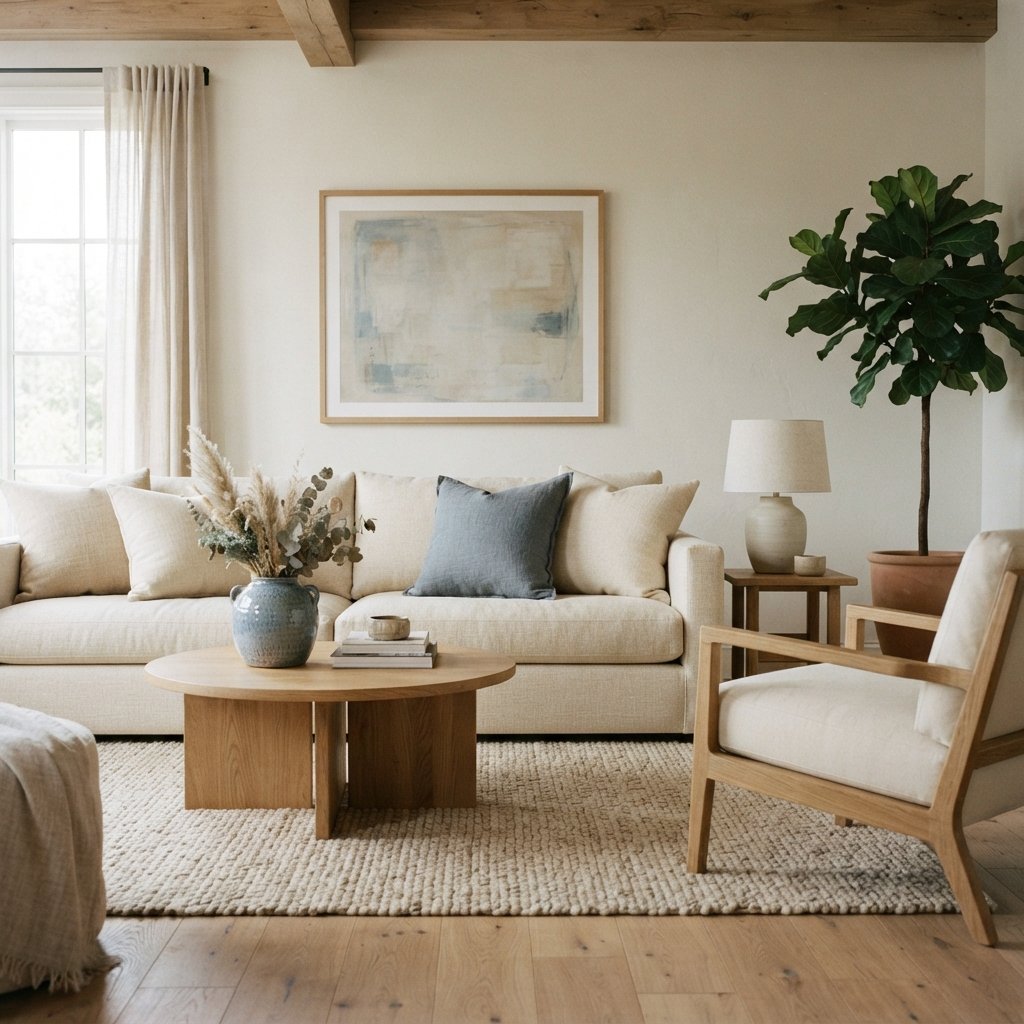
Repeat Colors Within Each Room
Repetition matters inside the room too.
If you have one blue pillow and absolutely nothing else blue in the room, that pillow can look random.
Instead, repeat the blue in two or three places.
For example:
Blue pillow + blue in artwork + small blue object
They don’t need to be identical shades.
The repeated color creates a relationship.
Don’t Try to Match Every Shade Exactly
Cohesion doesn’t require exact color matching.
In fact, using several related shades often looks more natural.
Instead of matching every green perfectly, you might combine:
- Sage
- Olive
- Forest green
The colors belong to the same family but create more depth.
Look at Undertones
Undertones can explain why a room filled with “neutrals” still feels wrong.
You may have:
- Pink-beige sofa
- Yellow-beige rug
- Cool gray walls
- Blue-gray curtains
Every piece is technically neutral, but they’re pulling in different directions.
Put samples together whenever possible.
Your paint, upholstery, rug, flooring, and large furniture should be evaluated as a group rather than one at a time.
2. You’re Mixing Too Many Styles Without a Connection
Mixing decorating styles can create a much more interesting home.
The problem isn’t mixing.
The problem is mixing without anything connecting the pieces.
Imagine a room with:
- Sleek modern sofa
- Ornate traditional table
- Rustic farmhouse cabinet
- Glam mirrored lamp
- Industrial shelving
Any one of those combinations could work.
But when every item represents a completely different style, the room can start to feel like a furniture showroom made from five separate stores.
Choose a Dominant Decorating Style
You don’t have to label your home.
But it helps to understand what you consistently like.
Maybe your home leans:
- Traditional
- Modern
- Coastal
- Organic modern
- Transitional
- Cottage
- Grandmillennial
- Scandinavian-inspired
Let one general direction lead.
Then layer in smaller amounts of other styles.
For example, a mostly traditional room can include a modern coffee table.
A contemporary room can have an antique chest.
The contrast becomes interesting because the rest of the room provides context.
Look for Common Elements
When mixing styles, find something that connects the pieces.
That might be:
- Similar color
- Similar material
- Repeated shape
- Related wood tone
- Similar scale
An antique wood table can work beautifully with a modern sofa if the warm wood is repeated elsewhere.
A contemporary lamp can sit comfortably on a traditional dresser if the colors relate.

Avoid Buying an Entire Matching Set
The opposite problem can happen too.
If the sofa, chairs, tables, lamps, and accessories all match perfectly, the room may technically be cohesive but still feel flat.
A collected home usually includes some variation.
Mix:
- Old and new
- Straight and curved
- Wood and painted furniture
- Smooth and textured materials
Cohesion doesn’t mean sameness.
3. Your Furniture Is the Wrong Scale
Sometimes a room’s color palette is beautiful and the furniture styles work together, but the space still looks wrong.
Scale may be the problem.
Scale describes how an object relates in size to the room and to the things around it.
Common problems include:
- Tiny rug with large sectional
- Small artwork above a long sofa
- Oversized sectional in a compact room
- Tiny lamps on substantial side tables
- Very small coffee table surrounded by large seating
- Too many small furniture pieces
When proportions feel wrong, the entire room can feel disconnected.
Start With the Rug
The rug is a common culprit.
A rug that’s too small can visually break the furniture arrangement into separate pieces.
A larger rug can help connect the seating group.
The correct size depends on your room and furniture arrangement, so don’t rely on one universal measurement.
Before buying, use painter’s tape to outline the proposed rug size on the floor.
Then look at it from several angles.
Check Your Coffee Table
Your coffee table should relate to the seating around it.
If you have a substantial sectional and a tiny table floating in front of it, the furniture may not feel connected.
Likewise, an enormous coffee table can overwhelm a smaller sofa.
Focus on visual balance and practical clearance.
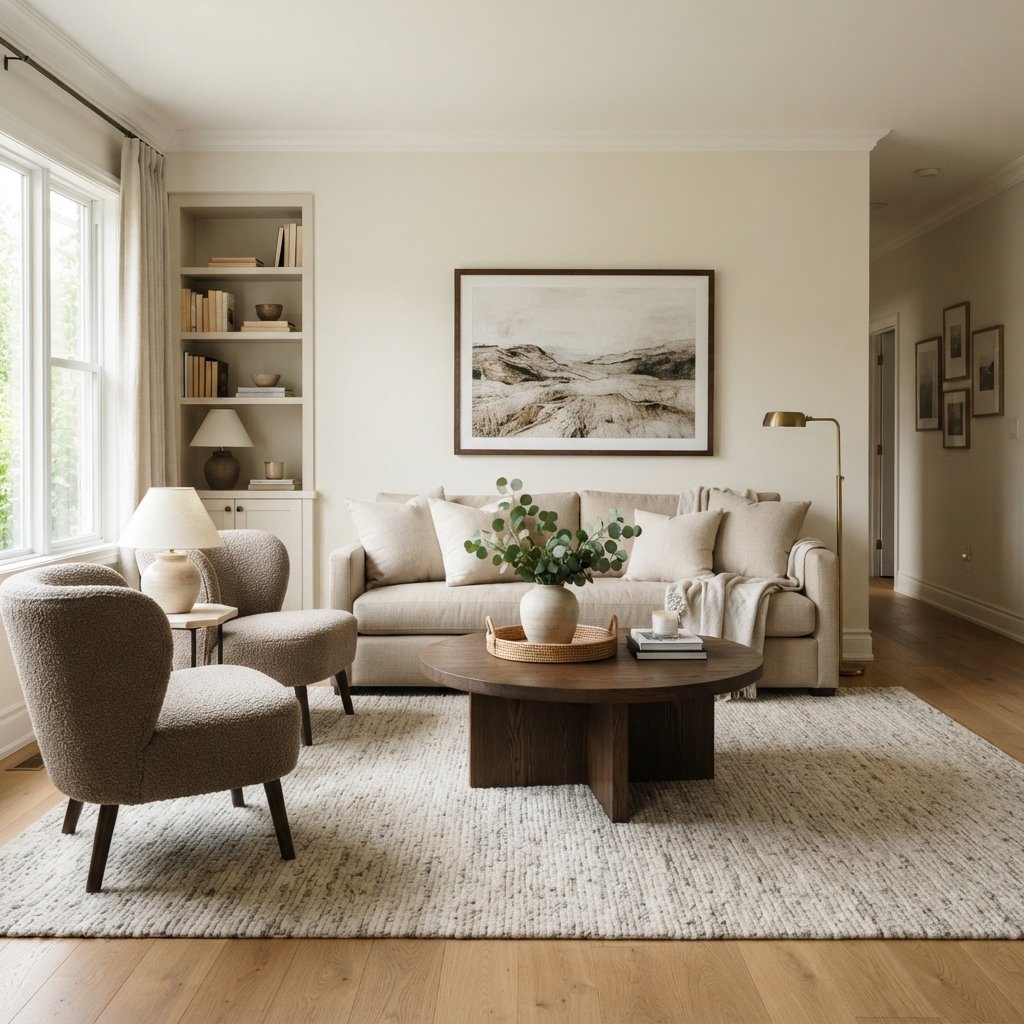
Look at Artwork Scale
A tiny picture floating above a long sofa often looks disconnected.
Instead, consider:
- One substantial artwork
- Pair of coordinating pieces
- Intentionally arranged gallery wall
The artwork should relate visually to the furniture or wall area around it.
Secure artwork with hardware suitable for the wall construction and the piece’s weight.
Don’t Solve Every Empty Space With Small Furniture
A common decorating habit is adding little pieces whenever a room feels unfinished.
Soon you have:
- Small table
- Little stool
- Tiny cabinet
- Basket
- Plant stand
The room becomes fragmented.
Sometimes the better solution is one appropriately scaled piece—or leaving the space empty.
4. You’re Missing Repetition
Repetition is one of the easiest decorating tricks for making a home feel cohesive.
You don’t need everything to match.
You need certain elements to appear more than once.
You can repeat:
- Color
- Wood
- Metal
- Shape
- Pattern
- Material
Repeat Wood Tones
Your furniture doesn’t need to be one matching wood finish.
But if every piece is a completely different tone, the room can feel chaotic.
Try repeating each major wood tone somewhere else.
For example:
Walnut coffee table + walnut picture frame
or:
Light oak console + light oak chair legs
This gives the eye a reason to believe the combination was intentional.
Repeat Metal Finishes
You don’t have to use one metal throughout your entire house.
Mixing metals can be beautiful.
But random one-off finishes can feel disconnected.
If you have brass hardware, repeat brass in a lamp or frame.
If you have black curtain rods, repeat black in another small element.
Repeat Shapes
Repetition isn’t only about color.
If your room contains many straight lines, a few repeated curves can soften it.
For example:
- Round mirror
- Curved lamp
- Round side table
The repeated shape creates a subtle rhythm.

Repeat Materials Between Rooms
Whole-home cohesion can come from materials too.
Maybe you repeatedly use:
- Linen
- Oak
- Brass
- Black metal
- Woven baskets
- Natural stone
The exact pieces change from room to room, but the materials create continuity.
5. You Keep Adding Decor Instead of Editing It
This may be the most important reason of all.
When a room doesn’t feel finished, our instinct is often to buy something else.
Another pillow.
Another vase.
Another basket.
Another picture.
But sometimes the room isn’t missing anything.
It has too much.
Too many decorative objects can make it difficult for your eye to understand what matters.
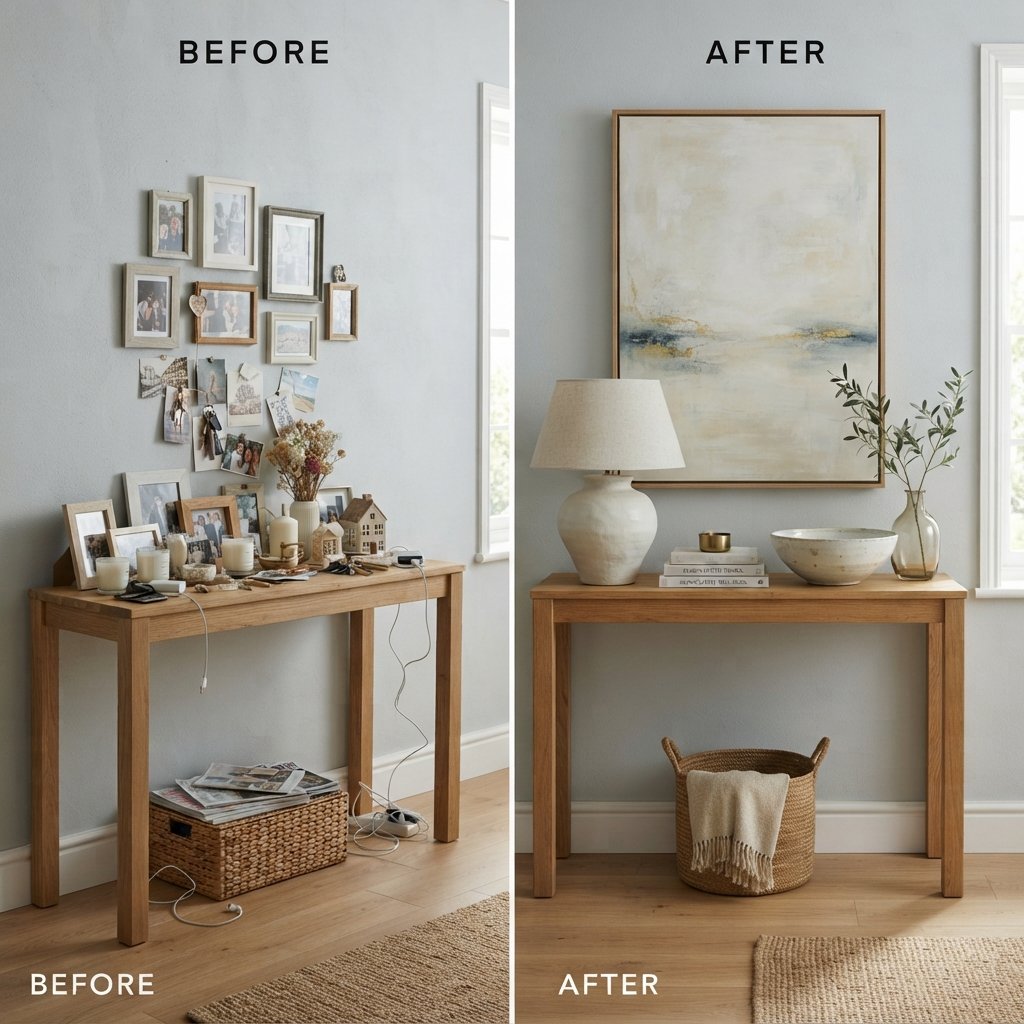
Clear the Surfaces
If a room feels disconnected, temporarily remove most accessories.
Clear:
- Coffee table
- Console
- Shelves
- Side tables
- Mantel
Then add things back slowly.
Start with your favorites.
You may find that the room begins to look more cohesive before half of the accessories return.
Use Fewer, Larger Accessories
A collection of tiny objects can create visual clutter.
Instead, try one or two larger pieces.
For example, replace several little objects on a console with:
- Large lamp
- Bowl
- Stack of books
That’s often enough.
Leave Some Empty Space
Not every wall needs art.
Not every corner needs furniture.
Not every shelf needs an accessory.
Empty space gives your favorite pieces room to stand out.
How to Make Your Home Look More Cohesive Without Buying Anything
Before shopping, try working with what you already own.
Step 1: Pick Your Best Room
Choose the room that feels most like you.
Ask what makes it successful.
Is it:
- Color palette?
- Wood tones?
- Simplicity?
- Traditional details?
- Natural materials?
Use that room as a clue for the rest of the house.
Step 2: Move Decor Between Rooms
Sometimes an item feels wrong because it’s simply in the wrong place.
Try moving:
- Lamps
- Pillows
- Art
- Side tables
- Decorative objects
A piece that looks random in one room may perfectly connect another.
Step 3: Remove More Than You Add
Take several things away and live with the room for a day.
Then decide what it actually needs.
Step 4: Group Similar Objects
Instead of spreading similar accessories throughout the room, try grouping them.
Three unrelated objects in three places may feel cluttered.
A small collection can feel intentional.
Step 5: Repeat Existing Colors
Look for a color already present in your rug or artwork.
Move an existing pillow, throw, book, or accessory in that color into the room.
You may already own the piece that makes everything click.
Create a Whole-Home Color Palette
If each room in your house feels completely separate, create a simple whole-home palette.
You might choose:
Main Neutral
Warm white or cream.
Secondary Neutral
Taupe, greige, beige, or natural wood.
Main Accent
Muted blue.
Secondary Accent
Green.
Contrast
Black.
Not every room needs every color.
The palette simply gives you boundaries.
Your bedroom might use blue heavily while your living room emphasizes green.
The repeated neutrals and accents connect them.
How to Mix Wood Tones and Still Look Cohesive
You absolutely can mix wood.
In fact, using one matching furniture set can make a room feel less collected.
Start by identifying the dominant wood tone.
Then introduce one or two additional tones intentionally.
Pay attention to whether the woods lean:
- Warm
- Cool
- Neutral
They don’t have to match, but some relationship helps.
Then repeat the secondary wood somewhere else.
Even a picture frame can be enough to make it feel intentional.
How to Mix Patterns Without Making the Room Feel Busy
Pattern can work in a cohesive home.
Vary the scale.
For example:
Large floral + medium stripe + small geometric
Using three equally bold patterns can create competition.
Connect patterns through color.
A floral pillow and striped rug can work together beautifully when they share one or two colors.
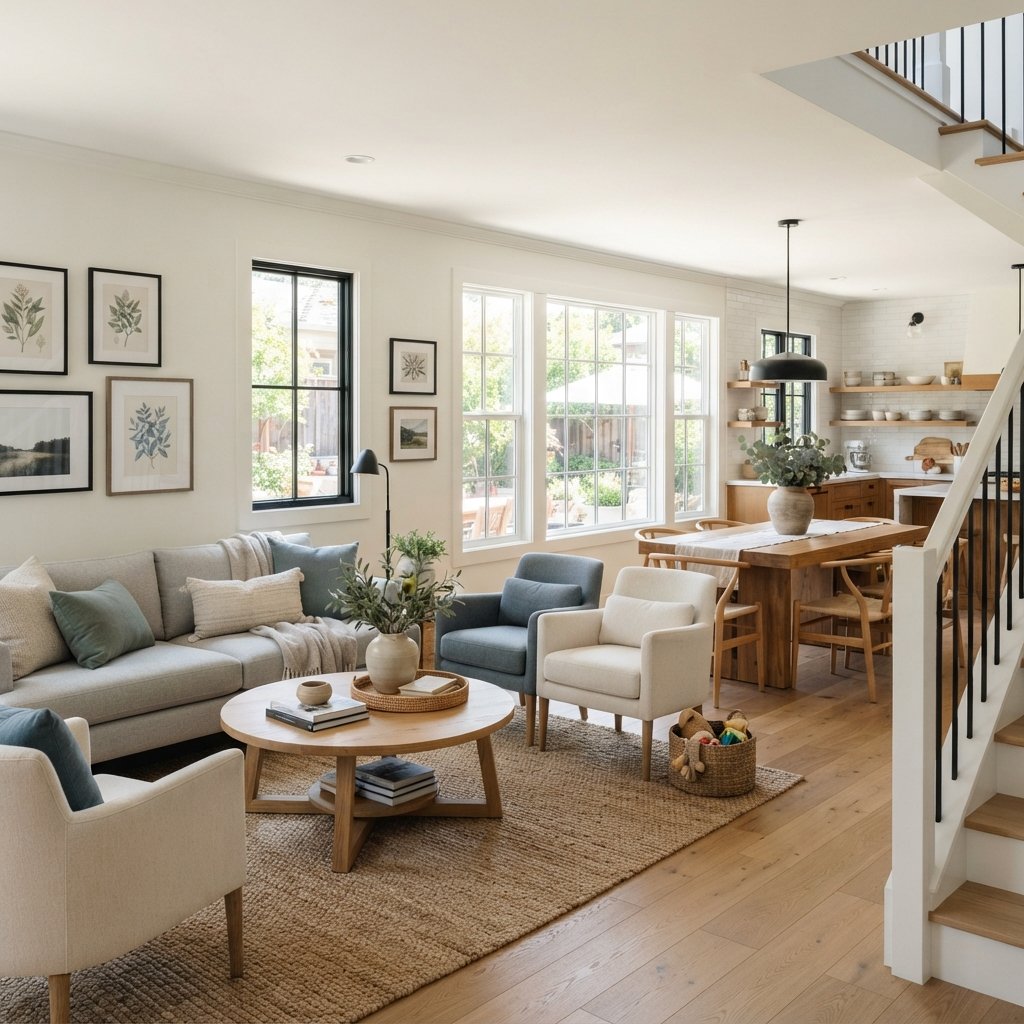
How to Make an Open-Concept Home Feel Cohesive
Open layouts make cohesion especially important because several areas are visible at once.
Don’t decorate each zone as if it’s a separate house.
Repeat colors and materials between spaces.
For example:
Kitchen: oak cabinets + black pendants
Dining room: oak table + black chairs
Living room: oak coffee table + black lamp
The repetition connects all three spaces without making them match.
How to Make Different Rooms Flow Together
Think about the view from one room into another.
Stand in the doorway.
What do you see?
If your living room is soft and traditional but the visible dining room suddenly becomes ultra-industrial with completely unrelated colors, the transition can feel abrupt.
You don’t need identical styles.
Look for one connecting element.
It could be:
- Wall color
- Wood tone
- Artwork color
- Metal
- Textile
- Furniture shape
A small connection can make a big difference.
Why Your Neutral Home May Still Feel Disconnected
Using only neutrals doesn’t guarantee cohesion.
You still need to consider:
- Undertones
- Texture
- Scale
- Style
- Repetition
A beige sofa, gray rug, cream curtains, and taupe chairs may all technically be neutral while still looking unrelated.
Place samples together.
Then use texture to create depth.
Combine:
- Linen
- Wood
- Wool
- Stone
- Woven materials
This keeps a neutral room from looking flat.
How to Know When a Room Is Finished
This is difficult because there will always be another beautiful thing you could buy.
Instead of asking:
“What else does this room need?”
ask:
“Does anything feel missing?”
Those are different questions.
If the room has:
- Comfortable furniture
- Appropriate lighting
- Useful surfaces
- Enough storage
- Balanced color
- Art or decor you enjoy
it may already be finished.
Don’t decorate simply because there’s available space.
A Simple Formula for Cohesive Home Decor
If you’re feeling overwhelmed, focus on these five things:
1. Repeat a limited color palette.
2. Let one decorating style lead.
3. Use furniture and decor at an appropriate scale.
4. Repeat colors, materials, finishes, and shapes.
5. Edit before adding anything new.
Those principles can solve a surprising number of decorating problems.
Common Mistakes When Trying to Make a Home Cohesive
Buying Everything at Once
Homes often feel more interesting when they’re collected over time.
Matching Everything
Coordination is different from matching.
Following Too Many Trends
Choose trends that work with the style you already love.
Ignoring Undertones
Especially with neutral colors.
Using Too Many Tiny Accessories
Fewer substantial pieces can create more impact.
Keeping Things Just Because You Bought Them
If something doesn’t work anymore, try it elsewhere.
Buying More Before Editing
Remove first. Shop second.
Copying Inspiration Photos Exactly
Use inspiration to identify what you like, then adapt those ideas to your actual home and lifestyle.
FAQ About Creating a Cohesive Home
How do I make my home decor look cohesive?
Create visual connections by repeating colors, materials, wood tones, metal finishes, shapes, and decorating elements throughout the home. Rooms should relate to one another without looking identical.
Does every room need the same color scheme?
No. Use a broader whole-home palette and let individual rooms emphasize different colors within it.
Can I mix different decorating styles?
Yes. Let one style lead and connect contrasting pieces through color, material, scale, or shape.
Can you mix wood tones in the same room?
Absolutely. Try repeating each major wood tone and pay attention to how their undertones relate.
Do all metal finishes need to match?
No. Mixed metals can look intentional when finishes are repeated rather than appearing only once.
Why does my living room look cluttered even after I organize it?
You may have too many visible objects or small decorative pieces. Try removing accessories and adding back only your favorites.
How many colors should I use in a room?
There’s no required number. A limited palette with repeated colors is generally easier to make cohesive than a room where every piece introduces a completely new color.
How do I know if my home is too matchy?
If most furniture comes from matching sets and the same colors, finishes, and shapes are repeated identically, introduce controlled variation through different textures, wood tones, artwork, or furniture styles.
Final Thoughts
If your home decor doesn’t look cohesive, don’t assume you need to redecorate everything.
You probably don’t.
Start by looking for connections.
Are your colors repeated?
Do the furniture styles have anything in common?
Is the scale appropriate?
Are wood tones, metals, and shapes repeated enough to feel intentional?
And perhaps most importantly, have you given the room enough breathing room?
A cohesive home isn’t a perfectly matched home.
It’s a home where the individual pieces feel like they belong together.
Your vintage dresser can live beside a modern lamp.
Your blue dining room doesn’t have to match your green living room.
Your wood furniture doesn’t all need to be the same stain.
You simply need enough repetition and consistency to create a visual thread.
So before you buy another pillow or basket hoping it will finally pull the room together, try removing a few things.
Move decor between rooms.
Repeat a color you already have.
Reconsider a piece that’s too small for its location.
And look at your house as a whole rather than decorating every room independently.
Often, the difference between a room that feels random and one that feels beautifully collected isn’t more decor.
It’s better editing.

