

A basement reno reveal is one of the most satisfying home transformations because the before-and-after difference can be dramatic.
Basements often start out feeling dark, unfinished, cluttered, or disconnected from the rest of the house. With the right updates, though, they can become some of the most useful square footage in a home.
The best basement renovations usually balance style with practicality. Good lighting, durable flooring, comfortable furniture, smart storage, and a thoughtful layout can turn a once-overlooked lower level into a family room, game space, guest area, home office, workout zone, or combination of several functions.
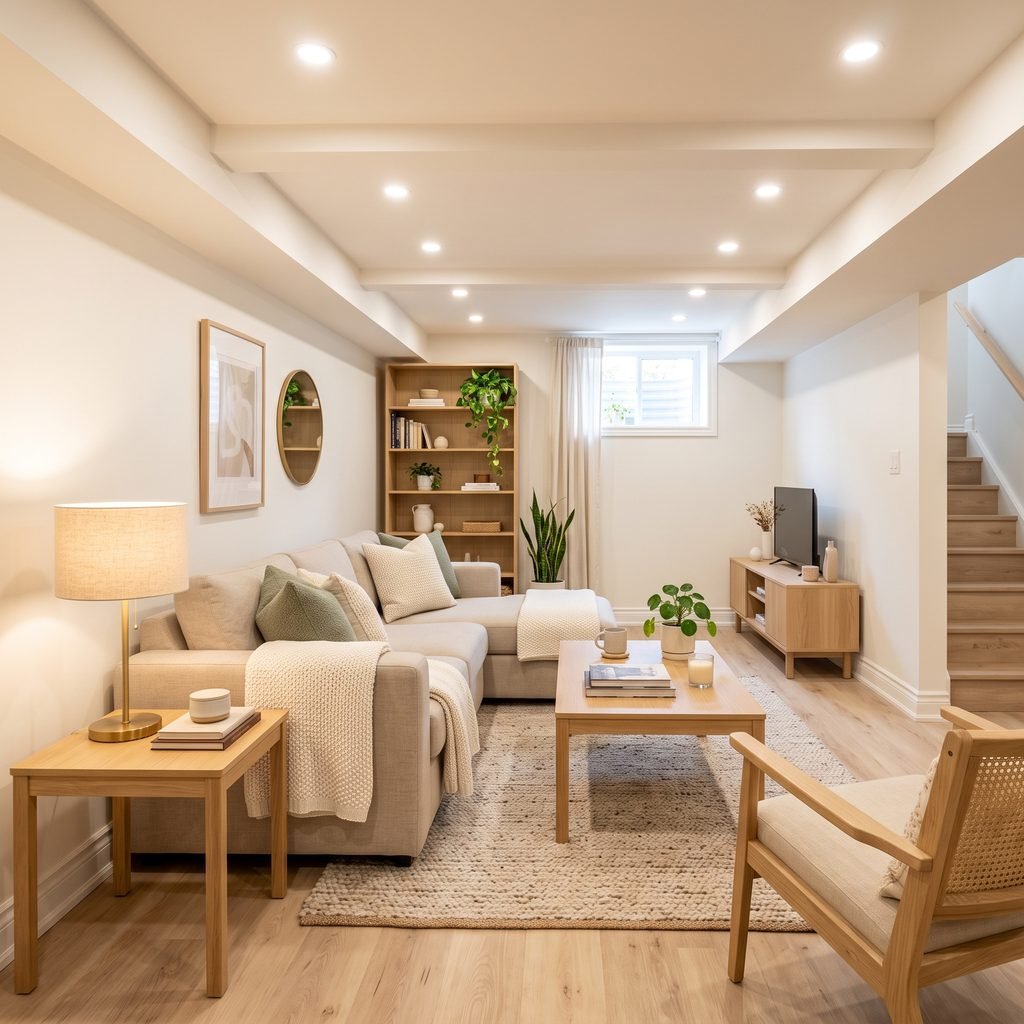
For this basement reno reveal, the focus is on creating a finished space that feels bright, warm, and comfortable rather than cold or overly “basement-like.”
Here are 17 ideas to inspire a basement makeover that feels polished, functional, and easy to live with.
1. Start With a Clear Purpose for the Space
Before choosing paint colors or furniture, decide how the basement needs to function.
A basement might include:
- Family room
- TV area
- Game space
- Playroom
- Home office
- Guest room
- Workout area
- Storage
Trying to make every corner serve every purpose can create a cluttered layout.
Instead, choose the main function first.
Then add secondary zones around it.
For example, a large family room can remain the main focus while a small desk area sits along one wall and closed storage fills another.
2. Use a Light Wall Color
Basements often receive less natural light than upper floors, so wall color has a major effect.
Light neutrals can help the room feel more open.
Consider:
- Warm white
- Soft greige
- Pale beige
- Light taupe
- Soft gray
Avoid choosing a color based only on a tiny paint chip.
Basement lighting can make colors look different than they do upstairs.
Always test paint in the actual room and check it at different times of day.
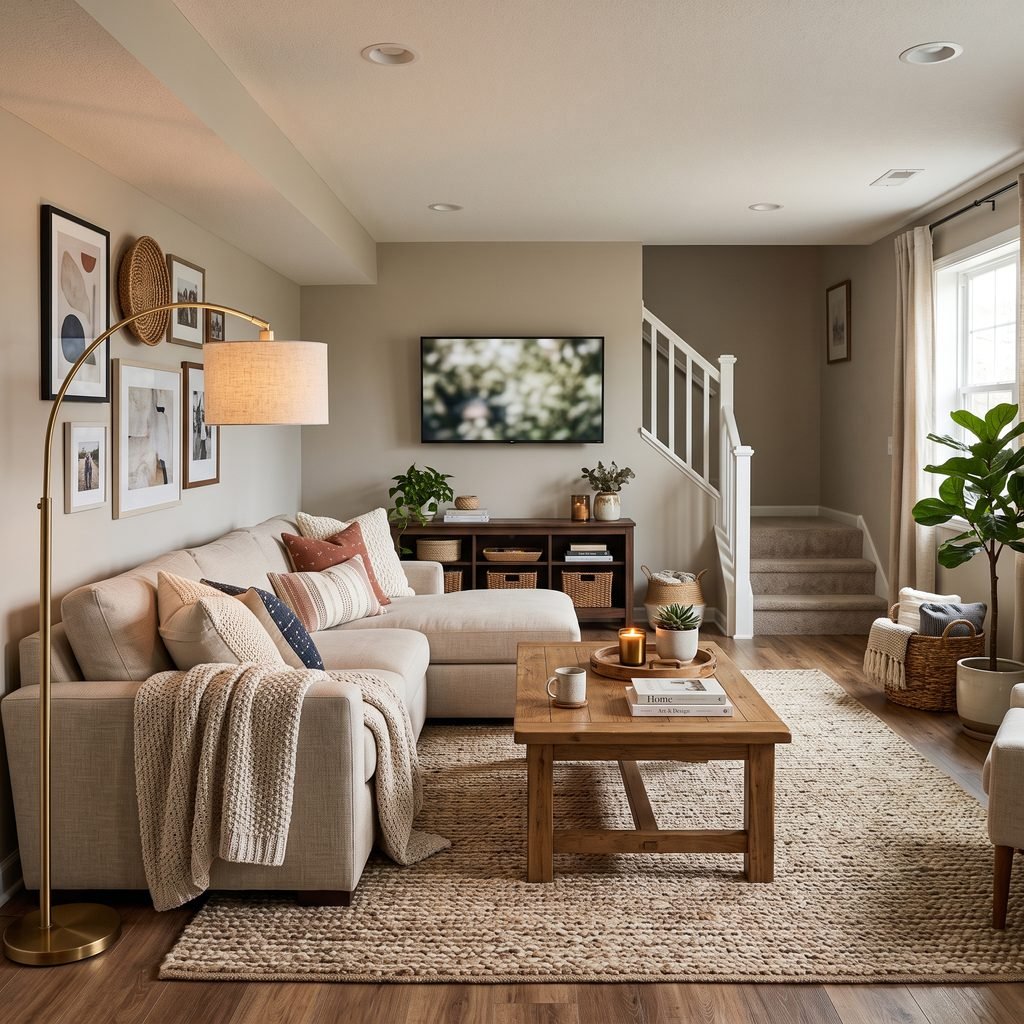
3. Add Layers of Lighting
Lighting can make or break a basement renovation.
One ceiling fixture in the middle of the room usually is not enough.
Instead, combine:
- Recessed lighting
- Floor lamps
- Table lamps
- Sconces
- Accent lighting
Layered lighting makes the space feel more like a finished living area.
It also gives you flexibility.
Bright overhead lights may be useful during cleaning or game nights, while softer lamps create a cozier feel for movies.
Hardwired electrical work should be completed safely and according to applicable requirements. Use a qualified electrician when appropriate.
4. Choose Durable Flooring
Basement flooring needs to handle real life.
Possible options include:
- Luxury vinyl plank
- Tile
- Engineered flooring approved for below-grade use
- Carpet tiles
- Area rugs over a suitable finished floor
The right choice depends on moisture conditions, subfloor, local climate, and the flooring manufacturer’s installation requirements.
Do not install new flooring over an unresolved moisture problem.
If the basement has signs of water intrusion, dampness, or recurring condensation, address the source first.
5. Warm Up the Room With Wood Tones
Basements can feel cold when they contain mostly gray, white, and hard surfaces.
Natural wood tones help balance that.
Add warmth through:
- Coffee table
- Console
- Shelves
- Cabinets
- Picture frames
- Bench
You do not need a lot.
Even a medium-toned wood coffee table can make a pale basement feel much more comfortable.
6. Create a Comfortable TV Zone
If the basement is used for movie nights or family lounging, make the seating area feel intentional.
Arrange furniture around the TV rather than placing random pieces around the room.
Consider:
- Sectional sofa
- Sofa plus chairs
- Ottoman
- Large coffee table
- Side tables
Leave enough space to walk comfortably around the furniture.
Avoid pushing every piece against a wall simply because the room is large.
Pulling seating together can create a much cozier conversation area.
7. Add Closed Storage
Finished basements still need storage.
Closed cabinets are helpful for hiding:
- Games
- Electronics
- Toys
- Craft supplies
- Extra blankets
- Seasonal items
Built-ins can look beautiful, but freestanding cabinets can work just as well.
If you use tall storage furniture, secure it appropriately.
Do not block access to electrical panels, plumbing shutoffs, mechanical equipment, sump systems, or other utilities that may need service.
8. Keep Mechanical Areas Accessible
A basement renovation should never make the house harder to maintain.
Before adding walls, cabinets, or furniture, identify:
- Electrical panel
- Water shutoffs
- HVAC equipment
- Sump pump
- Cleanouts
- Utility meters
- Access panels
Do not permanently cover service points.
If you want to visually conceal mechanical areas, use a solution that preserves safe access and required clearances.
Local requirements and equipment manufacturers may have specific rules.
9. Create Separate Zones With Furniture
You do not need walls to divide a basement into different areas.
Furniture can do the work.
For example:
- Sofa defines family room
- Rug anchors conversation area
- Console separates TV zone from game area
- Bookcase creates a visual boundary
- Table identifies a craft or game zone
This helps an open basement feel organized without making it smaller.
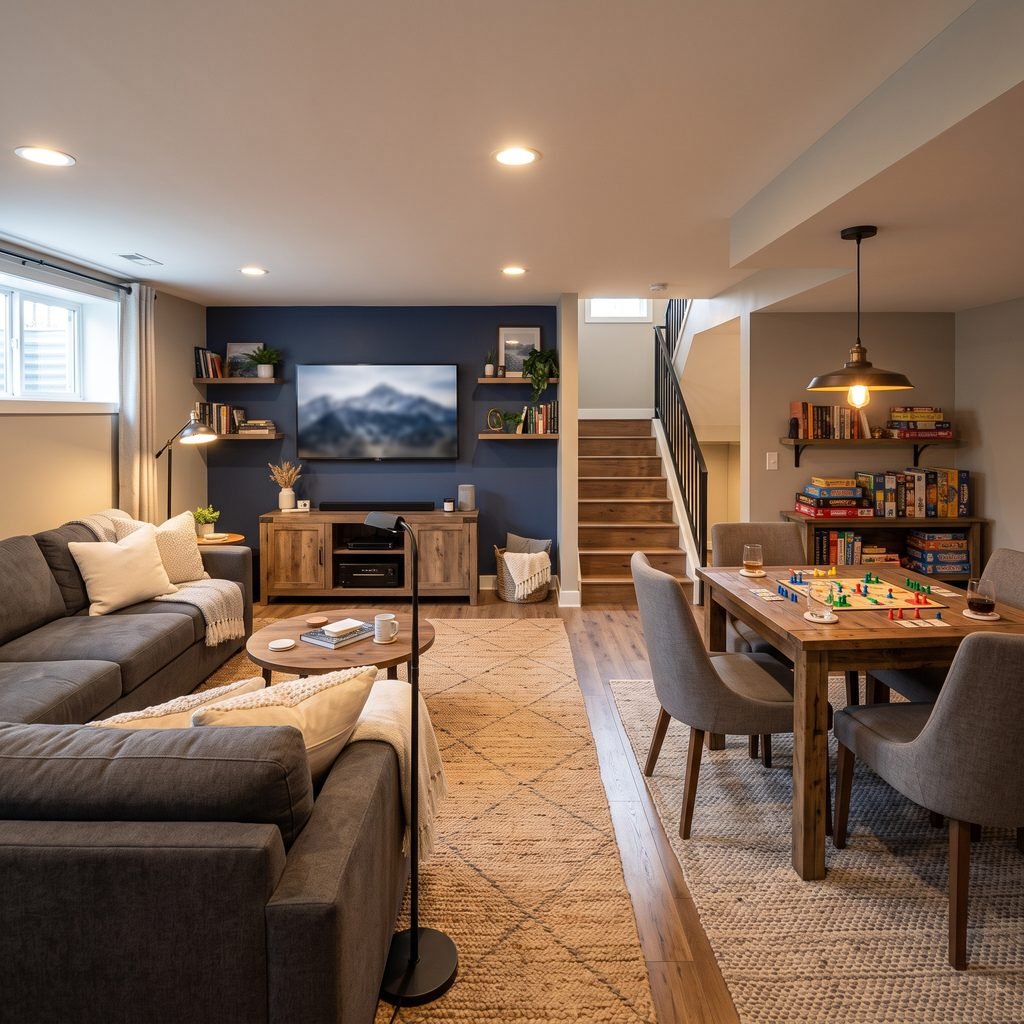
10. Add an Area Rug for Softness
Basements often have hard floors, which can make them feel echoey or unfinished.
A large area rug adds:
- Warmth
- Texture
- Comfort
- Visual definition
Choose a rug large enough to connect the main furniture pieces.
A tiny rug floating in front of the sofa can make the room feel less cohesive.
If moisture is a concern, choose materials suitable for the basement conditions and make sure the floor underneath remains dry.
11. Include a Game or Activity Area
If space allows, a basement is a great place for activities that may not fit upstairs.
Depending on your household, that could include:
- Board game table
- Foosball
- Ping-pong
- Puzzle table
- Craft area
- Homework station
Keep enough clearance around activity furniture for safe use.
Avoid overcrowding the room with too many large game pieces.
One or two well-used activities are better than filling the basement with equipment that rarely gets used.
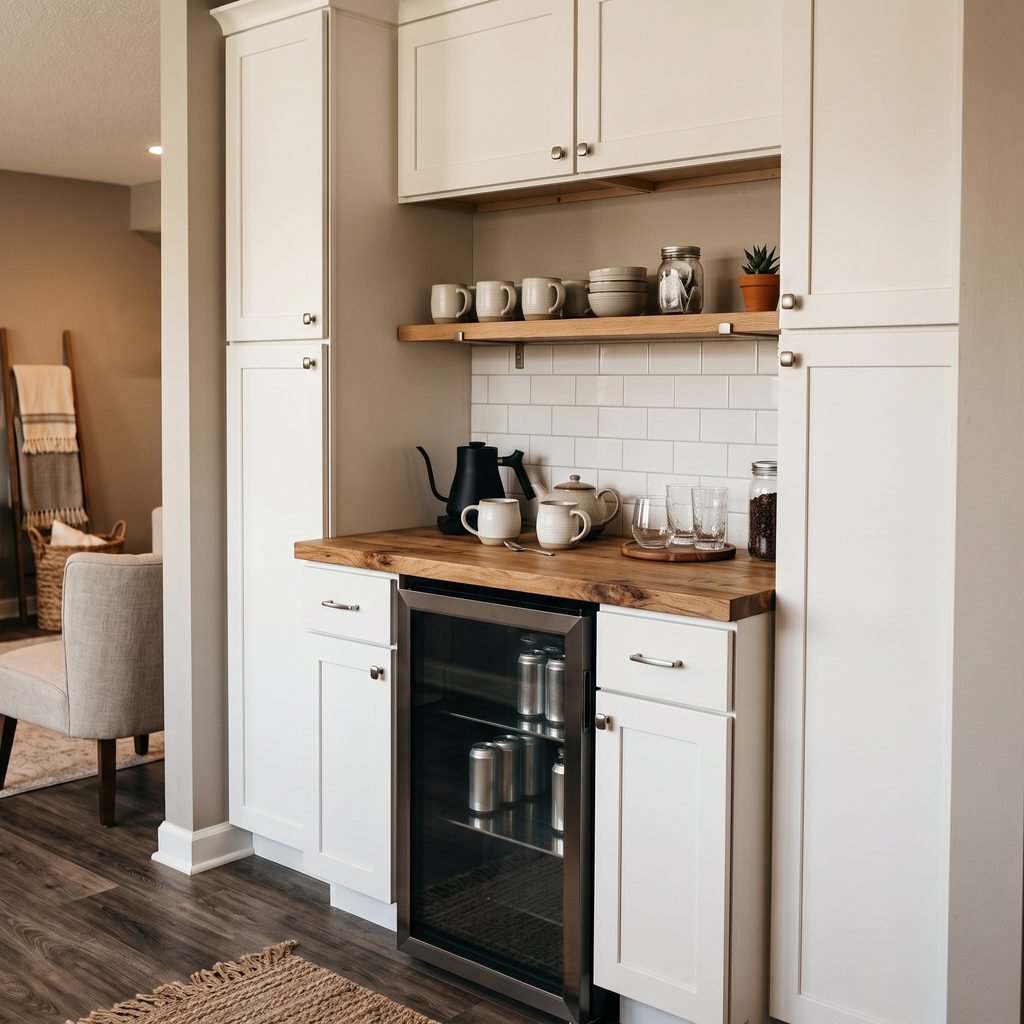
12. Add a Small Beverage Station
A simple beverage station can make the basement more convenient.
It might include:
- Small cabinet
- Countertop
- Mini refrigerator
- Glassware storage
- Coffee supplies
If you add plumbing, electrical, or permanently installed appliances, plan those details carefully and follow applicable requirements.
Keep the design simple if the basement does not need a full wet bar.
A compact drink station can provide most of the convenience with less construction.
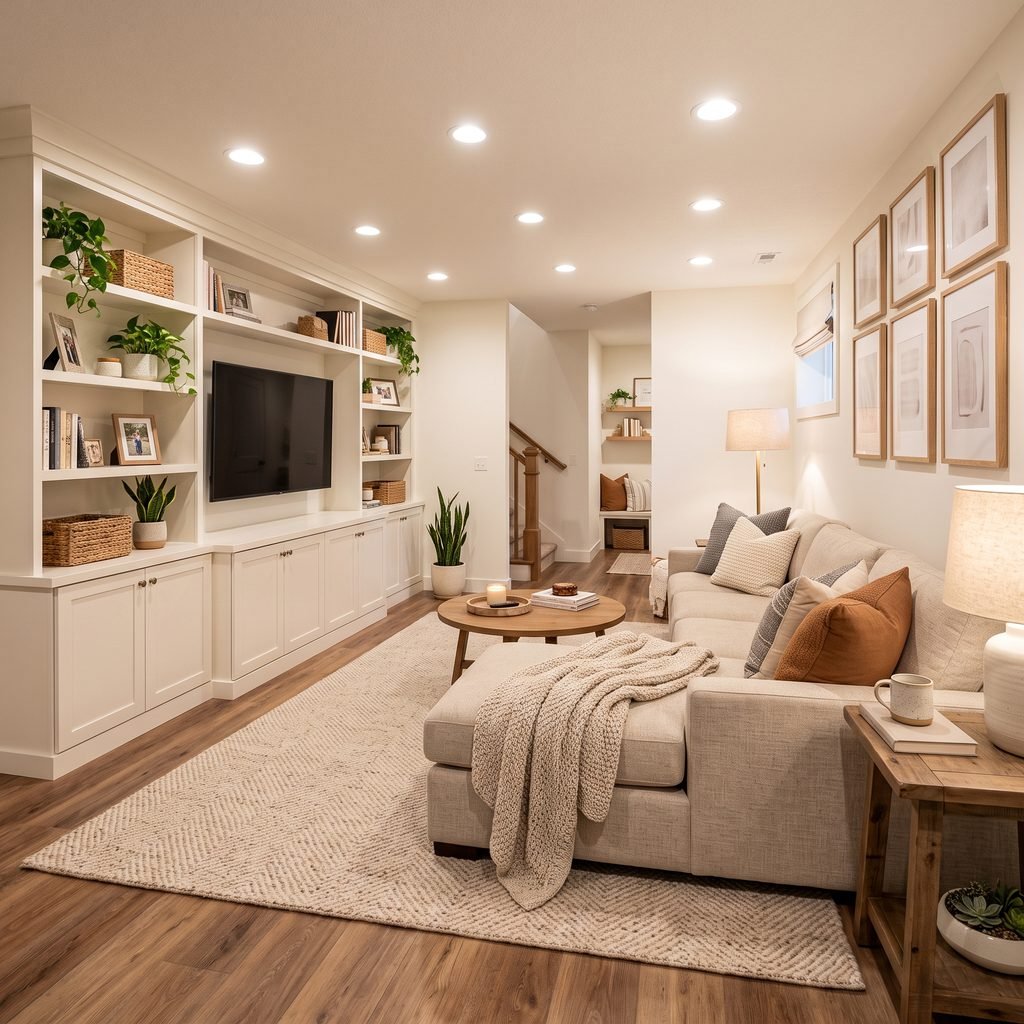
13. Use Built-Ins Strategically
Built-ins can help a basement feel integrated with the rest of the house.
Good locations include:
- TV wall
- Reading nook
- Office area
- Under-stair space
Keep the design simple.
Too many shelves can become clutter magnets.
A combination of closed lower cabinets and a few open shelves is often easier to maintain.
If built-ins are attached to walls, use appropriate fasteners and account for any utilities behind the surface.
14. Make the Stairway Feel Finished Too
The basement experience begins before you reach the bottom step.
An unfinished or dim stairwell can make a beautifully renovated basement still feel disconnected.
Consider:
- Fresh paint
- Better lighting
- Updated railing
- Wall art
- Stair runner where appropriate
Keep stairs well lit and clear.
Handrails and guardrails should be secure and meet applicable safety requirements.
Do not sacrifice stair safety for decorative changes.
15. Add a Guest-Friendly Corner
If the basement sometimes hosts overnight guests, create a flexible sleeping zone.
Possible options include:
- Sleeper sofa
- Daybed
- Guest bedroom
- Murphy-style bed
If a basement space is intended to function as a bedroom, understand local requirements around emergency escape, egress, ventilation, and other life-safety considerations before treating it as legal sleeping space.
Do not assume a finished room automatically qualifies as a bedroom.
16. Style the Walls With Larger Decor
Large basement walls can tempt you to hang many small pieces.
Instead, try a few larger elements.
Use:
- Oversized art
- Large mirror
- Gallery grouping
- Wall-mounted shelves
- Textile wall hanging
Larger pieces can make the room feel more intentional.
Mirrors can also reflect light and help a darker basement feel more open.
Mount heavy wall decor securely using hardware appropriate for the wall type and item weight.
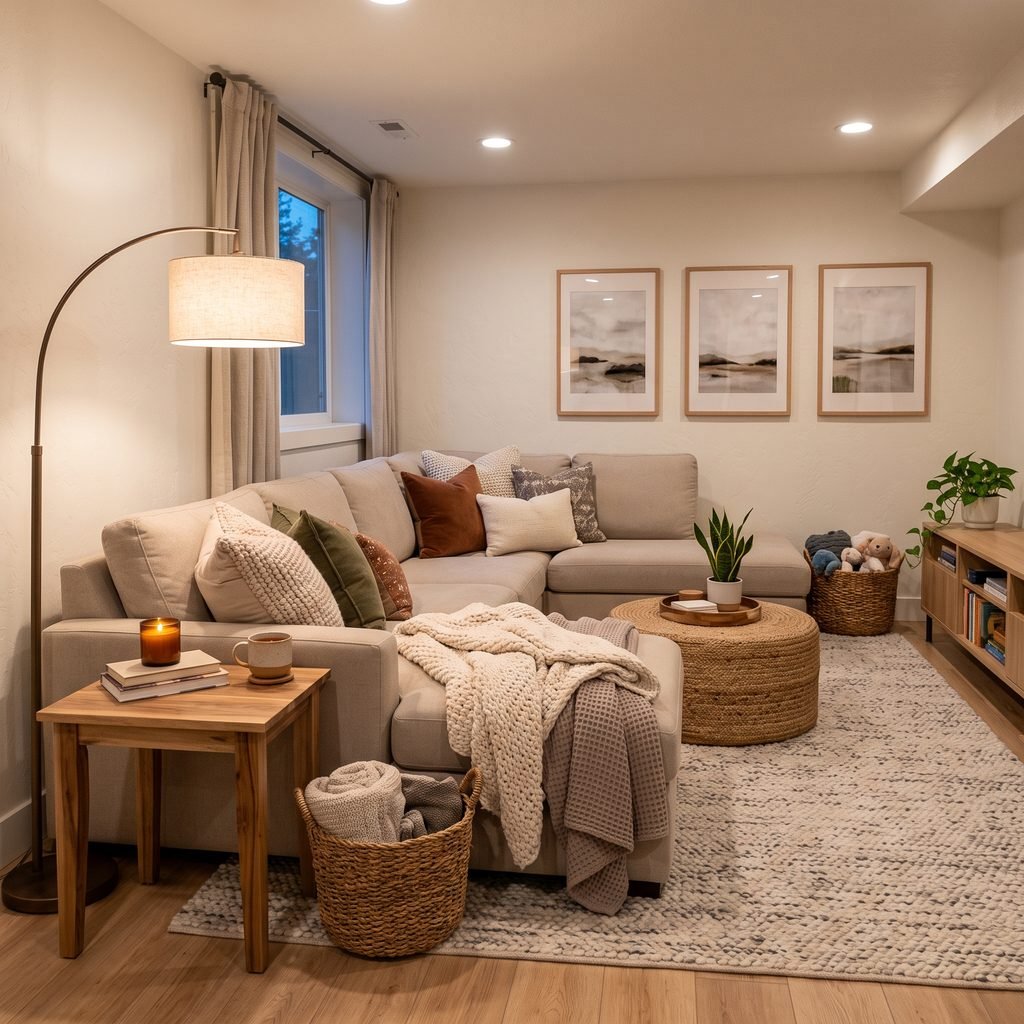
17. Finish With Cozy Layers
Once the renovation work is done, textiles and accessories make the room feel livable.
Add:
- Throw pillows
- Blankets
- Curtains
- Baskets
- Books
- Lamps
- Greenery
Do not overdecorate.
Basements often already contain several functional zones, so visual simplicity helps the space feel calm.
A few warm, repeated materials can make the finished room feel connected and cohesive.
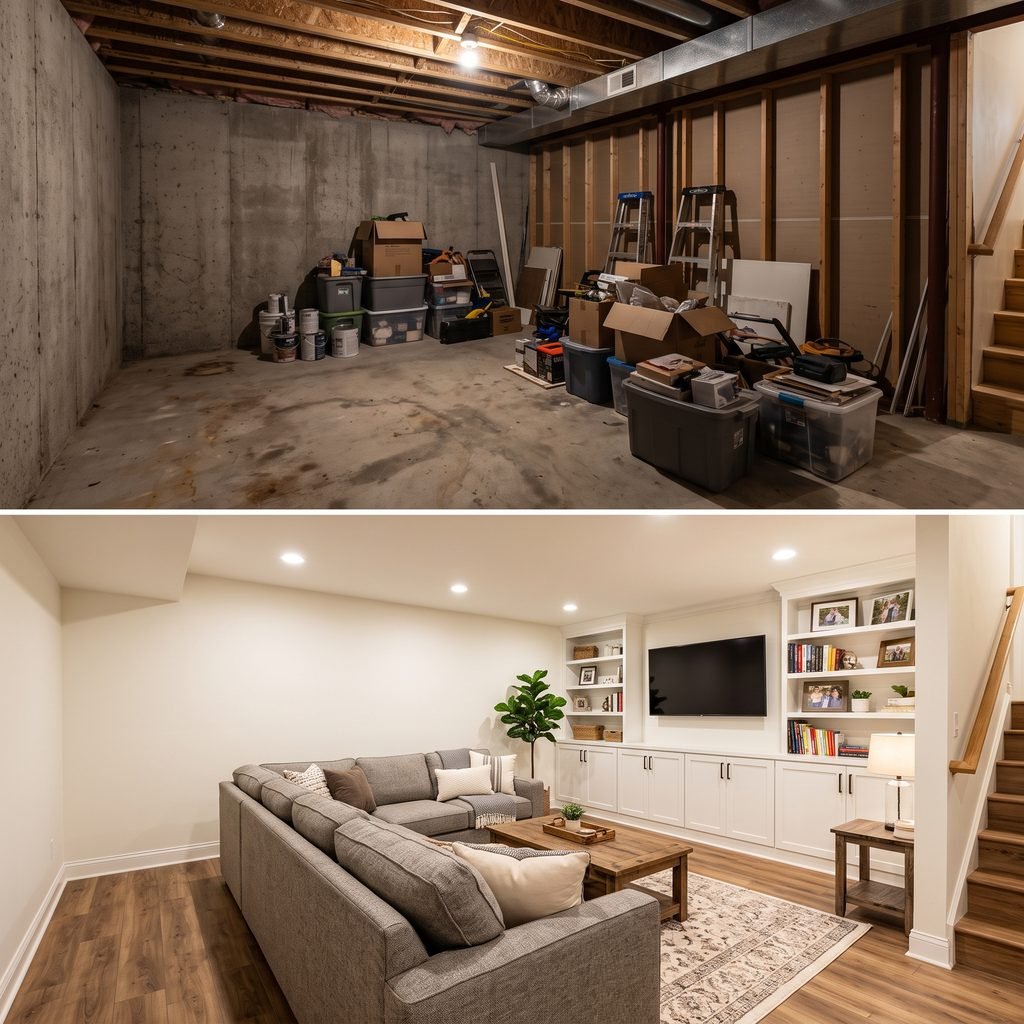
Basement Before and After Ideas
The most dramatic basement transformations usually come from a combination of changes rather than one expensive feature.
A typical before might include:
- Bare concrete
- Exposed utilities
- Dim lighting
- Random storage
- Unfinished walls
After renovation, the same space can feel completely different with:
- Finished walls
- Better lighting
- Durable flooring
- Comfortable seating
- Closed storage
- Defined activity zones
Try to preserve useful access while making the room feel intentional.
The goal is not to hide the fact that the space is a basement.
It is to make it function like a comfortable part of the home.
Small Basement Reno Ideas
A small basement benefits from a simpler layout.
Choose one main purpose.
For example:
Family Room
Use one sofa, compact coffee table, TV console, and storage cabinet.
Office
Add a desk, good task lighting, and closed file storage.
Playroom
Use low toy storage and leave the center open.
Avoid oversized furniture.
Multifunctional pieces can help, but do not pack the room so tightly that circulation becomes difficult.
Basement Family Room Ideas
A family room should feel comfortable enough for everyday use.
Focus on:
- Comfortable seating
- Soft lighting
- Durable rug
- Coffee table
- Storage
- TV or media area
Add enough side tables so people have somewhere to set drinks.
Use washable or easy-care materials if the basement gets heavy family use.
A large sectional can work beautifully in a spacious basement, while a sofa and two chairs may give a smaller room more flexibility.
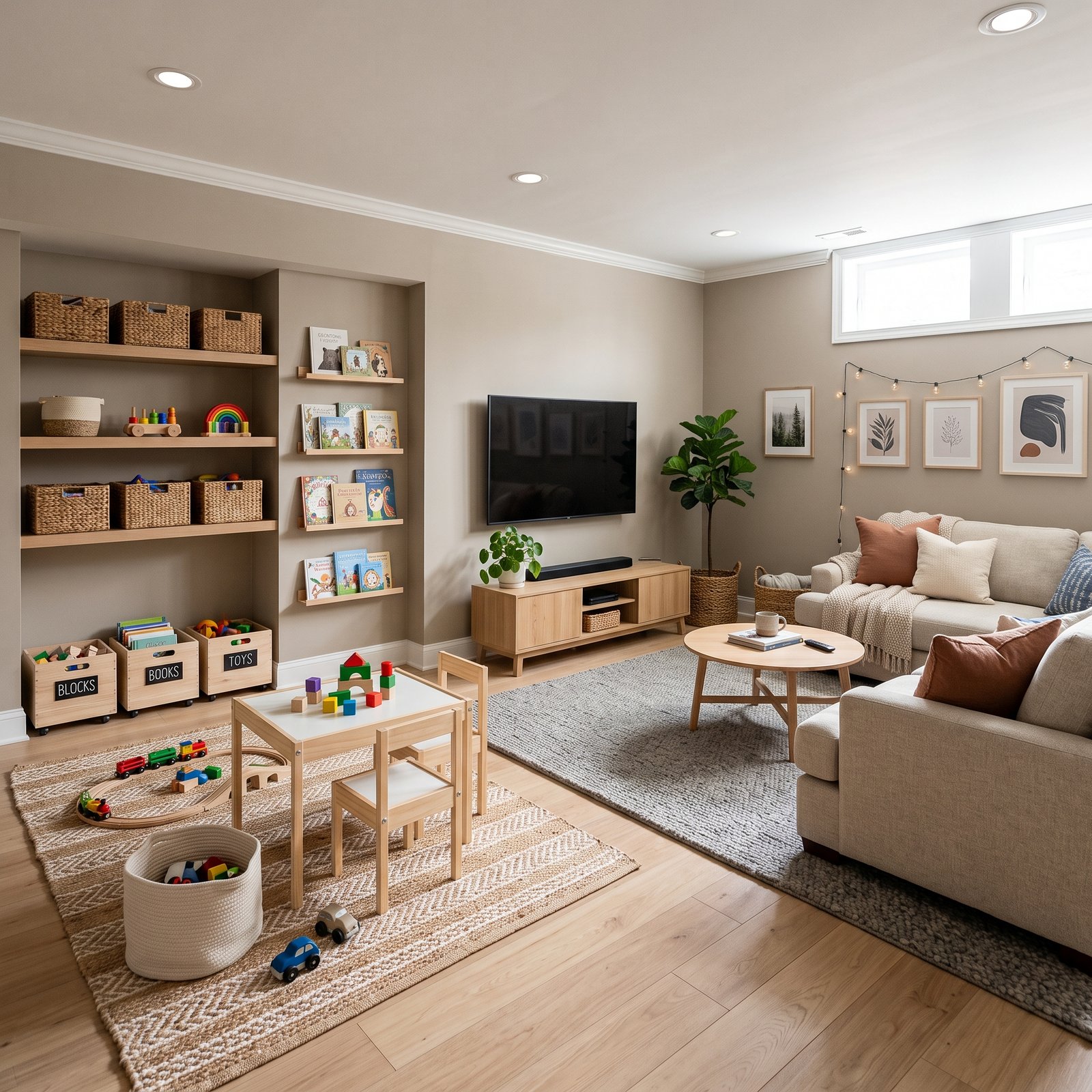
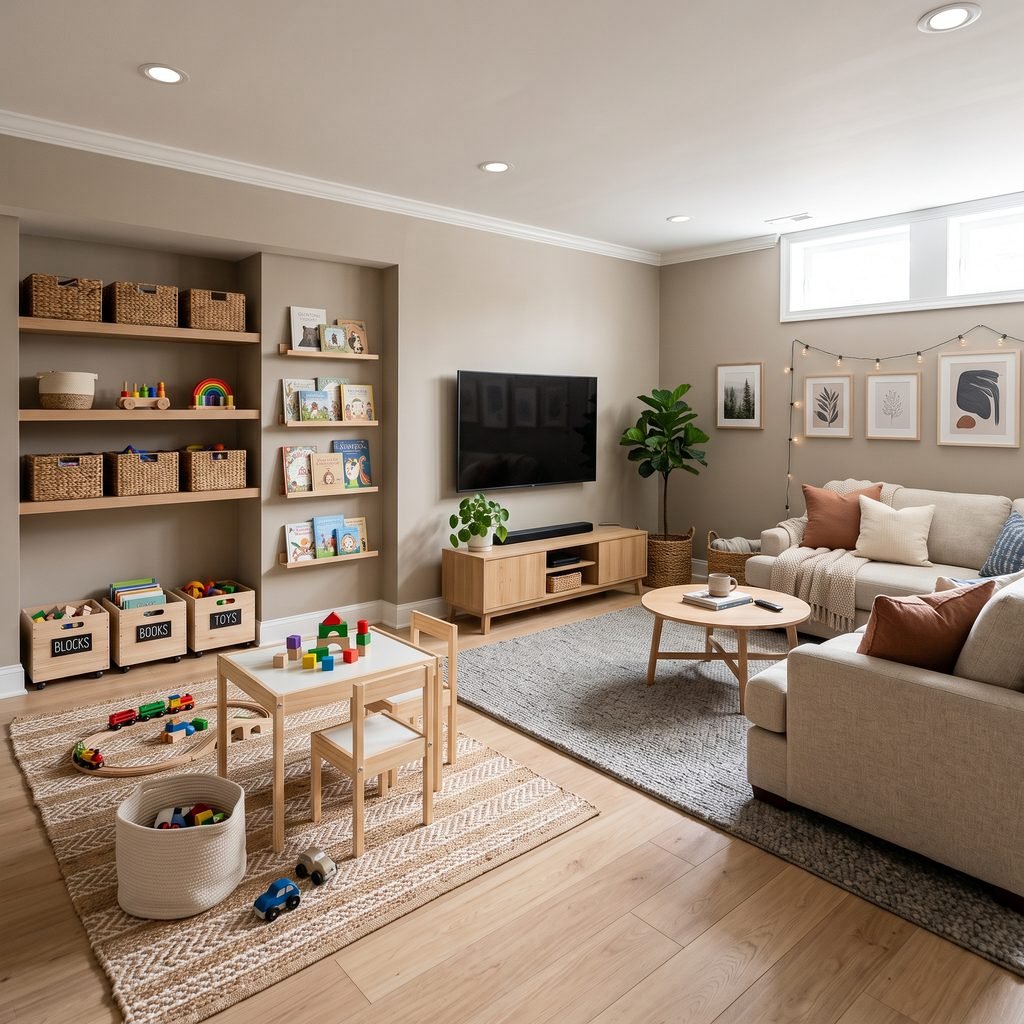
Basement Playroom and Family Room Combo
Combining a family room and play area can work well if the zones are clearly defined.
Keep toys toward one side of the room.
Use low shelves or cabinets to contain them.
Then create a separate sofa and TV zone.
A large rug can help define each area.
Closed toy storage can make it easier to transition the room from playtime to movie night.
Basement Office Ideas
A basement can provide a quiet place for working from home.
Choose a spot with the best available light.
Add:
- Comfortable desk
- Supportive chair
- Task lamp
- Storage
- Simple background
If video calls are common, think about what appears behind the desk.
A cabinet, bookcase, or simple wall art can create a cleaner background.
Do not block utility access or ventilation with office furniture.
Basement Ceiling Ideas
Ceiling choices can have a big visual effect.
Options may include:
- Finished drywall ceiling
- Suspended ceiling
- Painted exposed ceiling
Each has tradeoffs.
A finished ceiling can create a cleaner look, while an accessible ceiling system can make future mechanical work easier.
Before covering framing, plumbing, wiring, or mechanical systems, make sure necessary inspections and access considerations have been addressed.
Do not permanently conceal components that need future servicing.
How to Make a Basement Feel Brighter
If the basement has limited windows, focus on several strategies.
Use Multiple Light Sources
Do not depend on one fixture.
Choose Reflective Finishes Carefully
Mirrors and lighter surfaces can help bounce light.
Keep Window Areas Clear
Do not block basement windows with large furniture.
Use Lighter Textiles
Cream, beige, pale gray, and muted blue can help the room feel more open.
Add Warmth
A completely white room can still feel cold.
Wood, woven texture, and warm lighting keep the basement inviting.
How to Make a Basement Look Expensive
You do not need luxury finishes everywhere.
Focus on details that create consistency.
Use Full-Scale Rugs
A properly sized rug makes furniture arrangements feel more intentional.
Repeat Materials
Use the same wood tone or metal finish in several places.
Upgrade Lighting
Good lighting makes every finish look better.
Hide Everyday Clutter
Closed storage creates a cleaner appearance.
Use Larger Art
Properly scaled wall decor helps large basement walls feel finished.
Keep the Palette Limited
A restrained color scheme makes multiple activity zones feel connected.
Budget Basement Makeover Ideas
If a complete renovation is not necessary, smaller updates can still make a big difference.
Try:
- Fresh paint
- New lighting
- Area rug
- Curtains
- Secondhand furniture
- Storage cabinets
- Wall art
- Improved organization
Focus first on safety and moisture.
Decorative upgrades should come after leaks, dampness, electrical concerns, or other underlying issues have been addressed.
Common Basement Renovation Mistakes
Ignoring Moisture
Do not cover damp walls or floors and assume the problem is solved.
Using Too Little Lighting
Basements need layered light.
Blocking Utilities
Maintain safe access to mechanical systems, electrical panels, shutoffs, and cleanouts.
Overfilling the Room
Leave circulation space between furniture and zones.
Choosing Finishes Without Considering Below-Grade Conditions
Use materials suitable for the location and follow manufacturer instructions.
Forgetting Egress
If creating sleeping areas or making significant layout changes, understand local requirements.
Making Everything Gray
Too much cool gray can make a basement feel colder.
Add warm white, wood, textiles, and softer neutral tones.
Basement Renovation Safety Tips
A basement renovation can involve more than decorating, so know when the project moves beyond simple DIY.
Consider:
- Moisture and water intrusion
- Electrical systems
- Plumbing
- HVAC
- Structural framing
- Fire separation
- Egress
- Stair and railing safety
- Radon where relevant
- Local permitting and inspection requirements
Do not cut, remove, drill through, or alter structural framing without understanding its purpose.
Do not cover junction boxes, shutoff valves, panels, or mechanical access points.
Gas, major electrical, structural, and significant plumbing work may require qualified professionals.
If the basement has persistent mold, major water damage, structural movement, or unknown hazards in older materials, get appropriate professional guidance before continuing.
A Simple Basement Renovation Plan
For a full basement makeover, a logical order might look like this:
- Determine how the basement will function.
- Inspect for moisture and structural problems.
- Plan utilities, lighting, plumbing, and electrical needs.
- Address necessary permits or inspections.
- Complete framing and mechanical work.
- Finish walls and ceiling.
- Install appropriate flooring.
- Paint.
- Add storage.
- Furnish the main zones.
- Install lighting and final fixtures.
- Add decor and textiles.
The exact sequence will vary depending on the project.
For major work, coordinate trades and follow applicable local requirements.
FAQ About a Basement Reno Reveal
How do you make a finished basement feel less like a basement?
Use layered lighting, warm wall colors, comfortable furniture, natural wood, large rugs, closed storage, and a layout that feels like a normal living space.
What flooring is good for a basement renovation?
The right flooring depends on moisture conditions, subfloor, and product approval for below-grade installation. Luxury vinyl, tile, carpet tiles, and certain engineered products may be options depending on the situation.
How do I brighten a dark basement?
Use several light sources, lighter walls, reflective surfaces, warm lamps, uncluttered window areas, and a lighter overall palette.
Can a basement be used as a bedroom?
Possibly, but legal bedroom requirements vary. Emergency egress and other safety requirements may apply, so verify local rules before treating a basement room as sleeping space.
How do I hide basement utilities?
Use thoughtful partitions, cabinets, or removable access solutions while maintaining all required clearances and service access.
How can I renovate a basement on a budget?
Prioritize paint, lighting, flooring where needed, secondhand furniture, closed storage, and simple decor while addressing moisture and safety issues first.
What should I fix before decorating a basement?
Address leaks, moisture, mold, electrical issues, structural concerns, unsafe stairs or railings, and mechanical-access problems before focusing on cosmetic upgrades.
Final Thoughts
A basement reno reveal can show just how much useful living space may be hiding below the main floor.
The most successful transformations are not only attractive. They solve practical problems too.
A bright wall color helps open the room. Layered lighting makes it comfortable throughout the day. Durable flooring handles everyday life. Closed storage controls clutter. Defined zones allow one large basement to serve several purposes without feeling chaotic.
Most importantly, the renovation should respect the realities of a below-grade space.
Address moisture first, maintain utility access, plan electrical and mechanical work carefully, and verify safety requirements for stairs, sleeping rooms, and major construction.
Once those fundamentals are handled, the fun part begins.
With warm materials, comfortable furniture, good lighting, and a thoughtful layout, an unfinished or dated basement can become one of the most inviting and useful areas in the entire home.