

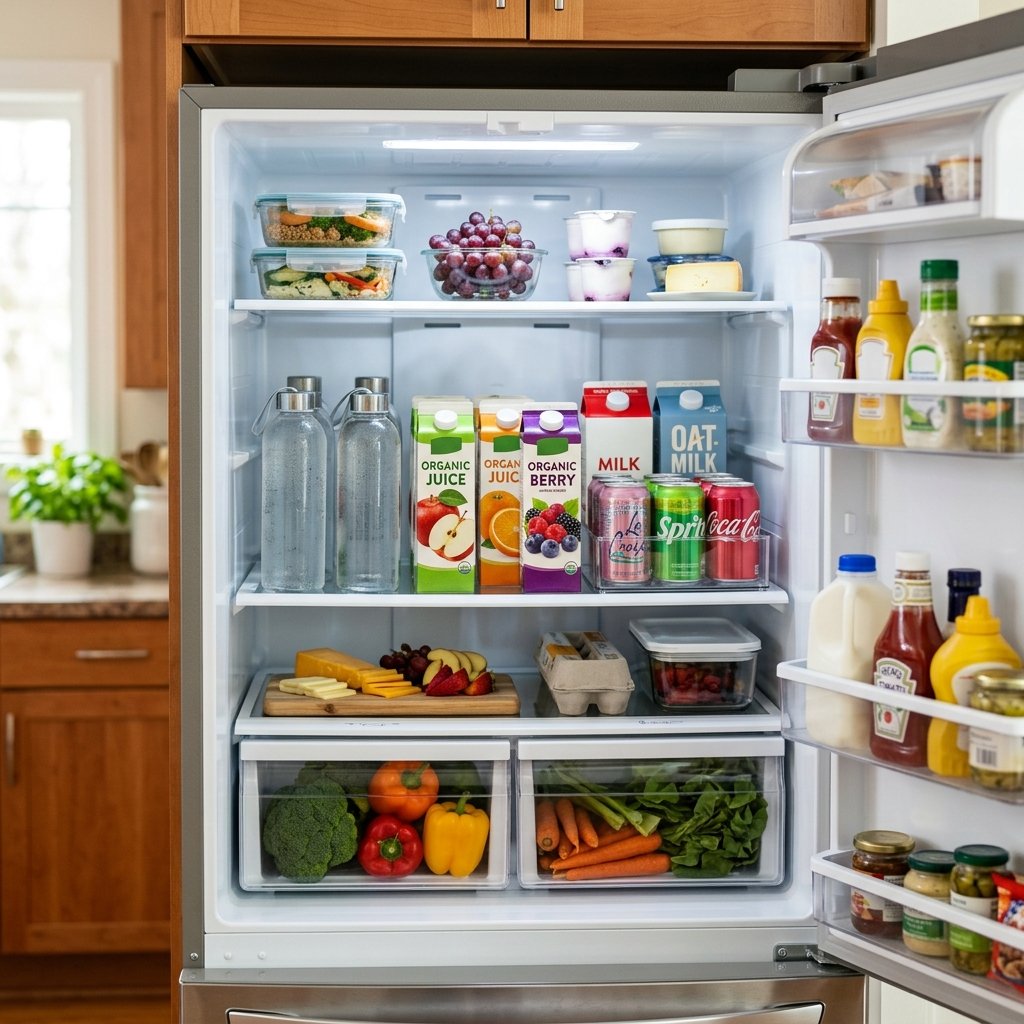
Finding the best solutions for an organized refrigerator can make meal prep faster, reduce food waste, and make everyday groceries much easier to find.
A refrigerator can become chaotic surprisingly quickly. Leftovers get pushed to the back, produce disappears into crowded drawers, condiments multiply, and items get stacked in places where they are hard to see. Even a large refrigerator can feel too small when there is no clear system.
The best refrigerator organization is not about transferring every ingredient into matching containers. It is about creating simple zones, keeping food visible, storing items safely, and choosing organizers only when they make access easier.
Whether you are organizing a small fridge, a busy family refrigerator, or a side-by-side model with awkward shelving, these practical ideas can help you create a system that looks cleaner and works better.
1. Start by Emptying and Checking the Refrigerator
Before reorganizing, remove everything.
As you work, check for:
- Spoiled food
- Expired products
- Forgotten leftovers
- Empty containers
- Duplicate condiments
- Wilted produce
Discard anything that is no longer safe or useful.
This is also a good time to notice what you regularly overbuy.
If you find three open jars of the same condiment or vegetables that repeatedly go unused, that tells you something about your shopping habits.
Do not leave perishable foods at room temperature longer than necessary while cleaning. Work efficiently and return cold foods promptly.
2. Clean Shelves and Drawers Before Restocking
Once the refrigerator is mostly empty, remove shelves and drawers when the manufacturer allows it.
Wash removable components according to the appliance care instructions.
Wipe interior surfaces and clean spills around:
- Shelves
- Drawer tracks
- Door bins
- Corners
Dry everything before putting food back.
Avoid harsh cleaners unless the refrigerator manufacturer specifically says they are safe for the interior surfaces.
A clean refrigerator is much easier to organize because you can clearly see the available space.
3. Create Simple Refrigerator Zones
One of the easiest ways to keep a fridge organized is to assign broad categories to different areas.
Your zones might include:
Leftovers
Keep prepared food together so it gets noticed.
Breakfast
Yogurt, cream cheese, breakfast ingredients, and similar items.
Snacks
Grab-and-go foods that household members use frequently.
Produce
Fruit and vegetables stored according to their needs.
Drinks
Bottles, cans, or cartons.
Condiments
Sauces, dressings, and jars.
The exact placement will depend on your refrigerator layout.
The important part is consistency.
When everyone knows where yogurt or leftovers belong, the system becomes easier to maintain.
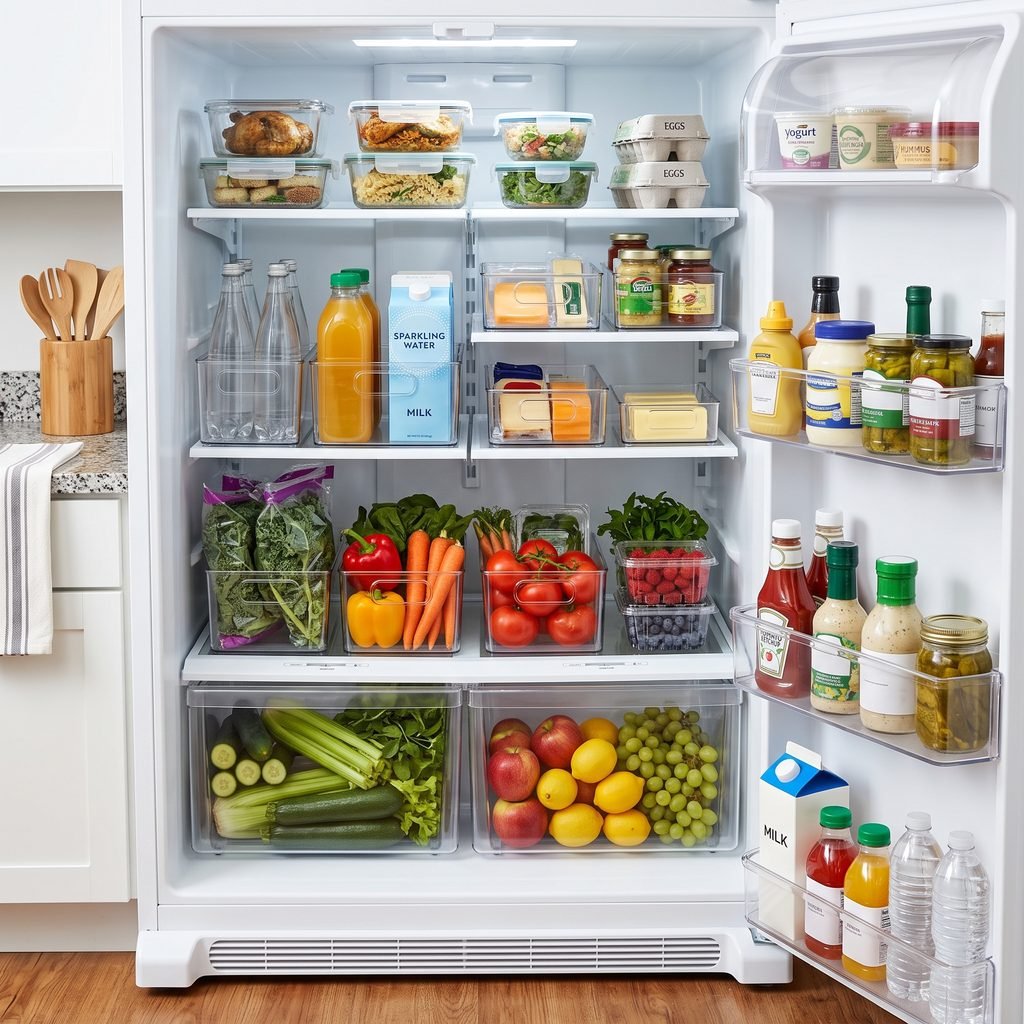
4. Keep Leftovers Where You Can See Them
Leftovers are more likely to be eaten when they are visible.
Give them one dedicated shelf or section.
Use clear containers when practical so you can see what is inside.
Label leftovers with the date when useful.
Avoid stacking multiple opaque containers behind one another.
If something needs to be used soon, place it toward the front instead of burying it behind newer food.
A simple “eat first” area can be especially helpful in busy households.
5. Create an “Eat First” Bin
An eat-first bin is one of the easiest refrigerator organization ideas to maintain.
Use it for foods that should be eaten soon, such as:
- Open packages
- Produce nearing peak ripeness
- Leftovers
- Small portions
- Items close to their use-by or quality date
Place the bin at eye level.
Check it before planning meals or snacks.
This can help reduce the number of forgotten foods hiding in the refrigerator.
Do not rely on the bin alone for food safety. Always follow storage guidance and discard food that may no longer be safe.
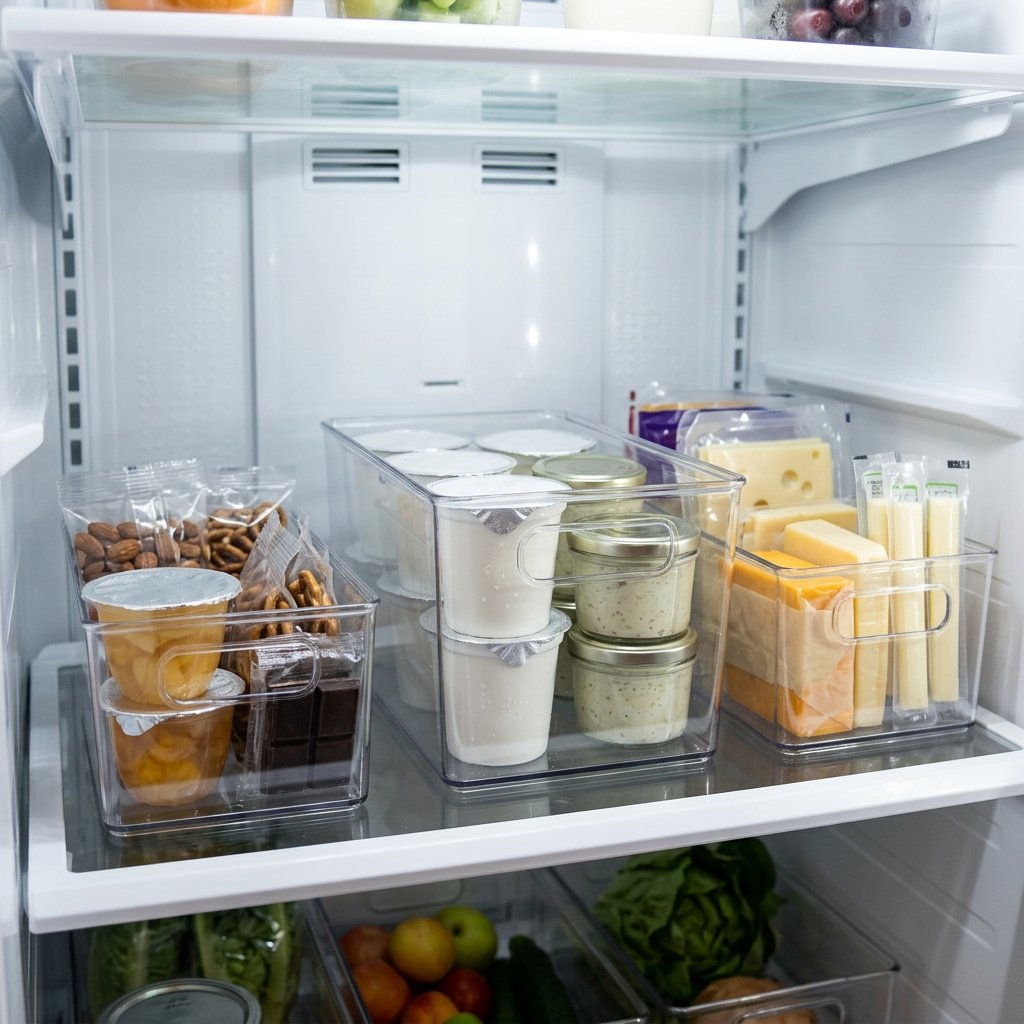
6. Use Clear Bins for Small Categories
Clear refrigerator bins can help contain smaller items without hiding them.
They work well for categories such as:
- Yogurt
- Cheese
- Snack packs
- Small jars
- Drink cans
Choose bins that fit your refrigerator dimensions and are intended for cold-food storage.
Do not buy a large set before measuring.
A bin should make food easier to reach, not create another obstacle.
Avoid filling every shelf with containers just for appearance.
7. Avoid Overcrowding the Refrigerator
A packed refrigerator is harder to organize and may interfere with normal air circulation.
Leave some open space around food.
Do not block vents or crowd items tightly against areas that the manufacturer says need airflow.
If groceries barely fit each week, consider whether the issue is overbuying rather than insufficient organization.
Shop your refrigerator before grocery shopping.
Use what you already have before adding more.
An organized fridge should have enough room for you to see most items without moving several things first.
8. Store Raw Meat Carefully
Food safety should guide refrigerator organization.
Keep raw meat, poultry, and seafood in secure packaging or leak-resistant containers.
Store them where accidental drips are least likely to contaminate other food, typically on a lower shelf or in a designated area when appropriate for your refrigerator.
Keep them away from ready-to-eat foods.
Follow current food safety guidance for refrigeration temperatures, storage times, thawing, and handling.
If meat packaging leaks, clean and sanitize affected surfaces appropriately.
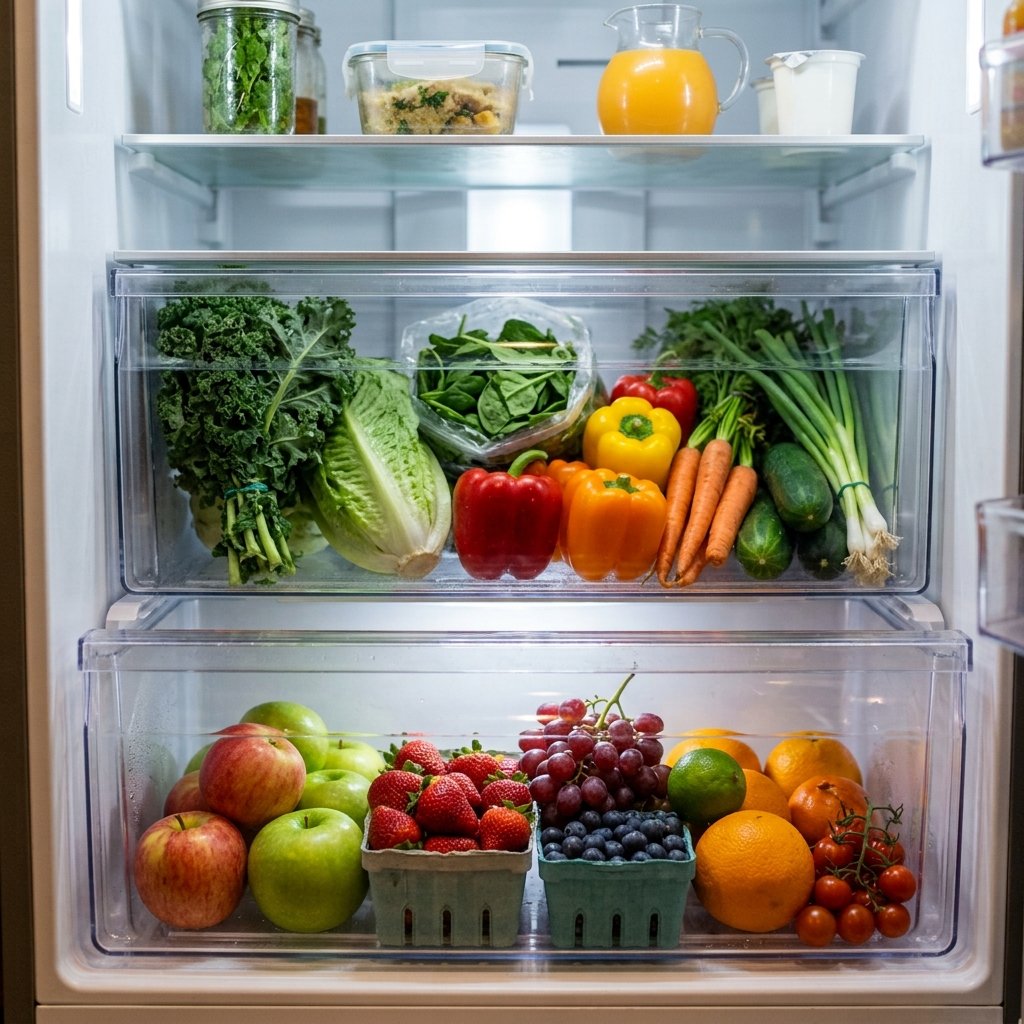
9. Use Crisper Drawers Intentionally
Produce drawers can help manage humidity, but they are often used as general storage.
Use them for produce according to the refrigerator’s design and manufacturer instructions.
Keep categories reasonably visible.
You might separate:
- Vegetables
- Fruit
Or arrange produce based on what your crisper controls are designed to support.
Avoid stuffing drawers so full that you forget what is inside.
If produce repeatedly goes bad in the bottom of a drawer, reduce how much you buy at once.
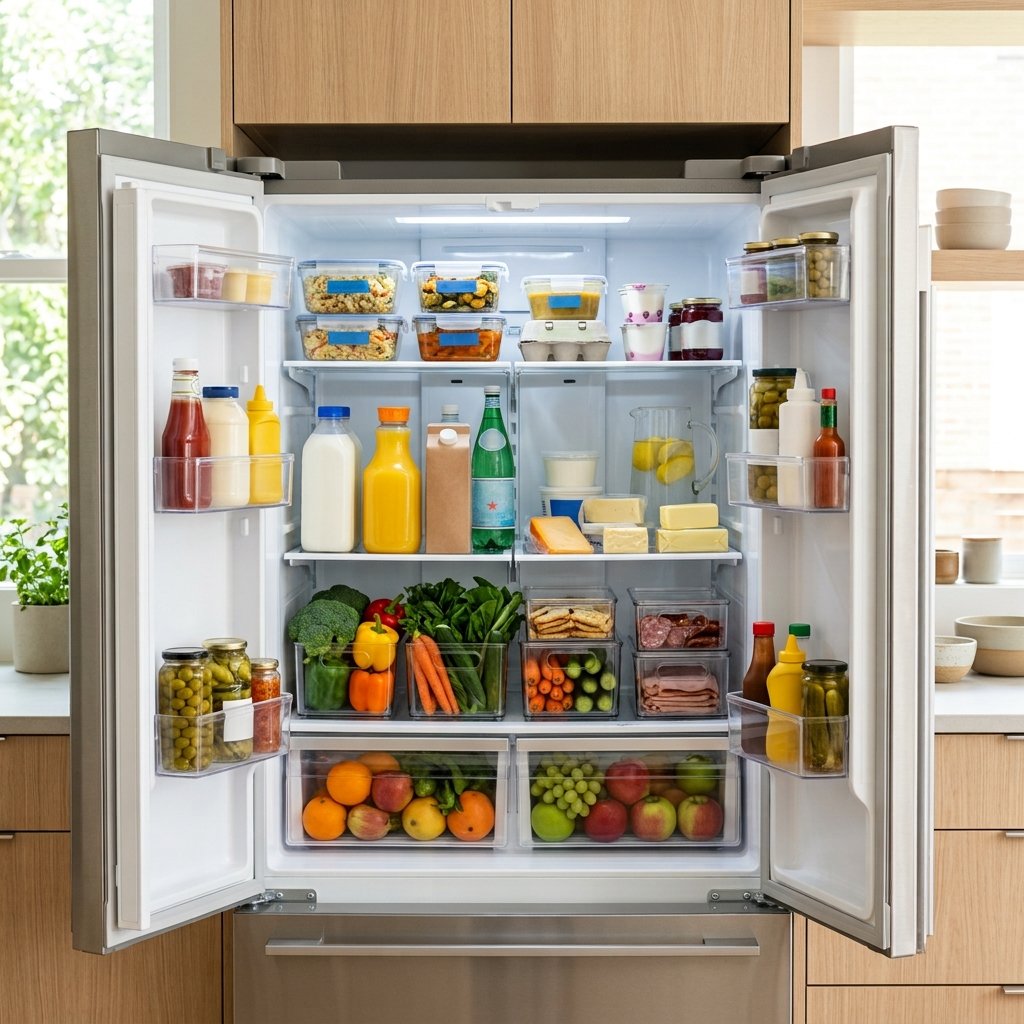
10. Prep Produce Only When It Helps
Prepping fruits and vegetables in advance can make healthy snacks easier to grab, but not every item stores best after being washed or cut.
Some produce may deteriorate faster once washed or chopped.
Follow appropriate storage guidance for the specific food.
When you do prep produce:
- Use clean containers
- Keep items appropriately refrigerated
- Label when useful
- Avoid trapping excess moisture
Do not copy an aesthetic refrigerator setup if it shortens the usable life of your food.
Function should come first.
11. Organize Condiments by Category
Refrigerator doors often become crowded with bottles and jars.
Group condiments so similar items stay together.
For example:
- Salad dressings
- Sauces
- Sandwich condiments
- Asian-style sauces
- Jams and spreads
Check bottles periodically.
Condiments can accumulate because people buy a replacement without realizing there is already an open one.
Keep taller bottles together when your door shelves allow it.
Do not store foods in the door unless that location is appropriate for them. Door temperatures can fluctuate more than interior shelves.
12. Give Drinks Their Own Area
If drinks take over several shelves, give them a dedicated zone.
Depending on your household, that might include:
- Water
- Sparkling water
- Juice
- Milk
- Canned drinks
Use a stable can dispenser or drink organizer if it genuinely saves space.
Avoid stacking unstable containers.
Keep heavier bottles where they are easy to lift safely.
If children access drinks independently, place appropriate beverages at a suitable height without giving them access to items they should not handle.
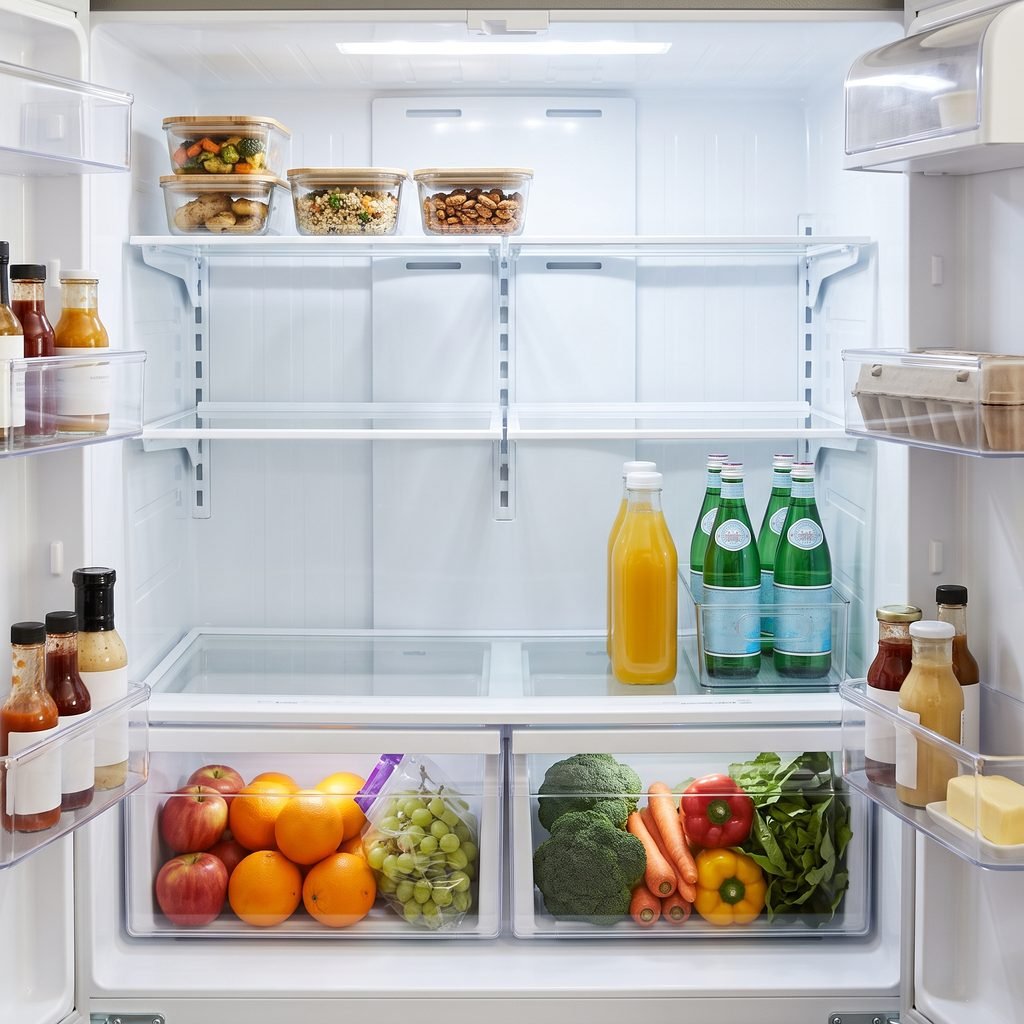
13. Use Lazy Susans for Jars and Bottles
A refrigerator turntable can work well for small jars and bottles that otherwise disappear at the back.
Use it for things such as:
- Sauces
- Spreads
- Small condiments
- Jars
Choose a stable design that fits securely on the shelf.
Do not overload it with tall glass bottles if they are likely to tip.
A turntable works best when it improves access to a deep shelf.
14. Label Only the Categories That Need It
Labels can help family members maintain the system.
Useful labels might include:
- Snacks
- Cheese
- Leftovers
- Eat First
You do not need to label every container.
If the contents are obvious, a label may not add anything.
Keep labels broad so the system remains flexible when your groceries change.
Overly specific categories can make refrigerator organization harder rather than easier.
15. Keep Everyday Foods at Eye Level
Use the easiest-to-see shelves for items your household reaches for frequently.
That might include:
- Yogurt
- Lunch ingredients
- Leftovers
- Snacks
- Prepared foods
Less frequently used items can go higher or farther back.
The goal is to reduce searching.
If you constantly move a large container out of the way to reach something used every day, rearrange the shelf.
Organization should reflect your habits.
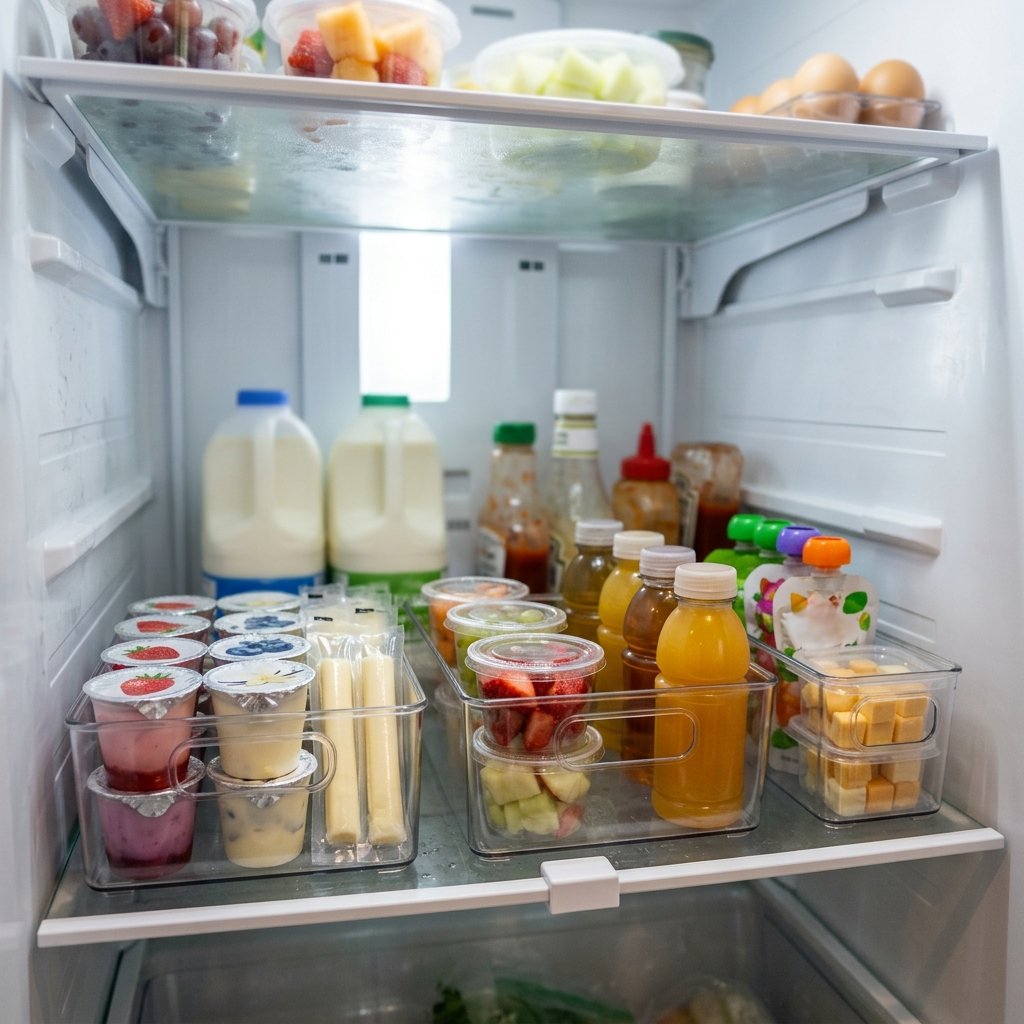
16. Create a Kid-Friendly Snack Zone
For families with children, a simple snack zone can reduce repeated searching.
Use one shelf or bin for age-appropriate options.
Depending on your household, that might include:
- Yogurt
- Washed fruit when suitable
- Cheese
- Prepared snacks
- Small drinks
Store only foods children can safely access independently.
Keep choking hazards, medications, alcohol, supplements, and foods requiring adult supervision in appropriate locations.
The snack area should make independence easier without compromising safety.
17. Reset the Refrigerator Before Grocery Day
A quick weekly reset can keep the entire system working.
Before shopping:
- Check leftovers.
- Look through produce.
- Combine duplicates when appropriate.
- Discard spoiled food.
- Wipe obvious spills.
- Make a list based on what is actually missing.
This can prevent overbuying and make grocery unloading easier.
It also gives you a regular chance to catch small messes before they become major cleaning projects.
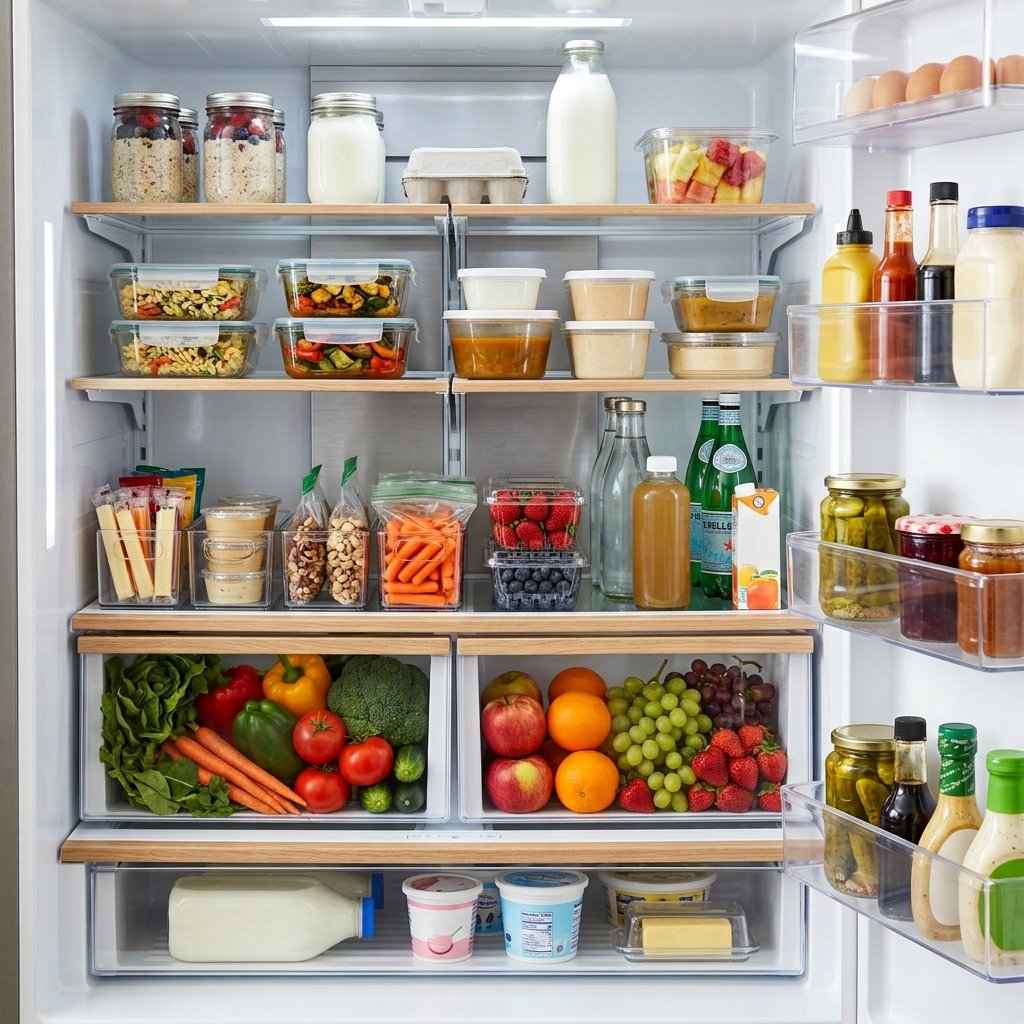
How to Organize a Small Refrigerator
Small refrigerators require stricter editing.
Use broad categories and avoid bulky organizers that consume too much shelf space.
Helpful strategies include:
- One small leftovers zone
- One snack bin
- Vertical bottle organization
- Carefully adjusted shelves
- Clear containers for only the messiest categories
Avoid buying oversized packages unless you know they will fit.
Use freezer storage strategically where appropriate.
Most importantly, do not treat every empty inch as space that needs to be filled.
How to Organize a Side-by-Side Refrigerator
Side-by-side refrigerators often have narrow shelves.
Use depth wisely.
Group similar foods front to back.
A narrow bin can help contain:
- Snacks
- Dairy
- Small condiments
Keep large bottles in designated areas rather than spreading them across several shelves.
Because each model is different, adjust shelving according to the appliance manual and avoid blocking vents.
How to Organize a French Door Refrigerator
French door refrigerators often provide wider shelves and deeper drawers.
Use the width to create clear zones.
For example:
Upper Shelf
Leftovers and prepared food.
Middle Shelf
Breakfast, snacks, dairy, and frequently used ingredients.
Lower Area
Larger containers and properly stored raw ingredients.
Use wide bins selectively rather than filling the entire refrigerator with them.
Keep frequently used foods visible.
Best Refrigerator Organizers to Use
You do not need every type of refrigerator organizer.
A few useful options include:
Clear Bins
Helpful for grouping small items.
Turntables
Useful for jars and sauces.
Can Organizers
Helpful if your household keeps many canned beverages.
Egg Storage
Use original cartons or appropriate food-safe storage depending on your preference and refrigerator setup.
Drawer Dividers
Helpful in large produce or deli drawers.
Leak-Resistant Containers
Useful for leftovers and raw-food storage.
Measure before buying anything.
Check whether products are intended for refrigerator use and follow their cleaning and care instructions.
What Not to Do When Organizing a Refrigerator
Some popular refrigerator organization ideas look attractive but create more work.
Do Not Decant Everything Automatically
Removing food from original packaging can separate it from:
- Preparation instructions
- Nutrition information
- Allergen information
- Dates
- Storage directions
Decant only when it is genuinely useful and you can retain the information you need.
Do Not Overfill Bins
A packed bin becomes a drawer you have to dig through.
Do Not Ignore Temperature Needs
Not every food belongs in the same part of the refrigerator.
Do Not Block Air Vents
Air circulation is important for proper refrigerator performance.
Do Not Prioritize Matching Containers Over Food Safety
A refrigerator should function safely first and look attractive second.
How to Make an Organized Refrigerator Look Nice
Once the practical system works, small visual details can make the fridge feel even more orderly.
Try:
- Similar clear bins
- Consistent leftover containers
- Simple category labels
- Neatly grouped bottles
- Clean shelves
You do not need a perfectly color-coordinated refrigerator.
Fresh produce, packaging, and everyday groceries will naturally add visual variety.
The easiest way to make a refrigerator look good is to keep it clean and avoid overcrowding.
Common Refrigerator Organization Mistakes
Buying Organizers Before Measuring
Bins that waste several inches of shelf space do not help.
Putting Everything Into Containers
Too many containers add extra steps.
Hiding Leftovers
Keep food that needs to be eaten visible.
Overfilling Produce Drawers
Crowded drawers make it easier to forget what is inside.
Ignoring Food Safety
Organize based on safe storage as well as convenience.
Filling Every Shelf
Leave room for airflow and new groceries.
Creating Too Many Categories
Simple zones are easier to maintain.
Refrigerator Organization and Food Safety
An organized refrigerator should support safe food storage.
Keep these basics in mind:
- Follow your refrigerator manufacturer’s temperature and storage instructions.
- Keep perishable foods properly refrigerated.
- Store raw meat, poultry, and seafood securely to reduce cross-contamination risk.
- Keep ready-to-eat foods separate from raw foods.
- Wash hands, containers, and surfaces as appropriate when handling food.
- Clean spills promptly.
- Discard food that may no longer be safe rather than relying only on smell or appearance.
- Follow authoritative food-safety guidance for leftover storage, thawing, and refrigeration times.
- Do not block refrigerator vents.
- Keep medications or products requiring refrigeration stored according to their specific instructions and securely away from children when necessary.
A Simple Refrigerator Organization Routine
If your refrigerator is currently very cluttered, follow this order:
- Remove spoiled or unwanted food.
- Clean shelves and drawers.
- Group groceries into broad categories.
- Decide where each category belongs.
- Create a visible leftover zone.
- Add an eat-first area.
- Organize produce drawers.
- Group condiments and drinks.
- Add only the organizers that solve a specific problem.
- Leave some empty space.
Then do a quick reset before grocery shopping each week.
The simpler the system, the easier it will be to maintain.
FAQ About the Best Solutions for an Organized Refrigerator
What is the best way to organize a refrigerator?
Use simple zones, keep frequently used food visible, store leftovers together, organize produce intentionally, and avoid overcrowding shelves.
Are refrigerator bins worth it?
They can be if they solve a specific problem, such as grouping small snack packages or making deep shelves easier to use. Too many bins can reduce usable space.
Where should leftovers go in the refrigerator?
Keep leftovers together in a clearly visible area so they are less likely to be forgotten. Follow safe cooling and storage guidance.
What should go in refrigerator doors?
Use the door for foods appropriate for that location according to your refrigerator design and food-storage needs. Because door temperatures may fluctuate more, avoid assuming every refrigerated food is suitable there.
How can I stop food from getting lost in the fridge?
Avoid deep stacks, use clear storage where helpful, create an eat-first zone, and keep similar items together.
How do I organize a refrigerator on a budget?
Declutter first, rearrange existing shelves, group foods by category, reuse suitable food-safe containers, and buy organizers only when they solve a recurring problem.
How often should I clean out my refrigerator?
A quick check before grocery shopping can help prevent buildup. Deep cleaning frequency depends on your household and appliance use, but spills should be cleaned promptly.
Final Thoughts
The best solutions for an organized refrigerator are usually the simplest ones.
Start by removing old food and cleaning the interior. Then group groceries into logical zones, keep leftovers visible, organize produce intentionally, and give frequently used foods the easiest-to-reach spots.
Add clear bins, turntables, labels, or drink organizers only when they make the refrigerator easier to use.
And resist the temptation to fill every inch.
A little open space makes groceries easier to see, gives you room for new food, and helps prevent the refrigerator from immediately feeling cluttered again.
When your refrigerator is organized around how your household actually eats and shops, it becomes easier to find ingredients, use food before it is forgotten, unload groceries, and keep the space clean from week to week.