

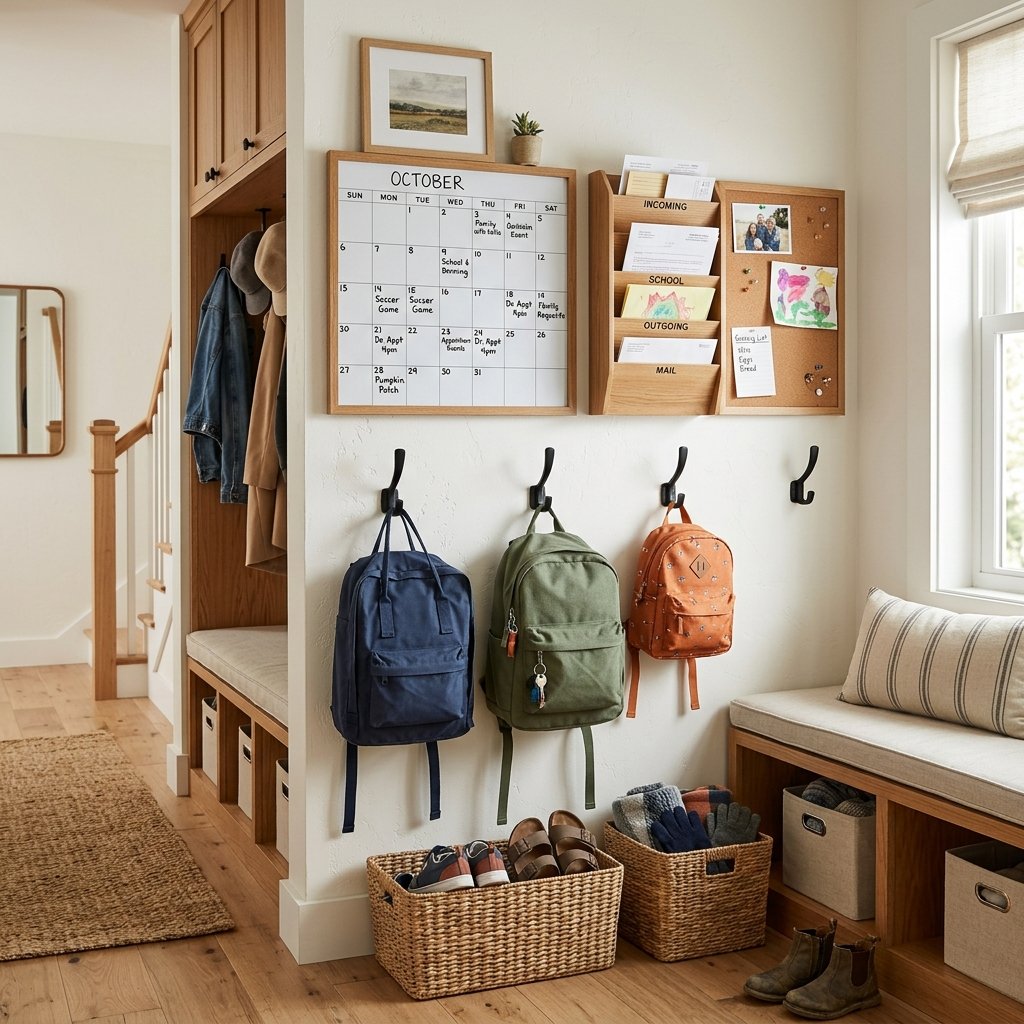
A home command center can make everyday life feel much more manageable.
Instead of letting mail pile up on the kitchen counter, backpacks land on the floor, and important appointments live in five different places, a simple command center gives those things a dedicated home.
The best command center ideas are not necessarily the biggest or most elaborate. They are the ones that match the way your household actually functions.
For one family, that may mean a calendar, mail sorter, and hooks near the kitchen. For another, it might be a small wall station with a weekly schedule, charging area, school papers, and a basket for items that need to leave the house.
The goal is not to create another surface that collects clutter.
It is to build a practical system that makes it easier to know what is happening, what needs attention, and where everyday essentials belong.
Here are 17 command center ideas you can adapt for kitchens, entryways, mudrooms, hallways, small spaces, and busy family homes.
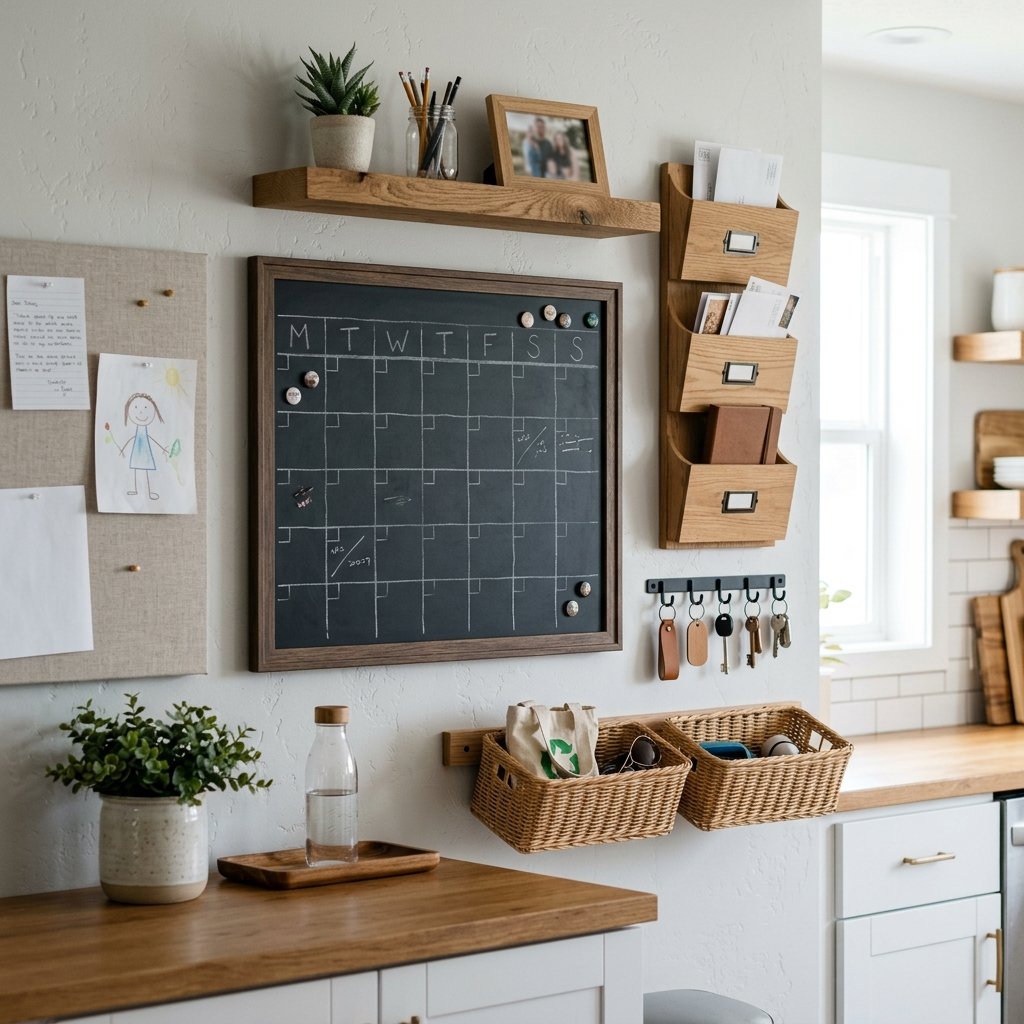
1. Start With the Problems You Actually Need to Solve
Before buying organizers, pay attention to what currently creates clutter.
Ask yourself:
- Where does mail pile up?
- Where do school papers go?
- Where are keys usually dropped?
- Do you need a shared calendar?
- Are backpacks always on the floor?
- Do important forms get lost?
- Do you need a place for outgoing items?
Your answers should determine the command center.
If mail is the main problem, prioritize sorting.
If your household struggles with schedules, make the calendar the focal point.
If the entryway is chaotic, hooks and baskets may matter more than paperwork.
2. Pick a High-Traffic Location
A command center only works if people naturally pass it.
Good locations include:
- Kitchen wall
- Mudroom
- Entryway
- Hallway
- Side of pantry
- Near the garage entrance
- Small wall beside the refrigerator
Avoid putting it somewhere hidden just because that wall is empty.
The best location is usually close to where papers, bags, and everyday items already enter the house.
3. Use a Large Family Calendar
A shared calendar can become the anchor of the entire command center.
Use it for:
- Appointments
- School events
- Work schedules
- Activities
- Birthdays
- Deadlines
- Travel
- Household tasks
Choose a format that is easy to update.
That may be:
- Dry-erase calendar
- Chalkboard calendar
- Paper monthly calendar
- Acrylic wall calendar
- Weekly planner board
Keep the design simple enough that the information remains easy to read.
4. Add a Mail Sorting System
Mail clutter can take over a counter surprisingly quickly.
Create a few clear categories.
For example:
- To do
- To file
- Outgoing
Or assign one pocket to each adult in the household.
Avoid creating too many categories.
A complicated filing system often becomes another pile of paper.
Sort junk mail and recycling as soon as possible so only useful paperwork reaches the command center.
5. Give Keys a Dedicated Spot
A small row of hooks can solve one of the most common household frustrations.
Place key hooks somewhere convenient but not overly exposed.
You may use them for:
- House keys
- Vehicle keys
- Dog leash
- Small lanyards
Keep heavy bags off small decorative hooks unless the hardware is designed for that load.
Make sure wall-mounted hooks are properly secured for whatever they will hold.
6. Create a Backpack and Bag Zone
If your command center is near an entryway or mudroom, add sturdy hooks for:
- Backpacks
- Handbags
- Lunch bags
- Reusable shopping bags
Install them at a practical height for the people using them.
For children, lower hooks can make it easier for them to put things away independently.
Use appropriate anchors or attach into framing where needed, especially for loaded backpacks.
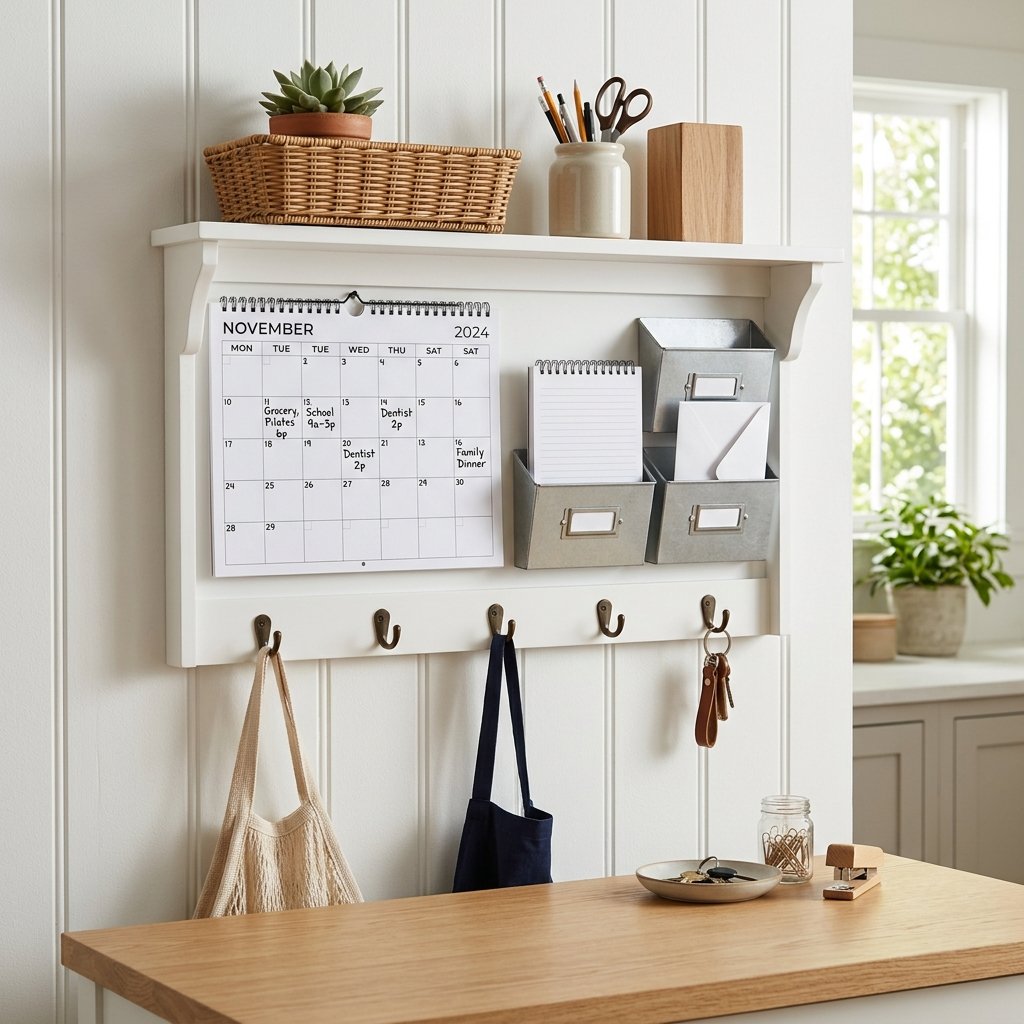
7. Add a Place for School Papers
School papers can overwhelm a kitchen quickly.
Create a specific place for:
- Forms that need signatures
- Homework
- School newsletters
- Papers to keep
- Artwork to review
Wall pockets, magazine files, or shallow bins can work well.
The important part is giving papers a short-term destination.
Do not let the command center become permanent storage for every worksheet and flyer.
Review it regularly.
8. Include an Outgoing Basket
One of the most useful command center ideas is an “outgoing” zone.
Use a basket or bin for things that need to leave the house, such as:
- Library books
- Returns
- Forms
- Packages
- Items for school
- Things to give someone
Place it close to the door you use most often.
This reduces the number of things you have to remember at the last minute.
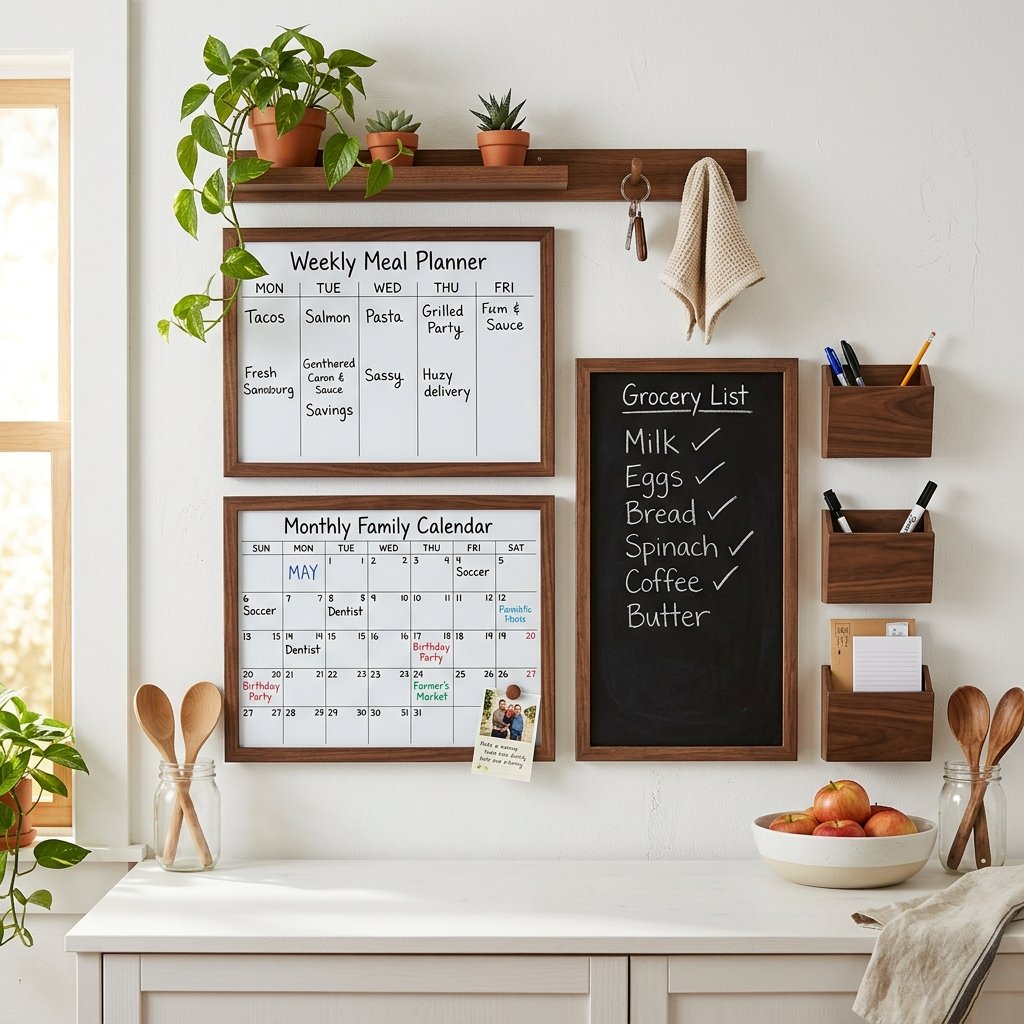
9. Add a Weekly Meal Plan
A small meal-planning board can reduce the daily question of what to make for dinner.
List meals for the week in one visible place.
This can help with:
- Grocery planning
- Using food you already have
- Coordinating busy evenings
- Avoiding duplicate meals
Keep it simple.
You do not need to map out every snack and breakfast unless that is genuinely useful for your household.
10. Create a Grocery List Station
Place a notepad, whiteboard, or reusable list near the command center.
Household members can add items as they run out.
You might divide the list into categories such as:
- Produce
- Pantry
- Refrigerator
- Household supplies
Or keep one running list.
The best system is the one people will actually use.
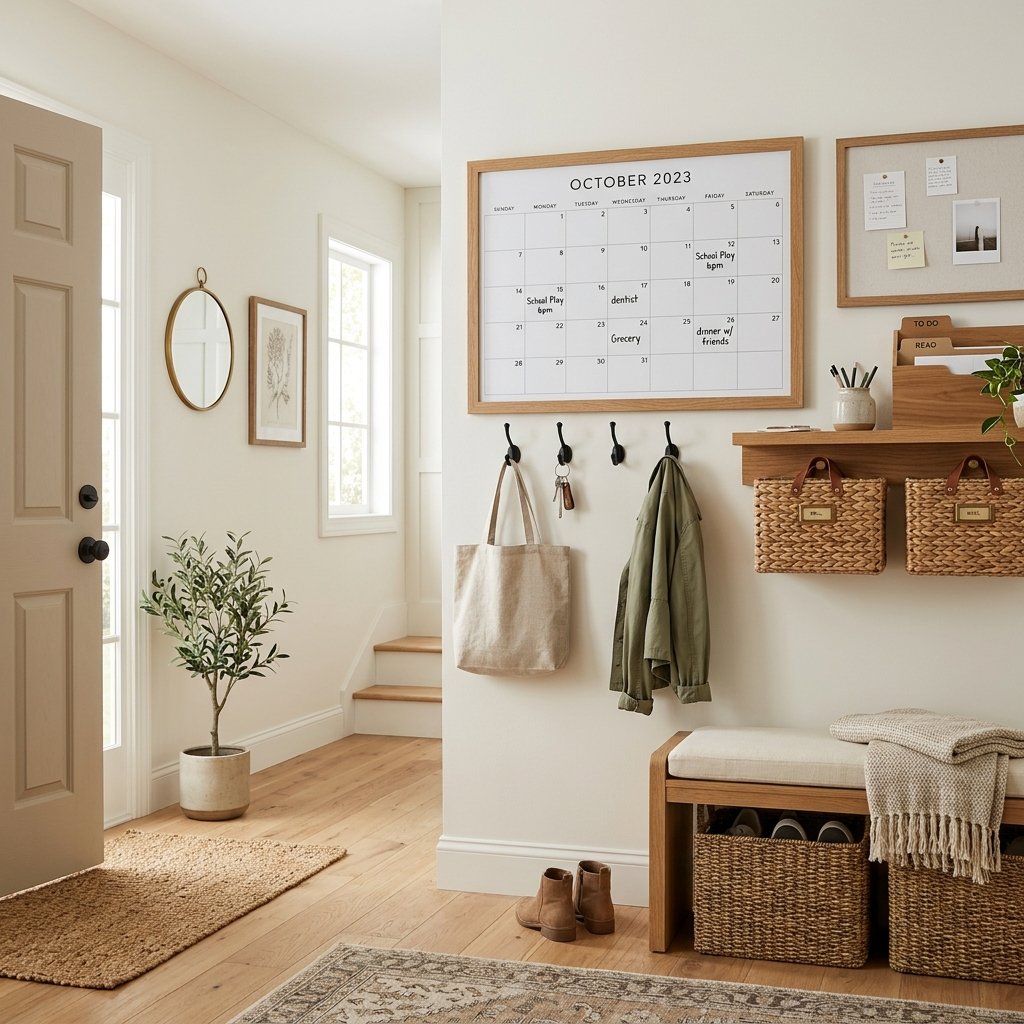
11. Use a Corkboard for Temporary Information
A corkboard is useful for items that change often.
Pin up:
- Invitations
- Reminders
- Tickets
- School notices
- Appointment cards
Keep the board edited.
Once an event is over or a task is complete, remove the paper.
Otherwise the corkboard can quickly turn into visual clutter.
12. Create a Small Charging Station
If practical, include a place for everyday electronics.
You might charge:
- Phones
- Tablets
- Watches
- Earbuds
Keep cords controlled with clips or a small organizer.
Do not overload outlets or use damaged cords.
Keep charging equipment away from sinks, wet areas, and places where drinks are likely to spill.
If adding or relocating electrical outlets, use qualified help where required.
13. Use Baskets to Hide Small Clutter
Not everything needs to be visible.
Small baskets can hold:
- Chargers
- Sunglasses
- Pet supplies
- Receipts
- Spare batteries
- Small outdoor essentials
Limit each basket to one clear purpose.
Random “miscellaneous” baskets tend to become clutter magnets.
Use labels if they make the system easier to maintain.
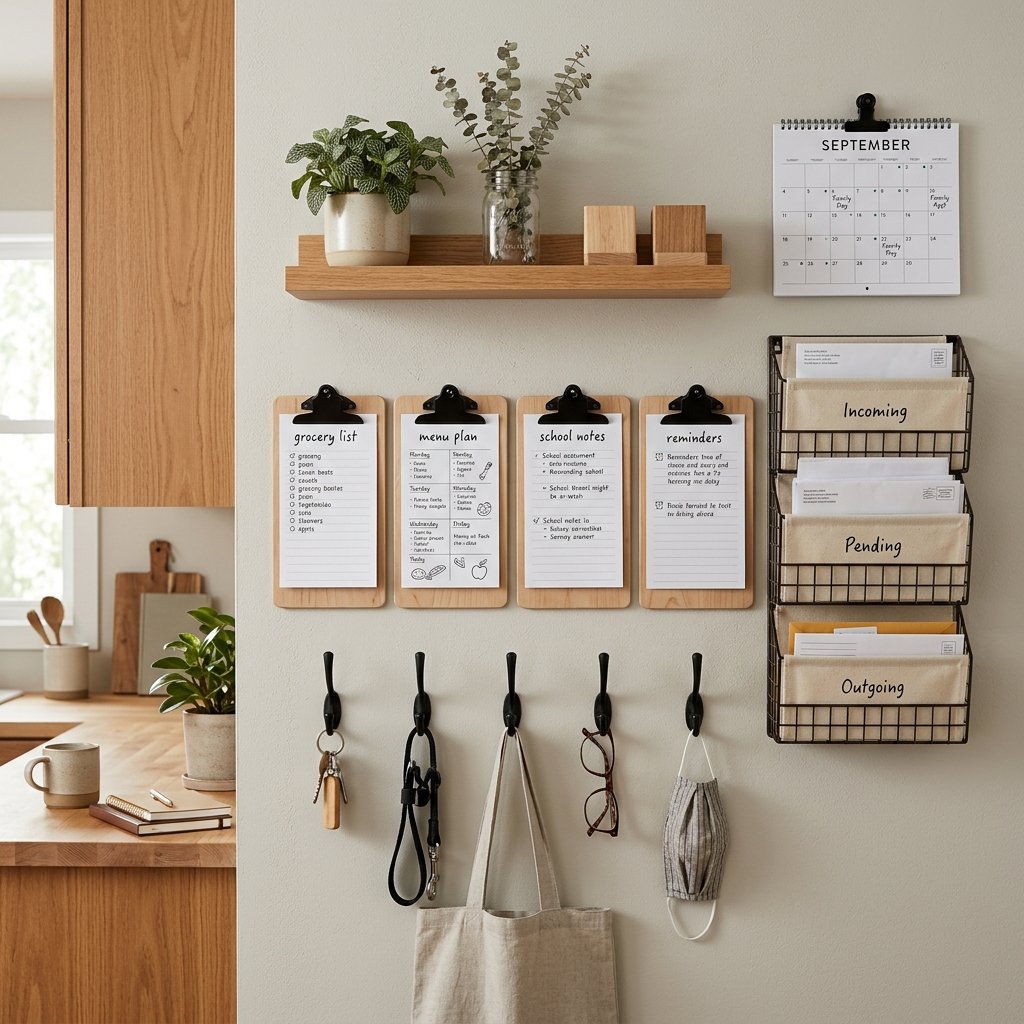
14. Add a Clipboard System
Clipboards are a simple and inexpensive way to organize changing paperwork.
You could create one clipboard for:
- Each child
- Bills
- School
- Household projects
- Weekly schedule
Mounting them vertically saves surface space.
It also makes paperwork easier to see than when it is stacked in a drawer.
15. Build a Command Center Inside a Cabinet
If you dislike visible organization, hide the command center.
The inside of a cabinet or pantry door can hold:
- Calendar
- Shopping list
- Meal plan
- Small pockets
- Notes
- Important reminders
This keeps practical information accessible without adding visual clutter to the room.
Before attaching anything to a cabinet door, check door thickness and hardware compatibility.
Avoid using fasteners that could damage the front of the cabinet.
16. Make a Small-Space Command Center
You do not need an entire wall.
A narrow command center can fit in a small strip of wall beside a doorway.
Use vertical space.
For example:
Top: calendar
Middle: mail pocket
Lower section: hooks
Even a wall area only wide enough for one column of organizers can be useful.
Prioritize your top three needs instead of trying to include every possible feature.
17. Add a Five-Minute Weekly Reset
The system needs maintenance.
Choose one day each week to:
- Remove old papers
- Update the calendar
- Empty the outgoing basket
- File important documents
- Throw away expired notes
- Return misplaced items
This can take only a few minutes if done consistently.
A command center should be a place where information moves through the house, not where clutter permanently lives.
Command Center Ideas for the Kitchen
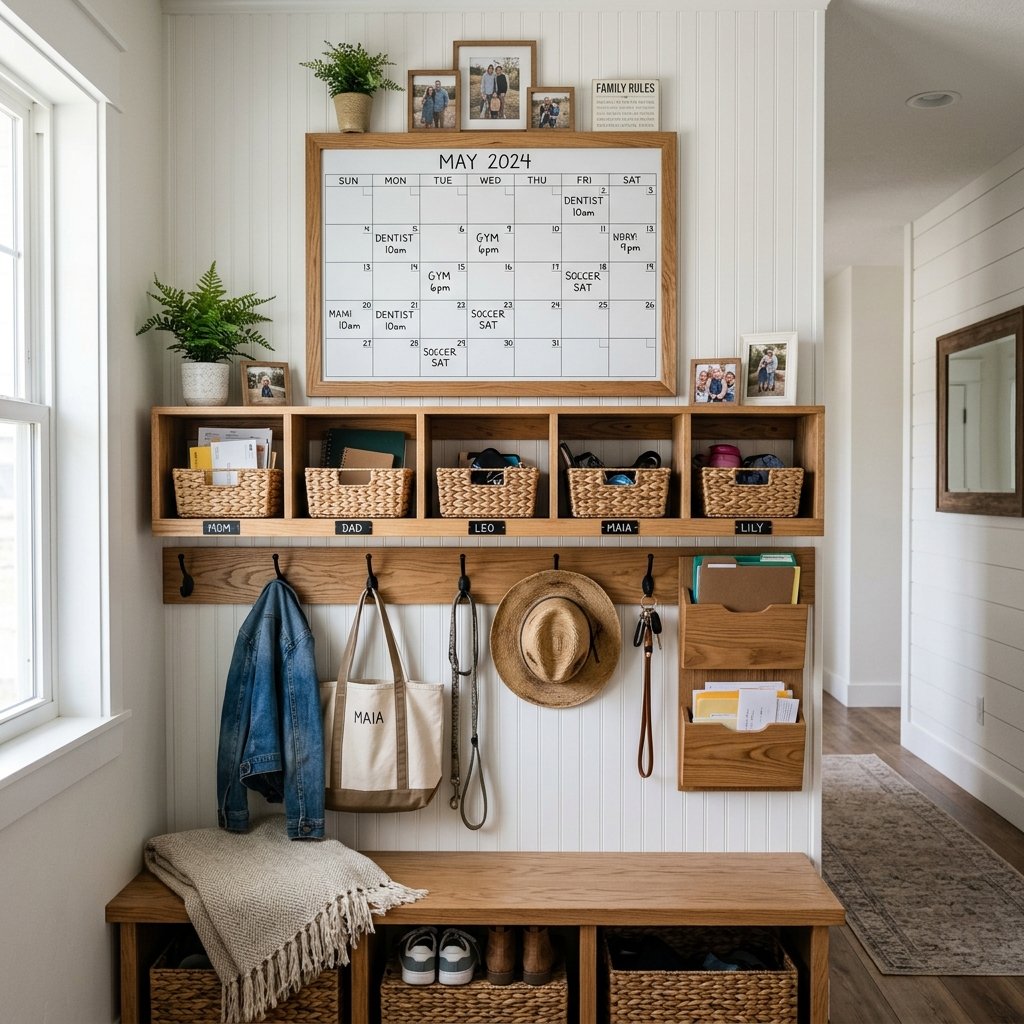
The kitchen is one of the most practical locations because household members already spend time there.
A kitchen command center might include:
- Family calendar
- Mail organizer
- Grocery list
- Meal plan
- Corkboard
- Charging area
Keep it away from cooking splashes and heavy food-preparation zones.
If counter space is limited, mount as much as possible on the wall.
Command Center Ideas for the Entryway
An entryway command center should focus more on things coming into and leaving the house.
Prioritize:
- Keys
- Bags
- Shoes
- Outgoing items
- Calendar
A small bench or console can provide additional storage if the space allows.
Keep walkways clear.
Do not place baskets or furniture where they interfere with doors, stairs, or exits.
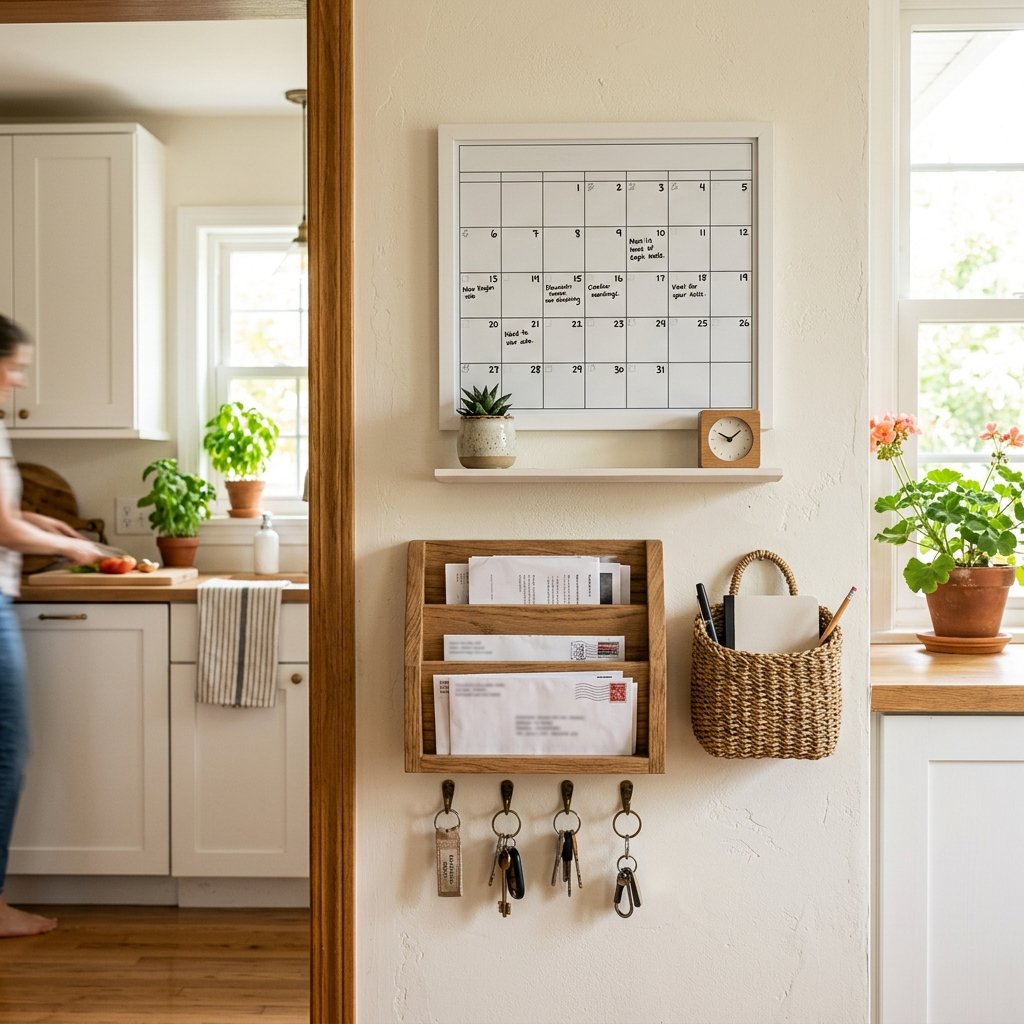
Mudroom Command Center Ideas
Mudrooms are ideal because they already function as transition spaces.
Combine the command center with:
- Backpack hooks
- Shoe storage
- Coat hooks
- Baskets
- Family calendar
- Paper organizer
Assigning each household member a hook or cubby can simplify daily routines.
Keep heavy items lower and ensure freestanding storage is anchored where appropriate.
Small Command Center Ideas
In a small home, the best command center may be almost entirely vertical.
Try:
- One wall calendar
- One mail pocket
- Three hooks
- Small magnetic list board
That may be all you need.
Do not sacrifice valuable living space just to create a large organizing station.
Function matters more than size.
Family Command Center Ideas
For a busy household, consider giving each person one dedicated section.
That could mean:
- Individual mail pocket
- Personal clipboard
- Assigned hook
- Small basket
Color coding can help, but it is not required.
Names or simple labels may be easier to maintain.
Keep the shared calendar in the center so everyone sees the same information.
Modern Farmhouse Command Center Ideas
For a modern farmhouse look, combine practical organization with simple materials.
Try:
- Warm wood frames
- White wall
- Black hooks
- Woven baskets
- Neutral labels
- Simple chalkboard or dry-erase calendar
Avoid adding too many decorative signs.
The organization itself can provide enough visual interest.
Command Center Ideas Without a Lot of Wall Space
If wall space is limited, use surfaces you may be overlooking.
Options include:
- Side of refrigerator
- Inside pantry door
- Side of cabinet
- Narrow hallway wall
- Back of utility-room door
Magnetic organizers can work on compatible metal surfaces.
Door-mounted organizers should be lightweight and securely attached so they do not interfere with operation.
DIY Command Center Ideas on a Budget
A useful command center does not need custom cabinetry.
Budget-friendly materials include:
- Clipboards
- Simple hooks
- Cork tiles
- Small baskets
- File pockets
- Dry-erase board
- Repurposed picture frames
- Wall-mounted folders
You can also shop your home first.
A basket from another room may become a mail bin.
An unused frame can hold a printable calendar.
A small tray can organize keys.
How to Make a Command Center Look Less Cluttered
Organization can still look visually messy if everything is displayed.
To create a calmer look:
Limit Colors
Choose two or three main materials or colors.
Hide Small Items
Use baskets and closed pockets.
Keep Labels Consistent
Simple labels look cleaner.
Leave Empty Space
Do not fill every inch of wall.
Remove Old Papers
This makes the biggest difference.
Use Larger Organizers
One substantial calendar and one mail sorter can look cleaner than many tiny pieces.
Command Center Organization Tips
A command center works best when every piece has a clear purpose.
Think of it as a short-term control station rather than long-term storage.
Mail should move from the sorter to recycling, action, or filing.
School papers should move to signatures, backpacks, or storage.
Outgoing items should leave the basket.
Calendar events should be removed once complete.
The more movement built into the system, the less likely it is to become cluttered.
Common Command Center Mistakes
Adding Too Many Categories
Complicated systems are hard to maintain.
Choosing the Wrong Location
If nobody naturally passes the station, it will not get used.
Making Everything Visible
Hidden storage helps control visual clutter.
Not Providing an Outgoing Zone
Items that need to leave the house often become countertop clutter.
Installing Weak Hooks
Backpacks and bags can be heavy.
Use suitable hardware.
Letting Old Papers Accumulate
Review the system regularly.
Making the Calendar Too Decorative
Information should be easy to read.
Creating a System No One Else Understands
Keep labels and categories intuitive.
Command Center Safety Tips
A wall organization system still needs to be installed carefully.
- Secure heavy organizers and hooks to suitable framing or use appropriate anchors.
- Follow manufacturer weight limits for shelves, hooks, and wall systems.
- Keep heavy items lower where practical.
- Do not drill blindly into walls that may contain electrical wiring or plumbing.
- Avoid blocking electrical panels, switches, vents, doorways, or exits.
- Anchor freestanding furniture where appropriate.
- Keep charging stations dry and avoid overloaded outlets.
- Keep medications, batteries, sharp objects, and important personal documents out of children’s reach.
- Keep keys and sensitive paperwork in a location appropriate for your household’s security needs.
- Use stable step stools when accessing high storage.
FAQ About Command Center Ideas
What should be included in a home command center?
Include only what your household needs most. Common elements are a calendar, mail sorter, grocery list, hooks, paper storage, and an outgoing basket.
Where is the best place for a command center?
Choose a high-traffic location such as the kitchen, mudroom, entryway, or near the garage entrance.
How do I make a family command center without cluttering the wall?
Use fewer, larger organizers, limit visible papers, add baskets or closed storage, and remove outdated information regularly.
Can I make a command center in a small space?
Yes. A narrow vertical setup with a calendar, mail pocket, and hooks may be enough.
What is the best way to organize mail?
Use only a few categories, such as action, filing, and outgoing, and remove junk mail immediately.
How often should I clean out a command center?
A quick weekly reset helps keep paperwork and reminders from building up.
Do I need custom built-ins for a command center?
No. Clipboards, baskets, wall pockets, hooks, and a simple calendar can create a functional system on a small budget.
Final Thoughts
The most useful command center ideas solve everyday problems instead of simply adding more organizers to the wall.
Start by looking at the clutter your household already creates.
If mail piles up, add a simple sorter.
If everyone forgets appointments, make a shared calendar easy to see.
If bags land on the floor, install strong hooks.
If items that need to leave the house are always forgotten, create an outgoing basket near the door.
Then keep the system simple.
A well-planned command center does not need dozens of compartments or custom cabinetry. It simply needs a few clearly defined places for the things your household handles every day.
With the right location and a quick weekly reset, even a small command center can help your home feel calmer, more organized, and easier to manage.