

A rug can completely change how a room feels, but only if the placement works with the furniture, proportions, and traffic flow.
The right rug can make a living room feel larger, help define a dining area, add softness to a bedroom, or bring warmth to an entryway. The wrong size or placement can make furniture look disconnected and the entire room feel a little off.
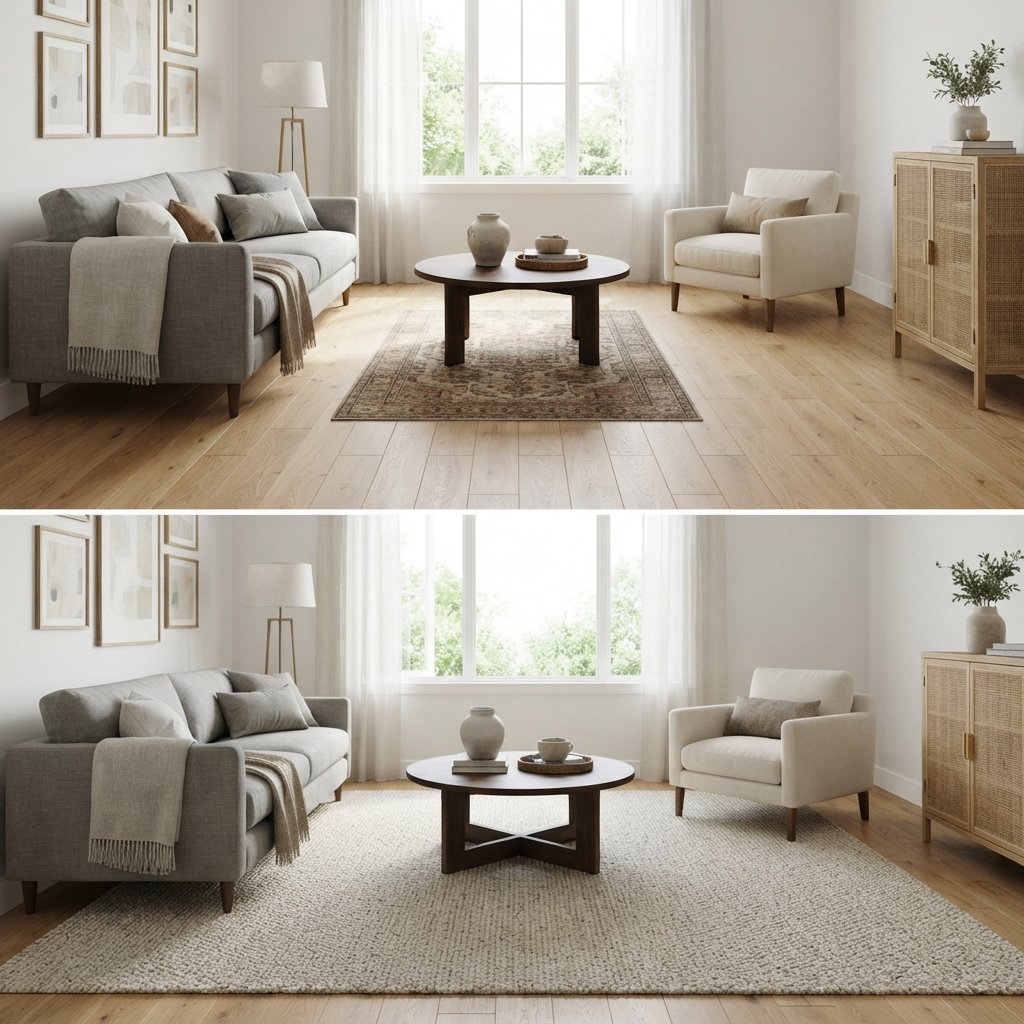
These rug placement tips will help you choose a better size, position rugs under furniture, avoid awkward floating layouts, and create a more balanced look in living rooms, dining rooms, bedrooms, entryways, and open-concept spaces.
The goal is not to follow one rigid rule in every room.
Instead, think about the rug as a foundation that visually connects the furniture around it.
1. Choose the Rug Size Before Worrying About Color
Color and pattern matter, but size usually affects the room more.
A beautiful rug that is too small can make the furniture look like it is floating separately.
Before shopping, measure the room and the main furniture arrangement.
Use painter’s tape on the floor to outline possible rug sizes.
This lets you see how much floor will remain exposed and whether the rug will actually connect the furniture.
2. Avoid the Tiny Floating Rug Look
One of the most common decorating mistakes is placing a small rug in the middle of a large seating arrangement.
If the rug only sits beneath the coffee table and never reaches the sofa or chairs, the room can feel disconnected.
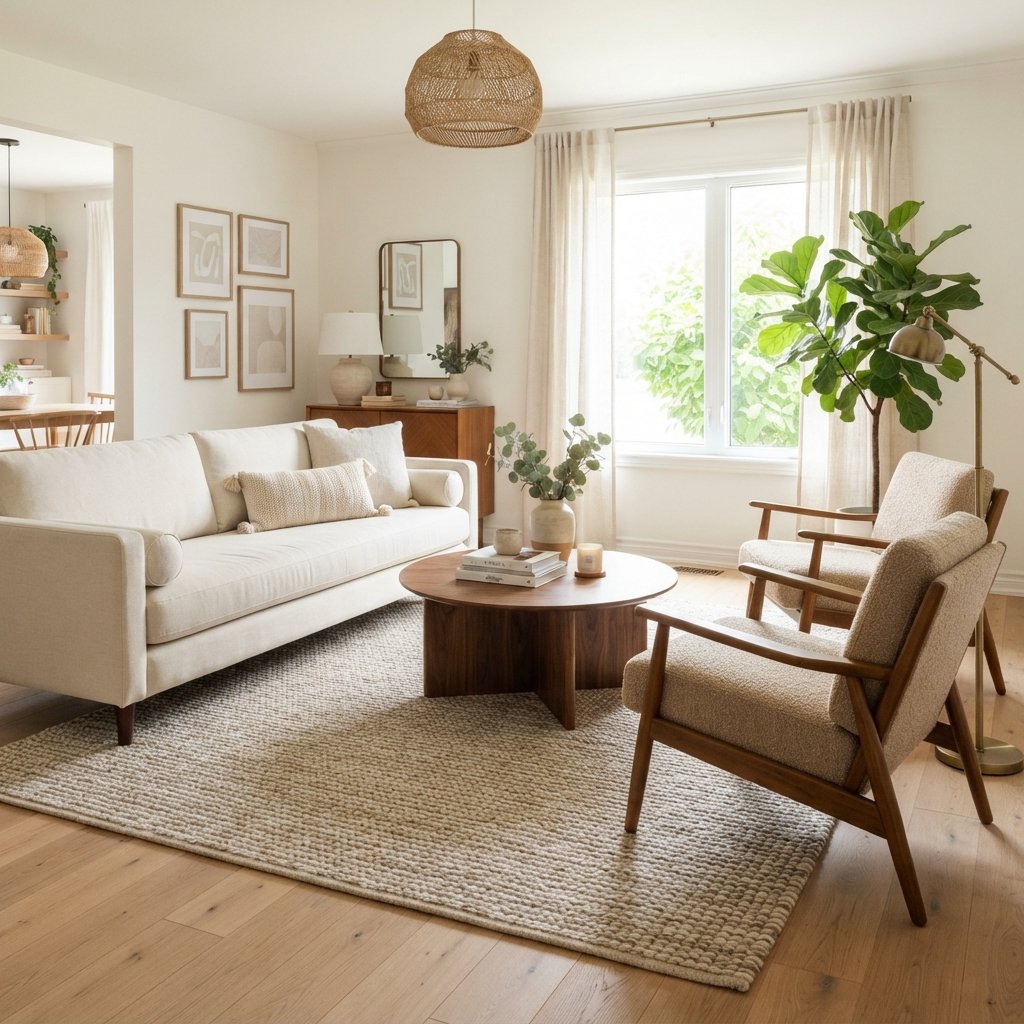
In many living rooms, a larger rug that reaches under at least the front legs of the main seating creates a more cohesive look.
3. Let the Rug Connect the Main Furniture
Think of the rug as the element that visually ties the furniture together.
In a living room, the sofa, chairs, and coffee table should feel like part of one conversation area.
The rug helps create that connection.
Depending on the room size, you might place:
- All furniture legs on the rug
- Front legs of major seating on the rug
- Smaller accent pieces fully on the rug
Consistency matters more than forcing every room into exactly the same setup.
4. Use Front-Leg Placement in Many Living Rooms
A practical approach is to place the front legs of the sofa and chairs on the rug while leaving the back legs off.
This works especially well when:
- The room is medium-sized
- Furniture sits near the walls
- A fully oversized rug would feel unnecessary
- You still want the seating area to feel connected
Make sure enough rug extends beneath the furniture that the arrangement looks intentional.
A tiny amount tucked under one leg usually does not create the same effect.
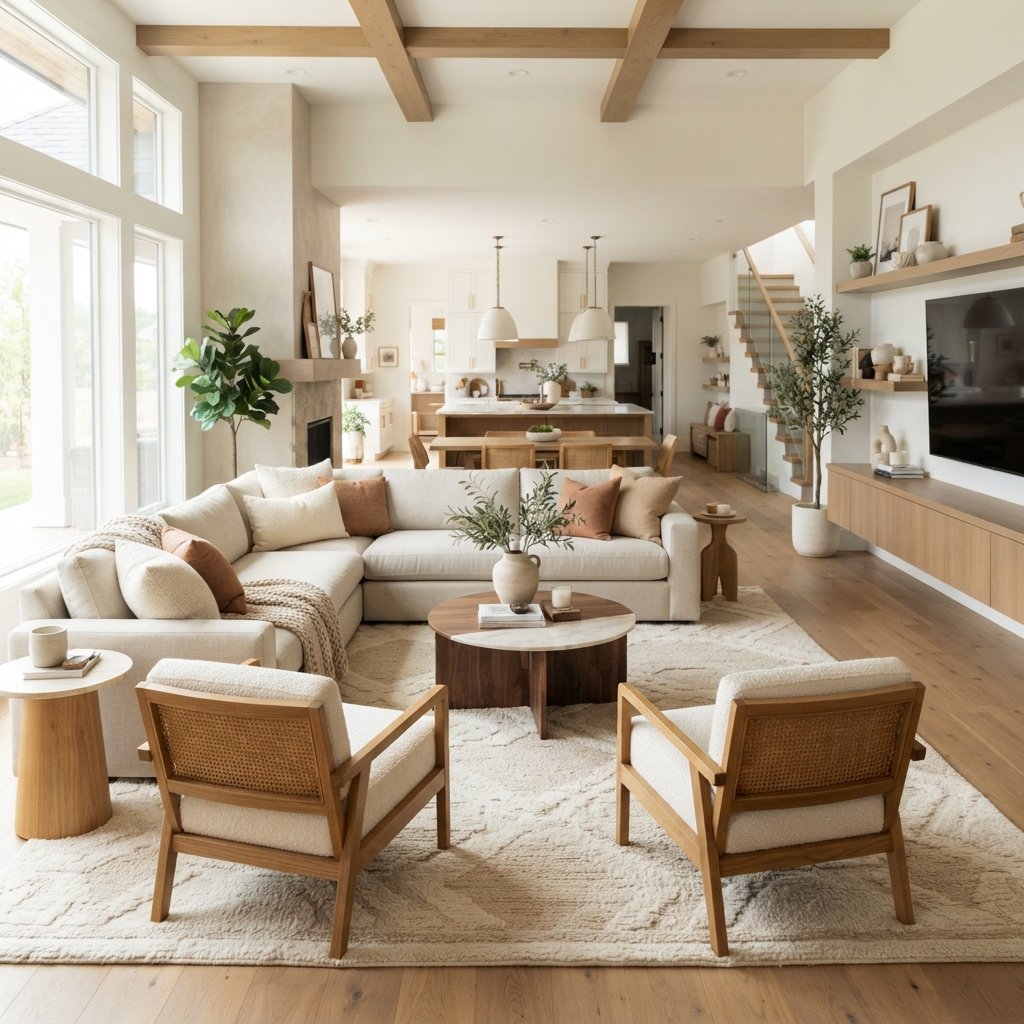
5. Put All Furniture Legs on the Rug in Larger Rooms
In a large living room or open floor plan, a generous rug can define the seating zone beautifully.
Place the entire sofa and chairs on the rug when there is enough space.
This can make the furniture arrangement feel more substantial and grounded.
It also works well when the seating floats away from the walls.
6. Center the Rug Under the Furniture Group, Not Automatically in the Room
A rug does not always need to be centered between all four walls.
Instead, center it in relation to the main furniture arrangement.
For example, if the sofa sits off-center because of a fireplace, window, or doorway, the rug may also need to shift.
Decorate according to the functional zone rather than the empty room shell.
7. Keep Living Room Rug Placement Consistent
Avoid awkward combinations where one chair has half a leg on the rug, another is completely off, and the sofa barely touches it.
A consistent relationship between the rug and furniture creates a cleaner look.
If one major chair sits completely off the rug because of space limitations, consider whether the rug is too small or whether the furniture layout needs adjusting.
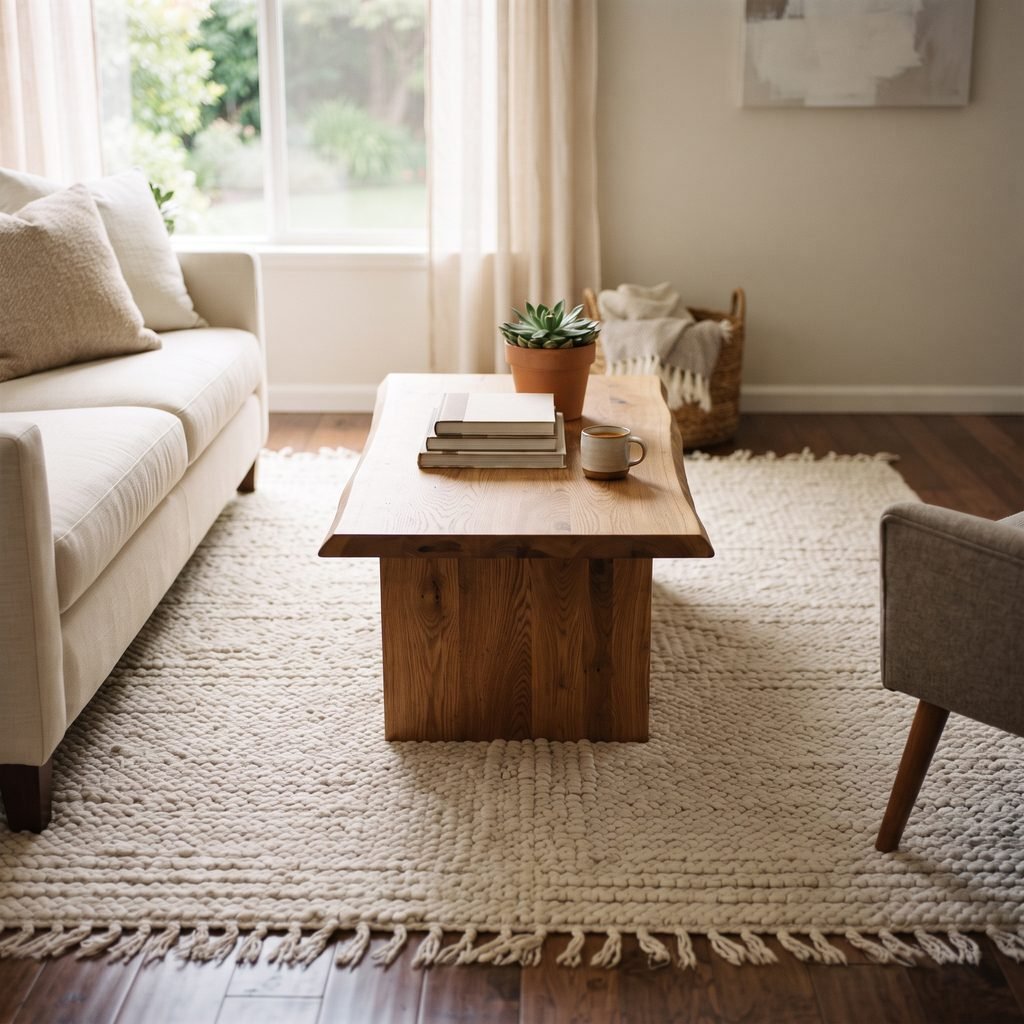
8. Make Sure the Coffee Table Fits Comfortably
The coffee table should sit comfortably within the rug area.
There should be visible rug around it rather than the table nearly filling the entire rug.
This helps the rug feel like a room foundation instead of a decorative mat under the coffee table.
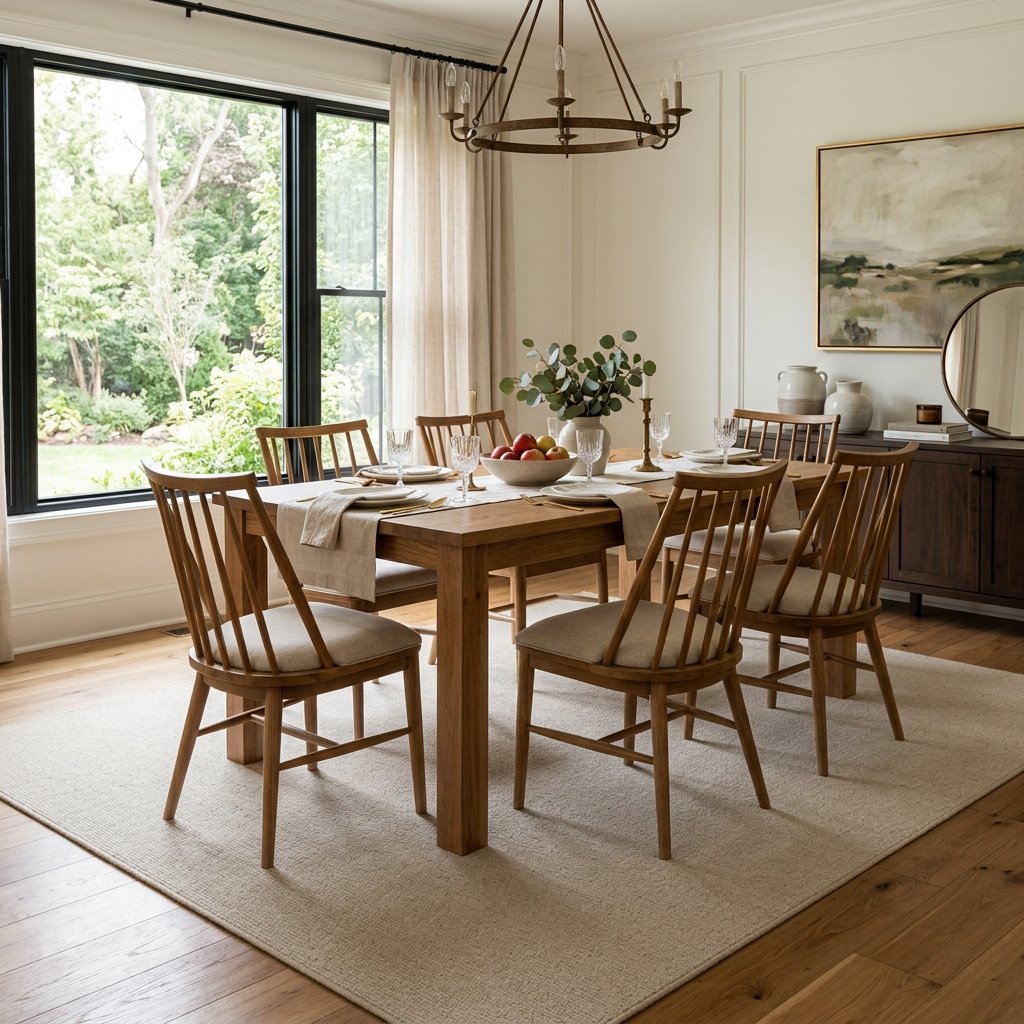
9. Give Dining Chairs Room to Stay on the Rug
Dining room rug placement needs to account for movement.
The rug should extend far enough beyond the table that chairs can be pulled out while remaining supported by the rug as much as practical.
If chairs constantly catch on the edge when someone sits down, the rug is probably too small for the table.
Measure the table with the chairs pulled out before choosing a rug.
10. Match the Rug Shape to the Dining Area
Rectangular rugs work well with many rectangular tables, but shape can also help reinforce the room layout.
Consider:
- Rectangular rug with rectangular table
- Round rug with round table
- Square rug with square or round table
You do not have to match shapes perfectly, but the proportions should feel intentional.
For a round table, a round rug can create a particularly cohesive look when the room allows.
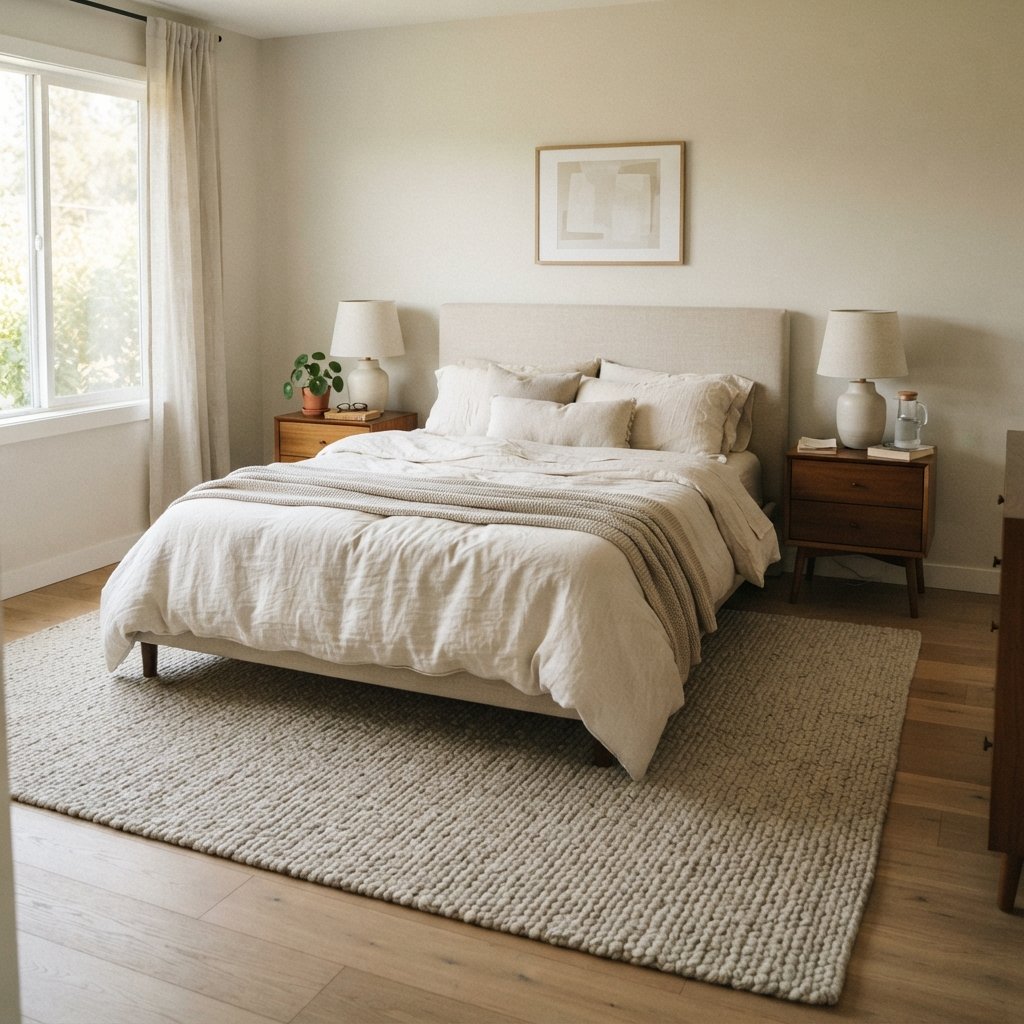
11. Use a Large Rug Under the Bed for a Luxurious Look
In a bedroom, the rug should extend far enough beyond the bed that you step onto something soft when getting out.
A larger rug placed beneath most of the bed can make the room feel finished and substantial.
The rug can begin under the nightstands or slightly farther down the bed depending on the size and layout.
12. Place the Rug Under the Lower Portion of the Bed to Save Money
If a very large rug is outside the budget, place the rug beneath the lower portion of the bed.
This allows the visible sides and foot of the bed to sit over the rug without paying for rug area hidden under the headboard and nightstands.
Make sure the rug extends enough on both sides to look purposeful.
13. Use Runners Beside the Bed in Small Bedrooms
A large area rug is not the only option.
In a narrow room, use runners beside the bed.
This works particularly well when:
- The floor is attractive
- The room is small
- You mainly want softness underfoot
- A large rug would overwhelm the space
Use one runner on each side for a balanced look if the layout allows.
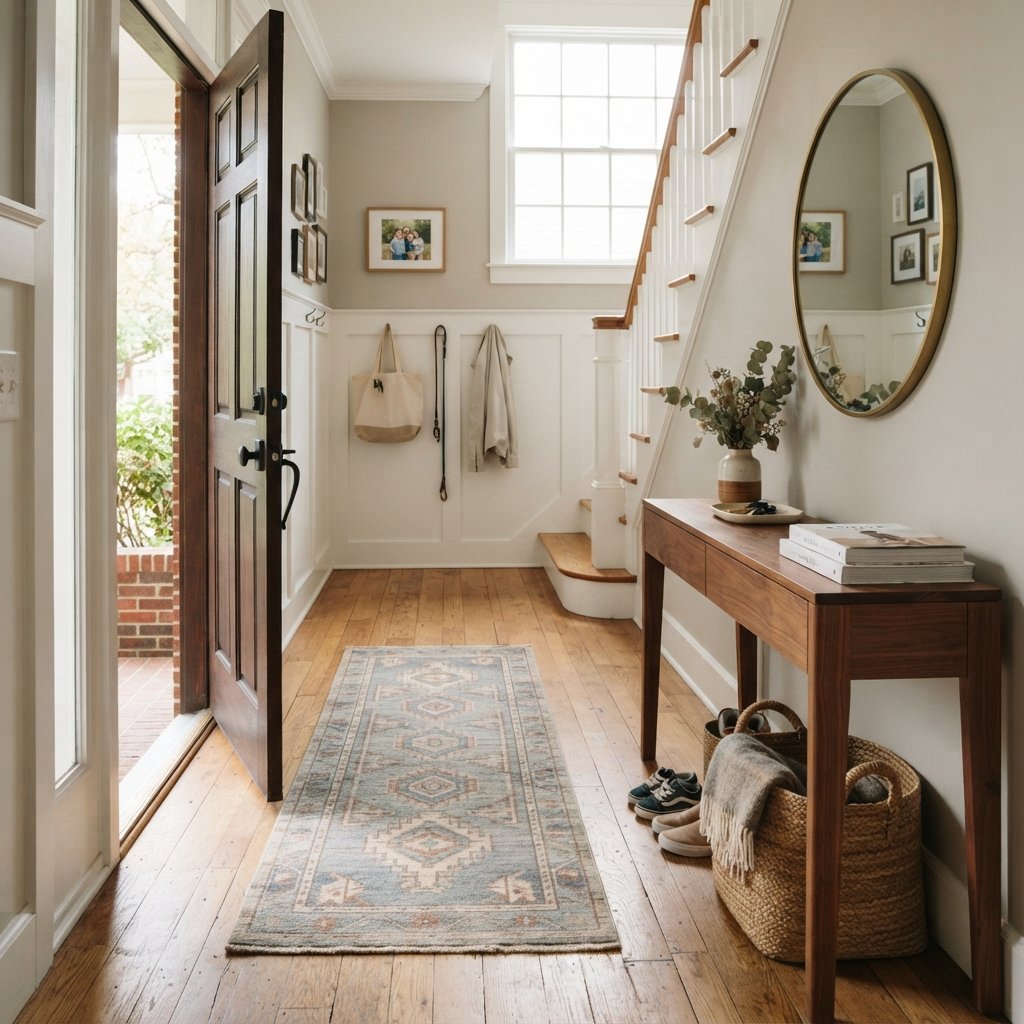
14. Keep Entryway Rugs Clear of Door Movement
Before placing a rug near an exterior door, check how the door swings.
The rug should not:
- Catch under the door
- Fold up
- Block the threshold
- Become a tripping hazard
Low-profile rugs generally work better near doors.
Use a suitable rug pad or backing to reduce sliding where appropriate.
15. Use Rugs to Define Open-Concept Spaces
In an open floor plan, rugs can visually create separate zones without adding walls.
For example:
- Living room rug defines seating
- Dining rug anchors table
- Runner defines walkway
Choose rugs that coordinate without needing to match exactly.
Repeat a color, texture, or general style to help the spaces relate to each other.
16. Leave Some Floor Visible Around the Rug
Unless you are intentionally creating a wall-to-wall effect, leaving a border of visible flooring can help an area rug feel properly scaled.
The amount depends on the room.
What matters is avoiding a rug that nearly touches random walls in some places while leaving huge gaps in others.
Aim for balanced visual spacing.
17. Use the Rug to Support the Room’s Main Focal Point
The rug should work with the room’s strongest feature.
That may be:
- Fireplace
- Bed
- Dining table
- Sofa
- Large window
- Built-in shelving
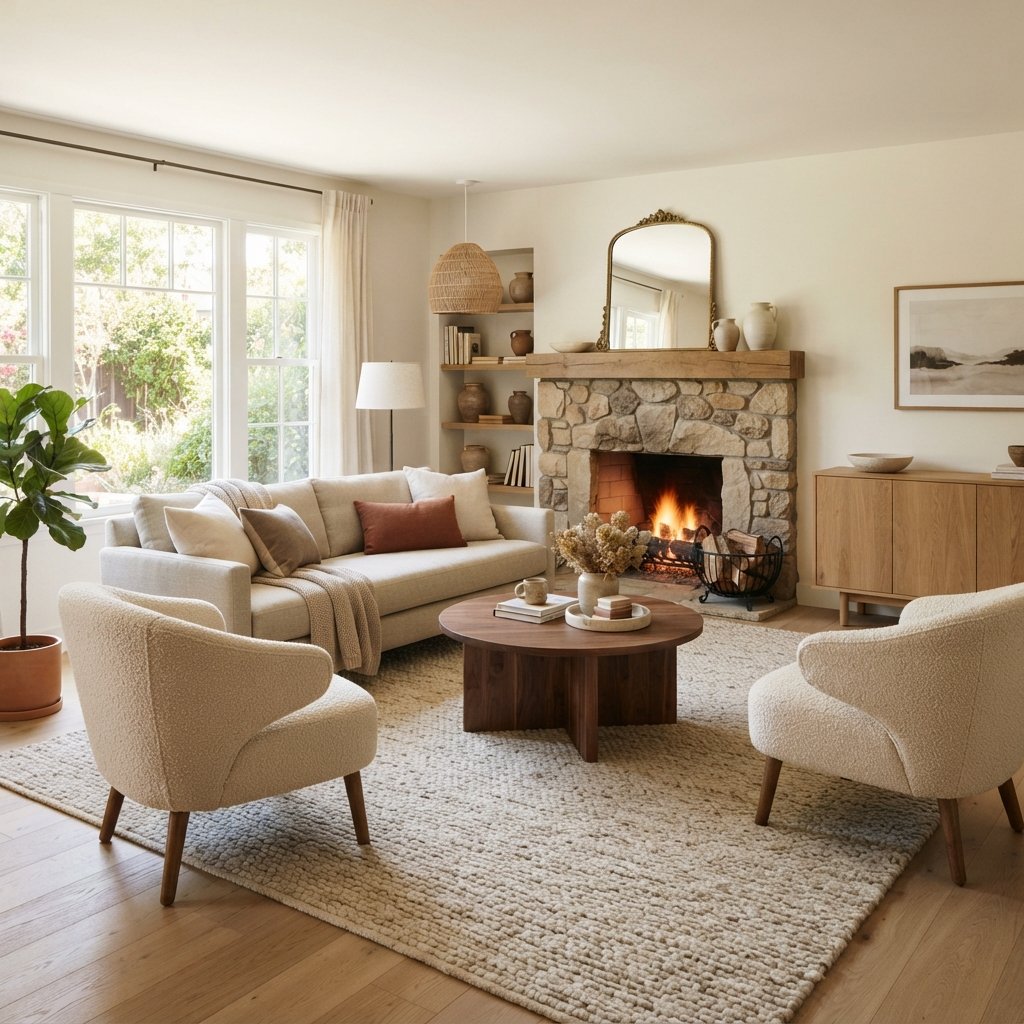
If the furniture faces a fireplace, the rug should usually support that orientation.
Do not rotate the rug simply because it fits the room dimensions better if doing so fights the furniture layout.
Living Room Rug Placement Tips
The living room is where rug placement mistakes are often most noticeable.
Start by considering the sofa.
The rug should usually feel connected to it rather than floating several inches away.
Then look at the chairs.
If possible, bring at least their front legs into the rug area.
Finally, make sure the coffee table feels centered within the seating arrangement.
A useful order is:
- Position the sofa.
- Arrange chairs.
- Define the conversation area.
- Select a rug large enough to support that arrangement.
- Position the coffee table last.
This is often easier than buying a rug first and forcing furniture around it.
Rug Placement With a Sectional
Sectionals need especially careful rug sizing because they occupy a large footprint.
The rug can:
- Extend beneath the entire sectional
- Sit under the front portions of the sectional
- Anchor the main open seating area
Avoid using a small rug that sits only in the center of the sectional.
It often makes the furniture feel oversized and the rug feel undersized.
A larger rug usually creates better visual balance.
Rug Placement With a Sofa and Two Chairs
For a classic sofa-and-two-chairs arrangement, try to connect all three seating pieces with the rug.
You might put:
- Sofa front legs on rug
- Chair front legs on rug
- Coffee table fully centered
If the room is large, place all legs on the rug instead.
The important thing is that the seating feels like one group.
Rug Placement in a Small Living Room
Do not automatically assume a tiny room needs a tiny rug.
A slightly larger rug can actually make a small room feel more expansive because it creates one continuous seating zone.
Too many exposed floor breaks can make a small space feel chopped up.
Choose a rug that fits the furniture rather than simply choosing the smallest option available.
Rug Placement in a Dining Room
Dining rugs need more functional clearance than decorative rugs.
Pull every chair away from the table as though someone is sitting down.
Then measure the full footprint.
This gives you a much better idea of the rug size you need.
Flatweave or lower-pile rugs can also be easier under dining chairs than very plush styles.
Choose a material appropriate for spills, traffic, and your cleaning routine.
Rug Placement in a Bedroom
The bed is the anchor.
For a large room, a substantial rug beneath the bed creates the most cohesive appearance.
For a smaller room or smaller budget, position the rug under the lower portion of the bed.
Make sure the exposed rug on each side is reasonably balanced.
Avoid placing a small horizontal rug only at the foot of the bed unless it is intentionally decorative.
It often looks disconnected from the main furniture.
Rug Placement for a King Bed
A king bed needs a substantial rug to keep the proportions balanced.
Look at the full width of the bed plus the amount of rug you want visible on either side.
Use painter’s tape before purchasing.
Because bed frames and room dimensions vary, measuring your actual setup is more useful than relying solely on a standard rug-size chart.
Rug Placement for a Queen Bed
A queen bed offers more flexibility.
A larger rug can sit underneath most of the bed, while a smaller rug may begin farther down from the headboard.
The rug should still extend visibly on both sides.
If the room is narrow, runners may be a practical alternative.
Rug Placement in an Entryway
In an entryway, function comes first.
The rug should:
- Fit the walkway
- Stay out of the door swing
- Resist slipping
- Allow doors to open freely
- Be easy to clean
A runner can visually lengthen a narrow hallway or entry.
Avoid overly thick rugs near exterior doors if they interfere with clearance.
Rug Placement in a Hallway
Hallway runners usually look best centered in the usable passage.
Leave visible flooring along both sides when possible.
Do not let the runner extend into an awkward doorway position where the edge becomes a tripping point.
Use rug pads appropriate for both the rug and flooring.
Rug Placement in an Open Floor Plan
Open floor plans benefit from rugs because they create boundaries.
The living room rug should define the seating area.
The dining rug should define the table.
The rugs do not need to match, but they should look intentional together.
For example, pair:
- Solid rug + subtle pattern
- Neutral rug + muted patterned rug
- Natural fiber + soft traditional pattern
Avoid several strong rugs fighting for attention in one open space.
Should Rugs Touch the Wall?
Area rugs generally do not need to touch the walls.
Leaving some flooring visible usually makes the rug feel intentional.
Very large rooms may have a generous floor border.
Small rooms may have much less.
The exact amount matters less than balanced placement.
Should Furniture Be Completely on or Off a Rug?
Either can work.
The problem is usually inconsistency.
Common successful arrangements include:
- All major furniture fully on the rug
- Front legs of all major seating on the rug
What often looks less intentional is having furniture barely touch the rug without a clear pattern.
Can a Rug Be Too Big?
Yes.
A rug can feel too large if it crowds doorways, runs awkwardly into walls, or eliminates almost all visible floor without creating an intentional wall-to-wall effect.
Measure before buying.
Painter’s tape is one of the easiest ways to test a larger rug without moving furniture.
How to Layer Rugs
Layering works well when you want more texture.
A common approach is:
- Large neutral base rug
- Smaller patterned rug on top
This can work especially well in living rooms and bedrooms.
Make sure the top rug lies flat and does not create raised edges that become tripping hazards.
Use suitable rug pads or anti-slip solutions as needed.
How to Make a Rug Look More Expensive
Placement matters almost as much as the rug itself.
Size Up When the Room Allows
A larger rug often looks more intentional.
Align It With Furniture
Use the furniture layout as the guide.
Keep It Flat
Curling corners make even a beautiful rug look unfinished.
Use a Rug Pad
A suitable pad can improve stability and help the rug feel more substantial.
Avoid Random Angles
Unless the room design deliberately calls for one, rugs generally look cleaner aligned with the main furniture.
Keep the Rug Clean
Visible dirt and flattened traffic areas quickly affect the overall look.
Common Rug Placement Mistakes
Buying Too Small
This is one of the most common problems.
Centering the Rug in the Room Instead of the Furniture
The rug should support the functional area.
Letting Dining Chairs Catch on the Edge
Choose a larger rug.
Ignoring Door Clearance
Especially in entries and bedrooms.
Using a Rug Without Slip Protection
This can create a safety issue on smooth flooring.
Leaving the Sofa Completely Disconnected
Try to visually connect it to the rug.
Choosing Style Before Size
Get the proportions right first.
Crowding the Walls
Leave balanced floor space where appropriate.
Rug Safety and Practical Tips
Rugs should improve comfort without creating hazards.
Keep these points in mind:
- Use a rug pad or non-slip solution appropriate for the rug and flooring.
- Make sure corners and edges lie flat.
- Avoid thick rugs where doors need low clearance.
- Keep walkways clear.
- Secure runners in high-traffic hallways.
- Check rug and flooring manufacturer guidance before using pads, tapes, or adhesives.
- Be cautious with rug pads on delicate, recently refinished, or specialty flooring.
- Clean spills promptly according to the rug material.
- Avoid placing rugs where they block floor vents or other necessary access points.
- In homes with small children, older adults, or mobility concerns, prioritize flat, stable edges and minimal trip hazards.
FAQ About Rug Placement Tips
Should the front legs of a sofa be on the rug?
In many living rooms, yes. Placing the front legs on the rug helps visually connect the sofa to the seating area.
Does all furniture need to be on the rug?
No. Both all-on and front-legs-on arrangements can work. Consistency is more important than one universal rule.
How do I know if my living room rug is too small?
If the rug sits only under the coffee table and does not connect to the main seating, it may be undersized.
How far should a dining room rug extend?
It should extend far enough for dining chairs to be pulled out without constantly catching the edge. Measure your actual table and chair movement before buying.
Should a bedroom rug go under the nightstands?
It can, but it does not have to. A rug can begin farther down beneath the bed if you want to reduce the amount hidden under furniture.
Can a large rug make a small room look bigger?
Often, yes. A larger rug can visually unify the furniture and reduce the chopped-up look created by many small floor areas.
Do I need a rug pad?
In many cases, a suitable rug pad improves stability and comfort. Choose one compatible with your flooring and rug.
Final Thoughts
The best rug placement tips come down to one main idea: use the rug to connect the room instead of treating it like a separate decorative accessory.
In a living room, bring the rug into the seating arrangement.
In a dining room, give chairs enough space to move.
In a bedroom, make sure the rug extends far enough beyond the bed to feel useful and balanced.
And in entries and hallways, prioritize safe door clearance and stable edges.
Before buying a rug, measure the furniture arrangement and test possible dimensions with painter’s tape.
That simple step can help you avoid one of the most common decorating mistakes: choosing a rug that is beautiful but too small for the room.
Once the size and placement are right, color, texture, and pattern become much easier to choose.