

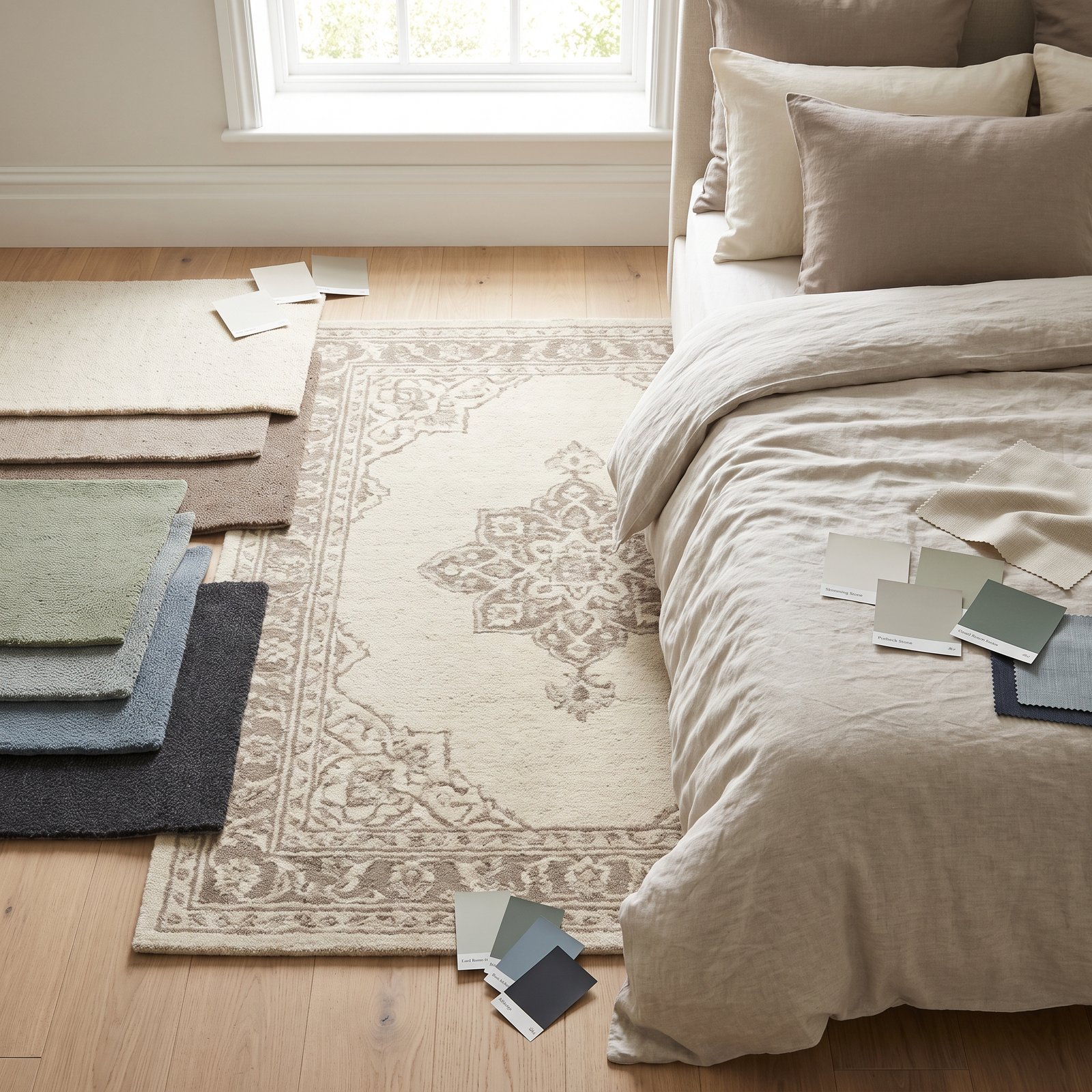
Choosing the right bedroom rug is about more than finding a pattern you like.
The color of the rug can change how the entire room feels. A light rug can make a bedroom feel softer and more open. A darker rug can add contrast and warmth. A patterned rug can help connect bedding, curtains, furniture, and wall color so the room feels more finished.
If you are wondering how to choose a rug color for your bedroom, start with the colors that are already in the room rather than shopping for the rug in isolation.
Look at your walls, bed, flooring, furniture, window treatments, and bedding. Then decide whether you want the rug to blend in quietly or become one of the main decorative features.
These 15 tips will help you narrow down the right rug color for your bedroom, whether your style is neutral, modern, cozy, coastal, traditional, farmhouse, or something in between.
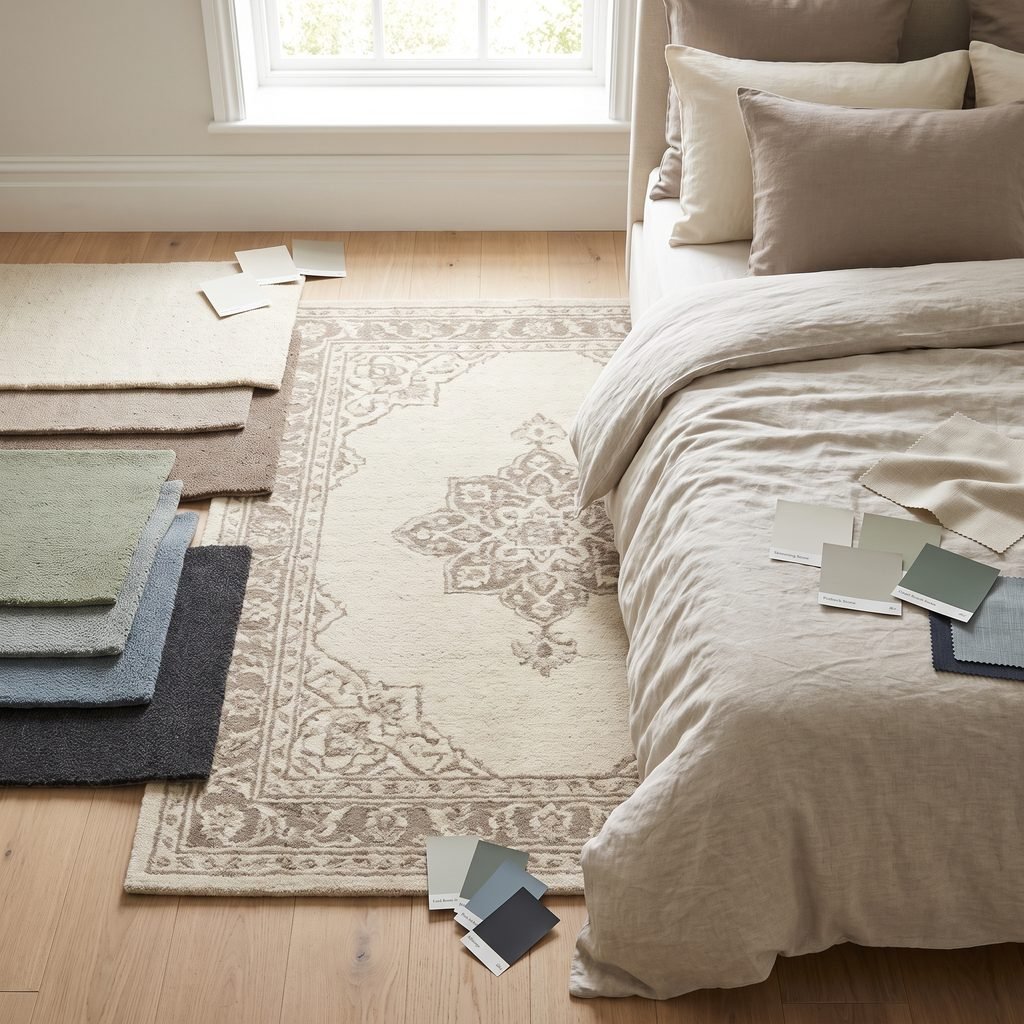
1. Start With the Colors Already in the Room
Before choosing a rug, take inventory of the bedroom.
Look at:
- Wall color
- Flooring
- Bed frame
- Bedding
- Curtains
- Nightstands
- Dresser
- Artwork
- Accent colors
Your rug does not need to match everything exactly.
It simply needs to relate to the room.
For example, if the bedroom has warm white walls, medium wood furniture, and blue bedding, a rug with cream, taupe, and muted blue can help bring those elements together.
Think of the rug as a bridge between the largest pieces in the room.
2. Decide Whether You Want the Rug to Blend or Contrast
This is one of the easiest ways to narrow your options.
If you want a calm, cohesive bedroom, choose a rug close to the overall color palette.
If you want more definition, choose a rug that contrasts with the floor or bedding.
For a Soft, Blended Look
Try:
- Cream
- Beige
- Greige
- Soft gray
- Muted blue
- Pale sage
For More Contrast
Try:
- Charcoal
- Navy
- Deep olive
- Rust
- Rich brown
- Dark patterned neutrals
Neither approach is better.
The right choice depends on how much visual energy you want in the room.
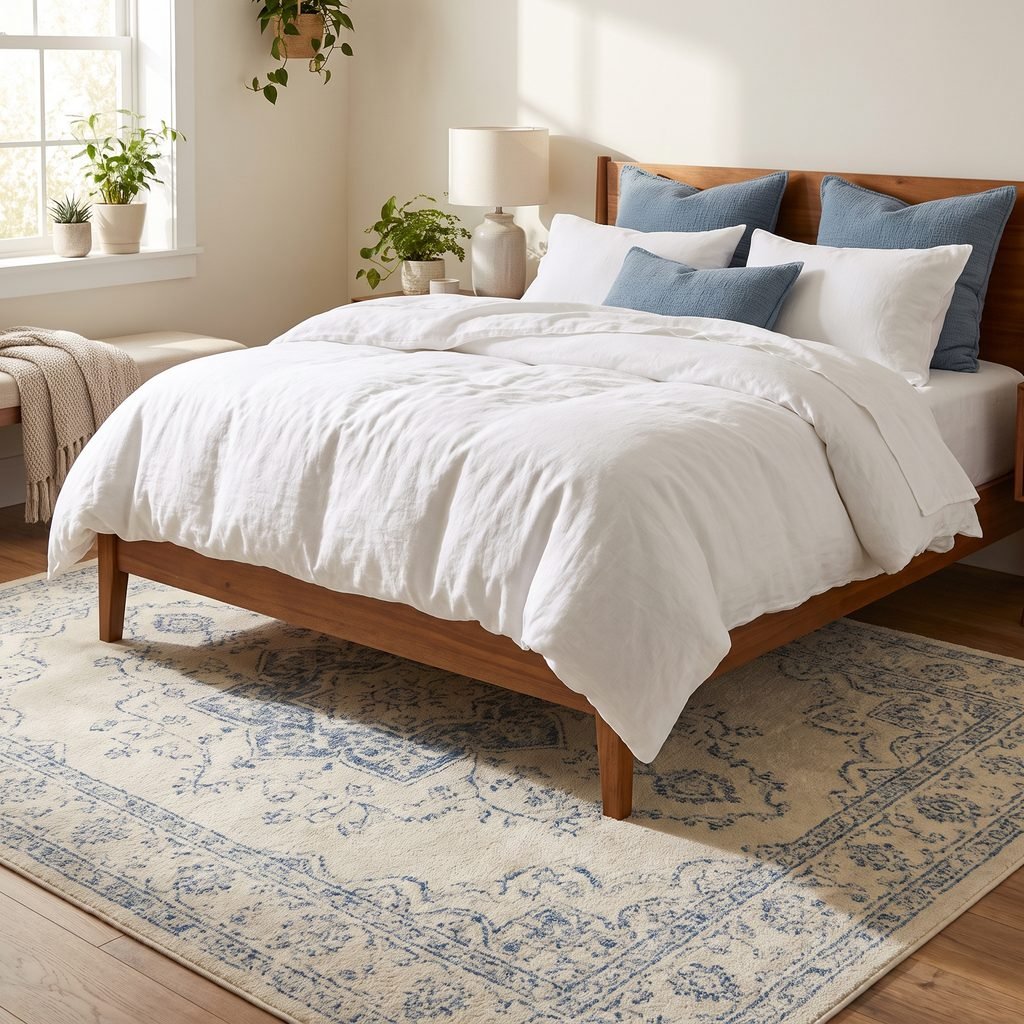
3. Consider the Flooring Color
Your floor creates the background for the rug.
If you have dark flooring, a lighter rug can create contrast and keep the bedroom from feeling too heavy.
If you have light flooring, you can go either direction.
A darker rug can add depth, while another light rug creates a softer layered effect.
With Warm Wood Floors
Try:
- Cream
- Ivory
- Oatmeal
- Muted blue
- Sage
- Soft rust
- Greige
With Gray Floors
Consider:
- Warm beige
- Cream
- Taupe
- Dusty blue
- Muted green
Be careful about adding another unrelated gray if the room already feels cool.
With Very Dark Floors
Lighter rugs can help visually separate the bed and furniture from the floor.
4. Pay Attention to Undertones
Two colors can both be called beige and still look completely different together.
Some beige shades lean yellow.
Others lean gray, pink, or brown.
The same applies to white, gray, blue, and green.
Look at the undertones in:
- Walls
- Flooring
- Bedding
- Furniture
Then choose a rug that works with them.
If your bedroom has warm cream walls and golden wood, a blue-gray rug may feel too cool unless there are other cool elements in the room.
A warm greige, muted blue, or soft olive might connect more naturally.
5. Use Bedding as a Color Guide
Your bed is usually the largest visual element in the bedroom.
That makes bedding a helpful starting point.
If your bedding is patterned, pull one quieter color from the pattern and repeat it in the rug.
If the bedding is solid, the rug can introduce more pattern.
For example:
White bedding + blue pillows = cream rug with muted blue pattern
Sage bedding + wood bed = beige rug with subtle green detail
Neutral bedding + black bed frame = warm neutral rug with darker accents
Repeating colors in small doses helps the room feel coordinated rather than overly matched.
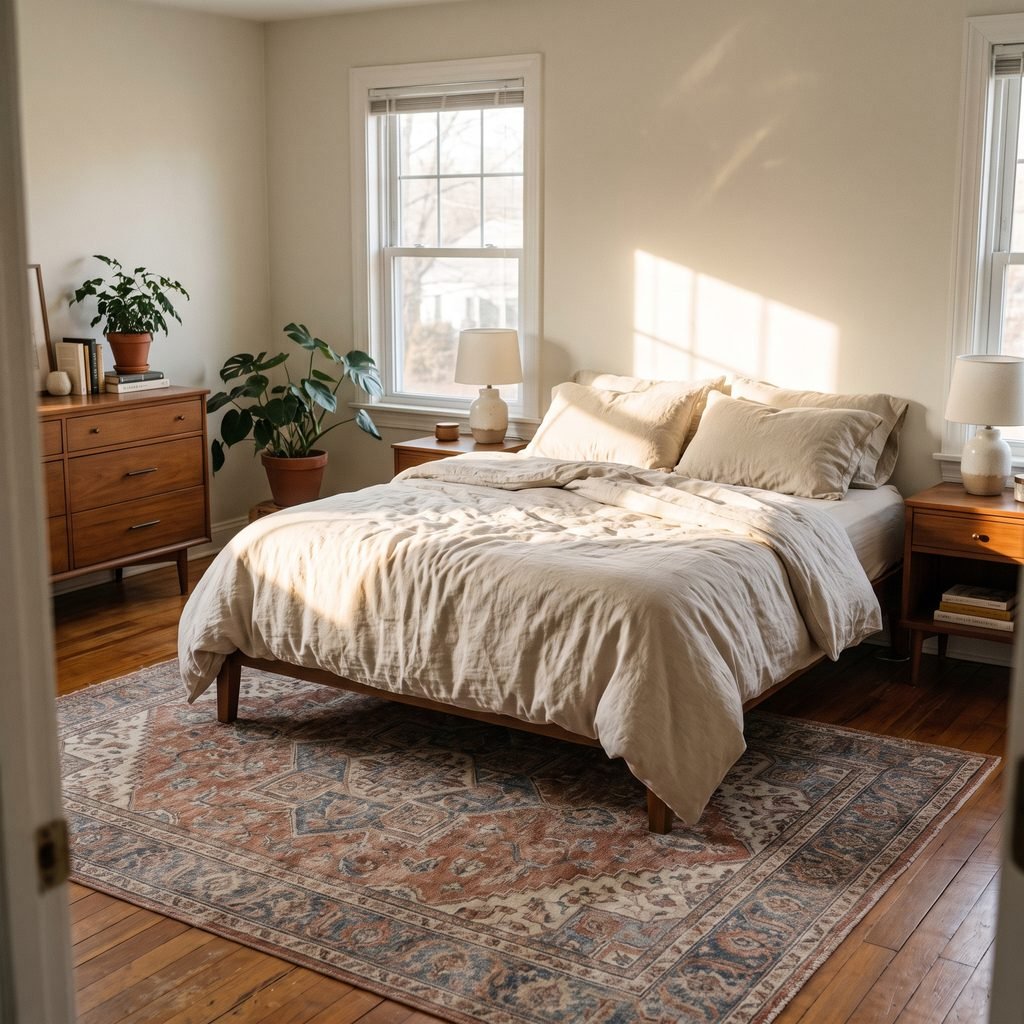
6. Keep a Neutral Bedroom From Feeling Flat
Neutral bedrooms can look beautiful, but too many similar flat colors can feel unfinished.
If your room is mostly:
- White
- Cream
- Beige
- Taupe
- Greige
choose a rug that adds texture or tonal variation.
Instead of a completely solid beige rug, look for:
- Cream and taupe pattern
- Oatmeal woven texture
- Beige with subtle charcoal detail
- Ivory with muted brown lines
You can stay neutral while still adding visual interest.
7. Use Blue for a Calm Bedroom
Blue is a natural fit for bedrooms because it can feel soft and restful.
Muted versions are especially versatile.
Try:
- Dusty blue
- Slate blue
- Blue-gray
- Soft navy
- Denim blue
A blue rug pairs well with:
- White
- Cream
- Gray
- Warm wood
- Natural linen
- Brass
- Black accents
For a lighter coastal look, combine cream and faded blue.
For a more dramatic bedroom, use navy with warm white bedding.
8. Try Green for an Earthy, Relaxed Look
Green works beautifully in bedrooms because it connects easily with natural wood and neutral textiles.
Good rug colors include:
- Sage
- Olive
- Moss
- Eucalyptus
- Muted forest green
Pair green with:
- Cream
- Tan
- Brown
- Black
- Natural wood
- Warm white
A sage-and-cream rug can feel light and fresh, while olive or forest green gives the room more depth.
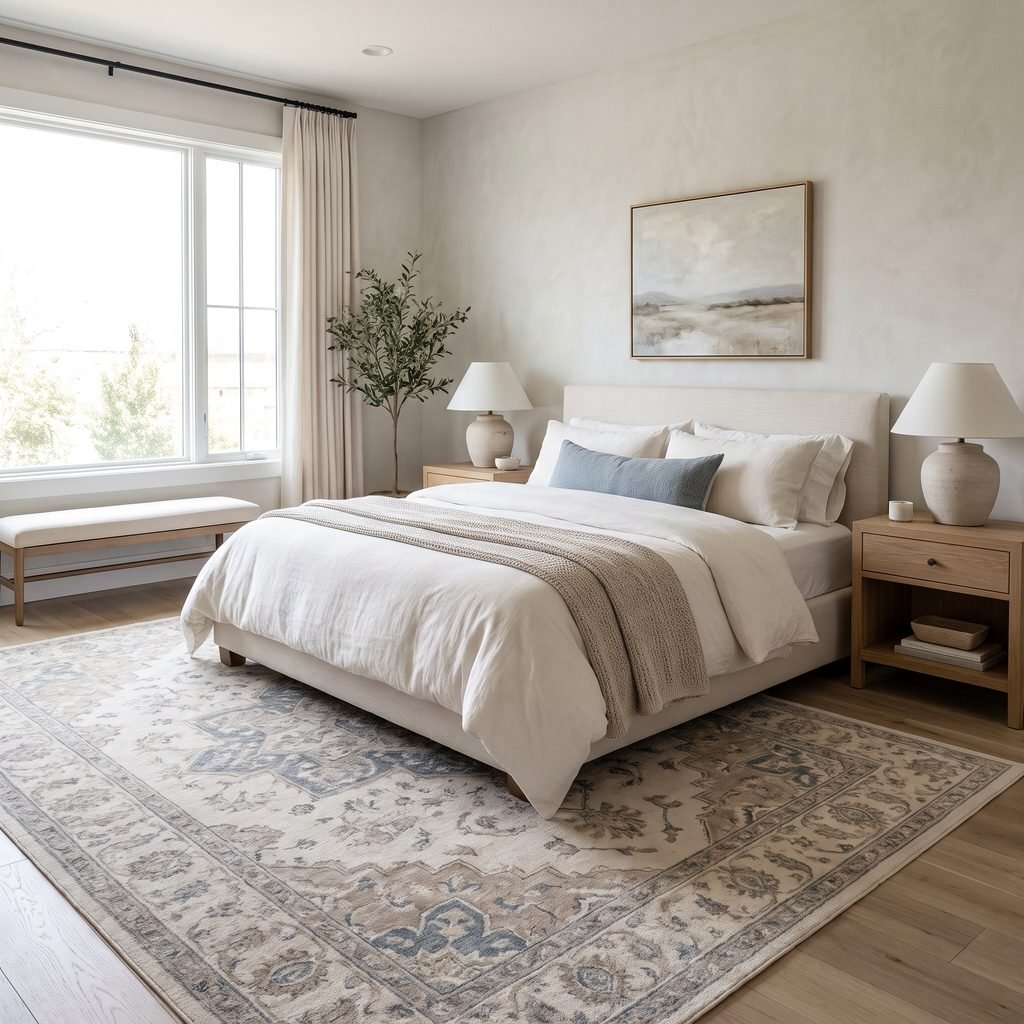
9. Use a Dark Rug to Ground a Light Bedroom
If the bedroom has:
- White walls
- Light bedding
- Pale wood furniture
a darker rug can stop the room from feeling washed out.
Try:
- Navy
- Charcoal
- Deep brown
- Dark olive
- Faded black pattern
The key is balance.
Repeat the dark rug color somewhere else in the room, such as:
- Lamps
- Picture frames
- Pillows
- Bed frame
- Curtain rods
A small amount of repetition makes the rug feel intentional.
10. Use a Light Rug to Brighten the Room
A light rug can make a bedroom feel more open and relaxed.
Good options include:
- Ivory
- Cream
- Pale beige
- Light greige
- Soft gray
- Faded pastel patterns
This works especially well in smaller bedrooms or rooms with limited natural light.
However, consider practicality.
Very light rugs may show dirt, pet hair, or spills more easily.
Choose a color that fits your household as well as your decorating style.
11. Choose Pattern When the Room Needs More Interest
A patterned rug can solve several decorating problems at once.
It can introduce:
- Color
- Movement
- Texture
- Contrast
If your bedding and curtains are mostly solid, the rug is a great place to add pattern.
Try:
- Vintage-inspired motifs
- Faded traditional pattern
- Simple geometric design
- Subtle stripe
- Botanical-inspired pattern
If the bedding is already heavily patterned, use a quieter rug.
Let one major textile take the lead rather than having every fabric compete.
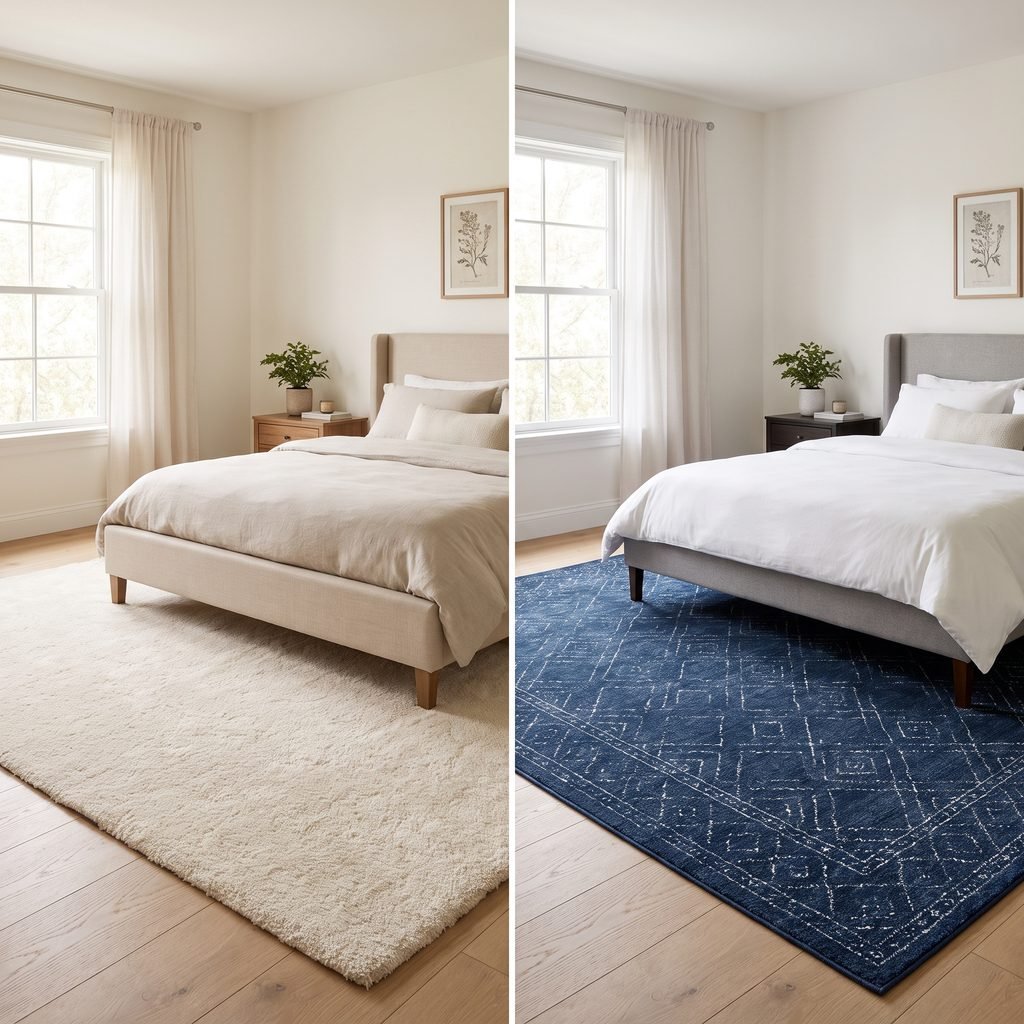
12. Think About the Mood You Want
Rug color can influence the overall mood of the bedroom.
Light and Airy
Choose:
- Ivory
- Cream
- Pale blue
- Soft sage
Warm and Cozy
Choose:
- Taupe
- Rust
- Brown
- Olive
- Warm beige
Moody and Dramatic
Choose:
- Navy
- Charcoal
- Forest green
- Deep brown
Soft and Romantic
Choose:
- Blush
- Dusty rose
- Lavender-gray
- Warm cream
Start with the mood, then narrow down the color.
13. Coordinate With Curtains Without Matching Them
Your rug and curtains should relate to each other, but they do not need to match.
If the curtains are solid, the rug can introduce pattern.
If the curtains have a noticeable print, use a quieter rug.
You can connect them by repeating one color.
For example:
Cream curtains + blue patterned rug
or
Olive curtains + neutral rug with small green detail
This creates a layered look without making the room feel overly coordinated.
14. Consider How Much of the Rug Will Be Visible
Bedroom rugs are often partially hidden under the bed.
That means the most important area is usually what you can see along the sides and foot of the bed.
Before choosing a bold pattern, think about which section will remain visible.
A large central medallion may disappear almost completely beneath the bed.
A border or all-over pattern may work better.
Use painter’s tape to mark the rug size on the floor before buying so you can visualize exactly where the design will show.
15. Bring Home Samples Before Committing
Colors change dramatically depending on lighting.
A rug that looks beige online may appear:
- Gray
- Yellow
- Pink
- Green
in your bedroom.
If possible, order samples or view the rug in person.
Look at it beside:
- Flooring
- Bedding
- Wall paint
- Furniture
Check it in morning, afternoon, and evening light.
If you cannot get a sample, review close-up photos and customer images carefully, while remembering that screens can still change color.
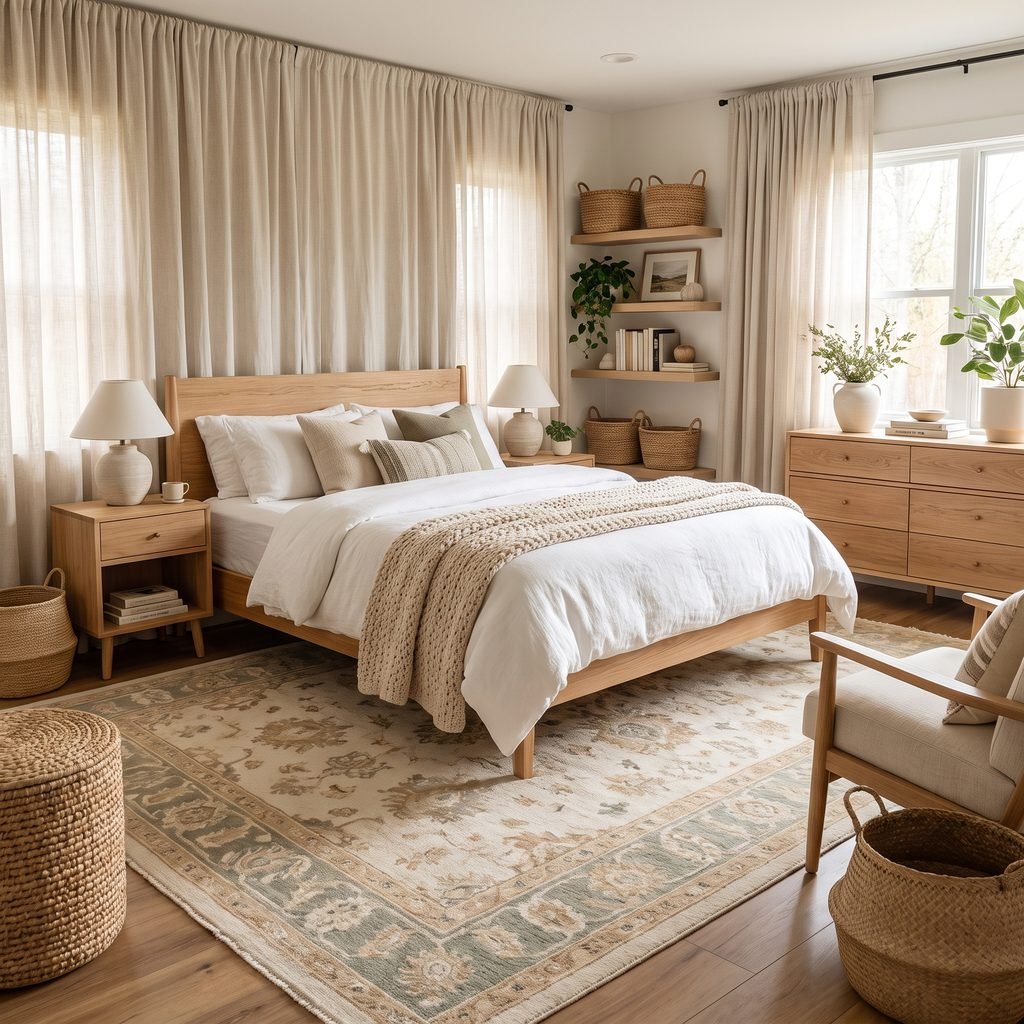
What Color Rug Goes With a White Bedroom?
White gives you plenty of options.
For a calm look, try:
- Beige
- Cream
- Greige
- Soft blue
- Sage
For more contrast, try:
- Navy
- Charcoal
- Forest green
- Brown
- Black-and-cream pattern
If the room feels stark, use a warmer rug instead of another cool white.
Natural beige, taupe, muted rust, and warm blue can soften the space.
What Color Rug Goes With a Gray Bedroom?
First determine whether the gray is warm or cool.
For a cool gray bedroom, consider adding warmth with:
- Cream
- Beige
- Warm taupe
- Muted blue
- Soft rust
For a warmer gray, try:
- Ivory
- Sage
- Blue-gray
- Charcoal
- Greige
Avoid layering too many nearly identical gray shades unless texture provides enough contrast.
What Color Rug Goes With Beige Walls?
Beige works well with:
- Cream
- Brown
- Olive
- Muted blue
- Rust
- Taupe
- Soft black
For a calm room, use a beige-and-cream patterned rug.
For more personality, bring in blue, green, or muted rust.
What Color Rug Goes With a Blue Bedroom?
You do not need another blue rug.
Try balancing the blue with:
- Cream
- Warm beige
- Taupe
- Natural brown
- Soft gray
If you do want blue, use a different depth.
For example, pale blue walls can work beautifully with a rug that includes deeper navy details.
What Color Rug Goes With Green Walls?
Green pairs naturally with earthy neutrals.
Try:
- Cream
- Beige
- Taupe
- Natural brown
- Charcoal
- Warm white
For more color, look for a rug with muted rust or faded blue alongside green.
Avoid matching the exact wall color unless you intentionally want a monochromatic room.
Rug Colors for Dark Wood Furniture
Dark furniture already adds visual weight.
A lighter rug can create balance.
Try:
- Ivory
- Oatmeal
- Light greige
- Cream and blue
- Beige and sage
A dark rug can still work if the room is large and bright, but make sure the entire space does not become too heavy.
Rug Colors for Light Wood Furniture
Light oak and pale wood work beautifully with:
- Warm white
- Taupe
- Sage
- Muted blue
- Rust
- Charcoal
This combination is especially effective in Scandinavian, organic modern, coastal, and transitional bedrooms.
Rug Colors for Black Bedroom Furniture
Black furniture creates clear contrast.
Soften it with:
- Cream
- Beige
- Warm greige
- Faded blue
- Muted green
Or embrace the contrast with a black-and-cream patterned rug.
Repeating black lightly within the rug can help tie the furniture into the rest of the room.
How to Choose a Rug Color for a Small Bedroom
A small bedroom does not automatically need a white rug.
What matters more is avoiding a color combination that chops the room into too many disconnected sections.
Light and medium tones can help create continuity.
Try:
- Cream
- Beige
- Faded blue
- Sage
- Soft greige
A larger rug in a calm color may make the room feel more spacious than a tiny light rug.
How to Choose a Rug Color for a Large Bedroom
Large bedrooms can handle more contrast.
Consider:
- Dark navy
- Olive
- Charcoal
- Rich brown
- Strong vintage-inspired patterns
A substantial rug can visually anchor a bed that might otherwise feel lost in a large room.
Make sure the color is repeated elsewhere in small amounts.
How to Coordinate a Rug With a Bed Frame
The rug does not need to match the bed frame.
Instead, create contrast or repetition.
Wood Bed Frame
Try cream, blue, sage, taupe, or charcoal.
Black Bed Frame
Try warm beige, ivory, faded blue, or a rug with small black accents.
Upholstered Bed
Pull one undertone from the fabric.
A warm beige upholstered bed pairs naturally with warm cream, taupe, muted blue, or green.
How to Make a Bedroom Rug Look More Expensive
You do not necessarily need an expensive rug.
Styling makes a big difference.
Choose the Correct Size
An appropriately scaled rug looks more intentional.
Use a Rug Pad
A compatible pad can improve stability and help the rug feel more substantial.
Choose Muted Colors
Slightly softened colors often feel more sophisticated than very bright tones.
Repeat One Rug Color
Bring one shade into pillows, artwork, or curtains.
Avoid Matching Everything
Layered rooms usually feel more interesting than perfectly matched sets.
Keep the Rug Flat
Curling edges immediately make the room feel less polished.
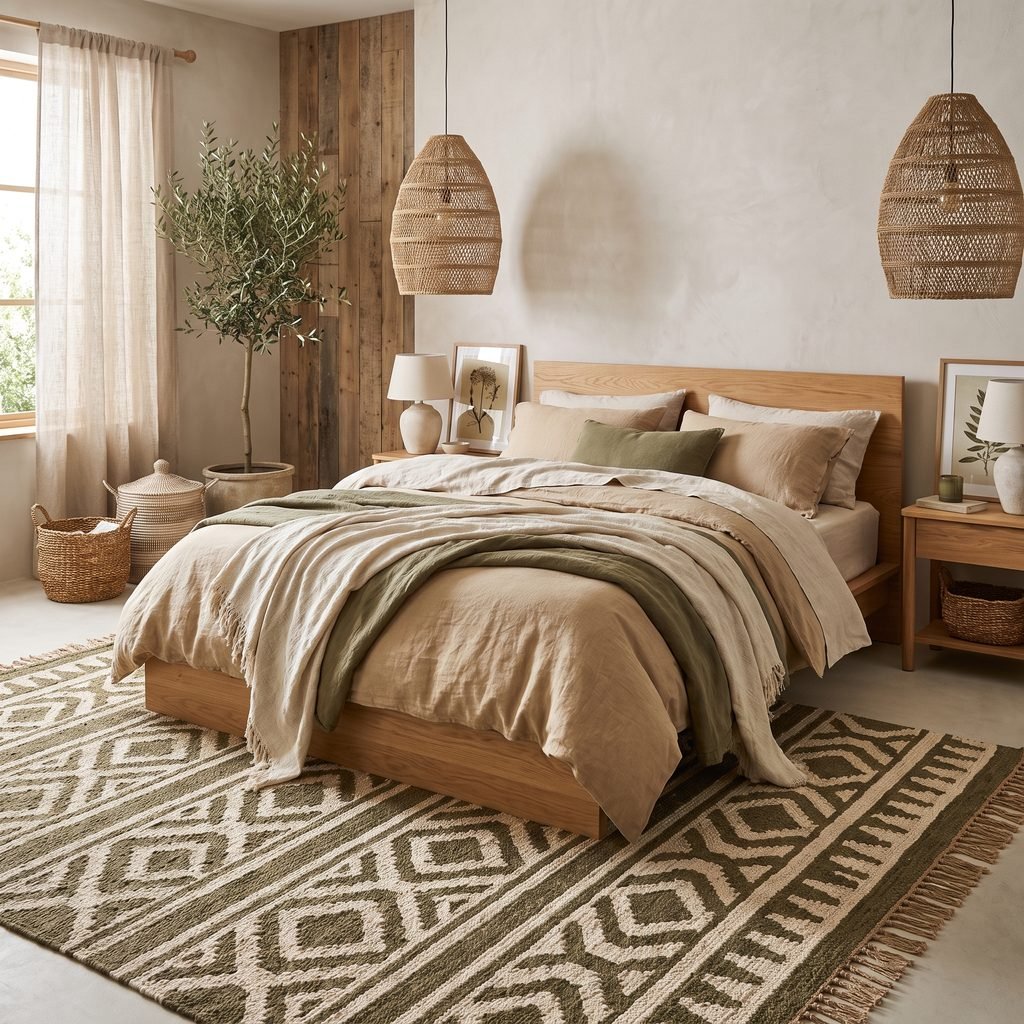
Common Bedroom Rug Color Mistakes
Matching the Rug Exactly to the Bedding
The room can start to look overly coordinated.
Ignoring the Floor Color
The rug needs to work with what surrounds it.
Choosing a Cool Rug for a Very Warm Room
Undertone clashes can make colors look wrong even when they are beautiful individually.
Buying From a Tiny Online Image
Rug colors often appear different in person.
Choosing Too Many Strong Colors
Give the room one or two dominant colors and let the rest support them.
Forgetting About Practicality
A pure white rug may not be the best fit for pets, children, or heavy traffic.
Focusing on Color but Ignoring Size
Even the perfect color will not look right if the rug is dramatically undersized.
Bedroom Rug Safety and Practical Tips
A rug should also be comfortable and secure.
Keep these points in mind:
- Use a rug pad or non-slip solution compatible with both the rug and flooring.
- Make sure corners and edges lie flat.
- Keep rug edges away from awkward walking paths where possible.
- Check door clearance before placing rugs near bedroom doors.
- Follow flooring manufacturer guidance before using pads or adhesives.
- Be cautious with rug pads on newly refinished or specialty flooring.
- Choose materials appropriate for your cleaning needs.
- Secure runners beside the bed if they tend to slide.
- Consider low-profile rugs when mobility or tripping concerns are important.
FAQ About Choosing a Bedroom Rug Color
Should a bedroom rug be lighter or darker than the floor?
Either can work. A lighter rug creates contrast against dark floors, while a darker rug can ground pale flooring. The goal is enough contrast for the rug to feel intentional.
Should the rug match the bedding?
It should coordinate rather than match exactly. Repeating one bedding color in the rug is often enough.
What rug color makes a bedroom look bigger?
Light to medium colors such as cream, beige, pale blue, and soft greige can create an airy look, especially when paired with a sufficiently large rug.
What is a timeless bedroom rug color?
Cream, beige, muted blue, taupe, greige, and soft green are versatile because they work with many decorating styles.
Can I use a dark rug in a small bedroom?
Yes. A dark rug can work if the room has enough light and the rest of the palette is balanced. Size and overall contrast matter as much as color.
Should a rug match the curtains?
No. Coordinate the two by repeating a color or undertone rather than choosing an exact match.
What if my bedroom has several wood tones?
Choose a rug that relates to the shared undertone rather than trying to match one wood species. Cream, taupe, blue, and muted green often work well with mixed woods.
Final Thoughts
Learning how to choose a rug color for your bedroom becomes much easier when you start with the room you already have.
Look first at the flooring, walls, bed, bedding, curtains, and furniture.
Then decide whether you want the rug to blend quietly into the palette or provide more contrast.
For a soft bedroom, consider cream, beige, greige, muted blue, or sage.
For a warmer room, try taupe, olive, rust, or natural brown.
For stronger contrast, navy, charcoal, forest green, and darker patterns can help ground lighter furniture and bedding.
Most importantly, pay attention to undertones and test colors in the actual room whenever possible.
The right bedroom rug does not need to match every element perfectly.
It simply needs to connect enough of the room’s colors that the whole space feels calm, intentional, and pulled together.