

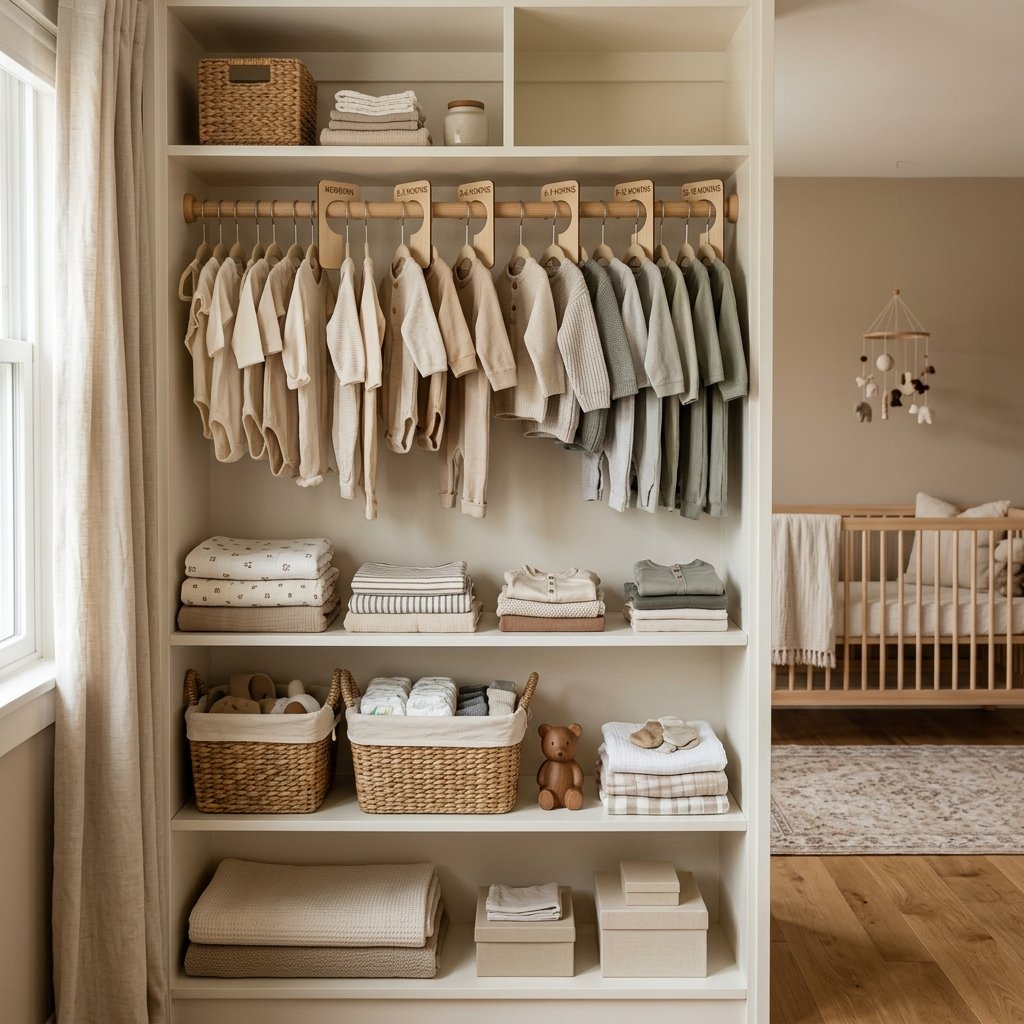
A baby’s organized closet can make everyday nursery routines much easier.
Baby clothes are tiny, but they add up quickly. Between sleepers, onesies, socks, blankets, diapers, shoes, keepsakes, and clothes in multiple sizes, even a decent-size closet can feel crowded fast.
The best baby closet organization system is not the one with the most bins or labels.
It is the one that makes it easy to find what fits right now, store the next size up, and move out anything your baby has already outgrown.
Start by organizing around how often you use each item. Keep everyday essentials within easy reach, move future sizes higher, and use simple categories so putting things away does not become another chore.
Here are 17 practical baby closet organization ideas to create a tidy, functional nursery closet that can grow with your child.
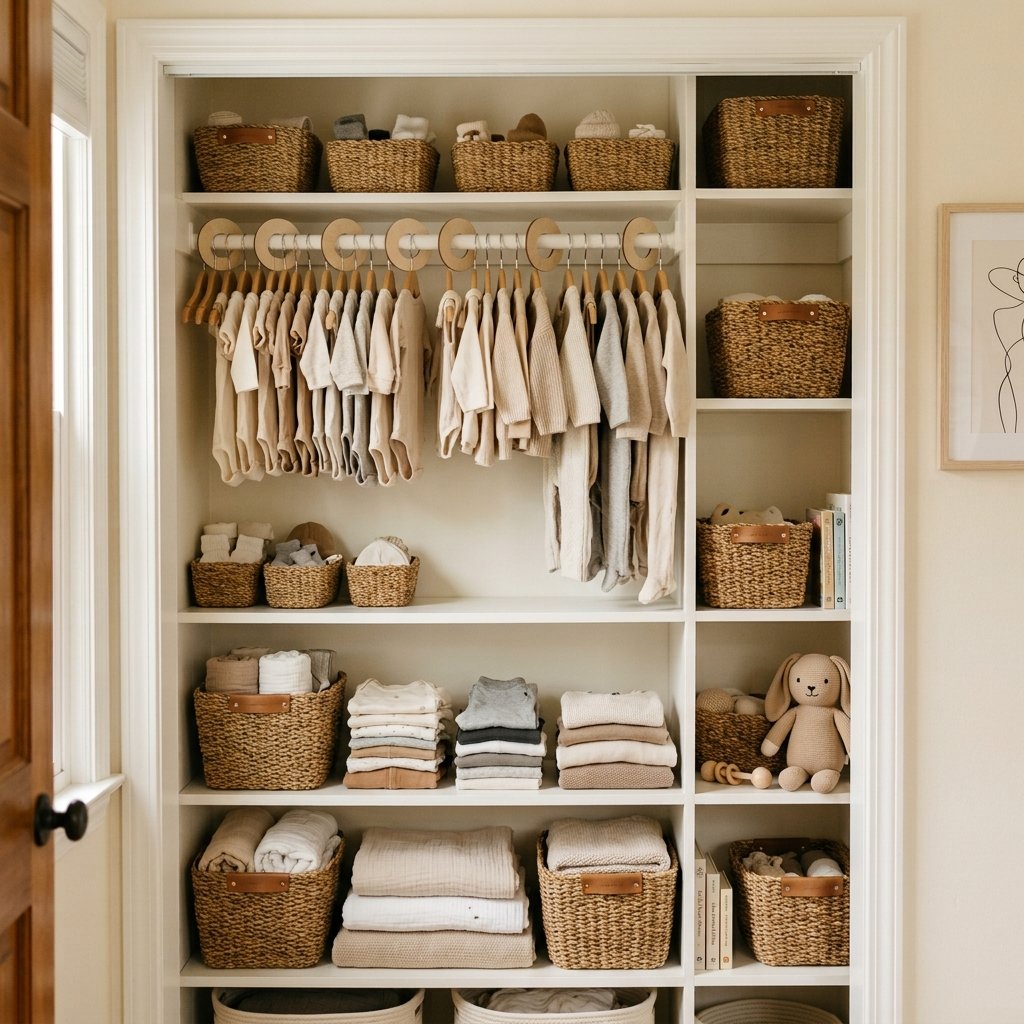
1. Empty the Closet Before Organizing
Before adding bins, dividers, or extra shelves, take everything out.
This makes it easier to see:
- How much hanging space you have
- Where shelves could be useful
- Which items actually need to stay in the closet
- What your baby has already outgrown
- Which clothes are still too large
Sort everything into broad categories first.
Try:
- Fits now
- Next size
- Future sizes
- Outgrown
- Donate or pass along
- Keepsakes
Starting with less clutter makes every other organization step easier.
2. Organize Baby Clothes by Size
One of the simplest baby closet organization systems is sorting clothing by size.
Keep the size your baby currently wears in the easiest-to-reach section.
Move the next one or two sizes nearby so you can access them quickly when a growth spurt happens.
Larger future sizes can go higher or farther back.
Closet dividers can help separate categories such as:
- Newborn
- 0–3 months
- 3–6 months
- 6–9 months
- 9–12 months
- 12 months and up
Sizing varies between clothing brands, so use the labels as a general guide rather than assuming every item will fit at exactly the same time.
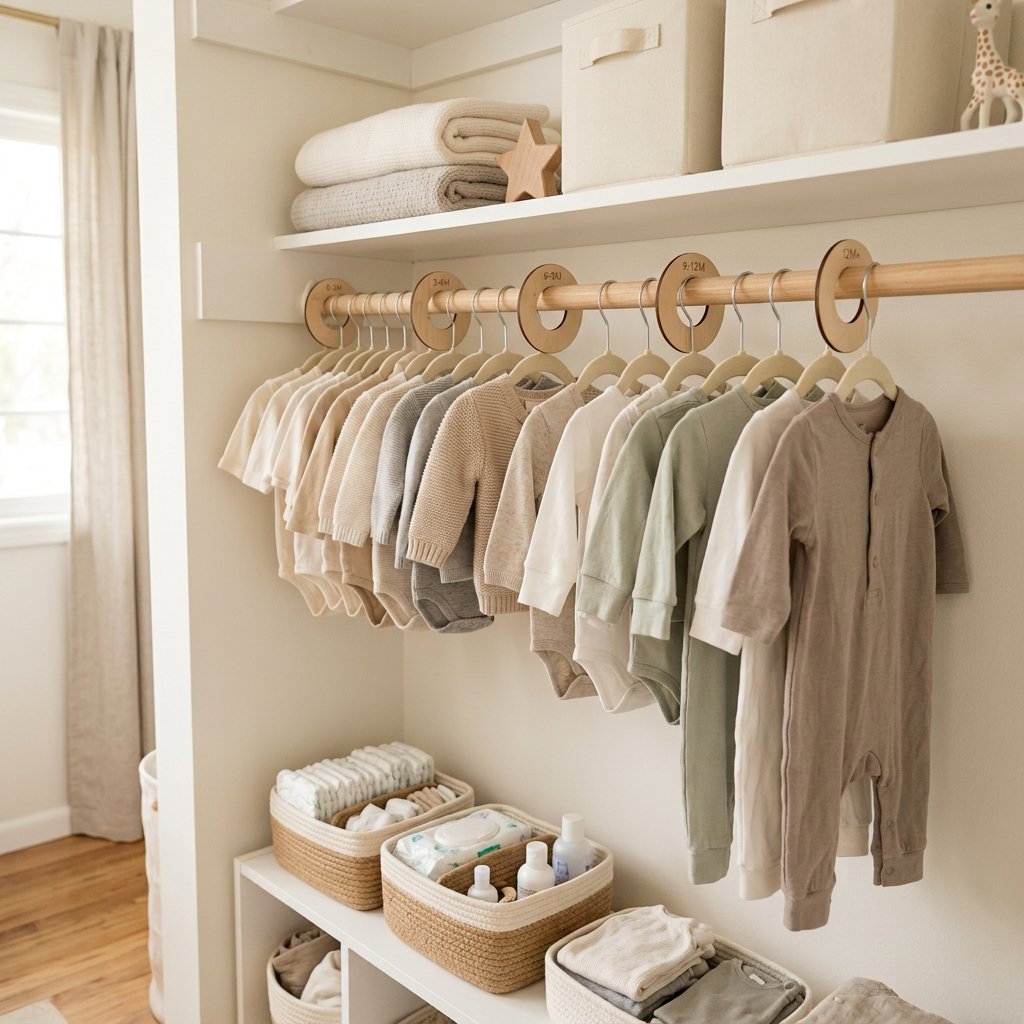
3. Add a Second Closet Rod
Baby clothes are much shorter than adult clothes.
That means a standard closet often leaves a large amount of unused vertical space below the hanging rod.
A second rod can turn one hanging section into two.
Use the upper rod for:
- Current outfits
- Dresses
- Jackets
- Shirts
Use the lower rod for:
- Onesies
- Pants on clip hangers
- Next-size clothing
- Everyday outfits
Make sure any added rod or organizer is securely installed and rated for the intended load.
4. Use Matching Baby Hangers
Matching hangers instantly make the closet look neater.
Slim baby-size hangers also help you fit more clothing on the rod.
Look for hangers that:
- Fit small garments
- Do not stretch necklines
- Have smooth edges
- Stay securely on the rod
Avoid overpacking the hanging area.
A little breathing room makes it much easier to see and grab individual outfits.
5. Keep Everyday Clothes at Eye Level
The items you reach for most should be easiest to access.
Keep everyday clothing such as:
- Onesies
- Sleepers
- Outfits
- Jackets
near the center of the closet.
Save higher shelves for items you use less often.
This simple change can make dressing your baby much faster, especially during busy mornings.
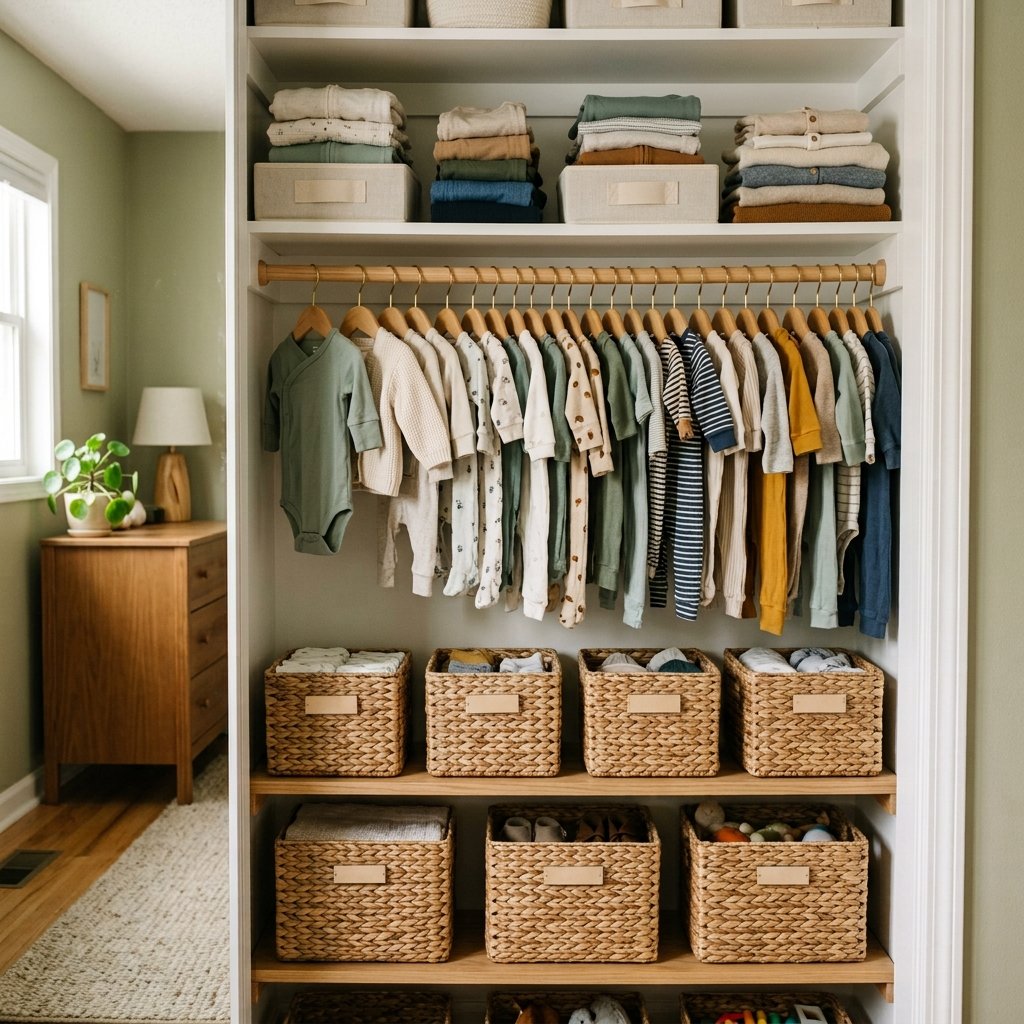
6. Use Baskets for Small Items
Baby closets are filled with tiny pieces that can easily become cluttered.
Baskets work well for:
- Socks
- Hats
- Bibs
- Swaddles
- Burp cloths
- Shoes
- Hair accessories
Choose containers that fit the shelf rather than buying baskets first and hoping they work.
Open baskets are convenient for frequently used items.
Lidded containers can work better for long-term storage.
7. Label the Baskets
Labels make it easier for everyone in the household to put things back in the right place.
Use simple categories such as:
- Socks
- Bibs
- Hats
- Blankets
- Shoes
- Next size
Avoid creating overly specific categories.
If the system takes too much effort to maintain, it probably will not stay organized.
Simple labels work best.
8. Create a Dedicated “Next Size” Bin
Babies can outgrow clothing surprisingly quickly.
Keep one clearly marked basket or bin for the next clothing size.
When something becomes too small, check the next-size container before buying more clothes.
This helps you see what you already own.
It can also prevent forgotten outfits from remaining in storage until they are already too small.
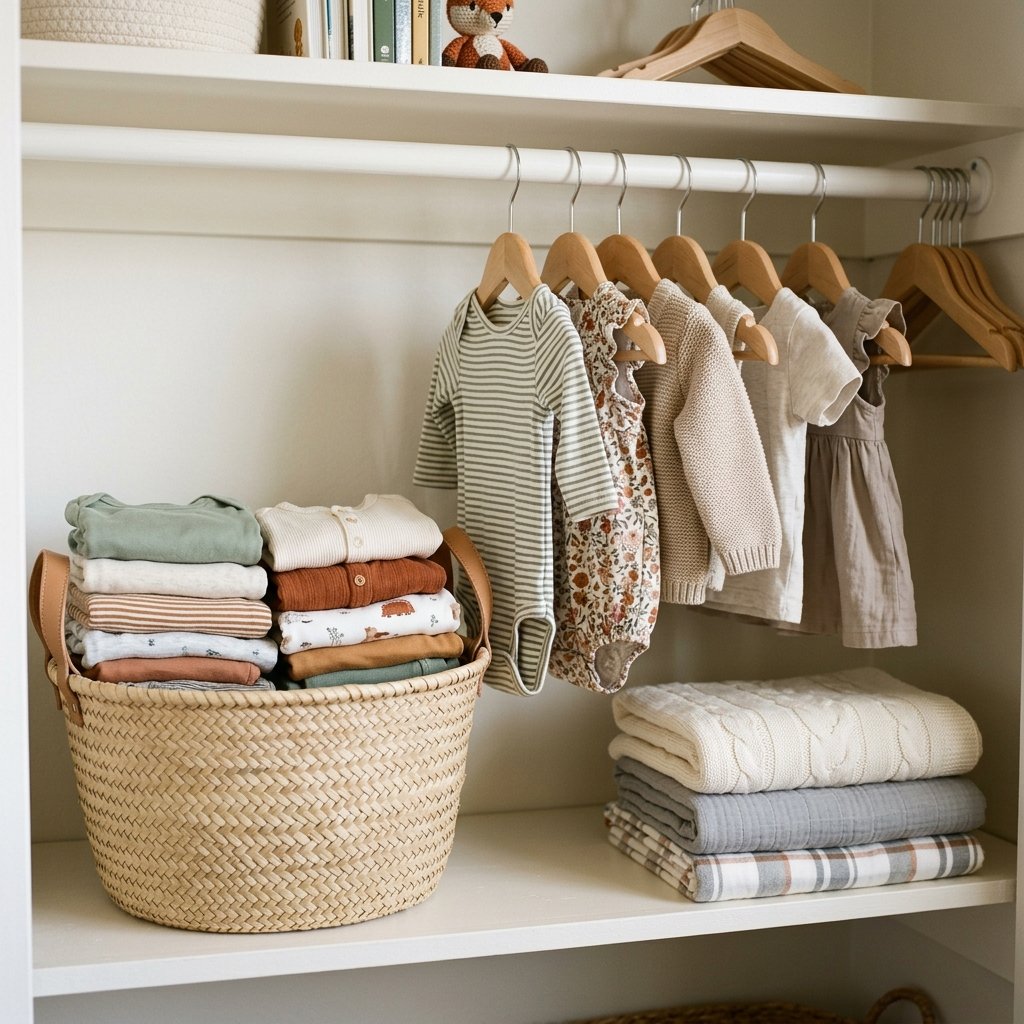
9. Add an Outgrown Clothes Basket
Create a dedicated place for anything that no longer fits.
Instead of returning a too-small outfit to the closet, put it directly into the outgrown basket.
Once the basket is full, decide what to:
- Store
- Donate
- Sell
- Pass along
- Keep as a memory
This small system prevents the closet from filling with clothes your baby can no longer wear.
10. Fold Bulky Items on Shelves
Not everything needs to hang.
Fold bulkier items such as:
- Blankets
- Sleep sacks
- Towels
- Extra crib sheets
- Seasonal clothing
Stack similar items together.
Avoid creating very tall piles that fall over every time you remove one item.
Shelf dividers or smaller baskets can help keep folded stacks contained.
11. Use the Top Shelf for Future Sizes
Higher shelves are ideal for things you do not need every day.
Store:
- Future clothing sizes
- Seasonal items
- Keepsakes
- Extra bedding
- Backup supplies
Use lightweight containers where possible.
Avoid placing heavy or breakable items overhead where they could fall while you are reaching for them.
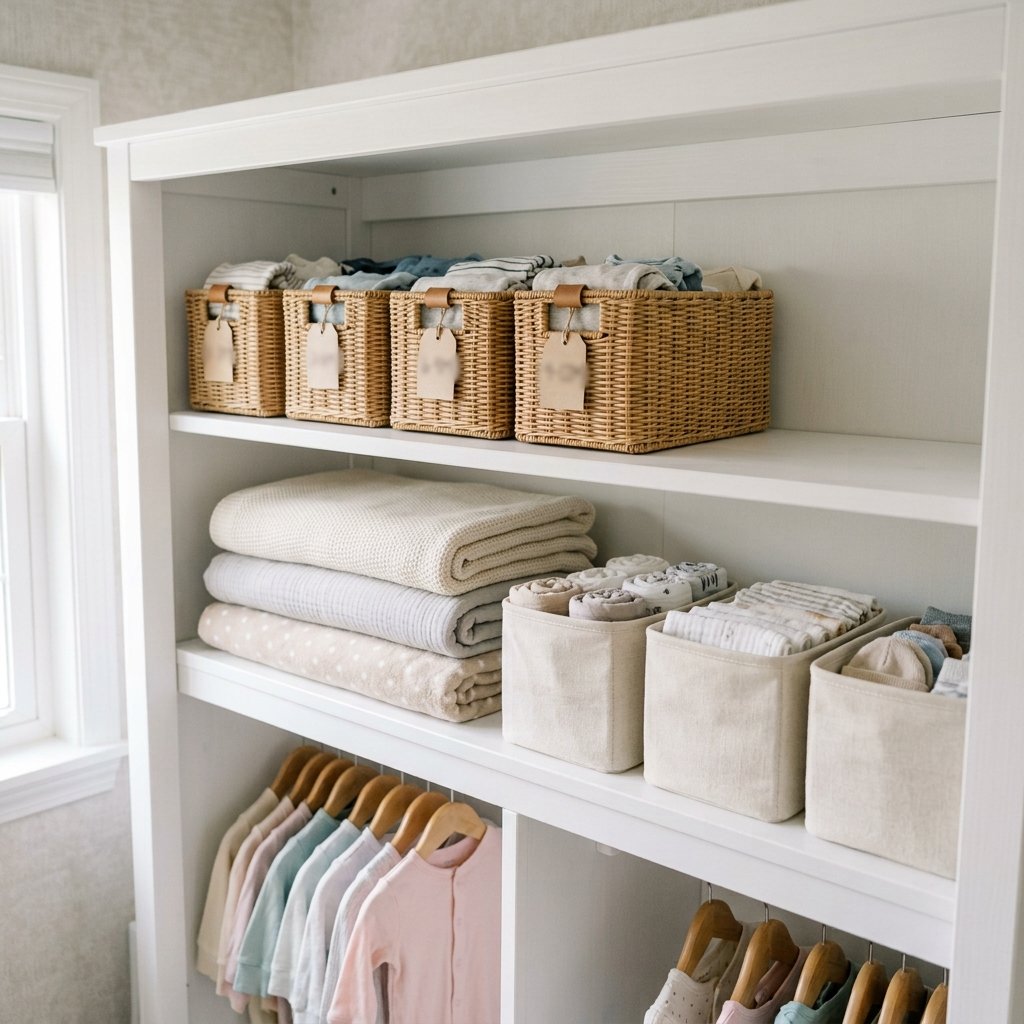
12. Make Use of the Closet Door
The back of the closet door can add extra storage in a small nursery.
Depending on the door style, an organizer can hold:
- Shoes
- Socks
- Hats
- Small blankets
- Diaper supplies
- Accessories
Do not overload the door or use an organizer that interferes with safe opening and closing.
Make sure anything mounted or hung is secure.
13. Add Drawers or Small Bins Under Hanging Clothes
The floor below short baby clothes is valuable storage space.
Use it for:
- Small drawer units
- Baskets
- Shoe bins
- Diaper supplies
- Extra wipes
Measure before buying containers so they do not block the closet doors.
Choose units that remain stable and secure, especially once a child becomes mobile.
14. Keep Shoes Together
Baby shoes are easy to lose because they are so small.
Give them one dedicated area.
Try:
- Small shoe shelf
- Basket
- Clear bin
- Hanging shoe organizer
Keep current-size shoes accessible and move future sizes into storage.
Do not let the shoe collection take over valuable clothing space if many pairs rarely get worn.
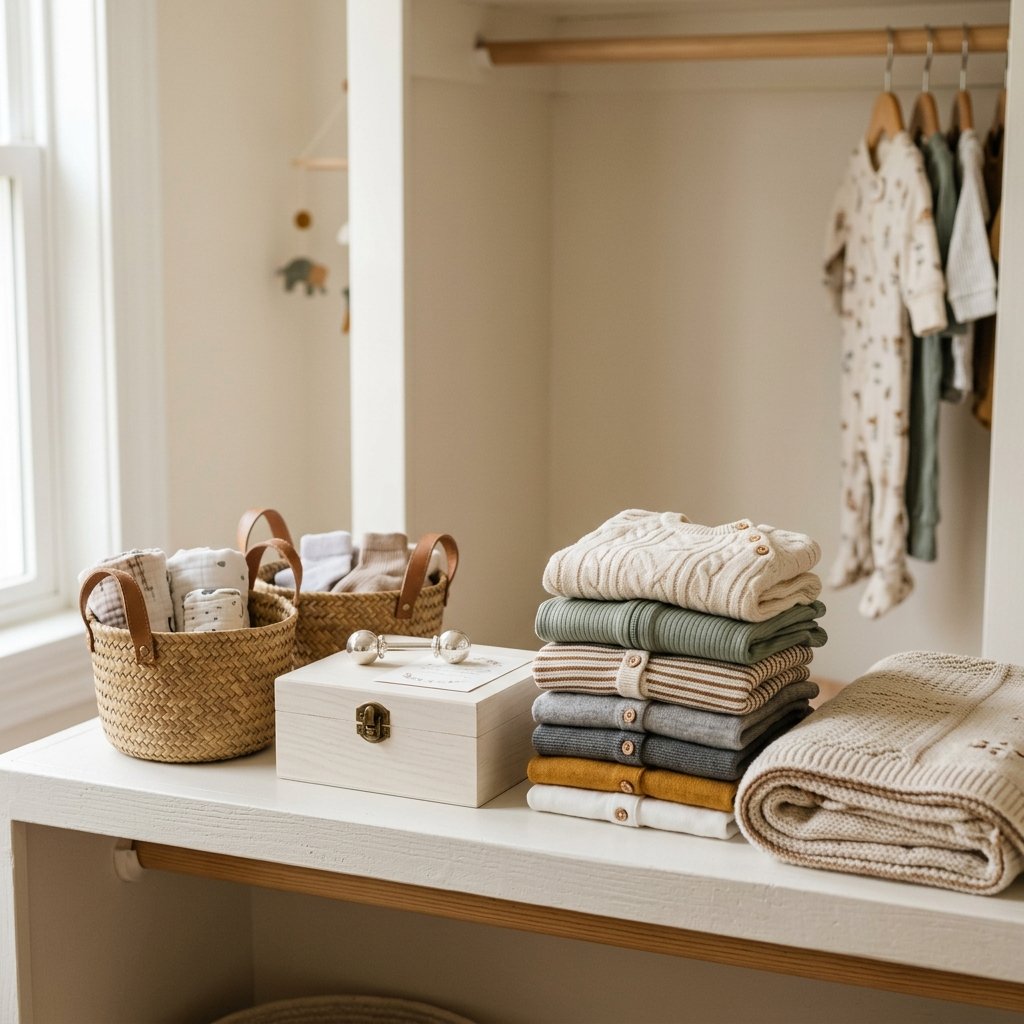
15. Create a Small Keepsake Box
Some baby items are worth saving.
Instead of mixing sentimental pieces with everyday clothes, create a dedicated keepsake box.
You might save:
- Coming-home outfit
- Favorite newborn sleeper
- Special hat
- Meaningful handmade item
Keep the collection intentional.
One small box is easier to store than several unorganized piles of sentimental clothing.
16. Rotate Clothes Regularly
A baby closet needs regular updates because sizes change quickly.
Every few weeks, scan the current section.
Remove anything that:
- No longer fits
- Is uncomfortable
- Is out of season
- Is rarely worn
Then bring in the next-size items that are ready to use.
A quick rotation prevents the closet from slowly becoming overcrowded.
17. Leave a Little Empty Space
You do not need to fill every shelf, basket, and rod.
Empty space makes the closet easier to use.
It gives you room for:
- New gifts
- Clothing in the next size
- Seasonal changes
- Extra supplies
A closet packed completely full may look organized for one day but can become difficult to maintain.
Aim for a system that has room to change.
How to Organize a Small Baby Closet
A small baby closet can still hold a surprising amount when you use the vertical space well.
Start with:
- Two hanging levels
- Shelf baskets
- One next-size bin
- One outgrown bin
- Door storage if appropriate
Avoid storing unrelated household items in the nursery closet if space is limited.
Keeping the closet dedicated to baby essentials makes the system easier to maintain.
Baby Closet Organization Without Built-In Shelves
You do not need a custom closet system.
Try:
- Freestanding shelving
- Hanging fabric shelves
- Small drawer units
- Stackable bins
- Second hanging rod
Measure carefully before adding anything.
If you install permanent shelving, use hardware appropriate for the wall and expected weight.
How to Organize Baby Clothes by Size
Keep the current size front and center.
Then arrange upcoming sizes in order.
For example:
Current size → next size → future sizes
Do not rely on the size label alone.
Some brands run larger or smaller, and babies grow at different rates.
Periodically compare future outfits with clothing that currently fits so you do not miss the chance to use them.
How to Organize Baby Clothes by Type
You can also organize within each size by garment type.
For example:
- Sleepers
- Onesies
- Tops
- Pants
- Dresses or outfits
- Jackets
This works particularly well if your baby has a large wardrobe.
For smaller wardrobes, simply separating everyday clothes from special outfits may be enough.
What Should Be Hung in a Baby Closet?
Hanging is useful for anything that is easier to see vertically.
Consider hanging:
- Outfits
- Dresses
- Shirts
- Sweaters
- Jackets
- Rompers
Fold items that do not benefit much from hanging, especially very small basics.
There is no need to hang every onesie if drawers or baskets make more sense for your routine.
What Should Be Folded?
Fold items such as:
- Sleepers
- Onesies
- Pants
- Blankets
- Sleep sacks
- Sheets
The goal is not to follow a strict rule.
Use the storage method that allows you to see and retrieve things most easily.
How to Organize Baby Blankets
Blankets can quickly take up an entire shelf.
Sort them by use.
You might keep separate groups for:
- Lightweight blankets
- Stroller blankets
- Receiving blankets
- Keepsake blankets
Store the ones you use most at an easy height.
Move sentimental or rarely used blankets higher.
Remember that loose blankets should not be placed in an infant’s sleep space.
How to Organize Baby Shoes
Sort baby shoes by current and future size.
Keep current shoes together in a small basket or shelf.
Store future-size shoes separately.
Periodically check whether they still fit rather than relying only on the printed size.
How to Organize Baby Accessories
Small accessories benefit from smaller containers.
Use baskets or drawer dividers for:
- Socks
- Hats
- Bibs
- Hair accessories
- Mittens
Group similar items instead of giving every individual object its own compartment.
A simpler system is easier to maintain.
Baby Closet Organization for Twins
For twins, decide whether organizing by child or by category is easier.
If they wear different sizes or have different wardrobes, separate sections may work best.
For shared basics, organize by type.
You could use:
- Left side for Baby A
- Right side for Baby B
- Shared baskets for blankets and supplies
Clear labels can make daily routines easier for everyone helping with childcare.
Gender-Neutral Baby Closet Organization
The organization system does not need to depend on a particular nursery style.
For a simple gender-neutral closet, use:
- White shelving
- Natural wood
- Cream baskets
- Clear labels
- Neutral hangers
The same practical system can work with colorful, traditional, modern, or minimalist nursery decor.
Budget-Friendly Baby Closet Organization
You do not need a custom closet renovation.
Start with what you already have.
Try:
- Reusing baskets
- Adding inexpensive labels
- Repurposing small bins
- Using matching hangers
- Installing one additional rod
- Moving unrelated clutter elsewhere
The most important improvements are usually sorting, visibility, and creating clear zones.
How to Make a Baby Closet Look More Organized
A few simple visual choices make a big difference.
Use Similar Hangers
This creates cleaner lines.
Keep Containers Consistent
Baskets do not need to be identical, but a coordinated style reduces visual clutter.
Limit Visible Categories
Do not create dozens of tiny sections.
Leave Some Open Space
This makes shelves easier to use.
Fold Items Consistently
Neat stacks look calmer and are easier to scan.
Keep Labels Simple
Use easy-to-read categories rather than decorative labels that are hard to see.
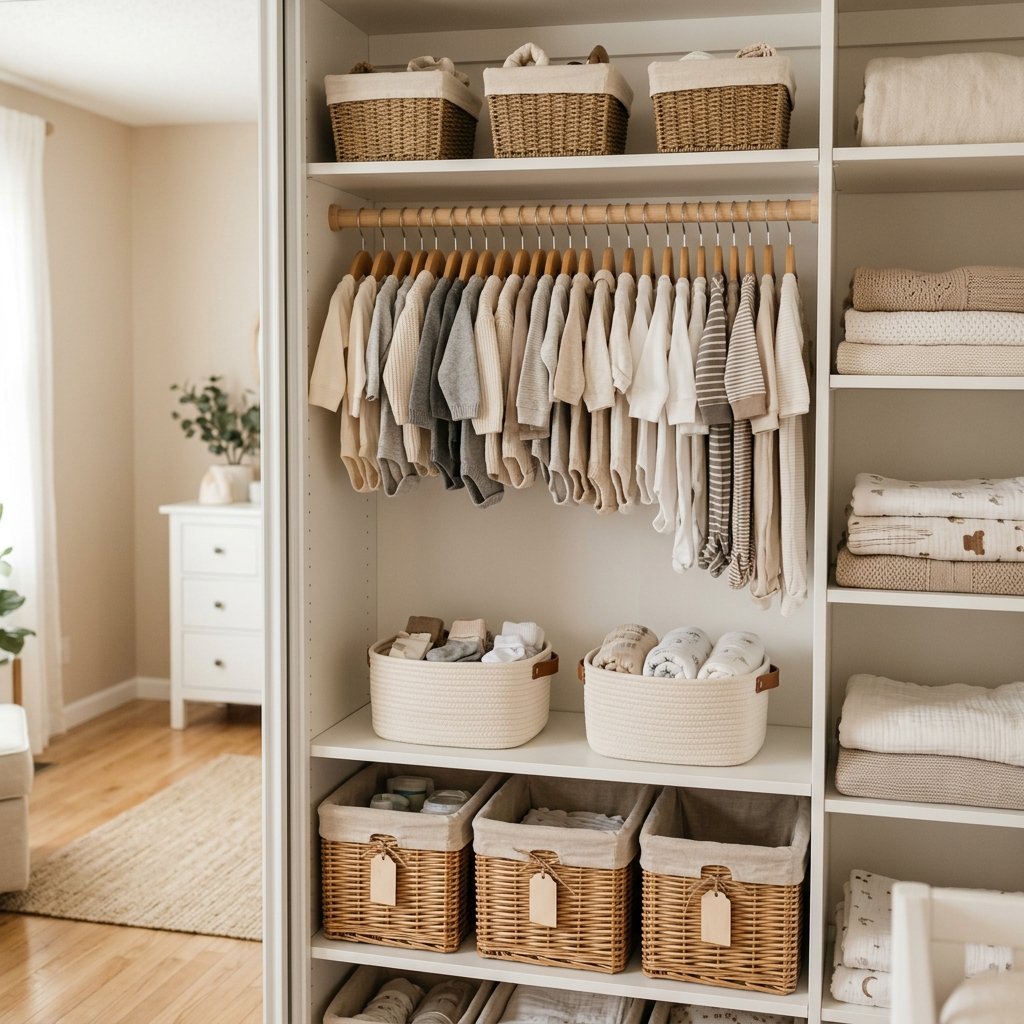
Baby Closet Organization Mistakes to Avoid
Storing Every Size Together
It becomes difficult to see what actually fits.
Forgetting to Remove Outgrown Clothes
Old sizes quickly consume valuable space.
Buying Bins Before Measuring
Pretty containers are not useful if they waste shelf space.
Creating Too Many Categories
Complicated systems are difficult to maintain.
Using Heavy Storage Overhead
Keep high shelves light and safe.
Filling Every Inch
Leave room for new clothing and changing needs.
Organizing for Appearance Instead of Routine
The cutest system is not useful if you cannot quickly find a clean sleeper at bedtime.
Baby Closet Safety Tips
A nursery closet should be organized with future mobility in mind.
Keep these practical considerations in mind:
- Secure freestanding furniture and storage units where appropriate.
- Use wall anchors and mounting hardware suitable for the surface and load.
- Keep heavy items on lower shelves.
- Avoid storing breakable objects overhead.
- Keep plastic bags and packaging away from children.
- Keep medicines, creams, cleaning products, batteries, and other hazardous items inaccessible.
- Avoid accessible long cords, ribbons, or loops.
- Check that hanging organizers and rods are secure.
- Do not let bins or furniture block closet doors or walking paths.
- Reassess the closet as the baby begins crawling, standing, and climbing.
FAQ About Baby Closet Organization
What is the best way to organize a baby closet?
Organize current clothing where it is easiest to reach, separate items by size or type, and create dedicated storage for next-size and outgrown clothing.
How do you organize baby clothes when you have several sizes?
Keep the current size accessible, place the next size nearby, and store larger future sizes higher or farther back.
Are closet dividers useful for baby clothes?
Yes. They make it much easier to separate sizes and see which clothes should be used next.
How often should I reorganize a baby closet?
Do a quick check whenever clothing starts feeling tight or the closet begins getting crowded. Baby wardrobes often need more frequent rotation than adult closets.
Should I hang or fold baby clothes?
Use whichever method makes the items easiest to see. Special outfits, jackets, and rompers often work well hanging, while onesies, sleepers, and pants can be folded.
How do I organize a baby closet on a budget?
Start by decluttering, reuse containers you already own, add simple labels, and take advantage of unused vertical space before buying a custom system.
How do I keep a baby closet organized?
Give everything a simple home and maintain one bin for outgrown clothing. Removing small clothes immediately prevents most clutter from building up.
Final Thoughts
Creating a baby’s organized closet does not require a complicated custom storage system.
The most effective setup is usually simple.
Keep the clothes your baby wears now within easy reach. Store the next size nearby. Move future sizes higher, and create one dedicated place for anything that has already been outgrown.
Use baskets for small accessories, take advantage of the vertical space, and avoid filling every shelf.
Most importantly, design the closet around your daily routine.
A system that helps you quickly find a sleeper, clean bib, blanket, or next-size outfit will be much easier to maintain than one designed only to look perfect.
With a few clear zones and regular clothing rotations, even a small nursery closet can stay tidy, practical, and ready to grow along with your baby.