

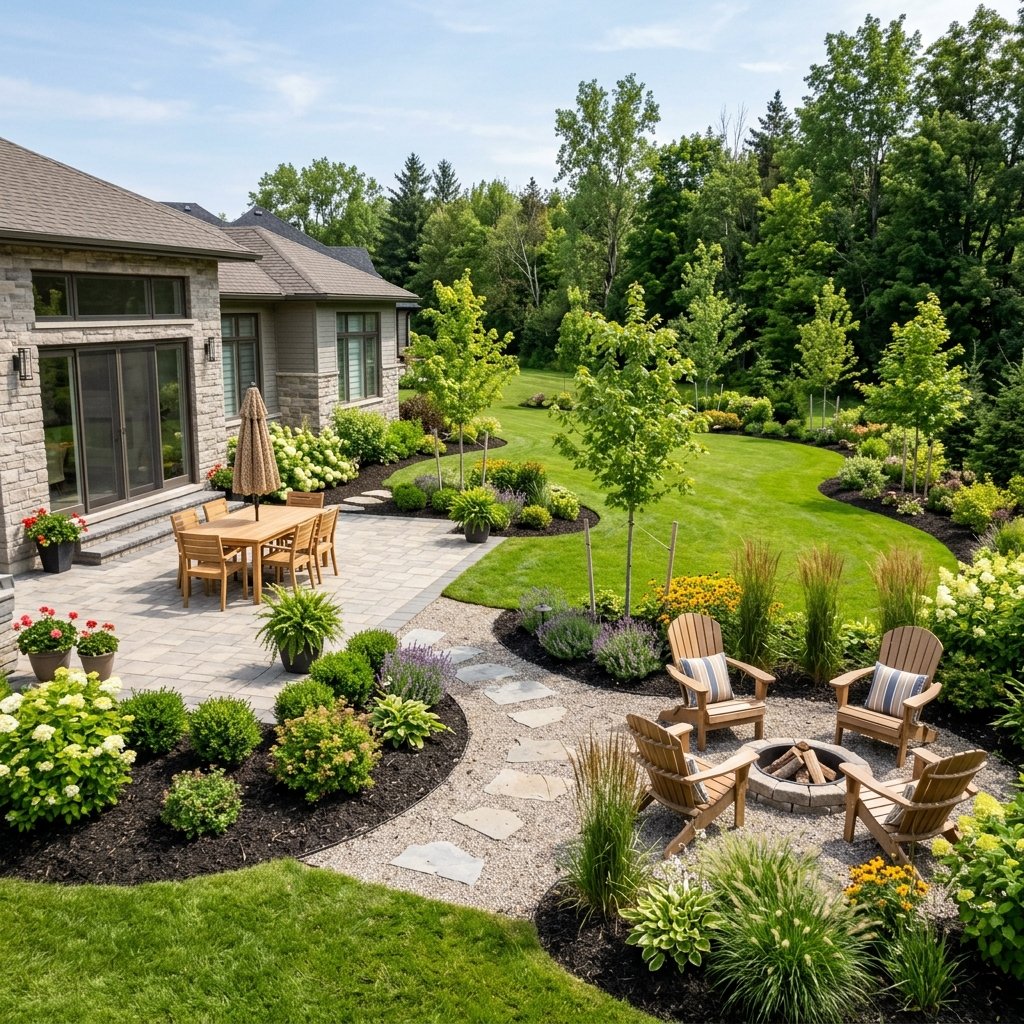
A large backyard gives you more room to work with, but that does not always make landscaping easier.
In fact, bigger yards can be more challenging because they often need stronger structure, clearer zones, and more intentional planting to keep the space from feeling empty or disconnected.
The best large backyard landscaping inspiration starts with function.
Think about how you want to use the yard first. You may want room for dining, entertaining, gardening, playing, relaxing, or simply enjoying a beautiful view from inside the house.
Once those priorities are clear, you can divide the yard into purposeful areas and connect them with paths, planting beds, trees, lighting, and repeated materials.
Here are 21 ideas to help you turn a spacious backyard into a layered, welcoming outdoor space.
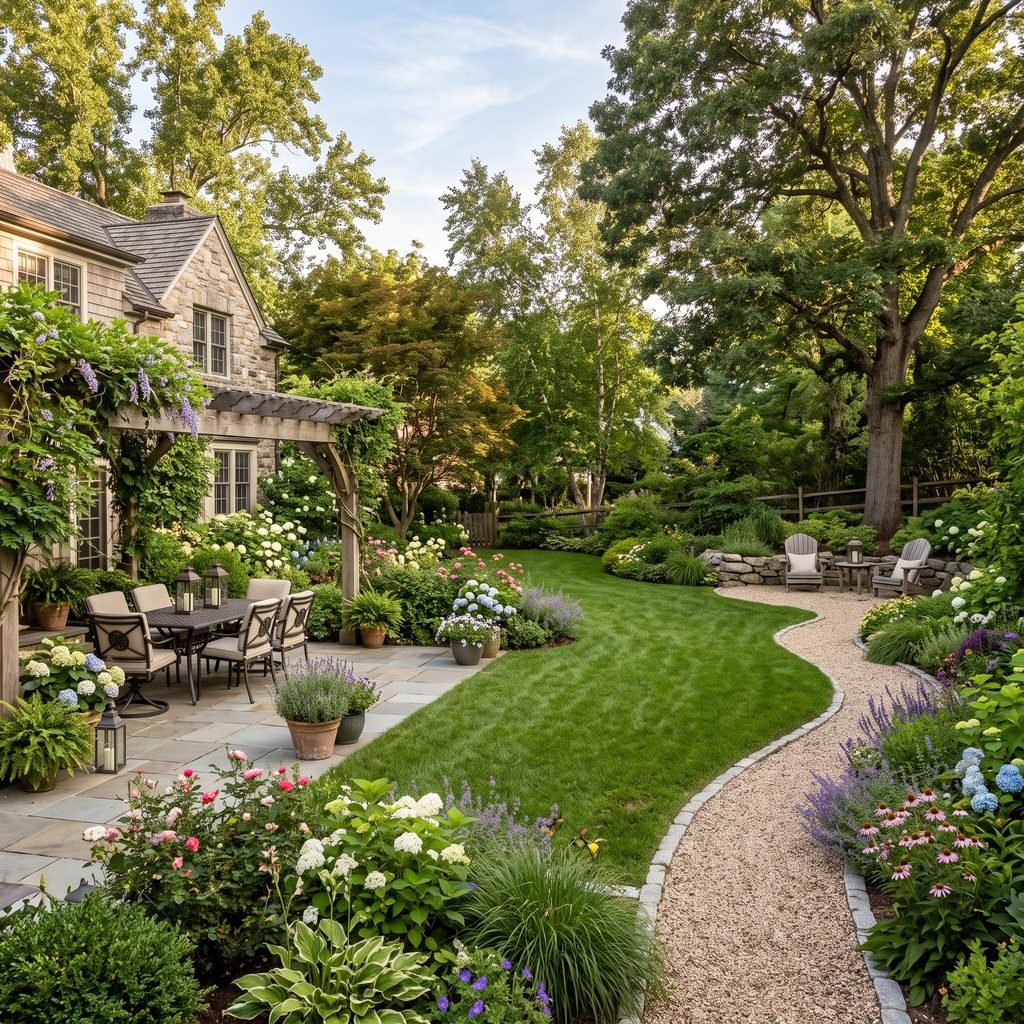
1. Divide the Yard Into Outdoor Zones
A large backyard usually works best when it is broken into several areas.
Possible zones include:
- Dining
- Lounge seating
- Lawn
- Garden
- Fire pit
- Play area
- Pool
- Outdoor kitchen
- Reading corner
Think of the yard as several outdoor rooms rather than one giant open space.
Each zone should have a clear purpose.
Then use paths, planting beds, or changes in materials to connect them.
2. Create a Generous Patio Near the House
The area closest to the house is usually the most convenient place for outdoor dining and entertaining.
A larger patio can accommodate:
- Dining table
- Outdoor sofa
- Grill
- Planters
- Shade structure
Keep the layout spacious enough for people to move comfortably around furniture.
If the patio is very large, use rugs, planters, or furniture groupings to define smaller areas within it.
3. Keep Some Open Lawn
You do not have to fill every part of a large yard with landscaping.
Open lawn provides visual breathing room and gives the yard flexibility.
It can be useful for:
- Children playing
- Pets
- Lawn games
- Entertaining
- Future landscaping changes
The key is balance.
A lawn often looks better when it is framed by planting beds and trees rather than stretching uninterrupted from the house to the property line.
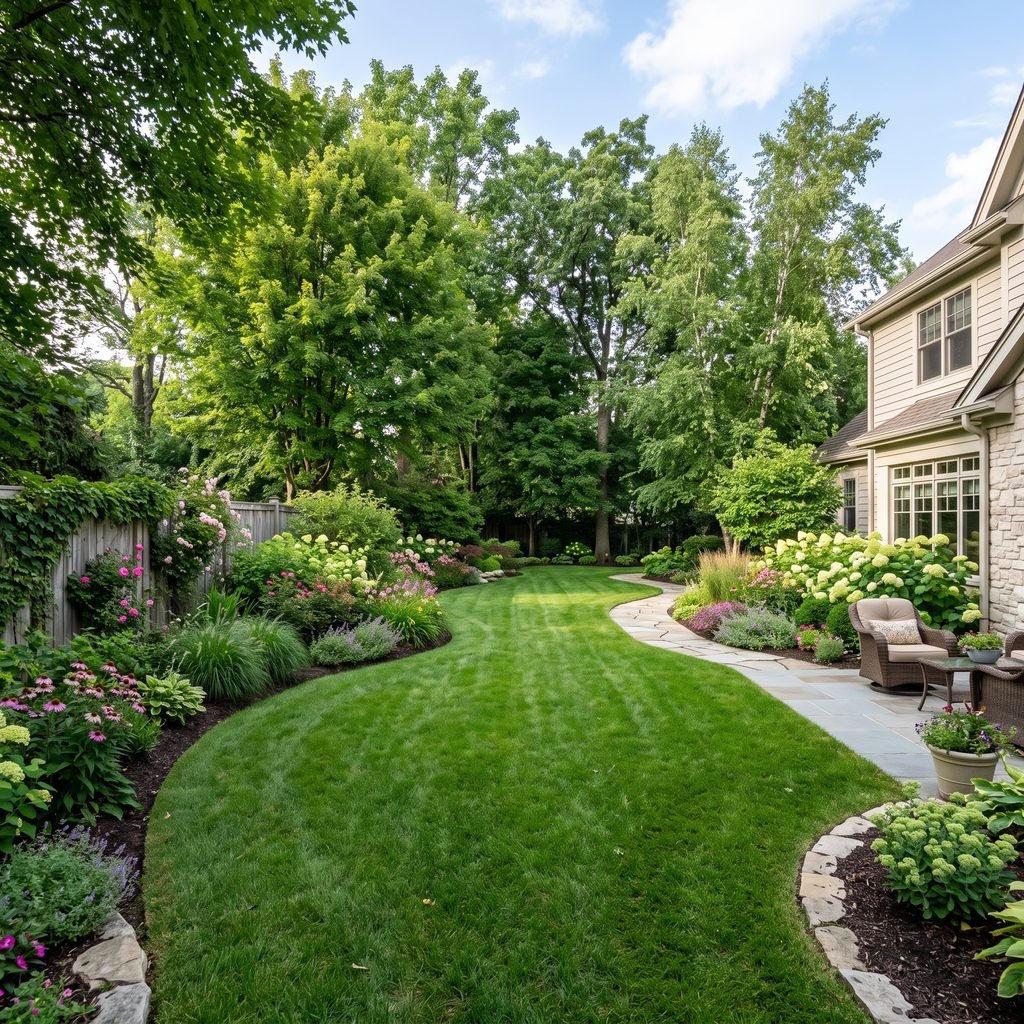
4. Add Layered Planting Beds
Large planting beds help a big yard feel established and intentional.
Use layers of different heights.
A simple approach is:
- Taller trees and shrubs in back
- Medium shrubs in the middle
- Perennials and grasses toward the front
This creates depth.
Repeat a few plant varieties throughout the yard rather than using completely different plants in every bed.
Repetition creates cohesion.
Choose plants suited to your climate, soil, sun exposure, and irrigation conditions.
5. Plant Trees for Structure
Trees can transform the scale of a large backyard.
They provide:
- Shade
- Privacy
- Vertical interest
- Seasonal color
- Habitat
- A sense of enclosure
Use trees to frame views, soften property lines, or create shade over seating areas.
Do not plant too close to foundations, underground utilities, paving, or other structures.
Consider mature size rather than only the size of the tree at planting.
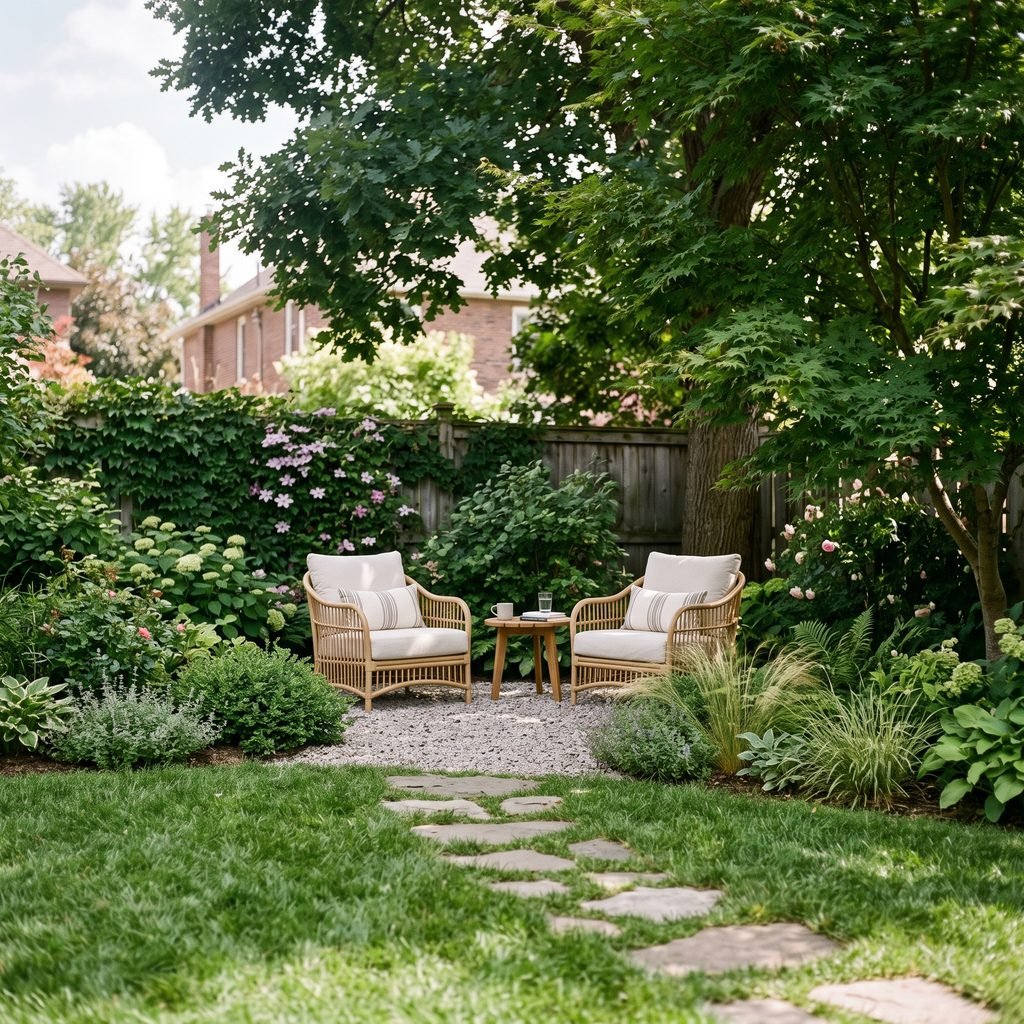
6. Create a Destination Seating Area
One of the best ways to use a large backyard is to place a seating area away from the house.
This gives people a reason to move through the garden.
Try:
- Two chairs under a tree
- Gravel seating area
- Garden bench
- Small patio
- Pergola
- Fire pit seating
A distant seating area can make the backyard feel much more layered and interesting.
7. Add a Garden Path
Paths help organize a large yard.
They can connect:
- House to patio
- Patio to garden
- Lawn to fire pit
- Pool to seating
- Shed to house
Materials might include:
- Gravel
- Stepping stones
- Brick
- Pavers
- Flagstone
Choose a material that relates to the home and other hardscaping.
A path that curves gently through planting can make the yard feel more natural, while straight paths create a more formal look.
8. Create a Fire Pit Area
A fire pit can become a strong gathering destination.
Place it where there is enough room for safe circulation and seating.
Possible layouts include:
- Circular gravel area
- Paver patio
- Built-in seating
- Adirondack-style chairs
Follow manufacturer instructions and applicable local requirements for location, clearance, fuel type, and installation.
Keep combustible plants, furniture, structures, and overhanging branches at appropriate distances.
9. Add a Pergola
A pergola can help a large backyard feel more architectural.
Use it over:
- Dining table
- Lounge seating
- Outdoor kitchen
- Garden seating
The structure creates a visual anchor and provides some definition even before plants or curtains are added.
Permanent pergolas should be properly designed and anchored.
Check applicable local rules or permitting requirements before building.
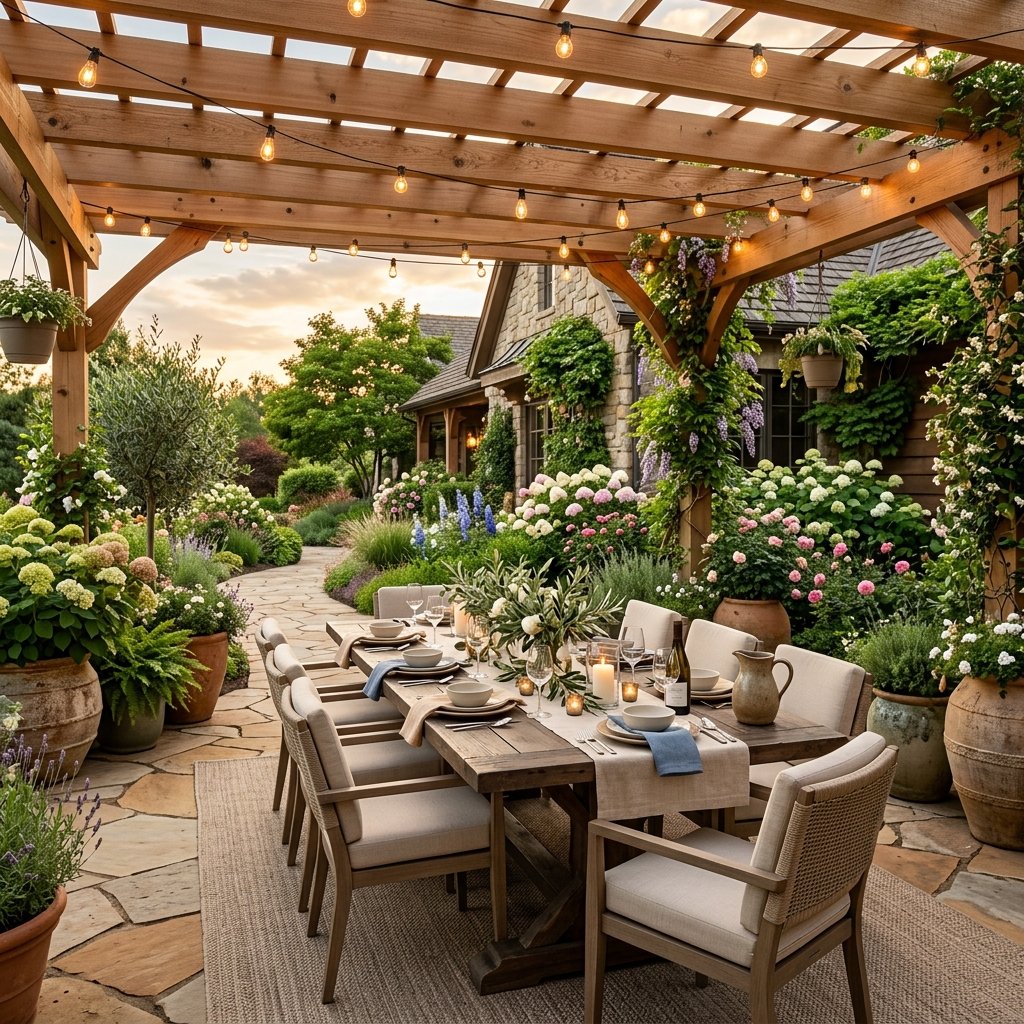
10. Build an Outdoor Dining Area
If you entertain often, create a dedicated dining space.
Include:
- Large table
- Comfortable chairs
- Shade
- Lighting
- Nearby serving surface
Place it reasonably close to the house or outdoor kitchen for convenience.
Use planters or low hedges to give the area definition.
11. Create a Gravel Garden Zone
Gravel is useful in large landscapes because it can define areas without adding another large lawn or paved surface.
Use gravel for:
- Garden paths
- Seating areas
- Fire pit zone
- Informal courtyard
Combine it with:
- Large pots
- Ornamental grasses
- Shrubs
- Stone edging
Make sure the base and edging are appropriate for the intended use so the gravel stays contained and drains properly.
12. Add a Poolside Landscape
If your backyard includes a pool, use landscaping to soften the hard surfaces.
Consider:
- Low-maintenance shrubs
- Ornamental grasses
- Large containers
- Shade trees positioned appropriately
- Simple groundcover
Avoid plants that create excessive debris near the water.
Keep visibility, walking paths, fencing, and other safety requirements in mind.
13. Create a Large Vegetable Garden
A spacious yard gives you room to separate edible gardening from the main entertaining areas.
Use:
- Raised beds
- Gravel paths
- Trellises
- Herb beds
- Compost area
- Small garden shed
Position the garden based on sunlight, drainage, water access, and convenience.
A fence may be useful where wildlife is a concern.
14. Add a Cutting Garden
If you enjoy flowers indoors, dedicate part of the backyard to a cutting garden.
Plant in rows or informal drifts depending on the look you prefer.
Choose varieties with staggered bloom times so the garden has interest across the growing season.
Keep the design practical.
A wide path makes watering, deadheading, and harvesting easier.
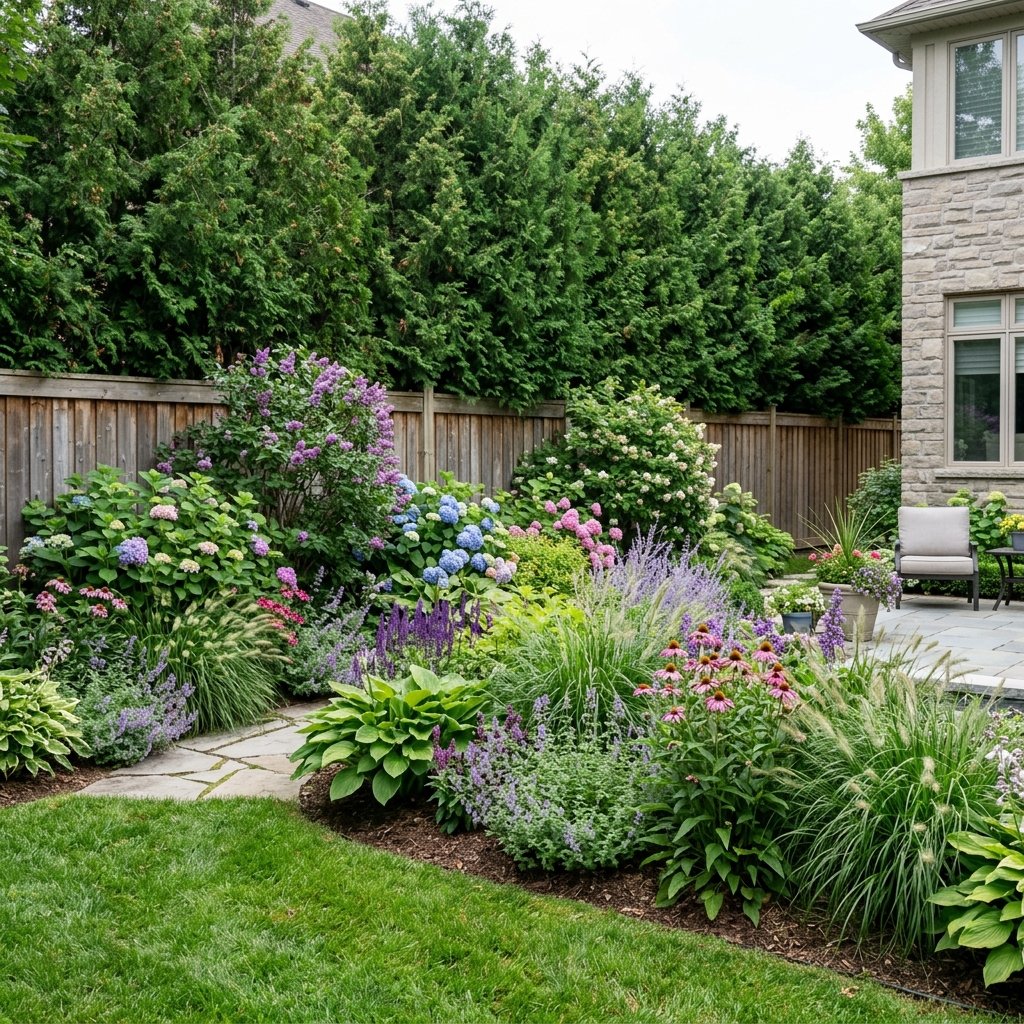
15. Create Privacy With Layered Planting
Large lots can still feel exposed.
Instead of relying on one straight hedge, create layers.
Combine:
- Trees
- Tall shrubs
- Medium shrubs
- Ornamental grasses
- Fencing where appropriate
The result can feel softer and more natural.
Check mature plant sizes and local boundary requirements before planting close to property lines.
16. Use Curved Garden Beds
Curved planting beds can help soften a large rectangular lawn.
Use generous curves rather than many small wiggles.
A smooth bed edge can guide the eye around the yard and create a more relaxed landscape.
Curves work especially well around:
- Trees
- Patio corners
- Lawn edges
- Property lines
Keep bed shapes simple enough to maintain.
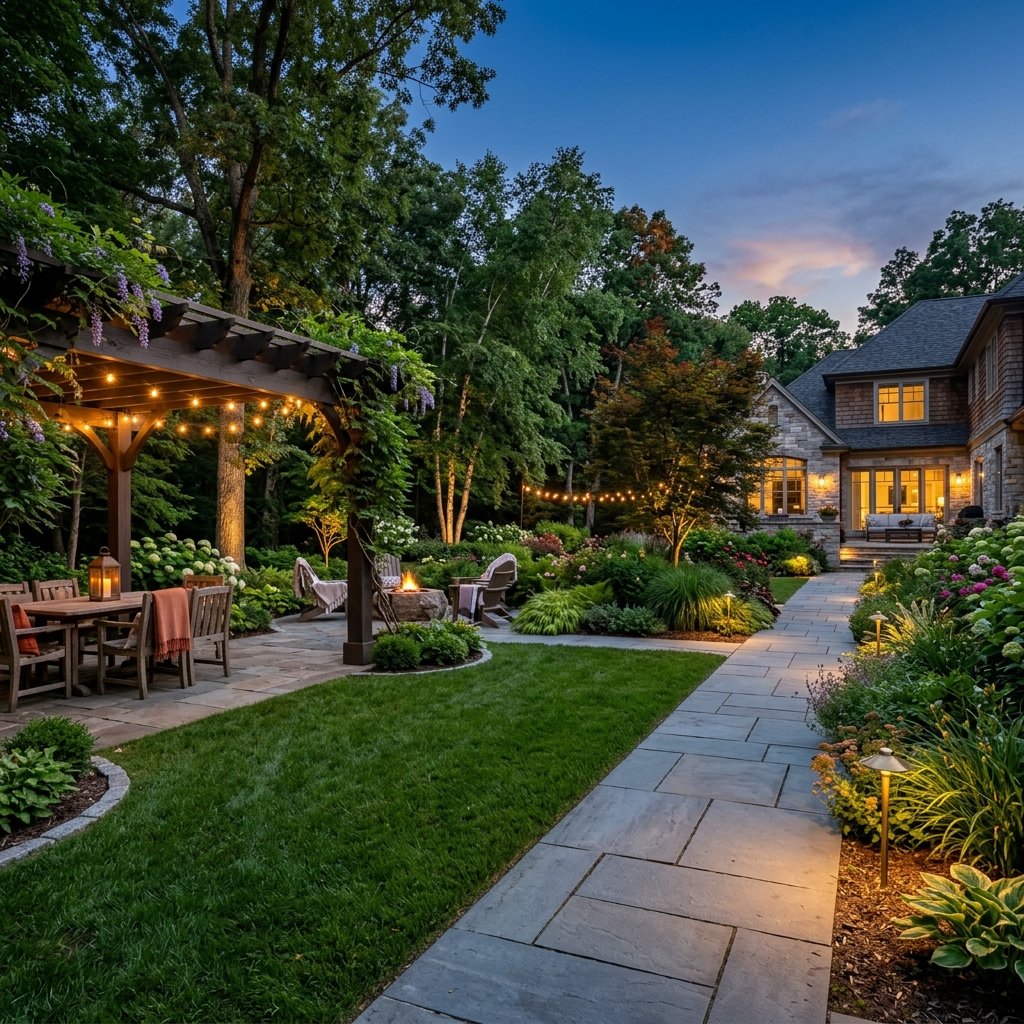
17. Add Landscape Lighting
Lighting extends the use of the yard after dark.
Consider several layers.
Use:
- Path lighting
- Step lighting
- Accent lighting on trees
- Patio lighting
- Pergola lights
- Low garden lighting
Avoid creating an overly bright yard.
A few well-placed lights can create much more atmosphere than lighting every plant.
Use exterior-rated fixtures and electrical components, and follow appropriate installation guidance.
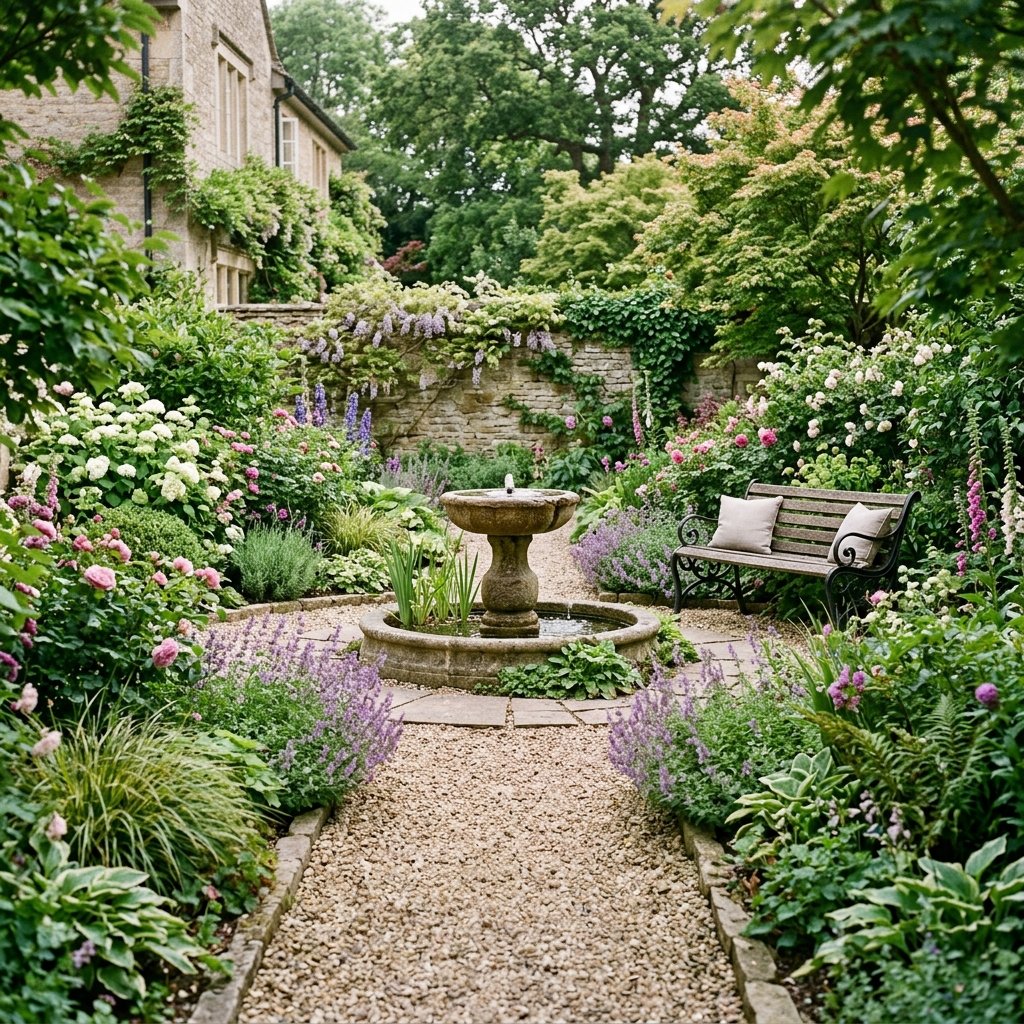
18. Create a Quiet Garden Corner
A large backyard can support a small retreat that feels separate from the main entertaining space.
Try:
- Bench surrounded by plants
- Small fountain
- Shade tree
- Gravel path
- Comfortable chair
This area can become a place for reading, coffee, or simply enjoying the garden.
Keep the design quieter than the main patio.
19. Include a Water Feature
A water feature can create a focal point in a large landscape.
Options include:
- Small pond
- Fountain
- Bubbling urn
- Reflecting basin
Choose a scale that fits the yard.
Consider maintenance, water use, electrical requirements, child safety, and local conditions before installation.
20. Repeat Materials Across the Yard
Large yards can feel disconnected if every zone uses different materials.
Repeat a few elements.
For example:
- Same paver color
- Same wood tone
- Same gravel
- Same metal finish
- Same planter style
This creates visual continuity.
You can still vary the layout while keeping the overall landscape cohesive.
21. Leave Room for the Landscape to Grow
One of the most common landscaping mistakes is planting everything too close together.
New plants may look small, but many become much larger over time.
Check mature width and height before planting.
Give trees, shrubs, and perennials enough room to develop.
This may make a new landscape look slightly sparse at first, but it can save you from overcrowding and constant pruning later.
Large Backyard Landscaping With a Patio
The patio should feel connected to the rest of the yard rather than floating beside the house.
Use:
- Wide planting beds
- Paths
- Planters
- Trees
- Repeated materials
For example, if your patio uses warm gray pavers, repeat similar stone in a garden path or fire pit area.
That small detail can make the whole landscape feel more intentional.
Large Backyard Landscaping With a Pool
A pool can dominate the backyard visually.
Balance it with:
- Green space
- Trees
- Lounge seating
- Large planters
- Layered planting beds
Keep plants and structures positioned so they do not interfere with pool safety, access, visibility, or maintenance.
Choose materials that can handle the conditions around water.
Large Backyard Landscaping Without a Pool
You can create just as much interest without a pool.
Consider a combination of:
- Lawn
- Pergola
- Garden beds
- Fire pit
- Vegetable garden
- Gravel seating area
The advantage is flexibility.
You can devote more room to gardens, entertaining, or open lawn.
Large Backyard Landscaping on a Budget
A large property can become expensive quickly if you try to landscape everything at once.
Instead, work in phases.
Start with:
- Layout
- Major trees
- Main patio
- Paths
- Large planting beds
- Secondary seating areas
- Lighting and finishing details
You can also save money by using larger sweeps of fewer plant varieties rather than buying many different plants.
Mulch, gravel, and lawn can temporarily fill areas while the long-term plan develops.
Low-Maintenance Large Backyard Ideas
A large landscape can require significant upkeep if every area is high maintenance.
Simplify by using:
- Larger planting groups
- Trees and shrubs suited to the site
- Mulched beds
- Durable hardscaping
- Automatic irrigation where appropriate
- Groundcovers
- Fewer tiny planting beds
Avoid choosing plants only because they look good at the garden center.
Select plants that fit your climate, sun, soil, water availability, and desired maintenance level.
Large Backyard Landscaping for Privacy
If privacy is a priority, think in layers.
Start with the largest structure first.
This might be:
- Fence
- Trees
- Tall evergreen shrubs
Then add medium plants and softer foreground planting.
Avoid planting large trees or aggressive roots too close to structures, utilities, pools, retaining walls, or neighboring property.
How to Make a Large Backyard Feel Cozy
Large outdoor spaces can sometimes feel exposed.
To create intimacy:
- Bring seating closer together
- Use trees overhead
- Add pergolas
- Create garden walls with shrubs
- Use large planters
- Add warm lighting
- Define zones with rugs or gravel
The goal is to create smaller spaces within the larger property.
How to Make a Large Backyard Look Expensive
A polished backyard is often more about repetition and scale than expensive materials.
Use Larger Planting Beds
Tiny beds can look disconnected in a large yard.
Repeat Plants
Large groups of the same plant can feel intentional.
Keep Materials Consistent
Limit the number of paving and edging materials.
Use Fewer, Larger Planters
A few substantial containers usually look more sophisticated than many small pots.
Invest in Trees
Trees add structure and can make a new landscape feel established.
Keep Edges Clean
Defined lawn and bed edges make the entire yard look more maintained.
Add Lighting Strategically
Subtle lighting can dramatically improve evening curb appeal.
Modern Large Backyard Landscaping Ideas
For a modern look, use:
- Simple rectangular zones
- Clean paving
- Ornamental grasses
- Structural shrubs
- Large planters
- Limited color palette
Keep plant varieties restrained.
A modern landscape often looks strongest when repetition is used intentionally.
Traditional Large Backyard Landscaping Ideas
For a traditional yard, try:
- Curved beds
- Flowering shrubs
- Shade trees
- Brick or stone paths
- Classic garden benches
- Structured hedges
Balance formal elements with softer planting so the yard does not feel rigid.
Natural Large Backyard Landscaping Ideas
For a relaxed look, use:
- Native or regionally appropriate plants
- Meadow-style planting
- Gravel paths
- Informal tree groupings
- Natural stone
- Curved beds
The landscape should still have structure.
Keep defined paths and edges so the natural style feels intentional rather than neglected.
Common Large Backyard Landscaping Mistakes
Trying to Fill Everything at Once
A large yard is easier to develop in phases.
Using Plants That Are Too Small in Scale
Tiny planting beds and scattered plants can disappear visually.
Ignoring Mature Plant Size
Overplanting creates future maintenance problems.
Creating Too Many Unrelated Zones
Connect different areas with repeated materials and plants.
Forgetting Paths
People need a clear way to move through the yard.
Putting Every Activity Near the House
Create destinations farther into the landscape.
Ignoring Irrigation and Drainage
Plan water management before installing expensive planting.
Forgetting Nighttime Use
A little lighting can extend the usefulness of the yard.
Large Backyard Landscaping Safety and Practical Considerations
Before making major landscape changes, consider:
- Underground utilities before digging
- Drainage patterns
- Property boundaries
- Mature tree and root size
- Irrigation
- Electrical requirements
- Pool and water-feature safety
- Fire pit and grill clearances
- Retaining wall conditions
- Local rules for fences and structures
- Safe, well-lit paths
Use appropriate professionals for work involving major grading, drainage, electrical systems, gas lines, structural retaining walls, large tree removal, or other projects outside typical DIY scope.
FAQ About Large Backyard Landscaping
How do you landscape a very large backyard?
Divide the yard into functional zones, then connect them with paths, planting beds, trees, and repeated materials.
What should I put in a large backyard?
Popular options include a patio, lawn, garden, fire pit, pergola, dining area, vegetable beds, pool, and destination seating areas.
How can I landscape a large backyard cheaply?
Work in phases, prioritize trees and major zones first, repeat fewer plant varieties, and use lawn, mulch, or gravel to fill larger areas affordably.
How do I make a large backyard feel less empty?
Add trees, larger planting beds, defined seating areas, paths, and vertical structures such as pergolas.
How much lawn should a large backyard have?
There is no ideal percentage. Keep enough lawn for the way you plan to use the property, then use planting and hardscaping to give the space structure.
What plants work best in a large backyard?
Choose plants based on your climate, soil, sunlight, water availability, mature size, and maintenance preferences rather than following a universal plant list.
How do I make a large backyard private?
Layer fencing or structural screening with trees, shrubs, and taller plants while considering mature size, boundaries, and local requirements.
Final Thoughts
The best large backyard landscaping inspiration comes from thinking about the yard as a collection of connected outdoor spaces.
You do not have to fill every square foot.
Start with the areas that matter most to you, whether that means a large patio, open lawn, garden, fire pit, dining area, or quiet retreat.
Then connect those areas with paths, trees, planting beds, and repeated materials.
Scale is especially important in a large yard.
Use generously sized beds, substantial trees, larger furniture groupings, and clear pathways instead of scattering small features everywhere.
And do not feel pressured to finish everything in one season.
A thoughtful landscape can develop gradually as plants mature and you learn how you actually use the space.
With good structure and a few well-defined zones, a large backyard can feel expansive without feeling empty—and comfortable without feeling crowded.