

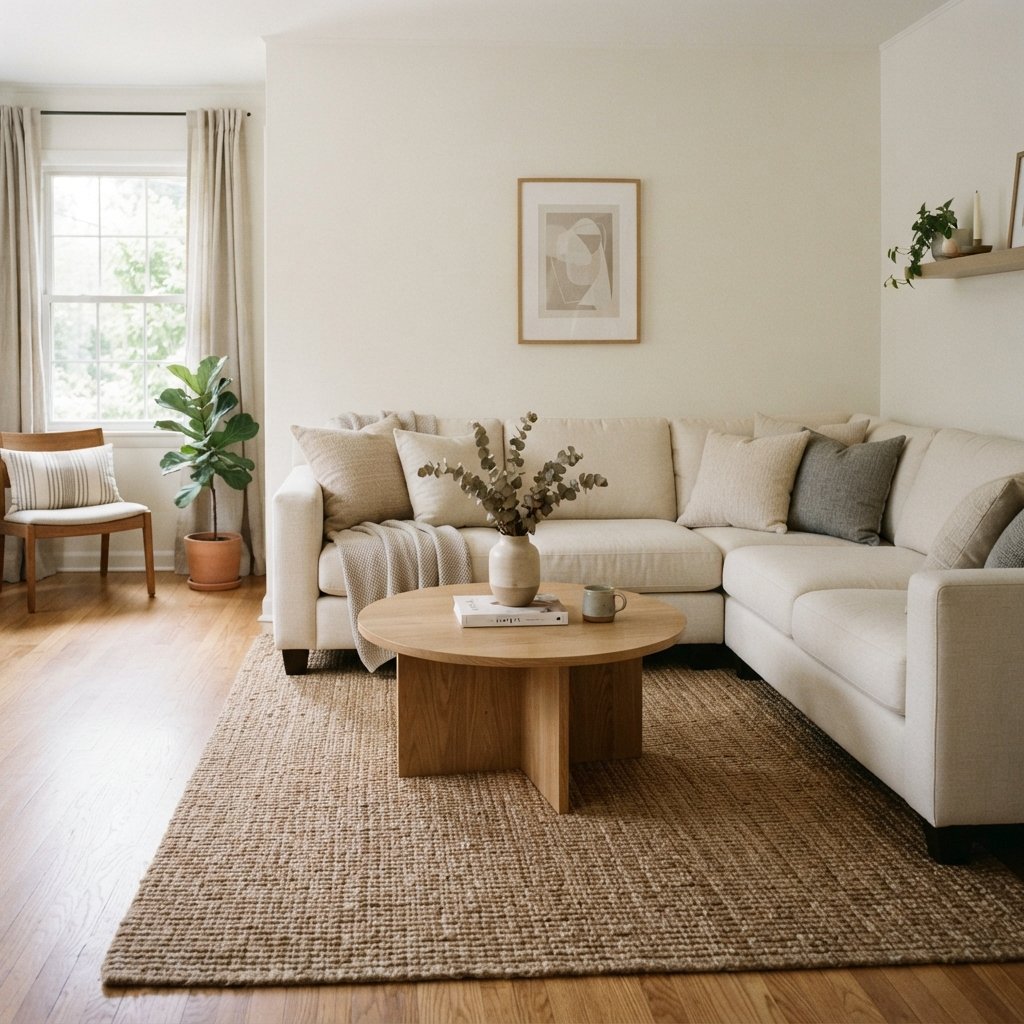
A coffee table does much more than fill the space in front of a sofa.
It can anchor the seating area, add contrast, introduce a new material, and give you a practical place for drinks, books, remotes, and everyday decor. The right coffee table can also make a living room feel more balanced and intentional.
The challenge is choosing one that works with the room.
A table that is too small can look lost. One that is too large can interrupt walkways and make the seating area feel crowded. The wrong shape can fight the layout, while the right shape can make the room easier to use.
The best coffee table ideas consider:
- Room size
- Sofa shape
- Walking space
- Storage needs
- Material
- Style
- How the room is actually used
Whether you want a warm wood table, an upholstered ottoman, a round table, or something with hidden storage, these ideas can help you choose a coffee table that looks good and works well in everyday life.
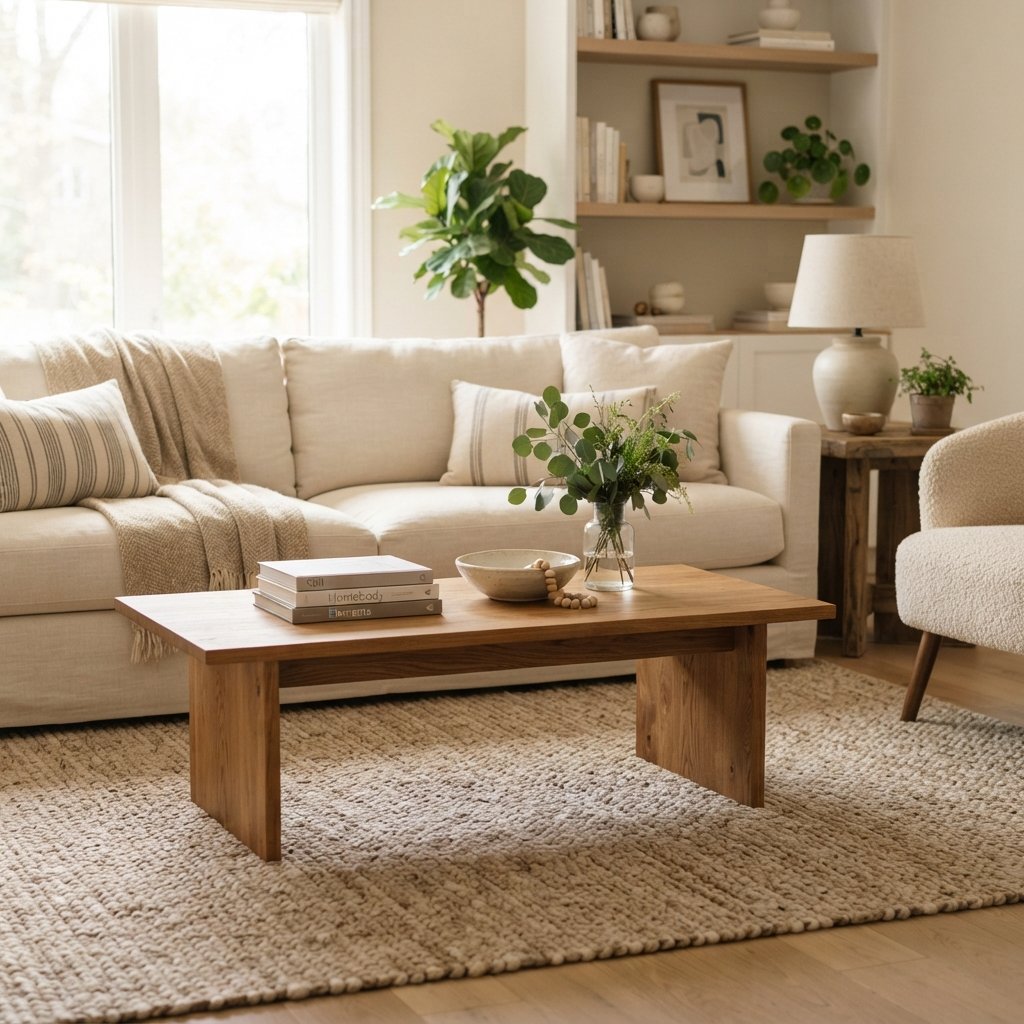
1. Choose a Warm Wood Coffee Table
A wood coffee table is one of the easiest options to use in almost any living room.
It adds warmth and texture, especially in spaces with:
- White walls
- Neutral upholstery
- Black accents
- Cool flooring
Wood can soften a room that otherwise feels too polished or flat.
Try finishes such as:
- Light oak
- Medium brown
- Walnut
- Rustic reclaimed look
Choose the tone based on the other wood finishes in the room.
The table does not have to match the furniture exactly, but it should feel related.
2. Try a Round Coffee Table
A round coffee table can improve the flow in a room because there are no sharp corners.
It works especially well with:
- Sectionals
- Small living rooms
- Curved furniture
- Family rooms
Round tables can make a square seating arrangement feel softer.
They are also useful when circulation around the table is tight.
3. Use a Rectangular Coffee Table
Rectangular coffee tables are classic because they work naturally with most sofas.
They can be especially useful in longer living rooms.
A rectangular shape gives you plenty of surface area for:
- Books
- Trays
- Drinks
- Decorative objects
Choose a table that relates to the sofa width without stretching from arm to arm.
You want the table to feel substantial, but not oversized.
4. Add an Oval Coffee Table
An oval table combines the length of a rectangle with the softer edges of a round table.
This can be a great choice when you want:
- Good surface area
- Easier movement
- Fewer hard corners
Oval tables work especially well in traditional, transitional, and contemporary rooms.
They can also help soften a room with lots of straight furniture lines.
5. Choose a Coffee Table With Storage
If your living room tends to collect clutter, choose a table that works harder.
Look for:
- Drawers
- Lower shelves
- Lift-top storage
- Hidden compartments
Storage is useful for:
- Remotes
- Board games
- Magazines
- Chargers
- Kids’ items
Keep frequently used items easy to access.
The best storage is the kind you will actually use.
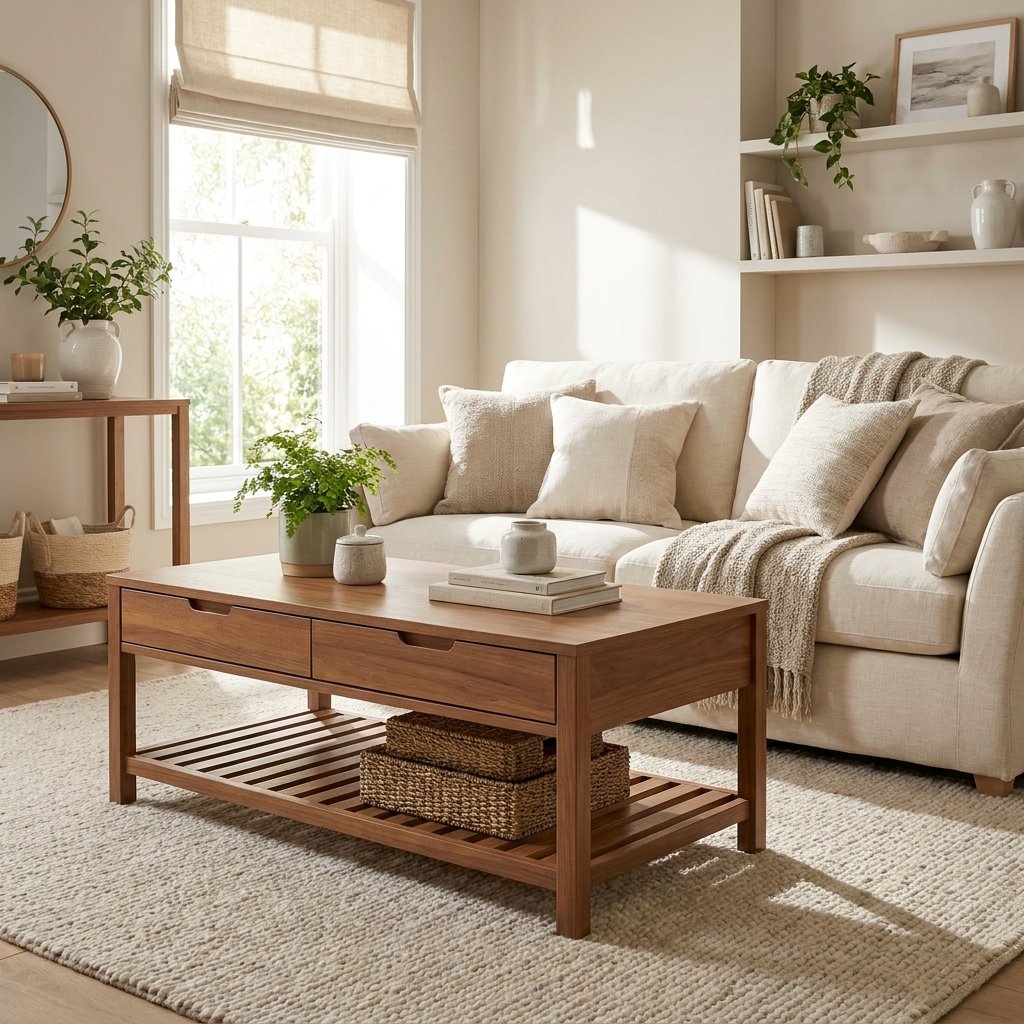
6. Use a Coffee Table With a Lower Shelf
A lower shelf adds storage without making the table feel bulky.
It can hold:
- Books
- Baskets
- Decorative boxes
- Magazines
Keep the shelf relatively simple.
If every inch is filled, the table can start to look cluttered.
A few larger items usually look more polished than many small ones.
7. Try a Nesting Coffee Table Set
Nesting tables are practical in small or flexible living rooms.
You can keep them together most of the time, then pull one out when guests need an extra surface.
They are useful for:
- Apartments
- Small family rooms
- Multipurpose spaces
Choose a set with related shapes and finishes so the pieces feel cohesive.
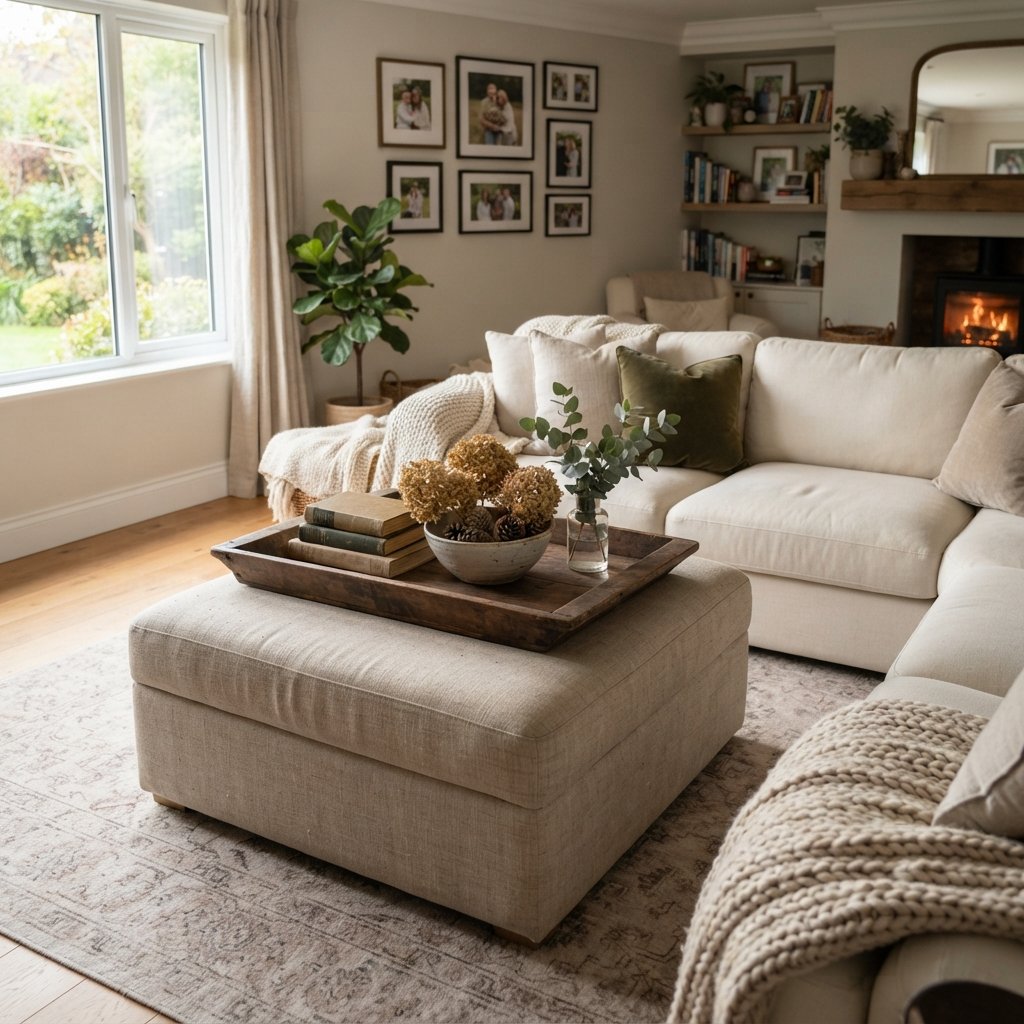
8. Use an Upholstered Ottoman Instead
A traditional coffee table is not your only option.
An upholstered ottoman can make the living room feel softer and more comfortable.
It works well in:
- Family rooms
- Casual spaces
- Homes with young children
Add a sturdy tray when you need a flat surface for drinks or decor.
Choose upholstery suited to the amount of use the room gets.
9. Try a Black Coffee Table
A black coffee table can add strong contrast.
It works beautifully with:
- Light sofas
- Pale rugs
- Warm wood
- White walls
Black can help ground a room that feels overly light.
Use it sparingly if the space already has many dark finishes.
Repeat black elsewhere in the room through:
- Lamps
- Picture frames
- Hardware
This helps the table feel connected to the overall design.
10. Choose a Glass Coffee Table
Glass coffee tables can make a small living room feel more open because they take up less visual space.
They work especially well in:
- Contemporary rooms
- Glamorous spaces
- Small apartments
The base can introduce additional style through:
- Black metal
- Brass
- Chrome
- Wood
Glass does require more frequent cleaning.
If you have children or an active household, consider safety, edge design, and the table’s construction carefully.
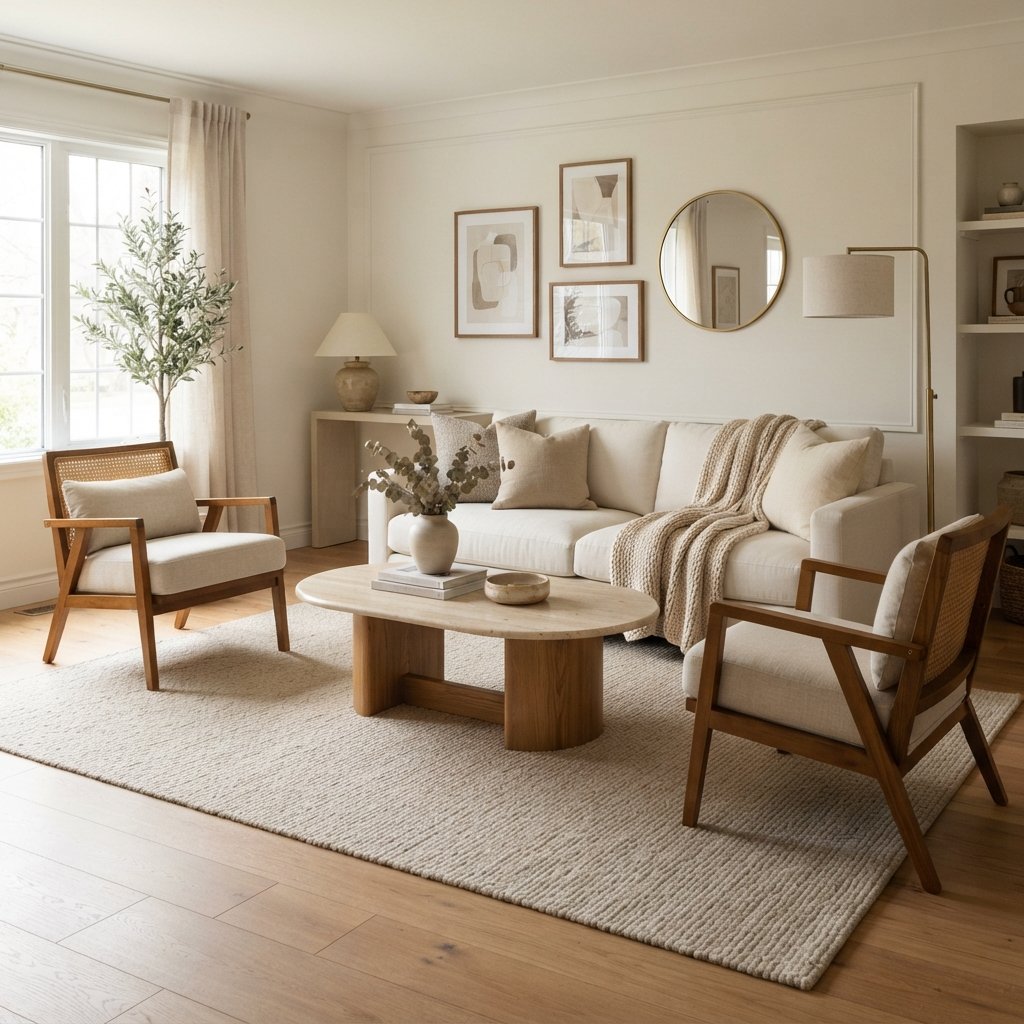
11. Use a Stone-Look Coffee Table
Stone, marble, and stone-look finishes can add a polished feeling to a room.
They pair beautifully with:
- Wood
- Linen
- Leather
- Metal
Real stone can be heavy, so consider the weight before choosing a large table.
There are also lighter materials designed to create a similar look.
Choose the option that suits your budget and how often you expect to move the furniture.
12. Add a Vintage Coffee Table
A vintage or vintage-inspired table can give a living room more character.
Try:
- Old trunk
- Farmhouse table
- Antique wood table
- Weathered chest
This works especially well if the rest of the room is fairly new.
One older piece can keep the space from feeling overly coordinated.
Before using vintage furniture, make sure it is stable, structurally sound, and suitable for everyday use.
13. Choose a Sculptural Coffee Table
A sculptural table can function almost like art.
Look for interesting:
- Bases
- Curves
- Organic shapes
- Pedestal designs
This works best when the rest of the living room is relatively simple.
If the sofa, rug, and chairs are already very bold, a complicated coffee table may make the room feel busy.
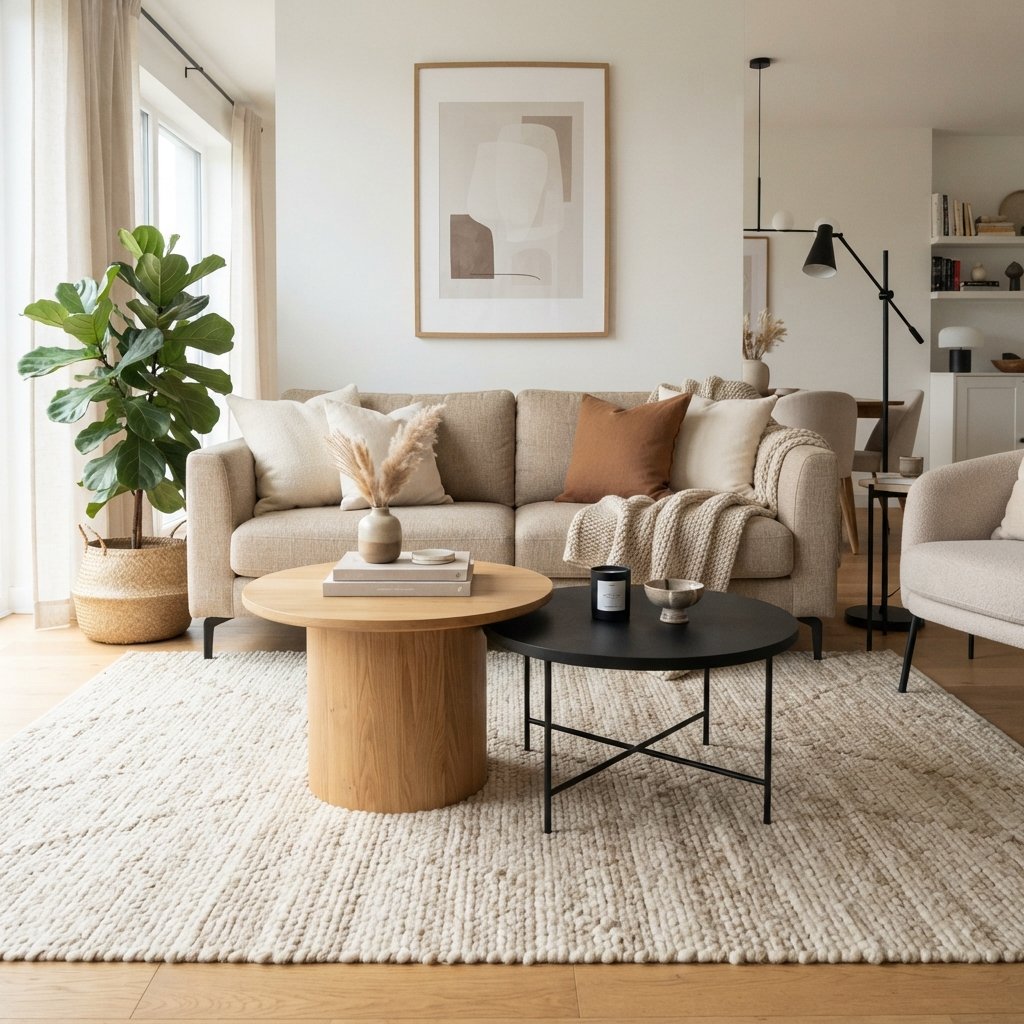
14. Use Two Smaller Tables
Instead of one large coffee table, try two smaller ones.
This can create flexibility.
You can:
- Push them together
- Separate them
- Move one toward a chair
- Create more walking space
This is especially useful in family rooms and irregular layouts.
15. Use a Coffee Table With a Lift Top
A lift-top coffee table can be helpful in multipurpose living rooms.
The raised surface can work for:
- Laptop use
- Casual meals
- Crafts
- Homework
Choose a mechanism that feels sturdy and easy to operate.
Make sure the table has enough clearance to open properly without hitting furniture.
16. Coordinate the Table With the Rug
The coffee table and rug should work as a pair.
A light wood table can stand out nicely on a deeper rug.
A black table can create contrast against cream or beige.
A very busy rug may look best with a simple table.
A plain rug gives you more freedom to choose a table with interesting texture or shape.
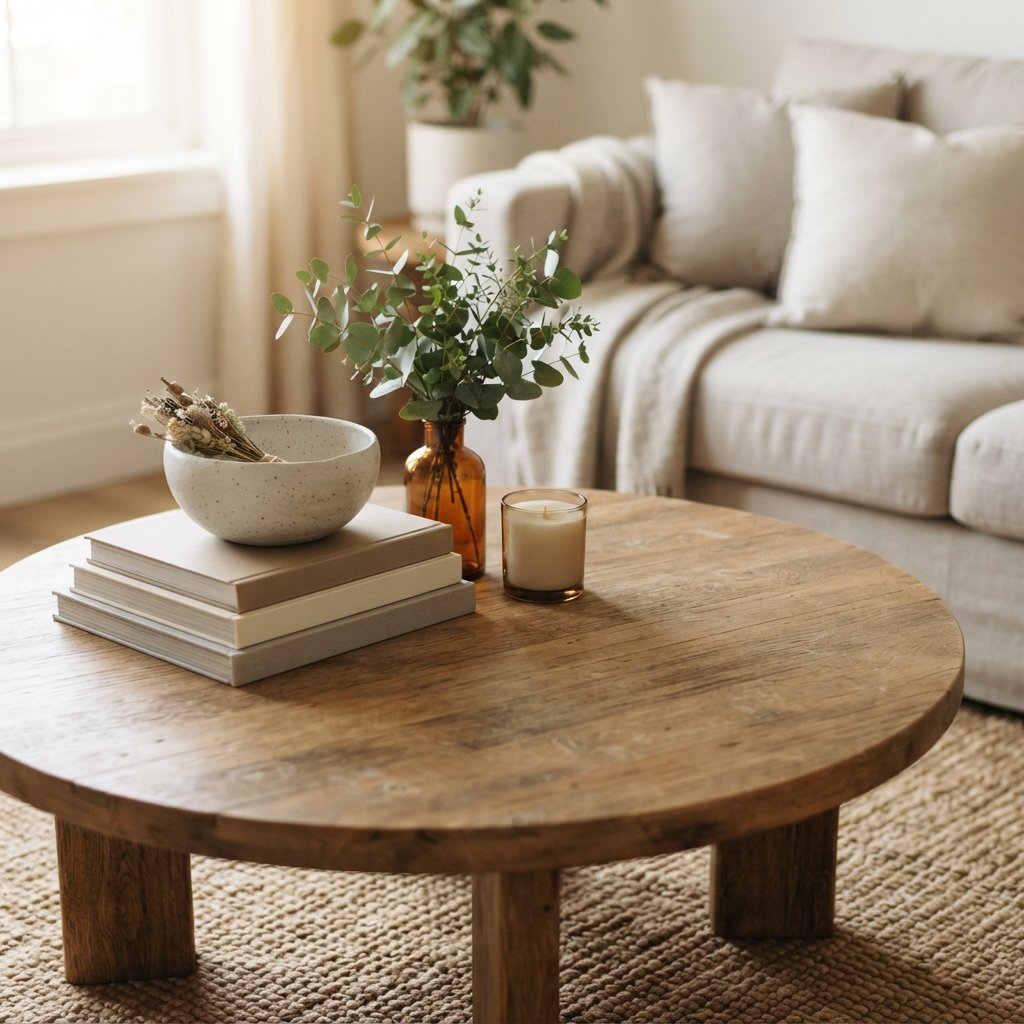
17. Keep the Coffee Table Styling Simple
Even a beautiful table can look messy if it is overloaded.
A simple styling formula might include:
- Stack of books
- Decorative bowl
- Small vase
- Candle
- Greenery
Use a tray if you want to group smaller objects.
Leave enough empty surface area for the table to remain functional.
How to Choose the Right Coffee Table
Start with the room layout.
Think about:
- Sofa size
- Chair placement
- Walking space
- Rug dimensions
- Traffic flow
The table should be easy to reach without dominating the seating area.
Before buying, mark the approximate footprint on the floor with painter’s tape.
This is one of the easiest ways to understand whether the table will feel too large or too small.
Coffee Table Ideas for a Small Living Room
Small rooms benefit from lighter-looking furniture.
Try:
- Round table
- Glass table
- Nesting tables
- Small oval table
Avoid choosing something oversized simply because you like the style.
The living room should still have clear circulation.
Choose a table that provides enough surface area without taking over the room.
Coffee Table Ideas for a Large Living Room
Large rooms can handle more visual weight.
Try:
- Oversized rectangular table
- Large round table
- Two smaller tables
- Substantial ottoman
If the seating area is especially large, one small coffee table may feel disconnected.
Scale the table to the furniture group rather than the entire room.
Coffee Table Ideas for a Sectional
Sectionals often work well with:
- Round tables
- Square tables
- Large ottomans
A round table can soften the inside corner of an L-shaped sectional.
For a very large sectional, choose a table with enough scale to look connected to the seating.
Coffee Table Ideas for a Sofa and Two Chairs
With a sofa and two chairs, center the table within the conversation area.
Rectangular, oval, and round tables can all work.
The shape should support the furniture arrangement rather than simply following the room shape.
Coffee Table Ideas for a Narrow Living Room
In a narrow room, avoid using a very deep table.
Try:
- Slim rectangle
- Narrow oval
- Nesting tables
The goal is to preserve walking space.
A long, shallow table can provide useful surface area without blocking circulation.
Coffee Table Ideas for a Family Room
Family rooms usually need durability and function.
Good options include:
- Ottoman
- Storage table
- Wood table
- Lift-top table
Choose a finish that can handle daily use.
If the room is used by children, consider rounded edges and stable construction.
Coffee Table Ideas for a Modern Living Room
Modern spaces often work well with:
- Sculptural shapes
- Black finishes
- Glass
- Stone-look surfaces
- Simple wood
Keep the styling minimal.
One or two strong decorative objects can be enough.
Coffee Table Ideas for a Farmhouse Living Room
Farmhouse rooms often look good with:
- Warm wood
- Reclaimed finishes
- Chunky legs
- Lower shelves
Avoid making every furniture piece rustic.
Mix the coffee table with simpler upholstery and cleaner accessories to keep the room balanced.
Coffee Table Ideas for a Coastal Living Room
For a light coastal look, try:
- Pale wood
- Whitewashed finish
- Woven ottoman
- Soft blue accents
Pair the table with:
- Linen
- Woven texture
- Soft neutrals
- Natural materials
Keep the styling relaxed rather than overly themed.
Coffee Table Ideas for a Traditional Living Room
Traditional rooms work beautifully with:
- Wood
- Oval shapes
- Turned legs
- Lower shelves
Add classic styling with:
- Books
- Bowl
- Small floral arrangement
Choose a table that has detail without competing with the other furniture.
What Shape Coffee Table Should You Choose?
Round
Great for softer flow and sectionals.
Rectangular
Versatile and easy to use with sofas.
Oval
Provides length with softer edges.
Square
Works well with large sectionals or square seating arrangements.
Choose based on the furniture layout rather than trend alone.
How Far Should a Coffee Table Be From the Sofa?
The goal is to keep the table close enough to reach while leaving comfortable room to walk around it.
There is no need to rely on one exact measurement for every living room.
Furniture depth, table shape, and traffic flow all affect the ideal placement.
Sit on the sofa and test the reach.
Then walk around the table to make sure the layout feels comfortable.
How Big Should a Coffee Table Be?
The table should look proportional to the sofa.
Avoid:
- Tiny table with a large sofa
- Oversized table blocking circulation
Use painter’s tape on the floor to test dimensions before buying.
This is especially useful for online furniture shopping.
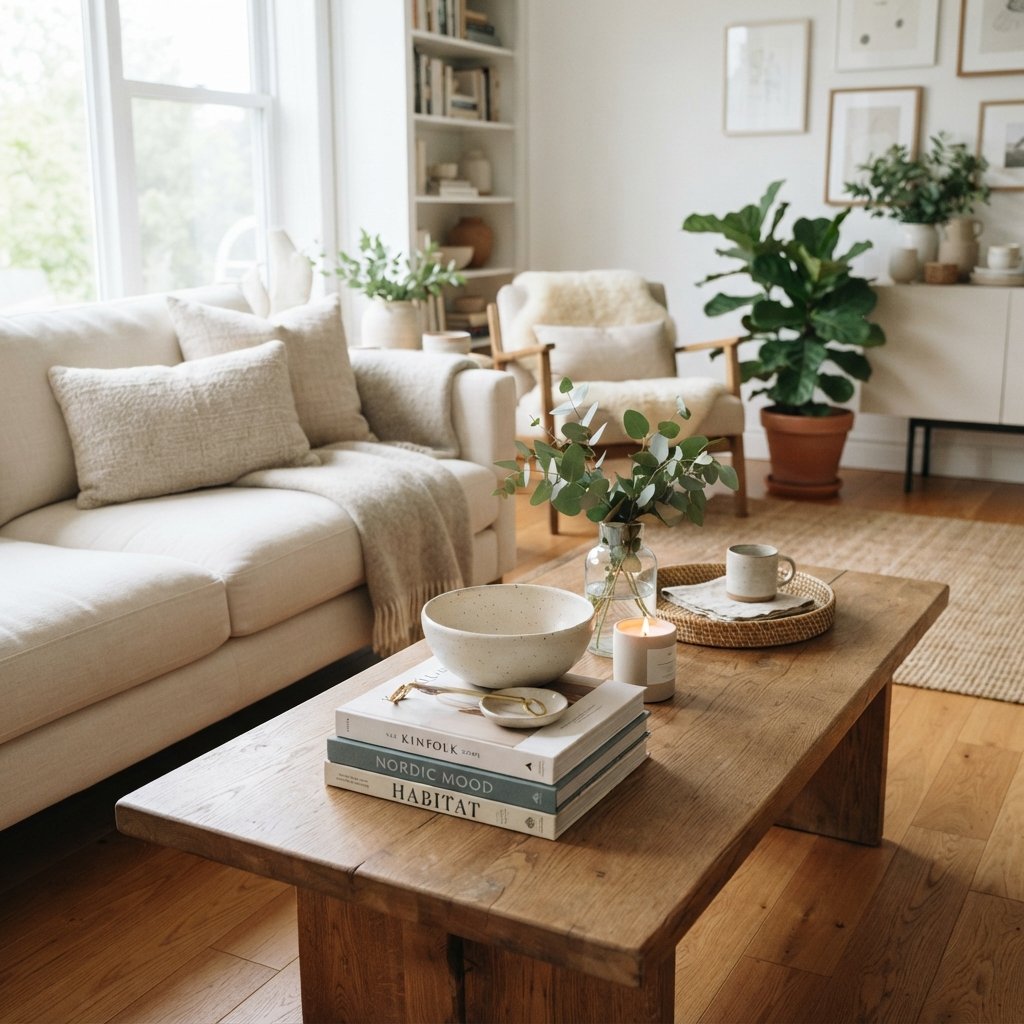
How to Style a Coffee Table
A simple arrangement usually works best.
Try dividing the surface visually into a few zones.
For example:
Books
Create height.
Decorative Bowl
Add shape.
Vase or Plant
Add organic texture.
Candle
Add a smaller finishing element.
Keep some empty space.
Negative space makes the styling look intentional.
How to Style a Round Coffee Table
Round tables look good with groupings rather than straight rows.
Try:
- Stack of books
- Bowl
- Vase
Arrange them in a loose triangle.
You can also use a round tray to reinforce the table shape.
How to Style a Rectangular Coffee Table
Divide the surface into two or three visual sections.
For example:
- Books on one side
- Tray in the center
- Bowl or greenery on the other side
Avoid lining everything up in a rigid row.
A little asymmetry often looks more natural.
How to Style a Coffee Table With a Tray
A tray can organize smaller objects.
Use it for:
- Remote
- Candle
- Coasters
- Small decorative piece
Do not let the tray fill the entire tabletop.
You still want to see some of the table surface.
How to Make a Coffee Table Look Expensive
Keep Decor Limited
Fewer, larger objects usually look more polished.
Use Real Texture
Wood, ceramic, stone, glass, and natural greenery add depth.
Mix Heights
Combine low and taller pieces.
Use Books
Books create an easy base for smaller decor.
Repeat Room Colors
Pull colors from the rug, art, and pillows.
Leave Empty Space
The table should still look usable.
Coffee Table Styling Mistakes
Using Too Many Small Objects
This creates visual clutter.
Choosing Decor All the Same Height
Vary height for more interest.
Covering the Entire Surface
Leave room for everyday use.
Ignoring Scale
Tiny decor can disappear on a large table.
Choosing a Table That Is Too Small
The table should relate to the seating.
Blocking Walkways
Function is more important than filling the center of the room.
Coffee Table Safety Tips
Coffee tables are used every day, so stability and placement matter.
- Make sure the table is stable and does not wobble.
- Keep walking paths clear.
- Consider rounded corners in homes with young children.
- Secure lift-top mechanisms according to manufacturer instructions.
- Avoid overloading glass tables.
- Follow care instructions for stone, wood, and other surfaces.
- Keep candles away from flammable materials and never leave open flames unattended.
- Avoid placing heavy decor where it can easily be knocked off.
- Keep electrical cords out of walking paths.
- Use coasters or protective pads when appropriate for the tabletop material.
FAQ About Coffee Table Ideas
What type of coffee table works with most living rooms?
A simple wood rectangular, oval, or round table is versatile and works with many decorating styles.
Is a round or rectangular coffee table better?
It depends on the layout. Round tables can improve circulation, while rectangular tables often work well with longer sofas.
What coffee table works best with a sectional?
Round, square, and oversized ottoman-style tables can all work depending on the sectional’s size and shape.
How do I make my coffee table look styled but not cluttered?
Use a few larger items, vary the heights, and leave plenty of empty surface area.
Should a coffee table match the end tables?
No. They should coordinate, but they do not need to be from the same set.
What can I use instead of a coffee table?
Try an upholstered ottoman, nesting tables, two smaller tables, or a vintage trunk.
What color coffee table should I choose?
Use contrast. A light table can work with darker upholstery, while black or walnut can add depth to a pale room.
Are glass coffee tables good for small rooms?
They can be because they take up less visual space, but choose stable, appropriately constructed furniture and consider your household’s safety needs.
Final Thoughts
The best coffee table ideas balance style with function.
Start with the layout of the room.
Choose a shape and size that works with the sofa, chairs, rug, and walking space. Then think about how you actually use the table.
If clutter is a problem, choose storage.
If the room is small, consider round, oval, glass, or nesting tables.
If you want softness, use an ottoman.
If the living room needs warmth, a wood coffee table is hard to beat.
Once the furniture is right, keep the styling simple.
A few books, a bowl, greenery, and one or two decorative objects are often enough to make a coffee table feel polished without sacrificing the space you need every day.