

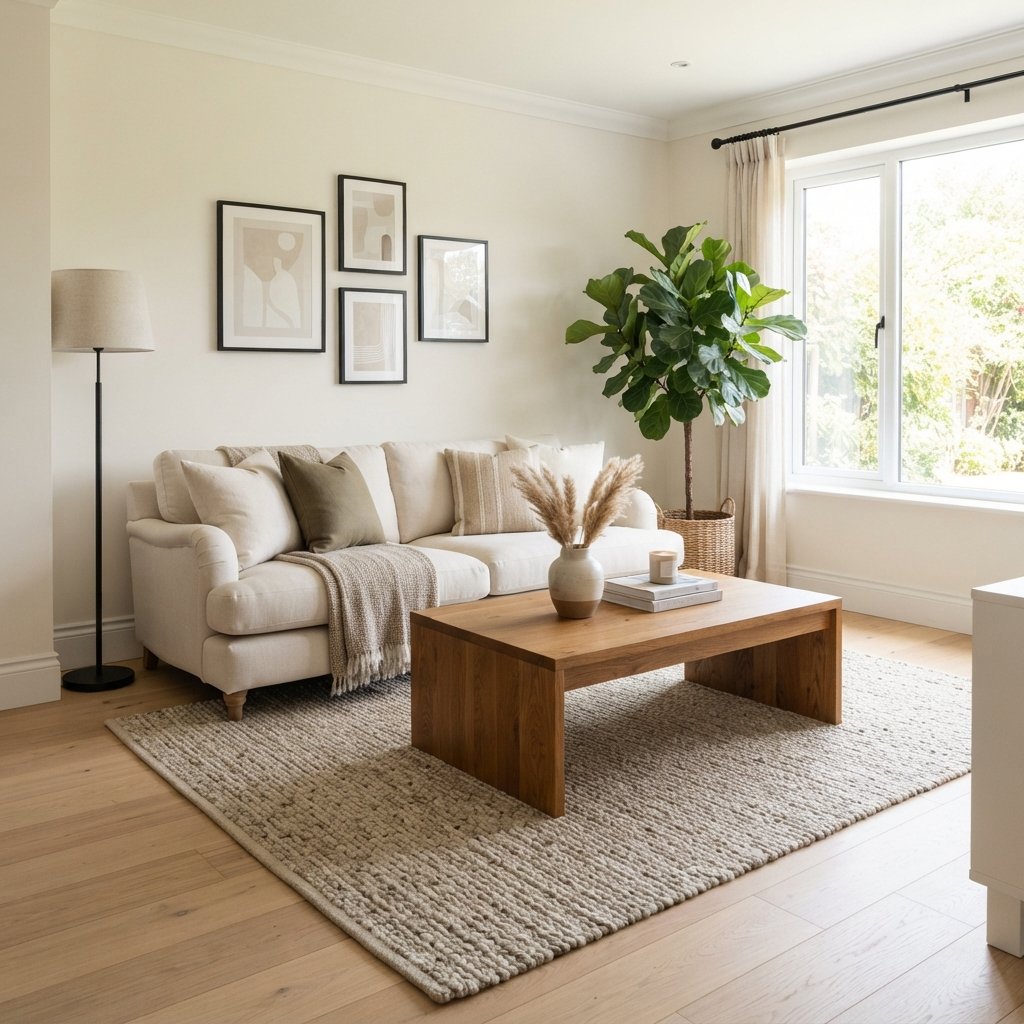
Light wood floors can make a home feel open, relaxed, and naturally warm, but choosing a wall color to go with them is not always as simple as picking your favorite neutral.
The reason is undertones.
Light oak, maple, ash, pine, bamboo, and wood-look flooring can all have very different color characteristics. Some floors look creamy or golden, while others lean beige, pink, gray, or almost white.
The most successful paint colors that go with light wood floors work with those existing tones rather than fighting them.
Fortunately, light flooring is extremely versatile. Warm whites and soft greiges can create an airy neutral interior, while sage green, muted blue, charcoal, and other deeper colors can provide beautiful contrast.
The right choice depends on how warm or cool your flooring looks, the amount of natural light in the room, your furniture, and the mood you want to create.
Here are 17 paint color ideas to help you narrow the options.
1. Warm White
Warm white is one of the easiest wall colors to pair with light wood floors.
It keeps the room bright without creating the starkness that a very crisp white sometimes can.
Look for whites that feel:
- Soft
- Slightly creamy
- Warm
- Neutral rather than yellow
Warm white works particularly well with pale oak flooring that has beige, cream, or golden characteristics.
The combination creates an easy backdrop for natural linen, woven materials, warm metals, and darker wood accents.
2. Soft Off-White
If pure white feels too bright, move slightly deeper.
An off-white gives you the airy effect of white walls with a little more softness.
This is particularly helpful in living rooms and bedrooms where you want the space to feel cozy rather than clinical.
Try off-white with:
- Light oak
- Cream upholstery
- Tan leather
- Black accents
- Natural greenery
Use enough contrast between the walls and trim if you want architectural details to remain noticeable.
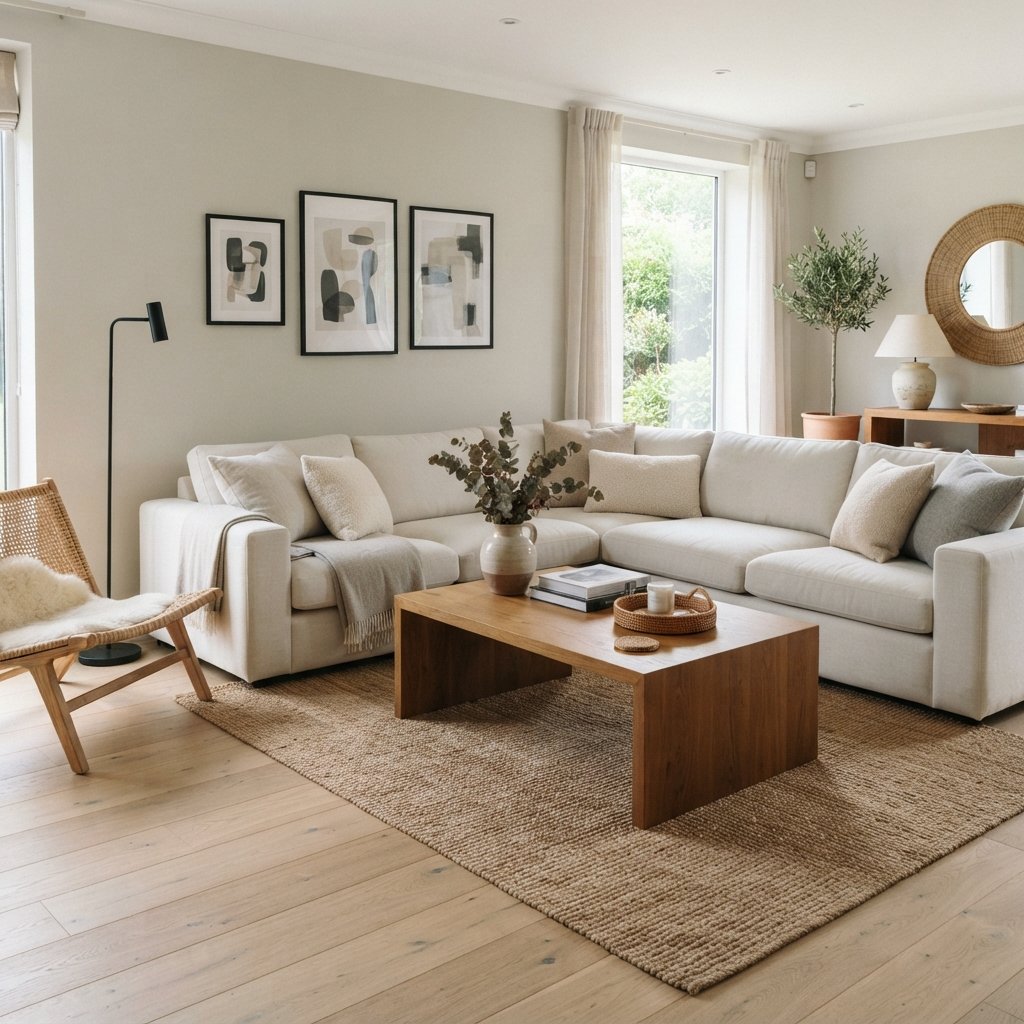
3. Light Greige
Greige can bridge the gap between gray and beige.
With light wood flooring, it can create a quiet neutral foundation without making the entire room cream or beige.
The important part is finding the right greige.
Some lean noticeably warmer, cooler, greener, or more violet depending on the color and lighting.
Place large samples directly beside the flooring before choosing.
4. Warm Beige
Beige and light wood are natural companions when their undertones work together.
A soft beige can make pale wood feel warmer and create a comfortable, layered interior.
To keep the room from becoming too monotone, introduce contrast with:
- Black
- Dark brown
- Olive green
- Rust
- Charcoal
Texture is also important.
Mix linen, wood, wool, pottery, and woven materials so a beige room still has plenty of dimension.
5. Mushroom
Mushroom is a deeper neutral that can work beautifully with light floors.
It generally sits somewhere around taupe, beige, brown, and gray territory, depending on the specific paint color.
The extra depth creates contrast while remaining neutral.
Mushroom walls can be particularly attractive in:
- Dining rooms
- Bedrooms
- Offices
- Cozy living rooms
Pair them with cream textiles and darker wood accents to create a layered palette.
6. Soft Taupe
Taupe provides another way to add depth without moving into a strong color.
A soft taupe can make light flooring appear even brighter by comparison.
Look carefully at undertones, though.
Some taupes can lean violet or pink, while others appear warmer or grayer.
Your flooring will often make those differences more visible.
7. Sage Green
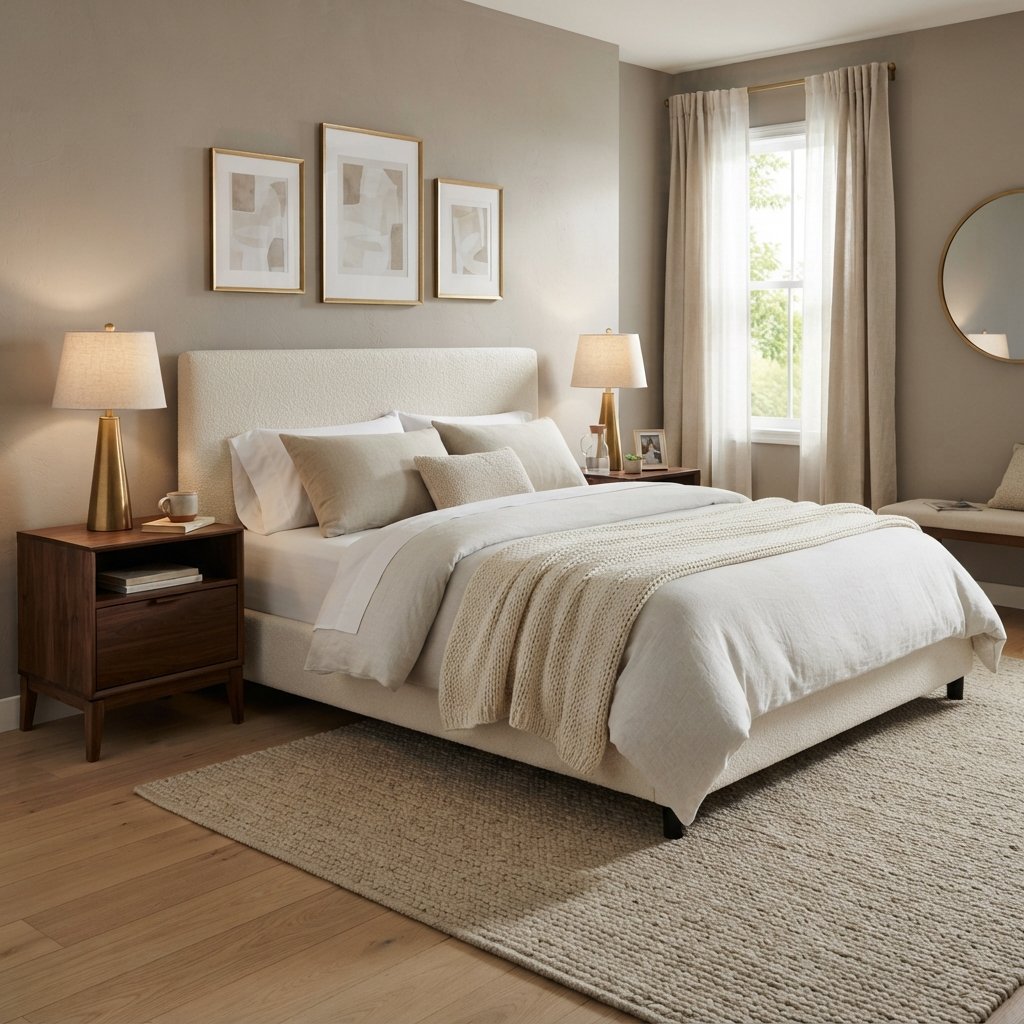
Sage green is a beautiful option when you want color while keeping the room calm.
It works particularly well with natural wood because both colors have an organic quality.
Try sage in:
- Bedrooms
- Kitchens
- Dining rooms
- Offices
- Living rooms
Pair it with warm white trim and cream textiles for a softer look.
For stronger contrast, add black or dark bronze accents.
8. Muted Olive Green
If sage feels too pale, consider olive.
Muted olive can create a warmer, earthier interior.
Light wood flooring prevents deeper olive walls from making the room feel overly heavy.
The combination works well with:
- Cream
- Brown
- Black
- Brass
- Natural linen
Olive can look quite different depending on lighting, so testing is particularly important.
9. Dusty Blue
Blue and pale wood can create a calm, comfortable palette.
Instead of a bright primary blue, try a muted or dusty version.
This combination works particularly well when the flooring is fairly neutral rather than strongly orange or yellow.
Warm up the room with:
- Cream
- Tan
- Woven textures
- Warm metals
- Medium brown wood
That prevents the blue from making the space feel too cool.
10. Blue-Gray
A muted blue-gray can provide a little more sophistication than a traditional light blue.
It is especially useful when the light wood flooring itself leans neutral or slightly cool.
Blue-gray walls with pale floors can create a soft backdrop for:
- White
- Navy
- Charcoal
- Natural wood
- Cream
If your floor has strong golden undertones, sample carefully because the contrast between the warm floor and cooler walls may become more pronounced.
11. Soft Green-Gray
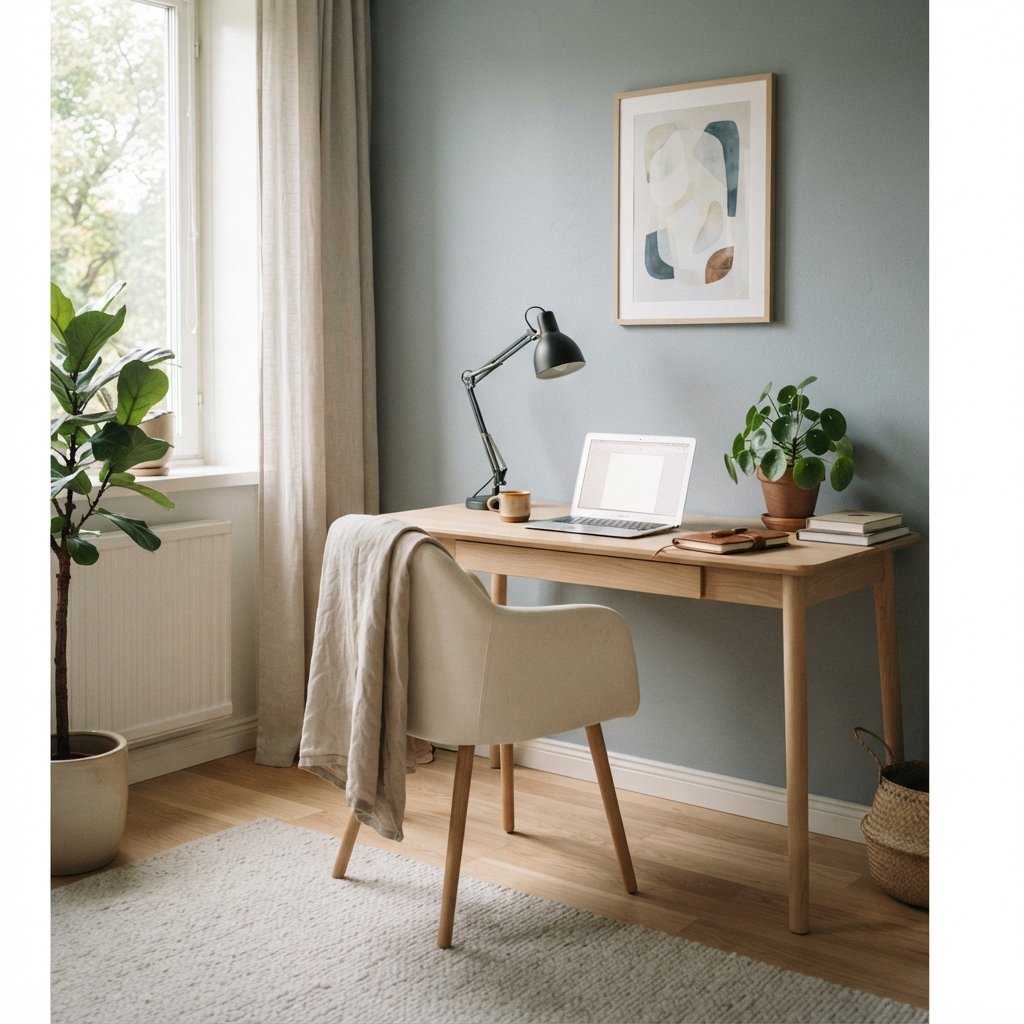
A subtle green-gray can be an excellent neutral alternative.
From a distance, it may read almost like a neutral wall color, while the green influence adds character.
It can work particularly well with:
- Pale oak
- Natural stone
- Cream upholstery
- Black accents
- Warm white trim
This is a useful direction if ordinary gray feels too cold but you do not want beige.
12. Cream
Cream creates an especially warm, soft interior.
It works well with light floors that have visible golden or warm beige characteristics.
The challenge is preventing the room from becoming overly yellow.
Compare your cream sample directly against:
- Flooring
- Trim
- Cabinets
- Upholstery
If everything starts looking yellow, choose a more muted warm white or off-white instead.
13. Soft Gray
Gray can work with light wood floors, but choose it carefully.
Very cool gray beside strongly warm flooring can create a sharp contrast.
Sometimes that is exactly what you want.
Other times it makes the floor appear more yellow or orange.
A softer gray with a compatible undertone can provide gentle contrast while maintaining a neutral room.
Always sample gray directly beside the floor rather than choosing it from a paint chip alone.
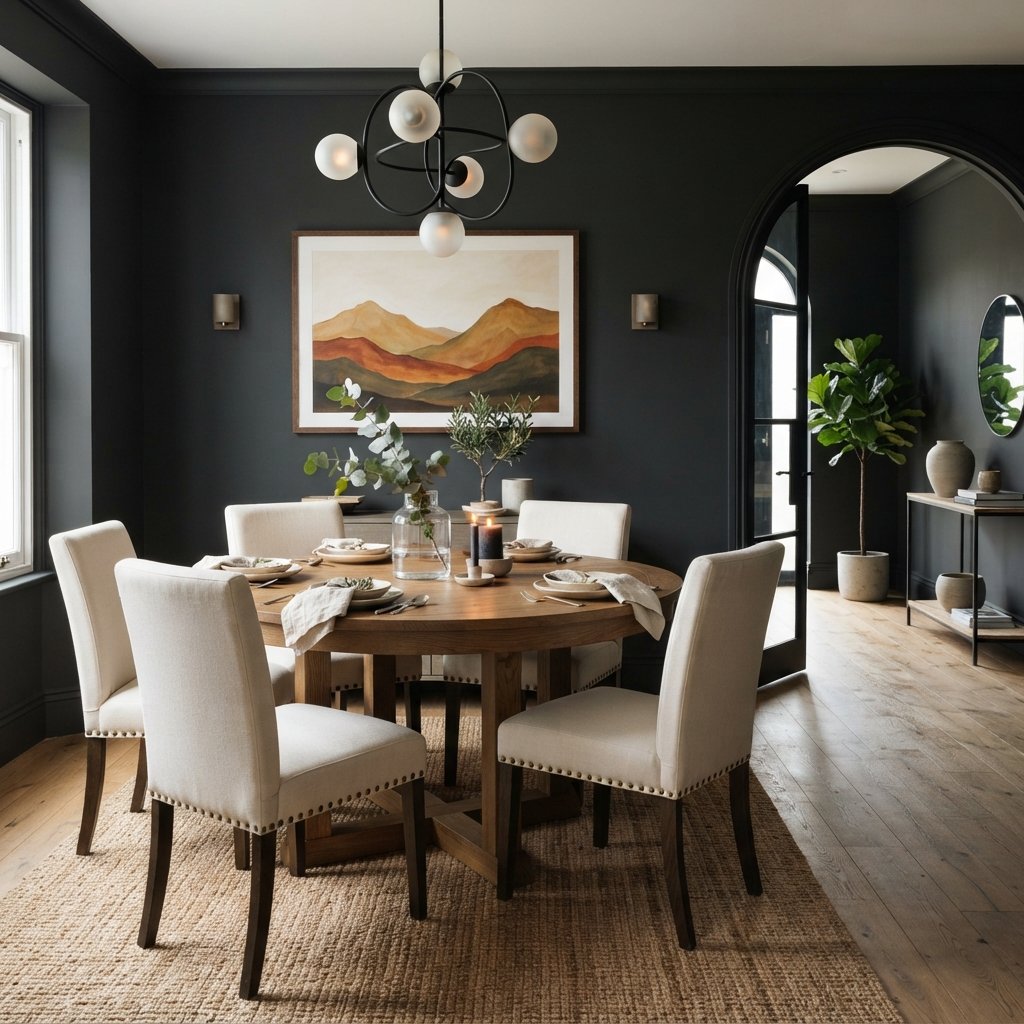
14. Charcoal
Light floors give you the freedom to go considerably darker on the walls.
Charcoal can create a dramatic room without making the floor feel heavy.
Try charcoal in:
- Dining room
- Office
- Bedroom
- Accent wall
- Powder room
Use lighter furnishings and textiles to balance the depth.
15. Deep Green
Deep green and pale wood can be an especially beautiful contrast.
The floor keeps the room visually grounded while the dark walls create depth.
Use warm white, cream, and brass to soften the combination.
This works particularly well when you want a room to feel:
- Moody
- Traditional
- Organic
- Cozy
A darker paint color will respond strongly to lighting, so test it on several walls.
16. Muted Terracotta
If you prefer warmer color, consider a soft clay or muted terracotta.
The goal is not bright orange.
Look for an earthy, subdued color that relates naturally to wood.
This can create a beautiful palette with:
- Cream
- Olive
- Dark brown
- Natural fibers
- Warm metal
It is particularly effective in dining rooms or cozy bedrooms where warmth is welcome.
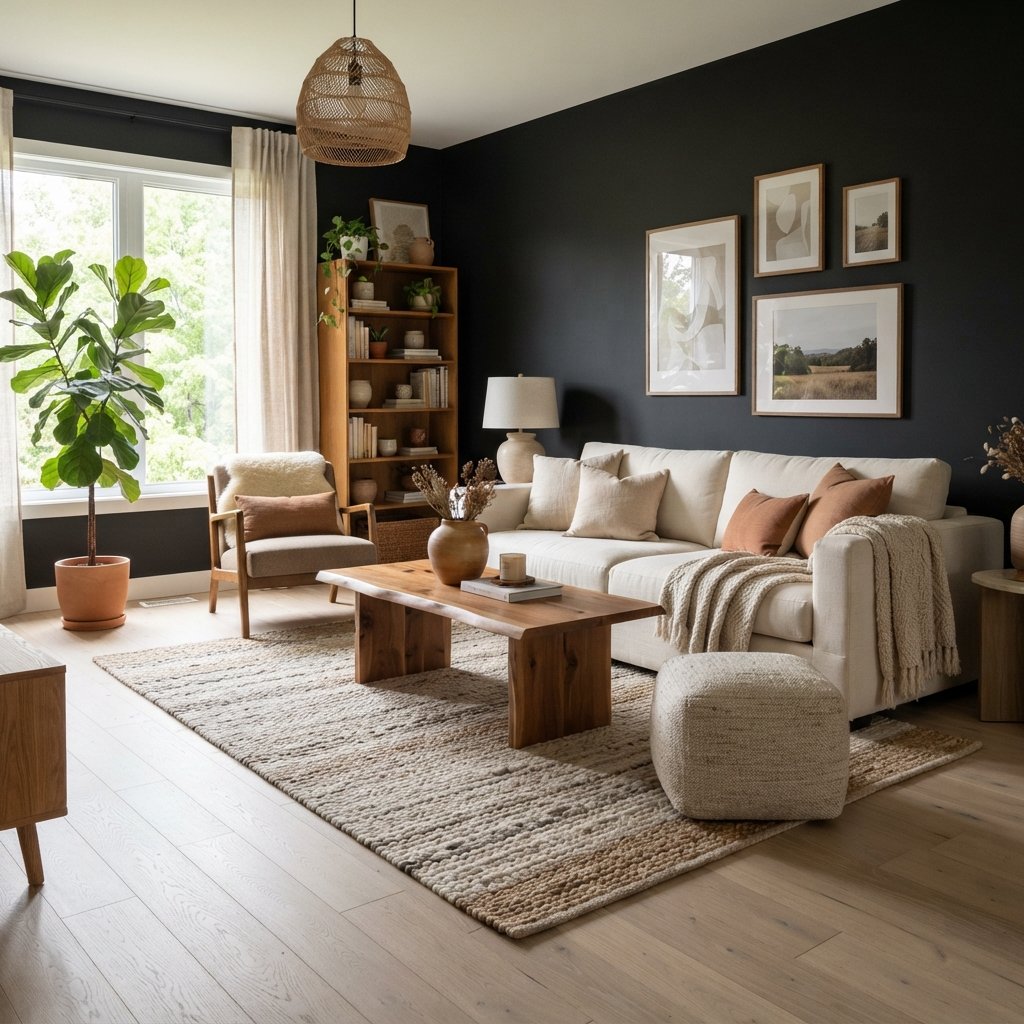
17. Soft Black
Black walls can look surprisingly beautiful with very light wood floors.
The strong contrast makes the flooring a major feature.
Instead of using black everywhere, you could try it on:
- Office walls
- Built-ins
- Dining room
- Accent wall
- Interior doors
Choose furnishings that bridge the contrast, such as cream upholstery and medium-tone wood.
How to Identify the Undertones in Light Wood Floors
Before choosing wall paint, study the floor.
Do not simply label it “light wood.”
Ask what color you actually see.
Golden
Some light woods have a warm golden appearance.
Warm whites, beige, cream, sage, and warm greige can be good directions to explore.
Beige
A fairly neutral beige floor gives you more flexibility.
You may be able to use both warmer and cooler wall colors successfully.
Pink or Red
Some woods reveal subtle pink or reddish characteristics.
Those tones can become much more obvious next to certain greens, grays, and whites, so sample carefully.
Gray
Some light wood floors are intentionally desaturated or gray-washed.
They may coordinate naturally with cooler neutrals, blue-grays, and muted greens.
Very Pale or Whitewashed
Extremely light flooring creates a blanker backdrop.
You can keep everything airy with white walls or introduce strong contrast with charcoal, deep green, or black.
Best Paint Colors With Light Oak Floors
Light oak can vary dramatically.
Some oak is golden.
Some is beige.
Some looks almost pink.
Some modern finishes mute the warmth significantly.
For warmer oak, consider exploring:
- Warm white
- Soft beige
- Warm greige
- Sage
- Olive
- Cream
For more neutral pale oak, you can also explore:
- Blue-gray
- Green-gray
- Charcoal
- Deep green
Do not select a wall color based solely on the word “oak.”
Look at your actual floor.
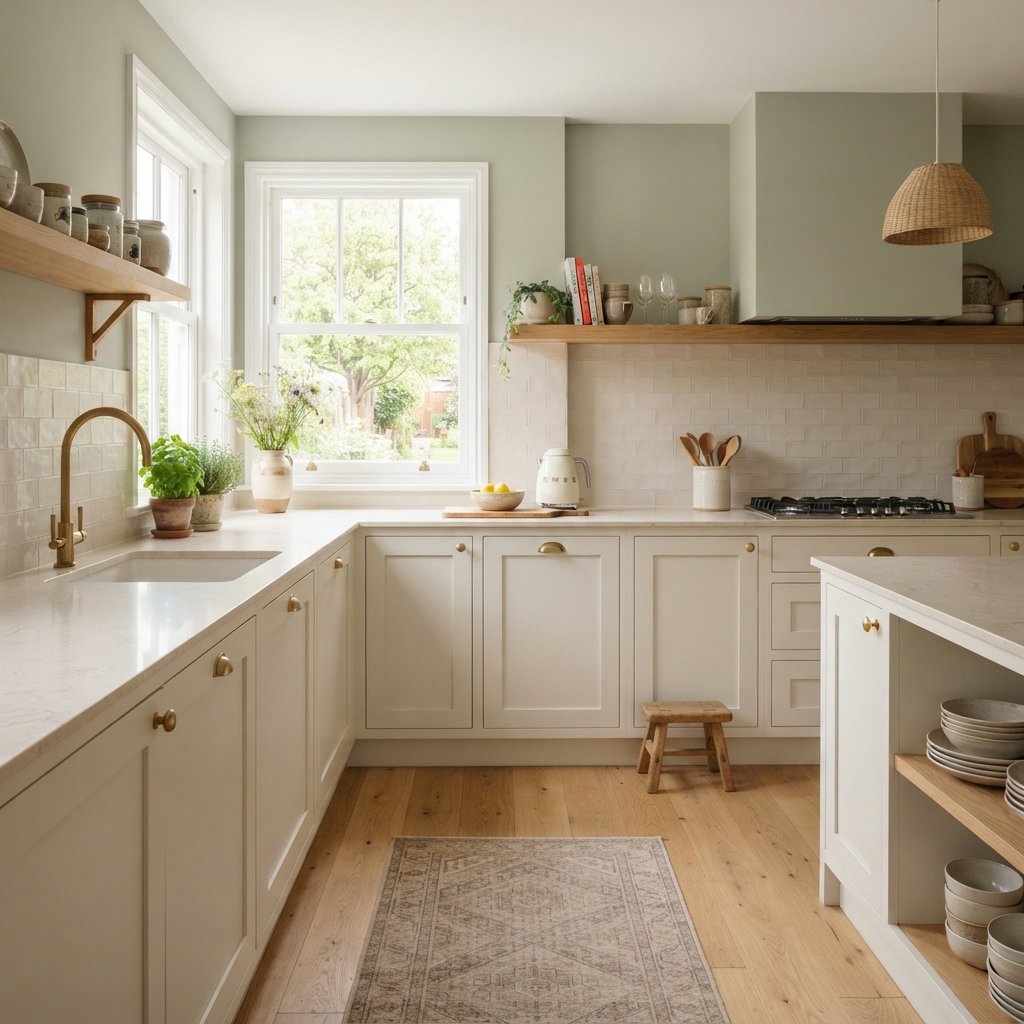
Paint Colors for Light Wood Floors and White Cabinets
White kitchen cabinets introduce another large surface that needs to coordinate with the wall paint.
Compare the wall sample with both the flooring and cabinet white.
Good directions might include:
- Warm white
- Soft greige
- Light beige
- Sage green
- Muted green-gray
- Dusty blue
Avoid choosing a second white without comparing it directly with the cabinets.
Two whites can look similar separately but clash once they are side by side.
Paint Colors for Light Wood Floors and Dark Cabinets
Dark cabinets create a very different balance.
Because the cabinetry provides visual weight, lighter walls often work beautifully.
Try:
- Warm white
- Off-white
- Greige
- Soft beige
- Light green-gray
If the room receives plenty of natural light, you could also create a moodier palette with deeper green or blue.
The light flooring will help keep the space from feeling uniformly dark.
Paint Colors for Light Wood Floors and Wood Cabinets
When both the flooring and cabinetry are wood, look for the dominant undertones in each.
They do not have to match.
In fact, a room often looks more natural when wood tones are intentionally mixed.
The wall color can act as a bridge between them.
Warm white, greige, muted green, or soft beige can provide a quiet background while allowing the woods to remain distinct.
Paint Colors for Light Wood Floors in a Living Room
Living rooms contain large furnishings that influence the palette.
Consider your:
- Sofa
- Rug
- Fireplace
- Curtains
- Wood furniture
For a bright living room, warm white or light greige can work well.
For more color, try sage or dusty blue.
For drama, use charcoal or deep green.
The flooring is only one part of the decision.
Paint Colors for Light Wood Floors in a Bedroom
Bedrooms can handle softer, more enveloping colors.
Consider:
- Warm white
- Taupe
- Sage
- Dusty blue
- Mushroom
- Deep green
Your bedding can help connect the floor and wall color.
For example, sage walls and pale wood floors can be tied together with cream bedding and medium brown wood furniture.
Paint Colors for Light Wood Floors in a Kitchen
Kitchens have more permanent finishes than most rooms.
Before choosing paint, consider:
- Cabinet color
- Countertop
- Backsplash
- Flooring
- Appliances
The wall color needs to coordinate with the entire group.
Warm white, greige, sage, and muted green-gray are versatile starting points, but the fixed finishes should ultimately guide the decision.
Paint Colors for Light Wood Floors in an Open Floor Plan
Open spaces need visual continuity.
You do not necessarily need one paint color everywhere, but the colors should relate.
One simple strategy is to use a neutral main color and introduce deeper related colors in individual spaces.
For example:
Main area: warm white.
Dining room: muted olive.
Office: charcoal.
The same light wood flooring running throughout helps connect the palette.
What Color Trim Goes With Light Wood Floors?
Trim should coordinate primarily with the walls and other white finishes, not just the floor.
A softer warm white can look beautiful with golden or beige wood.
A crisper white may suit cooler walls or a more contemporary palette.
If your home already has white cabinets, compare the trim white directly with them before repainting.
You can also use the same white on walls and trim while changing the sheen for a quieter, more seamless look.
Warm vs. Cool Paint With Light Wood Floors
There is no rule saying warm floors require warm walls.
Warm and cool colors can create beautiful contrast.
The question is whether you like what happens when they are combined.
For example, cool blue-gray walls may make a golden floor look noticeably warmer.
A warm beige may blend with that same floor.
Neither approach is automatically better.
One creates contrast; the other creates harmony.
Decide which effect suits the room.
How to Choose Paint When Light Wood Looks Yellow
If your flooring looks more yellow than you would like, be careful with wall colors that exaggerate it.
Some very cool grays or stark whites can increase the perceived contrast and make the warmth of the floor more obvious.
Instead, test:
- Warm white
- Muted greige
- Soft beige
- Sage
- Green-gray
The goal is not necessarily to “cancel” the floor.
It is to create a palette where its warmth feels intentional.
How to Choose Paint When Light Wood Looks Pink
Do not ignore pink or red characteristics in wood.
Place your paint samples directly against the floor and evaluate the relationship.
Be particularly careful with colors that create strong complementary contrast, because they may make the pink quality more noticeable.
Try several neutral directions instead of assuming one particular undertone will solve the problem.
How to Make Light Wood Floors Look More Expensive
Wall color helps, but the entire palette matters.
Repeat the Wood Tone
Introduce a similar warm wood once or twice through furniture or frames.
Add a Darker Wood
A medium or dark wood piece creates depth.
Use Texture
Linen, wool, woven baskets, stone, and pottery keep a pale room from feeling flat.
Add Contrast
Black, charcoal, deep green, or dark brown can ground the room.
Avoid Matching Everything
Your coffee table, floor, dining table, and cabinets do not need to be identical.
Choose Wall Color Carefully
A paint color that relates to the flooring makes the entire room feel more intentional.
Common Paint Color Mistakes With Light Wood Floors
Choosing Paint Before Looking at the Floor
The flooring is a major fixed finish.
Assuming All Light Wood Is Warm
Some light floors are surprisingly neutral or cool.
Ignoring Pink Undertones
They may become obvious once the walls are painted.
Using Cool Gray Automatically
Gray is not universally compatible with wood.
Choosing White From a Screen
Whites can look dramatically different in person.
Forgetting the Furniture
Your sofa, cabinets, counters, and rugs matter too.
Testing One Tiny Sample
Larger samples reveal more.
Testing Only One Wall
Light changes around the room.
Looking Only During Daylight
Check the paint after dark too.
Trying to Match the Floor Exactly
Wall paint should coordinate with the flooring, not imitate it.
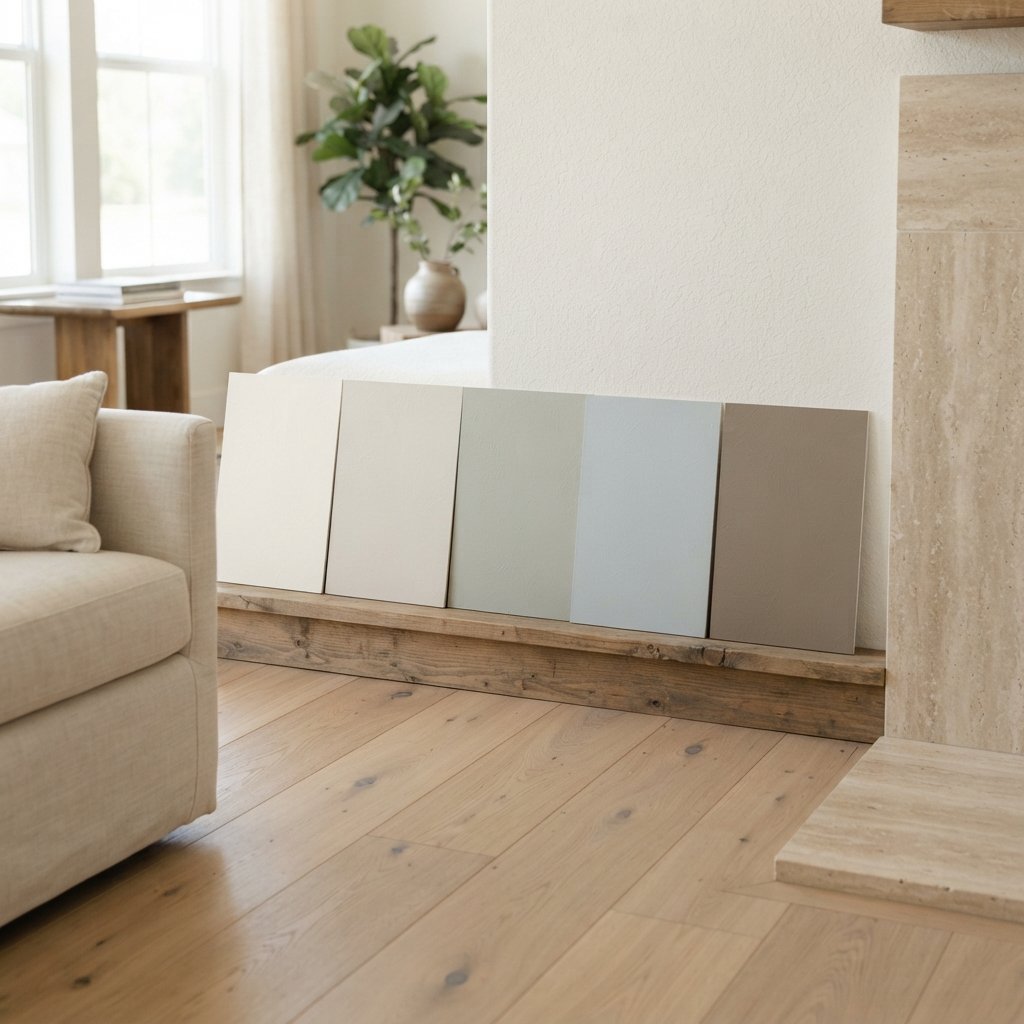
How to Test Paint With Light Wood Flooring
Use this simple process.
- Identify the dominant colors in the flooring.
- Gather several paint options rather than choosing one.
- Compare the samples side by side.
- Place them directly near the floor.
- Compare them with cabinetry, stone, and countertops.
- Narrow the options.
- Test larger samples.
- Move the samples to different walls.
- Look at them throughout the day.
- Check them under your normal artificial lighting.
Do not rely entirely on photographs.
The exact same paint can appear different depending on the light and surrounding materials.
FAQ About Paint Colors That Go With Light Wood Floors
What paint colors look good with light wood floors?
Warm white, off-white, greige, beige, taupe, sage, muted olive, dusty blue, blue-gray, green-gray, charcoal, deep green, and other muted colors can all work. The best choice depends on the floor’s undertones.
What wall color looks good with light oak floors?
Warm whites, soft greiges, beige, sage, and muted greens are useful starting points. More neutral pale oak can also work beautifully with blues and darker colors.
Do gray walls go with light wood floors?
They can, but test carefully. A cool gray can make warm wood appear more yellow or orange by comparison. Choose gray based on the actual flooring rather than assuming any gray will work.
Do white walls look good with light wood floors?
Yes. White walls and light floors can create a bright, airy interior. A warmer white often creates a softer effect, while a crisp white produces stronger contrast.
What colors go with light wood floors and white cabinets?
Warm white, greige, beige, sage, green-gray, and muted blue can work well. Make sure the wall color also coordinates with the cabinet white, countertops, and backsplash.
Can I use dark paint with light floors?
Absolutely. Charcoal, deep green, navy-inspired blues, and soft black can create striking contrast with pale flooring.
What color walls make light wood floors look less yellow?
There is no universal color because the floor and lighting vary. Start by testing muted warm whites, greiges, soft beige, sage, and green-gray directly beside the floor.
Should wall paint match wood floor undertones?
It does not have to match exactly. You can either create harmony with related undertones or intentional contrast with cooler or deeper colors.
Final Thoughts
There are plenty of beautiful paint colors that go with light wood floors, from warm white and soft greige to sage green, dusty blue, charcoal, and deep green.
The important part is looking beyond the label “light wood.”
Study your actual flooring.
Does it appear golden, beige, pink, gray, or almost white?
Then compare your paint samples directly against the floor, along with any cabinets, countertops, tile, stone, and large furniture that will remain in the room.
If you want a bright, quiet space, start with warm white, off-white, beige, or greige.
For gentle color, explore sage, green-gray, or dusty blue.
And if you want stronger contrast, light floors are an excellent foundation for charcoal, deep green, or even soft black walls.
Most importantly, sample before committing.
The goal is not to find a paint color that perfectly matches your light wood floors. It is to create a room where the flooring, walls, furniture, and fixed finishes feel intentionally connected.