

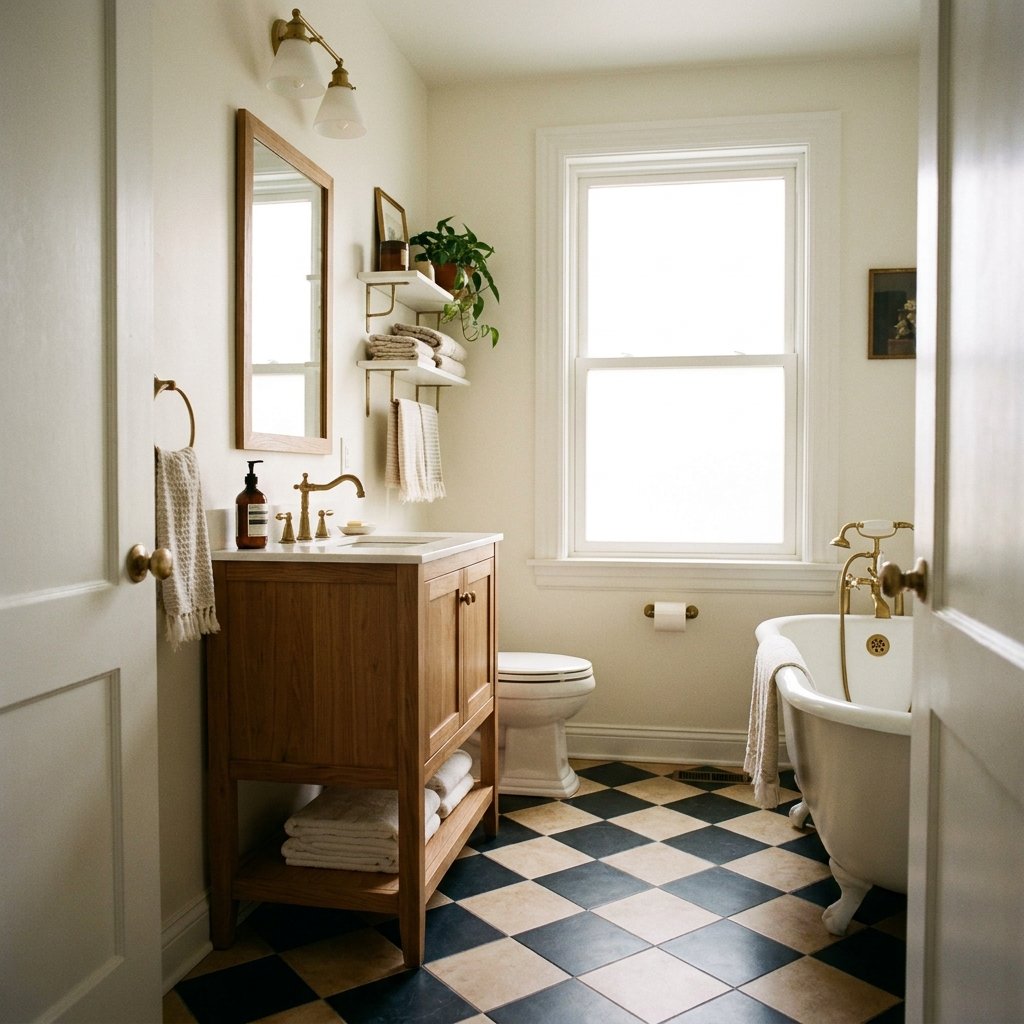
Flooring has an outsized impact in a small bathroom.
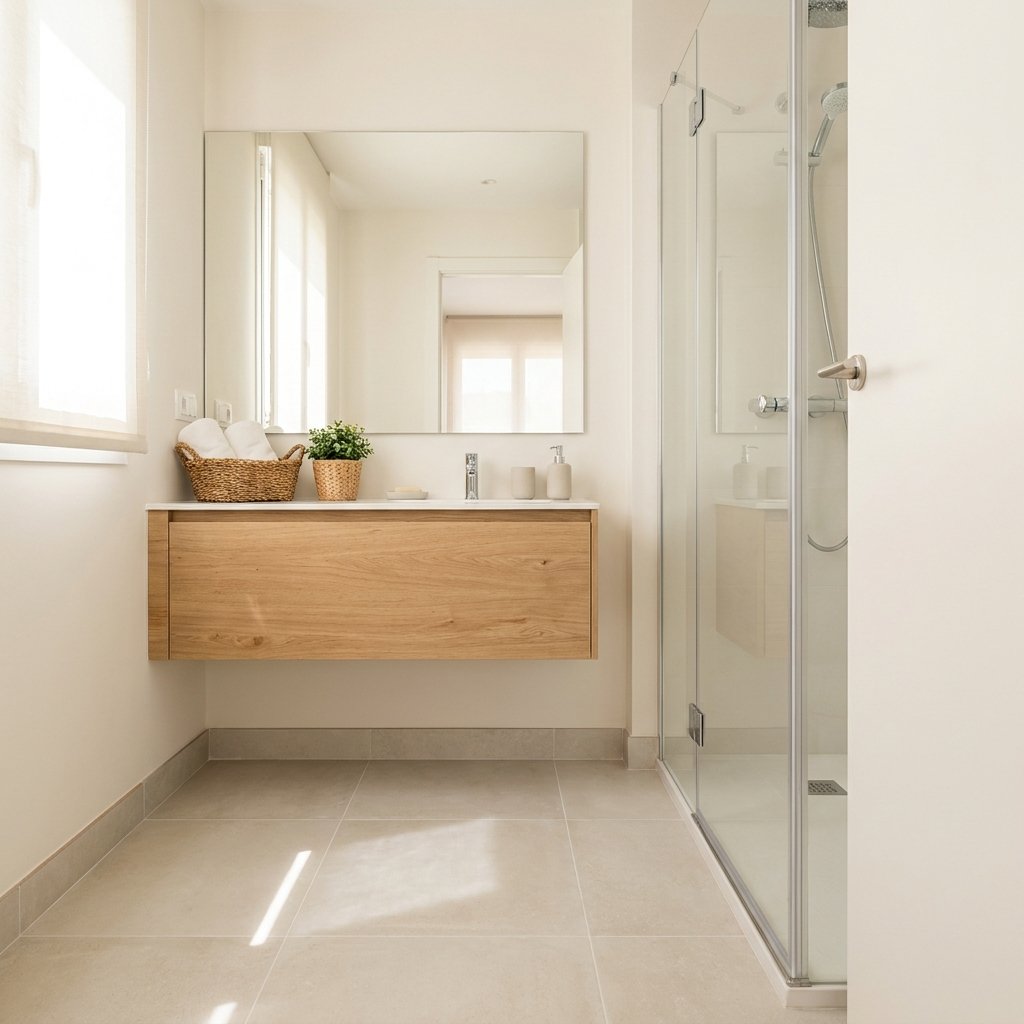
Because there is less floor area, every material, pattern, grout line, and color becomes more noticeable. The right flooring can make a compact bathroom feel brighter, wider, warmer, or more polished, while the wrong choice can make an already small room feel unnecessarily busy.
Fortunately, you do not have to play it completely safe.
A small bathroom flooring idea can be as simple as large light-colored tile, or it can become the room’s main feature with checkerboard, patterned tile, dark stone, or a wood-look floor.
The most important consideration is choosing a floor suitable for bathroom conditions.
Bathrooms experience moisture, splashes, humidity, frequent cleaning, and potentially slippery surfaces. The exact flooring product, installation system, substrate, waterproofing requirements, and slip characteristics all matter.
Once those practical considerations are handled, you can focus on making the room beautiful.
Here are 17 small bathroom flooring ideas, plus tips for choosing color, tile size, patterns, grout, and finishes for a compact space.
1. Use Large-Format Light Tile
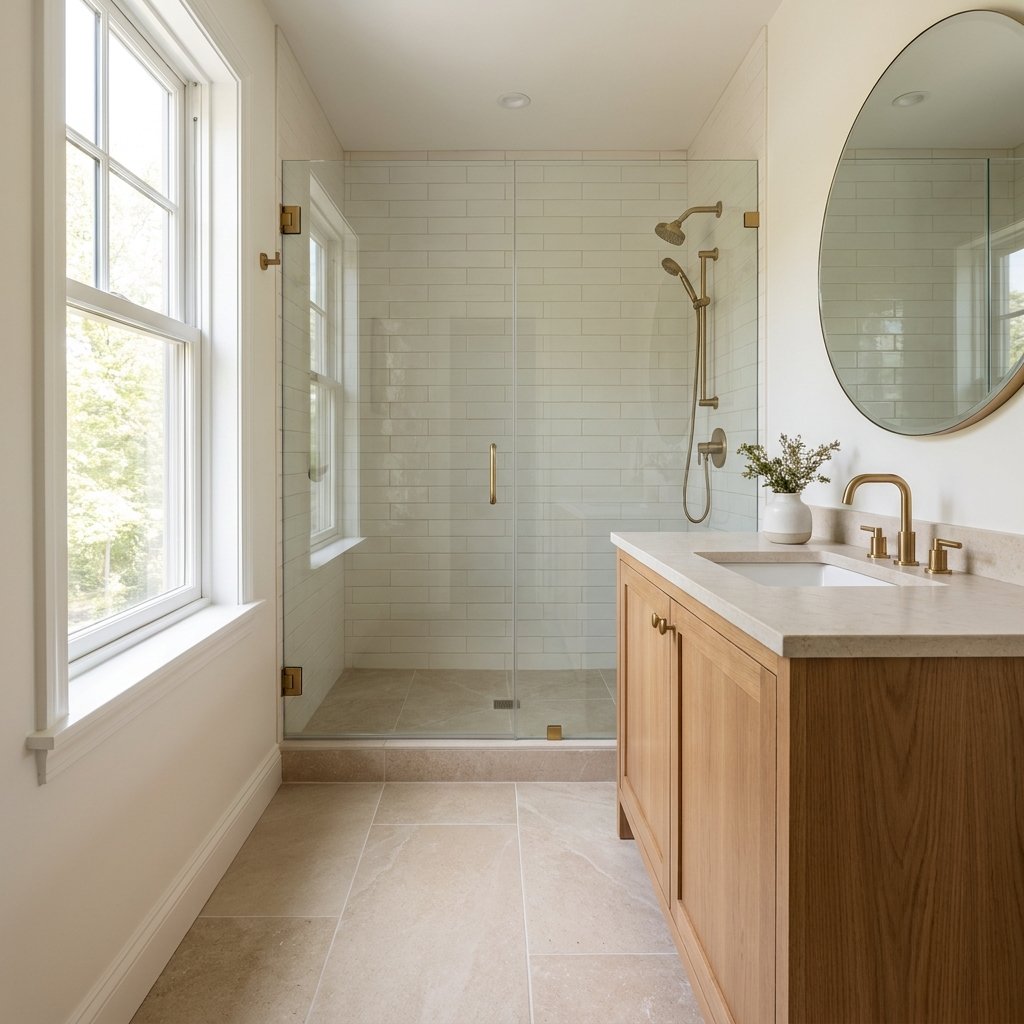
Large-format tile is an excellent option for a small bathroom.
Fewer grout lines can create a quieter visual surface, helping the floor feel more continuous.
Try:
- Warm white
- Pale beige
- Light greige
- Soft gray
- Cream
A subtle stone-look tile can add movement without overwhelming the room.
Do not choose tile size based only on the idea that “bigger is better.” The room dimensions, floor flatness, layout, cuts, drainage, and installation requirements all need to be considered.
2. Choose Warm Beige Flooring
Beige is making a useful comeback because it brings warmth without demanding attention.
A warm beige floor works beautifully with:
- White vanity
- Wood vanity
- Cream walls
- Brass
- Black
- Warm nickel
In a small bathroom, beige can feel softer than a cool gray while remaining light enough to keep the room airy.
3. Try Marble-Look Tile
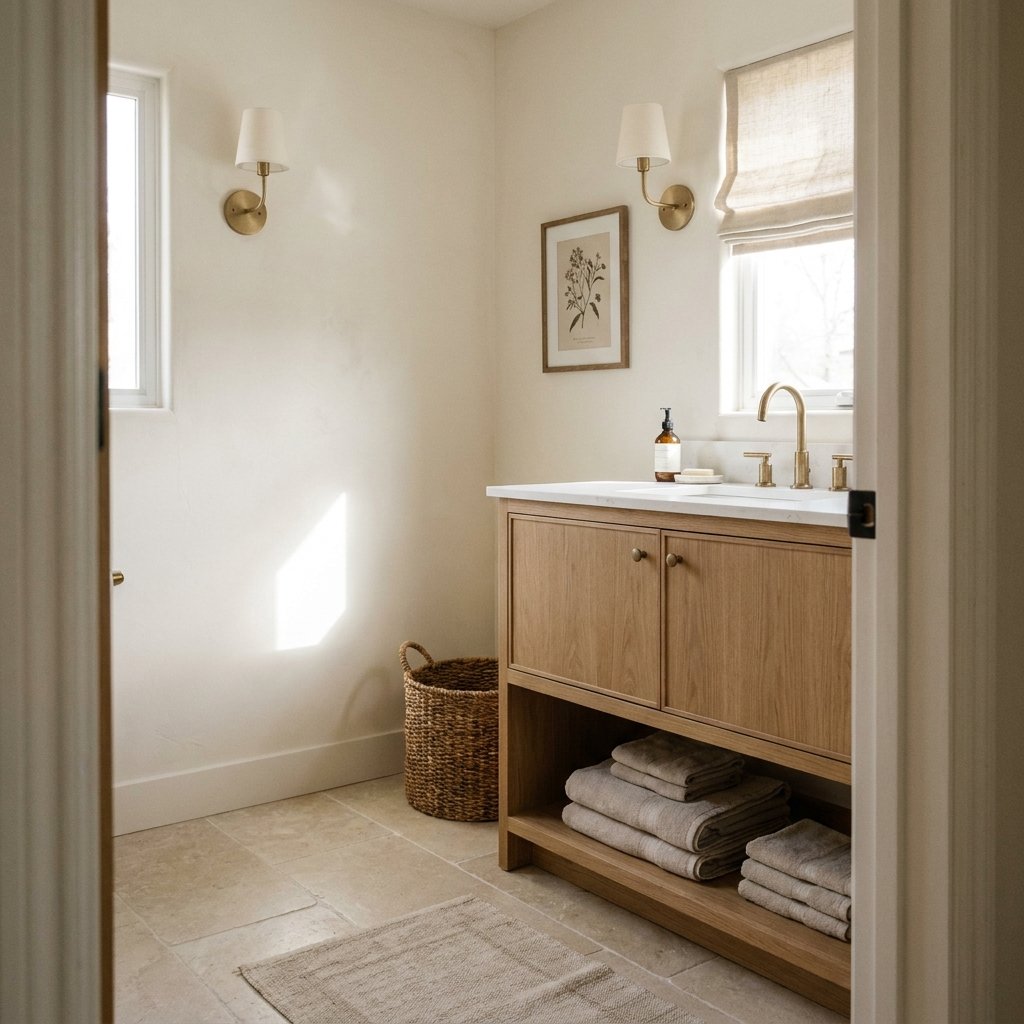
Marble-look porcelain or ceramic tile can provide an elegant appearance without necessarily using natural marble.
A pale background with subtle veining works especially well in a small bathroom.
Keep the pattern relatively restrained if the bathroom already has busy shower tile or a statement vanity.
If using the same or coordinating material elsewhere, repeating it can make the bathroom feel more cohesive.
Check the specific tile’s suitability for floors and wet locations rather than assuming every marble-look tile is appropriate underfoot.
4. Use Wood-Look Flooring for Warmth
Wood-look tile can bring warmth into a bathroom without relying on actual hardwood.
Wood-look porcelain tile is one option when you want the appearance of planks with a material designed for appropriate wet-area applications.
Depending on the specific product and bathroom, other water-resistant or waterproof flooring systems may also be possibilities.
Always verify the manufacturer’s bathroom-use, water-exposure, installation, and warranty requirements.
Warm oak tones work particularly well in small bathrooms because they introduce texture without making the room feel dark.
5. Create a Classic Black-and-White Floor
Black and white is a timeless bathroom combination.
You might use:
- Checkerboard
- Small geometric tile
- Black-and-white mosaic
- Simple patterned tile
Because the floor is visually strong, keep some of the other elements quieter.
Try black-and-white flooring with warm white walls and a simple wood vanity.
The wood prevents the palette from feeling too stark.
6. Try Checkerboard Flooring
Checkerboard deserves its own category because it can be interpreted in many ways.
Instead of only black and white, try:
- Cream + beige
- White + gray
- Ivory + muted green
- Cream + terracotta
A lower-contrast checkerboard pattern can add character while remaining relatively calm.
Test the scale before installation.
A pattern that looks balanced in a large showroom may feel very different across a tiny bathroom floor.
7. Use Small Hexagon Tile
Small hex tile can bring vintage character to a bathroom.
It works particularly well in:
- Traditional bathrooms
- Cottage bathrooms
- Vintage-inspired bathrooms
- Classic black-and-white spaces
Because smaller tile creates more grout joints, grout selection becomes important both visually and practically.
Confirm that the tile and grout system are appropriate for the intended bathroom application.
8. Try Penny Tile
Penny tile can add lots of texture to a small floor.
Classic options include:
- White
- Black
- Black and white
- Soft gray
- Muted color
It can work particularly well in a small bathroom where the limited floor area prevents the pattern from becoming overwhelming.
Small mosaics create many grout lines, so proper installation and maintenance are important.
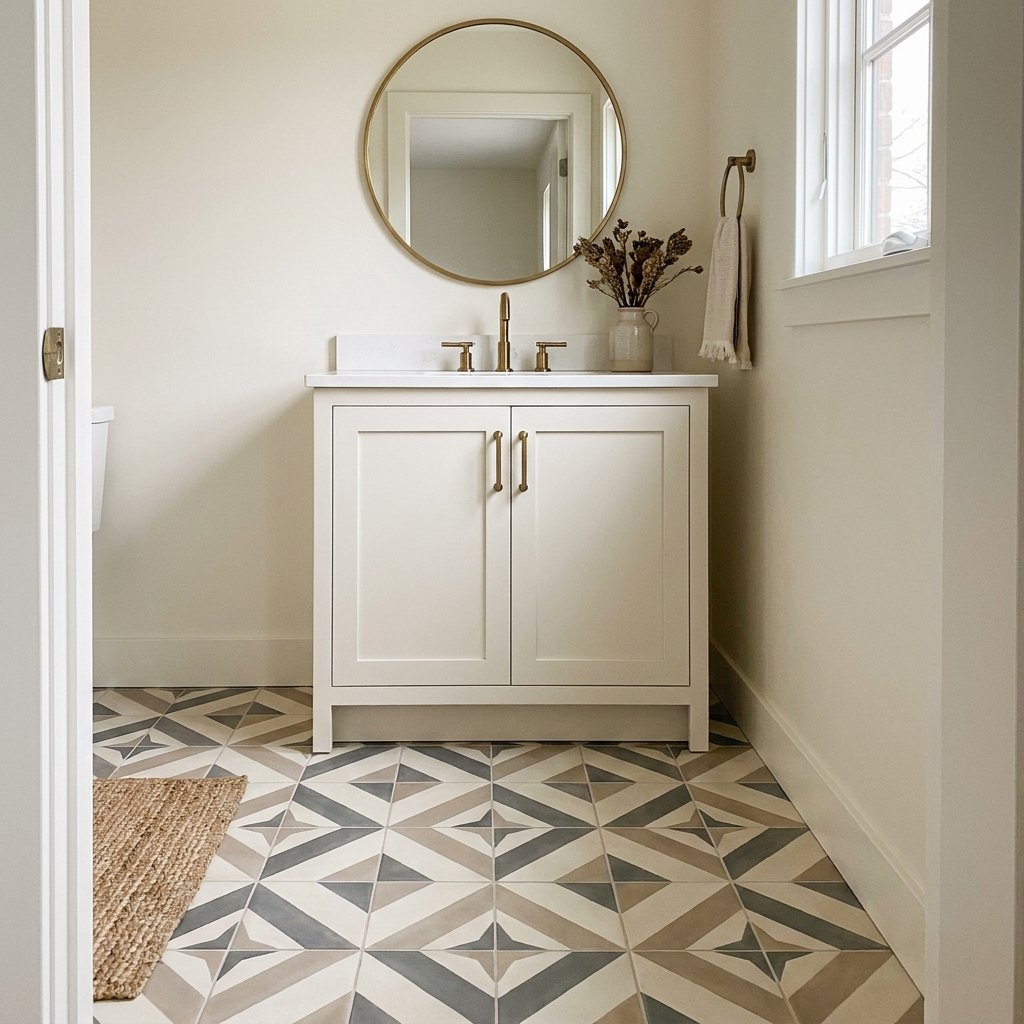
9. Choose Patterned Tile as the Focal Point
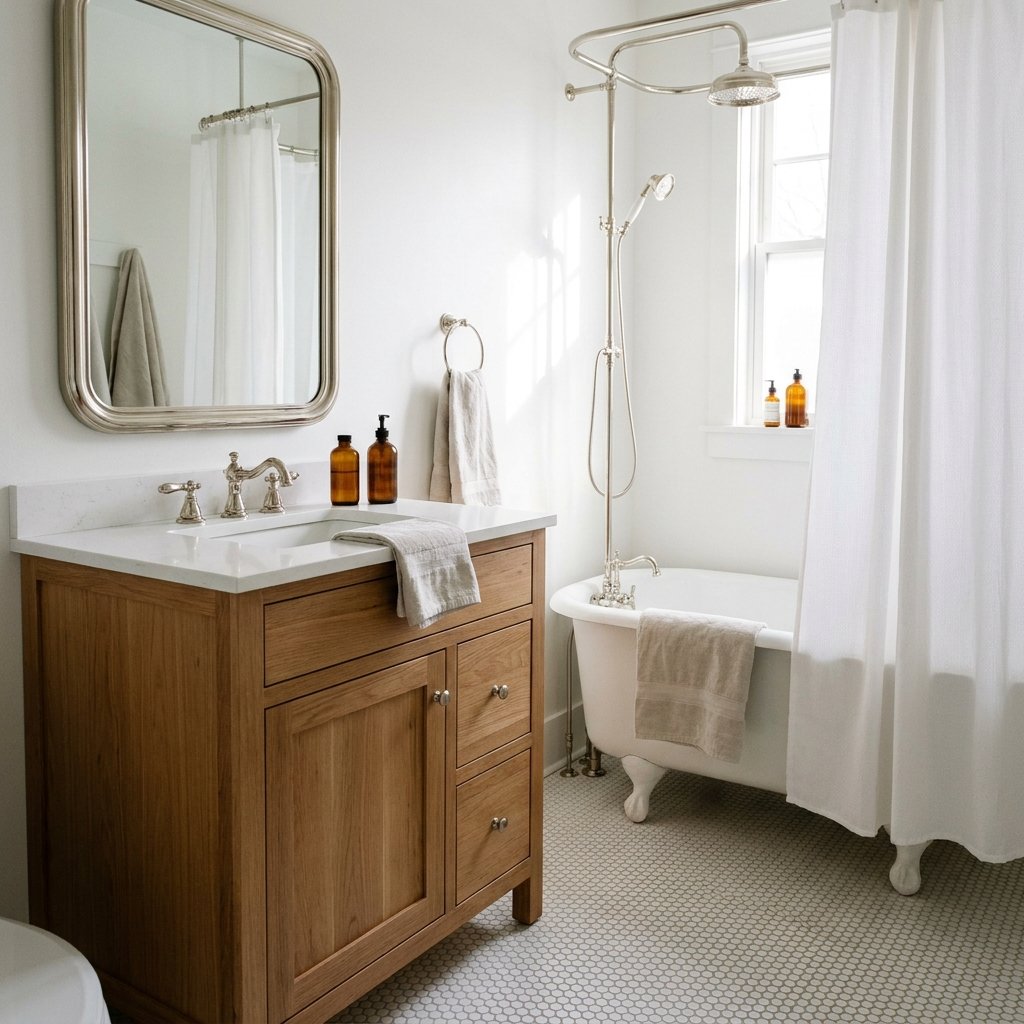
A small bathroom is a great place to experiment with patterned flooring.
Because you need less material than in a large room, a distinctive floor can become the main design feature.
Consider:
- Geometric patterns
- Floral-inspired motifs
- Mediterranean-inspired patterns
- Vintage-style designs
Then simplify the rest of the room.
Patterned floor + plain walls + simple vanity is often enough.
10. Use Dark Flooring for Contrast
Small bathrooms do not have to have pale floors.
Charcoal, black, deep brown, and other dark flooring can create a grounded, sophisticated look.
Balance a dark floor with lighter elements such as:
- Warm white walls
- Pale vanity
- Light shower tile
- Large mirror
Dark floors may show certain types of dust, water spots, or residue more readily, depending on the surface and household.
Choose based on both appearance and maintenance preferences.
11. Try Slate-Look Tile
Slate-look tile can add depth without the maintenance considerations of some natural stone products.
A charcoal or dark gray slate appearance works well in:
- Modern bathrooms
- Rustic bathrooms
- Farmhouse-inspired spaces
- Moody powder rooms
Pair it with warm wood to soften the dark color.
Again, check the specific product’s floor and wet-area suitability.
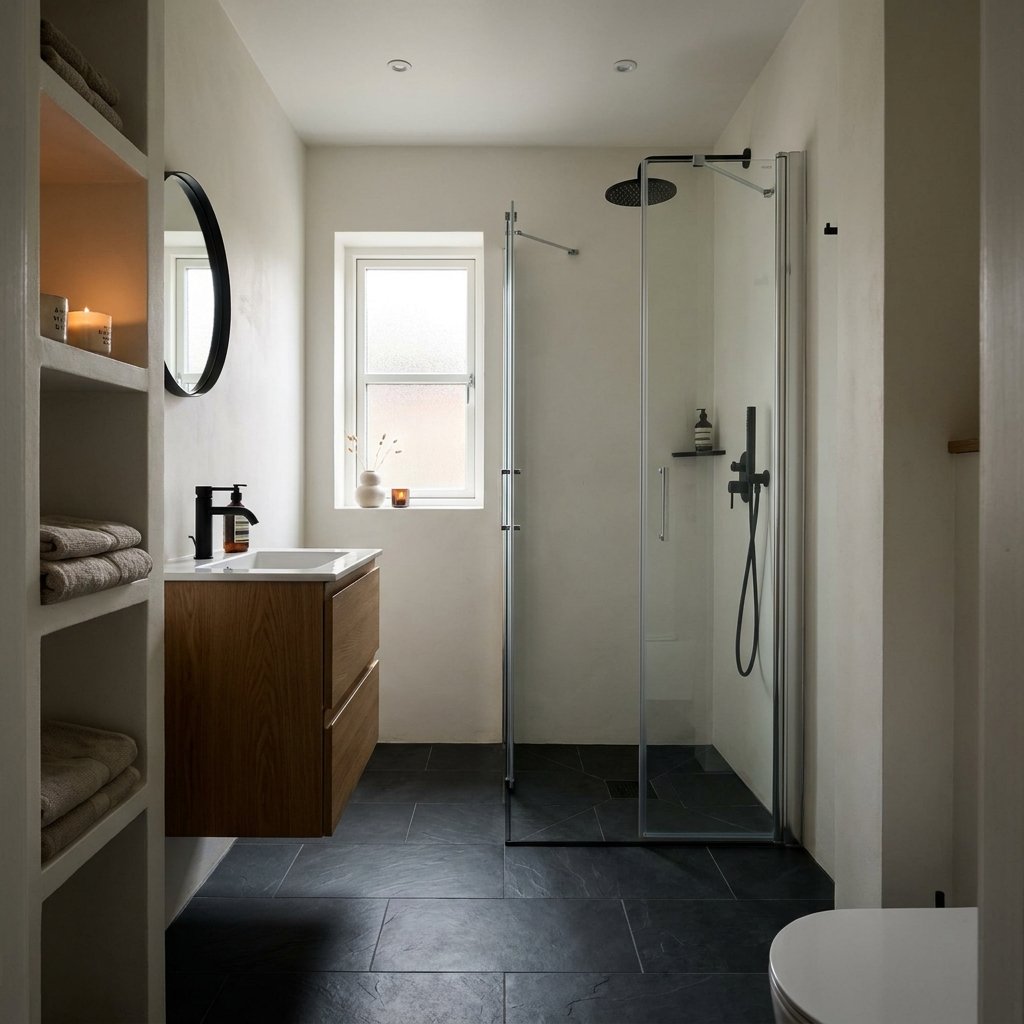
12. Continue the Floor Into the Shower Where Appropriate
A visually continuous floor can make a small bathroom feel less divided.
However, shower floors have specific slope, drainage, waterproofing, and slip considerations.
Not every bathroom floor tile is suitable for a shower floor, and large tiles can be challenging with certain traditional drain and slope configurations.
Use tile and installation systems specifically appropriate for the application.
When done correctly, a coordinated bathroom and shower floor can create a clean, spacious appearance.
13. Run Rectangular Tile Lengthwise
Tile orientation can influence how you perceive a room.
Running rectangular tile in a particular direction may emphasize length or width.
Before installation, dry-lay or digitally visualize the pattern.
Consider:
- Doorway sightline
- Vanity position
- Shower
- Toilet
- Most visible wall
Do not automatically follow the longest wall.
Choose the direction that produces the cleanest layout and most intentional cuts.
14. Try a Herringbone Floor
Herringbone can bring movement and character to a small bathroom.
It works with:
- Wood-look tile
- Rectangular stone-look tile
- Ceramic tile
- Porcelain tile
Because the layout is more complex than a simple straight installation, careful planning matters.
The pattern creates additional cuts and may require more material and labor.
Use the floor as the main pattern and keep other surfaces relatively simple.
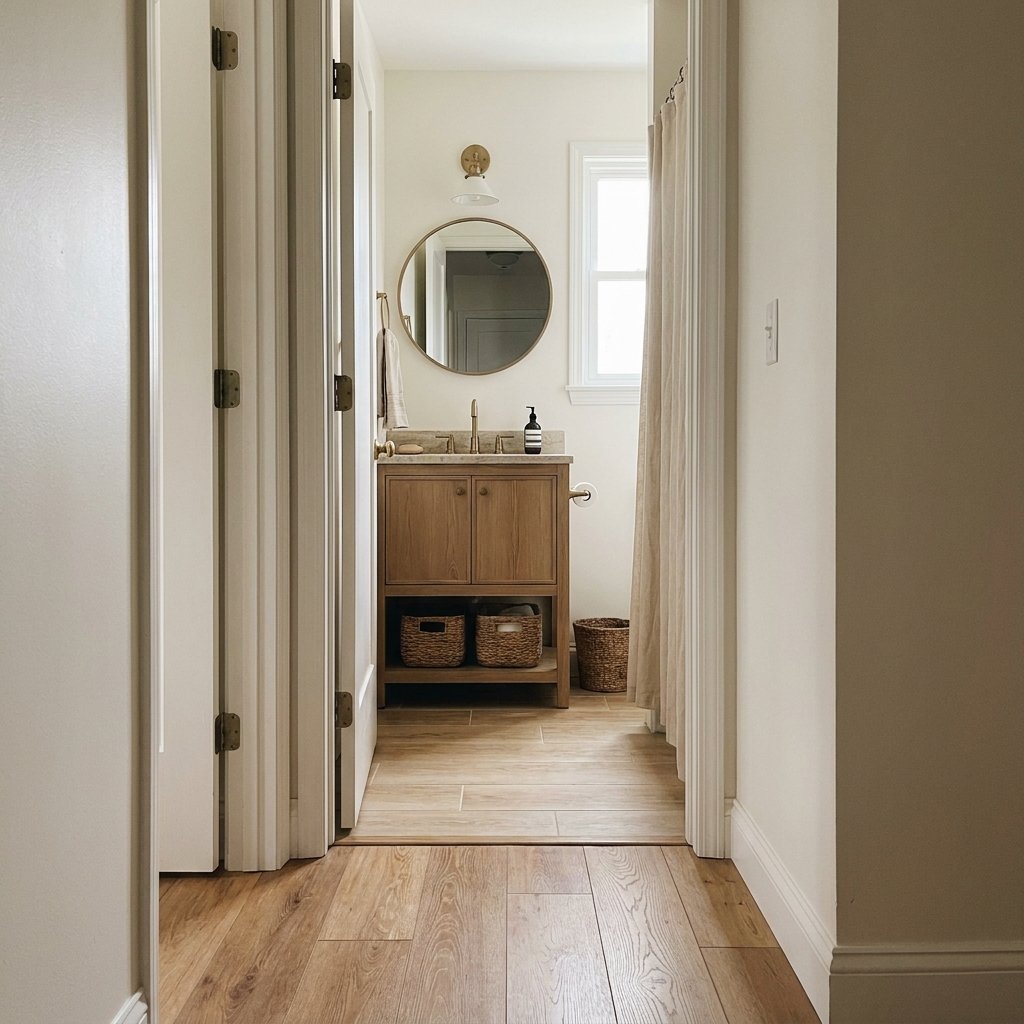
15. Use the Same Flooring Color as the Hallway
If a small bathroom opens directly from a hallway or bedroom, related flooring colors can reduce the visual break between spaces.
The materials do not necessarily need to be identical.
For example, a warm oak hallway floor could transition to a warm beige or oak-look bathroom tile.
Repeating undertones helps the rooms feel connected.
16. Choose Low-Contrast Grout
Grout can dramatically change how a tile floor reads.
Grout close to the tile color makes individual tiles blend together more.
This can create a calmer, more continuous floor.
For example:
Cream tile + warm cream grout.
Gray tile + similar gray grout.
Contrasting grout emphasizes every tile and pattern.
Neither approach is inherently better; choose based on whether you want the layout or the overall surface to attract attention.
Use a grout product appropriate for the installation and follow its maintenance requirements.
17. Let the Floor Be the Only Bold Element
Small bathrooms can become visually crowded quickly.
If you choose a bold floor, consider keeping the rest simple.
A useful formula is:
Statement floor + simple vanity + quiet walls + restrained hardware.
This allows the flooring to feel intentional rather than like one pattern among many competing features.
What Flooring Is Good for a Small Bathroom?
There is no single material that is right for every bathroom.
Common options may include appropriately rated:
- Porcelain tile
- Ceramic tile
- Natural stone
- Luxury vinyl products
- Other bathroom-suitable flooring systems
Each has different requirements for installation, moisture, substrate preparation, maintenance, durability, and slip resistance.
Always check the manufacturer’s instructions for the specific product.
A material marketed as water-resistant is not necessarily suitable for every wet-area application.
Porcelain vs. Ceramic Tile for a Small Bathroom
Both can be used in bathrooms when the specific product is rated for the intended installation.
Do not choose based on the category name alone.
Check:
- Floor rating
- Wet-area suitability
- Slip characteristics
- Installation requirements
- Maintenance
- Substrate requirements
The individual product matters more than a broad assumption that one category is always better.
Luxury Vinyl in a Small Bathroom
Luxury vinyl can appeal to homeowners who want a softer-feeling floor or wood-look appearance.
However, “waterproof” product marketing does not mean every installation can ignore moisture.
Water can still reach seams, edges, transitions, subfloors, and surrounding building materials.
Use a product approved by its manufacturer for the specific bathroom installation and follow all substrate, perimeter, sealing, and installation requirements.
It may not be appropriate for shower floors or other areas outside its intended use.
Can You Use Real Wood in a Bathroom?
Bathrooms expose flooring to moisture and humidity, which can make real wood more complicated.
Product, construction, finish, installation, ventilation, and manufacturer guidance all matter.
If you love wood but want a lower-maintenance bathroom floor, a suitable wood-look tile or another bathroom-rated flooring product may provide a similar visual effect.
Light or Dark Flooring in a Small Bathroom?
Both can work.
Light Flooring
Can create a bright, airy feeling.
Good options include:
- Cream
- Beige
- Light gray
- Pale stone
- Light wood look
Dark Flooring
Can create contrast and depth.
Try:
- Charcoal
- Black
- Dark slate
- Deep brown
The choice should relate to the rest of the room.
A small bathroom with dark floors, light walls, a large mirror, and good lighting can still feel open.
Large or Small Tile in a Small Bathroom?
Both are valid choices.
Large Tile
Creates fewer grout lines and a quieter visual field.
Small Tile
Can introduce texture and traditional character.
The better choice depends on the style and installation.
Large-format tile requires suitable substrate flatness and careful layout.
Small mosaics create more grout joints and require appropriate installation and maintenance.
Do not choose solely based on a rule that small rooms require small tile—or that large tile always makes them look bigger.
Best Flooring Colors for a Small Bathroom
Versatile choices include:
Warm White
Bright and simple.
Cream
Softens the room.
Beige
Warm and timeless.
Greige
Neutral without feeling stark.
Light Gray
Works with cooler palettes.
Natural Wood Tone
Adds warmth.
Charcoal
Creates drama.
Black and White
Adds classic contrast.
Look at the vanity, shower tile, countertop, and wall color together before choosing.
Small Bathroom Flooring With a White Vanity
A white vanity gives you plenty of options.
Try:
- Beige stone-look tile
- Warm wood-look tile
- Charcoal
- Checkerboard
- Patterned tile
If both the vanity and floor are white, add contrast through texture, grout, walls, or hardware.
Small Bathroom Flooring With a Wood Vanity
Wood vanities pair beautifully with:
- Cream
- Beige
- Pale stone
- Black
- Charcoal
- Muted patterned tile
Pay attention to undertones.
A very orange-toned wood beside a pink-beige floor, for example, may create a different effect than a cooler oak beside the same tile.
Always compare physical samples together.
Small Bathroom Flooring With Gray Vanity
Gray cabinetry can work with warm or cool floors depending on the specific gray.
Try:
- White
- Soft gray
- Greige
- Charcoal
- Wood look
If the vanity has a strong blue undertone, a very warm beige floor may clash.
Sampling is the safest approach.
Small Bathroom Flooring With Black Vanity
A black vanity creates strong contrast.
To keep the room bright, try:
- Pale stone
- Warm white
- Cream
- Light wood look
For a moodier bathroom, combine the black vanity with a darker floor and use lighter walls to provide relief.
Flooring Ideas for a Small Powder Room
A powder room is an ideal place to experiment.
Because it does not include a tub or shower, the moisture conditions differ from a full bathroom, although spills and cleaning still need consideration.
Try:
- Checkerboard
- Patterned tile
- Dark tile
- Herringbone
- Penny tile
A dramatic floor can make a tiny powder room memorable.
Budget Small Bathroom Flooring Ideas
A small footprint can sometimes make flooring upgrades more manageable because less material is required.
Budget-conscious approaches may include:
- Keeping existing tile if it is sound
- Shopping appropriate clearance tile
- Choosing simple ceramic or porcelain
- Using a bathroom-approved resilient flooring product
- Doing demolition or preparation yourself when appropriate and safe
Do not choose flooring based only on material price.
Include substrate preparation, waterproofing where required, setting materials, grout, transitions, labor, and waste in the overall project cost.
How to Make a Small Bathroom Floor Look Bigger
Reduce Visual Clutter
A quieter floor can feel more expansive.
Consider Fewer Grout Lines
Larger tile can create a more continuous surface.
Use Similar Grout
Low contrast emphasizes the whole floor rather than every individual tile.
Coordinate Adjacent Spaces
Related colors can reduce abrupt transitions.
Keep Other Patterns Controlled
If the floor is busy, simplify the walls.
Use Good Lighting
Even beautiful flooring can feel heavy in inadequate light.
Keep More Floor Visible
A wall-mounted or visually lighter vanity can expose additional flooring, although plumbing and structural considerations affect whether that change is practical.
How to Make Small Bathroom Flooring Look More Expensive
Choose a Cohesive Palette
Coordinate the floor with the vanity, countertop, walls, and shower.
Plan the Tile Layout Before Installation
Avoid awkward tiny cuts where possible.
Pay Attention to Grout
Grout color and workmanship affect the finished appearance.
Keep Transitions Clean
Doorways and adjacent floors deserve careful detailing.
Use Pattern Intentionally
One strong pattern often looks more polished than several competing ones.
Prepare the Subfloor Properly
A beautiful material cannot compensate for poor installation.
Finish the Details
Baseboards, thresholds, caulk joints, and edges all contribute to the result.
Common Small Bathroom Flooring Mistakes
Choosing by Appearance Alone
Bathroom performance matters.
Assuming Light Flooring Is Mandatory
Dark floors can work beautifully.
Assuming Large Tile Is Always Better
Layout and installation matter too.
Using Too Many Patterns
Decide which surface should be the focal point.
Ignoring Grout Color
It can completely change the appearance.
Forgetting Slip Characteristics
Especially important in wet areas.
Skipping Substrate Preparation
Tile and resilient flooring systems depend on appropriate preparation.
Using a Product Outside Its Approved Application
“Waterproof” does not automatically mean suitable for showers or every bathroom surface.
Forgetting Door Clearance
New flooring height can affect doors and transitions.
Bathroom Flooring Installation and Safety Tips
Bathrooms are moisture-sensitive spaces, so proper installation matters.
Inspect the existing subfloor or substrate for water damage, deterioration, excessive movement, or other problems before covering it.
Correct active leaks before installing new flooring.
Follow the flooring and installation-system manufacturers’ requirements for substrate preparation, adhesives, underlayments, waterproofing, expansion gaps, grout, sealers, and curing.
Shower floors and other wet areas require appropriate waterproofing, drainage, slope, and materials. These details should not be treated as purely cosmetic flooring work.
Consider slip characteristics, especially where floors regularly become wet.
Use appropriate eye, hearing, respiratory, and hand protection during demolition, cutting, mixing, and installation.
Older flooring, adhesives, mastics, and other building materials can sometimes contain hazardous substances. Avoid sanding, grinding, or disturbing unknown older materials until appropriate identification and safe procedures have been established.
For significant water damage, structural problems, complicated waterproofing, or unfamiliar tile installation, professional help may be appropriate.
FAQ About Small Bathroom Flooring Ideas
What flooring makes a small bathroom look bigger?
Light, relatively continuous flooring with restrained pattern and lower-contrast grout can help create an open appearance, but the overall room design and lighting matter too.
Should a small bathroom have large or small tiles?
Either can work. Large tiles create fewer grout lines, while small tiles add texture and pattern. Choose based on the room, tile, layout, substrate, and desired style.
Is dark flooring bad for a small bathroom?
No. Dark flooring can add depth and contrast. Balance it with lighter walls, good lighting, and other bright surfaces if you want to maintain an open feeling.
Is patterned tile too busy for a small bathroom?
Not necessarily. A small floor can be an excellent place for pattern. Keep other major surfaces quieter so the room does not become visually overwhelming.
What color floor goes with a white bathroom vanity?
Beige, pale stone, wood look, charcoal, checkerboard, and patterned tile can all work. Coordinate the flooring with the countertop and other fixed finishes too.
What floor looks good with a wood vanity?
Warm white, cream, beige, stone-look tile, charcoal, and restrained patterned floors all pair well with many wood tones.
Can I use wood-look flooring in a bathroom?
Yes, if the specific product is approved for the intended bathroom application. Porcelain wood-look tile is one option. Other flooring products vary, so follow manufacturer requirements.
What is a good budget flooring idea for a small bathroom?
Appropriately rated ceramic or porcelain tile and certain bathroom-approved resilient products may provide budget-friendly options. Compare the total installed cost rather than material price alone.
Final Thoughts
The best small bathroom flooring ideas balance appearance with practicality.
You can keep things bright with pale stone-look tile, cream, beige, or light wood tones. You can introduce character with checkerboard, penny tile, hexagons, or a patterned floor. Or you can go in the opposite direction with charcoal or black for a moodier, more dramatic bathroom.
Do not let the size of the room dictate every choice.
Small bathrooms can handle large tile.
They can handle pattern.
They can even handle dark flooring.
What matters is how the floor works with everything around it.
Consider the vanity, countertop, shower tile, walls, adjacent flooring, and lighting together. Look at physical samples in the room, plan the layout before installation, and pay attention to grout and transitions.
Most importantly, use materials and installation methods appropriate for bathroom conditions.
When the practical details and the design work together, even the smallest bathroom floor can become one of the room’s strongest features.