

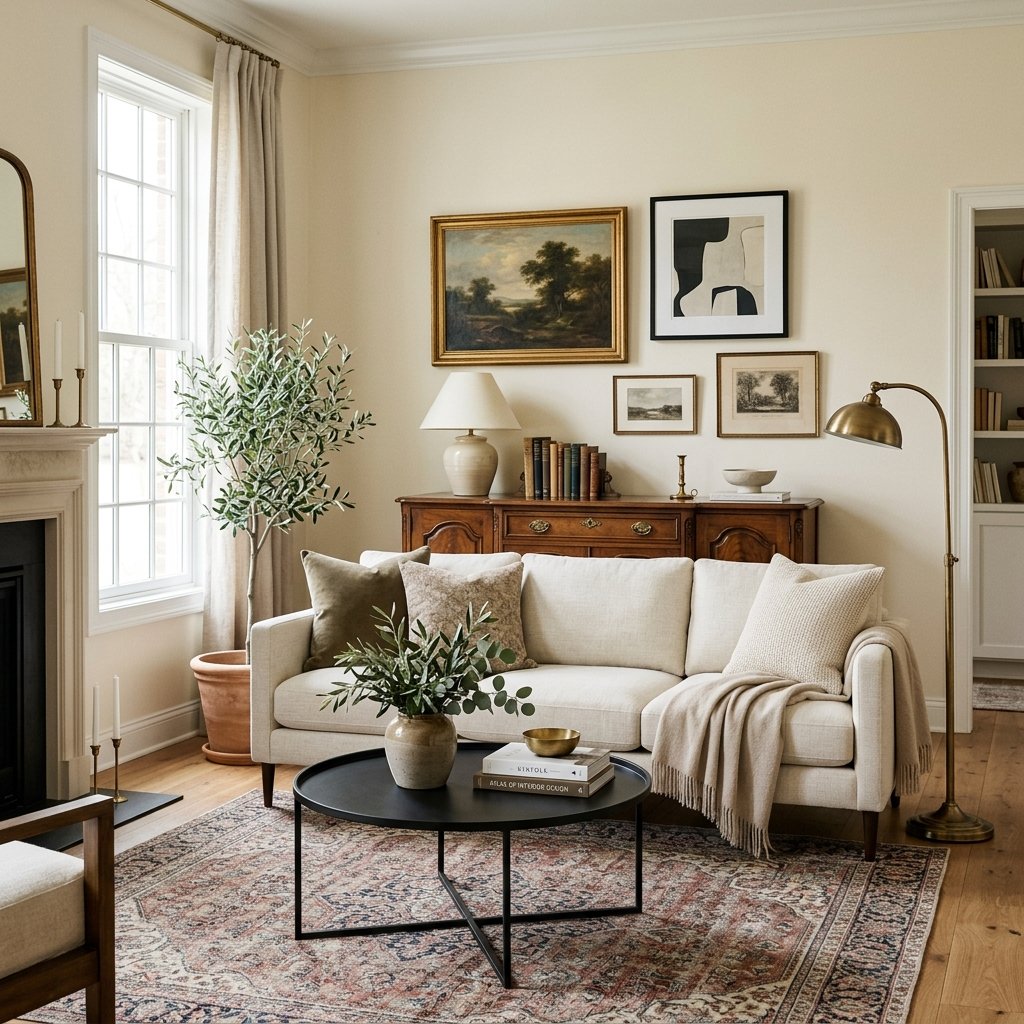
Most homes don’t fit neatly into one decorating category—and they don’t need to.
You might love the clean lines of modern furniture but also have a soft spot for antique wood pieces. Maybe your kitchen leans traditional, your favorite lighting feels contemporary, and the rug you can’t stop thinking about has a completely different vintage-inspired look.
That combination can actually make a home more interesting.
The challenge is learning how to successfully mix design styles so the room feels collected and intentional instead of looking like several unrelated decorating ideas were placed together.
The secret isn’t finding pieces that perfectly match.
It’s finding connections between pieces that are different.
Color, scale, shape, materials, finishes, and repetition can create those connections. Once you establish a few elements that visually tie everything together, you have much more freedom to combine old and new, modern and traditional, rustic and refined.
If you’ve ever worried that a piece you love “doesn’t go” with your decorating style, these tips will help you create a home that feels layered, cohesive, and personal without forcing every room into one design category.
Why Mixing Design Styles Can Make a Home Better
Rooms decorated entirely in one style can be beautiful, but they can also feel predictable.
Mixing styles introduces contrast.
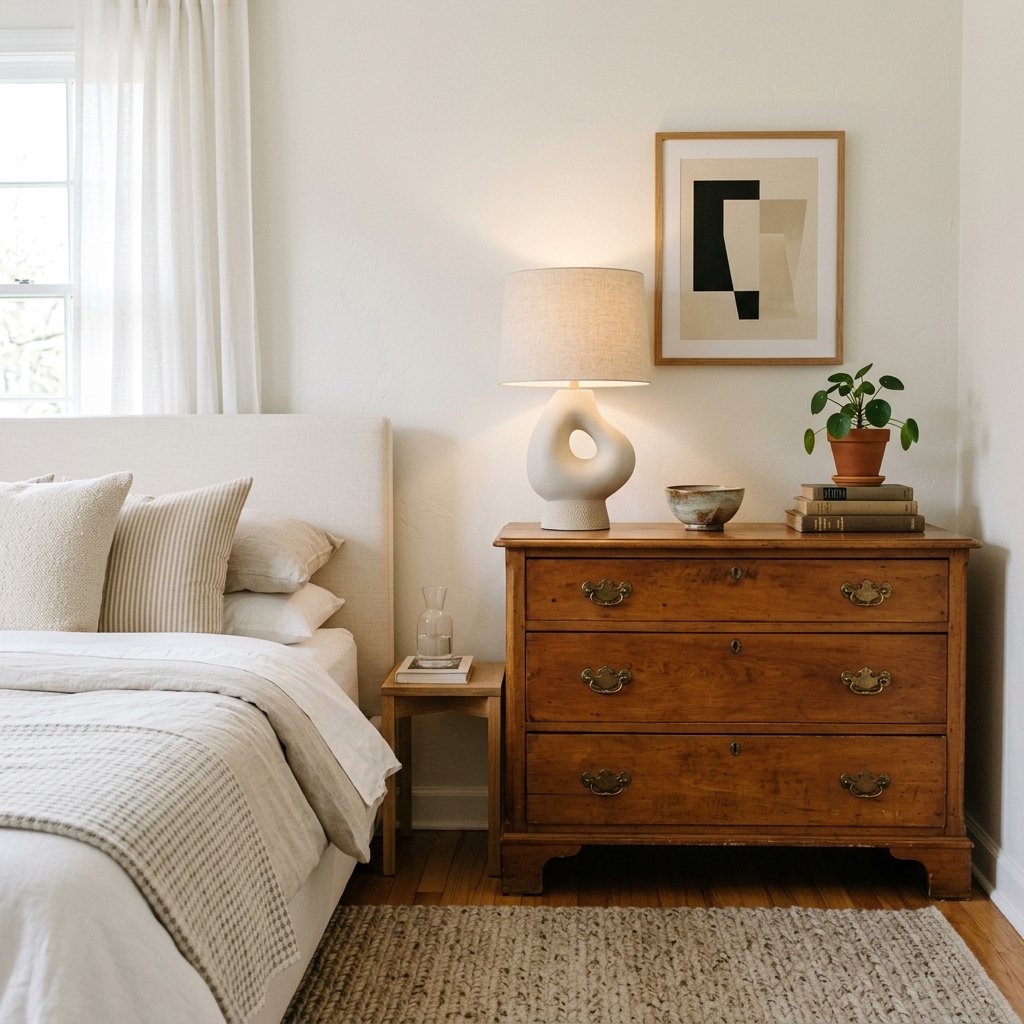
A contemporary lamp makes an antique chest feel fresher.
An old wood table brings warmth to a modern room.
A clean-lined sofa can keep traditional architectural details from feeling overly formal.
This tension between different periods and aesthetics gives a room personality.
It also makes decorating more practical.
You don’t need to replace everything whenever your taste evolves. Instead, you can gradually introduce new pieces and find ways to make them work with what you already own.
First, Stop Trying to Label Every Room
One of the easiest ways to become stuck while decorating is to spend too much time asking:
What style is this room?
Traditional?
Modern?
Farmhouse?
Transitional?
Organic modern?
Coastal?
Cottage?
These labels can be useful for finding inspiration, but they don’t need to become rules.
Instead, ask:
How do I want this room to feel?
Maybe you want it to feel:
- Warm
- Relaxed
- Collected
- Light
- Sophisticated
- Cozy
- Casual
- Refined
- Playful
Those words can guide your decisions more effectively than forcing every purchase into a specific design category.
1. Choose a Dominant Design Style
Mixing styles doesn’t necessarily mean dividing a room equally between two aesthetics.
Usually, it’s easier to create cohesion when one style takes the lead.
For example, your room might be:
Mostly traditional with modern accents
or
Mostly modern with a few vintage pieces
or
Mostly cottage with contemporary lighting
The secondary style becomes contrast rather than competition.
You don’t need to calculate an exact percentage. The idea is simply to establish which direction should visually dominate the room.
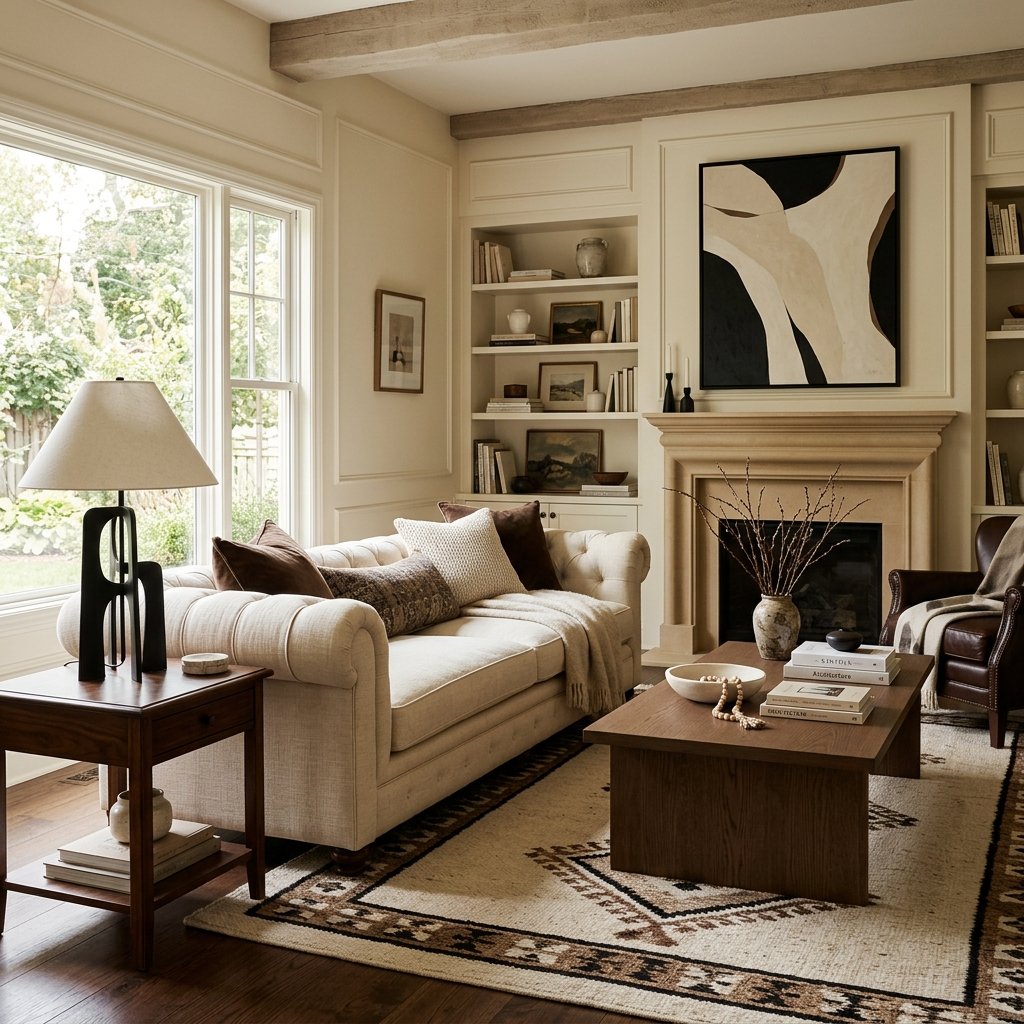
2. Build Around Pieces You Already Love
Before buying anything new, identify the pieces you definitely want to keep.
Maybe it’s:
- An inherited dresser
- A modern sofa
- Vintage dining table
- Antique cabinet
- Favorite rug
- Contemporary artwork
- Traditional armchair
These pieces become your anchors.
Instead of asking whether the antique dresser matches the modern sofa, ask what could connect them.
Perhaps both work with warm wood.
Maybe the rug contains colors found in both pieces.
Or a modern lamp placed on the antique dresser creates a deliberate bridge between the two styles.
This approach is much easier than starting from arbitrary style rules.
3. Create a Consistent Color Palette
Color is one of the strongest tools for making unrelated pieces feel connected.
Imagine a living room with:
- Traditional wood chest
- Modern cream sofa
- Vintage patterned rug
- Contemporary black light fixture
Those items come from several different design directions.
But if the palette consistently repeats:
- Cream
- Warm brown
- Black
- Muted green
the room can still feel cohesive.
You don’t need every item to contain every color.
Instead, repeat your main colors in several locations around the room.
4. Repeat Colors Around the Room
A color used only once can sometimes look accidental.
A color repeated several times starts to look intentional.
For example, if you have a black modern coffee table, repeat black somewhere else with:
- Picture frame
- Lamp
- Curtain rod
- Small decorative object
If an antique chair has warm brown wood, echo that tone with:
- Picture frames
- Side table
- Woven basket
- Wood bowl
Repetition helps your eye travel through the room.
5. Use Neutrals as a Bridge
Neutral colors make style mixing much easier.
Cream, warm white, beige, taupe, brown, gray, and black can provide visual breathing room between more distinctive pieces.
For example, a room with an ornate vintage cabinet and a very modern chair might feel busy if every other element is equally decorative.
A simple neutral rug and understated wall color can calm the combination.
Think of neutral elements as the background that allows contrasting styles to coexist.
6. Pay Attention to Undertones
A cohesive color palette isn’t only about choosing “white,” “brown,” or “beige.”
Undertones matter.
You might have:
- Warm cream walls
- Orange-toned wood
- Cool gray sofa
- Blue-gray rug
Individually, all of those pieces could be attractive.
Together, they may feel disconnected if their undertones fight each other.
When mixing styles, you already have visual contrast. Keeping the color temperature reasonably harmonious can prevent the room from feeling chaotic.
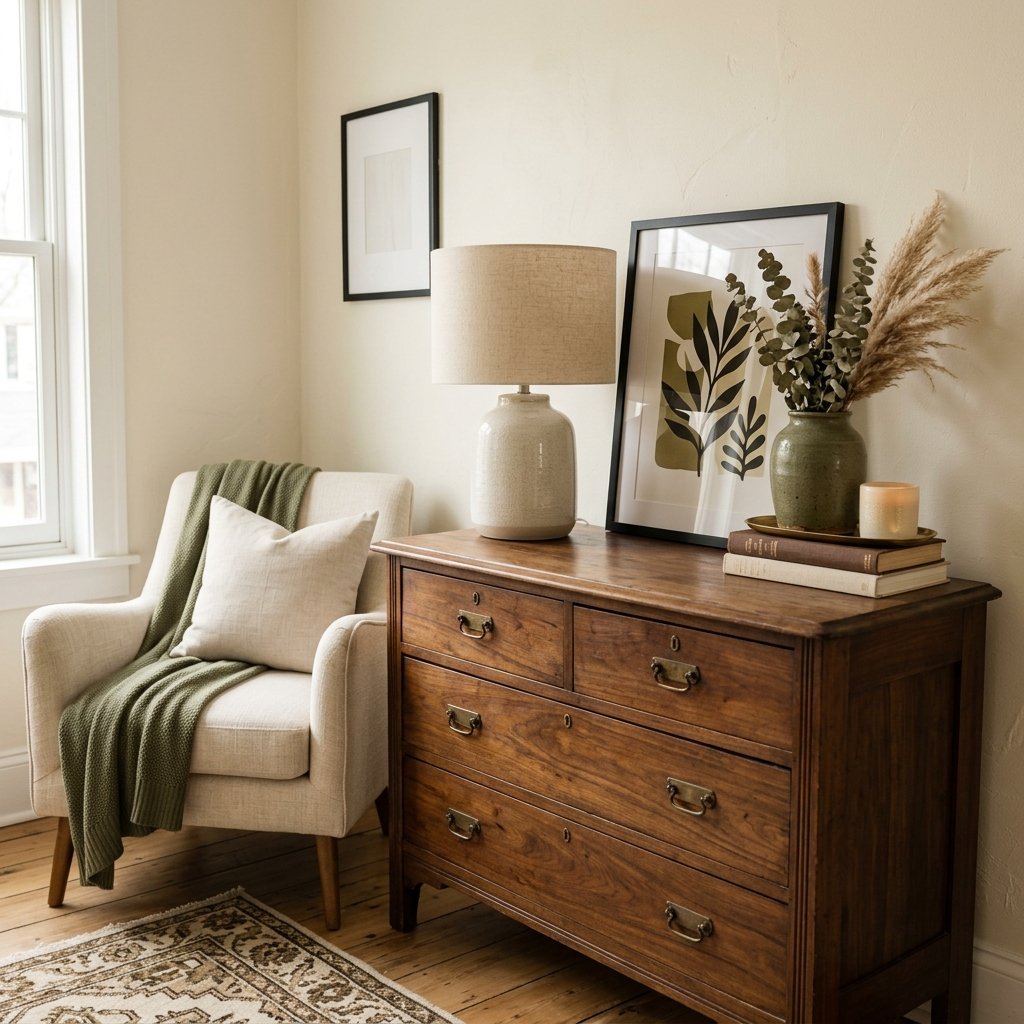
7. Mix Old and New
One of the easiest ways to create a layered room is to combine different ages.
Try pairing:
- Antique dresser + modern lamp
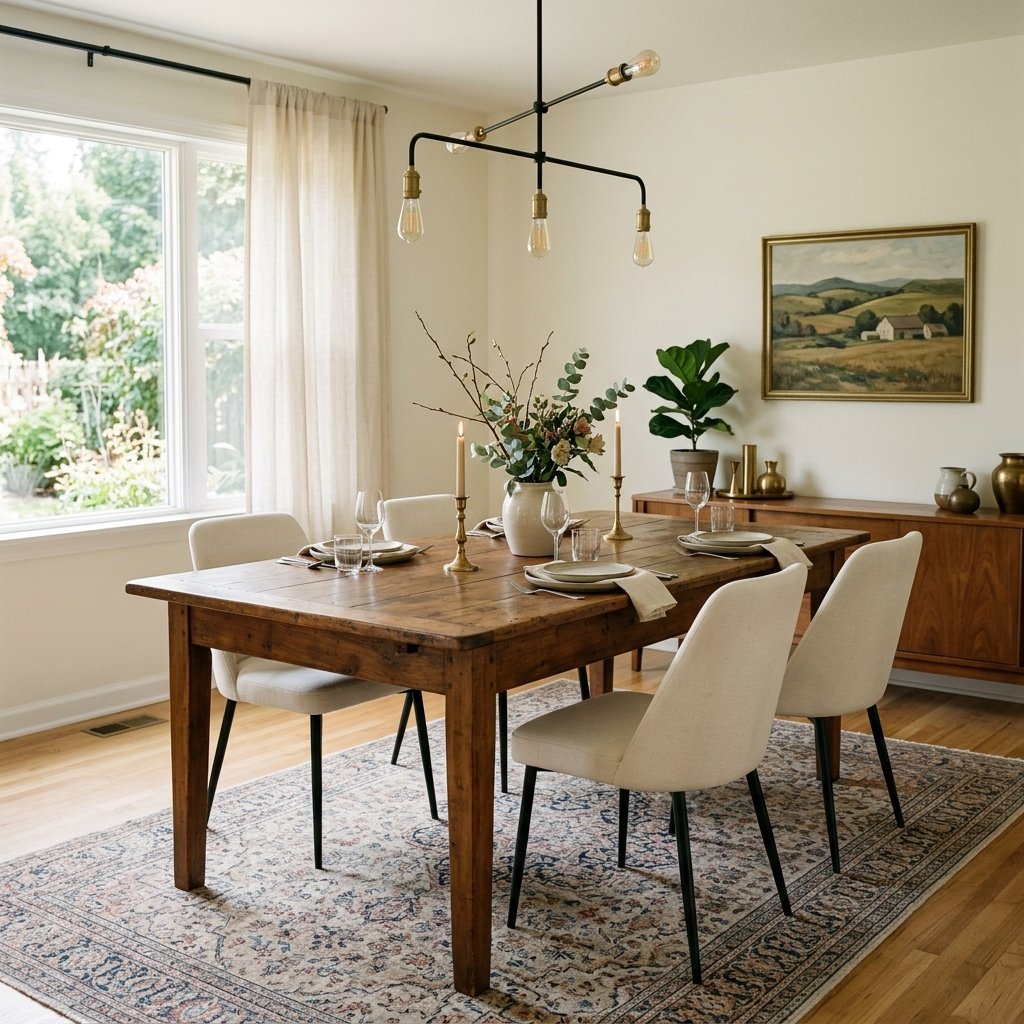
- Vintage table + contemporary chairs
- Traditional rug + modern sofa
- Old artwork + simple modern frame
- Vintage chair + contemporary side table
The contrast should look deliberate.
If you have only one antique item surrounded by ultra-modern furniture, repeat another aged element somewhere else.
It doesn’t need to be large.
A vintage frame, ceramic piece, small stool, or old book can be enough to establish the idea.
8. Let Vintage Pieces Add Character
Vintage and antique furniture can prevent a new room from feeling like everything arrived on the same delivery truck.
Wood pieces are particularly useful because natural materials often cross design categories easily.
A simple antique chest can work in:
- Traditional room
- Transitional room
- Modern room
- Cottage room
- Eclectic room
Try styling older furniture with newer accessories.
A contemporary lamp or simple artwork can make an antique piece feel current without removing its character.
9. Use Modern Pieces to Freshen Traditional Rooms
The reverse works too.
If a room feels too traditional, you don’t necessarily need to replace the furniture.
Introduce something cleaner and simpler.
Try:
- Contemporary light fixture
- Abstract artwork
- Modern coffee table
- Sculptural lamp
- Simple pillows
- Streamlined side table
Even one modern element can change how the older pieces are perceived.
10. Mix Furniture Shapes
Pay attention to silhouette rather than style label.
A room filled entirely with square, heavy furniture can feel rigid regardless of whether the pieces are modern or traditional.
Mix:
- Straight sofa
- Round side table
- Curved chair
- Rectangular coffee table
- Arched lamp
Shape creates balance.
This is also a great way to connect design styles. A traditional chair and contemporary table may have little stylistically in common, but repeating curved shapes elsewhere can visually connect them.
11. Balance Ornate and Simple Pieces
If everything is highly decorative, the room can become overwhelming.
If everything is extremely simple, it can feel flat.
Contrast detailed pieces with quiet ones.
For example:
Ornate antique mirror + simple console
Traditional patterned rug + streamlined sofa
Decorative vintage chair + plain side table
Detailed molding + contemporary artwork
The simpler piece gives the more elaborate one space to stand out.
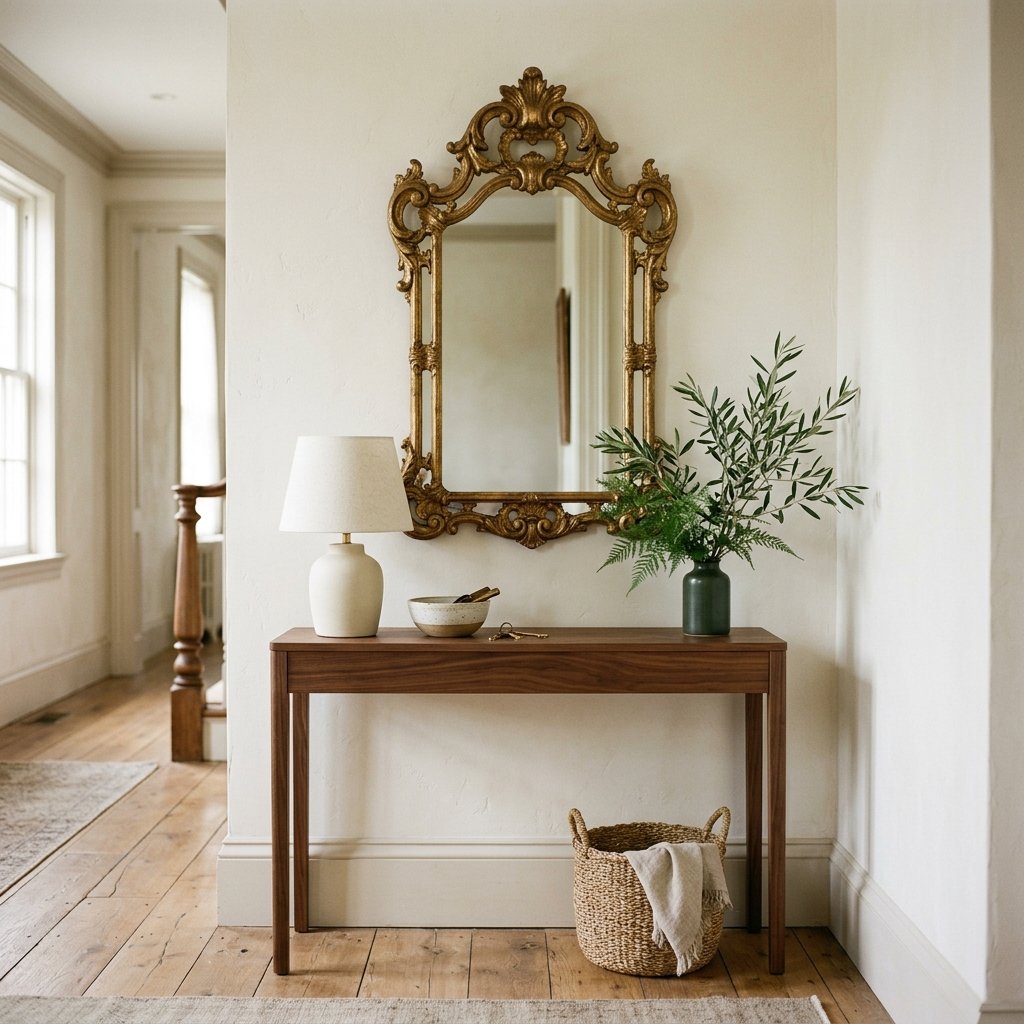
12. Mix Wood Tones Instead of Matching Them
Your furniture doesn’t need to use one identical wood finish.
In fact, a room often looks more natural when several wood tones are present.
You might combine:
- Light oak
- Medium walnut
- Dark brown
- Painted furniture
The key is repetition.
If one dark wood table is the only dark brown element in a room filled with pale oak, it may stand out.
Repeat a similar depth somewhere else through a frame, chair leg, bowl, or smaller furniture piece.
You can also look for a shared undertone—warm, neutral, or cool—to help varied woods relate.
13. Mix Metal Finishes Carefully
You don’t need every metal finish to match either.
Brass can coexist with:
- Black
- Nickel
- Bronze
- Chrome
A good approach is to choose one dominant finish and repeat it several times, then introduce one or two supporting finishes.
For example:
Dominant: aged brass lighting and cabinet hardware
Secondary: black curtain rod and furniture details
Avoid adding a different metal to every single object simply for variety.
Repetition still matters.
14. Use Rugs to Tie Different Styles Together
A rug can become the bridge between furniture from different styles.
Imagine a modern sofa beside an antique wood chest.
A vintage-inspired rug containing cream, brown, and black can connect both pieces.
Rugs are especially useful because they occupy a large visual area.
Look for colors that repeat elsewhere in the room rather than worrying about whether the rug technically belongs to the same “style” as the furniture.
15. Let Textiles Soften the Differences
Textiles are another easy connector.
Use:
- Throw pillows
- Curtains
- Blankets
- Upholstery
- Rugs
to repeat colors and textures throughout the room.
For example, a modern leather chair can feel more at home in a traditional room when paired with a linen pillow that relates to the curtains.
Textiles help blend hard furniture lines and create continuity.
16. Mix Patterns With Intention
Different design styles often introduce different patterns.
Traditional rooms might include florals.
Modern rooms might favor geometrics.
Cottage spaces might use checks.
You can combine them.
The trick is varying scale.
Try:
- Large floral
- Medium stripe
- Small check
Keep the colors related.
Three different patterns sharing similar colors usually feel more cohesive than three identical patterns in unrelated palettes.
17. Repeat Materials
Materials can connect styles just as effectively as color.
For example, repeat:
- Linen
- Leather
- Marble
- Wood
- Brass
- Woven fibers
- Ceramic
A contemporary coffee table and traditional fireplace may feel more connected if both incorporate stone.
A vintage chair can relate to a modern sofa when both have linen upholstery.
Look for material relationships hiding beneath the style differences.
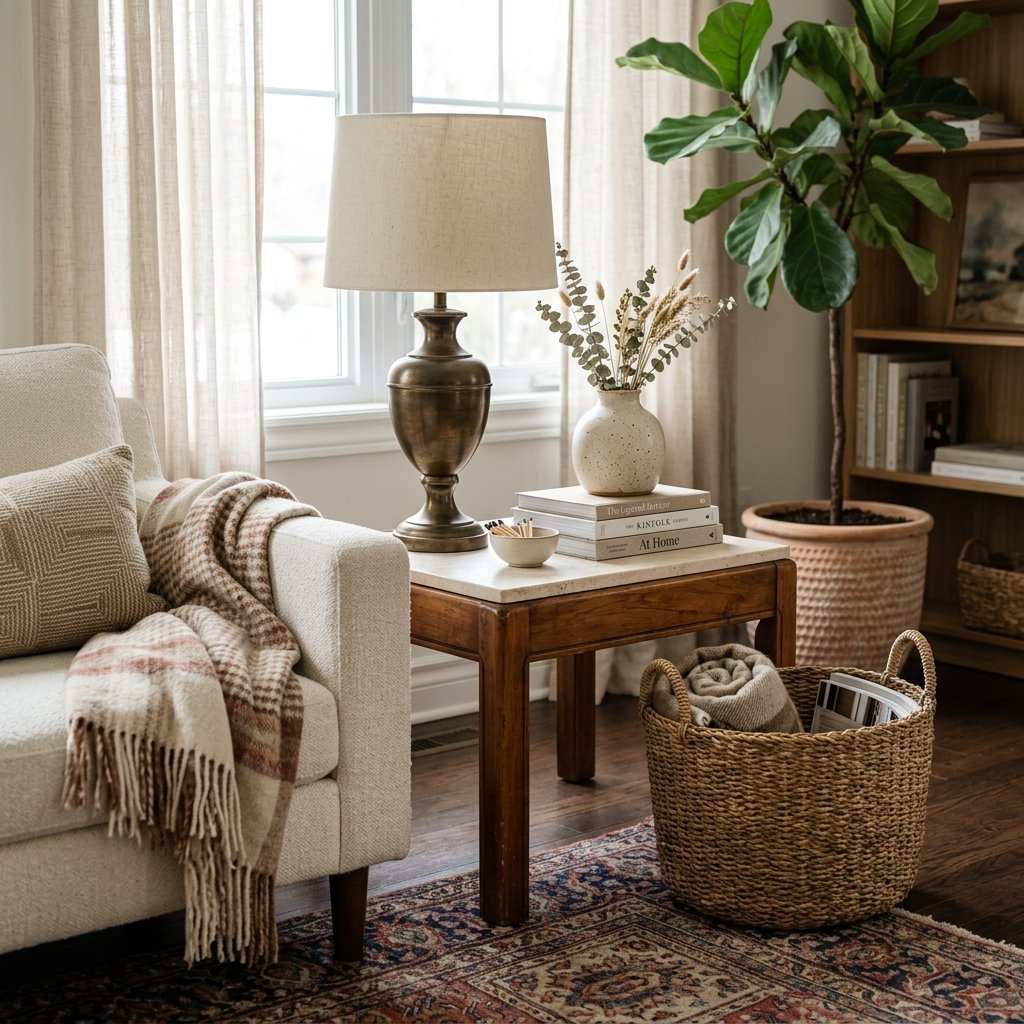
18. Pay Attention to Scale
Style mixing won’t work if the proportions feel wrong.
A delicate antique chair may look awkward next to an enormous overstuffed sofa.
A tiny vintage table can disappear beside massive contemporary furniture.
Compare:
- Furniture height
- Visual weight
- Seat depth
- Table size
- Lamp scale
Pieces don’t need to match, but they should feel as though they belong in the same physical room.
19. Consider Visual Weight
Visual weight is different from actual size.
A black metal cabinet can feel heavier than a larger cream-colored cabinet.
An ornate dark wood table can appear visually heavier than a streamlined pale oak table.
Distribute heavy-looking pieces around the room instead of clustering them on one side.
This creates balance even when the furniture styles differ.
20. Use Lighting to Bridge Styles
Lighting is one of the easiest ways to change the direction of a room.
A traditional room can feel fresher with:
- Simple globe pendant
- Sculptural floor lamp
- Clean-lined chandelier
A modern room can gain character from:
- Vintage-inspired brass sconce
- Pleated lampshade
- Antique-style table lamp
Lighting doesn’t have to match the furniture style.
It can intentionally provide contrast.
21. Mix Art Styles
Artwork is a great place to loosen the rules.
You can combine:
- Traditional landscapes
- Abstract paintings
- Photography
- Vintage prints
- Drawings
Create cohesion through:
- Frame color
- Matting
- Repeated colors
- Similar scale
A modern abstract painting above an antique console can be much more interesting than pairing that console with predictable traditional artwork.
22. Keep Architectural Elements in Mind
Your home’s architecture provides another layer of style.
Maybe you have:
- Traditional molding
- Modern windows
- Rustic beams
- Arched openings
- Brick fireplace
- Simple builder-grade walls
You don’t have to decorate strictly according to the architecture.
But acknowledging it can help.
Traditional molding paired with modern furniture creates interesting contrast.
Rustic beams can work beautifully with streamlined lighting.
Instead of fighting the house, use its existing features as part of the mix.
23. Create Repetition Between Rooms
Mixing styles becomes easier when your entire home shares a few recurring elements.
For example, repeat:
- Warm wood
- Black accents
- Brass lighting
- Cream walls
- Similar textiles
The rooms don’t need identical furniture.
One room can lean traditional while another feels more contemporary, but repeated materials and colors make the home feel connected.
24. Give Sentimental Pieces Room to Work
Not everything in your home needs to pass a design-style test.
Family furniture, travel finds, artwork, and inherited objects often bring the most personality.
Instead of hiding a sentimental piece because it doesn’t match, consider changing what surrounds it.
An old cabinet may look completely different with:
- Modern art above it
- Contemporary lamp
- Simple ceramic bowl
- Cleaner styling
Sometimes the problem isn’t the furniture.
It’s the context.
25. Use Contrast Deliberately
Successful style mixing isn’t about disguising differences.
Sometimes you should emphasize them.
Put the sleek lamp on the rustic table.
Hang modern artwork over traditional paneling.
Place contemporary chairs around the old dining table.
Contrast creates energy.
The goal is simply to make sure other elements—color, scale, material, or repetition—connect the pieces.
26. Don’t Make Every Piece a Statement
If every item is unusual, nothing feels special.
Choose a few focal pieces.
Then let other furniture play a supporting role.
For example, if you have:
- Dramatic antique cabinet
- Bold patterned rug
you may want:
- Simple sofa
- Quiet curtains
- Understated coffee table
A room needs visual pauses.
27. Leave Some Empty Space
Mixed-style rooms can easily become cluttered because collecting different pieces is part of their charm.
Editing becomes especially important.
You don’t have to fill:
- Every wall
- Every tabletop
- Every corner
- Every shelf
Negative space gives individual pieces room to breathe and helps a layered room feel intentional rather than crowded.
28. Edit Accessories Last
Once the main furniture is in place, step back before decorating every surface.
Ask:
- Does this room already have enough visual interest?
- Where does it need height?
- Where does it need softness?
- Which colors should be repeated?
Then add accessories strategically.
A few larger objects often create a calmer look than dozens of small pieces.
How to Mix Modern and Traditional Design
Modern and traditional styles are particularly easy to combine because each provides something the other lacks.
Traditional furniture adds:
- Warmth
- Detail
- History
- Pattern
Modern furniture adds:
- Simplicity
- Cleaner lines
- Contrast
- Visual breathing room
Try combinations such as:
- Traditional wood dining table + modern chairs
- Classic sofa + contemporary coffee table
- Antique dresser + abstract artwork
- Traditional rug + modern lighting
The contrast should be obvious enough to feel deliberate.
How to Mix Farmhouse and Modern Decor
If you’re moving away from a heavily farmhouse look, you don’t need to replace everything.
Keep natural materials such as:
- Wood
- Linen
- Woven baskets
- Vintage furniture
Then simplify.
Reduce overly themed signs and accessories and introduce:
- Cleaner lighting
- Simpler furniture
- Contemporary art
- Black or aged brass accents
This can gradually move the room toward a more updated transitional look.
How to Mix Vintage and Contemporary Furniture
Vintage pieces often work best when they’re surrounded by enough contemporary furniture to keep the room from feeling like a period set.
Try one larger vintage piece, such as:
- Cabinet
- Dresser
- Dining table
Then add cleaner contemporary pieces around it.
Repeat the vintage feeling once or twice through smaller accessories so the main piece doesn’t feel isolated.
How to Mix Rustic and Modern Styles
Rustic materials bring texture.
Modern shapes bring simplicity.
Combine:
- Reclaimed-looking wood + clean upholstery
- Stone + modern lighting
- Rough ceramic + streamlined furniture
- Woven texture + black metal
Keep the palette relatively restrained so the material contrast becomes the focus.
A Simple Formula for Mixing Design Styles
If you’re overwhelmed, start here.
1. Pick Your Dominant Style
Decide which aesthetic should lead.
2. Choose a Secondary Style
Use it for contrast.
3. Establish a Color Palette
Choose a few repeating colors.
4. Repeat Materials
Wood, metal, stone, linen, or another common element can connect the pieces.
5. Balance Shapes
Mix straight and curved silhouettes.
6. Check Scale
Make sure furniture proportions work together.
7. Repeat Each Style
Avoid having one random piece that represents an entirely different aesthetic.
8. Edit
Remove anything that creates unnecessary visual noise.
How to Know When a Room Is Too Mixed
There’s a difference between layered and chaotic.
Your room may need editing if:
- Every furniture piece represents a different style.
- There is no repeating color palette.
- Wood tones and metals appear once each without repetition.
- Furniture scales clash.
- Too many patterns compete.
- Every item is decorative.
- There is nowhere for the eye to rest.
Don’t immediately remove the most unusual piece.
Instead, look for missing connections.
Could repeating its color somewhere else solve the problem?
Could a rug connect several furniture pieces?
Would removing three small accessories allow a statement piece to shine?
Often the room needs editing rather than replacing.
Common Mistakes When Mixing Design Styles
Trying to Split Two Styles Exactly 50/50
Let one style lead.
Matching Everything
Cohesion doesn’t require identical furniture.
Using Too Many Wood Finishes Once
Repeat important tones.
Ignoring Undertones
Color temperature can create subtle conflict.
Forgetting Scale
Different styles still need compatible proportions.
Using Too Many Statement Pieces
Include simpler supporting furniture.
Buying Entire Matching Sets
Mixing individual pieces generally creates more personality.
Having One Random Vintage Piece
Repeat its age, material, color, or character elsewhere.
Decorating Every Surface
Leave breathing room.
Following Style Labels Too Strictly
Use them as inspiration rather than rules.
How to Make a Mixed-Style Home Feel Cohesive
Zoom out from individual furniture pieces and look at the whole home.
Choose several elements to repeat throughout.
For example:
Wall color: warm white
Wood: warm medium brown
Metal: aged brass + black
Textiles: linen + woven natural fibers
Accent colors: olive + burgundy
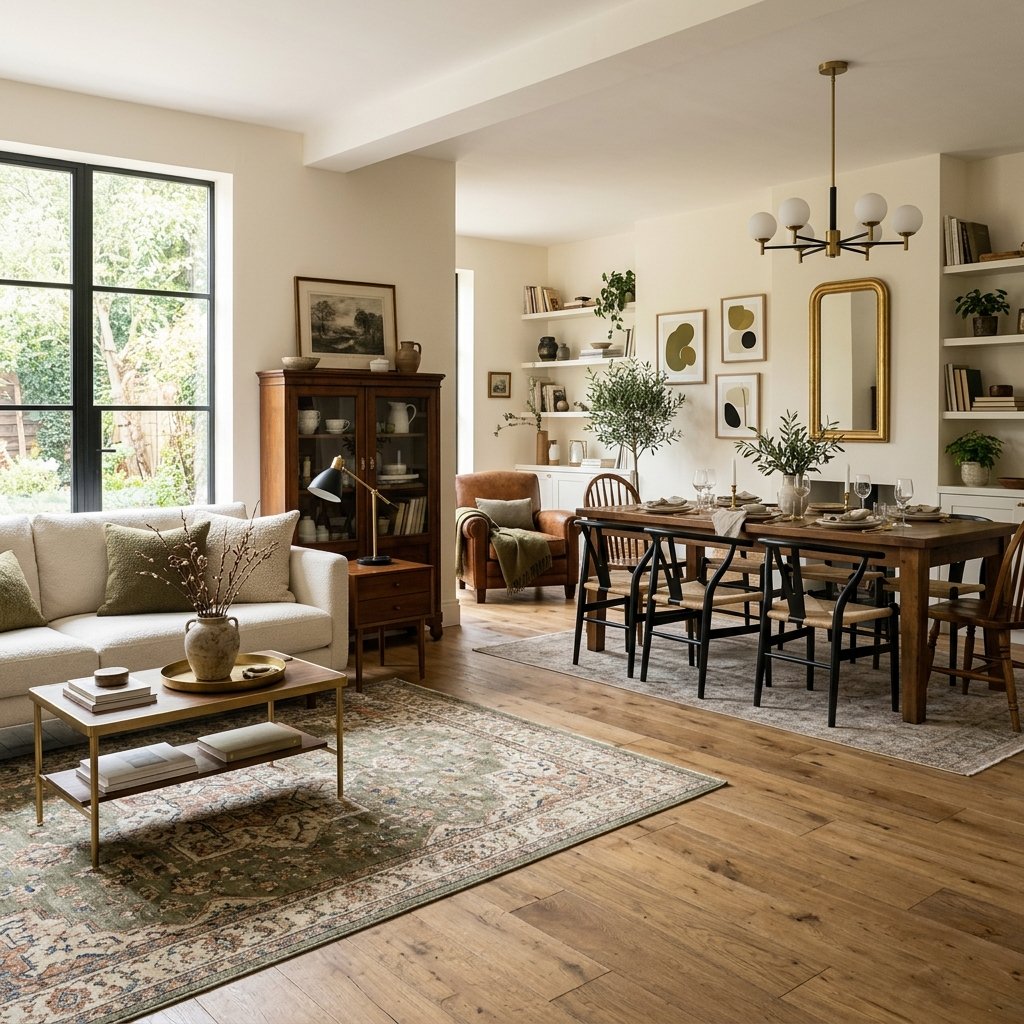
Now your living room can contain modern furniture while your dining room leans traditional.
Those repeated elements provide continuity.
This is particularly helpful in open-concept homes where several rooms are visible at once.
FAQ About Mixing Design Styles
Can you mix different interior design styles?
Absolutely. Different styles can work together when you create connections through color, scale, materials, shapes, and repetition.
How many design styles can you mix in one room?
There isn’t a strict number, but limiting the dominant influences usually makes a room easier to balance. Start with one primary style and one secondary style, then allow individual pieces from elsewhere if they relate through color, material, or shape.
Can you mix modern and traditional furniture?
Yes. It’s one of the easiest combinations. Pair detailed traditional furniture with cleaner modern pieces and repeat colors or materials to connect them.
Does all the furniture in a room need to match?
No. Furniture can coordinate without matching. In fact, mixing pieces often creates a more collected and personal room.
Can you mix different wood tones?
Yes. Repeat major wood tones around the room and pay attention to their undertones. A combination of light, medium, and dark wood can look intentional when balanced.
Can you mix brass and black metal?
Yes. Repeat each finish in more than one location and consider choosing one as the dominant metal.
How do you mix antique furniture with modern decor?
Pair antique furniture with simpler contemporary pieces, modern lighting, or abstract art. Repeat a few warm or aged elements elsewhere so the antique doesn’t look isolated.
How do you make mismatched furniture look intentional?
Find connections between pieces through repeated colors, similar scale, complementary shapes, common materials, and a rug or textile palette that visually ties the room together.
Do all the rooms in a house need the same design style?
No. Rooms can have different personalities. Repeating a few colors, materials, finishes, or architectural details throughout the house will help them feel connected.
Final Thoughts
Learning how to successfully mix design styles is less about memorizing decorating rules and more about creating relationships between the things you love.
Your antique dresser doesn’t need to match your modern bed.
Your contemporary light fixture doesn’t need to belong to the same design period as your dining table.
And your favorite vintage rug doesn’t have to dictate the style of every piece in the room.
Instead, look for connections.
Repeat a few colors.
Balance light and dark wood.
Use similar materials in several places.
Mix straight and curved shapes.
Pay attention to furniture scale.
Let one design style lead while another adds contrast.
Most importantly, give individual pieces enough space to be appreciated.
A home assembled gradually from things you genuinely like will naturally contain influences from different periods and styles. That’s not something you need to hide.
When color, proportion, repetition, and materials create a common thread, those differences are exactly what can make the room feel layered, collected, and personal.