

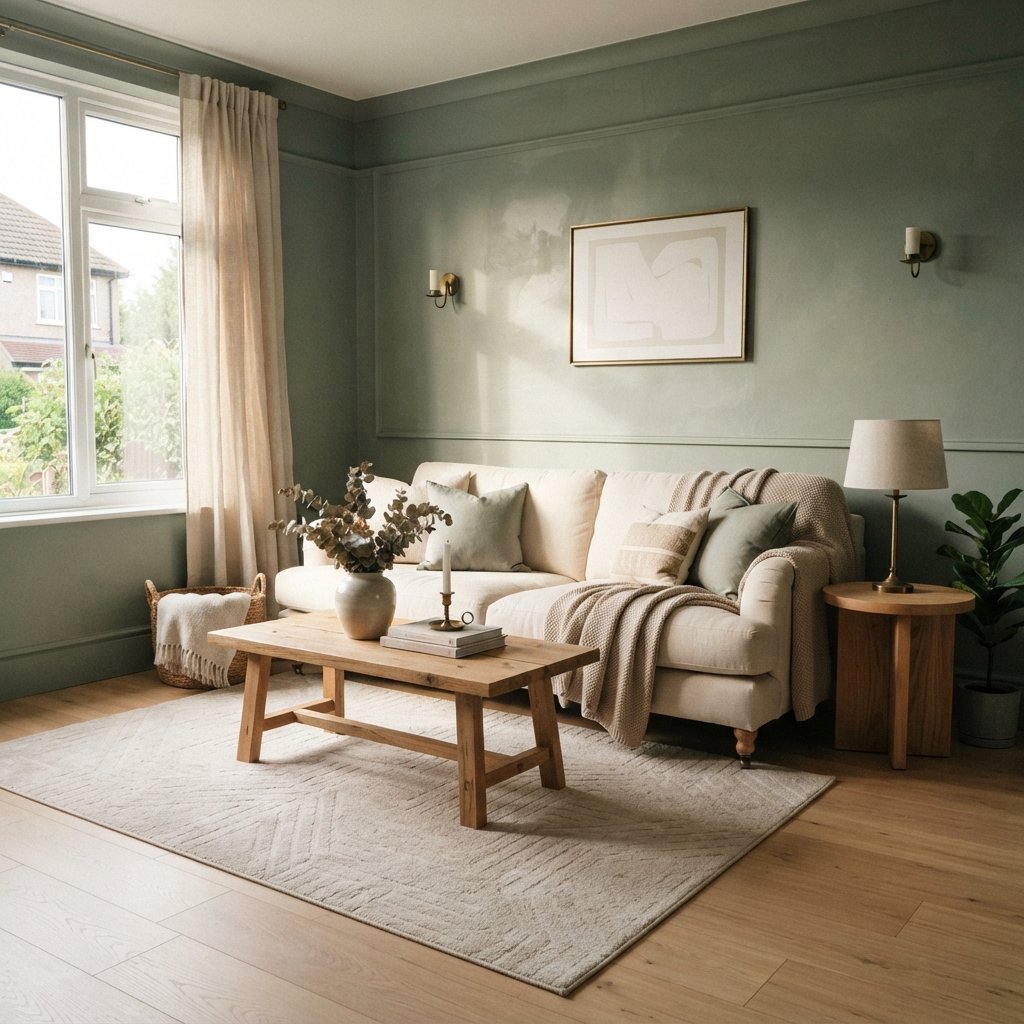
Sage green has become a favorite paint color for good reason. It’s softer than a traditional green, more interesting than a basic neutral, and versatile enough to work in kitchens, bedrooms, bathrooms, living rooms, and even on cabinetry.
But choosing between sage green paint colors can be surprisingly difficult.
Some sage greens lean warm and earthy. Others have noticeable gray undertones. A few can shift cooler and almost blue-green in certain light. And once you put a sample on the wall, the color that looked like a perfect muted green online may suddenly look gray, yellow, or much darker than expected.
That’s why the best sage green isn’t simply the most popular shade. It’s the one that works with your room’s light and the fixed finishes already in your home.
Below, we’ll look at popular sage green paint colors from Sherwin-Williams and Benjamin Moore, how their undertones differ, what colors coordinate with sage, and how to test your favorites before committing to an entire room.
What Color Is Sage Green?
Sage is generally a muted green.
Unlike a bright botanical or emerald green, sage is softened by gray, brown, or other subdued undertones.
That muted quality is what allows sage to behave almost like a neutral.
Depending on the particular color, sage can look:
- Gray-green
- Warm green
- Earthy green
- Olive-green
- Blue-green
- Green-beige
This is also why two paint colors both described as “sage” can look completely different beside each other.
Why Sage Green Works So Well in a Home
Green naturally connects well with colors and materials already common in interiors.
Think about:
- Wood
- Stone
- Cream
- White
- Brown
- Black
- Warm metals
A muted sage can add color without dominating a room.
It’s especially useful if you want something more interesting than beige or gray but aren’t ready for a saturated wall color.
Understanding Sage Green Undertones
Before choosing a paint color, look beyond the word “sage.”
Undertones matter.
Gray-Green Sage
These shades feel quieter and more subdued.
They can work well in rooms where you want the green to function almost like a neutral.
Warm Sage
Warmer sage colors may contain yellow, beige, or earthy undertones.
They’re often comfortable beside warm wood floors and creamy whites.
Olive Sage
Olive-leaning sage has more yellow or brown influence.
These shades can feel earthy and organic.
Cool Sage
Some sage colors have blue-gray influence.
They may appear cooler in rooms with cool natural light.
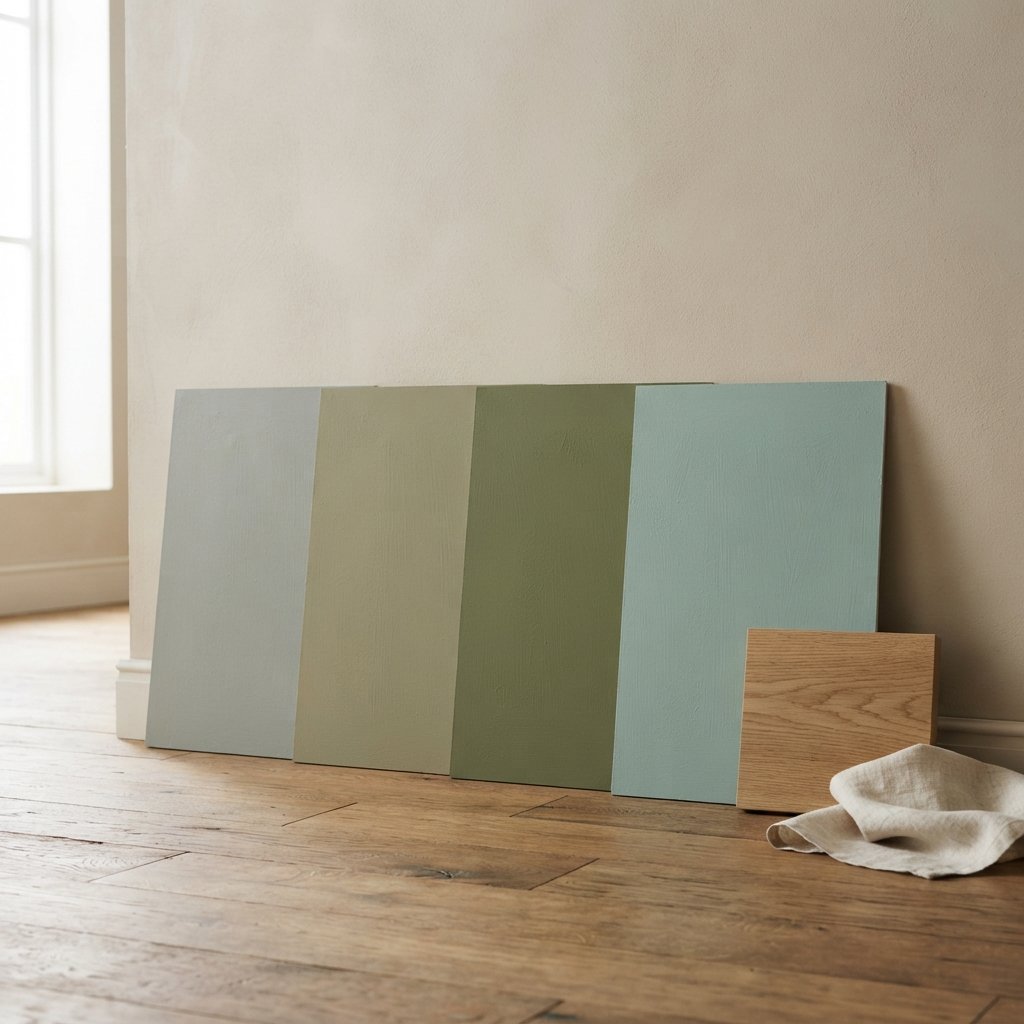
15 Sage Green Paint Colors to Consider
Paint colors can look dramatically different depending on lighting, surrounding finishes, sheen, and even the surface being painted.
Treat these colors as a starting point and sample them in your own home before making a final decision.
1. Sherwin-Williams Evergreen Fog
Evergreen Fog is a muted green that can read earthy and gray-green.
It’s a good color to consider if you want sage with enough depth to make an impact.
Try it in:
- Bedrooms
- Offices
- Dining rooms
- Bathroom vanities
- Built-ins
Pair it with warm neutrals and wood to emphasize its organic side.
2. Sherwin-Williams Clary Sage
Clary Sage has an earthy, traditional quality.
Compared with very gray sage colors, it can feel warmer and more obviously green.
It can work nicely in spaces with:
- Warm wood
- Cream
- Beige
- Brown
Consider it if you want sage that doesn’t disappear into gray.
3. Sherwin-Williams Contented
Contented is a softer muted green that can read subtle and calming.
It can be a useful option if you want sage green without going very dark.
Because softer greens can shift substantially with light, compare it carefully with flooring and countertops.
4. Sherwin-Williams Sea Salt
Sea Salt is frequently grouped with soft green paint colors, although it can lean noticeably blue-green depending on the room.
If you’re looking specifically for a warm, earthy sage, this may not give you that effect.
But if you like a lighter, cooler green with a soft coastal quality, it’s worth sampling.
5. Sherwin-Williams Retreat
Retreat is deeper and moodier.
It can work beautifully when you want a stronger green for:
- Cabinetry
- Accent walls
- Built-ins
- Bedrooms
It also provides more contrast with cream and warm white than a pale sage.
6. Sherwin-Williams Acacia Haze
Acacia Haze is another muted green with noticeable gray influence.
It can work well when you want a subdued color rather than a bright or botanical green.
Try comparing it directly with both warm and cool finishes in your room to see which undertones it emphasizes.
7. Sherwin-Williams Sensible Hue
Sensible Hue is a muted green-gray option worth considering if you’re looking for a quieter sage direction.
It can be particularly appealing when paired with natural materials and warm neutral furnishings.
8. Benjamin Moore October Mist
October Mist is a soft, botanical green that sits comfortably in the sage family.
It works well with:
- Cream
- Warm white
- Natural wood
- Brown
- Soft black
It’s a good starting point for someone who wants a muted green that still looks recognizably green.
9. Benjamin Moore Saybrook Sage
Saybrook Sage has a traditional, earthy character.
It can feel at home in:
- Kitchens
- Dining rooms
- Bedrooms
- Traditional interiors
Pair it with warm woods and creamy whites for a classic look.
10. Benjamin Moore Hollingsworth Green
Hollingsworth Green is lighter and softer.
It’s worth considering if you want just a hint of muted green rather than a dramatic wall color.
Lighter greens can be particularly sensitive to surrounding colors, so sample this one beside trim and flooring.
11. Benjamin Moore High Park
High Park is a deeper, grounded green.
It’s a good option when you want more presence than a pale sage but still prefer something muted.
Try it on:
- Cabinetry
- Built-ins
- Accent walls
- Small rooms where you want a cocooning effect
12. Benjamin Moore Kennebunkport Green
Kennebunkport Green is a more traditional muted green worth sampling if you prefer sage with an earthy character.
It can pair nicely with warm architectural finishes and traditional furniture.
13. Benjamin Moore Soft Fern
Soft Fern offers a lighter, gentle green direction.
It can work nicely when you want walls that feel fresh without becoming the strongest visual element in the room.
Consider pairing it with:
- Warm white
- Light oak
- Cream
- Natural linen
14. Benjamin Moore Sage Wisdom
As the name suggests, Sage Wisdom belongs firmly in the muted green family.
It has enough depth to provide color while still feeling subdued.
Try it where you want a grounded, nature-inspired palette rather than a very pale green.
15. Benjamin Moore Louisburg Green
Louisburg Green is a deeper traditional green that can work as a richer sage-adjacent option.
Consider it for cabinetry, built-ins, or a room where you want a stronger, moodier green.
It’s particularly useful to sample alongside lighter sage colors if you’re unsure how much depth your room can handle.
Light Sage Green vs. Dark Sage Green
The depth of the paint color changes the mood almost as much as its undertone.
Light Sage
Light sage can feel:
- Airy
- Quiet
- Soft
- Relaxed
It works well when you want subtle color.
Medium Sage
Medium-depth sage often provides the most versatility.
There’s enough color to look intentional without making the room especially dark.
Dark Sage
Deeper sage creates:
- Contrast
- Drama
- Coziness
- Architectural emphasis
Dark greens can be beautiful on cabinets and built-ins because they create a clear focal point.
Don’t automatically avoid darker colors in small rooms. A deeper shade can sometimes create an intentionally cozy effect.
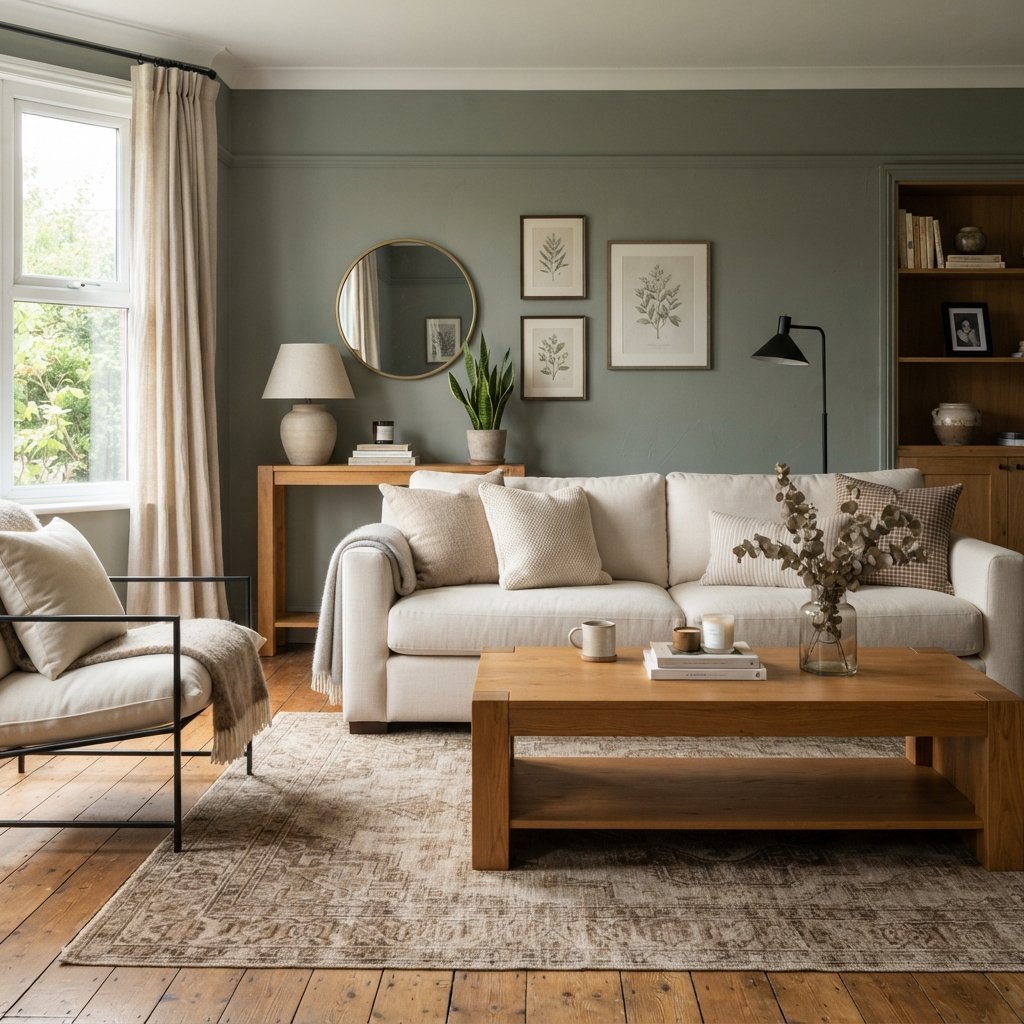
Best Sage Green Paint Colors for a Living Room
Living rooms often have several finishes competing for attention:
- Flooring
- Sofa
- Rug
- Fireplace
- Curtains
- Furniture
Choose your sage based on those elements.
If you have warm oak floors and cream upholstery, an earthy or warm sage may feel especially cohesive.
With cooler gray finishes, a gray-green may connect more naturally.
Before painting, place samples near:
- Flooring
- Fireplace
- Sofa
- Trim
Check them at several times of day.
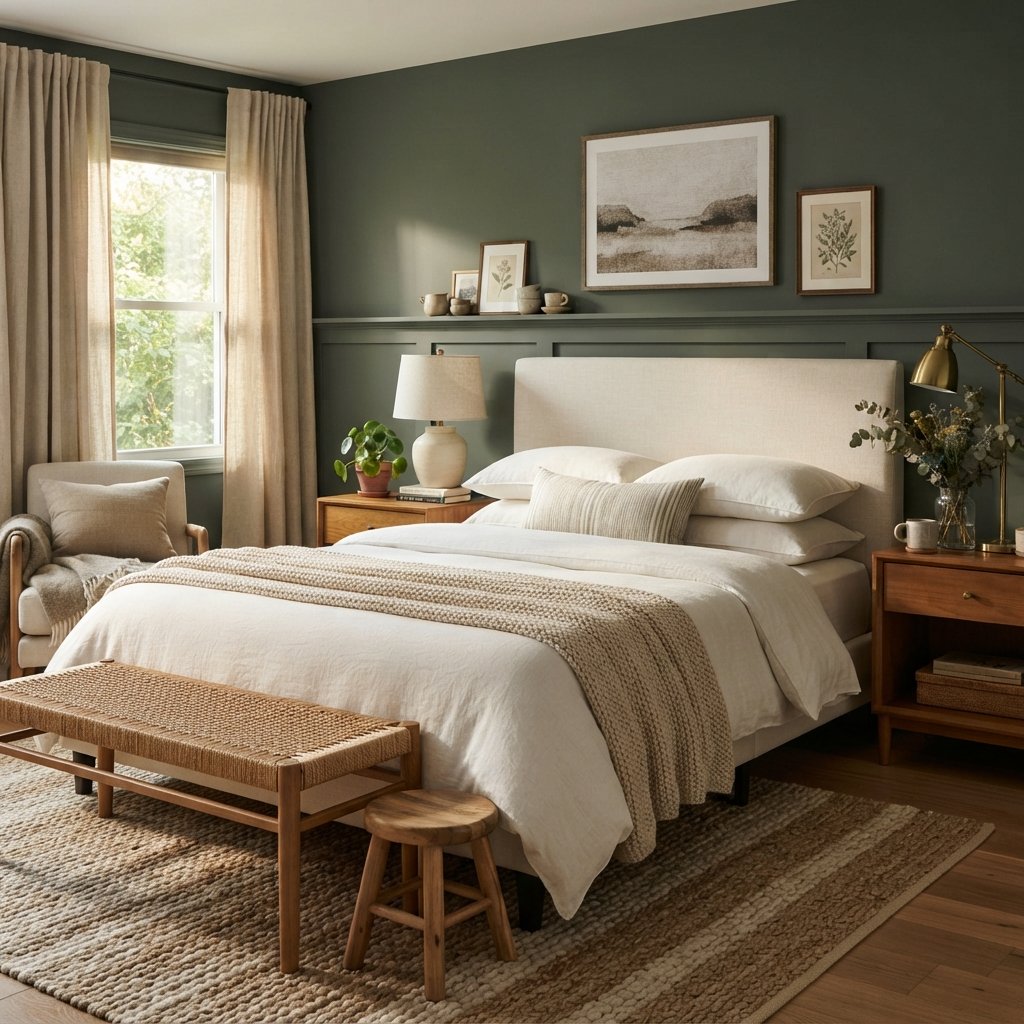
Sage Green Paint Colors for a Bedroom
Sage is particularly suited to bedrooms because it can provide color without feeling overly energetic.
Try pairing sage walls with:
- White bedding
- Cream bedding
- Warm wood
- Natural linen
- Brown
- Muted blush
For a lighter room, choose a softer sage.
For a moodier bedroom, use a deeper green and balance it with light bedding.
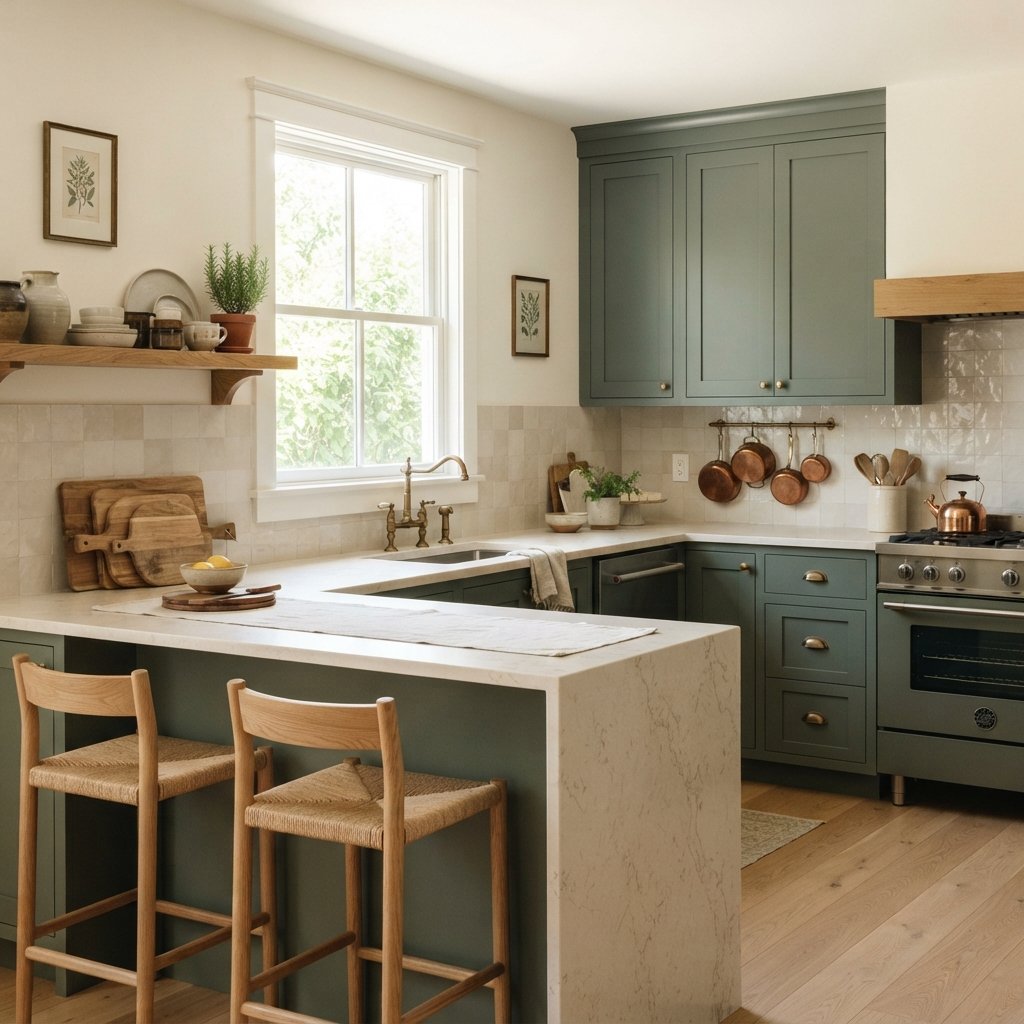
Sage Green Paint Colors for Kitchen Cabinets
Sage green kitchen cabinets can bring color into the kitchen while still feeling relatively timeless.
But cabinetry is a bigger commitment than wall paint.
Compare your sample with:
- Countertop
- Backsplash
- Flooring
- Wall color
- Appliances
- Hardware
Warm sage often pairs beautifully with wood and cream.
Gray-green cabinetry may work better with cooler stone.
Don’t select the cabinet color from an online photograph alone.
Sage Green Bathroom Vanity
A vanity is a great place to experiment with sage without painting the entire room.
Try sage with:
- Warm white walls
- Light stone
- White countertop
- Brass-toned hardware
- Black hardware
- Wood accents
If you’re painting an existing vanity, proper cleaning, preparation, primer where required, and a coating appropriate for cabinetry are essential.
Follow the coating manufacturer’s instructions for application and cure time.
Sage Green for a Home Office
Sage can make a home office feel grounded without the heaviness of a very dark paint color.
Try:
- Sage walls + warm wood desk
- Sage built-ins + cream walls
- Deep sage accent wall + neutral furniture
If you work on video calls, test how the wall color affects the room and your lighting before painting everything.
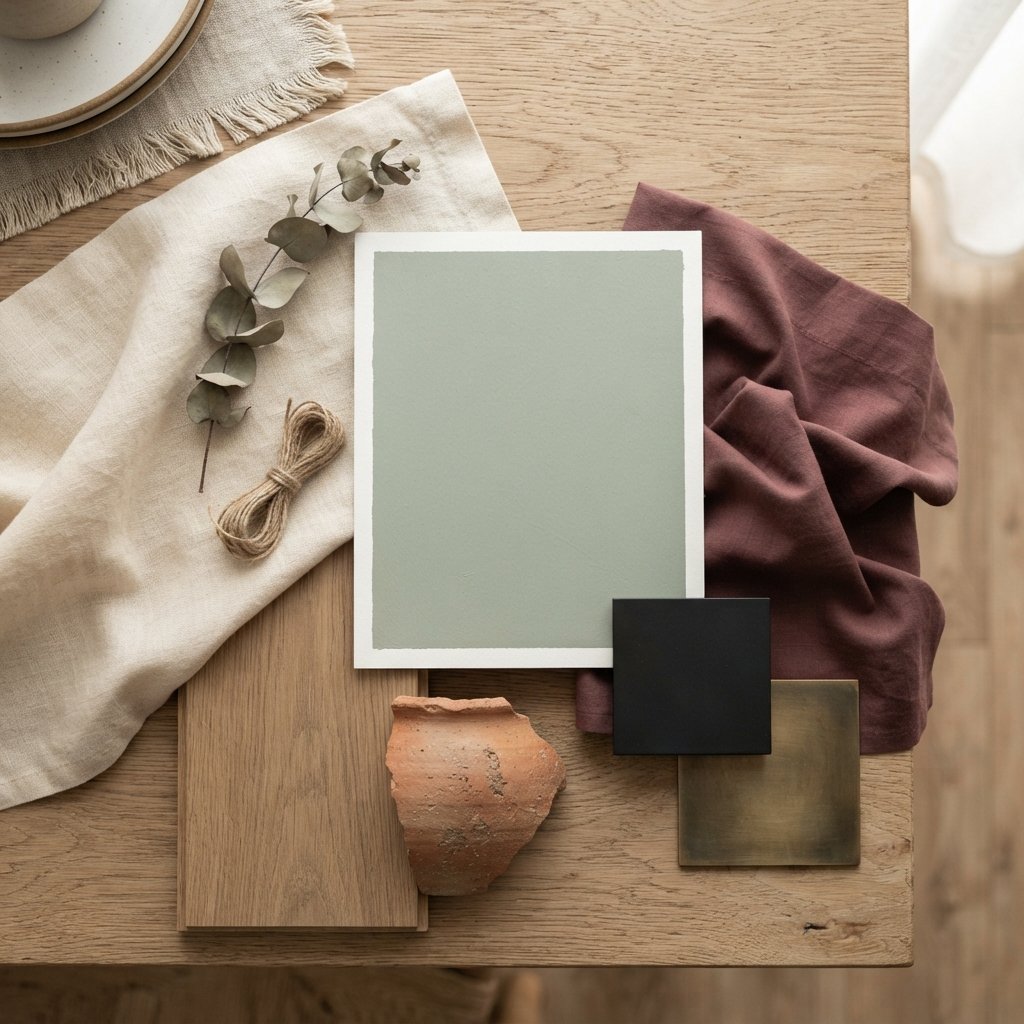
What Colors Go With Sage Green?
Sage is versatile, but some combinations are particularly easy to use.
Sage Green + Warm White
Fresh and simple.
Sage Green + Cream
Softer and warmer.
Sage Green + Natural Wood
Organic and timeless.
Sage Green + Brown
Rich and earthy.
Sage Green + Black
Adds contrast.
Sage Green + Brass Tones
Warm metallic finishes can complement earthy greens beautifully.
Sage Green + Blush
Soft and subtle.
Sage Green + Burgundy
A deeper, moodier combination.
Sage Green + Terracotta
Warm and nature-inspired.
What White Paint Goes With Sage Green?
Don’t choose a white simply because it’s popular.
Compare the white directly with the sage.
Warm sage colors often look good with warmer or softly neutral whites.
Cooler green-gray colors may work with more neutral whites.
Pay particular attention to existing trim.
If your entire home already has painted trim, changing the trim color in one room may create unnecessary complications.
Sometimes the best white to use is simply the one already throughout the house—provided it works with the sage you’re considering.
Does Sage Green Go With Wood Floors?
Yes, but the undertones still matter.
Light Oak
Works beautifully with many muted greens.
Honey Oak
Try warmer or earthier sage colors rather than icy blue-greens.
Dark Wood
Lighter sage can create beautiful contrast.
Gray Wood Flooring
A gray-green sage may connect better than a yellow-green.
Red or Orange Wood Undertones
Green sits opposite red on the color wheel, which means the contrast can emphasize both colors.
A muted, earthy green may be easier to coordinate than a clear, saturated green.
Does Sage Green Go With Beige?
Yes.
Sage and beige can create a very natural palette.
The trick is making sure the undertones don’t fight.
A warm beige often works best with an earthy or olive-leaning sage.
Add:
- Cream
- Brown
- Warm wood
to help connect the colors.
Sage Green in North-Facing Rooms
North-facing rooms often receive cooler, more indirect natural light.
A sage with strong blue-gray undertones may look even cooler in this setting.
If the room feels cold, compare it with a warmer, earthier green.
But don’t rely on room orientation alone.
Trees, neighboring buildings, window size, flooring, artificial lighting, and climate all affect how a paint color appears.
Sage Green in South-Facing Rooms
South-facing rooms often receive stronger, warmer light for much of the day, though this varies by location and season.
Warm light can bring out yellow or olive undertones.
If your sage looks too yellow during the brightest part of the day, compare it with a more balanced or slightly grayer green.
Sage Green in East-Facing Rooms
East-facing rooms usually have stronger morning light and less direct light later in the day.
A sage may look warmer and brighter in the morning, then more muted later.
Check samples at both times.
Sage Green in West-Facing Rooms
West-facing spaces often become much warmer later in the day.
A sage that looks balanced in the morning may appear significantly warmer in late afternoon sunlight.
Again, sampling throughout the day matters more than choosing a color based solely on its name or online appearance.
How Artificial Lighting Changes Sage Green
Paint color doesn’t stop changing after sunset.
Your bulbs matter.
Warmer artificial lighting can emphasize the warmer side of sage.
Cooler lighting can emphasize blue or gray.
Rather than changing bulbs simply to make the paint work, sample your paint under the lighting you normally use.
You want the color to work in the actual room.
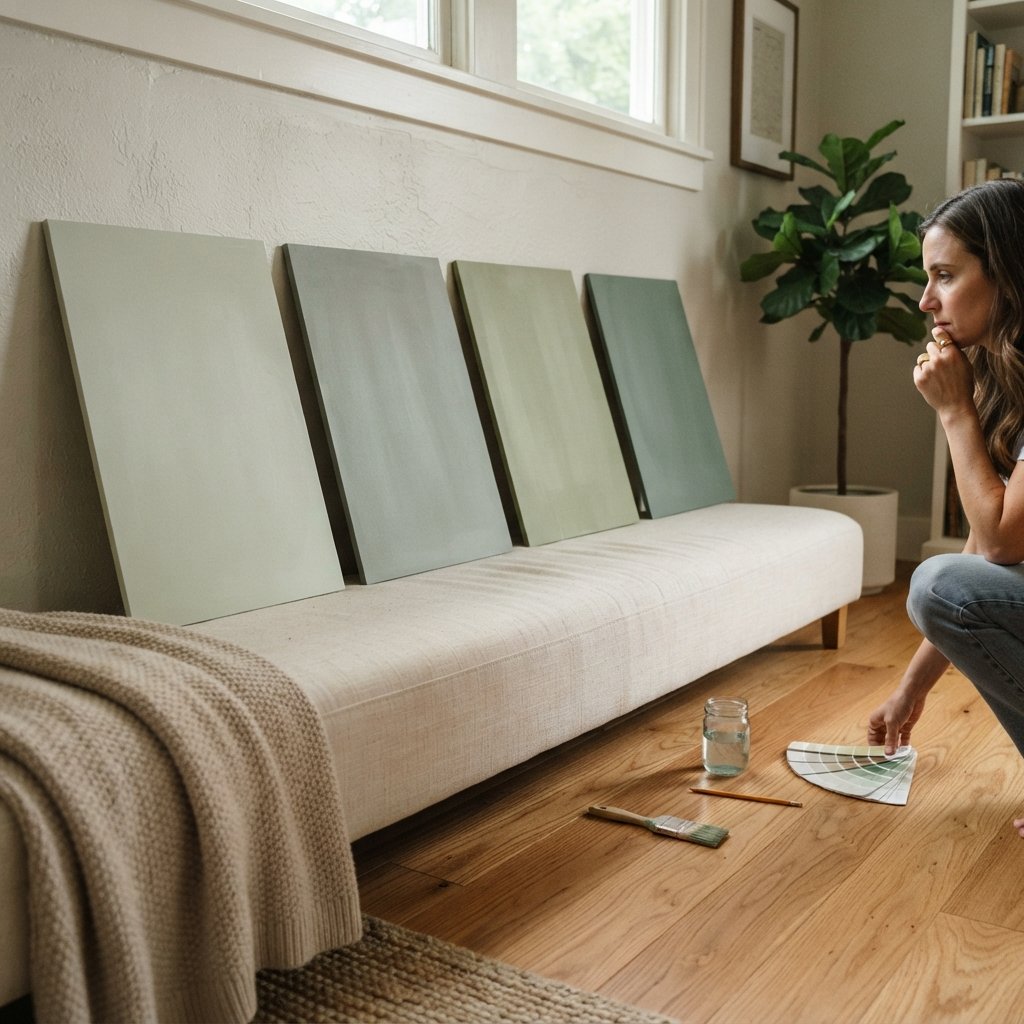
How to Test Sage Green Paint Colors
This is the most important part of choosing paint.
Don’t skip it.
Step 1: Narrow the List
Choose three to five likely colors.
Step 2: Get Real Samples
Use actual paint samples or manufacturer-authorized large sample formats when available.
Step 3: Make the Samples Large
Tiny chips are useful for narrowing choices, but they don’t show how a color will behave across a room.
Step 4: Move Samples Around
Check them near different walls and fixed finishes.
Step 5: Look Morning, Afternoon, and Evening
Light changes constantly.
Step 6: Compare Against Fixed Materials
Hold samples near:
- Flooring
- Tile
- Countertops
- Cabinets
- Upholstery
Step 7: Eliminate Rather Than Choose
Sometimes it’s easier to see which color is clearly wrong.
Remove those samples.
Then compare what’s left.
Why Sage Green Sometimes Looks Gray
Sage is intentionally muted.
If the color contains substantial gray and your room has limited light, the green can become much less obvious.
Surrounding colors matter too.
Place a gray-green beside bright green and it may look almost gray.
Put the same color beside beige and the green may become more noticeable.
This is a good reminder that paint color is always relative to its surroundings.
Why Sage Green Can Look Blue
Some muted greens have blue influence.
Cool natural light can make that more noticeable.
If your sample looks too blue:
- Compare it with a warmer sage.
- Look for more olive or yellow influence.
- Check it beside your flooring.
- View it under your nighttime lighting.
Don’t try to fix an unwanted undertone by decorating around a paint color you don’t like.
Choose another paint color.
Why Sage Green Can Look Too Yellow
Warm sage can become olive or yellow-green in strong warm light.
This isn’t necessarily bad.
But if it’s not the look you want, move toward a more balanced gray-green.
Compare samples side by side and the undertone differences will become much easier to see.
Common Sage Green Paint Mistakes
Choosing From a Phone Screen
Screens cannot reliably reproduce paint color.
Picking a Color Because It’s Popular
Your room may have completely different lighting and finishes.
Ignoring the Flooring
Flooring influences wall color more than many people realize.
Testing One Tiny Spot
Use larger samples.
Looking Only During the Day
Check nighttime lighting too.
Assuming Every Sage Is Warm
Some lean cool or blue-green.
Assuming Every Sage Is Light
There are beautiful medium and deep sage options.
Painting Cabinets Without Proper Preparation
Durability depends heavily on the preparation and coating system.
Choosing Trim Color Separately
Compare trim and wall colors together.
FAQ About Sage Green Paint Colors
Is sage green still a good paint color?
Sage green is a versatile muted color that works with many natural materials and neutral palettes. Whether it’s right for your home depends more on your fixed finishes and lighting than on current trends.
Is sage green warm or cool?
It can be either. Some sage colors lean warm and olive, while others contain more gray or blue and appear cooler.
What colors look best with sage green?
Cream, warm white, beige, brown, wood, black, terracotta, blush, burgundy, and warm metallic finishes can all coordinate well with sage.
Does sage green go with oak?
Yes. Sage and oak often work beautifully together. With honey or orange-toned oak, try earthier sage shades and compare samples carefully.
Is sage green good for kitchen cabinets?
It can be. Sage provides more color than white or beige cabinetry while remaining relatively muted. Always sample it with your countertop, backsplash, floor, and wall color.
What is a good Sherwin-Williams sage green?
Evergreen Fog, Clary Sage, Contented, Retreat, Acacia Haze, and Sensible Hue are several muted green directions worth sampling. Sea Salt is another popular soft green, though it can read considerably cooler and more blue-green.
What is a good Benjamin Moore sage green?
October Mist, Saybrook Sage, Hollingsworth Green, High Park, Soft Fern, Sage Wisdom, and other muted greens are useful starting points depending on the depth and undertone you want.
Should I paint an entire room sage green?
You can. A lighter or medium sage can work throughout a room, while deeper sage can create a moodier effect. You can also use sage on cabinetry, built-ins, or a vanity if you want a smaller dose of color.
Final Thoughts
There isn’t one perfect sage green paint color for every home.
That’s actually what makes this color family so useful.
You can find pale sage colors that barely whisper green, warmer shades that lean earthy and olive, muted gray-greens that function almost like neutrals, and deeper sage shades that create beautiful contrast on cabinetry or walls.
The most important step is identifying the undertone that works with your home.
Look at your floors.
Look at your countertops.
Compare the color with your trim.
Then pay attention to how the room’s natural and artificial light changes the sample throughout the day.
If a sage turns too blue, too gray, or too yellow in your room, don’t try to convince yourself to like it simply because the color is popular.
Move to another shade.
Paint is one of the easiest elements in a room to adjust before the project begins.
Choose the sage that works with the materials you already have, and it can become an incredibly versatile backdrop for cream, wood, brown, black, terracotta, brass tones, and other colors throughout your home.