

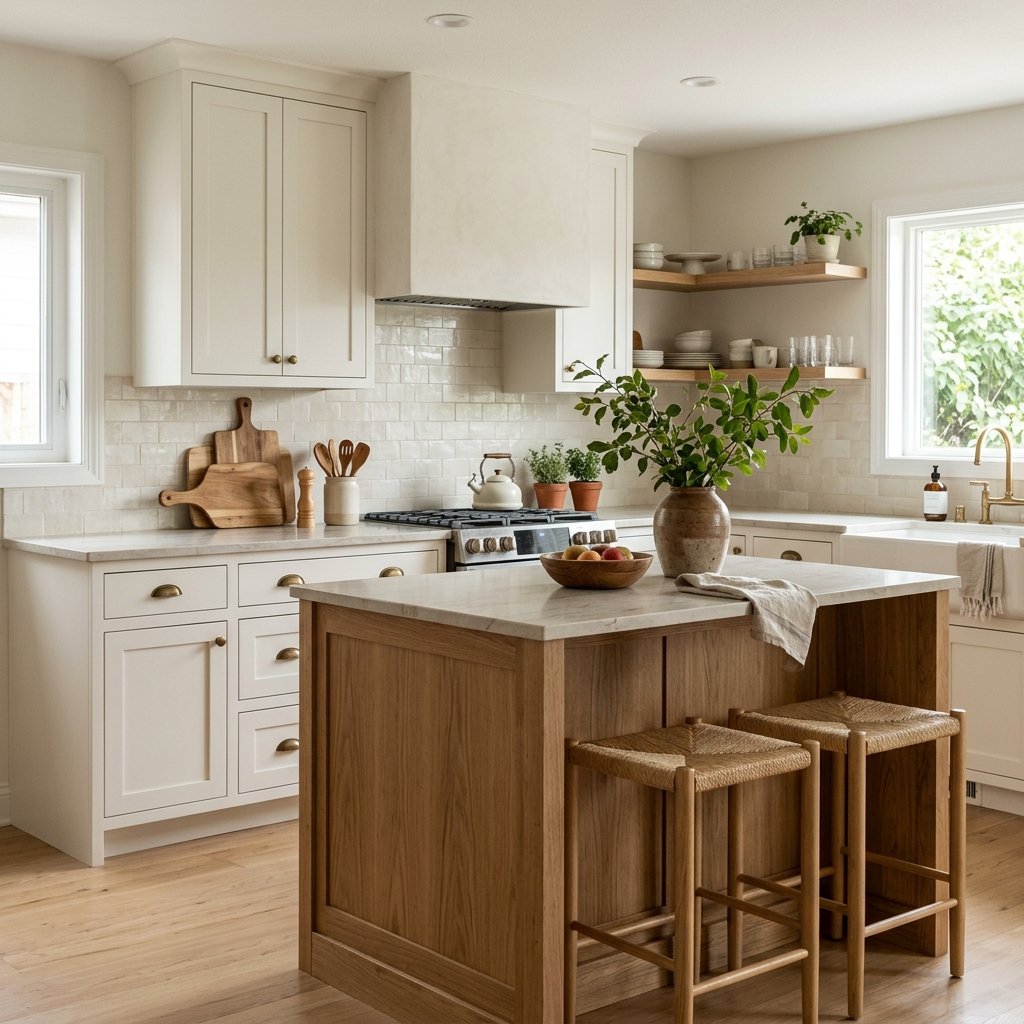
Choosing a kitchen backsplash can feel like a small decorating decision—until you start looking at tile.
Suddenly you’re comparing white subway tile with cream zellige-inspired tile, marble-look patterns with natural stone, glossy finishes with matte ones, tiny mosaics with oversized slabs, and dozens of grout colors.
The backsplash may occupy less visual space than the cabinets or countertops, but it can have a major influence on how the entire kitchen feels.
The easiest way to learn how to choose the perfect kitchen backsplash is to stop choosing it in isolation.
Your backsplash needs to work with the countertops, cabinets, flooring, hardware, lighting, and overall style of the kitchen. It also needs to function in a hardworking area where cooking splatters, grease, and everyday cleaning are realities.
Instead of asking, “What’s the prettiest tile?”
Ask:
Which backsplash makes everything already in my kitchen look better together?
Here’s how to narrow down the options and choose a backsplash you’ll be happy to live with.
1. Choose the Backsplash After the Countertop
If you’re selecting finishes for a kitchen renovation, choosing the countertop before the backsplash can make the process much easier.
Why?
The countertop usually has fewer practical options, costs more to change, and occupies a major visual plane.
Countertop materials may contain:
- Veining
- Flecks
- Warm undertones
- Cool undertones
- Multiple colors
Once the countertop is selected, use it to guide your backsplash.
Bring a backsplash sample directly next to the actual countertop sample whenever possible.
A tile that looks warm white in a showroom may suddenly look gray next to your counter.
2. Identify Your Countertop’s Undertones
Before choosing backsplash color, look closely at your countertop.
Is the overall background:
- Bright white?
- Cream?
- Warm beige?
- Gray?
- Greige?
- Black?
- Brown?
Then look at any veining or pattern.
A white countertop might have:
- Cool gray veins
- Warm gray veins
- Beige veins
- Brown or gold-toned movement
Your backsplash doesn’t have to perfectly match one of those colors, but it should relate comfortably to the overall palette.
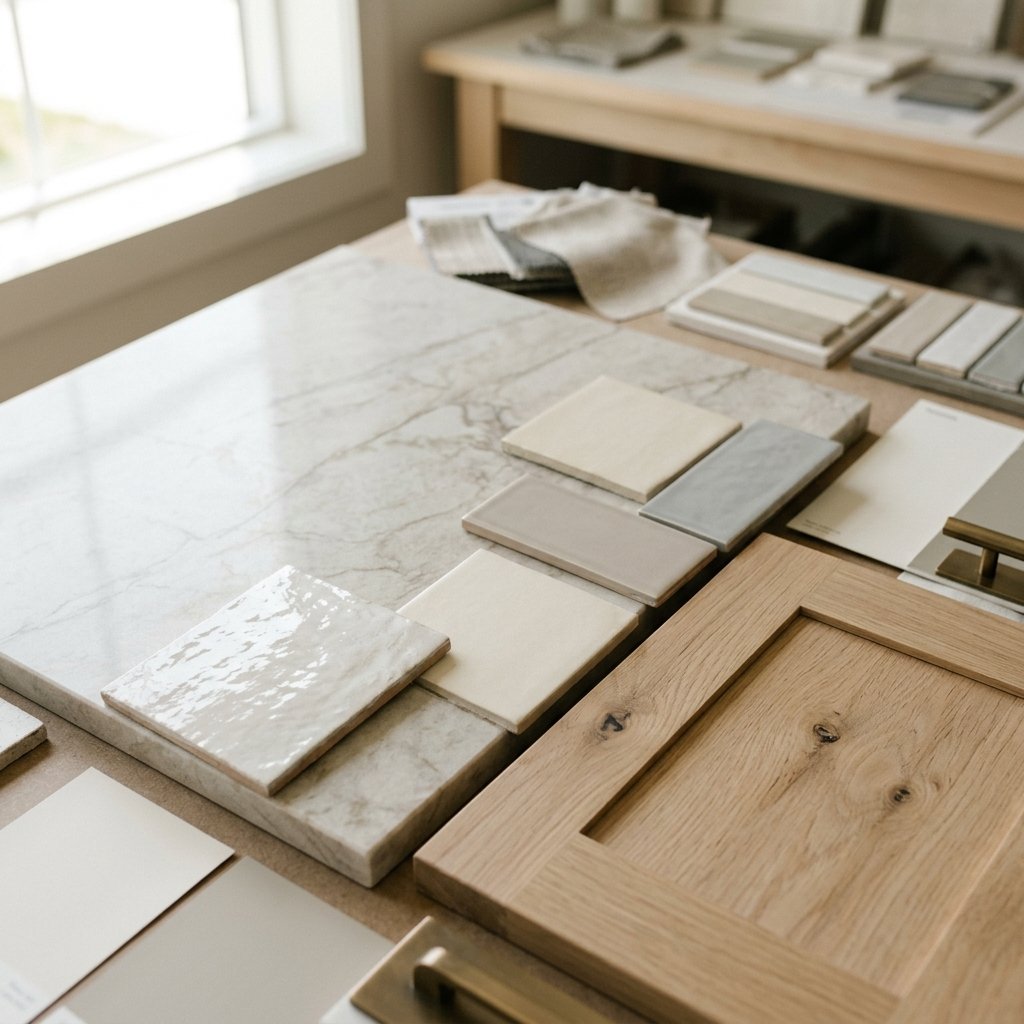
3. Consider Your Cabinet Color
Cabinets and backsplashes sit directly next to each other, so undertones become particularly noticeable.
White Cabinets
White-on-white kitchens can be beautiful, but compare the whites carefully.
A creamy backsplash next to a very cool white cabinet may look more yellow than expected.
Cream Cabinets
Try warm white, cream, beige, muted stone, or other warm neutral tile.
Wood Cabinets
Wood pairs beautifully with:
- Warm white
- Cream
- Green
- Soft blue
- Natural stone
Consider the undertone of the wood.
Green Cabinets
Warm white, cream, and subtle stone can allow the cabinet color to remain the focus.
Blue Cabinets
White and warm neutral tile are classic options, while carefully chosen blue tile can create a more layered look.
4. Decide Which Surface Should Be the Star
This is one of the most useful backsplash decisions you can make.
Look at your countertop.
Is it heavily patterned?
If yes, consider a quieter backsplash.
If your countertop is relatively simple, you may have more freedom to use:
- Patterned tile
- Handmade-look tile
- Stronger color
- Interesting shape
A kitchen doesn’t necessarily need the countertop, backsplash, cabinets, flooring, and hardware all competing for attention.
Choose a focal point.
Let the other finishes support it.
5. Compare Warm White and Cool White Tile
“White tile” isn’t one color.
You might find:
- Bright white
- Cool white
- Warm white
- Ivory
- Cream
Place samples directly against the cabinets and countertops.
If your kitchen has warm wood floors, cream cabinets, and beige-veined countertops, an icy white tile might feel disconnected.
On the other hand, a kitchen with crisp white cabinets and cool gray finishes may need a cleaner white.
Always compare the actual samples together.
6. Consider a Cream Backsplash
Cream can be a beautiful choice in a warm kitchen.
It works especially well with:
- Warm white cabinets
- Cream cabinets
- Natural wood
- Beige countertops
- Brass-toned hardware
A cream backsplash can create a softer look than bright white while still keeping the kitchen light.
Varying the tile texture can prevent a cream-on-cream kitchen from feeling flat.
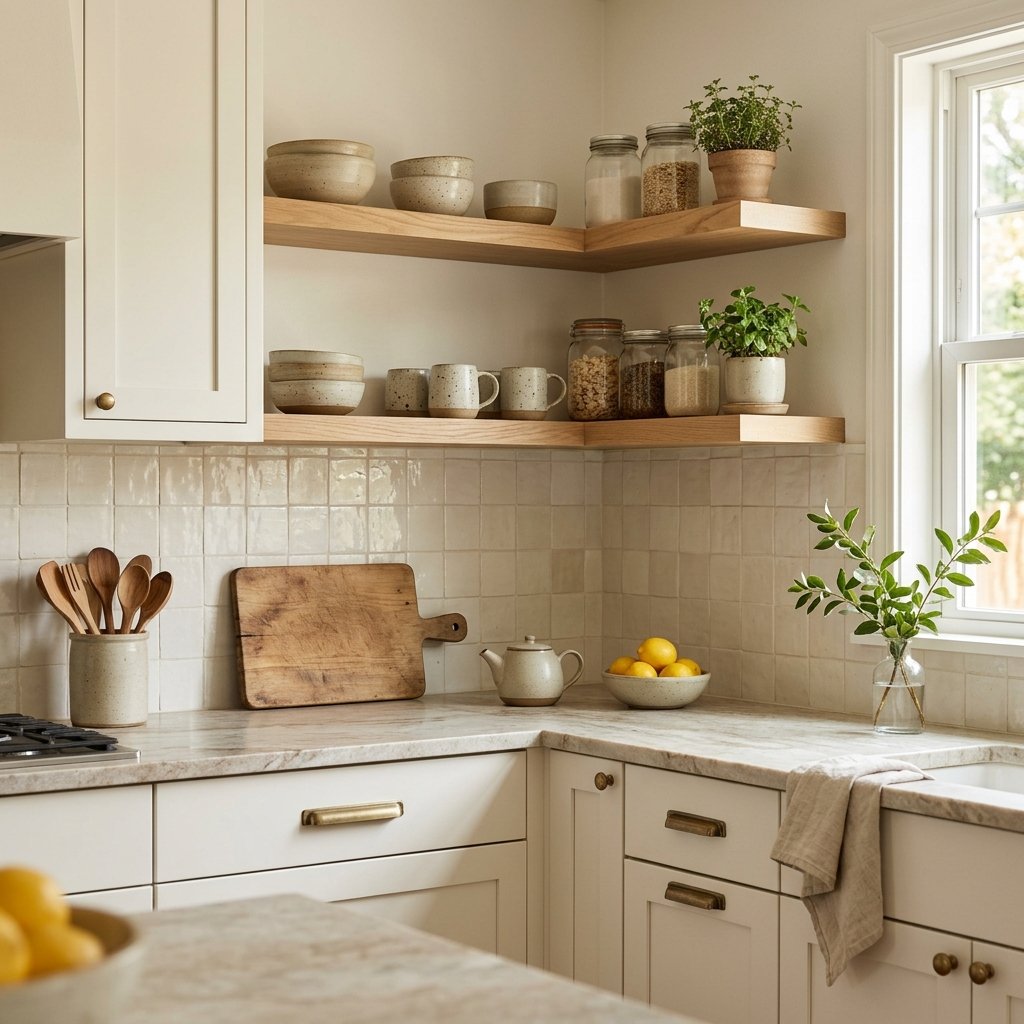
7. Use Subway Tile Without Making the Kitchen Feel Boring
Subway tile is popular because its simple shape works with many decorating styles.
You can change the look through:
- Tile proportions
- Surface texture
- Finish
- Color
- Layout
- Grout
A classic offset layout feels different from a stacked layout.
A slightly irregular warm white tile feels different from a perfectly uniform bright white tile.
Simple doesn’t have to mean boring.
8. Consider Handmade-Look Tile
If you want a neutral backsplash with more character, look at tile with subtle variation.
Handmade or handmade-look tiles may include variations in:
- Surface
- Edges
- Color
- Glaze
That variation can make a white or cream backsplash much more interesting.
Before choosing, understand whether variation is an intentional feature of the specific tile.
Order enough material according to the manufacturer’s and installer’s recommendations so the finished installation can be blended appropriately.
9. Think Carefully About Zellige and Zellige-Look Tile
Zellige-style tile can bring beautiful texture and movement to a kitchen.
However, authentic handmade materials and manufactured zellige-look products can differ considerably in:
- Thickness
- Edge shape
- Surface
- Glaze
- Installation requirements
- Maintenance
Don’t choose based solely on a photograph.
Get a physical sample and understand the specific product you’re purchasing.
10. Decide Between Glossy and Matte
Finish affects both appearance and maintenance.
Glossy Tile
Can reflect light and make a backsplash feel lively.
It may also make certain splatters, streaks, or surface imperfections more noticeable depending on the tile.
Matte Tile
Creates a softer appearance but may have different cleaning characteristics depending on the material and surface.
There’s no universal winner.
Check the manufacturer’s intended-use and care information for the exact product.
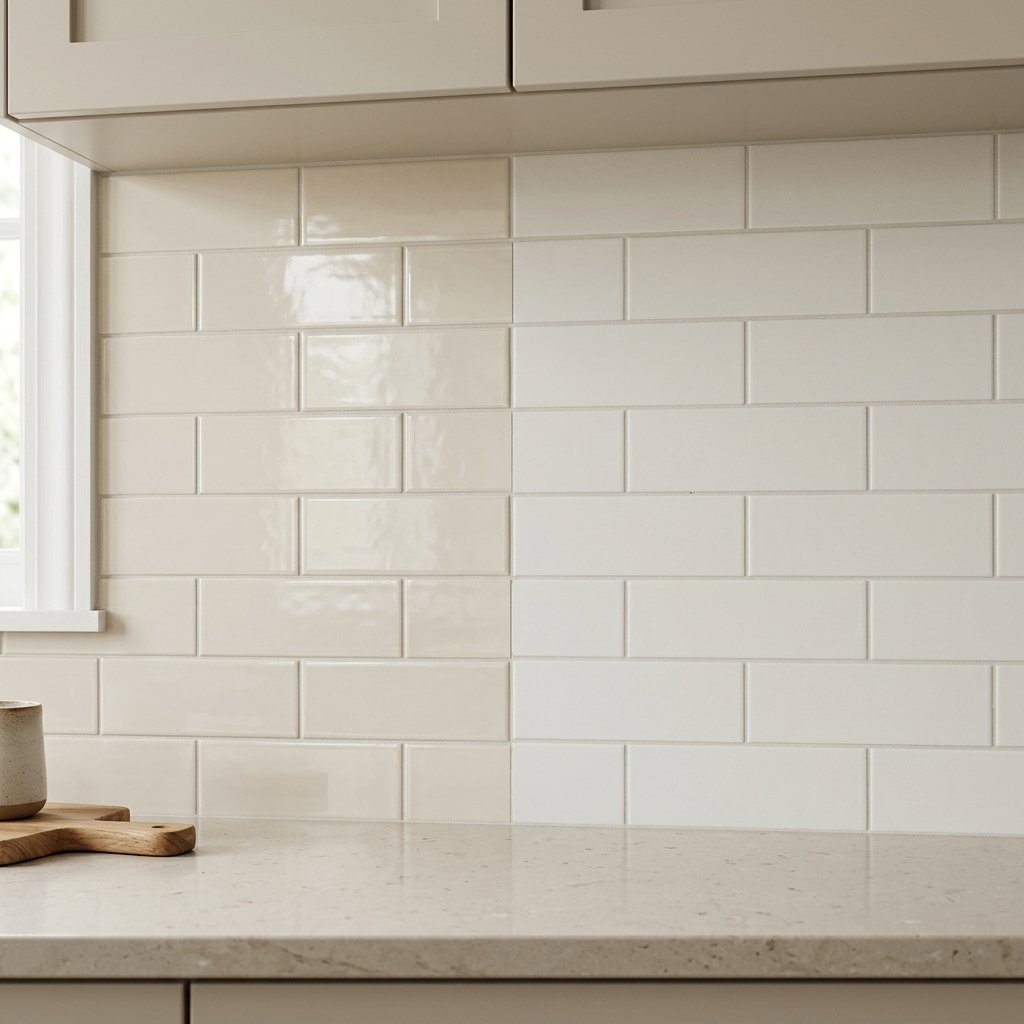
11. Think About Tile Size
Tile size influences how busy the backsplash appears.
Smaller tile generally means more grout lines.
Larger tile means fewer.
Consider:
- Countertop pattern
- Cabinet style
- Kitchen size
- Amount of visible backsplash
- Desired visual simplicity
A small kitchen doesn’t automatically require small tile.
Large-format materials can sometimes create a calmer appearance because there are fewer joints.
12. Don’t Ignore Grout Color
Grout can dramatically change the appearance of tile.
For a subtle backsplash, choose a grout color that blends reasonably closely with the tile.
For more contrast, choose a noticeably different color.
For example:
White tile + white grout creates a quieter effect.
White tile + gray grout emphasizes the tile pattern.
Contrast can be beautiful, but it also makes every line more visible—including installation inconsistencies.
Choose grout based on the tile, desired appearance, installation requirements, and manufacturer’s recommendations.
13. Think About Grout Maintenance
Before choosing very light grout in a hardworking cooking area, think about maintenance.
Different grout products have different:
- Stain resistance
- Sealing requirements
- Cleaning recommendations
- Installation requirements
Ask your installer or consult the product manufacturer before choosing based only on color.
Don’t assume every grout requires the same maintenance.
14. Consider Natural Stone Carefully
Natural stone can create a beautiful, timeless backsplash.
Depending on the specific stone, however, it may require more maintenance than some manufactured alternatives.
Before purchasing, research the exact material’s requirements for:
- Sealing
- Cleaning
- Stain prevention
- Acid sensitivity
- Installation
Avoid generic assumptions.
Marble, limestone, travertine, and other stones can have different characteristics.
15. Consider a Slab Backsplash
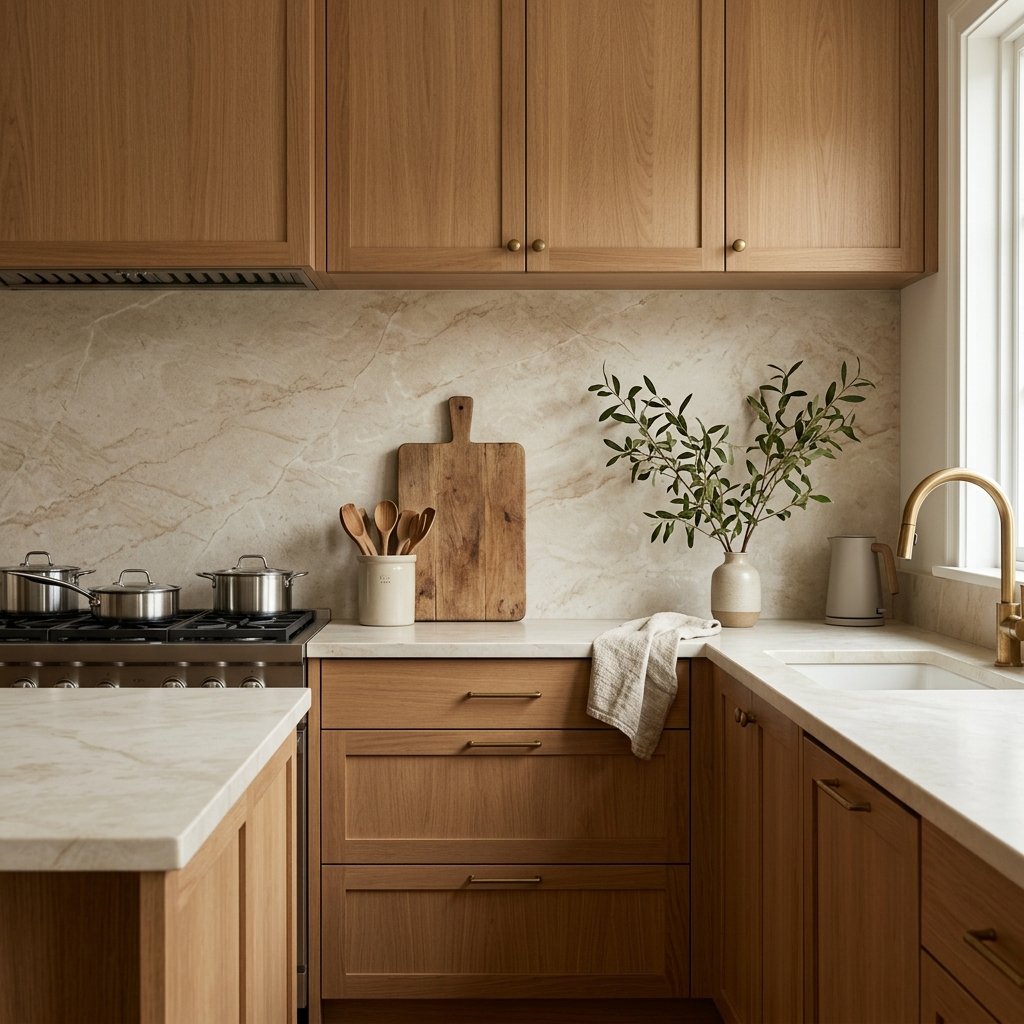
Using the same or coordinating slab material on the countertop and backsplash can create a streamlined appearance.
This works especially well in:
- Modern kitchens
- Minimal kitchens
- Small kitchens
- Kitchens with dramatic stone
A slab backsplash can reduce grout lines and allow veining to become a design feature.
Installation and substrate requirements vary by material, so this is generally a project to plan with the fabricator and installer.
16. Use Patterned Tile Strategically
Patterned tile can be beautiful, but consider how it interacts with everything else.
If you already have:
- Dramatic countertop
- Patterned floor
- Detailed cabinet doors
- Multiple strong colors
another pattern may make the kitchen feel busy.
Pattern works most easily when the surrounding finishes are relatively quiet.
17. Be Careful With Trendy Tile Shapes
Hexagons, scallops, pickets, and other decorative shapes can create a memorable backsplash.
There’s nothing wrong with using a trend you genuinely love.
Just ask:
Would I still like this if it stopped appearing in inspiration photos next year?
If the answer is yes, use it.
Your home doesn’t need to be trend-free.
It needs to reflect what you actually enjoy.
18. Bring Color Into the Backsplash
Neutral isn’t your only option.
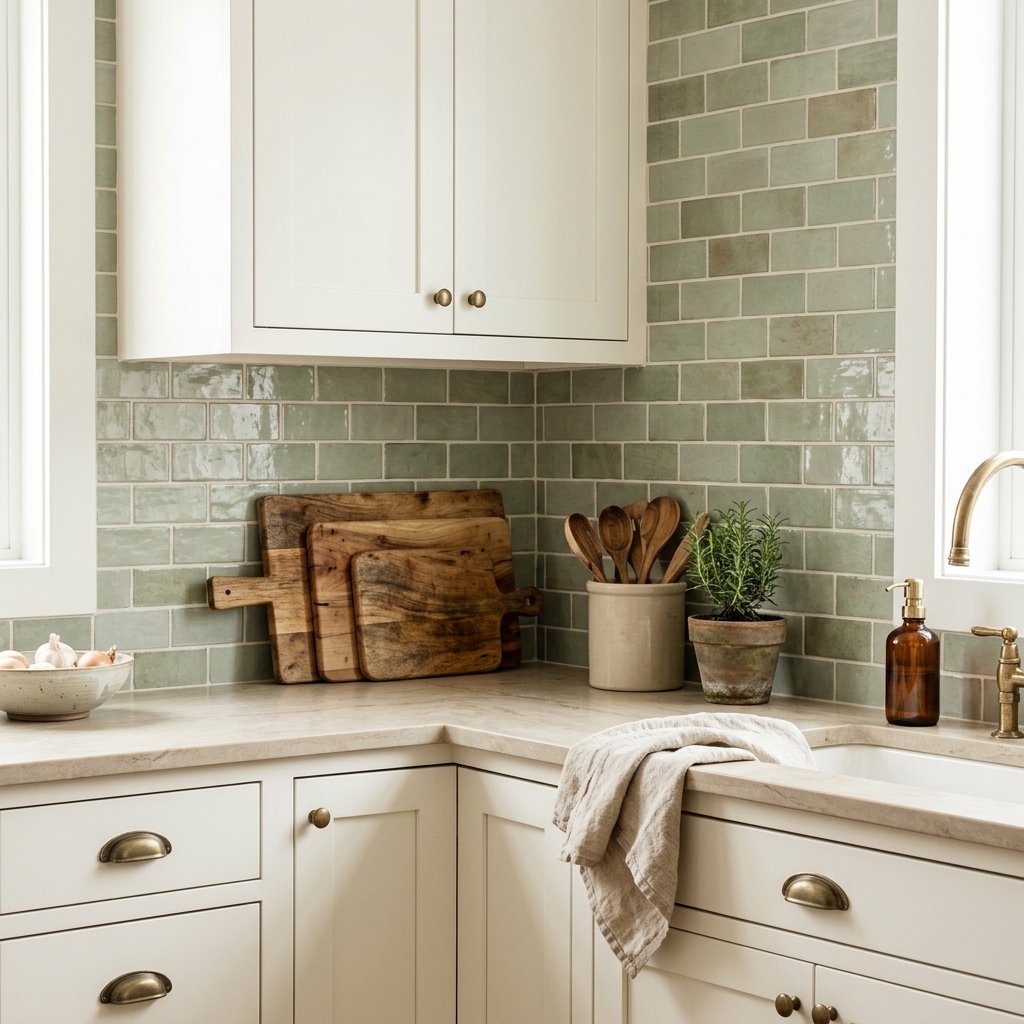
A colored backsplash can add personality to a simple kitchen.
Consider:
- Sage green
- Olive
- Muted blue
- Deep blue
- Soft blue-green
Use a color already connected to another element in your home for a more cohesive look.
19. Coordinate the Backsplash With the Flooring
The backsplash doesn’t need to match the floor, but both should belong to the same overall palette.
If the floor has strong warmth, consider how a cool backsplash will look in comparison.
If the flooring is highly patterned, a simple backsplash may create better balance.
Lay your samples where you can see:
Floor + cabinet + countertop + backsplash
together.
20. Consider the Hardware and Fixtures
Hardware is easier to change than tile, so it shouldn’t dictate the entire backsplash decision.
However, looking at all the finishes together can help you see the full picture.
Warm metals often work beautifully with:
- Cream
- Warm white
- Green
- Natural stone
Black hardware can add definition against light tile.
Nickel and chrome can work with both warm and cool palettes depending on the surrounding finishes.
You don’t necessarily need every metal in the kitchen to match exactly.
21. Decide Where the Backsplash Should End
Backsplash termination can be surprisingly awkward.
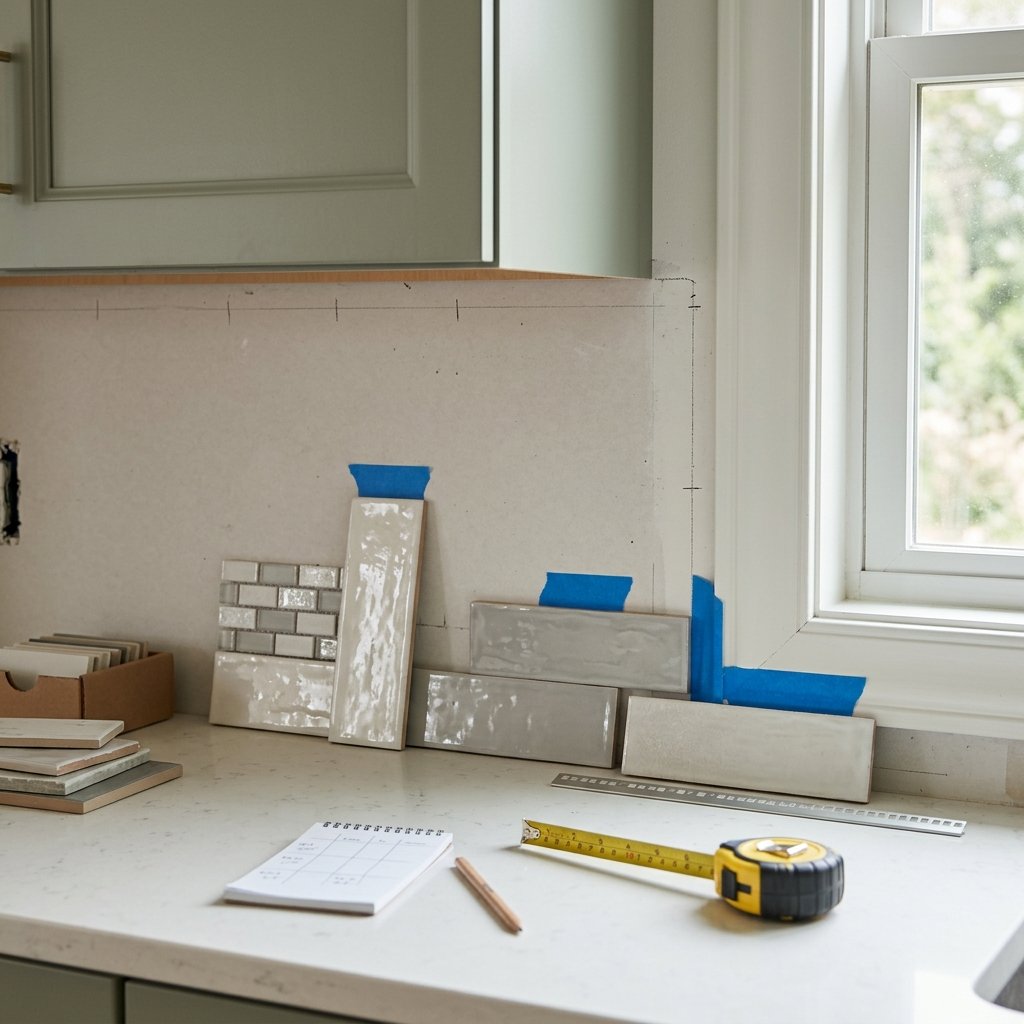
Before installation, determine:
- Where tile starts
- Where tile stops
- What happens around windows
- How outside edges are finished
- What happens around cabinets
- How corners are handled
- Whether tile continues around a range area
Discuss these details before tile is installed.
The solution depends on your kitchen layout and tile system.
Should the Backsplash Match the Countertop?
Not exactly.
A backsplash and countertop should coordinate, but an exact match isn’t necessary.
Look for a relationship through:
- Undertone
- Color
- Pattern
- Material
- Overall style
If your countertop has warm beige veining, a warm white tile might coordinate beautifully without matching the beige exactly.
Should the Backsplash Be Lighter or Darker Than the Countertop?
Either can work.
A lighter backsplash can create an airy appearance.
A darker backsplash can add contrast and depth.
Instead of following a rule, ask how much contrast the kitchen needs.
For example:
Dark cabinets + dark countertops + dark backsplash can create a dramatic room.
But if your goal is a light kitchen, you may want the backsplash to provide relief.
What Backsplash Goes With White Cabinets?
White cabinets give you plenty of flexibility.
Try:
- White tile
- Cream tile
- Natural stone
- Sage green
- Muted blue
- Slab backsplash
The biggest challenge is usually undertones.
Bring the tile directly against the cabinet finish before deciding.
What Backsplash Goes With Wood Cabinets?
Wood cabinets look beautiful with materials that let the natural wood remain prominent.
Consider:
- Warm white tile
- Cream tile
- Natural stone
- Muted green
- Soft blue
If the wood has strong orange or red undertones, compare samples carefully.
What Backsplash Goes With Dark Cabinets?
Dark cabinets can support a wide range of backsplash choices.
For contrast:
- Warm white
- Cream
- Pale stone
For a moodier look:
- Dark stone
- Deep green
- Charcoal
Pay attention to lighting so the room doesn’t become darker than intended.
How to Choose a Backsplash for Busy Countertops
If your countertop contains dramatic veining or a strong pattern, start with a simple backsplash.
Try:
- Solid-color tile
- Subtle handmade-look tile
- Coordinating slab material
You usually don’t need another competing pattern.
Let the countertop provide the movement.
How to Choose a Backsplash for Plain Countertops
A simple countertop gives you more freedom.
You might introduce:
- Color
- Texture
- Interesting tile shape
- Pattern
- Natural stone
Just remember to consider the cabinets and floor too.
How High Should a Kitchen Backsplash Go?
In many kitchens, backsplash material fills the area between the countertop and upper cabinets.
Other designs may continue tile higher around:
- Range hood
- Open shelving
- Windows
- Full feature walls
There isn’t one decorative height that’s appropriate for every kitchen.
Your layout, material, local requirements, manufacturer instructions, and installation details all matter.
How to Test Kitchen Backsplash Samples
Never choose tile from an online image alone if you can obtain a physical sample.
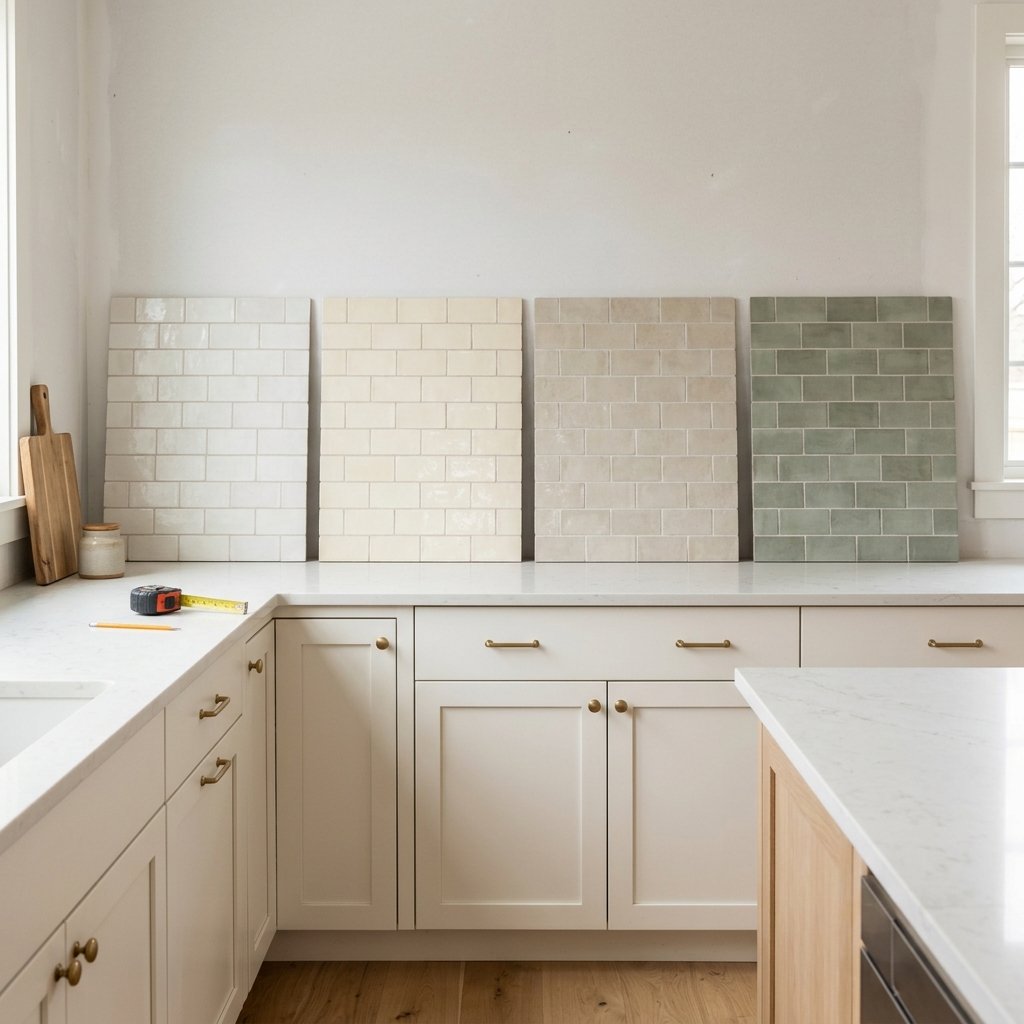
Bring several samples home.
Place them vertically against the wall rather than flat on the countertop.
Then look at them:
- In morning light
- During the afternoon
- At night
- Under your kitchen lighting
Also photograph them with the entire kitchen in view.
Sometimes a tile looks perfect close-up but feels completely different when you step back.
A Simple Formula for Choosing the Perfect Kitchen Backsplash
If you’re overwhelmed, use this order:
Cabinets → Countertop → Flooring → Backsplash → Grout → Hardware details
Then ask five questions:
- Does the backsplash coordinate with the countertop undertones?
- Does it look good directly against the cabinets?
- Is the pattern competing with another surface?
- Is the material practical for my kitchen?
- Do I still like it under both natural and artificial light?
If the answer to all five is yes, you’re probably getting close.
How to Make a Kitchen Backsplash Look Timeless
“Timeless” doesn’t have to mean plain white subway tile.
Instead, focus on materials and colors you genuinely like and that relate naturally to the rest of the kitchen.
Some enduring approaches include:
- Simple rectangular tile
- Natural stone
- Warm white tile
- Cream tile
- Coordinating slab backsplash
- Restrained color
Avoid choosing something solely because it’s currently popular.
Common Kitchen Backsplash Mistakes
Choosing the Backsplash Before the Countertop
It’s usually easier to coordinate tile with a chosen countertop than the reverse.
Looking at Tile by Itself
Always compare it with cabinets and counters.
Ignoring Undertones
Two whites can clash.
Using Too Many Patterns
Decide which surface should dominate.
Forgetting Grout
Grout changes the entire appearance.
Choosing Based Only on Online Photos
Lighting and screens can alter color.
Ignoring Maintenance
Understand the care requirements before buying.
Not Planning Tile Edges
Know where and how the installation ends.
Ordering Too Little Material
Installation may require extra tile for cuts, layout, breakage, variation, and future repairs. The appropriate amount depends on the product and layout, so follow the manufacturer’s and installer’s recommendations.
Kitchen Backsplash Installation and Safety Considerations
Backsplash installation can be approachable for experienced DIYers, but kitchens contain electrical, plumbing, appliance, and heat-related considerations.
Keep these points in mind:
- Turn off electrical power appropriately before working around outlets or electrical components when required.
- Don’t modify electrical wiring unless you’re qualified and permitted to do so.
- Don’t tile over surfaces that are unsuitable, loose, damaged, or affected by unresolved moisture problems.
- Use setting materials and grout appropriate for the tile and substrate.
- Follow tile, adhesive, mortar, grout, sealer, and tool manufacturer instructions.
- Wear appropriate eye, hand, hearing, and respiratory protection when cutting or handling materials.
- Tile cutting can create hazardous dust depending on the material and cutting method; use appropriate controls and equipment.
- Maintain any required clearances around cooking equipment and other heat sources.
- Consider the specific requirements for tile or other materials installed near ranges and cooktops.
- Use professional help when substrate preparation, electrical changes, gas appliances, complex slab installation, or other work is outside your skill level.
- Check applicable local requirements when necessary.
FAQ About Choosing a Kitchen Backsplash
How do I choose the right backsplash for my kitchen?
Start with your cabinets and countertop. Identify their colors and undertones, then choose backsplash samples that coordinate without creating unnecessary competition. Compare everything in your actual kitchen lighting.
Should the backsplash match the countertop or cabinets?
It doesn’t need to match either exactly. The goal is coordination. A backsplash can relate through undertone, color, texture, or material.
What backsplash won’t go out of style?
Simple tile shapes, warm white or cream tile, natural stone, and restrained slab backsplashes can all have lasting appeal. Choose something that fits the architecture and finishes of your own kitchen rather than relying entirely on trends.
Should backsplash tile be glossy or matte?
Both can work. Consider the desired look, cleaning needs, material, and manufacturer’s recommendations for the specific tile.
What color backsplash is easiest to decorate around?
Warm white, cream, and other subtle neutrals are generally flexible, but the best neutral depends on your cabinets and countertop undertones.
Should grout match the backsplash?
Matching or closely coordinating grout creates a quieter look. Contrasting grout emphasizes the tile shape and installation pattern.
Can a backsplash be the same material as the countertop?
Yes. Extending countertop slab material onto the backsplash can create a streamlined, cohesive appearance.
How do I know if a backsplash is too busy?
Step back and look at the countertop, cabinets, floor, and backsplash together. If several surfaces are competing for attention, simplifying one of them can create better balance.
Final Thoughts
Learning how to choose the perfect kitchen backsplash becomes much easier when you stop searching for the perfect tile and start looking at the kitchen as a whole.
Begin with the cabinets and countertop.
Study their undertones.
Consider the flooring.
Then decide whether the backsplash should quietly support those finishes or become a feature of its own.
If your countertop is dramatic, keep the backsplash relatively simple.
If the countertop is quiet, you can experiment with texture, color, shape, or pattern.
And don’t forget grout.
A grout color can make the tile pattern disappear into the background or become one of the most noticeable features in the kitchen.
Most importantly, bring samples home.
Put them directly against the countertop and cabinets.
Look at them during the day.
Look again at night.
Then step back and view the entire kitchen.
The perfect backsplash isn’t necessarily the most interesting tile in the showroom.
It’s the one that makes your cabinets, countertop, flooring, and entire kitchen feel like they were always meant to be together.