

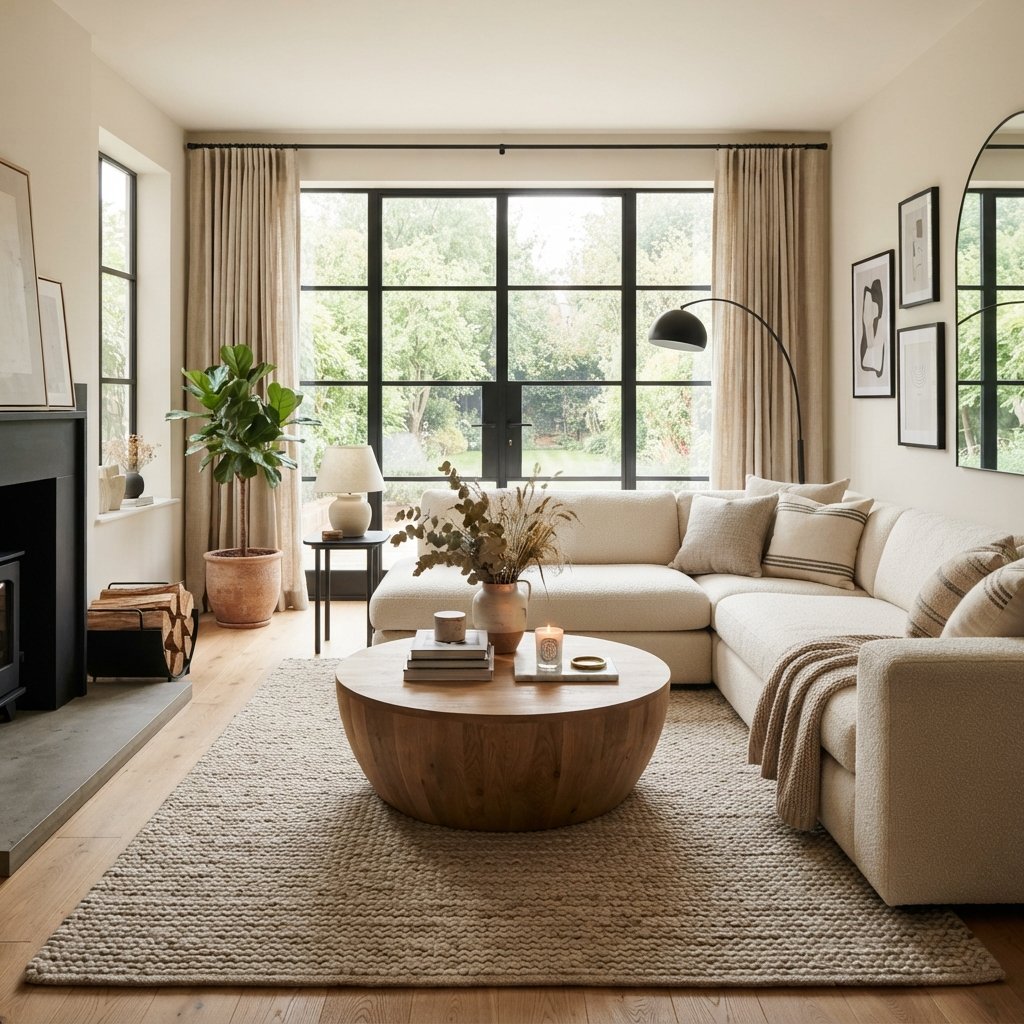
Choosing modern interior house colors isn’t simply about finding the newest trending paint shade.
A modern home can be warm, earthy, colorful, dramatic, or quietly neutral. What makes the palette feel current is often the way the colors work together: softer whites instead of stark ones, layered neutrals instead of flat gray, earthy greens and blues, natural wood, and carefully placed deeper colors for contrast.
The best modern interior house colors also need to work with your actual home.
Flooring, countertops, cabinetry, furniture, natural light, and the colors visible from adjoining rooms all influence how paint looks once it’s on the wall.
If you’re planning a whole-house color palette or simply looking for a modern wall color for one room, these 21 ideas can help you create a home that feels fresh without becoming overly trendy.
What Makes an Interior Paint Color Feel Modern?
Modern doesn’t have to mean cold gray walls and stark white furniture.
A modern palette often uses:
- Warm whites
- Creams
- Beige
- Greige
- Taupe
- Mushroom
- Earthy green
- Muted blue
- Warm brown
- Deep charcoal
- Soft black
Natural materials help complete the look.
Think wood, stone, linen, wool, woven textures, and understated metals.
The goal is usually a restrained, cohesive palette rather than dozens of competing colors.
1. Warm White
Warm white is one of the most versatile modern interior colors.
It creates a clean background without necessarily feeling sterile.
Warm white pairs beautifully with:
- Natural oak
- Walnut
- Cream
- Beige
- Green
- Brown
- Black accents
It’s particularly effective in homes where you want the furniture, artwork, and architectural features to provide most of the contrast.
White paint isn’t automatically neutral, however.
Compare samples carefully because whites can have yellow, pink, gray, green, or other undertones.
2. Soft Off-White
Off-white adds slightly more depth than a crisp white.
It’s useful when pure white feels too bright but you still want a light, open interior.
Use it with:
- Cream upholstery
- Medium wood
- Natural stone
- Black accents
- Muted colors
An off-white wall paired with slightly lighter trim can create a subtle layered effect.
3. Cream
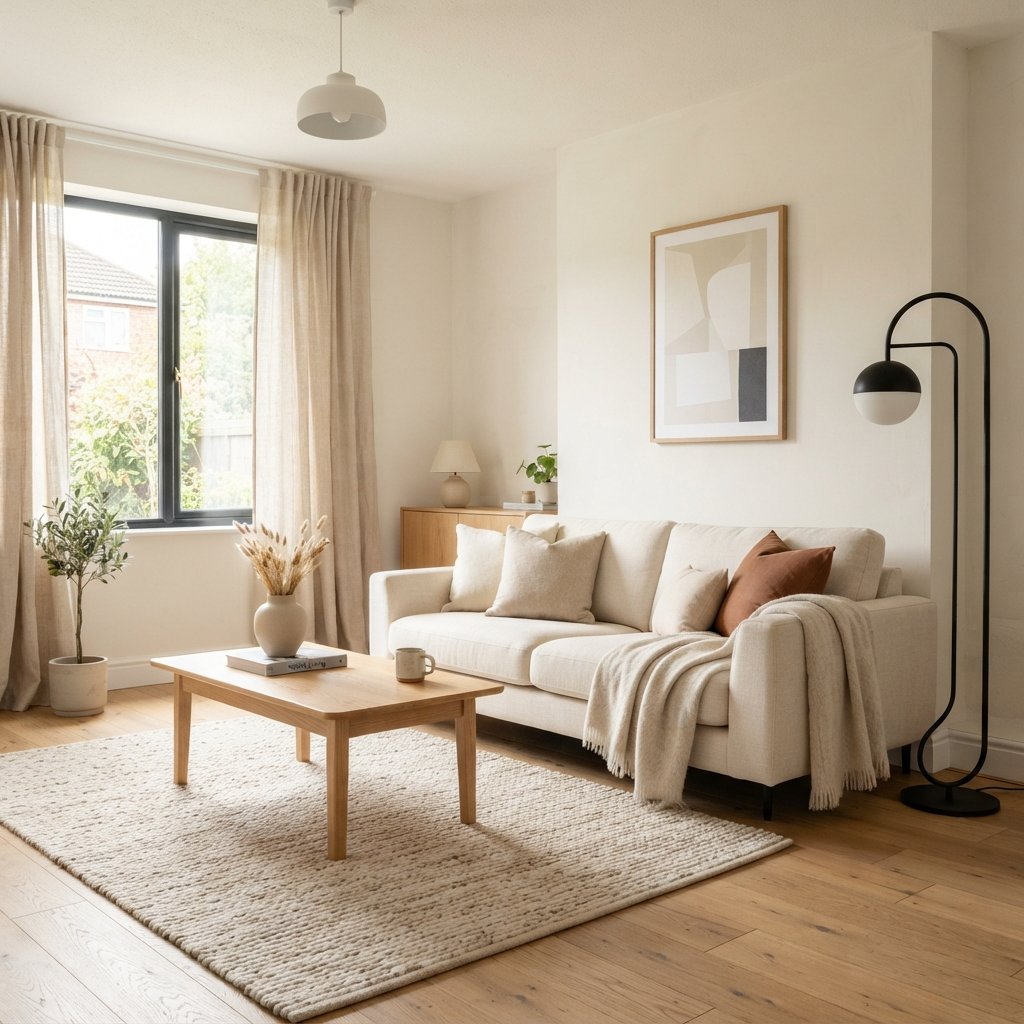
Cream is a beautiful choice for creating a warmer modern interior.
The key is choosing a cream that coordinates with your home’s fixed finishes.
Soft cream can look especially attractive with:
- Warm stone
- Wood flooring
- Brown
- Olive
- Terracotta
- Warm metals
Avoid assuming all cream colors are strongly yellow.
Some are subtle enough to function almost like warm off-whites.
4. Light Beige
Beige has become an important neutral for warm modern interiors.
Instead of using beige everywhere, layer it with:
- Cream
- Brown
- Natural wood
- Black
- Textured fabrics
A light beige wall can provide more warmth and depth than white while remaining flexible enough for many decorating styles.
5. Pale Greige
Greige remains useful because it can connect warm and cool elements.
A soft greige can work well in a room containing:
Warm wood floors + cream sofa + black accents + gray stone
The balance between gray and beige varies considerably from one paint color to another.
Choose based on your finishes rather than the color name.
6. Taupe
Taupe can make a modern interior feel sophisticated and grounded.
Depending on the shade, it may have:
- Brown
- Gray
- Violet
- Beige
influences.
Taupe works particularly well with cream, dark wood, natural stone, and black.
7. Mushroom
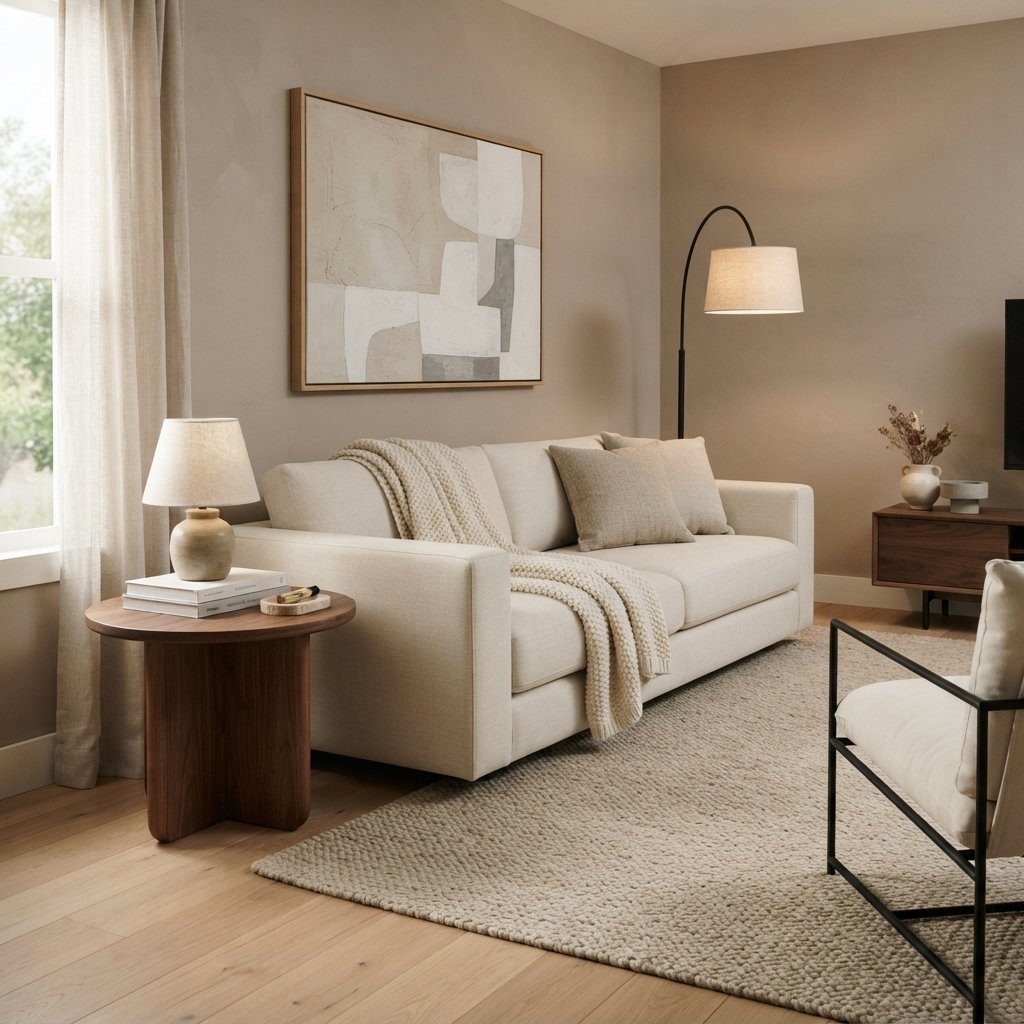
Mushroom is an earthy neutral that sits somewhere between beige, taupe, gray, and brown.
It can create more atmosphere than pale greige without becoming a strong color.
Pair it with:
- Cream
- Warm white
- Oak
- Walnut
- Brown
- Muted green
It’s especially attractive in rooms where you want a quiet, organic feeling.
8. Warm Gray
Gray can still look modern when it relates to the home’s finishes.
A warm gray can provide the clean appearance of gray without feeling as cool as some blue-based shades.
It may work well with:
- Light wood
- Cream
- Black
- White
- Muted green
If your home has warm flooring and beige stone, warm gray or greige may be easier to coordinate than icy gray.
9. Sage Green
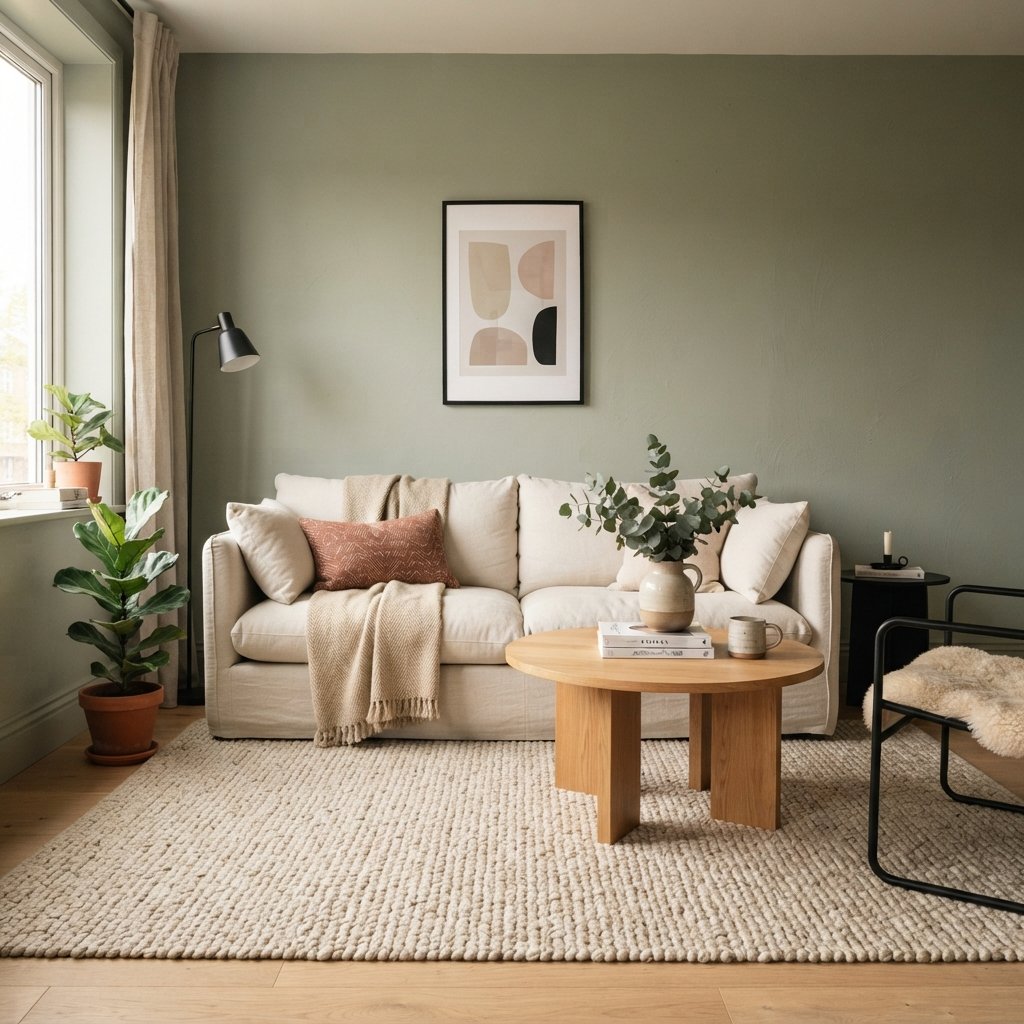
Sage is an easy way to bring color into a modern home.
It’s muted enough to act almost like a neutral while still creating a connection to nature.
Try sage with:
- Cream
- Warm white
- Oak
- Walnut
- Black
- Warm metal accents
Sage works beautifully in living rooms, bedrooms, kitchens, offices, and bathrooms.
10. Olive Green
Olive is deeper and earthier than sage.
It can make a room feel cozy without relying on traditional brown or beige.
Pair olive walls with:
- Cream furniture
- Cognac leather
- Walnut
- Natural stone
- Black
A muted olive can also work beautifully in a dining room or home office where you want more depth.
11. Deep Forest Green
Deep green can create a dramatic modern interior.
Use it in:
- Dining rooms
- Offices
- Bedrooms
- Living rooms
- Built-in areas
Balance the depth with lighter furniture, warm wood, or layered lighting.
Dark colors don’t automatically make a room unsuccessful just because it’s small.
Sometimes embracing the room’s natural coziness creates a stronger result.
12. Muted Blue
A soft, slightly grayed blue can bring calm color into a modern home.
It pairs well with:
- Warm white
- Cream
- Light oak
- Medium wood
- Black
Choose a muted rather than highly saturated blue if you want a quieter palette.
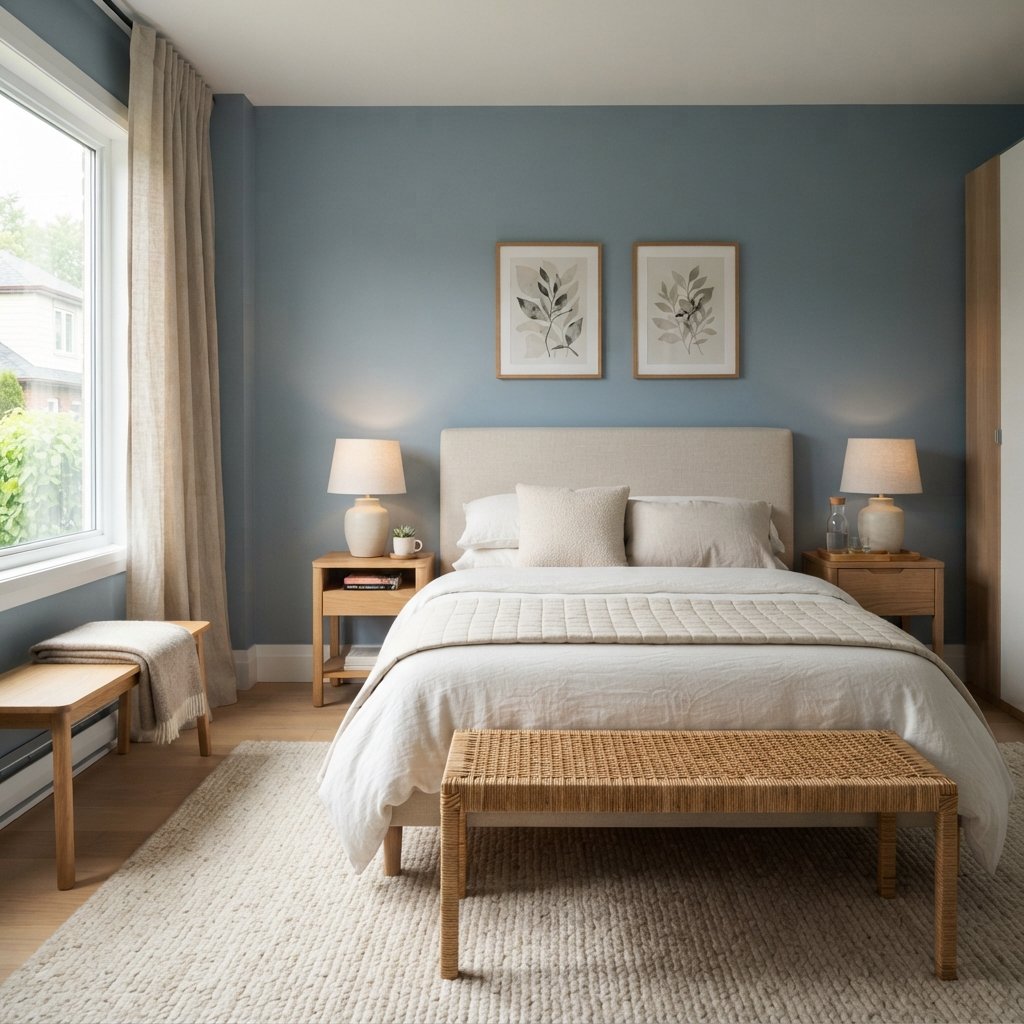
13. Dusty Blue
Dusty blue offers more depth than a very pale blue.
It’s especially useful when you want color that’s noticeable without dominating the room.
Try dusty blue with warm wood and cream textiles to balance its cooler qualities.
14. Deep Navy
Navy can create a beautiful contrast in a modern palette.
Use it with:
- Cream
- White
- Walnut
- Oak
- Camel
- Warm metal accents
A navy room can feel dramatic without becoming as stark as black.
If you’re hesitant to use navy everywhere, consider it in a smaller defined space or on architectural features.
15. Warm Brown
Brown can be an elegant modern wall color.
Look beyond dark chocolate.
Consider:
- Cocoa
- Coffee
- Earthy brown
- Mushroom brown
Brown pairs beautifully with cream furniture and lighter natural textiles.
It’s particularly effective when you’re trying to create a warm, enveloping room.
16. Muted Terracotta
Terracotta brings warmth and earthiness to modern interiors.
For walls, a softened version is often easier to decorate around than a highly saturated orange.
Pair it with:
- Cream
- Warm white
- Olive
- Natural wood
- Black
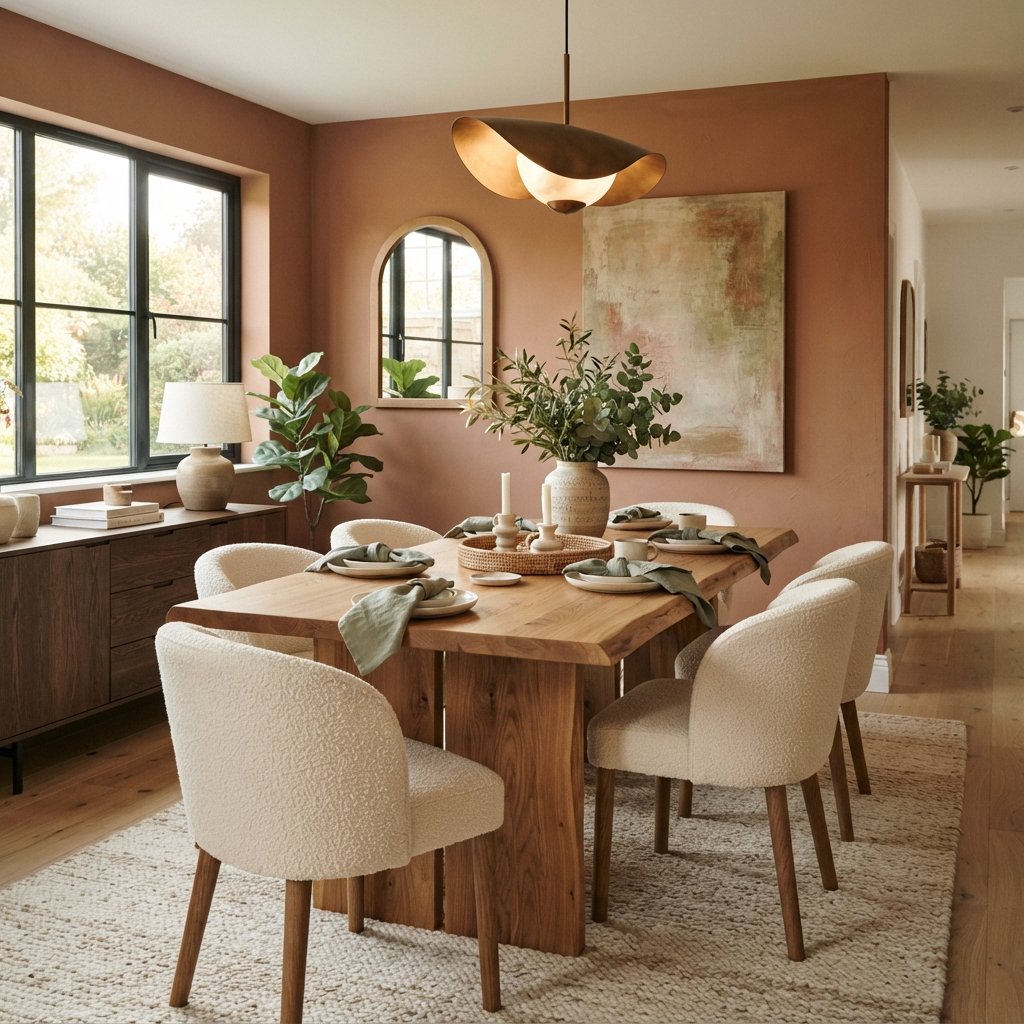
17. Clay
Clay tones can fall somewhere between terracotta, brown, peach, and beige.
A subdued clay color can add personality while still feeling sophisticated.
It’s a beautiful choice for rooms containing:
- Natural wood
- Linen
- Stone
- Cream
- Earthy green
18. Dusty Rose
A muted dusty rose or pink-beige can work as a modern neutral.
Avoid overly sweet pink if you want a sophisticated look.
Pair muted rose with:
- Walnut
- Brown
- Cream
- Burgundy
- Black
It can be particularly beautiful in bedrooms, powder rooms, or home offices.
19. Burgundy
Burgundy is a rich option for homeowners who want a modern palette with more personality.
Use it carefully rather than automatically painting every room.
Burgundy can work beautifully with:
- Cream
- Brown
- Walnut
- Muted pink
- Warm beige
It can also create a dramatic backdrop for artwork.
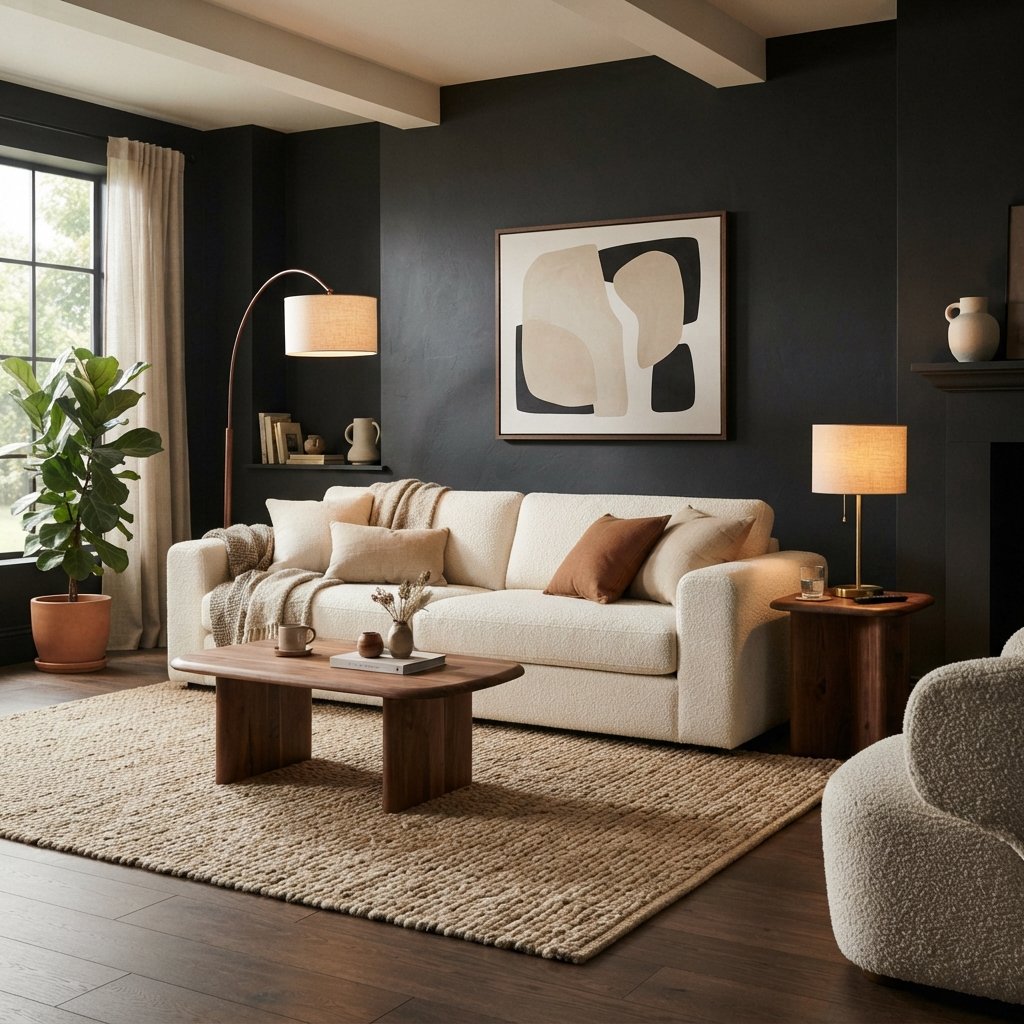
20. Charcoal
Charcoal provides the depth of a dark neutral without necessarily looking as intense as black.
It’s especially effective when paired with:
- Cream furniture
- Light wood
- Medium wood
- Warm lighting
- Natural textures
Charcoal can work on all four walls or as a focused architectural color.
21. Soft Black
Soft black can create a striking modern room.
Instead of choosing the darkest possible black, consider a nuanced off-black with an undertone that relates to your interior.
Use it with lighter furnishings to create contrast.
Cream, tan, oak, walnut, and natural textiles can prevent a dark room from feeling flat.
Modern Whole-House Color Palette Ideas
If you’re choosing colors for an entire home, don’t select each room independently.
Build a palette.
Here are three directions to consider.
Warm Modern Neutral Palette
Main walls: Warm white
Secondary neutral: Beige
Deeper neutral: Mushroom
Accent: Olive green
Contrast: Soft black
This palette works beautifully with natural wood.
Earthy Modern Palette
Main neutral: Cream
Secondary: Light taupe
Color: Sage
Deeper color: Forest green
Warm accent: Terracotta
This creates an organic, layered interior.
Modern Contrast Palette
Main neutral: Off-white
Secondary: Warm gray
Color: Dusty blue
Deep accent: Navy
Contrast: Charcoal
This palette provides a slightly cooler, tailored look.
Modern Interior Colors for a Living Room
The living room is usually a good place to establish the main house color.
For a light modern living room, try:
- Warm white
- Off-white
- Beige
- Greige
- Taupe
For subtle color:
- Sage
- Muted blue
- Olive
For drama:
- Deep green
- Navy
- Charcoal
- Soft black
Consider the sofa and rug before choosing.
They’re large surfaces and can significantly influence the wall color.
Modern Interior Colors for a Kitchen
Kitchen colors need to work with permanent finishes.
Look at:
- Cabinets
- Countertops
- Backsplash
- Flooring
Warm white, cream, greige, and pale mushroom can create a flexible backdrop.
Sage and muted green can introduce earthy color.
For a dramatic kitchen, deep green or charcoal can be beautiful when balanced with the cabinetry and countertops.
Modern Interior Colors for a Bedroom
Bedrooms are ideal for softer, more enveloping palettes.
Try:
- Warm off-white
- Taupe
- Mushroom
- Sage
- Dusty blue
- Deep green
- Warm brown
Instead of defaulting to very pale walls, consider whether a deeper color would make the bedroom feel more relaxing.
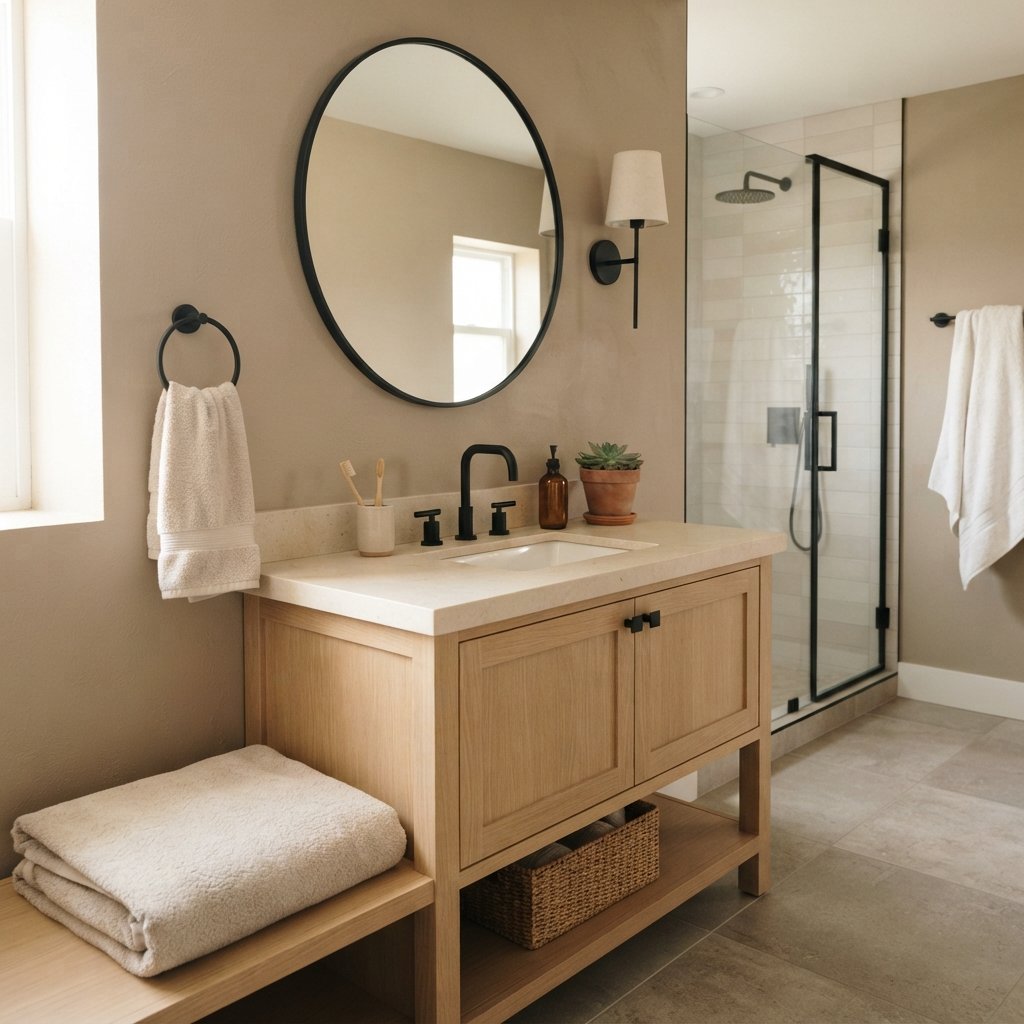
Modern Interior Colors for a Bathroom
Bathrooms can support both light and dramatic colors.
Light options include:
- Warm white
- Pale greige
- Soft taupe
- Sage
- Muted blue
For more contrast, consider deep green, navy, or charcoal.
Always coordinate wall paint with tile, countertops, and cabinetry.
Modern Interior Colors With White Cabinets
White cabinets can work with many modern wall colors.
For a tonal palette:
Warm white cabinets + off-white walls
For subtle warmth:
White cabinets + pale beige walls
For color:
White cabinets + sage walls
For contrast:
White cabinets + deep green walls
The specific white matters.
Compare wall samples directly with the cabinetry to make sure the undertones work together.
Modern Colors With Wood Floors
Wood adds warmth to modern interiors.
Light Oak
Try warm white, beige, greige, mushroom, sage, or muted blue.
Honey or Golden Wood
Cream, warm white, muted green, and warm neutrals may coordinate more naturally than very cool gray.
Dark Wood
Create contrast with off-white, cream, or pale taupe, or embrace depth with olive or navy.
Red-Toned Wood
Be cautious with complementary green if you don’t want to emphasize the red. Neutral walls can create a quieter effect.
Modern Colors With Black Accents
Black is often used to provide structure in modern interiors.
It can appear in:
- Window frames
- Lighting
- Furniture
- Hardware
- Doors
Instead of making everything black, repeat it selectively.
Black works beautifully with warm white, beige, taupe, sage, terracotta, and natural wood.
Modern Neutral Paint Colors
A modern neutral palette doesn’t need to consist entirely of gray.
Consider:
- Warm white
- Cream
- Beige
- Greige
- Taupe
- Mushroom
- Warm gray
- Brown
Layering several related neutrals creates more depth than using one identical color throughout the entire room.
Warm Modern Interior House Colors
If you want your home to feel modern but inviting, start with warm colors.
A simple palette might be:
Walls: Warm white
Upholstery: Cream
Wood: Medium oak
Accent: Olive
Contrast: Black
Or:
Walls: Mushroom
Furniture: Cream
Wood: Walnut
Accent: Terracotta
Warmth can come from paint, but it can also come from materials and lighting.
Modern Paint Colors for an Open Floor Plan
Open floor plans need visual continuity.
That doesn’t mean every wall must be identical.
Choose a primary neutral and then add coordinating colors in defined areas.
For example:
Living room: Warm white
Dining area: Mushroom
Kitchen: Warm white with sage cabinetry or accents
The undertones should relate so the spaces feel connected.
Look at important sightlines before making final decisions.
Should Every Room Be the Same Color?
No.
Using one color throughout can simplify a home, but it isn’t required for a cohesive design.
Instead, create a limited whole-house palette.
You might use:
- One main neutral
- One secondary neutral
- Two or three muted colors
- One deep accent
Repeat those colors in different ways.
A sage wall in one room might become sage pillows in another.
That repetition creates flow.
Modern Color-Drenching Ideas
Color drenching generally means using one color—or closely related versions of it—across multiple architectural surfaces.
For example:
Taupe walls + taupe trim + taupe doors
or:
Deep green walls + coordinated trim
This can create a clean, immersive effect.
Walls, trim, cabinetry, and doors may require different paint formulations or sheens, so use products appropriate for each surface and follow manufacturer instructions.
How Natural Light Changes Modern Paint Colors
Never choose a whole-house palette without considering light.
North-Facing Rooms
Light often appears cooler.
Some cool grays and blues may become more pronounced.
South-Facing Rooms
Strong warm light can make colors appear warmer and brighter.
East-Facing Rooms
Morning light may warm the paint before the room becomes cooler later.
West-Facing Rooms
Afternoon and evening light can add significant warmth.
Artificial lighting also changes color perception.
Always check paint at night.
How to Test Interior House Colors
Before buying gallons of paint:
- Narrow your choices.
- Get physical samples.
- Use large sample areas or sample boards.
- View samples vertically.
- Move them around the room.
- Compare them with flooring.
- Check them beside trim.
- Compare them with cabinets and countertops.
- View them at different times of day.
- Check important sightlines between rooms.
If you’re testing actual paint, let it dry according to manufacturer instructions before judging the final appearance.
How to Create a Cohesive Modern Color Palette
A simple method is to choose five components.
1. Main Neutral
Used through much of the house.
2. Secondary Neutral
Adds variation.
3. Muted Color
Sage, dusty blue, or clay.
4. Deep Color
Forest green, navy, charcoal, or brown.
5. Contrast
Often black, dark wood, or another strong neutral.
You don’t need to use every color in every room.
Repeat enough of them to connect the spaces.
Common Modern Interior Color Mistakes
Choosing Every Room Separately
Think about the whole house.
Using Too Many Colors
A limited palette usually creates better flow.
Assuming Modern Means Gray
Modern homes can be warm and colorful.
Ignoring Flooring
Floors strongly influence paint undertones.
Choosing Paint Before Major Furnishings
It’s often easier to coordinate paint with furniture than find furniture for a difficult paint color.
Using Stark White Everywhere
White can be beautiful, but it isn’t the only way to create a modern interior.
Copying Colors From Photos
Screens and photography change color.
Skipping Samples
Always test.
Forgetting Nighttime Lighting
A color you love during the day may look completely different after sunset.
Painting Interior Walls: Practical Tips
Once you’ve selected your palette, prepare the surfaces carefully.
Depending on the existing wall and coating:
- Clean surfaces appropriately.
- Repair holes and imperfections.
- Protect floors and furniture.
- Prepare glossy or damaged surfaces as required.
- Prime where necessary.
- Apply paint according to manufacturer directions.
- Observe recommended drying and recoating times.
Choose paint products and finishes appropriate for each room and surface.
Kitchens and bathrooms may have different durability and moisture considerations than bedrooms or living spaces.
Provide appropriate ventilation and follow product safety instructions.
If you’re working in an older home, don’t sand or disturb potentially hazardous existing coatings until you know what they contain and what safe procedures are required.
FAQ About Modern Interior House Colors
What colors make a house look modern?
Warm white, cream, beige, greige, taupe, mushroom, sage, olive, muted blue, brown, charcoal, and soft black can all create a modern interior when coordinated with the home’s finishes and furnishings.
Are gray walls still modern?
Gray can still work beautifully, particularly when the undertone coordinates with the home. Warm gray and greige often integrate easily with natural materials, while cooler gray can work with cooler finishes.
What is a good modern whole-house color?
Warm white, soft off-white, pale greige, or light beige can work well as a primary whole-house neutral. The best choice depends on flooring, trim, cabinetry, lighting, and furnishings.
What modern colors go with natural wood?
Warm white, cream, beige, mushroom, sage, olive, muted blue, charcoal, and soft black can all pair beautifully with natural wood.
What colors make a modern home feel warmer?
Cream, beige, taupe, mushroom, brown, terracotta, clay, olive, and warm white can add visual warmth.
Can dark colors look modern?
Yes. Deep green, navy, charcoal, burgundy, brown, and soft black can create sophisticated modern interiors, especially when balanced with lighter furnishings and thoughtful lighting.
Should all interior paint colors have the same undertone?
Not necessarily. Warm and cool colors can coexist successfully. Repetition, fixed finishes, and relationships between colors matter more than making every undertone identical.
How many colors should a whole-house palette have?
There isn’t a required number. A limited palette with a main neutral, secondary neutral, a few coordinating colors, and a deeper accent is often easier to repeat throughout a home than a large collection of unrelated shades.
Final Thoughts
Choosing modern interior house colors doesn’t mean following every new paint trend.
The most successful palettes start with the home itself.
Look at your floors, cabinetry, countertops, stone, furniture, and natural light.
Then build a small collection of colors that makes those elements feel connected.
Warm white, cream, beige, greige, taupe, and mushroom create flexible modern foundations.
Sage, olive, dusty blue, terracotta, and clay introduce subtle personality.
Deep green, navy, brown, charcoal, and soft black provide contrast and drama.
Most importantly, don’t choose colors one room at a time without considering the spaces around them.
Build a palette.
Repeat colors and materials.
Test everything in your actual lighting.
When the colors throughout your home relate to one another, the interior feels intentional—and that’s what makes a modern color scheme much more likely to last beyond a passing trend.