

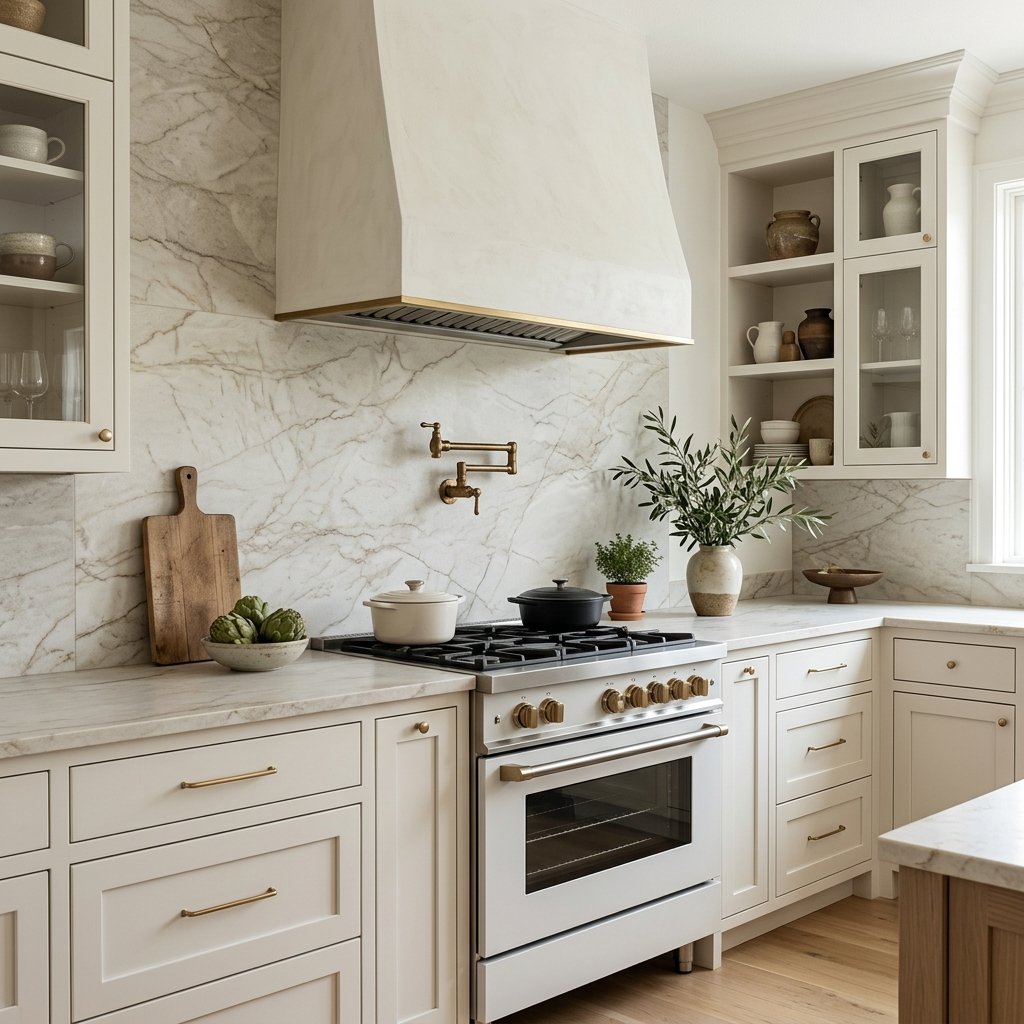
White kitchen cabinets give you an incredible amount of flexibility when choosing a backsplash.
You can keep the kitchen bright and timeless with white tile, add warmth with cream or beige, introduce subtle color with sage or blue, or create dramatic contrast with black or richly veined stone.
But having so many options can also make the decision harder.
The best backsplash ideas for kitchens with white cabinets aren’t chosen by looking at the cabinets alone. Your countertop, flooring, cabinet undertone, hardware, lighting, and overall decorating style should all influence the decision.
A backsplash is also a relatively permanent finish. Unlike towels or counter decor, it’s something you’ll probably live with for years.
So before choosing a tile because it looks beautiful in a photo, make sure it works with your kitchen.
Here are 21 backsplash ideas for white cabinets, along with practical tips for choosing tile color, size, pattern, grout, and material.
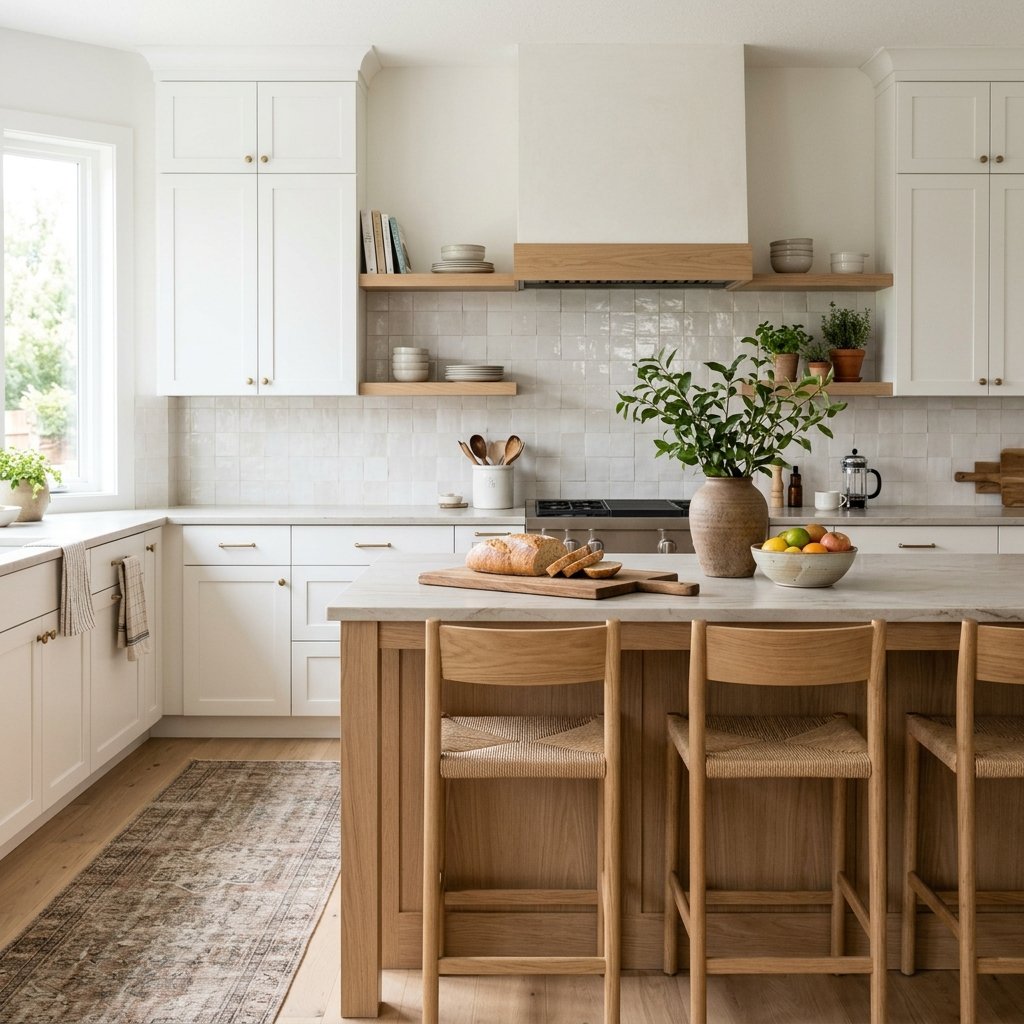
Start With the Countertop, Not the Backsplash
Before looking at backsplash tile, study your countertop.
This is one of the easiest ways to narrow down your options.
Your backsplash sits directly against the counter, which means the two materials need to work together.
If your countertop has:
- Strong veining
- Multiple colors
- Bold movement
- Speckles
- A noticeable pattern
a quieter backsplash often provides balance.
If your countertop is simple and relatively uniform, you have more freedom to introduce texture, pattern, or color through the backsplash.
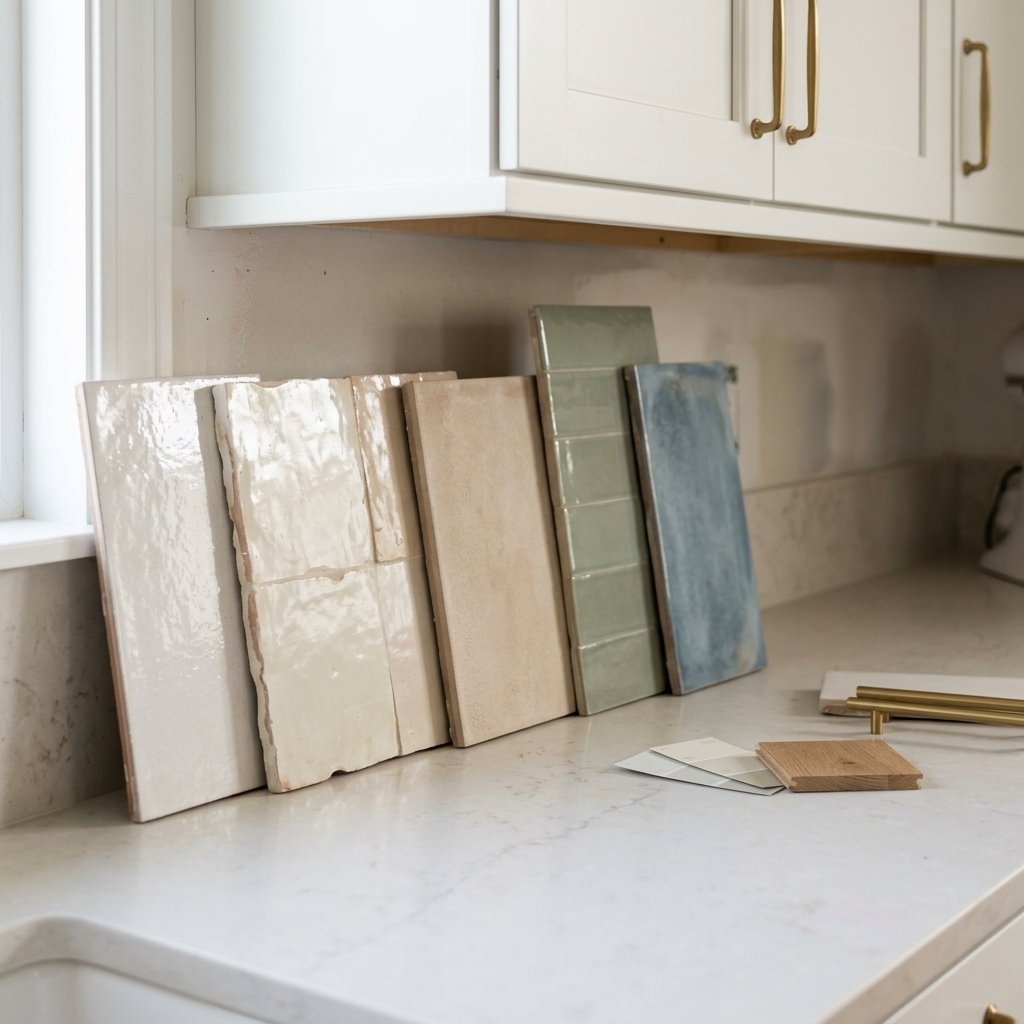
Bring tile samples home and place them vertically against the wall directly above the countertop.
That’s much more useful than looking at a tile sample flat on a store shelf.
1. Classic White Subway Tile
White subway tile remains one of the most versatile choices for white cabinets.
The trick is making sure the whites coordinate.
A bright cool-white tile may look surprisingly blue beside creamy white cabinets.
Likewise, a warm off-white tile can look yellow beside crisp white cabinetry.
Compare the two directly.
For a timeless look, pair white subway tile with:
- White cabinets
- Stone-look counters
- Wood flooring
- Simple hardware
You can change the overall effect through tile size, layout, finish, and grout.
2. Warm White Tile
If bright white feels too stark, try a warmer white.
Warm white tile can soften an all-white kitchen while keeping the room light.
This works particularly well with:
- Warm white cabinets
- Creamy quartz or stone
- Oak flooring
- Brass or bronze hardware
- Natural wood accents
Slight variation in the tile can add depth without introducing a strong color.
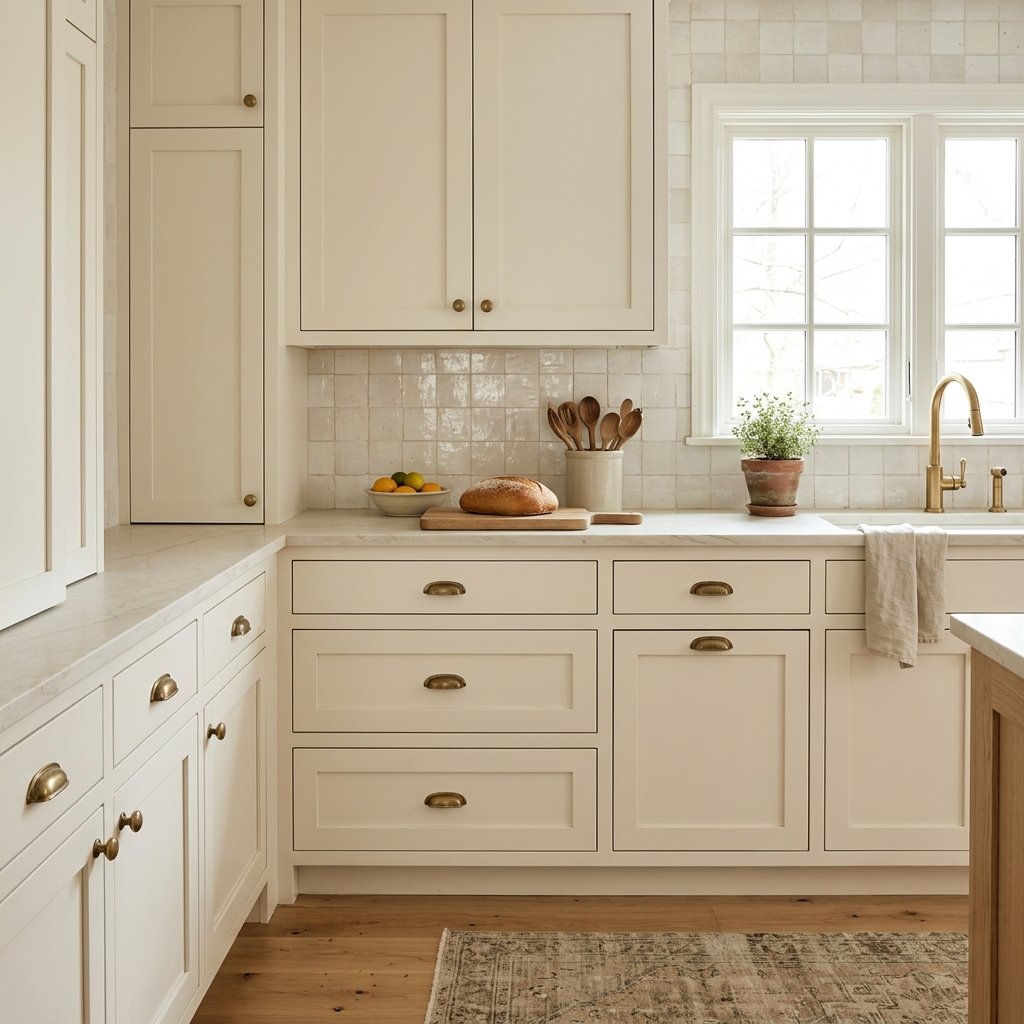
3. Handmade-Look White Tile
If you love white but don’t want the backsplash to feel flat, look for tile with visible surface variation.
Handmade-look tile can have:
- Slightly uneven edges
- Subtle tonal variation
- Irregular surfaces
- Glossy reflections
Those small variations become part of the design.
This is especially useful in a mostly white kitchen because texture keeps the room interesting without requiring a contrasting color.
4. White Zellige-Style Tile
Glossy zellige-style tile can create a similar effect with even more movement and reflection.
Its irregular appearance works beautifully in kitchens that combine clean white cabinetry with warmer, organic materials.
Try it with:
- White cabinets
- Natural stone
- Oak
- Walnut
- Aged metal finishes
If using true handmade tile, understand that variation and irregularity are generally part of its character rather than defects.
5. Cream Backsplash Tile
Cream is an excellent option if your kitchen feels too cold with pure white.
It creates a subtle distinction between the cabinets and backsplash.
Cream tile works particularly well when the kitchen already contains warmth through:
- Beige countertops
- Warm stone
- Wood floors
- Brass hardware
- Cream walls
Again, undertones matter.
Place cream samples directly against the white cabinetry before choosing.
6. Beige Backsplash
Beige can make white cabinets feel warmer and more grounded.
Instead of an old-fashioned yellow beige, consider softer options such as:
- Sand
- Oatmeal
- Putty
- Mushroom-beige
- Pale taupe-beige
A beige backsplash is especially attractive with natural wood.
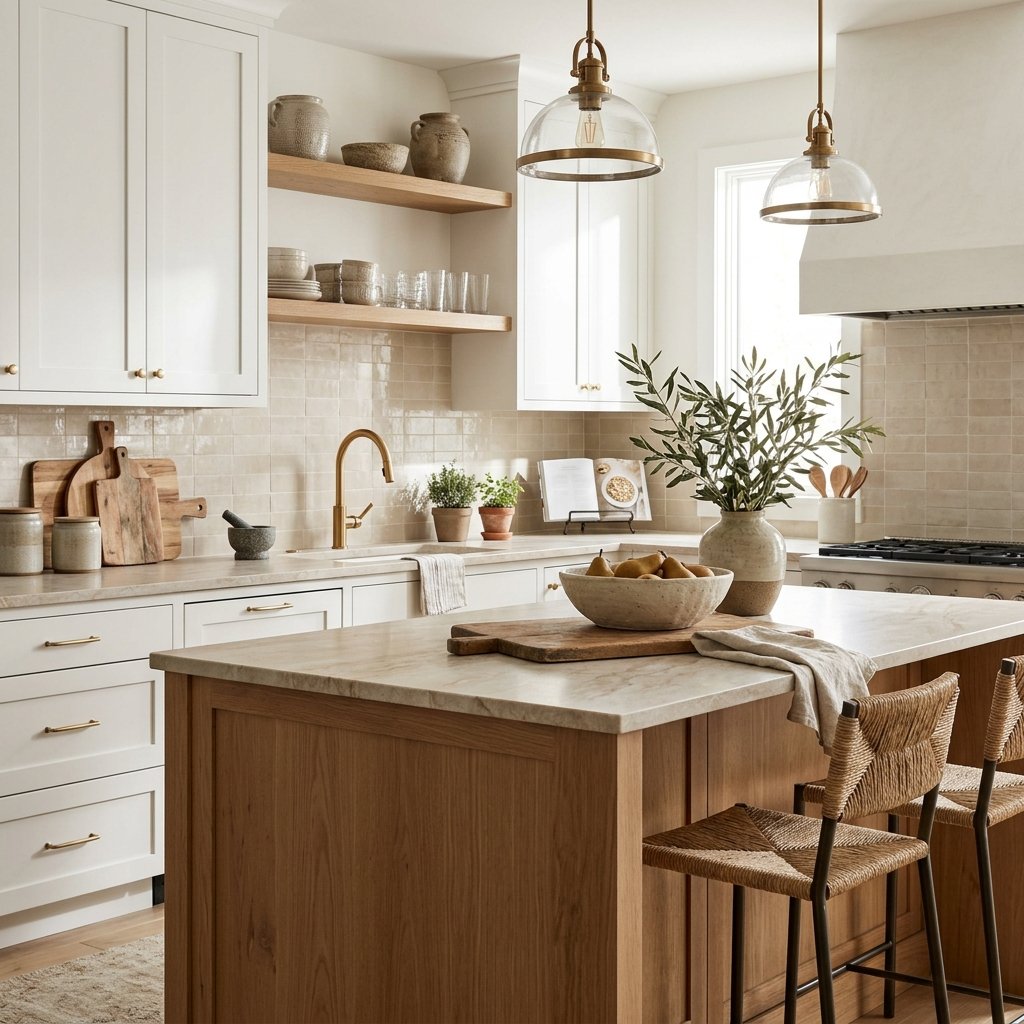
7. Greige Tile
Greige provides a bridge between warm and cool finishes.
It can be particularly useful if your kitchen contains both:
White cabinets + gray countertop + warm wood flooring
A pale greige backsplash can connect those surfaces without becoming the dominant feature.
Choose carefully, because some greiges lean strongly beige while others look much more gray.
8. Taupe Backsplash
Taupe creates more contrast with white cabinetry than a pale white or cream tile.
It works beautifully in warm modern kitchens.
Pair taupe with:
- White cabinets
- Cream counters
- Walnut
- Oak
- Black accents
- Warm metal finishes
Taupe can have violet, pink, gray, or brown influences, so compare it with the countertop carefully.
9. Marble Backsplash
Marble can create a classic, elegant backsplash.
You can use:
- Marble tile
- Marble mosaic
- Marble slab
The important thing is coordinating the stone with the countertop.
If both the counter and backsplash have strong veining, the combination can become visually busy.
A quieter countertop gives a dramatic marble backsplash more room to stand out.
Natural stone also has maintenance and sealing considerations, so understand the specific material before installation.
10. Slab Backsplash
Using a slab instead of tile creates a clean look with fewer grout lines.
One popular approach is continuing the countertop material up the wall.
This creates a cohesive surface and can be particularly striking behind the range.
A slab backsplash works beautifully with white cabinets because the cabinetry provides a simple frame for the stone.
11. Soft Gray Backsplash
Gray tile can create gentle contrast against white cabinets.
But don’t choose gray without looking at the undertones.
A blue-gray backsplash may clash with warm white cabinetry or creamy countertops.
A warmer gray may work more naturally with beige and wood.
If your counter contains gray veining, pull a gray from that material and compare tile samples against it.
12. Sage Green Tile
Sage is a beautiful way to introduce color without overwhelming a white kitchen.
Muted green feels especially natural with:
- White cabinets
- Oak floors
- Wood accessories
- Cream counters
- Brass or black accents
Glossy sage tile can reflect light, while matte tile creates a softer, earthier effect.
Use the finish to reinforce the style you want.
13. Olive Green Backsplash
For something deeper, consider olive.
Olive can give a white kitchen an earthy, sophisticated look.
Pair it with:
- Warm white cabinets
- Natural wood
- Cream stone
- Black
- Warm metals
Because olive contains more depth than pale sage, it creates stronger contrast and may become one of the kitchen’s focal points.
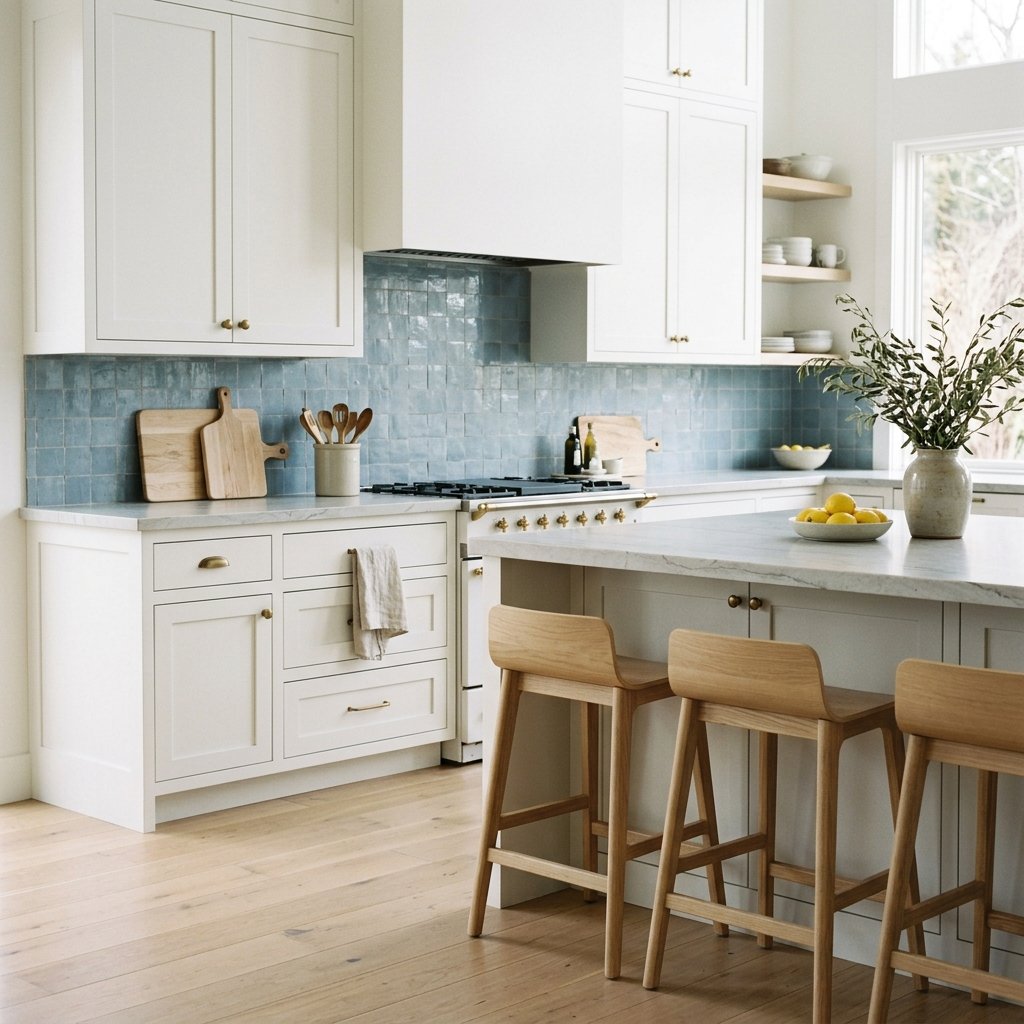
14. Soft Blue Tile
Muted blue can add a calm touch of color.
It’s especially attractive in coastal-inspired kitchens, but blue doesn’t need to make the room feel themed.
Keep the palette restrained.
Try:
White cabinets + muted blue tile + pale counter + natural oak
The wood adds warmth and keeps the blue from feeling too cool.
15. Blue-Gray Backsplash
If clear blue feels too colorful, blue-gray offers a quieter alternative.
This works particularly well when the countertop contains cool gray veining.
Be cautious when pairing blue-gray with very warm cream counters or strongly yellow flooring.
The contrast may be greater than expected.
16. Black Backsplash
Black creates dramatic contrast with white cabinets.
It can work especially well in a modern kitchen.
Options include:
- Black subway tile
- Black stone
- Black mosaic
- Charcoal tile
To keep the kitchen balanced, repeat black through a few other elements such as lighting, hardware, or counter stools.
You don’t need to make everything black.
17. Charcoal Tile
Charcoal is slightly softer than true black but still creates plenty of contrast.
It works beautifully with:
- White cabinets
- Wood floors
- White or pale counters
- Black accents
A charcoal backsplash can be especially effective in a kitchen with lots of natural light.
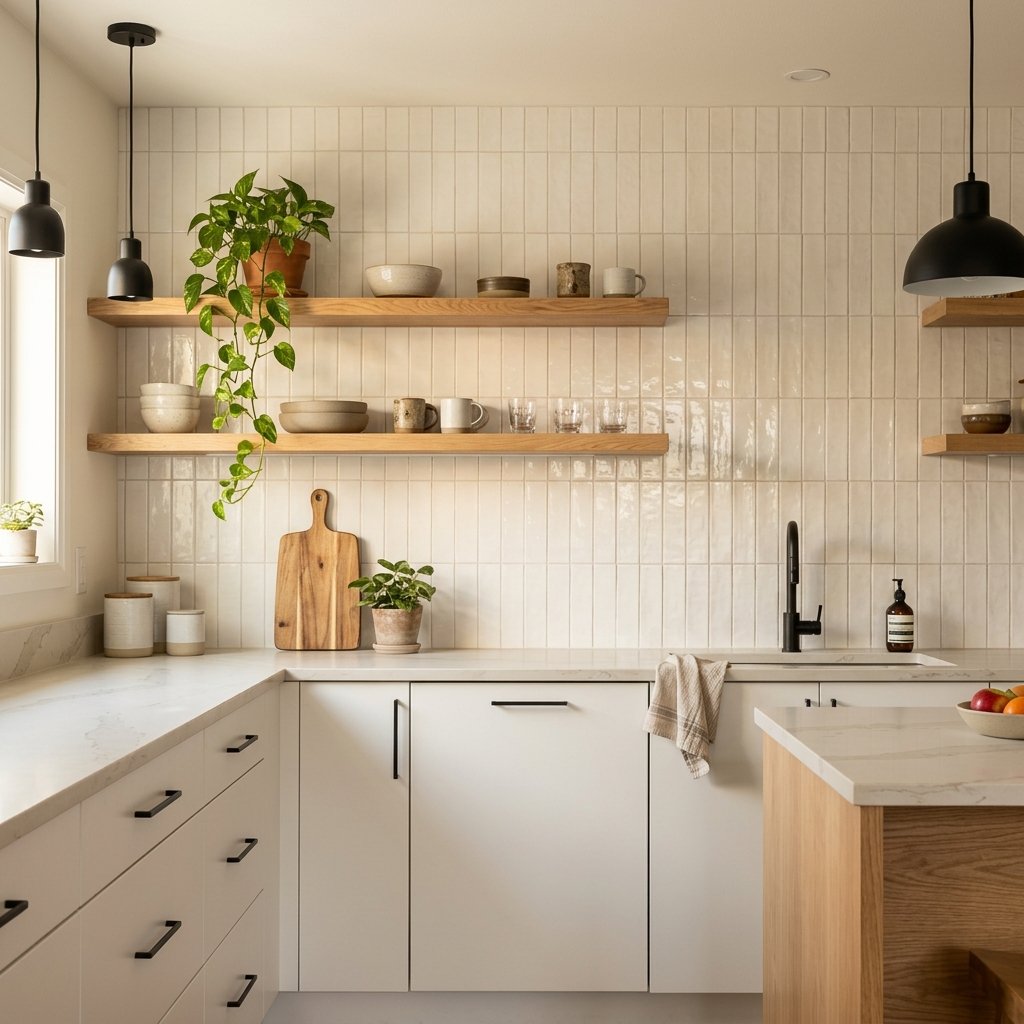
18. Vertical Subway Tile
Changing the tile layout is one of the easiest ways to make a familiar material feel different.
Instead of installing rectangular subway tile horizontally, turn it vertically.
This creates stronger vertical lines and can give a simple white, cream, sage, or blue tile a more contemporary appearance.
19. Herringbone Tile
Herringbone introduces movement without requiring bold color.
A white or cream herringbone backsplash can add interest while maintaining a neutral palette.
Because the layout itself creates pattern, keep other surfaces quieter if you want the kitchen to feel calm.
Also remember that patterned layouts typically involve more cuts and installation complexity than a simple stacked or running-bond layout.
20. Square Tile
Square tile can look fresh and simple with white cabinetry.
Consider:
- Small glossy squares
- Larger matte squares
- Handmade-look squares
A warm white or cream square tile can create a subtle grid that feels clean without being sterile.
For a stronger look, try muted green or blue.
21. Small Mosaic Tile
Mosaic tile can add texture and detail.
Options include:
- Small squares
- Hexagons
- Stone mosaics
- Geometric shapes
Because mosaics create many grout lines, they tend to look busier than larger-format tile.
They also require more grout maintenance.
Use them intentionally, especially when the countertop already has strong movement.
What Backsplash Looks Best With White Cabinets?
There’s no single backsplash that’s best for every white kitchen.
Instead, think about the effect you want.
For a Timeless Look
Try:
- White subway tile
- Warm white tile
- Cream tile
- Simple stone
For a Warm Modern Look
Try:
- Beige
- Taupe
- Handmade-look tile
- Sage
- Slab stone
For Color
Try:
- Sage
- Olive
- Muted blue
- Blue-gray
For Drama
Try:
- Black
- Charcoal
- Strongly veined stone
For Texture
Try:
- Handmade-look tile
- Zellige-style tile
- Herringbone
- Mosaic
Backsplash Ideas for White Cabinets and White Countertops
When both cabinets and countertops are white, you have two main options.
Keep It Tonal
Choose white or warm white backsplash tile.
Then create interest through:
- Texture
- Gloss
- Grout
- Tile shape
- Layout
Add Contrast
Introduce:
- Beige
- Taupe
- Sage
- Blue
- Charcoal
- Black
This helps visually separate the large white surfaces.
Backsplash Ideas for White Cabinets and Quartz Countertops
Start with the quartz pattern.
If the countertop has noticeable veining, a simple backsplash often works best.
Pull one of the quieter colors from the countertop and use it as inspiration.
For example:
White quartz with warm veining + warm white backsplash
or:
White quartz with gray veining + compatible pale gray tile
Avoid trying to match digital images.
Take actual samples to the countertop whenever possible.
Backsplash Ideas for White Cabinets and Granite
Granite can contain many colors and considerable visual movement.
If your granite is busy, keep the backsplash simple.
Look for one quiet color already present in the stone.
That might be:
- Cream
- Beige
- Taupe
- Gray
- White
Trying to introduce another strong pattern can make the kitchen feel visually crowded.
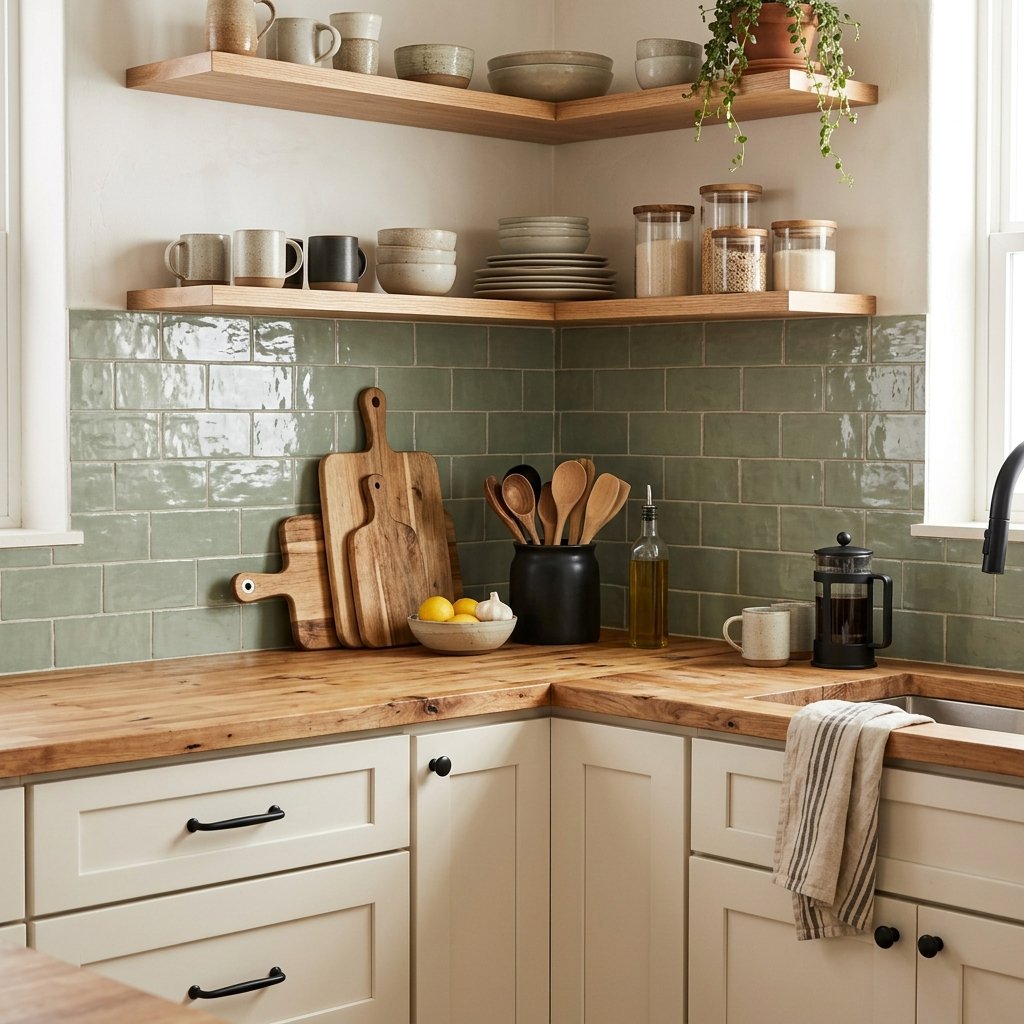
Backsplash Ideas for White Cabinets and Butcher Block
Wood countertops immediately warm up white cabinets.
Good backsplash directions include:
- Warm white
- Cream
- Sage
- Muted blue
- Soft beige
A simple tile lets the natural wood remain an important feature.
Should the Backsplash Match the Cabinets?
Not exactly.
Matching can work, but coordination is more important.
White cabinets and white backsplash tile don’t need to be identical.
However, their undertones should generally look intentional together.
If one white is extremely cool and the other is creamy yellow, the difference may appear accidental.
Place samples directly against the cabinets to see how they interact.
Should the Backsplash Match the Countertop?
Again, it doesn’t need to match.
It needs to coordinate.
The backsplash and countertop touch each other, so they’re usually more important to coordinate than the backsplash and flooring.
If your countertop is the star, let the backsplash support it.
If the countertop is quiet, the backsplash can take on more visual interest.
Should the Backsplash Be Lighter or Darker Than the Countertop?
Either can work.
A lighter backsplash can create an airy transition.
A darker backsplash can provide contrast.
A similar-value backsplash can create a quieter, more seamless look.
Instead of following a rule, compare the materials together.
What Grout Color Should You Use?
Grout can significantly change how tile looks.
Matching Grout
Creates a quieter, more continuous surface.
Contrasting Grout
Emphasizes every tile and makes the pattern more obvious.
If you’re using a patterned layout such as herringbone, contrasting grout can make the backsplash much busier.
Grout color can also change as it dries and may be affected by installation conditions, so follow the manufacturer’s guidance and review actual grout samples where possible.
Glossy vs. Matte Backsplash
Both can work beautifully.
Glossy Tile
Reflects more light and can emphasize surface variation.
It’s particularly attractive with handmade-look tile.
Matte Tile
Creates a softer, quieter appearance.
It can work well in organic, contemporary, and minimalist kitchens.
Consider maintenance and manufacturer cleaning recommendations for the specific product you’re considering.
How High Should a Kitchen Backsplash Go?
A backsplash commonly fills the area between the countertop and upper cabinets.
But you can also extend tile:
- To the ceiling
- Behind the range
- Around a range hood
- Behind open shelving
- Across an entire feature wall
Full-height tile can create a strong design feature, particularly in kitchens with fewer upper cabinets.
Where Should the Backsplash End?
Backsplash endings can be surprisingly tricky.
Whenever possible, use architectural elements to create logical stopping points.
Potential boundaries include:
- Cabinet edges
- Walls
- Window trim
- Range hood
- Open shelving
Avoid arbitrary tile endings when a cleaner architectural boundary is available.
How to Choose the Right Tile Size
Tile scale affects the overall appearance.
Smaller tiles create more grout lines and visual detail.
Larger tiles generally create a quieter surface.
Consider the scale of your kitchen.
A small backsplash area doesn’t automatically require tiny tile.
Sometimes larger tile actually makes the area feel calmer.
How to Test Backsplash Samples
Before ordering your backsplash:
- Gather several physical tile samples.
- Place them vertically against the wall.
- Set them directly on the countertop.
- Compare them with the cabinet doors.
- Check them against the flooring.
- Look at them in daylight.
- Check them under kitchen lighting.
- Step back and view the entire kitchen.
- Remove the weakest options.
- Leave your favorites in place for several days.
If possible, look at several pieces from the same tile line.
Tile—especially handmade and natural materials—can vary from piece to piece.
Common Backsplash Mistakes With White Cabinets
Assuming All Whites Match
White has undertones.
Choosing the Backsplash Before the Countertop
The countertop should usually lead.
Using Too Many Patterns
A busy countertop and busy backsplash can compete.
Ignoring Grout
Grout is part of the finished design.
Choosing From Online Photos Alone
Screens don’t accurately reproduce every material or color.
Forgetting Lighting
Tile can look very different under kitchen lights.
Using Tiny Samples
See several pieces whenever variation is expected.
Ignoring Maintenance
Some natural stone and grout require more care than simple glazed tile.
Ending Tile in an Awkward Place
Plan the boundaries before installation.
Following Trends Without Considering the Kitchen
Choose something that works with your actual cabinets, countertops, and home.
Backsplash Installation and Safety Tips
Backsplash installation can be a manageable DIY project for experienced homeowners, but proper preparation matters.
Before starting:
- Follow the tile and setting-material manufacturer’s instructions.
- Make sure the wall surface is appropriate for the installation.
- Use adhesives or mortars suitable for the specific tile and substrate.
- Follow required curing times.
- Use eye protection when cutting tile.
- Use appropriate respiratory protection and dust-control practices when cutting materials that can create hazardous dust.
- Keep water away from live electrical components.
- Turn off power at the appropriate circuit before working around electrical boxes when required.
- Don’t modify electrical wiring unless you’re qualified and permitted to do so.
- Use appropriate spacers and layout methods before permanently setting tile.
Natural stone, glass, porcelain, ceramic, and other materials may require different cutting tools and installation products.
When you’re uncertain about electrical work, substrate conditions, specialty stone, or complicated layouts, hiring an experienced professional can be worthwhile.
FAQ About Backsplash Ideas for Kitchens With White Cabinets
What backsplash looks best with white cabinets?
White, cream, beige, greige, marble, sage, blue, charcoal, and black can all work beautifully. The best choice depends primarily on the countertop, cabinet undertone, flooring, and overall kitchen style.
What is the most timeless backsplash with white cabinets?
Simple white or warm white tile and restrained natural stone are among the easiest options to adapt to changing decor. However, timelessness depends on how well the material suits the house.
Should white cabinets have a white backsplash?
They can, but they don’t have to. White-on-white creates a light tonal look, while colored or darker backsplash materials provide contrast.
What backsplash goes with white cabinets and white countertops?
Try warm white textured tile for a tonal look or beige, sage, muted blue, taupe, charcoal, or another compatible color for contrast.
Does a beige backsplash work with white cabinets?
Yes. Beige can warm up white cabinetry beautifully, particularly when the kitchen contains natural wood or warm countertops.
Does sage green backsplash work with white cabinets?
Yes. Muted sage can introduce gentle color while still keeping a white kitchen calm and versatile.
What backsplash works with white cabinets and dark countertops?
A light backsplash can provide contrast and keep the kitchen bright. Alternatively, a darker backsplash can create a dramatic, continuous look if the room has appropriate lighting.
Should backsplash grout match the tile?
It doesn’t have to. Matching grout creates a quieter surface, while contrasting grout emphasizes tile shape and pattern.
Is subway tile still a good backsplash?
Yes. Rectangular tile is highly adaptable because you can change its size, finish, color, layout, and grout treatment.
Should backsplash tile go all the way to the ceiling?
It can, particularly behind a range hood, around windows, or on walls without upper cabinets. It’s a design choice rather than a requirement.
Final Thoughts
The best backsplash ideas for kitchens with white cabinets start with the finishes already in the room.
White cabinets are flexible, but that doesn’t mean every backsplash automatically works.
Start with your countertop.
Study its undertones, pattern, and movement.
Then compare backsplash samples directly against both the countertop and cabinets.
For a timeless kitchen, white, warm white, cream, and simple stone are strong directions.
For more warmth, explore beige, greige, and taupe.
For color, sage, olive, and muted blue can add personality without overpowering white cabinetry.
And if you want contrast, charcoal, black, or dramatic stone can completely transform the room.
Most importantly, don’t choose the backsplash in isolation.
When the cabinets, countertop, backsplash, flooring, hardware, and lighting all relate to one another, even a very simple tile can make the entire kitchen feel beautifully finished.