


Choosing a paint color gets most of the attention, but choosing the paint finish can make almost as much difference in how your walls look and perform.
One of the most popular options for interior walls is eggshell paint.
Eggshell sits toward the lower-sheen end of the paint-finish spectrum. It has a subtle luster rather than the noticeably shiny appearance you might associate with semi-gloss or gloss paint.
That makes it a useful middle ground when you want walls that look relatively soft but need a little more practicality than an extremely flat finish.
Eggshell is commonly considered for living rooms, bedrooms, hallways, dining rooms, and other everyday spaces. But it isn’t automatically the right finish for every surface.
Before choosing it, here’s what eggshell paint looks like, how it compares with flat, matte, satin, and semi-gloss finishes, where it works well, and what to consider before painting your home.
What Is Eggshell Paint?
Eggshell is a paint finish with a low, subtle sheen.
The name comes from the idea that the finished surface has a gentle luster somewhat reminiscent of an eggshell rather than appearing completely flat or highly glossy.
It generally reflects more light than flat or very matte paint while reflecting less than satin, semi-gloss, or gloss.
A simplified sheen progression looks something like:
Flat → Matte → Eggshell → Satin → Semi-gloss → Gloss
However, there’s an important detail.
Paint manufacturers don’t necessarily define these finish names identically.
One company’s eggshell may look somewhat different from another company’s eggshell, and some product lines use different names entirely.
Always check the specific manufacturer’s description and product information rather than assuming every eggshell paint has exactly the same sheen or performance.
What Does Eggshell Paint Look Like?
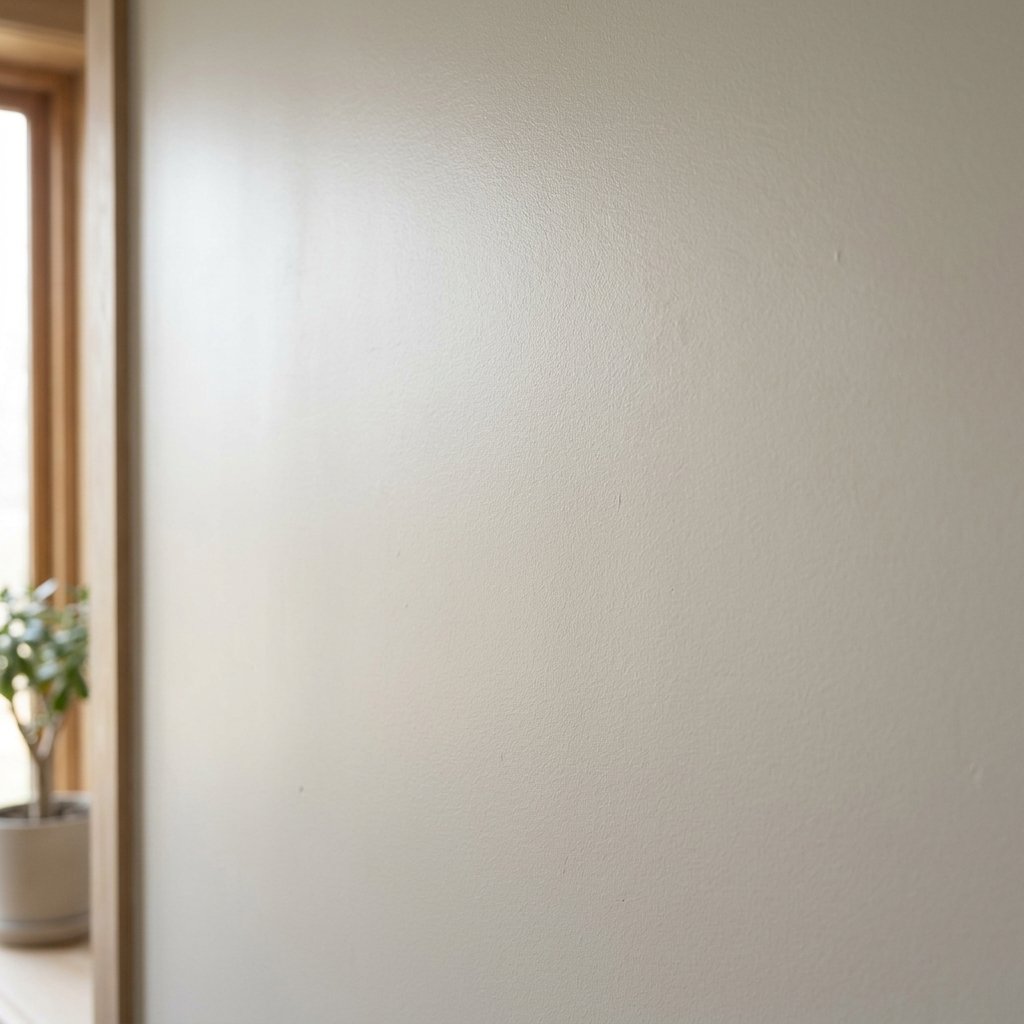
Eggshell usually looks fairly soft when viewed straight on.
As light moves across the wall, however, you may notice a gentle reflection.
It’s considerably less shiny than a typical semi-gloss finish.
That subtle sheen can give walls a slightly more finished appearance without turning them into highly reflective surfaces.
The amount of sheen you notice depends on:
- Natural light
- Artificial lighting
- Wall texture
- Paint color
- Viewing angle
- Specific paint product
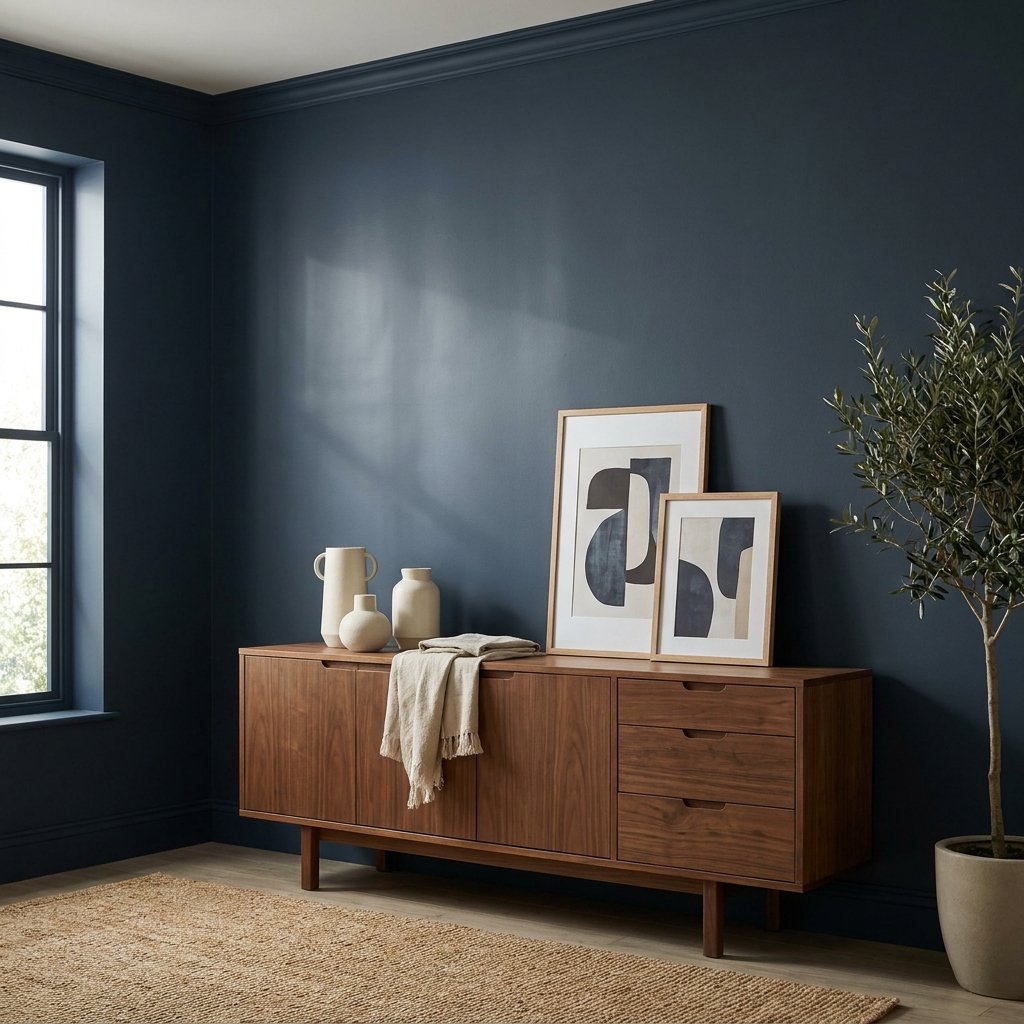
A dark wall receiving strong side lighting, for example, may reveal sheen more clearly than a pale wall in soft, indirect light.
Is Eggshell Paint Shiny?
Eggshell has some sheen, but most people wouldn’t describe it as highly shiny.
Think soft luster rather than gloss.
If you want walls that appear completely non-reflective, flat or matte may be a better direction.
If you want noticeably more sheen, satin may be worth considering.
Eggshell occupies the space between those looks.
What Is Eggshell Paint Used For?
Eggshell is commonly used on interior walls.
Depending on the specific product and manufacturer recommendations, it may be suitable for spaces such as:
- Living rooms
- Bedrooms
- Dining rooms
- Hallways
- Entryways
- Home offices
- Family rooms
Its combination of relatively low sheen and practical performance makes it a versatile wall finish.
But room names alone shouldn’t determine your choice.
The specific paint product matters.
An eggshell product designed for ordinary interior walls isn’t necessarily appropriate for cabinetry, floors, exterior surfaces, or other specialized applications.
Always check the label and technical guidance for the paint you’re using.
Eggshell Paint for Living Rooms
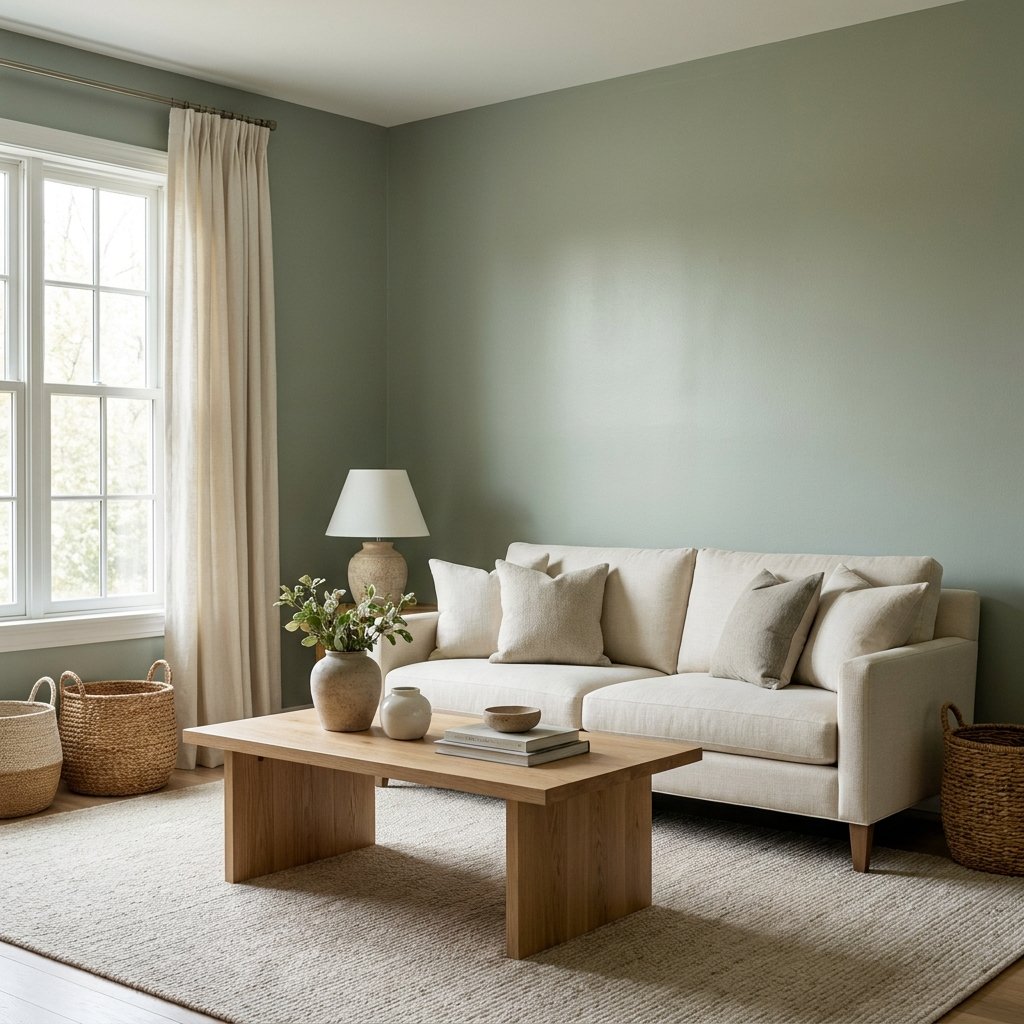
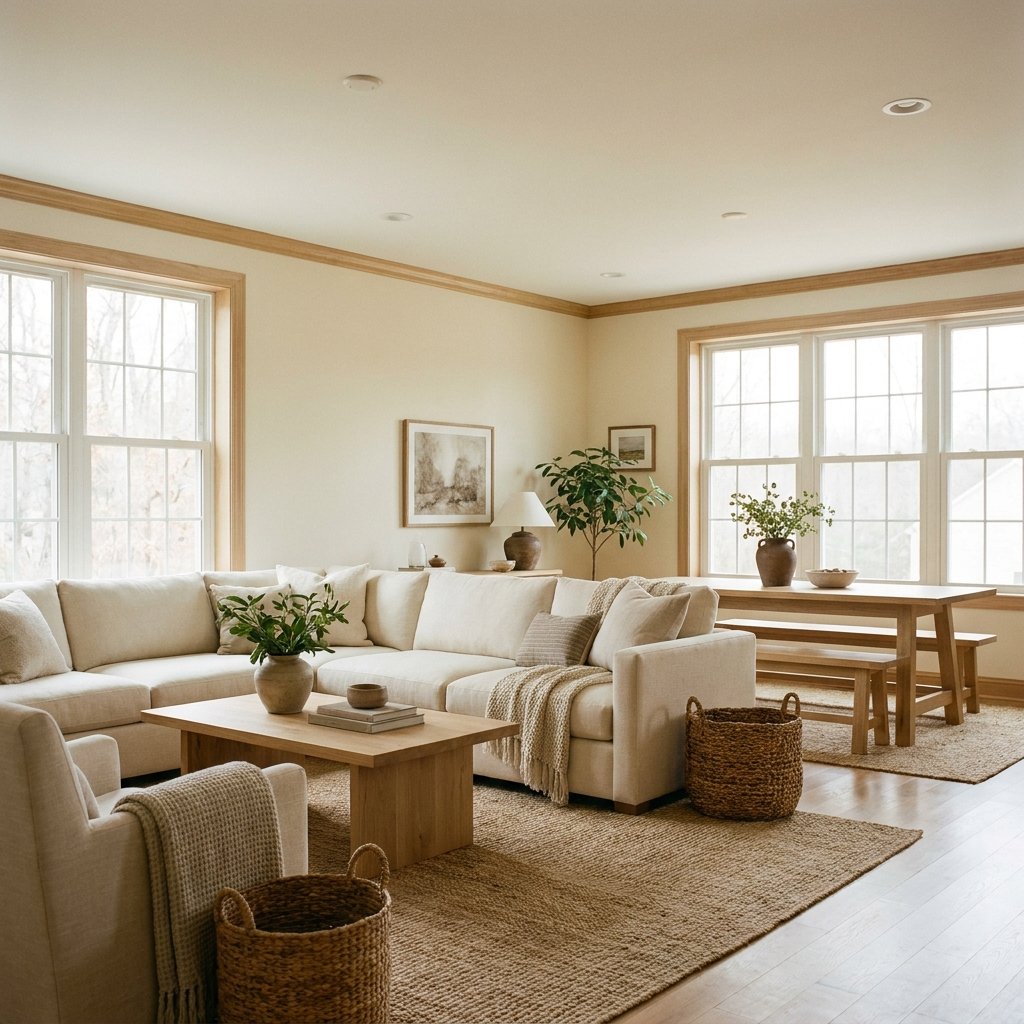
The living room is one of the most natural places to consider eggshell paint.
Walls receive everyday contact, but you may still want them to have a soft appearance.
Eggshell can work well with:
- Warm whites
- Greige
- Beige
- Gray
- Green
- Blue
- Deeper accent colors
Because the finish isn’t extremely reflective, it generally keeps the focus on the paint color rather than the sheen.
Eggshell Paint for Bedrooms
Eggshell can also be a good option for bedroom walls.
Bedrooms usually benefit from a calm finish that doesn’t create excessive glare.
A low sheen works beautifully with:
- Warm neutrals
- Soft blue
- Sage
- Taupe
- Muted rose
- Deep moody colors
If you prefer walls that look especially soft and velvety, you may want to compare eggshell with matte before deciding.
Eggshell Paint for Hallways
Hallways can receive more contact than bedrooms or formal living spaces.
Hands, bags, furniture, children, and pets can all come into contact with the walls.
For that reason, the balance between appearance and cleanability becomes particularly important.
Eggshell may work well, but don’t assume the finish name alone guarantees durability.
Look at the specific product’s cleaning and performance claims.
A higher-performing matte or a suitable satin product may sometimes make more sense depending on the household.
Eggshell Paint for Dining Rooms
Eggshell can give dining-room walls a soft, finished appearance.
It works particularly well when you want the room to feel polished without the stronger reflections of higher-sheen paint.
If the dining room has architectural trim or paneling, you can also create subtle contrast by using a different sheen on those details.
For example:
Eggshell walls + more durable compatible trim finish
The exact combination depends on the paint products you’re using.
Can You Use Eggshell Paint in a Kitchen?
Possibly, but product selection becomes more important.
Kitchen walls can be exposed to:
- Grease
- Food splashes
- Moisture
- Frequent cleaning
Some modern eggshell paints are designed with good washability, while other products may not be the most practical choice for heavily used kitchen areas.
Check the manufacturer’s recommendations.
Areas immediately behind sinks or cooking surfaces may also need more durable, water-resistant, or easily cleaned materials depending on the location.
A backsplash often provides better protection in those high-splash areas.
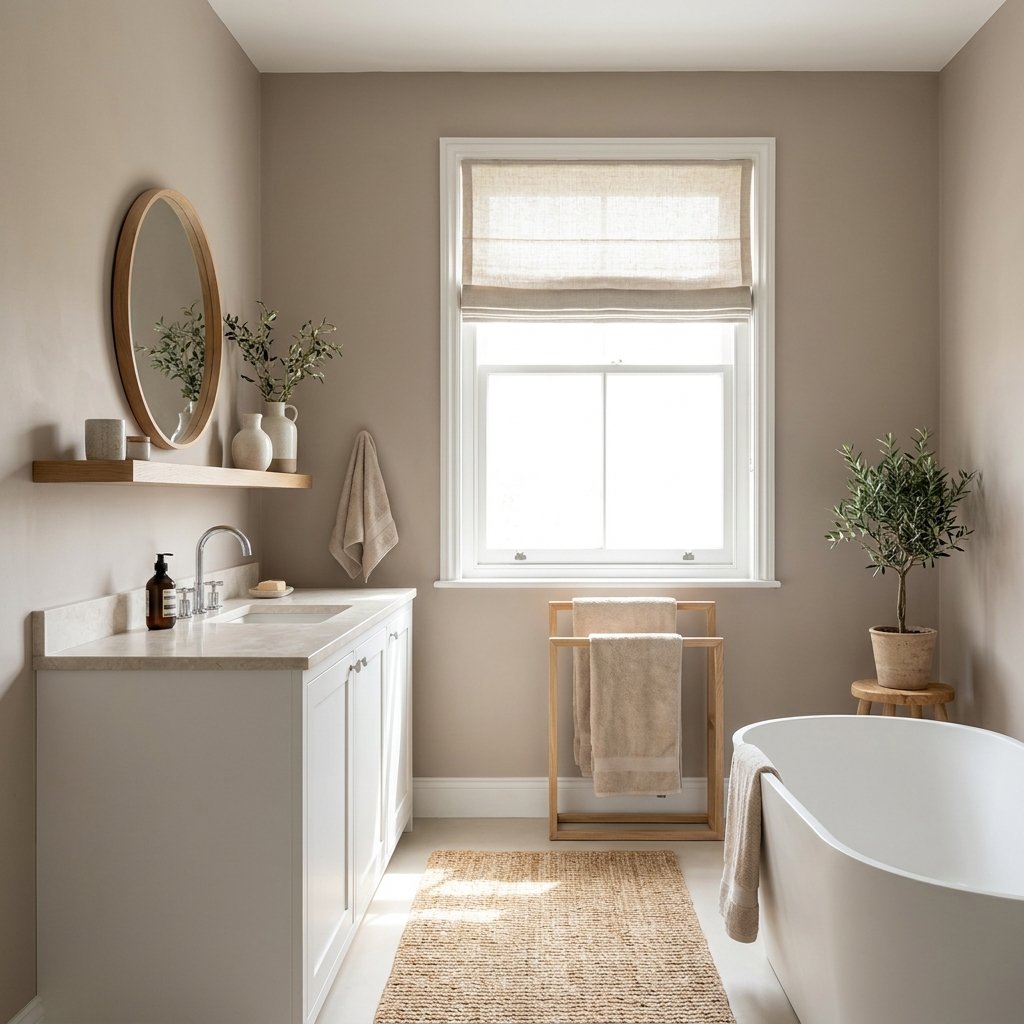
Can You Use Eggshell Paint in a Bathroom?
This depends heavily on the paint product and bathroom conditions.
Bathrooms can expose surfaces to elevated moisture and condensation.
Don’t assume that choosing a particular sheen automatically makes ordinary paint suitable for a humid bathroom.
Instead, look for a product specifically recommended by its manufacturer for the intended bathroom environment.
Good ventilation also matters.
Use exhaust ventilation as appropriate, address persistent moisture problems, and follow the paint manufacturer’s surface-preparation and curing instructions.
Can You Use Eggshell Paint on Ceilings?
You can use some paints with an eggshell sheen on ceilings, but it isn’t always the preferred choice.
Flat ceiling paint is popular because low reflectivity can help make surface imperfections less noticeable.
Eggshell reflects more light, which can emphasize:
- Patches
- Uneven drywall
- Texture
- Roller marks
However, using the same color across walls and ceiling with different or similar finishes can be an intentional design choice.
If you want eggshell on a ceiling, make sure the product is appropriate for the application and understand that the additional sheen may reveal more surface variation.
Can You Use Eggshell Paint on Trim?
Eggshell can technically be available for many surfaces depending on the product, but trim usually has different performance needs than walls.
Baseboards, door casings, and window trim experience:
- Hands
- Shoes
- Vacuum cleaners
- Furniture contact
- Repeated cleaning
For that reason, trim is often painted with a more durable product and sometimes a higher sheen.
Don’t choose solely by the word “eggshell.”
Use a coating specifically suitable for the trim material and level of wear.
Is Eggshell Paint Good for Doors?
Doors are another high-contact surface.
A wall paint in an eggshell finish may not provide the performance you want on a frequently handled door.
Look for a product designed or approved for doors and trim.
A harder-wearing finish may be more appropriate, depending on the manufacturer and product line.
Is Eggshell Paint Good for Cabinets?
Standard eggshell wall paint is generally not something to assume is appropriate for cabinetry.
Kitchen and bathroom cabinets require coatings that can handle repeated touching, cleaning, and wear.
Cabinet painting also requires careful preparation.
Depending on the existing finish, this can include:
- Cleaning
- Degreasing
- Scuff sanding or other preparation where appropriate
- Priming
- Proper application
- Adequate curing
Use a coating specifically recommended for cabinetry and follow its instructions.
Eggshell vs. Flat Paint
Flat paint has very little reflectivity.
Eggshell has more sheen.
Flat Paint Advantages
Flat finishes can:
- Create a soft appearance
- Minimize reflections
- Help disguise some surface imperfections
Eggshell Advantages
Depending on the specific product, eggshell may offer:
- More washability
- Greater durability
- Easier maintenance
- Slightly richer surface appearance
For low-contact walls where hiding imperfections is the priority, flat may be attractive.
For everyday walls where some cleaning is expected, eggshell may offer a useful compromise.
Eggshell vs. Matte Paint
This comparison can be confusing because manufacturer terminology varies.
Matte generally has less sheen than eggshell, but modern premium matte paints can sometimes offer impressive washability and durability.
That means the old assumption that “more sheen always means more durable” isn’t universally reliable across current paint products.
Compare the actual specifications.
If you love a very soft wall appearance, a high-performing matte may be worth considering.
If you want a little more luster, eggshell may be preferable.
Eggshell vs. Satin Paint
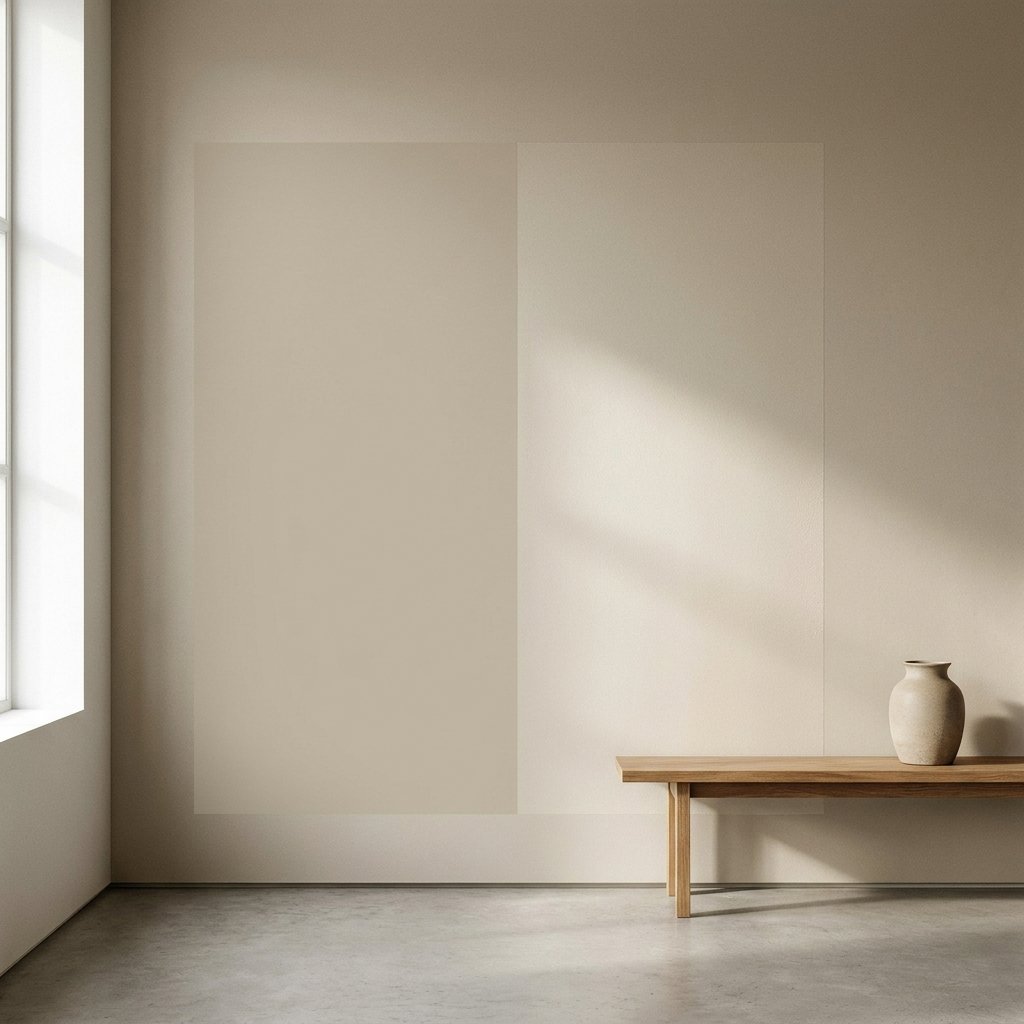
Satin generally has more sheen than eggshell.
That additional reflectivity can make satin appear slightly smoother or more polished.
Depending on the product, satin may also be considered for areas requiring more frequent cleaning.
Choose Eggshell When:
- You prefer lower sheen.
- You want a soft wall appearance.
- The room receives normal everyday use.
- The specific product provides the performance you need.
Consider Satin When:
- You want more sheen.
- The surface receives frequent contact.
- You expect regular cleaning.
- The manufacturer recommends it for the application.
Again, actual performance varies by product.
Eggshell vs. Semi-Gloss Paint
The visual difference between eggshell and semi-gloss is much more obvious.
Semi-gloss reflects considerably more light.
It’s often associated with:
- Trim
- Doors
- Some cabinetry
- Other high-contact surfaces
Eggshell is more commonly considered for walls.
Semi-gloss can also make surface imperfections more visible, so good preparation becomes especially important.
Eggshell vs. Gloss Paint
Gloss is much more reflective than eggshell.
It creates a strong, polished appearance and can highlight architectural details when used intentionally.
But glossy surfaces also tend to reveal imperfections.
Eggshell provides a much softer wall appearance and is generally easier to use across large wall areas when you don’t want dramatic shine.
Does Eggshell Paint Hide Imperfections?
Eggshell can be more forgiving than higher-sheen finishes, but it won’t hide poor wall preparation.
Because it reflects some light, imperfections may still show.
Potential problem areas include:
- Poor drywall patches
- Dents
- Nail holes
- Uneven texture
- Sanding marks
- Previous drips
If the walls are significantly imperfect and appearance is your priority, a flatter finish may disguise them somewhat better.
But repairing the surface properly usually creates the best result.
Is Eggshell Paint Washable?
Many eggshell paints are marketed as washable or cleanable, but the exact level of performance depends on the product.
This is an important distinction.
Eggshell describes sheen—not a universal durability rating.
Two eggshell paints can have very different:
- Scrub resistance
- Stain resistance
- Washability
- Moisture performance
Check the manufacturer’s specifications.
Also allow newly painted walls to cure as directed before aggressive cleaning.
How Do You Clean Eggshell Walls?
Start with the paint manufacturer’s cleaning instructions.
In general, avoid immediately attacking marks with abrasive pads or harsh cleaners.
A gentle approach may involve:
- Removing loose dust.
- Using a soft cloth or sponge.
- Using an appropriate mild cleaning solution if recommended.
- Testing an inconspicuous area first.
- Avoiding excessive scrubbing.
Dark colors can sometimes show burnishing or changes in sheen more readily after rubbing.
The exact cleaning method should match the paint product.
Does Eggshell Paint Reflect Light?
Yes.
It reflects some light, which creates its characteristic subtle sheen.
However, paint sheen and Light Reflectance Value (LRV) are not the same thing.
LRV relates to how much visible light a particular color reflects.
Sheen describes the surface’s reflective character.
A dark paint color can have an eggshell sheen and still have a relatively low LRV.
Likewise, a pale matte color can have a high LRV despite its low sheen.
Does Eggshell Paint Make a Room Look Brighter?
Not automatically.
Because eggshell reflects more light directionally than flat paint, you may notice more highlights on the surface.
But the overall brightness of the room depends much more on factors such as:
- Paint color
- LRV
- Window size
- Window direction
- Artificial lighting
- Flooring
- Furniture
Choose eggshell because you like its appearance and performance, not because you expect the sheen alone to brighten a dark room.
Does Eggshell Paint Look Different From Flat Paint?
Yes, particularly when light hits the wall at an angle.
The same or similar color can look slightly different in different sheens because light interacts differently with the surface.
That’s one reason you should evaluate both color and finish before purchasing a large amount of paint.
A sample in a flat finish may not perfectly represent how the final eggshell surface will look.
Is Eggshell Paint Good for Dark Colors?
It can be.
Deep green, navy, charcoal, burgundy, and other dark colors can look beautiful in eggshell.
However, darker colors can sometimes make surface inconsistencies, application marks, or sheen variations easier to notice.
Careful preparation and consistent application become important.
Follow manufacturer instructions for:
- Primer
- Number of coats
- Roller type
- Drying time
- Recoat time
- Application conditions
Is Eggshell Paint Good for White Walls?
Yes, eggshell can work beautifully with white and off-white walls.
The subtle sheen adds a little dimension without creating the stronger reflections of satin or semi-gloss.
In rooms with lots of windows, check how the finish looks in direct and indirect light.
Very bright walls can reveal sheen more clearly under strong side lighting.
What Is the Best Roller for Eggshell Paint?
There isn’t one universal roller that is correct for every eggshell paint and wall.
Roller choice depends on:
- Paint formulation
- Wall texture
- Surface material
- Manufacturer recommendations
Smoother walls generally use a different roller nap than heavily textured walls.
Check the paint and applicator manufacturer’s recommendations rather than assuming one roller works for every project.
How to Apply Eggshell Paint
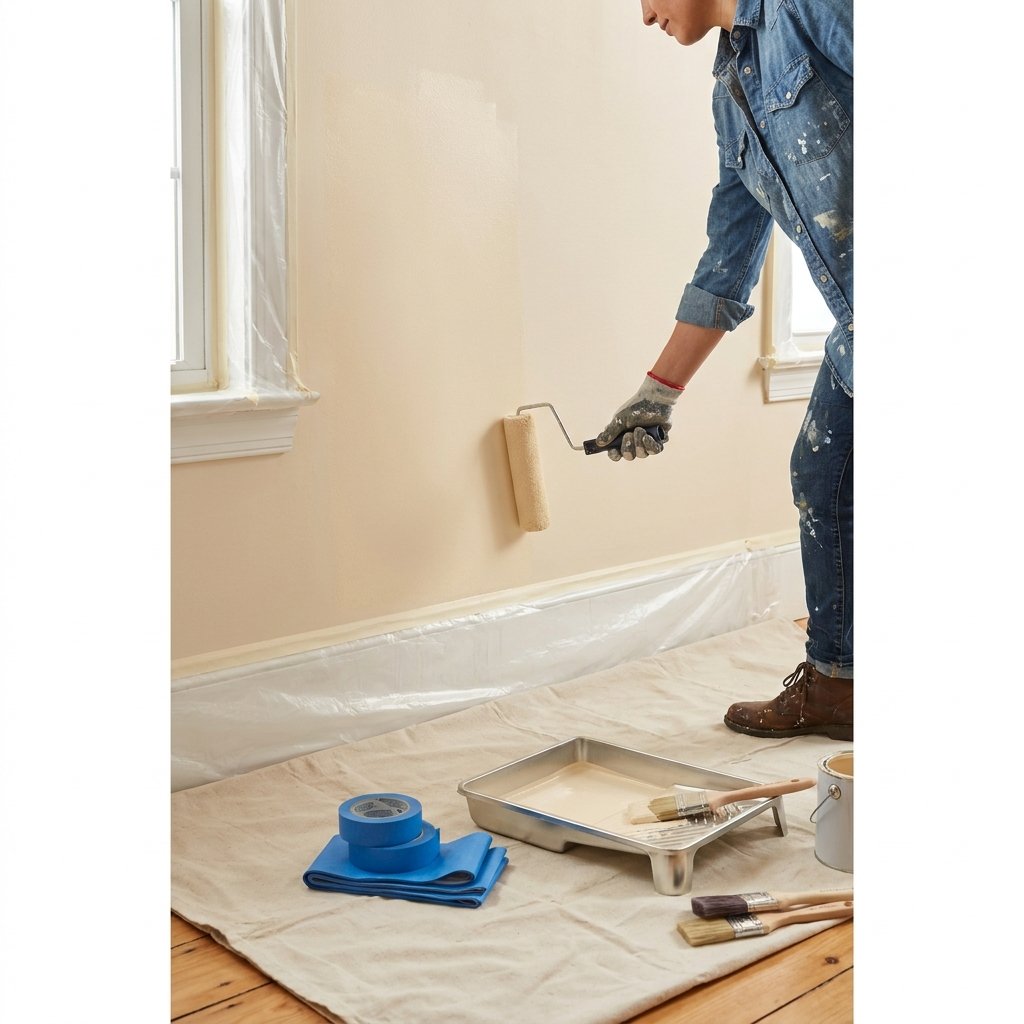
Proper preparation makes a major difference.
1. Clean the Walls
Remove appropriate dirt, dust, grease, and residue.
Kitchen walls may require more thorough cleaning than bedroom walls.
2. Repair Damage
Fill holes and repair cracks or damaged drywall appropriately.
3. Sand Where Necessary
Smooth repaired areas and address problematic surfaces as appropriate.
Use proper dust-control practices and protective equipment.
In older homes, don’t sand or disturb questionable existing coatings until you’ve determined whether hazardous materials such as lead may be present and what safe procedures apply.
4. Prime When Required
Primer may be needed for:
- Bare drywall
- Repairs
- Stains
- Major color changes
- Difficult surfaces
Follow product recommendations.
5. Apply the Paint Consistently
Use the recommended applicator and technique.
Maintain a consistent wet edge where appropriate to reduce visible differences.
6. Apply Additional Coats as Directed
Don’t rush recoating.
Follow the manufacturer’s recommended drying and recoat times.
7. Allow the Paint to Cure
Dry and fully cured aren’t necessarily the same thing.
Avoid aggressive cleaning until the coating has cured according to manufacturer guidance.
How to Touch Up Eggshell Paint
Touch-ups can be challenging with any paint that has noticeable sheen.
A small repaired area may reflect light differently from the surrounding wall.
For the best chance of success:
- Use the original paint if it’s still suitable.
- Use the same application method when possible.
- Stir the paint thoroughly.
- Follow manufacturer guidance.
- Keep the repaired area controlled.
Depending on the color, age of the existing paint, lighting, and wall condition, repainting from corner to corner may sometimes produce a more uniform result than a small spot repair.
Common Eggshell Paint Mistakes
Assuming All Eggshell Paint Is the Same
Sheen and performance vary by manufacturer and product.
Using Wall Paint on Cabinets
Cabinetry has different performance requirements.
Skipping Surface Preparation
Paint can’t disguise every defect.
Choosing Finish Without Considering Lighting
Side lighting can emphasize sheen.
Assuming Eggshell Is Waterproof
A sheen name doesn’t make paint waterproof.
Scrubbing Fresh Paint Too Soon
Allow appropriate curing time.
Using the Wrong Applicator
Follow product recommendations.
Judging the Finish Before It Dries
Wait until the paint has dried as directed.
Ignoring Existing Wall Texture
Sheen can make texture more noticeable.
When Should You Choose Eggshell Paint?
Eggshell may be a good choice when you want:
- A subtle sheen
- A softer appearance than satin
- More practicality than some very flat finishes
- A versatile finish for everyday interior walls
It’s particularly worth considering for living rooms, bedrooms, dining rooms, hallways, and similar spaces when the specific product is suitable.
When Might Another Finish Be Better?
Consider another finish if:
- You want an extremely flat appearance.
- Your walls have many imperfections.
- The surface requires specialized durability.
- You’re painting cabinetry.
- You’re painting high-contact trim or doors.
- The environment has demanding moisture requirements.
- The manufacturer recommends another finish for the application.
The right finish isn’t simply the one with the most durability or the least shine.
It’s the finish that balances appearance, cleaning needs, surface condition, and product performance for that particular room.
FAQ About Eggshell Paint
What is eggshell paint?
Eggshell is a low-sheen paint finish that generally has more luster than flat or matte paint and less than satin or semi-gloss. Exact sheen varies by manufacturer and product.
Is eggshell paint shiny?
Eggshell has a subtle sheen but isn’t generally considered highly shiny. Its luster becomes more noticeable when light strikes the wall at an angle.
What rooms should you use eggshell paint in?
Depending on the specific product, eggshell is commonly considered for living rooms, bedrooms, dining rooms, hallways, entryways, family rooms, and home offices.
Is eggshell paint washable?
Many eggshell paints offer good washability, but performance varies significantly. Check the specific manufacturer’s product information rather than relying on the sheen name alone.
Is eggshell or satin better for walls?
Either can work. Eggshell provides a lower-sheen appearance, while satin generally reflects more light. Cleaning and durability differences depend on the actual products being compared.
Is eggshell better than matte?
Not necessarily. Eggshell has more sheen, but modern matte paints can offer strong performance. Choose based on appearance, room use, and the manufacturer’s specifications.
Can you use eggshell paint in a bathroom?
Some products may be suitable, but don’t assume every eggshell paint is appropriate for a humid bathroom. Choose a product specifically recommended for the intended environment and provide adequate ventilation.
Can you use eggshell paint in a kitchen?
Potentially. Look for a product with appropriate washability and stain resistance for the area you’re painting, and follow manufacturer recommendations.
Can eggshell paint be used on trim?
Some products may allow it, but trim typically requires greater resistance to contact and cleaning than walls. A dedicated trim coating or another appropriate finish may be preferable.
Does eggshell paint hide wall imperfections?
Its relatively low sheen can be more forgiving than satin or semi-gloss, but it generally reveals more surface variation than a very flat finish. Proper preparation produces the best result.
Is eggshell paint good for bedrooms?
Yes, it can be an excellent bedroom wall finish when you want subtle sheen and practical cleanability without a highly reflective appearance.
What’s the difference between eggshell and semi-gloss?
Semi-gloss has considerably more sheen and is often used for high-contact architectural surfaces such as trim and doors. Eggshell has a softer appearance and is commonly used on walls.
Final Thoughts
Eggshell paint is popular because it occupies a useful middle ground.
It’s not completely flat, but it isn’t particularly shiny either.
That subtle sheen can make it an attractive choice for living rooms, bedrooms, dining rooms, hallways, and many other interior walls.
But the word eggshell doesn’t tell you everything you need to know.
Different manufacturers can define sheen levels differently, and paints with the same finish name can have very different levels of washability, stain resistance, and durability.
That’s why it’s important to choose the paint product first and the sheen within that product second.
Think about how the room is used.
Consider how often the walls need cleaning.
Look at the condition and texture of the surface.
Pay attention to how natural and artificial light moves across the walls.
And always check the manufacturer’s recommendations for the exact surface you’re painting.
When the product and application are right, eggshell can give your walls exactly what many homeowners want: a soft, understated finish with just enough sheen for practical everyday spaces.