

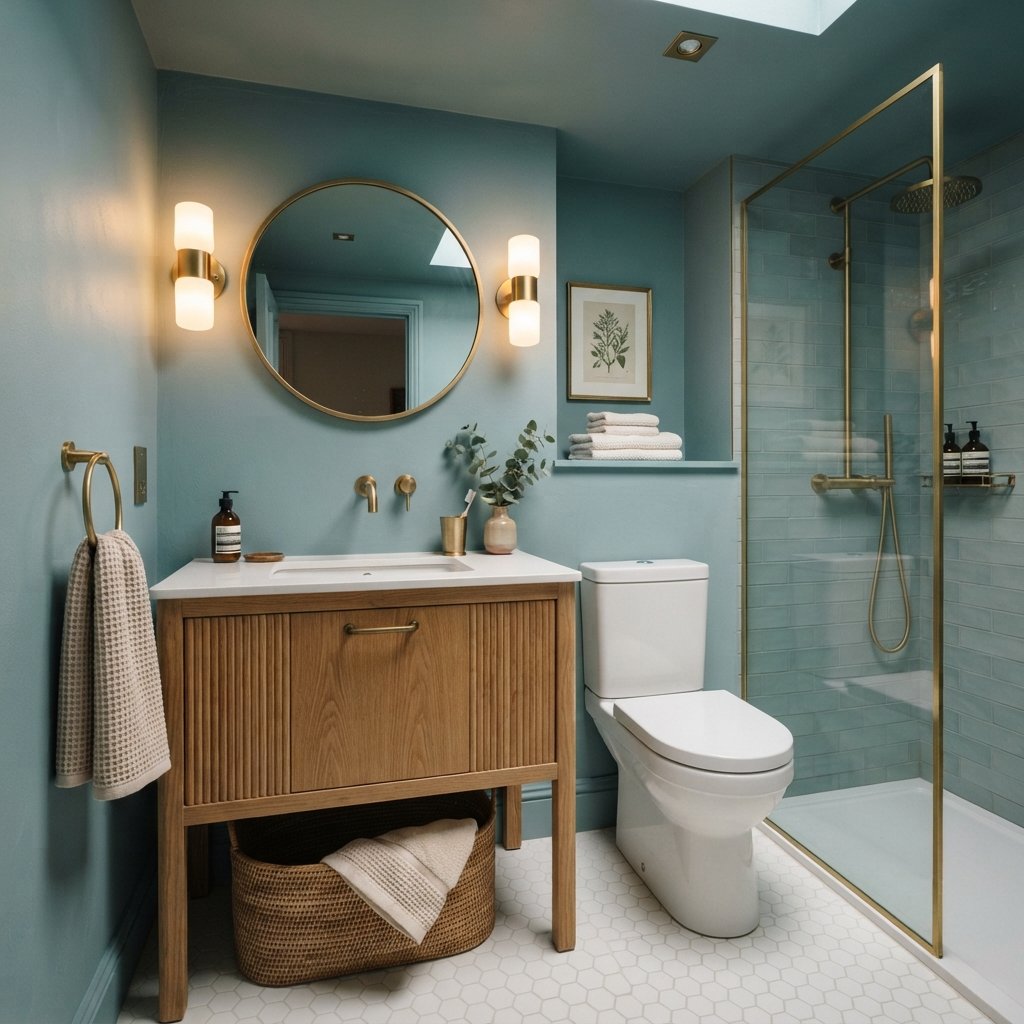
Bathroom ceilings have a harder job than ceilings in most other rooms.
Every hot shower can introduce moisture and humidity into the space. In a poorly ventilated bathroom, condensation may repeatedly collect on the ceiling, contributing to staining, peeling paint, mildew or mold growth, and other moisture-related problems.
That means choosing the best paint for bathroom ceilings involves more than grabbing ordinary ceiling paint because it happens to be white.
For most bathrooms, look for a quality interior coating that the manufacturer specifically recommends for bathrooms or other moisture-prone spaces. Depending on the product, this may be a bathroom-rated paint or another interior coating formulated for improved moisture resistance and washability.
The right sheen matters too, but sheen alone doesn’t make a paint suitable for a humid bathroom.
Just as importantly, paint can’t compensate for a persistent ventilation, leak, or condensation problem.
Here’s what to look for in bathroom ceiling paint, which finishes to consider, how to prepare the ceiling, and what to do when the existing paint is already peeling or showing signs of moisture damage.
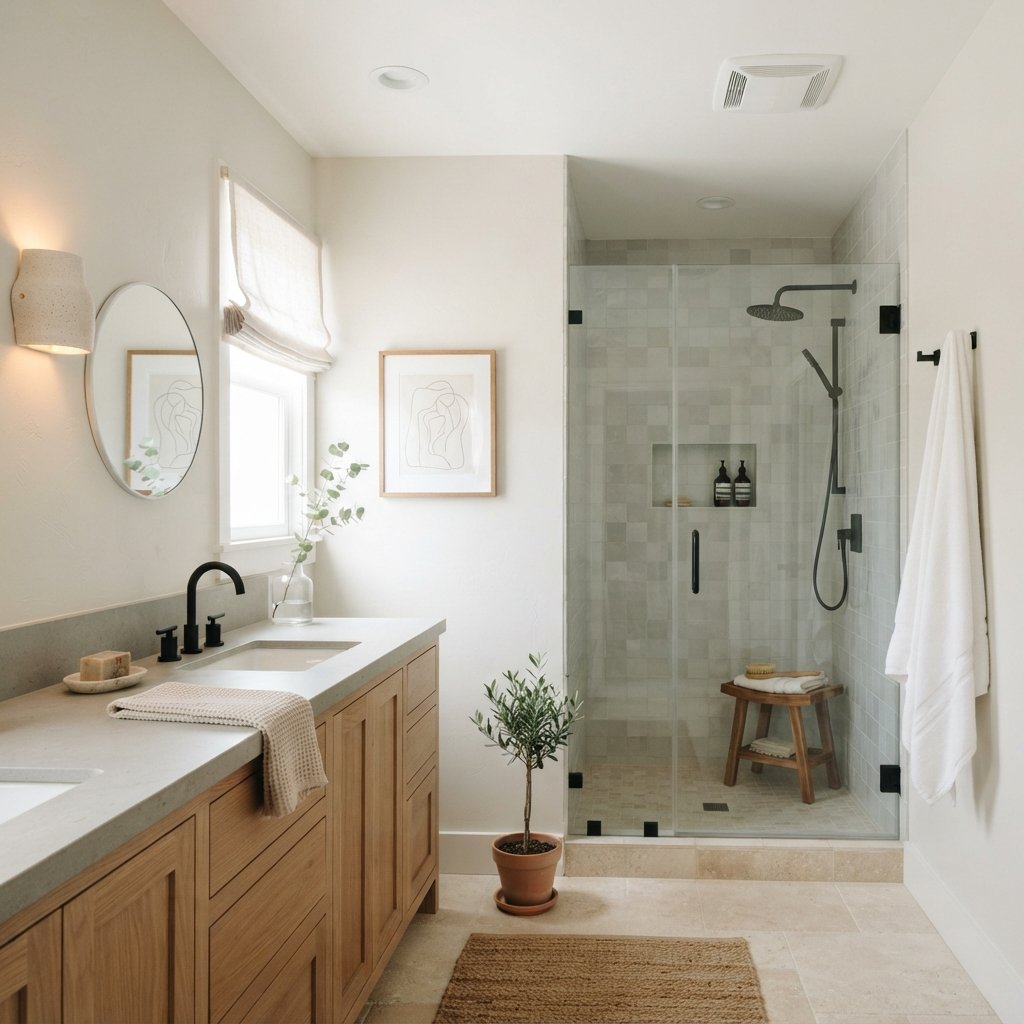
What Kind of Paint Is Best for a Bathroom Ceiling?
Start with the paint product, not simply the finish.
Look for an interior paint that its manufacturer recommends for the conditions found in bathrooms.
Useful characteristics may include:
- Moisture resistance
- Good washability
- Appropriate mildew-resistant properties
- Suitability for humid interior environments
- Compatibility with the ceiling substrate and existing coating
Product formulations vary, so don’t assume that every paint labeled eggshell, satin, or semi-gloss automatically provides the same performance.
Similarly, don’t assume ordinary flat ceiling paint is automatically appropriate for a bathroom just because it’s intended for ceilings.
Read the product label and technical information.
Why Bathroom Ceilings Need Special Attention
Warm, humid air rises.
That puts the ceiling directly in the path of moisture generated by:
- Showers
- Baths
- Hot water
- Poor ventilation
When moist air reaches a cooler ceiling, condensation can form.
Over time, persistent moisture may contribute to problems such as:
- Peeling
- Blistering
- Staining
- Mildew or mold growth
- Discoloration
- Surface deterioration
Painting over these problems without addressing the source usually isn’t a lasting solution.
The Best Paint Finish for Bathroom Ceilings
There’s no single finish that’s automatically correct for every bathroom.
The best sheen depends on:
- The paint formulation
- Bathroom ventilation
- Ceiling condition
- Moisture exposure
- Desired appearance
- Manufacturer recommendations
The main finishes worth comparing are matte, eggshell, satin, and sometimes semi-gloss.
Flat or Matte Paint for a Bathroom Ceiling
Flat and matte finishes have very little sheen.
Their biggest aesthetic advantage is that they can help minimize the appearance of ceiling imperfections.
That’s useful because ceiling light often hits the surface at an angle and can reveal:
- Drywall patches
- Uneven texture
- Nail or screw repairs
- Roller marks
However, don’t choose an ordinary flat paint solely because you like the appearance.
If you prefer a matte ceiling, look for a product specifically suitable for the bathroom environment.
Some modern paints can provide a relatively low-sheen appearance while offering improved performance compared with traditional flat coatings.
Eggshell Paint for a Bathroom Ceiling
Eggshell provides slightly more sheen than flat or matte paint.
It can be a useful compromise when you want:
- A relatively soft appearance
- Some surface reflectivity
- Practical cleaning performance
But eggshell is a sheen category—not a guarantee that the paint is suitable for bathrooms.
A bathroom-rated eggshell product may perform very differently from an ordinary eggshell wall paint.
Check the manufacturer’s intended uses.
Satin Paint for a Bathroom Ceiling
Satin is often considered for moisture-prone spaces because it generally has more sheen than eggshell.
Depending on the product, it may offer useful washability and moisture performance.
The tradeoff is appearance.
Satin reflects more light and may reveal ceiling imperfections more clearly.
On a beautifully prepared ceiling, that may not matter.
On a ceiling with patches, texture, or uneven drywall work, the additional sheen may make those areas easier to see.
Semi-Gloss Paint for a Bathroom Ceiling
Semi-gloss is more reflective than satin.
A suitable semi-gloss product may offer strong cleaning performance, but the shine can be very noticeable overhead.
It can also highlight imperfections.
Semi-gloss may make sense in certain high-moisture situations or as an intentional design choice, but it isn’t automatically necessary for every bathroom ceiling.
Before choosing it, consider:
- Ceiling condition
- Amount of natural light
- Artificial lighting
- Desired look
- Manufacturer recommendations
Is Flat Paint Bad for Bathroom Ceilings?
Not necessarily.
The more accurate question is:
Is this particular flat paint recommended for my bathroom conditions?
Traditional flat paints may offer less washability and moisture resistance than some higher-sheen coatings.
However, modern paint technology means finish name alone doesn’t reliably tell you everything about performance.
If you love the look of a flat ceiling, search for a suitable low-sheen product intended for moisture-prone areas rather than assuming you must use shiny paint.
Does Bathroom Ceiling Paint Need to Be Waterproof?
Bathroom ceiling paint isn’t a substitute for waterproofing.
Paint may be formulated to resist moisture, but a bathroom ceiling should not be subjected to ongoing water intrusion.
If water is entering through:
- Roof leak
- Plumbing leak
- Bathroom above
- Condensation problem
fix the source first.
Repeatedly painting over water damage won’t solve the underlying issue.
Moisture Resistance vs. Mold Resistance
These terms are related but not identical.
Moisture resistance refers to how a coating performs when exposed to humid conditions or moisture.
Some paints also contain additives intended to help resist mildew growth on the dried paint film.
That doesn’t mean the paint prevents all mold growth everywhere in the room.
Mold can grow when conditions provide sufficient moisture and a suitable surface.
Ventilation and moisture control remain essential.
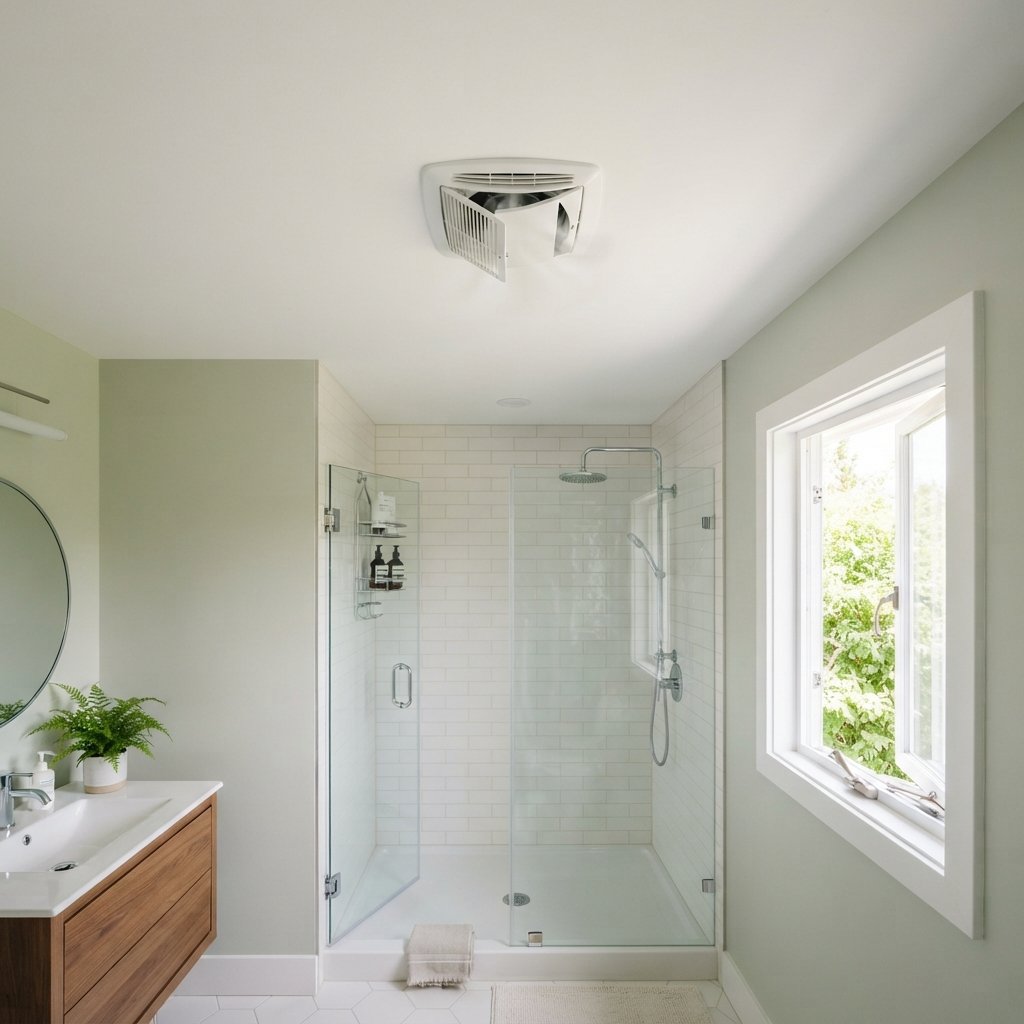
Bathroom Paint Doesn’t Replace Ventilation
One of the most important things to understand is that even excellent bathroom paint can’t compensate for chronically excessive humidity.
A properly functioning exhaust fan helps remove moist air before it condenses on walls and ceilings.
Depending on your home and local requirements, appropriate bathroom ventilation may involve mechanical exhaust to the exterior.
If you’re uncertain whether your fan is properly sized, installed, or vented, have the system evaluated by a qualified professional.
Signs Your Bathroom Has a Moisture Problem
Watch for:
- Water droplets remaining on the ceiling
- Frequent heavy condensation
- Peeling paint
- Bubbling paint
- Dark spotting
- Recurring mildew or mold
- Persistent musty odor
- Water stains
These symptoms shouldn’t simply be hidden under another coat of paint.
Determine why the moisture is occurring.
Possible causes can include inadequate ventilation, high humidity, plumbing leaks, roof leaks, or other building-envelope issues.
What About Mold on a Bathroom Ceiling?
Visible mold should be taken seriously.
The appropriate response depends on the amount of growth, surface involved, source of moisture, and local guidance.
Don’t simply paint directly over active mold.
The moisture source needs to be corrected, and the affected area needs to be handled appropriately.
For extensive growth, repeated mold problems, significant water damage, or situations involving potentially contaminated porous materials, professional assessment may be appropriate.
What Color Is Best for a Bathroom Ceiling?
White remains a popular choice because it creates a clean look and coordinates with almost any wall color.
But it isn’t your only option.
Consider:
- Bright white
- Warm white
- Soft off-white
- Pale neutral
- Same color as the walls
- Dark contrasting color
The right choice depends on the bathroom’s design.
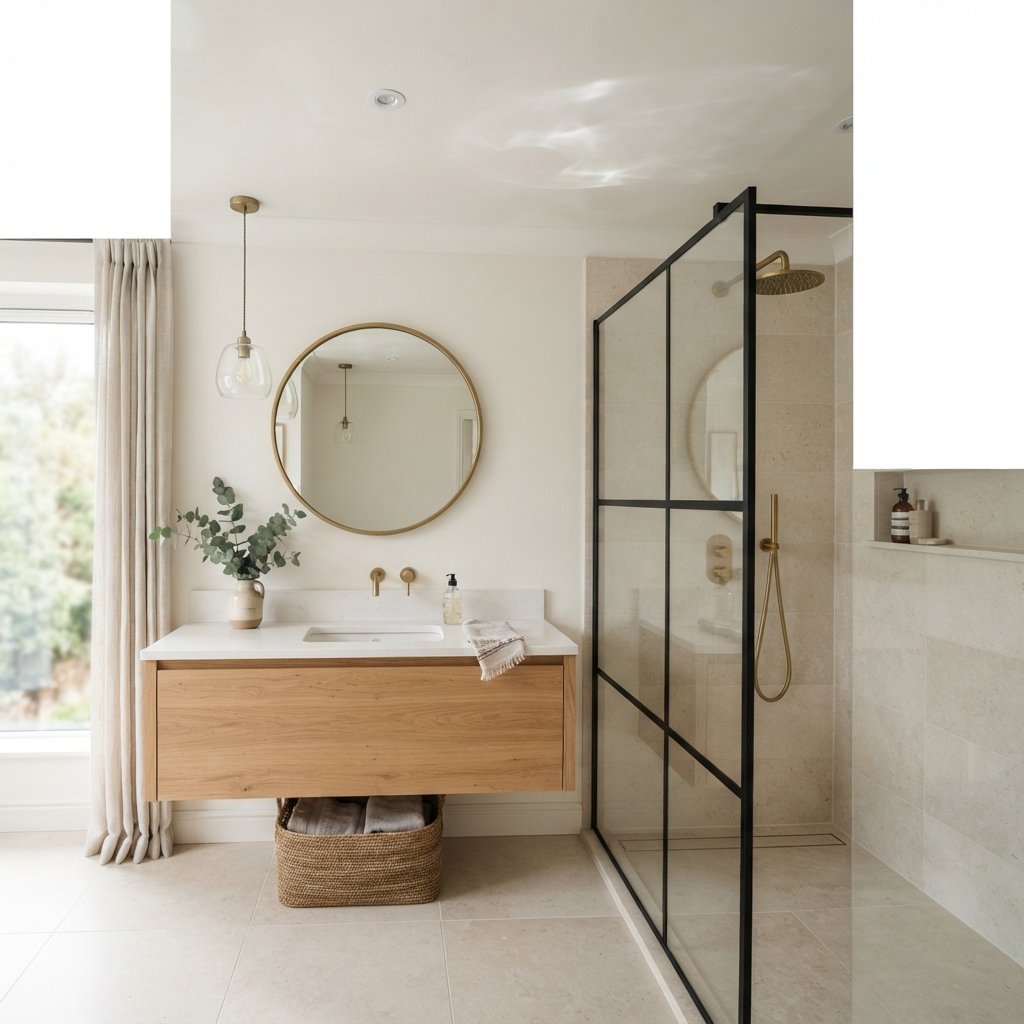
Warm White Bathroom Ceiling
Warm white can be especially attractive when the bathroom contains:
- Cream tile
- Beige stone
- Warm wood
- Brass
- Warm white walls
A stark blue-white ceiling may look disconnected from those finishes.
Compare actual paint samples in the room before choosing.
Painting the Ceiling the Same Color as the Walls
Using the same color on walls and ceiling can create a cohesive, enveloping look.
This approach can be especially effective in:
- Powder rooms
- Small bathrooms
- Moody bathrooms
- Rooms with complicated ceiling lines
You can use the same color while choosing finishes appropriate for each surface.
Always confirm that the chosen products are suitable for the bathroom conditions.
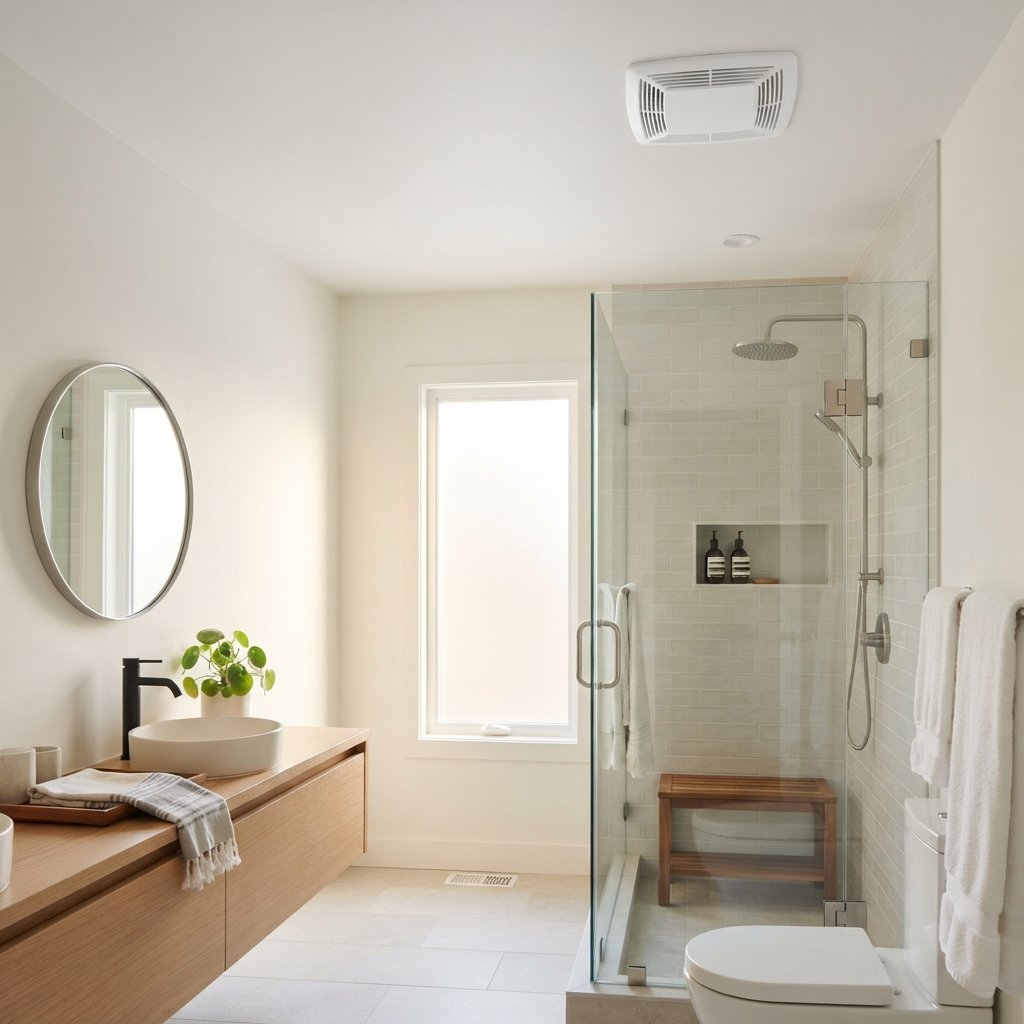
Can You Paint a Bathroom Ceiling Dark?
Yes.
A dark ceiling can create dramatic contrast or make a bathroom feel intentionally cozy.
Possible colors include:
- Charcoal
- Navy
- Deep green
- Chocolate brown
- Black
A dark ceiling isn’t automatically a bad choice in a small bathroom.
Color is only one factor affecting how spacious a room feels.
Lighting, mirrors, wall color, fixtures, and contrast all matter.
Should Bathroom Ceiling Paint Match the Walls?
It can, but it doesn’t have to.
Three common approaches are:
White Ceiling + Colored Walls
Classic and versatile.
Similar Wall and Ceiling Colors
Creates a softer transition.
Same Color Everywhere
Produces a more immersive look.
Choose based on the architecture and overall design rather than following a rule.
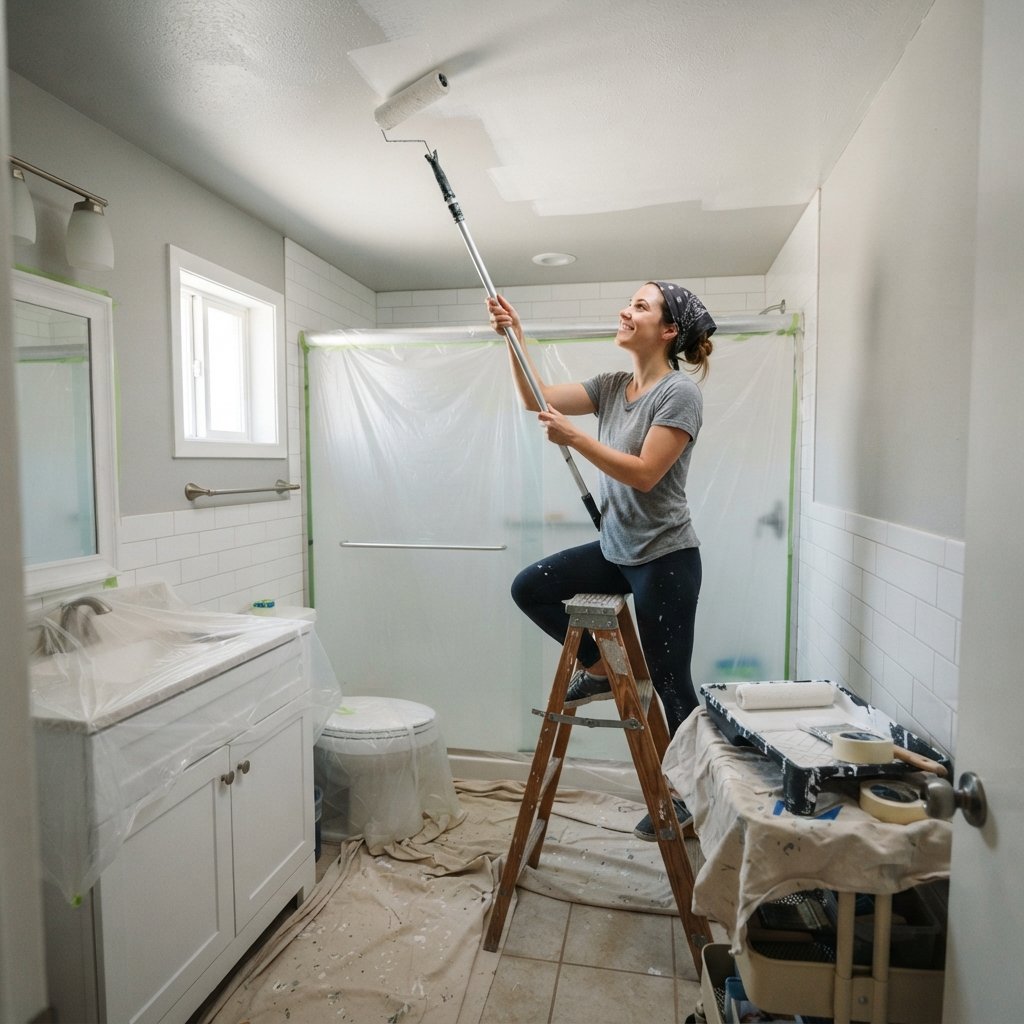
How to Prepare a Bathroom Ceiling for Paint
Good preparation is especially important in a moisture-prone room.
Painting over a dirty, damaged, or unstable surface can result in poor adhesion regardless of how good the paint is.
Step 1: Identify Moisture Problems
Before doing anything else, inspect the ceiling.
Look for:
- Water stains
- Peeling
- Bubbling
- Soft drywall
- Mold or mildew
- Persistent condensation
Fix leaks or ventilation issues before repainting.
Step 2: Clean the Ceiling
Bathroom ceilings may accumulate dust and other residue.
Use a cleaning method appropriate for the existing surface and the coating you plan to apply.
Follow paint manufacturer recommendations and allow the surface to dry thoroughly.
Step 3: Address Mold or Mildew Appropriately
Don’t cover active growth with paint.
Determine and correct the moisture source first.
Follow appropriate remediation guidance for the size and type of affected area.
Step 4: Remove Loose Paint
Flaking or poorly adhered paint needs to be addressed before recoating.
Use appropriate protective equipment.
If your home is older and the existing coating could contain lead or another hazardous material, don’t sand or disturb it until you’ve determined the appropriate safe procedure.
Step 5: Repair Damage
Repair cracks, holes, or damaged drywall using materials suitable for the surface and environment.
Allow repairs to dry as required.
Step 6: Sand Where Appropriate
Smooth repaired areas when required, controlling dust and wearing suitable protective equipment.
The smoother the ceiling, the better it will generally look under paint—particularly with higher-sheen finishes.
Step 7: Prime When Necessary
Primer may be appropriate for:
- Bare drywall
- Repairs
- Stains
- Significant color changes
- Problematic existing surfaces
Water stains may require a suitable stain-blocking primer after the leak or moisture source has been fixed.
Choose a primer compatible with both the substrate and topcoat.
Step 8: Paint the Ceiling
Follow the coating manufacturer’s instructions regarding:
- Application method
- Roller type
- Coverage
- Number of coats
- Drying time
- Recoat time
- Temperature
- Humidity
Provide appropriate ventilation while working.
Do You Need Primer on a Bathroom Ceiling?
Not always.
If the existing coating is sound, clean, compatible, and in good condition, the selected paint may not require a separate primer.
Primer becomes more important when dealing with:
- Bare drywall
- Repairs
- Stains
- Adhesion problems
- Major color changes
Don’t use primer as a substitute for solving moisture problems.
If a stain came from a leak, fix the leak first.
How Many Coats of Paint Does a Bathroom Ceiling Need?
There’s no universal number.
Coverage depends on:
- Paint product
- Existing color
- New color
- Surface porosity
- Primer
- Application
Follow the manufacturer’s directions.
Trying to apply one excessively thick coat instead of the recommended application can create problems.
What Roller Should You Use for a Bathroom Ceiling?
Roller selection depends primarily on ceiling texture and the paint manufacturer’s recommendations.
A smooth drywall ceiling and a heavily textured ceiling generally require different roller naps.
Check the coating and applicator guidance for your specific surface.
Using an inappropriate roller can affect both coverage and finished texture.
How to Avoid Roller Marks on a Ceiling
Ceilings can be unforgiving because light travels across them.
To improve the finish:
- Prepare the surface carefully.
- Use appropriate tools.
- Maintain consistent application.
- Avoid repeatedly working paint after it begins to set.
- Follow recommended coverage rates.
- Maintain suitable temperature and humidity.
- Provide adequate lighting while painting.
Some products level differently from others, so manufacturer application instructions should take priority.
How Long Should Bathroom Ceiling Paint Dry?
Drying and curing aren’t the same thing.
A coating may feel dry while still developing its full performance.
Follow the manufacturer’s instructions for:
- Dry-to-touch time
- Recoat time
- Cure time
- Exposure to moisture
Avoid immediately subjecting freshly painted bathroom surfaces to heavy steam if the manufacturer recommends a longer curing period.
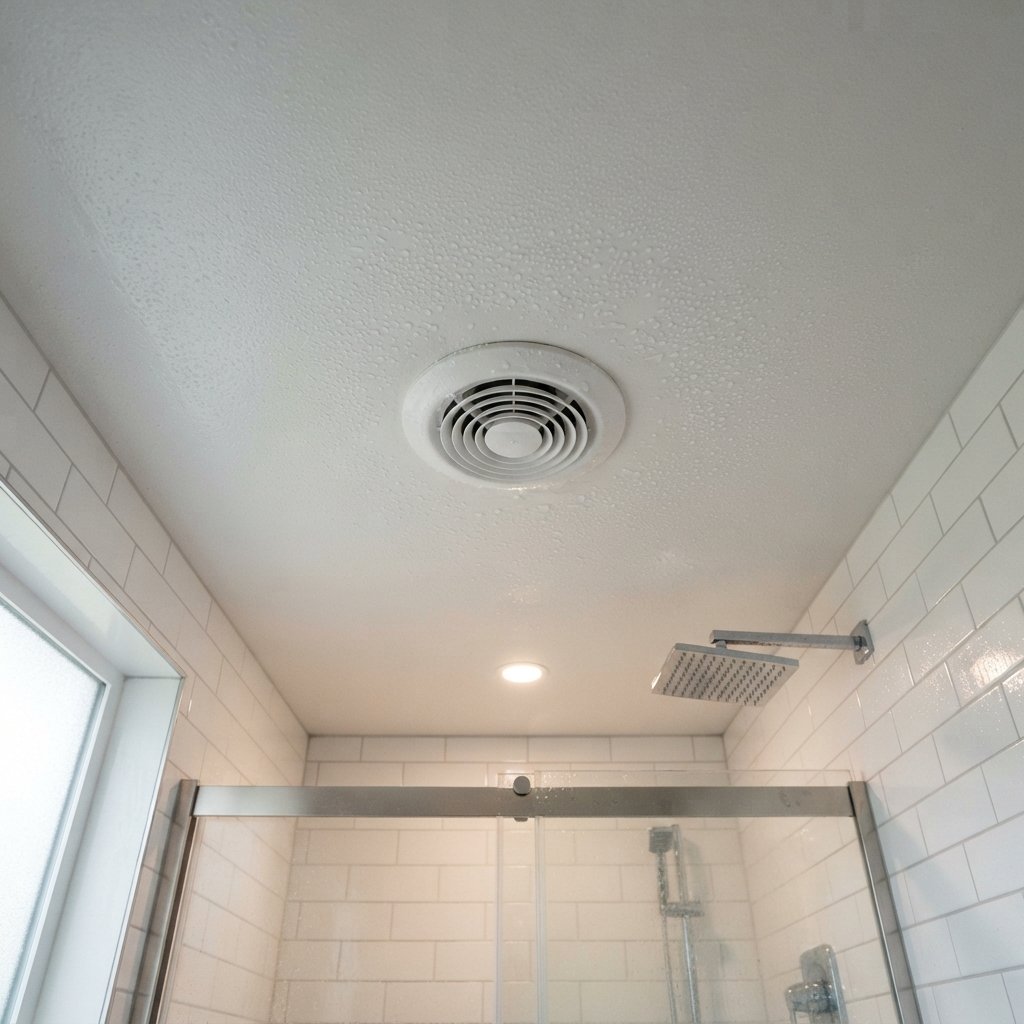
What If Bathroom Ceiling Paint Keeps Peeling?
Repeated peeling usually means you need to investigate the cause rather than simply repaint again.
Potential contributors include:
- Persistent condensation
- Poor ventilation
- Water intrusion
- Contaminated surface
- Incompatible coatings
- Poor surface preparation
- Painting over unstable existing paint
If the ceiling remains damp after showers, start with moisture control.
If paint continues failing despite proper preparation and ventilation, further investigation may be necessary.
What If the Paint Is Bubbling?
Bubbling can have several causes, including moisture behind or beneath the coating and poor adhesion.
Don’t immediately pop the bubbles and paint over them.
Determine why the coating failed.
If the underlying drywall is wet or damaged, the problem may require repair before painting.
Best Paint for a Bathroom Ceiling Above a Shower
The area above a shower often experiences some of the bathroom’s highest humidity.
Use a coating specifically recommended by its manufacturer for the environment.
Also make sure the shower and bathroom have appropriate moisture management.
In certain shower designs, local requirements or the shower system itself may call for specific water-resistant or waterproof materials rather than ordinary painted drywall in exposed areas.
When in doubt, consult applicable requirements and the shower-system manufacturer.
Is Ceiling Paint Different From Wall Paint?
Often, yes.
Traditional ceiling paints are frequently designed for low sheen and application overhead.
Wall paints may prioritize different characteristics, such as washability.
But product categories vary significantly.
In a bathroom, suitability for the environment is more important than simply choosing something because the can says “ceiling paint.”
Should You Use Kitchen and Bath Paint?
A paint specifically formulated and recommended for kitchens and bathrooms can be a strong option.
These products may be designed with moisture, cleaning, and mildew resistance in mind.
However, formulations vary.
Check the product information to make sure it is appropriate for your ceiling, substrate, and bathroom conditions.
How to Choose Bathroom Ceiling Paint
Use this simple process.
1. Evaluate Moisture
Does the bathroom have good ventilation?
Does condensation linger?
2. Inspect the Ceiling
Is it smooth, patched, stained, peeling, or textured?
3. Decide How Much Sheen You Want
Lower sheen can hide imperfections better.
Higher sheen can create more reflection and may offer useful performance depending on the product.
4. Find Appropriate Products
Look specifically for coatings approved or recommended for bathroom conditions.
5. Compare Performance
Check:
- Intended use
- Moisture resistance
- Washability
- Mildew-resistant properties
- Surface compatibility
6. Follow the Manufacturer’s System
Use the recommended primer, application method, and drying or curing times.
Common Bathroom Ceiling Painting Mistakes
Using Ordinary Ceiling Paint Without Checking Suitability
Bathroom humidity changes the requirements.
Choosing by Sheen Alone
Satin isn’t automatically better simply because it’s shinier.
Painting Over Mold
Correct the moisture issue and handle the growth appropriately first.
Painting Over a Leak
Paint won’t stop water intrusion.
Ignoring Ventilation
Moisture management is essential.
Skipping Surface Preparation
Loose paint and damaged surfaces need attention.
Using the Wrong Primer
Choose a primer appropriate for the problem and topcoat.
Applying Paint Too Soon After Repairs
Allow materials to dry as required.
Using the Shower Immediately After Painting
Follow the manufacturer’s curing and moisture-exposure instructions.
Assuming Higher Sheen Hides Damage
Higher sheen may actually make surface imperfections more noticeable.
FAQ About the Best Paint for Bathroom Ceilings
What is the best paint for a bathroom ceiling?
Look for a quality interior paint that the manufacturer specifically recommends for bathrooms or humid environments. Appropriate moisture performance is more important than choosing paint based only on the finish name.
What paint finish is best for bathroom ceilings?
Matte, eggshell, satin, and sometimes semi-gloss can all be possibilities depending on the specific product and bathroom conditions. Choose a bathroom-suitable coating with the appearance and performance you need.
Is eggshell good for a bathroom ceiling?
It can be if the particular eggshell paint is recommended for bathrooms and provides suitable moisture performance.
Is satin good for a bathroom ceiling?
Yes, a suitable satin product can be an option. Its higher sheen may make ceiling imperfections more noticeable, however.
Can you use flat paint on a bathroom ceiling?
Potentially. Look for a flat or matte coating specifically recommended for bathroom conditions rather than automatically using ordinary flat ceiling paint.
Should bathroom ceiling paint be mold resistant?
A product designed to resist mildew growth on the dried paint film can be useful in moisture-prone areas, but paint doesn’t replace proper ventilation or correction of moisture problems.
Can I paint over mold on a bathroom ceiling?
You shouldn’t simply cover active mold with paint. Address the moisture source and handle the affected material appropriately before repainting.
Why does my bathroom ceiling paint keep peeling?
Persistent humidity, condensation, leaks, poor preparation, incompatible coatings, or adhesion problems can contribute. Determine the cause before repainting.
Do I need to prime a bathroom ceiling?
Primer may be necessary over bare drywall, repairs, stains, or problematic surfaces. Follow the recommendations for your chosen coating system.
Can I use regular ceiling paint in a bathroom?
Only if the manufacturer recommends that particular product for the bathroom conditions. Don’t assume every standard ceiling paint is suitable for a humid room.
Can you paint a bathroom ceiling the same color as the walls?
Yes. Using the same color can create a cohesive look. You can still choose different paint products or finishes appropriate for the walls and ceiling.
Final Thoughts
Choosing the best paint for bathroom ceilings is less about finding one universally perfect sheen and more about choosing a coating designed for the conditions in your bathroom.
Start with moisture.
If the ceiling is constantly wet with condensation, paint alone isn’t the solution. Check the ventilation and investigate leaks or other sources of excess moisture.
Then evaluate the ceiling itself.
A ceiling with lots of imperfections may look better with a suitable lower-sheen coating, while a smooth ceiling may handle the extra reflectivity of satin more gracefully.
Most importantly, read the manufacturer’s product information.
Look for paint specifically recommended for bathrooms or humid environments, and follow the instructions for preparation, priming, application, drying, and curing.
With good ventilation, careful surface preparation, and the right coating, your bathroom ceiling can stay cleaner-looking and hold up far better than it will with a paint chosen simply because the label says “ceiling.”