

White kitchens are classic, bright, and versatile—but they certainly aren’t the only way to create a beautiful kitchen.
If you’re craving something warmer, moodier, more colorful, or simply more personal, there are plenty of kitchen design ideas that aren’t white.
And moving away from white doesn’t mean your kitchen has to be dark.
Soft taupe, mushroom, sage, muted blue, natural wood, and warm beige can all provide the light, airy feeling people love about white kitchens while adding considerably more depth.
If you’re ready for more drama, olive green, forest green, navy, charcoal, burgundy, and even black can create a sophisticated kitchen when they’re balanced with the right countertops, flooring, lighting, and hardware.
The key is choosing colors as part of the entire room rather than picking a cabinet color in isolation.
Here are 21 beautiful non-white kitchen ideas, plus tips for choosing cabinet colors, countertops, backsplashes, hardware, flooring, and paint that work together.
Why Choose a Kitchen That Isn’t White?
White became popular partly because it’s flexible.
But color can be flexible too.
A non-white kitchen can feel:
- Warm
- Cozy
- Sophisticated
- Traditional
- Modern
- Organic
- Dramatic
- Playful
It all depends on the palette.
Color can also help highlight architectural details and create more contrast between cabinets, countertops, flooring, and walls.
If your entire kitchen currently feels like one large white surface, adding color or wood can give the room much more definition.
Start With the Fixed Finishes
Before choosing a cabinet color, identify what isn’t changing.
That might include:
- Flooring
- Countertops
- Backsplash
- Appliances
- Adjacent rooms
- Existing wood
These elements should influence the palette.
A cabinet color that looks gorgeous in a photograph may not work beside your particular countertop or flooring.
Always bring samples into the actual kitchen before making a final decision.
1. Sage Green Kitchen Cabinets
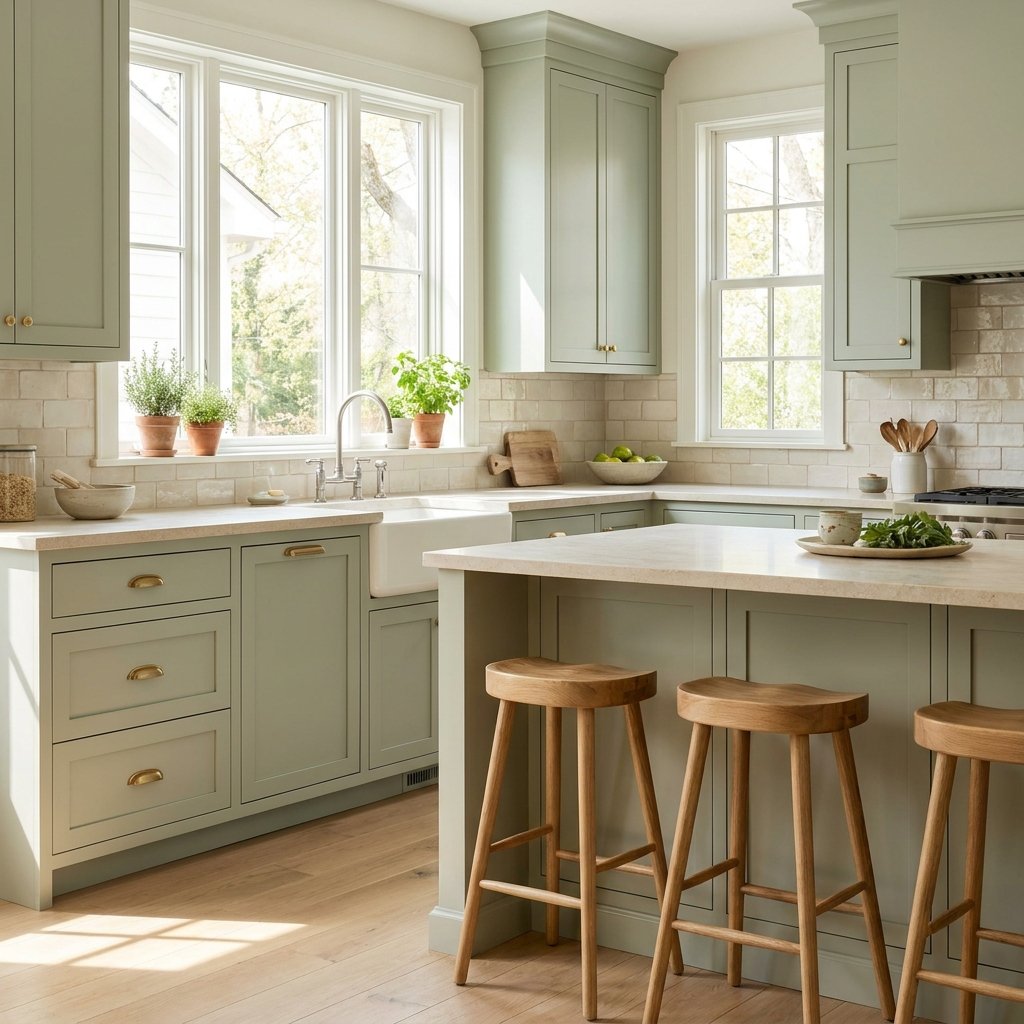
Sage green is one of the easiest ways to move away from white without making the kitchen feel dramatically darker.
Its muted quality allows it to behave almost like a neutral.
Pair sage with:
- Warm white countertops
- Natural wood
- Cream
- Brass
- Black
- Soft white walls
Sage can work beautifully in traditional, farmhouse, transitional, and organic modern kitchens.
2. Olive Green Kitchen Cabinets
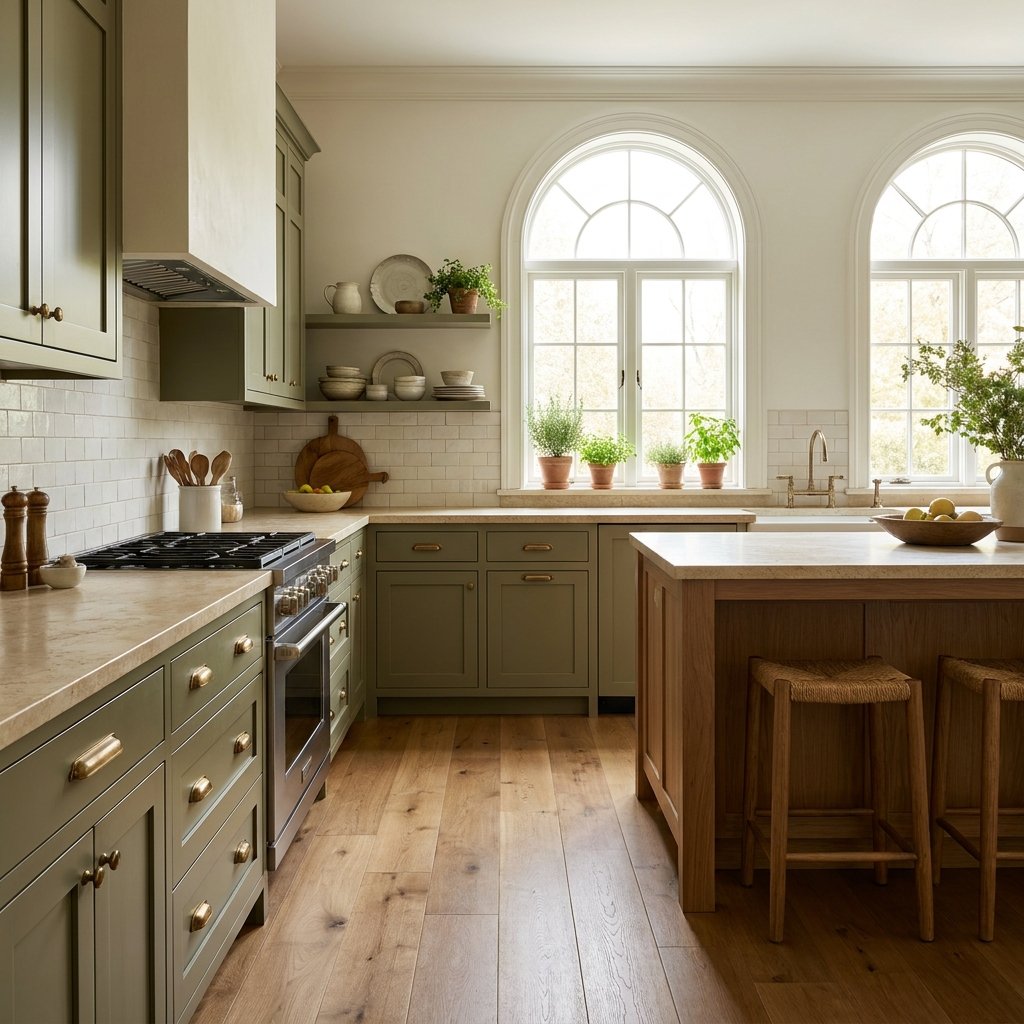
If sage feels too pale, try olive.
Olive adds more depth while maintaining a natural, earthy character.
It pairs especially well with:
- Cream
- Warm stone
- Walnut
- Oak
- Brass
- Brown
For a lighter kitchen, use olive on the lower cabinets or island and keep surrounding surfaces lighter.
3. Forest Green Kitchen Cabinets
Deep green can create a dramatic kitchen without the starkness of black.
Forest green works particularly well when the kitchen receives good natural light or contains enough lighter surfaces to create contrast.
Try:
Forest green cabinets + light countertops + warm wood floors + brass hardware
The result can feel rich and timeless rather than trendy when the materials are kept relatively simple.
4. Muted Blue Kitchen Cabinets
Muted blue can bring color into a kitchen while still feeling calm.
Look for softer, grayer blues rather than highly saturated shades if you want a more understated result.
Blue cabinetry works beautifully with:
- Warm white
- Wood
- Marble-look surfaces
- Brass
- Black
- Soft gray
A muted blue island is also a good option if you don’t want blue throughout the entire room.
5. Navy Blue Kitchen Cabinets
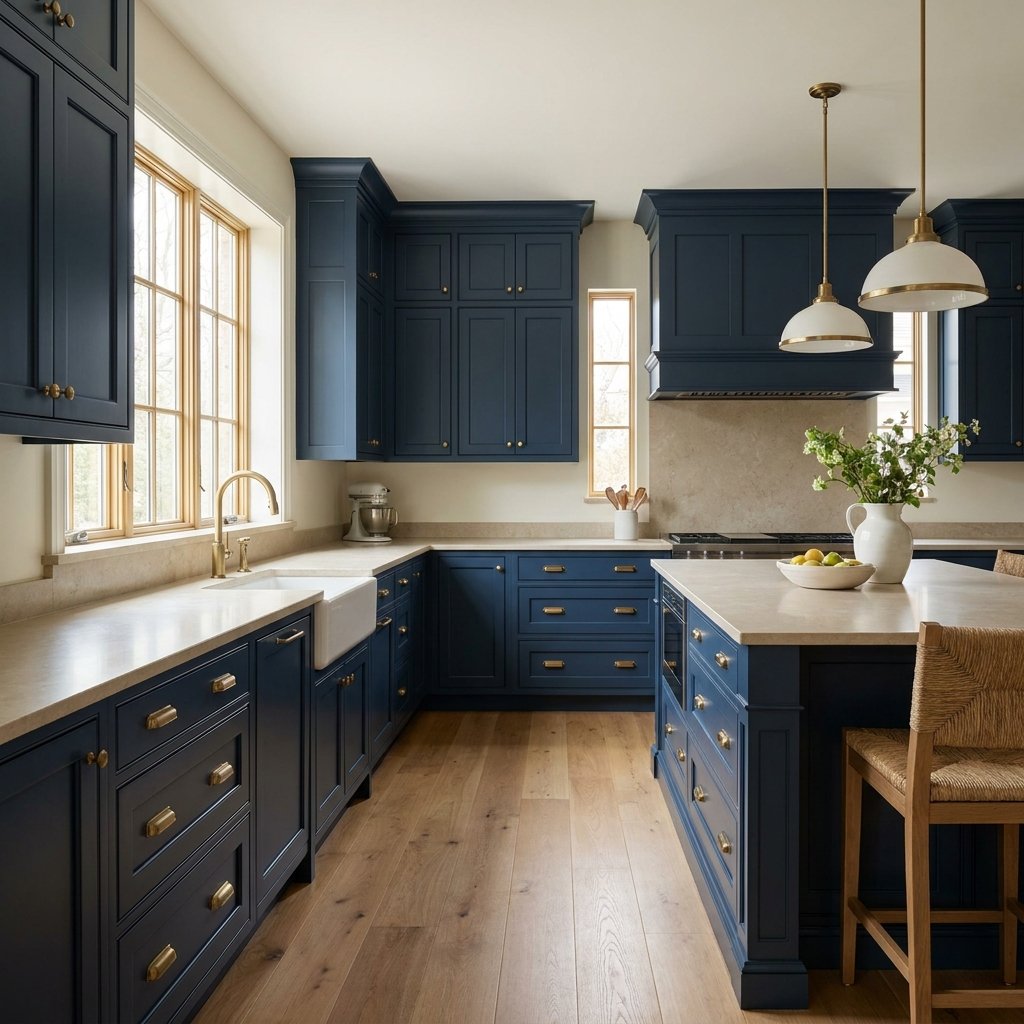
Navy is a classic alternative to black.
It provides strong contrast and works especially well on:
- Islands
- Lower cabinets
- Butler’s pantries
- Full cabinetry
Balance navy with lighter surfaces if you want to prevent the room from feeling heavy.
For example:
Navy + warm white + medium wood + brass
creates a sophisticated combination.
6. Dusty Blue Kitchen Cabinets
Dusty blue is softer than navy and often more relaxed than a cleaner blue.
It can work beautifully in coastal-inspired, cottage, transitional, and traditional kitchens.
Pair it with:
- Cream
- Warm white
- Natural oak
- Soft gray
- Brass
Keep the surrounding palette quiet so the cabinet color can be the focal point.
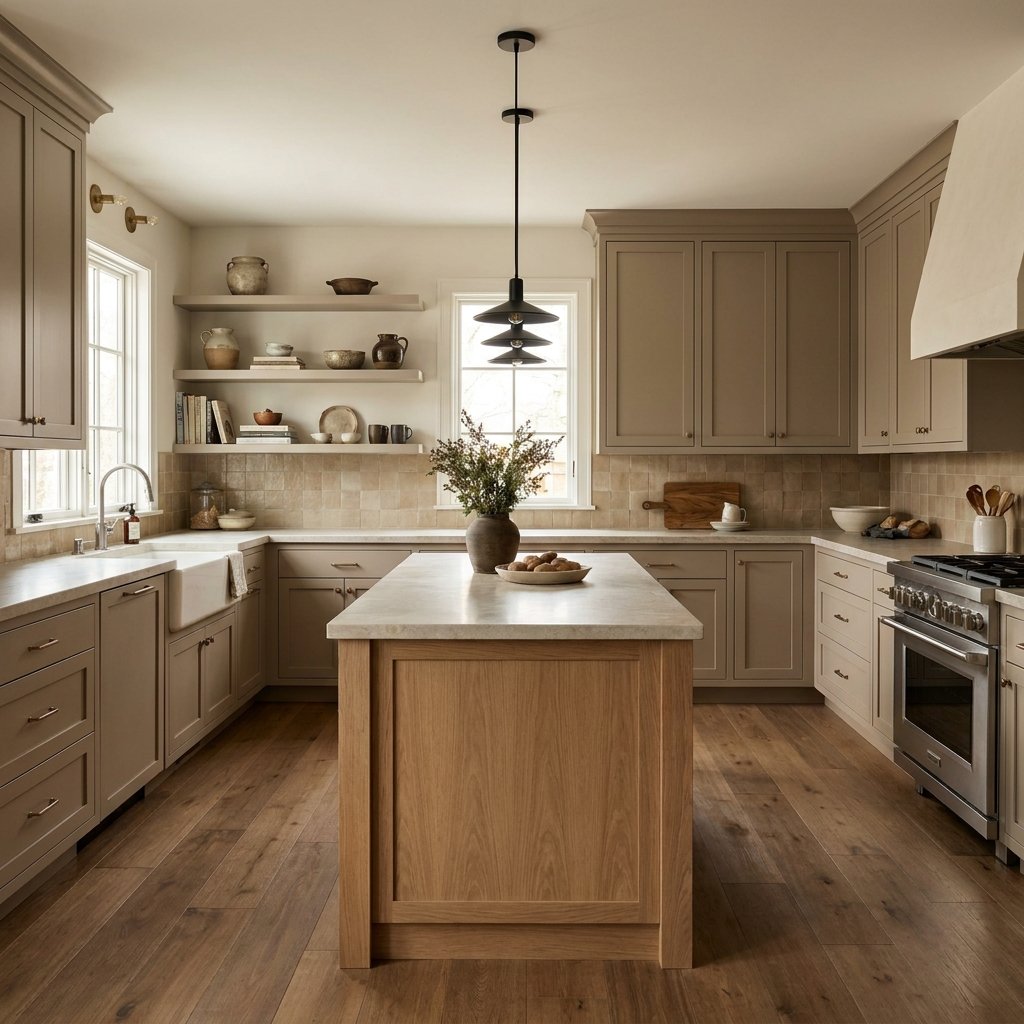
7. Taupe Kitchen Cabinets
If you love neutral kitchens but don’t want white, taupe deserves a look.
Taupe adds enough color to define the cabinetry while remaining understated.
Depending on the specific shade, taupe may lean:
- Beige
- Gray
- Brown
- Slightly violet
Always sample it beside your countertops and flooring.
A warm taupe kitchen can look beautiful with cream stone and medium wood.
8. Mushroom Kitchen Cabinets
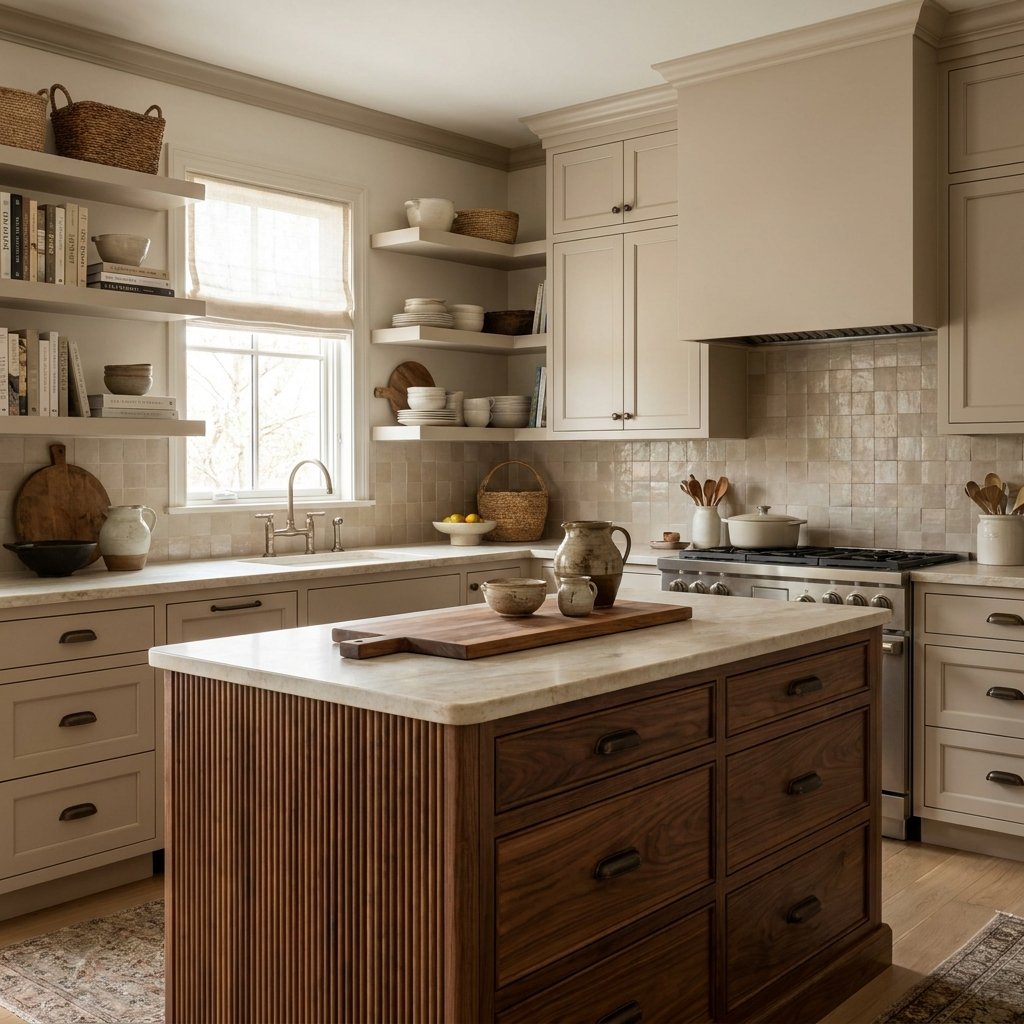
Mushroom is another excellent alternative to white.
It’s earthy, warm, and slightly deeper than many off-whites.
Try:
Mushroom cabinets + warm stone counters + walnut accents + bronze hardware
Mushroom can be especially effective when you want a kitchen that feels warm and layered but not obviously colorful.
9. Beige Kitchen Cabinets
Beige cabinets can create a light kitchen without relying on white.
Choose a beige that coordinates with your flooring and countertop rather than one selected in isolation.
Light beige cabinetry pairs naturally with:
- Cream
- Wood
- Brown
- Black
- Brass
- Muted green
For more definition, use darker hardware or lighting.
10. Greige Kitchen Cabinets
Greige offers a bridge between gray and beige.
It can be useful when the kitchen contains a mixture of warm and cool materials.
A soft greige may work with:
- Wood flooring
- White or cream counters
- Black fixtures
- Stainless appliances
- Warm metals
Avoid choosing greige solely because it’s described as “neutral.”
Greige paints can have surprisingly different undertones.
11. Natural Oak Cabinets
You don’t have to use paint at all.
Natural wood cabinetry adds warmth, texture, and visual movement.
Oak can work beautifully in:
- Organic modern kitchens
- Scandinavian-inspired spaces
- Transitional homes
- Contemporary kitchens
Keep the wood from feeling visually overwhelming by pairing it with quieter surfaces.
For example:
Oak cabinets + light stone + simple backsplash + black accents
12. Medium Wood Kitchen Cabinets
Medium-tone wood can create a warmer and more traditional look than pale oak while still feeling current.
Consider pairing it with:
- Cream countertops
- Warm white walls
- Muted green
- Black hardware
- Warm metal
Don’t worry about matching the cabinets perfectly to the floor.
A little variation between wood tones can add depth.
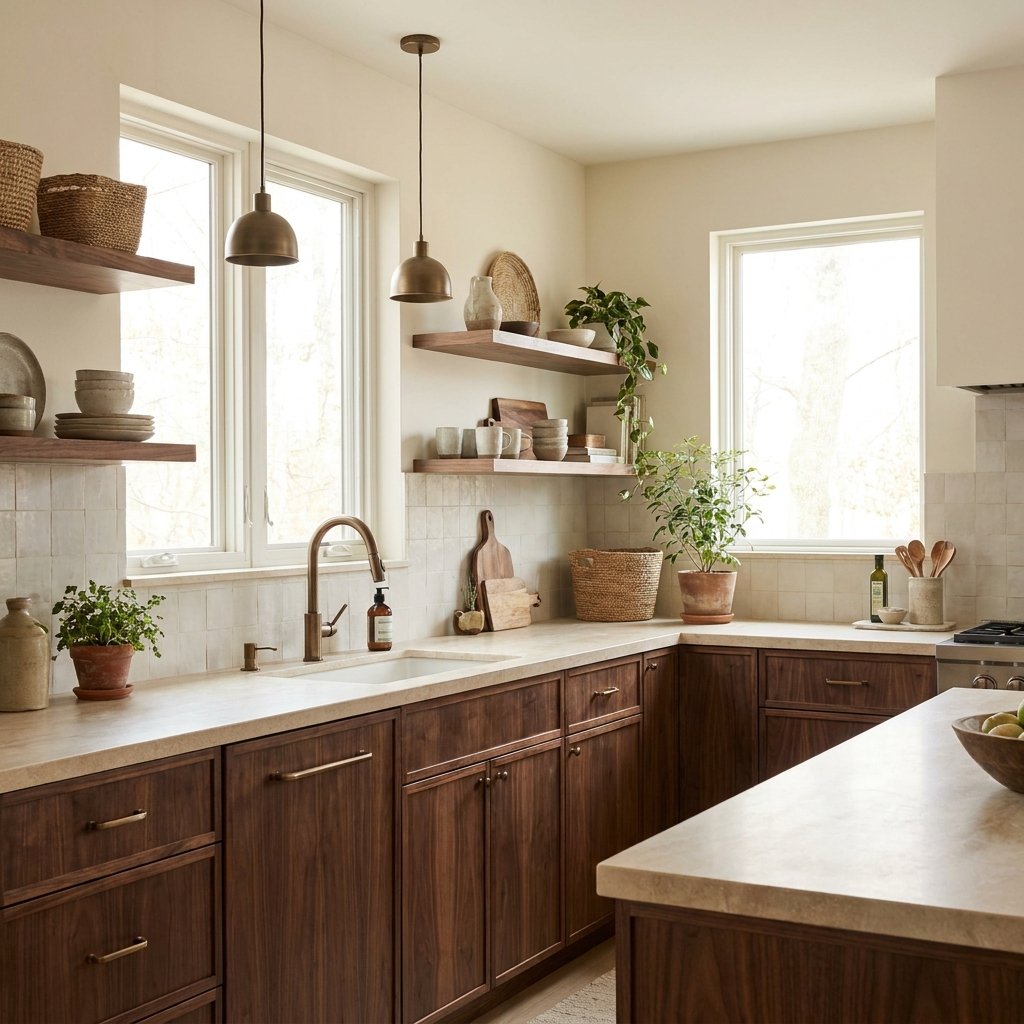
13. Walnut Kitchen Cabinets
Walnut brings richness and warmth.
Because it has a strong natural presence, keep other major surfaces relatively simple.
A beautiful combination is:
Walnut cabinetry + light stone + warm neutral walls + understated hardware
Walnut can work especially well on an island paired with painted perimeter cabinets.
14. Two-Tone Kitchen Cabinets
Can’t decide between two colors?
Use both intentionally.
Common combinations include:
- Green lowers + light uppers
- Wood lowers + painted uppers
- Painted perimeter + wood island
- Light cabinets + dark island
Two-tone cabinetry works best when there’s a clear reason for the transition.
An island is a natural place to change materials because it’s already a separate architectural element.
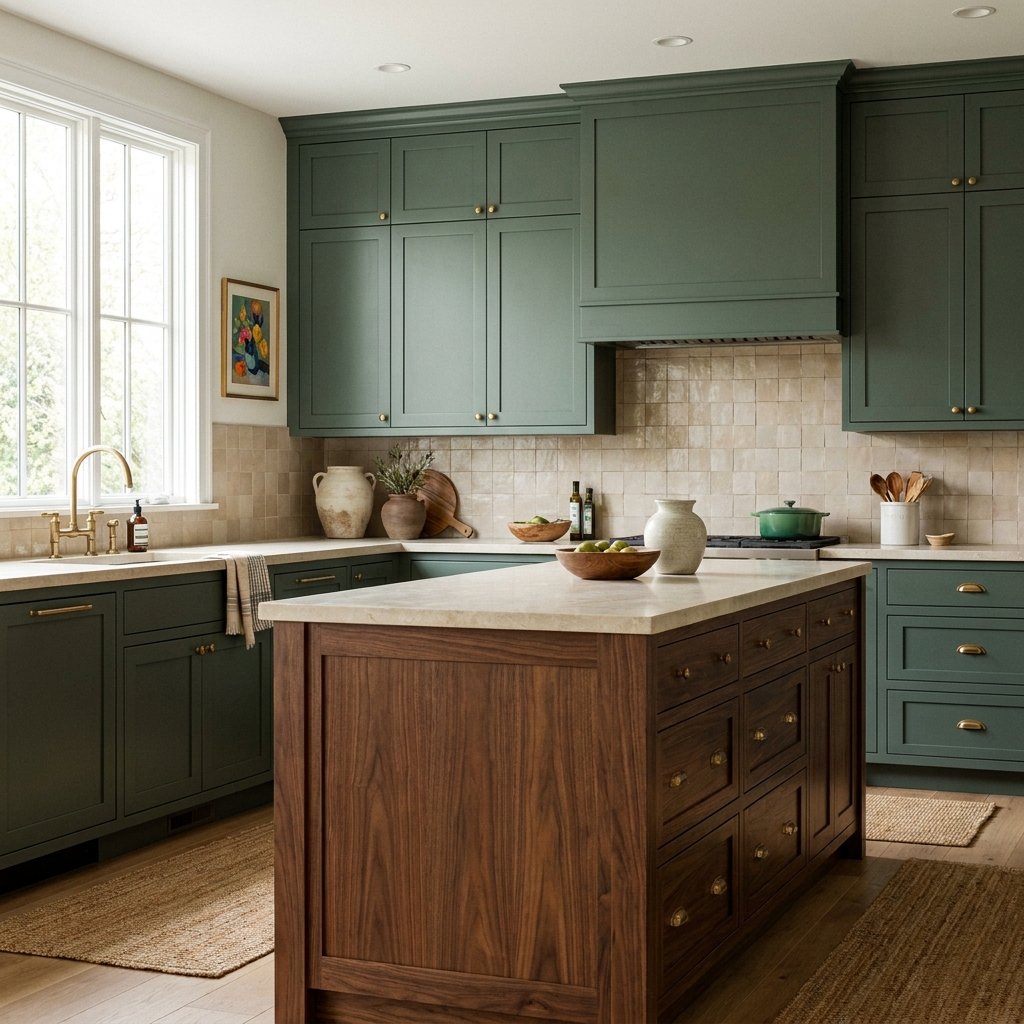
15. Green Cabinets With a Wood Island
This combination gives you color and natural warmth at the same time.
Try:
Muted green perimeter + walnut island
or:
Sage perimeter + oak island
Use a consistent countertop or repeated hardware to connect the two finishes.
16. Wood Cabinets With a Painted Island
Reverse the formula.
Use natural wood around the perimeter and introduce color on the island.
Possible island colors include:
- Olive
- Navy
- Charcoal
- Burgundy
- Taupe
This works particularly well when you want wood cabinetry but still want a strong focal point.
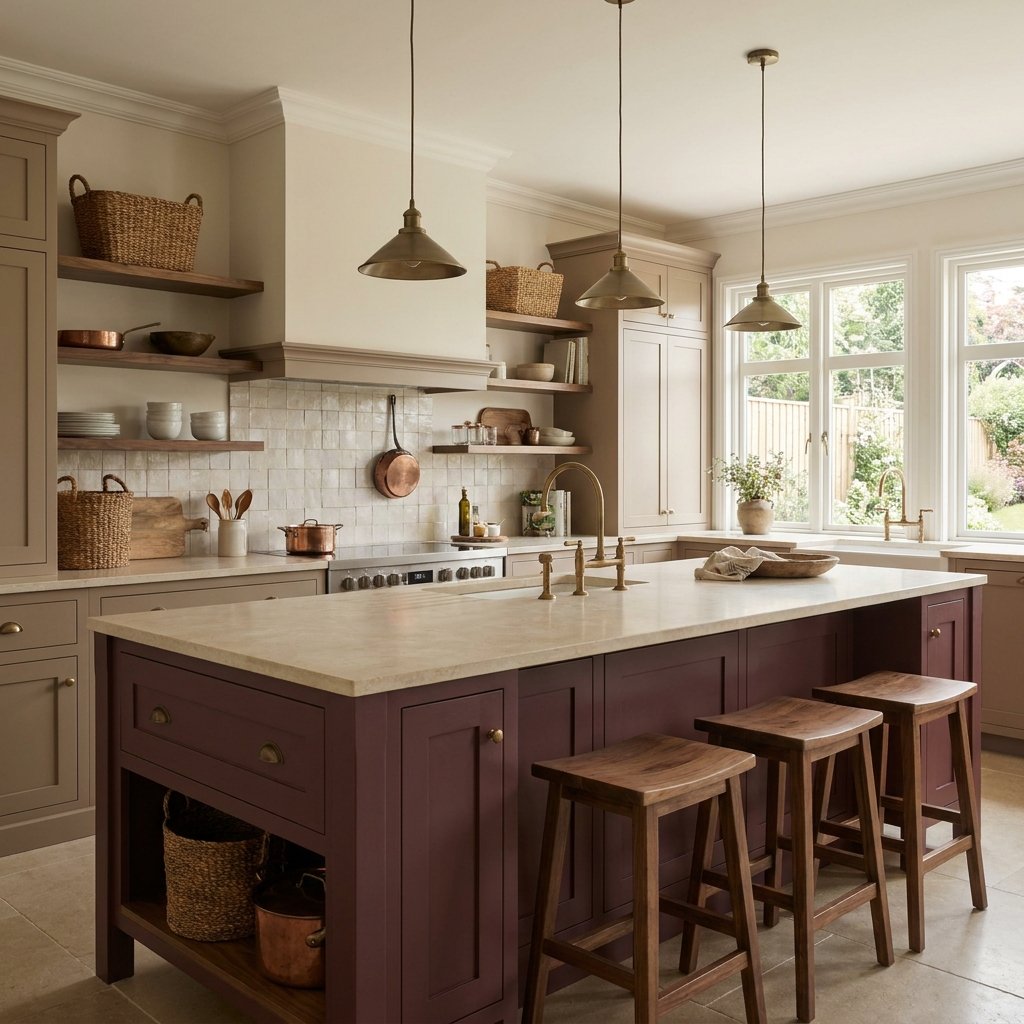
17. Burgundy Kitchen Cabinets
Burgundy is an unexpected but sophisticated kitchen color.
Look for muted, brown-influenced reds rather than extremely bright red.
Pair burgundy with:
- Cream
- Warm stone
- Walnut
- Brass
- Soft beige
Because burgundy has plenty of visual weight, simple countertops and backsplashes can help balance it.
18. Terracotta or Clay Kitchen Cabinets
Muted clay colors bring warmth and personality into a kitchen.
They can work beautifully in earthy, Mediterranean-inspired, eclectic, and warm modern spaces.
Combine clay cabinetry with:
- Cream
- Natural wood
- Warm stone
- Olive
- Black
Keep the color slightly muted if you want it to feel easier to live with long term.
19. Charcoal Kitchen Cabinets
Charcoal creates the drama of a dark kitchen without necessarily looking as stark as pure black.
It can work well with:
- Warm white
- Wood
- Brass
- Pale stone
- Cream
If the room has limited natural light, use charcoal strategically—perhaps on the island or lower cabinets rather than every surface.
20. Black Kitchen Cabinets
Black cabinetry can be striking.
But successful black kitchens usually contain enough contrast and texture to keep the room from feeling flat.
Consider:
Black cabinets + warm wood + light stone + cream walls
Natural materials are particularly helpful because they soften the graphic quality of black.
Lighting also becomes important.
21. Mixed Painted and Wood Cabinetry
One of the most interesting alternatives to an all-white kitchen is combining painted cabinetry with natural wood.
For example:
Taupe cabinets + walnut pantry
or:
Olive cabinets + oak island
or:
Blue cabinets + natural wood open shelves
The wood introduces texture while the painted cabinetry provides color.
How to Choose a Non-White Kitchen Cabinet Color
Start with the surfaces that are staying.
Place cabinet samples directly beside:
- Countertop
- Flooring
- Backsplash
Then look at the combination in your kitchen’s actual lighting.
Don’t evaluate paint or cabinet samples on a different floor of the house.
Lighting can change color significantly.
Light Non-White Kitchen Colors
If you want to keep the room bright, consider:
- Sage
- Light taupe
- Mushroom
- Beige
- Light greige
- Dusty blue
- Pale natural wood
These provide more depth than white while maintaining a relatively light overall palette.
Dark Kitchen Cabinet Colors
For a moodier look, consider:
- Forest green
- Navy
- Charcoal
- Black
- Burgundy
- Dark walnut
Balance them with lighter surfaces when appropriate.
A dark cabinet color can look particularly striking against light countertops.
Best Countertops for Colored Cabinets
There’s no single countertop that works with every cabinet color.
But simple, quieter countertops can make colorful cabinetry easier to coordinate.
Options might include:
- Light stone
- Warm cream surfaces
- Soft gray stone
- Dark stone
- Wood, where appropriate
Pay attention to countertop pattern.
If the cabinetry is bold and the backsplash is patterned, a heavily patterned countertop may make the kitchen feel overly busy.
Choosing a Backsplash for a Non-White Kitchen
A colorful kitchen doesn’t necessarily need a colorful backsplash.
Sometimes the cabinets should be the star.
Consider:
- Warm white tile
- Cream tile
- Handmade-look tile
- Light stone
- Matching slab
- Soft neutral tile
Or, if the cabinetry is neutral, use the backsplash to introduce more color.
A taupe kitchen with a muted green backsplash can be beautiful.
Hardware for Colored Kitchen Cabinets
Hardware can change the personality of painted cabinets.
Brass
Adds warmth and works particularly well with green, blue, taupe, and burgundy.
Black
Creates stronger contrast and works with most colors.
Nickel or Chrome
Can create a cleaner, cooler appearance.
Bronze
Adds warmth without the brightness of brass.
You don’t have to match every metal in the kitchen exactly.
Repeated finishes can create cohesion without requiring a perfect match.
Flooring for Non-White Kitchens
The floor is a major part of your kitchen palette.
Natural wood is particularly versatile because it can bridge painted cabinetry and neutral surfaces.
If the floor is already installed, treat it as one of your starting colors.
Don’t choose cabinets first and hope they’ll work with the flooring later.
What Wall Color Goes With Colored Kitchen Cabinets?
Walls can either create contrast or quietly support the cabinetry.
For strong cabinet colors such as green or navy, try:
- Warm white
- Soft off-white
- Light neutral
For taupe or beige cabinets, you may have more freedom to introduce subtle wall color.
Keep the whole palette limited enough that the room still feels cohesive.
Can a Small Kitchen Have Dark Cabinets?
Yes.
A small kitchen doesn’t automatically require white cabinets.
Dark cabinetry can look beautiful in a small room, particularly when balanced with:
- Good lighting
- Light countertops
- Reflective or lighter backsplash
- Uncluttered styling
Dark colors can sometimes make a small kitchen feel intentionally cozy rather than simply small.
How to Add Color Without Replacing Kitchen Cabinets
If you already have white cabinets and aren’t ready to replace or paint them, you can still create a less-white kitchen.
Add color through:
- Island
- Backsplash
- Walls
- Counter stools
- Runner
- Window treatments
- Lighting
- Artwork
- Accessories
You may discover that the cabinets don’t need to change at all.
Painting Existing Kitchen Cabinets
Painting cabinetry can dramatically change a kitchen, but proper preparation is important.
The appropriate process depends on the cabinet material, existing finish, and coating system.
It may include:
- Thorough cleaning and degreasing
- Removing doors and hardware
- Surface preparation
- Sanding or deglossing where appropriate
- Priming when required
- Applying a cabinet-appropriate coating
- Allowing adequate drying and curing time
Follow the coating manufacturer’s instructions.
Use appropriate ventilation and protective equipment.
If older coatings could contain hazardous materials, determine the appropriate safe procedure before sanding or disturbing them.
How Many Colors Should a Kitchen Have?
You don’t need a strict rule.
But limiting the major palette can make a colorful kitchen easier to coordinate.
A simple formula is:
Cabinet color + countertop neutral + wood tone + metal finish
Then repeat those colors throughout the room.
For example:
Olive + cream + walnut + brass
or:
Navy + warm white + oak + black
or:
Mushroom + cream + walnut + bronze
Use the 3-Point Color Trick
If you’re nervous about adding color, repeat it in roughly three places.
For example, green might appear in:
- Cabinetry
- Runner
- Artwork
It doesn’t need to be the exact same shade.
Repetition makes the color feel intentional.
How to Keep a Colorful Kitchen Timeless
“Timeless” doesn’t mean colorless.
To create a kitchen that feels easier to live with long term:
- Choose colors you genuinely like.
- Coordinate with permanent materials.
- Avoid forcing too many trends into one room.
- Keep major surfaces relatively cohesive.
- Use natural materials.
- Sample everything together.
A beautifully chosen green or wood kitchen can feel just as enduring as white.
Common Mistakes With Non-White Kitchens
Choosing the Cabinet Color First
Start with fixed finishes when possible.
Ignoring Undertones
Green, beige, taupe, blue, and wood all have undertones.
Adding Too Many Competing Colors
Let one or two elements lead the palette.
Making Every Surface Dark
Dark cabinets, dark counters, dark floors, and dark walls can create a very heavy result unless that’s intentional.
Making Every Other Surface White
Colored cabinets don’t require stark white everywhere else. Cream and warm neutrals may create a softer palette.
Forgetting Natural Wood
Wood can provide color and warmth without paint.
Choosing From Online Photos
Photography and screens don’t represent paint colors reliably.
Skipping Samples
View materials together in the actual kitchen.
FAQ About Kitchen Design Ideas That Aren’t White
What kitchen cabinet colors are popular alternatives to white?
Sage, olive, green, blue, navy, taupe, mushroom, beige, greige, charcoal, black, and natural wood are all beautiful alternatives worth considering.
What color kitchen is timeless besides white?
Natural wood, muted green, navy, taupe, mushroom, and other colors that coordinate well with the home’s architecture and fixed materials can have lasting appeal.
What is a good light alternative to white kitchen cabinets?
Sage, light taupe, mushroom, beige, pale greige, dusty blue, and light natural wood can keep a kitchen feeling bright while adding more depth than white.
What kitchen colors go with wood floors?
The answer depends on the wood undertone, but muted green, blue, taupe, mushroom, beige, cream, and charcoal can all work. Compare samples directly against the flooring.
Can you have dark cabinets in a small kitchen?
Yes. Good lighting and lighter countertops, backsplashes, or furnishings can create enough contrast to keep a small dark kitchen balanced.
Are green kitchen cabinets a good idea?
Green can coordinate beautifully with wood, stone, cream, black, and warm metals. Sage provides a softer look, while olive and forest green create more depth.
What countertops go with colored cabinets?
Light or neutral stone can provide an easy backdrop for colorful cabinetry, but the exact choice should coordinate with the cabinet undertone, flooring, backsplash, and overall palette.
Can you mix wood and painted kitchen cabinets?
Yes. A wood island with painted perimeter cabinets—or the reverse—can add depth and make a kitchen feel layered and intentional.
How do I make my white kitchen less white?
Add color through the island, backsplash, walls, counter stools, runner, window treatments, lighting, artwork, wood accents, or accessories.
Final Thoughts
There are countless beautiful kitchen design ideas that aren’t white, whether you want just a hint of color or an entirely different look.
If you prefer light kitchens, consider sage, mushroom, taupe, beige, dusty blue, or natural oak.
If you want more depth, olive, navy, forest green, walnut, or charcoal can completely transform the room.
And if you’re ready for something unexpected, burgundy or muted clay can create a warm, memorable kitchen without feeling overly bright.
The important part isn’t choosing the most popular cabinet color.
It’s choosing a palette that works with your countertops, flooring, backsplash, lighting, and the rest of your home.
Start with the permanent materials.
Bring cabinet and paint samples into the room.
Compare everything together in daylight and artificial light.
Then build a simple palette around the combination that feels right.
White kitchens will always have their place—but your kitchen doesn’t need to be white to feel bright, beautiful, or timeless.
A little color, natural wood, or deeper contrast may be exactly what gives your kitchen the character it’s been missing.