

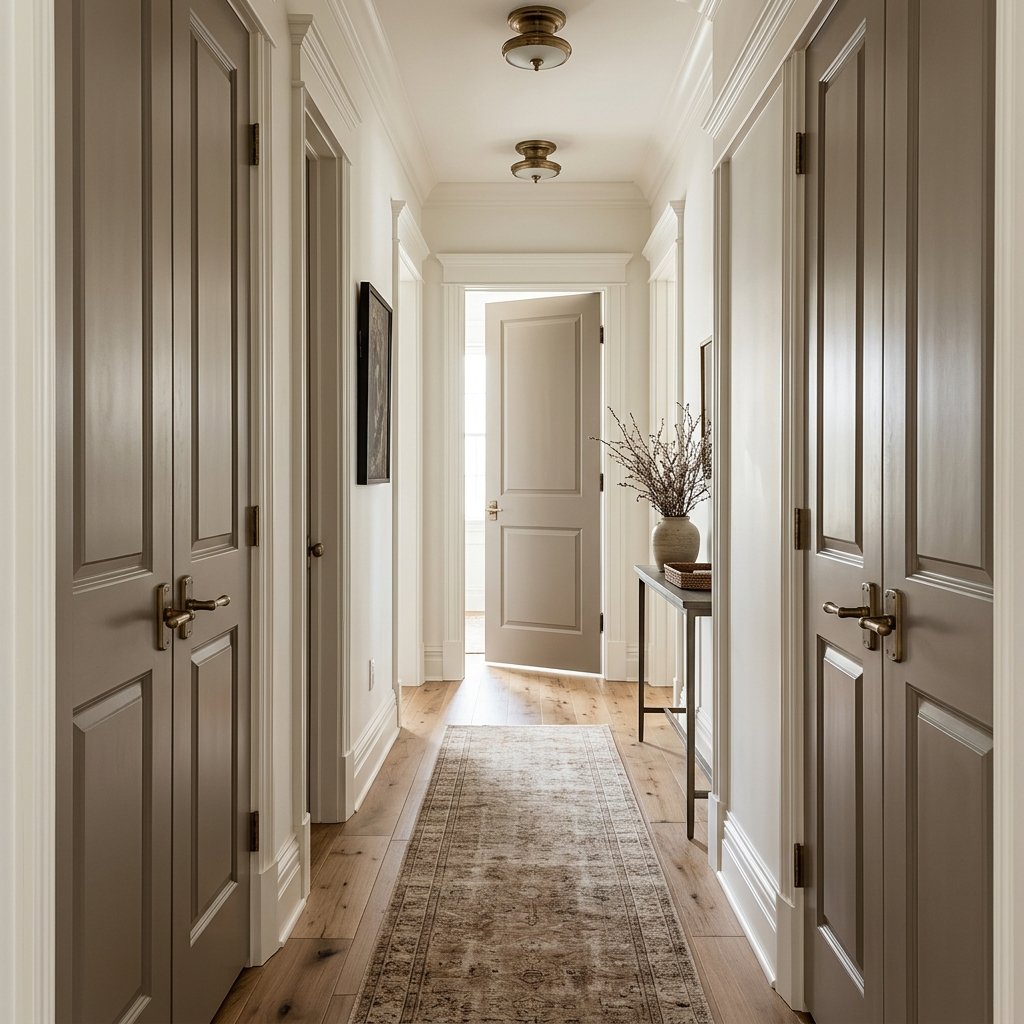
Interior doors are easy to overlook when decorating a home.
We spend plenty of time choosing wall colors, flooring, furniture, and trim, while the doors often stay whatever color they were when we moved in—usually white.
But painting your interior doors can make a surprisingly big difference.
A soft taupe door can warm up white walls. A black door can add crisp architectural contrast. Sage green can bring subtle color into a neutral room, while deep blue or burgundy can turn an ordinary door into an intentional design feature.
And you don’t necessarily need to paint every door in your house the same color.
The best interior door paint colors depend on your walls, trim, flooring, hardware, natural light, decorating style, and how much contrast you want.
If you’re ready to move beyond basic white doors, here are 21 beautiful color directions to consider, plus tips for coordinating doors with trim, choosing a finish, deciding whether to paint both sides, and testing colors before committing.
Should Interior Doors Be White?
They certainly can be.
White doors remain a classic choice because they’re versatile and easy to coordinate with white trim.
But there’s no decorating rule requiring every interior door to be white.
Painted doors can:
- Add contrast
- Introduce color
- Highlight architecture
- Connect rooms
- Make inexpensive doors look more intentional
- Add interest to neutral walls
If your home is mostly white, beige, or greige, painted doors can be an especially effective way to add personality without painting an entire room a stronger color.
How to Choose an Interior Door Color
Don’t choose the door color in isolation.
Look at the entire space.
Consider:
- Wall color
- Trim color
- Flooring
- Cabinetry
- Furniture
- Hardware
- Nearby rooms
- Natural and artificial light
Then decide how much contrast you want.
For subtle contrast, choose a door color only a little deeper than the walls.
For drama, choose something much darker.
For color, select a muted shade that connects with other elements in the room.
1. Warm White
White doors don’t have to be stark.
A warm white can work beautifully in homes with:
- Cream walls
- Warm wood floors
- Beige
- Greige
- Traditional decor
The important thing is coordinating the undertones.
A creamy door next to a much cooler white trim can sometimes make one of the whites look unexpectedly yellow or blue.
Always compare samples directly.
2. Soft Off-White
Off-white is useful when bright white feels too crisp.
It can create a softer transition between warm walls and trim.
Consider an off-white door with:
- Mushroom walls
- Warm beige
- Pale greige
- Natural wood
- Creamy stone
This is a good choice if you want something timeless without much contrast.
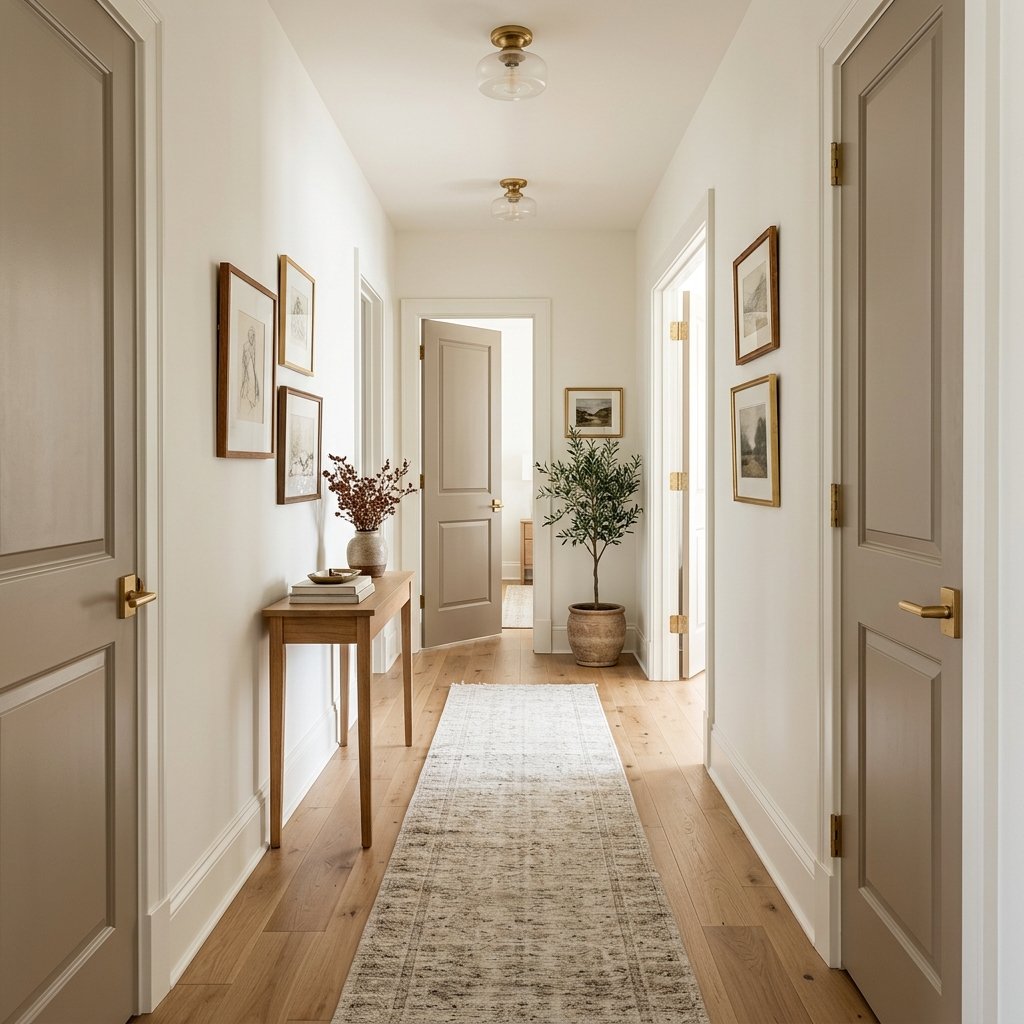
3. Light Greige
Greige sits somewhere between gray and beige, although individual colors can lean significantly warmer or cooler.
A light greige door can provide just enough contrast against warm white walls.
It’s especially useful when the home already contains a combination of:
- Gray
- Beige
- Wood
- White
Keep an eye on undertones so the door doesn’t unexpectedly look violet, green, or overly gray next to the walls.
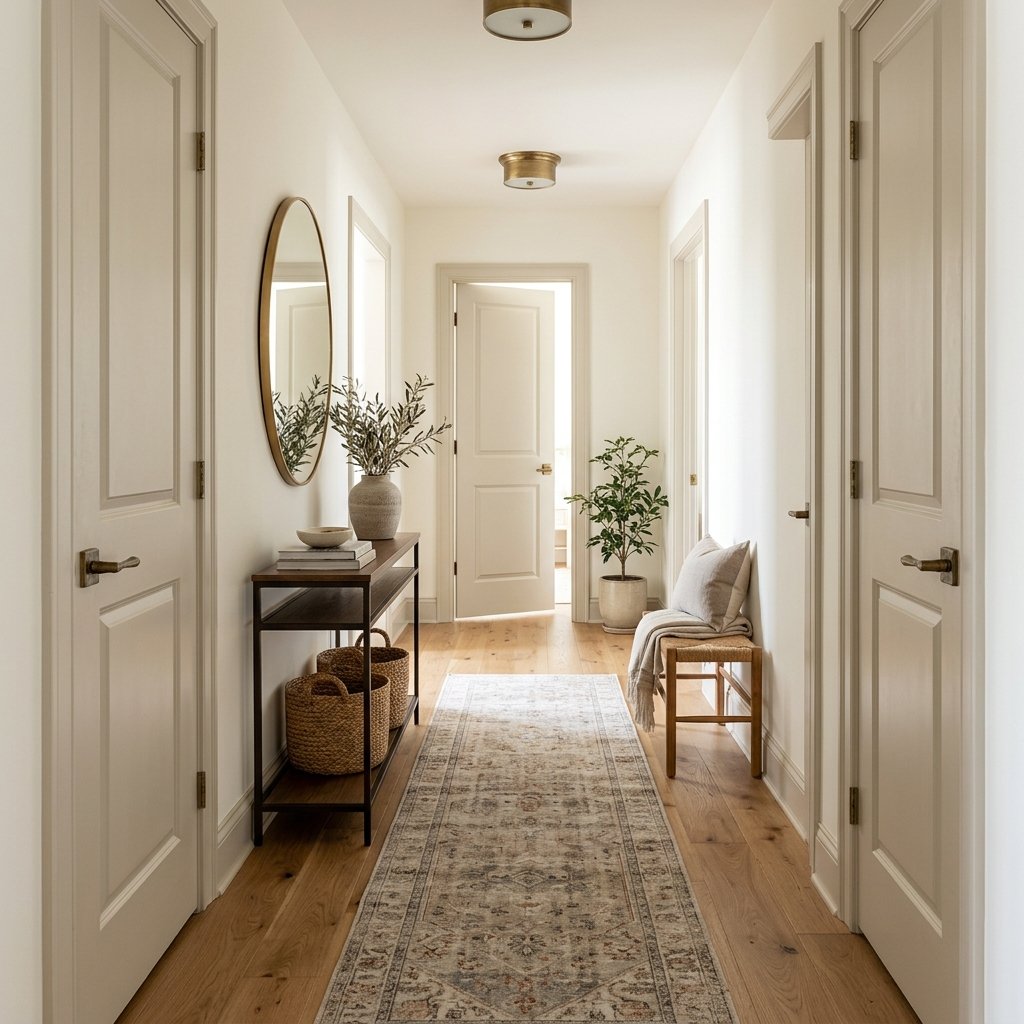
4. Mushroom
Mushroom is one of my favorite color directions for painted interior doors because it offers more depth than greige without feeling extremely dark.
Depending on the specific paint color, mushroom may contain hints of:
- Beige
- Gray
- Brown
- Taupe
It works particularly well with warm white walls and wood floors.
For a soft whole-home palette, try:
Warm white walls + mushroom doors + white trim + oak floors
5. Taupe
Taupe can create a sophisticated, slightly deeper look.
A medium taupe door is beautiful with:
- Cream walls
- Warm white walls
- Natural oak
- Dark wood
- Brass
- Black hardware
Taupe is especially useful when black feels too dramatic but you still want the doors to stand out.
6. Beige
Beige doors can create subtle warmth in a light neutral home.
Choose a beige that relates to the other warm finishes rather than fighting them.
Look at the color beside:
- Flooring
- Upholstery
- Countertops
- Wall paint
A well-chosen beige can almost act like a natural material rather than an obvious painted accent.
7. Putty
Putty colors tend to sit in that useful space between beige, gray, and muted brown.
They’re understated but interesting.
A putty-colored door can work beautifully in:
- Transitional homes
- English-inspired interiors
- Farmhouse spaces
- Organic modern rooms
Pair it with creamy walls and warm metal hardware for a soft, layered effect.
8. Charcoal
If you like dark doors but aren’t sure about black, consider charcoal.
It creates contrast while feeling slightly softer.
Charcoal can work well with:
- White walls
- Greige
- Pale gray
- Natural wood
- Stone
Be sure to sample the color because charcoal paints can reveal blue, green, or violet undertones depending on the light.
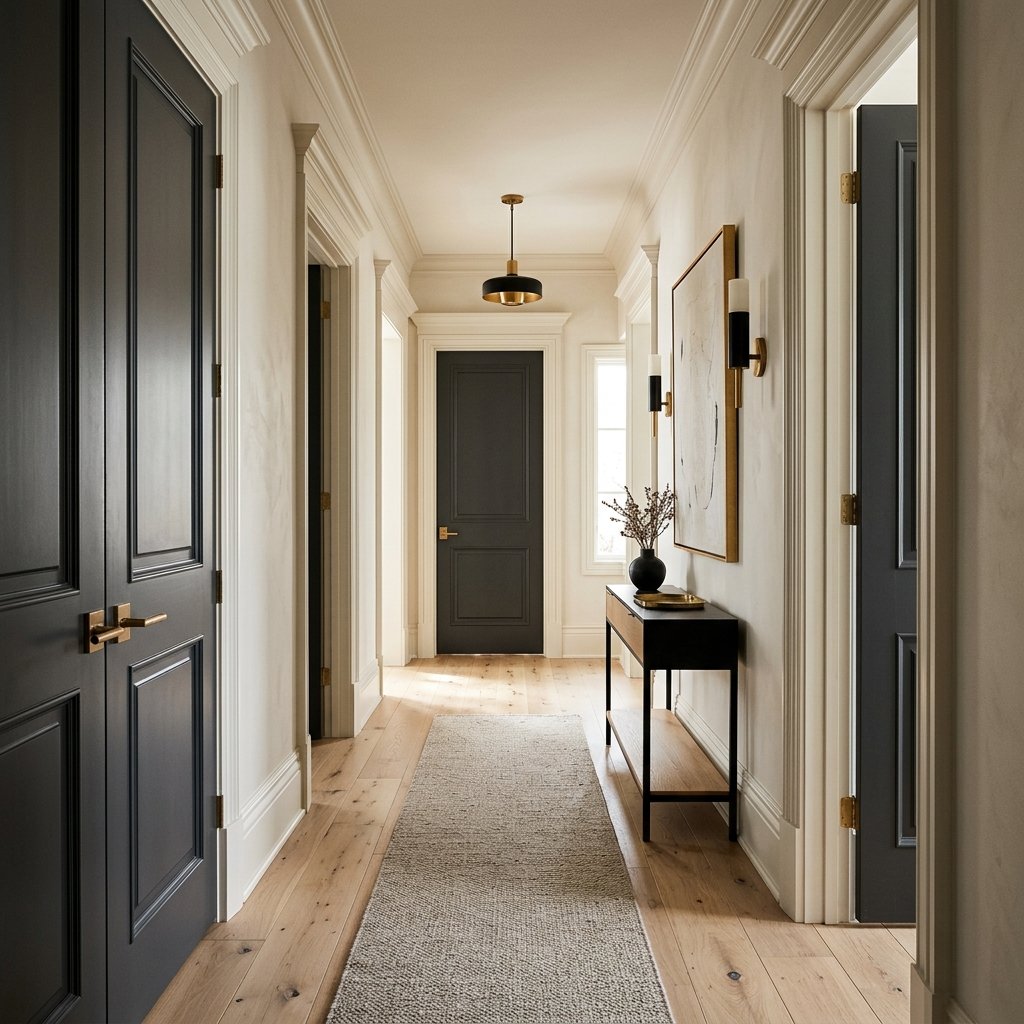
9. Black
Black interior doors can create dramatic architectural definition.
They’re especially effective when repeated throughout a hallway or open area.
Black works beautifully with:
- White walls
- Cream walls
- Light greige
- Wood floors
- Black window frames
But black isn’t automatically right for every home.
In a dim hallway with several doors, painting all of them black may create more visual weight than you want.
Consider the entire sightline before committing.
10. Soft Black
A softer black can be easier to live with than the deepest possible black.
Look for black colors with subtle:
- Brown
- Charcoal
- Warm gray
undertones.
These shades can still provide strong contrast without looking quite as stark against warm interiors.
11. Chocolate Brown
Brown is a beautiful option if you want a dark door that feels warmer than black.
Deep chocolate doors can complement:
- Walnut furniture
- Oak floors
- Cream walls
- Beige upholstery
- Brass hardware
Brown can feel particularly rich in traditional, organic, and vintage-inspired interiors.
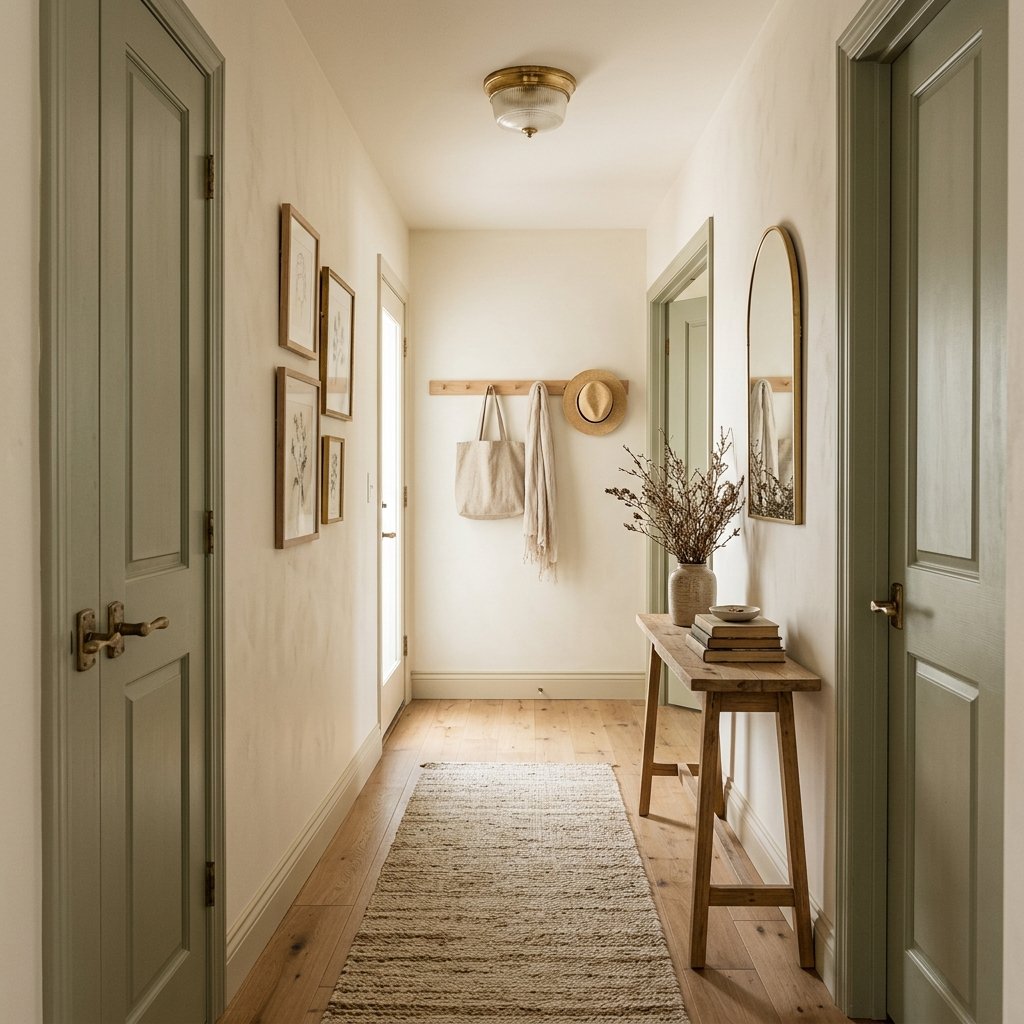
12. Sage Green
Sage green is an easy way to introduce color without making the doors dominate the room.
It works well with:
- Warm white
- Cream
- Beige
- Natural oak
- Medium wood
- Brass
The more muted the green, the more neutral it tends to feel.
Sage can be especially pretty on a pantry door, mudroom door, bathroom door, or a group of hallway doors.
13. Olive Green
Olive has more depth and warmth than many sage greens.
It can create a beautiful earthy look in homes with:
- Warm wood
- Cream
- Brown
- Brass
- Natural textiles
Use a muted olive rather than a very bright yellow-green if you want the color to feel sophisticated.
14. Deep Forest Green
For something more dramatic, consider forest green.
A dark green door can provide much of the contrast of black while introducing richer color.
It looks especially striking with:
- Cream walls
- Warm white
- Medium wood
- Walnut
- Brass
Forest green can be an excellent choice for a home office, library, powder room, or bedroom door.
15. Dusty Blue
Muted blue can bring quiet color into an otherwise neutral interior.
Look for blue with enough gray or softness that it doesn’t feel overly bright.
Dusty blue works well with:
- White
- Cream
- Light gray
- Oak
- Walnut
- Brass
- Polished nickel
It’s particularly pretty in coastal, cottage, and traditional homes.
16. Blue-Gray
Blue-gray offers slightly more color than a standard gray door.
Its appearance can change significantly throughout the day, so sampling is important.
In cool northern light, some blue-grays may look noticeably bluer.
In warmer light, they may appear softer and more neutral.
Compare the sample with your flooring and wall paint at different times of day.
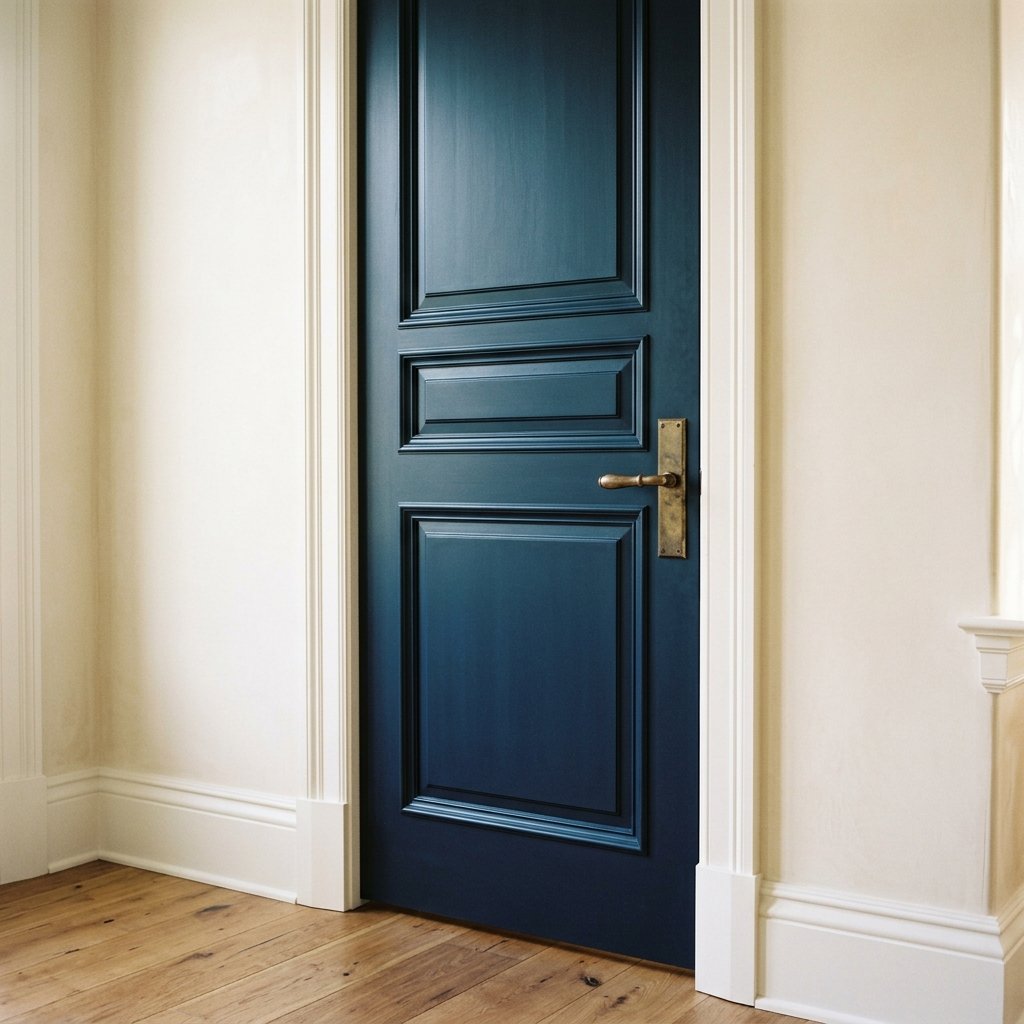
17. Navy Blue
Navy creates strong contrast but can feel softer and more colorful than black.
It works particularly well with:
- White
- Cream
- Pale blue
- Natural wood
- Brass
- Chrome
A navy door can be a great statement on a pantry, home office, powder room, or bedroom.
18. Burgundy
Burgundy is an unexpected but beautiful door color.
Look for a muted version rather than an extremely bright red.
It can bring warmth and depth to interiors with:
- Cream
- Taupe
- Brown
- Dark wood
- Brass
Burgundy works especially well in traditional or vintage-inspired homes.
19. Muted Terracotta
Terracotta brings an earthy warmth that can make a neutral room feel much more interesting.
A subdued clay-colored door pairs nicely with:
- Warm white
- Cream
- Beige
- Sage
- Natural wood
Because orange undertones can become much stronger in certain light, sample terracotta carefully before painting several doors.
20. Dusty Rose
Pink doors don’t need to feel childish.
A muted dusty rose can act almost like a warm neutral.
Try it with:
- Cream walls
- Mushroom
- Taupe
- Warm wood
- Brass
This can be a particularly pretty choice for a bedroom, closet, bathroom, or feminine home office.
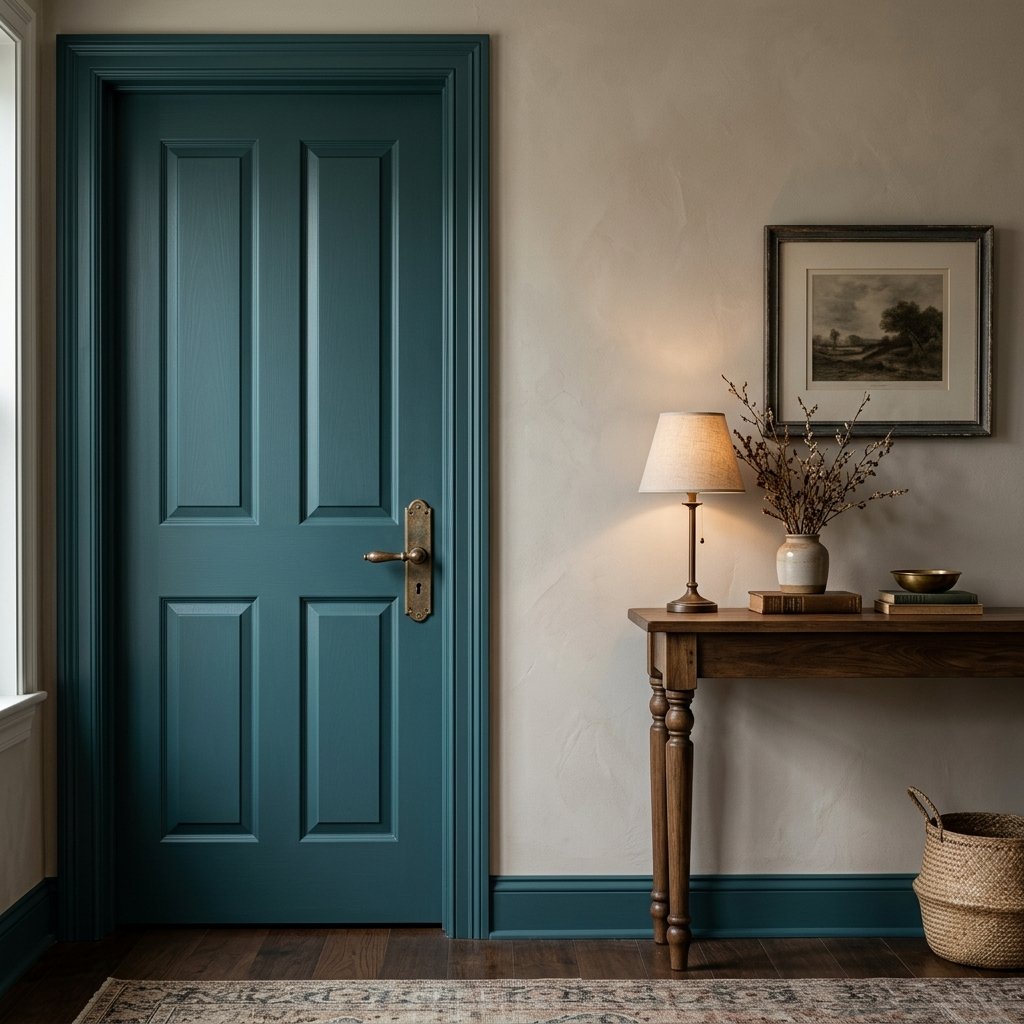
21. Deep Teal
Deep teal combines blue and green for a richer statement.
It can work beautifully with warm neutrals and wood.
Because teal is more distinctive than sage or navy, use it where you intentionally want the door to become part of the room’s color story.
A single teal door can become a focal point without requiring every door in the house to match.
Should Interior Doors Match the Trim?
They can, but they don’t have to.
You have several options.
Same Color Door and Trim
This creates a seamless, traditional look.
For example:
White door + white trim
Contrasting Door With White Trim
This outlines the door and creates more definition.
For example:
Taupe door + white trim
Door and Trim in the Same Contrasting Color
This can create a more contemporary or color-drenched appearance.
For example:
Mushroom door + mushroom trim
The right choice depends on how much contrast you want.
Should All Interior Doors Be the Same Color?
No.
Using one door color throughout the house can create continuity, but it’s not mandatory.
You might paint:
- Main hallway doors one color
- Pantry door another
- Powder room door another
- Closet doors to match walls
The key is making the variation feel intentional.
If every door is a different color without any relationship to the surrounding rooms, the house can start to feel visually disconnected.
Should You Paint Both Sides of an Interior Door the Same Color?
Not necessarily.
A door can relate to the room on each side.
For example, a bedroom-facing side might be sage while the hallway-facing side is taupe.
However, you’ll need to decide how to handle the door edges.
The details can become more noticeable when the two sides are dramatically different.
Think through how the door looks both open and closed before painting.
What Color Should the Door Edge Be?
There isn’t one universal rule.
A practical approach is to decide which color makes the most visual sense when the door is open.
If you’re using different colors on each side, carefully plan where the transition occurs.
Painter’s tape and a clean paint line become especially important.
What Color Hardware Goes With Painted Doors?
Hardware can change the entire look.
Brass
Beautiful with:
- Sage
- Olive
- Navy
- Burgundy
- Mushroom
- Black
Black
Works well with:
- White
- Greige
- Sage
- Wood tones
- Taupe
Polished Nickel or Chrome
Can provide crisp contrast with:
- Blue
- Gray
- White
- Charcoal
You don’t need to choose hardware solely according to the door.
Consider nearby lighting, plumbing fixtures, and cabinet hardware too.
Interior Door Colors With White Walls
White walls provide the most flexibility.
Try:
- Mushroom
- Taupe
- Black
- Charcoal
- Sage
- Olive
- Navy
- Burgundy
For subtle contrast, choose greige or putty.
For drama, choose black or forest green.
Interior Door Colors With Beige Walls
Beige walls generally look best with colors that respect their warmth.
Consider:
- Cream
- Mushroom
- Taupe
- Brown
- Olive
- Warm black
A very icy gray door may clash with a particularly warm beige wall.
Compare actual samples before deciding.
Interior Door Colors With Gray Walls
First identify whether the gray is warm or cool.
Warm gray walls may work with:
- Greige
- Mushroom
- Black
- Sage
Cooler gray walls may coordinate well with:
- Charcoal
- Blue-gray
- Navy
- Crisp white
Undertones matter more than the color name.
Interior Door Colors With Wood Floors
Wood floors already provide warmth and color.
Instead of matching the door to the floor, coordinate with its undertone.
Warm oak may look beautiful with:
- Cream
- Mushroom
- Sage
- Olive
- Soft black
Darker walnut floors can work with:
- Warm white
- Taupe
- Deep green
- Charcoal
- Burgundy
Compare samples directly beside the flooring whenever possible.
What Paint Finish Is Best for Interior Doors?
Interior doors typically benefit from a durable, washable coating designed for trim and doors.
Depending on the paint line, suitable sheen options may include:
- Satin
- Semi-gloss
- Other trim-specific finishes
Higher sheen generally highlights surface imperfections more than flatter paint.
The exact product and finish should be selected according to the paint manufacturer’s recommendations for doors and trim.
Should Walls and Doors Have the Same Sheen?
They don’t need to.
Walls are often painted in a lower sheen, while doors and trim may use a more durable finish with greater washability.
Even if you use the same color on the walls and doors, changing the sheen can create subtle contrast.
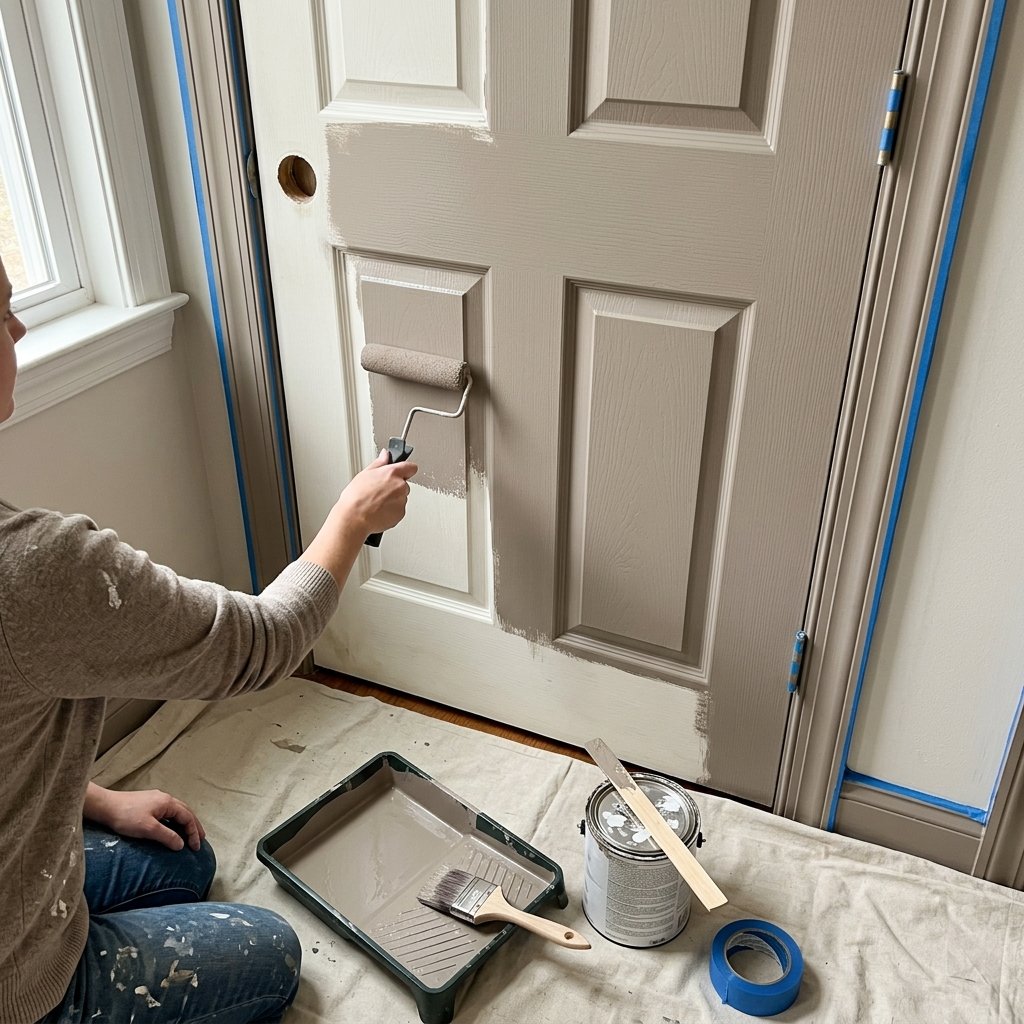
How to Paint Interior Doors
Painting a door isn’t difficult, but preparation matters.
1. Check the Existing Surface
Determine whether you’re working with previously painted wood, factory-finished material, bare wood, or another surface.
Preparation can vary.
2. Remove or Protect Hardware
Removing knobs or levers usually makes painting easier.
3. Clean the Door
Remove dirt, fingerprints, grease, and residue.
4. Repair Damage
Fill appropriate dents or holes and allow repairs to dry.
5. Sand or Degloss if Required
Follow the coating manufacturer’s preparation instructions.
Wear appropriate protective equipment and manage dust safely.
Older painted surfaces may require additional precautions before sanding because older coatings can contain hazardous materials.
6. Prime When Necessary
Primer requirements depend on the existing finish, door material, and paint product.
7. Apply the Door Paint
Use tools appropriate for the door style and coating.
Paneled doors generally require a logical painting sequence to maintain a smooth finish.
8. Allow Proper Drying and Curing
Don’t immediately close a freshly painted door against the frame.
Follow manufacturer drying and recoating times, and remember that full curing can take longer than surface drying.
Provide appropriate ventilation while painting.
How to Test an Interior Door Paint Color
Never choose a whole-house door color from a tiny paint chip alone.
Test it.
Look at the color:
- Beside the wall
- Beside the trim
- Against the floor
- In daylight
- At night
- With lights turned on
If you’re painting multiple doors, test a large sample before committing to all of them.
A color can look dramatically darker when covering an entire door than it does on a small card.
How Dark Should Interior Doors Be?
There’s no correct depth.
For subtle contrast, choose something only moderately darker than the walls.
For architectural drama, go significantly darker.
If your hallway has many doors, remember that a very dark color will repeat several times.
One black door may feel striking.
Six black doors in a narrow hallway create a much stronger effect.
How to Make Builder-Grade Doors Look Better
Paint is one of the easiest solutions.
A contrasting color can make even a simple door look more intentional.
You can also consider:
- New hardware
- Upgraded hinges where appropriate
- Added molding suitable for the door construction
- Fresh trim paint
Don’t overload a simple door with unnecessary detail.
Sometimes a beautiful color and new lever are enough.
Common Mistakes When Choosing Interior Door Paint Colors
Choosing the Color Without Comparing It to the Walls
Undertones can clash.
Testing Only a Tiny Swatch
Use a larger sample.
Forgetting About the Flooring
Floors strongly influence how a door color reads.
Painting Every Door Dark Without Considering the Hallway
Repeated dark elements can add significant visual weight.
Assuming Doors and Trim Must Match
Contrast can be beautiful.
Using Wall Paint Without Considering Durability
Choose a product appropriate for doors and trim.
Skipping Preparation
A beautiful color won’t compensate for peeling or poorly adhered paint.
Closing the Door Too Soon
Allow adequate drying and curing according to the coating instructions.
FAQ About Interior Door Paint Colors
What is the most popular color for interior doors?
White remains a classic choice, but mushroom, taupe, black, charcoal, sage, olive, and other muted colors are beautiful alternatives when you want more contrast.
Should interior doors match the wall color?
They can, but they don’t need to. Matching creates a quieter appearance, while contrasting doors add architectural definition.
Should interior doors match the trim?
Not necessarily. A contrasting door with lighter trim is a common way to emphasize the door.
Are black interior doors still a good idea?
Black can be a timeless, high-contrast option when it works with the home’s palette. Consider the amount of natural light and number of doors visible together before using it throughout the house.
What color doors go with white walls?
Almost anything. Mushroom, taupe, black, charcoal, sage, olive, navy, and burgundy can all provide attractive contrast depending on the room.
What color doors go with wood floors?
Coordinate with the flooring’s undertones rather than trying to match it exactly. Warm wood floors often pair beautifully with cream, mushroom, taupe, green, and warm dark colors.
Can I paint each side of a door a different color?
Yes. This can help the door coordinate with the room on each side. Plan the door-edge color and transition carefully.
What paint finish should I use on interior doors?
A durable, washable paint designed for doors and trim is generally appropriate. Follow the specific manufacturer’s guidance regarding product, preparation, and sheen.
Final Thoughts
Choosing interior door paint colors is an easy way to add character to a home without changing every wall.
And white isn’t your only option.
If you want something subtle, consider:
Greige, mushroom, putty, or taupe.
If you want earthy color, try:
Sage, olive, or dusty blue.
For stronger contrast, look at:
Charcoal, black, chocolate brown, forest green, or navy.
And for something more unexpected:
Burgundy, terracotta, dusty rose, or deep teal can turn a basic interior door into a genuine design feature.
The most important step is testing the color with the finishes you already have.
Look at the wall color, trim, flooring, furniture, and hardware together rather than selecting the door color in isolation.