

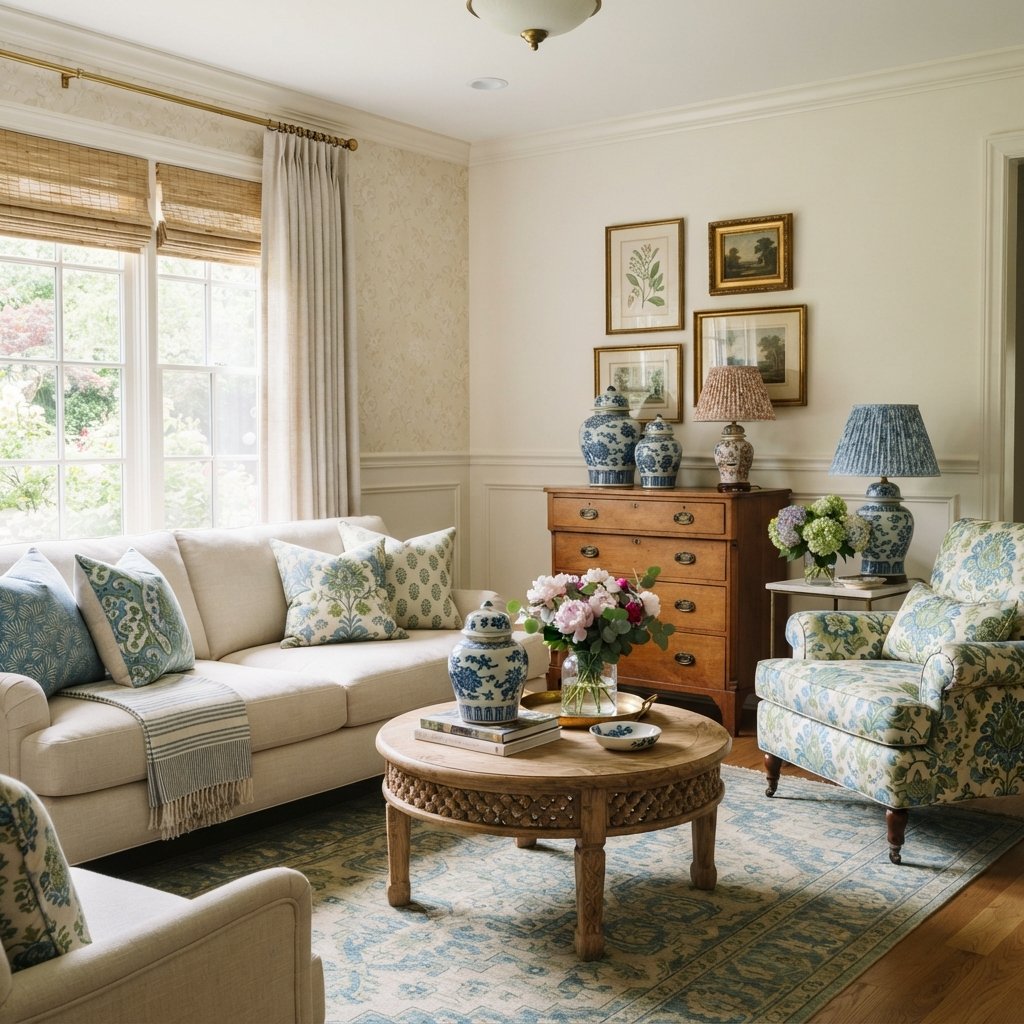
If you love floral fabric, pleated lampshades, antique furniture, blue-and-white pottery, wallpaper, skirted tables, and rooms that feel collected rather than perfectly coordinated, you may already be drawn to grandmillennial style.
But what is grandmillennial style, exactly?
Grandmillennial decorating takes many elements associated with traditional interiors—often the kinds of things you might have seen in a grandparent’s beautifully decorated home—and mixes them with a fresher, more contemporary point of view.
Think:
Traditional patterns + vintage furniture + classic details + playful color + modern editing.
The result can feel cozy, layered, personal, and timeless rather than formal or stuffy.
And despite the name, grandmillennial style isn’t about filling your house with everything old-fashioned.
The most successful rooms balance traditional decorating with enough simplicity to keep the space feeling current.
If you’re curious about this increasingly familiar decorating term, here’s what grandmillennial style means, the elements that define it, and 17 approachable ways to bring the look into your own home.
What Is Grandmillennial Style?
Grandmillennial style is a contemporary interpretation of traditional decorating.
The term is generally used to describe younger decorators and homeowners embracing design elements once associated with older generations.
That can include:
- Floral prints
- Chintz
- Wallpaper
- Antique furniture
- Needlepoint
- Skirted tables
- Pleated lampshades
- Ruffles
- Blue-and-white ceramics
- Wicker and rattan
- Traditional artwork
- Patterned upholstery
But grandmillennial interiors aren’t simply replicas of a grandmother’s house.
They usually mix those traditional elements with fresher colors, more relaxed furniture arrangements, cleaner editing, and contemporary conveniences.
That’s what keeps the style feeling nostalgic without becoming a time capsule.
Why Is It Called Grandmillennial?
The name combines ideas associated with grandmother-style decorating and younger generations rediscovering traditional design.
You may also see related phrases such as:
- Granny chic
- New traditional
- Updated traditional
- Neo-traditional
These terms can overlap, although they aren’t necessarily interchangeable.
The easiest way to understand grandmillennial style is to think of it as traditional decorating with a younger, playful perspective.
Is Grandmillennial Style the Same as Traditional Style?
Not exactly.
Traditional interiors often emphasize:
- Symmetry
- Classic furniture
- Refined materials
- Formal layouts
- Historical references
Grandmillennial style borrows heavily from that foundation but tends to feel more whimsical and collected.
It may combine an antique chest with a colorful floral chair, a traditional lamp with a patterned shade, and an old-fashioned skirted table with contemporary artwork.
It doesn’t take itself quite as seriously.
1. Start With Traditional Furniture
You don’t need to replace everything you own.
One or two traditional furniture pieces can establish the style.
Consider:
- Antique chest
- Wood side table
- Traditional dresser
- Pedestal table
- Secretary desk
- Curved-arm chair
Real antiques are wonderful when they suit your budget and lifestyle, but vintage and antique-inspired pieces can also work.
Look for character rather than perfection.
A few scratches on an old wood chest may actually make the room more interesting.
2. Bring in Floral Patterns
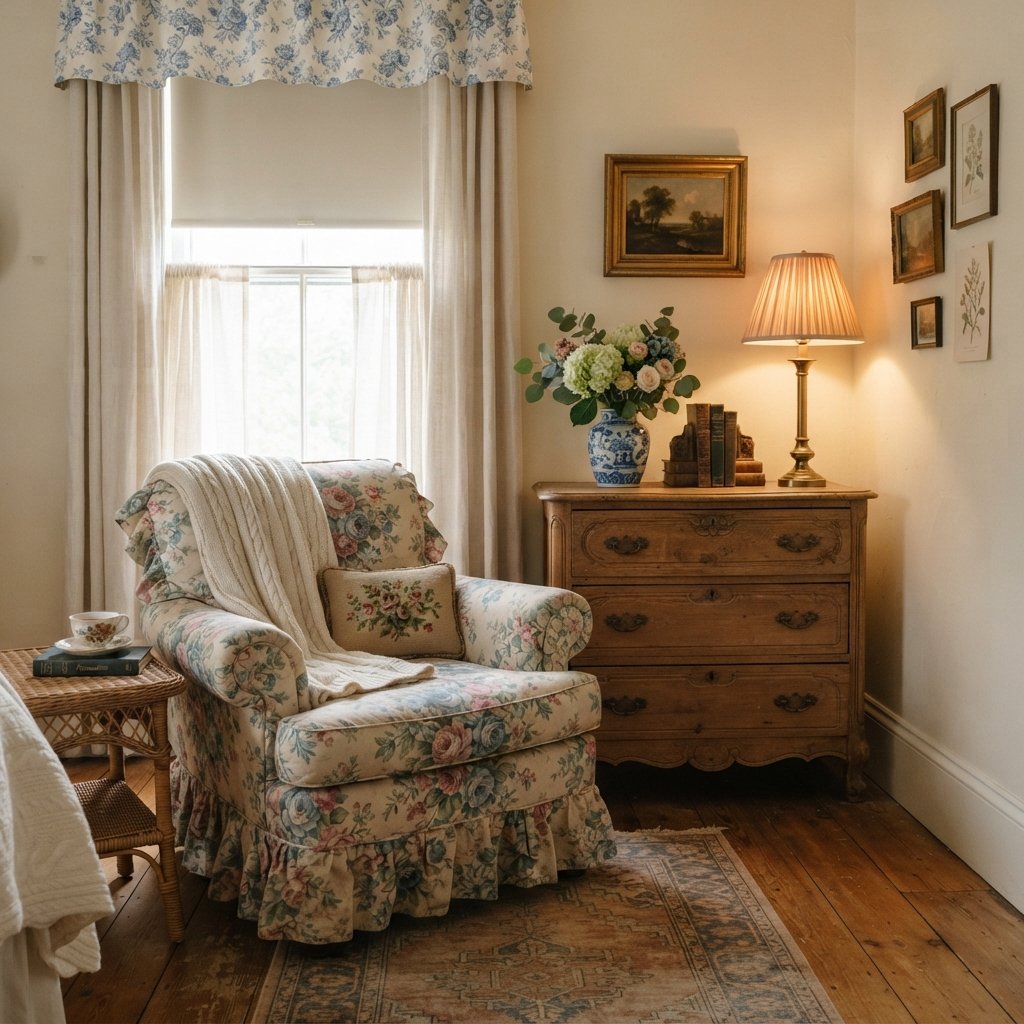
Florals are one of the easiest ways to recognize grandmillennial decorating.
They can appear on:
- Curtains
- Pillows
- Upholstery
- Wallpaper
- Bedding
- Lampshades
The trick is not making every floral identical.
Try combining a larger floral with a smaller geometric or stripe.
For example:
Large floral curtains + small check pillow + solid sofa
creates more visual variety than using the same floral pattern everywhere.
3. Try Chintz
Chintz is strongly associated with classic English and traditional interiors and fits naturally into grandmillennial decorating.
You don’t have to cover an entire sofa in it.
Start small with:
- Pillow
- Chair
- Curtain panel
- Lampshade
If the pattern is busy, surround it with a few quieter elements.
4. Add Wallpaper
Wallpaper is a natural fit for grandmillennial interiors.
Botanical, floral, stripe, and small-scale repeating patterns can all work.
Consider wallpaper in a:
- Powder room
- Bedroom
- Dining room
- Entryway
- Closet
A small room can be a particularly fun place to use a more adventurous pattern.

5. Decorate With Blue and White
Blue and white is one of the easiest palettes for this style.
It can appear through:
- Ginger jars
- Vases
- Lamps
- Plates
- Bowls
- Pillows
- Wallpaper
You don’t need a huge collection.
Even two or three blue-and-white pieces grouped together can create the effect.
Mix different patterns rather than trying to make every piece identical.
6. Display Traditional Ceramics
Decorative ceramics can bring color and history into a room.
Try:
- Ginger jars
- Vases
- Bowls
- Plates
- Small pitchers
A few collected pieces usually look more intentional than covering every surface.
Use them on:
- Mantel
- Bookshelf
- Console
- Dining hutch
7. Use Pleated Lampshades
A pleated or patterned lampshade can completely change a basic lamp.
Look for:
- Block-print patterns
- Small florals
- Checks
- Stripes
- Solid pleated fabric
This is one of the easiest ways to experiment with grandmillennial style without making a major decorating commitment.
Just make sure the shade is appropriately sized and suitable for the lamp and bulb according to manufacturer guidance.
8. Add a Skirted Table
Skirted tables are another traditional detail that has found new life in collected interiors.
Use one as a:
- Bedside table
- Entry table
- Living room side table
The fabric provides another opportunity for pattern.
If the surrounding room is already busy, use a simple solid or small-scale print.

9. Mix Patterns Carefully
Grandmillennial style loves pattern.
But there’s a difference between layered and chaotic.
A simple approach is to vary the pattern scale.
For example:
Large floral + medium stripe + small check + solid
This gives your eye places to rest.
Repeating one or two colors throughout the patterns also helps connect them.
10. Bring in Checks and Gingham
Checks provide structure beside softer florals.
Use them on:
- Pillows
- Chair upholstery
- Tablecloth
- Curtains
- Bedding
Blue, green, red, and neutral checks can all work depending on your palette.
A small gingham pillow can be enough to break up several floral patterns.
11. Add Needlepoint Details
Needlepoint is one of those traditional crafts that feels perfectly at home in grandmillennial rooms.
A needlepoint pillow can introduce:
- Pattern
- Humor
- Color
- Handmade character
You don’t need a matching collection.
One interesting pillow on an otherwise classic chair can be more effective.
12. Use Wicker and Rattan
Grandmillennial interiors aren’t made entirely from dark antique wood.
Wicker and rattan help keep things lighter and more casual.
Try:
- Wicker side table
- Rattan chair
- Woven tray
- Cane-front cabinet
- Wicker basket
Natural woven materials also pair beautifully with floral fabric and blue-and-white ceramics.
13. Mix Old and New Furniture
This is one of the most important parts of the style.
If every item looks antique, the room may start feeling like a period set.
Instead, combine eras.
For example:
Modern sofa + antique chest + floral chair + contemporary coffee table
or:
Simple upholstered bed + vintage dresser + patterned lampshades
The contrast makes the traditional pieces feel intentional.

14. Use Traditional Art
Artwork can reinforce the collected feeling.
Consider:
- Landscapes
- Botanical prints
- Portraits
- Still lifes
- Vintage-style illustrations
Mix frame styles rather than buying a perfectly coordinated set.
Wood, brass, and painted frames can look beautiful together when the artwork shares a common mood or palette.
15. Hang Plates on the Wall
Decorative plates aren’t limited to dining cabinets.
A small plate wall can add shape and color where framed art feels too predictable.
Try a collection:
- Over a console
- In a dining room
- Around a doorway
- On a narrow wall
Use secure hanging hardware appropriate for the plate weight and wall construction.
Avoid mounting fragile or heavy objects over places where a fall could cause injury.
16. Add Trims, Piping, and Small Details
Grandmillennial style often celebrates the little details that minimalist interiors remove.
That might include:
- Contrast piping
- Tassels
- Fringe
- Scalloped edges
- Pleats
- Decorative trim
The secret is restraint.
A floral pillow with contrasting piping can be charming.
Piping, fringe, tassels, ruffles, scallops, and bows all in one place may feel excessive.
17. Keep Some Areas Simple
This is what prevents grandmillennial decor from feeling cluttered.
Not every surface needs a collection.
Not every chair needs a patterned pillow.
Not every wall needs wallpaper.
Let some areas breathe.
A solid sofa can balance floral curtains.
Simple walls can balance patterned upholstery.
An uncluttered coffee table can calm a room full of traditional details.

Grandmillennial Color Palettes
There’s no single grandmillennial palette.
However, certain combinations work particularly well.
Blue and White
Probably the easiest place to start.
Add:
- Warm wood
- Green
- Brass
for additional depth.
Green and Cream
Try:
- Sage
- Leaf green
- Olive
- Warm cream
This palette works beautifully with botanical patterns.
Pink and Green
For a playful traditional look, combine muted pink with fresh or earthy greens.
Blue, Green, and White
This combination feels fresh, classic, and easy to layer.
Burgundy, Blue, and Cream
For something moodier, use richer traditional colors against warm neutrals.
How to Make Grandmillennial Style Feel Modern
The biggest concern people often have is making the room feel too old-fashioned.
A few choices can help.
Use Fewer Pieces
Edit collections instead of displaying everything.
Include Simple Furniture
Pair ornate pieces with cleaner shapes.
Use Fresh Color
Traditional patterns don’t have to use muddy colors.
Keep the Layout Relaxed
Avoid making every room overly formal.
Add Contemporary Art
Modern art can create interesting contrast with antique furniture.
Leave Empty Space
Not every wall and tabletop needs decoration.
Grandmillennial Living Room Ideas
Start with a relatively simple sofa.
Then add personality through:
- Floral chair
- Patterned pillows
- Antique side table
- Pleated lamp
- Blue-and-white ceramics
- Traditional art
This approach allows you to change smaller pieces over time without replacing the largest furniture.
Grandmillennial Bedroom Ideas
Bedrooms are particularly suited to this style because fabric can play such a large role.
Try:
- Floral curtains
- Patterned headboard
- Pleated lampshades
- Antique dresser
- Traditional artwork
- Embroidered pillow
If you use patterned wallpaper, consider keeping the bedding simpler.

Grandmillennial Dining Room Ideas
Dining rooms can handle more traditional details.
Consider:
- Wood dining table
- Patterned chair seats
- Traditional chandelier
- Wallpaper
- Vintage hutch
- Collected china
A dining room is also a natural place to display blue-and-white plates or other ceramics.
Grandmillennial Bathroom Ideas
A powder room is one of the easiest places to experiment.
Try:
Wallpaper + brass mirror + traditional sconce + framed art
You can get a strong grandmillennial look without adding much furniture.
Grandmillennial Kitchen Ideas
You don’t need floral kitchen cabinets.
Instead, introduce the style through smaller elements:
- Cafe curtains
- Patterned Roman shade
- Vintage artwork
- Brass hardware
- Traditional runner
- Collected ceramics
- Skirted sink or cabinet detail where practical
These elements can soften a newer kitchen.
Grandmillennial Entryway Ideas
An entryway can set the tone immediately.
Try an antique or antique-inspired chest topped with:
- Lamp
- Small dish
- Ginger jar
- Framed artwork
Add a patterned rug and traditional mirror.
That’s often enough.
Grandmillennial Style on a Budget
You don’t need expensive antiques.
This style actually works particularly well with secondhand decorating.
Look for:
- Wood furniture
- Lamps
- Frames
- Ceramics
- Baskets
- Art
- Small tables
Then update items selectively.
A secondhand lamp may only need a new shade.
An old wood dresser may look beautiful after cleaning rather than painting.
And inexpensive fabric can transform a basic pillow.
What to Buy First for a Grandmillennial Room
Don’t buy twenty accessories at once.
Start with one anchor.
That might be:
- Floral chair
- Antique chest
- Patterned curtains
- Wallpaper
- Traditional rug
Then build around it.
For example:
Floral chair → pull blue for pillows → add blue-and-white jar → repeat wood tone with side table
The room develops naturally instead of looking like you purchased a themed decorating set.
Grandmillennial vs. Cottage Style
These styles overlap, but cottage decorating often feels more relaxed and rustic.
Grandmillennial interiors tend to include more intentionally traditional elements such as:
- Chintz
- Pleated shades
- Antiques
- Needlepoint
- Classic ceramics
A room can easily contain elements of both.
Grandmillennial vs. Coastal Grandmother Style
Coastal grandmother style tends to emphasize:
- Linen
- Natural textures
- Pale neutrals
- Blue
- Relaxed coastal references
Grandmillennial style generally embraces more:
- Pattern
- Traditional furniture
- Florals
- Decorative details
- Collected objects
They can overlap beautifully, particularly through blue-and-white palettes, wicker, and traditional wood furniture.
Grandmillennial vs. Modern Farmhouse
Modern farmhouse typically relies more heavily on:
- Simple neutral palettes
- Rustic wood
- Black accents
- Casual furniture
Grandmillennial style is usually more colorful, patterned, traditional, and decorative.
If you already have a farmhouse-style home, you don’t have to replace everything.
Adding floral textiles, antique furniture, and traditional art can gradually shift the room.
How to Mix Grandmillennial Style With Modern Decor
The contrast can be beautiful.
Keep your:
- Simple sofa
- Clean coffee table
- Contemporary lighting
Then add:
- Antique chest
- Floral pillow
- Pleated shade
- Vintage landscape
- Blue-and-white ceramic
A few traditional pieces can make modern furniture feel warmer and more personal.
Common Grandmillennial Decorating Mistakes
Using Too Many Patterns at the Same Scale
Vary large, medium, and small patterns.
Making Everything Match
A collected room should contain some variation.
Buying Too Many Reproduction “Vintage” Accessories
Mix new items with genuinely old or secondhand pieces when possible.
Filling Every Surface
Collections need breathing room.
Making Every Furniture Piece Traditional
Mix eras to keep the room fresh.
Ignoring Function
A room still needs comfortable seating and practical storage.
Turning It Into a Theme
Grandmillennial should feel collected, not like a costume.
Forgetting Your Own Taste
Don’t add needlepoint, chintz, or blue-and-white pottery simply because they’re associated with the style.
Choose the elements you genuinely enjoy.
FAQ About Grandmillennial Style
What is grandmillennial style?
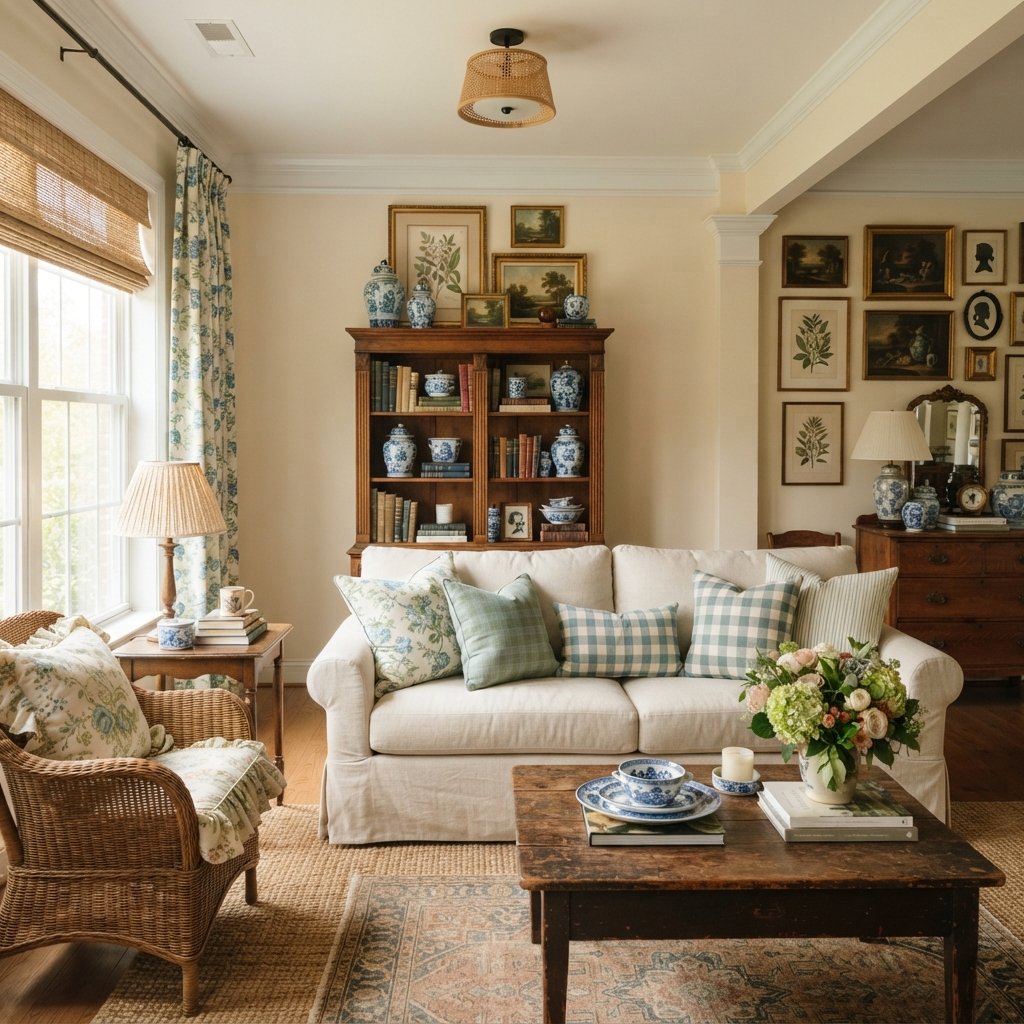
Grandmillennial style is a fresh interpretation of traditional decorating that mixes elements such as floral prints, antiques, wallpaper, pleated lampshades, blue-and-white ceramics, and classic furniture with a younger, more relaxed approach.
Why is it called grandmillennial?
The name refers to younger generations embracing decorating elements historically associated with their grandparents’ homes and traditional interiors.
Is grandmillennial style outdated?
The style intentionally incorporates older design elements, but the goal is to reinterpret them rather than reproduce a room from a previous era.
What colors are used in grandmillennial decor?
Blue, white, green, cream, pink, burgundy, and other classic colors are common, but there’s no required palette.
Is grandmillennial style the same as granny chic?
The terms are often used in similar contexts, although definitions can vary. Both generally describe renewed interest in traditional, nostalgic, and decorative interiors.
What patterns work with grandmillennial style?
Florals, chintz, gingham, checks, stripes, botanical prints, and traditional repeating patterns all work well.
Can grandmillennial style be minimalist?
Traditional grandmillennial decorating tends to be layered, but you can create a more restrained version by using only a few key elements, such as an antique table, floral fabric, and pleated lampshade.
How do I start decorating in grandmillennial style?
Choose one traditional anchor piece or pattern you love. Build around it slowly with vintage furniture, textiles, ceramics, art, or decorative lighting rather than purchasing an entire room at once.
Final Thoughts
So, what is grandmillennial style?
At its heart, it’s a fresh appreciation for traditional decorating.
It’s floral fabric without feeling overly formal.
Antique furniture mixed with a newer sofa.
Blue-and-white pottery beside contemporary artwork.
A pleated lampshade on a secondhand lamp.
Wallpaper in a powder room.
A needlepoint pillow that adds just enough personality.
The style works because it isn’t supposed to look perfectly coordinated.
It should feel as though your home developed over time.
If you’re interested in trying it, don’t start by filling your shopping cart with everything labeled “grandmillennial.”
Start with something you genuinely love.
Maybe that’s your grandmother’s old dresser.
Maybe it’s a floral fabric.
Maybe it’s a blue-and-white ginger jar you found secondhand.
Use that as your starting point and slowly layer in other elements.
Mix patterns, but vary their scale.
Use antiques, but mix them with newer furniture.
Add decorative details, but leave some empty space.
Most importantly, don’t treat grandmillennial decorating like a checklist.
The charm comes from combining traditional pieces with your own personality.
When you get that balance right, the result feels less like you’re recreating your grandmother’s house—and more like you’re giving some of its best ideas a new home.