

Designing a bedroom for a tween boy can be surprisingly tricky.
He’s probably outgrown the little-kid bedroom filled with themed bedding, toys, and playful wall decor—but he’s not quite ready for a completely grown-up bedroom either.
The goal is to find the middle.
A great tween boy bedroom design should reflect his personality now while giving the room enough flexibility to change as he gets older.
That usually means creating a neutral foundation and bringing his current interests into the room through things that are relatively easy to replace.
Think paint, furniture, storage, and lighting for the long term.
Then use bedding, artwork, collections, sports gear, books, and accessories to make the bedroom feel like his.
Whether you’re decorating a small bedroom, updating a former little-boy room, or starting completely from scratch, these tween bedroom ideas can help you create a space that’s cool, comfortable, organized, and practical enough to last through the teenage years.
Start With How He Uses the Room
Before choosing paint colors or ordering a new bed, think about what actually happens in the bedroom.
A tween may need space for:
- Sleeping
- Homework
- Reading
- Getting dressed
- Hobbies
- Collections
- Books
- Sports equipment
- Hanging out
- Gaming
- Music
Not every bedroom needs every zone.
In a small room, the desk might double as a nightstand.
In a larger bedroom, you may be able to create a separate reading or lounging area.
Design around real life rather than trying to recreate a perfect inspiration photo.
1. Let Him Be Part of the Design
A tween is old enough to have real opinions about his bedroom.
Ask what he likes.
But instead of asking an enormous question like:
“What do you want your room to look like?”
give him a few manageable choices.
For example:
Dark blue, green, or gray walls?
Wood or black furniture?
Sports prints or travel photography?
This gives him ownership without requiring him to design the entire room.
2. Skip the Full-Room Theme
Themes can be fun for younger children’s rooms, but tweens’ interests can change quickly.
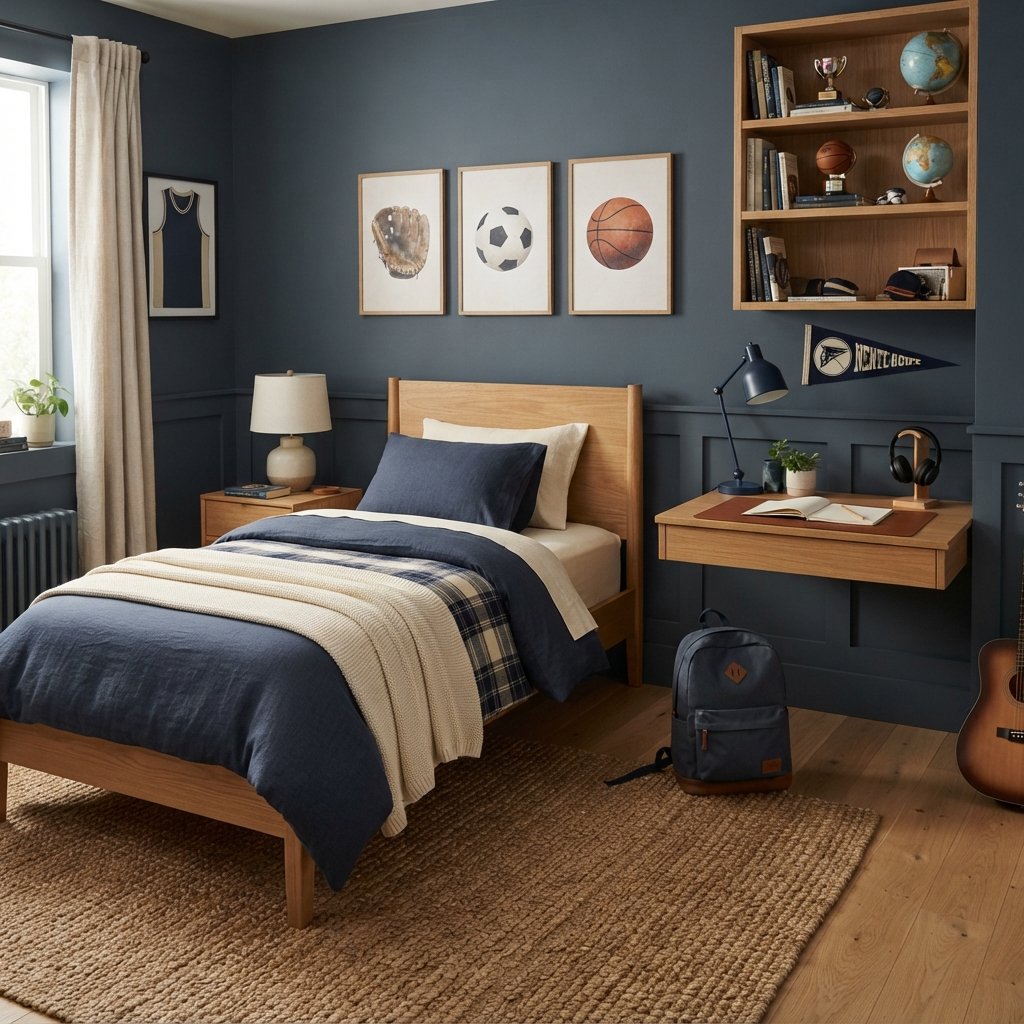
Instead of creating an entire basketball, gaming, baseball, superhero, or space-themed bedroom, incorporate the interest in smaller ways.
For example, a sports-loving tween could have:
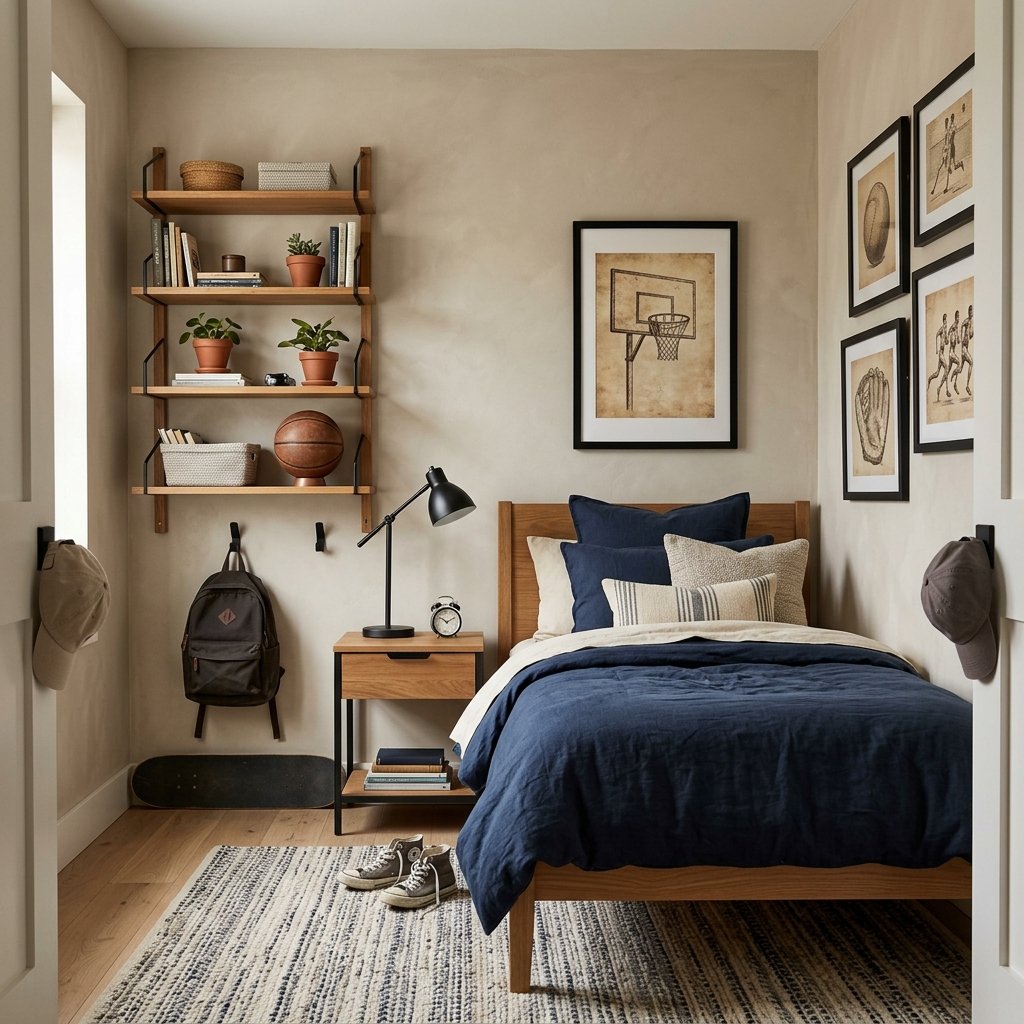
- Framed vintage sports prints
- Displayed equipment
- Team pennant
- Favorite jersey
- Sports books
The rest of the bedroom can remain relatively timeless.
If his interests change next year, you won’t need to redecorate the entire room.
3. Choose a Color Palette That Can Grow With Him
A good bedroom palette doesn’t need to be boring.
Try building the room around two or three main colors.
Some combinations to consider:
- Navy + warm white + wood
- Forest green + cream + black
- Charcoal + camel + white
- Blue-gray + natural wood + navy
- Olive + tan + cream
- Warm gray + rust + navy
Keeping the larger surfaces relatively versatile makes it easy to change accessories later.
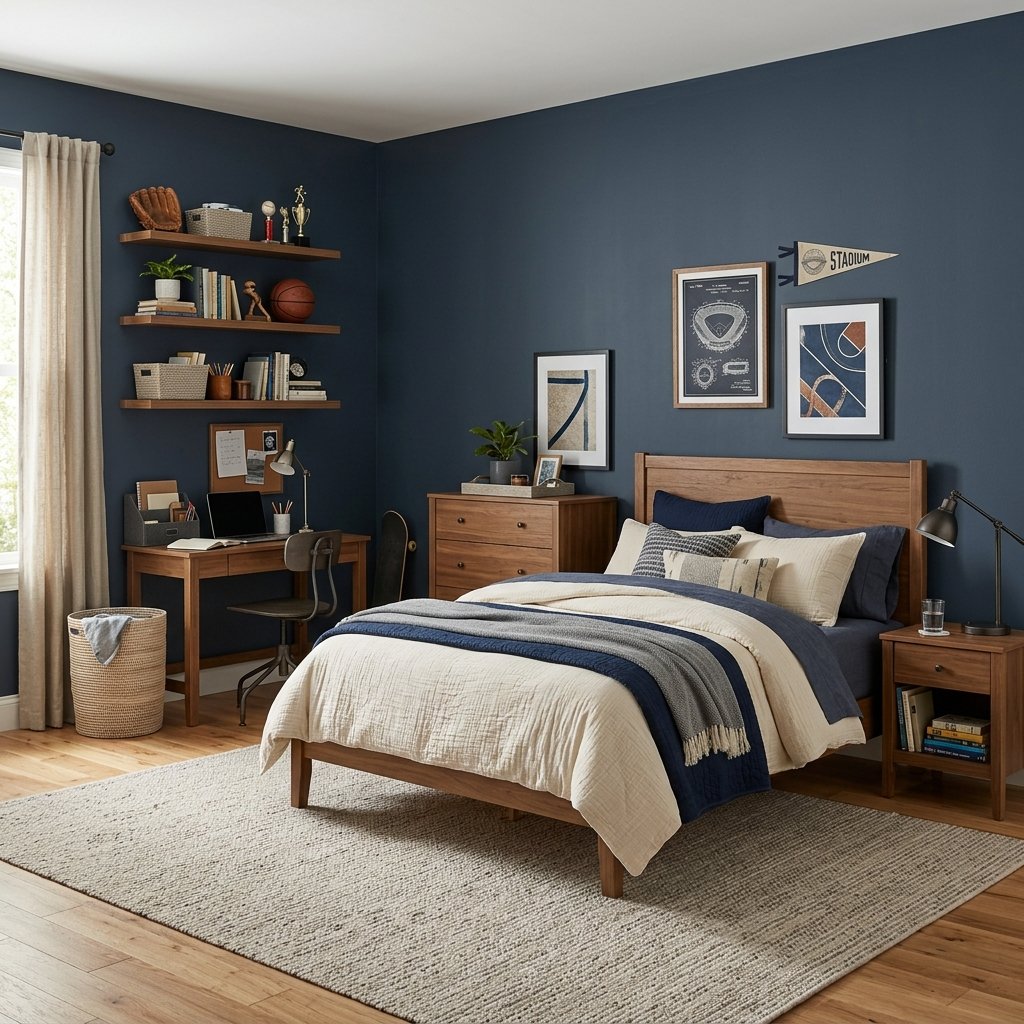
4. Try a Dark Blue Bedroom
Dark blue is a natural choice for a tween boy’s room because it provides color without feeling childish.
You can use it on:
- All four walls
- One accent wall
- Built-ins
- Furniture
If the room has limited natural light, test the color carefully before painting everything.
A dark color isn’t automatically wrong for a small room, but you’ll want to consider the atmosphere you’re creating.
Pair navy or deep blue with:
- Warm wood
- Cream
- White
- Camel
- Gray
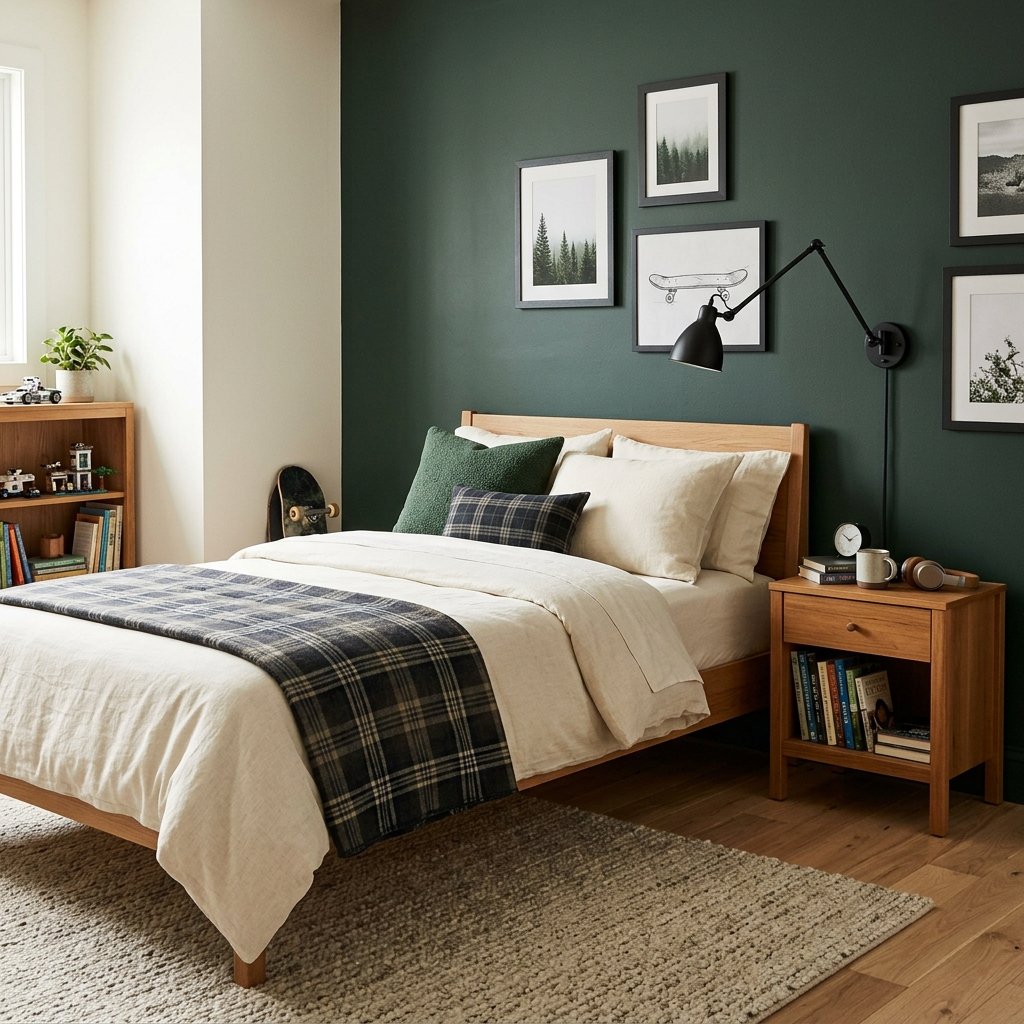
5. Consider Forest Green
Green is another versatile bedroom color.
Deep forest green can feel cozy and sophisticated, while muted olive can create a more relaxed look.
Green works especially well with:
- Wood
- Leather-look accents
- Cream
- Black
- Plaid
- Natural textures
It’s a great alternative if you’re trying to avoid the classic blue boy’s bedroom.
6. Use an Accent Wall Strategically
An accent wall can add color without committing to an entire dark room.
The wall behind the bed is often the easiest choice.
Try:
- Paint
- Simple panel molding
- Board-and-batten
- Wood detail where appropriate
Avoid combining too many statement features.
A bold wall, patterned bedding, busy rug, and large gallery wall can quickly compete with each other.
7. Invest in a Bed That Can Last
If you’re replacing the bed, think beyond the next two years.
A simple:
- Wood bed
- Upholstered bed
- Metal bed
can transition easily into a teenage bedroom.
Choose sturdy furniture appropriate for the user’s age and follow all manufacturer assembly and anchoring instructions.
If you’re using a bunk or loft bed, follow the manufacturer’s age, mattress, guardrail, ladder, clearance, and safety requirements carefully.
8. Keep the Bedding Simple
Bedding is one of the easiest ways to update the room.
Start with simple sheets and a solid or subtly patterned comforter or duvet.
Then add personality through:
- Plaid
- Stripes
- One graphic pillow
- Textured throw
You don’t need six decorative pillows on a tween’s bed.
If everything ends up on the floor every night, simplify.
9. Add a Comfortable Rug
A rug can make the bedroom feel warmer and more finished.
It’s particularly helpful if the room has:
- Hardwood
- Laminate
- Tile
Look for something that can handle everyday life.
Patterns can help disguise minor wear and dirt better than a very pale solid rug.
Make sure rugs are appropriately secured to reduce slipping, and choose a size that relates to the bed and room rather than a tiny rug floating in the center.
10. Create a Homework Zone
As kids get older, homework often becomes a bigger part of their routine.
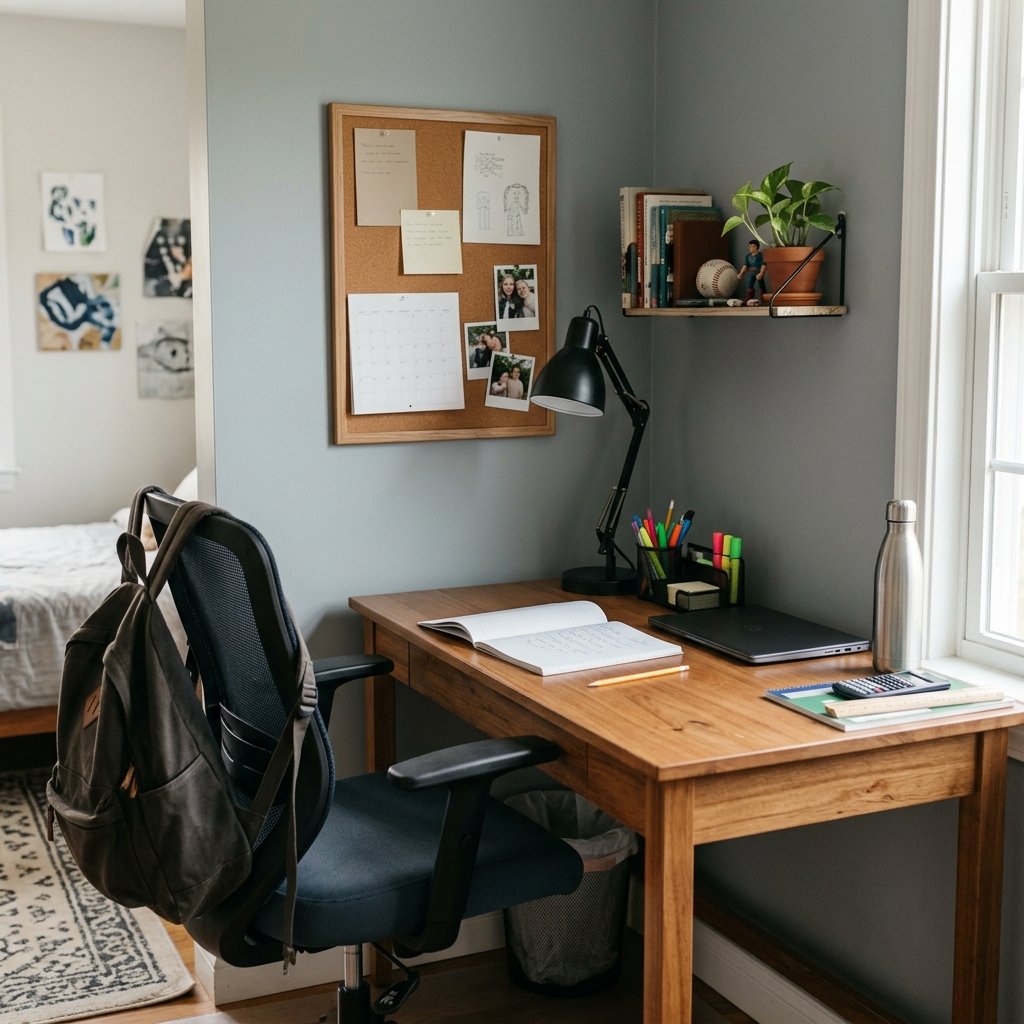
If there’s room, add a simple desk.
You need enough space for:
- Computer or tablet
- Notebook
- Lamp
- Basic supplies
Keep the desk relatively uncluttered.
A drawer unit, small shelf, or wall organizer can hold everything else.
11. Don’t Forget Good Lighting
One ceiling fixture usually isn’t enough.
Layer the lighting.
Consider:
- Overhead light
- Bedside lamp or wall light
- Desk lamp
Each serves a different purpose.
Wall-mounted lighting can save nightstand space, but hardwired electrical work should be completed according to applicable requirements and by a qualified professional where appropriate.
Keep cords safely managed and away from trip hazards.
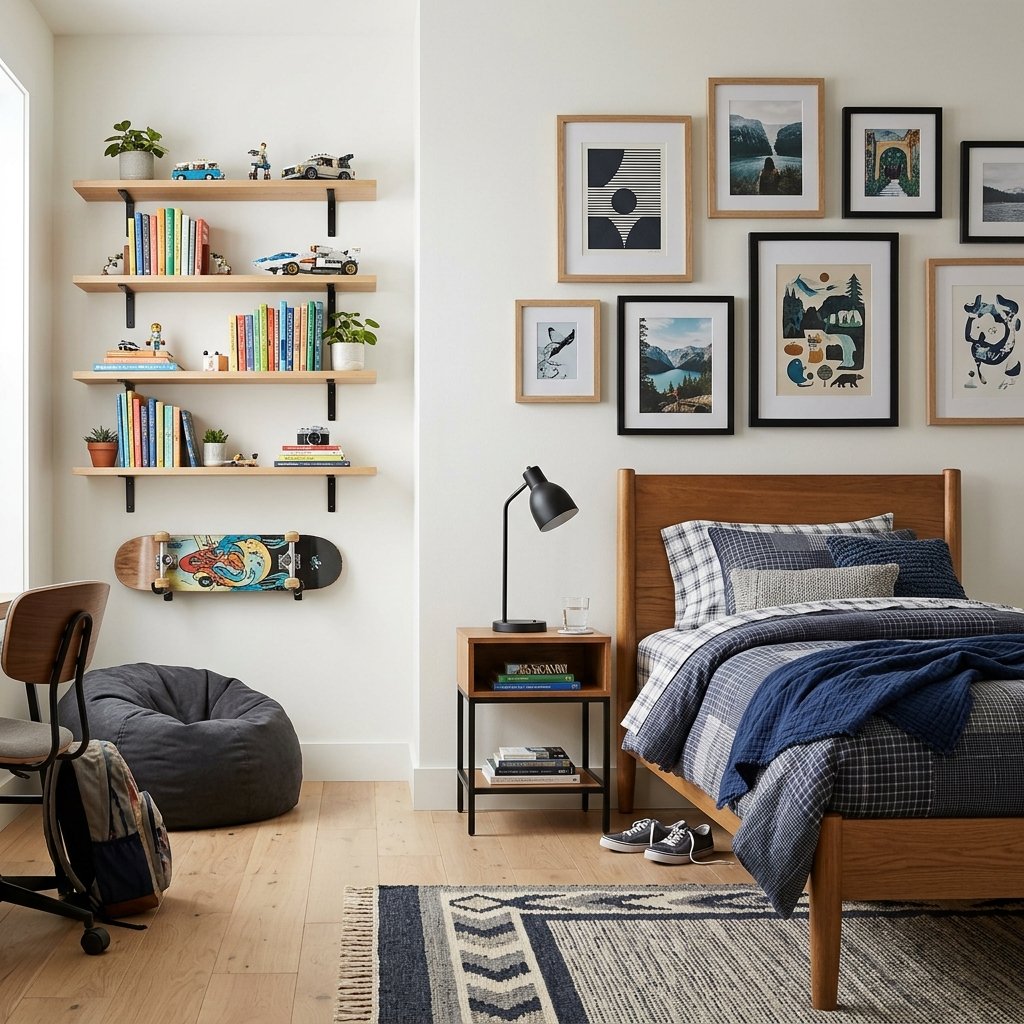
12. Give Collections a Place to Live
Tweens collect things.
Instead of fighting it, design for it.
Depending on his interests, he might want to display:
- Sports memorabilia
- LEGO creations
- Model cars
- Books
- Trophies
- Hats
- Sneakers
- Travel souvenirs
A few shelves can turn clutter into a deliberate display.
Just don’t cover every wall with shelves.
Leave some visual breathing room.
13. Create Better Book Storage
Books don’t always need a huge bookcase.
Try:
- Small bedside bookcase
- Floating shelves
- Built-in shelving
- Book ledges
Keep current favorites within easy reach.
Any wall-mounted shelves or furniture should be installed using hardware appropriate for the wall construction and expected load.
Tall or potentially unstable furniture should be anchored according to manufacturer instructions.
14. Make Sports Gear Part of the Decor
Sports equipment can be difficult to store.
Instead of hiding everything, consider displaying a few favorite pieces.
A basketball, skateboard, baseball glove, or framed jersey can add personality.
Use secure storage or mounting methods designed for the object’s size and weight.
Don’t hang heavy objects directly over the bed where they could create a hazard if they fell.
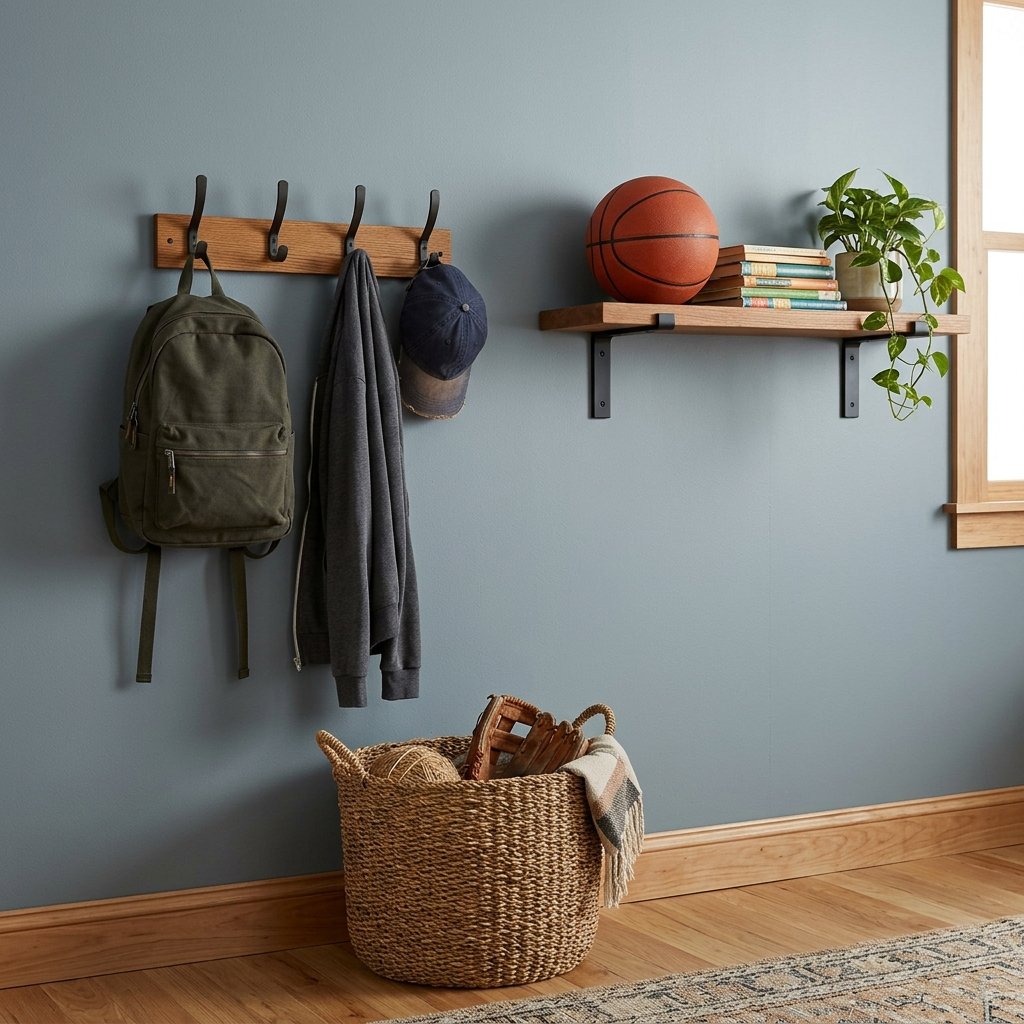
15. Add Wall Hooks
Hooks are incredibly useful in a tween bedroom.
They can hold:
- Backpack
- Hoodie
- Hat
- Robe
- Light sports bag
Put them where he’ll actually use them.
A hook beside the door may be more practical than one hidden inside the closet.
Install hooks securely and respect the hardware’s intended load.
16. Create a Hangout Area if Space Allows
Older kids often want their bedroom to feel like their own little retreat.
If the room is large enough, add a small hangout area.
Consider:
- Compact lounge chair
- Floor cushion designed for seating
- Small ottoman
- Reading chair
Don’t sacrifice essential circulation just to squeeze in extra furniture.
In a small bedroom, the bed will naturally become the lounging area.
17. Add a Full-Length Mirror
A full-length mirror becomes increasingly useful as kids get older.
Try:
- Back of the door
- Beside the closet
- Empty wall
Make sure the mirror is securely installed or anchored according to the manufacturer’s instructions.
Avoid leaning a large unsecured mirror in a child’s or tween’s room.
18. Use Decor That Is Easy to Change
This is the secret to designing a tween bedroom that lasts.
Keep expensive and permanent elements flexible.
Then let personality come through:
- Artwork
- Bedding
- Posters
- Books
- Photos
- Collections
- Pillows
- Throws
When his interests change, you can refresh the room without starting over.
Small Tween Boy Bedroom Ideas
A small bedroom needs to work harder.
Start with the essentials:
- Bed
- Clothing storage
- Nightstand
- Desk if needed
Then look for ways to combine functions.
A desk may work as a nightstand.
A bed with built-in drawers may reduce the need for another dresser.
Wall-mounted shelves can use vertical space.
Hooks can replace bulky storage pieces for frequently used items.
Avoid filling every wall simply because storage is available.
The room still needs breathing room.
Tween Boy Bedroom Ideas on a Budget
You don’t need all-new furniture to create a room that feels older.
Focus on a few high-impact changes.
Paint the Walls
Paint can immediately change a childish bedroom.
Change the Bedding
Replace themed bedding with simple solids, stripes, or plaid.
Update the Artwork
Remove decor he has outgrown and frame prints that reflect his current interests.
Rearrange the Furniture
A better layout costs nothing.
Add Hooks
Create an obvious place for backpacks and clothes.
Reuse Existing Furniture
A basic dresser or nightstand may work perfectly with updated hardware or a suitable paint finish.
Tween Boy Bedroom Storage Ideas
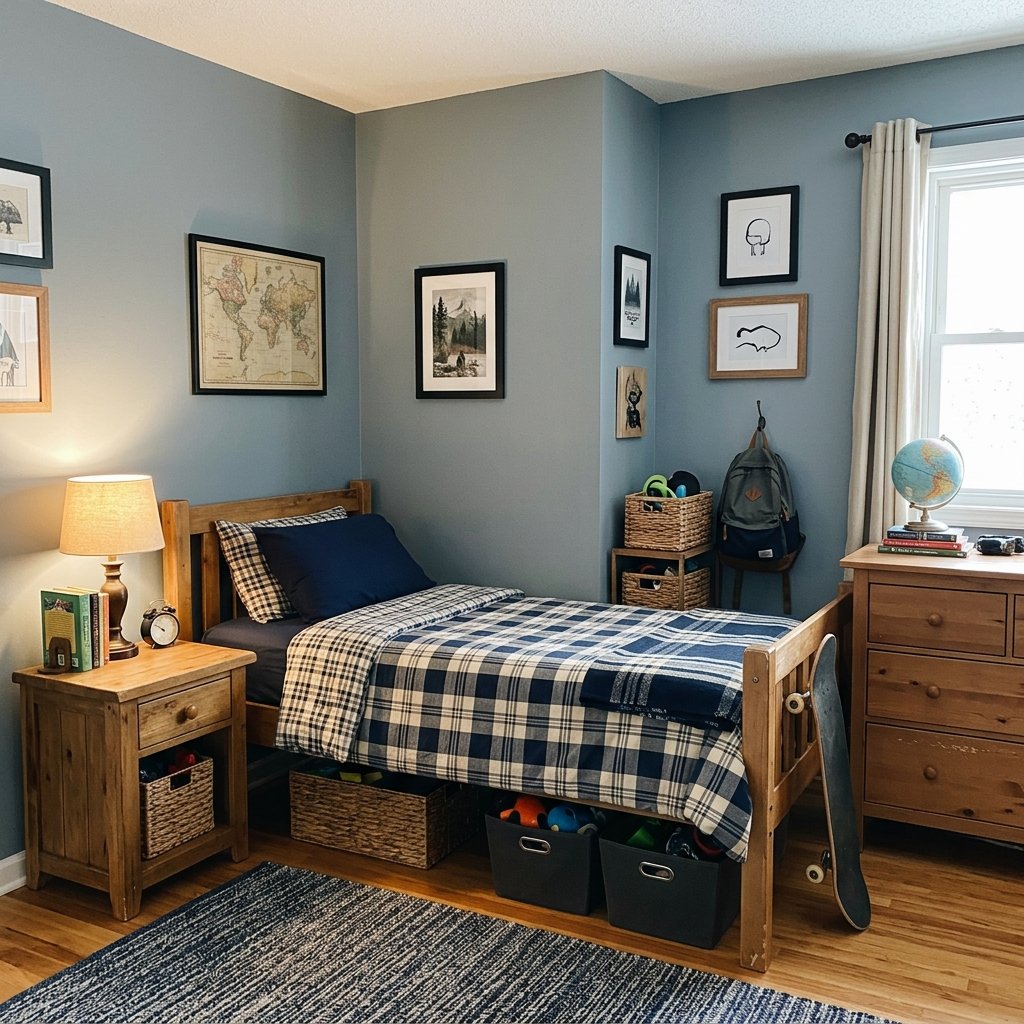
Storage needs usually increase during the tween years.
Think in categories.
Clothes
Dresser and closet.
School
Desk drawers or small bins.
Sports
Hooks, baskets, or dedicated shelving.
Books
Shelf or bedside storage.
Collections
Display shelf.
Miscellaneous
Labeled bins or baskets.
Don’t create complicated organization systems.
If putting something away requires opening three containers and rearranging a shelf, it’s probably not going to happen.
Make storage obvious and easy.
How to Organize a Tween Boy’s Closet
Start by removing anything that no longer fits or gets worn.
Then organize by category.
Try:
- Shirts
- Pants
- School clothes
- Sportswear
- Shoes
Use reachable storage for frequently used items.
Save higher shelves for less frequently needed things.
If the closet has a lot of wasted vertical space, additional shelving may help.
Follow manufacturer installation and load instructions for closet systems and wall-mounted storage.
How to Decorate Without Making the Room Feel Childish
The difference often comes down to scale and restraint.
Instead of lots of small themed accessories, choose fewer, larger pieces.
For example:
Instead of ten small sports decorations, frame one jersey.
Instead of superhero bedding, choose navy bedding and frame a favorite graphic print.
Instead of a themed lamp, use a simple black or metal task light.
The room can still show his personality without looking like a themed children’s bedroom.
What Should Go Above the Bed?
Keep this area simple.
Consider:
- Large lightweight artwork
- Framed prints installed securely
- Painted accent wall
- Wall paneling
- Nothing at all
Avoid placing heavy, breakable, or poorly secured objects directly over the sleeping area.
Sometimes the safest and best-looking choice is simply letting the wall color create the focal point.
Tween Boy Bedroom Color Ideas
Need an easy starting point?
Try one of these palettes.
Classic
Navy + cream + medium wood.
Outdoorsy
Forest green + tan + black.
Modern
Charcoal + warm white + natural oak.
Relaxed
Blue-gray + cream + navy.
Warm
Olive + camel + warm white.
Sporty
Deep blue + gray + warm wood + restrained red accents.
Use the strongest color in moderation if you want the room to remain flexible.
Designing a Bedroom He Can Grow Into
Imagine the room without any accessories.
Would the:
- Bed
- Dresser
- Desk
- Rug
- Wall color
still work for a teenager?
If yes, you’ve created a flexible foundation.
Then today’s interests can live in the easy-to-change layer.
This is one of the easiest ways to avoid another full bedroom makeover in two years.
Common Tween Bedroom Design Mistakes
Designing Without Asking Him
It’s his room too.
Creating an Overly Specific Theme
Interests can change quickly.
Buying Furniture That’s Too Childish
Choose pieces with room to grow.
Forgetting the Desk
Consider current and future homework needs.
Not Providing Enough Storage
Give everything an obvious home.
Adding Too Many Decorative Objects
Leave some empty space.
Choosing Storage That’s Difficult to Use
Simple usually wins.
Ignoring Lighting
Layer task and ambient lighting.
Hanging Heavy Decor Over the Bed
Choose safer locations and secure wall decor appropriately.
Forgetting Furniture Anchoring
Follow manufacturer instructions for furniture that requires anchoring.
Trying to Make the Room Look Like an Adult Designed Every Inch
Leave space for his personality.
A tween’s bedroom should actually look like someone lives there.
A Simple Tween Boy Bedroom Formula
If you’re overwhelmed, start with this:
Walls
Muted blue, green, gray, or warm neutral.
Bed
Simple wood, metal, or upholstered style.
Bedding
Solid neutral plus plaid or stripe.
Rug
Durable subtle pattern.
Furniture
Warm wood or simple painted pieces.
Lighting
Ceiling light + bedside light + desk lamp.
Storage
Dresser + hooks + baskets + shelves.
Personality
Artwork + books + sports + collections.
This formula is flexible enough to work with almost any style.
FAQ About Tween Boy Bedroom Design
What age is considered a tween?
The term generally describes the years between childhood and the teenage years, often roughly ages 9 through 12, though children develop and change interests at different rates.
What colors are good for a tween boy bedroom?
Navy, deep blue, forest green, olive, charcoal, blue-gray, warm gray, cream, and natural wood tones can all provide flexible foundations. Choose colors based on the child and the room rather than gender rules.
How do I make a boy’s bedroom look more grown up?
Replace highly themed elements with simpler furniture, bedding, lighting, and larger-scale artwork. Keep personal interests in accessories that can be changed easily.
How can I decorate a tween bedroom on a budget?
Start with paint, bedding, rearranged furniture, updated artwork, hooks, and better organization. Reusing existing furniture can significantly reduce the cost.
Does a tween need a desk in his bedroom?
Not necessarily. It depends on where he prefers to do homework and the available space. If the bedroom is his main study area, a dedicated desk can be useful.
How can I add sports decor without making the bedroom themed?
Display one or two meaningful pieces, such as a framed jersey, sports photograph, skateboard, or ball collection, while keeping the furniture and bedding relatively neutral.
How do I design a tween bedroom that will last through the teenage years?
Choose versatile furniture and a flexible color palette for the expensive elements. Use bedding, artwork, and accessories for current interests.
Final Thoughts
A successful tween boy bedroom design doesn’t have to be complicated.
The biggest shift is moving away from decorating the room around one specific childhood theme and instead creating a flexible bedroom that reflects who he is right now.
Start by involving him in the decisions.
Let him choose between a few paint colors.
Ask which artwork he actually wants on the wall.
Make space for the books, hobbies, sports, music, or collections that matter to him.
Then keep the foundation simple.
Choose a bed that can last.
Use practical storage.
Add good lighting.
Create a homework space if he needs one.
And make sure there are easy places to put backpacks, clothes, books, and everyday clutter.
Most importantly, don’t try to make the bedroom so perfectly styled that there’s no room left for him.
A tween bedroom should evolve.
Posters may change.
Bedding may change.
The basketball collection may disappear and be replaced by guitars, books, photography, or something completely unexpected.
That’s exactly why a flexible foundation works so well.
Design the expensive pieces for the future.
Decorate the easy-to-change pieces for right now.
You’ll end up with a room that feels cool enough for a tween today—and won’t require a complete makeover when he becomes a teenager tomorrow.

