


Taking down the Christmas decorations can make your home feel surprisingly empty.
The tree is gone. The stockings come down. The ornaments are packed away. And suddenly the rooms that felt warm and festive a few days ago can seem a little unfinished.
The solution isn’t to replace Christmas decorations with an entirely new collection of seasonal decor.
Instead, learning how to transition from Christmas to winter decor is mostly about deciding what to remove, what to keep, and what to simplify.
Pack away the decorations that specifically say Christmas, but keep some of the cozy elements that work throughout winter. Evergreen branches, pinecones, warm blankets, candles, wood accents, baskets, and soft lighting can all help bridge the gap between the holidays and spring.
The result is a home that feels quieter and calmer after Christmas without feeling cold or bare.
Here are simple winter decorating ideas you can use throughout January, February, and the rest of the cold-weather season.
What Is Winter Decor?
Winter decor is different from Christmas decor.
Christmas decorating often includes obvious holiday elements such as:
- Christmas trees
- Ornaments
- Stockings
- Santa decorations
- Christmas signs
- Red and green combinations
- Holiday-specific ribbon
Winter decor is usually quieter.
It focuses more on the feeling of the season through:
- Greenery
- Bare branches
- Pinecones
- Warm textiles
- Natural wood
- Soft lighting
- Candles
- Neutral colors
- Cozy textures
Instead of decorating specifically for a holiday, you’re creating a warm home for the season.
When Should You Take Down Christmas Decor?
There’s no decorating rule that says your Christmas decorations have to disappear on a particular date.
Take them down when the holiday season feels finished for your household.
You can also transition gradually.
For example, remove obviously Christmas-specific items first, then simplify the remaining greenery and winter accessories over the following days.
This can make the transition feel less abrupt.
What Christmas Decorations Can Stay Up for Winter?
Before putting everything into storage, separate your decorations into two categories.
Pack Away
- Ornaments
- Stockings
- Christmas signs
- Santa decor
- Christmas-specific figurines
- Tree toppers
- Brightly festive ribbon
- Christmas-themed dishes
Consider Keeping
- Plain evergreen garland
- Simple wreaths
- Pinecones
- Natural branches
- Neutral blankets
- White string lights where appropriate
- Brass accents
- Wood decor
- Candles
The key is removing anything that makes the remaining decor look unmistakably Christmas.
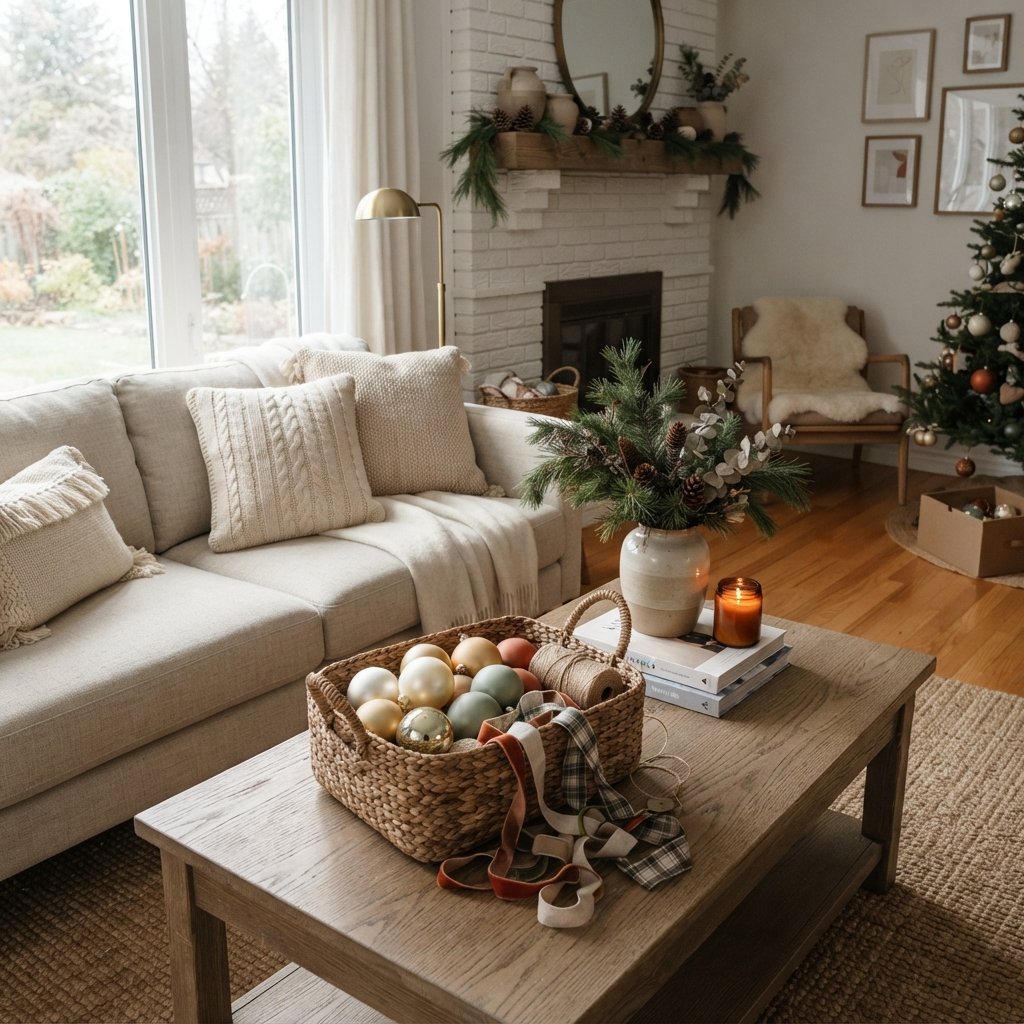
1. Remove the Obvious Christmas Decorations First
Start with the items that clearly belong to Christmas.
Take down:
- Stockings
- Christmas signs
- Santa figures
- Nutcrackers
- Ornaments
- Christmas cards
- Holiday-specific figurines
Removing these items immediately quiets the room.
Don’t worry about the greenery yet.
Once the obviously Christmas pieces are gone, you’ll have a much better idea of which remaining decorations can work through winter.
2. Simplify Your Christmas Greenery
Evergreen branches aren’t exclusively Christmas decorations.
Pine, cedar, and other winter greenery can still feel appropriate after the holidays.
The trick is simplifying it.
If your garland currently has:
- Ornaments
- Bows
- Bells
- Red berries
- Christmas ribbon
remove those accessories and look at the greenery by itself.
A simple evergreen garland on a mantel or console can feel much more like winter than Christmas.
If using fresh greenery, remove it when it becomes dry, brittle, or begins shedding excessively, and always keep fresh or dried plant material away from heat and open flames.
3. Keep a Simple Winter Wreath
You don’t necessarily need to take down every wreath.
A plain evergreen wreath can work beautifully throughout winter.
To make a Christmas wreath feel less holiday-specific, remove:
- Red bows
- Ornaments
- Bells
- Christmas signs
Leave the greenery simple.
A grapevine wreath, pine wreath, or mixed evergreen wreath can easily carry you into the colder months.

4. Replace Ornaments With Pinecones
Ornaments immediately signal Christmas.
Pinecones feel more seasonal and natural.
If you had a bowl filled with ornaments during December, reuse the same bowl.
Fill it with:
- Pinecones
- Wood beads
- Natural seed pods
- Simple greenery
This is an easy way to transition existing Christmas displays instead of completely restyling the room.
5. Bring Out More Cozy Throw Blankets
After removing holiday decorations, textiles become even more important.
A throw blanket adds warmth without making a room look decorated for a particular holiday.
Try:
- Chunky knit
- Wool-like texture
- Bouclé
- Plaid
- Soft woven fabric
Good winter colors include:
- Cream
- Camel
- Taupe
- Charcoal
- Brown
- Muted green
Drape a blanket over the sofa or accent chair, or fold several into a large basket.
6. Swap Christmas Pillows for Textured Neutrals
Pack away pillows featuring:
- Christmas trees
- Reindeer
- Holiday sayings
- Santa
- Bright Christmas plaid
Replace them with pillows that rely on texture instead of a holiday motif.
Try:
- Velvet
- Bouclé
- Faux fur
- Heavy linen
- Woven fabric
You don’t need to replace every pillow.
One or two warmer textures can completely change the room.

7. Keep Some Plaid
Plaid doesn’t automatically mean Christmas.
A red-and-green tartan can feel strongly holiday-specific, but a more neutral plaid can work throughout winter.
Consider:
- Brown and cream
- Black and cream
- Gray and camel
- Muted green and beige
Use plaid sparingly through a pillow or throw.
It adds pattern without requiring a collection of seasonal accessories.
8. Decorate With Bare Branches
After Christmas, bare branches can be a beautiful replacement for elaborate holiday greenery.
Place a few tall branches in a large vase.
Their sculptural shape creates interest while keeping the room visually quiet.
This works especially well on:
- Dining table
- Console
- Kitchen island
- Entry table
You can also combine bare branches with a small amount of evergreen.
If bringing natural branches indoors, make sure you have permission to collect them and inspect them carefully for insects.
9. Use Evergreen Branches in Simple Vases
Instead of keeping large Christmas arrangements, reduce them to something simpler.
A few evergreen stems in a ceramic vase can be enough.
Avoid adding:
- Ornaments
- Ribbon
- Bells
- Glitter
Let the greenery stand on its own.
This is one of the easiest ways to make Christmas greenery feel like winter decor.

10. Decorate With Natural Wood
Wood adds warmth during the months when the landscape outside may feel cold and bare.
Use pieces you already own.
Try:
- Wood bowl
- Cutting boards
- Small stool
- Wood tray
- Picture frames
- Woven baskets
You don’t need to buy decorations labeled as winter decor.
Everyday natural materials can create the same cozy effect.
11. Keep Warm Metallic Accents
If you used brass or other warm metallics at Christmas, there’s no need to pack them away.
Brass can warm up a neutral winter palette.
Use it through:
- Candlesticks
- Frames
- Lamps
- Bowls
- Hardware
Once the ornaments and holiday ribbon are gone, metallic accents usually feel much less Christmas-specific.
12. Use Candles for Warmth
Candles can make winter evenings feel cozy after the Christmas lights come down.
Group a few simple candles on:
- Coffee table
- Dining table
- Mantel
- Console
Choose stable candleholders and place candles on suitable heat-resistant surfaces.
Keep open flames away from curtains, dried branches, greenery, paper, textiles, children, and pets, and never leave burning candles unattended.
Flameless candles are an easy alternative if you want the glow without an open flame.
13. Keep Some Warm White Lights
You don’t necessarily have to put away every strand of lights on December 26.
Small warm white lights can work as winter decor when they’re used subtly.
Try them:
- Inside a glass-front cabinet
- Along simple greenery
- Inside a lantern designed for decorative lights
- Around a window where safely installed
Once they’re separated from ornaments and Christmas ribbon, warm lights can feel more cozy than festive.
Use decorative lights according to manufacturer instructions, keep connections dry, and avoid overloading electrical outlets.
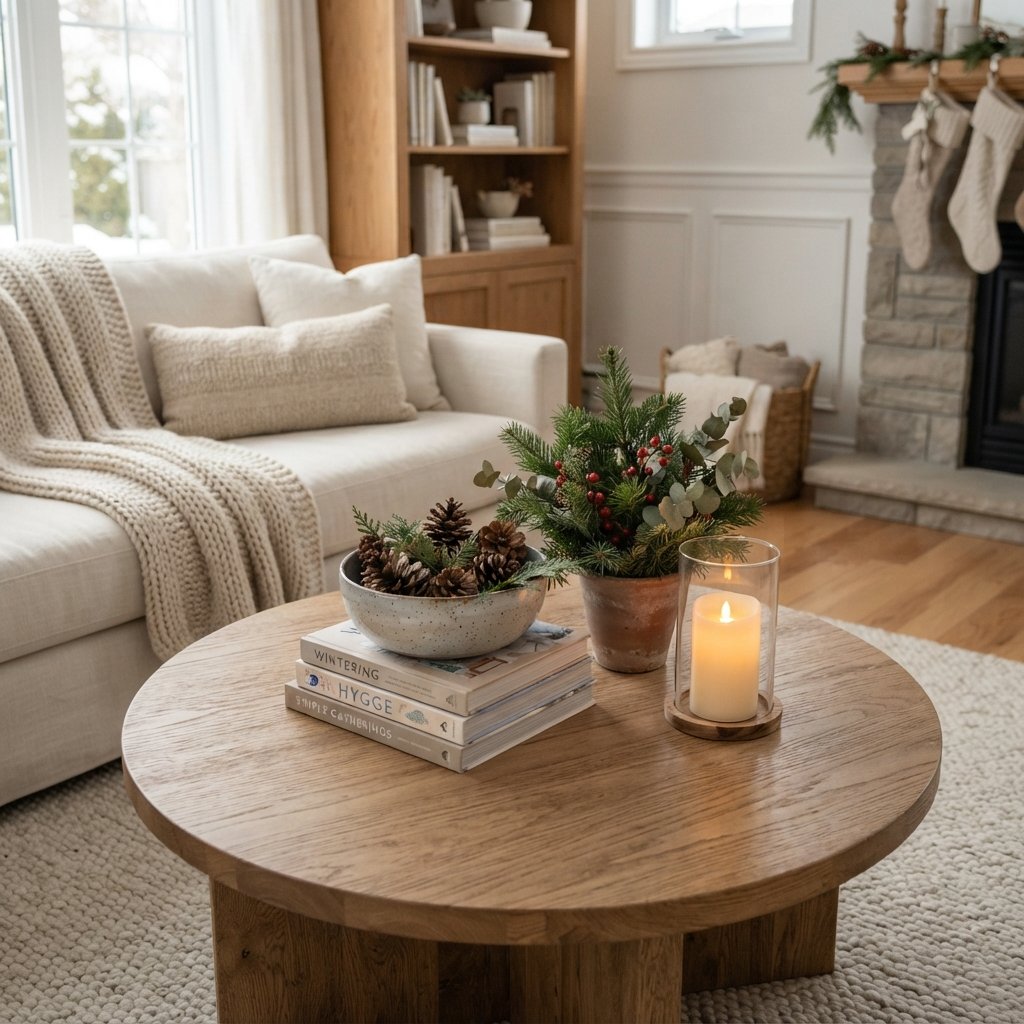
14. Create a Simple Winter Coffee Table
After Christmas, clear away the elaborate centerpiece and start fresh.
Try:
Books + candle + small bowl of pinecones
or:
Wood tray + small evergreen arrangement + candle
or:
Ceramic bowl + natural objects
Keep plenty of empty space.
The quieter arrangement will probably feel refreshing after several weeks of Christmas decorations.
15. Let Your Home Feel a Little Simpler
You don’t need to fill every spot left behind by Christmas decorations.
The empty space can be part of the winter look.
After removing the tree, for example, don’t immediately put something else in the exact same spot.
Live with the room for a few days.
You may decide you like having the extra space.
Winter decor can be quieter than Christmas decor.
That’s part of what makes the transition feel refreshing.
How to Transition a Christmas Mantel to Winter
The fireplace mantel is one of the easiest places to simplify.
Start by removing:
- Stockings
- Stocking holders
- Christmas ornaments
- Holiday ribbon
- Christmas signs
Then evaluate the greenery.
You may be able to keep a simple garland.
Pair it with:
- Mirror
- Artwork
- Candlesticks
- Bare branches
- Pinecones
If the fireplace is used, follow the fireplace manufacturer’s clearance requirements and keep combustible decorations, dried greenery, textiles, and other flammable materials safely away from heat and flames.
How to Transition a Christmas Entryway to Winter
The entryway doesn’t need much.
Try:
- Plain evergreen wreath
- Bare branch arrangement
- Wood bowl
- Woven basket
- Neutral runner
Remove bright holiday ribbon and Christmas-specific signs.
The greenery and natural materials can remain.
How to Transition Your Living Room From Christmas to Winter
The living room often feels the emptiest after the tree comes down.
Start by rearranging the furniture if necessary.
Then focus on comfort.
Add:
- Cozy throws
- Textured pillows
- Candles
- Wood
- Greenery
- Pinecones
If the room still feels empty, don’t immediately buy more decor.
The problem may simply be that your eye has adjusted to seeing a large Christmas tree in the room.
Give yourself a few days to get used to the extra space.

How to Transition the Kitchen From Christmas to Winter
Start by removing:
- Christmas mugs
- Red ribbon
- Ornaments
- Mini Christmas trees
- Holiday towels
Then keep the kitchen simple.
You might leave:
- Small vase of evergreen
- Wood cutting boards
- Bowl of winter fruit
- Neutral kitchen towels
Keep countertops mostly clear.
If using greenery or decorative lights, keep them away from burners, hot appliances, water, and food-preparation areas.
Winter Kitchen Island Decor
A kitchen island needs only one simple winter arrangement.
Try:
- Evergreen branches in a ceramic vase
- Bowl of pears
- Bare branches
- Wood bowl
Avoid trying to recreate the elaborate Christmas centerpiece.
January can be a good time to simplify.
How to Transition a Dining Room From Christmas to Winter
Remove the holiday tablescape and return to a simpler centerpiece.
Try:
Bare branches + ceramic vase
or:
Evergreen + pinecones
or:
Candles + simple greenery
If you’re using candles, keep greenery and other combustible materials safely away from open flames.
A wood dining table, neutral linens, and simple branches can provide plenty of winter warmth without looking festive.
How to Transition a Bedroom From Christmas to Winter
Winter bedroom decor is mostly about textiles.
Pack away Christmas-specific pillows and decorations.
Keep:
- Warm throw
- Layered bedding
- Textured pillows
- Soft lighting
Add a few bare or evergreen branches to a dresser if you want a natural seasonal element.
You don’t need much.
Neutral Winter Decor After Christmas
A neutral winter palette can make the post-holiday transition especially easy.
Try:
- Cream
- Camel
- Taupe
- Brown
- Charcoal
- Muted green
Then introduce texture through:
- Wood
- Woven baskets
- Velvet
- Wool-like textiles
- Bouclé
- Greenery
The variety in texture keeps a neutral room from feeling flat.
Winter Decor With Green
Green is one of the easiest Christmas colors to carry into winter.
The trick is removing the other obvious Christmas elements.
For example:
Evergreen + red ribbon + ornaments = Christmas
but:
Evergreen + cream + wood + pinecones = winter
The same greenery can create a completely different mood depending on what surrounds it.
Winter Decor Without Greenery
You don’t have to use evergreen at all.
Try:
- Bare branches
- Pinecones
- Wood
- Cream textiles
- Brown pottery
- Candles
- Woven baskets
This creates a quiet winter look without carrying any greenery over from Christmas.
Cozy Winter Decor Without Clutter
The easiest way to avoid clutter is to decorate with useful objects.
Instead of adding more accessories, use:
- Blankets
- Pillows
- Lamps
- Baskets
- Books
- Wood bowls
These items contribute to the atmosphere without making the room feel overly decorated.
How to Decorate for Winter on a Budget
You probably already own most of what you need.
Before buying anything, shop your home for:
- Neutral blankets
- Wood bowls
- Baskets
- Cream pillows
- Brass candlesticks
- Ceramic vases
- Books
Then reuse natural-looking Christmas greenery after removing the ornaments and ribbon.
A few pinecones or branches may be all you need to finish the room.
What to Do With Empty Spaces After Christmas
One of the biggest post-Christmas decorating challenges is the empty space left by the tree.
You have several options.
You can:
- Leave it empty
- Move an accent chair into the space
- Add a floor lamp
- Add a basket
- Reposition an existing plant
- Rearrange the room
Try using something you already own before buying furniture specifically to fill the space.
Sometimes the room simply needs a slightly different furniture arrangement.
How to Make Your Home Cozy After Christmas
If your house feels cold after taking down the decorations, focus on the things that affect atmosphere rather than adding more seasonal objects.
Try:
- Turning on table lamps instead of relying only on overhead lighting
- Adding warm blankets
- Layering pillows
- Using candles safely
- Bringing in wood
- Adding greenery
- Using baskets
- Creating softer evening lighting
Christmas feels cozy partly because of the lighting and texture—not just the decorations.
Keep those elements.

How to Transition From Winter Decor to Spring
Winter decor can make the transition to spring easy.
As the season changes, gradually remove:
- Pinecones
- Heavy throws
- Dark pillows
- Evergreen
Replace them with:
- Fresh green branches
- Spring flowers
- Lighter textiles
- Softer colors
You don’t have to redecorate everything at once.
A seasonal home can evolve gradually.
Common Mistakes When Decorating After Christmas
Removing Every Cozy Element
You don’t have to strip the room completely.
Keep blankets, greenery, wood, and soft lighting.
Leaving Christmas Decor Up Without Simplifying It
Greenery can work for winter, but ornaments and holiday ribbon may keep it looking distinctly Christmas.
Buying an Entire Collection of Winter Decor
Reuse what you already own first.
Filling the Empty Tree Space Immediately
Give yourself time to adjust to the room without the tree.
Using Too Many Small Accessories
A few substantial pieces usually look calmer than many small objects.
Forgetting Lighting
The loss of Christmas tree lights can change the entire atmosphere of a room.
Use lamps, flameless candles, or subtle decorative lights to restore warmth.
Ignoring Safety
Keep candles and other heat sources away from greenery, dried branches, textiles, and combustible decorations. Use electrical lights according to manufacturer instructions.
A Simple Christmas-to-Winter Decorating Formula
If you’re not sure where to begin, use this formula:
Remove
Ornaments, stockings, Christmas signs, and holiday ribbon.
Keep
Simple greenery, wood, baskets, brass, and neutral decor.
Add
Bare branches, pinecones, and cozy textiles.
Warm It Up
Use lamps, candles or flameless candles, and soft lighting.
Simplify
Leave more empty space than you did at Christmas.
That’s usually all you need.
FAQ About Transitioning From Christmas to Winter Decor
How do I transition from Christmas to winter decor?
Remove obvious Christmas items such as ornaments, stockings, Santa decor, holiday signs, and festive ribbon. Keep simple greenery, pinecones, warm textiles, natural wood, baskets, and soft lighting.
What Christmas decor can stay up after Christmas?
Plain evergreen wreaths, simple garland, pinecones, neutral blankets, warm white decorative lights, wood, and brass accents can often transition into winter decor once Christmas-specific accessories are removed.
How can I make my house cozy after taking down Christmas decorations?
Focus on texture and lighting. Use throw blankets, textured pillows, table lamps, candles or flameless candles, natural wood, baskets, and a small amount of winter greenery.
Can you leave garland up after Christmas?
Simple evergreen garland can work as winter decor if you remove Christmas-specific ribbon, ornaments, bells, and other obvious holiday accessories. Fresh greenery should be removed when it becomes dry or brittle.
Can Christmas wreaths stay up for winter?
A plain evergreen or natural wreath can transition beautifully into winter. Remove festive bows, ornaments, bells, or Christmas signs if you want it to feel less holiday-specific.
How do you decorate for January?
Keep January decor simple. Use cozy textiles, evergreen or bare branches, pinecones, candles, wood, baskets, and a neutral color palette.
How do you decorate for winter without making it look like Christmas?
Avoid obvious Christmas motifs and red-and-green combinations. Focus instead on natural materials, neutral colors, texture, bare branches, pinecones, and subtle greenery.
What colors are good for winter decor?
Cream, camel, taupe, brown, charcoal, muted green, and warm wood tones can create a cozy winter palette without looking overly festive.
What should I put where my Christmas tree was?
You can leave the area empty, rearrange existing furniture, move in an accent chair, add a floor lamp, place a basket nearby, or reposition a plant you already own.
Final Thoughts
Learning how to transition from Christmas to winter decor doesn’t require replacing one set of seasonal decorations with another.
In fact, the easiest approach is usually to decorate less.
Pack away the obvious Christmas pieces.
Remove ornaments, stockings, holiday signs, and festive ribbon.
Then look at what’s left.
Simple evergreen branches can stay.
So can pinecones, natural wood, baskets, warm blankets, textured pillows, candles, and cozy lighting.
These elements capture the feeling of winter without making your home look like Christmas has simply continued into February.
And don’t be afraid of a little empty space.
After weeks of trees, garlands, ornaments, gifts, and holiday decorations, a quieter home can feel refreshing.
Keep the warmth.
Keep the texture.
Keep the cozy lighting.
Then simplify everything else.
The result is a home that still feels inviting after Christmas while giving you a calm, comfortable backdrop for the rest of winter.

