

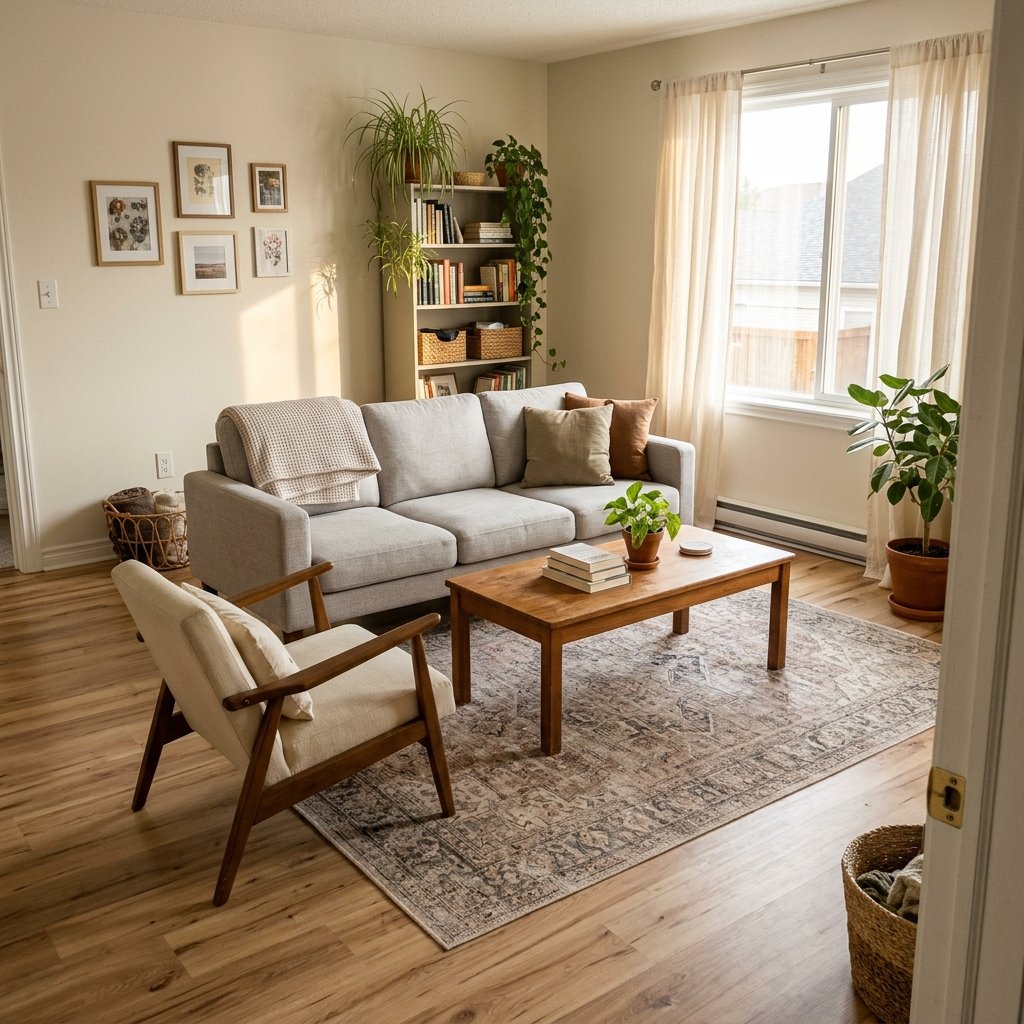
You don’t need a designer-sized budget to make your living room feel finished, comfortable, and pulled together.
In fact, learning how to decorate your living room for cheap is often less about buying inexpensive decor and more about making better use of what you already own.
Changing the furniture layout costs nothing. Removing clutter costs nothing. Moving lamps, artwork, pillows, and accessories from other rooms costs nothing. Even relatively inexpensive updates—such as new pillow covers, thrifted frames, paint, or curtains—can make a surprisingly big difference when they’re chosen intentionally.
The key is to avoid buying lots of small, random decorations simply because they’re inexpensive.
Instead, focus on the changes with the biggest visual impact: furniture placement, lighting, textiles, artwork, scale, color, and a few well-chosen accessories.
Whether you’re decorating your first apartment, refreshing an older living room, or simply trying to make your home look better without spending much, these budget living room ideas can help you create a room that looks thoughtful rather than cheap.
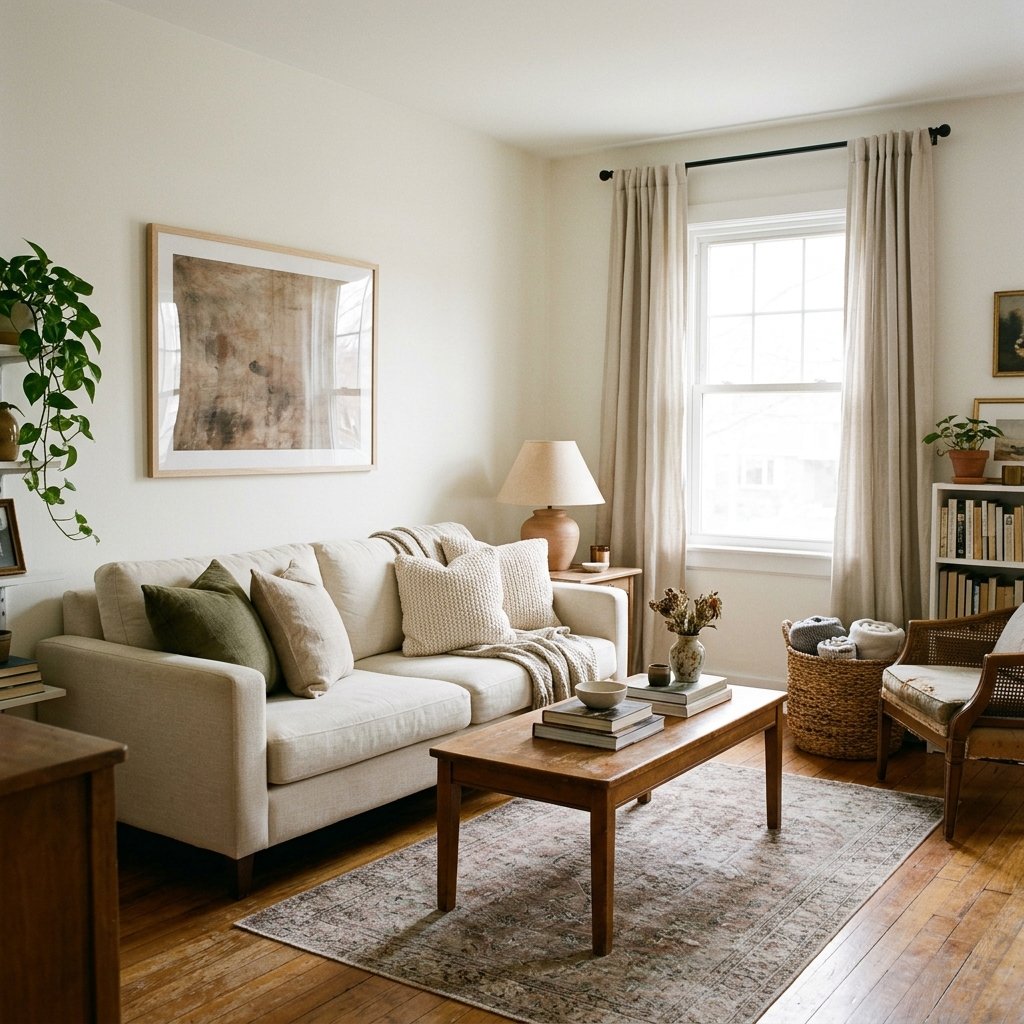
Start by Decorating With What You Already Own
Before shopping, take everything unnecessary out of the room.
That doesn’t mean you have to get rid of it.
Move small decor, extra pillows, baskets, and artwork temporarily into another room.
Then look at the living room with fresh eyes.
Ask yourself:
- Does the furniture arrangement work?
- Is anything blocking a walkway?
- Is the rug positioned correctly?
- Does the room have enough lighting?
- Is there a clear focal point?
- Are there too many small accessories?
- Is the furniture pushed awkwardly against the walls?
You may discover that the room doesn’t need more decor.
It may simply need better arrangement.
1. Rearrange the Furniture
This should be your first budget decorating project because it’s completely free.
Experiment with the layout.
Instead of automatically pushing every piece of furniture against a wall, consider bringing seating closer together to create a conversation area.
Make sure there are comfortable paths through the room.
If you have a focal point such as a fireplace, large window, or attractive media wall, orient the furniture so it relates to that feature.
Take photos of different arrangements.
Sometimes a layout that feels strange while you’re moving furniture looks much better when you see the entire room in a photograph.
2. Declutter Before You Decorate
A crowded room can make even expensive furniture look less intentional.
Remove things that don’t contribute to the room.
Pay particular attention to:
- Coffee tables
- Side tables
- Media consoles
- Open shelving
- Mantels
You don’t need to eliminate everything.
Just create breathing room.
One substantial bowl or vase may look more polished than six unrelated little decorations.
3. Shop Your Own Home
Before buying decor, walk through the rest of your home.
Look for:
- Lamps
- Artwork
- Vases
- Bowls
- Books
- Baskets
- Pillows
- Small tables
- Mirrors
- Throws
Something you’ve stopped noticing in a bedroom may feel completely new in the living room.
Try swapping accessories between rooms instead of buying replacements.
This is one of the easiest ways to refresh a living room for free.
4. Create a Simple Color Palette
Rooms can look expensive when the colors feel intentional.
They can look chaotic when every inexpensive accessory introduces another unrelated color.
Choose a basic palette.
For example:
Cream + brown + green + black
or:
Warm white + blue + natural wood + brass
or:
Beige + rust + dark brown + cream
You don’t need every object to match.
The goal is simply to repeat a few colors around the room.
5. Paint the Walls
If your budget allows one DIY project, paint can deliver a lot of visual impact.
A fresh wall color can make older furniture feel completely different.
Neutrals are flexible, but you don’t have to choose beige or white.
Consider:
- Warm off-white
- Soft greige
- Muted green
- Warm gray
- Dusty blue
Sample paint in your actual room before committing.
Colors can change dramatically depending on natural light, flooring, furniture, and artificial lighting.
Follow the paint manufacturer’s instructions for surface preparation, ventilation, application, drying, and curing, and use appropriate protective equipment.
6. Paint Something You Already Own
Don’t stop at walls.
An old piece of furniture may be worth updating rather than replacing.
Depending on the material and construction, you might refresh:
- Side table
- Console
- Bookcase
- Small cabinet
- Picture frame
Proper preparation matters.
Clean the surface and use products appropriate for the material and existing finish. Follow manufacturer instructions for sanding, priming, ventilation, application, drying, and curing.
If the piece is valuable, antique, or you’re uncertain about the existing coating, investigate before sanding or refinishing it.
7. Change Your Pillow Covers
Throw pillows are an easy way to change the room without replacing large furniture.
If your pillow inserts are still good, buy or make new covers instead of complete pillows.
Mix a few textures such as:
- Linen-look fabric
- Velvet
- Woven cotton
- Bouclé-style texture
Keep the palette controlled.
Three pillows that work together usually have more impact than ten inexpensive pillows in unrelated colors.
8. Add a Throw Blanket
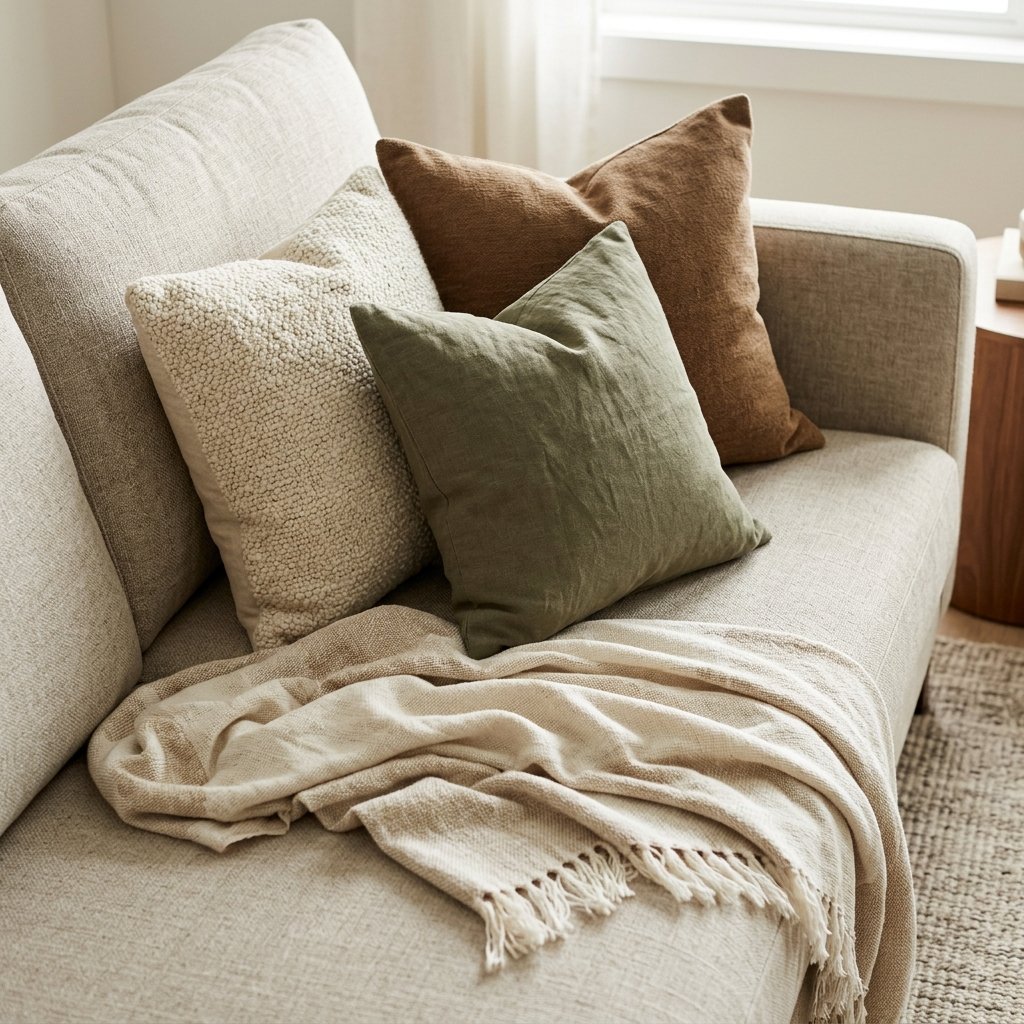
A throw can introduce color and texture for relatively little money.
Drape it casually over:
- Sofa arm
- Chair
- Ottoman
Choose a color that repeats something already in the room.
If you have an olive pillow, for example, a muted green throw can help carry that color across the seating area.
9. Make Cheap Curtains Look Better
Curtains can completely change how finished a living room feels.
One of the biggest mistakes is hanging them too close to the window frame.
When the room and window configuration allow, mounting the rod higher and extending it beyond the window can make the opening feel larger.
Curtains should also have enough fullness that they don’t look like two narrow strips of fabric.
Simple solid curtains can look sophisticated when the scale and placement are right.
When installing rods, use hardware and anchors suitable for the wall construction and the weight of the curtains. Avoid drilling where electrical wiring or plumbing may be present.
10. Use Thrifted Artwork
Original artwork doesn’t have to be expensive.
Check:
- Thrift stores
- Flea markets
- Estate sales
- Secondhand marketplaces
Don’t judge a piece entirely by its frame.
Sometimes an inexpensive painting or print becomes much more attractive after changing or painting the frame.
You can also collect several inexpensive pieces over time rather than trying to create an entire gallery wall in one shopping trip.
11. Frame Inexpensive Art
A good frame can make simple artwork look much more substantial.
Consider framing:
- Public-domain art you’ve legally printed
- Your own photography
- Children’s artwork
- Fabric
- Vintage postcards you own
- Pressed botanical pieces
Use larger mats when appropriate.
A generous mat can make relatively small artwork feel more intentional.
12. Use Fewer, Larger Accessories
One common budget decorating mistake is buying lots of tiny decorations.
Small accessories may be inexpensive individually, but the room can quickly become cluttered.
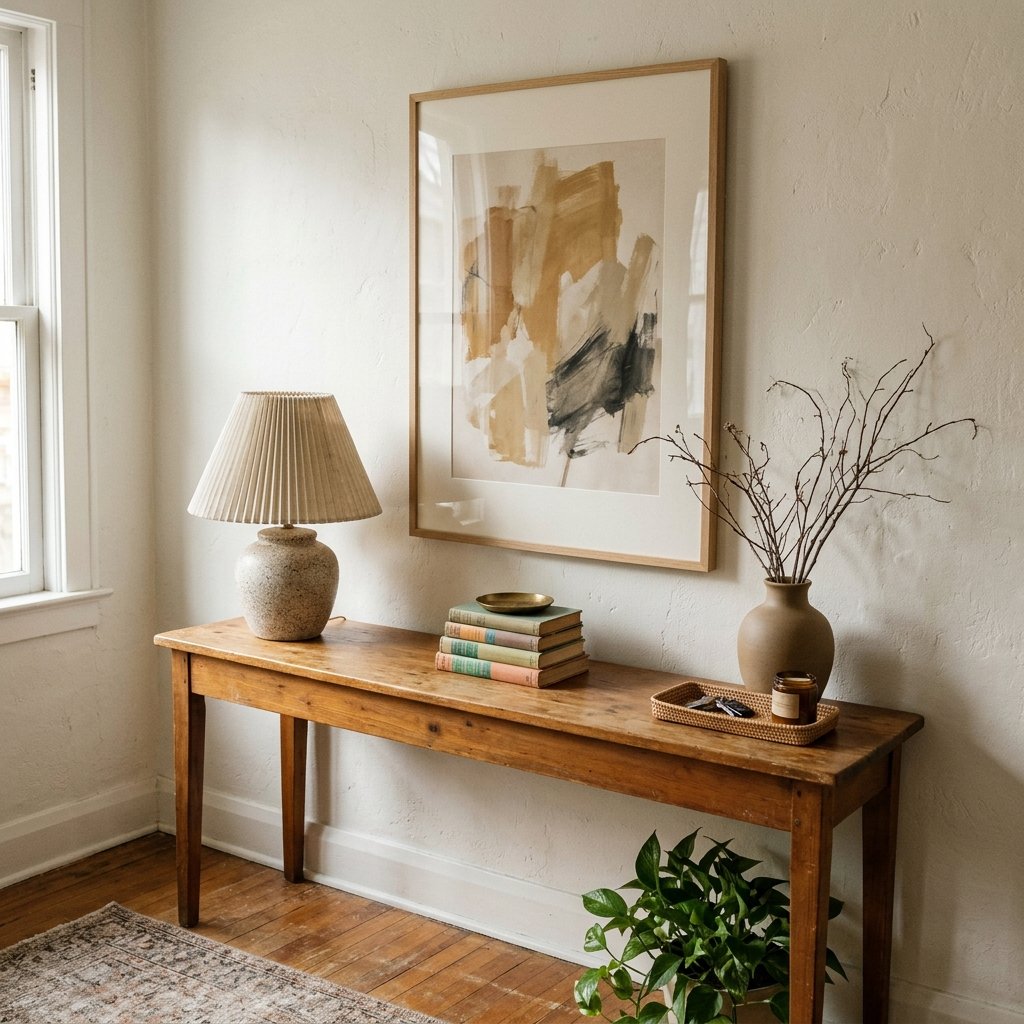
Instead of five small objects on a console, try:
- One lamp
- One large vase
- Small stack of books
- One decorative object
The negative space between objects is part of the design.
13. Decorate With Books
Books are one of the most useful inexpensive decorating tools.
Use them to:
- Add height
- Create layers
- Style a coffee table
- Fill shelves
- Support a small decorative object
Look for inexpensive hardcovers at secondhand shops.
Choose books you actually enjoy when possible so the room still feels personal.
14. Bring in Branches From Outdoors
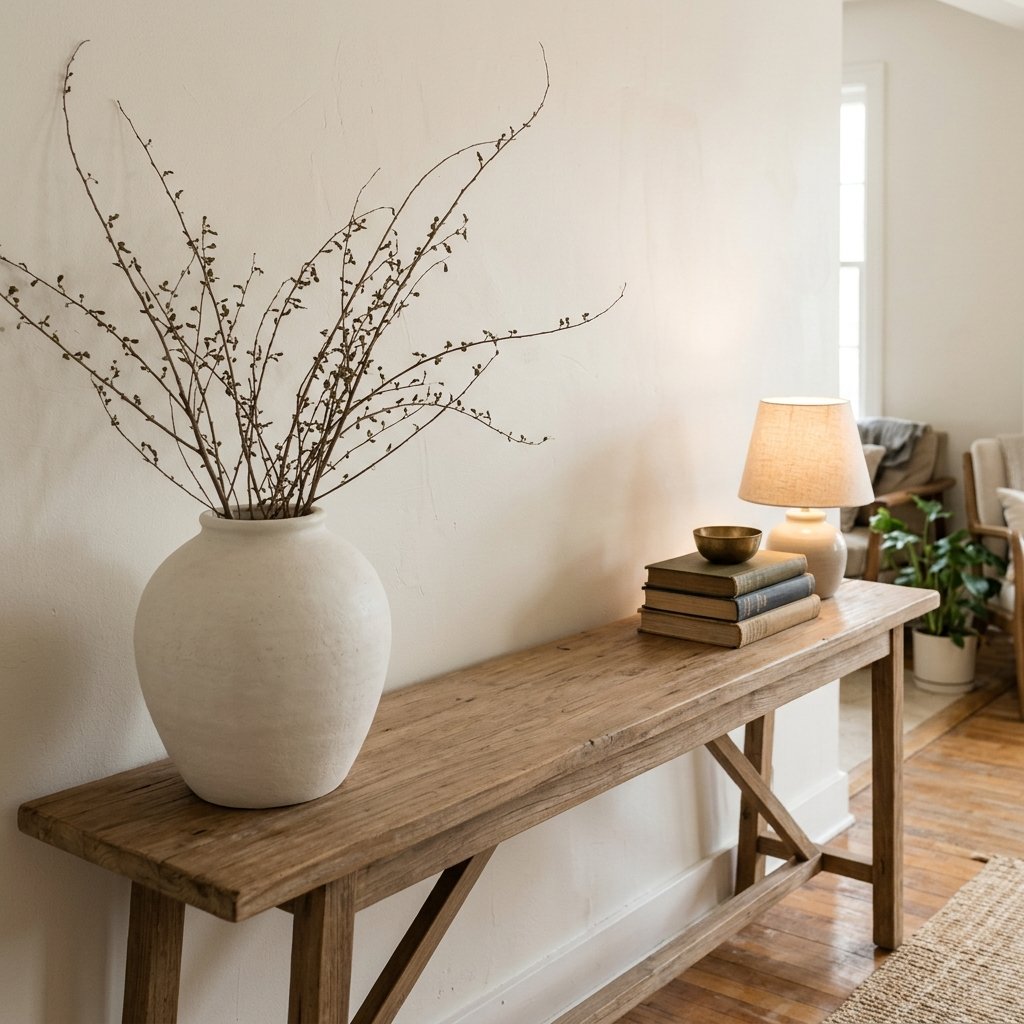
A few branches in a large vase can create more impact than a collection of small accessories.
The best part is that they may cost nothing.
Use appropriate branches from your own property or places where collecting is permitted.
Before bringing natural materials indoors, inspect them for insects and debris.
Avoid plants you can’t identify, particularly in homes with children or pets.
You can also use realistic faux branches if you want something reusable.
15. Add Greenery
Plants can add life and color to a room.
You don’t need to fill every corner.
One appropriately scaled plant can be enough.
If your room doesn’t receive enough light for a live plant, consider a convincing faux option.
For real plants, choose species appropriate for your lighting and household, especially if you have pets or small children.
16. Add a Large Vase
Scale can make inexpensive decor look more substantial.
A larger vase on a:
- Console
- Coffee table
- Mantel
- Sideboard
can become a focal point.
You don’t necessarily need to fill it.
An empty sculptural vase can look beautiful on its own.
Or add a few large branches instead of dozens of small stems.
17. Improve the Lighting
Good lighting can make an inexpensive room feel dramatically better.
Don’t rely entirely on one overhead fixture.
Layer lighting with:
- Table lamps
- Floor lamps
- Accent lamps
Place light sources at different heights.
At night, several smaller pools of warm light often create a more comfortable atmosphere than one extremely bright ceiling light.
Use bulbs and fixtures according to their manufacturer specifications, including maximum wattage and compatible bulb types.
18. Update Lamp Shades
You may not need new lamps.
Changing an old or damaged shade can completely change the appearance of the lamp.
Simple shades in:
- White
- Cream
- Natural linen-like fabric
can work with many decorating styles.
Make sure the replacement shade and fitting are appropriate for the lamp, and follow fixture and bulb safety requirements.
19. Thrift a Coffee Table
A secondhand coffee table can be a better value than buying a very inexpensive new one.
Look for solid construction first.
You can always change the appearance later.
Wood tables can bring warmth to a room filled with upholstered furniture.
Before buying, check:
- Stability
- Size
- Height
- Surface condition
- Structural damage
Measure your living room before shopping.
A bargain isn’t useful if the table is too large for the space.
20. Use Baskets for Storage
Storage can double as decor.
Use baskets for:
- Throw blankets
- Toys
- Games
- Extra pillows
- Everyday clutter
Natural woven texture can also warm up a neutral living room.
Don’t automatically buy matching baskets for everything.
One or two larger baskets may be more useful and visually calmer.
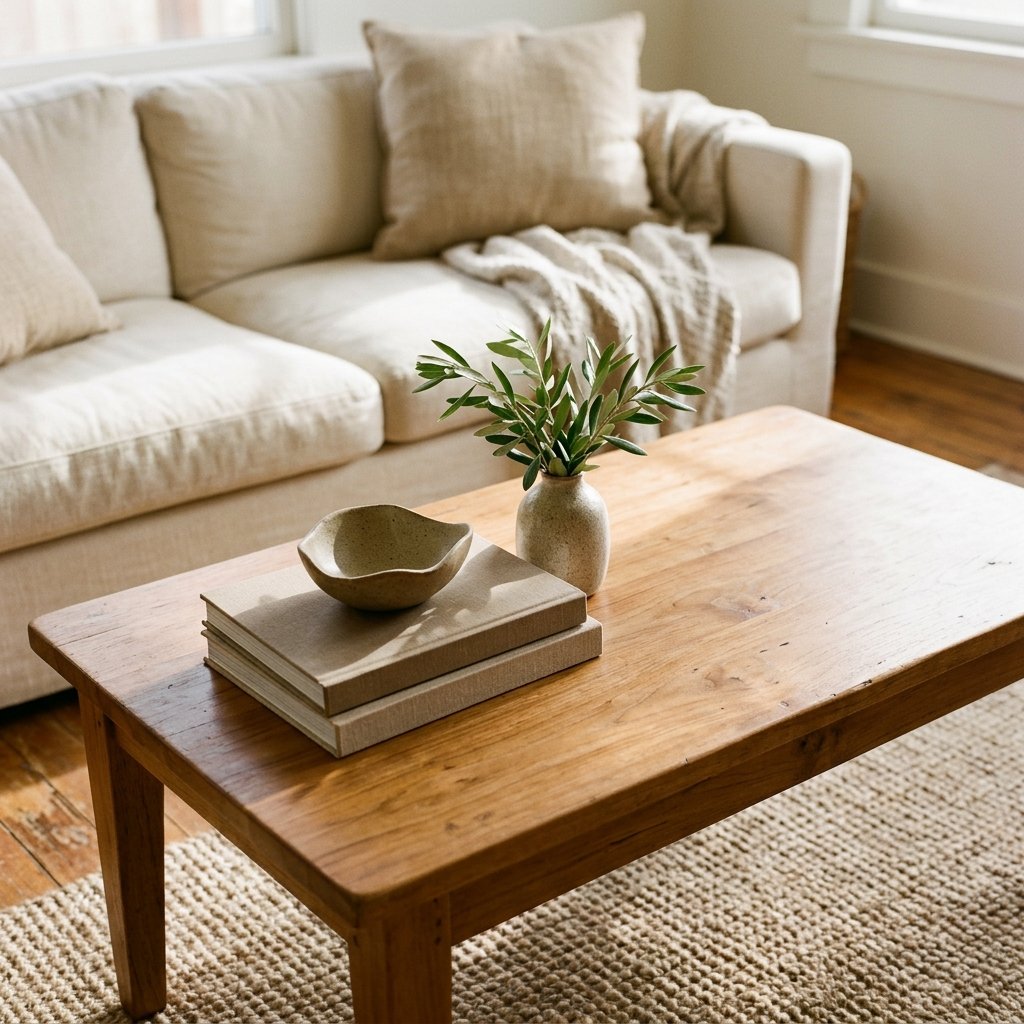
21. Style the Coffee Table Simply
You don’t need expensive coffee table decor.
Try a simple formula:
One stack of books
Adds height and personality.
One bowl or decorative object
Creates a focal point.
One natural element
A plant, small vase, or branches add life.
That’s enough.
Leave room to actually use the table.
How to Decorate a Living Room for Free
If your decorating budget is literally zero, start here:
- Remove clutter.
- Rearrange the furniture.
- Move artwork from another room.
- Restyle bookshelves.
- Swap pillows between rooms.
- Move lamps around.
- Gather branches where appropriate and permitted.
- Simplify the coffee table.
- Fold and style existing throws.
- Remove decor that doesn’t fit your palette.
A room can look significantly different without adding anything new.
How to Decorate a Living Room on a Small Budget
If you have a little money to spend, prioritize the items that will have the biggest visual effect.
Instead of buying ten inexpensive accessories, consider spending your budget on:
- Paint
- Curtains
- Pillow covers
- Large artwork
- Lamp
- Secondhand coffee table
- Rug
The right priority depends on what’s currently missing.
If the room has bare windows, curtains may make the biggest difference.
If the walls are already good but the furniture feels disconnected, a rug may matter more.
How to Make a Cheap Living Room Look Expensive
The secret isn’t pretending inexpensive furniture is luxury furniture.
It’s creating a room that feels intentional.
Pay Attention to Scale
Use decor that’s large enough for the furniture and walls.
Limit the Color Palette
Repeated colors make the room feel cohesive.
Mix Textures
Combine smooth, woven, wood, metal, and soft fabrics.
Add Contrast
A room that’s entirely beige can feel flat.
Add dark wood, black, green, navy, or another deeper accent.
Leave Empty Space
You don’t have to decorate every surface.
Hide Visual Clutter
Use baskets, cabinets, and simple storage solutions.
Layer Lighting
Multiple light sources create atmosphere.
Mix Old and New
A thrifted wood table can make inexpensive newer furniture feel more interesting.
How to Make an Old Sofa Look Better
Replacing a sofa can consume most of a decorating budget.
If the sofa is still comfortable and structurally sound, work with it.
Try:
- Washing or cleaning it according to the manufacturer’s care instructions
- Removing unnecessary pillows
- Adding coordinated pillow covers
- Adding a throw
- Placing a rug underneath the seating area
- Adding attractive side tables and lamps nearby
Don’t try to hide the entire sofa under blankets and pillows.
Usually, simpler styling looks better.
Budget Living Room Rug Ideas
A rug can help visually connect furniture, but size matters.
A tiny rug floating in the middle of the room can make the seating area feel disconnected.
When possible, choose a rug large enough to relate comfortably to the main furniture arrangement.
Measure before buying.
Secondhand rugs can be an option, but inspect them carefully for stains, odors, pests, and damage.
If you’re layering a rug over hard flooring, consider an appropriate rug pad to reduce movement and protect the floor.
Cheap Living Room Wall Decor Ideas
Large walls don’t need dozens of decorations.
Try:
- One large piece of artwork
- Large mirror
- Simple gallery wall
- Textile
- Collection of matching frames
- Oversized photograph
If you’re hanging anything heavy, use mounting hardware appropriate for the wall material and the item’s weight.
When uncertain about what’s behind a wall, take appropriate precautions before drilling.
Budget-Friendly Living Room Shelves
The easiest way to improve shelves is often to remove things.
Instead of filling every inch, create groups.
Try combining:
- Books
- Small artwork
- Ceramic object
- Basket
- Plant
Repeat a few colors and materials across the shelves.
Avoid lining up lots of small objects with equal spacing.
How to Decorate a Small Living Room on a Budget
Small rooms benefit from restraint.
Prioritize pieces that serve a purpose.
Try:
- Side table with storage
- Basket for blankets
- Floor lamp
- Compact coffee table
- Large artwork instead of many small pieces
Don’t automatically buy tiny furniture just because the room is small.
A few properly scaled pieces can make the room feel calmer than lots of miniature furniture.
Where to Save Money When Decorating a Living Room
Some items are particularly easy to buy inexpensively or secondhand.
Consider saving on:
- Side tables
- Coffee tables
- Frames
- Decorative bowls
- Vases
- Books
- Baskets
- Mirrors
These items don’t necessarily need to be new.
Where It Can Make Sense to Spend More
A budget room doesn’t mean choosing the cheapest version of everything.
If you can, prioritize quality for things that receive heavy use.
That may include:
- Sofa
- Main seating
- Rug
- Window hardware
- Frequently used lighting
Even then, shop carefully and compare options.
Spending more only makes sense when the quality, durability, comfort, or function actually improves.
How to Thrift Decor Without Making Your House Look Cluttered
Go thrifting with a list.
For example:
Need: one large vase, two frames, wood side table
That’s much better than buying whatever looks inexpensive.
Before buying something, ask:
- Do I know where this will go?
- Is it the right size?
- Does it work with my color palette?
- Is it in usable condition?
- Would I still want it if it weren’t cheap?
If the answer is no, leave it behind.
Common Budget Decorating Mistakes
Buying Too Many Cheap Accessories
Small purchases add up quickly and can create clutter.
Buying Everything at Once
A collected room takes time.
Ignoring Scale
Decor that’s too small can make a room feel unfinished.
Buying Before Measuring
Measure furniture, walls, windows, and rugs first.
Matching Everything
A room can look more interesting when woods, textures, and finishes are coordinated rather than identical.
Following Every Trend
Use trends selectively instead of replacing your entire room whenever styles change.
Forgetting Lighting
A beautifully decorated room can still feel uninviting under harsh lighting.
Assuming DIY Is Always Cheaper
Factor in tools, supplies, time, and mistakes before starting a project.
A Simple Budget Living Room Decorating Formula
If your living room feels unfinished, try this basic formula.
Step 1: Simplify
Remove clutter and unnecessary accessories.
Step 2: Arrange
Create a functional furniture layout.
Step 3: Ground
Use a properly scaled rug if your budget allows.
Step 4: Add Height
Hang appropriately scaled artwork or a mirror.
Step 5: Add Softness
Use curtains, pillows, and a throw.
Step 6: Add Light
Bring in table or floor lamps.
Step 7: Add Nature
Use a plant or branches.
Step 8: Edit
Remove anything that makes the room feel crowded.
FAQ About Decorating a Living Room for Cheap
How can I decorate my living room with very little money?
Start with free changes: declutter, rearrange furniture, move decor from other rooms, restyle shelves, and simplify surfaces. Then spend selectively on high-impact updates such as paint, pillow covers, curtains, lighting, or secondhand furniture.
How can I make my living room look expensive on a budget?
Focus on scale, a consistent color palette, layered lighting, texture, substantial artwork, and fewer accessories. A room that feels intentional usually looks more polished than one filled with lots of inexpensive decor.
What should I buy first when decorating a living room on a budget?
Buy whatever solves the room’s biggest problem. That might be curtains for bare windows, lamps for poor lighting, a rug to connect the seating area, or artwork for a large empty wall.
How can I decorate my living room for free?
Rearrange the furniture, shop your home, move artwork, swap lamps and pillows between rooms, declutter surfaces, restyle shelves, and bring in appropriate natural branches.
How can I update an old living room without replacing the furniture?
Try a new furniture arrangement, fresh paint, updated pillow covers, curtains, lighting, artwork, and a rug. Cleaning and simplifying existing furniture can also make a major difference.
How do I make cheap decor look good?
Use less of it. Choose pieces with enough scale, repeat a limited color palette, mix textures, and leave empty space around your accessories.
Is thrifted decor good for a living room?
Yes. Secondhand stores can be excellent sources for wood furniture, frames, mirrors, lamps, bowls, vases, and books. Inspect items carefully before bringing them home.
How can I decorate a small living room cheaply?
Prioritize function. Use a few properly scaled pieces, vertical wall space, good lighting, simple storage, and limited accessories rather than filling the room with small furniture.
Final Thoughts
Learning how to decorate your living room for cheap starts with changing the way you shop.
Instead of asking, “What decor should I buy?” ask, “What does this room actually need?”
Maybe it needs a better furniture layout.
Maybe the coffee table needs fewer accessories.
Maybe moving a lamp from the bedroom will solve a dark corner.
Or perhaps a gallon of paint, a few new pillow covers, and a thrifted coffee table will make the room feel completely different.
Start with the free changes first.
Declutter.
Rearrange.
Shop your home.
Choose a simple color palette.
Then spend your decorating budget on the few things that will make the biggest difference.
A beautiful living room isn’t created by filling every surface with new decor.
It’s created through thoughtful scale, comfortable furniture placement, warm lighting, texture, color, and objects you genuinely like.
And when those elements work together, even an inexpensive living room can feel warm, personal, and beautifully finished.