

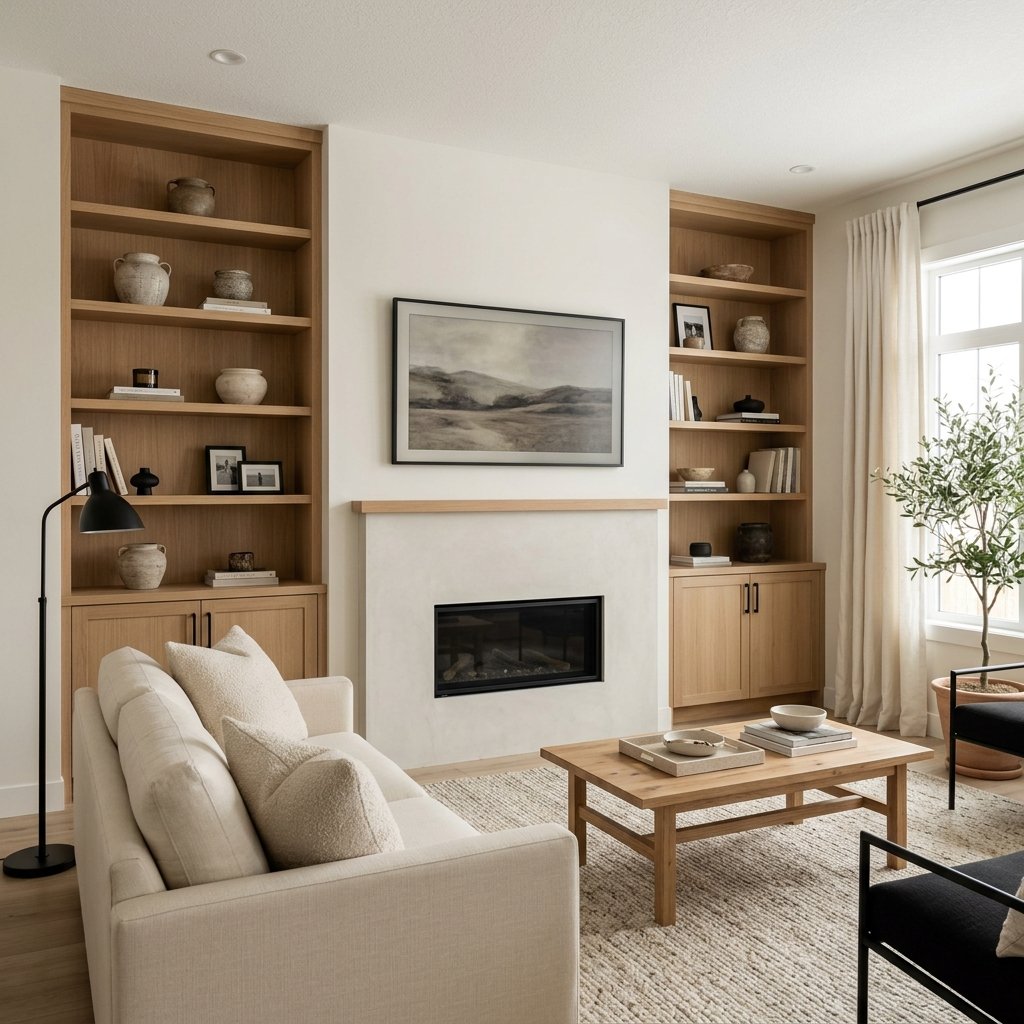
Putting a TV above a fireplace can solve one of the most frustrating living room layout problems: where do you put the television when the fireplace is already the natural focal point?
Combining both features on one wall can free up valuable floor and wall space, simplify furniture placement, and create a strong focal point. This can be especially useful in smaller living rooms or rooms where windows and doorways leave few good locations for a television.
But there are important considerations before mounting a TV over a fireplace.
Heat, viewing height, fireplace clearances, TV ventilation, wall construction, wiring, and mounting hardware all matter. A setup that looks beautiful in an inspiration photo may not be appropriate for your particular fireplace or television.
The goal isn’t simply to squeeze the TV between the mantel and ceiling.
It’s to create a fireplace wall where the television feels intentional, is comfortable to watch, and is installed according to the requirements of both the fireplace and TV manufacturers.
If you’re considering this layout, here are 17 TV above fireplace ideas, plus practical tips for making the combination look more polished.
Can You Put a TV Above a Fireplace?
Sometimes.
But there isn’t a universal yes-or-no answer.
Whether a television can safely go above your fireplace depends on factors including:
- Fireplace type
- Fireplace manufacturer’s required clearances
- Mantel design
- Heat output and heat path
- TV manufacturer’s requirements
- TV operating temperature requirements
- TV ventilation
- Wall construction
- Mounting location
A modern electric fireplace, for example, can have very different installation requirements from a traditional wood-burning fireplace.
Gas fireplaces and inserts vary too.
Before planning the design, locate the installation and owner’s manuals for both the fireplace and television.
Those requirements take priority over decorating advice.
Is Heat Bad for a TV?
Electronics have specified operating conditions.
Excessive heat can potentially interfere with performance or shorten the life of electronic components.
The important question isn’t simply:
“Does the fireplace get hot?”
It’s:
“What conditions will the television experience in this exact installation?”
Heat may move differently depending on:
- Fireplace design
- Mantel projection
- Surround
- Recess
- Venting
- Wall construction
Don’t assume that adding a mantel automatically makes every TV-over-fireplace configuration acceptable.
Follow the manufacturers’ installation and clearance requirements.
Is a TV Above the Fireplace Too High?
This is one of the biggest practical problems with the layout.
A fireplace, mantel, and required clearances can push the television higher than an ideal viewing position.
Before mounting anything, sit where you’ll normally watch TV.
Look at the proposed screen location.
Ask yourself:
- Will I constantly tilt my head upward?
- How far away is the seating?
- Is the screen comfortable to view?
- Could the fireplace design be altered to lower the TV while maintaining required clearances?
If the TV must be extremely high to meet fireplace requirements, another location may be more comfortable.
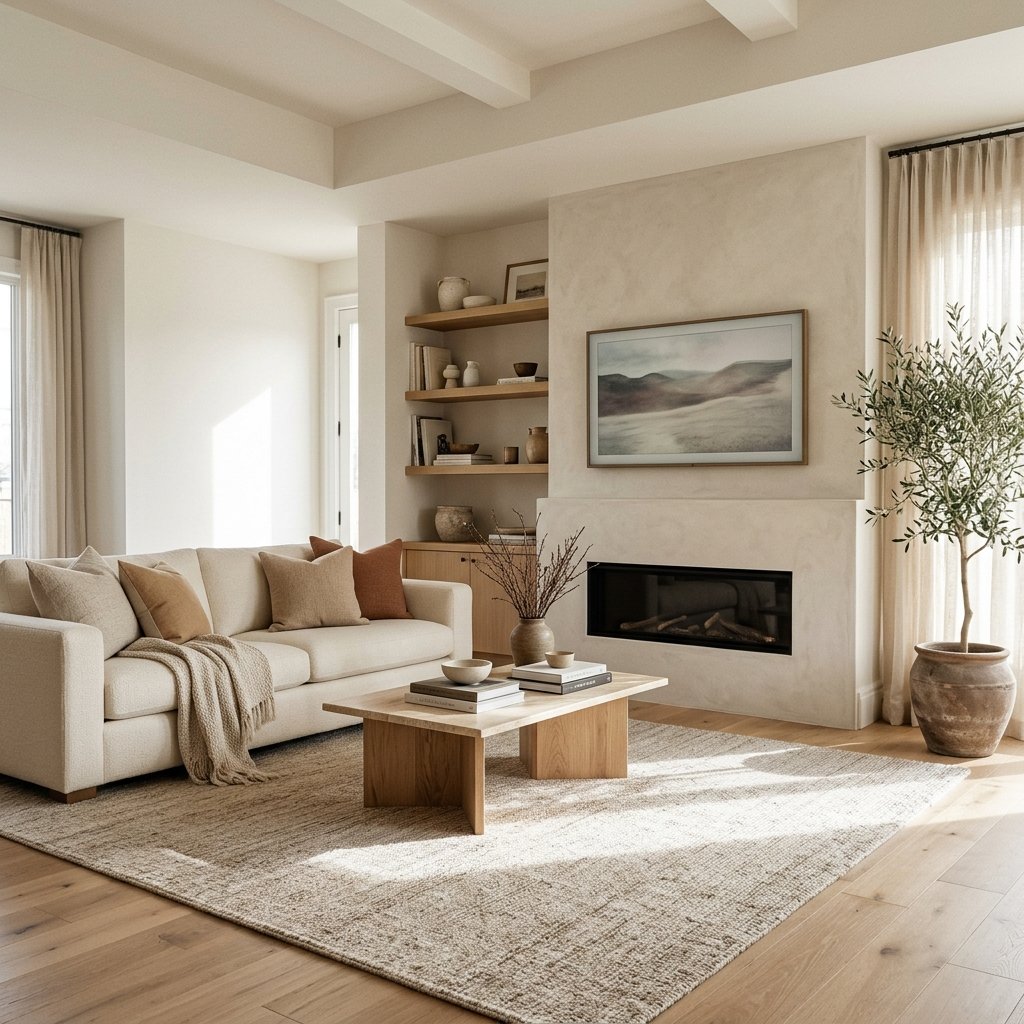
1. Keep the Fireplace Design Simple
When the fireplace and television share one wall, there are already two large visual elements competing for attention.
Simple design often works best.
Consider:
- Clean fireplace surround
- Simple mantel
- Restrained accessories
- Minimal trim
You don’t need elaborate decor around the screen.
Let the architecture create the interest.
2. Choose a TV Size That Fits the Fireplace Wall
Bigger isn’t automatically better.
Consider the proportions of:
- Fireplace opening
- Mantel
- Wall
- Built-ins
- Room
- Viewing distance
A television that’s dramatically wider than the architectural elements beneath it can make the wall feel top-heavy.
On the other hand, an undersized TV floating on a huge fireplace wall can look disconnected.
The goal is visual balance as well as comfortable viewing.
3. Use a Low-Profile Fireplace Design
If you’re planning a new fireplace rather than working with an existing one, keeping the overall fireplace composition lower may help prevent the television from ending up near the ceiling.
However, the design still needs to meet all fireplace manufacturer requirements.
Don’t reduce required clearances simply to lower the screen.
A thoughtfully designed modern fireplace wall can often integrate the television more naturally than trying to add one above an existing tall traditional mantel.
4. Keep the Mantel Simple
A thick, oversized mantel can add another horizontal element between the fireplace and TV.
In some rooms, that’s beautiful.
In others, it pushes the screen visually and physically too high.
A simple mantel may create a cleaner transition.
If a mantel is required or used as part of the fireplace installation, its material, depth, height, and placement must comply with the fireplace manufacturer’s instructions and applicable requirements.
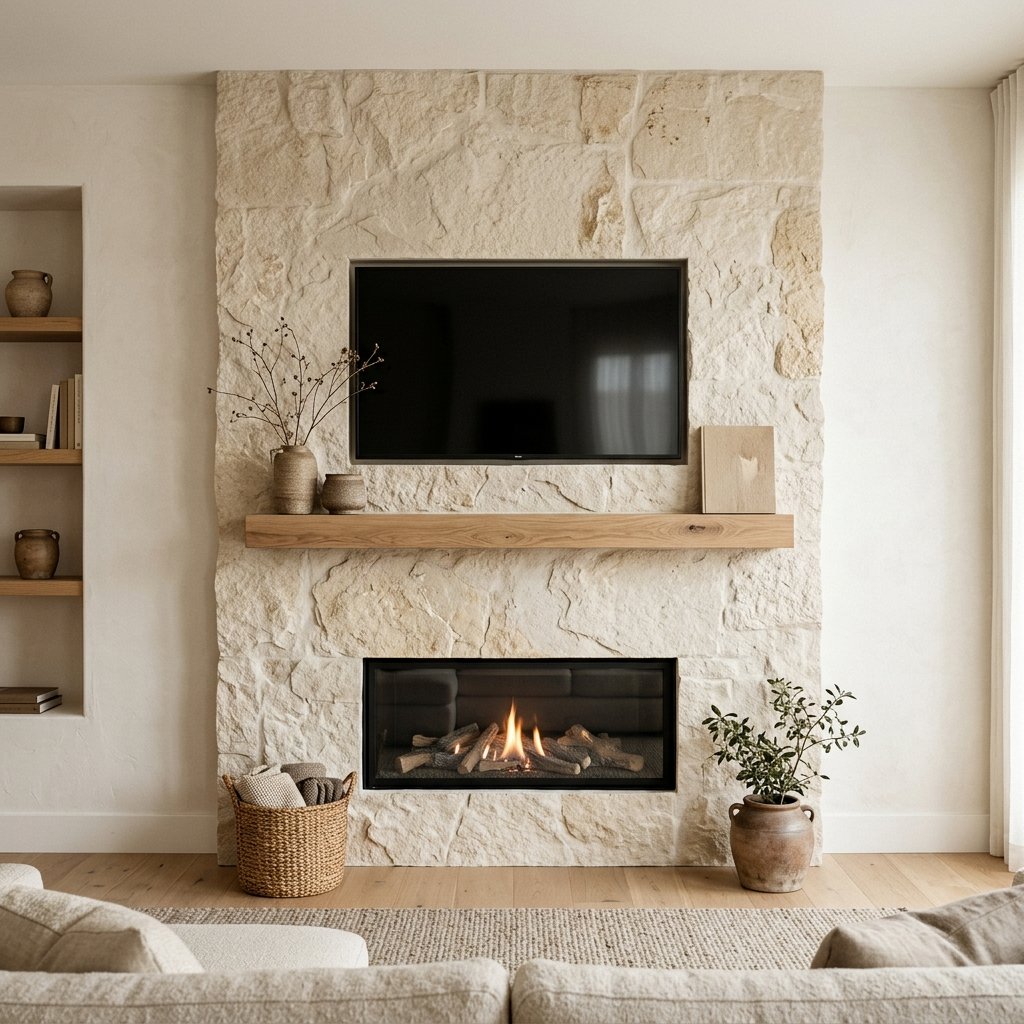
5. Create a Floor-to-Ceiling Fireplace Feature
Extending the fireplace material upward can help connect the television and fireplace into one architectural composition.
Possible finishes include:
- Stone
- Brick
- Tile
- Plaster-look finish
- Painted millwork
Instead of seeing a fireplace, blank wall, and television as three separate pieces, the full-height treatment makes them read as one feature.
Be sure the wall system and finishes are suitable for the fireplace installation and heat conditions.
6. Use Stone Around the Fireplace
Stone can make a TV fireplace wall feel substantial and timeless.
Depending on your style, consider:
- Light limestone look
- Warm natural stone
- Stacked stone
- Large-format stone slabs
Keep the surrounding accessories restrained.
The combination of stone, fireplace, and screen already provides plenty of visual weight.
7. Try a Plaster-Look Fireplace
A smooth plaster-style finish can create a quieter backdrop for a television.
This works particularly well in:
- Organic modern rooms
- Minimal interiors
- Warm contemporary spaces
The lack of strong pattern helps the black TV screen feel less visually busy.
Any finish around the fireplace needs to be appropriate for the specific assembly and installed according to required clearances and material specifications.
8. Use Brick for a Traditional Look
A TV can also work above a traditional brick fireplace.
Keep the rest of the arrangement relatively simple.
If you have beautiful original brick, consider working with it before assuming it needs to be painted.
Natural brick brings warmth and texture that can balance the modern appearance of a television.

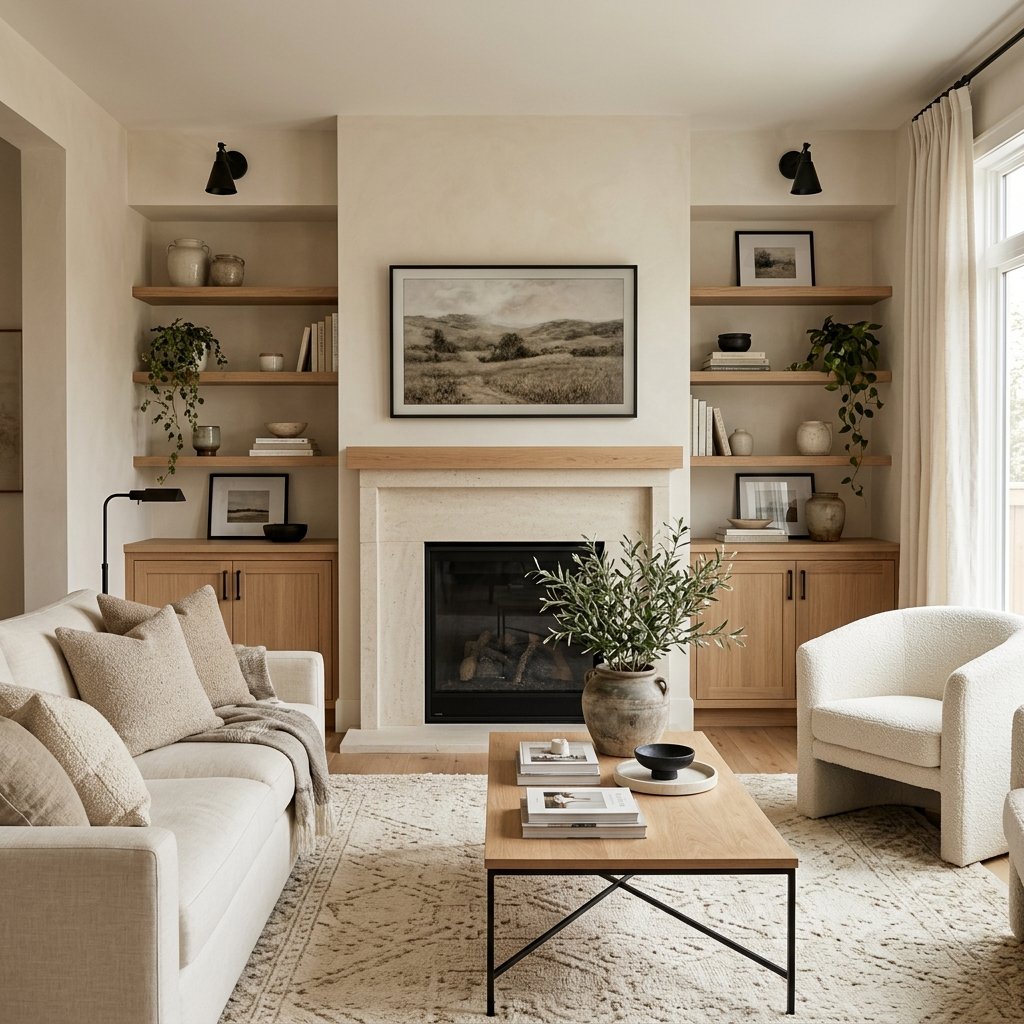
9. Add Built-Ins Around the Fireplace
Built-ins can make a TV above fireplace arrangement feel much more intentional.
Consider:
- Lower cabinets
- Open shelving
- Bookcases
- Display niches
Built-ins also provide practical storage for:
- Games
- Books
- Media accessories
- Toys
- Electronics
Keep required fireplace clearances, ventilation, electrical access, and service access in mind when designing cabinetry.
10. Use Natural Wood Built-Ins
Wood can soften the black screen.
Try:
- White oak
- Medium oak
- Walnut
- Painted cabinetry with wood shelves
Wood also gives you another material to repeat elsewhere in the room through coffee tables, frames, or furniture.
This helps the fireplace wall connect with the rest of the space.
11. Paint the Fireplace Wall a Dark Color
If the television feels like a large black rectangle on a pale wall, a darker wall can reduce the contrast.
Consider:
- Charcoal
- Deep green
- Navy
- Deep brown
- Soft black
The TV won’t disappear completely, but it can become less visually dominant when turned off.
Sample dark paint carefully because lighting and undertones can dramatically change how it looks.
12. Try a Dark Fireplace Surround With Light Walls
You don’t have to paint the entire room dark.
Instead, use a darker finish only on the fireplace wall.
This creates a strong focal point and visually integrates the screen.
Surrounding walls can remain:
- Warm white
- Cream
- Greige
- Mushroom
The contrast can feel intentional rather than heavy.

13. Frame the TV With Simple Millwork
Millwork can make the fireplace wall feel finished.
Consider:
- Simple panel molding
- Vertical paneling
- Shaker-style details
- Minimal trim
Avoid making the trim so busy that it competes with the screen.
Any wall modification around a fireplace needs to respect clearances and material requirements, and you should know where electrical wiring and other utilities are before fastening into the wall.
14. Hide the TV With Art When It’s Off
Some televisions can display artwork when not being used for viewing.
This can soften the appearance of the screen in a more traditional or decorative living room.
Another approach is a custom concealment system, though this can add complexity.
If you add a frame or enclosure around a television, make sure it doesn’t interfere with:
- Ventilation
- Sensors
- Controls
- Manufacturer-required clearances
15. Keep Mantel Decor Low
When a TV sits above the mantel, there may not be much visual breathing room.
Tall vases, candlesticks, and branches can block the screen or make the area feel crowded.
Instead, try:
- Low greenery
- Small sculptural objects
- Short candlesticks where appropriate
- A restrained seasonal garland
Sometimes the best mantel decor is very little decor.
16. Skip Mantel Decor Entirely
You don’t have to decorate every surface.
A fireplace with beautiful stone, a simple wood mantel, and a TV above it may already be enough.
Leaving the mantel empty can make the entire wall feel:
- Cleaner
- Larger
- More modern
This is particularly effective when built-ins or shelving nearby already contain decorative objects.
17. Repeat the TV’s Dark Color Elsewhere
One of the easiest styling tricks is to repeat black or another dark tone elsewhere in the room.
Try:
- Black picture frames
- Dark lamp
- Black hardware
- Dark coffee table details
- Charcoal pillows
Now the television isn’t the only large dark element in the space.
The repetition creates balance.
How High Should a TV Be Above a Fireplace?
There isn’t one universal measurement.
The correct location depends on the specific fireplace, television, mantel, wall construction, viewing distance, and manufacturer requirements.
Start with the required fireplace clearances.
Then check the television’s requirements.
Only after those conditions are satisfied should you evaluate viewing comfort.
If meeting the safety requirements places the screen uncomfortably high, reconsider the layout.
Don’t compromise required clearances to improve viewing height.
Should the TV Be Wider Than the Fireplace?
There isn’t a strict decorating rule.
But proportions matter.
Look at the complete composition rather than comparing only the television with the firebox.
Consider the width of:
- Fireplace surround
- Mantel
- Chimney breast or feature wall
- Built-ins
A television can be wider than the firebox and still look balanced if it relates well to the overall architecture.
Should the TV Be Smaller Than the Mantel?
Often, a television that sits comfortably within the overall width of the mantel or fireplace composition can look visually balanced.
But again, there is no universal rule.
The room’s proportions and viewing requirements matter more than following a decorative formula.
Should You Use a Tilt Mount?
A tilting mount may help when the TV sits somewhat higher than your preferred viewing position.
But it doesn’t fix every problem.
A television mounted extremely high can still be uncomfortable even when angled downward.
Choose a mount that is:
- Compatible with the television
- Rated for its size and weight
- Suitable for the wall construction
- Installed according to manufacturer instructions
What About a Pull-Down TV Mount?
Some mounting systems are designed to move a television downward for viewing and back upward when not in use.
This can potentially improve viewing height in certain fireplace layouts.
However, compatibility is critical.
Consider:
- TV weight
- Wall structure
- Fireplace heat
- Required clearances
- Mount movement path
- Manufacturer requirements
A moving mount should never bring the TV into an unsafe heat or clearance zone.
How to Hide TV Wires Above a Fireplace
Visible cables can make an otherwise beautiful fireplace wall look unfinished.
Possible solutions depend on the construction.
You might use:
- Properly planned in-wall wiring
- Approved surface cable management
- Built-in conduit during construction
- Cabinetry that conceals compatible components
Electrical work must follow applicable requirements.
Don’t run ordinary power cords through a wall unless they are specifically approved for that use and the installation complies with applicable electrical requirements.
For new outlets or concealed electrical work, a qualified electrician may be appropriate.

Where Do You Put the Cable Box or Media Equipment?
Modern setups can often reduce the amount of equipment that needs to sit near the TV.
When components are necessary, possible locations include:
- Built-in cabinet
- Side cabinet
- Media console
- Properly ventilated equipment compartment
Don’t seal electronics into an unventilated cabinet.
Follow each device manufacturer’s ventilation and operating requirements.
Also consider how remotes and wireless signals will reach concealed equipment.
How to Style Built-Ins Beside a TV Fireplace
Keep the shelves visually quieter than you might if the fireplace wall didn’t contain a TV.
Use a combination of:
- Books
- Pottery
- Framed art
- Baskets
- Sculptural objects
- Greenery
Leave some empty space.
The fireplace and television already provide strong central visual weight.
Crowded shelves can make the entire wall feel chaotic.
TV Above Fireplace in a Small Living Room
This layout can be especially practical in a small room.
Combining the TV and fireplace creates one focal wall instead of competing focal points.
Then arrange seating around that wall.
Keep the room visually open with:
- Appropriately scaled sofa
- Leggy side tables
- Simple coffee table
- Limited accessories
- Good lighting
Make sure the viewing distance is appropriate for the television and room.
TV Above Fireplace in a Large Living Room
A large room gives you more flexibility.
You may be able to create:
- Floor-to-ceiling fireplace
- Wide built-ins
- Large hearth
- Substantial stone surround
But don’t automatically choose an enormous TV simply because the wall is large.
Viewing distance and room use should still guide screen size.
TV Above a Traditional Fireplace
If your fireplace has:
- Detailed mantel
- Brick
- Traditional molding
- Classic millwork
you can still add a television.
Keep the TV installation as visually clean as possible.
Then repeat traditional materials elsewhere through:
- Wood
- Brass
- Textiles
- Artwork
This helps the modern screen feel integrated into an older architectural style.
TV Above a Modern Fireplace
Modern fireplaces often lend themselves naturally to this layout.
A streamlined design might include:
- Linear fireplace
- Minimal surround
- No mantel or simple mantel where permitted
- Large-format tile
- Smooth plaster-style finish
- Integrated cabinetry
The fewer competing details, the more intentional the television tends to look.
TV Above Fireplace With Windows on Each Side
This can create a beautifully symmetrical living room.
Let the central fireplace wall anchor the room.
Use similar window treatments on both sides and keep the fireplace composition relatively simple.
Built-ins aren’t always necessary when windows already provide architectural balance.
TV Above Fireplace With Built-Ins on Both Sides
This is a classic arrangement.
For a cohesive result:
- Align major horizontal lines where possible.
- Repeat materials.
- Keep shelf styling restrained.
- Use closed storage below.
- Consider the relationship between the TV, mantel, and shelving.
You don’t need perfect symmetry, but the overall wall should feel balanced.

How to Make a TV Above the Fireplace Look Better
If the TV already exists and you aren’t remodeling, focus on styling.
Try these changes:
- Remove excess mantel decor.
- Simplify nearby shelves.
- Repeat black elsewhere.
- Hide visible cables appropriately.
- Use a restrained wall color.
- Add warm materials such as wood.
- Improve lighting around the room.
- Keep the fireplace wall visually balanced.
Sometimes the solution isn’t hiding the television.
It’s making everything around it feel more intentional.
Should You Put Artwork Around the TV?
You can, but be careful.
A gallery wall around a television can either integrate the screen or make the entire wall look extremely busy.
If you try it, use:
- Consistent frame colors
- Limited artwork palette
- Intentional spacing
In many fireplace layouts, simpler is better.
Decorating the Mantel With a TV Above It
The limited vertical space can actually make mantel decorating easier.
Keep decorations low.
Try:
Everyday
A small object or two—or nothing.
Fall
Low branches, pumpkins, or restrained seasonal accents while maintaining fireplace clearances.
Christmas
Garland that stays within all required fireplace and TV clearances.
Spring
Small greenery or low floral arrangements.
Never let seasonal decorating block TV ventilation, sensors, fireplace vents, or required clearances.
Common TV Above Fireplace Mistakes
Mounting the TV Too High
Viewing comfort matters.
Ignoring Fireplace Requirements
The installation manual should guide the design.
Assuming a Mantel Solves Every Heat Problem
The entire fireplace system and installation need to be considered.
Choosing the TV Before Planning the Wall
Consider screen size, fireplace proportions, and viewing distance together.
Using an Inadequate Mount
The mount must be compatible with the TV and wall.
Attaching a Heavy TV Without Understanding the Wall
Know what is supporting the mount.
Hiding Wires Unsafely
Electrical work must be done properly.
Blocking TV Ventilation
Leave required clearances around electronics.
Overdecorating the Mantel
The TV and fireplace already create a strong focal point.
Copying an Inspiration Photo Without Checking Specifications
What works for one fireplace may not be permitted for another.
TV Above Fireplace Safety Checklist
Before considering the installation complete, verify:
- The fireplace is installed according to its manufacturer’s requirements.
- All required combustible clearances are maintained.
- The TV location complies with its manufacturer’s requirements.
- The television receives adequate ventilation.
- The wall can support the TV and mount.
- The mount is compatible with the TV’s size and weight.
- Fasteners are suitable for the wall construction.
- Wiring is installed appropriately.
- Cords aren’t exposed to damaging heat.
- Fireplace vents aren’t blocked.
- TV controls, sensors, and ventilation aren’t obstructed.
- Seasonal decorations won’t enter unsafe areas.
For complicated installations involving fireplace construction, electrical work, masonry, or uncertain framing, professional installation may be the better choice.
When a TV Above the Fireplace Isn’t the Best Idea
Sometimes another location simply works better.
Consider putting the TV elsewhere if:
- It would be uncomfortably high.
- Fireplace requirements prevent a practical installation.
- Heat conditions aren’t appropriate.
- The wall can’t support the mounting system without significant modification.
- Seating orientation works better with another wall.
- You want the fireplace to remain the sole focal point.
You don’t need to force the layout simply because it’s popular.
Alternatives to a TV Above the Fireplace
If mounting above the fireplace doesn’t work, consider:
TV Beside the Fireplace
This can create a more comfortable viewing height.
TV in a Built-In
Integrate it into cabinetry.
TV on a Media Console
Simple and flexible.
TV on an Adjacent Wall
Create two related focal points.
Concealed TV
Use cabinetry or another purpose-designed solution when appropriate.
The best layout is the one that works for how you actually use the room.
FAQ About Putting a TV Above a Fireplace
Is it okay to put a TV above a fireplace?
It can be, provided the installation meets the requirements of both the fireplace and television manufacturers, including heat, clearance, ventilation, mounting, and operating conditions.
How high should a TV be above a fireplace?
There isn’t one universal height. Fireplace clearances and TV requirements come first, followed by comfortable viewing position.
Does heat from a fireplace damage a TV?
Excessive heat can be problematic for electronics. Whether a particular installation is suitable depends on the fireplace design, heat conditions, TV requirements, mantel, and wall configuration.
Does a mantel protect a TV from fireplace heat?
A mantel can affect how heat moves in some fireplace designs, but don’t assume it automatically makes an installation safe. Follow the specific fireplace and TV requirements.
Is a TV above a fireplace too high?
It can be. Test the proposed viewing position from your normal seating before installing the TV.
Can a TV be wider than the fireplace?
Yes, depending on the overall proportions. Consider the fireplace surround, mantel, feature wall, built-ins, and room rather than comparing only the screen and firebox.
How do you hide wires for a TV above a fireplace?
Options may include properly planned in-wall wiring, approved surface cable management, conduit installed during construction, or nearby cabinetry. Electrical work must comply with applicable requirements.
Where do you put media equipment with a TV over the fireplace?
Equipment can often be placed in nearby cabinetry or another appropriately ventilated location. Follow the device manufacturer’s requirements.
How can I make a TV above the fireplace look less obvious?
Use a darker feature wall, keep mantel decor simple, hide cables appropriately, repeat dark accents elsewhere, and surround the fireplace with intentional architectural materials.
Should I put a TV above my fireplace or beside it?
Choose based on fireplace requirements, viewing comfort, room layout, wall construction, seating, and your design priorities. If the above-fireplace position is too high or otherwise unsuitable, beside the fireplace may be the better solution.
Final Thoughts
A TV above fireplace arrangement can be a practical and attractive solution—especially when the fireplace already occupies the best focal wall in the room.
The most successful designs treat the fireplace and television as one composition rather than two unrelated objects.
Keep the architecture intentional.
Choose a TV that suits the proportions of the wall.
Use materials such as stone, brick, plaster-style finishes, wood, or millwork to visually connect the elements.
Built-ins can add balance and storage, while a darker feature wall can help the black screen recede.
And don’t feel obligated to fill the mantel with accessories. Sometimes a simple fireplace, a beautiful material, and a clean TV installation are all the wall needs.
Most importantly, design comes after the technical requirements.
Check the fireplace manufacturer’s clearances.
Check the TV’s installation and operating requirements.
Make sure the wall and mount can support the television.
Plan the wiring correctly.
Consider ventilation and heat.
Then sit in your normal viewing position and make sure the screen will actually be comfortable to watch.
If all of those pieces work together, a TV above the fireplace can feel less like a compromise and more like an intentional part of the room.

