

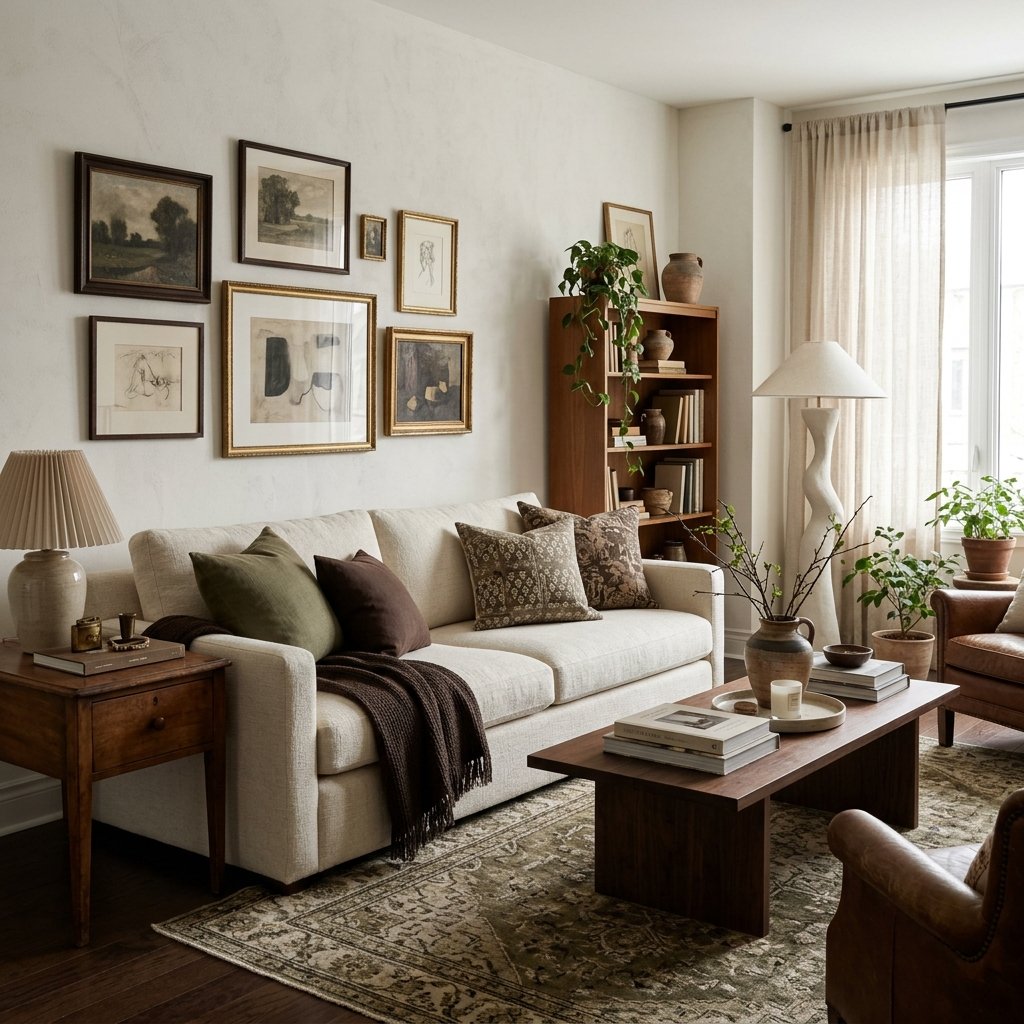
If you’re wondering which home decor trends are actually shaping interiors right now, 2026 is less about one dominant “look” and more about making homes feel warmer, more personal, and more collected.
After years of highly edited neutral rooms, cool grays, stark black-and-white palettes, and minimalist spaces, current design coverage points toward interiors with more personality. Designers are embracing richer colors, warmer wood tones, pattern, handcrafted details, sculptural forms, and pieces that look as though they were collected gradually rather than ordered as a matching set.
That doesn’t mean you need to redecorate your entire home every time trends change.
In fact, one of the most useful shifts happening now is toward longevity: creating rooms that feel individual and comfortable rather than chasing a perfectly coordinated trend.
Here are 15 home decor trends worth watching in 2026—and practical ways to bring them into your home without making everything feel dated next year.
1. Warm, Collected Interiors
Perhaps the biggest trend isn’t a particular color or piece of furniture.
It’s a feeling.
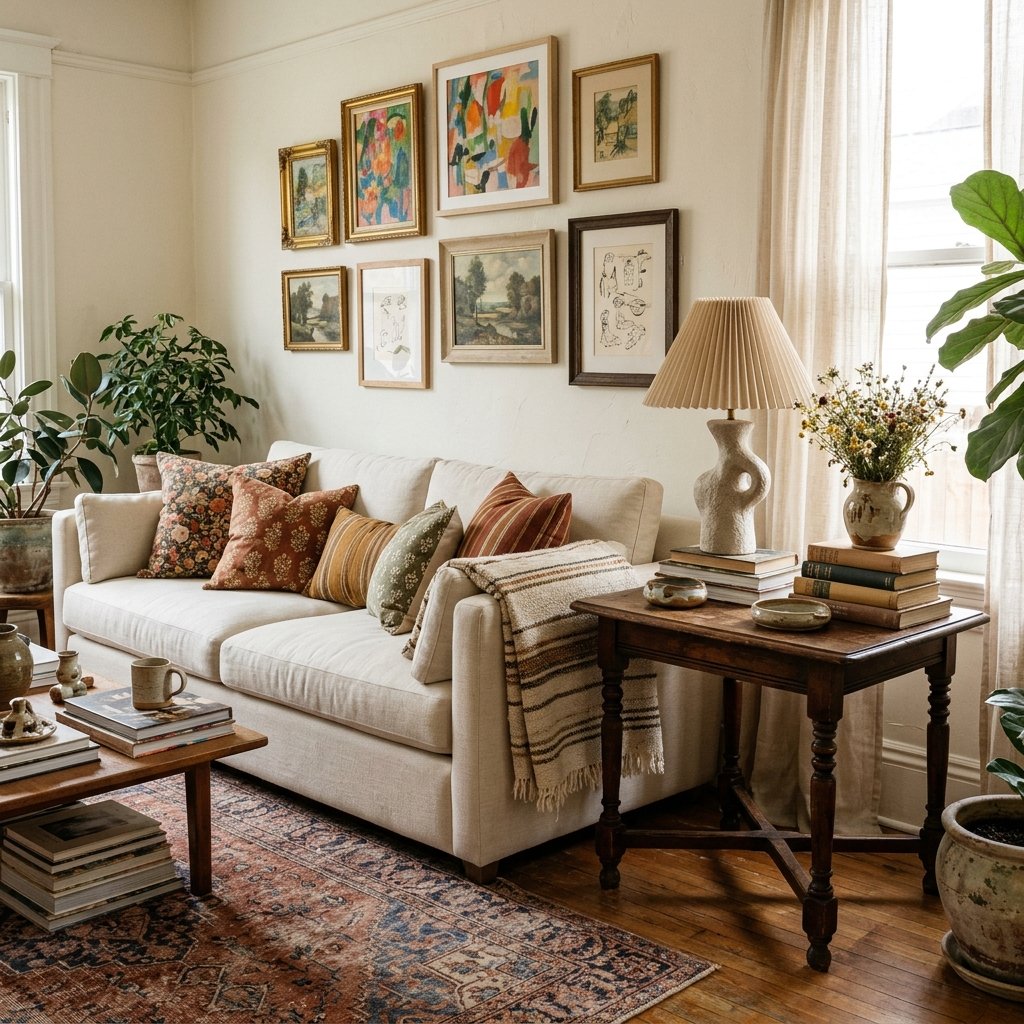
Rooms are moving away from looking perfectly staged and toward looking collected, comfortable, and lived in. Recent design coverage repeatedly highlights personality, patina, natural materials, vintage pieces, tactile fabrics, and meaningful objects.
Instead of buying an entire matching furniture collection, try mixing:
- New upholstered furniture
- Vintage wood table
- Handmade pottery
- Collected books
- Framed art
- Woven textiles
- Objects from travels or family
The goal isn’t clutter.
It’s character.
A room can remain relatively simple while still looking as though it evolved over time.
2. Brown Is Becoming a Major Neutral
Brown continues to replace some of the cooler gray that dominated interiors for years.
Think:
- Chocolate
- Espresso
- Caramel
- Tobacco
- Cognac
- Cocoa
- Warm taupe
Designers are also pairing brown with richer colors such as olive, rust, burgundy, and dusty tones rather than relying exclusively on beige and white.
Brown works especially well because you don’t have to paint an entire room to use it.
Try a:
- Brown velvet pillow
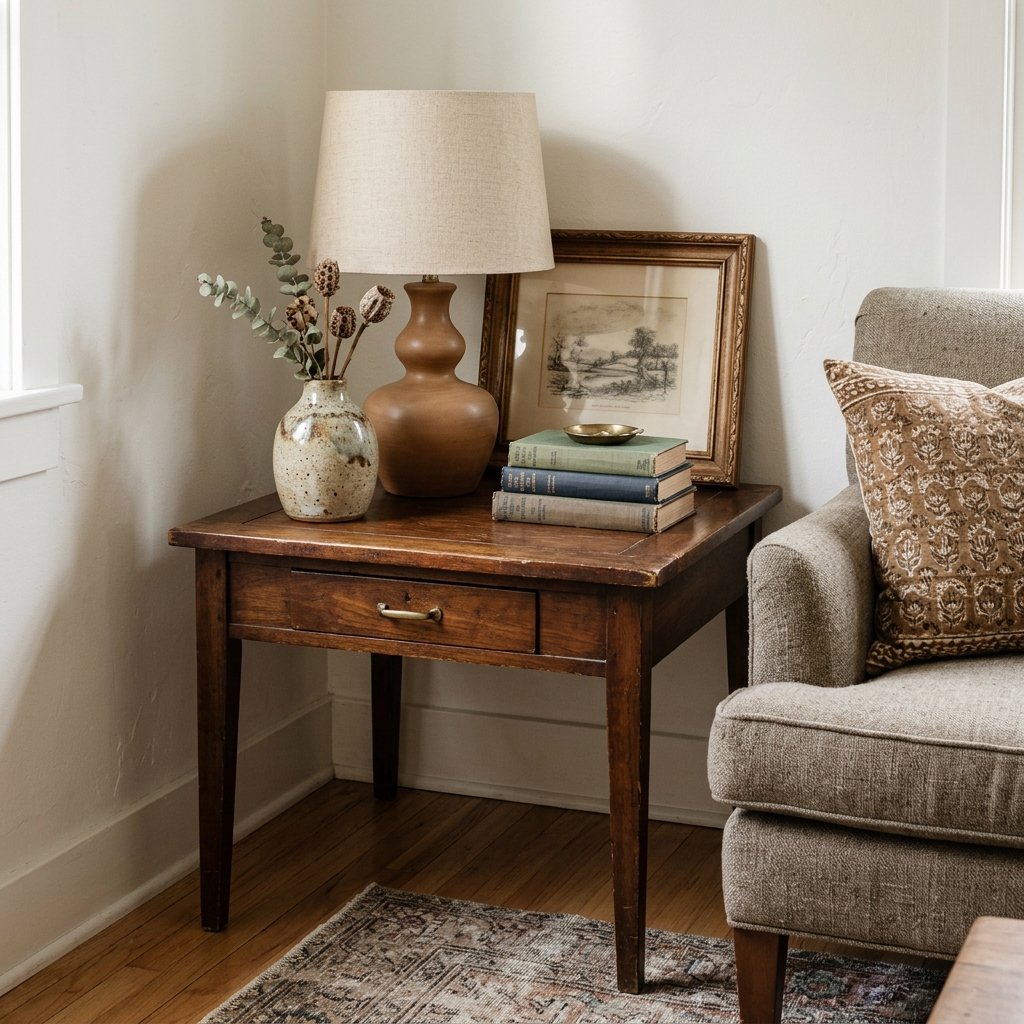
- Walnut side table
- Dark wood picture frame
- Chocolate throw
- Cognac leather chair
These are easy ways to add depth to a neutral room.
3. Medium and Dark Wood Tones
Pale wood isn’t disappearing, but richer woods are becoming much more visible.
Recent design reporting highlights a renewed interest in walnut, espresso oak, wenge, and other medium-to-dark finishes after years of bleached and very pale wood.
This is great news if your home already has darker wood.
You don’t necessarily need to replace it or paint it white.
Dark wood can look beautiful alongside:
- Cream
- Warm white
- Olive
- Mushroom
- Terracotta
- Light stone
- Brass
If you’re starting with a mostly light room, introduce one darker wood element first.
A walnut coffee table, vintage dresser, or dark wood side table can add enough contrast to make the entire room feel more grounded.
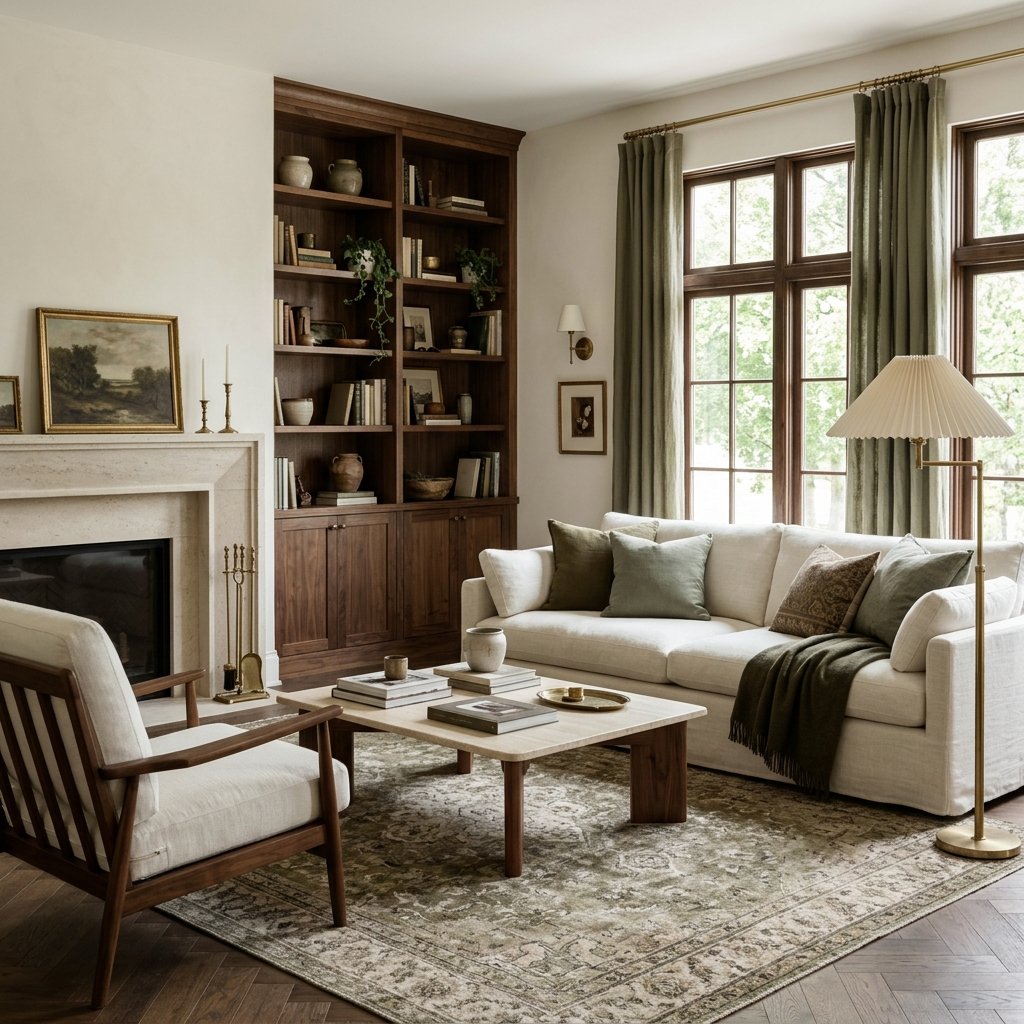
4. Earthy Colors With More Depth
Warm earth tones have been building for several years, but they’re becoming richer.
Current 2026 palettes include shades such as:
- Olive green
- Tobacco brown
- Terracotta
- Rust
- Ochre
- Dusty green
- Merlot
- Muted blue
- Soft charcoal
Designers interviewed by ELLE Decor specifically point to richer, earth-driven mid-tones and a continued move away from cool gray and stark minimalism.
You don’t need to use all of them.
Pick one or two colors that complement the finishes already in your home.
A warm neutral living room, for example, could be refreshed with olive pillows and a rust-colored throw without changing anything permanent.
5. Color Drenching Is Evolving
Painting the walls, trim, and sometimes ceiling one color has been popular for a while.
Now designers are taking the idea further.
One version being discussed for 2026 is hue drenching, where similar shades of one color continue into furniture, textiles, window treatments, and accessories to create a more immersive room.
Imagine:
Dusty green walls + slightly deeper green sofa + olive pillows + botanical textiles
The room isn’t literally one identical color.
Instead, it’s built from related tones.
This can work especially well in:
- Bedrooms
- Libraries
- Dining rooms
- Powder rooms
- Cozy sitting rooms
If an entire room feels intimidating, start with the walls and trim.
6. Pattern Is Back
Pattern has returned in a big way—but the most interesting rooms aren’t necessarily covered in one matching print.
Designers are mixing:
- Florals
- Stripes
- Plaids
- Checks
- Geometrics
- Small-scale prints
The trick is creating a relationship between them through color or scale.
Recent trend coverage describes a shift toward thoughtfully remixed patterns and expressive but controlled combinations rather than either stark minimalism or uncontrolled maximalism.
A simple place to begin is:
Floral pillow + striped chair + small check or plaid throw
Keep two or three colors consistent across the patterns.
That helps the room feel layered rather than chaotic.
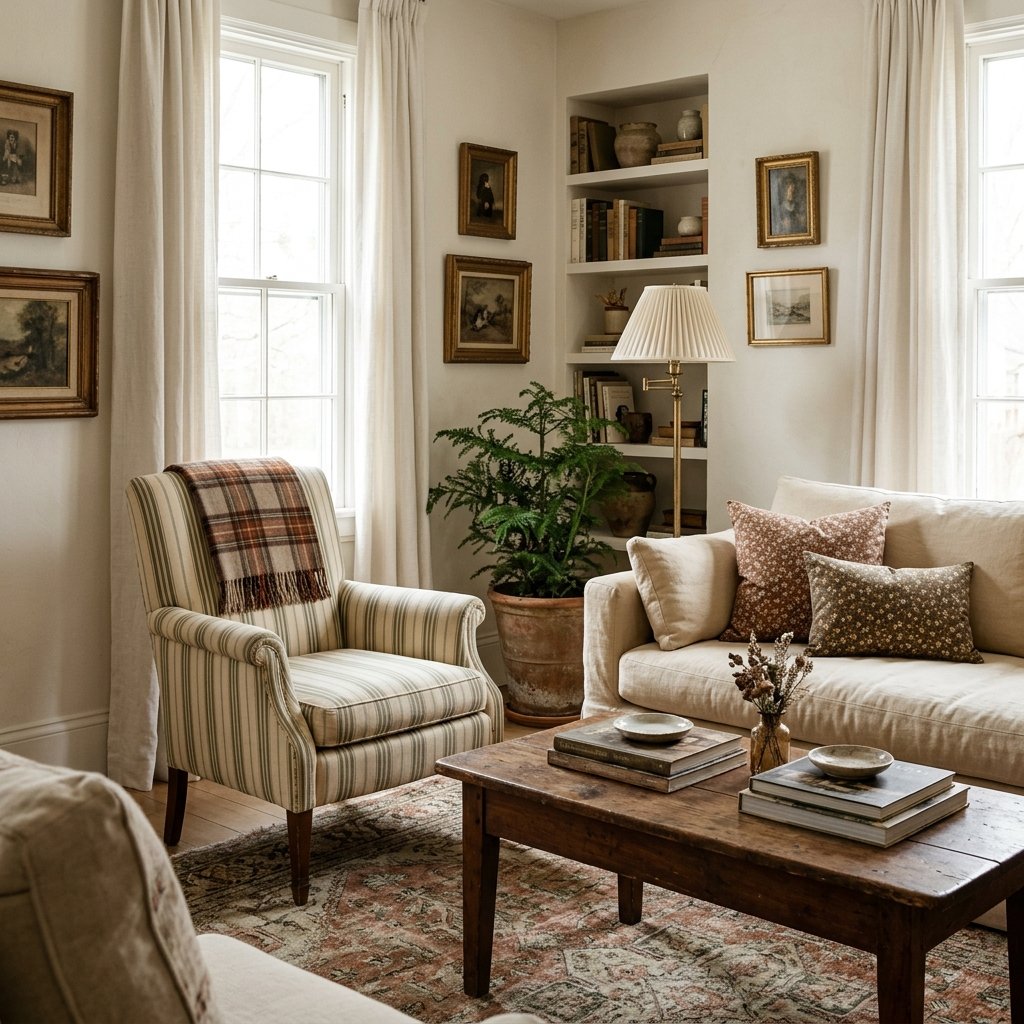
7. Vintage and Antique Pieces
Vintage furniture fits perfectly with the larger movement toward collected interiors.
You don’t need a room full of antiques.
One older piece can add enormous character.
Look for:
- Side tables
- Dressers
- Mirrors
- Lamps
- Art
- Small cabinets
- Wood chairs
- Decorative objects
The slight imperfections and patina help prevent a room from feeling overly new.
Current trend coverage is emphasizing “found” character and timeworn finishes alongside newer furnishings.
For an easy formula, try:
New sofa + vintage coffee table + contemporary lamp + old framed artwork
Mixing eras often looks more natural than recreating one historical style perfectly.
8. Handmade and Artisanal Details
Perfectly identical mass-produced accessories are giving way to objects that look touched by a human hand.
That includes:
- Handmade pottery
- Uneven ceramics
- Woven baskets
- Quilts
- Embroidered textiles
- Hand-finished furniture
- Artisan lighting
Current 2026 coverage highlights handcrafted details, expressive ceramics, patchwork, and tactile finishes as part of the broader move toward individuality.
This is an easy trend to try without remodeling anything.
Swap one generic decorative object for a handmade-looking ceramic vase.
Add a vintage quilt at the end of the bed.
Hang a woven textile.
Small imperfections often add warmth.
9. Statement Stone
Stone is becoming more expressive.
Instead of choosing only quiet white surfaces with barely visible veining, designers are experimenting with stronger natural patterns and colors.
Think:
- Burgundy marble
- Deep green stone
- Dramatically veined marble
- Rich brown stone
- Strongly patterned natural surfaces
Designers are using statement stone not only for countertops but also fireplace surrounds, furniture, and smaller accent details.
This can be an expensive trend, so use it carefully.
If you’re remodeling, a dramatic kitchen island could become the focal point.
If you’re decorating on a smaller budget, try the idea through a stone:
- Tray
- Side table
- Lamp base
- Decorative bowl
The concept matters more than the scale.
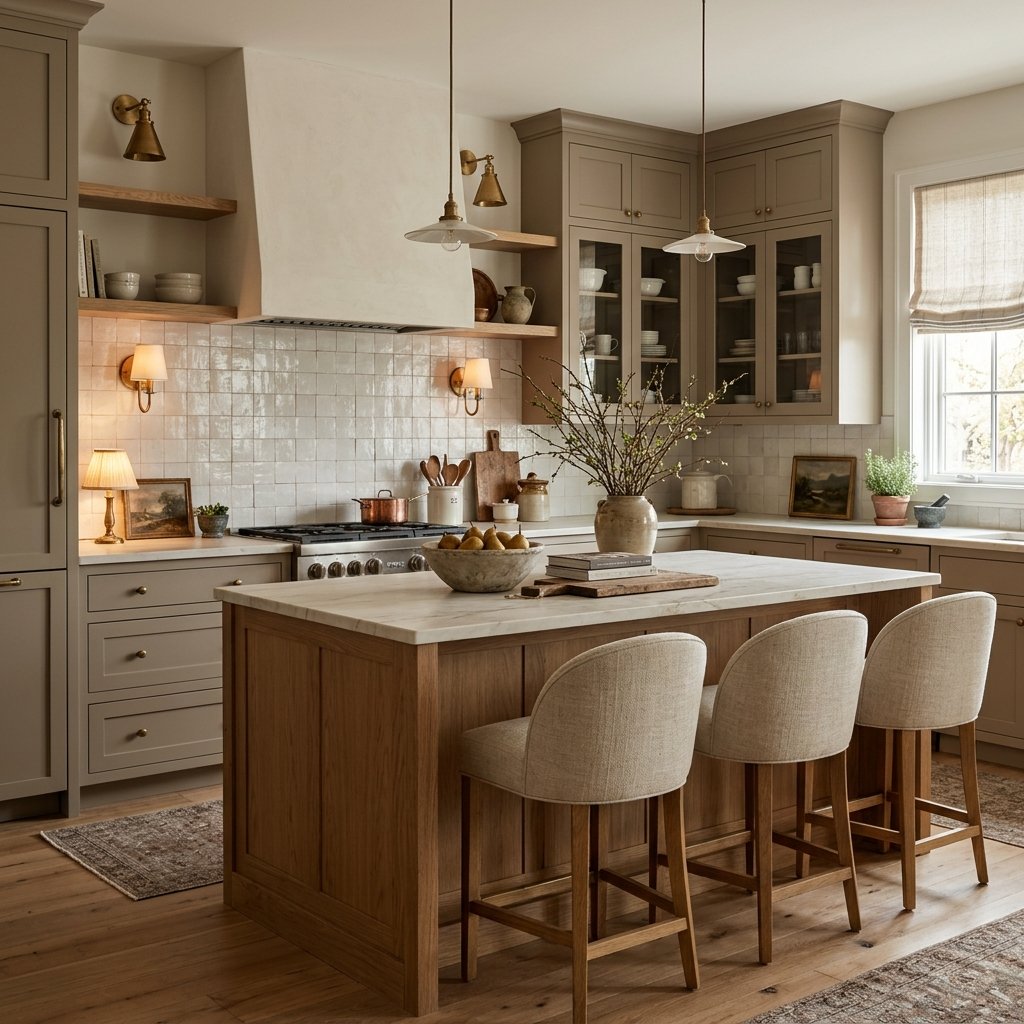
10. Softer, More Livable Kitchens
Kitchens are becoming less clinical.
The goal is increasingly to make the kitchen feel connected to the rest of the home rather than like a purely functional workspace.
Current design coverage points toward warmer timber, antique-style metals, layered lighting, textiles, artwork, upholstered seating, and thoughtful cabinetry as ways of creating a softer kitchen.
Color is changing too.
Warm whites, mushroom, putty, taupe, clay, and muted greens are appearing alongside natural materials, with designers reporting movement away from cooler gray and severe black-and-white combinations.
Try adding:
- Small framed art
- Wood cutting boards
- Fabric Roman shade
- Table lamp where safely appropriate
- Vintage rug
- Upholstered counter stools
- Warm cabinet hardware
You don’t necessarily need to renovate to make a kitchen feel softer.
11. Curved and Sculptural Furniture
Hard rectangular shapes are being softened with curves.
Look for:
- Curved sofas
- Rounded chairs
- Oval coffee tables
- Sculptural side tables
- Arched cabinetry
- Wavy mirrors
Designers continue to favor rounded and irregular furniture because it adds softness and can improve the visual flow through a room.
You don’t need every piece to be curved.
In fact, contrast often looks better.
Try:
Straight sofa + round coffee table
or:
Rectangular dining table + curved-back chairs
One softer silhouette can change the feeling of the room.
12. Sculptural Lighting
Lighting is becoming decoration in its own right.
Current trends include fixtures with:
- Aged brass
- Bronze
- Textured glass
- Smoked glass
- Alabaster
- Stone
- Organic forms
- Sculptural shapes
Designers are also focusing more on pools of warm, layered light instead of relying on one uniform overhead source.
This is one of the easiest trends to adopt because lighting can transform a room without changing the furniture.
Consider adding:
- Statement pendant
- Sculptural table lamp
- Picture light
- Wall sconces
- Floor lamp
For hardwired fixtures, follow electrical requirements and use a qualified electrician where appropriate.
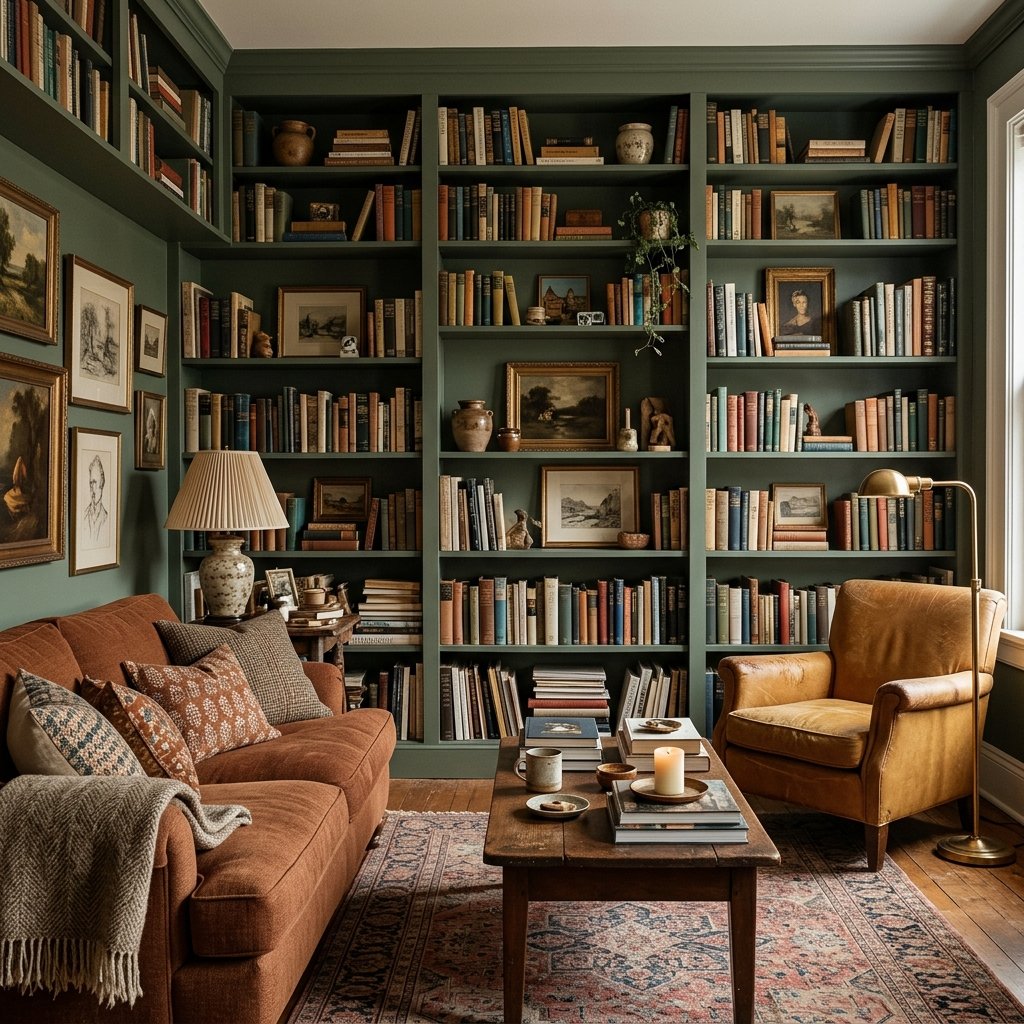
13. Books Are Becoming Decor Again
Perfect shelves filled primarily with generic decorative objects are giving way to something more practical:
actual books.
One of the more distinctive 2026 living room trends is sometimes called “book drenching” or a library wrap—using extensive bookshelves and real book collections to make a room feel intimate and personal.
You don’t need a dedicated library.
Use:
- Existing built-ins
- Freestanding bookcase
- Shelves around a doorway
- Books beside the fireplace
And don’t worry about arranging every spine by color.
Mix horizontal and vertical stacks and allow your real collection to show.
A home should tell people something about the person who lives there.
14. Decorative Displays Are Becoming More Personal
Gallery walls aren’t disappearing, but homeowners are experimenting with other collections.
Decorative plate walls are one example gaining attention.
Rather than buying a matching plate set solely for the wall, the more interesting approach is to gradually collect:
- Vintage plates
- Travel finds
- Handmade ceramics
- Family pieces
- Small artworks
Designers highlighted by Homes & Gardens describe plate displays as a way of introducing nostalgia and a collected feel.
This works particularly well in:
- Dining rooms
- Kitchens
- Breakfast nooks
- Hallways
Use appropriate hanging hardware and make sure heavier objects are securely mounted.
15. Personality Is Replacing Perfection
This may be the most important home decor trend of all.
There is less interest in creating a home that looks exactly like everyone else’s inspiration photos.
The emerging direction is toward rooms that feel individual.
That means keeping things you genuinely love even when they aren’t the newest trend.
It means combining:
- Old and new
- Expensive and inexpensive
- Pattern and solids
- Light and dark wood
- Handmade and manufactured
- Contemporary and traditional
The result doesn’t need to fit neatly into one style label.
Current 2026 design coverage consistently points toward personality, warmth, nostalgia, texture, and lived-in character rather than overly curated perfection.
What Home Decor Trends Are Fading?
Trends rarely disappear overnight.
It’s more accurate to say that certain looks are becoming less dominant.
Cool Gray Everything
Cool gray walls, gray floors, gray sofas, and gray cabinets all in the same room are giving way to warmer, earthier palettes.
That doesn’t mean gray is “out.”
Warm it with:
- Brown
- Wood
- Cream
- Olive
- Rust
Stark Black-and-White Rooms
Black and white can always be classic, but warmer, softer combinations are becoming more prominent.
Try cream and espresso instead.
Matching Furniture Sets
Rooms increasingly look collected rather than purchased all at once.
Keep the sofa and change the matching side tables.
Ultra-Minimal Styling
Empty isn’t automatically sophisticated.
Books, art, textiles, and meaningful objects are coming back.
All-Pale Wood
Light oak still works beautifully, but medium and dark woods are providing welcome contrast.
You don’t need to replace pale wood—simply mix in something darker.
How to Use Home Decor Trends Without Dating Your Home
Trends are most useful as inspiration, not instructions.
The safest approach is to divide decorating decisions into two categories.
Permanent Choices
These are expensive or difficult to replace:
- Flooring
- Cabinetry
- Countertops
- Major tile
- Built-ins
Choose these more carefully.
Easy-to-Change Choices
These are where you can have more fun:
- Pillows
- Throws
- Lamps
- Paint
- Artwork
- Small furniture
- Decorative objects
- Bedding
If you love chocolate brown, try pillows before replacing the kitchen countertops with brown stone.
If you love pattern, start with curtains or a chair before wallpapering every room.
This lets your home evolve naturally.
How to Update Your Home for 2026 Without Buying Everything New
You may already own many of the things that feel current.
Start by looking around your house.
Could you:
- Move a dark wood table into the living room?
- Bring books back onto the shelves?
- Frame art that’s sitting in storage?
- Remove some generic accessories?
- Display handmade pottery?
- Bring out a vintage quilt?
- Rearrange furniture?
- Add one warmer paint color?
Current trends actually make decorating from what you own easier because imperfection and mixing are part of the look.
Home Decor Trends on a Budget
If you want a refresh without spending much, prioritize changes with high visual impact.
Paint
A richer wall color can transform a room.
Secondhand Furniture
Look for solid wood tables, chairs, mirrors, and frames.
Textiles
Pillows, curtains, and throws are easy places for pattern.
Lamps
Replace harsh overhead-only lighting with layered lamps.
Books
Style the books you already own.
Rearranging
Move furniture and accessories between rooms before shopping.
A thoughtful $50 change can sometimes make more difference than a $500 impulse purchase.
How to Make Trendy Decor Feel Timeless
The key is restraint.
Don’t put every trend in one room.
If you love:
- Brown
- Dark wood
- Pattern
- Curves
- Statement stone
- Sculptural lighting
choose two or three.
For example:
Warm neutral room + walnut furniture + patterned textiles + sculptural lamp
That’s enough.
The room feels current without looking like a 2026 trend checklist.
What Colors Are Trending in Home Decor?
Warmth is the common theme.
Current designer commentary points toward richer neutrals and earthy mid-tones including browns, rusts, greens, terracotta, dusty olive, smoky blue, and soft charcoal.
Instead of asking which single color is “in,” look for a palette that suits your home.
A warm 2026-inspired palette could be:
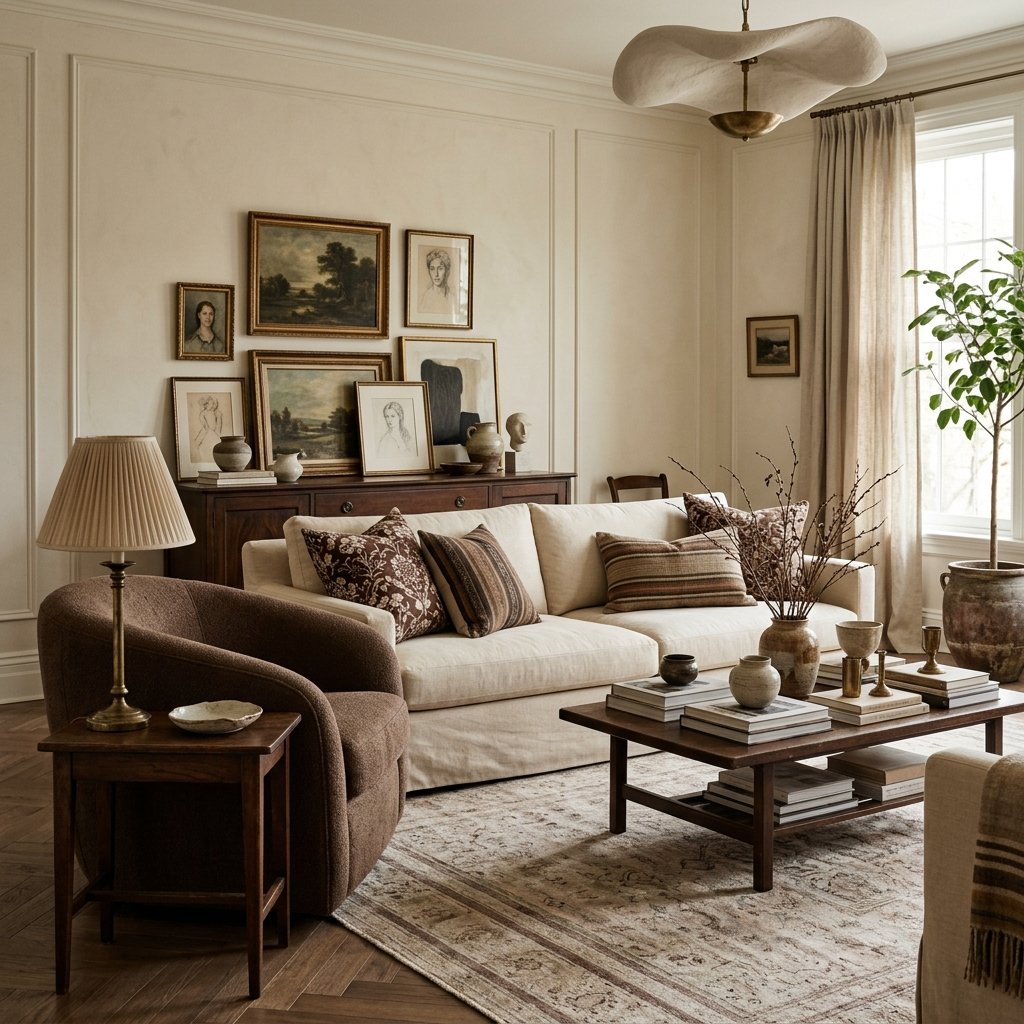
Cream + walnut + olive + rust + brass
Another might be:
Mushroom + chocolate brown + dusty blue + warm white
Or:
Terracotta + cream + dark wood + muted green
What Wood Tones Are Trending?
Medium and darker woods are receiving renewed attention, particularly walnut and espresso-toned finishes.
But that doesn’t make light oak outdated.
Mixing wood tones can make a home feel more natural and collected.
Try:
Light oak floor + walnut table + medium wood picture frames
The woods don’t need to match perfectly.
What Patterns Are Trending?
Current interiors are embracing:
- Florals
- Stripes
- Checks
- Plaids
- Botanical motifs
- Small-scale prints
Pattern mixing is becoming more confident, but designers are still creating cohesion through repeated colors and thoughtful scale.
If you’re nervous about pattern, start small.
Add one patterned pillow next to a stripe.
Then see how the room feels.
Are Neutral Homes Going Out of Style?
No.
Neutrals are simply getting warmer and more layered.
A neutral room can still feel very current when you combine:
- Cream
- Mushroom
- Taupe
- Brown
- Warm white
- Natural wood
Then use texture to create depth.
Neutral doesn’t have to mean colorless.
Should You Follow Home Decor Trends?
Only the ones you genuinely like.
A trend is useful when it gives you permission to try something you’ve already been drawn to.
If you’ve always loved:
- Dark wood
- Florals
- Vintage furniture
- Brown
- Books
- Traditional details
this is a great time to use them.
But don’t replace perfectly good decor just because someone declared it “out.”
Your home will usually look more timeless when it reflects your preferences rather than one particular year.
A Simple 2026 Decorating Formula
Want to update a room without starting over?
Try this:
Step 1: Warm Up the Palette
Add cream, brown, olive, rust, or another earthy tone.
Step 2: Introduce Wood
Use at least one warm natural wood element.
Step 3: Add Pattern
Try a floral, stripe, plaid, or check.
Step 4: Bring in Something Old
Add a vintage or secondhand piece.
Step 5: Add Texture
Layer linen, wool, velvet, woven fibers, or handmade ceramics.
Step 6: Improve the Lighting
Use multiple light sources.
Step 7: Add Something Personal
Books, photographs, art, or a meaningful collection.
Step 8: Remove Something
Edit anything that feels generic or unnecessarily cluttered.
FAQ About Home Decor Trends
What are the biggest home decor trends for 2026?
Some of the strongest themes are warmer and more personal interiors, brown and earthy colors, medium and dark wood, pattern mixing, vintage pieces, handcrafted details, sculptural lighting, curves, statement stone, and rooms that look collected rather than perfectly coordinated.
Is gray home decor out of style?
Gray isn’t inherently outdated, but cool all-gray interiors are becoming less dominant as warmer browns, earth tones, wood, and richer neutrals gain attention.
Is brown furniture coming back?
Brown and darker wood tones are receiving significant attention in 2026, including walnut, espresso-toned wood, chocolate, caramel, and tobacco shades.
Are white kitchens going out of style?
White kitchens aren’t disappearing, but kitchen palettes are becoming warmer and more varied. Mushroom, putty, taupe, clay, muted green, warm timber, and earth tones are becoming more prominent.
Is farmhouse decor still popular?
Rather than following one highly defined farmhouse formula, current interiors are leaning toward more personal combinations of vintage, natural, traditional, and contemporary pieces. You can keep farmhouse elements you love while editing overly themed accessories.
Is minimalism going out of style?
Minimalism isn’t disappearing, but highly sparse, impersonal rooms are giving way to interiors with more texture, books, art, pattern, and meaningful objects.
What colors are popular for home decor right now?
Warm and earthy colors are particularly prominent, including chocolate and tobacco brown, olive, rust, terracotta, dusty green, muted blue, merlot, ochre, and warm neutrals.
Are accent walls still in style?
They can be, but there are more options now than one contrasting painted wall. Full-room color, millwork, wallpaper, stone, and immersive color treatments can create a more intentional focal point.
How can I make my home look current without remodeling?
Try paint, warmer textiles, vintage furniture, books, patterned pillows, a sculptural lamp, handmade ceramics, or one darker wood piece. Small changes can capture the broader direction without replacing permanent finishes.
Which home decor trends will last?
No trend is guaranteed to last, but natural materials, good lighting, useful storage, quality wood furniture, meaningful art, comfortable seating, and objects you genuinely love tend to have more longevity than highly specific novelty trends.
Final Thoughts
The most interesting home decor trends for 2026 aren’t really about creating another perfectly recognizable aesthetic.
They’re about bringing personality back into the home.
We’re seeing warmer colors.
Richer woods.
More pattern.
More books.
Vintage furniture.
Handmade objects.
Sculptural lighting.
Natural materials.
And rooms that don’t look as though every item arrived in the same delivery truck.
Across current design coverage, the larger direction is clear: interiors are becoming warmer, more layered, tactile, expressive, and personal.
That’s good news if you’re decorating a real home on a real budget.
You don’t have to replace everything.
Keep the pieces you love.
Bring something out of storage.
Buy something secondhand.
Mix your wood tones.
Add a little pattern.
Use the books you’ve actually read.
And choose trends selectively.
The goal isn’t to make your home look unmistakably “2026.”
It’s to use the best ideas from current design trends to create a home that feels more like you—and that you’ll still enjoy long after the next trend report arrives.

