

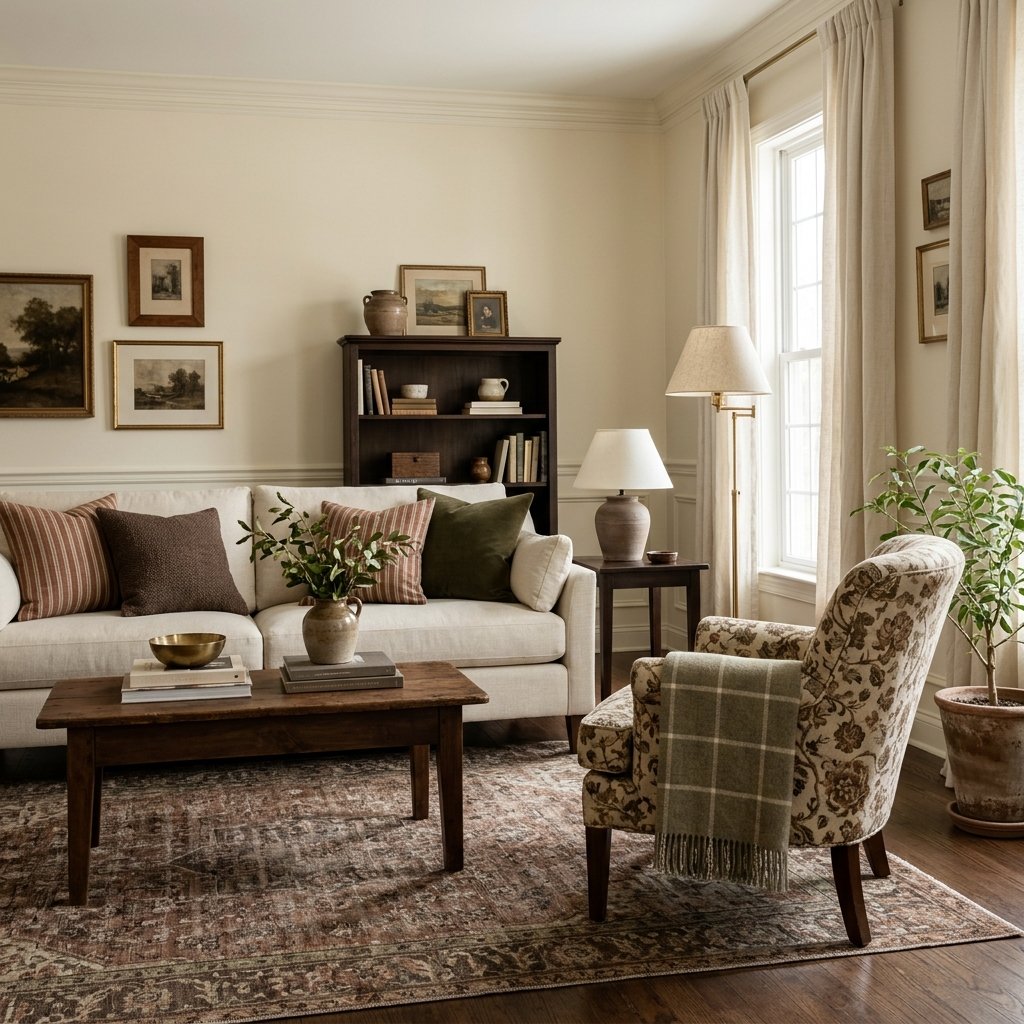
The biggest living room design trends for 2026 have something refreshing in common: living rooms are starting to look like people actually live in them again.
Rather than perfectly matched furniture, nearly empty shelves, and rooms designed primarily for photographs, current designer forecasts are emphasizing comfort, personality, collected pieces, flexible layouts, richer colors, pattern, books, vintage furniture, and architectural character.
Recent 2026 trend reporting from Homes & Gardens, ELLE Decor, and House Beautiful points toward living rooms that feel layered and individual rather than overly coordinated. Designers are also focusing more on how living rooms function for conversation, reading, games, entertaining, and everyday family life.
The good news is that most of these trends don’t require a complete makeover.
You can introduce them gradually through furniture arrangement, paint, textiles, lighting, books, art, vintage pieces, or a few carefully chosen accessories.
Here are 15 living room design trends for 2026, plus practical ways to incorporate them while keeping your home comfortable and timeless.
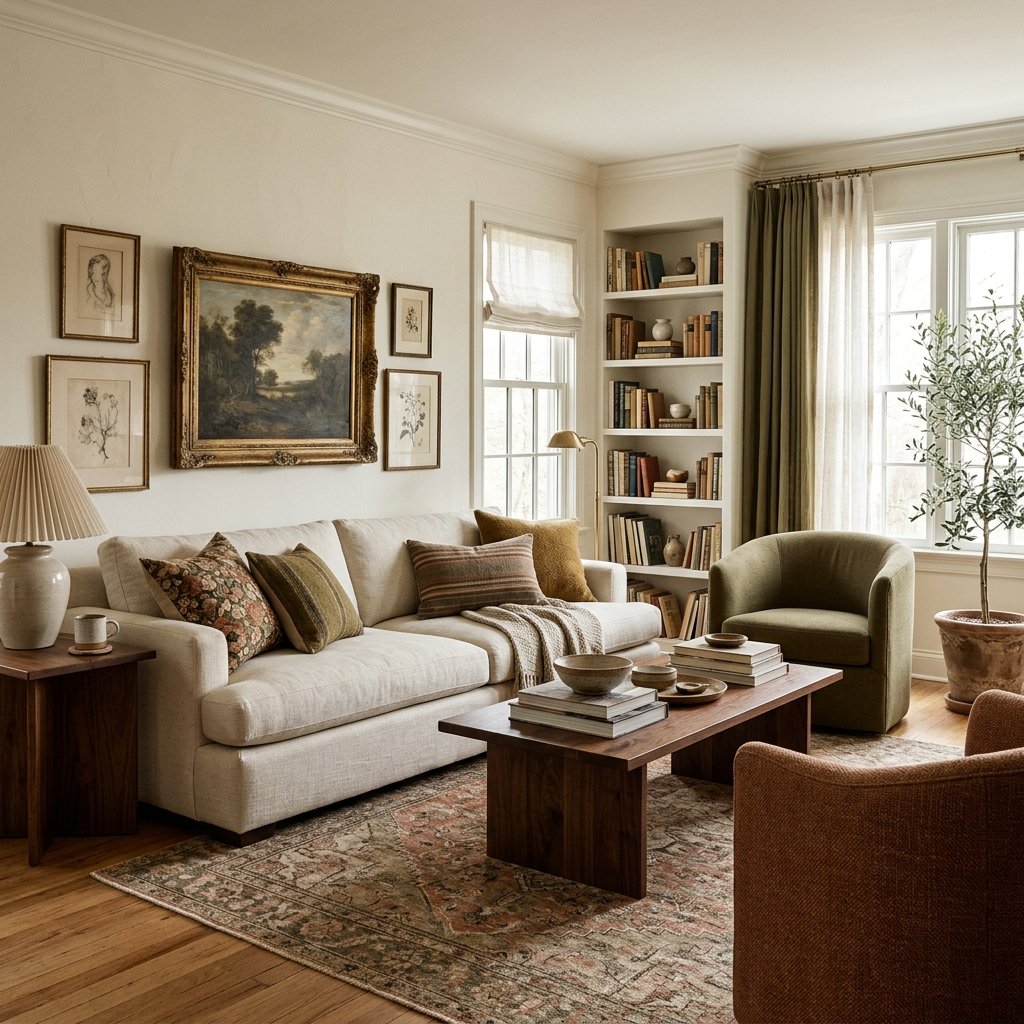
1. Living Rooms That Feel Collected, Not Decorated
One of the clearest shifts in living room design is away from the showroom look.
Instead of purchasing:
Sofa + loveseat + matching chair + matching tables
designers are mixing pieces that relate without matching exactly.
Homes & Gardens identifies mismatched furniture and layered antiques among its key 2026 living room trends, while ELLE Decor describes a move toward expressive, individual rooms that feel composed rather than simply “styled.”
Try combining:
- Contemporary sofa
- Vintage side table
- Upholstered armchair
- Dark wood coffee table
- Antique mirror
- Modern lamp
The pieces don’t need to come from the same era.
They simply need some visual connection through color, proportion, material, or mood.
2. Comfortable, Informal Furniture Layouts
Living rooms are becoming less rigid.
Instead of automatically arranging one sofa directly across from another, designers are using more flexible combinations of:
- Sofas
- Armchairs
- Ottomans
- Poufs
- Daybeds
- Small stools
Homes & Gardens specifically highlights informal layouts and daybeds as part of the shift toward rooms that are actually used every day.
House Beautiful reports a similar emphasis on living rooms designed for conversation, entertaining, reading, and games rather than functioning primarily around the television.
Before buying new furniture, try rearranging what you already own.
Pull seating away from the walls and create a more conversational grouping around a coffee table or ottoman.
3. Conversation Areas Are Becoming More Important
The living room is becoming social again.
House Beautiful’s 2026 designer forecast points to multifunctional living rooms with distinct areas for activities such as:
- Reading
- Conversation
- Games
- Writing
- Entertaining
rather than one arrangement where every chair faces a screen.
If your room is large enough, create a small secondary area.
Try:
Two chairs + small round table
or:
Window chair + floor lamp + side table
or:
Game table + two or four chairs
Even a small living room can have more than one function.
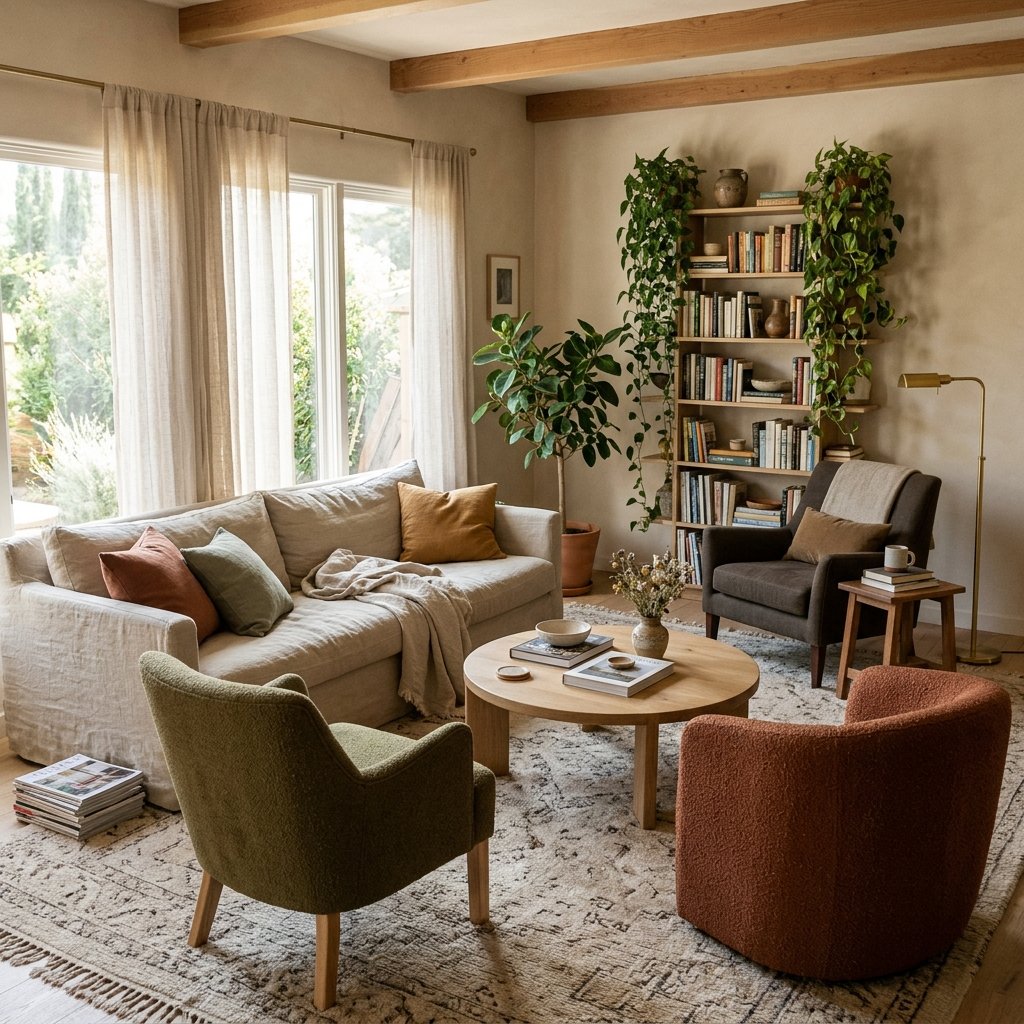
4. Curved and Sculptural Furniture
Curves continue to be important in 2026.
They’re appearing in:
- Sofas
- Sectionals
- Armchairs
- Ottomans
- Coffee tables
- Built-ins
- Architectural details
ELLE Decor notes that curves are continuing across both furniture and architecture, while House Beautiful highlights rounded, plush seating as part of the movement away from the sharper minimalist forms associated with the 2010s.
You don’t need a room full of rounded furniture.
One curved piece can soften a space filled with straight architectural lines.
Try:
Straight sofa + round coffee table
or:
Traditional sofa + curved accent chair
The contrast is what makes it interesting.
5. Patterned Upholstery Is Back
For years, the safest sofa choice was solid beige, gray, or white.
Now pattern is returning to upholstered furniture.
Florals, stripes, checks, and other prints are showing up on:
- Sofas
- Armchairs
- Ottomans
- Benches
- Pillows
Homes & Gardens highlights romantic patterned upholstery as a significant 2026 direction, while ELLE Decor points to pattern-on-pattern layering through upholstery, drapery, wallpaper, and pillows.
If a floral sofa feels like too much commitment, start with an accent chair.
A simple room might include:
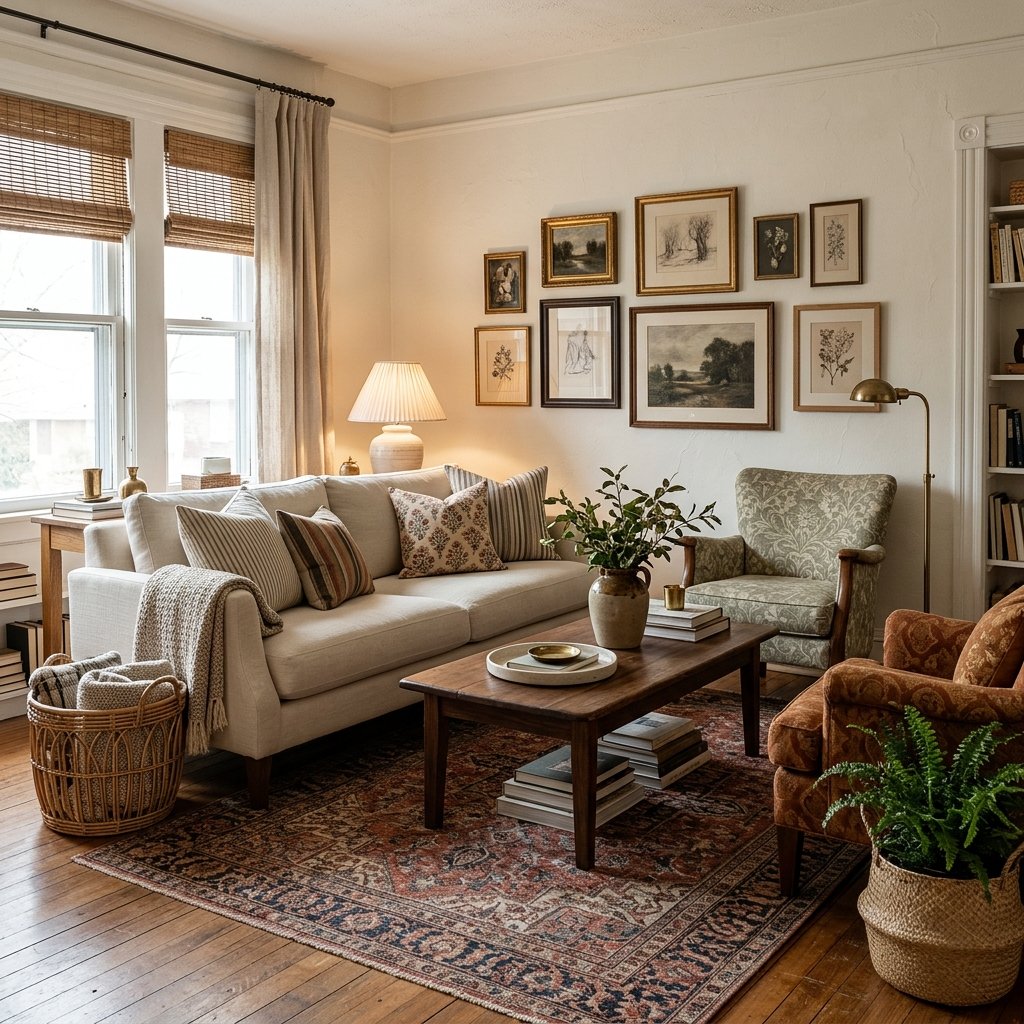
Cream sofa + floral chair + striped pillow + vintage rug
That’s enough pattern to add personality without overwhelming the room.
6. Pattern Mixing Is Getting More Confident
Pattern isn’t limited to one accent anymore.
Designers are layering:
- Florals
- Stripes
- Checks
- Plaids
- Traditional motifs
The key is making the patterns relate.
ELLE Decor recommends letting one primary pattern lead while using quieter supporting patterns around it.
An easy formula is:
Hero Pattern
Floral armchair.
Secondary Pattern
Striped pillow.
Small Pattern
Subtle checked throw.
Repeat two or three colors through all three.
That repetition creates cohesion.
7. Darker, Richer Living Room Colors
Living rooms aren’t limited to pale neutrals anymore.
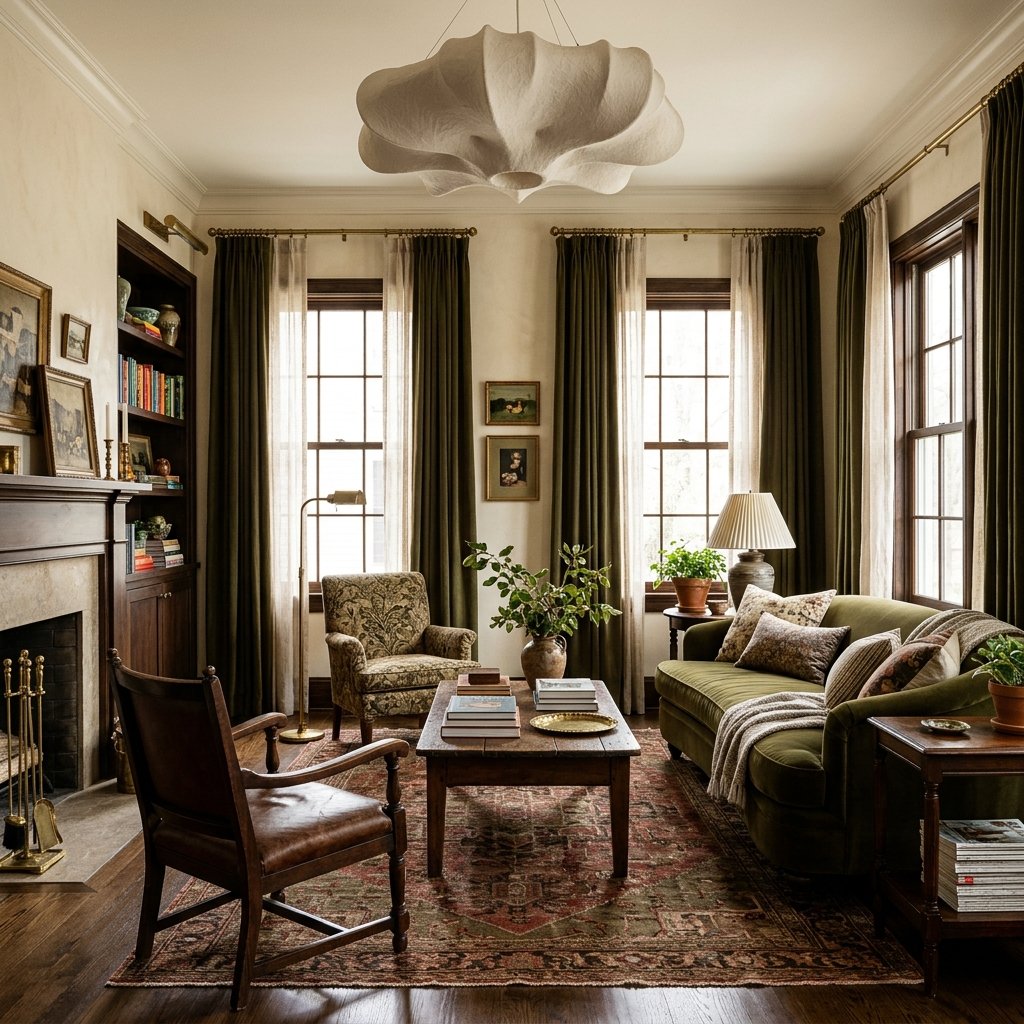
House Beautiful’s designer forecast points toward deep, saturated colors, including greens, aubergines, plums, and other earthy jewel tones.
You might also consider:
- Chocolate brown
- Olive
- Tobacco
- Rust
- Burgundy
- Deep blue
- Charcoal
These colors don’t have to make a room gloomy.
Combine them with:
- Cream upholstery
- Warm wood
- Brass
- Natural light
- Light-colored textiles
If painting all four walls feels intimidating, start with cabinetry or built-ins.
8. Painted Built-Ins Are Becoming More Colorful
White built-ins will always have a place, but cabinetry is becoming an opportunity for color.
Homes & Gardens highlights colorful painted cabinetry as a major living room direction for 2026, including greens and blues that create a richer backdrop for books, art, and collected objects.
Consider:
- Olive green
- Dusty blue
- Deep teal
- Burgundy
- Mushroom
- Dark brown
You can paint:
- Entire built-in
- Back panels only
- Lower cabinets
- Bookshelves and surrounding wall
For an immersive look, use the same or closely related color on both cabinetry and walls.
9. Book-Filled Living Rooms
Books are becoming part of the architecture again.
One of the most distinctive living room trends of 2026 is sometimes called book drenching or a library wrap—using substantial shelving filled with actual books to create a cozy, personal room.
The refreshing part?
The books don’t need to match.
You don’t have to:
- Arrange them by color
- Turn the spines backward
- Buy decorative book sets
Use books you’ve actually read or want to read.
Mix horizontal and vertical stacks.
Add a few pieces of art or pottery.
Leave the shelves feeling relaxed rather than perfectly staged.
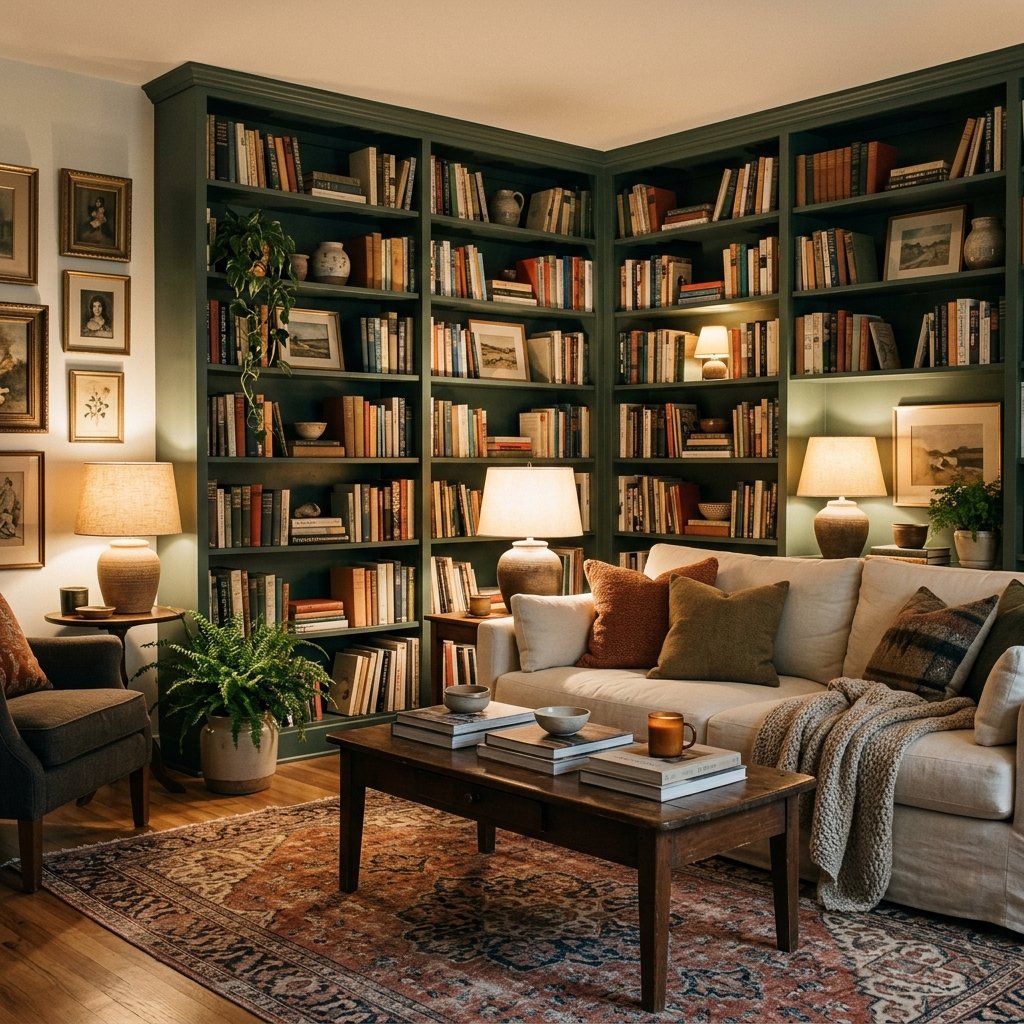
10. Vintage and Antique Furniture
Vintage furniture is becoming increasingly important because it instantly makes a living room feel less generic.
Current designer forecasts highlight antiques, patinated materials, vintage rugs, mirrors, art, and older furniture as ways to bring history and authenticity into newer spaces.
You don’t need an antique-filled room.
One piece can make a significant difference.
Try a vintage:
- Coffee table
- Side table
- Cabinet
- Chair
- Mirror
- Rug
- Painting
Pair it with newer upholstered furniture.
This creates the collected-over-time look without making the room feel like a period set.
11. Darker Wood Is Adding Contrast
Light wood isn’t disappearing, but medium and dark woods fit naturally into the richer, more layered living rooms emerging in 2026.
Think:
- Walnut
- Mahogany tones
- Dark oak
- Espresso finishes
- Vintage stained wood
Dark wood looks especially beautiful with:
- Cream
- Olive
- Rust
- Blue
- Warm white
- Brass
If your room currently contains mostly pale oak, you don’t need to replace it.
Add one dark wood table or frame.
Mixing wood tones can actually make the room look more collected.
12. Rattan and Woven Texture
Rattan isn’t limited to coastal homes.
Homes & Gardens identifies rattan and wicker as a 2026 living room trend because these materials introduce warmth, texture, and a sense of familiarity.
Try it through:
- Coffee table
- Side chair
- Basket
- Lampshade
- Tray
- Small stool
Rattan looks especially interesting beside smoother materials.
Try:
Velvet sofa + rattan table
or:
Painted built-ins + woven basket
or:
Traditional furniture + wicker chair
The contrast keeps the material from becoming overly themed.
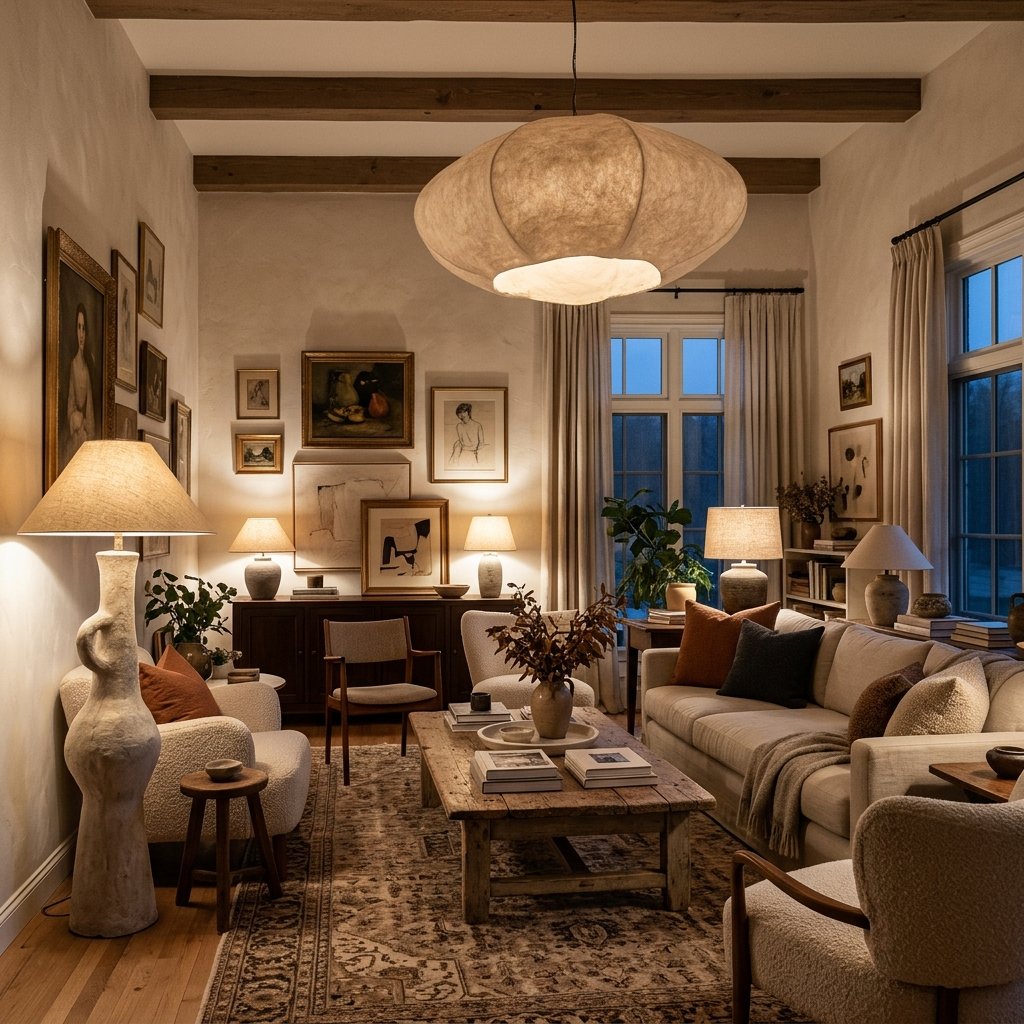
13. Oversized Statement Lighting
Lighting isn’t being treated as an afterthought.
ELLE Decor and House Beautiful both highlight statement lighting as a major 2026 living room feature, including sculptural sconces, oversized floor lamps, chandeliers, and pendants that function almost like artwork.
Instead of filling a room with several tiny lamps, consider one substantial fixture.
A large lamp can create:
- Scale
- Height
- Warmth
- Visual interest
Layer it with smaller sources rather than relying solely on overhead lighting.
For hardwired fixtures, follow applicable electrical requirements and use qualified professional help where appropriate.
14. More Architectural Detail
Flat, blank rooms are gaining character.
Designers are adding:
- Picture-frame molding
- Paneling
- Crown molding
- Substantial baseboards
- Ceiling details
- Plaster-style finishes
- Wallcoverings
House Beautiful reports growing interest in architectural details and textured surfaces, while ELLE Decor similarly highlights the return of molding and other layered architectural elements.
This doesn’t mean every wall needs elaborate trim.
Even simple picture-frame molding can give a plain living room more structure.
Keep proportions appropriate to the room.
Before fastening molding or paneling, identify possible electrical wiring, plumbing, or other concealed utilities.
15. Layered Window Treatments
Bare windows aren’t the only route to a clean interior.
Living rooms are becoming softer through more substantial window treatments.
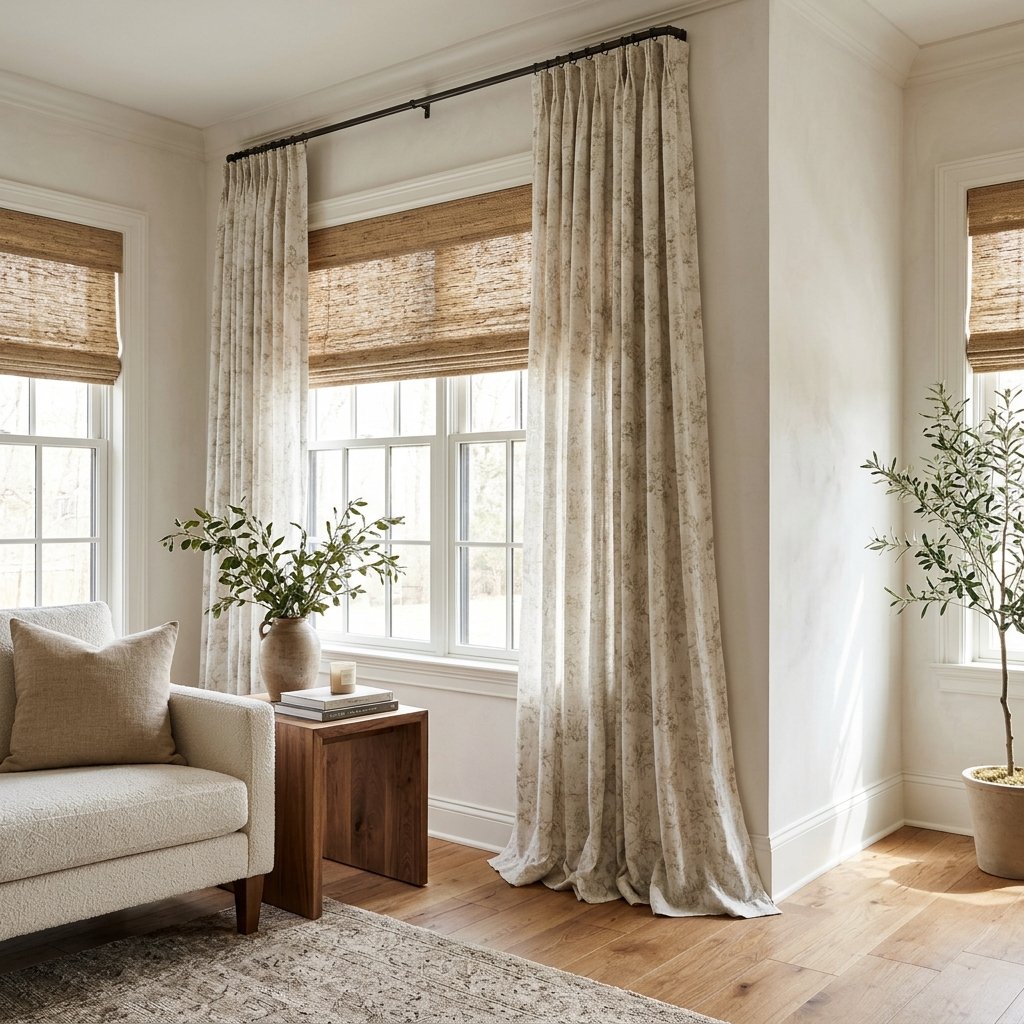
Homes & Gardens highlights “double dressed” windows—layering blinds with curtains—while ELLE Decor notes the growing use of more substantial combinations of blinds and drapery.
A simple combination is:
Woven shade + linen curtain
Another is:
Roman shade + full-length drapery
Layering gives you better control over:
- Privacy
- Light
- Glare
- Softness
It also makes the room feel more finished.
Make sure curtain rods and shades are installed with hardware suitable for the wall construction and weight.
Bonus Trend: Layered Rugs
Layered rugs are another practical way to create the collected look.
House Beautiful highlights designers placing smaller vintage rugs over larger natural-fiber rugs, particularly when a beautiful older rug isn’t large enough for the entire seating area.
A simple formula is:
Large natural-fiber rug + smaller vintage patterned rug
This adds:
- Texture
- Pattern
- Warmth
- Character
Make sure rug edges don’t create an unsafe trip hazard, and use appropriate rug pads where needed.
Bonus Trend: Twin Armchairs
Not everything is becoming intentionally mismatched.
A pair of matching armchairs can provide useful visual order in an otherwise eclectic room.
Homes & Gardens highlights twin armchairs as a way to create a secondary seating zone and bring a little symmetry into layered spaces.
Try:
Neutral sofa + matching colorful armchairs
or:
Patterned sofa + pair of simple solid chairs
The contrast between symmetry and collected elements can be particularly effective.
Bonus Trend: Mixed Metals
Perfectly matching every metal finish is becoming less important.
ELLE Decor’s 2026 forecast points to combinations including:
- Aged brass
- Nickel
- Pewter
- Iron
- Silver
rather than requiring one finish throughout the living room.
The easiest approach is to choose one dominant finish and one or two supporting finishes.
For example:
Aged brass lamps + nickel picture frames + black iron curtain rod
Repeat each metal intentionally so nothing looks accidental.
What’s Going Out of Style in Living Rooms?
Very few decorating ideas become completely “out.”
Instead, certain looks become less dominant.
Matching Furniture Sets
A sofa, loveseat, chair, coffee table, and side tables all purchased as one matching collection can make a room feel less personal.
Current designer forecasts strongly favor mixed furniture and collected pieces.
Keep the pieces you love and gradually replace or move the ones that make the room feel overly coordinated.
Ultra-Minimal Rooms
Minimalism isn’t dead.
But rooms with almost no books, textiles, art, or personal objects are giving way to more layered interiors.
Cool Gray Everything
Gray can still be beautiful.
The dated look is more likely to come from combining gray walls, gray flooring, gray furniture, and gray accessories without enough warmth or contrast.
Warm it with:
- Brown
- Wood
- Cream
- Olive
- Brass
- Pattern
Furniture Pushed Against Every Wall
Floating furniture can create better conversation areas and make a large room feel more intimate.
Tiny Decorative Accessories Everywhere
Instead of dozens of small objects, try fewer pieces with stronger scale.
How to Make Your Living Room Look Current Without Starting Over
You don’t need a new sofa.
Start with the room you have.
Try these updates:
- Rearrange the seating for conversation.
- Bring books back onto the shelves.
- Add one vintage piece.
- Introduce a darker wood.
- Add one patterned textile.
- Replace several tiny accessories with one larger object.
- Layer the lighting.
- Add curtains or shades.
- Bring in one richer color.
- Remove anything that feels unnecessarily matched.
Often, editing and rearranging make a bigger difference than buying.
Living Room Trends for Small Spaces
A small living room can still use these ideas.
Try:
- One patterned chair
- Dark wood side table
- Bookshelves
- Statement lamp
- Full-length curtains
- Small vintage rug
- Round coffee table
Avoid interpreting “layered” as “crowded.”
Leave enough open floor area for comfortable movement.
Living Room Trends for Large Spaces
Large rooms can benefit from multiple furniture zones.
Instead of one enormous seating group, consider:
Main Conversation Area
Sofa and chairs around a coffee table.
Reading Corner
Chair, lamp, and small table.
Game Area
Round table and chairs.
Window Area
Daybed or pair of chairs.
This makes the room feel useful rather than cavernous.
How to Use Trends Without Dating Your Living Room
Divide your decisions into two groups.
Bigger Investments
Choose carefully:
- Sofa
- Flooring
- Built-ins
- Fireplace
- Major cabinetry
Easier Changes
Experiment here:
- Paint
- Pillows
- Curtains
- Lamps
- Art
- Side tables
- Accessories
If you love florals, you don’t necessarily need a floral sofa.
Try a floral chair or curtains first.
If you love dark green, paint the built-ins before replacing every piece of furniture.
A Timeless 2026 Living Room Formula
If you want your room to feel current without becoming overly trendy, try:
1. Comfortable Sofa
Choose something you genuinely want to sit on.
2. Two Interesting Chairs
Matching or mismatched can both work.
3. Wood
Include at least one warm wood element.
4. Pattern
Add a floral, stripe, plaid, or other print.
5. Something Vintage
Use a table, art, rug, mirror, or accessory.
6. Books
Let shelves look useful.
7. Layered Lighting
Use overhead, table, floor, or wall lighting as appropriate.
8. Window Treatments
Add softness with curtains, shades, or both.
9. One Rich Color
Try olive, brown, blue, burgundy, rust, or another color you love.
10. Personal Objects
Finish with pieces that actually mean something to you.
Common Living Room Decorating Mistakes
Buying Everything at Once
Rooms often look better when they evolve gradually.
Prioritizing Style Over Comfort
A living room should be pleasant to use.
Choosing Furniture That’s the Wrong Scale
Measure the room before ordering.
Using Only Overhead Lighting
Layer several light sources.
Buying a Rug That’s Too Small
The rug should relate properly to the seating arrangement.
Ignoring Window Treatments
Fabric can dramatically soften a room.
Filling Every Surface
Layering still needs negative space.
Following Every Trend
Choose only ideas that work with your home and taste.
Forgetting Traffic Flow
Leave practical pathways through the room.
Hiding Everything Personal
Books, art, photographs, and meaningful objects are what make your living room yours.
Living Room Design Safety Tips
Decorating still requires practical considerations.
- Anchor tall or tip-prone furniture where appropriate.
- Use suitable hardware for heavy mirrors and artwork.
- Follow shelf and cabinet weight limits.
- Keep furniture and textiles appropriately clear of fireplaces and heat sources.
- Follow fireplace manufacturer clearances.
- Use stable ladders for curtains, artwork, and lighting.
- Keep electrical cords managed safely.
- Follow fixture and bulb requirements.
- Use qualified professionals for hardwired electrical work.
- Check for concealed wiring, plumbing, and other utilities before drilling or fastening into walls.
Beautiful rooms should also function safely.
FAQ About Living Room Design Trends
What are the biggest living room design trends for 2026?
Major themes include collected interiors, informal furniture layouts, conversation areas, curves, patterned upholstery, pattern mixing, richer colors, colorful built-ins, books, antiques, statement lighting, architectural details, and layered window treatments.
Are neutral living rooms still in style?
Yes. Neutral rooms are becoming warmer and more layered rather than disappearing. Add wood, brown, cream, pattern, texture, vintage furniture, and richer accents to give a neutral room depth.
Are gray living rooms out of style?
Gray itself isn’t out. However, all-gray rooms are less aligned with the current movement toward warmer, more expressive interiors. Adding brown, wood, cream, olive, brass, and pattern can quickly warm up a gray room.
Are matching living room sets out of style?
Current designer forecasts strongly favor collected and mismatched furniture over perfectly coordinated sets. You don’t need to replace an existing set immediately—mix in different tables, chairs, lamps, and textiles gradually.
Are curved sofas still in style?
Yes. Rounded and sculptural furniture continues to appear prominently in 2026 designer forecasts.
Is farmhouse decor still popular?
Farmhouse elements such as natural wood, vintage furniture, woven texture, and comfortable textiles can still work beautifully. The more current approach is less themed and more collected.
Are accent walls still popular?
They can be, although colorful cabinetry, full-room color, architectural millwork, wallpaper, and textured finishes provide additional ways to create depth.
What colors are trending for living rooms?
Designers are using richer colors such as deep greens, aubergines, plums, earthy jewel tones, and other warm, saturated shades alongside warm neutrals.
How can I update my living room cheaply?
Start by rearranging furniture, restyling bookshelves with books you own, bringing in secondhand furniture or art, changing pillow covers, adding a lamp, or painting. You don’t need to replace the main furniture.
Which living room trends are most likely to last?
Comfortable furniture, books, good lighting, useful storage, quality wood pieces, thoughtful window treatments, personal art, and flexible furniture arrangements have value beyond any particular trend cycle.
Final Thoughts
The most interesting living room design trends for 2026 aren’t asking us to create more perfect rooms.
They’re encouraging us to create more personal ones.
Current designer forecasts consistently point toward rooms that are comfortable, expressive, layered, and actually used—from informal seating arrangements and book-filled shelves to vintage furniture, pattern, sculptural lighting, richer color, and architectural detail.
That means you probably don’t need to start over.
Keep your sofa.
Move the chairs.
Bring out your books.
Add the old table you thought was too traditional.
Try a patterned pillow.
Hang curtains.
Bring in a darker wood.
Use a lamp instead of relying only on the ceiling light.
And let the room develop gradually.
The goal isn’t to create a living room that everyone immediately recognizes as “2026.”
It’s to borrow the best ideas from current design and use them to create a living room that’s comfortable, functional, layered with personality, and unmistakably yours.

