

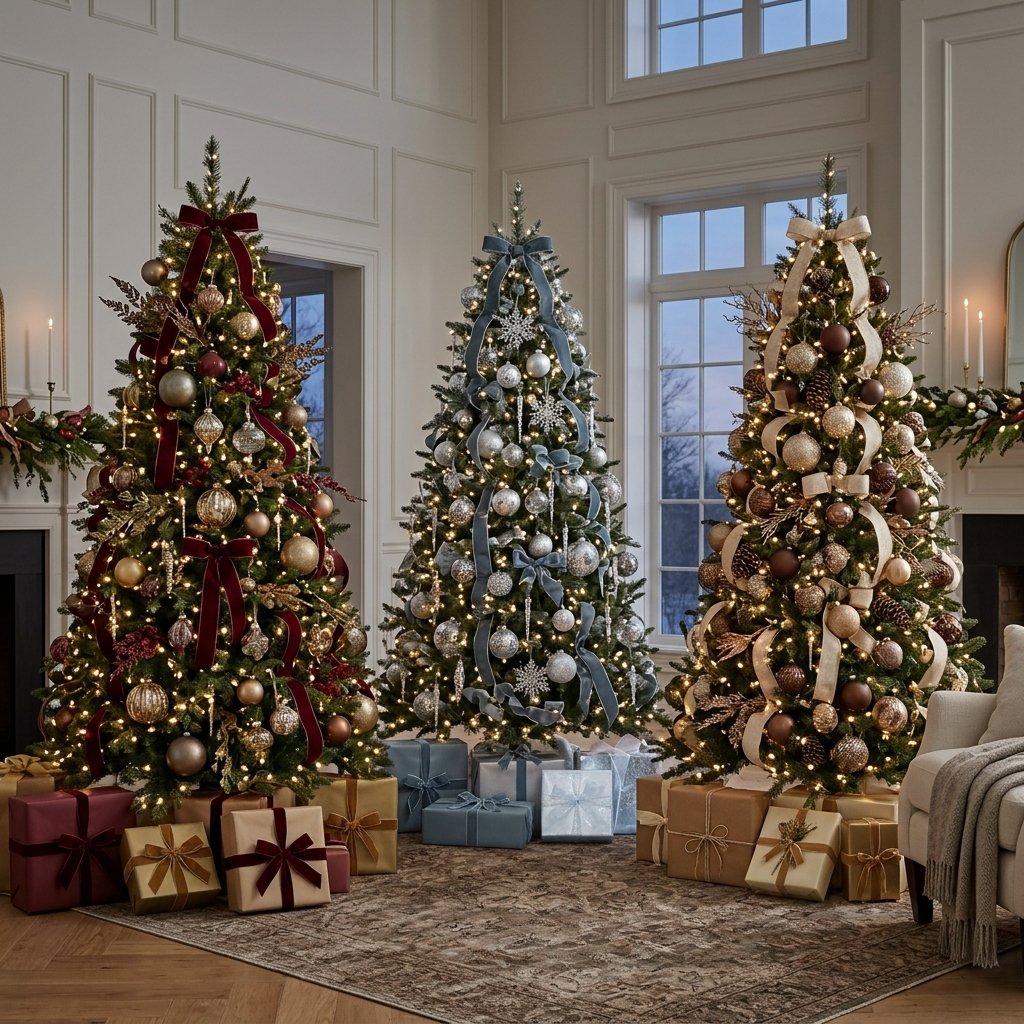
Choosing Christmas decorations sounds easy until you’re standing in front of bins filled with red ornaments, gold ribbon, silver bells, blue baubles, wooden stars, and enough greenery to decorate a department store.
That’s why done-for-you Christmas tree color schemes can make holiday decorating so much easier.
Instead of buying random ornaments and hoping they work together, start with a simple palette.
A good Christmas tree color scheme gives you a roadmap for choosing:
- Ornaments
- Ribbon
- Picks
- Bells
- Tree skirt or collar
- Gift wrap
- Nearby mantel decor
And your palette doesn’t have to be limited to two perfectly matching colors.
Some of the prettiest Christmas trees combine three or four shades plus a natural material or metallic finish.
Below are 15 complete Christmas tree color palettes you can copy, from classic red and gold to sophisticated burgundy, moody blue, neutral brown, and playful pink.
How to Choose a Christmas Tree Color Scheme
Before choosing your colors, look at the room where the tree will go.
Your Christmas tree doesn’t need to perfectly match your home, but it helps when the two relate.
Consider your existing:
- Wall color
- Sofa
- Rug
- Curtains
- Wood tones
- Metal finishes
- Artwork
For example, a living room filled with warm wood and cream might naturally suit burgundy, brass, brown, or deep green.
A cooler room with blue-gray walls might look beautiful with navy, silver, icy blue, or white.
You can still introduce contrast.
The goal is simply to make the tree feel like it belongs in the room.
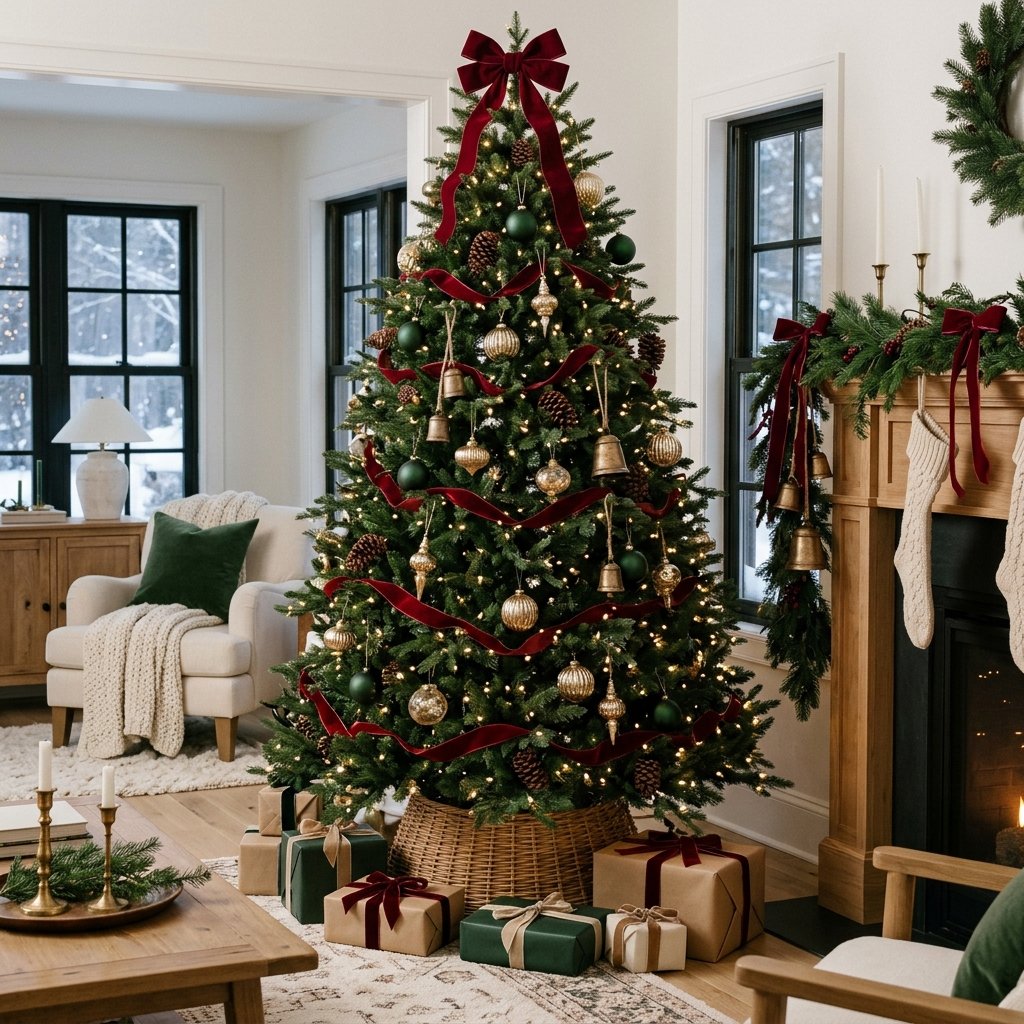
1. Classic Red + Green + Gold
You can’t go wrong with the traditional Christmas palette.
Use:
- Deep red
- Forest green
- Antique gold
- Warm white lights
Add:
- Red velvet ribbon
- Gold ornaments
- Red glass baubles
- Brass bells
- Pinecones
- Plaid accents
The secret to making red and green feel sophisticated is choosing richer versions of the colors.
Instead of bright primary red, try cranberry, deep Christmas red, or velvet red.
Pair it with antique gold rather than highly shiny yellow-gold if you want a more collected look.
Best With:
Traditional, transitional, cottage, and classic interiors.
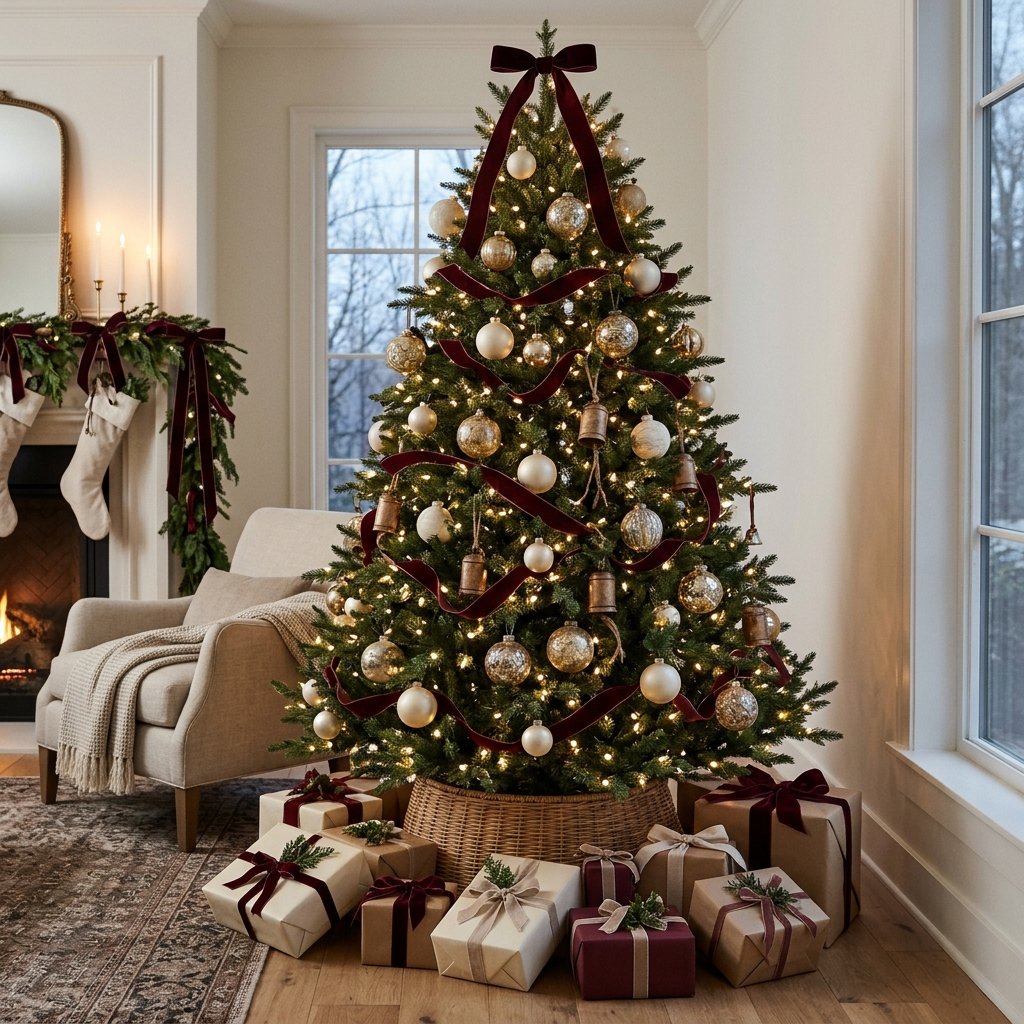
2. Burgundy + Antique Gold + Cream
If you love traditional Christmas decor but want something slightly moodier, this combination is beautiful.
Use:
- Burgundy
- Antique gold
- Cream
- Evergreen
Add:
- Burgundy velvet ribbon
- Champagne ornaments
- Aged brass bells
- Cream ornaments
- Vintage-style decorations
Burgundy adds richness without becoming overwhelmingly bright.
Cream keeps the palette from feeling too dark.
This scheme looks especially beautiful with warm wood furniture and brass lighting.
Best With:
Traditional, English-inspired, transitional, vintage, and moody interiors.
3. Cream + Brown + Gold
This is one of the easiest palettes for a warm neutral home.
Use:
- Cream
- Chocolate brown
- Camel
- Antique gold
Add:
- Brown velvet ribbon
- Cream ornaments
- Wood decorations
- Gold bells
- Pinecones
- Natural woven tree collar
Don’t worry about finding dozens of brown Christmas ornaments.
Use ribbon, wood, pinecones, and gift wrap to bring in the brown.
Best With:
Organic modern, neutral, rustic, transitional, and warm minimalist homes.
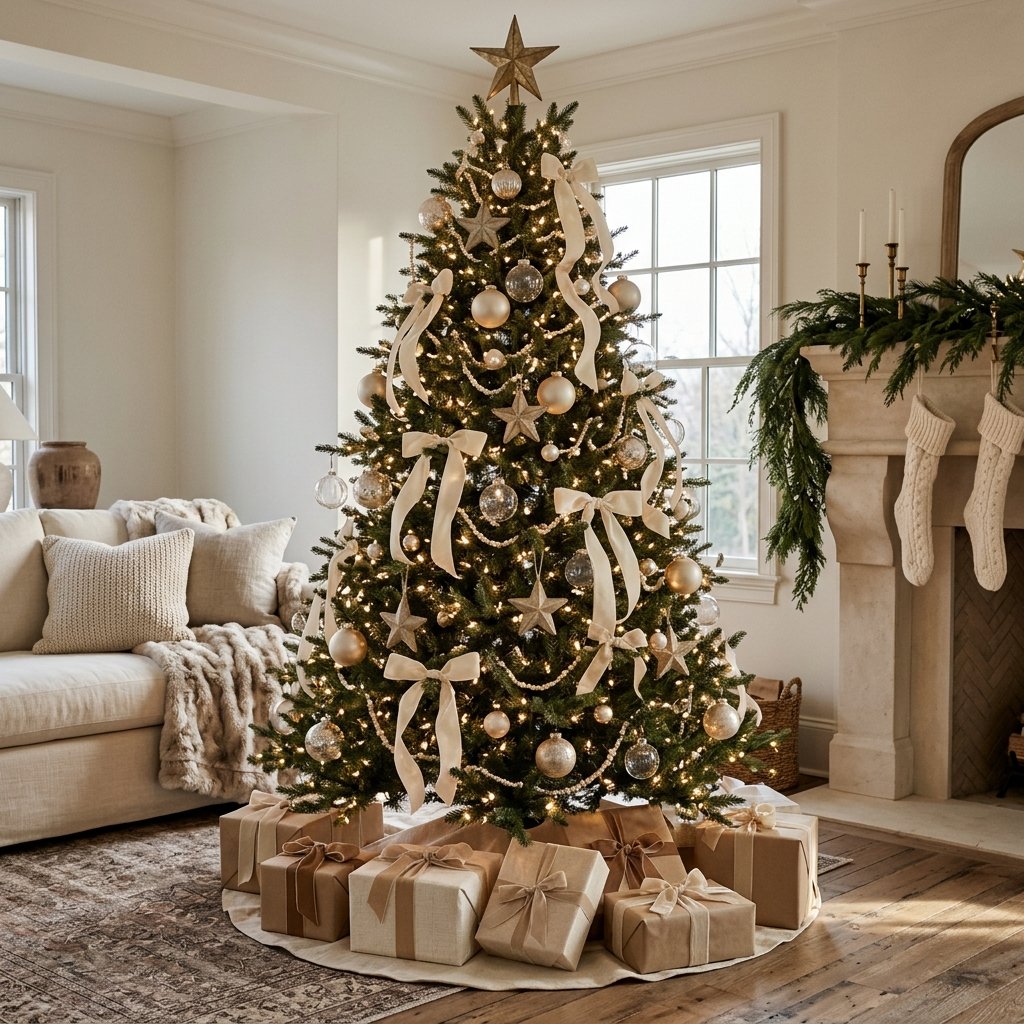
4. White + Champagne + Gold
If you want an elegant tree without strong color, try a tonal metallic palette.
Use:
- Soft white
- Ivory
- Champagne
- Warm gold
Add:
- Ivory ribbon
- Champagne ornaments
- Gold stars
- Pearl-like ornaments
- Clear glass decorations
Use several finishes so the tree doesn’t look flat.
Mix:
- Matte
- Shiny
- Glitter
- Glass-look
- Velvet
- Metallic
Texture becomes especially important when the colors are similar.
Best With:
Glamorous, transitional, modern, and elegant interiors.
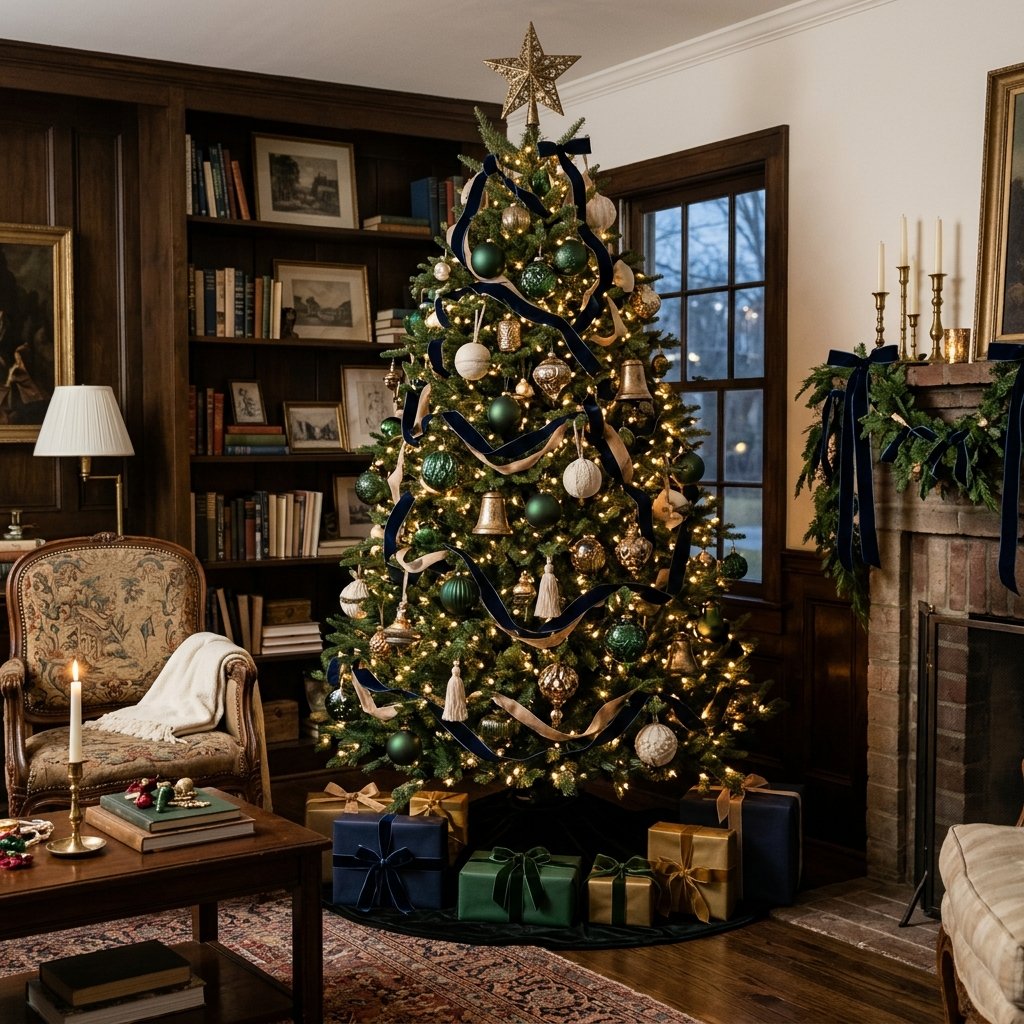
5. Navy + Gold + Cream
Navy can create a dramatic Christmas tree without feeling trendy.
Use:
- Deep navy
- Antique gold
- Cream
- Evergreen
Add:
- Navy velvet ribbon
- Gold ornaments
- Cream baubles
- Brass bells
- Dark blue gift wrap
Because navy is dark, distribute it throughout the tree rather than concentrating it in one area.
Cream provides useful contrast.
Best With:
Traditional, coastal, transitional, and sophisticated neutral interiors.
6. Dusty Blue + Silver + White
For something cooler and softer, try blue with silver.
Use:
- Dusty blue
- Silver
- White
- Icy blue
Add:
- Blue-gray ribbon
- Frosted ornaments
- Silver bells
- White stars
- Clear ornaments
This palette works particularly well on flocked Christmas trees, although flocking isn’t required.
On a traditional green tree, the greenery creates beautiful contrast.
Best With:
Coastal, modern, glamorous, and cool-toned interiors.
7. Blue + Green + Antique Gold
Blue and green can feel surprisingly natural together because the colors already coexist beautifully in landscapes.
Use:
- Deep blue
- Forest green
- Antique gold
- Cream
Add:
- Blue velvet ribbon
- Green ornaments
- Gold bells
- Cream accents
- Plaid or tartan ribbon
This palette is especially useful if your living room already contains blue.
Rather than fighting the existing color, incorporate it into the Christmas tree.
Best With:
Traditional, grandmillennial, coastal, English-inspired, and transitional homes.
8. Sage Green + Cream + Natural Wood
For a quiet Christmas tree, skip strong metallics and focus on natural texture.
Use:
- Sage green
- Cream
- Natural wood
- Evergreen
Add:
- Cream ribbon
- Wood ornaments
- Sage velvet bows
- Pinecones
- Paper ornaments
- Woven tree collar
The result feels festive but understated.
Use warm white lights rather than cool white to maintain the softness.
Best With:
Organic modern, Scandinavian-inspired, farmhouse, neutral, and minimalist homes.
9. Forest Green + Brown + Brass
A green tree decorated primarily with more green may sound strange, but tonal decorating can look incredibly sophisticated.
Use:
- Forest green
- Olive
- Chocolate brown
- Aged brass
Add:
- Dark green velvet ribbon
- Brown ornaments
- Brass bells
- Pinecones
- Wood accents
Because the colors blend into the tree, metallic ornaments and lights become especially important.
Best With:
Moody, traditional, organic, rustic, and English-inspired interiors.
10. Black + Gold + Green
For a dramatic modern Christmas tree, use black sparingly.
Use:
- Black
- Antique gold
- Evergreen
- Cream
Add:
- Black velvet ribbon
- Gold ornaments
- Black bells or stars
- Cream baubles
- Natural wood accents
Black works best as contrast rather than the dominant color.
Use it in several small areas throughout the tree.
Best With:
Modern, contemporary, transitional, and dramatic interiors.
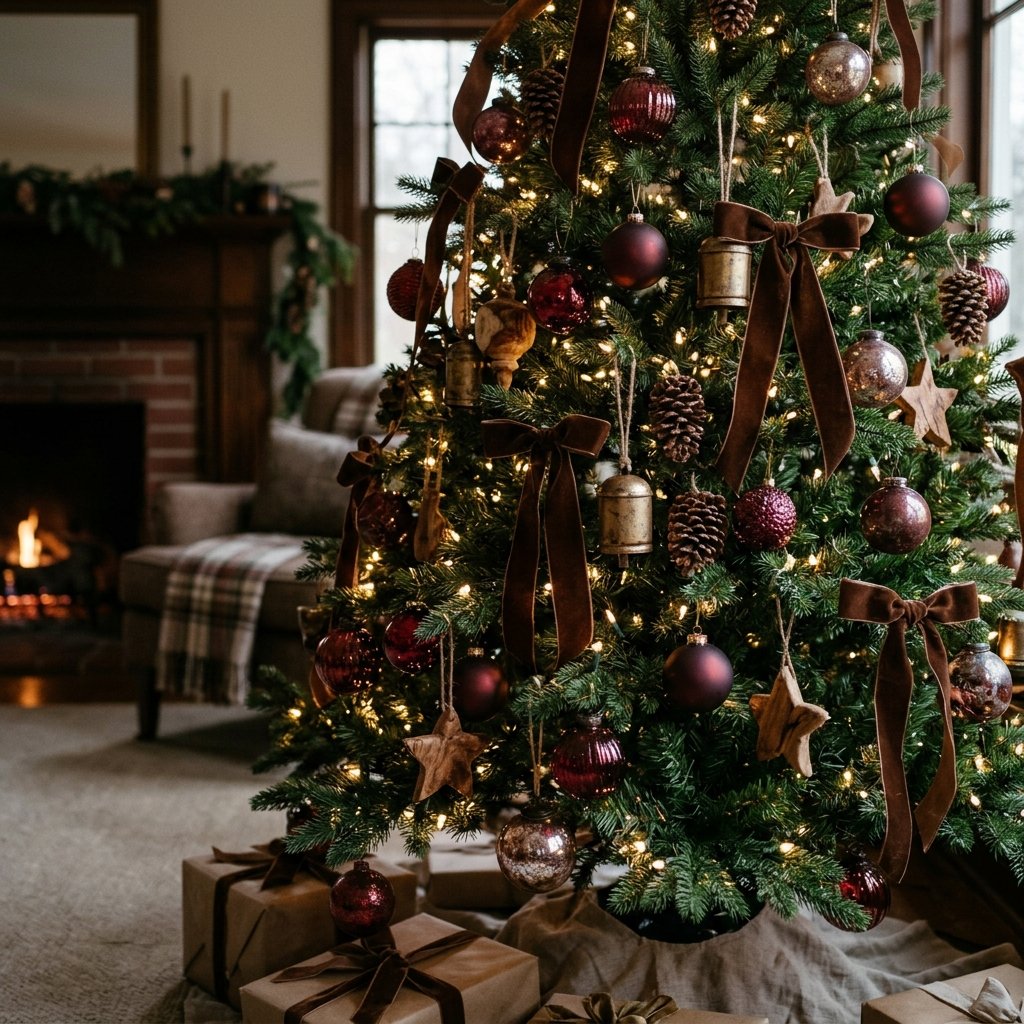
11. Red + Burgundy + Brown
This is a warmer, earthier version of classic Christmas red.
Use:
- Traditional red
- Burgundy
- Chocolate brown
- Evergreen
Add:
- Burgundy velvet
- Red glass ornaments
- Brown ribbon
- Pinecones
- Wood ornaments
- Aged brass bells
Layering several reds creates more depth than using one exact shade everywhere.
Best With:
Traditional, rustic, vintage, lodge-inspired, and cozy interiors.
12. Plum + Burgundy + Gold
Want something unexpected but still sophisticated?
Try plum.
Use:
- Deep plum
- Burgundy
- Antique gold
- Cream
Add:
- Plum velvet ribbon
- Burgundy ornaments
- Gold glass baubles
- Cream accents
- Dark floral picks
Plum and burgundy sit close enough together to create a rich tonal effect.
The gold adds warmth.
Best With:
Moody, maximalist, traditional, glamorous, and eclectic interiors.
13. Blush Pink + Burgundy + Champagne
Pink Christmas decor doesn’t have to look childish.
The secret is combining pale pink with deeper colors.
Use:
- Blush
- Burgundy
- Champagne
- Cream
Add:
- Blush velvet ribbon
- Burgundy ornaments
- Champagne baubles
- Cream bows
- Glass ornaments
The burgundy keeps the pink grounded.
Best With:
Romantic, feminine, glamorous, vintage, and transitional interiors.
14. Terracotta + Cream + Brown
For an earthy Christmas tree, move away from traditional red completely.
Use:
- Terracotta
- Rust
- Cream
- Brown
Add:
- Rust velvet ribbon
- Wood ornaments
- Cream decorations
- Brown glass baubles
- Natural pinecones
You can introduce a little antique brass if the tree needs more sparkle.
Best With:
Boho, organic modern, southwestern-inspired, neutral, and earthy homes.
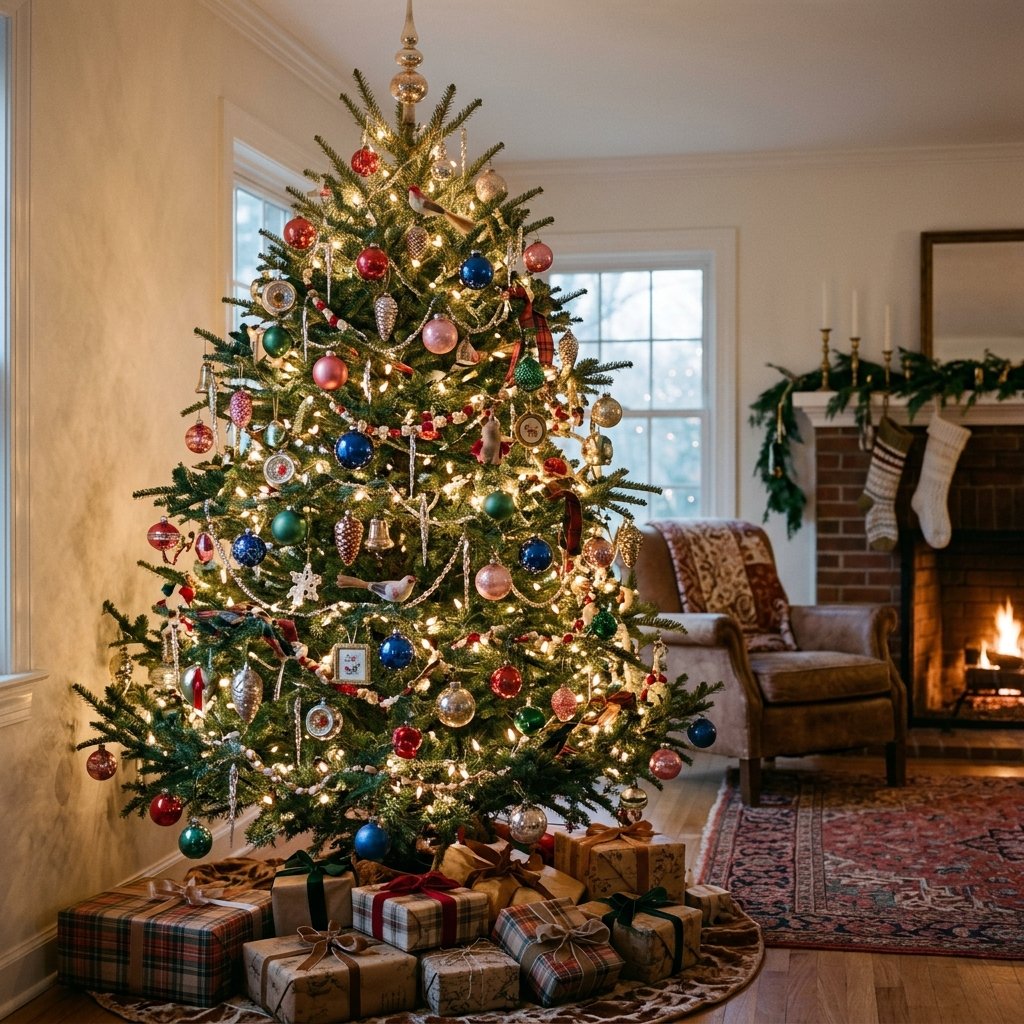
15. Multicolor Vintage Christmas
Not every tree needs a strict palette.
A multicolor tree can still look intentional.
Use:
- Red
- Blue
- Green
- Gold
- Pink
- Silver
Add:
- Vintage-style glass ornaments
- Collected family ornaments
- Handmade decorations
- Tinsel where safely and appropriately used
- Simple ribbon or no ribbon
The key is repetition.
If you have one blue ornament, it looks random.
If blue appears repeatedly around the tree alongside the other colors, it becomes part of the palette.
Best With:
Traditional, nostalgic, eclectic, colorful, and family-focused homes.
How Many Colors Should Be on a Christmas Tree?
There isn’t a decorating rule that says you can only use two colors.
A useful starting point is:
One Main Color
For example, burgundy.
One Supporting Color
Cream.
One Metallic
Antique gold.
One Natural Element
Wood or pinecones.
That creates enough variation without becoming chaotic.
You can also use several shades within the same color family.
For example:
Burgundy + cranberry + traditional red + antique gold
still reads as one cohesive palette.
Should Your Christmas Tree Match Your Living Room?
It doesn’t have to match exactly.
But it should feel related.
If your living room contains:
Cream + walnut + olive
you could decorate the tree with:
Burgundy + gold + cream
The warm undertones connect the two palettes.
If your room contains:
Blue + white + natural wood
try:
Navy + gold + cream
or:
Dusty blue + silver + white
Think coordination rather than exact matching.
How to Choose Ribbon for Your Color Scheme
Ribbon is one of the easiest ways to establish your palette.
If you want a luxurious look, consider:
- Velvet
- Satin-look ribbon
- Textured woven ribbon
- Plaid
- Metallic ribbon
You can also layer two ribbons.
For example:
Wide burgundy velvet + narrower antique gold
or:
Wide cream ribbon + narrow green velvet
Don’t feel obligated to use ribbon at all.
A tree filled with beautiful ornaments can look complete without it.
How to Choose Ornament Finishes
Color is only half the equation.
Finish matters too.
Mix:
- Matte
- Glossy
- Glass-look
- Metallic
- Frosted
- Textured
If every ornament is shiny, the tree can look flat despite all the sparkle.
Variation creates depth.
How to Layer Christmas Ornaments
Start with the largest ornaments.
Place them:
- Near visible gaps
- Slightly deeper into branches
- Around the tree rather than only on the front
Then add medium ornaments.
Finish with:
- Small ornaments
- Sentimental ornaments
- Bells
- Stars
- Decorative picks
Step back frequently.
The colors should appear balanced from top to bottom.
How to Mix Sentimental Ornaments Into a Color Scheme
You don’t need to abandon family ornaments because they aren’t the right shade of burgundy.
Use your color palette as the background.
For example, decorate most of the tree with:
Cream + gold + burgundy
Then add sentimental ornaments throughout.
The repeated ribbon and base ornaments will hold the overall design together.
The special ornaments add personality.
Christmas Tree Color Schemes for Flocked Trees
Flocked trees already contain a strong white element.
That makes them especially good with:
- Burgundy + gold
- Blue + silver
- Blush + champagne
- Cream + gold
- Sage + natural wood
Because the flocking creates visual texture, you may need fewer decorative picks.
Check the tree manufacturer’s care instructions, since flocking can shed and may have specific recommendations.
Christmas Tree Color Schemes for Green Trees
Traditional green trees are incredibly versatile.
They work with almost everything.
Particularly beautiful combinations include:
- Red + gold
- Burgundy + cream
- Navy + gold
- Brown + brass
- Plum + gold
- Multicolor vintage
Remember that green is already part of the palette.
You don’t necessarily need additional green ornaments unless you want a tonal effect.
Christmas Tree Color Schemes for White Trees
A white artificial tree creates a completely different background.
Try:
- Black + gold
- Blush + champagne
- Blue + silver
- Red + gold
- Multicolor
Because the tree itself is visually bright, deeper ornament colors can create useful contrast.
Match the Tree Collar to the Palette
The tree base is part of the design.
Consider:
Woven Collar
Great for cream, brown, sage, and natural palettes.
Brass-Look Collar
Works with burgundy, navy, black, and traditional red.
Wood Collar
Beautiful with organic and rustic palettes.
Fabric Tree Skirt
Works with almost any scheme and can introduce velvet, plaid, or another textile.
Make sure the tree base remains stable and electrical connections remain safely accessible.
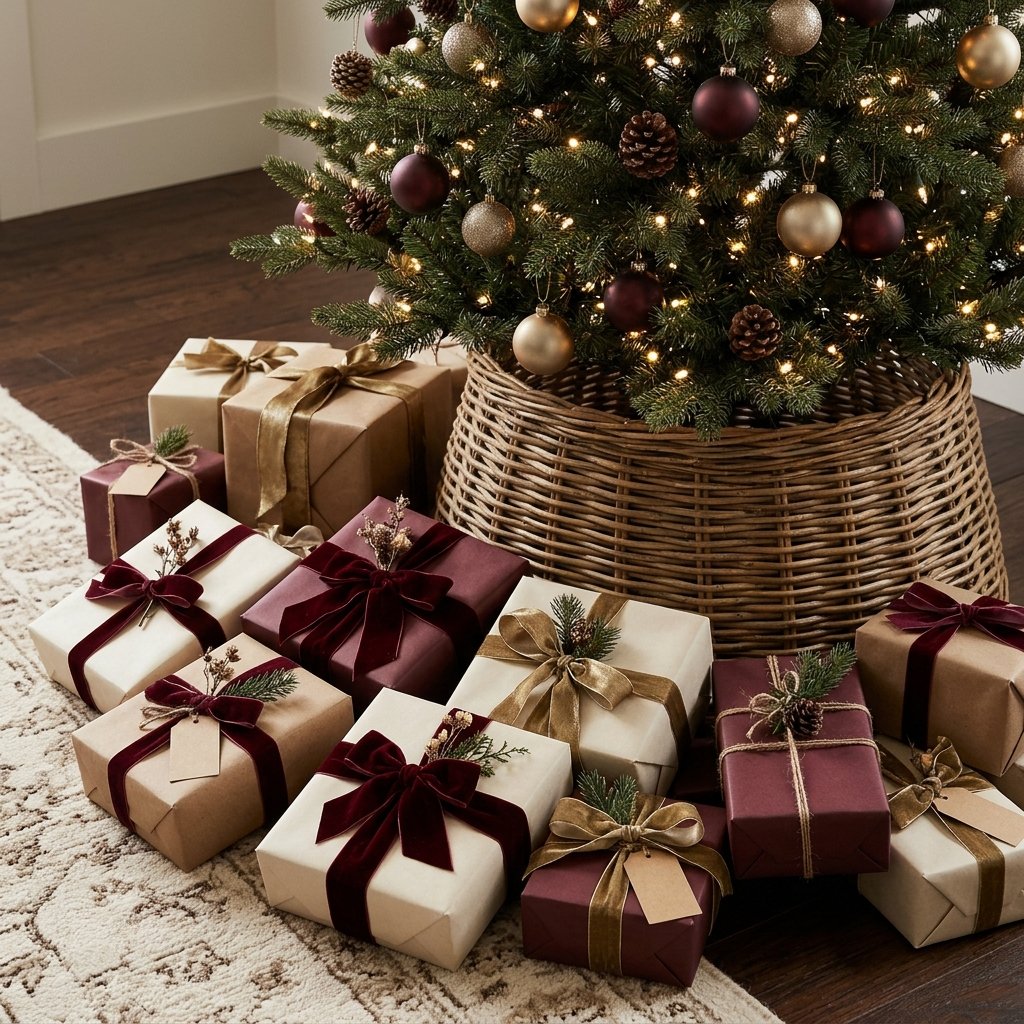
Coordinate Your Gift Wrap
Gift wrap can either support the tree or visually compete with it.
Choose two or three papers that relate to the palette.
For a burgundy and gold tree:
- Cream paper
- Kraft paper
- Deep burgundy paper
- Gold or burgundy ribbon
For blue and silver:
- White paper
- Navy paper
- Silver ribbon
For neutral Christmas:
- Kraft
- Cream
- Brown
- Green ribbon
You don’t need every package to match.
A limited collection of papers creates enough cohesion.
Coordinate the Mantel With the Tree
The mantel doesn’t need identical decorations.
Repeat just one or two elements.
For example:
Burgundy Tree
Use burgundy ribbon in the garland.
Blue Tree
Add blue ribbon or a few blue ornaments to the mantel.
Neutral Tree
Use wood, pinecones, cream stockings, and brass.
This connects the room without making everything look overly coordinated.
If the fireplace is used, keep combustible decorations outside required clearances and away from flames, hot surfaces, doors, and vents according to the fireplace manufacturer’s instructions.
Christmas Tree Color Schemes for Neutral Homes
If your home is primarily:
- White
- Cream
- Beige
- Greige
- Natural wood
almost any Christmas palette can work.
For a quiet look:
Cream + brown + gold
For classic contrast:
Red + green + gold
For something sophisticated:
Burgundy + antique gold + cream
For something dramatic:
Black + gold + green
A neutral room gives you plenty of freedom.
Christmas Tree Color Schemes for Colorful Homes
Look at the colors already present.
If your home has blue, incorporate blue.
If it has green, lean into green.
If you have rust or terracotta, use an earthy palette.
You don’t need to ignore your everyday decor for Christmas.
Using existing colors often makes the holiday decorations feel more intentional.
Christmas Tree Color Schemes for Traditional Homes
Try:
- Red + green + gold
- Burgundy + antique gold
- Navy + gold
- Blue + green + gold
- Multicolor vintage
Traditional interiors can support richer color and more ornament layering.
Christmas Tree Color Schemes for Modern Homes
Try:
- Black + gold + green
- Cream + brown + gold
- Sage + cream + wood
- White + champagne + gold
Keep the ornament shapes relatively simple and use fewer decorative picks.
Christmas Tree Color Schemes for Coastal Homes
You don’t have to decorate a coastal home with seashell ornaments.
Try:
Navy + cream + antique gold
or:
Dusty blue + silver + white
or:
Blue + green + natural wood
The coastal feeling can come from color rather than literal motifs.
How to Make Your Christmas Tree Look Expensive
A cohesive color palette helps, but scale and texture matter too.
Try:
- Several ornament sizes
- Velvet ribbon
- Warm metallics
- Large ornaments placed deeper inside
- A substantial tree collar
- Coordinated gift wrap
- Warm white lighting
Most importantly, thoroughly shape an artificial tree before decorating it.
Even beautiful ornaments can’t completely disguise large unfluffed gaps.
Christmas Tree Decorating Safety
Before you start layering decorations, keep practical safety in mind.
- Follow the tree manufacturer’s assembly instructions.
- Make sure the tree is stable.
- Follow string-light manufacturer requirements.
- Don’t exceed permitted connected-light limits.
- Replace damaged cords and lights.
- Use electrical products only for their intended indoor or outdoor environment.
- Keep cords out of walking paths.
- Keep combustible materials away from candles, fireplaces, heaters, and other heat sources.
- Secure heavy ornaments appropriately.
- Place fragile ornaments carefully around children and pets.
- Use a stable ladder when decorating the top of a tall tree.
- Keep electrical connections accessible rather than burying them under fabric or gifts.
A Simple Christmas Tree Decorating Formula
Once you’ve selected your colors, decorate in this order:
Step 1: Shape the Tree
Fluff every section thoroughly.
Step 2: Add Lights
If the tree isn’t pre-lit.
Step 3: Add Ribbon
Establish the main color.
Step 4: Add Large Ornaments
Create depth and fill gaps.
Step 5: Add Medium Ornaments
Distribute the supporting colors.
Step 6: Add Smaller Ornaments
Fill the outer branches.
Step 7: Add Special Ornaments
Bring in personality.
Step 8: Add Bells or Picks
Use them sparingly.
Step 9: Add the Topper
Keep it proportional.
Step 10: Finish the Base
Add a collar or skirt.
Step 11: Add Coordinated Gifts
Treat them as part of the overall composition.
Step 12: Step Back and Edit
Move ornaments until the colors feel evenly distributed.
FAQ About Christmas Tree Color Schemes
What are the best Christmas tree color combinations?
Classic combinations include red, green, and gold; burgundy and antique gold; navy and gold; blue and silver; cream and champagne; and green, cream, and natural wood.
How many colors should you use on a Christmas tree?
Two to four main colors are an easy starting point, but there is no strict rule. Multiple shades within one color family can still create a cohesive tree.
Should Christmas ornaments all match?
No. Repeating a few colors creates cohesion while vintage, handmade, and sentimental ornaments add personality.
Should Christmas tree ribbon match the ornaments?
It should coordinate rather than necessarily match exactly. Ribbon can introduce the dominant color while ornaments bring in supporting colors and metallics.
What Christmas tree colors look expensive?
Burgundy and antique gold, cream and champagne, navy and gold, and brown with aged brass can all create sophisticated trees. Execution and texture matter more than the specific colors.
What colors look good on a flocked Christmas tree?
Burgundy, gold, blue, silver, blush, champagne, sage, cream, and natural wood all contrast beautifully with white flocking.
What colors look best on a traditional green Christmas tree?
Green trees work with almost any palette, including red, burgundy, gold, blue, brown, cream, plum, and multicolor ornaments.
Should my Christmas tree match my home decor?
It doesn’t need to match exactly. Choosing one or two colors or materials that relate to the surrounding room is usually enough.
Can I mix gold and silver Christmas ornaments?
Yes. Mixed metals can work beautifully, especially when one finish is dominant and the other is repeated intentionally.
How can I change my Christmas tree without buying all new ornaments?
Keep your existing ornaments and change the ribbon, accent color, tree collar, decorative picks, or gift wrap. One new dominant color can make the entire tree feel different.
Final Thoughts
The easiest way to create a Christmas tree that looks pulled together is to decide on the palette before you start decorating.
These done-for-you Christmas tree color schemes give you a starting point, but you don’t need to follow them perfectly.
Choose the combination that works with your home.
Then use it as a filter.
If you’re decorating with burgundy + antique gold + cream, you immediately know what ribbon to look for, which ornaments to bring forward, and what gift wrap will work under the tree.
That makes decorating easier—and helps prevent random holiday purchases that don’t work once you get them home.
But don’t become so committed to a color scheme that the tree loses its personality.
Hang the handmade ornament.
Use the decoration your child loves.
Bring out the vintage bauble that has been in the family for years.
A coordinated palette can make the tree beautiful.
The collected pieces are what make it yours.