

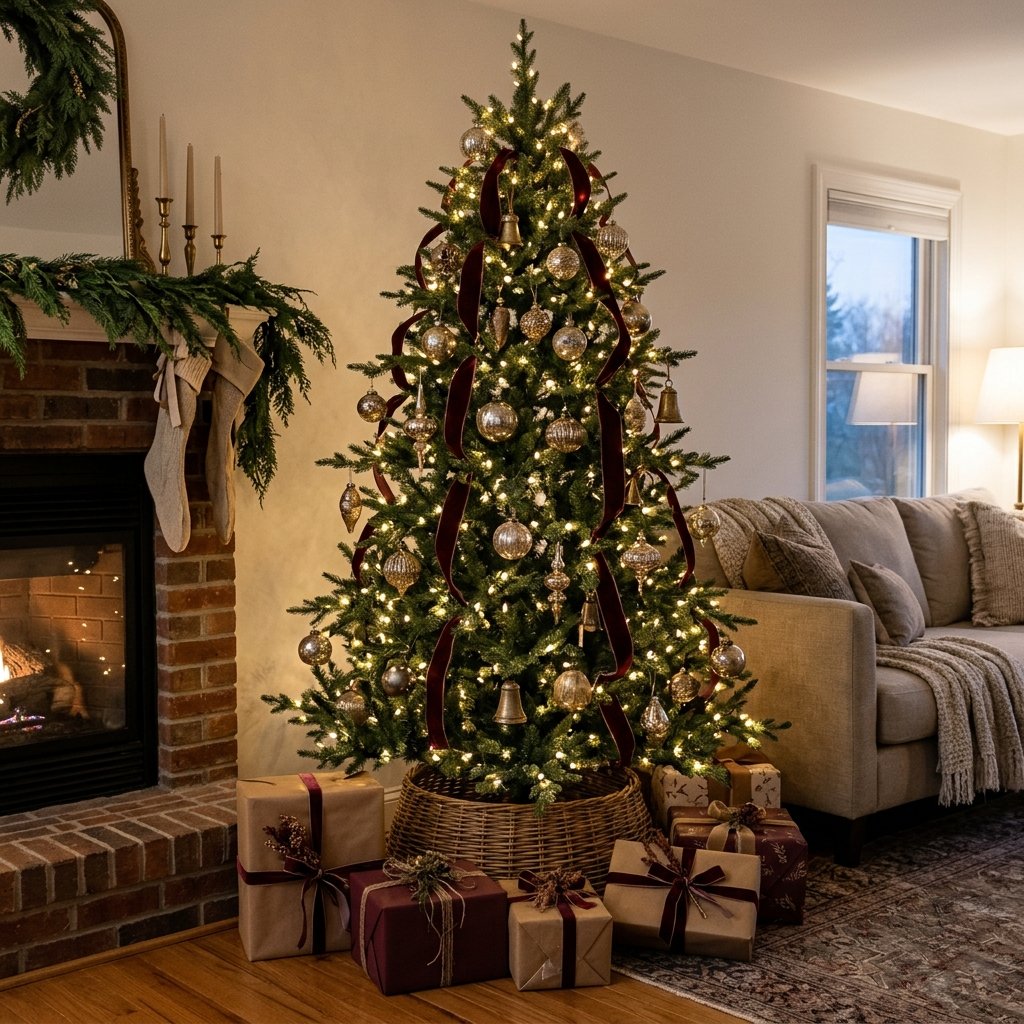
Finding the best artificial Christmas trees is much easier once you know what separates a convincing faux tree from one that looks obviously artificial.
The biggest differences usually come down to the branch material, silhouette, density, lighting, stability, setup, and—something that’s easy to forget—how much space the tree occupies once it’s fully fluffed.
Current 2026 testing from Good Housekeeping, HGTV, Architectural Digest, Reviewed, and other publications points to several recurring standouts. Good Housekeeping named the King of Christmas King Fraser Fir its best overall, while HGTV selected the Balsam Hill Fraser Fir as its top tested tree. Architectural Digest also rated Balsam Hill’s Fraser Fir highly, while the National Tree Company Downswept Douglas Fir repeatedly appears as a strong realistic option at a lower price than premium Balsam Hill trees.
The right tree for your home may still be completely different.
A beautiful 60-inch-wide tree isn’t helpful if you only have a 40-inch corner.
Below are the artificial Christmas trees and tree styles I’d consider first, plus exactly what to look for before buying.
Quick Picks: The Best Artificial Christmas Trees
For a fast answer, these are the categories I’d start with:
- Best overall realistic tree: King of Christmas King Fraser Fir
- Best premium realistic tree: Balsam Hill Fraser Fir
- Best value: Puleo International Aspen Fir
- Best traditional full tree: National Tree Company Downswept Douglas Fir
- Best unlit: National Tree Company Dunhill Fir
- Best customizable premium tree: Balsam Hill Classic Blue Spruce
- Best slim tree: A slim Fraser or Douglas fir
- Best sparse tree: King of Christmas King Noble Fir
- Best flocked tree: A quality flocked spruce or fir
- Best small-space tree: Pencil or narrow-profile fir
Current independent testing doesn’t produce one unanimous winner—which is useful. It suggests there are several excellent choices depending on budget, shape, lighting, and how realistic you want the tree to look.
1. King of Christmas King Fraser Fir
Good Housekeeping’s current 2026 testing named the King Fraser Fir Artificial Christmas Tree its best overall pick, praising its natural appearance, stability, and convenient lighting controls on the pre-lit version.
This is the type of tree I’d consider if you want a full traditional shape without the tree looking excessively dense.
The branch structure gives ornaments room to hang rather than simply sitting on top of a wall of greenery.
Why Consider It
- Realistic appearance
- Traditional Fraser fir shape
- Strong branches
- Pre-lit and unlit choices
- Good option for substantial ornament collections
Good Housekeeping noted that the branches take time to shape, particularly during the first setup. That’s worth remembering: even an expensive artificial tree rarely looks its best immediately after coming out of the box.
Best For
Someone who wants one high-quality traditional tree to use year after year.
2. Balsam Hill Fraser Fir
If realism is your top priority and the budget is flexible, the Balsam Hill Fraser Fir deserves a serious look.
HGTV named it the best overall tree in its current testing, while Reviewed also rated a Balsam Hill Fraser Fir version as its top choice. Architectural Digest’s 2026 roundup likewise included the Fraser Fir among its leading options.
The tradeoff is price.
Premium construction and realistic molded foliage can make these trees substantially more expensive than basic PVC artificial trees.
Why Consider It
- Highly realistic branch structure
- Full natural-looking silhouette
- Premium construction
- Lighting options available
- Designed for repeated seasonal use
Best For
Someone who wants the artificial tree to look as close to a real tree as practical.
3. National Tree Company Downswept Douglas Fir
The Downswept Douglas Fir is one of the strongest alternatives if you want a realistic traditional tree without automatically moving into the highest premium price range.
It has appeared repeatedly in current testing. Architectural Digest included it among its top picks, while Forbes Vetted selected the Downswept Douglas Fir as its overall recommendation.
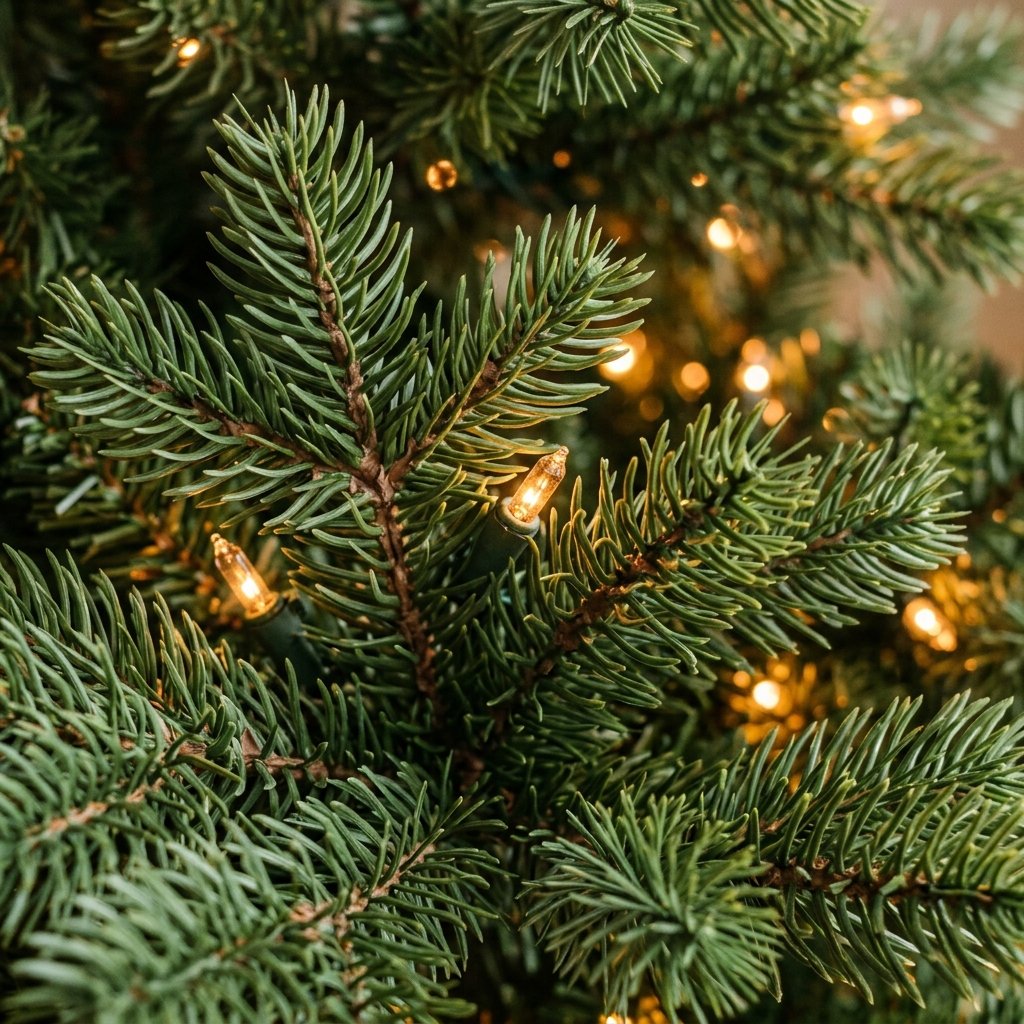
National Tree Company’s “Feel Real” models use molded branch tips in visible areas to improve realism.
Why Consider It
- Full traditional shape
- Realistic outer foliage
- Multiple configurations depending on model
- Good decorating space
- Strong alternative to more expensive premium trees
Best For
Traditional Christmas decorating with plenty of ornaments.
4. Puleo International Aspen Fir
If value matters, look at the Puleo International Aspen Fir.
Both Good Housekeeping and HGTV selected versions of the Aspen Fir as their value picks in current 2026 testing.
That’s useful because inexpensive artificial trees can be hit or miss.
A lower price doesn’t automatically mean poor results, particularly once the tree is thoroughly fluffed, lit, and decorated.
Best For
Someone who wants a classic full Christmas tree without paying premium-tree prices.
5. Balsam Hill Classic Blue Spruce
The Balsam Hill Classic Blue Spruce is worth considering if you want more choice.
Current testing has highlighted the tree for its realistic traditional silhouette and variety of size and lighting configurations. Bob Vila’s 2026 testing named a pre-lit Classic Blue Spruce its overall pick, while other current guides also rank it highly.
Blue spruce also has a slightly different visual character from the warmer green Fraser fir look.
Best For
Someone who wants a traditional, full-bodied tree with plenty of configuration choices.
6. National Tree Company Dunhill Fir
Want to add your own lights?
The National Tree Company Dunhill Fir is an excellent tree style to consider.
HGTV selected the unlit 7-foot version as its best unlit tree, and Bob Vila’s testing also highlighted the Dunhill Fir as its preferred unlit option.
An unlit tree has several advantages.
You can choose:
- Warm white lights
- Multicolor lights
- Vintage-style lights
- Twinkle lights
And if a light strand fails, you replace the lights—not the tree’s integrated lighting system.
Best For
Someone who enjoys customizing the lights every Christmas.
7. King of Christmas King Noble Fir
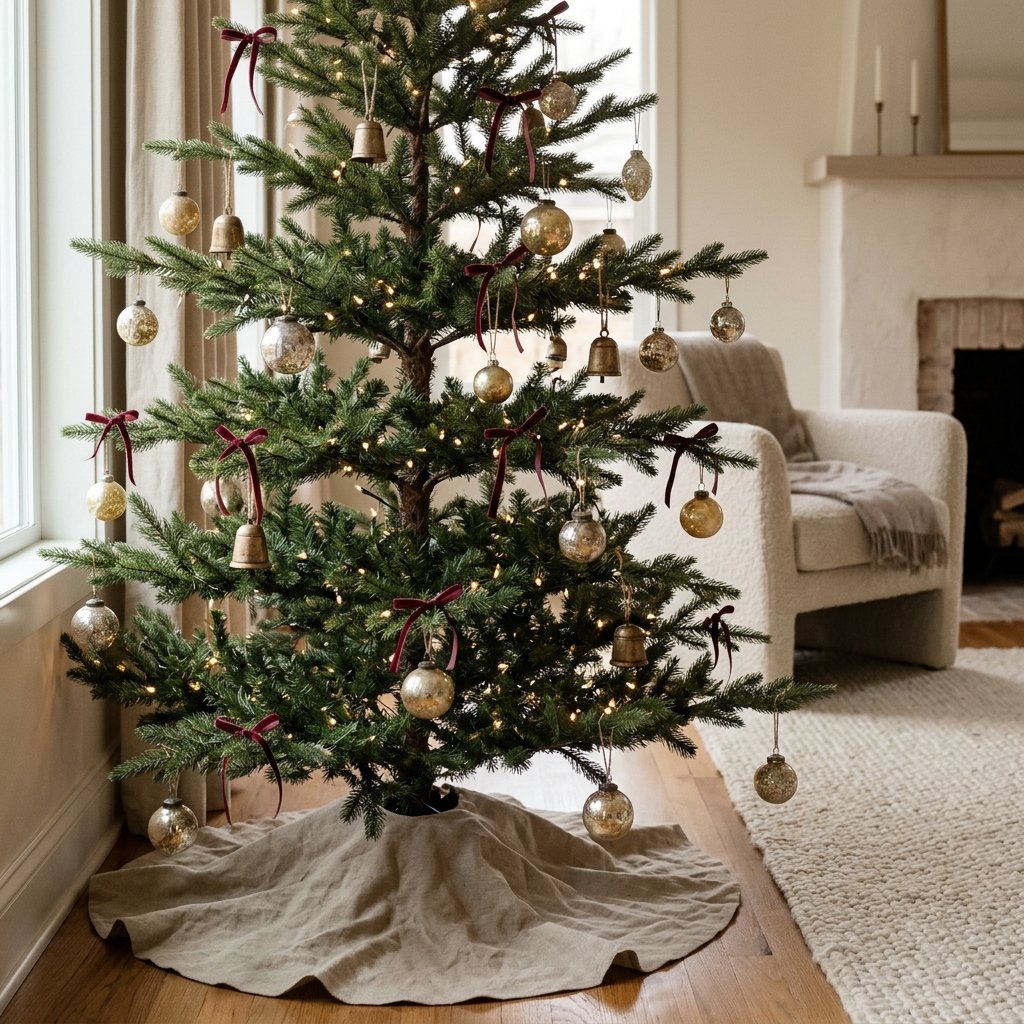
A Christmas tree doesn’t have to be perfectly full.
In fact, a slightly sparse tree can look extremely realistic.
Current testing has identified the King Noble Fir as a strong minimalist or sparse-style option.
The extra space between branches lets ornaments hang naturally.
It also creates a more relaxed, organic look.
Style It With
- Velvet ribbon
- Vintage glass ornaments
- Bells
- Wood decorations
- Simple warm lights
Don’t try to fill every gap.
The open structure is the point.
8. A Slim Douglas or Fraser Fir
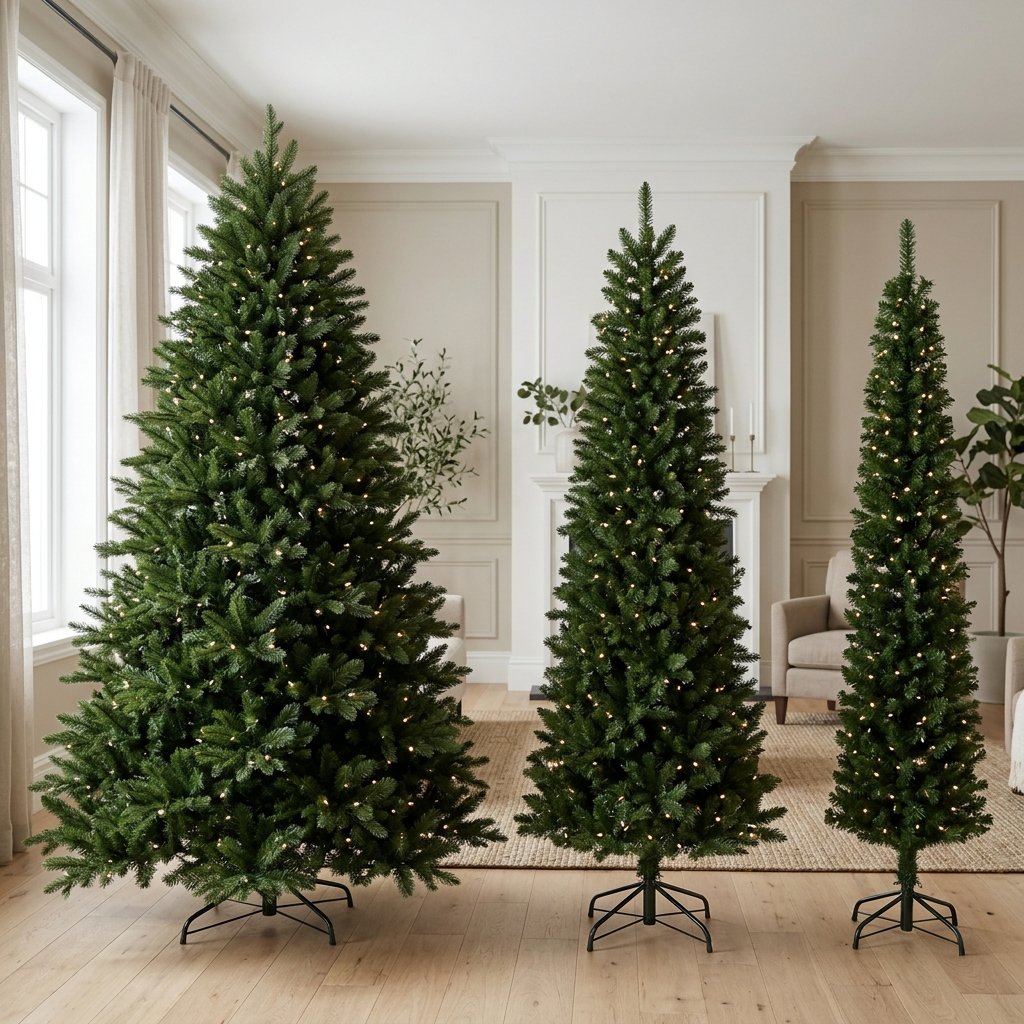
A slim tree can be the better choice even when your room isn’t tiny.
Full-width trees can occupy a surprising amount of floor space.
A narrow tree gives you:
- More walking room
- Better furniture clearance
- Easier placement
- Plenty of vertical impact
Current artificial-tree testing includes several slim and pencil options, including National Tree Company Douglas firs and slim Fraser fir designs.
Best For
- Apartments
- Small living rooms
- Dining rooms
- Entryways
- Secondary trees
9. A Quality Flocked Christmas Tree
Flocked trees immediately create a snowy look.
They work particularly well with:
- Burgundy
- Gold
- Champagne
- Cream
- Blue
- Silver
Current testing includes flocked trees from brands such as Puleo International and King of Christmas among recommended category picks.
The downside?
Flocking can shed.
Some trees shed significantly more than others, especially during setup and storage.
If that will bother you, choose a traditional green tree and create the winter look through ornaments instead.
Best For
Neutral, elegant, or winter-wonderland Christmas decorating.
10. A Pencil Tree for Very Tight Spaces
A pencil tree is narrower than a typical slim tree.
It’s useful when you want height without sacrificing much floor area.
Pencil trees work particularly well in:
- Apartments
- Bedrooms
- Kitchens
- Hallways
- Small family rooms
But measure carefully.
“Pencil,” “slim,” and “narrow” aren’t standardized dimensions across every manufacturer.
Always check the actual base diameter.
What Makes an Artificial Christmas Tree Look Real?
The biggest factor is usually the needles.
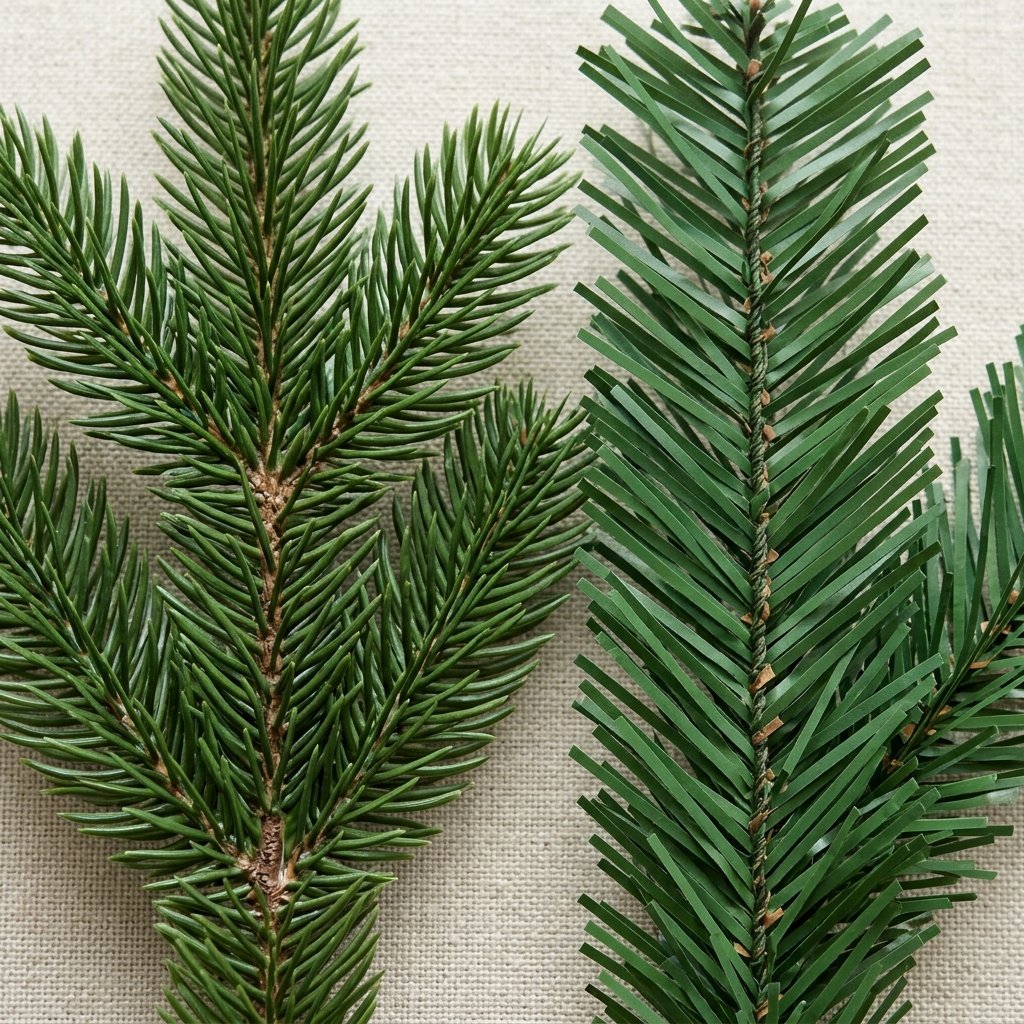
Look for PE Branch Tips
PE stands for polyethylene.
Instead of creating needles from flat cut strips, manufacturers can mold PE branches into dimensional shapes that more closely resemble actual evergreen foliage.
Current testing from Reviewed specifically notes the more realistic three-dimensional appearance of PE compared with traditional PVC needles.
Mixed PE and PVC Can Be a Good Compromise
Don’t automatically reject a tree because it contains PVC.
Many artificial trees use realistic molded PE branches on the outside and less expensive PVC foliage toward the interior.
That can create fullness without making the tree prohibitively expensive.
Look at the Branch Structure
A real tree isn’t a perfect green triangle.
Natural-looking artificial trees usually have:
- Varied branch lengths
- Visible interior branching
- Slight irregularity
- Space for ornaments
Full vs. Sparse Christmas Trees
Neither is objectively better.
Choose Full If You Like:
- Traditional Christmas
- Lots of lights
- Ribbon
- Large ornaments
- Dense greenery
Choose Sparse If You Like:
- Vintage ornaments
- Scandinavian-inspired decorating
- Minimalist Christmas
- Natural-looking branches
- Visible ornament spacing
A sparse tree can actually make special ornaments more noticeable.
Pre-Lit vs. Unlit Artificial Christmas Trees
This is one of the biggest decisions.
Pre-Lit Trees
Advantages
- Faster setup
- Even light distribution
- Fewer visible wires
- Convenient controls on some models
Disadvantages
- More expensive
- Integrated lighting can eventually fail
- Less flexibility
Unlit Trees
Advantages
- Choose any lights
- Replace strands easily
- Change colors later
- Often less expensive
Disadvantages
- Takes longer to decorate
- More cords to manage
If you want maximum convenience, buy pre-lit.
If you want maximum flexibility and potentially easier long-term maintenance, consider unlit.
Warm White vs. Multicolor Lights
Warm white lights create a classic glow.
They work beautifully with:
- Burgundy
- Gold
- Red
- Green
- Brown
- Cream
Multicolor lights create a more nostalgic, playful look.
Some premium trees offer both.
If you’re unsure, a dual-color tree can provide flexibility from year to year.
How Tall Should an Artificial Christmas Tree Be?
Measure from the floor to the ceiling.
Then account for:
- Tree stand
- Tree height
- Topper
- Visual breathing room
Don’t buy a tree that technically fits only if the topper is pressed against the ceiling.
For many standard rooms, a 7- to 7.5-foot tree is popular, but your actual ceiling height and desired topper should determine the choice.
Don’t Forget Tree Width
Width may be more important than height.
Measure:
- Available floor area
- Furniture clearance
- Walking path
- Door swing
Then compare those measurements with the manufacturer’s listed tree diameter.
A 7.5-foot full tree can take up substantially more floor area than a 7.5-foot slim tree.
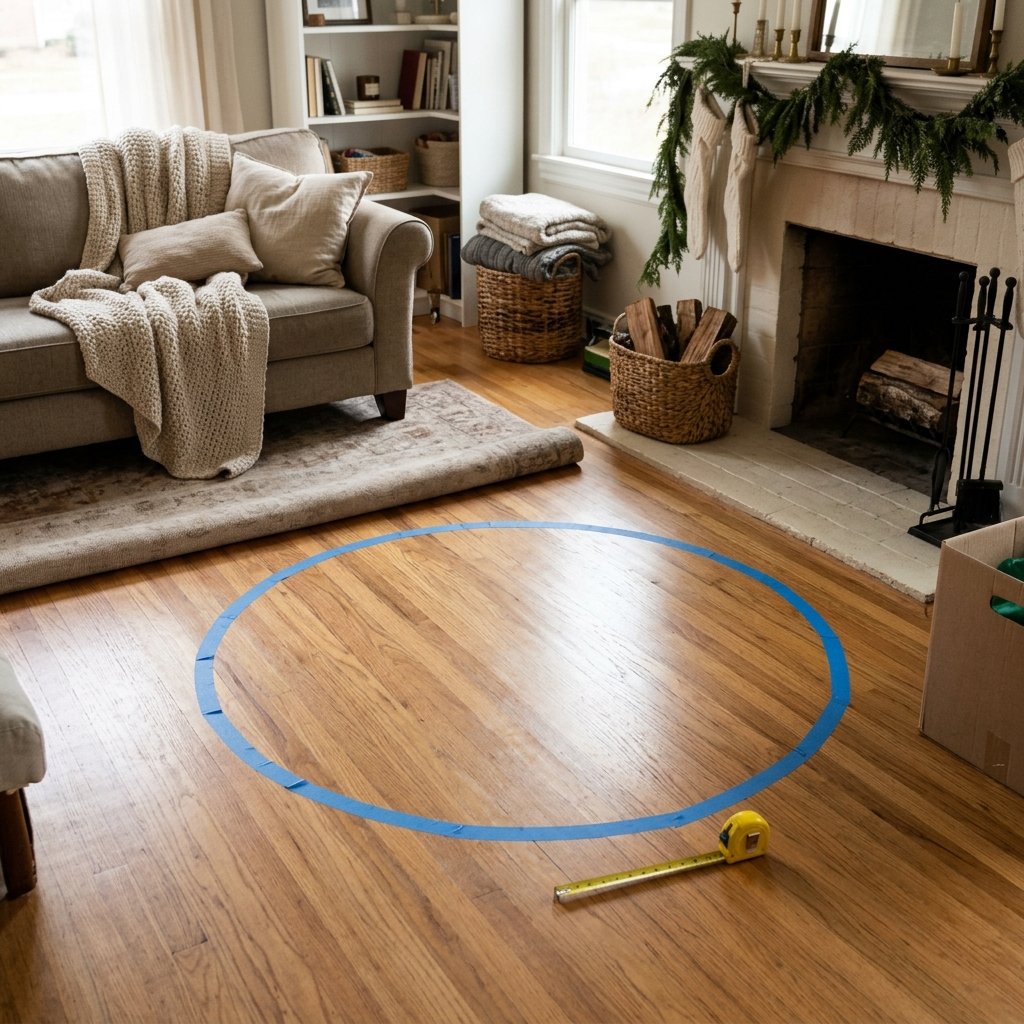
Use painter’s tape to mark the approximate footprint before ordering.
This one step can prevent an expensive return.
Best Artificial Christmas Tree for a Small Living Room
I’d prioritize diameter before height.
A 7-foot slim tree may work much better than a 6.5-foot full tree.
Look for:
- Slim profile
- Narrow profile
- Pencil tree
- Sparse tree
Keep enough clearance around the tree for comfortable movement.
Best Artificial Christmas Tree for a Large Living Room
A larger room can handle a fuller silhouette.
Look for:
- Traditional full Fraser fir
- Douglas fir
- Spruce
- Large Noble fir
If you have tall ceilings, resist automatically buying the tallest tree possible.
The tree should still relate proportionally to the furniture and architecture.
Best Artificial Christmas Tree for Heavy Ornaments
Look for strong wired branches.
This matters if you collect:
- Heavy glass ornaments
- Large ornaments
- Ceramic decorations
- Substantial hanging pieces
Current testing specifically praised sturdy branches on several premium models, including the King Fraser Fir and Balsam Hill options.
Hang heavier ornaments farther back on stronger branches rather than at delicate tips.
Is a Premium Artificial Christmas Tree Worth It?
It can be.
Premium trees generally make the most sense when:
- You plan to use the tree for many years
- Realism matters
- You want easier assembly
- You value integrated lighting
- You have proper storage space
But you don’t need a four-figure Christmas tree to create a beautiful room.
A moderately priced tree can look dramatically better after:
- Thorough fluffing
- Plenty of lights
- Strategic ribbon
- Layered ornaments
- Proper tree collar
Spend according to the features you actually value.
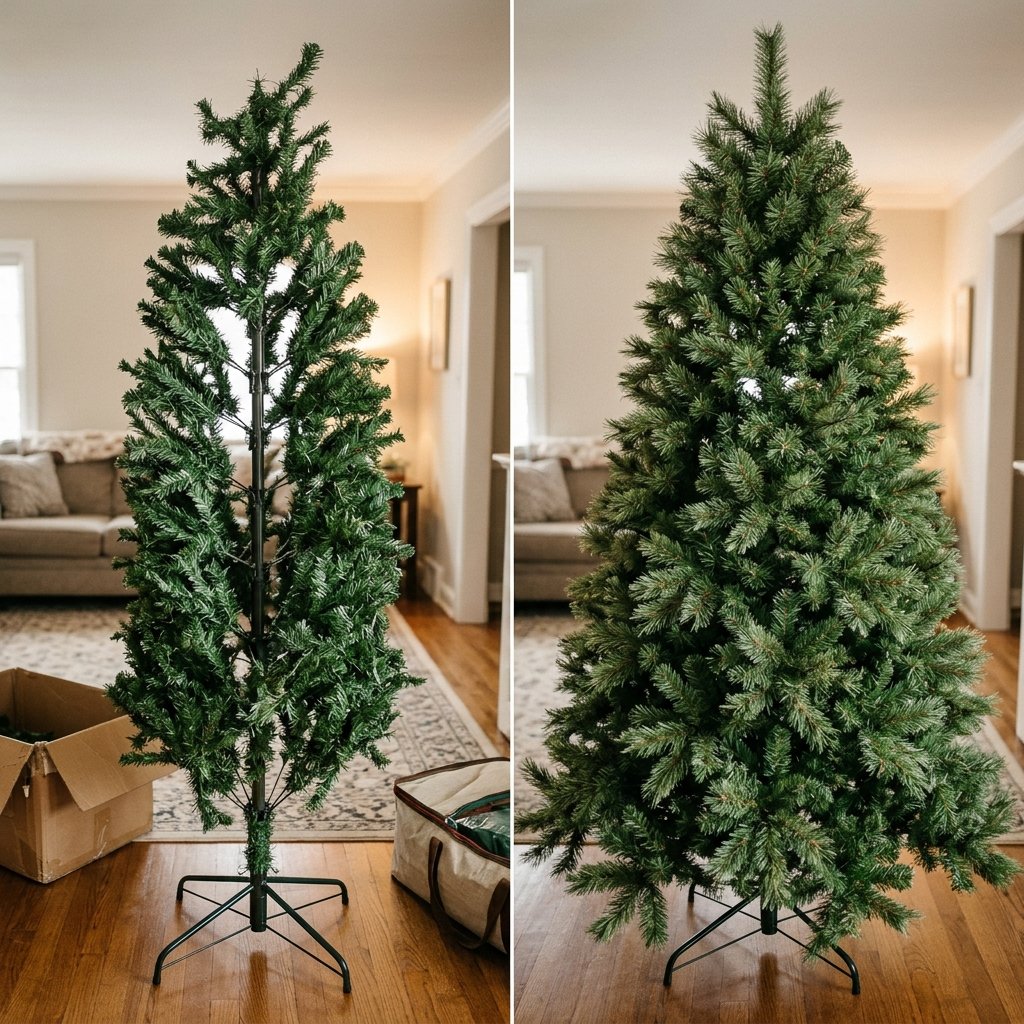
How to Make an Artificial Christmas Tree Look Fuller
Even a good tree needs shaping.
Start at the bottom.
Separate each branch.
Move individual tips:
- Left
- Right
- Up
- Forward
- Back
Avoid arranging everything flat.
You’re trying to create three-dimensional volume.
Then step away and identify holes.
Adjust those areas before adding ornaments.
How to Make a Cheap Artificial Tree Look Expensive
Start with fluffing.
Then try:
Add More Lights
If permitted by the light and tree manufacturers.
Use Large Ornaments Inside
They disguise gaps.
Add Ribbon
Velvet or textured ribbon creates visual richness.
Mix Ornament Sizes
Use large, medium, and small pieces.
Add Natural-Looking Picks
A few evergreen or botanical picks can create variation.
Upgrade the Base
Use a substantial tree collar or skirt.
Coordinate Gift Wrap
The packages become part of the overall display.
How to Choose a Tree Collar or Skirt
For a natural look:
- Woven collar
- Wood collar
- Neutral fabric skirt
For traditional decor:
- Velvet skirt
- Plaid
- Brass-look collar
For modern decor:
- Simple metal collar
- Neutral textile
Check the tree stand dimensions before buying a collar.
How to Store an Artificial Christmas Tree
Storage has a major effect on how the tree looks next year.
Don’t force an expensive tree into an undersized box if you can avoid it.
Consider a proper tree-storage bag.
Before storing:
- Remove ornaments.
- Remove ribbon.
- Remove separate lights.
- Disconnect power.
- Compress branches carefully according to instructions.
- Store sections properly.
- Keep the tree in a suitable dry storage environment.
Some premium trees include dedicated storage bags, which HGTV specifically noted as an advantage of the Balsam Hill Fraser Fir it tested.
Artificial Christmas Tree Safety
Even artificial trees require basic electrical and placement safety.
- Follow the tree manufacturer’s assembly instructions.
- Use the included or approved stand.
- Make sure the tree is stable before decorating.
- Follow all light manufacturer instructions.
- Replace damaged cords or lighting components.
- Don’t overload outlets or extension cords.
- Keep cords out of walking paths.
- Keep the tree appropriately away from fireplaces, heaters, candles, and other heat or flame sources.
- Use a stable ladder when decorating tall trees.
- Place fragile ornaments appropriately around children and pets.
- Don’t exceed branch weight recommendations where specified.
- Use indoor/outdoor products only in their intended locations.
Artificial Christmas Tree Mistakes to Avoid
Buying Before Measuring
Check height and diameter.
Judging the Tree Before Fluffing
Artificial trees are heavily compressed for shipping.
Assuming More Tips Always Means More Realistic
Branch material and shape matter too.
Choosing Pre-Lit Without Considering Repairs
Think about long-term flexibility.
Buying the Biggest Tree Possible
Scale matters more than maximum size.
Forgetting Storage
Large trees need substantial storage space.
Buying a Flocked Tree Without Expecting Shedding
Some flocking will inevitably require more cleanup.
Covering a Beautiful Tree With Too Much Decor
If you paid for realistic foliage, allow some of it to remain visible.
A Simple Artificial Christmas Tree Buying Checklist
Before buying, check:
- Ceiling height
- Tree height
- Base diameter
- Full, slim, pencil, or sparse shape
- PE, PVC, or mixed foliage
- Pre-lit or unlit
- Light color and effects
- Branch strength
- Assembly method
- Tree weight
- Stand included
- Storage requirements
- Warranty
- Customer photographs
- Current return policy
Don’t let a beautiful product photo distract you from dimensions.
Which Artificial Christmas Tree Would I Choose?
For the most realistic premium look, I’d start with a Balsam Hill Fraser Fir.
For a balance of realism and traditional fullness, I’d look closely at the King of Christmas King Fraser Fir.
For value, I’d compare the Puleo Aspen Fir and National Tree Company Downswept Douglas Fir.
For complete lighting freedom, I’d choose an unlit National Tree Company Dunhill Fir.
And for a small room, I wouldn’t compromise on height first.
I’d compromise on width.
A tall slim tree can still create that dramatic Christmas-tree moment without taking over the entire living room.
FAQ About the Best Artificial Christmas Trees
What is the best artificial Christmas tree?
There isn’t one universal winner. Current 2026 testing places the King of Christmas King Fraser Fir, Balsam Hill Fraser Fir, National Tree Company Downswept Douglas Fir, and Puleo Aspen Fir among the strongest choices depending on realism, price, and features.
What artificial Christmas tree looks most realistic?
Premium trees with molded PE foliage generally create the most convincing needles and branches. Balsam Hill’s Fraser Fir has performed particularly well for realism in current independent testing.
Are Balsam Hill Christmas trees worth it?
They can be if realistic foliage, premium construction, convenient features, and long-term reuse matter to you. They’re expensive, so shoppers focused primarily on value may prefer National Tree Company or Puleo International.
Is King of Christmas a good artificial tree?
The King Fraser Fir performed strongly in current testing; Good Housekeeping named it its best overall artificial tree for 2026.
Is PE better than PVC for artificial Christmas trees?
PE branches can be molded into dimensional shapes that resemble natural evergreen growth more closely. PVC can still provide useful fullness, and many trees combine both materials.
Should I buy a pre-lit Christmas tree?
Buy pre-lit if convenience is a priority. Choose unlit if you prefer changing your lighting style or want easier replacement when individual light strands eventually fail.
What size artificial Christmas tree should I buy?
Measure both ceiling height and available floor space. Leave room for a topper and compare the manufacturer’s actual base diameter with the area where the tree will stand.
Are slim Christmas trees better for small rooms?
Often, yes. A slim tree can provide substantial height and decorating space while preserving more floor area and better walking paths.
How do I make an artificial tree look real?
Choose realistic branch materials, thoroughly fluff every branch, leave some natural irregularity, use varied ornament depths, and avoid covering every inch of foliage.
When is the best time to buy an artificial Christmas tree?
Holiday promotions can create significant price changes, but inventory also becomes less predictable as Christmas approaches. If you want a specific size, lighting configuration, or premium model, availability may be more important than waiting for the absolute lowest price.
Final Thoughts
The best artificial Christmas trees aren’t necessarily the biggest, fullest, or most expensive trees.
They’re the ones that fit your room and the way you decorate.
If realism matters most, look for plenty of dimensional PE foliage and natural branch structure.
If convenience matters most, consider a high-quality pre-lit tree.
If you have a small living room, pay close attention to diameter.
If you collect beautiful ornaments, consider a tree with strong branches and enough space between them for ornaments to hang.
And if you’re working with a smaller budget, don’t underestimate what careful fluffing and decorating can do.
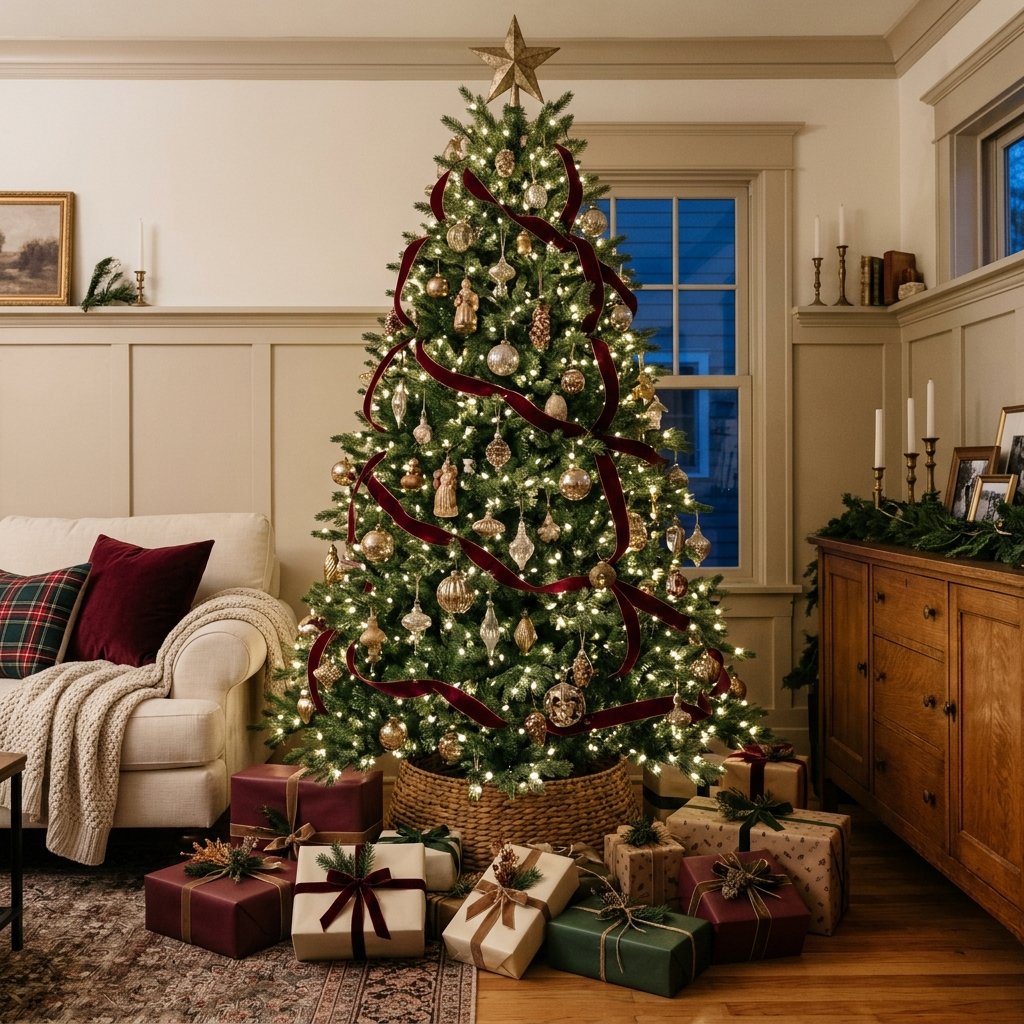
A well-shaped affordable tree with warm lights, beautiful ribbon, varied ornament sizes, and a substantial tree collar can look far more impressive than an expensive tree that hasn’t been properly styled.
Measure first.
Choose the silhouette.
Decide whether you want pre-lit or unlit.
Look closely at the foliage.
And buy a tree you genuinely want to bring out again next Christmas.
A good artificial Christmas tree shouldn’t just look beautiful for one holiday season.
It should become the reliable foundation for years of Christmas decorating.

