

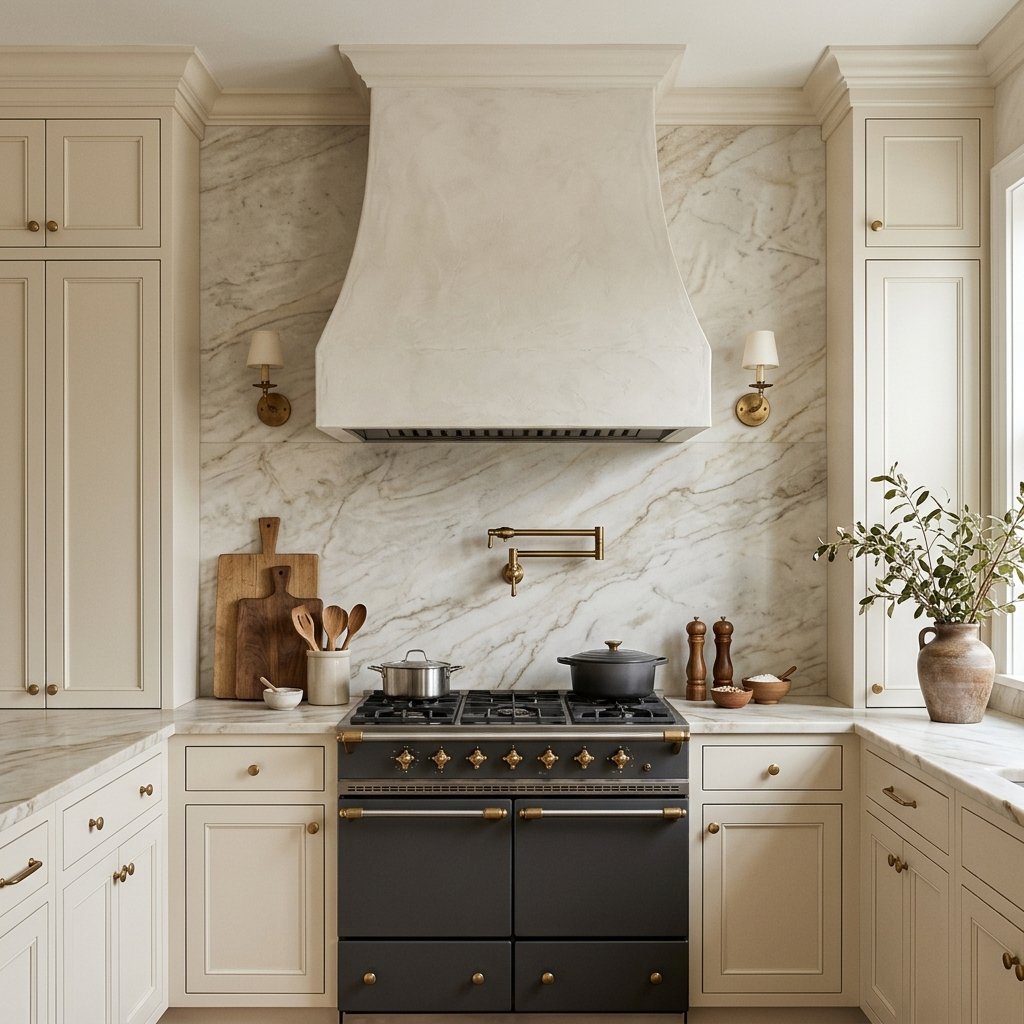
The right backsplash can completely change the look of a kitchen.
It can add warmth to white cabinets, bring texture to a neutral room, introduce color, or quietly connect your countertops, cabinetry, hardware, and flooring.
But with so many kitchen backsplash ideas to choose from—subway tile, handmade-look tile, marble, stone, zellige-style tile, mosaics, slabs, and more—it’s easy to get overwhelmed.
A useful starting point is to stop looking at the backsplash by itself.
Instead, look at the permanent finishes that are already in the kitchen.
Your backsplash needs to work with the:
- Cabinets
- Countertops
- Flooring
- Hardware
- Appliances
- Wall color
- Overall style of the house
The most successful backsplash isn’t necessarily the most dramatic option. It’s the one that makes the whole kitchen look better.
Here are 21 backsplash ideas, plus practical tips for choosing color, pattern, grout, layout, and materials.
1. Classic White Subway Tile
White subway tile remains useful because it’s simple and adaptable.
But the details matter.
Consider:
- Tile size
- Finish
- Edge shape
- Grout color
- Layout
A warm white tile can look softer with cream or wood cabinetry than a stark cool white.
For a slightly updated look, choose a tile with subtle surface variation instead of a perfectly flat glossy rectangle.
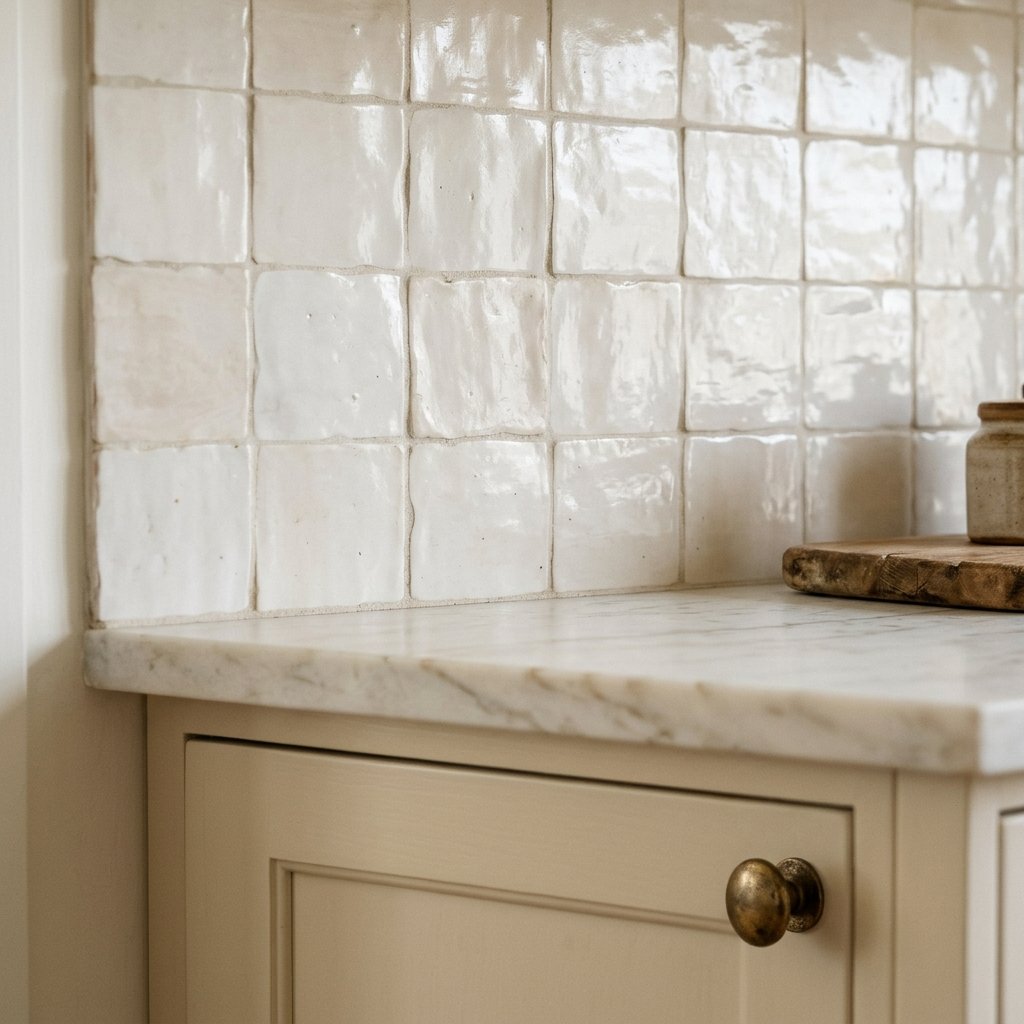
2. Handmade-Look White Tile
If you like a white backsplash but want more character, try a handmade-look tile.
Small variations in:
- Surface
- Edge
- Glaze
- Color
can create movement without introducing a strong pattern.
This works especially well in warm neutral kitchens.
Pair it with simple grout so the texture of the tile remains the focus.
3. Zellige-Style Tile
Zellige-inspired tile creates a beautiful reflective surface because each tile can appear slightly different.
The result works particularly well when you want a backsplash to feel organic rather than perfectly uniform.
Try:
- Warm white
- Cream
- Pale green
- Dusty blue
- Taupe
Because highly irregular handmade and handmade-look products can vary significantly, review actual samples and manufacturer installation guidance before purchasing.
4. Warm Cream Backsplash
Not every light kitchen needs bright white tile.
Cream can be a better choice when the room contains:
- Warm white cabinets
- Beige countertops
- Warm wood
- Brass
- Terracotta flooring
A creamy backsplash can prevent these elements from looking yellow next to a very cool white.
Undertones matter more than the color name.
Always compare samples directly with the countertop and cabinetry.
5. Marble Subway Tile
Marble can add natural movement while keeping a familiar rectangular format.
Choose carefully.
Some marble is:
- Cool gray
- Warm beige
- Strongly veined
- Quiet and subtle
Bring samples into the kitchen before deciding.
Natural stone also has specific installation, sealing, cleaning, and maintenance considerations, so follow recommendations for the exact material.
6. Full-Height Marble Backsplash
Instead of small tile, consider continuing a stone or stone-look slab up the wall.
A full-height backsplash can create a clean, luxurious look with fewer visual breaks.
It works particularly well:
- Behind a range
- On a main cooking wall
- In a contemporary kitchen
If using natural stone, remember that slabs vary. Choose the actual slab when possible and discuss seam placement, thickness, support, outlet cuts, installation, and maintenance with your fabricator.
7. Continue the Countertop Up the Wall
Using the same material for the countertop and backsplash creates continuity.
This is especially effective when the countertop already has beautiful movement.
It can also reduce the number of competing finishes in a small kitchen.
Before committing, consider how the material will look vertically and where seams, outlets, and switches will fall.
8. Short Stone Splash With Painted Wall Above
A backsplash doesn’t always have to reach the upper cabinets.
A short stone backsplash with painted wall above can create a more furniture-like, European-inspired feeling in appropriate kitchens.
This works best where the exposed wall finish is suitable for the conditions.
Areas exposed to frequent water, grease, and heat need finishes and materials appropriate for those conditions.
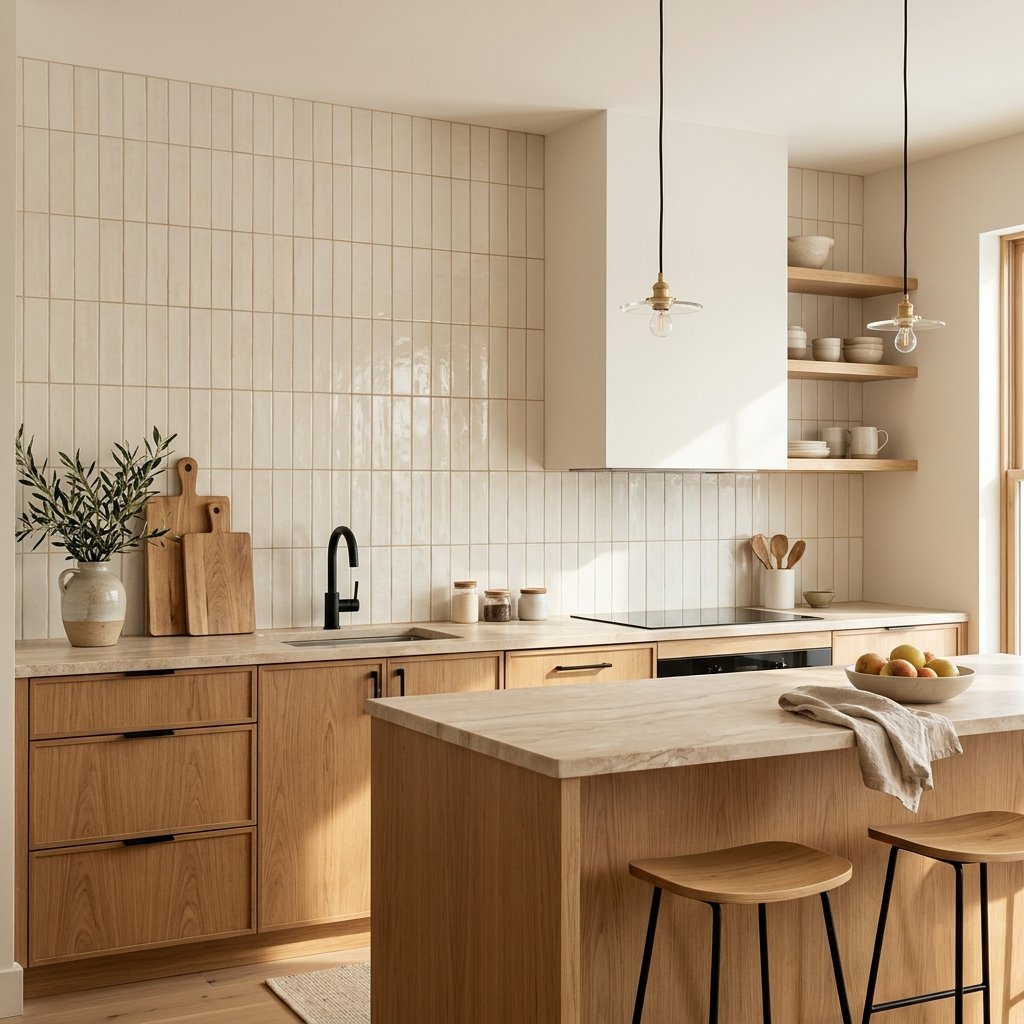
9. Vertical Subway Tile
Turn rectangular tile vertically for a simple variation.
Vertical tile can emphasize height and make a familiar material feel different.
It works beautifully with:
- Flat-panel cabinets
- Shaker cabinets
- Wood cabinetry
- Neutral kitchens
Because the layout itself creates visual interest, keep the grout relatively quiet if you want a softer result.
10. Stacked Tile
Instead of offsetting rectangular tile, align it in a clean grid.
A stacked layout creates a more modern look.
Try:
- Horizontal stack
- Vertical stack
A straight layout works particularly well with cabinetry that has simple architectural lines.

11. Herringbone Backsplash
Herringbone introduces movement without requiring colorful tile.
It’s especially useful as an accent behind a range.
However, the layout creates more visual activity and typically requires more cutting than a simple running bond or stacked installation.
If the countertop already has dramatic veining, a herringbone backsplash may compete with it.
Balance is important.
12. Small Square Tile
Small square tiles can create a subtle vintage or European feeling.
Try them in:
- Cream
- Warm white
- Sage
- Brown
- Dusty blue
A square format can feel surprisingly fresh because rectangular subway tile has been so common.
Keep the surrounding finishes simple and let the repeated grid provide texture.
13. Sage Green Tile
Green can bring life to a neutral kitchen without becoming overly bright.
Sage works particularly well with:
- Cream cabinets
- White cabinets
- Natural oak
- Walnut
- Brass
Choose the exact shade based on your countertops.
A muted green with gray undertones can behave very differently from a warm yellow-green.
14. Blue-Green Backsplash
For more color, try muted blue-green.
It can work beautifully with:
- Warm white
- Natural wood
- Marble
- Brass
- Black accents
This is a good option if you want color without choosing a very saturated backsplash.
Use a sample board to see how the glaze changes throughout the day.
15. Deep Green Tile
A dark backsplash can be stunning.
Deep green works especially well when the kitchen has enough light and the other finishes provide contrast.
Try:
Deep green tile + warm wood cabinets + light countertops
or:
Deep green + cream cabinetry + brass
Glossy dark tile can reflect light beautifully, while matte tile creates a quieter effect.
16. Blue Backsplash Tile
Blue can work in much more than a coastal kitchen.
Try:
- Dusty blue
- Slate
- Blue-gray
- Muted navy
Blue pairs particularly well with warm wood because the contrast keeps both colors interesting.
If you already have cool gray flooring and countertops, be careful not to make the entire kitchen feel excessively cool.
17. Taupe or Mushroom Tile
If white feels too bright and color feels like too much commitment, try taupe.
Mushroom and taupe tiles can add warmth without dominating the kitchen.
Pair them with:
- Cream
- Wood
- Warm white
- Black
- Brass
This can create a sophisticated tonal kitchen.
18. Natural Stone Tile
Natural stone brings variation that manufactured tile may not replicate exactly.
Depending on the stone, you might consider:
- Marble
- Limestone
- Travertine
- Slate
Each material has different characteristics.
Before using natural stone, understand:
- Porosity
- Sealing needs
- Staining potential
- Cleaning restrictions
- Heat suitability
- Installation requirements
Choose based on performance as well as appearance.
19. Brick Backsplash
Brick can add tremendous texture.
It works particularly well in:
- Rustic kitchens
- Historic homes
- Farmhouse-inspired spaces
- Industrial interiors
However, a kitchen backsplash is exposed to grease and splashes.
If you’re considering real brick or brick veneer, make sure the specific material, installation, surface treatment, and maintenance plan are appropriate for a kitchen environment.
20. Patterned Tile
Patterned tile can create a focal point.
But you don’t have to use it everywhere.
Consider placing it:
- Behind the range
- In a small bar area
- In a butler’s pantry
- Inside a defined niche
Then use a simpler material elsewhere.
If your countertops have strong veining, patterned tile may be too much.
One dominant pattern is often enough.
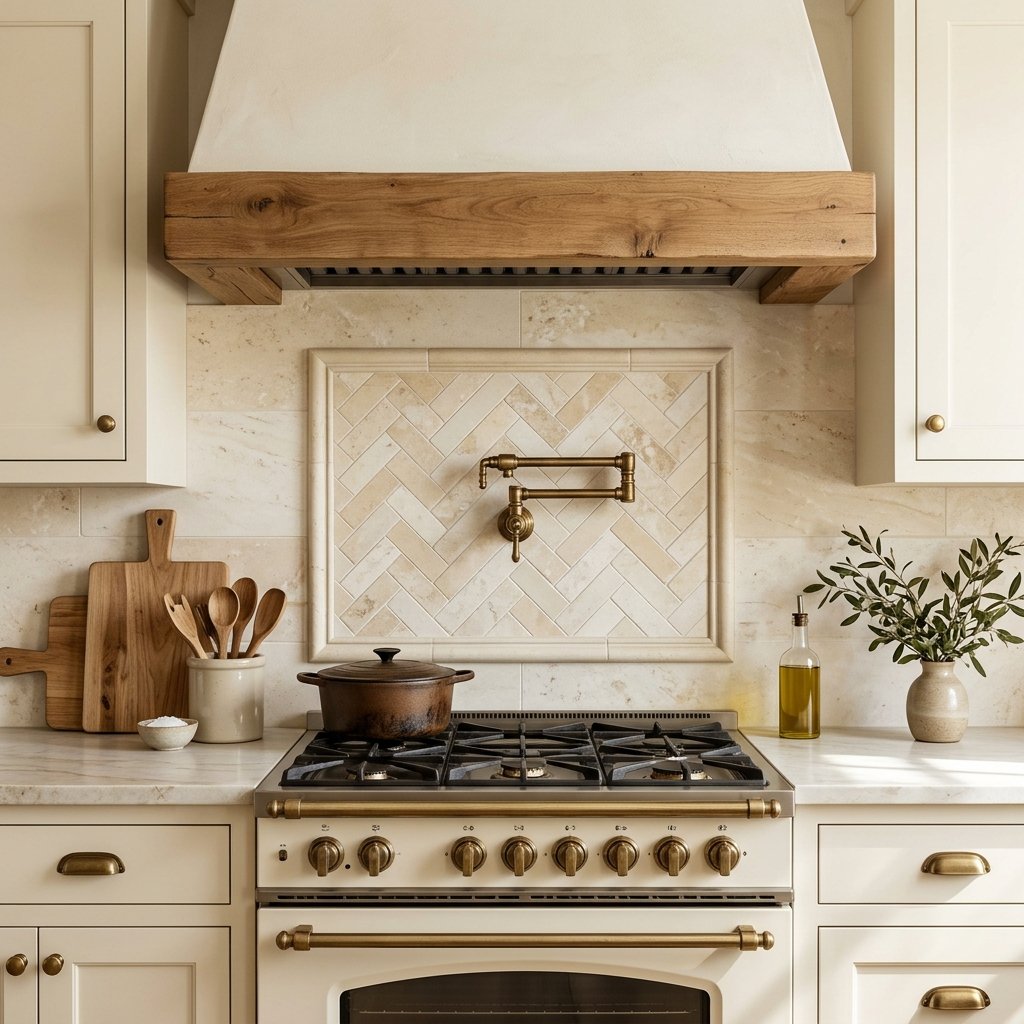
21. A Statement Range Backsplash
The range wall is a natural place to do something special.
You could use:
- Slab stone
- Herringbone
- Framed tile
- Different tile shape
- Subtle mosaic
The key is connecting the feature back to the rest of the kitchen.
If the range backsplash looks like an unrelated decorative panel, the room can feel fragmented.
Repeat its material, color, or finish somewhere else.
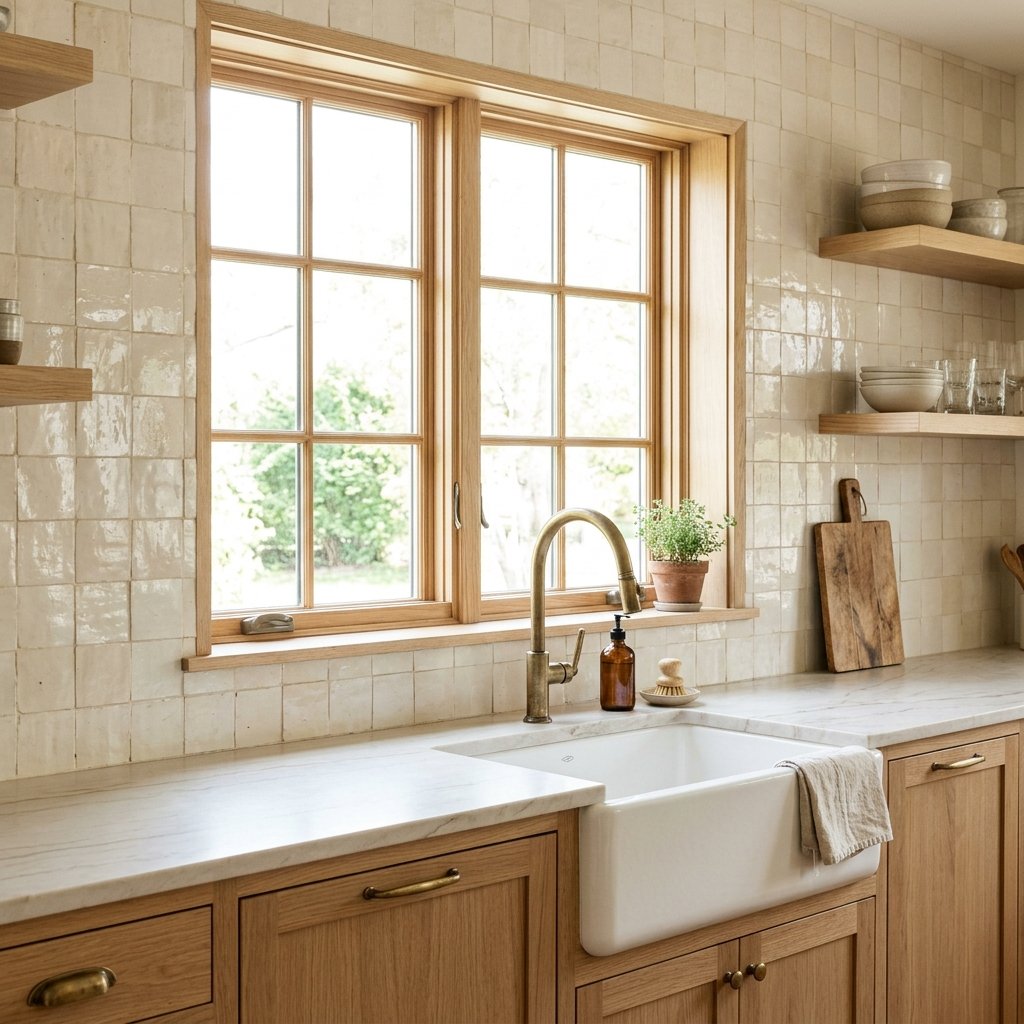
Kitchen Backsplash Ideas With White Cabinets
White cabinets give you plenty of flexibility.
Try:
- Warm white handmade-look tile
- Cream
- Sage green
- Blue-green
- Marble
- Taupe
- Natural stone
Before choosing a white backsplash, compare it with the cabinet.
Two whites with incompatible undertones can make one of them look unexpectedly yellow, gray, pink, or blue.
Kitchen Backsplash Ideas With Cream Cabinets
Cream cabinets usually work beautifully with warm materials.
Try:
- Warm white
- Cream tile
- Beige stone
- Taupe
- Muted green
- Warm marble
Avoid choosing a very icy backsplash without seeing it next to the cabinetry.
Kitchen Backsplash Ideas With Wood Cabinets
Wood already provides warmth and movement.
For a calmer kitchen, try:
- Cream
- Warm white
- Soft stone
- Muted green
- Taupe
For contrast:
- Deep green
- Blue
- Charcoal
Let the wood grain remain an important part of the room rather than competing with several additional strong patterns.
Kitchen Backsplash Ideas With Dark Cabinets
Dark cabinets often benefit from some contrast.
Try:
- Warm white tile
- Cream stone
- Light marble
- Pale green
- Light taupe
But a dark-on-dark combination can also work in a well-planned kitchen.
For example:
Dark green cabinets + dark green tile + light counters
creates a dramatic tonal look.
Kitchen Backsplash Ideas With White Countertops
White countertops provide a flexible starting point, but identify their undertone.
Are they:
- Warm white?
- Cool white?
- Gray-veined?
- Beige-veined?
Then choose a backsplash that relates to that undertone.
Don’t assume every white goes together.
Kitchen Backsplash Ideas With Busy Countertops
If your countertop has dramatic veining or strong movement, simplify the backsplash.
Consider:
- Solid warm white tile
- Quiet cream
- Simple slab continuation
- Low-contrast stone
A highly patterned countertop plus highly patterned backsplash can create visual competition.
Let one lead.
How to Choose Backsplash Tile Size
Tile size changes the overall feeling.
Small Tile
Creates more grout lines and visual texture.
Medium Tile
Versatile and balanced.
Large Tile
Creates fewer grout lines and a quieter surface.
There isn’t a universally correct size.
Look at the scale of the kitchen, cabinets, range, windows, and other architectural features.
How to Choose Grout Color
Grout has more visual impact than many people expect.
Matching Grout
Creates a quieter continuous surface.
Slightly Contrasting Grout
Defines the tile shape.
High-Contrast Grout
Makes the layout a major design feature.
A dark grout with white subway tile creates a very different kitchen from warm white grout with the exact same tile.
Also consider maintenance and follow the grout manufacturer’s guidance for installation, sealing where applicable, cleaning, and care.
Glossy vs. Matte Backsplash Tile
Glossy Tile
Reflects more light and can create movement.
It’s particularly beautiful with handmade-look glazes.
Matte Tile
Feels quieter and softer.
Surface performance and cleaning characteristics vary by product, so don’t choose finish based only on appearance.
Check the tile manufacturer’s intended application and care instructions.
Should the Backsplash Match the Countertop?
It should coordinate—not necessarily match.
Try connecting them through:
- Undertone
- Vein color
- Warmth
- Overall visual weight
For example, a countertop with warm beige veining may work beautifully with a creamy backsplash even though they’re different materials.
Should the Backsplash Match the Cabinets?
Again, coordination is more important.
A cream backsplash with cream cabinets can create a tonal look.
A deep green backsplash with cream cabinets creates contrast.
Both can work.
The decision depends on whether you want the backsplash to blend or become a focal point.
How High Should a Kitchen Backsplash Go?
Common stopping points include:
- Bottom of upper cabinets
- Range hood
- Open shelving
- Ceiling
- Architectural transition
There isn’t one answer for every kitchen.
A full-height treatment can look dramatic on a range wall, while a standard cabinet-height backsplash may make more sense elsewhere.
Plan all edges and termination points before installation.
Awkward stopping points are much harder to solve after tile is already on the wall.
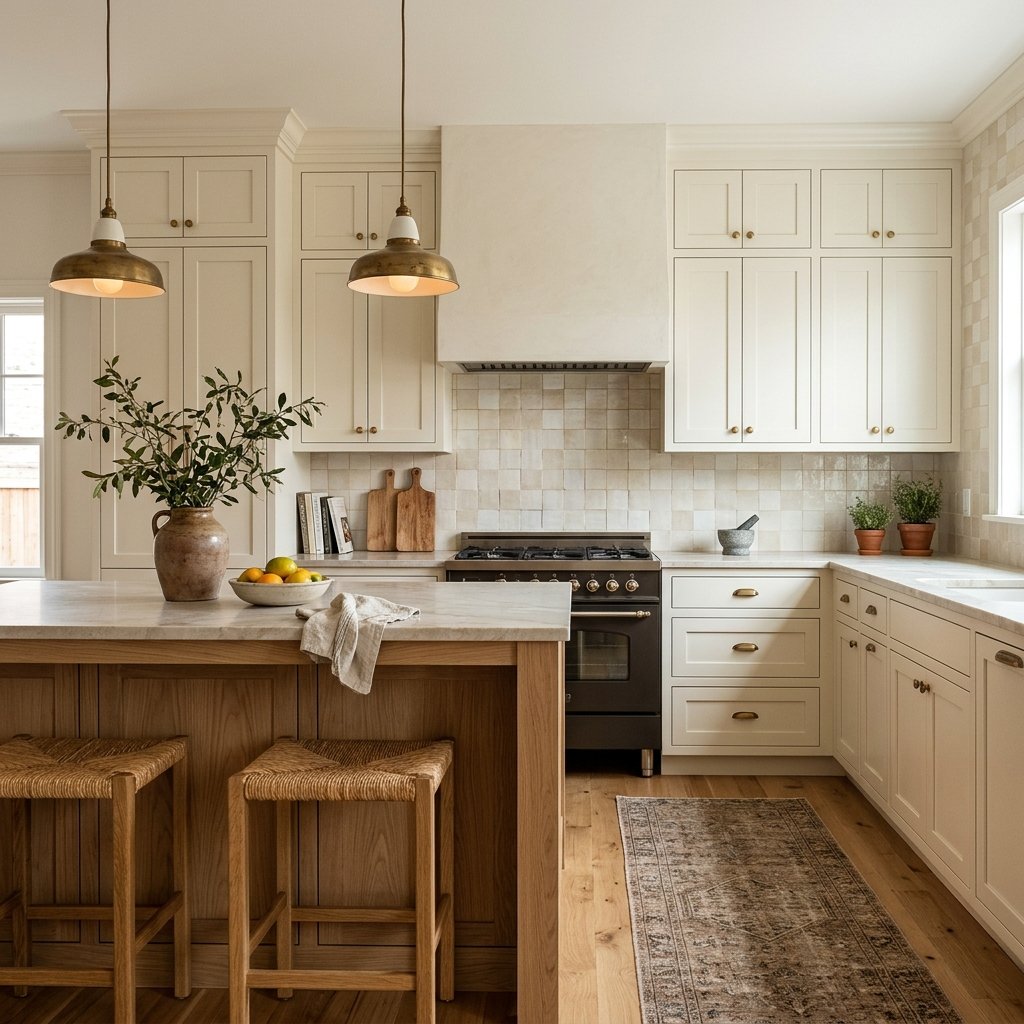
Backsplash Around a Window
A kitchen window can create a beautiful opportunity.
Tile can sometimes continue:
- To the window trim
- Around the window
- To the ceiling
The right choice depends on the architecture and surrounding cabinetry.
Think through every edge before ordering material.
Kitchen Backsplash Around Outlets
Outlets and switches can interrupt a beautiful backsplash.
Plan for them before installation.
Depending on the kitchen design and applicable electrical requirements, placement and finish choices may help them visually recede.
Electrical changes should be handled according to applicable codes and by qualified professionals where required.
Never improvise electrical modifications simply to make a backsplash photograph better.
Backsplash Behind a Range
This area requires special attention.
Consider:
- Heat
- Grease
- Cleaning
- Range manufacturer’s requirements
- Hood installation
- Combustibility
- Local code requirements
Not every decorative material is appropriate immediately behind every cooking appliance.
Confirm material suitability and required clearances for the specific range, cooktop, hood, wall assembly, and backsplash product.
How to Sample Kitchen Backsplash Tile
Never choose tile based only on a website image.
Order or purchase samples.
Then place them:
- Against the countertop.
- Against the cabinet.
- Near the floor.
- In natural daylight.
- Under kitchen lighting.
- At different times of day.
If the tile has significant variation, a single small sample may not tell the whole story.
Ask to see several pieces or a sample board when possible.
How Much Backsplash Tile Should You Order?
Measure the actual installation area and account for:
- Tile dimensions
- Layout
- Pattern
- Cuts
- Breakage
- Waste
- Future repairs
The correct overage depends on the tile and installation pattern.
A straightforward layout may require less additional material than herringbone or a complicated pattern.
Ask your installer or follow supplier guidance rather than assuming one waste percentage applies to every project.
Kitchen Backsplash Installation Considerations
Backsplash installation can look simple, but details matter.
Before starting, consider:
- Wall condition
- Substrate
- Tile material
- Adhesive or mortar
- Layout
- Pattern repeat
- Cuts
- Grout
- Movement joints
- Edges
- Outlets
- Range requirements
Use installation materials approved for the tile and application.
Follow tile, setting-material, grout, and appliance manufacturer instructions.
Natural stone and specialty materials may require additional steps.
Common Kitchen Backsplash Mistakes
Choosing the Backsplash Before the Countertop
The countertop is usually harder and more expensive to change.
Ignoring Undertones
Warm and cool whites can clash.
Using Too Many Patterns
Let either the counter or backsplash lead.
Forgetting Grout
Grout can dramatically change the final look.
Not Planning Edges
Decide where tile ends before installation.
Choosing From a Tiny Online Photo
Order samples.
Ignoring Maintenance
Beautiful materials still need to work in a kitchen.
Following Trends Without Considering the House
A backsplash should work with the architecture and cabinetry.
Forgetting Outlets and Windows
Plan the entire wall elevation.
Choosing a Material Unsuitable for the Range Area
Performance and safety matter.
How to Make a Kitchen Backsplash Look Expensive
You don’t necessarily need expensive tile.
Try:
- Simple tile with subtle variation
- Thoughtful grout
- Clean installation
- Intentional edges
- Fewer competing finishes
- Consistent alignment
A relatively inexpensive warm white tile can look sophisticated when the layout is well planned.
Conversely, expensive stone can look awkward if seams, outlets, and edges aren’t considered.
Installation is part of the design.
Timeless vs. Trendy Kitchen Backsplash
If you’re worried about choosing something that will date quickly, put personality into details that aren’t overly specific.
Timeless options often include:
- Simple rectangular tile
- Natural stone
- Warm white
- Cream
- Subtle handmade texture
- Quiet green
- Countertop continuation
That doesn’t mean your backsplash has to be boring.
Texture, material, scale, and layout can create plenty of character without relying on a highly recognizable trend.
A Simple Kitchen Backsplash Selection Formula
Use this process before ordering.
Step 1: Choose the Countertop
Let the harder-to-change surface lead.
Step 2: Look at the Cabinets
Identify their undertone.
Step 3: Decide Blend or Contrast
Should the backsplash disappear or stand out?
Step 4: Choose a Color Family
White, cream, stone, green, blue, taupe, or another direction.
Step 5: Choose Material
Ceramic, porcelain, glass, natural stone, slab, or another suitable surface.
Step 6: Choose Shape
Rectangle, square, mosaic, or specialty shape.
Step 7: Choose Layout
Running bond, stacked, vertical, herringbone, or another appropriate pattern.
Step 8: Choose Grout
Don’t leave this decision until installation day.
Step 9: Plan Every Edge
Windows, cabinets, hood, outlets, and open walls.
Step 10: Sample Everything Together
Cabinet + countertop + backsplash + hardware + flooring.
If the combination works as a group, you’re much more likely to love the finished kitchen.
FAQ About Kitchen Backsplash Ideas
What kitchen backsplash is timeless?
Simple ceramic tile, subway-style tile, natural stone, and countertop slab backsplashes can all have long-lasting appeal when they coordinate with the kitchen’s architecture and permanent finishes.
What backsplash goes with white cabinets?
Warm white, cream, marble, sage green, blue-green, taupe, and natural stone can all work. Compare undertones with the specific cabinet color.
What backsplash goes with wood cabinets?
Cream, warm white, soft stone, muted green, taupe, and deeper contrasting colors can all complement natural wood.
Should the backsplash be lighter or darker than the countertop?
Either can work. A lighter backsplash often creates a softer look, while a darker backsplash adds contrast. The overall palette matters more than a fixed rule.
Should backsplash match the countertop?
It should coordinate, but it doesn’t have to match. Repeating an undertone or vein color is often enough to connect the surfaces.
Is subway tile still a good backsplash choice?
Yes. The tile size, glaze, color, layout, and grout can make subway-style tile feel traditional, modern, rustic, or transitional.
Is a full-height backsplash worth it?
It can create a beautiful seamless focal point, especially behind a range. Cost, material, seams, outlets, installation, and maintenance should all be considered.
What backsplash makes a small kitchen look bigger?
A low-contrast backsplash, larger-format tile, countertop continuation, or light reflective surface can create a quieter visual field. Good lighting and layout also matter.
What backsplash is easiest to decorate around?
Simple warm white, cream, or quiet natural stone tends to provide plenty of flexibility for changing hardware, paint, and accessories later.
Should I use patterned backsplash tile?
Patterned tile can be beautiful when the surrounding surfaces are relatively quiet. If your countertop already has strong movement, consider a simpler backsplash.
Final Thoughts
There are endless kitchen backsplash ideas, but choosing the right one becomes much easier when you stop treating the backsplash as an isolated decorating decision.
Start with the countertop.
Look at the cabinets.
Consider the flooring.
Then decide what the kitchen still needs.
Does it need texture?
Warmth?
Color?
Contrast?
Or does it already have enough visual interest?
Sometimes the best answer is a quiet handmade-look cream tile.
Sometimes it’s a rich green backsplash.
Sometimes it’s a beautiful slab of stone continuing up the range wall.
The goal isn’t to choose the most impressive tile in the showroom.
It’s to choose the material that makes the cabinets, countertops, flooring, hardware, and architecture look like they were always meant to be together.
Order samples.
Look at them in your actual kitchen.
Plan the grout and layout.
Think through every edge.
And give yourself permission to choose something simple.
A backsplash doesn’t need to shout to make the entire kitchen look better.

