

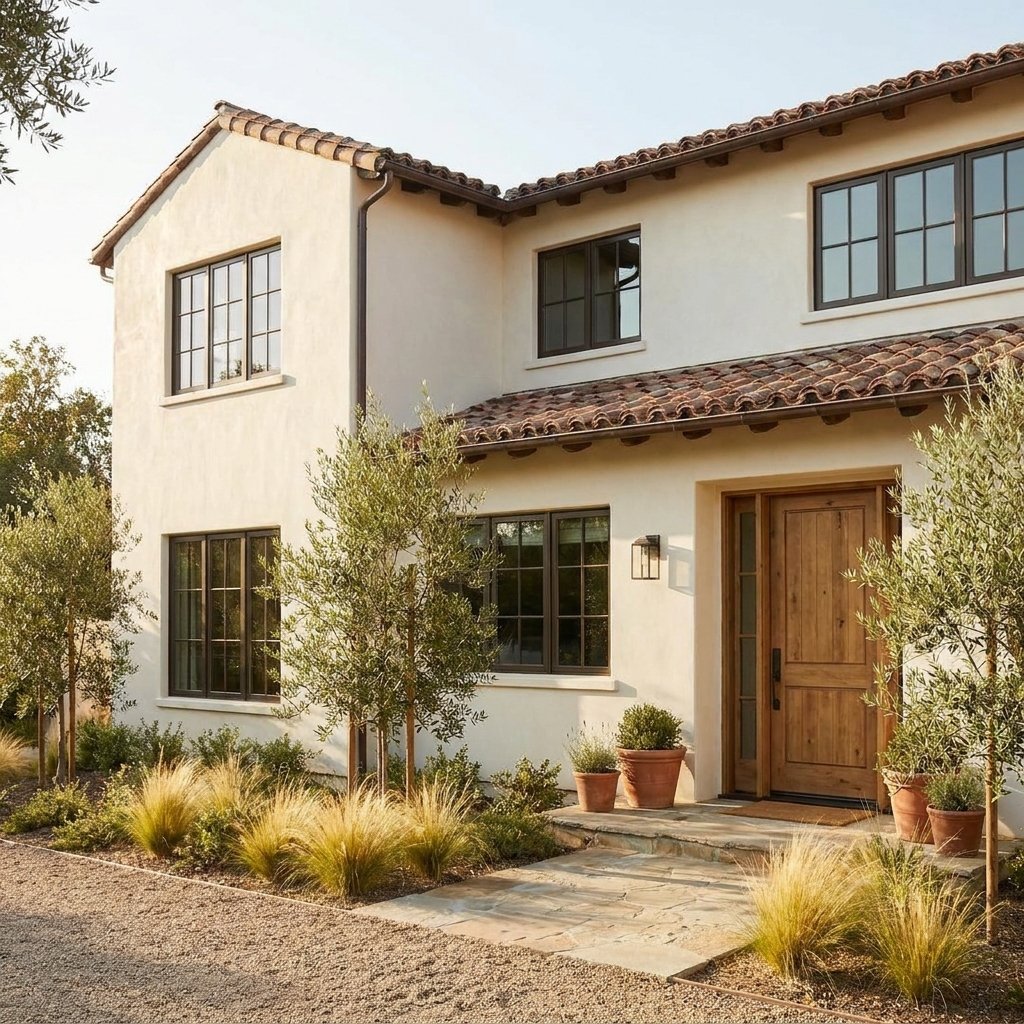
Choosing stucco exterior colors can feel surprisingly difficult.
A paint color that looks soft and subtle on a small sample may appear dramatically lighter, brighter, warmer, or cooler once it covers an entire house. Exterior light is powerful, and stucco’s textured surface adds another variable because highlights and shadows can change how the color reads throughout the day.
The surrounding materials matter just as much.
Your stucco color needs to work with the home’s:
- Roof
- Stone
- Brick
- Windows
- Garage doors
- Driveway
- Landscaping
- Wood details
- Trim
Instead of choosing a color because it looks beautiful on another house, start with the fixed elements on your own exterior.
A warm stone facade might call for cream, beige, taupe, or an earthy greige. A black roof may work with warm white, soft gray, green, or deeper colors. Terracotta roofing can look beautiful beside creamy whites and sun-washed earth tones.
Here are 17 stucco exterior color ideas, plus practical tips for coordinating trim, roofs, stone, doors, and other exterior finishes.
Before Choosing a Stucco Exterior Color
Start by identifying everything you aren’t planning to change.
These fixed elements should guide the paint color.
Look at the undertones in your:
- Roof
- Stone
- Brick
- Pavers
- Concrete
- Windows
Then decide whether you want the house to feel:
- Warm and welcoming
- Light and airy
- Earthy and natural
- Modern and high-contrast
- Traditional and timeless
- Moody and dramatic
Don’t choose the exact paint color yet.
Choose the direction first.
That will immediately narrow your options.
1. Warm White Stucco
Warm white is one of the most versatile choices for stucco.
It feels fresh without looking overly stark.
Warm whites can work beautifully with:
- Terracotta roofing
- Natural stone
- Wood doors
- Dark windows
- Clay pavers
The trick is finding the right undertone.
A creamy white may complement warm stone beautifully, while the same color could look yellow beside cooler gray materials.
Always sample on the actual exterior.
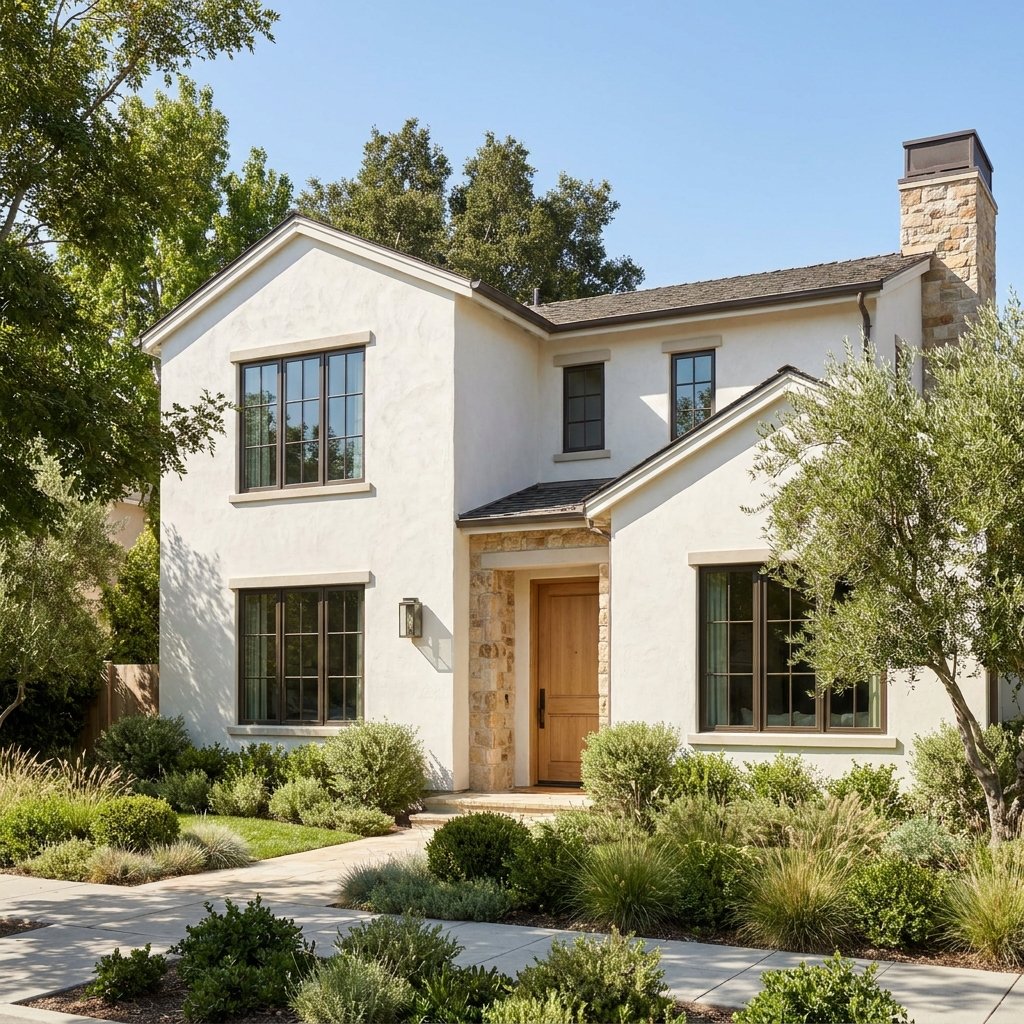
2. Cream Stucco
Cream creates a softer, warmer look than bright white.
It’s especially attractive on:
- Mediterranean homes
- Spanish-inspired architecture
- Traditional houses
- Tuscan-influenced exteriors
Pair cream with warm materials such as:
- Wood
- Terracotta
- Brown roofing
- Beige stone
Keep the trim relatively close in tone if you want a sophisticated low-contrast exterior.
3. Soft Beige Stucco
Beige can be beautiful when the undertone works with the house.
Today’s most versatile beiges often feel muted and natural rather than heavily yellow.
Beige pairs easily with:
- Brown roofs
- Warm gray roofs
- Stone
- Wood
- Bronze windows
It can also hide dust and everyday exterior wear better visually than a very bright white in some environments.
4. Sand-Colored Stucco
A sandy exterior can feel especially appropriate in warm, sunny landscapes.
Think:
- Soft tan
- Warm beige
- Muted sand
- Light camel
These colors connect naturally with stone, gravel, dry grasses, and other earthy landscape materials.
Use a darker brown or bronze accent for definition.
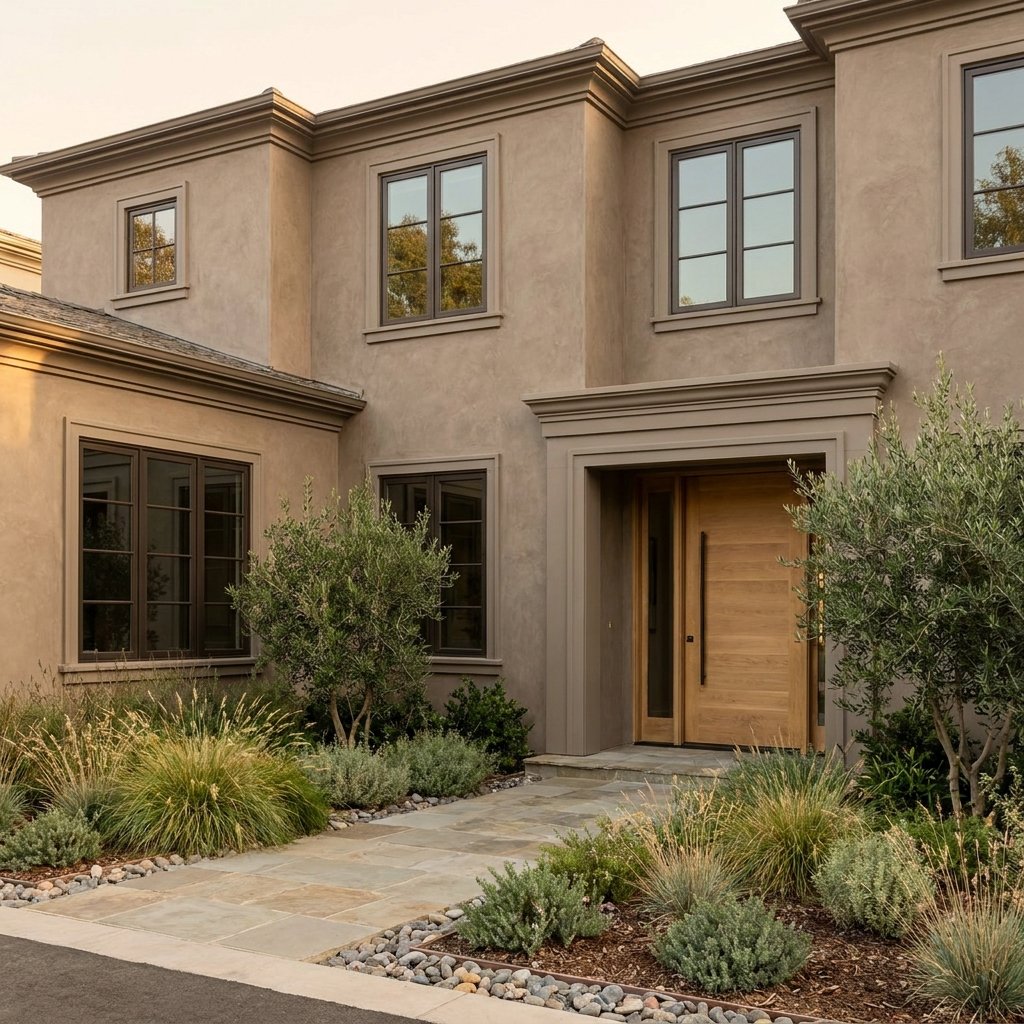
5. Greige Stucco
Greige sits between gray and beige.
It can be an excellent option when pure beige feels too warm but gray feels too cool.
Greige works particularly well with:
- Stone
- Black windows
- Warm gray roofs
- Natural wood
Pay close attention to undertones.
Some greiges lean noticeably green, violet, or taupe in exterior light.
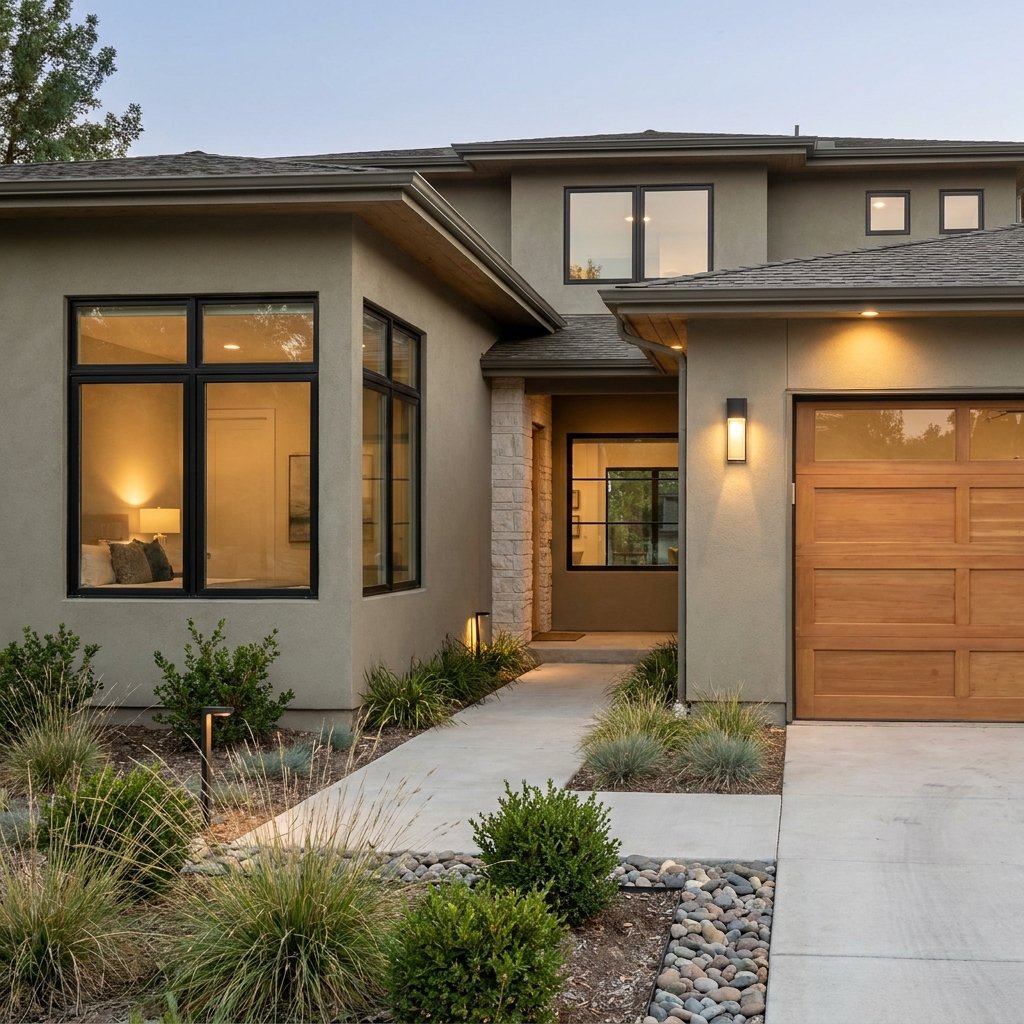
6. Taupe Stucco
Taupe creates more depth than light greige.
Depending on the color, it may contain:
- Brown
- Gray
- Violet
- Green
A muted taupe can make a large stucco home feel grounded and sophisticated.
Pair it with warm white trim for gentle contrast or use a similar tonal trim for a quieter look.
7. Mushroom Stucco
Mushroom is a warm neutral that falls somewhere between beige, taupe, and brown.
It’s a beautiful choice if you want something darker than cream without moving into a strong color.
Try it with:
- Cream trim
- Dark bronze windows
- Natural wood
- Warm stone
This combination works particularly well on homes surrounded by natural landscaping.
8. Light Gray Stucco
Gray can still work beautifully on stucco when it’s chosen carefully.
Exterior daylight can make gray appear cooler than expected.
Look for a gray that relates to your roof and stone rather than choosing one in isolation.
A warmer light gray can pair with:
- Black windows
- White trim
- Natural wood
- Gray stone
If your fixed materials already contain a lot of cool blue-gray, make sure another gray doesn’t make the exterior feel overly cold.
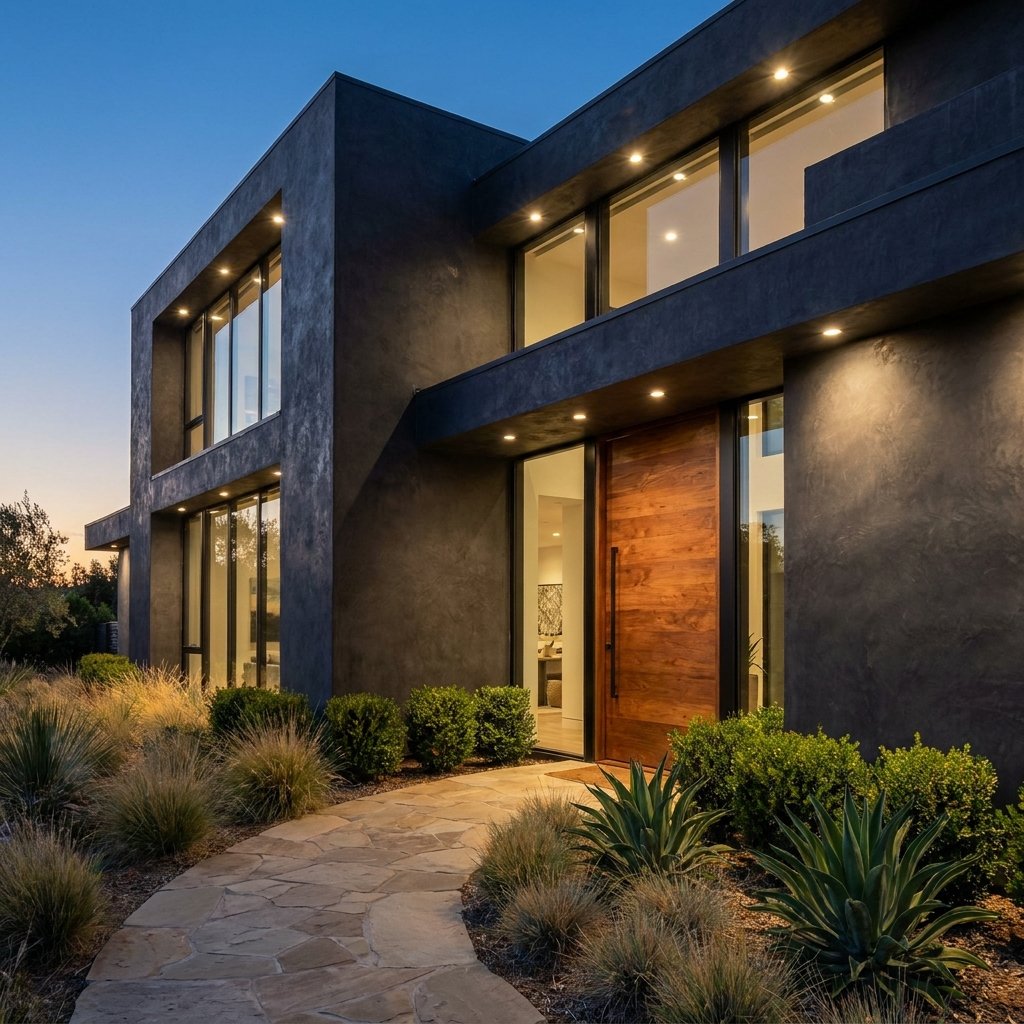
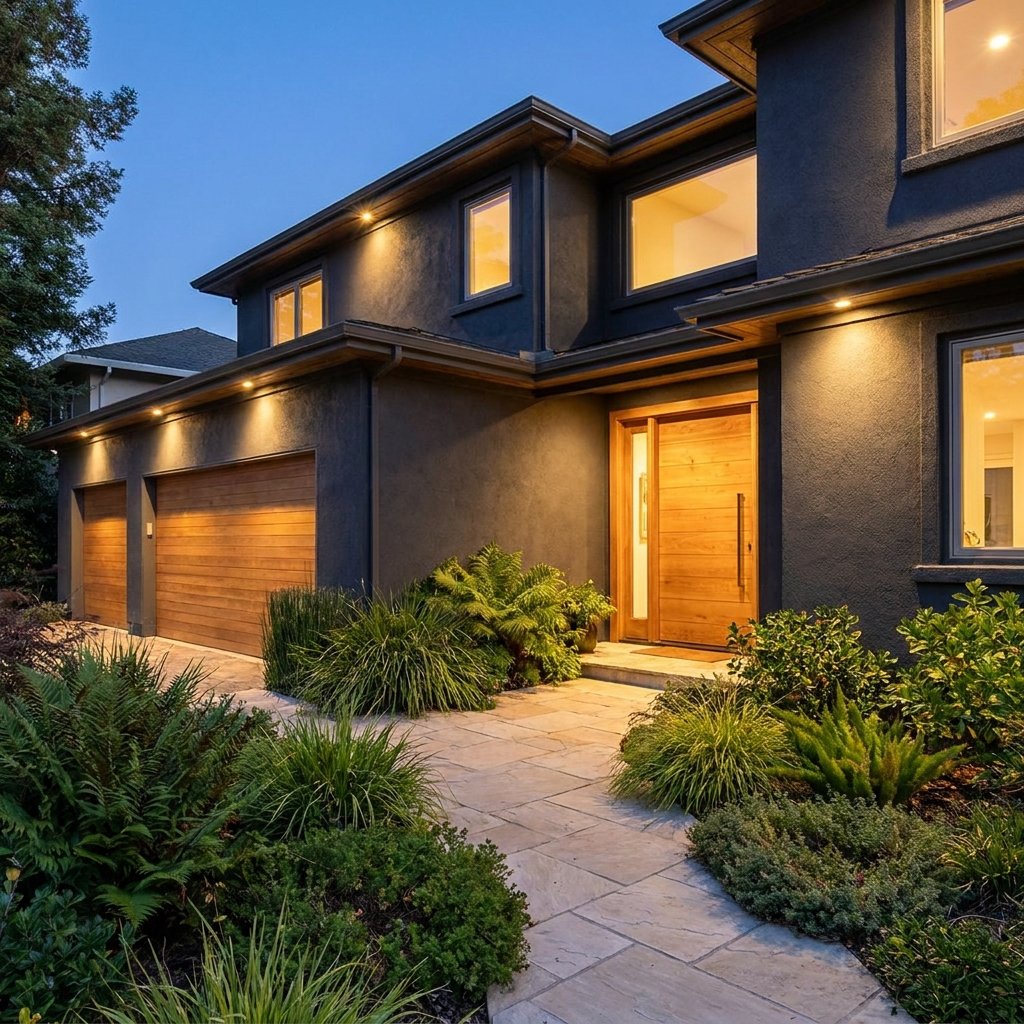
9. Charcoal Stucco
For a dramatic modern exterior, consider charcoal.
Dark stucco can create a striking backdrop for:
- Wood doors
- Light stone
- Warm exterior lighting
- Green landscaping
Remember that dark exterior colors can respond differently to heat, sunlight, fading, and substrate movement depending on the wall system, coating, climate, and exposure.
Follow the stucco and coating manufacturers’ requirements before choosing a very dark finish.
10. Soft Sage Green Stucco
Green can be surprisingly subtle on a house.
A muted sage can blend beautifully with landscaping.
It works especially well with:
- Warm stone
- Cream trim
- Wood
- Brown roofing
- Bronze details
Choose a grayed, earthy green rather than an overly saturated shade if you want a timeless result.
11. Olive Green Stucco
For a deeper earthy exterior, consider muted olive.
Olive works beautifully with:
- Terracotta
- Cream
- Natural wood
- Warm stone
- Aged metal finishes
This can create a particularly rich Mediterranean-inspired palette.
Because exterior sunlight can intensify color, test several large samples before committing.
12. Dusty Blue Stucco
Blue doesn’t have to look coastal.
A muted blue-gray can create a sophisticated exterior.
Pair it with:
- Warm white
- Natural wood
- Dark bronze
- Gray stone
Avoid choosing a blue based solely on a tiny paint chip.
Exterior light can make blue undertones much more noticeable.
13. Blue-Gray Stucco
Blue-gray can suit traditional and contemporary homes.
Keep it muted rather than overly icy.
A warm wood door can provide beautiful contrast and prevent the palette from feeling too cool.
If the roof already has strong blue undertones, compare samples carefully so the two don’t clash.
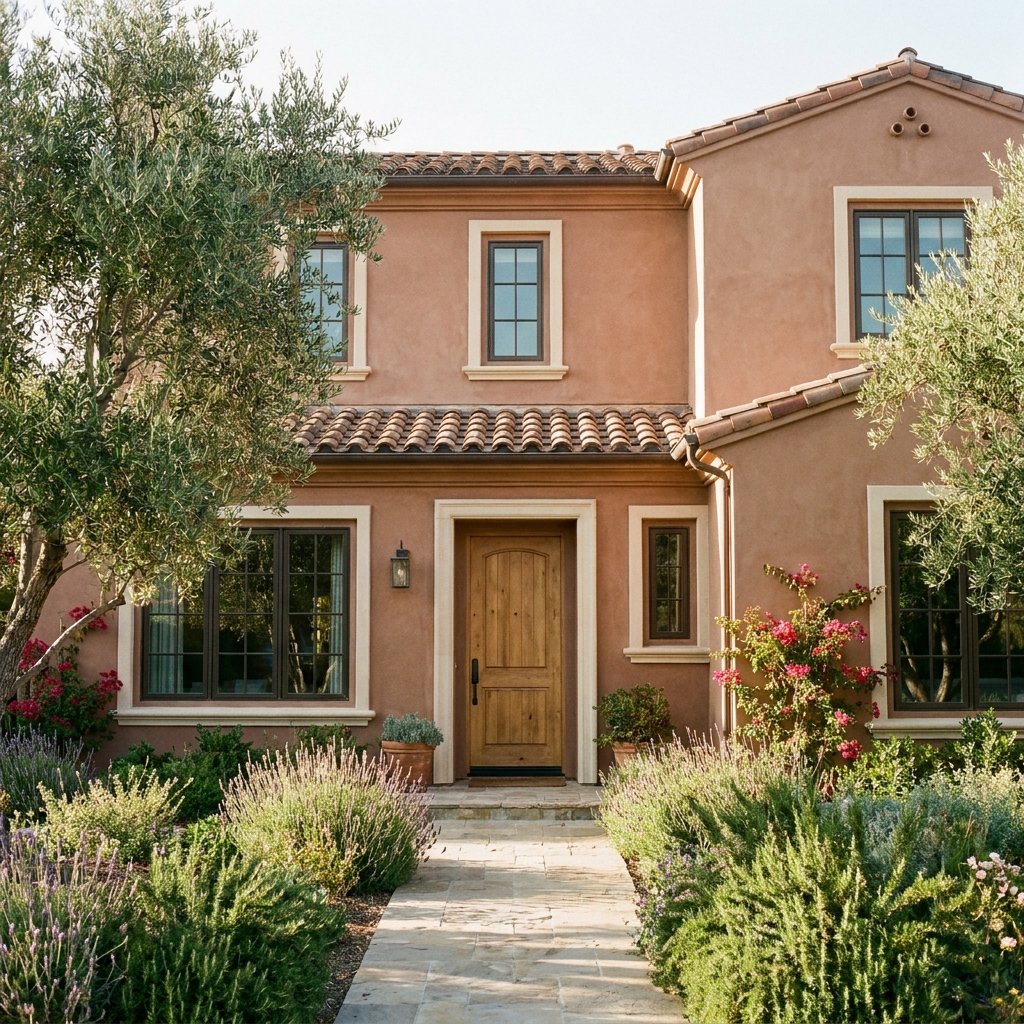
14. Terracotta Stucco
Terracotta can create a warm, earthy statement.
Think muted clay rather than bright orange.
This color can look beautiful with:
- Cream trim
- Dark bronze
- Warm wood
- Natural stone
It’s especially appropriate when the architecture and landscape support a Mediterranean or Southwestern-inspired palette.
15. Soft Brown Stucco
Brown can create a grounded exterior when it has enough softness.
Look for:
- Mushroom brown
- Cocoa
- Warm taupe-brown
- Muted earthy brown
Use lighter trim or stone to create definition.
Brown can also blend beautifully into wooded or desert-like landscapes.
16. Pale Peach Stucco
A soft sun-washed peach can be beautiful on Spanish and Mediterranean-inspired homes.
The key is subtlety.
Look for a color that feels more like:
warm plaster + clay + cream
than bright peach.
Pair it with terracotta roofing, warm stone, and dark metal details for an old-world feel.
17. Monochromatic Stucco
You don’t have to use contrasting trim.
A tonal exterior can feel sophisticated.
For example:
Warm white stucco + slightly deeper warm white trim
or:
Taupe stucco + similar taupe trim
or:
Greige stucco + matching trim
This approach lets architectural shadows create the contrast instead of paint.
It works particularly well on homes with beautiful windows, arches, and stucco details.
Stucco Exterior Colors With a Terracotta Roof
Terracotta roofing already provides a strong warm color.
Instead of competing with it, consider warm, earthy wall colors.
Try:
- Cream
- Warm white
- Sand
- Beige
- Mushroom
- Pale peach
- Muted olive
A very cool blue-white may make terracotta look more orange by comparison.
That contrast can sometimes be intentional, but sample carefully before committing.
Stucco Exterior Colors With a Brown Roof
Brown roofs usually work well with warmer exteriors.
Consider:
- Cream
- Beige
- Greige
- Taupe
- Mushroom
- Sage
Look at the roof’s undertone.
Some brown roofs lean red.
Others lean gray or almost black.
Your stucco needs to coordinate with the actual roof rather than the word “brown.”
Stucco Exterior Colors With a Black Roof
A black roof gives you plenty of flexibility.
Try:
- Warm white
- Cream
- Greige
- Light gray
- Sage
- Taupe
For a dramatic exterior, you can also use charcoal or another deep color.
Natural wood is particularly useful for warming up a black-and-white or black-and-gray palette.
Stucco Exterior Colors With a Gray Roof
Gray roofs require careful undertone matching.
Determine whether the roof looks:
- Warm gray
- Blue-gray
- Green-gray
- Charcoal
Then compare stucco samples against it.
Warm greige and taupe can sometimes balance a cooler roof, while soft gray can create a more monochromatic appearance.
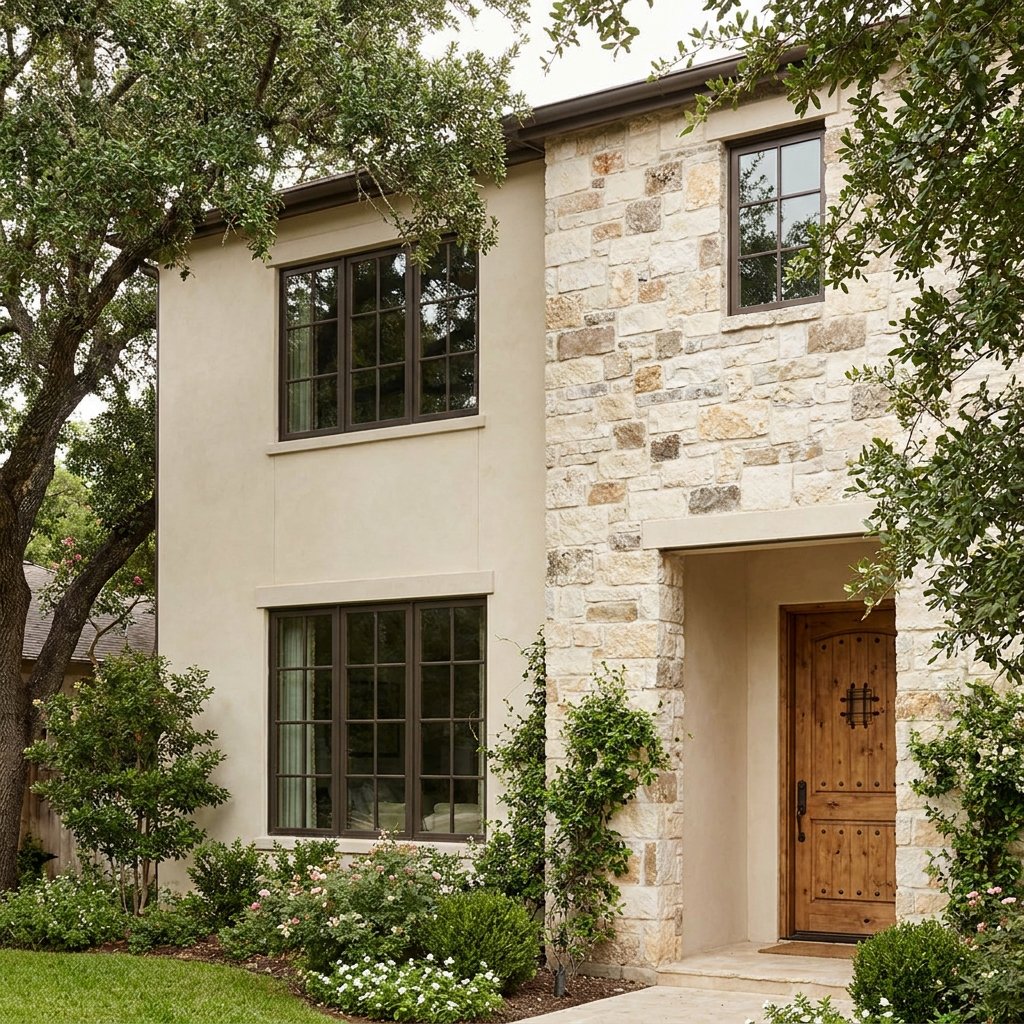
Stucco Exterior Colors With Stone
Let the stone lead.
Stone usually contains multiple colors.
Stand back and identify the dominant undertones.
You may see:
- Cream
- Beige
- Gray
- Brown
- Rust
- Green
Pulling one of the quieter colors from the stone can create a cohesive stucco palette.
Avoid trying to match the stone exactly.
Coordination usually looks more natural.
Stucco Exterior Colors With Brick
Brick is another fixed material that should influence the palette.
Red brick often contains:
- Red
- Brown
- Orange
- Taupe
- Charcoal
Depending on the brick, consider:
- Cream
- Warm white
- Taupe
- Greige
- Muted green
Cool bright white can create very strong contrast with warm brick, so test it carefully.
Stucco Colors With Black Windows
Black windows already create strong architectural lines.
You don’t necessarily need additional high-contrast trim.
Try black windows with:
- Warm white
- Cream
- Greige
- Taupe
- Sage
- Charcoal
For a softer exterior, paint trim close to the stucco color and let the windows provide the contrast.
Stucco Colors With Bronze Windows
Bronze window frames look beautiful with warm earthy colors.
Consider:
- Cream
- Sand
- Mushroom
- Taupe
- Olive
- Warm white
Add a natural wood front door to continue the warmth.
Stucco Exterior Colors With a Wood Front Door
Wood works with almost every stucco color.
It looks particularly beautiful against:
- Warm white
- Cream
- Charcoal
- Sage
- Greige
- Taupe
Think about contrast.
A medium wood door may disappear against medium brown stucco but stand out beautifully against cream or charcoal.
How to Choose Stucco and Trim Colors
You have several options.
High Contrast
Example:
Warm white stucco + charcoal trim
This emphasizes architecture.
Low Contrast
Example:
Cream stucco + slightly lighter cream trim
This feels softer.
Monochromatic
Example:
Taupe stucco + taupe trim
This creates a contemporary, seamless appearance.
There isn’t one correct approach.
Look at the architecture.
If the house already has many decorative details, high-contrast trim may make it feel busy.
What Color Should the Garage Door Be?
A garage door can take up a large part of the facade.
You can:
- Match the stucco
- Match the trim
- Coordinate with wood
- Use a darker accent
If you don’t want the garage to become the focal point, painting it close to the stucco color can help it visually recede.
What Color Should the Front Door Be?
The front door is a better place for contrast.
Try:
- Natural wood
- Black
- Dark green
- Deep blue
- Terracotta
- Burgundy
But you don’t need a brightly colored door.
A beautiful wood door against creamy stucco can provide plenty of interest.
How Exterior Light Changes Stucco Colors
Exterior colors often appear lighter and more intense in strong daylight than they do indoors.
Stucco also has texture.
The same wall can show:
- Bright highlights
- Midtones
- Dark shadows
throughout the day.
That’s why sampling is essential.
Don’t rely on a small paint chip or an online photograph.
How to Sample Stucco Exterior Colors
Sample several candidates on the actual house or on large movable sample boards suitable for evaluating the coating color.
Look at them:
- In morning light.
- At midday.
- In late afternoon.
- In shade.
- Beside the roof.
- Beside stone or brick.
- Next to windows and doors.
Step well back from the house.
Exterior color needs to be judged from a distance.
Consider Every Side of the House
A color that looks beautiful on the sunny front may look completely different on a shaded side.
Walk around the entire house.
Check:
- North-facing areas
- South-facing areas
- Covered patios
- Recessed entrances
- Areas under deep eaves
You need a color you can live with in both bright and shaded conditions.
Choosing the Right Coating for Stucco
Color is only one part of an exterior stucco project.
The correct coating and preparation depend on factors such as:
- Type and condition of stucco
- Existing coatings
- Cracks or damage
- Moisture conditions
- Climate
- Age of the surface
- Manufacturer requirements
Don’t assume every exterior paint or coating is appropriate for every stucco system.
Before painting, identify and address moisture intrusion, significant cracking, loose material, or other underlying problems.
Follow the stucco and coating manufacturers’ instructions for preparation, compatibility, primers, application conditions, and cure times.
Use professional evaluation where the substrate condition or moisture source is uncertain.
How to Make a Stucco Exterior Look More Expensive
Color can help, but restraint makes the biggest difference.
Try:
- Fewer exterior colors
- Low-contrast trim
- Substantial lighting
- Natural wood door
- Cohesive landscaping
- Coordinated garage door
- Clean gutters and roof details
Instead of painting every architectural element a different color, allow texture and shadows to create depth.
Two or three coordinated exterior colors are often enough.
Modern Stucco Exterior Color Ideas
For a modern home, consider:
- Warm white
- Greige
- Taupe
- Charcoal
- Mushroom
Pair them with:
- Black windows
- Natural wood
- Concrete
- Simple landscaping
A monochromatic exterior can work particularly well.
Mediterranean Stucco Exterior Colors
Mediterranean-inspired homes look beautiful in sun-washed colors.
Try:
- Cream
- Warm white
- Sand
- Pale peach
- Terracotta
- Olive
Pair with:
- Terracotta roof
- Dark metal
- Wood
- Stone
Keep the palette earthy rather than overly saturated.
Spanish-Style Stucco Exterior Colors
A classic combination is:
Creamy stucco + terracotta roof + dark details + wood door
But Spanish-inspired architecture can also handle muted peach, sand, warm beige, and earthy white.
Let the roof and architectural details provide much of the color.
Southwestern Stucco Exterior Colors
Take inspiration from the surrounding landscape.
Try:
- Sand
- Clay
- Terracotta
- Taupe
- Mushroom
- Muted olive
Natural, dusty colors often feel more connected to this style than crisp high-contrast combinations.
Coastal Stucco Exterior Colors
A coastal stucco home doesn’t have to be bright blue.
Try:
- Warm white
- Soft sand
- Muted blue-gray
- Pale greige
Add warmth with wood.
Keep the palette relaxed and slightly sun-washed rather than overly themed.
Dark Stucco Exterior Colors
Dark stucco can create dramatic architecture.
Try:
- Charcoal
- Deep taupe
- Dark olive
- Near-black gray
Then introduce warmth through:
- Wood
- Stone
- Landscaping
- Exterior lighting
Before choosing a very dark coating, confirm its suitability for the specific stucco system and climate. Dark colors can absorb more solar energy, and manufacturer limitations may apply.
Common Stucco Exterior Color Mistakes
Choosing From a Tiny Paint Chip
Exterior scale changes color dramatically.
Ignoring the Roof
The roof is part of the palette.
Forgetting Stone or Brick Undertones
Work with fixed materials rather than fighting them.
Choosing a White That’s Too Stark
Warm architecture often benefits from a softer white.
Using Too Many Exterior Colors
Let materials and architecture provide variation.
Overemphasizing the Garage Door
Let it recede unless it’s meant to be a feature.
Copying Another House Exactly
Light, roof, landscape, and materials change everything.
Looking at Samples Only in Direct Sun
Check shade too.
Choosing a Dark Color Without Checking Suitability
Confirm compatibility with the stucco system and coating manufacturer.
Painting Before Addressing Stucco Problems
Repair and moisture issues should be investigated first.
A Simple Stucco Exterior Color Formula
Use this process before committing.
Step 1: Identify the Fixed Materials
Roof, stone, brick, windows, and hardscape.
Step 2: Identify Their Undertones
Warm, cool, gray, brown, red, or green?
Step 3: Choose a Color Direction
White, cream, beige, greige, taupe, green, or dark.
Step 4: Decide on Contrast
High contrast or tonal?
Step 5: Choose Several Samples
Don’t rely on one.
Step 6: Test Large Areas
Exterior scale matters.
Step 7: Check Every Side of the House
Look at sun and shade.
Step 8: Choose Trim
Only after selecting the main color.
Step 9: Coordinate Garage and Front Door
Decide what should recede and what should stand out.
Step 10: Review Everything Together
Roof + stucco + trim + stone + windows + door + landscaping.
The entire palette should work as one composition.
FAQ About Stucco Exterior Colors
What is the most popular color for stucco?
Light neutrals such as warm white, cream, beige, greige, and taupe are versatile choices because they coordinate with many roof and architectural materials.
What colors look best on stucco homes?
Warm white, cream, sand, greige, taupe, mushroom, muted green, blue-gray, terracotta, and charcoal can all look beautiful. The best choice depends on the house’s fixed materials and architecture.
What stucco color goes with a terracotta roof?
Cream, warm white, sand, beige, muted olive, mushroom, and soft peach can coordinate beautifully with terracotta.
What stucco color goes with a black roof?
Warm white, cream, greige, gray, taupe, sage, and deeper charcoal tones can all work with black roofing.
Should stucco and trim be the same color?
They can be. A monochromatic or low-contrast palette can look sophisticated, while contrasting trim emphasizes architectural details.
Should the garage door match the stucco?
Matching or closely coordinating the garage door with the stucco can help a large garage visually recede. A contrasting door can work when you intentionally want it to become an architectural feature.
Does stucco paint look lighter outside?
Exterior daylight can make colors appear significantly lighter or more intense than they appear indoors, which is why large exterior samples are important.
What color makes a stucco house look modern?
Warm white, earthy greige, taupe, mushroom, and charcoal can all create a modern look when paired with clean details and a restrained palette.
Can you paint stucco a dark color?
Potentially, but the suitability depends on the stucco system, existing coating, climate, exposure, and coating manufacturer requirements. Verify compatibility before committing to a very dark color.
How many exterior colors should a stucco house have?
There’s no fixed rule, but a restrained palette often looks cohesive. The stucco, trim, roof, windows, doors, and natural materials should be considered together rather than adding colors independently.
Final Thoughts
Choosing stucco exterior colors becomes much easier when you start with the house instead of the paint deck.
Look at the roof first.
Then the stone or brick.
Study the windows, driveway, pavers, and landscaping.
Those elements already create a color palette.
Your stucco color should connect them.
For a light exterior, consider warm white, cream, sand, or greige.
For something earthy, try taupe, mushroom, sage, olive, or terracotta.
For a more dramatic home, charcoal can create beautiful contrast with wood and landscaping.
Whatever direction you choose, sample it outside.
Look at it in morning light.
Check it at midday.
Come back in the evening.
Walk around the house and look at the shaded walls.
A color that works in all of those conditions—and coordinates with the permanent materials—is far more important than choosing the trendiest shade.
When the stucco, roof, trim, windows, doors, and landscape all work together, the entire exterior feels more intentional.
And that is what makes a color palette feel timeless.

